

Interaction of SHP‐2 SH2 domains with PD‐1 ITSM induces PD‐1 dimerization and SHP‐2 activation
Open accessThe DOI matches its Crossref record; 67 of the 67 references it cites were found in a registry or an index.
Abstract
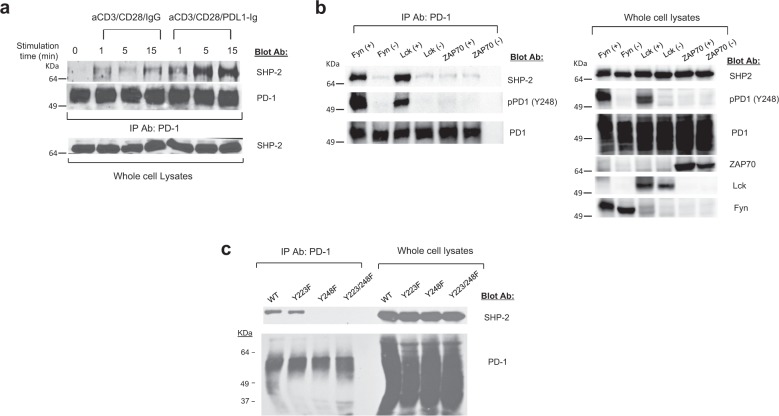
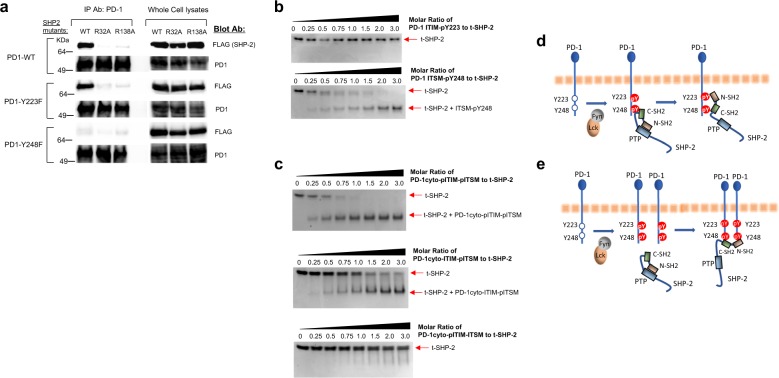
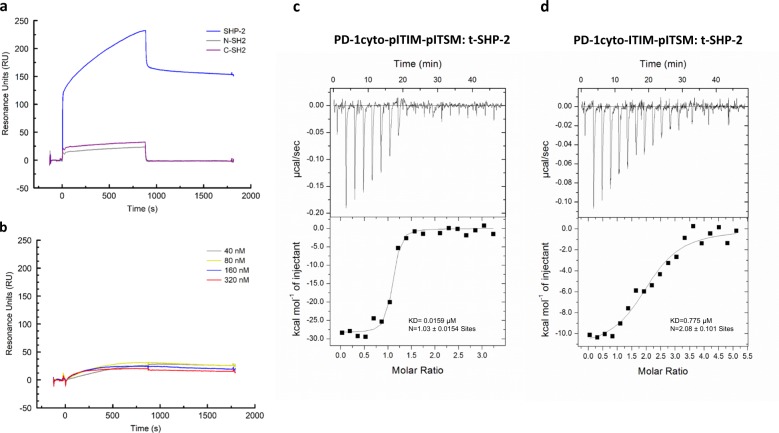
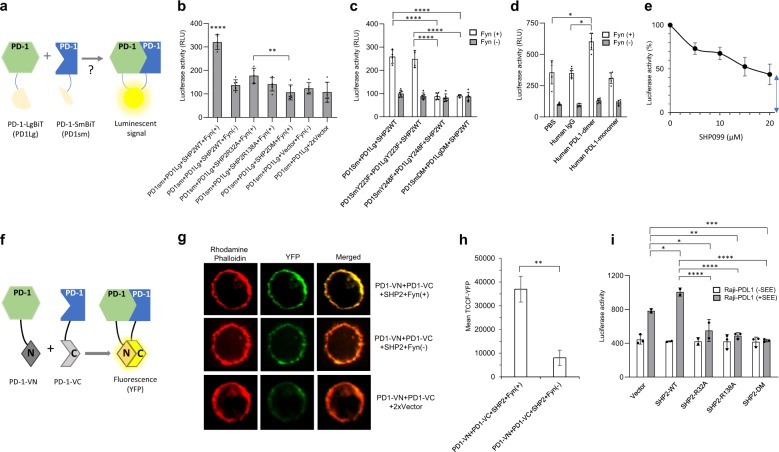
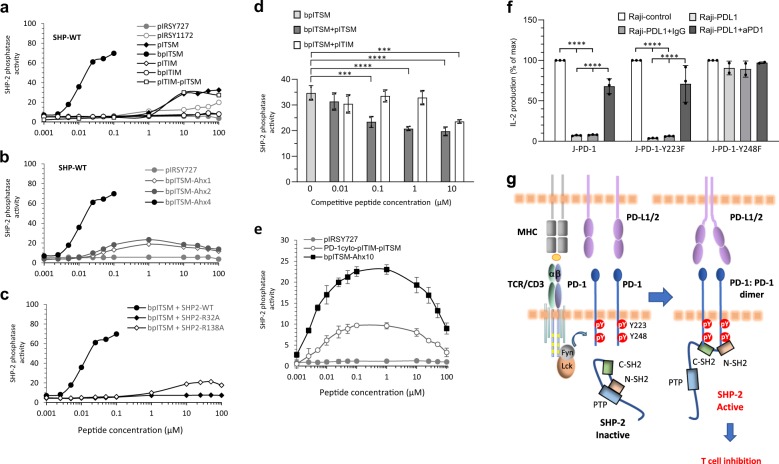
Programmed cell death-1 (PD-1) inhibits T cell responses. This function relies on interaction with SHP-2. PD-1 has one immunoreceptor tyrosine-based inhibitory motif (ITIM) at Y223 and one immunoreceptor tyrosine-based switch motif (ITSM) at Y248. Only ITSM-Y248 is indispensable for PD-1-mediated inhibitory function but how SHP-2 enzymatic activation is mechanistically regulated by one PD-1 phosphotyrosine remains a puzzle. We found that after PD-1 phosphorylation, SHP-2 can bridge phosphorylated ITSM-Y248 residues on two PD-1 molecules via its amino terminal (N)-SH2 and carboxyterminal (C)-SH2 domains forming a PD-1: PD-1 dimer in live cells. The biophysical ability of SHP-2 to interact with two ITSM-pY248 residues was documented by isothermal titration calorimetry. SHP-2 interaction with two ITSM-pY248 phosphopeptides induced robust enzymatic activation. Our results unravel a mechanism of PD-1: SHP-2 interaction that depends only on ITSM-Y248 and explain how a single docking site within the PD-1 cytoplasmic tail can activate SHP-2 and PD-1-mediated inhibitory function.
Overview
The claims and statistics of this paper haven’t been checked yet.
Free: it reads the open-access text and checks the first 5 claims that cite a source we can check. Create a free account to check every claim.
Integrity signals
Registry
Cites
Statistics
Figures
Verification
Claims the paper makes
The claims and statistics of this paper haven’t been checked yet.
Free: it reads the open-access text and checks the first 5 claims that cite a source we can check. Create a free account to check every claim.
Claims other papers make about this one
Each is checked against this paper’s own text: does it say what the citing paper says it does?
The source backs part of the claim, not all of it — or backs it for a different population, condition or comparison.
In the citing paper
“Reports also showed that phosphorylated PD‐1 ITSM could recruit SHP‐1 to play a role in the T‐cell inhibitory mechanism [286].”
From Tumor microenvironment signaling and therapeutics in cancer progression (2023) · cites this paper as [286]
Experimental — accuracy not yet measured
Self-check
Percentages, sums and reported differences re-computed from the paper’s own numbers.
The self-check needs the paper’s full text.
Citations
Cites
Safety, activity, and immune correlates of anti–PD-1 antibody in cancer
Topalian, S. L., Hodi, F. S., Brahmer, J. R., Gettinger, S. N., Smith, D. C., McDermott, D. F., Powderly, J. D., Carvajal, R. D., Sosman, J. A., Atkins, M. B., et al. (2012) · New England Journal of Medicine · doi:10.1056/nejmoa1200690 · Cited by 12,628
Restoring function in exhausted CD8 T cells during chronic viral infection
Barber, D. L., Wherry, E. J., Masopust, D., Zhu, B., Allison, J. P., Sharpe, A. H., Freeman, G. J., & Ahmed, R. (2006) · Nature · doi:10.1038/nature04444 · Cited by 3,986
Self-citationIwai, Y., Ishida, M., Tanaka, Y., Okazaki, T., Honjo, T., & Minato, N. (2002) · Proceedings of the National Academy of Sciences · doi:10.1073/pnas.192461099 · Cited by 3,203
PD-L1 regulates the development, maintenance, and function of induced regulatory T cells
Francisco, L. M., Salinas, V. H., Brown, K. E., Vanguri, V. K., Freeman, G. J., Kuchroo, V. K., & Sharpe, A. H. (2009) · Journal of Experimental Medicine · doi:10.1084/jem.20090847 · Cited by 2,079
Self-citationT cell costimulatory receptor CD28 is a primary target for PD-1–mediated inhibition
Hui, E., Cheung, J., Zhu, J., Su, X., Taylor, M. J., Wallweber, H. A., Sasmal, D. K., Huang, J., Kim, J. M., Mellman, I., et al. (2017) · Science · doi:10.1126/science.aaf1292 · Cited by 1,689
NanoLuc Complementation Reporter Optimized for Accurate Measurement of Protein Interactions in Cells
Dixon, A. S., Schwinn, M. K., Hall, M. P., Zimmerman, K., Otto, P., Lubben, T. H., Butler, B. L., Binkowski, B. F., Machleidt, T., Kirkland, T. A., et al. (2016) · ACS Chemical Biology · doi:10.1021/acschembio.5b00753 · Cited by 1,405
Molecular and Biochemical Aspects of the PD-1 Checkpoint Pathway
Boussiotis, V. A. (2016) · New England Journal of Medicine · doi:10.1056/nejmra1514296 · Cited by 1,339
Self-citationThe ‘Shp'ing news: SH2 domain-containing tyrosine phosphatases in cell signaling
Neel, B. G., Gu, H., & Pao, L. (2003) · Trends in Biochemical Sciences · doi:10.1016/s0968-0004(03)00091-4 · Cited by 1,249
Chemnitz, J. M., Parry, R. V., Nichols, K. E., June, C. H., & Riley, J. L. (2004) · The Journal of Immunology · doi:10.4049/jimmunol.173.2.945 · Cited by 1,246
Patsoukis, N., Bardhan, K., Chatterjee, P., Sari, D., Liu, B., Bell, L. N., Karoly, E. D., Freeman, G. J., Petkova, V., Seth, P., et al. (2015) · Nature Communications · doi:10.1038/ncomms7692 · Cited by 1,202
Self-citation
Research works printed but not linked: 1
- Bardhan K Weaver DJ Strauss L Patsoukis N Boussiotis AV Phosphorylation of Y248 in the ITSM of PD-1 is indicative of PD-1-mediated inhibitory function J. Immunol. 2017 194 154.159
Cited by
Regulatory mechanisms of PD-1/PD-L1 in cancers
Lin, X., Kang, K., Chen, P., Zeng, Z., Li, G., Xiong, W., Yi, M., & Xiang, B. (2024) · Molecular Cancer · doi:10.1186/s12943-024-02023-w · Cited by 784
“The phosphorylated ITMM binds to N-SH2 and activates SHP2 [20, 21].”
BackgroundPatsoukis, N., Wang, Q., Strauss, L., & Boussiotis, V. A. (2020) · Science Advances · doi:10.1126/sciadv.abd2712 · Cited by 535
Self-citationTumor immunotherapies by immune checkpoint inhibitors (ICIs); the pros and cons
Naimi, A., Mohammed, R. N., Raji, A., Chupradit, S., Yumashev, A. V., Suksatan, W., Shalaby, M. N., Thangavelu, L., Kamrava, S., Shomali, N., et al. (2022) · Cell Communication and Signaling · doi:10.1186/s12964-022-00854-y · Cited by 507
“There is clear evidence showing that PD-1 inhibitory function relies on the ITSM phosphotyrosine, which in turn recruits SHP2 and consequently suppresses downstream signaling axes [21, 22].”
BackgroundRational combinations of targeted cancer therapies: background, advances and challenges
Jin, H., Wang, L., & Bernards, R. (2023) · Nature Reviews Drug Discovery · doi:10.1038/s41573-022-00615-z · Cited by 503
Tumor microenvironment signaling and therapeutics in cancer progression
Goenka, A., Khan, F., Verma, B., Sinha, P., Dmello, C. C., Jogalekar, M. P., Gangadaran, P., & Ahn, B. (2023) · Cancer Communications · doi:10.1002/cac2.12416 · Cited by 323
A snapshot of the PD-1/PD-L1 pathway
Ghosh, C., Luong, G., & Sun, Y. (2021) · Journal of Cancer · doi:10.7150/jca.57334 · Cited by 292
“SHP-2 can interact with phosphorylated ITSM-Y248 residues on two PD-1 molecules to induce PD-1 dimerization, which also promotes the SHP-2 activation [66].”
BackgroundCombination therapy with immune checkpoint inhibitors (ICIs); a new frontier
Vafaei, S., Zekiy, A. O., Khanamir, R. A., Zaman, B. A., Ghayourvahdat, A., Azimizonuzi, H., & Zamani, M. (2022) · Cancer Cell International · doi:10.1186/s12935-021-02407-8 · Cited by 270
“The PD-1 suppressive activities depend on the ITSM phosphotyrosine, which in turn, potentiates the recruiting SHP-2 and suppressing downstream signaling pathways like CTL-4 [65, 66].”
BackgroundPang, K., Shi, Z.-D., Wei, L.-Y., Dong, Y., Ma, Y.-Y., Wang, W., Wang, G.-Y., Cao, M.-Y., Dong, J.-J., Chen, Y.-A., et al. (2023) · Drug Resistance Updates · doi:10.1016/j.drup.2022.100907 · Cited by 260
Overcoming Immune Evasion in Melanoma
Eddy, K., & Chen, S. (2020) · International Journal of Molecular Sciences · doi:10.3390/ijms21238984 · Cited by 222
Micklethwaite, K. P., Gowrishankar, K., Gloss, B. S., Li, Z., Street, J. A., Moezzi, L., Mach, M. A., Sutrave, G., Clancy, L. E., Bishop, D. C., et al. (2021) · Blood · doi:10.1182/blood.2021010858 · Cited by 226
Biological drug and drug delivery-mediated immunotherapy
Xiao, Q., Li, X., Li, Y., Wu, Z., Xu, C., Chen, Z., & He, W. (2021) · Acta Pharmaceutica Sinica B · doi:10.1016/j.apsb.2020.12.018 · Cited by 211
“The binding with the ligand, PD-L1 or PD-L2, allow PD-1 to recruit the sarcoma gene (Src) homology 2 domain-containing tyrosine phosphatase 2 (SHP-2) and inhibit the T-cell activities 54 , e.g. , T-cell expansion and effector functions including release of IFN-g and cytotoxicity 55 .”
BackgroundInsights from a 30-year journey: function, regulation and therapeutic modulation of PD1
Chamoto, K., Yaguchi, T., Tajima, M., & Honjo, T. (2023) · Nature Reviews Immunology · doi:10.1038/s41577-023-00867-9 · Cited by 185
“Immunoreceptor tyrosine-based switch motif phosphorylation recruits and activates the phosphatase SHP2, which, in turn, facilitates the dimerization and translocation of PD1 proximal to TCR microclusters 19,52,53 .”
BackgroundQuatrini, L., Mariotti, F. R., Munari, E., Tumino, N., Vacca, P., & Moretta, L. (2020) · Cancers · doi:10.3390/cancers12113285 · Cited by 158
Immune checkpoint inhibitors: breakthroughs in cancer treatment
Kong, X., Zhang, J., Chen, S., Wang, X., Xi, Q., Shen, H., & Zhang, R. (2024) · Cancer Biology and Medicine · doi:10.20892/j.issn.2095-3941.2024.0055 · Cited by 204
The B7:CD28 family and friends: Unraveling coinhibitory interactions
Burke, K. P., Chaudhri, A., Freeman, G. J., & Sharpe, A. H. (2024) · Immunity · doi:10.1016/j.immuni.2024.01.013 · Cited by 156
Self-citationThe role of PD-1 signaling in health and immune-related diseases
Chen, R., Zhu, Y., Shen, Y., Xu, Q., Tang, H., Cui, N., Jiang, L., Dai, X., Chen, W., Lin, Q., et al. (2023) · Frontiers in Immunology · doi:10.3389/fimmu.2023.1163633 · Cited by 173
“PD-1 contains inhibitory motifs, including ITIM and ITSM, and the interaction of the SHP-2 SH2 domains with PD-1 ITSM induces PD-1 dimerization and SHP-2 activation (19, 20).”
BackgroundInfluentialTargeting protein phosphatases in cancer immunotherapy and autoimmune disorders
Stanford, S. M., & Bottini, N. (2023) · Nature Reviews Drug Discovery · doi:10.1038/s41573-022-00618-w · Cited by 151
Immune-checkpoint inhibitor resistance in cancer treatment: Current progress and future directions
Zhang, C., Zhang, C., & Wang, H. (2023) · Cancer Letters · doi:10.1016/j.canlet.2023.216182 · Cited by 128
Bhatt, R. S., Berjis, A., Konge, J. C., Mahoney, K. M., Klee, A. N., Freeman, S. S., Chen, C.-H., Jegede, O. A., Catalano, P. J., Pignon, J., et al. (2021) · Cancer Immunology Research · doi:10.1158/2326-6066.cir-20-0315 · Cited by 125
Self-citationTargeting the NF-κB pathway as a potential regulator of immune checkpoints in cancer immunotherapy
Ebrahimi, N., Abdulwahid, A. R. R., Mansouri, A., Karimi, N., Bostani, R. J., Beiranvand, S., Adelian, S., Khorram, R., Vafadar, R., Hamblin, M. R., et al. (2024) · Cellular and Molecular Life Sciences · doi:10.1007/s00018-023-05098-8 · Cited by 111
“TIGIT has a typical ITIM motif that mediates negative signaling by connecting to SH2 domain in protein tyrosine phosphatases including SHP1 and SHP2, or protein inositol phosphatases such as, SHIP1 and SHIP2 [205].”
BackgroundLiu, R., Li, H., & Li, S. (2024) · Cell Insight · doi:10.1016/j.cellin.2024.100146 · Cited by 106
“Upon PD-1 ligation, the ITSM of PD-1 is phosphorylated by the TCR proximal Src family kinase, subsequently recruiting and activating the allosteric dephosphorylating enzyme SHP-2 within the PD-1 complex (Patsoukis et al., 2020; Yokosuka et al., 2012).”
BackgroundSHP-2 and PD-1-SHP-2 signaling regulate myeloid cell differentiation and antitumor responses
Christofides, A., Katopodi, X.-L., Cao, C., Karagkouni, D., Aliazis, K., Yenyuwadee, S., Aksoylar, H., Pal, R., Mahmoud, M. A. A., Strauss, L., et al. (2022) · Nature Immunology · doi:10.1038/s41590-022-01385-x · Cited by 100
Self-citationHong, Y., Wang, D., Lin, Y., Yang, Q., Wang, Y., Xie, Y., Shu, W., Gao, S., & Hua, C. (2024) · Ecotoxicology and Environmental Safety · doi:10.1016/j.ecoenv.2024.117352 · Cited by 81
Cell-targeted PD-1 agonists that mimic PD-L1 are potent T cell inhibitors
Curnock, A. P., Bossi, G., Kumaran, J., Bawden, L. J., Figueiredo, R., Tawar, R., Wiseman, K., Henderson, E., Hoong, S.-J., Gonzalez, V., et al. (2021) · JCI Insight · doi:10.1172/jci.insight.152468 · Cited by 81
“Ligation of PD-1 enables the recruitment and activation of the SHP2 phosphatase, which in turn dephosphorylates TCR complex–signaling molecules, including ZAP-70, SLP-76, and PLC γ , resulting in T cell inhibition (21–27).”
Jia, W., Wu, Y., Xie, Y., Yu, M., & Chen, Y. (2025) · Advanced Materials · doi:10.1002/adma.202413603 · Cited by 84
Ortega, M. A., Boaru, D. L., León-Oliva, D. D., Fraile‐Μartinez, O., Montero, C. G., Rios, L., Garrido-Gil, M. J., Barrena-Blázquez, S., Minaya‐Bravo, A., Rios‐Parra, A., et al. (2024) · Journal of Molecular Medicine · doi:10.1007/s00109-024-02463-3 · Cited by 77
“The interaction between the ITSM of PD-1 with the SHP-2 SH2 domains induces PD-1 dimerization and promotes SHP-2 activation [18].”
Bispecific Targeting of PD-1 and PD-L1 Enhances T-cell Activation and Antitumor Immunity
Kotanides, H., Li, Y., Malabunga, M., Carpenito, C., Eastman, S. W., Shen, Y., Wang, G., Inigo, I., Surguladze, D., Pennello, A. L., et al. (2020) · Cancer Immunology Research · doi:10.1158/2326-6066.cir-20-0304 · Cited by 65
Mechanism of action of PD‐1 receptor/ligand targeted cancer immunotherapy
Borst, J. G., Busselaar, J., Bosma, D. M. T., & OSSENDORP, F. A. (2021) · European Journal of Immunology · doi:10.1002/eji.202048994 · Cited by 69
Current Progress and Future Perspectives of Immune Checkpoint in Cancer and Infectious Diseases
Cai, X., Zhan, H., Ye, Y., Yang, J., Zhang, M., Li, J., & Zhuang, Y. (2021) · Frontiers in Genetics · doi:10.3389/fgene.2021.785153 · Cited by 66
“, 2020), while different from other members of the CD28 superfamily, which has Src homology (SH2) binding motifs and/or SH3 binding motifs in their cytoplasmic tail, the cytoplasmic tail of PD-1 possesses a sequence that can form an immunoreceptor tyrosine-based inhibition motif (ITIM) and an immunoreceptor tyrosineba…”
BackgroundSuzuki, K., Tajima, M., Tokumaru, Y., Oshiro, Y., Nagata, S., Kamada, H., Kihara, M., Nakano, K., Honjo, T., & Ohta, A. (2023) · Science Immunology · doi:10.1126/sciimmunol.add4947 · Cited by 65
Molecular features underlying differential SHP1/SHP2 binding of immune checkpoint receptors
Xu, X., Masubuchi, T., Cai, Q., Zhao, Y., & Hui, E. (2021) · eLife · doi:10.7554/elife.74276 · Cited by 59
Post-translational modifications of cancer immune checkpoints: mechanisms and therapeutic strategies
Jia, H., Jiang, L., Shen, X., Ye, H., Li, X., Zhang, L., Hu, Y., Song, D., Jia, H., & Wang, Z. (2025) · Molecular Cancer · doi:10.1186/s12943-025-02397-5 · Cited by 60
“For instance, PD-1 suppresses T cell responses through its interaction with SHP-2 depending on PD-1 ITSM at Y248 [311].”
Immune cellular components and signaling pathways in the tumor microenvironment
Yenyuwadee, S., Aliazis, K., Wang, Q., Christofides, A., Shah, R., Patsoukis, N., & Boussiotis, V. A. (2022) · Seminars in Cancer Biology · doi:10.1016/j.semcancer.2022.08.004 · Cited by 56
Self-citationThe double-edged sword: Harnessing PD-1 blockade in tumor and autoimmunity
Kuchroo, J. R., Hafler, D. A., Sharpe, A. H., & Lucca, L. E. (2021) · Science Immunology · doi:10.1126/sciimmunol.abf4034 · Cited by 53
Issafras, H., Fan, S., Tseng, C.-L., Cheng, Y., Lin, P.-H., Xiao, L., Huang, Y.-J., Tu, C., Hsiao, Y.-C., Li, M., et al. (2021) · PLoS ONE · doi:10.1371/journal.pone.0257972 · Cited by 55
“Mechanistically upon PD-L-1 binding to PD-1, it interferes with antigen presentation and Tcell receptor (TCR) signal transduction by recruiting the tyrosine phosphatase SHP2, thereby dephosphorylating proximal signaling elements such as PI3K/AKT and Ras-MEKERK pathways [7].”
BackgroundAnti-Tumor Strategies by Harnessing the Phagocytosis of Macrophages
Li, S., Guo, Y.-L., Tian, J.-W., Zhang, H., Li, R., Gong, P., & Yu, Z. (2023) · Cancers · doi:10.3390/cancers15102717 · Cited by 51
Veluswamy, P., Wacker, M., Scherner, M. P., & Wippermann, J. (2020) · International Journal of Molecular Sciences · doi:10.3390/ijms21218159 · Cited by 52
Transmembrane domain–driven PD-1 dimers mediate T cell inhibition
Philips, E. A., Liu, J., Kvalvaag, A. S., Mørch, A. M., Tocheva, A. S., Ng, C., Liang, H., Ahearn, I. M., Pan, R., Luo, C. C., et al. (2024) · Science Immunology · doi:10.1126/sciimmunol.ade6256 · Cited by 51
“In addition, it was recently reported that a single SHP2 molecule can bridge two PD-1 cytoplasmic tails with its two SH2 domains ( 51 ), a conformation that would be facilitated by upstream, intrinsic dimerization of the receptor.”
BackgroundPost-translational Modification of PD-1: Potential Targets for Cancer Immunotherapy
Lee, T.-A., Tsai, E.-Y., Liu, S.-H., Hung, S.-D. H., Chang, S., Chao, C.-H., Lai, Y., Yamaguchi, H., & Li, C. (2024) · Cancer Research · doi:10.1158/0008-5472.can-23-2664 · Cited by 48
“…cally, tyrosine phosphorylation of PD-1 on the immunoreceptor tyrosine-based inhibitory motif (ITIM; Y223) and the immunoreceptor tyrosine-based switch motif (ITSM; Y248) by the Src-family kinases, such as Fyn and Lck, facilitates recruitment and activation of the phosphatase SHP-2 signaling (64).”
BackgroundImmunotherapies in chronic pain through modulation of neuroimmune interactions
Zhao, J., Huh, Y., Bortsov, A. V., Diatchenko, L. B., & Ji, R. (2023) · Pharmacology & Therapeutics · doi:10.1016/j.pharmthera.2023.108476 · Cited by 43
The mechanism of dendritic cell-T cell crosstalk in rheumatoid arthritis
Wang, Z., Zhang, J., An, F., Zhang, J., Meng, X., Liu, S., Xia, R., Wang, G., & Yan, C. (2023) · Arthritis Research & Therapy · doi:10.1186/s13075-023-03159-8 · Cited by 41
“Upon antigen stimulation, the tyrosine residues in the ITIM and ITSM are phosphorylated, which further activates protein tyrosine phosphatase 2 (SHP2) [41].”
BackgroundLiu, R., Zeng, L., Li, H.-F., Shi, J.-G., Zhong, B., Shu, H., & Li, S. (2023) · Cell Research · doi:10.1038/s41422-023-00890-4 · Cited by 41
“42 To investigate the physiological functions of MARCH5, March5 fl ox/ fl ox mice were generated and crossed with Vav1-Cre mice to obtain March5 hematopoietic-speci fi c knockout strain ( March5 f/f:Vav1-Cre ).”
MethodExploring immune checkpoint inhibitors: Focus on PD-1/PD-L1 axis and beyond
Aden, D., Zaheer, S., Sureka, N., Trisal, M., Chaurasia, J. K., & Zaheer, S. (2025) · Pathology - Research and Practice · doi:10.1016/j.prp.2025.155864 · Cited by 41
Korver, W., Wong, A., Gebremeskel, S., Negri, G. L., Schanin, J., Chang, K. C., Leung, J., Benet, Z. L., Luu, T. T., Brock, E. C., et al. (2022) · Frontiers in Immunology · doi:10.3389/fimmu.2022.833728 · Cited by 41
Effects of PD-1 Signaling on Immunometabolic Reprogramming
Boussiotis, V. A., & Patsoukis, N. (2022) · Immunometabolism · doi:10.20900/immunometab20220007 · Cited by 41
Self-citationWang, Q., Bardhan, K., Boussiotis, V. A., & Patsoukis, N. (2021) · Advanced Biology · doi:10.1002/adbi.202100758 · Cited by 39
Self-citationRecent Advances in Monoclonal Antibody Therapy for Colorectal Cancers
Hwang, K., Yoon, J. H., Lee, J., & Lee, S. (2021) · Biomedicines · doi:10.3390/biomedicines9010039 · Cited by 43
Phosphotyrosine couples peptide binding and SHP2 activation via a dynamic allosteric network
Marasco, M., Kirkpatrick, J., Nanna, V., Sikorska, J., & Carlomagno, T. (2021) · Computational and Structural Biotechnology Journal · doi:10.1016/j.csbj.2021.04.040 · Cited by 40
“confirmed in live cells [81], but the physiological role of this spe-”
BackgroundPD-1 independent of PD-L1 ligation promotes glioblastoma growth through the NFκB pathway
Mirzaei, R., Gordon, A. M., Zemp, F. J., Kumar, M., Sarkar, S., Luchman, H. A., Bellail, A. C., Hao, C., Mahoney, D. J., Dunn, J. F., et al. (2021) · Science Advances · doi:10.1126/sciadv.abh2148 · Cited by 35
Combination Approaches to Target PD-1 Signaling in Cancer
Moore, E. K., Strazza, M., & Mor, A. (2022) · Frontiers in Immunology · doi:10.3389/fimmu.2022.927265 · Cited by 34
Signaling Dynamics Regulating Crosstalks between T-Cell Activation and Immune Checkpoints
Kreileder, M., Barrett, I. P., Bendtsen, C., Brennan, D. J., & Kölch, W. (2020) · Trends in Cell Biology · doi:10.1016/j.tcb.2020.12.001 · Cited by 33
Kanda, Y., Okazaki, T., & Katakai, T. (2021) · Cancers · doi:10.3390/cancers13184616 · Cited by 36
Tian, L., Li, H., Cui, H., Tang, C., Zhao, P., Wang, X., & Cheng, Y. (2025) · Cell Death and Disease · doi:10.1038/s41419-025-08101-1 · Cited by 31
Shocking HIV-1 with immunomodulatory latency reversing agents
Kula, A., Rodari, A., Darcis, G., & Lint, C. M. V. (2021) · Seminars in Immunology · doi:10.1016/j.smim.2021.101478 · Cited by 32
Feng, H., Feng, J., Han, X., Ying, Y., Lou, W., Liu, L., & Zhang, L. (2024) · Cancers · doi:10.3390/cancers16020289 · Cited by 32
“Similar to PD1-mediated immune inhibition, this mechanism potentiates the potential therapeutic effects of Siglecs on tumors [20].”
BackgroundTherapeutic Targets of KRAS in Colorectal Cancer
Rahman, S., Garrel, S., Gerber, M., Maitra, R., & Goel, S. (2021) · Cancers · doi:10.3390/cancers13246233 · Cited by 28
Anti-TIGIT therapies: a review of preclinical and clinical efficacy and mechanisms
Sundstrom, E. C., Huang, X., & Wiemer, A. J. (2025) · Cancer Immunology Immunotherapy · doi:10.1007/s00262-025-04128-7 · Cited by 30
“Then, SHP-2 bridges phosphorylated ITSM-Y248 residues on two PD-1 molecules via its amino terminal (N)-SH2 and carboxyterminal (C)-SH2 domains, forming a PD-1 dimer [37].”
Jafarzadeh, A., Kumar, S., Bodhale, N. P., Jafarzadeh, S., Nemati, M., Sharifi, I., Sarkar, A., & Saha, B. (2022) · Cytokine · doi:10.1016/j.cyto.2022.155839 · Cited by 30
Arranz‐Nicolás, J., Martin-Salgado, M., Adán‐Barrientos, I., Liébana, R., Moreno-Ortíz, M. D. C., Leitner, J. M., Steinberger, P., Ávila‐Flores, A., & Mérida, I. (2021) · Cancer Immunology Immunotherapy · doi:10.1007/s00262-021-02924-5 · Cited by 28
Greisen, S. R., Aspari, M., & Deleuran, B. W. (2022) · Frontiers in Immunology · doi:10.3389/fimmu.2022.883733 · Cited by 27
“Engaging the PD-1 receptor causes phosphorylation of the ITSM motif and recruitment of SHP2, subsequently resulting in dephosphorylation of PI3K and AKT, eventually causing reduced activity in NFkB and thereof, a decreased T cell activation (3, 36, 37).”
BackgroundInhibitory CARs fail to protect from immediate T cell cytotoxicity
Funk, M. A., Heller, G., Waidhofer‐Söllner, P., Leitner, J. M., & Steinberger, P. (2024) · Molecular Therapy · doi:10.1016/j.ymthe.2024.02.022 · Cited by 29
“As 46 – 48 Additional ITSM sites did not confer enhanced inhibition.”
The role of CEACAM s in neutrophil function
Skubitz, K. M. (2024) · European Journal of Clinical Investigation · doi:10.1111/eci.14349 · Cited by 26
Combination therapy with nivolumab (anti-PD-1 monoclonal antibody): A new era in tumor immunotherapy
Kiasari, B. A., Abbasi, A., Darestani, N. G., Adabi, N., Moradian, A., Yazdani, Y., Hosseini, G. S., Gholami, N., & Janati, S. (2022) · International Immunopharmacology · doi:10.1016/j.intimp.2022.109365 · Cited by 31
Soltani, M., Abbaszadeh, M., Fouladseresht, H., Sullman, M. J. M., & Eskandari, N. (2025) · Clinical and Experimental Medicine · doi:10.1007/s10238-025-01641-y · Cited by 28
“In melanoma cells, NF-κB activation by IFN-γ has been implicated in enhancing PD-L1 expression (29).”
Wang, X., & Jing, J. (2025) · MedComm · doi:10.1002/mco2.70346 · Cited by 27
Zhang, L., Lin, Y., Li, H., Wang, Y., Hu, C., Shangguan, X.-Y., Tang, S., Chen, J., Hu, P., Chen, Z., et al. (2025) · Molecular Cancer · doi:10.1186/s12943-025-02253-6 · Cited by 25
“As a result, this leads to escape of tumor cells from recognition by the immune system [83].”
Discovery of an agonistic Siglec-6 antibody that inhibits and reduces human mast cells
Schanin, J., Korver, W., Brock, E. C., Leung, J., Benet, Z. L., Luu, T. T., Chang, K. C., Xu, A., Freitas, N. D., Luehrsen, K. R., et al. (2022) · Communications Biology · doi:10.1038/s42003-022-04207-w · Cited by 23
Huang, Y., Chen, Z., Shen, G., Fang, S., Zheng, J., Chi, Z., Zhang, Y., Zou, Y., Gan, Q., Liao, C., et al. (2024) · Human Vaccines & Immunotherapeutics · doi:10.1080/21645515.2024.2318815 · Cited by 24
Jahangir, M., Yazdani, O., Kahrizi, M. S., Soltanzadeh, S., Javididashtbayaz, H., Mivefroshan, A., Ilkhani, S., & Esbati, R. (2022) · Cancer Cell International · doi:10.1186/s12935-022-02816-3 · Cited by 23
Chen, R., Lin, Q., Zhu, Y., Shen, Y., Xu, Q., Tang, H., Cui, N., Jiang, L., Dai, X., Chen, W., et al. (2023) · Orphanet Journal of Rare Diseases · doi:10.1186/s13023-023-02861-9 · Cited by 21
Immune checkpoint pathways in glioblastoma: a diverse and evolving landscape
Inocencio, J. F., Mitrasinovic, S., Asad, M., Parney, I. F., Zang, X., & Himes, B. T. (2024) · Frontiers in Immunology · doi:10.3389/fimmu.2024.1424396 · Cited by 23
Structure of PD1 and its mechanism in the treatment of autoimmune diseases
Rezayi, M., & Hosseini, A. (2023) · Cell Biochemistry and Function · doi:10.1002/cbf.3827 · Cited by 20
“PD‐1 phosphorylation by TCR‐proximal Src family tyrosine kinases enables SHP‐2 to form a linkage with two phosphorylated ITSM‐Y248 residues via its N‐SH2 and C‐SH2 domains.(72)”
BackgroundWang, G., Tajima, M., Honjo, T., & Ohta, A. (2021) · International Immunology · doi:10.1093/intimm/dxab059 · Cited by 21
Monitoring PD-1 Phosphorylation to Evaluate PD-1 Signaling during Antitumor Immune Responses
Bu, X., Juneja, V. R., Reynolds, C. G., Mahoney, K. M., Bu, M. T., McGuire, K. A., Maleri, S., Hua, P., Zhu, B., Klein, S. R., et al. (2021) · Cancer Immunology Research · doi:10.1158/2326-6066.cir-21-0493 · Cited by 22
Self-citationDetermination of the molecular reach of the protein tyrosine phosphatase SHP-1
Clemens, L., Kutuzov, M. A., Bayer, K. V., Goyette, J., Allard, J. F., & Dushek, O. (2021) · Biophysical Journal · doi:10.1016/j.bpj.2021.03.019 · Cited by 21
Regulation of PD-L1 Expression by Nuclear Receptors
Kiriyama, Y., & Nochi, H. (2023) · International Journal of Molecular Sciences · doi:10.3390/ijms24129891 · Cited by 19
The Natural History of T Cell Metabolism
Braun, M. Y. (2021) · International Journal of Molecular Sciences · doi:10.3390/ijms22136779 · Cited by 20
Zhang, Y., Wei, R., Song, G., Yang, X., Zhang, M., Liu, W., Xiong, A., Zhang, X., Li, Q., Yang, W., et al. (2024) · mAbs · doi:10.1080/19420862.2024.2419838 · Cited by 17
“5 As a result, the dephosphorylation inhibits T cell activation, proliferation, cytokine secretion, and cytotoxic activity.”
BackgroundSelf-citationInhibitory immune checkpoints in cancer immunotherapy
Tang, Z.-H., & Veillette, A. (2025) · Science Immunology · doi:10.1126/sciimmunol.adv6870 · Cited by 19
Ho, M. P., & Bonavida, B. (2024) · Cells · doi:10.3390/cells13100864 · Cited by 18
“Instead, the intracellular domain of PD-1 contains distinct phosphorylation sites at its N-terminal and C-terminal amino acid residues, specifically in the immunoreceptor tyrosine-based inhibitory motif (ITIM) and the immunoreceptor tyrosine-based switch motif (ITSM), respectively [32].”
Backgroundvan Vlimmeren, A. E., Voleti, R., Chartier, C. A., Jiang, Z., Karandur, D., Humphries, P. A., Lo, W., & Shah, N. H. (2024) · Proceedings of the National Academy of Sciences · doi:10.1073/pnas.2407159121 · Cited by 18
Blocking the PD-1 signal transduction by occupying the phosphorylated ITSM recognition site of SHP-2
Li, W., Mei, W., Jiang, H., Wang, J., Li, X., Quan, L., Diao, Y., Ma, Y., Fan, S., Xie, Z., et al. (2024) · Science China Life Sciences · doi:10.1007/s11427-024-2706-2 · Cited by 16
“The mechanism of the PD-1/PD-L1 signaling pathway has been well documented (Patsoukis et al., 2020b).”
InfluentialGunawan, C. K., Sumarpo, A., & Indrati, A. R. (2026) · Pathogens · doi:10.3390/pathogens15010051 · Cited by 18
“Upon engagement with its ligands, PD-L1 or PD-L2, PD-1 recruits the phosphatases SHP1 and SHP2 to the immunological synapse, resulting in dephosphorylation of key signaling intermediates—including CD3 ζ , ZAP-70, PLC-γ 1, and the CD28–PI3K–AKT pathway [54,55].”
Handelsman, S., Overbey, J., Chen, K. Y., Lee, J., Haj, D., & Li, Y. (2023) · Cells · doi:10.3390/cells12121609 · Cited by 17
Enhancing Adoptive Cell Therapy by T Cell Loading of SHP2 Inhibitor Nanocrystals before Infusion
Li, X., Halldórsdóttir, H. R., Weller, S., Colliander, A., Bak, M., Kempen, P. J., Clergeaud, G., & Andresen, T. L. (2022) · ACS Nano · doi:10.1021/acsnano.2c03311 · Cited by 15
Capitani, N., Patrussi, L., & Baldari, C. T. (2021) · International Journal of Molecular Sciences · doi:10.3390/ijms222011221 · Cited by 16
Cammann, C., Israel, N., Frentzel, S., Jeron, A., Topfstedt, E., Schüler, T., Simeoni, L., Zenker, M., Fehling, H. J., Schraven, B. L., et al. (2022) · Frontiers in Immunology · doi:10.3389/fimmu.2022.958616 · Cited by 16
Yan, X., Sun, J., Yang, W., Li, X., Yang, Q., Li, Y., Wu, W., Wei, P., Wang, L., & Song, L. (2023) · Developmental & Comparative Immunology · doi:10.1016/j.dci.2023.104708 · Cited by 15
Miao, K., & Zhang, L. (2023) · Chinese Medical Journal - Pulmonary and Critical Care Medicine · doi:10.1016/j.pccm.2023.08.002 · Cited by 15
“18 Deep sequencing of the complementarity-determining region 3 (CDR3) region of the TCR 𝛽 chain revealed a high overlap between T cells in the heart and tumor-infiltrating T cells .”
Targeting PD-1 post-translational modifications for improving cancer immunotherapy
Shi, J., He, C., Chen, L., Xing, X., Wei, W., & Zhang, J. (2025) · Cell Insight · doi:10.1016/j.cellin.2025.100248 · Cited by 13
“The phosphorylating the tyrosine residue in the ITSM motif is indispensable for PD-1-mediated inhibitory function, which can recruit SHP2 and activates PD-1-mediated inhibitory function (Chemnitz et al., 2004; Okazaki et al., 2001; Patsoukis et al., 2020).”
Protein tyrosine phosphatases as emerging targets for cancer immunotherapy
Qu, Z., Dong, J., & Zhang, Z. (2024) · British Journal of Pharmacology · doi:10.1111/bph.16304 · Cited by 12
“As T cell activation leads to the expression of PD-1, SHP2 may initially promote T cell activation upon TCR ligand engagement and subsequently attenuate signalling by forming a complex with PD-1 (Marasco et al., 2020; Patsoukis et al., 2020).”
Liu, W., Liu, C., Wang, H., Xu, L., Zhou, J., Li, S., Cheng, Y., Zhou, R., & Zhao, L. (2022) · Computational and Structural Biotechnology Journal · doi:10.1016/j.csbj.2022.09.017 · Cited by 12
“The cytoplasmic tail of PD-1 is composed of two immune receptor tyrosine-based structural motifs, the inhibitory motif (ITIM) and the switching motif (ITSM) [25].”
BackgroundLam, W., Hu, R., Liu, S.-H., Cheng, P., & Cheng, Y. (2023) · Frontiers in Pharmacology · doi:10.3389/fphar.2022.1095186 · Cited by 14
“Once PD1 binds to PD-L1, PD-1 will phosphorylate its immune receptor tyrosine–based inhibitory motif (ITIM) and immune receptor tyrosine–based switch motif (ITSM) to recruit and activate SHP2 (Marasco et al., 2020; Patsoukis et al., 2020).”
BackgroundInfluentialTsubata, T. (2023) · International Immunology · doi:10.1093/intimm/dxad030 · Cited by 12
Dehghani, T., Shahrjerdi, A., Kahrizi, M. S., Soleimani, E., Ravandeh, S., Merza, M. S., Rahnama, N., Ebrahimzadeh, F., & Bakhshesh, M. (2023) · Pathology - Research and Practice · doi:10.1016/j.prp.2023.154470 · Cited by 11
ICI-based therapies: A new strategy for oral potentially malignant disorders
Wang, T., Sun, S., Zeng, X. Y., & Li, J. (2023) · Oral Oncology · doi:10.1016/j.oraloncology.2023.106388 · Cited by 10
Tumor Cell–Autonomous SHP2 Contributes to Immune Suppression in Metastatic Breast Cancer
Chen, H., Cresswell, G. M., Libring, S., Ayers, M. G., Miao, J., Zhang, Z., Solorio, L., Ratliff, T. L., & Wendt, M. K. (2022) · Cancer Research Communications · doi:10.1158/2767-9764.crc-22-0117 · Cited by 10
Mechanisms of Altered Immune Response in Skin Melanoma.
Fruntealată, R.-F., Marius, M., Boboc, I. K. Ş., Mitran, S. I., Ciurea, M. E., & Stoica, G. A. (2023) · PubMed Central · doi:10.12865/chsj.49.03.01 · Cited by 12
Liu, L., Lei, Y., Zheng, Z., Zhou, X., Chen, S., Zeng, G., Yu, L., Wang, P., & Chen, L. (2023) · Immunology · doi:10.1111/imm.13671 · Cited by 9
“revealed another detail of the PD-1/SHP2 interaction, in which both the SH2 domains of SHP2 interact with the Y248-phosphorylated ITSM motif of PD-1 [6].”
BackgroundChmiest, D., Podavini, S., Ioannidou, K., Vallois, D., Décaillet, C., Gonzalez, M., Quadroni, M., Blackney, K., Schairer, R., de Leval, L., et al. (2024) · Blood Advances · doi:10.1182/bloodadvances.2023011901 · Cited by 9
“19-23 The recruitment of SHP1/ SHP2 to PD1 is thought to activate the phosphatases, causing dephosphorylation of tyrosine residues of membrane-proximal proteins required for T-cell activation, such as ZAP70 and CD28.”
Metadata
- Authors
- Patsoukis, N., Duke-Cohan, J. S., Chaudhri, A., Aksoylar, H.-I., Wang, Q., Council, A., Berg, A., Freeman, G. J., & Boussiotis, V. A.
- Affiliations
- Beth Israel Deaconess Medical Center (US)
- The University of Texas MD Anderson Cancer Center (US)
- Cedars-Sinai Medical Center (US)
- Harvard University (US)
- Corresponding author
- Boussiotis, Vassiliki A.
- ORCID
- Venue
- Communications Biology
- Published
- 2020-03-17
- Volume
- 3
- Issue
- 1
- Pages
- 128-128
- ISSN
- 2399-3642 (ISSN-L)
- PMC
- PMC7078208
- OpenAlex
- W3011824547
- Cited by
- 169
- References
- 67
- Citations by year
- 2026: 27 · 2025: 30 · 2024: 26 · 2023: 31 · 2022: 22 · 2021: 25 · 2020: 8
- FWCI
- 6.98
- Type
- journal article
- Language
- en
- Open access
- gold
- doi.org
- Licence
- cc-by
- creativecommons.org/licenses/by/4.0 (tdm)
- creativecommons.org/licenses/by/4.0 (vor)
- Locations
- Communications Biology (publishedVersion, cc-by)
- Europe PMC (PubMed Central) (publishedVersion, cc-by)
- PubMed Central (publishedVersion, cc-by)
- PubMed (publishedVersion)
- Funders
- National Institutes of Health (P50CA101942 and P01AI056299)
- National Cancer Institute (R01CA183605, P50CA101942, R01CA238263, R01CA212605)
- National Institute of Allergy and Infectious Diseases (P01AI056299)
- National Institute of Arthritis and Musculoskeletal and Skin Diseases (R21AR073494)
- Topics
- Life Sciences › Biochemistry, Genetics and Molecular Biology › Molecular Biology › Protein Tyrosine Phosphatases
- Life Sciences › Immunology and Microbiology › Immunology › T-cell and B-cell Immunology
- Health Sciences › Medicine › Oncology › Cancer Immunotherapy and Biomarkers
- Keywords
- PD-1, SHP2, SH2 domain, IT service management, ITIM, T cell suppression, receptor tyrosine phosphatase, protein-protein interaction
- MeSH terms
- Animals, Chlorocebus aethiops, Enzyme Activation, Humans, Phosphorylation, Protein Binding, T-Lymphocytes, Mice, Knockout, src Homology Domains, Jurkat Cells, COS Cells, Proto-Oncogene Proteins c-fyn, Protein Tyrosine Phosphatase, Non-Receptor Type 11, Protein Multimerization, HEK293 Cells, Programmed Cell Death 1 Receptor, Immunoreceptor Tyrosine-Based Activation Motif
About these checks
Registry, retraction, Cites and statistics results are computed, not judged, with one exception: a printed reference that no index lists is read once by a model before it counts as a citation error. Claims are extracted by a model and kept only when their quote appears verbatim in the text; each cited source is then checked, with a model’s help, for whether it says what the claim relies on. Those verdicts can be wrong — read the claim’s quote and the cited source before relying on one.
Statistics and arithmetic are recomputed, not judged.
Confidence bands are shown only for fields calibrated on our annotated test set. None is calibrated yet, so no band is shown.
What counts as a claim ›How we measure confidence ›How we check this ›
Are you an author, or do you see a problem with this page? Request a review
Data sources
Bibliographic data: Semantic Scholar, OpenAlex, Crossref.
Contains information from the Semantic Scholar Academic Graph Datasets, made available under the ODC Attribution License (ODC-BY 1.0).
Semantic Scholar’s data is described in: Kinney, R., et al. (2023). The Semantic Scholar Open Data Platform. arXiv:2301.10140.
