

The incretin co-agonist tirzepatide requires GIPR for hormone secretion from human islets
Open accessThe DOI matches its Crossref record; 48 of the 50 references it cites were found in a registry or an index.
Abstract
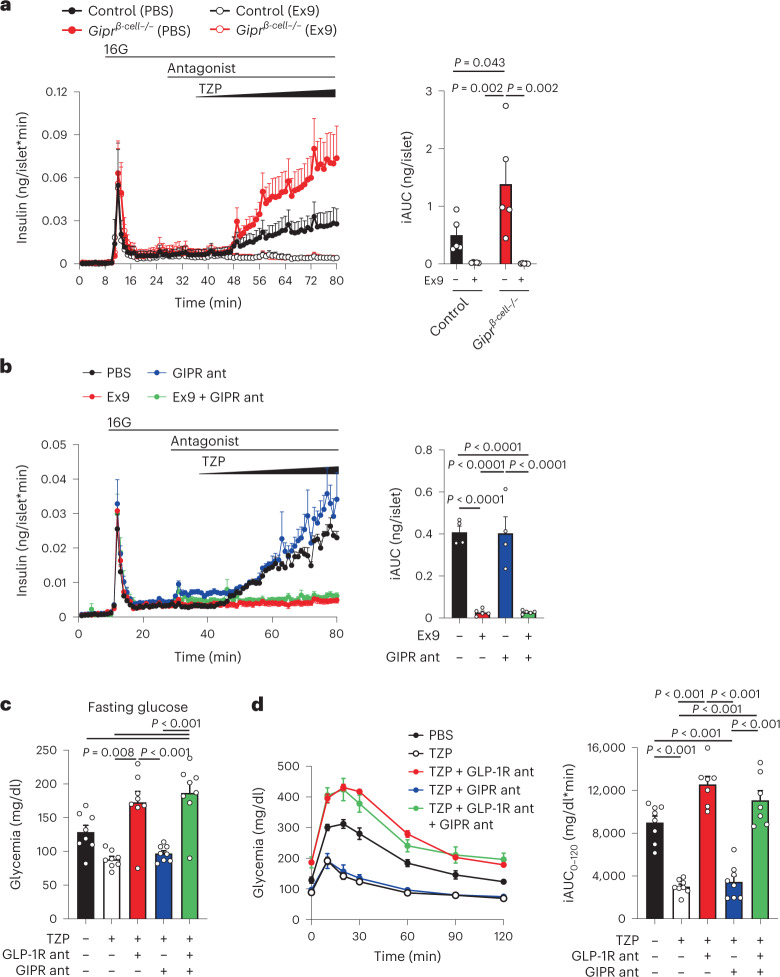
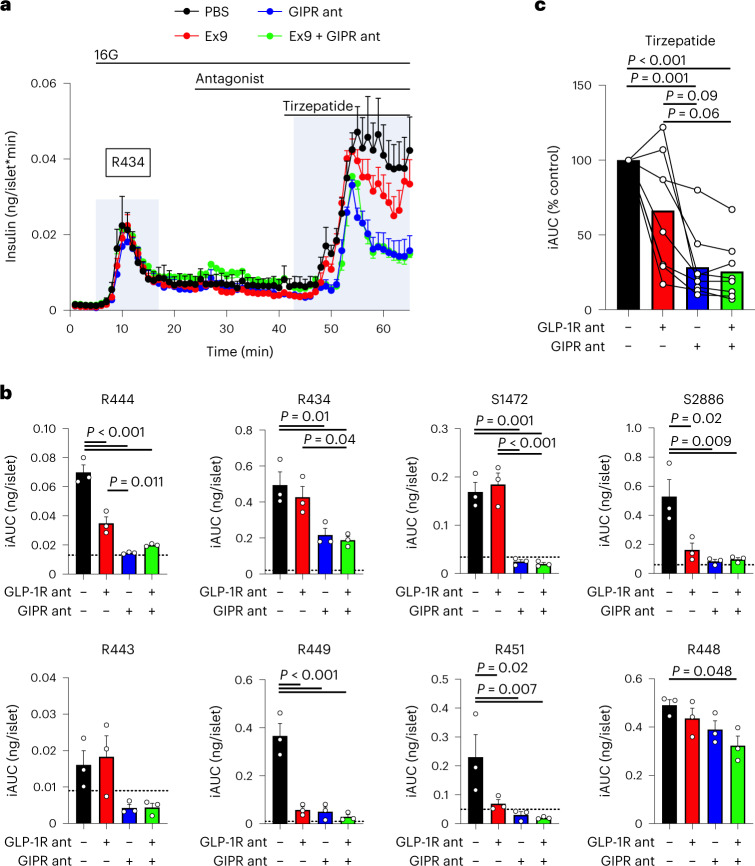
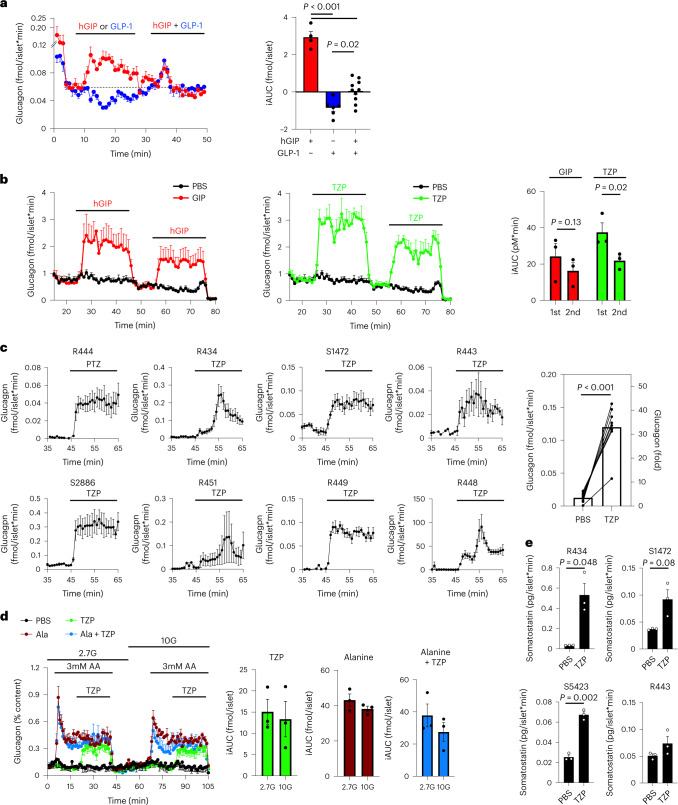
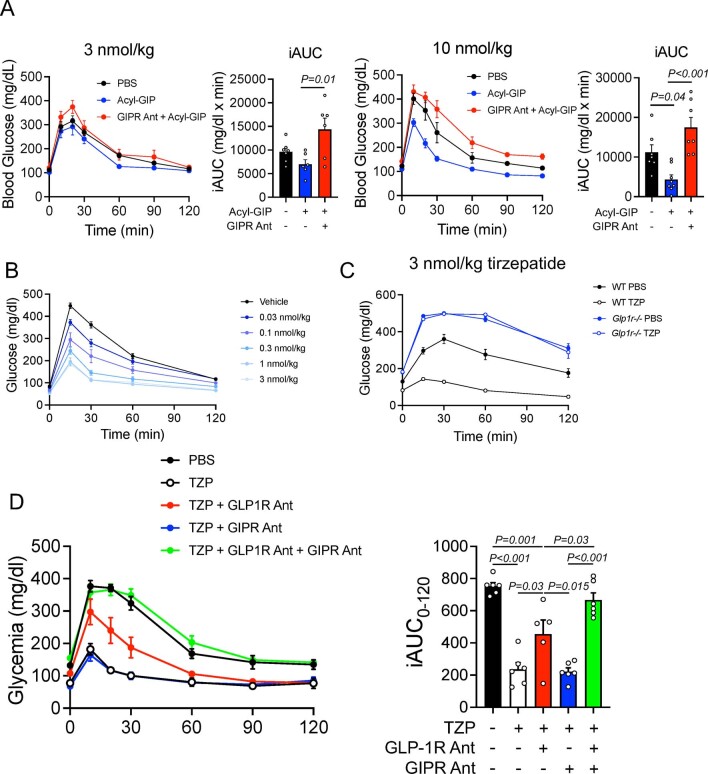
The incretins glucose-dependent insulinotropic polypeptide (GIP) and glucagon-like peptide 1 (GLP-1) mediate insulin responses that are proportionate to nutrient intake to facilitate glucose tolerance 1 . The GLP-1 receptor (GLP-1R) is an established drug target for the treatment of diabetes and obesity 2 , whereas the therapeutic potential of the GIP receptor (GIPR) is a subject of debate. Tirzepatide is an agonist at both the GIPR and GLP-1R and is a highly effective treatment for type 2 diabetes and obesity 3,4 . However, although tirzepatide activates GIPR in cell lines and mouse models, it is not clear whether or how dual agonism contributes to its therapeutic benefit. Islet beta cells express both the GLP-1R and the GIPR, and insulin secretion is an established mechanism by which incretin agonists improve glycemic control 5 . Here, we show that in mouse islets, tirzepatide stimulates insulin secretion predominantly through the GLP-1R, owing to reduced potency at the mouse GIPR. However, in human islets, antagonizing GIPR activity consistently decreases the insulin response to tirzepatide. Moreover, tirzepatide enhances glucagon secretion and somatostatin secretion in human islets. These data demonstrate that tirzepatide stimulates islet hormone secretion from human islets through both incretin receptors.
Overview
The claims and statistics of this paper haven’t been checked yet.
Free: it reads the open-access text and checks the first 5 claims that cite a source we can check. Create a free account to check every claim.
Integrity signals
Registry
Cites
Statistics
Figures
Verification
Claims the paper makes
The claims and statistics of this paper haven’t been checked yet.
Free: it reads the open-access text and checks the first 5 claims that cite a source we can check. Create a free account to check every claim.
Claims other papers make about this one
Each is checked against this paper’s own text: does it say what the citing paper says it does?
The cited source doesn’t support the claim as written.
In the citing paper
“A recent study utilizing a GIPR-blocking antibody conjugated with a potent GLP-1R agonist in obese subjects, has reignited interest in such multi-mode therapy174.”
From Transforming obesity: The advancement of multi-receptor drugs (2024) · cites this paper as [174]
Checked by a reasoning model — may be wrong.
Experimental — accuracy not yet measuredThe source backs part of the claim, not all of it — or backs it for a different population, condition or comparison.
In the citing paper
“So far we know tirzepatide drives insulin secretion primarily via GIPR in human islets [108].”
From Dual and Triple Incretin-Based Co-agonists: Novel Therapeutics for Obesity and Diabetes (2024) · cites this paper as [108]
Experimental — accuracy not yet measuredThe cited source says what the claim attributes to it.
In the citing paper
“GLP-1 and GIP both contribute to incretin re sponses (31), and GIP receptors are important for the incretin action of tirzepatide (32).”
From Effects of Tirzepatide vs Semaglutide on β-Cell Function, Insulin Sensitivity, and Glucose Control During a Meal Test (2024) · cites this paper as [32]
The check wasn’t confident either way, so it gives no verdict — never disputed.
In the citing paper
“The sustained body weight-lowering efficacy at monthly doses that are more than a hundred-fold higher than that commonly employed with selective GLP-1 agonists, without gastrointestinal adverse effects, is difficult to explain.”
From Transforming obesity: The advancement of multi-receptor drugs (2024) · cites this paper as [174]
Experimental — accuracy not yet measuredIn the citing paper
“This is likely explained by the larger amount of weight loss for patients taking Mounjaro attributable to the dual incretin receptor activity on GIP and GLP-1.18,19”
From Trends in glucagon-like peptide 1 receptor agonist use, 2014 to 2022. (2024) · cites this paper as [19]
Self-check
Percentages, sums and reported differences re-computed from the paper’s own numbers.
The self-check needs the paper’s full text.
Citations
Cites
Yung-Chi, C., & Prusoff, W. H. (1973) · Biochemical Pharmacology · doi:10.1016/0006-2952(73)90196-2 · Cited by 12,922
Once-Weekly Semaglutide in Adults with Overweight or Obesity
Wilding, J. P. H., Batterham, R. L., Calanna, S., Davies, M., Van Gaal, L. F., Lingvay, I., McGowan, B. M., Rosenstock, J., Tran, M. T. D., Wadden, T. A., et al. (2021) · New England Journal of Medicine · doi:10.1056/nejmoa2032183 · Cited by 5,205 · cited 3×
“05 nM radioligand (Human/Mouse [125I] GLP-1(7-36)NH2 and Human [125I]GIP(1-42)OH; both PerkinElmer >2,200 Ci mmol, >95% purity) was added to peptide in 100 μl assay buffer (concentration–response curves in DMSO, final concentration of 0.”
BackgroundMethodTirzepatide Once Weekly for the Treatment of Obesity
Jastreboff, A. M., Aronne, L. J., Ahmad, N. N., Wharton, S., Connery, L., Alves, B., Kiyosue, A., Zhang, S., Liu, B., Bunck, M. C., et al. (2022) · New England Journal of Medicine · doi:10.1056/nejmoa2206038 · Cited by 3,838
Tirzepatide versus Semaglutide Once Weekly in Patients with Type 2 Diabetes
Frías, J. P., Davies, M. J., Rosenstock, J., Pérez Manghi, F. C., Fernández Landó, L., Bergman, B. K., Liu, B., Cui, X., & Brown, K. (2021) · New England Journal of Medicine · doi:10.1056/nejmoa2107519 · Cited by 2,096 · cited 4×
“05 nM radioligand (Human/Mouse [125I] GLP-1(7-36)NH2 and Human [125I]GIP(1-42)OH; both PerkinElmer >2,200 Ci mmol, >95% purity) was added to peptide in 100 μl assay buffer (concentration–response curves in DMSO, final concentration of 0.”
BackgroundMethodInfluentialGlucagon-like peptide 1 (GLP-1)
Müller, T. D., Finan, B., Bloom, S. R., D'Alessio, D., Drucker, D. J., Flatt, P. R., Fritsche, A., Gribble, F., Grill, H. J., Habener, J. F., et al. (2019) · Molecular Metabolism · doi:10.1016/j.molmet.2019.09.010 · Cited by 1,868 · cited 4×
“05 nM radioligand (Human/Mouse [125I] GLP-1(7-36)NH2 and Human [125I]GIP(1-42)OH; both PerkinElmer >2,200 Ci mmol, >95% purity) was added to peptide in 100 μl assay buffer (concentration–response curves in DMSO, final concentration of 0.”
BackgroundMethodInfluentialSelf-citationNauck, M. A., Heimesaat, M. M., Orskov, C., Holst, J. J., Ebert, R., & Creutzfeldt, W. (1993) · Journal of Clinical Investigation · doi:10.1172/jci116186 · Cited by 1,651 · cited 4×
“We first used islets isolated from mice with selective deletion of the Gipr in beta cells in combination with the GLP-1R antagonist exendin(9-39) (Ex9).”
BackgroundMethodInfluentialPharmacology, physiology, and mechanisms of incretin hormone action.
Campbell, J. E., & Drucker, D. J. (2013) · Cell Metabolism · doi:10.1016/j.cmet.2013.04.008 · Cited by 1,500 · cited 4×
“05 nM radioligand (Human/Mouse [125I] GLP-1(7-36)NH2 and Human [125I]GIP(1-42)OH; both PerkinElmer >2,200 Ci mmol, >95% purity) was added to peptide in 100 μl assay buffer (concentration–response curves in DMSO, final concentration of 0.”
BackgroundMethodInfluentialSelf-citationCoskun, T., Sloop, K. W., Loghin, C., Alsina-Fernandez, J., Urva, S., Bokvist, K. B., Cui, X., Briere, D. A., Cabrera, O., Roell, W. C., et al. (2018) · Molecular Metabolism · doi:10.1016/j.molmet.2018.09.009 · Cited by 882
Self-citationUnimolecular Dual Incretins Maximize Metabolic Benefits in Rodents, Monkeys, and Humans
Finan, B., Ma, T., Ottaway, N., Müller, T. D., Habegger, K. M., Heppner, K. M., Kirchner, H., Holland, J., Hembree, J., Raver, C., et al. (2013) · Science Translational Medicine · doi:10.1126/scitranslmed.3007218 · Cited by 696 · cited 4×
“We first used islets isolated from mice with selective deletion of the Gipr in beta cells in combination with the GLP-1R antagonist exendin(9-39) (Ex9).”
BackgroundMethodInfluentialSelf-citationTirzepatide is an imbalanced and biased dual GIP and GLP-1 receptor agonist
Willard, F. S., Douros, J. D., Gabe, M. B. N., Showalter, A. D., Wainscott, D. B., Suter, T. M., Capozzi, M. E., van der Velden, W. J. C., Stutsman, C., Cardona, G. R., et al. (2020) · JCI Insight · doi:10.1172/jci.insight.140532 · Cited by 541 · cited 4×
“We first used islets isolated from mice with selective deletion of the Gipr in beta cells in combination with the GLP-1R antagonist exendin(9-39) (Ex9).”
BackgroundMethodInfluentialSelf-citation
Research works printed but not linked: 1
- Sparre-Ulrich AH GIP(3-30)NH2 is a potent competitive antagonist of the GIP receptor and effectively inhibits GIP-mediated insulin, glucagon, and somatostatin release Biochem. Pharmacol. 2017 131 78 88 10.1016/j.bcp.2017.02.012 28237651 · DOI · Paper page
Cited by
GLP-1-based therapies for diabetes, obesity and beyond
Drucker, D. J. (2025) · Nature Reviews Drug Discovery · doi:10.1038/s41573-025-01183-8 · Cited by 236
“Tirzepatide potentiates insulin secretion via activation of both the GIPR and the GLP-1R in human islets 34 .”
Trends in glucagon-like peptide 1 receptor agonist use, 2014 to 2022.
Watanabe, J. H., Kwon, J., Nan, B., & Reikes, A. (2024) · Journal of the American Pharmacists Association · doi:10.1016/j.japh.2023.10.002 · Cited by 216
Obesity and MASLD: Is weight loss the (only) key to treat metabolic liver disease?
Huttasch, M., Roden, M., & Kahl, S. (2024) · Metabolism · doi:10.1016/j.metabol.2024.155937 · Cited by 169
Campbell, J. E., Müller, T. D., Finan, B., DiMarchi, R. D., Tschöp, M. H., & D’Alessio, D. A. (2023) · Cell Metabolism · doi:10.1016/j.cmet.2023.07.010 · Cited by 149
Self-citationTransforming obesity: The advancement of multi-receptor drugs
Kusminski, C. M., Perez-Tilve, D., Müller, T. D., DiMarchi, R. D., Tschöp, M. H., & Scherer, P. E. (2024) · Cell · doi:10.1016/j.cell.2024.06.003 · Cited by 126
Self-citationLiskiewicz, A., Khalil, A., Liskiewicz, D., Novikoff, A., Grandl, G., Maity-Kumar, G., Gutgesell, R. M., Bakhti, M., Bastidas-Ponce, A., Czarnecki, O., et al. (2023) · Nature Metabolism · doi:10.1038/s42255-023-00931-7 · Cited by 110
“And while the GIPR–GLP-1R co-agonist tirzepatide promotes insulin secretion in isolated human islets primarily via the GIP receptor 10 , long-acting GIPR agonists attenuate the emetic effect of GLP-1R agonism in experimental animals 11,12 and hence likely contribute to greater tolerability of…”
BackgroundSelf-citationGlucose-dependent insulinotropic polypeptide (GIP)
Müller, T. D., Adriaenssens, A. E., Ahrén, B., Blüher, M., Birkenfeld, A. L., Campbell, J. E., Coghlan, M. P., D’Alessio, D. D., Deacon, C. F., DelPrato, S., et al. (2025) · Molecular Metabolism · doi:10.1016/j.molmet.2025.102118 · Cited by 114
Self-citationFutile cycles: Emerging utility from apparent futility
Sharma, A. K., Khandelwal, R., & Wolfrum, C. (2024) · Cell Metabolism · doi:10.1016/j.cmet.2024.03.008 · Cited by 94
Varney, M. J., & Benovic, J. (2024) · Pharmacological Reviews · doi:10.1124/pharmrev.123.001015 · Cited by 90
Zaïmia, N., Obeid, J., Varrault, A., Sabatier, J., Broca, C., Gilon, P., Costes, S., Bertrand, G., & Ravier, M. A. (2023) · Cell Reports · doi:10.1016/j.celrep.2023.113326 · Cited by 89
Taktaz, F., Fontanella, R. A., Scisciola, L., Pesapane, A., Basilicata, M. G., Ghosh, P., Franzese, M., Tortorella, G., Puocci, A., Vietri, M. T., et al. (2024) · Cardiovascular Diabetology · doi:10.1186/s12933-024-02319-7 · Cited by 74
“Studies have found that tirzepatide’s hormone-secreting activities depend on GIPR, highlighting the critical role that GIPR plays in the medication’s mechanism of action and its therapeutic effects [19].”
BackgroundDual and Triple Incretin-Based Co-agonists: Novel Therapeutics for Obesity and Diabetes
Gutgesell, R. M., Nogueiras, R., Tschöp, M. H., & Müller, T. D. (2024) · Diabetes Therapy · doi:10.1007/s13300-024-01566-x · Cited by 61
“So far we know tirzepatide drives insulin secretion primarily via GIPR in human islets [108].”
BackgroundSelf-citationThe pharmacological basis for nonpeptide agonism of the GLP-1 receptor by orforglipron
Sloop, K. W., Cox, A. L., Wainscott, D. B., White, A., Droz, B. A., Stutsman, C., Showalter, A. D., Suter, T. M., Dunbar, J. D., Snider, B. M., et al. (2024) · Science Translational Medicine · doi:10.1126/scitranslmed.adp5765 · Cited by 52
Self-citationObesity-related Asthma: A Pathobiology-based Overview of Existing and Emerging Treatment Approaches
Althoff, M. D., Gaietto, K. M., Holguín, F., & Forno, E. (2024) · American Journal of Respiratory and Critical Care Medicine · doi:10.1164/rccm.202406-1166so · Cited by 67
Forny Germano, L., Koehler, J. A., Baggio, L. L., Cui, F., Wong, C. K., Rittig, N., Cao, X., Matthews, D., & Drucker, D. J. (2024) · Molecular Metabolism · doi:10.1016/j.molmet.2024.102019 · Cited by 50
“At the 10 nmol/kg dose employed here, the actions of tirzepatide to produce weight loss are likely mediated through the GLP-1R [40] as tirzepatide is a much weaker agonist at the mouse relative to the human GIPR [41].”
GLP-1 and GIP agonism has no direct actions in human hepatocytes or hepatic stellate cells
Lima, N. D. S., Cabaleiro, A., Nóvoa, E., Riobello, C., Knerr, P. J., He, Y., Esquinas-Román, E. M., González‐García, I., Prévot, V., Schwaninger, M., et al. (2024) · Cellular and Molecular Life Sciences · doi:10.1007/s00018-024-05507-6 · Cited by 62
Self-citationGasbjerg, L. S., Rosenkilde, M. M., Meier, J. J., Holst, J. J., & Knop, F. K. (2023) · Diabetes, Obesity and Metabolism · doi:10.1111/dom.15216 · Cited by 41
“57,63 The species differences may preclude relevant mechanistic conclusions based on preclinical studies.”
BackgroundGLP1R and GIPR expression and signaling in pancreatic alpha cells, beta cells and delta cells
Shilleh, A. H., Viloria, K., Broichhagen, J., Campbell, J. E., & Hodson, D. J. (2024) · Peptides · doi:10.1016/j.peptides.2024.171179 · Cited by 39
“In the perfused rat pancreas, application of 10 nM GIP leads to an ~7-fold increase in somastostatin secretion, which is similar in magnitude to that evoked by GLP1 [85].”
Self-citationTirzepatide shows neuroprotective effects via regulating brain glucose metabolism in APP/PS1 mice
Yang, S., Zhao, X., Zhang, Y., Tang, Q., Li, Y., Du, Y., & yu, P. (2024) · Peptides · doi:10.1016/j.peptides.2024.171271 · Cited by 41
Movahednasab, M., Dianat‐Moghadam, H., Khodadad, S., Nedaeinia, R., Safabakhsh, S., Ferns, G. A., & Salehi, R. (2025) · Diabetology & Metabolic Syndrome · doi:10.1186/s13098-025-01623-w · Cited by 47
Mather, K. J., Mari, A., Heise, T., DeVries, J. H., Hua, M., Urva, S., Coskun, T., Haupt, A., Heine, R. J., Pratt, E., et al. (2024) · The Journal of Clinical Endocrinology & Metabolism · doi:10.1210/clinem/dgae319 · Cited by 35
Wean, J., Kowalsky, A. H., Laker, R., Will, S., Drucker, D. J., Rhodes, C. J., & Seeley, R. J. (2025) · Molecular Metabolism · doi:10.1016/j.molmet.2024.102074 · Cited by 28
“This may indicate a sex difference in the interaction of glutamatergic GIPR neurons and aversion.”
Gasbjerg, L. S., Rasmussen, R. S., Dragan, A., Lindquist, P., Melchiorsen, J. U., Stępniewski, T. M., Schiellerup, S. P., Tordrup, E. K., Gadgaard, S., Kizilkaya, H. S., et al. (2024) · British Journal of Pharmacology · doi:10.1111/bph.16478 · Cited by 34
“…of species revealed that tirzepatide acts primarily through the GLP-1 receptor in murine pancreatic islets, whereas both the GLP-1 and GIP receptor were responsible for the insulin secretion of human pancreatic islets (as expected for islets from non-diabetic humans) (El et al., 2023).”
Gut hormones and bone homeostasis: potential therapeutic implications
Bouvard, B., & Mabilleau, G. (2024) · Nature Reviews Endocrinology · doi:10.1038/s41574-024-01000-z · Cited by 29
Seeking satiety: From signals to solutions
Tschöp, M. H., & Friedman, J. M. (2023) · Science Translational Medicine · doi:10.1126/scitranslmed.adh4453 · Cited by 31
Self-citationSachs, S., Götz, A., Finan, B., Feuchtinger, A., DiMarchi, R. D., Döring, Y., Weber, C., Tschöp, M. H., Müller, T. D., & Hofmann, S. M. (2023) · Cardiovascular Diabetology · doi:10.1186/s12933-023-01940-2 · Cited by 24
“We just recently showed that Tirzepatide is only a weak and partial agonist at the mouse GIPR with a 75-fold less potency at the mouse relative to human GIPR [29].”
BackgroundSelf-citationGlucose-dependent insulinotropic polypeptide receptor signaling alleviates gut inflammation in mice
Hammoud, R., Kaur, K. D., Koehler, J. A., Baggio, L. L., Wong, C. K., Advani, K. E., Yusta, B., Efimova, I., Gribble, F. M., Reimann, F., et al. (2025) · JCI Insight · doi:10.1172/jci.insight.174825 · Cited by 24
“A subset of these antiinflammatory actions were also exhibited by the dual GIPR–GLP-1R coagonist TZP, although TZP is a very weak GIPR agonist at the mouse receptor relative to the human GIP receptor, limiting conclusions about the extent of the antiinflammatory action of TZP in mice (33).”
Anastasiou, I. A., Argyrakopoulou, G., Dalamaga, Μ., & Kokkinos, A. D. (2025) · Current Obesity Reports · doi:10.1007/s13679-025-00623-1 · Cited by 29
“To date, we have learned that tirzepatide mainly stimulates insulin secretion through GIP receptor in human islets [149].”
Reis‐Barbosa, P. H., Marcondes‐de‐Castro, I. A., Marinho, T. D. S., Águila, M. B., & Mandarim‐de‐Lacerda, C. A. (2024) · Diabetes Obesity and Metabolism · doi:10.1111/dom.15820 · Cited by 23
“43 Otherwise, the weight loss treatment cost with Sema and Tzp is also relevant.”
Liang, J., Liu, H., Lv, G., Chen, X., Yang, Z., Hu, K., & Sun, H. (2025) · Lipids in Health and Disease · doi:10.1186/s12944-024-02416-2 · Cited by 31
Therapeutic Targeting of the GIP Receptor—Revisiting the Controversies
Campbell, J. E., & Drucker, D. J. (2025) · Diabetes · doi:10.2337/db25-0393 · Cited by 22
Self-citationPotential Therapeutic Strategies in the Treatment of Metabolic-Associated Fatty Liver Disease
Bołdys, A., Bułdak, Ł., Maligłówka, M., Surma, S., & Okopień, B. (2023) · Medicina · doi:10.3390/medicina59101789 · Cited by 25
“As presented in their recent study on tirzepatide, Muller et al. indicated that signaling via the GIP receptor in human pancreatic islets is crucial for stimulating insulin secretion, unlike in mice where the action of tirzepatide is primarily associated with activity through GLP-1 [42].”
BackgroundRodríguez, R., Hergarden, A. C., Krishnan, S., Morales, M., Lam, D., Tracy, T., Tang, T., Patton, A., Lee, C. R., Pant, A., et al. (2025) · Cell Reports Medicine · doi:10.1016/j.xcrm.2025.102156 · Cited by 34
“23 The lack of β -arrestins recruitment is advantageous for glucose reduction and weight loss associated with GLP-1R agonists.”
Chronic GIPR agonism results in pancreatic islet GIPR functional desensitisation
Davies, I., Adriaenssens, A. E., Scott, W. R., Carling, D., Murphy, K. G., MINNION, J. S., Bloom, S. R., Jones, B. J., & Tan, T. (2025) · Molecular Metabolism · doi:10.1016/j.molmet.2025.102094 · Cited by 20
Proglucagon-derived peptides: human physiology and therapeutic potential
Gasbjerg, L. S., Nielsen, C. K., Suppli, M. P., Grøndahl, M. F. G., Holst, J. J., Knop, F. K., Jeppesen, P. B., & Lund, A. (2025) · Physiological Reviews · doi:10.1152/physrev.00057.2024 · Cited by 22
Fluorescent GLP1R/GIPR dual agonist probes reveal cell targets in the pancreas and brain
de Bray, A., Roberts, A. G., Armour, S. L., Tong, J., Huhn, C., Gatin‐Fraudet, B., Roßmann, K., Shilleh, A. H., Jiang, W., Burgos, N. S. F., et al. (2025) · Nature Metabolism · doi:10.1038/s42255-025-01342-6 · Cited by 21
“To establish whether in vitro pharmacology is mirrored by in vivo efficacy, mice were dosed with either tirzepatide or daLUXendin660 at 10 nmol kg −1 to maximally engage mGLP1R and mGIPR 11,29 .”
InfluentialMasuda, Y., Ohbayashi, K., & Iwasaki, Y. (2025) · Diabetology International · doi:10.1007/s13340-025-00819-9 · Cited by 17
Lyons, S. A., & Beaudry, J. L. (2023) · Endocrinology · doi:10.1210/endocr/bqad153 · Cited by 19
Poly-Agonist Pharmacotherapies for Metabolic Diseases: Hopes and New Challenges
Allard, C., Cota, D., & Quarta, C. (2023) · Drugs · doi:10.1007/s40265-023-01982-6 · Cited by 17
“Furthermore, while GIPR activation appears to be less important in stimulating insulin secretion in mouse islets, human islets may be more dependent on GIPR signalling to allow tirzepatide-mediated effects on insulin secretion [185].”
InfluentialSarzani, R., Landolfo, M., Pentima, C. D., Ortensi, B., Falcioni, P., Sabbatini, L., Massacesi, A., Rampino, I., Spannella, F., & Giulietti, F. (2024) · Frontiers in Medicine · doi:10.3389/fmed.2024.1365183 · Cited by 26
Douros, J. D., Flak, J. N., & Knerr, P. J. (2025) · Frontiers in Endocrinology · doi:10.3389/fendo.2025.1530985 · Cited by 18
Self-citationAdipose Tissue, at the Core of the Action of Incretin and Glucagon-Based Anti-Obesity Drugs
Villarroya, F., Peyrou, M., & Giralt, M. (2025) · Current Obesity Reports · doi:10.1007/s13679-025-00660-w · Cited by 15
“However, this assumption, based on mouse models, should be approached with caution, given the evidence that, unlike in humans, tirzepatide is less potent at the mouse GIPR than mouse GIP [139].”
Lewandowski, S. L., EL, K. M., & Campbell, J. E. (2024) · American Journal of Physiology-Endocrinology and Metabolism · doi:10.1152/ajpendo.00360.2023 · Cited by 16
Self-citationHepatic function of glucagon-like peptide-1 and its based diabetes drugs
Feng, J. N., & Jin, T. (2024) · Medical Review · doi:10.1515/mr-2024-0018 · Cited by 18
“The fi rst one, known as Tirzepatide, is now sold under the brand namesMounjaro and Zepbound, the product of Eli Lily Co. [4, 13 – 15].”
BackgroundDalle, S., & Abderrahmani, A. (2024) · Cells · doi:10.3390/cells13151244 · Cited by 19
“Current strategies aim to improve the existing therapies targeting beta-cell GPCRs (i.e., GLP-1 and GIP receptors) and develop different beta-cell GPCR ligand combinations and new biased agonists selectively activating the GPCR-initiated signaling pathway (for reviews, see [19,21–24,44”
BackgroundLi, Y., Sun, W., Liu, H., & Ruan, X. Z. (2025) · Genes & Diseases · doi:10.1016/j.gendis.2025.101761 · Cited by 22
Dahir, N. S., Gui, Y., Wu, Y., Sweeney, P., Rouault, A. A. J., Williams, S. Y., Gimenez, L. E., Sawyer, T. K., Joy, S. T., Mapp, A. K., et al. (2024) · Journal of Clinical Investigation · doi:10.1172/jci178250 · Cited by 19
“This diabetes drug acts as a dual agonist for GLP1R and the glucose-dependent insulinotropic polypeptide (GIP) in humans (16, 17) but acts as a potent GLP1R agonist in rodents (18).”
BackgroundIslet hormones at the intersection of glucose and amino acid metabolism
White, P. J., Albrechtsen, N. J. W., & Campbell, J. E. (2025) · Nature Reviews Endocrinology · doi:10.1038/s41574-025-01100-4 · Cited by 19
Self-citationA Contemporary Rationale for Agonism of the GIP Receptor in the Treatment of Obesity
Samms, R. J., & Sloop, K. W. (2025) · Diabetes · doi:10.2337/dbi24-0026 · Cited by 27
“Precedence for the latter is supported by studies in humans where variable sensitivity to GLP-1 for insulin secretion was reported (39), and ex vivo experiments of human islets that show variation in the insulinotropic responses of GIPR versus GLP-1R agonism across donor samples (40) (Figs.”
Self-citationClass B1 GPCRs: insights into multireceptor pharmacology for the treatment of metabolic disease
Sangwung, P., Ho, J. D., Siddall, T., Lin, J., Tomás, A., Jones, B. J., & Sloop, K. W. (2024) · American Journal of Physiology-Endocrinology and Metabolism · doi:10.1152/ajpendo.00371.2023 · Cited by 15
Self-citationDouros, J. D., Mowery, S. A., & Knerr, P. J. (2025) · Journal of Clinical Medicine · doi:10.3390/jcm14113812 · Cited by 12
Self-citationPharmacological Advances in Incretin-Based Polyagonism: What We Know and What We Don’t
Novikoff, A., & Müller, T. D. (2024) · Physiology · doi:10.1152/physiol.00032.2023 · Cited by 15
Self-citationGlucagon-like peptide-1 medicines and cancer
Yabut, J. M., & Drucker, D. J. (2026) · Nature Cancer · doi:10.1038/s43018-025-01110-1 · Cited by 16
“The markedly reduced affinity of tirzepatide for the mouse versus human GIPR limits mechanistic conclusions surrounding tirzepatide engagement with the mouse GIPR 69 .”
The evolving landscape of obesity pharmacotherapy
Petersen, J., Finan, B., Johansen, V. B. I., Müller, T. D., & Clemmensen, C. (2026) · Nature Reviews Drug Discovery · doi:10.1038/s41573-026-01427-1 · Cited by 22
“…effects of GIPR agonism on food intake suppression are mediated via the CNS 103–105 , whereas the glucometabolic benefits appear to involve both direct weight loss-independent actions on the endocrine pancreas 106,107 and weight loss-dependent improvements in insulin sensitivity 108 .”
Self-citationYammine, L., Picatoste, B., Abdullah, N., Leahey, R. A., Johnson, E. F., Gómez-Banoy, N., Rosselot, C., Wen, J., Hossain, T., Goncalves, M. D., et al. (2023) · Molecular Metabolism · doi:10.1016/j.molmet.2023.101831 · Cited by 10
“Our results are in accordance with a recent report showing that Tirzepatide has a reduced potency for the mouse GIPR and predominantly targets the mouse GLP-1R [70].”
ResultInsights into the Mechanism of Action of Tirzepatide: A Narrative Review
Galindo, R. J., CHENG, A. Y. Y., Longuet, C., Ai, M., Coşkun, T., Malik, R., Peleshok, J. C., Levine, J. A., & Dunn, J. P. (2025) · Diabetes Therapy · doi:10.1007/s13300-025-01804-w · Cited by 32
“Interestingly, while native GIP and GLP-1 each offset the other’s actions on glucagon secretion, resulting in a net-even effect, tirze-patide has an effect similar to that of human GIP alone in isolated islet cells: stimulation of glucagon secretion [49].”
Wawrzak-Pienkowska, K., Pienkowski, T., Golonko, A., Krupa, A., Warpechowski, M., Płoński, A. F., Mojsak, P., Daniluk, J., Dâbrowski, A., & Kurek, K. (2025) · European Journal of Pharmacology · doi:10.1016/j.ejphar.2025.178290 · Cited by 12
Toki, S., Abney, M., Zhang, J., Rusznak, M., Warren, C. M., Newcomb, D. C., Cahill, K. N., Drucker, D. J., Niswender, K. D., & Peebles, R. S. (2024) · Allergy · doi:10.1111/all.16402 · Cited by 12
Huang, Y., Chen, J.-C., Li, P., Hsu, M., Cheng, C., Meyerowitz‐Katz, G., & Su, P. (2025) · Communications Medicine · doi:10.1038/s43856-025-01066-4 · Cited by 11
“Semaglu-tide ’ s action, by comparison, relies solely on GLP-1 receptors 36 .”
The unexpected role of GIP in transforming obesity treatment
Zandvakili, I., & Pérez–Tilve, D. (2024) · Trends in Endocrinology and Metabolism · doi:10.1016/j.tem.2024.07.022 · Cited by 9
Exploring neutrophils as therapeutic targets in cardiometabolic diseases
Albiero, M., & Baragetti, A. (2025) · Trends in Pharmacological Sciences · doi:10.1016/j.tips.2024.12.003 · Cited by 10
Capozzi, M. E., Bouslov, D., Sargsyan, A., Chan, M. Y., Chen, A., Gray, S. M., Viloria, K., Bareja, A., Douros, J. D., Lewandowski, S. L., et al. (2025) · Journal of Clinical Investigation · doi:10.1172/jci183741 · Cited by 10
“An important caveat of this interpretation is that G α q inhibition with YM254890 is not β cell specific and likely impacts GIPR signaling in other islet cells that can regulate insulin secretion (8, 29–31).”
Self-citationPacini, G., & Åhrén, B. (2023) · Peptides · doi:10.1016/j.peptides.2023.171117 · Cited by 8
“The study was undertaken as an acute study to avoid confounding influence through changes in body weight or other metabolic actions which are initiated by tirzepatide [22,24,25].”
BackgroundGaffey, R. H., Takyi, A. K., & Shukla, A. P. (2024) · Expert Opinion on Investigational Drugs · doi:10.1080/13543784.2024.2377319 · Cited by 8
“Conversely, though this paper also provides evidence of tirzepatide-induced desensitization of GIPR in humanized islet cells [108].”
Oteng, A., Liu, L., Cui, Y., Gavrilova, O., Lü, H., Chen, M., Weinstein, L. S., Campbell, J. E., Lewis, J. E., Gribble, F. M., et al. (2024) · Journal of Clinical Investigation · doi:10.1172/jci182325 · Cited by 8
“Interestingly, a recent study demonstrated that the ability of tirzepatide to promote insulin release from human islets requires the presence of islet GIP receptors (63).”
Self-citationTordrup, E. K., Gadgaard, S., Windeløv, J. A., Holst, J. J., Gasbjerg, L. S., Hartmann, B., & ROSENKILDE, M. M. (2025) · Biochemical Pharmacology · doi:10.1016/j.bcp.2025.116893 · Cited by 7
Rodriguez, N. S., & Hartmann, P. (2025) · Pharmacological Reviews · doi:10.1016/j.pharmr.2025.100058 · Cited by 13
Henriksen, K., Rufer, C., Title, A. C., Jawurek, S., Hartmann, B., Holst, J. J., Knop, F. K., Yesildag, B., & Størling, J. (2025) · Diabetologia · doi:10.1007/s00125-025-06425-3 · Cited by 8
Cardiovascular effects of tirzepatide
Sumithran, P., Russell, A. W., & Zoungas, S. (2025) · Journal of Endocrinology · doi:10.1530/joe-24-0259 · Cited by 12
Zhang, B., Ren, L., Lu, Y., Wang, Z., Zhang, G., Liu, Z., Wang, Y., Zhu, F., Li, X., Jiang, Y., et al. (2025) · Food Chemistry · doi:10.1016/j.foodchem.2025.145695 · Cited by 15
Aydos, D., Aksoy, Z. B., Ünal, M. A., Akçalı, K. C., Bitirim, C. V., & Turan, B. (2025) · Cardiovascular Diabetology · doi:10.1186/s12933-025-02828-z · Cited by 7
“…particularly with consideration of the in silico finding on the higher binding affinity of TZPD to GLP-1R rather than GIP-R, it seems an activation of GLP-1R by an agonist stimulates insulin secretion predominantly through the GLP-1R, with an additional contribution of GIP-R activation [73, 74].”
Schreier, P. C. F., Beyerle, P., Boulassel, S., Beck, A., Novikoff, A., Reinach, P. S., Boekhoff, I., Breit, A., Neuberger, A., Müller, T. D., et al. (2025) · Diabetologia · doi:10.1007/s00125-025-06525-0 · Cited by 6
“Given that species-specific differences have been reported for other multi-agonists such as tirzepatide [35], further studies using human islets are warranted to confirm the involvement of GLP-1R and the Gαq–TRPM5 signalling axis in humans.”
Self-citationDuodenal enteroendocrine cells and GIP as treatment targets for obesity and type 2 diabetes
Bailey, C. J., & Flatt, P. R. (2024) · Peptides · doi:10.1016/j.peptides.2024.171168 · Cited by 6
Lipid regulation of the glucagon receptor family
Oqua, A. I., Manchanda, Y., McGlone, E. R., Jones, B. J., Rouse, S. L., & Tomás, A. (2024) · Journal of Endocrinology · doi:10.1530/joe-23-0335 · Cited by 8
Qiu, X., Wang, R., Wu, Q., Fu, H., Zhu, S., Chen, W., Wang, W., Chen, H., Ji, X., Zhang, W., et al. (2025) · Journal of Clinical Investigation · doi:10.1172/jci177980 · Cited by 6
“Recent studies have shown that GLP-1R and GIPR agonists induce robust insulin secretion and weight loss in T2D (31, 32).”
Mestres‐Arenas, A., Quesada‐López, T., Blasco‐Roset, A., Giralt, M., Villarroya, F., Planavila, A., & Peyrou, M. (2026) · Biomedicine & Pharmacotherapy · doi:10.1016/j.biopha.2026.119057 · Cited by 9
Lonardo, A., & Weiskirchen, R. (2025) · Exploration of Drug Science · doi:10.37349/eds.2025.1008128 · Cited by 7
Li, Q., Cheng, W., Zhang, L., Ran, S., Yu, H., Zhou, W., Wang, Y., Lin, J., Liu, Y., Hong, X., et al. (2026) · Diabetology & Metabolic Syndrome · doi:10.1186/s13098-026-02116-0 · Cited by 5
“GLP-1 receptor activation primarily exerts central anorectic and pancreatic effects, whereas GIP receptor engagement modulates lipid storage and insulin secretion [12, 45–47].”
Research Progress on Peptide Drugs for Type 2 Diabetes and the Possibility of Oral Administration
Yang, X., Lin, R., Feng, C., Kang, Q., Yu, P., Deng, Y., & Jin, Y. (2024) · Pharmaceutics · doi:10.3390/pharmaceutics16111353 · Cited by 6
Sue, M., Watanabe, M., Inoue, A., Katayama, A., Teshigawara, S., Matsushita, Y., Takeda, M., Iseda, I., Eguchi, J., & Hida, K. (2025) · Clinical Case Reports · doi:10.1002/ccr3.70173 · Cited by 4
Ono, Y. O. I., Shinohara, K., Nakashima, H., Miyamoto, R., Hara, A., Ikeda, S., Matsumoto, S., Yoshida, D., Nakashima, R., Matsushima, S., et al. (2026) · Hypertension Research · doi:10.1038/s41440-026-02632-6 · Cited by 3
“Tirzepatide, a novel dual glucose-dependent insulino-tropic polypeptide (GIP) and glucagon-like peptide-1 (GLP-* 1) receptor agonist, has demonstrated substantial ef fi cacy in the treatment of diabetes and obesity [5 – 8].”
Paracrine signaling by pancreatic islet cilia
Adamson, S. E., & Hughes, J. W. (2024) · Current Opinion in Endocrine and Metabolic Research · doi:10.1016/j.coemr.2024.100505 · Cited by 5
Kim, L. B., Liu, S., Richtsmeier, S., Górniak, M., Vikram, A., & Imai, Y. (2025) · Endocrinology · doi:10.1210/endocr/bqaf090 · Cited by 2
“Considering that amino acids are the key regulator of glucagon secretion in vivo (35, 36), glucagon secretion assay by perifusion is increasingly performed in the presence of amino acid mixture (19, 20, 37, 38) or tests response to amino acids (39, 40).”
Fakhir, S. D., Arif, I. S., & Waheed, H. J. (2025) · Pharmacia · doi:10.3897/pharmacia.72.e175259 · Cited by 3
“…insulinotropic peptide (GIP) and glucagon-like peptide-1 (GLP-1) receptors, has recently been approved for the management of T2DM and obesity (Alshehri et al. 2025), exhibiting greater efficacy for glycemic management and weight loss in comparison to monospecific receptor agonists (El et al. 2023).”
The Paradox and Future of GLP-1/GIP Combination Therapies: Efficacy and Mechanisms
Davies, I., Holst, J. J., ROSENKILDE, M. M., & Tan, T. (2026) · Annual Review of Nutrition · doi:10.1146/annurev-nutr-061824-043740 · Cited by 3
GLP-1/GIP Receptor Agonists: Mechanism of Action of Tirzepatide
Oh, T. J. (2024) · Journal of Korean Diabetes · doi:10.4093/jkd.2024.25.2.76 · Cited by 2
SURMOUNTing body weight barriers in type 2 diabetes
Novikoff, A., & Müller, T. D. (2023) · Med · doi:10.1016/j.medj.2023.11.007 · Cited by 2
Self-citationDetermination of glucose in exhaled breath and saliva by ion chromatography
Xu, J., Lou, C., Yanhong, Z. H. U. O., & Yan, Z. H. U. (2025) · Chinese Journal of Chromatography · doi:10.3724/sp.j.1123.2024.06011 · Cited by 2
Cheng, L., Wei, T., Cui, X., Chen, H.-F., & Yu, Z. (2025) · Briefings in Bioinformatics · doi:10.1093/bib/bbaf391 · Cited by 1
“…analog, simultaneously binds to both Gastric inhibitory polypeptide (GIP) and Glucagon-Like Peptide-1 (GLP-1) receptors, harnessing their synergistic effects to improve blood glucose and body weight regulation, offering superior effects over monotherapies targeting either receptor alone [6, 7].”
Clinical Potential of GIP in Type 2 Diabetes and Obesity
Nauck, M. A., Gribble, F. M., Reimann, F., D’Alessio, D. A., & Campbell, J. E. (2026) · Diabetes Care · doi:10.2337/dci25-0141 · Cited by 3
Self-citationCurto, R., Giglione, C., Cannarella, R., Berisha, H., Hattab, R., Condorelli, R. A., Vignera, S. L., Calogero, A. E., & Magni, P. (2026) · Pharmacological Research · doi:10.1016/j.phrs.2026.108278 · Cited by 2
Gut–pancreas–metabolism axis: emerging anti-diabetic roles of gut-derived bioactive molecules
Siddiqui, S., & Kahkasha, K. (2026) · Diabetes Research and Clinical Practice · doi:10.1016/j.diabres.2026.113383 · Cited by 2
Liu, Y., & Liu, X. (2026) · Biomedicine & Pharmacotherapy · doi:10.1016/j.biopha.2026.119717 · Cited by 1
Khan, I., Meenakshi, S., Abubakar, M., Kumar, N., Gaikwad, V. L., Rai, A., & Murti, K. (2026) · Endocrine · doi:10.1007/s12020-026-04686-5 · Cited by 2
“It has been observed across all SURPASS trials, from SURPASS-1 to SURPASS-5 [166, 167 ].”
Lipedema as a hormone-sensitive stromal disorder: a four-pathway translational framework
Viana, D. P. D. C., Invitti, A. L., & Schor, E. (2026) · Frontiers in Cell and Developmental Biology · doi:10.3389/fcell.2026.1903835 · Cited by 1
Regulation of glucose metabolism by incretins: implications for treatment of type 2 diabetes
Saito, R., & Harada, N. (2024) · Diabetology International · doi:10.1007/s13340-024-00781-y · Cited by 2
“In a study using human islets, tirzepatide induced glucose-dependent insulin secretion [28].”
Cheng, L., Wei, T., Cui, X., Chen, H., & Yu, Z. (2025) · doi:10.1101/2025.02.28.640919 · Cited by 1
Müller, T. D. (2023) · Diabetologie und Stoffwechsel · doi:10.1055/a-2102-3927
Self-citationDie Zukunft gehört den Polyagonisten
Glaser, A. (2023) · Info Diabetologie · doi:10.1007/s15034-023-4573-7
Liu, X., Yuan, S.-Q., Ning, Y., Nie, S.-J., Wang, X.-Q., Jia, H.-Y., & Zheng, X.-L. (2024) · World Journal of Diabetes · doi:10.4239/wjd.v15.i6.1291
Metadata
- Authors
- El, K., Douros, J. D., Willard, F. S., Novikoff, A., Sargsyan, A., Perez-Tilve, D., Wainscott, D. B., Yang, B., Chen, A., Wothe, D., Coupland, C., Tschöp, M. H., Finan, B., D’Alessio, D. A., Sloop, K. W., Müller, T. D., & Campbell, J. E.
- Affiliations
- Duke University (US)
- Eli Lilly (United States) (US)
- Helmholtz Munich (DE)
- Corresponding author
- Sloop, Kyle W.
- Müller, Timo D.
- Campbell, Jonathan E.
- ORCID
- Venue
- Nature Metabolism
- Published
- 2023-06-05
- Volume
- 5
- Issue
- 6
- Pages
- 945-954
- ISSN
- 2522-5812 (ISSN-L)
- PMC
- PMC10290954
- OpenAlex
- W4379471679
- Semantic Scholar
- 6b2b13cf8f2f9bff3c2df9080c4a6554ade5d46d
- Cited by
- 118
- References
- 50
- Citations by year
- 2026: 23 · 2025: 42 · 2024: 38 · 2023: 15
- FWCI
- 32.04
- Type
- journal article
- Language
- en
- Open access
- hybrid
- doi.org
- Licence
- cc-by
- creativecommons.org/licenses/by/4.0 (tdm)
- creativecommons.org/licenses/by/4.0 (vor)
- Locations
- Nature Metabolism (publishedVersion, cc-by)
- PubMed Central (publishedVersion, cc-by)
- PubMed (publishedVersion)
- PuSH - Publication Server of Helmholtz Zentrum München (submittedVersion, cc-by)
- mediaTUM – the media and publications repository of the Technical University Munich (Technical University Munich) (submittedVersion)
- Funders
- Eli Lilly and Company
- Leona M. and Harry B. Helmsley Charitable Trust
- Deutsche Forschungsgemeinschaft (DFG-TRR296, GRK2816/1, TRR- 152, SFB1123, TRR296, TRR152, TRR296)
- Novo Nordisk
- National Institutes of Health (DK046492)
- Helmholtz Zentrum München
- National Institute of Diabetes and Digestive and Kidney Diseases (R01DK125353, DK123075, R01DK123075, R37DK046492, DK125353, DK046492, R01DK046492, T32DK007012, K01DK132461)
- H2020 European Research Council (695054)
- HORIZON EUROPE European Research Council (101044445)
- Topics
- Health Sciences › Medicine › Endocrinology, Diabetes and Metabolism › Pancreatic function and diabetes
- Health Sciences › Medicine › Endocrinology, Diabetes and Metabolism › Diabetes Treatment and Management
- Health Sciences › Medicine › Endocrinology, Diabetes and Metabolism › Diabetes Management and Research
- Keywords
- tirzepatide, GIP receptor, GLP-1 receptor, insulin secretion, human pancreatic islets, glucagon secretion, somatostatin secretion, type 2 diabetes, obesity, incretin signaling
- MeSH terms
- Glucagon-Like Peptide Receptors, Tirzepatide, Animals, Cells, Cultured, Gastric Inhibitory Polypeptide, Humans, Hypoglycemic Agents, Insulin, Islets of Langerhans, Mice, Incretins
About these checks
Registry, retraction, Cites and statistics results are computed, not judged, with one exception: a printed reference that no index lists is read once by a model before it counts as a citation error. Claims are extracted by a model and kept only when their quote appears verbatim in the text; each cited source is then checked, with a model’s help, for whether it says what the claim relies on. Those verdicts can be wrong — read the claim’s quote and the cited source before relying on one.
Statistics and arithmetic are recomputed, not judged.
Confidence bands are shown only for fields calibrated on our annotated test set. None is calibrated yet, so no band is shown.
What counts as a claim ›How we measure confidence ›How we check this ›
Are you an author, or do you see a problem with this page? Request a review
Data sources
Bibliographic data: Semantic Scholar, OpenAlex, Crossref.
Contains information from the Semantic Scholar Academic Graph Datasets, made available under the ODC Attribution License (ODC-BY 1.0).
Semantic Scholar’s data is described in: Kinney, R., et al. (2023). The Semantic Scholar Open Data Platform. arXiv:2301.10140.
