

A GIPR antagonist conjugated to GLP-1 analogues promotes weight loss with improved metabolic parameters in preclinical and phase 1 settings
Open accessThe DOI matches its Crossref record; 43 of the 43 references it cites were found in a registry or an index; 15 of the 21 sources its claims cite were checked for support.
Abstract
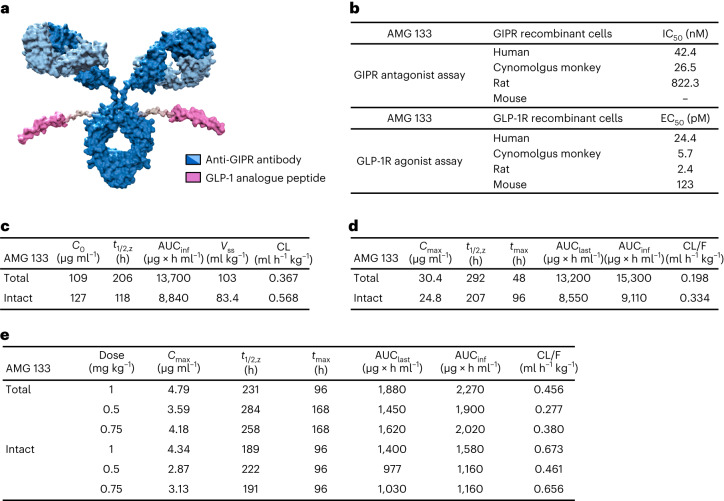
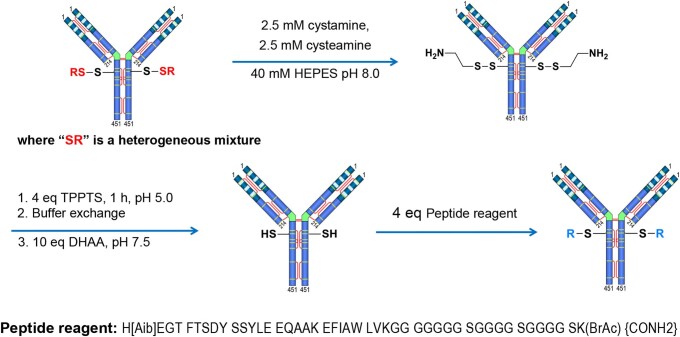
Obesity is a major public health crisis. Multi-specific peptides have emerged as promising therapeutic strategies for clinical weight loss. Glucagon-like peptide-1 (GLP-1) and glucose-dependent insulinotropic polypeptide (GIP) are endogenous incretins that regulate weight through their receptors (R). AMG 133 (maridebart cafraglutide) is a bispecific molecule engineered by conjugating a fully human monoclonal anti-human GIPR antagonist antibody to two GLP-1 analogue agonist peptides using amino acid linkers. Here, we confirm the GIPR antagonist and GLP-1R agonist activities in cell-based systems and report the ability of AMG 133 to reduce body weight and improve metabolic markers in male obese mice and cynomolgus monkeys. In a phase 1, randomized, double-blind, placebo-controlled clinical study in participants with obesity ( NCT04478708 ), AMG 133 had an acceptable safety and tolerability profile along with pronounced dose-dependent weight loss. In the multiple ascending dose cohorts, weight loss was maintained for up to 150 days after the last dose. These findings support continued clinical evaluation of AMG 133.
Overview
CoChat Summary
TL;DR
AMG 133 (maridebart cafraglutide), a bispecific GLP-1R agonist/GIPR antagonist, reduced body weight and improved metabolic markers in preclinical models and showed dose-dependent weight loss with acceptable safety in a phase 1 obesity study. In the multiple ascending dose (MAD) cohorts, weight loss persisted up to 150 days after the last dose.
Key findings
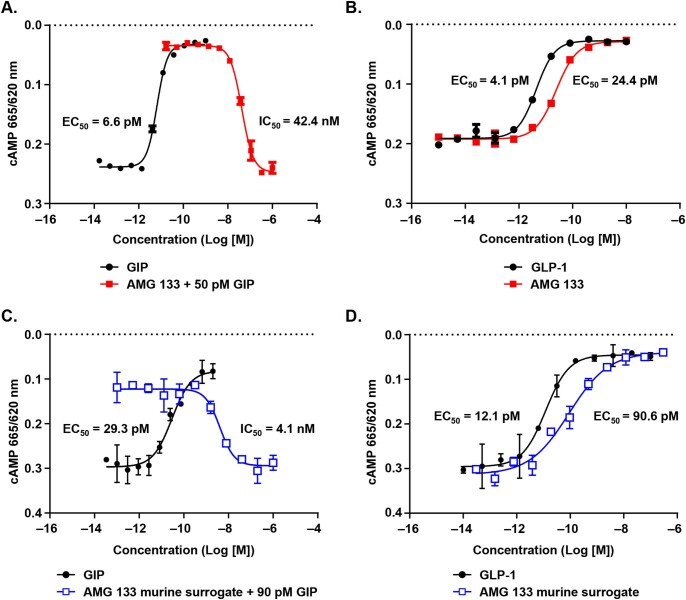
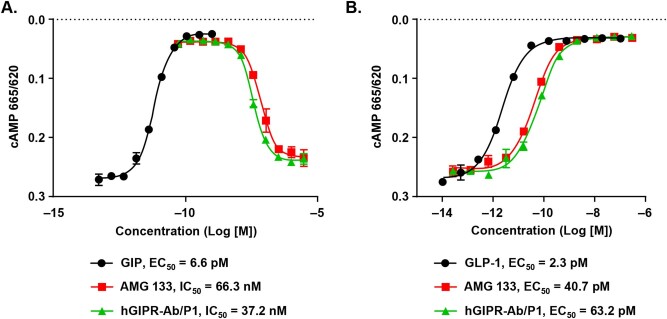
- In cell-based assays, AMG 133 antagonized native GIP at human GIPR with an IC50 of 42.4 nM and at cynomolgus monkey GIPR with an IC50 of 26.5 nM; it also agonized human GLP-1R with an EC50 of 24.4 pM.
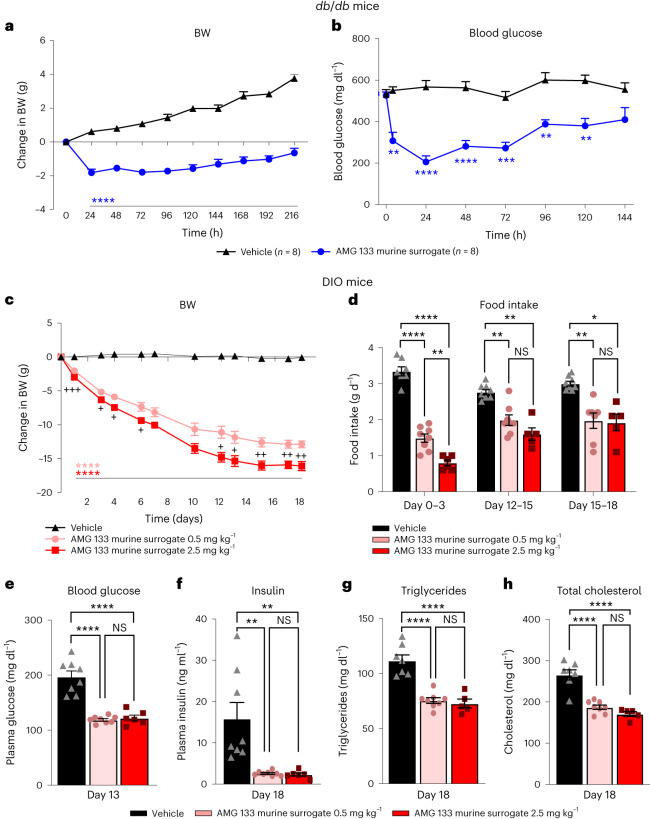
- In male obese mice, the AMG 133 murine surrogate reduced body weight, food intake, blood glucose, plasma insulin, and lipid levels; in one db/db mouse study, maximal body-weight loss occurred within 24 h and remained significant up to 216 h after injection.
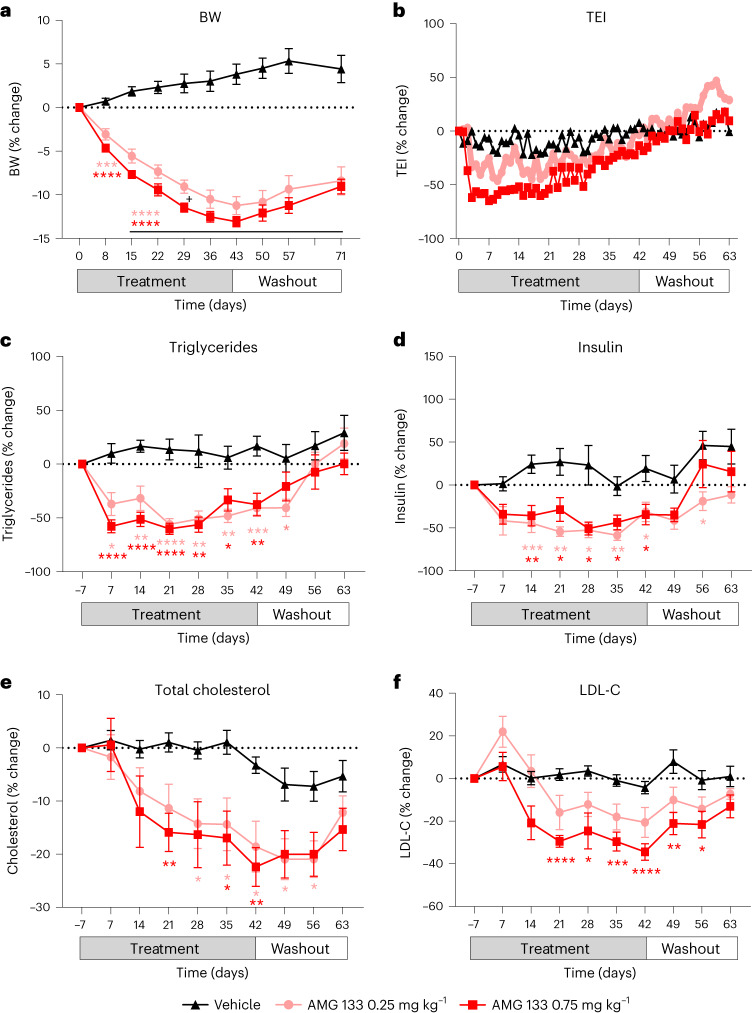
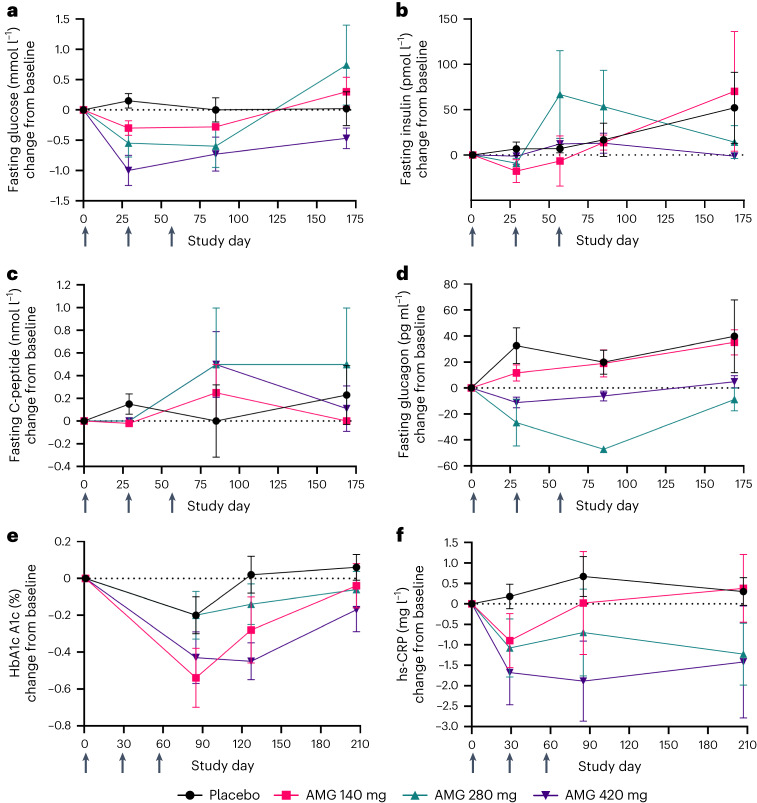
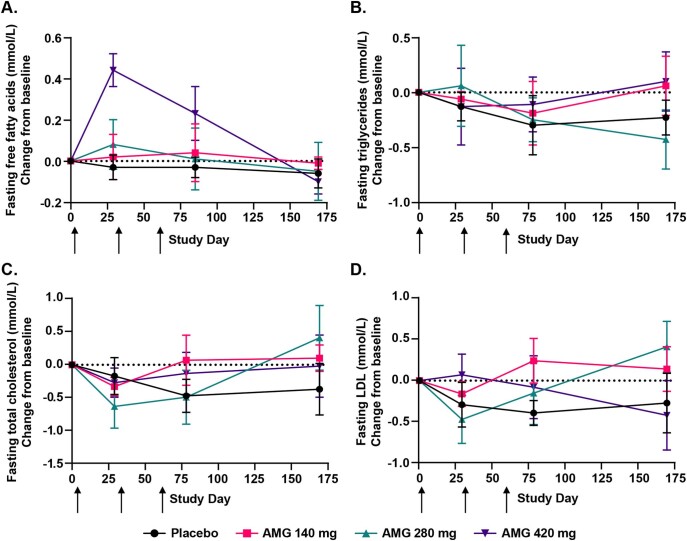
- In obese cynomolgus monkeys, weekly s.c. dosing for 6 weeks reduced body weight by 11% at 0.25 mg kg−1 and 13% at 0.75 mg kg−1, with reductions in total energy intake, fasting triglycerides, fasting insulin, total cholesterol, and LDL-C.
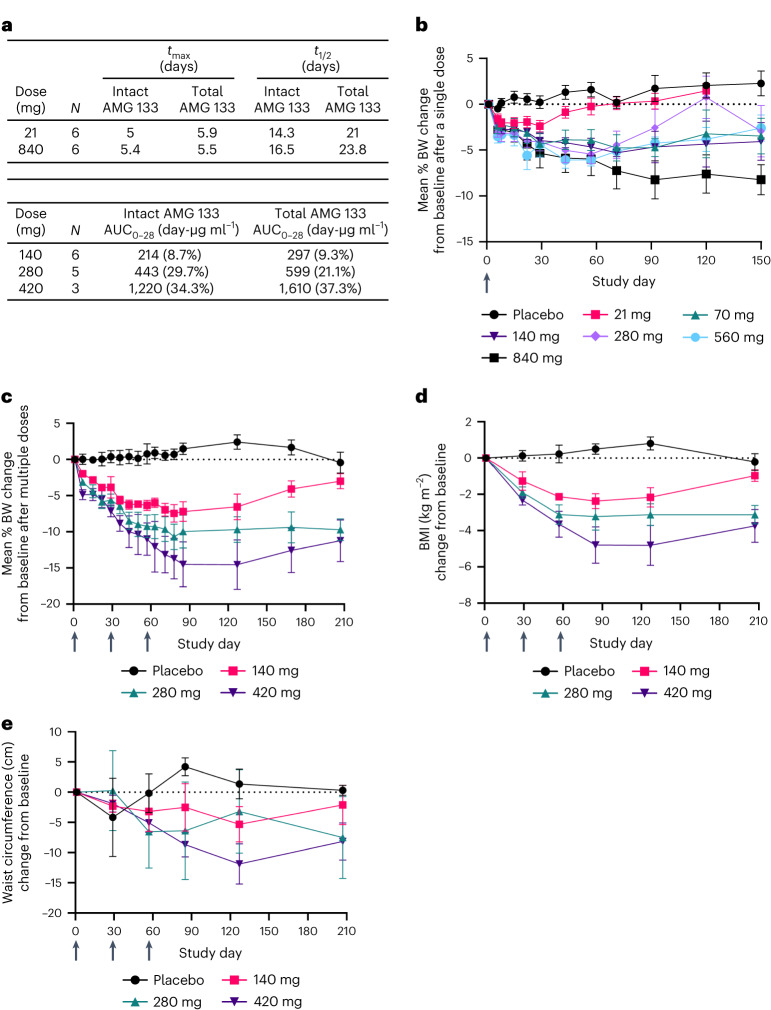
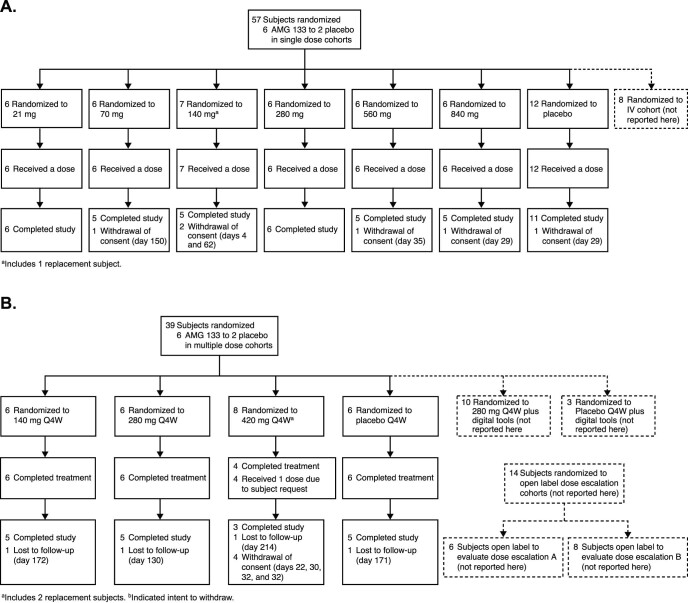
- In the phase 1 study, 49 participants were enrolled into SAD cohorts and 26 into MAD cohorts; in MAD, the 420 mg Q4W group had a mean body-weight change of −14.5% by day 85, and weight loss in that group remained up to −11.2% at 150 days after the last dose.
Methods
- Preclinical program: in vitro receptor assays plus PK/pharmacology studies in male mice (including db/db and DIO models) and obese cynomolgus monkeys; analyses included body weight, food intake, glucose, insulin, and lipid measurements.
- Phase 1 program: first-in-human, double-blind, randomized, placebo-controlled study (NCT04478708) with SAD and MAD cohorts in adults with obesity; 75 participants were in the final reported SAD/MAD dataset.
- Main analyses were descriptive for the clinical study (PK/PD/safety), with PK estimated by noncompartmental analysis; animal studies used ANOVA/mixed-effects methods with multiple-comparison testing.
Limitations
- The paper states the main limitation of the first-in-human study was the small sample size, requiring cautious interpretation of PD effects and metabolic parameters.
- The participants had neither diabetes nor high triglyceride/cholesterol levels, which the paper says limits generalizability of metabolic findings.
- The study had no active comparator arm, and the human trial design could not separate the individual contributions of GIPR antagonism versus GLP-1 agonism to weight loss.
Model-written summary. Check it against the paper before relying on it.
Integrity signals
Registry
Cites
Statistics
Figures
Verification
Claims the paper makes
9 Valid · 1 Not valid · 3 Not checked · 136 Own results and interpretations
The cited sources support only part of this claim — read each source’s verdict below.
In the paper
“In preclinical species and humans, mAbs are known to have minimal brain penetration, at around 0.1–0.4% of mAb plasma concentration35,36.”
§ A GIPR antagonist conjugated to GLP-1 analogues promotes weight loss with improved metabolic parameters in preclinical and phase 1 settings > Discussion
What the sources say
- Partly supportedcites [35] Garg, A. & Balthasar, J. P. Investigation of the influence of FcRn on the distribution of IgG to the brain. AAPS J. 11, 553–557 (2009). 19636712 PMC2758122 sourceExperimental — accuracy not yet measured
Our copy supports the magnitude only for one preclinical species: the RESULTS report that control mice 'showed little distribution of IgG to the brain, as indicated by the low brain/plasma AUC ratio (0.0022±0.00015)' — i.e. ~0.22%, within the cited 0.1–0.4% window — and the DISCUSSION states plasma cumulative exposure was 'approximately 500-fold greater' than brain exposure for the mAb 7E3. However, the study is a mouse experiment with a single IgG1 antibody, and the ratio is a brain/plasma AUC (exposure) ratio rather than a steady-state brain-to-plasma concentration ratio. Nothing in our copy addresses humans: searched for human brain penetration/CNS levels of mAbs, percent-of-plasma figures in humans, and CSF/human data — the only human material is in references (e.g. placental FcRn, Schlachetzki/Pardridge BBB FcRn expression). So the 'in preclinical species and humans' extension and the general 0.1–0.4% range across mAbs are not supported by this source. (LLM, conf=0.75)
- Supportedcites [36] Shah, D. K. & Betts, A. M. Antibody biodistribution coefficients: inferring tissue concentrations of monoclonal antibodies based on the plasma concentrations in several preclinical species and human. MAbs 5, 297–305 (2013). 23406896 PMC3893240 source
The Abstract and Table 1 (Discussion) of Shah & Betts (2013) give the brain antibody biodistribution coefficient as 0.351% of plasma concentration, the lowest of all tissues (~0.3% in the Discussion text), and the Discussion states this value is comparable to literature plasma-to-brain ratios as high as ~500 (0.2%). The paper's hypothesis and validation explicitly cover mouse, rat, monkey and human (Abstract; Results/Discussion on the rat and monkey+human validation data sets), so the cross-species 'minimal brain penetration at roughly 0.1-0.4% of plasma' paraphrase is carried by our copy; the only element not literally stated is the 0.1% lower bound, but the cited range brackets the paper's 0.2-0.351% values. (LLM, conf=0.85)
boosted- Asserted: passes — The authors put it forward as true.
- Checkable: passes — It can be checked against evidence.
- Load-bearing: unclear — It is unclear whether the paper’s conclusions depend on it.
- Based: passes — The paper gives a reason why it holds.
- Partly supported
The cited sources support only part of this claim — read each source’s verdict below.
In the paper
“The safety profile of AMG 133 was similar to that of GLP-1RAs, including unimolecular GLP-1/GIPR agonist peptides6,7.”
§ A GIPR antagonist conjugated to GLP-1 analogues promotes weight loss with improved metabolic parameters in preclinical and phase 1 settings > Discussion
What the sources say
- Partly supportedcites [6] Wilding, J. P. H. et al. Once-weekly semaglutide in adults with overweight or obesity. N. Engl. J. Med. 384, 989–1002 (2021). 33567185 sourceExperimental — accuracy not yet measured
The Safety and Side-Effect Profile section reports adverse events for semaglutide, a GLP-1 receptor agonist, and the discussion (p. 1000) describes its safety findings as consistent with the GLP-1 receptor agonist class. The paper does not assess AMG 133 or unimolecular GLP-1/GIPR agonist peptides, so it cannot establish the claimed similarity for those treatments. (LLM, conf=0.86)
- Not checked — no full text of the sourcecites [7] Jastreboff, A. M., Aronne, L. J. & Stefanski, A. Tirzepatide once weekly for the treatment of obesity. Reply. N. Engl. J. Med. 387, 1434–1435 (2022). 36239655 source
plain- Asserted: passes — The authors put it forward as true.
- Checkable: passes — It can be checked against evidence.
- Load-bearing: unclear — It is unclear whether the paper’s conclusions depend on it.
- Based: passes — The paper gives a reason why it holds.
- Partly supported
The cited sources support only part of this claim — read each source’s verdict below.
In the paper
“and genetic preclinical models30,31,39,40 support the role of GIPR antagonism as a method to promote weight loss and prevent weight gain.”
§ A GIPR antagonist conjugated to GLP-1 analogues promotes weight loss with improved metabolic parameters in preclinical and phase 1 settings > Discussion
What the sources say
- Partly supportedcites [30] Althage, M. C. et al. Targeted ablation of glucose-dependent insulinotropic polypeptide-producing cells in transgenic mice reduces obesity and insulin resistance induced by a high fat diet. J. Biol. Chem. 283, 18365–18376 (2008). 18420580 PMC2440595 sourceExperimental — accuracy not yet measured
Althage et al. (2008) is a genetic preclinical model that supports reduced GIP signalling limiting diet-induced weight gain: the DISCUSSION states 'as in GIPR-/- mice, animals genetically engineered to lack GIP-producing cells also resist development of high fat diet-induced obesity and insulin resistance,' and the Abstract concludes 'total inhibition of GIPR signaling reduces high fat diet-induced obesity and insulin resistance.' However, GIPR antagonism itself is named only as a hypothetical option ('Two potential strategies... would be to 1) inhibit GIPR activity by administration of GIPR antagonists and 2) inhibit GIP production, release, and/or action'); no antagonist was administered in this work, whose own manipulation ablates K cells (ligand loss) rather than blocking the receptor. Nor does the paper show promotion of weight loss: its data are attenuated weight gain on a high fat diet for 35 weeks (55% vs 11% over chow) with no reversal of established obesity, so the 'promote weight loss' and pharmacological-antagonism parts of the claim are not supported by this source. (LLM, conf=0.75)
- Not checked — no full text of the sourcecites [31] Miyawaki, K. et al. Inhibition of gastric inhibitory polypeptide signaling prevents obesity. Nat. Med. 8, 738–742 (2002). 12068290 source
- Partly supportedcites [39] Akbari, P. et al. Sequencing of 640,000 exomes identifies GPR75 variants associated with protection from obesity. Science10.1126/science.abf8683 (2021). PMC10275396 34210852 sourceExperimental — accuracy not yet measured
The ‘Genomic insights at other BMI-associated GPCRs’ section reports that GIPR loss-of-function variants are associated with lower BMI and obesity risk in humans, and confirms impaired signaling in cell experiments. It does not report a GIPR genetic preclinical model or show that GIPR antagonism promotes weight loss or prevents weight gain; the mouse weight-gain experiment concerns Gpr75, not Gipr (Gpr75 deletion section; page not provided). (LLM, conf=0.88)
- Partly supportedcites [40] Zhang, Q. et al. The glucose-dependent insulinotropic polypeptide (GIP) regulates body weight and food intake via CNS-GIPR signaling. Cell Metab. 33, 833–844 (2021). 33571454 PMC8035082 sourceExperimental — accuracy not yet measured
The Results sections on CNS-specific Gipr deletion report lower body weight and reduced weight gain in high-fat-diet-fed mice, supporting prevention of diet-induced weight gain. They do not show that deleting GIPR after obesity develops promotes weight loss; the Discussion says that effect remains to be assessed. (LLM, conf=0.86)
plainstates a cause- Asserted: passes — The authors put it forward as true.
- Checkable: passes — It can be checked against evidence.
- Load-bearing: passes — The paper’s conclusions depend on it.
- Based: passes — The paper gives a reason why it holds.
- Partly supported
The cited sources support only part of this claim — read each source’s verdict below.
In the paper
“Strong genetic evidence such as GWAS has identified single-nucleotide polymorphisms in Japanese, European and North American populations showing that lower expression or function of GIPR is associated with lower BMI27,29,38”
§ A GIPR antagonist conjugated to GLP-1 analogues promotes weight loss with improved metabolic parameters in preclinical and phase 1 settings > Discussion
What the sources say
- Could not verifycites [27] Berndt, S. I. et al. Genome-wide meta-analysis identifies 11 new loci for anthropometric traits and provides insights into genetic architecture. Nat. Genet. 45, 501–512 (2013). 23563607 PMC3973018 sourceExperimental — accuracy not yet measured
The Results (BMI-Related Traits) report SNP associations with BMI, and the Abstract describes a study of European individuals. Neither passage links GIPR expression or function to lower BMI or reports the claimed findings across Japanese, European and North American populations. A search for GIPR found it only in a reference about glucose and insulin responses, not in a passage supporting the claim. (LLM, conf=0.75)
- Partly supportedcites [29] Speliotes, E. K. et al. Association analyses of 249,796 individuals reveal 18 new loci associated with body mass index. Nat. Genet. 42, 937–948 (2010). 20935630 PMC3014648 sourceExperimental — accuracy not yet measured
The Results (Potential functional roles and pathways analyses; page unavailable) report a BMI-associated variant near GIPR, supporting the GWAS association. They do not establish that lower GIPR expression or function is associated with lower BMI. The copy describes participants of European ancestry, not evidence spanning Japanese, European, and North American populations. (LLM, conf=0.87)
- Partly supportedcites [38] Okada, Y. et al. Common variants at CDKAL1 and KLF9 are associated with body mass index in east Asian populations. Nat. Genet. 44, 302–306 (2012). 22344221 PMC3838874 sourceExperimental — accuracy not yet measured
The paper reports a genome-wide significant association between the GIPR locus and BMI in Japanese subjects and identifies the BMI-decreasing A allele of rs11671664 (main text, labeled Abstract in our copy; page unavailable). It also says the locus had previously been associated with BMI in Europeans. It does not show that the allele lowers GIPR expression or function, or report a finding in North American populations. (LLM, conf=0.88)
boostedstates an association- Asserted: passes — The authors put it forward as true.
- Checkable: passes — It can be checked against evidence.
- Load-bearing: passes — The paper’s conclusions depend on it.
- Based: passes — The paper gives a reason why it holds.
- Could not verify
A result the paper reports from its own data — it cites no other source for it, so there is none to check. The quote shows it is in the paper.
In the paper
“The endogenous ligand GIP results in full agonism of the mouse GIPR, and the AMG 133 murine surrogate fully antagonized native GIP (IC50 = 4.1 nM) (Extended Data Fig. 2c).”
§ A GIPR antagonist conjugated to GLP-1 analogues promotes weight loss with improved metabolic parameters in preclinical and phase 1 settings > Results > AMG 133 structure and in vitro potency
plainstates a cause- Asserted: passes — The authors put it forward as true.
- Checkable: passes — It can be checked against evidence.
- Load-bearing: passes — The paper’s conclusions depend on it.
- Based: passes — The paper gives a reason why it holds.
71 more claims
Create a free account to see all 149 claims and to verify the 1 reference still open.
- Probably not a substantial claim. 34
- It may state two separate claims as one. 53
Claims other papers make about this one
Each is checked against this paper’s own text: does it say what the citing paper says it does?
The source backs part of the claim, not all of it — or backs it for a different population, condition or comparison.
In the citing paper
“A monthly subcutaneous injection combining GIP receptor antagonism with GLP-1 RA, and seems to protect against diet-induced obesity as evidenced by models lacking GIP receptor activity.52”
From GLP-1 single, dual, and triple receptor agonists for treating type 2 diabetes and obesity: a narrative review (2024) · cites this paper as [52]
Experimental — accuracy not yet measuredThe cited source says what the claim attributes to it.
In the citing paper
“Maridebart cafraglutide is an antagonistic GIP receptor antibody coupled with a GLP-1 receptor agonist.153”
From GLP-1 receptor agonists and next-generation incretin-based medications: metabolic, cardiovascular, and renal benefits (2026) · cites this paper as [153]
The cited source says what the claim attributes to it.
In the citing paper
“In a phase 1, randomized, double-blind placebo-controlled trial in individuals with obesity (without diabetes), this drug resulted in weight loss of 15% over 12 weeks at its highest dose of 420 mg (Table 2).52”
From GLP-1 single, dual, and triple receptor agonists for treating type 2 diabetes and obesity: a narrative review (2024) · cites this paper as [52]
In the citing paper
“Maritide, the GIPR antagonist/GLP-1RA, resulted in ∼16% body weight loss that was maintained up to a 70% level (hence just 30% of lost weight regained) for 5 months after just 3 monthly doses (128)”
From GLP-1 and the Neurobiology of Eating Control: Recent Advances (2025) · cites this paper as [128]
Self-check
Percentages, sums and reported differences re-computed from the paper’s own numbers.
Each contradiction between two passages listed here was confirmed by an independent check.
Rated minor: it would not touch a result — a value no result rests on, a p-value that stays on the same side of the significance level, or a conflict that is clerical, resolved elsewhere in the paper, or outside its own findings.
In the paper
§ A GIPR antagonist conjugated to GLP-1 analogues promotes weight loss with improved metabolic parameters in preclinical and phase 1 settings > Methods > Phase 1 clinical study
“This paper reports final analysis data from the five SAD and three MAD cohorts (75 participants total) with a date of January 2023.”
§ A GIPR antagonist conjugated to GLP-1 analogues promotes weight loss with improved metabolic parameters in preclinical and phase 1 settings > Results > AMG 133 clinical study
“A total of 49 participants were enroled into seven SAD cohorts, randomized to receive AMG 133 ranging from 21 to 840 mg (n = 37) or placebo (n = 12) and followed for up to 150 d.”
Rated minor: it would not touch a result — a value no result rests on, a p-value that stays on the same side of the significance level, or a conflict that is clerical, resolved elsewhere in the paper, or outside its own findings.
In the paper
§ A GIPR antagonist conjugated to GLP-1 analogues promotes weight loss with improved metabolic parameters in preclinical and phase 1 settings > Results > AMG 133 clinical study
“A total of 49 participants were enroled into seven SAD cohorts, randomized to receive AMG 133 ranging from 21 to 840 mg (n = 37) or placebo (n = 12) and followed for up to 150 d.”
§ A GIPR antagonist conjugated to GLP-1 analogues promotes weight loss with improved metabolic parameters in preclinical and phase 1 settings > Methods > Phase 1 clinical study
“The SAD evaluated AMG 133 doses ranging from 21 mg to 840 mg in six cohorts.”
Citations
Cites
Guide for the Care and Use of Laboratory Animals: Eighth Edition
(2011) · doi:10.17226/12910 · Cited by 16,199
Genetics of Food Intake Self-Regulation in Childhood: Literature Review and Research Opportunities
Faith, M. S., Carnell, S., & Kral, T. V. E. (2013) · Human Heredity · doi:10.1159/000353879 · Cited by 7,601
Once-Weekly Semaglutide in Adults with Overweight or Obesity
Wilding, J. P. H., Batterham, R. L., Calanna, S., Davies, M., Van Gaal, L. F., Lingvay, I., McGowan, B. M., Rosenstock, J., Tran, M. T. D., Wadden, T. A., et al. (2021) · New England Journal of Medicine · doi:10.1056/nejmoa2032183 · Cited by 5,205 · cited 1×
“The safety profile of AMG 133 was similar to that of GLP-1RAs, including unimolecular GLP-1/GIPR agonist peptides 6,7 .”
Tirzepatide Once Weekly for the Treatment of Obesity
Jastreboff, A. M., Aronne, L. J., Ahmad, N. N., Wharton, S., Connery, L., Alves, B., Kiyosue, A., Zhang, S., Liu, B., Bunck, M. C., et al. (2022) · New England Journal of Medicine · doi:10.1056/nejmoa2206038 · Cited by 3,838 · cited 1×
“Unimolecular multi-specific agonist peptides targeting multiple incretin pathways have emerged as promising therapeutic strategies for weight loss 7,8,18–26 .”
Association analyses of 249,796 individuals reveal 18 new loci associated with body mass index
MAGIC, Speliotes, E. K., on behalf of Procardis Consortium, Willer, C. J., Berndt, S. I., Monda, K. L., Thorleifsson, G., Jackson, A. U., Allen, H. L., Lindgren, C. M., et al. (2010) · Nature Genetics · doi:10.1038/ng.686 · Cited by 2,912 · cited 1×
“…polymorphisms in Japanese, European and North American populations showing that lower expression or function of GIPR is associated with lower BMI 27,29,38 and genetic preclinical models 30,31,39,40 support the role of GIPR antagonism as a method to promote weight loss and prevent weight gain.”
A role for glucagon-like peptide-1 in the central regulation of feeding
Turton, M. D., O'Shea, D., Gunn, I., Beak, S. A., Edwards, C. M. B., Meeran, K., Choi, S. J., Taylor, G. M., Heath, M. M., Lambert, P. D., et al. (1996) · Nature · doi:10.1038/379069a0 · Cited by 1,950 · cited 1×
“In addition to the incretin effects, GLP-1 promotes satiety 11 and GIP promotes lipid storage and metabolic regulation 12–15 .”
Semaglutide in Patients with Heart Failure with Preserved Ejection Fraction and Obesity
Kosiborod, M. N., Abildstrøm, S. Z., Borlaug, B. A., Butler, J., Rasmussen, S., Davies, M., Hovingh, G. K., Kitzman, D. W., Lindegaard, M. L., Møller, D. V., et al. (2023) · New England Journal of Medicine · doi:10.1056/nejmoa2306963 · Cited by 1,669 · cited 1×
“In a recent clinical study, individuals with heart failure and preserved ejection fraction who received weekly semaglutide injections (2.4 mg) for 52 weeks experienced substantially improved symptoms and physical function compared to the placebo group 9 .”
InfluentialRubino, D., Abrahamsson, N., Davies, M., Hesse, D., Greenway, F. L., Jensen, C., Lingvay, I., Mosenzon, O., Rosenstock, J., Rubio, M. A., et al. (2021) · JAMA · doi:10.1001/jama.2021.3224 · Cited by 1,444
Obesity: definition, comorbidities, causes, and burden.
Apovian, C. M. (2016) · PubMed · Cited by 1,384
Triple-Hormone-Receptor Agonist Retatrutide for Obesity — A Phase 2 Trial
Jastreboff, A. M., Kaplan, L. M., Frías, J. P., Wu, Q., Du, Y., Gurbuz, S., Coskun, T., Haupt, A., Milicevic, Z., & Hartman, M. L. (2023) · New England Journal of Medicine · doi:10.1056/nejmoa2301972 · Cited by 1,174
Cited by
Items 101–200 of 212
Lafferty, R. A., Flatt, P. R., Gault, V. A., & Irwin, N. (2024) · Journal of Endocrinology · doi:10.1530/joe-23-0339 · Cited by 8
Advances in incretin therapies for targeting cardiovascular disease in diabetes
Roberts, T. D., Hutchinson, D. S., Wootten, D. L., Blasio, M. J. D., & Ritchie, R. H. (2025) · Journal of Molecular and Cellular Cardiology · doi:10.1016/j.yjmcc.2025.03.007 · Cited by 7
Alqatari, S. G., Alwaheed, A., Hasan, M. A., Argan, R. A., Alabdullah, M. M., & Shubbar, M. D. A. (2025) · Medicina · doi:10.3390/medicina61071292 · Cited by 11
“In a Phase 1 clinical trial involving individuals with obesity, monthly administration of AMG 133 led to dose-dependent weight loss without major safety concerns [39].”
Weight management treatment in obesity
Rubio, M. Á., & Carreiro, S. M. (2025) · Medicina Clínica (English Edition) · doi:10.1016/j.medcli.2025.107152 · Cited by 7
Obesity and emerging intervention strategies: Mechanistic insights and novel drug targets
Feng, X., Li, S., Li, J., & Su, Z. (2025) · Chinese Medical Journal · doi:10.1097/cm9.0000000000003919 · Cited by 7
“[168] In summary, combination therapies demonstrate superior outcomes over monotherapies by simultaneously targeting complementary pathways.”
Excess and Dysfunctional Fat as a Primary Driver of Heart Failure With Preserved Ejection Fraction
Packer, M., Ho, J. E., Petrie, M. C., Schiattarella, G. G., Butler, J., Lam, C. S. P., Vaduganathan, M., Zannad, F. M., & Borlaug, B. A. (2026) · JACC Heart Failure · doi:10.1016/j.jchf.2026.103046 · Cited by 10
New insights into the regulation of GIPR signalling
Manchanda, Y., & Tomás, A. (2024) · Nature Reviews Endocrinology · doi:10.1038/s41574-024-01027-2 · Cited by 5
“In parallel, strategies based on antagonizing rather than agonizing the GIPR have also shown promising results in phase I clinical trials 2 .”
Hes, C., Tomlinson, A. J., Michielsen, L., Murdoch, H. J., Soltani, F., Kokoeva, M. V., & Sabatini, P. V. (2025) · eLife · doi:10.7554/elife.106217 · Cited by 9
“The recent success of DVC-based therapies ( Véniant et al., 2024 ; Breen et al., 2020 ) has moved DVC biology to the forefront of weight control therapies and there is now clear clinical impetus to fully define DVC cell types and their functions.”
The Goldilocks for chronic weight management—Balancing quantity with quality of weight loss
Henriksen, K., Chakravarthy, M. V., Bager, C. L., Larsen, A. T., Mohamed, K. E., & Karsdal, M. A. (2025) · Diabetes Obesity and Metabolism · doi:10.1111/dom.16379 · Cited by 4
“…co-agonist 133 ), CT-388 (GLP-1/GIP receptor co-agonist 134 ), VK-2735 (GLP-1/GIP receptor co-agonist), 135 NN9542 GLP-1/GIP receptor co-agonist (Novonordisk.com), Maritide (AMG133, GLP-1 receptor agonist, GIP receptor antagonist 136 ) and retatrutide (GLP-1/GIP/Glucagon receptor triple-agonist).”
In vivo antibody-selective conjugation technology for long-acting drugs
Kitahara, K., Rondon, A., Miller, E., Mak, H. H., Loas, A., & Pentelute, B. L. (2025) · Chem · doi:10.1016/j.chempr.2025.102705 · Cited by 4
The Natural History of Prediabetes and Cardiovascular Disease in the Pediatric Population
Accacha, S. D., Barillas, J., Gabriel, L., Srivastava, A., Gulkarov, S., Apsan, J., Leon, J. D., & Reiss, A. B. (2026) · Biomedicines · doi:10.3390/biomedicines14010198 · Cited by 4
“This treatment consists of two identical GLP-1 peptide analogs that are linked to a single monoclonal antibody that acts as an antagonist for the GIP receptor [403].”
Korus, S., Cembrowska-Lech, D., Kłoda, K., & Stachowska, E. (2026) · Journal of Translational Medicine · doi:10.1186/s12967-026-07702-4 · Cited by 8
Ho, M. J., Liew, C. F., Tan, N. A. M. R., Morita, A., & Oon, H. H. B. (2026) · Expert Review of Clinical Immunology · doi:10.1080/1744666x.2026.2665732 · Cited by 8
Obesity-driven hunger: From pathophysiology to intervention
Azemi, A. K., Mutalub, Y. B., Abdulwahab, M., Rasool, A. H. G., Mustapha, S., Suhaimi, S. Q. A., & Mokhtar, S. S. (2025) · Obesity Medicine · doi:10.1016/j.obmed.2025.100588 · Cited by 8
Advances in Drug Treatments for Companion Animal Obesity
Zomer, H. D., & Cooke, P. S. (2024) · Biology · doi:10.3390/biology13050335 · Cited by 10
“Recent pre-clinical and Phase 1 clinical studies [48] have demonstrated the ability of AMG 133 (maridebart cafraglutide), a molecule with dual GIP receptor antagonist and GLP-1 receptor agonist activity, to produce weight loss and metabolic benefits in mice, monkeys and humans.”
BackgroundInjectables Pharmacotherapies for Obesity: Mechanisms, Efficacy, and Aesthetic Implications
Gomes, J. M., Ferreira, A. C. M., & Barbosa, A. D. P. (2025) · Obesities · doi:10.3390/obesities5020022 · Cited by 8
Manchanda, Y., Jones, B. J., Carrat, G., Ramchunder, Z., Marchetti, P., Leclerc, I., Thennati, R., BURADE, V. S., Natarajan, M., Shahi, P. K., et al. (2025) · Diabetes Obesity and Metabolism · doi:10.1111/dom.16652 · Cited by 5
Greenhill, C. (2024) · Nature Reviews Endocrinology · doi:10.1038/s41574-024-00967-z · Cited by 4
Wu, B., Falsey, J. R., Netirojjanakul, C., Herberich, B., Holder, J. R., Sham, K. K. C., Aral, J., Forsythe, N., Walker, K. W., Lu, S.-C., et al. (2026) · Journal of Medicinal Chemistry · doi:10.1021/acs.jmedchem.6c00032 · Cited by 4
Self-citationAl‐Zaid, B., & Al‐Sabah, S. (2025) · Frontiers in Pharmacology · doi:10.3389/fphar.2025.1528295 · Cited by 5
How rival weight-loss drugs fare at treating obesity, diabetes and more
Lenharo, M. (2024) · Nature · doi:10.1038/d41586-024-02716-8 · Cited by 4
Future Medications for Obesity and Clinical Implications
Garvey, W. T. (2024) · Diabetes Spectrum · doi:10.2337/dsi24-0004 · Cited by 3
Incretin Signaling Neighborhoods and Adverse Drug Reactions
Wright, S. C., Lindquist, P., ROSENKILDE, M. M., & Lauschke, V. M. (2025) · The Annual Review of Pharmacology and Toxicology · doi:10.1146/annurev-pharmtox-062124-015046 · Cited by 3
Wang, Z., Zhu, Y., Wang, G., Sun, M., Yao, W., & Ba, Q. (2025) · Journal of Ethnopharmacology · doi:10.1016/j.jep.2025.120587 · Cited by 5
Self-citationThermogenic Targets for Obesity Management in the Era of Incretin-Based Therapies
Soliman, S., Andrews‐Dickert, R., Ročić, P., & Mitov, M. I. (2025) · Pharmaceuticals · doi:10.3390/ph18101519 · Cited by 3
Advances in GLP-1 receptor agonists delivery systems for obesity and diabetes
Abbasi, M., Sun, K., Huggins, K. W., Heath, B., DeLoit, H., McGinness, L., & Mccamy, K. (2026) · Acta Pharmaceutica Sinica B · doi:10.1016/j.apsb.2026.01.035 · Cited by 11
GIPR signaling modulates PYY-induced hypophagia and malaise in rodents
Borner, T., Pataro, A. M., Curtis, G. R., Alonso, B., Hu, J., Fortin, S. M., Koul‐Tiwari, R., Hughes, E. A. G., Kong, J., Jordan, E., et al. (2026) · Molecular Metabolism · doi:10.1016/j.molmet.2026.102334 · Cited by 2
GLP-1-based combination strategies for weight loss: Multi-target agents and combination therapies
Wang, X., Lin, R., Sun, Q., Xin, X., & Feng, Q. (2026) · Pharmacological Research · doi:10.1016/j.phrs.2026.108331 · Cited by 2
Kukova, L., Munir, K. M., Sayeed, A., & Davis, S. N. (2024) · Expert Opinion on Drug Metabolism & Toxicology · doi:10.1080/17425255.2024.2401589 · Cited by 4
“Maridebart cafraglutide/AMG133, on the other hand, is a human monoclonal antibody to the GIP receptor conjugated to a GLP-1RA [113] (Table 3).”
Characterization of Interchanging Incretin Analogs in Clinical Practice: A Descriptive Report
Hvisdas, C., Goode, N., Kim, D. H., Silvey, M. J., & Flood, J. J. (2024) · Endocrine Practice · doi:10.1016/j.eprac.2024.09.117 · Cited by 2
Innovative approaches to the treatment of obesity: from pharmacotherapy to nanomedicine
Romantsova, T. I. (2024) · Obesity and metabolism · doi:10.14341/omet13184 · Cited by 6
Zhou, C., Gong, B., Liu, X., Hu, G., & Sun, L. (2025) · European Journal of Pharmacology · doi:10.1016/j.ejphar.2025.177681 · Cited by 2
Sedrak, P., Verma, R., Verma, M., & Connelly, K. A. (2025) · Canadian Journal of Cardiology · doi:10.1016/j.cjca.2025.03.037 · Cited by 6
Pagano, S., Somm, E., Jornayvaz, F. R., & Vuilleumier, N. (2025) · European Journal of Clinical Investigation · doi:10.1111/eci.70092 · Cited by 4
Zhang, J., Xu, H., Dong, Y., Feng, J., & Li, R. (2025) · European Journal of Medicinal Chemistry · doi:10.1016/j.ejmech.2025.118024 · Cited by 2
Fármacos basados en GLP-1: mecanismos implicados en el tratamiento de la obesidad
Salvador, J. (2025) · Medicina Clínica (English Edition) · doi:10.1016/j.medcli.2025.107035 · Cited by 13
EndoCompass project: research roadmap for diabetes, obesity, and metabolism
Mathieu, C., Meireles, M., Pagotto, U., Wabitsch, M., Banerjee, I., Bartolomé, A., Battelino, T., Beck, J., Chiarelli, F., León, D. D. D., et al. (2025) · European Journal of Endocrinology · doi:10.1093/ejendo/lvaf065 · Cited by 5
Expression and functional diversity of the glucagon-like peptide-1 receptor across tumor types
Alba, M. M., Lee, W. H., Lee, J. S. H., Lu, Z., Stiles, B. L., & Ligumsky, H. (2025) · Discover Oncology · doi:10.1007/s12672-025-04097-4 · Cited by 4
Kolb, T., Licht, L., Tam, F. I., Stender, E. M., Ohme, M., Borsini, A., Ehrlich, S., & Perakakis, N. (2025) · Progress in Neuro-Psychopharmacology and Biological Psychiatry · doi:10.1016/j.pnpbp.2025.111576 · Cited by 4
Advances in Therapeutic Antibody Discovery and Development Targeting G Protein‐Coupled Receptors
Hutchings, C. J., Ünsal, S., Rappas, M., Barnes, M., Waldhoer, M., Holland, B., & Culka, M. (2026) · Pharmacology Research & Perspectives · doi:10.1002/prp2.70216 · Cited by 3
A New Era in the Medical Management of Obesity
Porterfield, F., Fatima, A., Boaventura, B. C. B., Madhar, A., Srivastava, G., & Stanford, F. C. (2026) · Annual Review of Medicine · doi:10.1146/annurev-med-043024-125437 · Cited by 3
Glucagon-like peptide-1–based pharmacological treatment of obesity: a narrative review
Son, J. W. (2026) · Journal of Korean Medical Association · doi:10.5124/jkma.25.0138 · Cited by 1
“[ 16 ].”
GIP receptor agonism suppresses inflammation-induced aversion and food intake via distinct circuits
Province, H. S., Hayes, N. W., Leong, N. A., Tang, E., Lorch, C. M., Pekerman, A., Xia, J. L., & Beutler, L. R. (2026) · Cell Reports · doi:10.1016/j.celrep.2026.117116 · Cited by 3
Zhou, S., Hu, W., Kan, J., Zalán, Z., Chengjun, J., & Du, M. (2026) · Food Bioscience · doi:10.1016/j.fbio.2026.108974 · Cited by 1
GLP ‐1 Receptor Agonists for Treating Alcohol Use Disorder: A Critical Review
Woo, S., Zhu, G., Castro, C., Phuong, A., Roy, A., Davis, C. N., & Kranzler, H. R. (2026) · Alcoholism Clinical and Experimental Research · doi:10.1111/acer.70312 · Cited by 3
GIP in Cardiovascular and Kidney Disease: From Physiology to Pharmacology
Fano, M. D., Haurum, L. L., Andreasen, C. R., Porcellati, F., & Andersen, A. (2026) · Diabetes Obesity and Metabolism · doi:10.1111/dom.70888 · Cited by 5
Curto, R., Giglione, C., Cannarella, R., Berisha, H., Hattab, R., Condorelli, R. A., Vignera, S. L., Calogero, A. E., & Magni, P. (2026) · Pharmacological Research · doi:10.1016/j.phrs.2026.108278 · Cited by 2
D’Alessio, D. A., & Campbell, J. E. (2026) · Diabetes Obesity and Metabolism · doi:10.1111/dom.70894 · Cited by 2
Recent developments in GPCR signalling in appetite regulation
Brittain, H. R., & Gorvin, C. M. (2026) · Bioscience Reports · doi:10.1042/bsr20250120 · Cited by 1
“This led to simultaneous development of peptide conjugates that combine a GLP-1R agonist with either a GIPR antagonist or agonist, both of which produced superior weight loss to GLP-1R agonist alone [73–75].”
Xie, J., Yang, Y., Chen, W., (45927), L. W., Weng, S., Lyu, Q., & Cao, G. (2026) · Current Obesity Reports · doi:10.1007/s13679-026-00722-7 · Cited by 1
The ADC-driven development paradigm and evolution into XDC: Current landscape and future trends
Lin, L., Zuo, C., Zhou, L., Chen, Z., Xia, Y., Kong, Z., Qi, M., Niu, M., Hou, Y., Han, H., et al. (2026) · Acta Pharmaceutica Sinica B · doi:10.1016/j.apsb.2026.08.033 · Cited by 1
Bloomgarden, Z. T. (2024) · Journal of Diabetes · doi:10.1111/1753-0407.13568 · Cited by 1
When can weekly anti‐obesity peptides be used for monthly administration?
Santi, D. V. (2024) · Diabetes Obesity and Metabolism · doi:10.1111/dom.16134 · Cited by 2
Hes, C., Tomlinson, A. J., Michielsen, L., Murdoch, H. J., Soltani, F., Kokoeva, M. V., & Sabatini, P. V. (2025) · eLife · doi:10.1101/2024.09.19.613879 · Cited by 3
Hes, C., Tomlinson, A. J., Michielsen, L., Murdoch, H. J., Soltani, F., Kokoeva, M. V., & Sabatini, P. V. (2025) · eLife · doi:10.7554/elife.106217.1 · Cited by 2
In vivo Antibody Painting for Next Generation Weight Loss DrugsPreprint
Kitahara, K., Rondon, A., Miller, E., Mak, H. H., Loas, A., & Pentelute, B. L. (2024) · bioRxiv (Cold Spring Harbor Laboratory) · doi:10.1101/2024.08.22.609257
“In the same study, blood glucose was reduced up to 144 h post injection ( 15 ).”
BackgroundPrise en charge pharmacologique de l’obésité : l’apport des nouvelles classes médicamenteuses
Bauduceau, B., Bordier, L., Schlienger, J.-L., & Monnier, L. (2024) · Médecine des Maladies Métaboliques · doi:10.1016/j.mmm.2024.11.008 · Cited by 5
Multi‐target Peptides for the Treatment of Metabolic Diseases
Bossart, M., & Heßler, G. (2024) · Wiley eBooks · doi:10.1002/9781394182862.ch20
Primary and Secondary Prevention of Obesity
Kiełczewska, A., Szczęśniak, G., & Kiełczewska, A. (2025) · Journal of Education Health and Sport · doi:10.12775/jehs.2025.77.56843 · Cited by 1
Avances farmacológicos en la lucha contra la obesidad
Portero, P. C. (2025) · Panorama actual del medicamento · doi:10.63105/49.481.1
McGuigan, A. (2025) · Drugs & Therapy Perspectives · doi:10.1007/s40267-025-01154-4
“There is also some uncertainty as to whether GIPR agonism or antagonism is the optimal approach; AMG-133, a GLP-1RA combined with GIPR antagonist, is undergoing a phase 2 trial after promising weight loss effects in patients with obesity [47].”
The Peptide Paradox in Pharmacology of Obesity
Kalra, S., Singh, A., & Kapoor, N. (2025) · Journal of the Pakistan Medical Association · doi:10.47391/jpma.25-53
Hes, C., Tomlinson, A. J., Michielsen, L., Murdoch, H. J., Soltani, F., Kokoeva, M. V., & Sabatini, P. V. (2025) · eLife · doi:10.7554/elife.106217.2 · Cited by 2
Manchanda, Y., Desoki, R., Gardner, E. J., Perry, J. R. B., Wainscott, D. B., Stutsman, C., Langenberg, C., Coghlan, M. P., Bhatnagar, P., Ho, J. D., et al. (2025) · medRxiv · doi:10.1101/2025.08.15.25333807
Choo, Y. N., Narayanan, R., & Subramaniyan, V. (2025) · Vascular Pharmacology · doi:10.1016/j.vph.2025.107553 · Cited by 2
Glucagon-Like Peptide-1: The Role of Calcium in Gut-Glucose Axis
Foamkom, A.-I., Abdelhady, H. G., & Razzaque, M. S. (2025) · Advances in experimental medicine and biology · doi:10.1007/978-3-032-04357-3_10 · Cited by 1
EndoCompass Project: Research Roadmap for Diabetes, Obesity, and Metabolism
Mathieu, C., Meireles, M., Pagotto, U., Wabitsch, M., Banerjee, I., Bartolomé, A., Battelino, T., Beck, J., Chiarelli, F., León, D. D. D., et al. (2025) · Hormone Research in Paediatrics · doi:10.1159/000549194 · Cited by 1
“An investigational drug that combines GIP receptor antagonist and GLP-1 receptor agonist activities is undergoing phase 2 trials [59].”
Peptide drugs for obesity and type 2 diabetes mellitus: an overview of clinical trials
Barzgar, H., Darmadi, D., Nafisa, J., Narkulov, S., & Sviridova, M. B. (2025) · Clinica Chimica Acta · doi:10.1016/j.cca.2025.120772 · Cited by 2
The Ethics of Optimism: Managing Investor Expectations in Biotech and Pharma
Williamson, J., & Spicer, A. J. (2025) · Springer eBooks · doi:10.1007/978-3-032-07649-6_9
Deng, C.-X., Chen, Z.-M., Tang, Y.-X., Xi, Z.-X., Wang, S.-Y., Wu, H.-Y., Xu, B., & Xu, T.-C. (2026) · World Journal of Pharmacology · doi:10.5497/wjp.v15.i1.113080
Kenakin, T., & Corsi, M. (2026) · Elsevier eBooks · doi:10.1016/b978-0-443-29808-0.00011-x
Saldívar-Cerón, H. I. (2026) · Scientia Pharmaceutica · doi:10.3390/scipharm94010021
“In phase 2 trials, once-monthly subcutaneous administration of maridebart cafraglutide has produced clinically meaningful weight loss and improvements in glycemic control in adults with obesity, with and without T2D, with a safety profile broadly consistent with GLP-1-based therapies [14,20].”
InfluentialPharmacological and Surgical Interventions That Prevent or Remit Type 2 Diabetes
Neeland, I. J., & Baskin, R. L. G. (2026) · Elsevier eBooks · doi:10.1016/b978-0-323-87862-3.00004-5
Wu, Y., Hashemy, H., Paterson, A. D., & Dash, S. (2026) · Canadian Journal of Diabetes · doi:10.1016/j.jcjd.2026.03.001
Gao, X.-F., Xiao, W., Tao, T., Ma, F., Liu, X., Jiang, X., Liu, Z., Zhang, X., Chai, Y., Miclet, E., et al. (2026) · Angewandte Chemie International Edition · doi:10.1002/anie.202525302 · Cited by 1
Gao, X.-F., Xiao, W., Tao, T., Ma, F., Liu, X., Jiang, X., Liu, Z., Zhang, X., Chai, Y., Miclet, E., et al. (2026) · Angewandte Chemie · doi:10.1002/ange.202525302
Ciarloni, A., Salvio, G., Bordoni, M., Giacchetti, G., & Balercia, G. (2026) · Biomedicines · doi:10.3390/biomedicines14040778
“Indeed, the association of maridebart, a GIP antagonist, and cafraglutide, a GLP1-RA (named maritide, formerly AMG133) is under clinical experimentation for obesity treatment [74].”
Kubota, S., Seino, Y., & Yabe, D. (2026) · Journal of Diabetes Investigation · doi:10.1111/jdi.70299
Future Directions in the Medical Treatment of Obesity: A Narrative Review
Bassatne, A., & Rizo, I. M. (2026) · Advances in Therapy · doi:10.1007/s12325-026-03576-6 · Cited by 2
“The half-life of MariTide is 21 days, which supports monthly or less frequent injections [76].”
Next-generation anti-obesity drugs: Mechanisms, molecules, and momentum
Mukheja, Y., Kondepudi, K. K., Chopra, K., & Bishnoi, M. (2026) · Obesity Medicine · doi:10.1016/j.obmed.2026.100701 · Cited by 1
Мамедов, М. Н., Друк, И. В., & Akhundova, H. R. (2026) · Russian Journal of Cardiology · doi:10.15829/1560-4071-2026-6812
Long, Y., Xu, Z., Zhang, N., Chen, G., Chen, W., Chen, Z., Wang, A., Liang, Z., Wang, Y., Zeng, Y., et al. (2026) · bioRxiv (Cold Spring Harbor Laboratory) · doi:10.64898/2026.04.21.719783
Chun, C., Sohn, B.-K., Ki, H., Jo, J. H., An, H.-T., Park, J., Lee, J., Choi, S., Choi, J. H., Cho, H., et al. (2026) · bioRxiv (Cold Spring Harbor Laboratory) · doi:10.64898/2026.04.21.719857 · Cited by 3
“1i) 92 .”
The Paradox and Future of GLP-1/GIP Combination Therapies: Efficacy and Mechanisms
Davies, I., Holst, J. J., ROSENKILDE, M. M., & Tan, T. (2026) · Annual Review of Nutrition · doi:10.1146/annurev-nutr-061824-043740 · Cited by 3
Sachdev, S., & Cheloha, R. W. (2026) · British Journal of Pharmacology · doi:10.1111/bph.70519 · Cited by 1
“This Nb GLP1R -GLP1 mut conjugate (Table 1) differs from Ab GIPR – GLP-1 (Véniant et al., 2024) construct both in the structure of the GLP1 peptide used and in target specificity (dual GLP-1 receptor binding vs. combination GLP-1 receptor /GIP receptor binding).”
InfluentialYie, J., Mou, Z., & Liu, X. (2026) · Antibody Therapeutics · doi:10.1093/abt/tbag029 · Cited by 2
“In Phase 1 placebo-controlled trials for obesity, AMG133 demonstrated acceptable safety and pronounced dose-dependent weight loss [ 67].”
InfluentialPatil, M., Piccinini, F., Johnstone, E. K. M., Casari, I., & Falasca, M. (2026) · Bioscience Reports · doi:10.1042/bsr20250114 · Cited by 1
“Treatment was tolerable with acceptable GI adverse events [125].”
Peptide hormone-based combinational pharmacotherapies for chronic metabolic diseases
Chui, Z. S. W., Xue, Y., Wu, X., & Xu, A. (2026) · Pharmacological Reviews · doi:10.1016/j.pharmr.2026.100150
Liu, Y., & Liu, X. (2026) · Biomedicine & Pharmacotherapy · doi:10.1016/j.biopha.2026.119717 · Cited by 1
A Lineup for Next Anti-Obesity Medicines: Beyond Incretin-Based Pharmacotherapy
Lee, S. M., Song, H., & Kwon, Y. O.-S. (2026) · Pharmaceuticals · doi:10.3390/ph19071047
“GIP receptor antagonism in the brain also produces food intake suppression (exemplified with MariTide) [18,33].”
InfluentialZhang, Y., Zhu, B., Peng, B., Wu, P., Zhong, G., Wang, Y., Wang, Z., Feng, X., Tang, D., Peng, D., et al. (2026) · Diabetes Obesity and Metabolism · doi:10.1111/dom.70967
GLP-1R and GIPR crosstalk modulates insulinotropic signaling pathways
Lindquist, P., Dijkhof, L. R. H., Drzazga, A. K., Sabatier, P., Stępniewski, T. M., Granlund, L., Lechner, M. Y., Zhong, Y., Gasbjerg, L. S., Hartmann, B., et al. (2026) · Cell chemical biology · doi:10.1016/j.chembiol.2026.06.003
James-Okoro, P.-P., Field, J., Davies, G., Pearce, A., Al‐Sabah, S., Lim, K. N., Ladds, G., Hornigold, D. C., Gribble, F. M., & Reimann, F. (2026) · Peptides · doi:10.1016/j.peptides.2026.171507 · Cited by 1
Gao, S., & Borner, T. (2026) · Appetite · doi:10.1016/j.appet.2026.108723 · Cited by 2
Antibody peptide conjugates as multifunctional therapeutics: Mechanisms, challenges, and prospects
Xie, F., Liu, L., Cheng, Q., Xiao, D., Zhou, X., & Li, S. (2026) · Acta Pharmaceutica Sinica B · doi:10.1016/j.apsb.2026.07.049 · Cited by 1
OBESIDADE E ESTRATÉGIAS DE EMAGRECIMENTO: O USO DE MEDICAMENTOS E EMAGRECEDORES
dos Reis, J., de Arruda, G. G. D. S., Saucedo, J. F. L., da Silva, J. P. A., de Lima, L. G., & Martinez, L. D. N. (2026) · Revista Foco · doi:10.54751/revistafoco.v19n8-004
For Weight Loss: Why Do GLP-1 Agonists Work, and How Can We Make Them Work Better?
Giang, C., Meng, J., Mohammad, M. A., Liu, Z., Wu, X., & Zhu, Y. (2026) · Biology · doi:10.3390/biology15161395 · Cited by 1
“This led to the development of MariTide (AMG133), a molecule that activates the GLP-1 receptor and simultaneously inhibits GIPR [123].”
InfluentialSelf-citationHe, W., Yi-di, S., Wang, X., He, S.-Y., Tao, X., Yuan, S.-X., Zhou, L., & Long, E.-W. (2026) · Frontiers in Pharmacology · doi:10.3389/fphar.2026.1889594
“Conversely, a GIPR antagonist conjugated to GLP-1 analogs reduced body weight and improved metabolic markers in preclinical models and early-phase human studies (Véniant et al., 2024).”
Papastathopoulou, N. S., Neri, S., Assirelli, E., D’Amuri, A., Greco, S., Ciaffi, J., & Ursini, F. (2026) · Rheumatology Advances in Practice · doi:10.1093/rap/rkag105
Metadata
- Authors
- Véniant, M. M., Lu, S.-C., Atangan, L., Komorowski, R., Stanislaus, S., Cheng, Y., Wu, B., Falsey, J. R., Hager, T., Thomas, V. A., Ambhaikar, M., Sharpsten, L., Zhu, Y., Kurra, V., Jeswani, R., Oberoi, R. K., Parnes, J. R., Honarpour, N., Neutel, J., & Strande, J. L.
- Affiliations
- Amgen (United States) (US)
- Orange County Research Center (US)
- Corresponding author
- Véniant, Murielle M.
- ORCID
- Venue
- Nature Metabolism
- Published
- 2024-02-05
- Volume
- 6
- Issue
- 2
- Pages
- 290-303
- ISSN
- 2522-5812 (ISSN-L)
- PMC
- PMC10896721
- OpenAlex
- W4391533080
- Semantic Scholar
- 649474b7fd24a627216b72792dc51fcc3798a6a0
- Cited by
- 218
- References
- 42
- Citations by year
- 2026: 72 · 2025: 91 · 2024: 55
- FWCI
- 61.55
- Type
- journal article
- Language
- en
- Open access
- hybrid
- doi.org
- Licence
- cc-by
- creativecommons.org/licenses/by/4.0 (tdm)
- creativecommons.org/licenses/by/4.0 (vor)
- Locations
- Nature Metabolism (publishedVersion, cc-by)
- PubMed Central (publishedVersion, cc-by)
- PubMed (publishedVersion)
- Funders
- Amgen
- Topics
- Health Sciences › Medicine › Pharmacology (medical) › Pharmacology and Obesity Treatment
- Life Sciences › Neuroscience › Endocrine and Autonomic Systems › Regulation of Appetite and Obesity
- Health Sciences › Medicine › Endocrinology, Diabetes and Metabolism › Diabetes Treatment and Management
- Keywords
- GIP receptor antagonist, GLP-1 receptor agonists, incretins, obesity, weight loss, metabolic parameters, safety and tolerability, Macaca fascicularis, obese mice
- MeSH terms
- Glucagon-Like Peptide-1 Receptor, Animals, Humans, Male, Obesity, Peptides, Weight Loss, Mice, Glucagon-Like Peptide 1
About these checks
Registry, retraction, Cites and statistics results are computed, not judged, with one exception: a printed reference that no index lists is read once by a model before it counts as a citation error. Claims are extracted by a model and kept only when their quote appears verbatim in the text; each cited source is then checked, with a model’s help, for whether it says what the claim relies on. Those verdicts can be wrong — read the claim’s quote and the cited source before relying on one.
The claim verdicts this report counts are experimental: their accuracy is not yet measured.
A language model drew the claims from the paper on 2026-10-10, under version 3 of the claim definition (model deepseek-v4.1-flash, prompt extract-v3).
A second model labelled each claim on 2026-10-10 (model jev-1.13-20260917, definition revision gold-guideline-v0.2).
Cited sources are checked with a language model’s help (qwen3.8-omni-flash and gpt-6-sol).
Statistics and arithmetic are recomputed, not judged.
Confidence bands are shown only for fields calibrated on our annotated test set. None is calibrated yet, so no band is shown.
What counts as a claim ›How we measure confidence ›How we check this ›
Are you an author, or do you see a problem with this page? Request a review
Data sources
Bibliographic data: Semantic Scholar, OpenAlex, Crossref.
Contains information from the Semantic Scholar Academic Graph Datasets, made available under the ODC Attribution License (ODC-BY 1.0).
Semantic Scholar’s data is described in: Kinney, R., et al. (2023). The Semantic Scholar Open Data Platform. arXiv:2301.10140.
