

A GIPR antagonist conjugated to GLP-1 analogues promotes weight loss with improved metabolic parameters in preclinical and phase 1 settings
Open accessThe DOI matches its Crossref record; 43 of the 43 references it cites were found in a registry or an index; 15 of the 21 sources its claims cite were checked for support.
Abstract
Obesity is a major public health crisis. Multi-specific peptides have emerged as promising therapeutic strategies for clinical weight loss. Glucagon-like peptide-1 (GLP-1) and glucose-dependent insulinotropic polypeptide (GIP) are endogenous incretins that regulate weight through their receptors (R). AMG 133 (maridebart cafraglutide) is a bispecific molecule engineered by conjugating a fully human monoclonal anti-human GIPR antagonist antibody to two GLP-1 analogue agonist peptides using amino acid linkers. Here, we confirm the GIPR antagonist and GLP-1R agonist activities in cell-based systems and report the ability of AMG 133 to reduce body weight and improve metabolic markers in male obese mice and cynomolgus monkeys. In a phase 1, randomized, double-blind, placebo-controlled clinical study in participants with obesity ( NCT04478708 ), AMG 133 had an acceptable safety and tolerability profile along with pronounced dose-dependent weight loss. In the multiple ascending dose cohorts, weight loss was maintained for up to 150 days after the last dose. These findings support continued clinical evaluation of AMG 133.
Overview
CoChat Summary
TL;DR
AMG 133 (maridebart cafraglutide), a bispecific GLP-1R agonist/GIPR antagonist, reduced body weight and improved metabolic markers in preclinical models and showed dose-dependent weight loss with acceptable safety in a phase 1 obesity study. In the multiple ascending dose (MAD) cohorts, weight loss persisted up to 150 days after the last dose.
Key findings
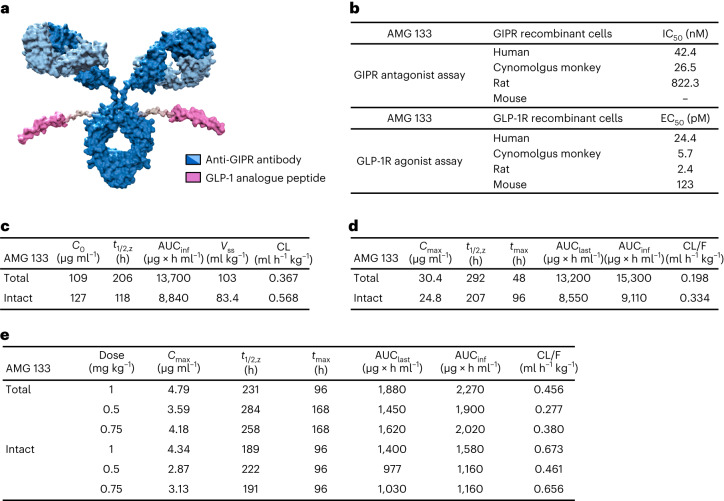
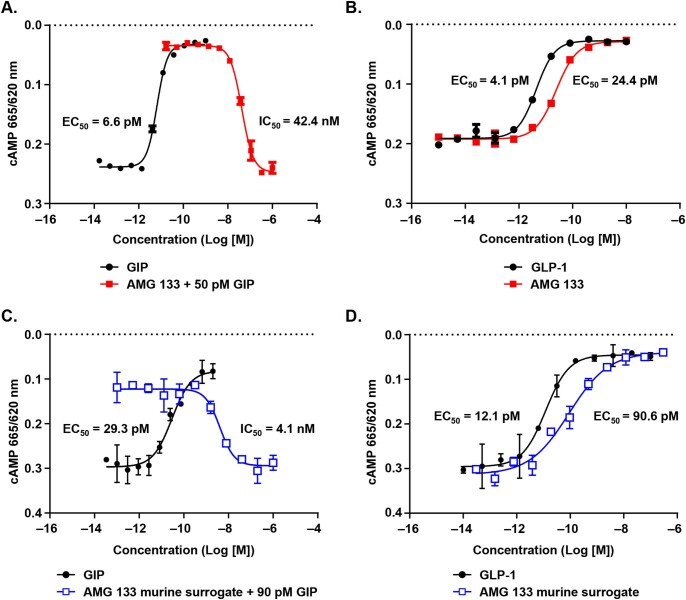
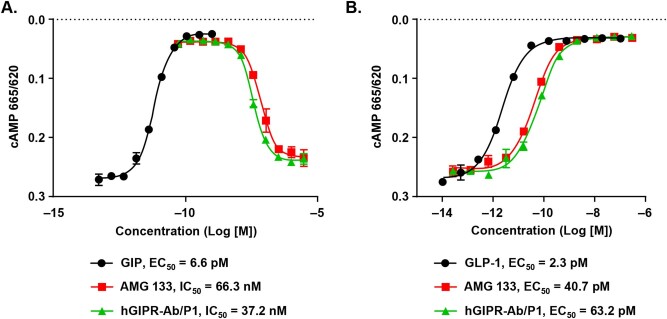
- In cell-based assays, AMG 133 antagonized native GIP at human GIPR with an IC50 of 42.4 nM and at cynomolgus monkey GIPR with an IC50 of 26.5 nM; it also agonized human GLP-1R with an EC50 of 24.4 pM.
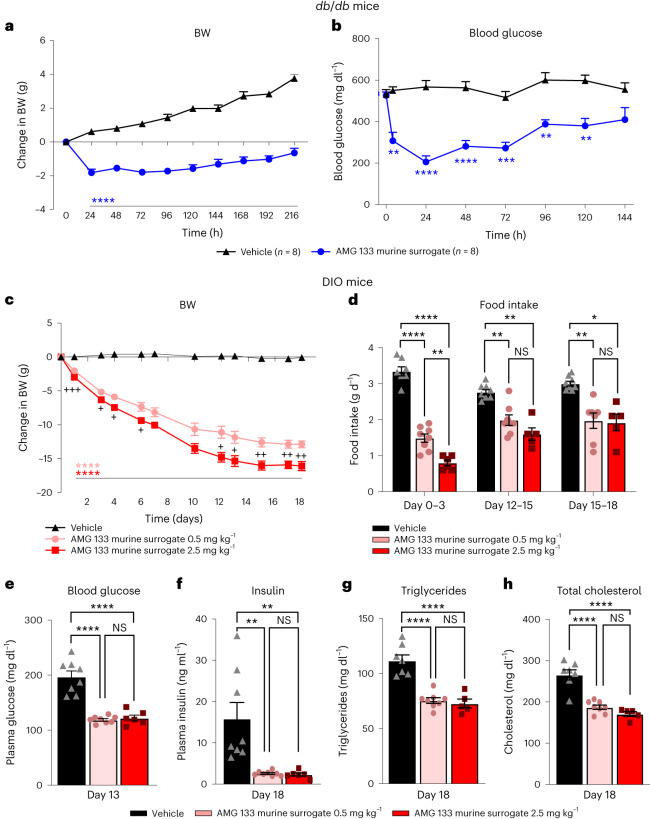
- In male obese mice, the AMG 133 murine surrogate reduced body weight, food intake, blood glucose, plasma insulin, and lipid levels; in one db/db mouse study, maximal body-weight loss occurred within 24 h and remained significant up to 216 h after injection.
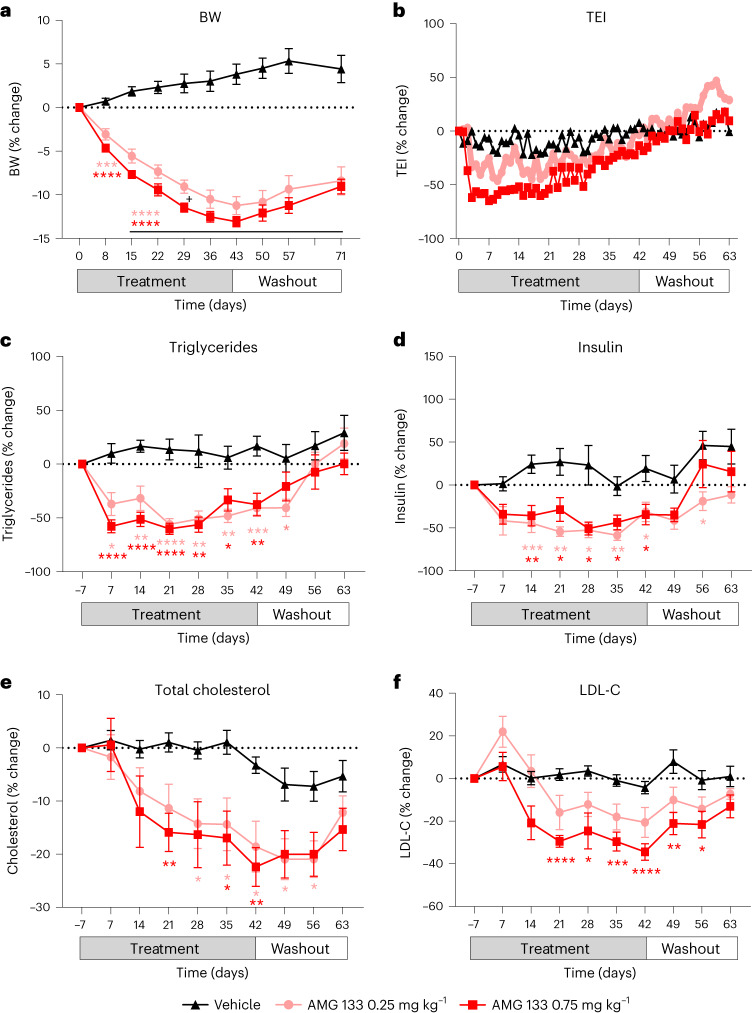
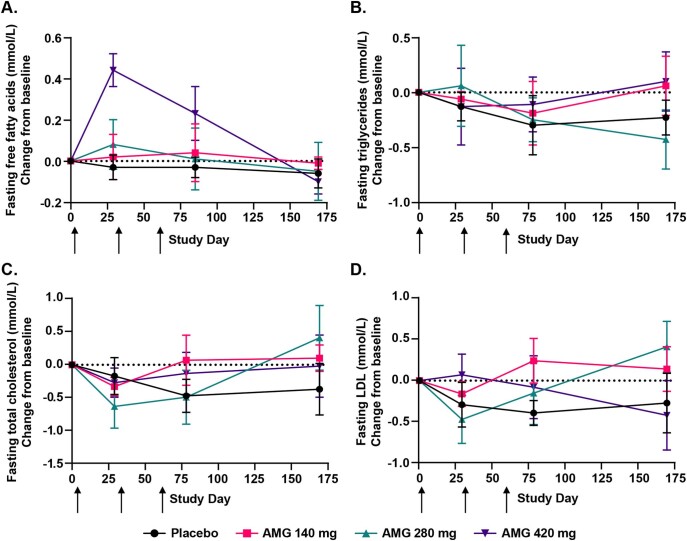
- In obese cynomolgus monkeys, weekly s.c. dosing for 6 weeks reduced body weight by 11% at 0.25 mg kg−1 and 13% at 0.75 mg kg−1, with reductions in total energy intake, fasting triglycerides, fasting insulin, total cholesterol, and LDL-C.
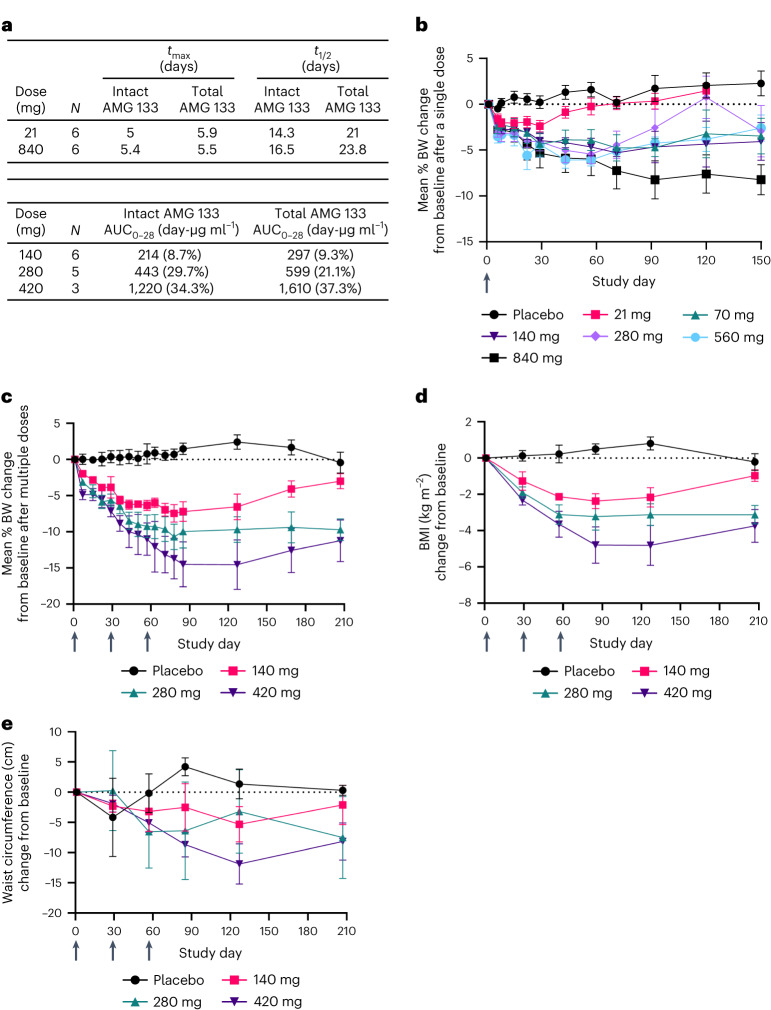
- In the phase 1 study, 49 participants were enrolled into SAD cohorts and 26 into MAD cohorts; in MAD, the 420 mg Q4W group had a mean body-weight change of −14.5% by day 85, and weight loss in that group remained up to −11.2% at 150 days after the last dose.
Methods
- Preclinical program: in vitro receptor assays plus PK/pharmacology studies in male mice (including db/db and DIO models) and obese cynomolgus monkeys; analyses included body weight, food intake, glucose, insulin, and lipid measurements.
- Phase 1 program: first-in-human, double-blind, randomized, placebo-controlled study (NCT04478708) with SAD and MAD cohorts in adults with obesity; 75 participants were in the final reported SAD/MAD dataset.
- Main analyses were descriptive for the clinical study (PK/PD/safety), with PK estimated by noncompartmental analysis; animal studies used ANOVA/mixed-effects methods with multiple-comparison testing.
Limitations
- The paper states the main limitation of the first-in-human study was the small sample size, requiring cautious interpretation of PD effects and metabolic parameters.
- The participants had neither diabetes nor high triglyceride/cholesterol levels, which the paper says limits generalizability of metabolic findings.
- The study had no active comparator arm, and the human trial design could not separate the individual contributions of GIPR antagonism versus GLP-1 agonism to weight loss.
Model-written summary. Check it against the paper before relying on it.
Integrity signals
Registry
Cites
Statistics
Figures
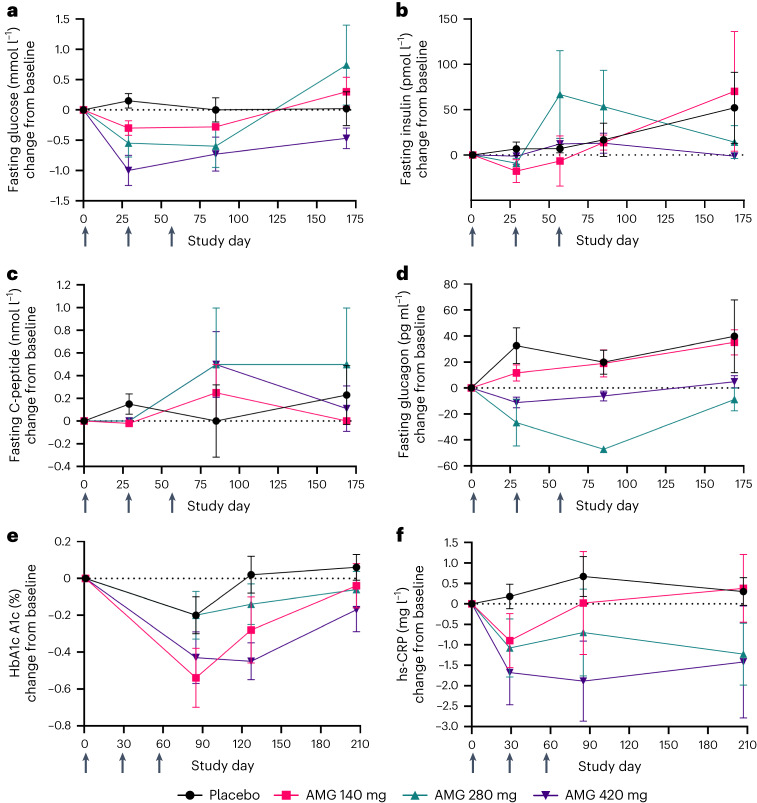
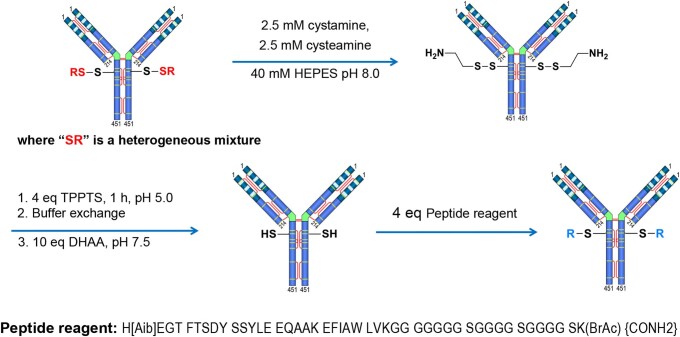
Verification
Claims the paper makes
9 Valid · 1 Not valid · 3 Not checked · 136 Own results and interpretations
The cited sources support only part of this claim — read each source’s verdict below.
In the paper
“In preclinical species and humans, mAbs are known to have minimal brain penetration, at around 0.1–0.4% of mAb plasma concentration35,36.”
§ A GIPR antagonist conjugated to GLP-1 analogues promotes weight loss with improved metabolic parameters in preclinical and phase 1 settings > Discussion
What the sources say
- Partly supportedcites [35] Garg, A. & Balthasar, J. P. Investigation of the influence of FcRn on the distribution of IgG to the brain. AAPS J. 11, 553–557 (2009). 19636712 PMC2758122 sourceExperimental — accuracy not yet measured
Our copy supports the magnitude only for one preclinical species: the RESULTS report that control mice 'showed little distribution of IgG to the brain, as indicated by the low brain/plasma AUC ratio (0.0022±0.00015)' — i.e. ~0.22%, within the cited 0.1–0.4% window — and the DISCUSSION states plasma cumulative exposure was 'approximately 500-fold greater' than brain exposure for the mAb 7E3. However, the study is a mouse experiment with a single IgG1 antibody, and the ratio is a brain/plasma AUC (exposure) ratio rather than a steady-state brain-to-plasma concentration ratio. Nothing in our copy addresses humans: searched for human brain penetration/CNS levels of mAbs, percent-of-plasma figures in humans, and CSF/human data — the only human material is in references (e.g. placental FcRn, Schlachetzki/Pardridge BBB FcRn expression). So the 'in preclinical species and humans' extension and the general 0.1–0.4% range across mAbs are not supported by this source. (LLM, conf=0.75)
- Supportedcites [36] Shah, D. K. & Betts, A. M. Antibody biodistribution coefficients: inferring tissue concentrations of monoclonal antibodies based on the plasma concentrations in several preclinical species and human. MAbs 5, 297–305 (2013). 23406896 PMC3893240 source
The Abstract and Table 1 (Discussion) of Shah & Betts (2013) give the brain antibody biodistribution coefficient as 0.351% of plasma concentration, the lowest of all tissues (~0.3% in the Discussion text), and the Discussion states this value is comparable to literature plasma-to-brain ratios as high as ~500 (0.2%). The paper's hypothesis and validation explicitly cover mouse, rat, monkey and human (Abstract; Results/Discussion on the rat and monkey+human validation data sets), so the cross-species 'minimal brain penetration at roughly 0.1-0.4% of plasma' paraphrase is carried by our copy; the only element not literally stated is the 0.1% lower bound, but the cited range brackets the paper's 0.2-0.351% values. (LLM, conf=0.85)
boosted- Asserted: passes — The authors put it forward as true.
- Checkable: passes — It can be checked against evidence.
- Load-bearing: unclear — It is unclear whether the paper’s conclusions depend on it.
- Based: passes — The paper gives a reason why it holds.
- Partly supported
The cited sources support only part of this claim — read each source’s verdict below.
In the paper
“The safety profile of AMG 133 was similar to that of GLP-1RAs, including unimolecular GLP-1/GIPR agonist peptides6,7.”
§ A GIPR antagonist conjugated to GLP-1 analogues promotes weight loss with improved metabolic parameters in preclinical and phase 1 settings > Discussion
What the sources say
- Partly supportedcites [6] Wilding, J. P. H. et al. Once-weekly semaglutide in adults with overweight or obesity. N. Engl. J. Med. 384, 989–1002 (2021). 33567185 sourceExperimental — accuracy not yet measured
The Safety and Side-Effect Profile section reports adverse events for semaglutide, a GLP-1 receptor agonist, and the discussion (p. 1000) describes its safety findings as consistent with the GLP-1 receptor agonist class. The paper does not assess AMG 133 or unimolecular GLP-1/GIPR agonist peptides, so it cannot establish the claimed similarity for those treatments. (LLM, conf=0.86)
- Not checked — no full text of the sourcecites [7] Jastreboff, A. M., Aronne, L. J. & Stefanski, A. Tirzepatide once weekly for the treatment of obesity. Reply. N. Engl. J. Med. 387, 1434–1435 (2022). 36239655 source
plain- Asserted: passes — The authors put it forward as true.
- Checkable: passes — It can be checked against evidence.
- Load-bearing: unclear — It is unclear whether the paper’s conclusions depend on it.
- Based: passes — The paper gives a reason why it holds.
- Partly supported
The cited sources support only part of this claim — read each source’s verdict below.
In the paper
“and genetic preclinical models30,31,39,40 support the role of GIPR antagonism as a method to promote weight loss and prevent weight gain.”
§ A GIPR antagonist conjugated to GLP-1 analogues promotes weight loss with improved metabolic parameters in preclinical and phase 1 settings > Discussion
What the sources say
- Partly supportedcites [30] Althage, M. C. et al. Targeted ablation of glucose-dependent insulinotropic polypeptide-producing cells in transgenic mice reduces obesity and insulin resistance induced by a high fat diet. J. Biol. Chem. 283, 18365–18376 (2008). 18420580 PMC2440595 sourceExperimental — accuracy not yet measured
Althage et al. (2008) is a genetic preclinical model that supports reduced GIP signalling limiting diet-induced weight gain: the DISCUSSION states 'as in GIPR-/- mice, animals genetically engineered to lack GIP-producing cells also resist development of high fat diet-induced obesity and insulin resistance,' and the Abstract concludes 'total inhibition of GIPR signaling reduces high fat diet-induced obesity and insulin resistance.' However, GIPR antagonism itself is named only as a hypothetical option ('Two potential strategies... would be to 1) inhibit GIPR activity by administration of GIPR antagonists and 2) inhibit GIP production, release, and/or action'); no antagonist was administered in this work, whose own manipulation ablates K cells (ligand loss) rather than blocking the receptor. Nor does the paper show promotion of weight loss: its data are attenuated weight gain on a high fat diet for 35 weeks (55% vs 11% over chow) with no reversal of established obesity, so the 'promote weight loss' and pharmacological-antagonism parts of the claim are not supported by this source. (LLM, conf=0.75)
- Not checked — no full text of the sourcecites [31] Miyawaki, K. et al. Inhibition of gastric inhibitory polypeptide signaling prevents obesity. Nat. Med. 8, 738–742 (2002). 12068290 source
- Partly supportedcites [39] Akbari, P. et al. Sequencing of 640,000 exomes identifies GPR75 variants associated with protection from obesity. Science10.1126/science.abf8683 (2021). PMC10275396 34210852 sourceExperimental — accuracy not yet measured
The ‘Genomic insights at other BMI-associated GPCRs’ section reports that GIPR loss-of-function variants are associated with lower BMI and obesity risk in humans, and confirms impaired signaling in cell experiments. It does not report a GIPR genetic preclinical model or show that GIPR antagonism promotes weight loss or prevents weight gain; the mouse weight-gain experiment concerns Gpr75, not Gipr (Gpr75 deletion section; page not provided). (LLM, conf=0.88)
- Partly supportedcites [40] Zhang, Q. et al. The glucose-dependent insulinotropic polypeptide (GIP) regulates body weight and food intake via CNS-GIPR signaling. Cell Metab. 33, 833–844 (2021). 33571454 PMC8035082 sourceExperimental — accuracy not yet measured
The Results sections on CNS-specific Gipr deletion report lower body weight and reduced weight gain in high-fat-diet-fed mice, supporting prevention of diet-induced weight gain. They do not show that deleting GIPR after obesity develops promotes weight loss; the Discussion says that effect remains to be assessed. (LLM, conf=0.86)
plainstates a cause- Asserted: passes — The authors put it forward as true.
- Checkable: passes — It can be checked against evidence.
- Load-bearing: passes — The paper’s conclusions depend on it.
- Based: passes — The paper gives a reason why it holds.
- Partly supported
The cited sources support only part of this claim — read each source’s verdict below.
In the paper
“Strong genetic evidence such as GWAS has identified single-nucleotide polymorphisms in Japanese, European and North American populations showing that lower expression or function of GIPR is associated with lower BMI27,29,38”
§ A GIPR antagonist conjugated to GLP-1 analogues promotes weight loss with improved metabolic parameters in preclinical and phase 1 settings > Discussion
What the sources say
- Could not verifycites [27] Berndt, S. I. et al. Genome-wide meta-analysis identifies 11 new loci for anthropometric traits and provides insights into genetic architecture. Nat. Genet. 45, 501–512 (2013). 23563607 PMC3973018 sourceExperimental — accuracy not yet measured
The Results (BMI-Related Traits) report SNP associations with BMI, and the Abstract describes a study of European individuals. Neither passage links GIPR expression or function to lower BMI or reports the claimed findings across Japanese, European and North American populations. A search for GIPR found it only in a reference about glucose and insulin responses, not in a passage supporting the claim. (LLM, conf=0.75)
- Partly supportedcites [29] Speliotes, E. K. et al. Association analyses of 249,796 individuals reveal 18 new loci associated with body mass index. Nat. Genet. 42, 937–948 (2010). 20935630 PMC3014648 sourceExperimental — accuracy not yet measured
The Results (Potential functional roles and pathways analyses; page unavailable) report a BMI-associated variant near GIPR, supporting the GWAS association. They do not establish that lower GIPR expression or function is associated with lower BMI. The copy describes participants of European ancestry, not evidence spanning Japanese, European, and North American populations. (LLM, conf=0.87)
- Partly supportedcites [38] Okada, Y. et al. Common variants at CDKAL1 and KLF9 are associated with body mass index in east Asian populations. Nat. Genet. 44, 302–306 (2012). 22344221 PMC3838874 sourceExperimental — accuracy not yet measured
The paper reports a genome-wide significant association between the GIPR locus and BMI in Japanese subjects and identifies the BMI-decreasing A allele of rs11671664 (main text, labeled Abstract in our copy; page unavailable). It also says the locus had previously been associated with BMI in Europeans. It does not show that the allele lowers GIPR expression or function, or report a finding in North American populations. (LLM, conf=0.88)
boostedstates an association- Asserted: passes — The authors put it forward as true.
- Checkable: passes — It can be checked against evidence.
- Load-bearing: passes — The paper’s conclusions depend on it.
- Based: passes — The paper gives a reason why it holds.
- Could not verify
A result the paper reports from its own data — it cites no other source for it, so there is none to check. The quote shows it is in the paper.
In the paper
“The endogenous ligand GIP results in full agonism of the mouse GIPR, and the AMG 133 murine surrogate fully antagonized native GIP (IC50 = 4.1 nM) (Extended Data Fig. 2c).”
§ A GIPR antagonist conjugated to GLP-1 analogues promotes weight loss with improved metabolic parameters in preclinical and phase 1 settings > Results > AMG 133 structure and in vitro potency
plainstates a cause- Asserted: passes — The authors put it forward as true.
- Checkable: passes — It can be checked against evidence.
- Load-bearing: passes — The paper’s conclusions depend on it.
- Based: passes — The paper gives a reason why it holds.
71 more claims
Create a free account to see all 149 claims and to verify the 1 reference still open.
- Probably not a substantial claim. 34
- It may state two separate claims as one. 53
Claims other papers make about this one
Each is checked against this paper’s own text: does it say what the citing paper says it does?
The source backs part of the claim, not all of it — or backs it for a different population, condition or comparison.
In the citing paper
“A monthly subcutaneous injection combining GIP receptor antagonism with GLP-1 RA, and seems to protect against diet-induced obesity as evidenced by models lacking GIP receptor activity.52”
From GLP-1 single, dual, and triple receptor agonists for treating type 2 diabetes and obesity: a narrative review (2024) · cites this paper as [52]
Experimental — accuracy not yet measuredThe cited source says what the claim attributes to it.
In the citing paper
“Maridebart cafraglutide is an antagonistic GIP receptor antibody coupled with a GLP-1 receptor agonist.153”
From GLP-1 receptor agonists and next-generation incretin-based medications: metabolic, cardiovascular, and renal benefits (2026) · cites this paper as [153]
The cited source says what the claim attributes to it.
In the citing paper
“In a phase 1, randomized, double-blind placebo-controlled trial in individuals with obesity (without diabetes), this drug resulted in weight loss of 15% over 12 weeks at its highest dose of 420 mg (Table 2).52”
From GLP-1 single, dual, and triple receptor agonists for treating type 2 diabetes and obesity: a narrative review (2024) · cites this paper as [52]
In the citing paper
“Maritide, the GIPR antagonist/GLP-1RA, resulted in ∼16% body weight loss that was maintained up to a 70% level (hence just 30% of lost weight regained) for 5 months after just 3 monthly doses (128)”
From GLP-1 and the Neurobiology of Eating Control: Recent Advances (2025) · cites this paper as [128]
Self-check
Percentages, sums and reported differences re-computed from the paper’s own numbers.
Each contradiction between two passages listed here was confirmed by an independent check.
Rated minor: it would not touch a result — a value no result rests on, a p-value that stays on the same side of the significance level, or a conflict that is clerical, resolved elsewhere in the paper, or outside its own findings.
In the paper
§ A GIPR antagonist conjugated to GLP-1 analogues promotes weight loss with improved metabolic parameters in preclinical and phase 1 settings > Methods > Phase 1 clinical study
“This paper reports final analysis data from the five SAD and three MAD cohorts (75 participants total) with a date of January 2023.”
§ A GIPR antagonist conjugated to GLP-1 analogues promotes weight loss with improved metabolic parameters in preclinical and phase 1 settings > Results > AMG 133 clinical study
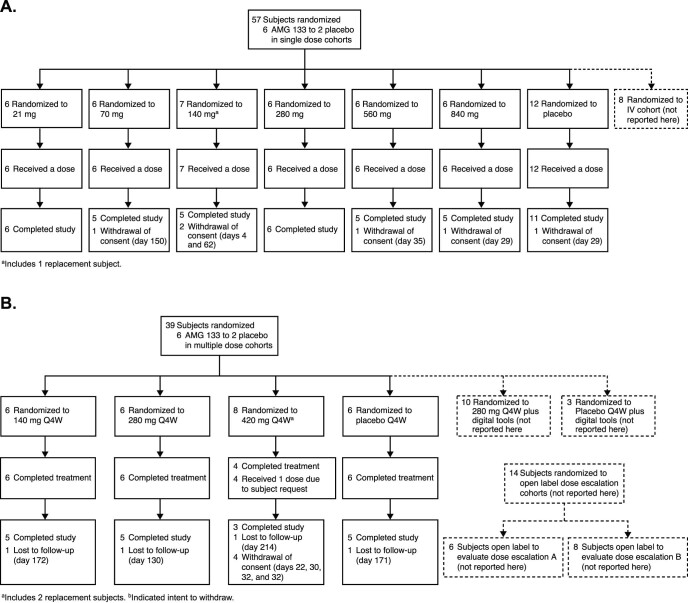
“A total of 49 participants were enroled into seven SAD cohorts, randomized to receive AMG 133 ranging from 21 to 840 mg (n = 37) or placebo (n = 12) and followed for up to 150 d.”
Rated minor: it would not touch a result — a value no result rests on, a p-value that stays on the same side of the significance level, or a conflict that is clerical, resolved elsewhere in the paper, or outside its own findings.
In the paper
§ A GIPR antagonist conjugated to GLP-1 analogues promotes weight loss with improved metabolic parameters in preclinical and phase 1 settings > Results > AMG 133 clinical study
“A total of 49 participants were enroled into seven SAD cohorts, randomized to receive AMG 133 ranging from 21 to 840 mg (n = 37) or placebo (n = 12) and followed for up to 150 d.”
§ A GIPR antagonist conjugated to GLP-1 analogues promotes weight loss with improved metabolic parameters in preclinical and phase 1 settings > Methods > Phase 1 clinical study
“The SAD evaluated AMG 133 doses ranging from 21 mg to 840 mg in six cohorts.”
Citations
Cites
Guide for the Care and Use of Laboratory Animals: Eighth Edition
(2011) · doi:10.17226/12910 · Cited by 16,199
Genetics of Food Intake Self-Regulation in Childhood: Literature Review and Research Opportunities
Faith, M. S., Carnell, S., & Kral, T. V. E. (2013) · Human Heredity · doi:10.1159/000353879 · Cited by 7,601
Once-Weekly Semaglutide in Adults with Overweight or Obesity
Wilding, J. P. H., Batterham, R. L., Calanna, S., Davies, M., Van Gaal, L. F., Lingvay, I., McGowan, B. M., Rosenstock, J., Tran, M. T. D., Wadden, T. A., et al. (2021) · New England Journal of Medicine · doi:10.1056/nejmoa2032183 · Cited by 5,205 · cited 1×
“The safety profile of AMG 133 was similar to that of GLP-1RAs, including unimolecular GLP-1/GIPR agonist peptides 6,7 .”
Tirzepatide Once Weekly for the Treatment of Obesity
Jastreboff, A. M., Aronne, L. J., Ahmad, N. N., Wharton, S., Connery, L., Alves, B., Kiyosue, A., Zhang, S., Liu, B., Bunck, M. C., et al. (2022) · New England Journal of Medicine · doi:10.1056/nejmoa2206038 · Cited by 3,838 · cited 1×
“Unimolecular multi-specific agonist peptides targeting multiple incretin pathways have emerged as promising therapeutic strategies for weight loss 7,8,18–26 .”
Association analyses of 249,796 individuals reveal 18 new loci associated with body mass index
MAGIC, Speliotes, E. K., on behalf of Procardis Consortium, Willer, C. J., Berndt, S. I., Monda, K. L., Thorleifsson, G., Jackson, A. U., Allen, H. L., Lindgren, C. M., et al. (2010) · Nature Genetics · doi:10.1038/ng.686 · Cited by 2,912 · cited 1×
“…polymorphisms in Japanese, European and North American populations showing that lower expression or function of GIPR is associated with lower BMI 27,29,38 and genetic preclinical models 30,31,39,40 support the role of GIPR antagonism as a method to promote weight loss and prevent weight gain.”
A role for glucagon-like peptide-1 in the central regulation of feeding
Turton, M. D., O'Shea, D., Gunn, I., Beak, S. A., Edwards, C. M. B., Meeran, K., Choi, S. J., Taylor, G. M., Heath, M. M., Lambert, P. D., et al. (1996) · Nature · doi:10.1038/379069a0 · Cited by 1,950 · cited 1×
“In addition to the incretin effects, GLP-1 promotes satiety 11 and GIP promotes lipid storage and metabolic regulation 12–15 .”
Semaglutide in Patients with Heart Failure with Preserved Ejection Fraction and Obesity
Kosiborod, M. N., Abildstrøm, S. Z., Borlaug, B. A., Butler, J., Rasmussen, S., Davies, M., Hovingh, G. K., Kitzman, D. W., Lindegaard, M. L., Møller, D. V., et al. (2023) · New England Journal of Medicine · doi:10.1056/nejmoa2306963 · Cited by 1,669 · cited 1×
“In a recent clinical study, individuals with heart failure and preserved ejection fraction who received weekly semaglutide injections (2.4 mg) for 52 weeks experienced substantially improved symptoms and physical function compared to the placebo group 9 .”
InfluentialRubino, D., Abrahamsson, N., Davies, M., Hesse, D., Greenway, F. L., Jensen, C., Lingvay, I., Mosenzon, O., Rosenstock, J., Rubio, M. A., et al. (2021) · JAMA · doi:10.1001/jama.2021.3224 · Cited by 1,444
Obesity: definition, comorbidities, causes, and burden.
Apovian, C. M. (2016) · PubMed · Cited by 1,384
Triple-Hormone-Receptor Agonist Retatrutide for Obesity — A Phase 2 Trial
Jastreboff, A. M., Kaplan, L. M., Frías, J. P., Wu, Q., Du, Y., Gurbuz, S., Coskun, T., Haupt, A., Milicevic, Z., & Hartman, M. L. (2023) · New England Journal of Medicine · doi:10.1056/nejmoa2301972 · Cited by 1,174
Cited by
Efficacy and Safety of GLP-1 Medicines for Type 2 Diabetes and Obesity
Drucker, D. J. (2024) · Diabetes Care · doi:10.2337/dci24-0003 · Cited by 383
Diabetes mellitus—Progress and opportunities in the evolving epidemic
Abel, E. D., Gloyn, A. L., Evans-Molina, C., Joseph, J. J., Misra, S., Pajvani, U. B., Simcox, J., Susztak, K., & Drucker, D. J. (2024) · Cell · doi:10.1016/j.cell.2024.06.029 · Cited by 292
Mechanisms of action and therapeutic applications of GLP-1 and dual GIP/GLP-1 receptor agonists
Liu, Q. K. (2024) · Frontiers in Endocrinology · doi:10.3389/fendo.2024.1431292 · Cited by 265
GPCR drug discovery: new agents, targets and indications
Lorente, J. S., Sokolov, A. V., Ferguson, G., Schiöth, H. B., Hauser, A. S., & Gloriam, D. E. (2025) · Nature Reviews Drug Discovery · doi:10.1038/s41573-025-01139-y · Cited by 251
GLP-1-based therapies for diabetes, obesity and beyond
Drucker, D. J. (2025) · Nature Reviews Drug Discovery · doi:10.1038/s41573-025-01183-8 · Cited by 236
“Intriguingly, in the small phase I trial of MariTide, some subjects maintained >10% weight loss even 5 months after the last dose of medicine 79 .”
Alfaris, N., Waldrop, S., Johnson, V., Boaventura, B., Kendrick, K., & Stanford, F. C. (2024) · EClinicalMedicine · doi:10.1016/j.eclinm.2024.102782 · Cited by 224
“52 In a phase 1, randomized, double-blind placebo-controlled trial in individuals with obesity (without diabetes), this drug resulted in weight loss of 15% over 12 weeks at its highest dose of 420 mg (Table 2).”
BackgroundMessineo, L., Bakker, J. P., Cronin, J., Yee, J., & White, D. P. (2024) · Sleep Medicine Reviews · doi:10.1016/j.smrv.2024.101996 · Cited by 189
Transforming obesity: The advancement of multi-receptor drugs
Kusminski, C. M., Perez-Tilve, D., Müller, T. D., DiMarchi, R. D., Tschöp, M. H., & Scherer, P. E. (2024) · Cell · doi:10.1016/j.cell.2024.06.003 · Cited by 126
GLP-1 physiology in obesity and development of incretin-based drugs for chronic weight management
Holst, J. J. (2024) · Nature Metabolism · doi:10.1038/s42255-024-01113-9 · Cited by 125
“168).”
A comprehensive spatio-cellular map of the human hypothalamus
Tadross, J. A., Steuernagel, L., Dowsett, G. K. C., Kentistou, K. A., Lundh, S., Porniece, M., Klemm, P., Rainbow, K., Hvid, H., Kania, K., et al. (2025) · Nature · doi:10.1038/s41586-024-08504-8 · Cited by 112
“Heterozygous loss of function mutations in GIPR are associated with lower BMI 46 , whereas pharmacological studies in humans indicate that both agonism and antagonism of this receptor can augment weight loss 47,48 .”
Once-monthly maridebart cafraglutide for the treatment of obesity—a phase 2 trial
Jastreboff, A. M., Ryan, D. H., Bays, H. E., Ebeling, P. R., Mackowski, M. G., Philipose, N., Ross, L., Liu, Y., Burns, C. E., Abbasi, S. A., et al. (2025) · New England Journal of Medicine · doi:10.1056/nejmoa2504214 · Cited by 110
Nauck, M. A., Tuttle, K. R., Tschöp, M. H., & Blüher, M. (2026) · The Lancet · doi:10.1016/s0140-6736(25)02105-1 · Cited by 123
Emerging pharmacotherapies for obesity: A systematic review
Kokkorakis, M., Chakhtoura, M., Rhayem, C., Al Rifai, J., Ghezzawi, M., Valenzuela-Vallejo, L., & Mantzoros, C. S. (2025) · Pharmacological Reviews · doi:10.1124/pharmrev.123.001045 · Cited by 102
Glucose-dependent insulinotropic polypeptide (GIP)
Müller, T. D., Adriaenssens, A. E., Ahrén, B., Blüher, M., Birkenfeld, A. L., Campbell, J. E., Coghlan, M. P., D’Alessio, D. D., Deacon, C. F., DelPrato, S., et al. (2025) · Molecular Metabolism · doi:10.1016/j.molmet.2025.102118 · Cited by 114
Unlocking gut-liver-brain axis communication metabolites: energy metabolism, immunity and barriers
Sun, X., Shukla, M., Wang, W., & Li, S. (2024) · npj Biofilms and Microbiomes · doi:10.1038/s41522-024-00610-9 · Cited by 118
“Arecent study has veri fi ed a Gastric Inhibitory Polypeptide Receptor (GIPR) antagonist linked to GLP-1 analogues facilitates weight reduction and enhances metabolic indicators in obese male mice and cynomolgus monkeys 44 .”
Rosen, C. J., & Ingelfinger, J. R. (2026) · New England Journal of Medicine · doi:10.1056/nejmra2500106 · Cited by 140
GLP-1 receptor agonists in patients with chronic kidney disease and either overweight or obesity
Abasheva, D., Ortíz, A., & Fernández‐Fernández, B. (2024) · Clinical Kidney Journal · doi:10.1093/ckj/sfae296 · Cited by 70
Brain control of energy homeostasis: implications for anti-obesity pharmacotherapy
Johansen, V. B. I., Petersen, J., Lund, J., Mathiesen, C. V., Fenselau, H., & Clemmensen, C. (2025) · Cell · doi:10.1016/j.cell.2025.06.010 · Cited by 53
Kizilkaya, H. S., Sørensen, K. V., Madsen, J. S., Lindquist, P., Douros, J. D., Bork‐Jensen, J., Berghella, A., Gerlach, P. A., Gasbjerg, L. S., Mokrosiński, J., et al. (2024) · Nature Metabolism · doi:10.1038/s42255-024-01061-4 · Cited by 63
The expanding landscape of GLP-1 medicines
Drucker, D. J. (2026) · Nature Medicine · doi:10.1038/s41591-025-04124-5 · Cited by 83
Gutgesell, R. M., Khalil, A., Liśkiewicz, A., Maity‐Kumar, G., Novikoff, A., Grandl, G., Liśkiewicz, D., Coupland, C., Karaoglu, E., Akindehin, S., et al. (2025) · Nature Metabolism · doi:10.1038/s42255-025-01294-x · Cited by 62
“AMG133, a bispecific hybrid that comprises two GLP-1R agonists conjugated to a monoclonal anti-GIPR antagonist 25,26 is currently in phase 2 clinical development for the treatment of obesity and type 2 diabetes.”
Common pitfalls in drug target Mendelian randomization and how to avoid them
Gill, D., Dib, M., Cronjé, H. T., Karhunen, V., Woolf, B. A. R., Gagnon, É., Daghlas, I., Nyberg, M., Drakeman, D. L., & Burgess, S. (2024) · BMC Medicine · doi:10.1186/s12916-024-03700-9 · Cited by 62
“For the GIPR example above, the described missense variant used as an instrument for inhibition also strongly associates with lower body weight, consistent with what has been demonstrated in clinical trials [58].”
ResultGasiorek, A., Heydorn, A., Gabery, S., Hjerpsted, J. B., Kirkeby, K., Kruse, T., Petersen, S. B., Toubro, S., Vegge, A., & Key, C. (2025) · The Lancet · doi:10.1016/s0140-6736(25)01176-6 · Cited by 46
Tirzepatide for overweight and obesity management
Hamza, M., Papamargaritis, D., & Davies, M. J. (2025) · Expert Opinion on Pharmacotherapy · doi:10.1080/14656566.2024.2436595 · Cited by 43
“Based on these findings, maridebart cafraglutide, a monoclonal antibody that antagonizes the GIP receptor and is conjugated to two modified GLP-1 peptides, which activate the GLP-1 receptor, is also in early-phase clinical trials as obesity treatment [17,29,30].”
Phage display technology and its impact in the discovery of novel protein-based drugs
Hutchings, C. J., & Sato, A. K. (2024) · Expert Opinion on Drug Discovery · doi:10.1080/17460441.2024.2367023 · Cited by 50
“…and peptides further, where such a bispecific combination can consist of two agonist molecules directed to two different targets or an agonist-acting ligand with an antagonist antibody, e.g. AMG-133, which combines a GLP-1 agonist peptide analogue with and GIP receptor antagonist antibody [174].”
Madsbad, S., & Holst, J. J. (2025) · Expert Opinion on Investigational Drugs · doi:10.1080/13543784.2025.2472408 · Cited by 43
“After 3 months, AMG133 induced weight losses of −14% to −15% compared with −1.5% with placebo [96], and is now in phase 2 development.”
InfluentialGLP-1 and the Neurobiology of Eating Control: Recent Advances
Jones, L. A., & Brierley, D. I. (2025) · Endocrinology · doi:10.1210/endocr/bqae167 · Cited by 43
“Maritide, the GIPR antagonist/GLP-1RA, resulted in ∼ 16% body weight loss that was maintained up to a 70% level (hence just 30% of lost weight regained) for 5 months after just 3 monthly doses (128), suggesting potential for maintenance therapy with infrequent dosing.”
Glucose-Dependent Insulinotropic Polypeptide in Incretin Physiology: Role in Health and Disease
Wolfe, M. M., Boylan, M. O., & Chin, W. W. (2025) · Endocrine Reviews · doi:10.1210/endrev/bnaf006 · Cited by 48
“Furthermore, the authors reported preliminary studies in humans showing significant benefit that occurred in a dose-dependent manner (234).”
Jensen, M., Sanni, S. J., Riber, D., Holst, J. J., ROSENKILDE, M. M., & Sparre‐Ulrich, A. H. (2024) · Molecular Metabolism · doi:10.1016/j.molmet.2024.102006 · Cited by 42
“…studies have found that antag-onizing the GIPR alone, with a monoclonal antibody (mAb), prevented body weight (BW) gain in DIO mice and obese cynomolgus monkeys [17], while combining GIPR antagonism with GLP-1R agonism synergistically reduced BW in DIO mice and obese cynomolgus monkeys [17,18].”
BackgroundMethodInfluentialWu, H., Yang, W., Guo, T., Cai, X., & Ji, L. (2025) · BMC Medicine · doi:10.1186/s12916-025-04200-0 · Cited by 36
Liu, C. M., Killion, E. A., Hammoud, R., Lu, S.-C., Komorowski, R., Liu, T., Kanke, M., Thomas, V. A., Cook, K. D., Sivits, G. N., et al. (2025) · Nature Metabolism · doi:10.1038/s42255-025-01295-w · Cited by 44
Self-citationNovel GLP-1-based Medications for Type 2 Diabetes and Obesity
Son, J. W., le Roux, C. W., Blüher, M., Nauck, M. A., & Lim, S. (2026) · Endocrine Reviews · doi:10.1210/endrev/bnaf036 · Cited by 40
Bailey, C. J., Flatt, P. R., & Conlon, J. M. (2025) · Peptides · doi:10.1016/j.peptides.2025.171380 · Cited by 42
“This type of biased agonism is also consistent with the ability of GIPR antagonists to improve glucose and weight control in obese hyperglycaemic states [34].”
Wean, J., Kowalsky, A. H., Laker, R., Will, S., Drucker, D. J., Rhodes, C. J., & Seeley, R. J. (2025) · Molecular Metabolism · doi:10.1016/j.molmet.2024.102074 · Cited by 28
Jiang, Y., Zhu, H., & Gong, F. (2024) · Diabetes Obesity and Metabolism · doi:10.1111/dom.16106 · Cited by 37
Kuhre, R. E., Ballarín-González, B., Brand, C. L., Glendorf, T., Madsen, K. G., Hjøllund, K. R., Hogendorf, W. F. J., Ipsen, D. H., Lundh, S. H., Kruse, T., et al. (2025) · EBioMedicine · doi:10.1016/j.ebiom.2025.105862 · Cited by 29
Anastasiou, I. A., Argyrakopoulou, G., Dalamaga, Μ., & Kokkinos, A. D. (2025) · Current Obesity Reports · doi:10.1007/s13679-025-00623-1 · Cited by 29
“AMG 133 demonstrated significant dose-dependent weight loss in a phase 1 randomized, double-blind, placebo-controlled clinical trial involving participants with obesity, along with an acceptable safety and tolerability profile [124].”
Molecular Mechanisms behind Obesity and Their Potential Exploitation in Current and Future Therapy
Nicze, M., Dec, A., Borówka, M., Krzyżak, D., Bołdys, A., Bułdak, Ł., & Okopień, B. (2024) · International Journal of Molecular Sciences · doi:10.3390/ijms25158202 · Cited by 34
Evolving Approaches for Pharmacological Therapy of Obesity
Chao, A. M., Taylor, S. I., Moore, M., Amaro, A., & Wadden, T. A. (2024) · The Annual Review of Pharmacology and Toxicology · doi:10.1146/annurev-pharmtox-031124-101146 · Cited by 30
GIP-derived GIP receptor antagonists – a review of their role in GIP receptor pharmacology
ROSENKILDE, M. M., Lindquist, P., Kizilkaya, H. S., & Gasbjerg, L. S. (2024) · Peptides · doi:10.1016/j.peptides.2024.171212 · Cited by 22
“Especially, gastrointestinal side effects, as seen for GLP-1R agonists, were not found.”
BackgroundIncretin hormone agonists: Current and emerging pharmacotherapy for obesity management
Alhomoud, I. S., Talasaz, A. H., Chandrasekaran, P., Brown, R., Mehta, A., & Dixon, D. L. (2024) · Pharmacotherapy The Journal of Human Pharmacology and Drug Therapy · doi:10.1002/phar.4607 · Cited by 28
Muzurović, E. M., Katsiki, N., Volčanšek, Š., Plescia, F., Rizzo, M., & Mantzoros, C. S. (2026) · Metabolism · doi:10.1016/j.metabol.2026.156494 · Cited by 25
Why are we still in need for novel anti-obesity medications?
Novikoff, A., Grandl, G., Liu, X., & Müller, T. D. (2024) · The Lancet Regional Health - Europe · doi:10.1016/j.lanepe.2024.101098 · Cited by 22
Chronic GIPR agonism results in pancreatic islet GIPR functional desensitisation
Davies, I., Adriaenssens, A. E., Scott, W. R., Carling, D., Murphy, K. G., MINNION, J. S., Bloom, S. R., Jones, B. J., & Tan, T. (2025) · Molecular Metabolism · doi:10.1016/j.molmet.2025.102094 · Cited by 20
Cellular senescence: from homeostasis to pathological implications and therapeutic strategies
Li, C., Yuan, Y., Jia, Y., Zhou, Q., Wang, Q., & Jiang, X. (2025) · Frontiers in Immunology · doi:10.3389/fimmu.2025.1534263 · Cited by 29
Recent progress in the pharmacotherapy for obesity
Lu, J., Liu, P., Cai, M., Lv, T., Zhang, M., Yin, K., Cheng, J., & Zhang, G. (2025) · European Journal of Pharmacology · doi:10.1016/j.ejphar.2025.177850 · Cited by 17
Therapeutic Targeting of the GIP Receptor—Revisiting the Controversies
Campbell, J. E., & Drucker, D. J. (2025) · Diabetes · doi:10.2337/db25-0393 · Cited by 22
Recent achievements and future directions of anti-obesity medications
Grandl, G., Novikoff, A., Liu, X., & Müller, T. D. (2024) · The Lancet Regional Health - Europe · doi:10.1016/j.lanepe.2024.101100 · Cited by 33
The role of GIPR in food intake control
James-Okoro, P.-P., Lewis, J. E., Gribble, F. M., & Reimann, F. (2025) · Frontiers in Endocrinology · doi:10.3389/fendo.2025.1532076 · Cited by 23
Ge, C., Wang, Z., Wang, Y., & Wei, M. (2025) · RSC Advances · doi:10.1039/d5ra03731j · Cited by 21
Lymperopoulos, A., Altsman, V. L., & Stoicovy, R. A. (2025) · International Journal of Molecular Sciences · doi:10.3390/ijms26157239 · Cited by 27
Proglucagon-derived peptides: human physiology and therapeutic potential
Gasbjerg, L. S., Nielsen, C. K., Suppli, M. P., Grøndahl, M. F. G., Holst, J. J., Knop, F. K., Jeppesen, P. B., & Lund, A. (2025) · Physiological Reviews · doi:10.1152/physrev.00057.2024 · Cited by 22
Gut hormone multi-agonists for the treatment of type 2 diabetes and obesity: advances and challenges
Huang, X., Liu, J., Peng, G., Lu, M., Zhou, Z., Jiang, N., & Yan, Z. (2024) · Journal of Endocrinology · doi:10.1530/joe-23-0404 · Cited by 20
Weight Loss Blockbuster Development: A Role for Unimolecular Polypharmacology
Zhou, Q., Li, G., Hang, K., Li, J., Yang, D., & Wang, M. (2024) · The Annual Review of Pharmacology and Toxicology · doi:10.1146/annurev-pharmtox-061324-011832 · Cited by 16
Borner, T., Pataro, A. M., Doebley, S. A., Furst, C. D., White, A. D., Gao, S. X., Chow, A., Sanchez-Navarro, M. J., Ghidewon, M. Y., Halas, J. G., et al. (2025) · Science Advances · doi:10.1126/sciadv.adu1589 · Cited by 21
“Emerging evidence indicates that also GIPR antagonism could represent a viable strategy to suppress adiposity and body weight ( 11 , 62 , 63 ) [see ( 64 ) for review].”
Polypeptides synthesized by common bacteria in the human gut improve rodent metabolism
Fan, Y., Lyu, L., Vazquez-Uribe, R., Zhang, W., Bongers, M., Koulouktsis, A., Yang, M., Sereikaité, V., Arora, T., Stankevič, E., et al. (2025) · Nature Microbiology · doi:10.1038/s41564-025-02064-x · Cited by 18
“On the basis of previous knowledge 31–35 , the effects of r-RORDEP on the release of the mentioned Article https://doi.org/10.1038/s41564-025-02064-x hormones are expected to result in a diminished food intake and a relative protection against obesity driven by a high-fat diet.”
InfluentialDouros, J. D., Flak, J. N., & Knerr, P. J. (2025) · Frontiers in Endocrinology · doi:10.3389/fendo.2025.1530985 · Cited by 18
Physiology and clinical applications of GIP
Yamane, S., Harada, N., & Inagaki, N. (2025) · Endocrine Journal · doi:10.1507/endocrj.ej25-0087 · Cited by 16
“…placebo-controlled clinical trial involving obese patients indicated that AMG 133 (maridebart cafraglutide), a GIPR antagonist conjugated to GLP-1R agonist, demon‐ strated an acceptable safety and tolerability profile, as well as a significant dose-dependent reduction in body weight [123].”
Adipose Tissue, at the Core of the Action of Incretin and Glucagon-Based Anti-Obesity Drugs
Villarroya, F., Peyrou, M., & Giralt, M. (2025) · Current Obesity Reports · doi:10.1007/s13679-025-00660-w · Cited by 15
ROSENKILDE, M. M., George, J. T., Véniant, M. M., & Holst, J. J. (2025) · Diabetes · doi:10.2337/dbi24-0027 · Cited by 19
Self-citationAntidiabetic Treatment and Prevention of Ischemic Stroke: A Systematic Review
Prentza, V., Pavlidis, G., Ikonomidis, I., Pililis, S., Lampsas, S., Kountouri, A., Pliouta, L., Korakas, E., Thymis, J., Palaiodimou, L., et al. (2024) · Journal of Clinical Medicine · doi:10.3390/jcm13195786 · Cited by 15
Douros, J. D., Mowery, S. A., & Knerr, P. J. (2025) · Journal of Clinical Medicine · doi:10.3390/jcm14113812 · Cited by 12
“Additionally, despite the profound weight loss, patients experience a numeric elevation of free-fatty acids at the highest dose (420 mg) which declines to baseline during the washout phase [5].”
InfluentialFeetham, C. H., Ai, M., Culotta, I., Costa, A., Hunter, J., Brown, R. A., Coşkun, T., Emmerson, P. J., D’Agostino, G., & Luckman, S. M. (2025) · Molecular Metabolism · doi:10.1016/j.molmet.2025.102214 · Cited by 13
“There is much current debate in the literature about whether it is more advantageous to antagonise rather than agonise GIPR receptors to produce the best outcome for body weight regulation [18,37,53 — 55].”
Incretin receptor agonism rapidly inhibits AgRP neurons to suppress food intake in mice
McMorrow, H. E., Cohen, A. B., Lorch, C. M., Hayes, N. W., Fleps, S. W., Frydman, J. A., Xia, J. L., Samms, R. J., & Beutler, L. R. (2025) · Journal of Clinical Investigation · doi:10.1172/jci186652 · Cited by 12
“…shown that global GIPR-KO mice are protected from both obesity and insulin resistance when fed a high-fat diet (31–35), and GIPR antagonism coupled with GLP-1R agonism leads to weight loss in early clinical trials and mouse models (36, 37), possibly by preventing leptin resistance (16, 38, 39).”
Pharmacological therapies for type 2 diabetes: future approaches
Bailey, C. J. (2025) · Diabetologia · doi:10.1007/s00125-025-06581-6 · Cited by 29
“…body weight afforded by GIP receptor antagonists in experimental studies, a bispecific monoclonal anti-human GIP receptor antagonist antibody covalently linked to two GLP-1RAs (maridebart cafraglutide, known as MariTide or AMG133) has been developed as a once-monthly sub-cutaneous injection [54].”
Obesity and Asthma: Implementing a Treatable Trait Care Model
Mendes, F. C., García-Larsen, V., & Moreira, A. M. (2024) · Clinical & Experimental Allergy · doi:10.1111/cea.14520 · Cited by 15
Oral Treatment of Obesity by GLP-1 and Its Analogs
Holler, N., Ruseska, I., Schachner-Nedherer, A.-L., Zimmer, A., & Petschacher, C. (2025) · Pharmaceutics · doi:10.3390/pharmaceutics17121596 · Cited by 13
Antagonizing GIPR adds fire to the GLP-1R flame
Novikoff, A., & Müller, T. D. (2024) · Trends in Endocrinology and Metabolism · doi:10.1016/j.tem.2024.04.016 · Cited by 12
“The biological dynamics that allow both GIPR co-agonism and complimentary antagonism to synergize with GLP-1R agonism for similar body weight loss remain enigmatic, nonetheless the superior effectiveness of both is undisputed [3,5,7].”
InfluentialA Mechanistic Rationale for Incretin-Based Therapeutics in the Management of Obesity
Samms, R. J., & Kusminski, C. M. (2024) · Annual Review of Physiology · doi:10.1146/annurev-physiol-022724-105443 · Cited by 12
The effects of GIP, GLP-1 and GLP-2 on markers of bone turnover: a review of the gut–bone axis
Longo, M., Mathiesen, D. S., Gasbjerg, L. S., Esposito, K., Lund, A., & Knop, F. K. (2025) · Journal of Endocrinology · doi:10.1530/joe-24-0231 · Cited by 15
Østergaard, S. (2025) · Expert Opinion on Drug Discovery · doi:10.1080/17460441.2025.2601113 · Cited by 16
“Following the GIPR antagonist hypothesis, maridebart cafraglutide (known as Maritide or AMG133 from Amgen) has emerged as a novel, antibody-based, long-acting molecule that combines GLP-1 R agonism with GIPR antagonism, suitable for once-monthly dosing, with a half-life of 21 days [93].”
The evolving landscape of obesity pharmacotherapy
Petersen, J., Finan, B., Johansen, V. B. I., Müller, T. D., & Clemmensen, C. (2026) · Nature Reviews Drug Discovery · doi:10.1038/s41573-026-01427-1 · Cited by 22
“…drug maridebart cafraglutide (MariTide), constructed by conjugation of two GLP1 analogues to a GIPR antagonist antibody 94 , reached maximum plasma concentrations after 4–6 days with a half-life of 23 days in humans following subcutaneous administration, enabling once-monthly dosing 96 .”
Dong, B., Tee, W.-V., & Berezovsky, I. N. (2025) · Journal of Molecular Biology · doi:10.1016/j.jmb.2025.169293 · Cited by 15
A Contemporary Rationale for Agonism of the GIP Receptor in the Treatment of Obesity
Samms, R. J., & Sloop, K. W. (2025) · Diabetes · doi:10.2337/dbi24-0026 · Cited by 27
Wang, S., Liu, Y., Yan, Z., Huang, X., Liao, Y., Tang, C., Jing, L., Zhou, Z., Han, J. D. J., Tang, W., et al. (2025) · Journal of Medicinal Chemistry · doi:10.1021/acs.jmedchem.5c02032 · Cited by 10
Incretin hormones and pharmacomimetics rapidly inhibit AgRP neuron activity to suppress appetitePreprint
McMorrow, H. E., Lorch, C. M., Hayes, N. W., Fleps, S. W., Frydman, J. A., Xia, J. L., Samms, R. J., & Beutler, L. R. (2024) · bioRxiv (Cold Spring Harbor Laboratory) · doi:10.1101/2024.03.18.585583 · Cited by 10
“By contrast, other studies have shown that global GIPR knockout mice are protected from both obesity and insulin resistance when fed a high-fat diet 32-36 , and GIPR antagonism coupled with GLP-1R agonism leads to weight loss in early clinical trials 37,38 and mouse models 25,29 .”
ResultLong-Acting, Longer-Acting, and Ultralong-Acting Antiobesity Peptides
Schneider, E. L., Hangasky, J. A., Ashley, G. W., & Santi, D. V. (2025) · Journal of Medicinal Chemistry · doi:10.1021/acs.jmedchem.4c02647 · Cited by 14
The evolution of the therapeutic concept ‘GIP receptor antagonism’
Koefoed-Hansen, F., Helsted, M. M., Kizilkaya, H. S., Lund, A., ROSENKILDE, M. M., & Gasbjerg, L. S. (2025) · Frontiers in Endocrinology · doi:10.3389/fendo.2025.1570603 · Cited by 9
Innovative Molecules and Delivery Technologies Enabling the Future of GLP-1-based Therapies
Xu, Y., Drucker, D. J., Traverso, G., & Beloqui, A. (2025) · Endocrine Reviews · doi:10.1210/endrev/bnaf027 · Cited by 13
Obesity phenotypes and atherogenic dyslipidemias
Choe, H. J., Almas, T., Neeland, I. J., Lim, S. K., & Després, J. (2025) · European Journal of Clinical Investigation · doi:10.1111/eci.70151 · Cited by 18
Peptibodies: Bridging the gap between peptides and antibodies
Khezri, H., Mostafavi, M., Dabirmanesh, B., & Khajeh, K. (2024) · International Journal of Biological Macromolecules · doi:10.1016/j.ijbiomac.2024.134718 · Cited by 10
The unexpected role of GIP in transforming obesity treatment
Zandvakili, I., & Pérez–Tilve, D. (2024) · Trends in Endocrinology and Metabolism · doi:10.1016/j.tem.2024.07.022 · Cited by 9
Optimizing treatment of cardiovascular risk factors in cerebral small vessel disease using genetics
Koohi, F., Harshfield, E. L., Gill, D., Ge, W., Burgess, S., & Markus, H. S. (2024) · Brain · doi:10.1093/brain/awae399 · Cited by 14
“53,54 55-57 Our study examined smoking initiation, cigarettes per day, and the life-time smoking index (a composite smoking index derived from smoking duration, smoking heaviness and smoking cessation).”
Lyons, S. A., Lea, M. B. S., Parikh, M., Guo, Z., Kagdi, S., Bisnauth, A. R., Pitino, J. R., Ziai, S., Mir, N., Tyrrell, A. D., et al. (2025) · EMBO Reports · doi:10.1038/s44319-025-00582-7 · Cited by 9
“…improvements during an LTT. GIPR-antagonist-based medications have been demonstrated to lower fasting TG levels, though these fi ndings may likely be correlated with decreases in food intake and body weight rather than mechanisms associated with increased TG clearance (Véniant et al, 2024).”
Riehl-Tonn, V. J., Medak, K. D., Rampersad, C., MacPhee, A., & Harrison, T. G. (2024) · Canadian Journal of Kidney Health and Disease · doi:10.1177/20543581241290317 · Cited by 12
Obesity and Cardiometabolic Disease: Insights From Genetic Studies
Dash, S. (2025) · Canadian Journal of Cardiology · doi:10.1016/j.cjca.2025.01.034 · Cited by 11
Ranganathan, K., Murugesan, V. S., Ahamed, M., Atchudan, R., & Shreedevi, S. (2024) · Journal of Molecular Structure · doi:10.1016/j.molstruc.2024.141106 · Cited by 8
Rodriguez, N. S., & Hartmann, P. (2025) · Pharmacological Reviews · doi:10.1016/j.pharmr.2025.100058 · Cited by 13
Seno, Y., Ikeguchi, E., & Yabe, D. (2025) · Diabetology International · doi:10.1007/s13340-025-00818-w · Cited by 10
“Furthermore, an engineered therapeutic, AMG-133, has been developed, consisting of a GIP receptor-neutralizing antibody covalently linked to two GLP-1 receptor agonist peptide molecules [92].”
Efficacy and safety of incretin co-agonists: Transformative advances in cardiometabolic healthcare
Bhat, S., Fernandez, C. J., Lakshmi, V., & Pappachan, J. M. (2025) · World Journal of Cardiology · doi:10.4330/wjc.v17.i8.107991 · Cited by 9
Schaefer, L. M., Williams‐Kerver, G. A., Allison, K. C., Kohoutek, B., & Steffen, K. J. (2025) · Psychiatric Clinics of North America · doi:10.1016/j.psc.2025.08.013 · Cited by 12
Fan, S., Li, J., Zhuang, J., Zhou, Q., Mai, Y., Lin, B., Wang, M., & Wu, C. (2024) · Journal of the American Chemical Society · doi:10.1021/jacs.4c12808 · Cited by 9
The limitation of lipidation: Conversion of semaglutide from once-weekly to once-monthly dosing
Schneider, E. L., Hangasky, J. A., Fernández, R. D. V., Ashley, G. W., & Santi, D. V. (2024) · Proceedings of the National Academy of Sciences · doi:10.1073/pnas.2415815121 · Cited by 8
Kim, M.-K., & Kim, H. S. (2024) · Biomolecules & Therapeutics · doi:10.4062/biomolther.2024.228 · Cited by 10
Gaffey, R. H., Takyi, A. K., & Shukla, A. P. (2024) · Expert Opinion on Investigational Drugs · doi:10.1080/13543784.2024.2377319 · Cited by 8
“In these small studies, weight loss was notably durable with body weight remaining −11.2% 150 days after the last dose in the highest dose MAD group [136].”
InfluentialUnravelling the GIPR agonist versus antagonist paradox
Adriaenssens, A. E. (2025) · Nature Metabolism · doi:10.1038/s42255-025-01299-6 · Cited by 7
Beta cells to brain cells: The pivotal role of insulin and glucose metabolism in Alzheimer's disease
Schwartz, S. S., Rhea, E. M., Banks, W. A., & Herman, M. E. (2025) · Neuroprotection/Neuroprotection (Chichester, England. Print) · doi:10.1002/nep3.70008 · Cited by 7
“164 This compound is being developed for weight loss and appears to reduce brain insulin resistance.”
Park, C., Kim, Y., Raygani, S., & Grunvald, E. L. (2025) · Frontiers in Endocrinology · doi:10.3389/fendo.2025.1630199 · Cited by 7
IUPHAR review: From foe to friend: Repurposing glucagon to treat obesity and type 2 diabetes
Elmendorf, A. J., Yousefian, M., Kim, I., Hardaway, J. A., Habegger, K. M., & Flak, J. N. (2025) · Pharmacological Research · doi:10.1016/j.phrs.2025.108077 · Cited by 8
“Using an antibody based GIPR antagonist fused to two GLP-1R agonists called AMG133 has shown ~14.5 % reduction of body weight over 12 weeks in phase 1 clinical trial of patients with obesity [41].”
InfluentialNovel cardiovascular metabolic risk factor mechanisms and therapeutic opportunities
Evans, P. C., Vilahur, G., Kleinbongard, P., Osto, E., Remme, C. A., Madonna, R., Aksentijević, D., Sourij, H., Davidson, S. M., Santovito, D., et al. (2026) · European Heart Journal · doi:10.1093/eurheartj/ehag116 · Cited by 10
Metadata
- Authors
- Véniant, M. M., Lu, S.-C., Atangan, L., Komorowski, R., Stanislaus, S., Cheng, Y., Wu, B., Falsey, J. R., Hager, T., Thomas, V. A., Ambhaikar, M., Sharpsten, L., Zhu, Y., Kurra, V., Jeswani, R., Oberoi, R. K., Parnes, J. R., Honarpour, N., Neutel, J., & Strande, J. L.
- Affiliations
- Amgen (United States) (US)
- Orange County Research Center (US)
- Corresponding author
- Véniant, Murielle M.
- ORCID
- Venue
- Nature Metabolism
- Published
- 2024-02-05
- Volume
- 6
- Issue
- 2
- Pages
- 290-303
- ISSN
- 2522-5812 (ISSN-L)
- PMC
- PMC10896721
- OpenAlex
- W4391533080
- Semantic Scholar
- 649474b7fd24a627216b72792dc51fcc3798a6a0
- Cited by
- 218
- References
- 42
- Citations by year
- 2026: 72 · 2025: 91 · 2024: 55
- FWCI
- 61.55
- Type
- journal article
- Language
- en
- Open access
- hybrid
- doi.org
- Licence
- cc-by
- creativecommons.org/licenses/by/4.0 (tdm)
- creativecommons.org/licenses/by/4.0 (vor)
- Locations
- Nature Metabolism (publishedVersion, cc-by)
- PubMed Central (publishedVersion, cc-by)
- PubMed (publishedVersion)
- Funders
- Amgen
- Topics
- Health Sciences › Medicine › Pharmacology (medical) › Pharmacology and Obesity Treatment
- Life Sciences › Neuroscience › Endocrine and Autonomic Systems › Regulation of Appetite and Obesity
- Health Sciences › Medicine › Endocrinology, Diabetes and Metabolism › Diabetes Treatment and Management
- Keywords
- GIP receptor antagonist, GLP-1 receptor agonists, incretins, obesity, weight loss, metabolic parameters, safety and tolerability, Macaca fascicularis, obese mice
- MeSH terms
- Glucagon-Like Peptide-1 Receptor, Animals, Humans, Male, Obesity, Peptides, Weight Loss, Mice, Glucagon-Like Peptide 1
About these checks
Registry, retraction, Cites and statistics results are computed, not judged, with one exception: a printed reference that no index lists is read once by a model before it counts as a citation error. Claims are extracted by a model and kept only when their quote appears verbatim in the text; each cited source is then checked, with a model’s help, for whether it says what the claim relies on. Those verdicts can be wrong — read the claim’s quote and the cited source before relying on one.
The claim verdicts this report counts are experimental: their accuracy is not yet measured.
A language model drew the claims from the paper on 2026-10-10, under version 3 of the claim definition (model deepseek-v4.1-flash, prompt extract-v3).
A second model labelled each claim on 2026-10-10 (model jev-1.13-20260917, definition revision gold-guideline-v0.2).
Cited sources are checked with a language model’s help (qwen3.8-omni-flash and gpt-6-sol).
Statistics and arithmetic are recomputed, not judged.
Confidence bands are shown only for fields calibrated on our annotated test set. None is calibrated yet, so no band is shown.
What counts as a claim ›How we measure confidence ›How we check this ›
Are you an author, or do you see a problem with this page? Request a review
Data sources
Bibliographic data: Semantic Scholar, OpenAlex, Crossref.
Contains information from the Semantic Scholar Academic Graph Datasets, made available under the ODC Attribution License (ODC-BY 1.0).
Semantic Scholar’s data is described in: Kinney, R., et al. (2023). The Semantic Scholar Open Data Platform. arXiv:2301.10140.
