

The DOI matches its Crossref record; 59 of the 59 references it cites were found in a registry or an index.
Embodied large language models enable robots to complete complex tasks in unpredictable environments
Open accessPublished version of a preprint
Abstract
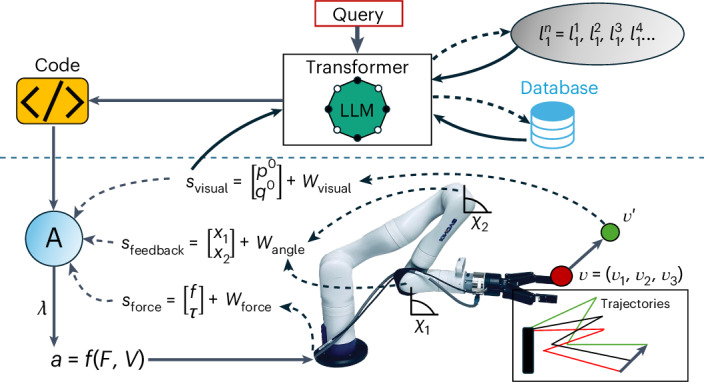
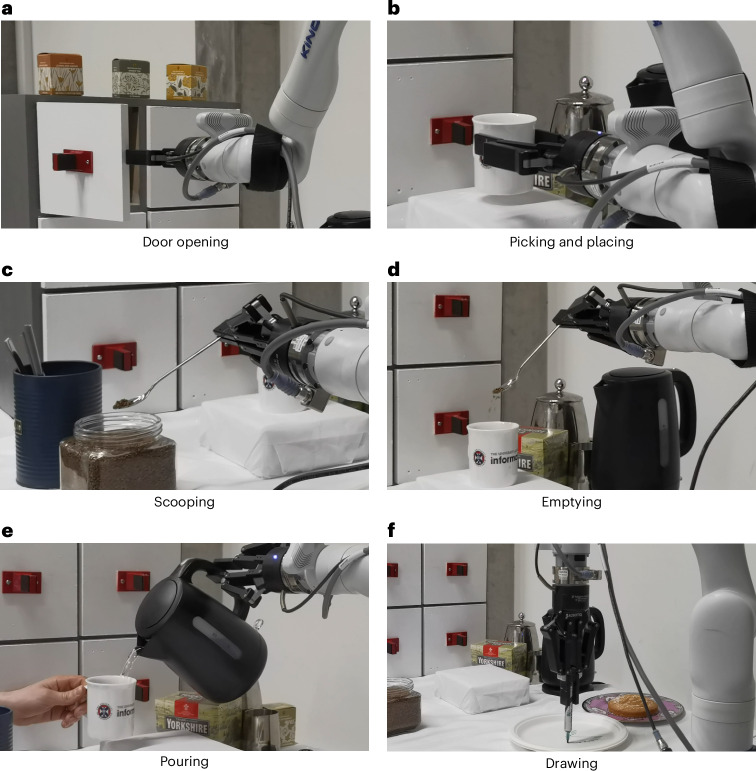
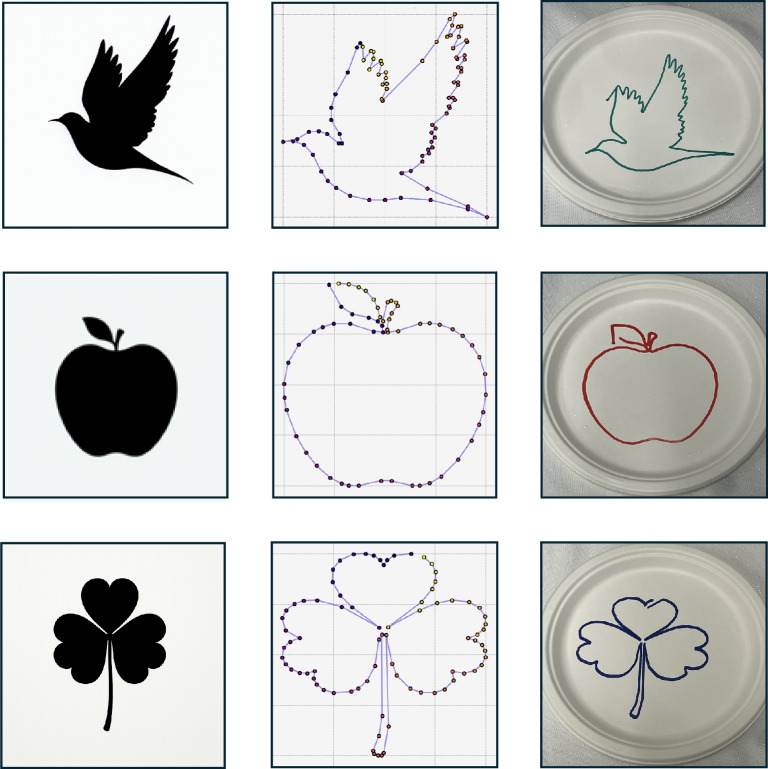
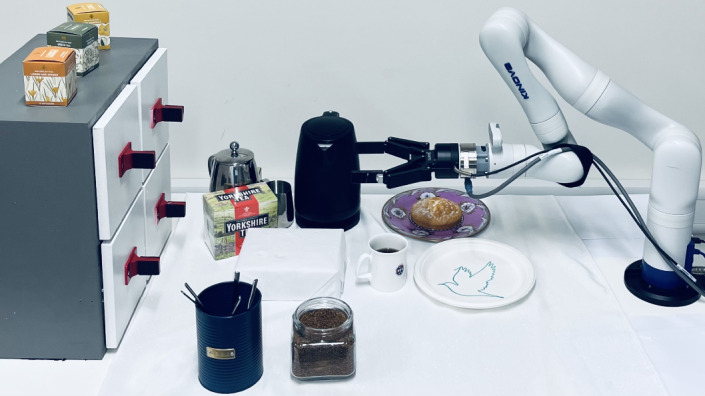
Completing complex tasks in unpredictable settings challenges robotic systems, requiring a step change in machine intelligence. Sensorimotor abilities are considered integral to human intelligence. Thus, biologically inspired machine intelligence might usefully combine artificial intelligence with robotic sensorimotor capabilities. Here we report an embodied large-language-model-enabled robot (ELLMER) framework, utilizing GPT-4 and a retrieval-augmented generation infrastructure, to enable robots to complete long-horizon tasks in unpredictable settings. The method extracts contextually relevant examples from a knowledge base, producing action plans that incorporate force and visual feedback and enabling adaptation to changing conditions. We tested ELLMER on a robot tasked with coffee making and plate decoration; these tasks consist of a sequence of sub-tasks from drawer opening to pouring, each benefiting from distinct feedback types and methods. We show that the ELLMER framework allows the robot to complete the tasks. This demonstration marks progress towards scalable, efficient and ‘intelligent robots’ able to complete complex tasks in uncertain environments.
Overview
The claims and statistics of this paper haven’t been checked yet.
Run the check — free, no account needed. It reads the open-access text and checks the sources it cites.
Integrity signals
Registry
Cites
Statistics
Figures
Verification
Claims the paper makes
The claims and statistics of this paper haven’t been checked yet.
Run the check — free, no account needed. It reads the open-access text and checks the sources it cites.
Claims other papers make about this one
Each is checked against this paper’s own text: does it say what the citing paper says it does?
The source backs part of the claim, not all of it — or backs it for a different population, condition or comparison.
In the citing paper
“In such environments, agents must process continuous, high-bandwidth sensory streams, such as video frames, audio signals, and proprioception, under real-time and memory constraints (Black et al., 2025; Bjorck et al., 2025; Mon-Williams et al., 2025).”
From A Survey of Agent Memory in the Second Half: Towards Self-Evolving and Long-Horizon Agents (2026) · cites this paper as Mon-Williams et al., 2025
Experimental — accuracy not yet measured
Self-check
Percentages, sums and reported differences re-computed from the paper’s own numbers.
The self-check needs the paper’s full text.
Citations
Cites
Kirillov, A., Mintun, E., Ravi, N., Mao, H., Rolland, C., Gustafson, L., Xiao, T., Whitehead, S., Berg, A. C., Lo, W.-Y., et al. (2023) · 2023 IEEE/CVF International Conference on Computer Vision (ICCV) · doi:10.1109/iccv51070.2023.00371 · Cited by 11,953
US Environmental Protection Agency
Liu, X. (1998) · Choice Reviews Online · doi:10.5860/choice.35-4455 · Cited by 5,887
Six views of embodied cognition
Wilson, M. (2002) · Psychonomic Bulletin & Review · doi:10.3758/bf03196322 · Cited by 4,782
Retrieval-Augmented Generation for Knowledge-Intensive NLP Tasks
Lewis, P., Perez, E., Piktus, A., Petroni, F., Karpukhin, V., Goyal, N., Küttler, H., Lewis, M., Yih, W.-T., Rocktäschel, T., et al. (2020) · arXiv · doi:10.48550/arxiv.2005.11401 · Cited by 3,101
Zero-shot text-to-image generation
Ramesh, A., Pavlov, M., Goh, G., Gray, S., Voss, C., Radford, A., Chen, M., & Sutskever, I. (2021) · arXiv · doi:10.48550/arxiv.2102.12092 · Cited by 2,417
Grounding DINO: Marrying DINO with Grounded Pre-training for Open-Set Object Detection
Liu, S., Zeng, Z., Ren, T., Li, F., Zhang, H., Yang, J., Jiang, Q., Li, C., Yang, J., Su, H., et al. (2025) · Lecture Notes in Computer Science · doi:10.1007/978-3-031-72970-6_3 · Cited by 2,074
The grand challenges of Science Robotics
Yang, G.-Z., Bellingham, J., Dupont, P. E., Fischer, P., Floridi, L., Full, R., Jacobstein, N., Kumar, V., McNutt, M., Merrifield, R., et al. (2018) · Science Robotics · doi:10.1126/scirobotics.aar7650 · Cited by 1,177
Trends and challenges in robot manipulation
Billard, A., & Kragić, D. (2019) · Science · doi:10.1126/science.aat8414 · Cited by 1,007
An embodied cognitive science?
Clark, A. (1999) · Trends in Cognitive Sciences · doi:10.1016/s1364-6613(99)01361-3 · Cited by 781
Research works printed but not linked: 8
- Hussein, A., Gaber, M. M., Elyan, E. & Jayne, C. Imitation learning: a survey of learning methods. ACM Comput. Surv. 50, 21:1–21:35 (2017).
- Shridhar, M., Manuelli, L. & Fox, D. Perceiver-Actor: a multi-task transformer for robotic manipulation. In Proc. 6th Conference on Robot Learning 785–799 (PMLR, 2023).
- Huang, W., Abbeel, P., Pathak, D. & Mordatch, I. Language models as zero-shot planners: extracting actionable knowledge for embodied agents. In Proc. 39th International Conference on Machine Learning 9118–9147 (PMLR, 2022).
- Belkhale, S., Cui, Y. & Sadigh, D. Data quality in imitation learning. In Advances in Neural Information Processing Systems (NeurIPS) 80375–80395 (Curran Associates, 2024).
- Chang, J., Uehara, M., Sreenivas, D., Kidambi, R. & Sun, W. Mitigating covariate shift in imitation learning via offline data with partial coverage. In Advances in Neural Information Processing Systems 965–979 (Curran Associates, 2021).
- Nair, S., Rajeswaran, A., Kumar, V., Finn, C. & Gupta, A. R3M: a universal visual representation for robot manipulation. In Proc. 6th Conference on Robot Learning Vol. 205, 892–909 (PMLR, 2022).
- Hong, J., Levine, S. & Dragan, A. Learning to influence human behavior with offline reinforcement learning. In Advances in Neural Information Processing Systems (NeurIPS) 36094–36105 (Curran Associates, 2024).
- OpenAI. GPT-4 technical report. Preprint at http://arxiv.org/abs/2303.08774 (2024). · arXiv
Cited by
Sorted by citations
Items 101–134 of 134
LLM-Empowered MAPPO for Embodied Cognitive Satellite–Terrestrial Networks With RSMA
Hu, C., Yang, H., Li, B., Jiang, X., & Lu, W. (2026) · IEEE Transactions on Cognitive Communications and Networking · doi:10.1109/tccn.2026.3717965
SwiftBot: A Decentralized Platform for LLM-Powered Federated Robotic Task Execution
Zhang, Y., Xu, S., Li, Z., Zhong, F., Yang, X., & Xu, H. (2026) · IEEE/ACM International Symposium on Cluster, Cloud and Grid Computing (CCGrid) · doi:10.1109/ccgrid68966.2026.00048
Qiu, L., Ma, Z., Hao, Y., Shi, Y., Wen, Y., Li, J., Zhu, B., Li, J., Pan, L., & Zhao, J. (2026) · Journal of Robotic Surgery · doi:10.1007/s11701-026-03783-x
LLM-BT-Grasp: Large Language Model to Behavior Tree for Grasping
Kötter, D., Du, D., Cherif, E., Luckas, N., Petrović, O., & Brecher, C. (2026) · International Conference on Mechanical Engineering and Robotics Research (ICMERR) · doi:10.1109/icmerr70056.2026.11643074
LLM-Driven Low-Code Task Orchestration for Agile Flexible Manufacturing in Mass Customization
Deng, Y., & Yu, J. (2026) · IEEE International Conference on Mechatronics and Automation (ICMA) · doi:10.1109/icma69663.2026.11647594
MulPlanLM: multimodal robotic task planning with vision-language models and physical feedback
Son, Y.-C., Lee, D.-H., & Lim, S. (2026) · Intelligent Service Robotics · doi:10.1007/s11370-026-00743-0
Ma, H., Pan, H., Li, L., Su, H., & Yang, X. (2026) · International Journal of Humanoid Robotics · doi:10.1142/s0219843626400281
ST-MAP: Spatiotemporal Multimodal Alignment for Personality-Conditioned Humanoid Motion Synthesis
Phothisonothai, M., & Watanabe, K. (2026) · International Conference on Communications and Electronics (ICCE) · doi:10.1109/icce70609.2026.11658432
A domain-enhanced multi-agent framework for trustworthy literature screening in water research
Wang, R., Lin, X., Zhong, B., Li, J., Huang, R., Huang, Y., Cai, Y., Jantarakasem, C., Xiang, Y., Plakas, K. V., et al. (2026) · Water Research · doi:10.1016/j.watres.2026.126813
Zhao, Y.-H., Zhao, W.-L., Yan, P., Qin, L., Wang, S.-H., & Wang, Z.-J. (2026) · 電腦學刊 · doi:10.63367/199115992026083704010
Convergence of need technology and culture driving the era of physical AI in medicine
Prat, Y., Francos, R. M., Shoham, M., Zimlichman, E., & Tsur, A. (2026) · Frontiers in Digital Health · doi:10.3389/fdgth.2026.1914012
Schema-guided LLM-to-action framework for UR5e pick-and-place simulation
Priambodo, A. S., Dhewa, O. A., Pratama, G. N. P., & Baktiar, F. Y. (2026) · AIP conference proceedings · doi:10.1063/12.0046620
Li, Y., Zhang, H., Ye, M., Wang, Y., & Zhang, Z. (2026) · International Conference on Cyber Security, Artificial Intelligence and Digital Economy (CSAIDE) · doi:10.1145/3819836.3819965
LLM-agent-based explicit-implicit interaction fusion for human-robot collaborative Assembly
Wang, B., Gui, B., Zheng, L., Wang, Y., & Wang, L. (2026) · Robotics and Computer-Integrated Manufacturing · doi:10.1016/j.rcim.2026.103430
Vijayabhaskar, B., Easwar, V. U., & Reddy, N. V. K. (2026) · International Conference on Inventive Systems and Control (ICISC) · doi:10.1109/icisc69558.2026.11681433
Zargarzadeh, S., Siegers, A. C. G., & Tavakoli, M. (2026) · IEEE/RAS-EMBS International Conference on Biomedical Robotics and Biomechatronics (BioRob) · doi:10.1109/biorob66782.2026.11681193
Pasquali, D., Rea, F., Morasso, P., Sandini, G., & Sciutti, A. (2026) · Frontiers in Neurorobotics · doi:10.3389/fnbot.2026.1920808
Lin, S., He, Y., Mai, X., Wang, K., Lai, J., Wang, Y., Wu, J., & Guo, J. (2026) · International Conference on Machine Learning and Intelligent Computing · doi:10.1145/3829441.3829599
Zuzuárregui, M. A., Abedi, A. A., Ehsani, R. J., & Carpin, S. (2026) · IEEE transactions on field robotics. · doi:10.1109/tfr.2026.3736546
Context-Driven Task and Motion Planning with Language Models
Lee, J. (2026) · The Journal of Korea Robotics Society · doi:10.7746/jkros.2026.21.3.325
Nanoconfined Bi2Se3@Carbon-Tube Inbuilt Heterointerface for Highly Stable Flexible Multimodal Sensor
Lu, M., Bai, Y., Xia, S., Li, S., Bai, J., Zhang, T., & Li, T. (2026) · ACS Nano · doi:10.1021/acsnano.6c15254
Probing an Embodied LLM: When Higher Observation Fidelity Hurts Problem Solving
Zenkri, O., & Brock, O. (2026) · Lecture notes in computer science · doi:10.1007/978-3-032-39953-3_25 · Cited by 2
RTA-Bench for Recovery-Target Attribution in Embodied Service Robots
Cao, Z., & Wang, C. (2026) · International Conference on Embodied Intelligence, Robotics, and Control Systems (EIRCS) · doi:10.1109/eircs70783.2026.11706051
Yahia, A. B., Harrak, E. F. E., Kadir, I., Chisembe, S., Abdallaoui, A., Hmaidi, A. E., & Dehbi, A. (2026) · Array · doi:10.1016/j.array.2026.101321
LLM-Assisted Planning Failure Resolution in Human-Robot Collaboration
Raggioli, L., Muto, E. C., Esposito, R., & Rossi, S. (2026) · IEEE RO-MAN · doi:10.1109/ro-man72286.2026.11714833
Is Information Digital? A Defense of Reality
Lee, E. A. (2026) · Lecture notes in computer science · doi:10.1007/978-3-032-41269-0_1
Shuvo, M. I. R., Fime, A. A., Ashraf, R., Alam, N. A., & Kim, J.-H. (2026) · Frontiers in Robotics and AI · doi:10.3389/frobt.2026.1832982
Sahasra, V., Yukaciny, S., Nithiyasri, V., Santhanalakshmi, V., ., L., Balan, D. P. S., & Thayumanaswamy, R. J. (2026) · International Journal of Innovative Science and Research Technology (IJISRT) · doi:10.38124/ijisrt/26oct455
Zhang, Y., Zhang, Y., Wu, T., & Ye, L. (2026) · International Joint Conference on Neural Networks (IJCNN) · doi:10.1109/ijcnn69854.2026.11728577
Lv, Z., Ou, S. S., He, S., Jiang, Y., Jing, H., & Zhang, C. (2026) · Applied Energy · doi:10.1016/j.apenergy.2026.129151
Liu, C., Tang, D., Zhu, H., Cai, Q., Wang, L., & Nie, Q. (2026) · Journal of Manufacturing Systems · doi:10.1016/j.jmsy.2026.10.011
Li, W., Wang, Y., Mao, C., Antwi‐Afari, M. F., & Tao, X. (2026) · Advanced Engineering Informatics · doi:10.1016/j.aei.2026.105392
Li, C., Ren, L., Yu, X., Zeng, J., Huang, L., & Wang, K. (2026) · Multimedia Systems · doi:10.1007/s00530-026-02715-x
Cardoso, L., Moreira, P. H. D. O., Fraga, C., & Moutinho, L. (2026) · Brain Sciences · doi:10.3390/brainsci16111167
Metadata
- Authors
- Mon-Williams, R., Li, G., Long, R., Du, W., & Lucas, C. G.
- Affiliations
- Princeton University (US)
- University of Edinburgh (GB)
- The Alan Turing Institute (GB)
- Corresponding author
- Mon-Williams, Ruaridh
- Li, Gen
- Venue
- Nature Machine Intelligence
- Published
- 2025-03-19
- Volume
- 7
- Issue
- 4
- Pages
- 592-601
- ISSN
- 2522-5839 (ISSN-L)
- PMC
- PMC12088599
- OpenAlex
- W4408555470
- Cited by
- 132
- References
- 58
- Citations by year
- 2026: 94 · 2025: 38
- FWCI
- 48.49
- Type
- journal article
- Language
- en
- Open access
- hybrid
- doi.org
- Locations
- Nature Machine Intelligence (publishedVersion, cc-by)
- Research Square (acceptedVersion, cc-by)
- PubMed Central (publishedVersion, cc-by)
- PubMed (publishedVersion)
- Edinburgh Research Explorer (University of Edinburgh) (submittedVersion, cc-by)
- Funders
- RCUK | Engineering and Physical Sciences Research Council (EP/L016834/1, EP/S023208/1)
- Topics
- Physical Sciences › Engineering › Control and Systems Engineering › Robot Manipulation and Learning
- Physical Sciences › Computer Science › Artificial Intelligence › AI-based Problem Solving and Planning
- Physical Sciences › Computer Science › Artificial Intelligence › Reinforcement Learning in Robotics
- Keywords
- unpredictable environments, GPT-4, retrieval-augmented generation, sensorimotor feedback, force feedback, visual feedback, action planning, long-horizon tasks, intelligent robots
About these checks
Registry, retraction, Cites and statistics results are computed, not judged, with one exception: a printed reference that no index lists is read once by a model before it counts as a citation error. Claims are extracted by a model and kept only when their quote appears verbatim in the text; each cited source is then checked, with a model’s help, for whether it says what the claim relies on. Those verdicts can be wrong — read the claim’s quote and the cited source before relying on one.
Statistics and arithmetic are recomputed, not judged.
Confidence bands are shown only for fields calibrated on our annotated test set. None is calibrated yet, so no band is shown.
What counts as a claim ›How we measure confidence ›How we check this ›
Are you an author, or do you see a problem with this page? Request a review
