

A two-step workflow based on plasma p-tau217 to screen for amyloid β positivity with further confirmatory testing only in uncertain cases
Open accessThe DOI matches its Crossref record; 68 of the 68 references it cites were found in a registry or an index.
Abstract
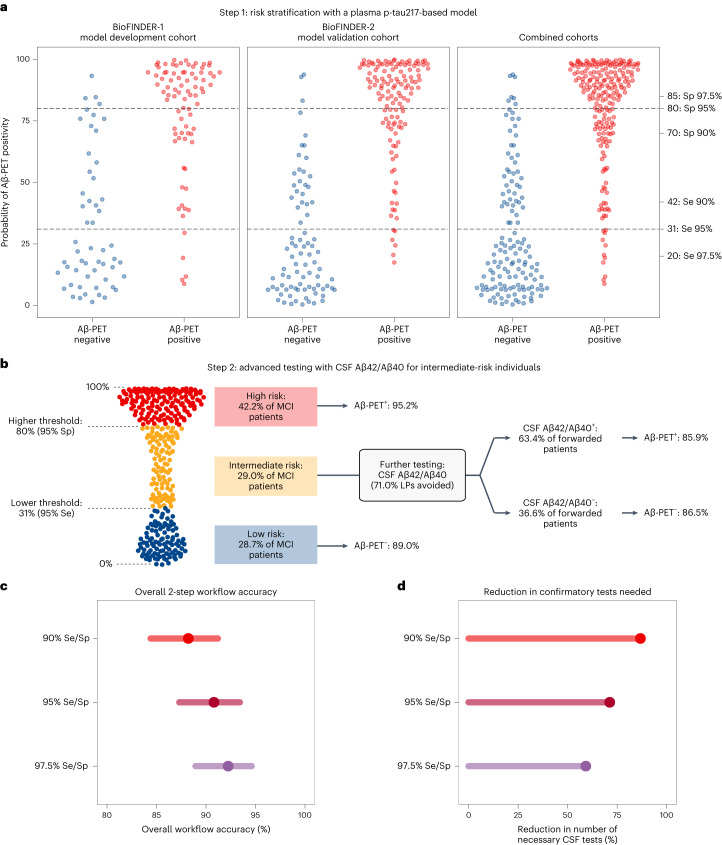
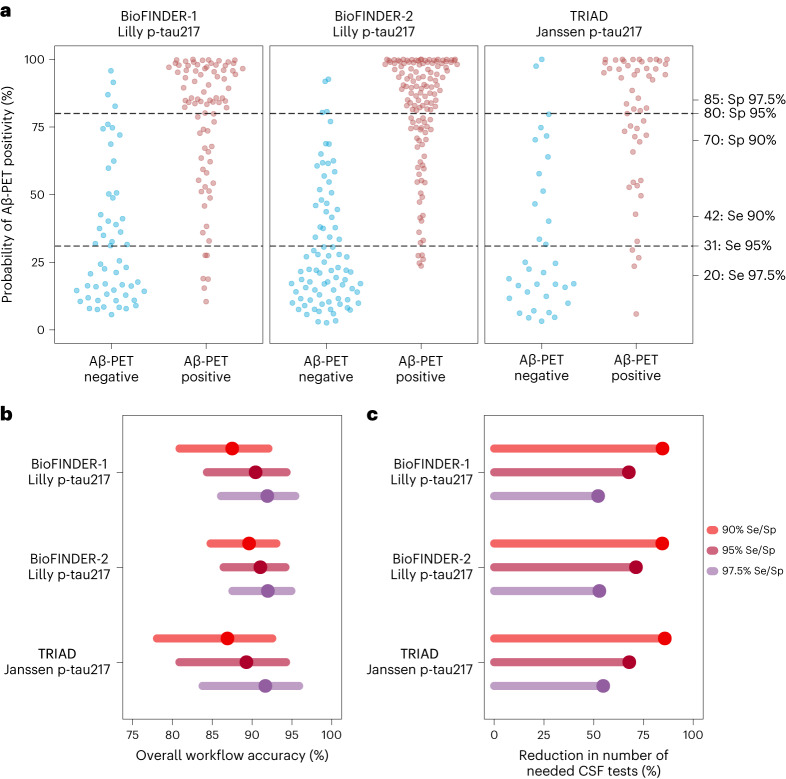
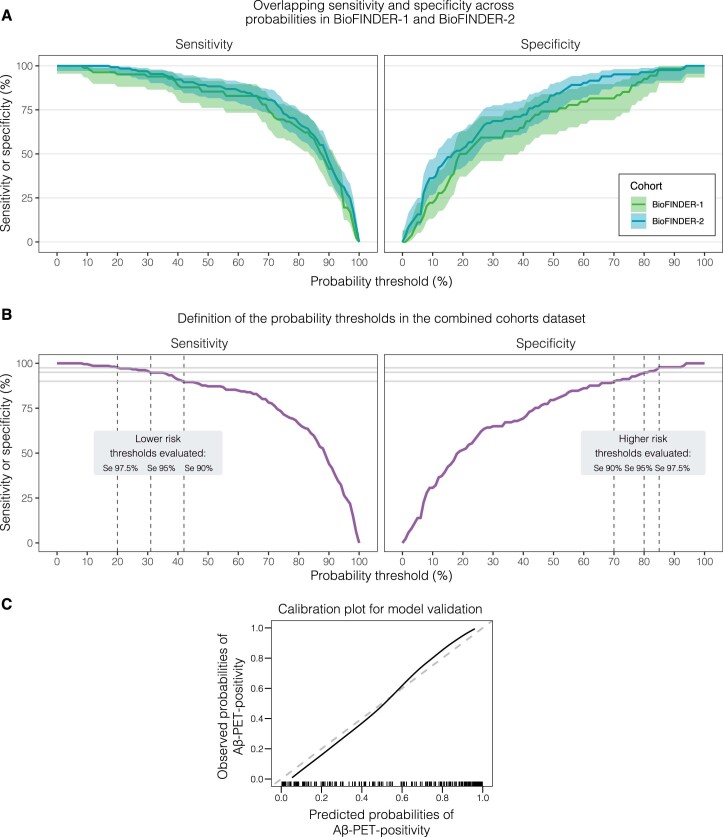
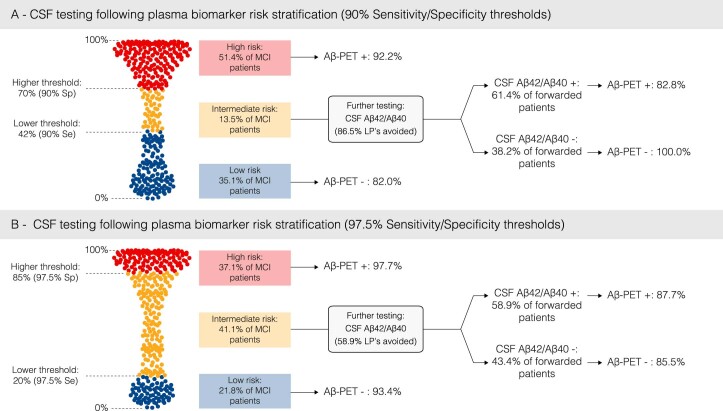
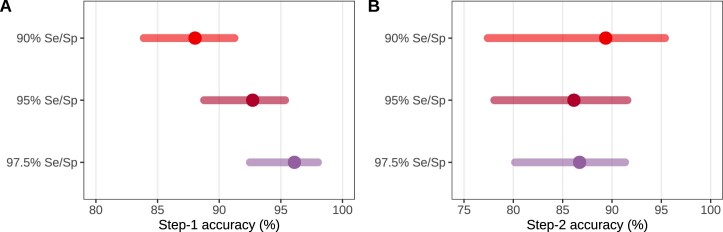
Cost-effective strategies for identifying amyloid-β (Aβ) positivity in patients with cognitive impairment are urgently needed with recent approvals of anti-Aβ immunotherapies for Alzheimer’s disease (AD). Blood biomarkers can accurately detect AD pathology, but it is unclear whether their incorporation into a full diagnostic workflow can reduce the number of confirmatory cerebrospinal fluid (CSF) or positron emission tomography (PET) tests needed while accurately classifying patients. We evaluated a two-step workflow for determining Aβ-PET status in patients with mild cognitive impairment (MCI) from two independent memory clinic-based cohorts (n = 348). A blood-based model including plasma tau protein 217 (p-tau217), age and APOE ε4 status was developed in BioFINDER-1 (area under the curve (AUC) = 89.3%) and validated in BioFINDER-2 (AUC = 94.3%). In step 1, the blood-based model was used to stratify the patients into low, intermediate or high risk of Aβ-PET positivity. In step 2, we assumed referral only of intermediate-risk patients to CSF Aβ42/Aβ40 testing, whereas step 1 alone determined Aβ-status for low- and high-risk groups. Depending on whether lenient, moderate or stringent thresholds were used in step 1, the two-step workflow overall accuracy for detecting Aβ-PET status was 88.2%, 90.5% and 92.0%, respectively, while reducing the number of necessary CSF tests by 85.9%, 72.7% and 61.2%, respectively. In secondary analyses, an adapted version of the BioFINDER-1 model led to successful validation of the two-step workflow with a different plasma p-tau217 immunoassay in patients with cognitive impairment from the TRIAD cohort (n = 84). In conclusion, using a plasma p-tau217-based model for risk stratification of patients with MCI can substantially reduce the need for confirmatory testing while accurately classifying patients, offering a cost-effective strategy to detect AD in memory clinic settings.
Overview
The claims and statistics of this paper haven’t been checked yet.
Free: it reads the open-access text and checks the first 5 claims that cite a source we can check. Create a free account to check every claim.
Integrity signals
Registry
Cites
Statistics
Figures
Verification
Claims the paper makes
The claims and statistics of this paper haven’t been checked yet.
Free: it reads the open-access text and checks the first 5 claims that cite a source we can check. Create a free account to check every claim.
Claims other papers make about this one
Each is checked against this paper’s own text: does it say what the citing paper says it does?
The source backs part of the claim, not all of it — or backs it for a different population, condition or comparison.
In the citing paper
“A 3-range approach demonstrated high negative and positive concordance with Aβ status, with approximately 20% of individuals in an intermediate zone that would require confirmatory CSF or PET, as previously proposed.41”
From Diagnostic Accuracy of a Plasma Phosphorylated Tau 217 Immunoassay for Alzheimer Disease Pathology (2024) · cites this paper as [41]
Experimental — accuracy not yet measuredThe source backs part of the claim, not all of it — or backs it for a different population, condition or comparison.
In the citing paper
“For example, recent evidence suggests that a three-range method leads to higher accuracy to identify amyloid PET positivity in individuals with MCI56.”
From Diagnosis of Alzheimer's disease using plasma biomarkers adjusted to clinical probability (2024) · cites this paper as [56]
Experimental — accuracy not yet measuredThe cited source says what the claim attributes to it.
In the citing paper
“We next applied a 3-range approach,41 creating lower (95% sensitivity, <0.4 pg/mL) and upper (95% specificity, >0.63 pg/mL) reference points in WRAP (Table 2 and eFigure 11 in Supplement 1).”
From Diagnostic Accuracy of a Plasma Phosphorylated Tau 217 Immunoassay for Alzheimer Disease Pathology (2024) · cites this paper as [41]
The cited source says what the claim attributes to it.
In the citing paper
“Notably, the two-cutoffs approach is currently employed for the FDA-approved CSF Lumipulse test42,43 and has been suggested for AD BBMs17,55, especially when very high accuracy is needed.”
From Highly accurate blood test for Alzheimer's disease is similar or superior to clinical cerebrospinal fluid tests (2024) · cites this paper as [55]
Self-check
Percentages, sums and reported differences re-computed from the paper’s own numbers.
The self-check needs the paper’s full text.
Citations
Cites
McKhann, G. M., Knopman, D. S., Chertkow, H., Hyman, B. T., Jack, C. R., Kawas, C. H., Klunk, W. E., Koroshetz, W. J., Manly, J. J., Mayeux, R., et al. (2011) · Alzheimer's & Dementia · doi:10.1016/j.jalz.2011.03.005 · Cited by 18,657
NIA‐AA Research Framework: Toward a biological definition of Alzheimer's disease
Jack, C. R., Bennett, D. A., Blennow, K., Carrillo, M. C., Dunn, B., Haeberlein, S. B., Holtzman, D. M., Jagust, W., Jessen, F., Karlawish, J., et al. (2018) · Alzheimer's & Dementia · doi:10.1016/j.jalz.2018.02.018 · Cited by 10,537
Self-citationHarrell (2015) · Springer Series in Statistics · doi:10.1007/978-3-319-19425-7 · Cited by 6,878
Lecanemab in early Alzheimer's disease
van Dyck, C. H., Swanson, C. J., Aisen, P., Bateman, R. J., Chen, C., Gee, M., Kanekiyo, M., Li, D., Reyderman, L., Cohen, S., et al. (2023) · New England Journal of Medicine · doi:10.1056/nejmoa2212948 · Cited by 5,678 · cited 2×
“The inclusion criteria for recruitment of patients with MCI for BioFINDER-2 were as follows: (1) aged 40–100 years; (2) referred to the memory clinics due to cognitive symptoms; (3) MMSE score of 24–30 points; (4) did not fulfill the criteria for any dementia (major neurocognitive disorder) according to the Diagnostic…”
MethodNichols, E., Steinmetz, J. D., Vollset, S. E., Fukutaki, K., Chalek, J., Abd-Allah, F., Abdoli, A., Abualhasan, A., Abu-Gharbieh, E., Akram, T. T., et al. (2022) · The Lancet Public Health · doi:10.1016/s2468-2667(21)00249-8 · Cited by 5,575
Differential Diagnosis of Glomerular Disease: A Systematic and Inclusive Approach
Hebert, L. A., Parikh, S., Prosek, J., Nadasdy, T., & Rovin, B. H. (2013) · American Journal of Nephrology · doi:10.1159/000354390 · Cited by 4,376
Restriction isotyping of human apolipoprotein E by gene amplification and cleavage with HhaI.
Hixson, J., & Vernier, D. (1990) · Journal of Lipid Research · doi:10.1016/s0022-2275(20)43176-1 · Cited by 2,933
DSM-IV: Diagnostic and Statistical Manual of Mental Disorders
Bell, C. C. (1994) · JAMA: The Journal of the American Medical Association · doi:10.1001/jama.1994.03520100096046 · Cited by 2,610
Levey, A. S., de Jong, P. E., Coresh, J., El Nahas, M., Astor, B. C., Matsushita, K., Gansevoort, R. T., Kasiske, B. L., & Eckardt, K.-U. (2011) · Kidney International · doi:10.1038/ki.2010.483 · Cited by 2,345
Donanemab in Early Alzheimer’s Disease
Mintun, M. A., Lo, A. C., Duggan Evans, C., Wessels, A. M., Ardayfio, P. A., Andersen, S. W., Shcherbinin, S., Sparks, J., Sims, J. R., Brys, M., et al. (2021) · New England Journal of Medicine · doi:10.1056/nejmoa2100708 · Cited by 1,728
Cited by
Items 101–200 of 267
Eratne, D., Li, Q.-X., Lewis, C. C., Dang, C., Kang, M. J., Grewal, J. K., Loi, S. M., Walterfang, M., Evans, A. H., Malpas, C. B., et al. (2024) · Journal of Neurology · doi:10.1007/s00415-024-12732-3 · Cited by 14
Self-citationThanapornsangsuth, P., Booncharoen, K., Khieukhajee, J., Luechaipanit, W., Haethaisong, T., Chongsuksantikul, A., Supharatpariyakorn, T., Chunharas, C., Likitjaroen, Y., & Hemachudha, T. (2024) · Alzheimer s & Dementia · doi:10.1002/alz.14138 · Cited by 14
Zhou, Y., Sheehan, R., Guo, L., & Strydom, A. (2025) · Alzheimer s & Dementia · doi:10.1002/alz.70135 · Cited by 14
“…and euploid controls, 75,81 with plasma NT1-tau levels increasing with age and being associated with poorer cognitive outcomes in DS. 48 Furthermore, while plasma p-tau217 has been identified as a highly promising biomarker in AD studies, 18,28,103–105 research on its role in DS remains limited.”
Wilson, D. H., Khare, M., Triana‐Baltzer, G., Wolfe, M., Sheehy, P., Copeland, K. A. F., Hesterberg, L. K., Vasko, A.-J., van der Flier, W. M., Verberk, I. M. W., et al. (2025) · Frontiers in Neurology · doi:10.3389/fneur.2025.1568971 · Cited by 12
Self-citationBolton, C. J., Rostamzadeh, A., Chin, N. A., Fowler, N. R., Heidebrink, J. L., Rahman‐Filipiak, A., Romano, R. R., & Clark, L. R. (2025) · The Journal of Prevention of Alzheimer s Disease · doi:10.1016/j.tjpad.2025.100310 · Cited by 12
“A two-step model has been proposed in which early detection with BBMs is conducted and then further confirmatory testing is sought in cases which are ambiguous [38].”
Where Do Plasma Biomarkers fit in With Current Alzheimer's Disease Detection?
Gildengers, A. G., Weinstein, A. M., Gujral, S., Zeng, X., Diaz, J. L., Lafferty, T. K., Cowie, M., Emanuel, J. E., López, O. L., Royse, S. K., et al. (2024) · American Journal of Geriatric Psychiatry · doi:10.1016/j.jagp.2024.09.015 · Cited by 12
Braudeau, J., Souchet, B., & Streel, E. (2025) · NeuroMarkers. · doi:10.1016/j.neumar.2025.100107 · Cited by 11
Musso, G., Fiorenzato, E., Misenti, V., Cauzzo, S., Biundo, R., Fogliano, C. A., Bonato, G., Meissner, W. G., Campagnolo, M., Carecchio, M., et al. (2025) · Frontiers in Neurology · doi:10.3389/fneur.2025.1638852 · Cited by 12
“…as their accessibility, minimally invasive nature, and lower cost compared to CSF or PET—have driven their adoption in both research and clinical settings, for the development of diagnostic algorithms to capture A β -pathology at the screening level of mild cognitive impairment (MCI) (13).”
Benussi, A., Michelutti, M., Lombardo, T. M. I., Toffoletto, B., Palacino, F., Cenacchi, V., Pelusi, L., Capacchione, F., Menichelli, A., Perego, A., et al. (2025) · Neurobiology of Aging · doi:10.1016/j.neurobiolaging.2025.12.005 · Cited by 15
Chong, J. R., Hilal, S., Venketasubramanian, N., Schöll, M., Ashton, N. J., Zetterberg, H., Chen, C. P., & Lai, M. K. P. (2026) · The Journal of Prevention of Alzheimer s Disease · doi:10.1016/j.tjpad.2026.100615 · Cited by 12
Self-citationBlood‐based biomarkers of Alzheimer's disease: Standardization and comprehensiveness
Liu, Y., Guo, Y., & Yu, J. (2024) · Neuroprotection/Neuroprotection (Chichester, England. Print) · doi:10.1002/nep3.58 · Cited by 11
“To optimize the work fl ow in identifying A β positive population, Brum et al. 23 applied plasma p ‐ tau217 to preliminarily stratify and label the samples for further CSF A β status tests.”
Suárez‐Calvet, M., Ruiz, C. A., Alcolea, D. A., Mendióroz, M., Balasa, M., Morenas‐Rodríguez, E., Puig‐Pijoan, A., Sánchez‐Juan, P., Villarejo‐Galende, A., & Sánchez‐Valle, R. (2024) · Neurología · doi:10.1016/j.nrl.2024.08.002 · Cited by 12
Dyer, A. H., Dunne, J., Dolphin, H., Morrison, L., O’Connor, A., Fullam, S., Kenny, T., Fallon, A., O’Dowd, S., Bourke, N. M., et al. (2025) · Alzheimer s & Dementia Diagnosis Assessment & Disease Monitoring · doi:10.1002/dad2.70080 · Cited by 14
Ruling in, ruling out: the clinical utility of plasma biomarkers in diagnosis of Alzheimer’s disease
Wisch, J. K., & Ances, B. M. (2025) · Journal of Clinical Investigation · doi:10.1172/jci198725 · Cited by 10
“As amyloid accumulates, it triggers downstream processes, including the hyperphosphorylation of tau proteins at more than 40 known amino acid sites (8) — events that have been quantified in both CSF (9, 10) and, more recently, in plasma (11).”
InfluentialTau biology, biomarkers, and therapeutics
Frost, B. E., Kolb, H. C., Algeciras‐Schimnich, A., Betthauser, T. J., DeVos, S. L., Edelmayer, R. M., Elwood, F., Fleisher, A., Henley, D. B., Horie, K., et al. (2025) · Alzheimer s & Dementia Translational Research & Clinical Interventions · doi:10.1002/trc2.70165 · Cited by 10
Self-citationMammel, A., Hsiung, G. R., Mousavi, A., Hallett, K., Mackenzie, I. R., Hirsch‐Reinshagen, V., Biehl, D., Gill, P. S., Encarnacion, M. J., & Frykman, H. (2025) · Alzheimer s & Dementia Diagnosis Assessment & Disease Monitoring · doi:10.1002/dad2.70070 · Cited by 11
Chatterjee, P., Ivanic, S., Southon, A. G., McCarthy, C., Patel, S. K., Christensen, M., Darby, D., Bush, A. I., Ayton, S., Werden, E., et al. (2025) · Journal of Alzheimer s Disease · doi:10.1177/13872877251376694 · Cited by 10
Delaby, C., Gabelle, A., Duchiron, M., Busto, G. U., Morchikh, M., Hirtz, C., Mondésert, E., Cristol, J., Barnier-Figue, G., Perrein, F., et al. (2025) · Alzheimer s & Dementia · doi:10.1002/alz.70867 · Cited by 11
Roh, H. W., Chang, Y. Y., Kim, K. Y., Jeon, S. Y., Wang, S., Kim, E., Bae, J. N., & Ryu, S. (2026) · Psychiatry Investigation · doi:10.30773/pi.2025.0400 · Cited by 12
Li, D., Wang, G., Sun, M., Qu, A., Xu, C., Wang, Q., Hao, C., & Kuang, H. (2025) · Angewandte Chemie · doi:10.1002/ange.202501894 · Cited by 9
Álvarez‐Sánchez, L., Peña‐Bautista, C., Ferré‐González, L., Balaguer, Á., Amengual, J. L., Baquero, M., & Cháfer‐Pericás, C. (2025) · Scientific Reports · doi:10.1038/s41598-025-01511-3 · Cited by 9
Giuffrè, G. M., Quaranta, D., Citro, S., Morganti, T. G., Martellacci, N., Vita, M. G., Rossini, P. M., Calabresi, P., & Marra, C. (2024) · Journal of Alzheimer s Disease · doi:10.3233/jad-240150 · Cited by 8
Collij, L. E., Mattsson, N., Janelidze, S., Ossenkoppele, R., & Hansson, O. (2025) · Alzheimer s & Dementia · doi:10.1002/alz.70763 · Cited by 10
Self-citationGong, X., Li, C., Zhou, Z., Yu, R., Chen, Y., Tong, J., Liu, Y., Qing, T., Wu, Z., Liu, T., et al. (2026) · Analytical Chemistry · doi:10.1021/acs.analchem.5c06515 · Cited by 8
Lu, S., Qiu, S., Yu, G., Zhang, A., & Zhao, Q. (2026) · Ageing Research Reviews · doi:10.1016/j.arr.2026.103097 · Cited by 8
Plasma Alzheimer's disease biomarker relationships with incident abnormal amyloid PET
Cogswell, P. M., Wiste, H. J., Weigand, S. D., Therneau, T. M., Griswold, M. E., Braunstein, J. B., West, T., Verghese, P. B., Graff‐Radford, J., Algeciras‐Schimnich, A., et al. (2025) · Alzheimer s & Dementia · doi:10.1002/alz.14629 · Cited by 8
Arranz, J., Ferrer, R., Zhu, N., Rubio‐Guerra, S., Rodríguez‐Baz, Í., Arriola‐Infante, J. E., Maure‐Blesa, L., Castro, J. G., Selma‐González, J., Carmona‐Iragui, M., et al. (2025) · Alzheimer s Research & Therapy · doi:10.1186/s13195-025-01779-7 · Cited by 8
Fluid Biomarkers in Dementia Diagnosis
Quinn, J. F., & Gray, N. E. (2024) · CONTINUUM Lifelong Learning in Neurology · doi:10.1212/con.0000000000001497 · Cited by 8
Wang, Q., Zhong, X., Gao, P., Xiao, Z., Chen, B., Tan, H., Liu, Q., Yao, K., Liang, S., Li, J., et al. (2025) · Alzheimer s & Dementia · doi:10.1002/alz.70465 · Cited by 11
“24,25 Therefore, an increase in these levels reflects tau pathology and may also serve as an indirect marker of A β deposition.”
Optimizing timing and cost-effective use of plasma biomarkers in Alzheimer’s disease
Chang, H., Ma, M.-C., Huang, K., Huang, C.-G., Huang, S.-H., Huang, C., Lin, K., & Chang, C. (2025) · Alzheimer s Research & Therapy · doi:10.1186/s13195-025-01851-2 · Cited by 8
Wang, Y., Cui, L., Pan, F., Zhang, Z., Huang, L., Miao, Y., Guan, Y., & Guo, Q. (2025) · Frontiers in Aging Neuroscience · doi:10.3389/fnagi.2025.1660755 · Cited by 7
Borland, E., Mattsson, N., Tideman, P., Initiative, T. A. D. N., Stomrud, E., Hansson, O., & Palmqvist, S. (2024) · Alzheimer s & Dementia · doi:10.1002/alz.14305 · Cited by 7
“28 Thus, we hypothesized that a two-step model for cognitive testing would align well with clinical practice and current workflows.”
Self-citationCoulborn, S., Roy, A. R. K., Sokołowski, A., Cryns, N. G., Lago, A. L., Cobigo, Y., Rojas, J. C., Spina, S., Grinberg, L. T., Rankin, K. P., et al. (2025) · Alzheimer s & Dementia · doi:10.1002/alz.70771 · Cited by 6
The tau biomarker cascade is condensed in Down syndrome compared with sporadic Alzheimer’s disease
Zammit, M. D., Bruzzone, H., Cody, K. A., Morse, J., Wilson, R. E., Bettcher, B., McLachlan, M., McVea, A. K., DiFilippo, A. H., Carey, F. J., et al. (2025) · Brain · doi:10.1093/brain/awaf428 · Cited by 7
Self-citationJannati, A., Thompson, K., Toro‐Serey, C., Gomes‐Osman, J., Banks, R., Higgins, C., Showalter, J., Bates, D. W., Tobyne, S. M., & Pascual‐Leone, Á. (2025) · Alzheimer s Research & Therapy · doi:10.1186/s13195-025-01913-5 · Cited by 6
Li, Y., LAGIER, R. J., Racke, M. K., & Fesko, Y. A. (2026) · The Journal of Prevention of Alzheimer s Disease · doi:10.1016/j.tjpad.2025.100474 · Cited by 6
“PET scans might also be prioritized for those who have BBM intermediate-risk results [40], particularly when access to PET scans is limited.”
Gaetani, L., Agnello, L., Pilotto, A., Benussi, A., Cagnin, A. C., Parnetti, L., Bozzali, M., Padovani, A., Ciaccio, M., the Italian Society of Neurology (SIN) Study Group on Biomarkers in Neurology, et al. (2026) · Neurological Sciences · doi:10.1007/s10072-026-08931-7 · Cited by 8
Nasrallah, I. M., Kuo, P. H., Nordberg, A. K., Bohnen, N. I., & Ponisio, M. R. (2025) · American Journal of Roentgenology · doi:10.2214/ajr.24.32325 · Cited by 7
Chen, Y., Wang, Z., Liu, X., Mao, Z., & Initiative, A. D. N. (2025) · Molecular Neurobiology · doi:10.1007/s12035-025-05007-z · Cited by 6
“We acknowledge that other phosphorylated tau isoforms, such as pTau217 [61–63], pTau 213 [64] and MTBR-tau243 [65, 66], may offer improved prediction of tau pathology accumulation, but such data were unavailable in the current study.”
Clinical validation of the Lilly SP‐X P‐tau217 assay: Performance in underrepresented cohorts
Hodsdon, M. E., Abel, A., Chambers, A., Lu, M., Morris, A., Pontecorvo, M. J., Reiske, H., Burnham, S. C., Collins, E. C., Mintun, M. A., et al. (2025) · Alzheimer s & Dementia Diagnosis Assessment & Disease Monitoring · doi:10.1002/dad2.70139 · Cited by 6
Mastenbroek, S. E., Collij, L. E., Vogel, J. W., Caldera, S., Serrano, G. E., Adler, C. H., Vargiu, C. M., Palmqvist, S., Barkhof, F., Parchi, P., et al. (2025) · Nature Communications · doi:10.1038/s41467-025-62458-7 · Cited by 7
“Similar approaches have been proposed in AD, where plasma biomarkers are used to prescreen for amyloid-β or tau status, reducing con fi rmatory CSF or positron emission tomography tests by up to 80% 6 – 8 .”
Self-citationMultivariate models using NULISAseq and plasma p‐tau217 for staging Alzheimer's disease
Doecke, J. D., Stage, E., Fowler, C. J., Doré, V., Boehm, N., Kleinert, C., Challagundla, M., Feizpour, A., Ward, L. D., Fripp, J., et al. (2025) · Alzheimer s & Dementia · doi:10.1002/alz.70793 · Cited by 6
Wilson, D. H., Copeland, K. A. F., Miller, M., Vasko, A., Hesterberg, L. K., Khare, M., Wolfe, M., Sheehy, P., Verberk, I. M. W., & Teunissen, C. E. (2025) · Alzheimer s & Dementia Diagnosis Assessment & Disease Monitoring · doi:10.1002/dad2.70215 · Cited by 8
“1 Recognizing overlap between amyloid-positive and -negative assay signals, the AA and others advocate for a two-cutoff test design, creating an intermediate risk zone 3 .”
Tan, Y.-R., Mohammadi, R., Saffari, S. E., Tan, N. I., Lim, L. S., Low, S. H., Tan, L. C., Chiew, H. J., Ng, K. P., Hameed, S., et al. (2026) · Alzheimer s Research & Therapy · doi:10.1186/s13195-026-02008-5 · Cited by 6
Jang, Y., Won, J., Lee, Y., Park, S., & Oh, J. (2024) · Sensors and Actuators B Chemical · doi:10.1016/j.snb.2024.135991 · Cited by 6
Yim, S., Park, S., Lim, K., Kang, H., Shin, D., Jo, H., Jang, H., Weiner, M. W., Zetterberg, H., Blennow, K., et al. (2025) · Neurology · doi:10.1212/wnl.0000000000213954 · Cited by 7
Self-citationBellomo, G., Vermunt, L., Veld, S. G. J. G. I. ‘., Doecke, J. D., Hok‐A‐Hin, Y. S., Veverová, K., Houtkamp, I., Alcolea, D. A., Halbgebauer, S., Quesada, C., et al. (2026) · Nature Aging · doi:10.1038/s43587-026-01162-7 · Cited by 8
Self-citationPlasma phosphorylated tau 217 detects amyloid-β in neuronal synuclein disease
Smith, A. M., Lorkiewicz, S. A., Arslan, B., Montoliu‐Gaya, L., Ashton, N. J., Wilson, E. N., Alcolea, D. A., Rodríguez‐Baz, Í., Fortea, J., Young, C. B., et al. (2026) · npj Parkinson s Disease · doi:10.1038/s41531-026-01341-8 · Cited by 5
Self-citationReference proteins to improve Core 1 and Core 2 Alzheimer’s disease CSF and plasma biomarkers
Karlsson, L., Janelidze, S., Barthélemy, N. R., Horie, K., Therriault, J., Gaetani, L., Bellomo, G., Schindler, S. E., Vogel, J. W., Arvidsson, I., et al. (2025) · Brain · doi:10.1093/brain/awaf375 · Cited by 7
“39,40 We then evaluated each fluid biomarker (raw and normalized) in logistic regression models using ROC AUC scores.”
Self-citationWei, M., Zhang, Y., Wang, M., Zhong, J., Chai, W., Hu, W., Tao, F., Wang, L., Zhang, Q., Yu, X., et al. (2025) · Alzheimer s & Dementia · doi:10.1002/alz.70114 · Cited by 5
Plasma phosphorylated tau for Alzheimer's disease diagnosis
Keshavan, A., & Algeciras‐Schimnich, A. (2025) · The Lancet Neurology · doi:10.1016/s1474-4422(25)00274-1 · Cited by 5
Real‐world performance of plasma p‐tau181 in a heterogeneous memory clinic cohort
Parvizi, T., Wurm, R., König, T., Silvaieh, S., Altmann, P., Klotz, S., Regelsberger, G., Traub‐Weidinger, T., Gelpí, E., & Stögmann, E. (2024) · Annals of Clinical and Translational Neurology · doi:10.1002/acn3.52116 · Cited by 6
The Evolution of Randomized Clinical Trial Designs to Assess Therapeutics in Alzheimer Disease
Aumont, É., Therriault, J., Kwan, A. T. H., Carello‐Collar, G., Arfaie, S., Hall, B. J., Ferrari‐Souza, J. P., Woo, M. S., Macedo, A. C., Tissot, C., et al. (2025) · JAMA Network Open · doi:10.1001/jamanetworkopen.2025.29665 · Cited by 4
Self-citationWeber, D. M., Stroh, M. A., Taylor, S. W., LAGIER, R. J., Louie, J. Z., Clarke, N. J., Vaillancourt, D. E., Rayaprolu, S., Duara, R., & Racke, M. K. (2025) · Neurology Clinical Practice · doi:10.1212/cpj.0000000000200546 · Cited by 4
Cheng, Y., Tang, L., Yi, T., Xu, H., Yang, D., Zhou, Z., Gao, W., Ke, Z., Mao, C., Hu, Z., et al. (2025) · ACS Sensors · doi:10.1021/acssensors.5c03653 · Cited by 4
Keshavan, A., Wiltshire, K., Wee, R. W. S., Belio, I. G., Tucker, K., Hart, M., Lunn, M. P., David, M., Rizzo, L., Sadeghi‐Alavijeh, O., et al. (2026) · Alzheimer s & Dementia · doi:10.1002/alz.71147 · Cited by 5
Plasma brain-derived p-tau217 for the identification of amyloid status in a memory clinic cohort
Dyer, A. H., Dolphin, H., Morrison, L., Fullam, S., Kenny, T., Dunne, J., Conlon, N. P., Fallon, A., O’Dowd, S., Bourke, N. M., et al. (2026) · Journal of Neurology · doi:10.1007/s00415-026-13735-y · Cited by 4
Arslan, B., Gobom, J., Andréasson, U., Montoliu‐Gaya, L., Benedet, A. L., Dittrich, A., Kern, S., Skoog, I. G., Ashton, N. J., Chan, T., et al. (2026) · Alzheimer s & Dementia · doi:10.1002/alz.71374 · Cited by 4
Self-citationPlasma Insulin Predicts Early Amyloid-β Pathology Changes in Alzheimer’s Disease
Chen, Y., Initiative, A. D. N., Wang, Z.-B., Liu, X., & Mao, Z. (2024) · Journal of Alzheimer s Disease · doi:10.3233/jad-240289 · Cited by 4
Cui, X., & Lu, Z. (2025) · Alzheimer s & Dementia · doi:10.1002/alz.70477 · Cited by 3
“6 We therefore propose incorporating “uncertainty intervals” during experimental clinical implementation to account for analytical variability and biological heterogeneity.”
Olvera‐Rojas, M., Solis‐Urra, P., Fernandez‐Gamez, B., Coca‐Pulido, A., Triviño‐Ibáñez, E. M., Zeng, X., Oberlin, L. E., Gispert, J. D., Erickson, K. I., Gómez-Río, M., et al. (2025) · GeroScience · doi:10.1007/s11357-025-01967-1 · Cited by 3
“Furthermore, these results contribute to the growing body of literature advocating for the use of plasma ptau217 and ptau217/Aβ42 as an initial screening tool in the clinical detection of early cognitive decline [38].”
Tarnanas, I., Seixas, A. A., Wyss, M., Vlamos, P., & Çöltekin, A. (2026) · Frontiers in Digital Health · doi:10.3389/fdgth.2025.1727707 · Cited by 5
Cánovas, R., Fowler, C. J., Feizpour, A., Doré, V., Bourgeat, P., Saad, Z. S., Triana‐Baltzer, G., Kolb, H. C., Vandijck, M. L. J., Kollmorgen, G., et al. (2026) · Alzheimer s & Dementia · doi:10.1002/alz.71145 · Cited by 4
“…or CenTauR cut-offs of different pTau217 assays studied, optimize overall test accuracy, and decreasethenumberoffalsepositiveresults,weincludedadualcut-off approach, 48,49 where we selected combinations of desired sensitivity and specificity to define the lower and upper cut-offs, respectively.”
Self-citationIshiguro, T., Kurihara, M., Nishida, Y., Kikkawa-Saito, E., Kasuga, K., Takenoshita, N., Kubota, S., Kuroha, Y., Ishii, K., Hamada, M., et al. (2026) · Alzheimer s Research & Therapy · doi:10.1186/s13195-026-01997-7 · Cited by 6
“A previous study reported that a two-step diagnostic workflow incorporating plasma biomarkers improved diagnostic performance and expanded their clinical applicability [27].”
InfluentialPlasma biomarkers of amyloid, tau, astrogliosis, and axonal injury in a mixed memory clinic cohort
Gleerup, H. S., Simonsen, A. H., Grötschel, L., Gramkow, M. H., Høgh, P., Blennow, K., Zetterberg, H., Ashton, N. J., & Hasselbalch, S. G. (2025) · Alzheimer s & Dementia Diagnosis Assessment & Disease Monitoring · doi:10.1002/dad2.70073 · Cited by 3
Self-citationChen, Y.-H., Wang, Z., Liu, X.-P., Mao, Z., & Initiative, A. D. N. (2025) · Journal of Alzheimer s Disease · doi:10.1177/13872877251326286 · Cited by 3
“We acknowledge that other phosphorylated tau isoforms, such as Ptau217, 33 – 35 Ptau213, 36 and MTBR-tau243, 37,38 may perform better in predicting tau pathology accumulation, but relevant data are lacking in he current study.”
Gogola, A., Initiative, A. D. N., Cohen, A. D., Snitz, B. E., Minhas, D. S., Tudorascu, D. L., Ikonomović, M. D., Shaaban, C. E., Doré, V., Matan, C., et al. (2024) · Journal of Alzheimer s Disease · doi:10.3233/jad-240543 · Cited by 3
Bayart, J., Villain, N., Planche, V., Boyer, E., Colmant, L., Ber, I. L., Picard, G., Clot, F., Bombois, S., Elmazria, H., et al. (2026) · Neurology · doi:10.64898/2025.12.19.25342412 · Cited by 4
Screen, Sample, Stratify: Biomarkers and Machine Learning Compress Dementia Pathways
Battaglia, S., & Tanaka, M. (2026) · Biomedicines · doi:10.3390/biomedicines14010159 · Cited by 2
“A concise practice capsule guides use now versus caution, while the closeout codifies transportable thresholds and locked analyses [126,127].”
Ataka, T., Kimura, N., Kaneko, N., Masuda, T., Takeuchi, Y., Yabuuchi, K., Mizukami, T., Takeuchi, T., Ito, T., Tasai, H., et al. (2024) · Alzheimer s & Dementia Translational Research & Clinical Interventions · doi:10.1002/trc2.70008 · Cited by 3
Hellquist, E., Janelidze, S., Weidung, B., Franzon, K., Giedraitis, V., Ingelsson, M., Bali, D., Veličkaitė, V., Zetterberg, H., Hansson, O., et al. (2025) · Journal of Alzheimer s Disease · doi:10.1177/13872877251390387 · Cited by 2
Self-citationMedial temporal lobe atrophy is associated with age and pathologies, especially small vessel disease
van Westen, D., Stomrud, E., Lorenzini, L., Palmqvist, S., Barkhof, F., Hansson, O., & Spotorno, N. (2026) · Scientific Reports · doi:10.1038/s41598-025-33602-6 · Cited by 3
Self-citationInterchangeability of blood‐based biomarkers and PET to identify Alzheimer's disease pathology
Wang, J., Braunstein, J. B., Wolz, R., Harper, L., Locascio, T., McPherson, H. E., Mohs, R. C., Pontecorvo, M. J., & Burnham, S. C. (2026) · Alzheimer s & Dementia Diagnosis Assessment & Disease Monitoring · doi:10.1002/dad2.70196 · Cited by 2
Identifying Post-Surgical Recurrence Subtype of T1-Stage Colorectal Cancer by Machine Learning
Zhou, X., Togashi, K., Zhu, X., Zhang, T., Kajiwara, Y., Oka, S., Tanaka, S., Nakamura, T., Takamatsu, M., Hotta, K., et al. (2026) · Digestion · doi:10.1159/000550959 · Cited by 2
Brem, A., Khan, Z., Radermacher, J., Georgiadis, K., Lazarou, I., Grammatikopoulou, M., Pickering, E., Mitterreiter, J. G., Aakre, J. A., Ashton, N. J., et al. (2026) · The Journal of Prevention of Alzheimer s Disease · doi:10.1016/j.tjpad.2026.100545 · Cited by 2
“Individual sample kits will be provided for at-home collection of saliva (for genetic and epigenetic testing of DNA methylation patterns) and capillary blood obtained via finger-stick to enable measurement of phosphorylated tau (p-tau217), an established marker of AD[16,18].”
Self-citationMartínez-Bujidos, M., Menéndez, A., Pulido-Gracia, J. A., Vilas, D., Samaniego, D., Ispierto, L., Morales‐Indiano, C., & Pástor, P. (2026) · Clinical Chemistry and Laboratory Medicine (CCLM) · doi:10.1515/cclm-2026-0395 · Cited by 2
Xue, H., Bi, S., Wang, M., Zhu, X., Wang, F., Wang, Y., He, Y., Yan, W., Liu, X., Cui, B., et al. (2026) · Alzheimer s Research & Therapy · doi:10.1186/s13195-026-02071-y · Cited by 2
“To enhance diagnostic sensitivity and specificity while minimizing false-positive classifications, we implemented a two-cutoff approach following established methodological guidelines [44, 45].”
Chen, X., Huang, T., Shi, C., Xu, S., & Fan, S. (2026) · Frontiers in Aging Neuroscience · doi:10.3389/fnagi.2026.1834591 · Cited by 2
Detecting amyloid–β pathology in subjective cognitive decline using plasma and CSF biomarkers
Contador, J., Pozzi, F. E., Sánchez‐Benavides, G., Fernández‐Arcos, A., Lantero‐Rodriguez, J., Montoliu‐Gaya, L., Minguillón, C., Fauria, K., González‐Escalante, A., Ortiz‐Romero, P., et al. (2026) · EBioMedicine · doi:10.1016/j.ebiom.2026.106331 · Cited by 3
“35 Sensitivity, specificity, accuracy (defined as true cases over total cases), positive (PPV) and negative predictive value (NPV), as well as the numbers of individuals falling within the intermediate zone 36,37 were computed for each biomarker using these cut-offs.”
Self-citationLangenhove, T. V., Mossevelde, S. V., Miatton, M., Lepeleire, J. D., Bruffaerts, R., Bier, J. C., Segers, K., Verschraegen, J., Petrovic, M., Ventura, M., et al. (2026) · European Journal of Neurology · doi:10.1111/ene.70668 · Cited by 2
“Levels above the higher cut-off indicate amyloid positivity, those below the lower cut-off indicate amyloid negativity (consistent with the amyloid, and subsequent tau cascade), while intermediate results should prompt confirmatory CSF or amyloid-PET testing [77].”
Wang, X., Tong, J., Wang, M., Du, B., Wang, H., Liu, H., Yang, X., Mu, R., Wang, K., Liu, X., et al. (2026) · Biosensors and Bioelectronics · doi:10.1016/j.bios.2026.119030 · Cited by 3
Blood biomarkers of Alzheimer’s disease: important considerations for use in clinical practice
Fullam, S., O’Dowd, S., & O’Connor, A. (2024) · Neural Regeneration Research · doi:10.4103/nrr.nrr-d-23-02017 · Cited by 2
“Brum et al. (2023) propose a two-step workflow using a combination of p-tau 217, age, and APOE status to inform Amyloid PET requirement in patients with MCI, with only those in the “intermediate risk” profile requiring confirmatory testing.”
MethodSato, K., Niimi, Y., Ihara, R., Iwata, A., Suzuki, K., Iwatsubo, T., & Initiative, A. D. N. (2025) · Journal of Alzheimer s Disease · doi:10.1177/13872877251350718 · Cited by 2
Mavromati, K., Dyer, A. H., Beazer, J., Hughes, L., Kennelly, S., & Quinn, T. J. (2026) · medRxiv · doi:10.64898/2026.07.17.26358314 · Cited by 2
Clinical validation of new alzheimer disease diagnosis tools based on plasma p-Tau217
Navia, A. M., Álvarez‐Sánchez, L., Ferré‐González, L., López, A., Peña‐Bautista, C., Balaguer, Á., Pedrosa, N. R., Vico, H., Baquero, M., & Cháfer‐Pericás, C. (2025) · Scientific Reports · doi:10.1038/s41598-025-31613-x · Cited by 1
“In fact, Brum et al. used a validation cohort from BioFinder ( n = 212 patients), which included some data (Aβ-PET, ApoE genotype, sex, age, Mini Mental State Examination (MMSE) score, CSF Aβ42/Aβ40, plasma p-Tau 217 levels) 25 .”
InfluentialKang, H., Gu, Y., Lee, J., Yoon, S., Zetterberg, H., Blennow, K., González‐Ortiz, F., Ashton, N. J., Day, T. A., Weiner, M. W., et al. (2026) · Alzheimer s Research & Therapy · doi:10.1186/s13195-025-01952-y · Cited by 2
“Double cutoff strategies, which use 95% predictive blood test thresholds for Aβ positivity and negativity and define an intermediate zone between them, have been proposed to classify individuals into low, intermediate, and high plasma biomarker ranges [1, 14, 22, 26].”
Self-citationBlood-based biomarkers and early diagnosis of Alzheimer’s disease
Cui, Z., Li, G., Wei, S., Cheng, Q., Yu, Q., Zong, S., Zhang, P., Chen, H., Yu, S., Wu, S., et al. (2026) · Neural Regeneration Research · doi:10.4103/nrr.nrr-d-25-00759 · Cited by 1
“…group undergo Aβ 42/40 ratio testing in CSF. Utilizing the plasma p-tau217 model, this two-step screening approach provides a cost-effective strategy for AD detection, particularly in memory clinics, and highlights the significant potential of p-tau217 for early AD diagnosis (Brum et al., 2023).”
InfluentialA Two‐Stage Plasma Biomarker Algorithm Reduces Amyloid PET Use and the p‐Tau217 Gray Zone
Parankusham, H. S., Vanderlip, C. R., Birkenbihl, C., Krishna, E., Ugboaja, C., Budson, A. E., Frank, B. E., & Initiative, A. D. N. (2026) · Annals of Clinical and Translational Neurology · doi:10.64898/2026.02.03.26345302 · Cited by 1
“The gray zone problem, affecting 30-50% of tested individuals, remains unaddressed in the vast majority of clinical implementation frameworks [7,8].”
Yakubu, A. O., Atafo, G. I., Nwaze, C. E., Bakare, T. Y., Adeniyi, T. O., Alare, K., Oladele, A. B., & Solagbade, O. S. (2026) · NeuroMarkers. · doi:10.1016/j.neumar.2026.100167 · Cited by 2
Predictive Ability of Plasma p‐tau217 for β‐Amyloid Status: A Prospective Multicenter Study
Massons, M., Guillén, N., Sarto, J., Falgàs, N., Borrego‐Écija, S., Esteller, D., Castellví, M., Tort‐Merino, A., Pérez‐Millan, A., Antonell, A., et al. (2026) · Annals of Clinical and Translational Neurology · doi:10.1002/acn3.70387 · Cited by 1
Kurihara, M., Ihara, R., Sato, K., & Iwata, A. (2026) · The Journal of Prevention of Alzheimer s Disease · doi:10.1016/j.tjpad.2026.100572 · Cited by 1
“In the two-step approach, two cutoffs are set to ensure this predetermined high sensitivity and specificity in the high and low groups, respectively, with only individuals in the intermediate zone requiring confirmatory tests (either PET or CSF) [5].”
Yang, D., Ke, Z., Chen, N., Yue, L., Chen, S., Jiang, M., Hu, Z. D., Xie, C., Zhu, W., Xu, J., et al. (2026) · Alzheimer s Research & Therapy · doi:10.1186/s13195-026-02058-9 · Cited by 2
“Additionally, to facilitate clinical implementation, we employed a two cutoff values at 90% sensitivity and 90% specificity followed a previously published design aimed at integrating BBMs into clinical workflows [2, 19].”
Hazan, J., Liu, K. Y., Isaacs, J. D., Fox, N. C., & Howard, R. J. (2026) · Neurology · doi:10.1212/wnl.0000000000214953 · Cited by 1
Poli, M., Bonomi, C. G., Donna, M. G. D., Barberis, I., Ginevra, E., Nuccetelli, M., Bernardini, S., Centonze, D., Martorana, A., & Motta, C. (2026) · Journal of Neurology · doi:10.1007/s00415-026-13833-x · Cited by 2
Oliveira, M. S., Rodrigues, M. S., Amaral, L., Povala, G., da Rocha, A. S., Medeiros, M. S., Abbas, S., Ferrari‐Souza, J. P., Saha, P., Lussier, F. Z., et al. (2026) · Neurology · doi:10.1212/wnl.0000000000218336 · Cited by 1
Self-citationDiagnostic performance of plasma pTau217 in genetically admixed South American populations
Adami, P. V. M., de Alvarenga, J. C., Freccero, P., Huber, H., Fernández, J., Burgos, I. C. B., Postillone, M. B., Engelmann, G. T. O., Mintz, I., Romano‐Silva, M. A., et al. (2026) · Nature Communications · doi:10.1038/s41467-026-76434-2 · Cited by 1
“Thetraditionalsingle-cut-offapproachclassi fi esindividualsas biomarker-positive or negative, while the emerging two-cut-off strategy introduces a “ grey zone ” (typically 15 – 20% of individuals) to account for assay variability and biological heterogeneity 17,18 .”
More efficient screening for preclinical Alzheimer's clinical trials using mixture of experts
Langford, O., Raman, R., Aisen, P. S. S., Sperling, R. A., Johnson, K. A., Molina‐Henry, D. P., Sachdev, P., Li, D., Jimenez‐Maggiora, G. A., Johnson, S. C., et al. (2026) · Alzheimer s & Dementia · doi:10.1002/alz.71681 · Cited by 1
“31,32 This method could align more naturally with the three amyloid groups identified in this analysis (low, intermediate, and high), provide distinct boundaries that better reflect biology of the disease, and may help address classification uncertainty inherent to participants closest to a single…”
Estragués-Gázquez, I., Contador, J., Martinez, L. D., Fernández‐Lebrero, A., García‐Escobar, G., Navalpotro‐Gómez, I., Grau‐Rivera, O., Iaccarino, G., Manero-Borràs, R. M., Ortiz‐Romero, P., et al. (2026) · JAMA Neurology · doi:10.1001/jamaneurol.2026.3497 · Cited by 1
Imperiale, D., Atzori, C., Angeloro, D. P., Murgioni, A., Bagatin, A., Secci, V., Calcagno, A., Capobianco, M. A. N., Moja, M. C., Rota, E., et al. (2024) · Journal of Alzheimer s Disease · doi:10.1177/13872877241300315 · Cited by 1
“In 22 – 24,26 In conclusion, plasma biomarkers offer a promising avenue for improving the early diagnosis and management of AD.”
Azaraein, M. H., Zarrazvand, E., Heydari, F., Asimi, N., Ramezannezhad, E., Rahimipour, D., Janeshin, K., Mahdian, A., Sichani, M. F., Farhadi, S., et al. (2025) · Research Square · doi:10.21203/rs.3.rs-7327653/v1 · Cited by 1
“This minimally invasive approach signi�cantly reduces patient discomfort while enabling more frequent and accessible monitoring of individuals at risk for AD (32, 33).”
Metadata
- Authors
- Brum, W. S., Cullen, N. C., Janelidze, S., Ashton, N. J., Zimmer, E. R., Therriault, J., Benedet, A. L., Rahmouni, N., Tissot, C., Stevenson, J., Servaes, S., Triana-Baltzer, G., Kolb, H. C., Palmqvist, S., Stomrud, E., Rosa-Neto, P., Blennow, K., & Hansson, O.
- Affiliations
- Universidade Federal do Rio Grande do Sul (BR)
- Lund University (SE)
- King's College London (GB)
- McGill University Research Centre for Studies in Aging (CA)
- Janssen Research & Development (United States) (US)
- Sahlgrenska University Hospital (SE)
- Corresponding author
- Brum, Wagner S.
- Hansson, Oskar
- ORCID
- Venue
- Nature Aging
- Published
- 2023-08-31
- Volume
- 3
- Issue
- 9
- Pages
- 1079-1090
- ISSN
- 2662-8465 (ISSN-L)
- PMC
- PMC10501903
- OpenAlex
- W4386324919
- Semantic Scholar
- ca67c8b05364e8cc826dce1b5ad48616a84b36c5
- Cited by
- 248
- References
- 65
- Citations by year
- 2026: 68 · 2025: 98 · 2024: 74 · 2023: 8
- FWCI
- 50.50
- Type
- journal article
- Language
- en
- Open access
- hybrid
- doi.org
- Licence
- cc-by
- creativecommons.org/licenses/by/4.0 (tdm)
- creativecommons.org/licenses/by/4.0 (vor)
- Locations
- Nature Aging (publishedVersion, cc-by)
- PubMed Central (publishedVersion, cc-by)
- PubMed (publishedVersion)
- LA Referencia (Red Federada de Repositorios Institucionales de Publicaciones Científicas) (submittedVersion, cc-by-nc-sa)
- Lund University Publications (Lund University) (submittedVersion)
- Funders
- Alzheimer's Association (ZEN-21-848495, MOP-11-51-31, 159815, 2021 Zenith Award, NIRP-12-259245, RFN 152985, #NIRG‐12‐92090, 34874, 33397, 162303)
- Cure Alzheimer's Fund
- Fondation Brain Canada (ZEN-21-848495, 2020-VICO-279314, 34874, 33397)
- Stiftelsen för Gamla Tjänarinnor
- Weston Brain Institute (MOP-11-51-31, NIRP‐12‐259245)
- Australian Government (2022-Projekt0080)
- Consortium canadien en neurodégénérescence associée au vieillissement (MOP-11-51-31)
- Coordenação de Aperfeiçoamento de Pessoal de Nível Superior (MOP-11-51-31, 88887.596742/2020-00, 88887, NIRP-12-259245, RFN 152985, 159815, 2020-00, 162303, NIRG-12-92090)
- Lunds Universitet (AF-980907)
- Hjärnfonden (ALZ2022-0006), FO2021-0293, FO2017‑0243, FO2017, ZEN-21-848495, ALFGBG-715986, #ALFGBG-965240, 1412/22)
- Knut och Alice Wallenbergs Stiftelse (2017‐0383, 2022-Projekt0080, 2022-00775, AF-980907, 2022-1259, FO2021-0293, 2020-O000028, 1412/22)
- Vetenskapsrådet (ALFGBG-965240, ALZ2022-0006, ERAPERMED2021-184, 2017-00915, (#ALFGBG-715986, 2022-00775, ZEN-21-848495, 2022-Projekt0080, FO2021-0293, AF-980907, 1412/22, 2020-O000028, 2017-00383, FO2017-0243, 2022-1259)
- Konung Gustaf V:s och Drottning Victorias Frimurarestiftelse (2020-O000028, FO2017-0243)
- Skånes universitetssjukhus (2022-1259, 2020-O000028, 2022-Projekt0080)
- Parkinsonfonden (1412/22)
- Canadian Institutes of Health Research (#MOP-11-51-31, 33397, NIRP-12-259245, NIRG-12-92090, 152985, 159815, RFN 152,985, 162303, 92090)
- Topics
- Health Sciences › Medicine › Psychiatry and Mental health › Dementia and Cognitive Impairment Research
- Life Sciences › Neuroscience › Cellular and Molecular Neuroscience › Alzheimer's disease research and treatments
- Health Sciences › Medicine › Oncology › Cancer-related cognitive impairment studies
- Keywords
- plasma p-tau217, Alzheimer's disease, mild cognitive impairment, blood biomarkers, risk stratification, APOE ε4, cost-effective diagnosis, memory clinics
- MeSH terms
- Alzheimer Disease, Blood Proteins, Humans, Tomography, X-Ray Computed, Amyloid beta-Peptides, Workflow
About these checks
Registry, retraction, Cites and statistics results are computed, not judged, with one exception: a printed reference that no index lists is read once by a model before it counts as a citation error. Claims are extracted by a model and kept only when their quote appears verbatim in the text; each cited source is then checked, with a model’s help, for whether it says what the claim relies on. Those verdicts can be wrong — read the claim’s quote and the cited source before relying on one.
Statistics and arithmetic are recomputed, not judged.
Confidence bands are shown only for fields calibrated on our annotated test set. None is calibrated yet, so no band is shown.
What counts as a claim ›How we measure confidence ›How we check this ›
Are you an author, or do you see a problem with this page? Request a review
Data sources
Bibliographic data: Semantic Scholar, OpenAlex, Crossref.
Contains information from the Semantic Scholar Academic Graph Datasets, made available under the ODC Attribution License (ODC-BY 1.0).
Semantic Scholar’s data is described in: Kinney, R., et al. (2023). The Semantic Scholar Open Data Platform. arXiv:2301.10140.
