

A two-step workflow based on plasma p-tau217 to screen for amyloid β positivity with further confirmatory testing only in uncertain cases
Open accessThe DOI matches its Crossref record; 68 of the 68 references it cites were found in a registry or an index.
Abstract
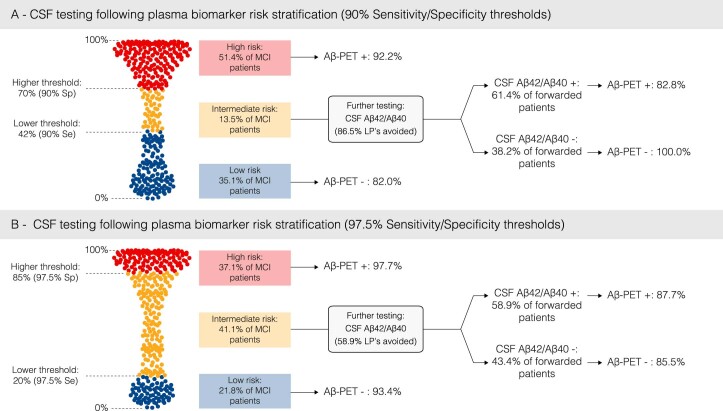
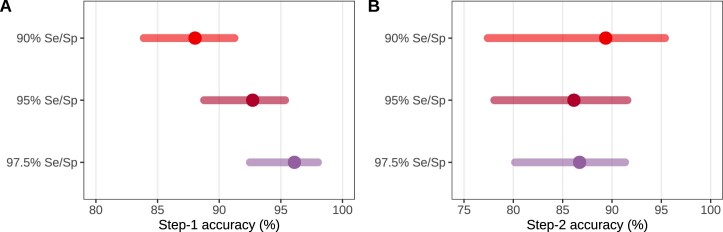
Cost-effective strategies for identifying amyloid-β (Aβ) positivity in patients with cognitive impairment are urgently needed with recent approvals of anti-Aβ immunotherapies for Alzheimer’s disease (AD). Blood biomarkers can accurately detect AD pathology, but it is unclear whether their incorporation into a full diagnostic workflow can reduce the number of confirmatory cerebrospinal fluid (CSF) or positron emission tomography (PET) tests needed while accurately classifying patients. We evaluated a two-step workflow for determining Aβ-PET status in patients with mild cognitive impairment (MCI) from two independent memory clinic-based cohorts (n = 348). A blood-based model including plasma tau protein 217 (p-tau217), age and APOE ε4 status was developed in BioFINDER-1 (area under the curve (AUC) = 89.3%) and validated in BioFINDER-2 (AUC = 94.3%). In step 1, the blood-based model was used to stratify the patients into low, intermediate or high risk of Aβ-PET positivity. In step 2, we assumed referral only of intermediate-risk patients to CSF Aβ42/Aβ40 testing, whereas step 1 alone determined Aβ-status for low- and high-risk groups. Depending on whether lenient, moderate or stringent thresholds were used in step 1, the two-step workflow overall accuracy for detecting Aβ-PET status was 88.2%, 90.5% and 92.0%, respectively, while reducing the number of necessary CSF tests by 85.9%, 72.7% and 61.2%, respectively. In secondary analyses, an adapted version of the BioFINDER-1 model led to successful validation of the two-step workflow with a different plasma p-tau217 immunoassay in patients with cognitive impairment from the TRIAD cohort (n = 84). In conclusion, using a plasma p-tau217-based model for risk stratification of patients with MCI can substantially reduce the need for confirmatory testing while accurately classifying patients, offering a cost-effective strategy to detect AD in memory clinic settings.
Overview
The claims and statistics of this paper haven’t been checked yet.
Free: it reads the open-access text and checks the first 5 claims that cite a source we can check. Create a free account to check every claim.
Integrity signals
Registry
Cites
Statistics
Figures
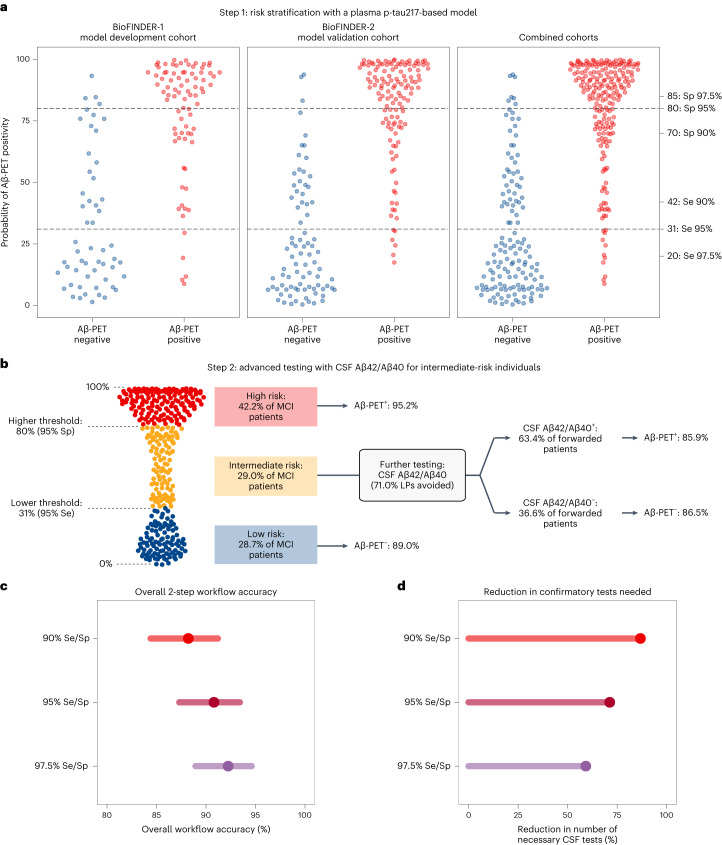
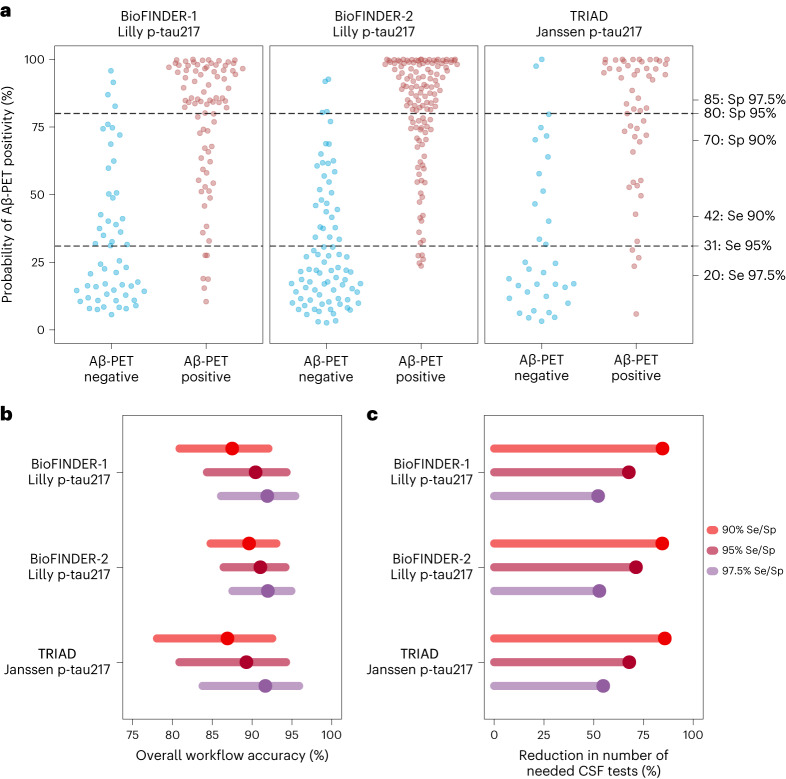
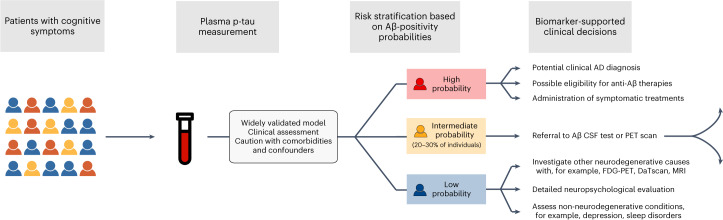
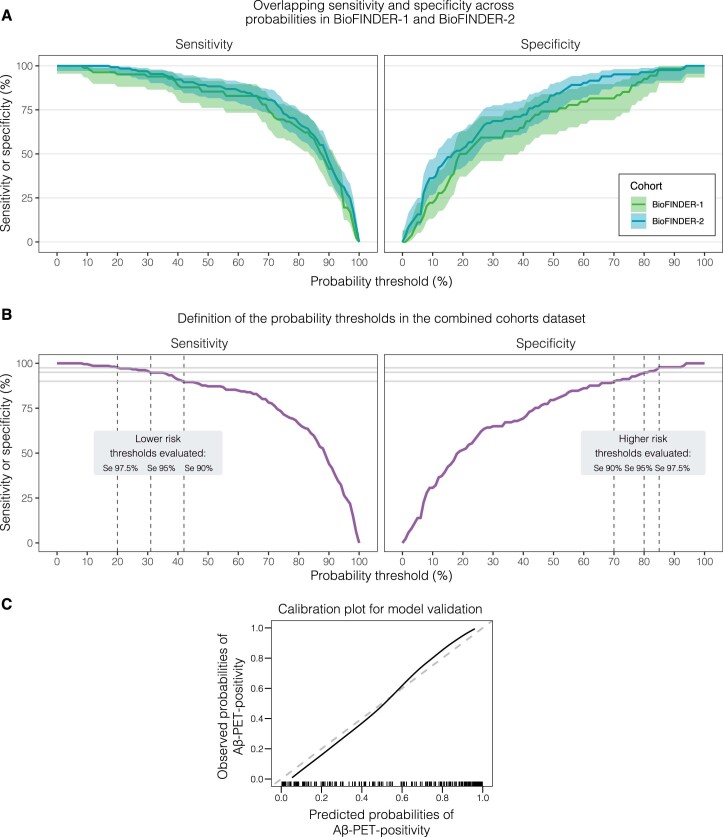
Verification
Claims the paper makes
The claims and statistics of this paper haven’t been checked yet.
Free: it reads the open-access text and checks the first 5 claims that cite a source we can check. Create a free account to check every claim.
Claims other papers make about this one
Each is checked against this paper’s own text: does it say what the citing paper says it does?
The source backs part of the claim, not all of it — or backs it for a different population, condition or comparison.
In the citing paper
“A 3-range approach demonstrated high negative and positive concordance with Aβ status, with approximately 20% of individuals in an intermediate zone that would require confirmatory CSF or PET, as previously proposed.41”
From Diagnostic Accuracy of a Plasma Phosphorylated Tau 217 Immunoassay for Alzheimer Disease Pathology (2024) · cites this paper as [41]
Experimental — accuracy not yet measuredThe source backs part of the claim, not all of it — or backs it for a different population, condition or comparison.
In the citing paper
“For example, recent evidence suggests that a three-range method leads to higher accuracy to identify amyloid PET positivity in individuals with MCI56.”
From Diagnosis of Alzheimer's disease using plasma biomarkers adjusted to clinical probability (2024) · cites this paper as [56]
Experimental — accuracy not yet measuredThe cited source says what the claim attributes to it.
In the citing paper
“We next applied a 3-range approach,41 creating lower (95% sensitivity, <0.4 pg/mL) and upper (95% specificity, >0.63 pg/mL) reference points in WRAP (Table 2 and eFigure 11 in Supplement 1).”
From Diagnostic Accuracy of a Plasma Phosphorylated Tau 217 Immunoassay for Alzheimer Disease Pathology (2024) · cites this paper as [41]
The cited source says what the claim attributes to it.
In the citing paper
“Notably, the two-cutoffs approach is currently employed for the FDA-approved CSF Lumipulse test42,43 and has been suggested for AD BBMs17,55, especially when very high accuracy is needed.”
From Highly accurate blood test for Alzheimer's disease is similar or superior to clinical cerebrospinal fluid tests (2024) · cites this paper as [55]
Self-check
Percentages, sums and reported differences re-computed from the paper’s own numbers.
The self-check needs the paper’s full text.
Citations
Cites
McKhann, G. M., Knopman, D. S., Chertkow, H., Hyman, B. T., Jack, C. R., Kawas, C. H., Klunk, W. E., Koroshetz, W. J., Manly, J. J., Mayeux, R., et al. (2011) · Alzheimer's & Dementia · doi:10.1016/j.jalz.2011.03.005 · Cited by 18,657
NIA‐AA Research Framework: Toward a biological definition of Alzheimer's disease
Jack, C. R., Bennett, D. A., Blennow, K., Carrillo, M. C., Dunn, B., Haeberlein, S. B., Holtzman, D. M., Jagust, W., Jessen, F., Karlawish, J., et al. (2018) · Alzheimer's & Dementia · doi:10.1016/j.jalz.2018.02.018 · Cited by 10,537
Self-citationHarrell (2015) · Springer Series in Statistics · doi:10.1007/978-3-319-19425-7 · Cited by 6,878
Lecanemab in early Alzheimer's disease
van Dyck, C. H., Swanson, C. J., Aisen, P., Bateman, R. J., Chen, C., Gee, M., Kanekiyo, M., Li, D., Reyderman, L., Cohen, S., et al. (2023) · New England Journal of Medicine · doi:10.1056/nejmoa2212948 · Cited by 5,678 · cited 2×
“The inclusion criteria for recruitment of patients with MCI for BioFINDER-2 were as follows: (1) aged 40–100 years; (2) referred to the memory clinics due to cognitive symptoms; (3) MMSE score of 24–30 points; (4) did not fulfill the criteria for any dementia (major neurocognitive disorder) according to the Diagnostic…”
MethodNichols, E., Steinmetz, J. D., Vollset, S. E., Fukutaki, K., Chalek, J., Abd-Allah, F., Abdoli, A., Abualhasan, A., Abu-Gharbieh, E., Akram, T. T., et al. (2022) · The Lancet Public Health · doi:10.1016/s2468-2667(21)00249-8 · Cited by 5,575
Differential Diagnosis of Glomerular Disease: A Systematic and Inclusive Approach
Hebert, L. A., Parikh, S., Prosek, J., Nadasdy, T., & Rovin, B. H. (2013) · American Journal of Nephrology · doi:10.1159/000354390 · Cited by 4,376
Restriction isotyping of human apolipoprotein E by gene amplification and cleavage with HhaI.
Hixson, J., & Vernier, D. (1990) · Journal of Lipid Research · doi:10.1016/s0022-2275(20)43176-1 · Cited by 2,933
DSM-IV: Diagnostic and Statistical Manual of Mental Disorders
Bell, C. C. (1994) · JAMA: The Journal of the American Medical Association · doi:10.1001/jama.1994.03520100096046 · Cited by 2,610
Levey, A. S., de Jong, P. E., Coresh, J., El Nahas, M., Astor, B. C., Matsushita, K., Gansevoort, R. T., Kasiske, B. L., & Eckardt, K.-U. (2011) · Kidney International · doi:10.1038/ki.2010.483 · Cited by 2,345
Donanemab in Early Alzheimer’s Disease
Mintun, M. A., Lo, A. C., Duggan Evans, C., Wessels, A. M., Ardayfio, P. A., Andersen, S. W., Shcherbinin, S., Sparks, J., Sims, J. R., Brys, M., et al. (2021) · New England Journal of Medicine · doi:10.1056/nejmoa2100708 · Cited by 1,728
Cited by
Dementia prevention, intervention, and care: 2024 report of the Lancet standing Commission
Livingston, G., Huntley, J., Liu, K. Y., Costafreda, S. G., Selbæk, G., Alladi, S., Ames, D., Banerjee, S., Burns, A., Brayne, C., et al. (2024) · The Lancet · doi:10.1016/s0140-6736(24)01296-0 · Cited by 3,860
Revised criteria for diagnosis and staging of Alzheimer's disease: Alzheimer's Association Workgroup
Jack, C. R., Andrews, J. S., Beach, T. G., Buracchio, T., Dunn, B., Graf, A., Hansson, O., Ho, C., Jagust, W., McDade, E., et al. (2024) · Alzheimer's & Dementia · doi:10.1002/alz.13859 · Cited by 2,803
Self-citationDiagnostic Accuracy of a Plasma Phosphorylated Tau 217 Immunoassay for Alzheimer Disease Pathology
Ashton, N. J., Brum, W. S., Di Molfetta, G., Benedet, A. L., Arslan, B., Jonaitis, E., Langhough, R. E., Cody, K., Wilson, R., Carlsson, C. M., et al. (2024) · JAMA Neurology · doi:10.1001/jamaneurol.2023.5319 · Cited by 884
Self-citationBlood biomarkers for Alzheimer’s disease in clinical practice and trials
Hansson, O., Blennow, K., Zetterberg, H., & Dage, J. (2023) · Nature Aging · doi:10.1038/s43587-023-00403-3 · Cited by 522
Self-citationBarthélemy, N. R., Salvadó, G., Schindler, S. E., He, Y., Janelidze, S., Collij, L. E., Saef, B., Henson, R. L., Chen, C. D., Gordon, B. A., et al. (2024) · Nature Medicine · doi:10.1038/s41591-024-02869-z · Cited by 448
“Notably, the two-cutoffs approach is currently employed for the FDA-approved CSF Lumipulse test 42,43 and has been suggested for AD BBMs 17,55 , especially when very high accuracy is needed.”
MethodSelf-citationBlood Biomarkers to Detect Alzheimer Disease in Primary Care and Secondary Care
Palmqvist, S., Tideman, P., Mattsson-Carlgren, N., Schindler, S. E., Smith, R., Ossenkoppele, R., Calling, S., West, T., Monane, M., Verghese, P. B., et al. (2024) · JAMA · doi:10.1001/jama.2024.13855 · Cited by 416
Self-citationSchindler, S. E., Galasko, D., Pereira, A. C., Rabinovici, G. D., Salloway, S., Suárez-Calvet, M., Khachaturian, A. S., Mielke, M. M., Udeh-Momoh, C., Weiss, J., et al. (2024) · Nature Reviews Neurology · doi:10.1038/s41582-024-00977-5 · Cited by 290
Self-citationPalmqvist, S., Warmenhoven, N., Anastasi, F., Pilotto, A., Janelidze, S., Tideman, P., Stomrud, E., Mattsson-Carlgren, N., Smith, R., Ossenkoppele, R., et al. (2025) · Nature Medicine · doi:10.1038/s41591-025-03622-w · Cited by 194
Self-citationPalmqvist, S., Whitson, H. E., Allen, L. A., Suarez‐Calvet, M., Galasko, D., Karikari, T. K., Okrahvi, H. R., Paczynski, M., Schindler, S. E., Teunissen, C. E., et al. (2025) · Alzheimer's & Dementia · doi:10.1002/alz.70535 · Cited by 167
Self-citationArranz, J., Zhu, N., Rubio‐Guerra, S., Rodríguez‐Baz, Í., Ferrer, R., Carmona‐Iragui, M., Barroeta, I., Illán‐Gala, I., Santos‐Santos, M., Fortea, J., et al. (2024) · Alzheimer s Research & Therapy · doi:10.1186/s13195-024-01513-9 · Cited by 193
“To facilitate a more rational utilization of plasma biomarkers, we followed the methodology delineated by Brum et al. stratifying the risk of having AD pathopshysiology [38].”
MethodA comprehensive head-to-head comparison of key plasma phosphorylated tau 217 biomarker tests
Warmenhoven, N., Salvadó, G., Janelidze, S., Mattsson, N., Bali, D., Dolado, A. O., Kolb, H. C., Triana‐Baltzer, G., Barthélemy, N. R., Schindler, S. E., et al. (2024) · Brain · doi:10.1093/brain/awae346 · Cited by 166
“33 A subset of participants ( n = 448) underwent A β -PET longitudinally for an average follow-up of 3.63 ± 2.30 years.”
InfluentialSelf-citationChallenges in the practical implementation of blood biomarkers for Alzheimer’s disease
Schöll, M., Verberk, I. M. W., del Campo, M., Delaby, C., Therriault, J., Chong, J. R., Palmqvist, S., & Alcolea, D. A. (2024) · The Lancet Healthy Longevity · doi:10.1016/j.lanhl.2024.07.013 · Cited by 164
“…on appropriate thresholds for sensitivity and speci fi city, older individuals could be strati fi ed into three groups on the basis of their probabilities of amyloid PET positivity — namely, high,intermediate,andlowrisk, 12 withtheclinicaldecisions for each risk group being comprehensibly different.”
Self-citationAlzheimer disease blood biomarkers: considerations for population-level use
Mielke, M. M., & Fowler, N. R. (2024) · Nature Reviews Neurology · doi:10.1038/s41582-024-00989-1 · Cited by 149
“The use of two cut-off points for an AD BBM could enhance diagnostic accuracy by identifying individuals with and without brain pathology and might work better than a single cut-off point to diagnose AD 94 .”
Meyer, M. R., Kirmess, K. M., Eastwood, S., Wente‐Roth, T. L., Irvin, F., Holubasch, M. S., Venkatesh, V., Fogelman, I., Monane, M., Hanna, L., et al. (2024) · Alzheimer's & Dementia · doi:10.1002/alz.13764 · Cited by 121
Diagnosis of Alzheimer's disease using plasma biomarkers adjusted to clinical probability
Therriault, J., Janelidze, S., Benedet, A. L., Ashton, N. J., Arranz Martínez, J., Gonzalez-Escalante, A., Bellaver, B., Alcolea, D., Vrillon, A., Karim, H., et al. (2024) · Nature Aging · doi:10.1038/s43587-024-00731-y · Cited by 131
“For example, recent evidence suggests that a three-range method leads to higher accuracy to identify amyloid PET positivity in individuals with MCI 56 .”
Self-citationTherriault, J., Brum, W. S., Trudel, L., Macedo, A. C., Bitencourt, F. V., Martins, C. C., Nakouzi, M., Pola, I., Wong, M. W. K., Kac, P. R., et al. (2025) · The Lancet Neurology · doi:10.1016/s1474-4422(25)00227-3 · Cited by 143
Self-citationWang, J., Huang, S., Lan, G., Lai, Y., Wang, Q., Chen, Y., Xiao, Z., Chen, X., Bu, X., Liu, Y., et al. (2025) · Alzheimer s & Dementia · doi:10.1002/alz.70038 · Cited by 137
“22,23,38 Similarly, the plasma p-tau217/A β 42 ratio reduced the intermediate percentages from 13.0% to 10.7% in the clinical cohort was meaningful in the latter.”
InfluentialConsiderations in the clinical use of amyloid PET and CSF biomarkers for Alzheimer's disease
Leuzy, A., Bollack, A., Pellegrino, D., Teunissen, C. E., Joie, R. L., Rabinovici, G. D., Franzmeier, N., Johnson, K. A., Barkhof, F., Shaw, L. M. J., et al. (2025) · Alzheimer s & Dementia · doi:10.1002/alz.14528 · Cited by 125
Self-citationAshton, N. J., Keshavan, A., Brum, W. S., Andréasson, U., Arslan, B., Droescher, M., Barghorn, S., Vanbrabant, J., Lambrechts, C., Loo, M. V., et al. (2025) · Alzheimer s & Dementia · doi:10.1002/alz.14508 · Cited by 109
“50 This proposal acknowledges that a binary cutoff for AD plasma biomarkers would likely obtain sub-optimal results and unacceptable numbers of false positives and false negatives.”
Self-citationFigdore, D. J., Griswold, M. E., Bornhorst, J. A., Graff‐Radford, J., Ramanan, V. K., Vemuri, P., Lowe, V. J., Knopman, D. S., Jack, C. R., Petersen, R. C., et al. (2024) · Alzheimer s & Dementia · doi:10.1002/alz.14140 · Cited by 110
Plasma p‐tau immunoassays in clinical research for Alzheimer's disease
Teunissen, C. E., Kolster, R., Triana‐Baltzer, G., Janelidze, S., Zetterberg, H., & Kolb, H. C. (2024) · Alzheimer s & Dementia · doi:10.1002/alz.14397 · Cited by 103
Self-citationKhalafi, M., Dartora, W. J., McIntire, L. B., Butler, T., Wartchow, K. M., Hojjati, S. H., Razlighi, Q. R., Shirbandi, K., Zhou, L., Chen, K., et al. (2024) · Alzheimer s & Dementia · doi:10.1002/alz.14458 · Cited by 99
Villain, N., Planche, V., Lilamand, M., Cordonnier, C., Soto‐Martin, M., Mollion, H., Bombois, S., & Delrieu, J. (2025) · The Journal of Prevention of Alzheimer s Disease · doi:10.1016/j.tjpad.2025.100094 · Cited by 98
Plasma Phosphorylated Tau 217 to Identify Preclinical Alzheimer Disease
Salvadó, G., Janelidze, S., Bali, D., Dolado, A. O., Therriault, J., Brum, W. S., Binette, A. P., Stomrud, E., Mattsson, N., Palmqvist, S., et al. (2025) · JAMA Neurology · doi:10.1001/jamaneurol.2025.3217 · Cited by 100
Self-citationZhong, X., Wang, Q., Yang, M., Lin, G., Yao, K., Wu, Z., Xu, D., Zhou, H., Chen, B., Shi, H., et al. (2025) · Alzheimer s & Dementia · doi:10.1002/alz.14536 · Cited by 91
“23 Brum et al. 45 proposed that combining plasma p-tau217, age, and APOE status could improve the AUC to 0.89 to 0.94 in determining A β PET status.”
InfluentialQuantitative Assessment of the Effect of Chronic Kidney Disease on Plasma P-Tau217 Concentrations
Bornhorst, J. A., Lundgreen, C. S., Weigand, S. D., Figdore, D. J., Wiste, H. J., Griswold, M. E., Vemuri, P., Graff‐Radford, J., Knopman, D. S., Cogswell, P., et al. (2025) · Neurology · doi:10.1212/wnl.0000000000210287 · Cited by 84
Biological variation estimates of Alzheimer's disease plasma biomarkers in healthy individuals
Brum, W. S., Ashton, N. J., Simrén, J., di Molfetta, G., Karikari, T. K., Benedet, A. L., Zimmer, E. R., Lantero‐Rodriguez, J., Montoliu‐Gaya, L., Jeromin, A., et al. (2024) · Alzheimer's & Dementia · doi:10.1002/alz.13518 · Cited by 76
Self-citationSex differences in longitudinal tau-PET in preclinical Alzheimer disease: a meta-analysis
Coughlan, G. T., Klinger, H. M., Boyle, R., Betthauser, T. J., Binette, A. P., Christenson, L., Chadwick, T., Hansson, O., Harrison, T. M., Healy, B., et al. (2025) · JAMA Neurology · doi:10.1001/jamaneurol.2025.0013 · Cited by 69
Self-citationPlasma pTau217 predicts continuous brain amyloid levels in preclinical and early Alzheimer's disease
Devanarayan, V., Doherty, T., Charil, A., Sachdev, P., Ye, Y., Murali, L. K., Llano, D. A., Zhou, J., Reyderman, L., Hampel, H., et al. (2024) · Alzheimer's & Dementia · doi:10.1002/alz.14073 · Cited by 57
“30 34 Inte-gratingplasmapTau217andA β 42/A β 40hasprovenusefulindetecting amyloid burden, especially in preclinical AD.”
Insights into the use of biomarkers in clinical trials in Alzheimer's disease
Pascoal, T. A., Aguzzoli, C. S., Lussier, F. Z., Crivelli, L., Suemoto, C. K., Fortea, J., Rosa‐Neto, P., Zimmer, E. R., Ferreira, P. C. L., & Bellaver, B. (2024) · EBioMedicine · doi:10.1016/j.ebiom.2024.105322 · Cited by 68
“29 Blood biomarkers of A β and tau have been proposed for screening patients who will later undergo CSF/PET con fi rmation, 30 while some recent studies suggest that they may have already achieved the accuracy necessary to replace CSF/PET as diagnostic tools.”
Self-citationClinical value of plasma ALZpath pTau217 immunoassay for assessing mild cognitive impairment
Lehmann, S., Schraen‐Maschke, S., Vidal, J., Delaby, C., Buée, L., Blanc, F., Paquet, C., Allinquant, B., Bombois, S., Gabelle, A., et al. (2024) · Journal of Neurology Neurosurgery & Psychiatry · doi:10.1136/jnnp-2024-333467 · Cited by 63
Arslan, B., Brum, W. S., Pola, I., Therriault, J., Rahmouni, N., Stevenson, J., Servaes, S., Tan, K., Vitali, P., Montembeault, M., et al. (2025) · Alzheimer s Research & Therapy · doi:10.1186/s13195-025-01692-z · Cited by 66
Self-citationLehmann, S., Gabelle, A., Duchiron, M., Busto, G. U., Morchikh, M., Delaby, C., Hirtz, C., Mondésert, E., Cristol, J., Barnier-Figue, G., et al. (2025) · EBioMedicine · doi:10.1016/j.ebiom.2025.105805 · Cited by 67
“A highly promising approach was recently described by Brum et al., 27 which defines two cutoff values.”
Montoliu‐Gaya, L., Alosco, M. L., Yhang, E., Tripodis, Y., Sconzo, D., Ally, M., Grötschel, L., Ashton, N. J., Lantero‐Rodriguez, J., Sauer, M., et al. (2023) · Acta Neuropathologica · doi:10.1007/s00401-023-02660-3 · Cited by 60
Self-citationHuber, H., Blennow, K., Zetterberg, H., Boada, M., Jeromin, A., Weninger, H., Núñez‐Llaves, R., Aguilera, N., Ramis, M., Simrén, J., et al. (2024) · Alzheimer s & Dementia · doi:10.1002/alz.13697 · Cited by 57
“4 Furthermore, approaches that facilitate convenient and recurrent sample collection at the patient’s residence, within a nursing home, or at a primary care unit, would play a substantial role in overseeing the progression of the disease and evaluating the impact of administered treatments on the…”
BackgroundSelf-citationCano, A. C., Capdevila, M., Puerta, R., Arranz, J., Montrreal, L., de Rojas, I., García‐González, P., Olivé, C., García‐Gutiérrez, F., Sotolongo‐Grau, Ó., et al. (2024) · EBioMedicine · doi:10.1016/j.ebiom.2024.105345 · Cited by 53
Considerations for widespread implementation of blood‐based biomarkers of Alzheimer's disease
Mielke, M. M., Anderson, M., Ashford, J. W., Jeromin, A., Lin, P., Rosen, A. C., Tyrone, J., VandeVrede, L. A., Willis, D. R., Hansson, O., et al. (2024) · Alzheimer s & Dementia · doi:10.1002/alz.14150 · Cited by 50
“33 Identifying patients with intermediate biomarker values enhances overall test accuracy for individuals with positive or negative results.”
Self-citationSchöll, M., Vrillon, A., Ikeuchi, T., Quevenco, F. C., Iaccarino, L., Vasileva-Metodiev, S. Z., Burnham, S. C., Hendrix, J. A., Epelbaum, S., Zetterberg, H., et al. (2025) · The Journal of Prevention of Alzheimer s Disease · doi:10.1016/j.tjpad.2024.100056 · Cited by 53
Self-citationCognitive Phenotyping and Interpretation of Alzheimer Blood Biomarkers
Bouteloup, V., Villain, N., Vidal, J., González‐Ortiz, F., Yuksekel, I., dos Santos, C. P., Schraen‐Maschke, S., Pellegrin, I., Lehmann, S., Blennow, K., et al. (2025) · JAMA Neurology · doi:10.1001/jamaneurol.2025.0142 · Cited by 48
Self-citationPahlke, S. C., Kahale, L. A., Mahinrad, S., Sousa‐Pinto, B., Vieira, R. J., McAteer, M. B., Claessen, T., Contador, J., Hofmann, A., Kuchenbecker, L. A., et al. (2025) · Alzheimer s & Dementia · doi:10.1002/alz.70828 · Cited by 52
Self-citationXiao, Z., Wu, W., Ma, X., Wu, J., Liang, X., Zhou, X., Cao, Y., Zhao, Q., & Ding, D. (2023) · Alzheimer s & Dementia Diagnosis Assessment & Disease Monitoring · doi:10.1002/dad2.12514 · Cited by 48
Arias, J. F., Brum, W. S., Salvadó, G., Therriault, J., Servaes, S., Wang, Y., Aumont, É., Rahmouni, N., Macedo, A. C., Quispialaya, K. M., et al. (2025) · Brain · doi:10.1093/brain/awaf033 · Cited by 44
Self-citationA blood-based biomarker workflow for optimal tau-PET referral in memory clinic settings
Brum, W. S., Cullen, N. C., Therriault, J., Janelidze, S., Rahmouni, N., Stevenson, J., Servaes, S., Benedet, A. L., Zimmer, E. R., Stomrud, E., et al. (2024) · Nature Communications · doi:10.1038/s41467-024-46603-2 · Cited by 44
“Previous studies evaluating screening for amyloid-PET risk using blood-based biomarkers have shown promise 24 – 26 , but it is still unclear whether blood markers can be used to optimize the use of tau-PET in patients with cognitive symptoms where prognostic information is essential.”
Self-citationDyer, A. H., Dolphin, H., O’Connor, A., Morrison, L., Sedgwick, G., Young, C., Killeen, E., Gallagher, C., McFeely, A., Connolly, E., et al. (2024) · Alzheimer s Research & Therapy · doi:10.1186/s13195-024-01555-z · Cited by 45
“In order to evaluate the performance of different cut-points, we employed a two-threshold approach for sensitivities and specificities of 90%, 95% and 97.5%, following previously published approaches aimed at integrating BBMs into clinical workflows [40].”
BackgroundMethodInfluentialHuber, H., Montoliu‐Gaya, L., Brum, W. S., Vávra, J., Yakoub, Y., Weninger, H., Braun-Wohlfahrt, L. S., Simrén, J., Boada, M., Ruiz, A., et al. (2026) · Nature Medicine · doi:10.1038/s41591-025-04080-0 · Cited by 46
Self-citationLan, G., Wang, M., González‐Ortiz, F., Zhang, L., Li, A., Li, B., Jiang, M., Yang, J., Chen, X., Shi, D., et al. (2025) · Nature Aging · doi:10.1038/s43587-025-00904-3 · Cited by 38
“The two-cutoff approach created three groups (negative, intermediate and positive) using two thresholds as previously described 21,51 .”
Self-citationWojdała, A. L., Vanbrabant, J., Bayoumy, S., Antwi‐Berko, D., Bastard, N. L., van der Flier, W. M., Jeromin, A., Lambrechts, C., Loo, M. V., Vandijck, M. L. J., et al. (2024) · Alzheimer s Research & Therapy · doi:10.1186/s13195-024-01630-5 · Cited by 38
Diagnostic performance of plasma p‐tau217 and Aβ42/40 biomarkers in the outpatient memory clinic
Piura, Y. D., Figdore, D. J., Lachner, C., Bornhorst, J. A., Algeciras‐Schimnich, A., Graff‐Radford, N. R., & Day, G. S. (2025) · Alzheimer s & Dementia · doi:10.1002/alz.70316 · Cited by 44
Tideman, P., Karlsson, L., Strandberg, O. T., Calling, S., Smith, R. A., Midlöv, P., Verghese, P. B., Braunstein, J. B., Mattsson, N., Stomrud, E., et al. (2025) · Nature Medicine · doi:10.1038/s41591-025-03965-4 · Cited by 39
Self-citationBenussi, A., Huber, H., Tan, K., Cantoni, V., Rivolta, J., Cotelli, M. S., Benedet, A. L., Blennow, K., Zetterberg, H., Ashton, N. J., et al. (2025) · Alzheimer s & Dementia · doi:10.1002/alz.14482 · Cited by 39
Self-citationIdentification of late-stage tau accumulation using plasma phospho-tau217
Woo, M. S., Therriault, J., Jonaitis, E. M., Wilson, R. E., Langhough, R. E., Rahmouni, N., Benedet, A. L., Ashton, N. J., Tissot, C., Lantero‐Rodriguez, J., et al. (2024) · EBioMedicine · doi:10.1016/j.ebiom.2024.105413 · Cited by 35
Self-citationAntonioni, A., Raho, E. M., Lorenzo, F. D., Manzoli, L., Flacco, M. E., & Koch, G. (2025) · Journal of Neurology · doi:10.1007/s00415-025-12996-3 · Cited by 36
Shen, X., Li, H., Zhang, B., Li, Y., & Zhu, Z. (2025) · Cells · doi:10.3390/cells14191506 · Cited by 36
“Ultrasensitive assays such as Simoa ® Tau are enabling the increasing use of blood-based testing in stratified trial workflows, starting with blood screening followed by CSF and confirmatory tau-PET testing to ensure accurate stratification [190].”
Anastasiadi, A. T., Arvaniti, V.-Z., Hudson, K. E., Kriebardis, A. G., Stathopoulos, C., D’Alessandro, A., Spitalnik, S. L., & Tzounakas, V. L. (2024) · Protein & Cell · doi:10.1093/procel/pwae001 · Cited by 35
“Blood testing to classify patients was recently described using plasma tau protein 217, potentially accurately stratifying and detecting Alzheimer’s disease in a cost-effective way (Brum et al., 2023).”
MethodGu, Y., Honig, L. S., Kang, M. S., Bahl, A., Sanchez, D. L., Reyes‐Dumeyer, D., Manly, J. J., Dage, J. L., Lantigua, R., Brickman, A. M., et al. (2024) · Alzheimer s & Dementia · doi:10.1002/alz.13652 · Cited by 34
“56 Moreover, combining A β 42/A β 40 and plasma GFAP, with age and APOE status, providedtheoptimalpanelidentifyingapositiveamyloidstatus.”
MethodHowe, M. D., Britton, K. J., Joyce, H. E., Menard, W. E., Emrani, S., Kunicki, Z. J., Faust, M. A., Dawson, B. C., Riddle, M. C., Huey, E. D., et al. (2024) · Alzheimer s Research & Therapy · doi:10.1186/s13195-024-01521-9 · Cited by 34
“Alternatively, the use of targeted CSF testing to handle intermediate-range P-tau217 is supported by two recently published studies which showed that showed enhanced prediction of amyloid PET status using P-tau217 with reflex CSF confirmatory testing [16, 17].”
BackgroundSelf-citationChong, J. R., Hilal, S., Tan, B. Y., Venketasubramanian, N., Schöll, M., Zetterberg, H., Blennow, K., Ashton, N. J., Chen, C., & Lai, M. K. P. (2025) · Alzheimer s & Dementia · doi:10.1002/alz.14502 · Cited by 32
“6,21,22 Participants with values between the reference points were classified as having intermediate risk and constituted the group needing confirmatory A β PET testing.”
Self-citationA critical appraisal of blood-based biomarkers for Alzheimer’s disease
Lista, S., Mapstone, M. E., Caraci, F., Emanuele, E., López‐Ortiz, S., Martín-Hernández, J., Triaca, V., Imbimbo, C., Gabelle, A., Mielke, M. M., et al. (2024) · Ageing Research Reviews · doi:10.1016/j.arr.2024.102290 · Cited by 32
Eratne, D., Kang, M. J., Lewis, C. C., Dang, C., Malpas, C. B., Keem, M. H., Grewal, J. K., Marinov, V., Coe, A., Kaylor‐Hughes, C., et al. (2024) · Alzheimer s & Dementia · doi:10.1002/alz.14278 · Cited by 31
“In addition, we assessed alternative cutoffs optimised for screening, for 100%, 97.5%, 95%, and 90% specificity, and sensitivity, also similar to recent publications [30].”
ResultInfluentialSelf-citationLi, D., Wang, G., Sun, M., Qu, A., Xu, C., Wang, Q., Hao, C., & Kuang, H. (2025) · Angewandte Chemie International Edition · doi:10.1002/anie.202501894 · Cited by 30
Martínez‐Dubarbie, F., Guerra-Ruiz, A. R., López‐García, S., Lage, C., Fernández‐Matarrubia, M., Nevado-Cáceres, Á., Rivera‐Sánchez, M., Barrero, A. V., Pozueta‐Cantudo, A., García‐Martínez, M., et al. (2025) · Alzheimer s Research & Therapy · doi:10.1186/s13195-025-01719-5 · Cited by 37
“…approach [56] we have seen that, depending on the selected thresholds, between 57.4–84.8% of subjects for plasma p-tau217, and 72.9–95.3% for plasma p-tau217/Aβ42 ratio fell outside the indeterminate zone, with overall accuracies > 90%, similar to those described in litera - ture [15, 56].”
InfluentialKováčech, B., Cullen, N. C., Novák, P., Hanes, J., Kontseková, E., Katina, S., Parrák, V., Fresser, M., Vanbrabant, J., Feldman, H., et al. (2024) · Alzheimer s Research & Therapy · doi:10.1186/s13195-024-01620-7 · Cited by 30
Self-citationGonzález‐Escalante, A., Milà‐Alomà, M., Brum, W. S., Ashton, N. J., Ortiz-Romero, P. L., Shekari, M., del Campo, M., Anastasi, F., Quijano‐Rubio, C., Kollmorgen, G., et al. (2025) · EBioMedicine · doi:10.1016/j.ebiom.2025.105741 · Cited by 33
Self-citationSelma‐González, J., Rubio‐Guerra, S., Castro, J. G., Vera-Campuzano, E., Sala, I., Sánchez‐Saudinós, M. B., Zhu, N., Arranz, J., Arriola‐Infante, J. E., Rodríguez‐Baz, Í., et al. (2025) · Neurology · doi:10.1212/wnl.0000000000213769 · Cited by 28
Self-citationNeuropsychiatric symptoms in Alzheimer's continuum and their association with plasma biomarkers
Huang, L., Huang, Q., Xie, F., & Guo, Q. (2023) · Journal of Affective Disorders · doi:10.1016/j.jad.2023.12.062 · Cited by 28
Anijärv, T. E., Ossenkoppele, R., Smith, R. A., Binette, A. P., Collij, L. E., Behjat, H., Rittmo, J. Ö., Karlsson, L., Ahmadi, K., Strandberg, O. T., et al. (2025) · Nature Communications · doi:10.1038/s41467-025-63564-2 · Cited by 27
Self-citationShort-term variability of Alzheimer’s disease plasma biomarkers in a mixed memory clinic cohort
Clemmensen, F. K., Gramkow, M. H., Simonsen, A. H., Ashton, N. J., Huber, H., Blennow, K., Zetterberg, H., Waldemar, G., Hasselbalch, S. G., & Frederiksen, K. S. (2025) · Alzheimer s Research & Therapy · doi:10.1186/s13195-024-01658-7 · Cited by 27
“Advances in measuring AD BBMs [1, 2] may supplement and in some cases replace lumbar puncture procedures and PET scans when a two-step diagnostic workflow is used [3], and have opened the door for repeated measurements monitoring AD pathophysiological processes.”
Self-citationFluid biomarkers for neurodegenerative diseases: a comprehensive update
Valletta, M., Briel, N., Yuksekel, I., Barboure, M. C., Coward, A. R., Houwer, J. F. H. D., Fawad, A., González-Mayoral, A., Iaccarino, G., Martínez‐Dubarbie, F., et al. (2025) · Alzheimer s Research & Therapy · doi:10.1186/s13195-025-01919-z · Cited by 26
Self-citationVerberk, I. M. W., Jutte, J., Kingma, M. Y., Vigneswaran, S., Gouda, M., van Engelen, M. E., Alcolea, D. A., Arranz, J., Fortea, J., Lleó, A., et al. (2024) · Alzheimer s & Dementia · doi:10.1002/alz.14088 · Cited by 26
Sarto, J., Esteller, D., Guillén, N., Falgàs, N., Borrego‐Écija, S., Massons, M., Fernández‐Villullas, G., González, Y., Tort‐Merino, A., Bosch, B., et al. (2025) · Journal of Neurology · doi:10.1007/s00415-025-12897-5 · Cited by 25
Maschio, V. P. D., Roveta, F., Bonino, L., Boschi, S., Rainero, I., & Rubino, E. (2025) · International Journal of Molecular Sciences · doi:10.3390/ijms26178564 · Cited by 32
“…improves diagnostic precision by establishing clear thresholds and an intermediate “gray zone,” it also exposes persistent issues related to assay variability and the lack of universal standards, which complicate consistent interpretation across different clinical and research settings [106–108].”
Abbatecola, A. M., Giuliani, A., Biscetti, L., Scisciola, L., Battista, P., Barbieri, M., Sabbatinelli, J., & Olivieri, F. (2024) · Ageing Research Reviews · doi:10.1016/j.arr.2024.102257 · Cited by 23
Hazan, J., Liu, K. Y., Isaacs, J. D., & Howard, R. J. (2025) · Alzheimer s & Dementia · doi:10.1002/alz.70113 · Cited by 25
Figdore, D. J., Schuder, B. J., Ashrafzadeh‐Kian, S., Gronquist, T., Bornhorst, J. A., & Algeciras‐Schimnich, A. (2025) · Alzheimer s & Dementia · doi:10.1002/alz.70173 · Cited by 23
“3,6,21 The use of this approach for the p-tau217/A β 42 ratio test could help to decrease the potential of false positive results related to analyte stability differences by classifying slightly falsely elevated results from a negative to an intermediate, which would trigger follow-up testing…”
Plasma p-tau181 and amyloid markers in Alzheimer’s disease: A comparison between Lumipulse and SIMOA
Quaresima, V., Pilotto, A., Trasciatti, C., Tolassi, C., Parigi, M., Bertoli, D., Mordenti, C., Galli, A., Rizzardi, A., Caratozzolo, S., et al. (2024) · Neurobiology of Aging · doi:10.1016/j.neurobiolaging.2024.08.007 · Cited by 22
“The use of plasma biomarkers within clinical assessment has been now supported by large amount of literature and will definitively change the management of patients, especially when considering the development of disease-modifying treatments (Brum et al., 2023a; Mattsson-Carlgren et al., 2023).”
BackgroundSelf-citationVasileva-Metodiev, S. Z., Spargo, D. J., Klein, E., Quevenco, F., Cotton, S. E., Sánchez‐Juan, P., Niimi, Y., & Fowler, N. R. (2025) · Journal of Alzheimer s Disease · doi:10.1177/13872877251322978 · Cited by 21
Serrano‐Pozo, A., Escott‐Price, V., Grinberg, L. T., Pascoal, T. A., Suárez‐Calvet, M., Dubois, B., & Sperling, R. A. (2026) · The Lancet · doi:10.1016/s0140-6736(26)00198-4 · Cited by 22
Martínez‐Dubarbie, F., Guerra-Ruiz, A. R., López‐García, S., Lage, C., Fernández‐Matarrubia, M., Infante, J., Pozueta‐Cantudo, A., García‐Martínez, M., Corrales‐Pardo, A., Bravo, M., et al. (2024) · The Journal of Prevention of Alzheimer s Disease · doi:10.14283/jpad.2024.152 · Cited by 20
“In subjects with mild cognitive impairment, they have used plasma biomarkers first, and only performed LP in those subjects with indeterminate results, thus suggesting that 61.2-85.9% of the LPs performed in daily practice can be avoided (21).”
InfluentialLongitudinal trajectory of plasma p-tau217 in cognitively unimpaired subjects
Martínez‐Dubarbie, F., Guerra-Ruiz, A. R., López‐García, S., Lage, C., Fernández‐Matarrubia, M., Pozueta‐Cantudo, A., García‐Martínez, M., Corrales‐Pardo, A., Bravo, M., López‐Hoyos, M., et al. (2024) · Alzheimer s Research & Therapy · doi:10.1186/s13195-024-01642-1 · Cited by 19
“Thus, plasma p-tau217 has been postulated as a potential screening tool to identify therapy candidates for MCI patients [13, 23] and could also be useful for selecting candidates for future treatments in preclinical stages.”
Dittrich, A., Blennow, K., Tan, K., Benedet, A. L., Skoog, I., Höglund, K., Ashton, N. J., Zetterberg, H., & Kern, S. (2025) · Alzheimer's & Dementia · doi:10.1002/alz.14610 · Cited by 18
Self-citationPotential utility of plasma pTau217 for assessing amyloid and tau biomarker profiles
Shin, D., Jang, H., Yoo, H., Kim, K., Zetterberg, H., Blennow, K., González‐Ortiz, F., Ashton, N. J., Lee, E. H., Yun, J., et al. (2025) · European Journal of Nuclear Medicine and Molecular Imaging · doi:10.1007/s00259-025-07457-y · Cited by 18
“Previous studies [ 13 , 15, 30 ] have mostly focused on using pTau217 for distinguishing Aβ positivity in binary mod - els, with less emphasis on its ability to capture regional Aβ distribution.”
Self-citationBenussi, A., Agosta, F., Alfano, A. R., Antico, A., Bellelli, G., Bonanni, L., Bottini, G., Bozzali, M., Brignoli, O., Bruno, G., et al. (2025) · Neurological Sciences · doi:10.1007/s10072-025-08576-y · Cited by 18
Jiang, Y., Zheng, W., Xia, Z., Wong, W. W., Cheng, L. K., Ip, F. C. F., Choi, S. M., Chan, A. L., Lam, C. Y., Ho, K. S., et al. (2026) · Proceedings of the National Academy of Sciences · doi:10.1073/pnas.2536792123 · Cited by 19
Quispialaya, K. M., Therriault, J., Aliaga, A., Benedet, A. L., Ashton, N. J., Karikari, T. K., Macedo, A. C., Rahmouni, N., Tissot, C., Arias, J. F., et al. (2024) · Neurology · doi:10.1212/wnl.0000000000210211 · Cited by 19
Self-citationCatania, M., Battipaglia, C., Perego, A., Salvi, E., Maderna, E., Cazzaniga, F. A., Rossini, P. M., Marra, C., Vanacore, N., Redolfi, A., et al. (2025) · Fluids and Barriers of the CNS · doi:10.1186/s12987-025-00620-5 · Cited by 18
Tailoring thresholds for interpreting plasma p-tau217 levels
Ahn, J., Lee, E. H., Yoo, H., Shin, D., Kang, H., Yim, S., Kim, S., Kim, K., Yoon, S., Zetterberg, H., et al. (2025) · Journal of Neurology Neurosurgery & Psychiatry · doi:10.1136/jnnp-2025-335830 · Cited by 17
Self-citationEvidence gap in blood biomarkers for Alzheimer’s disease
van Gool, W. A., Siebrand, J. A. F., Brayne, C., Larson, E. B., & Richard, E. (2025) · BMJ · doi:10.1136/bmj-2025-084781 · Cited by 17
Benina, N., Buitrago, L., Simone, F. I. D., Radwan, R. R., Miller, M. C., Martin, K., Dickson, D. L., Ho, S. G., Moghekar, A., Albert, M., et al. (2026) · Brain · doi:10.1093/brain/awag001 · Cited by 19
“…recognizing the limitations of single-threshold approaches, and to enhance overall test accuracy and reduce the incidence of false positives, we also implemented a two-threshold (three-category) strategy, as previously recommended 26,27 for both plasma pTau217 and the pTau217/A β 1–42 plasma ratio.”
Self-citationHuang, K., Hsiao, I., Huang, C., Huang, C., Chang, H., Huang, S., Lin, K., Ma, M.-C., Huang, C., & Chang, C. (2025) · Alzheimer s & Dementia · doi:10.1002/alz.14297 · Cited by 20
Giuffrè, G. M., Quaranta, D., Vita, M. G., Costantini, E. M., Citro, S., Carrozza, C., Ninno, G. D., Calabresi, P., & Marra, C. (2024) · The Journal of Prevention of Alzheimer s Disease · doi:10.14283/jpad.2024.58 · Cited by 15
“…cases has achieved a high classification accuracy (ranging between 88.2 and 92%, depending on the chosen thresholds) and a substantial reduction in referrals for further confirmatory testing (18), showing a potential appropriate use of novel blood biomarkers as a first-line screening tool.”
InfluentialIdentify biological Alzheimer’s disease using a novel nucleic acid–linked protein immunoassay
Wang, Y., Ashton, N. J., Therriault, J., Benedet, A. L., Macedo, A. C., Pola, I., Aumont, É., Molfetta, G. D., Arias, J. F., Tan, K., et al. (2024) · Brain Communications · doi:10.1093/braincomms/fcaf004 · Cited by 18
“36 Furthermore, future research should explore whether different thresholds are necessary to be implemented when using plasma p-tau to distinguish between amyloid and tau status in males and females, as well as between APOE ϵ 4 non-carriers and carriers.”
Self-citationYun, J., Lee, J., Shin, D., Lee, E. H., Kim, J. P., Ham, H., Gu, Y., Chun, M. Y., Kang, S. H., Kim, H. J., et al. (2026) · JAMA Neurology · doi:10.1001/jamaneurol.2025.5530 · Cited by 13
Self-citationKivisäkk, P., Fatima, H. A., Wu, C., Padmanabhan, N., Romero, D., Gorham, T., Weik, M., Dodge, H. H., Scherzer, C. R., Das, S., et al. (2026) · Neurology · doi:10.1212/wnl.0000000000214351 · Cited by 13
Digital Clock and Recall: a digital, process-driven evolution of the Mini-Cog
Gomes‐Osman, J., Borson, S., Toro‐Serey, C., Banks, R., Ciesla, M. R., Jannati, A., Morrow, W. I., Swenson, R., Libon, D. J., Bates, D. W., et al. (2024) · Frontiers in Human Neuroscience · doi:10.3389/fnhum.2024.1337851 · Cited by 13
Studart‐Neto, A., Barbosa, B. J. A. P., Coutinho, A. M., de Souza, L. C., Schilling, L. P., da Silva, M. N. M., Castilhos, R. M., Bertolucci, P. H. F., Borelli, W. V., Gomes, H. R., et al. (2024) · Dementia & Neuropsychologia · doi:10.1590/1980-5764-dn-2024-c001 · Cited by 18
Brendel, M., Parvizi, T., Gnörich, J. S., Topfstedt, C. E., Büerger, K., Janowitz, D., Rauchmann, B., Perneczky, R., Kurz, C., Mehrens, D., et al. (2024) · Alzheimer s & Dementia Diagnosis Assessment & Disease Monitoring · doi:10.1002/dad2.70031 · Cited by 15
Suárez‐Calvet, M., Ruiz, C. A., Alcolea, D. A., Mendióroz, M., Balasa, M., Morenas‐Rodríguez, E., Puig‐Pijoan, A., Sánchez‐Juan, P., Villarejo‐Galende, A., & Sánchez‐Valle, R. (2025) · Neurología (English Edition) · doi:10.1016/j.nrleng.2025.07.004 · Cited by 16
Titze-de-Almeida, S. S., Marina, C. L., Ramos, M. V., Silva, L. D. D. S., Brandão, P. R. D. P., Bispo, D. D. D. C., von Glehn, F., & Titze‐de‐Almeida, R. (2025) · International Journal of Molecular Sciences · doi:10.3390/ijms26178246 · Cited by 13
“A study evaluated a two-step diagnostic workflow to screen for A β positivity in patients with MCI using plasma p-tau217 as a biomarker [72] Advances in detection technologies, such as Single-Molecule Array (SIMOA), have enabled precise quantification of low-abundance proteins in biofluids,…”
Post-Translationally Modified Proteoforms as Biomarkers: From Discovery to Clinical Use
Luo, Y. R., Yeung, P. S.-W., Mann, M. W., Zhang, L., Yang, Y. K., & Hoofnagle, A. N. (2025) · Clinical Chemistry · doi:10.1093/clinchem/hvaf094 · Cited by 15
Borelli, W. V., Ferreira, P. C. L., Brum, W. S., Ferrari‐Souza, J. P., Carello‐Collar, G., Holz, M. R., Souza, V. T., Strelow, M. Z., Formoso, C., Chaves, M. L. F., et al. (2025) · Molecular Psychiatry · doi:10.1038/s41380-025-03192-w · Cited by 14
Self-citation
Metadata
- Authors
- Brum, W. S., Cullen, N. C., Janelidze, S., Ashton, N. J., Zimmer, E. R., Therriault, J., Benedet, A. L., Rahmouni, N., Tissot, C., Stevenson, J., Servaes, S., Triana-Baltzer, G., Kolb, H. C., Palmqvist, S., Stomrud, E., Rosa-Neto, P., Blennow, K., & Hansson, O.
- Affiliations
- Universidade Federal do Rio Grande do Sul (BR)
- Lund University (SE)
- King's College London (GB)
- McGill University Research Centre for Studies in Aging (CA)
- Janssen Research & Development (United States) (US)
- Sahlgrenska University Hospital (SE)
- Corresponding author
- Brum, Wagner S.
- Hansson, Oskar
- ORCID
- Venue
- Nature Aging
- Published
- 2023-08-31
- Volume
- 3
- Issue
- 9
- Pages
- 1079-1090
- ISSN
- 2662-8465 (ISSN-L)
- PMC
- PMC10501903
- OpenAlex
- W4386324919
- Cited by
- 248
- References
- 65
- Citations by year
- 2026: 68 · 2025: 98 · 2024: 74 · 2023: 8
- FWCI
- 50.50
- Type
- journal article
- Language
- en
- Open access
- hybrid
- doi.org
- Licence
- cc-by
- creativecommons.org/licenses/by/4.0 (tdm)
- creativecommons.org/licenses/by/4.0 (vor)
- Locations
- Nature Aging (publishedVersion, cc-by)
- PubMed Central (publishedVersion, cc-by)
- PubMed (publishedVersion)
- LA Referencia (Red Federada de Repositorios Institucionales de Publicaciones Científicas) (submittedVersion, cc-by-nc-sa)
- Lund University Publications (Lund University) (submittedVersion)
- Funders
- Alzheimer's Association (ZEN-21-848495, MOP-11-51-31, 159815, 2021 Zenith Award, NIRP-12-259245, RFN 152985, #NIRG‐12‐92090, 34874, 33397, 162303)
- Cure Alzheimer's Fund
- Fondation Brain Canada (ZEN-21-848495, 2020-VICO-279314, 34874, 33397)
- Stiftelsen för Gamla Tjänarinnor
- Weston Brain Institute (MOP-11-51-31, NIRP‐12‐259245)
- Australian Government (2022-Projekt0080)
- Consortium canadien en neurodégénérescence associée au vieillissement (MOP-11-51-31)
- Coordenação de Aperfeiçoamento de Pessoal de Nível Superior (MOP-11-51-31, 88887.596742/2020-00, 88887, NIRP-12-259245, RFN 152985, 159815, 2020-00, 162303, NIRG-12-92090)
- Lunds Universitet (AF-980907)
- Hjärnfonden (ALZ2022-0006), FO2021-0293, FO2017‑0243, FO2017, ZEN-21-848495, ALFGBG-715986, #ALFGBG-965240, 1412/22)
- Knut och Alice Wallenbergs Stiftelse (2017‐0383, 2022-Projekt0080, 2022-00775, AF-980907, 2022-1259, FO2021-0293, 2020-O000028, 1412/22)
- Vetenskapsrådet (ALFGBG-965240, ALZ2022-0006, ERAPERMED2021-184, 2017-00915, (#ALFGBG-715986, 2022-00775, ZEN-21-848495, 2022-Projekt0080, FO2021-0293, AF-980907, 1412/22, 2020-O000028, 2017-00383, FO2017-0243, 2022-1259)
- Konung Gustaf V:s och Drottning Victorias Frimurarestiftelse (2020-O000028, FO2017-0243)
- Skånes universitetssjukhus (2022-1259, 2020-O000028, 2022-Projekt0080)
- Parkinsonfonden (1412/22)
- Canadian Institutes of Health Research (#MOP-11-51-31, 33397, NIRP-12-259245, NIRG-12-92090, 152985, 159815, RFN 152,985, 162303, 92090)
- Topics
- Health Sciences › Medicine › Psychiatry and Mental health › Dementia and Cognitive Impairment Research
- Life Sciences › Neuroscience › Cellular and Molecular Neuroscience › Alzheimer's disease research and treatments
- Health Sciences › Medicine › Oncology › Cancer-related cognitive impairment studies
- Keywords
- plasma p-tau217, Alzheimer's disease, mild cognitive impairment, blood biomarkers, risk stratification, APOE ε4, cost-effective diagnosis, memory clinics
- MeSH terms
- Alzheimer Disease, Blood Proteins, Humans, Tomography, X-Ray Computed, Amyloid beta-Peptides, Workflow
About these checks
Registry, retraction, Cites and statistics results are computed, not judged, with one exception: a printed reference that no index lists is read once by a model before it counts as a citation error. Claims are extracted by a model and kept only when their quote appears verbatim in the text; each cited source is then checked, with a model’s help, for whether it says what the claim relies on. Those verdicts can be wrong — read the claim’s quote and the cited source before relying on one.
Statistics and arithmetic are recomputed, not judged.
Confidence bands are shown only for fields calibrated on our annotated test set. None is calibrated yet, so no band is shown.
What counts as a claim ›How we measure confidence ›How we check this ›
Are you an author, or do you see a problem with this page? Request a review
Data sources
Bibliographic data: Semantic Scholar, OpenAlex, Crossref.
Contains information from the Semantic Scholar Academic Graph Datasets, made available under the ODC Attribution License (ODC-BY 1.0).
Semantic Scholar’s data is described in: Kinney, R., et al. (2023). The Semantic Scholar Open Data Platform. arXiv:2301.10140.
