

Large language models could change the future of behavioral healthcare: a proposal for responsible development and evaluation
Open accessPublished version of a preprint
The DOI matches its Crossref record; 85 of the 85 references it cites were found in a registry or an index.
Abstract
Large language models (LLMs) such as Open AI’s GPT-4 (which power ChatGPT) and Google’s Gemini, built on artificial intelligence, hold immense potential to support, augment, or even eventually automate psychotherapy. Enthusiasm about such applications is mounting in the field as well as industry. These developments promise to address insufficient mental healthcare system capacity and scale individual access to personalized treatments. However, clinical psychology is an uncommonly high stakes application domain for AI systems, as responsible and evidence-based therapy requires nuanced expertise. This paper provides a roadmap for the ambitious yet responsible application of clinical LLMs in psychotherapy. First, a technical overview of clinical LLMs is presented. Second, the stages of integration of LLMs into psychotherapy are discussed while highlighting parallels to the development of autonomous vehicle technology. Third, potential applications of LLMs in clinical care, training, and research are discussed, highlighting areas of risk given the complex nature of psychotherapy. Fourth, recommendations for the responsible development and evaluation of clinical LLMs are provided, which include centering clinical science, involving robust interdisciplinary collaboration, and attending to issues like assessment, risk detection, transparency, and bias. Lastly, a vision is outlined for how LLMs might enable a new generation of studies of evidence-based interventions at scale, and how these studies may challenge assumptions about psychotherapy.
Overview
The claims and statistics of this paper haven’t been checked yet.
Free: it reads the open-access text and checks the first 5 claims that cite a source we can check. Create a free account to check every claim.
Integrity signals
Registry
Cites
Statistics
Figures
Verification
Claims the paper makes
The claims and statistics of this paper haven’t been checked yet.
Free: it reads the open-access text and checks the first 5 claims that cite a source we can check. Create a free account to check every claim.
Claims other papers make about this one
Each is checked against this paper’s own text: does it say what the citing paper says it does?
The source backs part of the claim, not all of it — or backs it for a different population, condition or comparison.
In the citing paper
“Current literature tends to advocate for a cautious approach, in which near-term clinical generative AI applications are limited to implementations of evidence-based therapies (such as CBT)52, with a clinician in the loop52, and models constrained to scripted responses as far as possible42.”
From “It happened to be the perfect thing”: experiences of generative AI chatbots for mental health (2024) · cites this paper as [52]
Experimental — accuracy not yet measured
Self-check
Percentages, sums and reported differences re-computed from the paper’s own numbers.
The self-check needs the paper’s full text.
Citations
Cites
Vaswani, A., Shazeer, N., Parmar, N., Uszkoreit, J., Jones, L., Gomez, A. N., Kaiser, L., & Polosukhin, I. (2017) · arXiv · doi:10.48550/arxiv.1706.03762 · Cited by 120,404 · cited 1×
“The advent of large language models, enabled by a combination of the deep learning technique transformers 25 and increases in computing power, has opened new possibilities 26 .”
BackgroundDiagnostic and Statistical Manual of Mental Disorders
American Psychiatric Association (2013) · doi:10.1176/appi.books.9780890425596 · Cited by 116,369
A Mathematical Theory of Communication
Shannon, C. E. (1948) · Bell System Technical Journal · doi:10.1002/j.1538-7305.1948.tb01338.x · Cited by 88,486
BERT: Pre-training of Deep Bidirectional Transformers for Language Understanding
Devlin, J., Chang, M.-W., Lee, K., & Toutanova, K. (2018) · arXiv · doi:10.48550/arxiv.1810.04805 · Cited by 73,173
Deep reinforcement learning from human preferences
Christiano, P., Leike, J., Brown, T. B., Martic, M., Legg, S., & Amodei, D. (2017) · arXiv · doi:10.48550/arxiv.1706.03741 · Cited by 7,379
On the Dangers of Stochastic Parrots: Can Language Models Be Too Big? 🦜
Bender, E. M., Gebru, T., McMillan-Major, A., & Shmitchell, S. (2021) · Proceedings of the 2021 ACM Conference on Fairness, Accountability, and Transparency · doi:10.1145/3442188.3445922 · Cited by 6,988
ELIZA—a computer program for the study of natural language communication between man and machine
Weizenbaum, J. (1966) · Communications of the ACM · doi:10.1145/365153.365168 · Cited by 4,452
The answer is 17 years, what is the question: understanding time lags in translational research
Morris, Z. S., Wooding, S., & Grant, J. (2011) · Journal of the Royal Society of Medicine · doi:10.1258/jrsm.2011.110180 · Cited by 3,340 · cited 1×
“However, the traditional approach to developing and testing therapeutic interventions is slow, contributing to signi fi cant time lags in translational research 53 , and fails to deliver insights at the level of the individual.”
BackgroundDefining empirically supported therapies.
Chambless, D. L., & Hollon, S. D. (1998) · Journal of Consulting and Clinical Psychology · doi:10.1037/0022-006x.66.1.7 · Cited by 3,067
On the Opportunities and Risks of Foundation Models
Bommasani, R., Hudson, D. A., Adeli, E., Altman, R., Arora, S., von Arx, S., Bernstein, M. S., Bohg, J., Bosselut, A., Brunskill, E., et al. (2021) · arXiv · doi:10.48550/arxiv.2108.07258 · Cited by 2,676 · cited 1×
“The advent of large language models, enabled by a combination of the deep learning technique transformers 25 and increases in computing power, has opened new possibilities 26 .”
Background
Research works printed but not linked: 3
- Markov AA Essai d’une recherche statistique sur le texte du roman “Eugene Onegin” illustrant la liaison des epreuve en chain (‘Example of a statistical investigation of the text of “Eugene Onegin” illustrating the dependence between samples in chain’) Izvistia Imperatorskoi Akad. Nauk Bull. L’Academie Imp. Sci. St-Petersbourg 1913 7 153 162
- Jurafsky, D. & Martin, J. H. N-gram language models. in Speech and language processing: An introduction to natural language processing, computational linguistics, and speech recognition (Pearson Prentice Hall, 2009).
- Norden, J. G. & Shah, N. R. What AI in health care can learn from the long road to autonomous vehicles. NEJM Catal. Innov. Care Deliv. 10.1056/CAT.21.0458 (2022). · doi:10.1056/cat.21.0458
Cited by
Items 201–300 of 396
Schwartz, B., Vehlen, A., Eberhardt, S. T., & Lutz, W. (2025) · CBT: science into practice · doi:10.1007/978-3-031-90428-8_13 · Cited by 1
Björnfot, P., & Kaptelinin, V. (2025) · European Conference on Cognitive Ergonomics · doi:10.1145/3746175.3746201 · Cited by 1
A Risk Ontology for Evaluating AI-Powered Psychotherapy Virtual Agents
Steenstra, I., & Bickmore, T. (2025) · ACM International Conference on Intelligent Virtual Agents (IVA) · doi:10.1145/3717511.3749286 · Cited by 17
Abdelkefi, M., Lazzez, O., Aribi, Y., Halouani, N., Aloulou, J., & Alimi, A. M. (2025) · IEEE International Forum on Research and Technology for Society and Industry (RTSI) · doi:10.1109/rtsi64020.2025.11212603 · Cited by 1
“As a result, they are increasingly being explored for use in psychotherapeutic applications, particularly within the framework of CBT [17].”
InfluentialDoležel, M., & Lískovec, R. (2025) · Journal of Medical Systems · doi:10.1007/s10916-025-02269-x · Cited by 1
Responsible Artificial Intelligence in Precision Psychiatry
Vesterinen, T. (2025) · Studies in applied philosophy, epistemology and rational ethics · doi:10.1007/978-3-031-99654-2_8 · Cited by 1
Pet-Bench: Benchmarking the Abilities of Large Language Models as E-Pets in Social Network Services
Guo, H., Xie, Z., Cao, S., Wang, B., Liu, W., Ye, Z., Li, Z., Liu, Z., & Lu, W. (2025) · ACM International Conference on Information and Knowledge Management (CIKM) · doi:10.1145/3746252.3761605 · Cited by 9
A Conceptual Framework for Exploring AI’s Quasi-Needs in User Dialogue
Воронин, А. Н., & Семеновна, Р. А. (2025) · Minds and Machines · doi:10.1007/s11023-025-09747-8 · Cited by 4
“The capabilities exhibited by systems like ChatGPT across a wide array of tasks, including language translation, text summarization, and question-answering, have led to ques - tions about the possibility of machines that “think” (Passerini et al., 2025; Stade et al., 2024).”
Can, E., Uller, W., Kotter, E., Vogt, K., Doppler, M. C., Brönnimann, M. P., Alshinibr, R., Elkilany, A., Busch, F., Kader, A., et al. (2025) · CardioVascular and Interventional Radiology · doi:10.1007/s00270-025-04287-1 · Cited by 2
H2HTalk: Evaluating Large Language Models as Emotional Companion
Wang, B., Wu, Y., Guo, H., & Li, Z. (2025) · Lecture notes in computer science · doi:10.1007/978-981-95-3343-5_35 · Cited by 5
Xie, L., & Ostrowski, E. J. (2025) · International Coaching Psychology Review · doi:10.53841/bpsicpr.2025.20.2.83 · Cited by 2
Rischer, K. M., Betz, L. T., Riepenhausen, A., Meyer, B., Jacob, G. A., Frieling, H., & Jauch‐Chara, K. (2025) · npj Mental Health Research · doi:10.1038/s44184-025-00184-0 · Cited by 1
“As a complementary approach, personalization supported by large language models could help provide guidance in digital interventions within the boundaries of evidence-based and responsible implementation 55 .”
Buattini, M., Barjami, D., Paponetti, L., Torres, D., Borlimi, R., & Caselli, G. (2026) · Cyberpsychology Journal of Psychosocial Research on Cyberspace · doi:10.5817/cp2026-1-4 · Cited by 1
“…structured reasoning and adherence to theoretical language offer a foundation for future implementation in clinical reasoning support, particularly in tasks involving pattern detection, hypothesis generation, and supervision support (Kjell et al., 2024; Lee et al., 2023; Stade et al., 2024).”
InfluentialToward integrated sleep health: multimodal AI in Hang Hao Meng agent
Cai, M., Liang, S., Zhen, S., Wei, S., Sun, T., Liu, J., Mao, H., & Zhang, J. (2026) · npj Digital Medicine · doi:10.1038/s41746-026-02432-9 · Cited by 2
“Arti fi cial intelligence (AI), particularly expert-emulating intelligent systems, has emerged as a critical strategy for addressing gaps in healthcare provision, improving diagnostic accuracy, and enhancing therapeutic outcomes 5,6 .”
Scaling Empathy: How AI Enhances Advisor Communication Skills to Promote Financial Wellness
Lynn, C. (2026) · Financial Planning Review · doi:10.1002/cfp2.70025 · Cited by 1
The Risk of Value Capture for AI Psychotherapy Chatbots
Knox, B. (2026) · Philosophy & Technology · doi:10.1007/s13347-026-01057-w · Cited by 2
“…in general and AI-deliv - ered psychotherapy in particular continues to grow across disciplines and con - texts (e.g. Chiu et al., 2024; Das et al., 2022; Eltahawy et al., 2024; Malgaroli et al., 2023; Pham et al., 2022; Reardon, 2023; Schroeder et al., 2021; Stade et al., 2024; Suh et al., 2024).”
Advancing the science of qualitative patient preference assessment using large language models
Grover, T., Krebs, E., Weymann, D., Ehman, M., & Regier, D. A. (2026) · PLOS Digital Health · doi:10.1371/journal.pdig.0001263 · Cited by 3
“…tasks [15,16] (e.g., clinical text summarization [17], medical question answering [18], medical diagnosis assistance [19], support cancer patients and their clinicians in decision making [20], and psychological assessment [21]) and are being rapidly integrated into clinicians’ daily workflows [22].”
Depression detection via multimodal analysis using a large language model-powered interview platform
Chen, Y., Xu, C., Liang, C., Tao, Y., Du, F., Liu, X., Wang, M., Li, Z., Qiu, J., & Shi, C. (2026) · Engineering Applications of Artificial Intelligence · doi:10.1016/j.engappai.2026.114480 · Cited by 2
Wang, J., Xue, Y.-X., Zhang, Y.-T., Kuai, S., & Xie, X. (2026) · Acta Psychologica · doi:10.1016/j.actpsy.2026.106752 · Cited by 1
An LLM-Based Motivation-Aware Framework For AI Coaching For Behaviour Change
Hoang, V., Rogers, E., & Ross, R. (2026) · CHI Conference on Human Factors in Computing Systems · doi:10.1145/3772318.3791123 · Cited by 3
Schuster, R., Plessen, C. Y., Carlbring, P., & Walther, A. (2026) · JMIR Mental Health · doi:10.2196/91746 · Cited by 4
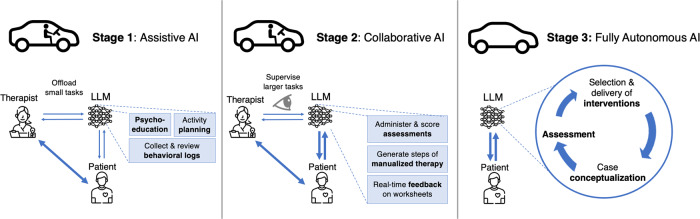
“For example, Stade et al [44] recently presented a 3-stage model explicitly inspired by levels of autonomous driving.”
InfluentialHazem, H., Ali, K., Fatma, Y., Maryam, C., Houyem, B. K., Hajer, K., Mayssa, B., & Abbes, W. (2026) · Middle East Current Psychiatry · doi:10.1186/s43045-026-00637-y · Cited by 1
Harnessing artificial intelligence for pediatric health: Current trends and future opportunities
Wu, J., Chen, B., Chan, K. C. C., Liang, M., Lyu, Y., Yu, P., Feng, T., Xie, F., Yu, S., Zhang, F., et al. (2026) · iScience · doi:10.1016/j.isci.2026.115962 · Cited by 2
“119,120 We are concerned, however, that such applications also raise pediatric-specific concerns because early algorithmic labeling in developmental or mental health contexts may influence family perceptions, clinical expectations, and access to services if not communicated and governed carefully.”
Özsoy, F., Tasci, G., Taşçı, B., Doğan, Ş., & Tuncer, T. (2026) · World Journal of Psychiatry · doi:10.5498/wjp.118161 · Cited by 1
A roadmap for medical large language models: a review of foundations, applications, and challenges
Sha, Y.-Y., Yu, L., Lin, Z.-H., Kaur, A., Lou, Y., Gornale, S. S., Zhang, T., Wong, L. S., Wang, Z., Yan, Y., et al. (2026) · Military Medical Research · doi:10.1016/j.mmr.2026.100050 · Cited by 4
“These functions can improve access to support and facilitate communication between patients and clinicians [237,238].”
InfluentialShah, N., Morris, M., Daraban, C., Johnson, S., & Murphy, S. L. (2026) · Arthritis Care & Research · doi:10.1002/acr.80109 · Cited by 1
CORA: A Cognitive Reframing Dialogue Agent for Supporting Emotion Regulation
Chen, T., Li, Z., Chen, X., Shen, Y., Jin, H., Zhang, L., & Zhao, S. (2026) · IEEE Transactions on Affective Computing · doi:10.1109/taffc.2026.3709312 · Cited by 1
“The rapid advancement of artificial intelligence, especially in LLMs, has created new opportunities for mental health services [37], [38], [39].”
Herbener, A. B., Zachariae, R. H., Klincewicz, M., Thøgersen, M. B., Hermann, M. R., & Damholdt, M. F. (2026) · Computers in Human Behavior Artificial Humans · doi:10.1016/j.chbah.2026.100347 · Cited by 1
A bibliometric analysis of large language models in mental health research
Hussiny, M. A., Trust Saidi, Pikkarainen, M. A., & Gazerani, P. (2026) · Frontiers in Psychiatry · doi:10.3389/fpsyt.2026.1838199 · Cited by 2
Evaluating AI-based Mental Health Interventions
Sharma, A. (2026) · ACM eBooks · doi:10.1145/3749728.3749733 · Cited by 1
Using augmented intelligence to improve long term outcomes
Zahavi, I., Shitrit, I. B., & Einav, S. (2024) · Current Opinion in Critical Care · doi:10.1097/mcc.0000000000001185 · Cited by 3
On, Y., Kim, T., & Kim, N. (2024) · 신경정신의학 · doi:10.4306/jknpa.2024.63.3.151 · Cited by 1
Kang, S.-J. (2024) · Journal of Digital Contents Society · doi:10.9728/dcs.2024.25.12.3751 · Cited by 2
Moral judgments in online discourse are not biased by gender
Betti, L., Bajardi, P., & Morales, G. D. F. (2025) · Scientific Reports · doi:10.1038/s41598-025-08749-x · Cited by 7
“Thus, our study highlights additional potential risks in deploying and using LLMs to augment, or even automate mental health support services [60].”
Generative AI for Psychology and Mental Health: Review Study
Belaih, A. Y. L., Elaziz, M. A., Dahou, A., & Mahmoud, N. (2024) · International Conference on Smart-Digital-Green Technologies and Artificial Intelligence Sciences (CSDGAIS) · doi:10.1109/csdgais64098.2024.11064846 · Cited by 1
“For example, Stade E et al.[11] analyzed a roadmap for the aspiring but responsible for application of clinical by ussing LLMs in psychology fields like psychotherapy or mental health : First, a technical review of clinical by using LLMs, Second, the steps for combination of using LLMs into…”
Stirman, S. W., & Heinz, A. J. (2025) · American Journal of Psychiatry · doi:10.1176/appi.ajp.20250138 · Cited by 2
Self-citationFrom impact factor to human factor: the rise of humanness in the age of intelligent machines
Tsai, J. (2026) · npj Mental Health Research · doi:10.1038/s44184-026-00238-x · Cited by 1
Formulation as Representation - Modelling the Cognitive Space of Mental Health Clinical ReasoningPreprint
Hider, A., & Sim, S. H. (2024) · PsyArXiv (OSF Preprints) · doi:10.31234/osf.io/b4j39 · Cited by 1
Musunuri, R. L., & Bhatt, A. (2024) · Advances in healthcare information systems and administration book series · doi:10.4018/979-8-3693-8552-4.ch003
Schäfer, L. M., Köhler, S., & Krause, T. (2024) · SSRN Electronic Journal · doi:10.2139/ssrn.4982675
Re-imagining Mental Health Access: The Role of Human, AI and Design
Iftikhar, Z. (2024) · ACM Conference on Computer Supported Cooperative Work (CSCW) · doi:10.1145/3678884.3682056 · Cited by 2
“From a language generation system to “therapist”, LLMs have enabled some people immediate access to care through fully automated means [15].”
Yang, J., Kikuchi, H., & Kikuchi, H. (2024) · Journal of Japan Society for Fuzzy Theory and Intelligent Informatics · doi:10.3156/jsoft.36.4_713 · Cited by 2
Lorenzo, V. D., Famulari, R., & Ussorio, D. (2024) · RIVISTA SPERIMENTALE DI FRENIATRIA · doi:10.3280/rsf2024-003002
A Family-History Based Conversational AI System Using LLM
Lim, M., Ku, J., Oh, G.-H., Lee, S. M., Kang, Y., & Kim, J. (2024) · International Conference on Information and Communication Technology Convergence (ICTC) · doi:10.1109/ictc62082.2024.10827365
拉克希特, 阿., Rakshit, A., 加博拉, 丽., & Gabora, L. M. (2025) · Leonardo · doi:10.1162/leon_a_02671
Refoua, E., Elyoseph, Z., Wacker, R., Dziobek, I., Tsafrir, I., & Meinlschmidt, G. (2025) · SSRN Electronic Journal · doi:10.2139/ssrn.5074696 · Cited by 1
Zhang, Y., Chen, X., Zhu, K., Ma, Y., Wang, K., Gao, H., Shen, J. G., & Hu, B. (2025) · IEEE Transactions on Computational Social Systems · doi:10.1109/tcss.2025.3548863 · Cited by 1
Yuan, Y., Gao, Y., Moen, H., Isometsä, E. T., Marttinen, P., & Aledavood, T. (2025) · medRxiv · doi:10.1101/2025.05.10.25327354
“The ability of LLMs to effectively integrate passive sensing data with minimal supervision or fine-tuning provides a scalable solution for monitoring changes in depressive states [42].”
Navigating Ethical Challenges of AI Chatbots for Sex Therapy
Fu, M., & Chan, W. (2025) · Oxford University Press eBooks · doi:10.1093/9780198945215.003.0075 · Cited by 2
Feedback in Rehabilitation Settings
Knauer, J., Terhorst, Y., & Baumeister, H. (2025) · CBT: science into practice · doi:10.1007/978-3-031-90428-8_10
AI-Facilitated Cognitive Reappraisal via Socrates 2.0: A Mixed Methods Feasibility Study (Preprint)Preprint
Held, P., Pridgen, S., Szoke, D. R., Chen, Y., Akhtar, Z., & Amin, D. (2025) · doi:10.2196/preprints.80461
Theoretical Foundation for Digital Behavioral Health Governance
Noguera, J. J. M. (2025) · SpringerBriefs in public health · doi:10.1007/978-3-031-94763-6_3
AI Models for Detecting Different Types and Levels of Risks Associated
Chatterjee, S., Dindarian, A., & Rengaraju, U. (2025) · Apress eBooks · doi:10.1007/979-8-8688-1186-9_9
Leveraging Large Language Models and Patient Portal Messages for Early Identification of DepressionPreprint
Kim, J., Torous, J. B., Adler‐Milstein, J., van Roessel, P., Rodríguez, F., Sharp, C., Pfeffer, M. A., Chen, J. H., Ma, S. P., Rodríguez, C. I., et al. (2025) · medRxiv · doi:10.1101/2025.08.15.25333781 · Cited by 1
Third-Order Cybernetics: Systemic Practices Go Digital
Borcsa, M., & Pomini, V. (2025) · European Family Therapy Association series · doi:10.1007/978-3-031-92225-1_1
Accents Still Confuse AI: Systematic Errors in Speech Transcription and LLM-Based RemediesPreprint
Fatapour, Y., Samaan, J. S., & Tatonetti, N. P. (2025) · medRxiv · doi:10.1101/2025.08.29.25333548
Performance of a Large Language Model in BI-RADS Classification of Ultrasound Based Breast LesionsPreprint
Pillai, K., & Nausheen, F. (2025) · medRxiv · doi:10.1101/2025.09.28.25336860
Meißner, T., Konrad, K., Kerth, J.-L., Reinhart, L., Henn, A. T., Bell, L., Bischops, A., & Hagemeister, M. (2025) · Springer eBooks · doi:10.1007/978-3-658-48573-3_15
Zhang, S., Phan, E., Velmovitsky, P. E., Phạm, Q., & Sanner, S. (2025) · doi:10.2196/preprints.84932
To AI, or Not to AI: That Is Not the Question
Ben‐Zeev, D. (2025) · Psychiatric Services · doi:10.1176/appi.ps.20250180 · Cited by 3
Comparing agent-based VR stress therapy: Single vs. Group interventions
Islam, M., & Takeuchi, Y. (2025) · IEEE RO-MAN · doi:10.1109/ro-man63969.2025.11217815 · Cited by 1
“Advanced AI enables a unique opportunity for comparison, as it allows adaptive interactions in both single and group sessions[23].”
Gogoll, J., & Zuber, N. (2025) · SpringerBriefs in computer science · doi:10.1007/978-3-032-06195-9_2
A Bibliometric Analysis of Large Language Models in Mental Health Research (Preprint)Preprint
Hussiny, M. A., Trust Saidi, Pikkarainen, M., & Gazerani, P. (2025) · doi:10.2196/preprints.87333
Moon, S.-J. (2025) · Journal of Digital Contents Society · doi:10.9728/dcs.2025.26.10.2791
Identity-Driven Hierarchical Role-Playing Agents
Sun, L., Wang, S., & Wei, Z. (2025) · Lecture notes in computer science · doi:10.1007/978-981-95-3346-6_31 · Cited by 21
From Dear Diary to Dear Chatbot: Technological Formats and Mental Health
Amos, M., Kayser, M., & Chen, S.-L. S. (2025) · Emerald Group Publishing Limited eBooks · doi:10.1108/s0163-239620250000061006
Reproducibility and Case Sensitivity of LLMs for Anonymizing Depressed Tweets
Mansha, S., Mahmood, H., Håkansson, A., Kamiran, F., & Vlassov, V. (2025) · IEEE International Conference on Data Science and Advanced Analytics (DSAA) · doi:10.1109/dsaa65442.2025.11247966
“LLMs have the potential to transform the mental healthcare system, especially the timely identification and remission of often underdiagnosed depressive disorders [12].”
Vromman, F. V., Kerckhove, C. V., Gagnon, J., Pelletier, C., Dufresne, Y., & Coulombe, S. (2025) · doi:10.2196/preprints.88750
Ulrich, S., Lienhard, N., Künzli, H., & Kowatsch, T. (2024) · Zürcher Hochschule für Angewandte Wissenschaften digital collection (Zurich University of Applied Sciences) · doi:10.21256/zhaw-30977
Kojima, H., Soda, T., & Yamashita, Y. (2025) · Psychiatry and Clinical Neurosciences · doi:10.1111/pcn.70010 · Cited by 1
“27 Several studies have analyzed the text embeddings of questionnaires, reporting similarities between text embeddings and response data.”
Personalized Depression Management System Using LLMs and Reinforcement Learning: A Survey
Katti, V. S., & Karande, K. J. (2026) · Lecture notes in networks and systems · doi:10.1007/978-981-95-5079-1_2 · Cited by 1
A Systematic Review of AI-Driven Personalized Mental Health Interventions
Saxena, K., Rathod, A., Gupta, S., Shah, A., & Prajapati, D. (2026) · Lecture notes in networks and systems · doi:10.1007/978-3-032-06700-5_36
Last, B. S., & Khazanov, G. K. (2026) · Nature Mental Health · doi:10.1038/s44220-025-00565-6 · Cited by 2
“Although AI-powered clinical support may be useful to providers, some frame these technologies as opportunities to cut training, consulta-tion and supervision costs, which is concerning 66 .”
Paulus, T. M. (2026) · Research methods in applied linguistics · doi:10.1075/rmal.15.03pau
Tian, X., Wenjie, Z. H. O. U., Luo, F., Qiao, Z., & Yi, F. E. N. G. (2026) · Advances in Psychological Science · doi:10.3724/sp.j.1042.2026.0404 · Cited by 2
Lawrence, H., Stirman, S. W., Dorison, S. H., Yun, T., & Jones, M. (2026) · doi:10.2196/preprints.91157
Self-citationEmotions, Context, and Substance Use in Adolescents: A Large Language Model Analysis of Reddit Posts
Zhu, J., Jiang, H., Wang, Y., Coifman, K. G., Jin, R., & Kenne, D. R. (2026) · Journal of Psychiatry and Brain Science · doi:10.20900/jpbs.20260002 · Cited by 6
“By connecting dynamic emotions with situated social contexts, this study aimed to detect actionable signals to inform the development of prevention strategies and timely interventions for adolescent SU.”
Ophir, Y. (2026) · Current Psychology · doi:10.1007/s12144-025-08920-7 · Cited by 1
“Large language models can already assist clinicians by automating routine administrative tasks, offering structured feedback on worksheets and homework, and even monitoring treatment fidelity, such as tracking recurring themes and emotions across sessions (Stade et al., 2024).”
Using Artificial Intelligence in Systemic Therapy Training
Georgiadou, S., Adams, R. R., Burke, J., & Eppler, C. (2026) · International Journal of Systemic Therapy · doi:10.1080/2692398x.2026.2618310
Yacoby, Y. (2026) · ACM Technical Symposium on Computer Science Education (SIGCSE) · doi:10.1145/3770762.3772549
Advancements in Psychotherapy and Treatment: The Use of AI Interventions for Psychopathologies
Varma, A., Saraiya, A. S., Maheshwari, E., Tuli, K., Srivastava, S., & Suresh, S. (2026) · Advances in computational intelligence and robotics book series · doi:10.4018/979-8-3373-1325-2.ch007 · Cited by 1
AIDA: A Tool for Reducing Problematic Behaviors in Autism
Maddaluno, M., Durante, S., Ammendola, A., Sperandeo, R., Moretto, E., Cioffi, V., Stanzione, R., Ragozzino, O., Mosca, L. L., Lucia, N. D., et al. (2026) · Smart innovation, systems and technologies · doi:10.1007/978-981-95-4076-1_8
Explainable AI for Well-Being Prediction From Lifestyle Data: 2-Study Design
Vromman, F. V., Kerckhove, C. V., Gagnon, J., Pelletier, C., Dufresne, Y., & Coulombe, S. (2026) · JMIR Mental Health · doi:10.2196/88750
“While well-being–related AI predictive models hold great promise for raising awareness and supporting self-reflection [22,23], their practical value depends on more than just statistical accuracy [20].”
Buattini, M., Paponetti, L., Torres, D., Borlimi, R., & Caselli, G. (2026) · The Clinical Supervisor · doi:10.1080/07325223.2026.2633988
“…and AI-based systems have been proposed to enhance supervision accessibility and feedback processes (Kjell et al., 2024, Rousmaniere et al., 2014; Stade et al., 2024), their implications for alliance-building and relational learning remain largely untested, underscoring the need for empirical…”
AI-Enhanced Educational Motivation in Collaborative Learning Environments
Alamoush, I. M. A. (2026) · Advances in computational intelligence and robotics book series · doi:10.4018/979-8-2600-0328-2.ch003
Kuhlmeier, F. O., Hanschmann, L., Rabe, M., Lüttke, S., Brakemeier, E., & Maedche, A. (2026) · JMIR Mental Health · doi:10.2196/94781 · Cited by 1
“LLM-based chatbots can respond inconsistently or harmfully [7,8], and fluent therapeutic language does not necessarily mean that an intervention is delivered with clinical fidelity.”
Innovation in der psychosozialen Beratung – Konzeption, Implementierung und Erfolg hybrider Ansätze
Gade, C., & Grobecker, R. (2026) · Springer eBooks · doi:10.1007/978-3-662-72469-9_12
The Applications of AI on Urban Environment-Health Research: Insights Across Multiple Spatial Scales
Li, Z., Cui, X., & Yang, H. (2026) · Applied Spatial Analysis and Policy · doi:10.1007/s12061-026-09847-7
“Existing studies mainly use LLMs for UE-related text-based tasks and environmental feature annotation (Fu et al., 2025) or for processing clinical and patient-generated health text (Li et al., 2025; Stade et al., 2024), rather than modeling UE–health associations within a unified framework.”
Yu, K., Li, C., Yaakup, H. S., Zainudin, S. S. S., Razi, S. A. B. H. M., & Pang, S. (2026) · Psychology Health & Medicine · doi:10.1080/13548506.2026.2645949
Urrutia, C. F. (2026) · CHI Conference Extended Abstracts on Human Factors in Computing Systems (CHI EA) · doi:10.1145/3772363.3799199
TheraMind AI: A Multilingual and Multidomain Diagnostic Assistant for Psychotherapy
Reddy, J. A., Yasmeen, Goura, K., Reddy, Y. C. A. P., Rani, K. M. S., & Devi, P. D. Y. R. (2026) · International Conference on Innovative Practices in Technology and Management (ICIPTM) · doi:10.1109/iciptm69057.2026.11465737 · Cited by 1
“Indeed, previous works emphasize risks including therapeutic misinformation, failure to detect crisis situations, and a lack of human oversight: [6], [16], [21], [27].”
Lv, S., Xu, W., Hu, R., Hu, R., Wu, Y., Du, F., Du, X., Yin, J., Guo, T., Li, S., et al. (2026) · doi:10.2196/preprints.97868
LLM-as-a-Judge for mental support: A meta-evaluation using domain-specific platform data
Li, Y., Chen, X., & Dolata, M. (2026) · Electronic Markets · doi:10.1007/s12525-026-00890-3 · Cited by 1
LLM-Powered Conversational Therapy System with Journaling and Cognitive Reframing Capabilities
Farhan, S. A., Udhayadhanush, E., & Poonkuzhali, R. (2026) · International Conference on Expert Clouds and Applications (ICOECA) · doi:10.1109/icoeca68095.2026.11485531
“The proposed work introduces an LLM-driven mental health support platform that is designed to provide continuous, context-aware emotional support [1], [10].”
Schwientek, A.-K., Drüge, M., Terhorst, Y., Kabrel, M., Sahan, F., & Apolinário-Hagen, J. (2026) · Advances in experimental medicine and biology · doi:10.1007/978-981-95-6872-7_29
Chen, X., Li, Y., & Peng, J. (2026) · International Conference on Artificial Intelligence and Digital Services · doi:10.1145/3803686.3803713
“Machine learning approaches remain underutilized in predicting usage intention and identifying key determinants [7].”
Large Language Models in Mental Health Research and Treatment
Mesquiti, S., & Nook, E. C. (2026) · Annual Review of Biomedical Data Science · doi:10.1146/annurev-biodatasci-092524-113527 · Cited by 2
Perinatal Mental Health Detection and Prediction Using Mobile Sensing Data: Systematic Review
Sun, Y., Che, K., Lantta, T., Axelin, A., Azimi, I., & Liljeberg, P. (2026) · JMIR Mental Health · doi:10.2196/101677
“These data could be analyzed using pretrained speech encoders or language models to extract acoustic and linguistic markers of depression and anxiety [73,74].”
Taguchi, K. (2026) · Stress Science Research · doi:10.5058/stresskagakukenkyu.2025007
Tong, X., He, L., Deng, Z., Li, W., Tang, Z., Li, Y., Ren, Y., Mauriello, M. L., & Li, M. (2026) · International Journal of Human-Computer Interaction · doi:10.1080/10447318.2026.2659953
Metadata
- Authors
- Stade, E. C., Stirman, S. W., Ungar, L. H., Boland, C. L., Schwartz, H. A., Yaden, D. B., Sedoc, J., DeRubeis, R. J., Willer, R., & Eichstaedt, J. C.
- Affiliations
- VA Palo Alto Health Care System (US)
- University of Pennsylvania (US)
- Stony Brook University (US)
- Johns Hopkins University (US)
- New York University (US)
- Stanford University (US)
- Corresponding author
- Stade, Elizabeth C.
- Eichstaedt, Johannes C.
- ORCID
- Venue
- npj Mental Health Research
- Published
- 2024-04-02
- Volume
- 3
- Issue
- 1
- Pages
- 12-12
- ISSN
- 2731-4251 (ISSN-L)
- PMC
- PMC10987499
- OpenAlex
- W4393397034
- Semantic Scholar
- 82dcef936d139b6ce8a6198a2de9c597b28b4ded
- Cited by
- 391
- References
- 78
- Citations by year
- 2026: 182 · 2025: 152 · 2024: 54
- FWCI
- 36.35
- Type
- journal article
- Language
- en
- Open access
- gold
- doi.org
- Licence
- cc-by
- creativecommons.org/licenses/by/4.0 (tdm)
- creativecommons.org/licenses/by/4.0 (vor)
- Locations
- npj Mental Health Research (publishedVersion, cc-by)
- PubMed Central (publishedVersion, cc-by)
- PubMed (publishedVersion)
- DOAJ (DOAJ: Directory of Open Access Journals) (submittedVersion)
- PsyArXiv (OSF Preprints) (submittedVersion)
- PsyArXiv (OSF Preprints) (submittedVersion, cc-by)
- Funders
- National Institute of Mental Health (RF1-MH128785, R01-MH125702)
- Stanford Institute for Human-Centered Artificial Intelligence, Stanford University
- Topics
- Health Sciences › Medicine › Health Informatics › Artificial Intelligence in Healthcare and Education
- Social Sciences › Psychology › Applied Psychology › Digital Mental Health Interventions
- Physical Sciences › Computer Science › Artificial Intelligence › Ethics and Social Impacts of AI
- Keywords
- large language models, psychotherapy, behavioral health services, responsible AI development, AI evaluation, risk detection, algorithmic bias, transparency, clinical psychology training, evidence-based interventions, access to mental health care
About these checks
Registry, retraction, Cites and statistics results are computed, not judged, with one exception: a printed reference that no index lists is read once by a model before it counts as a citation error. Claims are extracted by a model and kept only when their quote appears verbatim in the text; each cited source is then checked, with a model’s help, for whether it says what the claim relies on. Those verdicts can be wrong — read the claim’s quote and the cited source before relying on one.
Statistics and arithmetic are recomputed, not judged.
Confidence bands are shown only for fields calibrated on our annotated test set. None is calibrated yet, so no band is shown.
What counts as a claim ›How we measure confidence ›How we check this ›
Are you an author, or do you see a problem with this page? Request a review
Data sources
Bibliographic data: Semantic Scholar, OpenAlex, Crossref.
Contains information from the Semantic Scholar Academic Graph Datasets, made available under the ODC Attribution License (ODC-BY 1.0).
Semantic Scholar’s data is described in: Kinney, R., et al. (2023). The Semantic Scholar Open Data Platform. arXiv:2301.10140.
