

Large language models could change the future of behavioral healthcare: a proposal for responsible development and evaluation
Open accessPublished version of a preprint
The DOI matches its Crossref record; 85 of the 85 references it cites were found in a registry or an index.
Abstract
Large language models (LLMs) such as Open AI’s GPT-4 (which power ChatGPT) and Google’s Gemini, built on artificial intelligence, hold immense potential to support, augment, or even eventually automate psychotherapy. Enthusiasm about such applications is mounting in the field as well as industry. These developments promise to address insufficient mental healthcare system capacity and scale individual access to personalized treatments. However, clinical psychology is an uncommonly high stakes application domain for AI systems, as responsible and evidence-based therapy requires nuanced expertise. This paper provides a roadmap for the ambitious yet responsible application of clinical LLMs in psychotherapy. First, a technical overview of clinical LLMs is presented. Second, the stages of integration of LLMs into psychotherapy are discussed while highlighting parallels to the development of autonomous vehicle technology. Third, potential applications of LLMs in clinical care, training, and research are discussed, highlighting areas of risk given the complex nature of psychotherapy. Fourth, recommendations for the responsible development and evaluation of clinical LLMs are provided, which include centering clinical science, involving robust interdisciplinary collaboration, and attending to issues like assessment, risk detection, transparency, and bias. Lastly, a vision is outlined for how LLMs might enable a new generation of studies of evidence-based interventions at scale, and how these studies may challenge assumptions about psychotherapy.
Overview
The claims and statistics of this paper haven’t been checked yet.
Free: it reads the open-access text and checks the first 5 claims that cite a source we can check. Create a free account to check every claim.
Integrity signals
Registry
Cites
Statistics
Figures
Verification
Claims the paper makes
The claims and statistics of this paper haven’t been checked yet.
Free: it reads the open-access text and checks the first 5 claims that cite a source we can check. Create a free account to check every claim.
Claims other papers make about this one
Each is checked against this paper’s own text: does it say what the citing paper says it does?
The source backs part of the claim, not all of it — or backs it for a different population, condition or comparison.
In the citing paper
“Current literature tends to advocate for a cautious approach, in which near-term clinical generative AI applications are limited to implementations of evidence-based therapies (such as CBT)52, with a clinician in the loop52, and models constrained to scripted responses as far as possible42.”
From “It happened to be the perfect thing”: experiences of generative AI chatbots for mental health (2024) · cites this paper as [52]
Experimental — accuracy not yet measured
Self-check
Percentages, sums and reported differences re-computed from the paper’s own numbers.
The self-check needs the paper’s full text.
Citations
Cites
Vaswani, A., Shazeer, N., Parmar, N., Uszkoreit, J., Jones, L., Gomez, A. N., Kaiser, L., & Polosukhin, I. (2017) · arXiv · doi:10.48550/arxiv.1706.03762 · Cited by 120,404 · cited 1×
“The advent of large language models, enabled by a combination of the deep learning technique transformers 25 and increases in computing power, has opened new possibilities 26 .”
BackgroundDiagnostic and Statistical Manual of Mental Disorders
American Psychiatric Association (2013) · doi:10.1176/appi.books.9780890425596 · Cited by 116,369
A Mathematical Theory of Communication
Shannon, C. E. (1948) · Bell System Technical Journal · doi:10.1002/j.1538-7305.1948.tb01338.x · Cited by 88,486
BERT: Pre-training of Deep Bidirectional Transformers for Language Understanding
Devlin, J., Chang, M.-W., Lee, K., & Toutanova, K. (2018) · arXiv · doi:10.48550/arxiv.1810.04805 · Cited by 73,173
Deep reinforcement learning from human preferences
Christiano, P., Leike, J., Brown, T. B., Martic, M., Legg, S., & Amodei, D. (2017) · arXiv · doi:10.48550/arxiv.1706.03741 · Cited by 7,379
On the Dangers of Stochastic Parrots: Can Language Models Be Too Big? 🦜
Bender, E. M., Gebru, T., McMillan-Major, A., & Shmitchell, S. (2021) · Proceedings of the 2021 ACM Conference on Fairness, Accountability, and Transparency · doi:10.1145/3442188.3445922 · Cited by 6,988
ELIZA—a computer program for the study of natural language communication between man and machine
Weizenbaum, J. (1966) · Communications of the ACM · doi:10.1145/365153.365168 · Cited by 4,452
The answer is 17 years, what is the question: understanding time lags in translational research
Morris, Z. S., Wooding, S., & Grant, J. (2011) · Journal of the Royal Society of Medicine · doi:10.1258/jrsm.2011.110180 · Cited by 3,340 · cited 1×
“However, the traditional approach to developing and testing therapeutic interventions is slow, contributing to signi fi cant time lags in translational research 53 , and fails to deliver insights at the level of the individual.”
BackgroundDefining empirically supported therapies.
Chambless, D. L., & Hollon, S. D. (1998) · Journal of Consulting and Clinical Psychology · doi:10.1037/0022-006x.66.1.7 · Cited by 3,067
On the Opportunities and Risks of Foundation Models
Bommasani, R., Hudson, D. A., Adeli, E., Altman, R., Arora, S., von Arx, S., Bernstein, M. S., Bohg, J., Bosselut, A., Brunskill, E., et al. (2021) · arXiv · doi:10.48550/arxiv.2108.07258 · Cited by 2,676 · cited 1×
“The advent of large language models, enabled by a combination of the deep learning technique transformers 25 and increases in computing power, has opened new possibilities 26 .”
BackgroundMediators and Mechanisms of Change in Psychotherapy Research
Kazdin, A. E. (2007) · Annual Review of Clinical Psychology · doi:10.1146/annurev.clinpsy.3.022806.091432 · Cited by 2,504
Maximizing exposure therapy: An inhibitory learning approach
Craske, M. G., Treanor, M., Conway, C. C., Zbozinek, T., & Vervliet, B. (2014) · Behaviour Research and Therapy · doi:10.1016/j.brat.2014.04.006 · Cited by 2,339 · cited 1×
“At the level of health systems, they could expedite the implementation and translation of research fi ndings into clinical practice by suggesting therapeutic strategies to psy-chotherapists, for instance, promoting strategies that enhance inhibitory learning during exposure therapy 84 .”
BackgroundLarge Language Models are Zero-Shot Reasoners
Kojima, T., Gu, S. S., Reid, M., Matsuo, Y., & Iwasawa, Y. (2022) · arXiv · doi:10.48550/arxiv.2205.11916 · Cited by 2,013
Large language models are zero-shot reasoners
Kojima, T., Gu, S. (., Reid, M., Matsuo, Y., & Iwasawa, Y. (2022) · Advances in Neural Information Processing Systems 35 · doi:10.52202/068431-1613 · Cited by 2,013
Benefits, Limits, and Risks of GPT-4 as an AI Chatbot for Medicine
Lee, P., Bubeck, S., & Petro, J. (2023) · New England Journal of Medicine · doi:10.1056/nejmsr2214184 · Cited by 1,738
Sparks of Artificial General Intelligence: Early experiments with GPT-4
Bubeck, S., Chandrasekaran, V., Eldan, R., Gehrke, J., Horvitz, E., Kamar, E., Lee, P., Lee, Y. T., Li, Y., Lundberg, S., et al. (2023) · arXiv · doi:10.48550/arxiv.2303.12712 · Cited by 1,526
Safety planning intervention: a brief intervention to mitigate suicide risk.
Stanley, B., & Brown, G. K. (2012) · Cognitive and Behavioral Practice · doi:10.1016/j.cbpra.2011.01.001 · Cited by 1,267 · cited 1×
“…legal requirements (e.g., the Tarasoff rule, which requires clinicians to warn intended victims when a patient presents a serious threat of violence), or evidence-based methods for decreasing risk (e.g., safety planning 73 ), or even provide interventions targeting risk directly to patients.”
BackgroundPsychotherapy for depression in adults: A meta-analysis of comparative outcome studies.
Cuijpers, P., van Straten, A., Andersson, G., & van Oppen, P. (2008) · Journal of Consulting and Clinical Psychology · doi:10.1037/a0013075 · Cited by 1,050
Chatbots and Conversational Agents in Mental Health: A Review of the Psychiatric Landscape
Vaidyam, A. N., Wisniewski, H., Halamka, J. D., Kashavan, M. S., & Torous, J. B. (2019) · The Canadian Journal of Psychiatry · doi:10.1177/0706743719828977 · Cited by 1,048
Objective user engagement with mental health apps: systematic search and panel-based usage analysis
Baumel, A., Muench, F., Edan, S., & Kane, J. M. (2019) · Journal of Medical Internet Research · doi:10.2196/14567 · Cited by 965 · cited 1×
“However, these and other existing chatbots frequently struggle to understand and respond to unanticipated user responses 10,13 , which likely contributes to their low engagement and high dropout rates 14,15 .”
BackgroundPsychological Treatments That Cause Harm
Lilienfeld, S. O. (2007) · Perspectives on Psychological Science · doi:10.1111/j.1745-6916.2007.00029.x · Cited by 959 · cited 2×
“Without an initial focus on EBPs, clinical LLM applications may fail to re fl ect current knowledge and may even produce harm 63 .”
BackgroundContinuous speech recognition by statistical methods
Jelinek, F. (1976) · Proceedings of the IEEE · doi:10.1109/proc.1976.10159 · Cited by 920
Interpretation of Educational Measurements
Freeman, F. S., & Kelley, T. L. (1928) · The American Journal of Psychology · doi:10.2307/1414476 · Cited by 877
Explainable artificial intelligence: an analytical review
Angelov, P. P., Soares, E. A., Jiang, R., Arnold, N. I., & Atkinson, P. M. (2021) · WIREs Data Mining and Knowledge Discovery · doi:10.1002/widm.1424 · Cited by 843
Torous, J., Nicholas, J., Larsen, M. E., Firth, J., & Christensen, H. (2018) · Evidence Based Mental Health · doi:10.1136/eb-2018-102891 · Cited by 790 · cited 2×
“However, these and other existing chatbots frequently struggle to understand and respond to unanticipated user responses 10,13 , which likely contributes to their low engagement and high dropout rates 14,15 .”
BackgroundChorpita, B. F., Daleiden, E. L., & Weisz, J. R. (2005) · Mental Health Services Research · doi:10.1007/s11020-005-1962-6 · Cited by 717 · cited 1×
“Focus fi rst on evidence-based practices In the immediate future, clinical LLM applications will have the greatest chanceofcreatingmeaningfulclinicalimpactifdevelopedbasedonEBPsor a “ common elements ” approach (i.e., evidence-based procedures shared across treatments) 60 .”
BackgroundGearing, R. E., El-Bassel, N., Ghesquiere, A., Baldwin, S., Gillies, J., & Ngeow, E. (2011) · Clinical Psychology Review · doi:10.1016/j.cpr.2010.09.007 · Cited by 610
An overview of the features of chatbots in mental health: A scoping review
Abd-alrazaq, A. A., Alajlani, M., Alalwan, A. A., Bewick, B. M., Gardner, P., & Househ, M. (2019) · International Journal of Medical Informatics · doi:10.1016/j.ijmedinf.2019.103978 · Cited by 605 · cited 1×
“Forexample,mentalhealthchatbotsWoebot andTessa,whichtargetdepressionandeatingpathologyrespectively 10,11 ,are rule-based and do not use LLMs (i.e., the application ’ s content is human-generated, and the chatbot ’ s responds based on prede fi ned rules or decision trees 12 ).”
BackgroundThe promise of machine learning in predicting treatment outcomes in psychiatry
Chekroud, A. M., Bondar, J., Delgadillo, J., Doherty, G., Wasil, A., Fokkema, M., Cohen, Z., Belgrave, D., DeRubeis, R., Iniesta, R., et al. (2021) · World Psychiatry · doi:10.1002/wps.20882 · Cited by 531 · cited 2×
“Data-drivenapproachesholdthepromiseofrevealingpatternsthatare not yet realized by clinicians, thus generating new approaches to psychotherapy; machine learning is already being used, for example, to predict behavioral health treatment outcomes 54 .”
BackgroundSelf-citationSharma, A., Lin, I. W., Miner, A. S., Atkins, D. C., & Althoff, T. (2023) · Nature Machine Intelligence · doi:10.1038/s42256-022-00593-2 · Cited by 500
The Pile: An 800GB Dataset of Diverse Text for Language Modeling
Gao, L., Biderman, S., Black, S., Golding, L., Hoppe, T., Foster, C., Phang, J., He, H., Thite, A., Nabeshima, N., et al. (2021) · arXiv · doi:10.48550/arxiv.2101.00027 · Cited by 492 · cited 1×
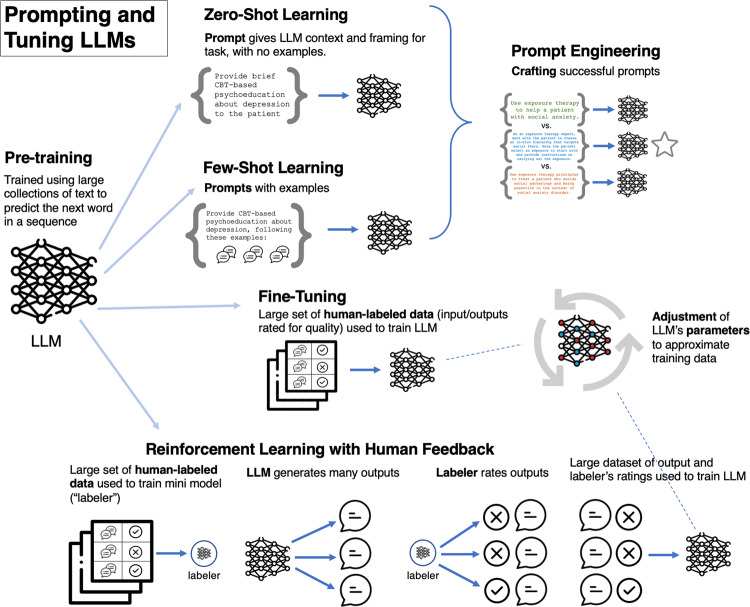
“These models are fi rst trained on massive amountsofdata 27,28 using “ unsupervised ” learninginwhichthemodel ’ stask is to predict a given word in a sequence of words.”
MethodLeichsenring, F., Steinert, C., Rabung, S., & Ioannidis, J. P. A. (2022) · World Psychiatry · doi:10.1002/wps.20941 · Cited by 485
Ethical and social risks of harm from Language Models
Weidinger, L., Mellor, J., Rauh, M., Griffin, C., Uesato, J., Huang, P.-S., Cheng, M., Glaese, M., Balle, B., Kasirzadeh, A., et al. (2021) · arXiv · doi:10.48550/arxiv.2112.04359 · Cited by 477 · cited 3×
“However, this needs to be balanced against associated risks, mentioned above, of incorporating human likeness in systems 36 .”
BackgroundThe impact of digital technology on psychological treatments and their dissemination
Fairburn, C. G., & Patel, V. (2017) · Behaviour Research and Therapy · doi:10.1016/j.brat.2016.08.012 · Cited by 448 · cited 2×
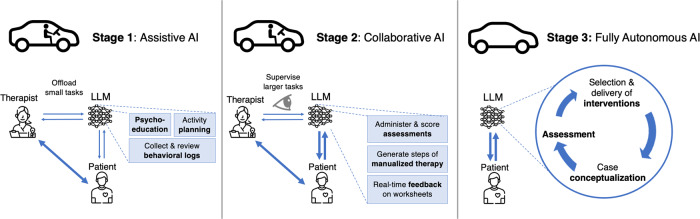
“ThecollaborativeLLMstagehas parallelsto “ guided self-help ” approaches 30 .”
BackgroundMethodEvidence-based treatment and therapist drift
Waller, G. (2009) · Behaviour Research and Therapy · doi:10.1016/j.brat.2008.10.018 · Cited by 359 · cited 1×
“In the future, clinical LLMs could computationally derive adherence and competence ratings, aiding research efforts and reducing therapist drift 43 .”
BackgroundPsychological roadblocks to the adoption of self-driving vehicles
Shariff, A., Bonnefon, J.-F., & Rahwan, I. (2017) · Nature Human Behaviour · doi:10.1038/s41562-017-0202-6 · Cited by 336
Guidelines for clinical supervision in health service psychology.
American Psychological Association (2015) · American Psychologist · doi:10.1037/a0038112 · Cited by 298
Raviola, G., Naslund, J. A., Smith, S. L., & Patel, V. (2019) · Current Psychiatry Reports · doi:10.1007/s11920-019-1028-x · Cited by 258
Furukawa, T. A., Suganuma, A., Ostinelli, E. G., Andersson, G., Beevers, C. G., Shumake, J., Berger, T., Boele, F. W., Buntrock, C., Carlbring, P., et al. (2021) · The Lancet Psychiatry · doi:10.1016/s2215-0366(21)00077-8 · Cited by 255
Evidence-Based Psychotherapy: Advantages and Challenges
Cook, S. C., Schwartz, A. C., & Kaslow, N. J. (2017) · Neurotherapeutics · doi:10.1007/s13311-017-0549-4 · Cited by 252 · cited 1×
“While EBPs are effective, effect sizes for psychotherapy are typically small 50,51 and signi fi cant proportions of patients do not respond 52 .”
BackgroundPredictive biases in natural language processing models: A conceptual framework and overview
Shah, D. S., Schwartz, H. A., & Hovy, D. (2020) · Proceedings of the 58th Annual Meeting of the Association for Computational Linguistics · doi:10.18653/v1/2020.acl-main.468 · Cited by 241
Self-citationBeatty, C., Malik, T., Meheli, S., & Sinha, C. (2022) · Frontiers in Digital Health · doi:10.3389/fdgth.2022.847991 · Cited by 224 · cited 1×
“While some evidence indicatesthathumanscandevelopatherapeuticalliancewithchatbots 34 ,the long-term viability of such alliancebuilding, and whether or not it produces undesirable downstream effects (e.g., altering an individual ’ s existing relationships or social skills) remains to be seen.”
BackgroundEmpirically Supported Treatment: Recommendations for a New Model
Tolin, D. F., McKay, D., Forman, E. M., Klonsky, E. D., & Thombs, B. D. (2015) · Clinical Psychology: Science and Practice · doi:10.1111/cpsp.12122 · Cited by 219
To chat or bot to chat: Ethical issues with using chatbots in mental health
Coghlan, S., Leins, K., Sheldrick, S., Cheong, M., Gooding, P., & D'Alfonso, S. (2023) · DIGITAL HEALTH · doi:10.1177/20552076231183542 · Cited by 215 · cited 1×
“Beyond technical limitations, it remains to be decided whether com-pleteautomationisanappropriateendgoalforbehavioralhealthcare,dueto safety,legal,philosophical,andethicalconcerns 33 .”
BackgroundConversational Artificial Intelligence in Psychotherapy: A New Therapeutic Tool or Agent?
Sedlakova, J., & Trachsel, M. (2023) · The American Journal of Bioethics · doi:10.1080/15265161.2022.2048739 · Cited by 208
Stratified Care vs Stepped Care for Depression: A Cluster Randomized Clinical Trial
Delgadillo, J., Ali, S., Fleck, K., Agnew, C., Southgate, A., Parkhouse, L., Cohen, Z. D., DeRubeis, R. J., & Barkham, M. (2022) · JAMA Psychiatry · doi:10.1001/jamapsychiatry.2021.3539 · Cited by 194
Self-citationTorous, J. B., Chan, S. R., Gipson, S. Y.-M. T., Kim, J. W., Nguyen, T.-Q., Luo, J., & Wang, P. (2018) · Psychiatric Services · doi:10.1176/appi.ps.201700423 · Cited by 184 · cited 1×
“An evaluation approach for clinical LLMs that hierarchically prioritizes risk and safety, followed by feasibility, acceptability, and effectiveness, would be in line with existing recommendations for the evaluation of digital mental health smartphone apps 65 .”
MethodLim, S. M., Shiau, C. W. C., Cheng, L. J., & Lau, Y. (2022) · Behavior Therapy · doi:10.1016/j.beth.2021.09.007 · Cited by 163 · cited 1×
“However, these and other existing chatbots frequently struggle to understand and respond to unanticipated user responses 10,13 , which likely contributes to their low engagement and high dropout rates 14,15 .”
BackgroundWasil, A. R., Venturo-Conerly, K. E., Shingleton, R. M., & Weisz, J. R. (2019) · Behaviour Research and Therapy · doi:10.1016/j.brat.2019.103498 · Cited by 160
Open trial of a personalized modular treatment for mood and anxiety
Fisher, A. J., Bosley, H. G., Fernandez, K. C., Reeves, J. W., Soyster, P. D., Diamond, A. E., & Barkin, J. (2019) · Behaviour Research and Therapy · doi:10.1016/j.brat.2019.01.010 · Cited by 156 · cited 2×
“…protocols, LLM applications for interventions that are highly structured, behavioral, and protocolized (e.g., CBT for insomnia [CBT-I] or exposure therapy for speci fi c phobia) may be available sooner than applications delivering highly fl exible or personalized interventions (for example 31 ).”
BackgroundUtilization of Self-Diagnosis Health Chatbots in Real-World Settings: Case Study
Fan, X., Chao, D., Zhang, Z., Wang, D., Li, X., & Tian, F. (2021) · Journal of Medical Internet Research · doi:10.2196/19928 · Cited by 152 · cited 1×
“Similarly, it is unclear whether these systems will prove suf fi ciently adept at engaging patients over time 32 or accounting for and addressing contextual nuances in treatment (e.g., using exposure to treat a patient experiencing PTSD-related fear of leaving the house, who also lives in a…”
BackgroundGoldberg, S. B., Flemotomos, N., Martinez, V. R., Tanana, M. J., Kuo, P. B., Pace, B. T., Villatte, J. L., Georgiou, P. G., Van Epps, J., Imel, Z. E., et al. (2020) · Journal of Counseling Psychology · doi:10.1037/cou0000382 · Cited by 141
Gunasekar, S., Zhang, Y., Aneja, J., Mendes, C. C. T., Del Giorno, A., Gopi, S., Javaheripi, M., Kauffmann, P., de Rosa, G., Saarikivi, O., et al. (2023) · arXiv · doi:10.48550/arxiv.2306.11644 · Cited by 138 · cited 1×
“The expertise that behavioral health experts could draw on to generate instructive examples and curate high-quality datasets holds particular value in light of recent evidence that quality of data trumps quantity of data for training well-performing models 66 .”
BackgroundAttitudes and perspectives towards the preferences for artificial intelligence in psychotherapy
Aktan, M. E., Turhan, Z., & Dolu, İ. (2022) · Computers in Human Behavior · doi:10.1016/j.chb.2022.107273 · Cited by 132
STOCHASTIC MODELING FOR AUTOMATIC SPEECH UNDERSTANDING
Baker, J. K. (1990) · Elsevier eBooks · doi:10.1016/b978-0-08-051584-7.50028-0 · Cited by 118 · cited 1×
“The mathematical formulations date back to 20 and original use cases focused on compressing communication 21 andspeechrecognition 22 – 24 .”
BackgroundAutomated evaluation of psychotherapy skills using speech and language technologies
Flemotomos, N., Martinez, V. R., Chen, Z., Singla, K., Ardulov, V., Peri, R., Caperton, D. D., Gibson, J., Tanana, M. J., Georgiou, P., et al. (2021) · Behavior Research Methods · doi:10.3758/s13428-021-01623-4 · Cited by 98
How do you feel? Using natural language processing to automatically rate emotion in psychotherapy
Tanana, M. J., Soma, C. S., Kuo, P. B., Bertagnolli, N. M., Dembe, A., Pace, B. T., Srikumar, V., Atkins, D. C., & Imel, Z. E. (2021) · Behavior Research Methods · doi:10.3758/s13428-020-01531-z · Cited by 91 · cited 1×
“patient emotions within psychotherapy 6 .”
van Bronswijk, S. C., DeRubeis, R. J., Lemmens, L. H. J. M., Peeters, F. P. M. L., Keefe, J. R., Cohen, Z. D., & Huibers, M. J. H. (2021) · Psychological Medicine · doi:10.1017/s0033291719003192 · Cited by 75
Self-citationThe merits of implementing routine outcome monitoring in clinical practice.
Lambert, M. J., & Harmon, K. L. (2018) · Clinical Psychology: Science and Practice · doi:10.1111/cpsp.12268 · Cited by 74 · cited 1×
“ClinicalLLMsoughttointegrate psychodiagnostic assessment and diagnosis, facilitating intervention selectionandoutcome monitoring 75 .”
MethodQuantifying the Human Likeness of a Humanoid Robot
Zitzewitz, J. V., Bösch, P. M., Wolf, P., & Riener, R. (2013) · International Journal of Social Robotics · doi:10.1007/s12369-012-0177-4 · Cited by 67
Precision Medicine Approaches to Mental Health Care
Scala, J. J., Ganz, A. B., & Snyder, M. P. (2022) · Physiology · doi:10.1152/physiol.00013.2022 · Cited by 63 · cited 1×
“While there have been some advances in precisionmedicineapproachesinbehavioralhealthcare 54,58 , theseeffortsare in their infancy and limited by sample sizes 59 .”
BackgroundJust in time crisis response: suicide alert system for telemedicine psychotherapy settings
Bantilan, N., Malgaroli, M., Ray, B. K., & Hull, T. D. (2020) · Psychotherapy Research · doi:10.1080/10503307.2020.1781952 · Cited by 60 · cited 1×
“Algorithms for detecting risks are under development 4 .”
BackgroundChamberlain, J. (2023) · European Journal of Risk Regulation · doi:10.1017/err.2022.38 · Cited by 60
Adaptive Semiparametric Language Models
Yogatama, D., de Masson d’Autume, C., & Kong, L. (2021) · Transactions of the Association for Computational Linguistics · doi:10.1162/tacl_a_00371 · Cited by 56 · cited 1×
“Inaddition,itisalreadypossibletoaugmentthememoryofLLMswith “ vector databases, ” which would have the added bene fi t of retaining inspectable learnings and summaries across clinical encounters 72 .”
BackgroundAdams, L. M., & Miller, A. B. (2021) · Clinical Psychological Science · doi:10.1177/21677026211026979 · Cited by 56 · cited 1×
“…both error disparities – where models are less accurate for particular groups – or outcome disparities – where models tend to over-capture demographic information 78 – which would in turn contribute to the disparities in mental health status and care already experienced by minoritized groups 79 .”
BackgroundThe Challenges in Designing a Prevention Chatbot for Eating Disorders: Observational Study
Chan, W. W., Fitzsimmons-Craft, E. E., Smith, A. C., Firebaugh, M.-L., Fowler, L. A., DePietro, B., Topooco, N., Wilfley, D. E., Taylor, C. B., & Jacobson, N. C. (2022) · JMIR Formative Research · doi:10.2196/28003 · Cited by 50
Modeling Motivational Interviewing Strategies on an Online Peer-to-Peer Counseling Platform
Shah, R. S., Holt, F., Hayati, S. A., Agarwal, A., Wang, Y.-C., Kraut, R. E., & Yang, D. (2022) · Proceedings of the ACM on Human-Computer Interaction · doi:10.1145/3555640 · Cited by 49 · cited 1×
“Asanotherexample,LLMapplicationshavebeenusedtoidentifytherapists ’ and clients ’ behaviors in a motivational interviewing framework 8,9 .”
BackgroundPrescott, J., & Hanley, T. (2023) · Mental Health and Social Inclusion · doi:10.1108/mhsi-02-2023-0020 · Cited by 49 · cited 1×
“…believe AI can increase access to care, allow individuals to disclose embarrassing information more comfortably, continuously re fi ne therapeutic techniques 69 , they have concerns about privacy and the formation of a strong therapeutic bond with machine-based therapeutic interventions 70 .”
BackgroundDas, A., Selek, S., Warner, A. R., Zuo, X., Hu, Y., Kuttichi Keloth, V., Li, J., Zheng, W. J., & Xu, H. (2022) · Proceedings of the 21st Workshop on Biomedical Language Processing · doi:10.18653/v1/2022.bionlp-1.27 · Cited by 47
Creed, T. A., Kuo, P. B., Oziel, R., Reich, D., Thomas, M. L., O’Connor, S., Imel, Z. E., Hirsch, T., Narayanan, S. S., & Atkins, D. C. (2021) · Administration and Policy in Mental Health and Mental Health Services Research · doi:10.1007/s10488-021-01167-x · Cited by 45
Wilhelm, E., Ballalai, I., Belanger, M.-E., Benjamin, P., Bertrand-Ferrandis, C., Bezbaruah, S., Briand, S., Brooks, I., Bruns, R., Bucci, L. M., et al. (2023) · JMIR Infodemiology · doi:10.2196/44207 · Cited by 45
Self-citationStirman, S. W. (2022) · Current Directions in Psychological Science · doi:10.1177/09637214221109601 · Cited by 30
Self-citationStirman, S. W., Gutner, C. A., Gamarra, J., Suvak, M. K., Vogt, D., Johnson, C., Wachen, J. S., Dondanville, K. A., Yarvis, J. S., Mintz, J., et al. (2021) · Behavior Therapy · doi:10.1016/j.beth.2020.08.005 · Cited by 24
Self-citationFairPy: A Toolkit for Evaluation of Prediction Biases and their Mitigation in Large Language ModelsPreprint
Viswanath, H., & Zhang, T. (2023) · arXiv (Cornell University) · doi:10.48550/arxiv.2302.05508 · Cited by 23 · cited 1×
“The integration of bias counter-measures into clinical LLM applications could serve to prevent this 78,80 .”
BackgroundA Psychopathological Approach to Safety Engineering in AI and AGI
Behzadan, V., Munir, A., & Yampolskiy, R. V. (2018) · Lecture notes in computer science · doi:10.1007/978-3-319-99229-7_46 · Cited by 21 · cited 1×
“” There is growing concern that AI chat systems can demonstrate undesirable behaviors, including expressions akin to depression or narcissism 35,74 .”
BackgroundPractice Research Networks and Psychological Services Research in the UK and USA
Parry, G., Castonguay, L. G., Borkovec, T. D., & Wolf, A. W. (2010) · Wiley eBooks · doi:10.1002/9780470687994.ch12 · Cited by 20
Peretz, G., Taylor, C. B., Ruzek, J. I., Jefroykin, S., & Sadeh‐Sharvit, S. (2023) · JMIR Formative Research · doi:10.2196/45156 · Cited by 20
Zhang, X., Tanana, M., Weitzman, L. M., Narayanan, S., Atkins, D. C., & Imel, Z. E. (2023) · Psychotherapy · doi:10.1037/pst0000460 · Cited by 18
Kjell, O., Kjell, K., & Schwartz, H. A. (2023) · doi:10.31234/osf.io/yfd8g · Cited by 15
Self-citationChen, Z., Flemotomos, N., Imel, Z. E., Atkins, D. C., & Narayanan, S. S. (2022) · Findings of the Association for Computational Linguistics: EMNLP (Findings of EMNLP) · doi:10.18653/v1/2022.findings-emnlp.425 · Cited by 9
Towards Automated Psychotherapy via Language ModelingPreprint
Liu, H. (2021) · OSF Preprints (OSF Preprints) · doi:10.31219/osf.io/qaype · Cited by 6 · cited 1×
“A small number of patient-facing applications incorporating LLMs have been tested, including a research-basedapplicationtogeneratedialog fortherapeuticcounseling 16,17 , and an industry-based mental-health chatbot, Youper, which uses a mix of rule-based and generative AI 18 .”
BackgroundTowards Automated Psychotherapy via Language ModelingPreprint
Liu, H. (2021) · arXiv (Cornell University) · doi:10.48550/arxiv.2104.10661 · Cited by 5 · cited 1×
“A small number of patient-facing applications incorporating LLMs have been tested, including a research-basedapplicationtogeneratedialog fortherapeuticcounseling 16,17 , and an industry-based mental-health chatbot, Youper, which uses a mix of rule-based and generative AI 18 .”
BackgroundChen, Z., Flemotomos, N., Imel, Z. E., et al. (2022) · arXiv (Cornell University) · doi:10.48550/arxiv.2210.14254 · Cited by 3 · cited 1×
“Asanotherexample,LLMapplicationshavebeenusedtoidentifytherapists ’ and clients ’ behaviors in a motivational interviewing framework 8,9 .”
BackgroundTowards Healthy AI: Large Language Models Need Therapists Too
Lin, B., Bouneffouf, D., Cecchi, G., & Varshney, K. R. (2023) · arXiv · doi:10.48550/arxiv.2304.00416 · cited 2×
“Others have documented potentially harmful behavior of LLM chatbots, such as narcissistic tendencies 35 and expressed concerns about the potential for their undue in fl uenceonhumansinadditiontoarticulatingsocietalrisksassociatedwith LLMs more generally 36,37 .”
Background(2016) · Medical Entomology and Zoology
Research works printed but not linked: 3
- Markov AA Essai d’une recherche statistique sur le texte du roman “Eugene Onegin” illustrant la liaison des epreuve en chain (‘Example of a statistical investigation of the text of “Eugene Onegin” illustrating the dependence between samples in chain’) Izvistia Imperatorskoi Akad. Nauk Bull. L’Academie Imp. Sci. St-Petersbourg 1913 7 153 162
- Jurafsky, D. & Martin, J. H. N-gram language models. in Speech and language processing: An introduction to natural language processing, computational linguistics, and speech recognition (Pearson Prentice Hall, 2009).
- Norden, J. G. & Shah, N. R. What AI in health care can learn from the long road to autonomous vehicles. NEJM Catal. Innov. Care Deliv. 10.1056/CAT.21.0458 (2022). · doi:10.1056/cat.21.0458
Cited by
Using large language models in psychology
Demszky, D., Yang, D., Yeager, D. S., Bryan, C. J., Clapper, M., Chandhok, S., Eichstaedt, J. C., Hecht, C., Jamieson, J., Johnson, M., et al. (2023) · Nature Reviews Psychology · doi:10.1038/s44159-023-00241-5 · Cited by 369
“Practice Clinical Build a simulated environment for mental health providers-in-training to practise helping patients to reappraise problematic construals 65,110 .”
BackgroundSelf-citationLarge Language Models for Mental Health Applications: Systematic Review
Guo, Z., Lai, A., Thygesen, J. H., Farrington, J., Keen, T., & Li, K. (2024) · JMIR Mental Health · doi:10.2196/57400 · Cited by 269
“These models also have the potential to provide feedback on psychotherapy or peer support sessions, which is especially beneficial for clinicians with less training and experience [21].”
Background“It happened to be the perfect thing”: experiences of generative AI chatbots for mental health
Siddals, S., Torous, J., & Coxon, A. (2024) · npj Mental Health Research · doi:10.1038/s44184-024-00097-4 · Cited by 241
“It ’ s like a very scripted, structured sort of interaction and you don ’ t get this … sense of connection … There ’ s basically CBT exercises that it leads you through … [but] they ’ re impersonal … frustratingly dumb – Barry, 44, United Kingdom Despite enjoying the experience of generative AI chatbots, almost all pa…”
Influential(2024) · doi:10.21203/rs.3.rs-4612612/v1 · Cited by 241
Exploring the Ethical Challenges of Conversational AI in Mental Health Care: Scoping Review
Rahsepar Meadi, M., Sillekens, T., Metselaar, S., van Balkom, A., Bernstein, J., & Batelaan, N. (2025) · JMIR Mental Health · doi:10.2196/60432 · Cited by 211
“The third most frequently mentioned concern involved CAI providing harmful suggestions, inappropriate advice, misinformation, or “hallucinating” [30,34,38,40,50,53-61 , 112].”
Influential
Metadata
- Authors
- Stade, E. C., Stirman, S. W., Ungar, L. H., Boland, C. L., Schwartz, H. A., Yaden, D. B., Sedoc, J., DeRubeis, R. J., Willer, R., & Eichstaedt, J. C.
- Affiliations
- VA Palo Alto Health Care System (US)
- University of Pennsylvania (US)
- Stony Brook University (US)
- Johns Hopkins University (US)
- New York University (US)
- Stanford University (US)
- Corresponding author
- Stade, Elizabeth C.
- Eichstaedt, Johannes C.
- ORCID
- Venue
- npj Mental Health Research
- Published
- 2024-04-02
- Volume
- 3
- Issue
- 1
- Pages
- 12-12
- ISSN
- 2731-4251 (ISSN-L)
- PMC
- PMC10987499
- OpenAlex
- W4393397034
- Semantic Scholar
- 82dcef936d139b6ce8a6198a2de9c597b28b4ded
- Cited by
- 391
- References
- 78
- Citations by year
- 2026: 182 · 2025: 152 · 2024: 54
- FWCI
- 36.35
- Type
- journal article
- Language
- en
- Open access
- gold
- doi.org
- Licence
- cc-by
- creativecommons.org/licenses/by/4.0 (tdm)
- creativecommons.org/licenses/by/4.0 (vor)
- Locations
- npj Mental Health Research (publishedVersion, cc-by)
- PubMed Central (publishedVersion, cc-by)
- PubMed (publishedVersion)
- DOAJ (DOAJ: Directory of Open Access Journals) (submittedVersion)
- PsyArXiv (OSF Preprints) (submittedVersion)
- PsyArXiv (OSF Preprints) (submittedVersion, cc-by)
- Funders
- National Institute of Mental Health (RF1-MH128785, R01-MH125702)
- Stanford Institute for Human-Centered Artificial Intelligence, Stanford University
- Topics
- Health Sciences › Medicine › Health Informatics › Artificial Intelligence in Healthcare and Education
- Social Sciences › Psychology › Applied Psychology › Digital Mental Health Interventions
- Physical Sciences › Computer Science › Artificial Intelligence › Ethics and Social Impacts of AI
- Keywords
- large language models, psychotherapy, behavioral health services, responsible AI development, AI evaluation, risk detection, algorithmic bias, transparency, clinical psychology training, evidence-based interventions, access to mental health care
About these checks
Registry, retraction, Cites and statistics results are computed, not judged, with one exception: a printed reference that no index lists is read once by a model before it counts as a citation error. Claims are extracted by a model and kept only when their quote appears verbatim in the text; each cited source is then checked, with a model’s help, for whether it says what the claim relies on. Those verdicts can be wrong — read the claim’s quote and the cited source before relying on one.
Statistics and arithmetic are recomputed, not judged.
Confidence bands are shown only for fields calibrated on our annotated test set. None is calibrated yet, so no band is shown.
What counts as a claim ›How we measure confidence ›How we check this ›
Are you an author, or do you see a problem with this page? Request a review
Data sources
Bibliographic data: Semantic Scholar, OpenAlex, Crossref.
Contains information from the Semantic Scholar Academic Graph Datasets, made available under the ODC Attribution License (ODC-BY 1.0).
Semantic Scholar’s data is described in: Kinney, R., et al. (2023). The Semantic Scholar Open Data Platform. arXiv:2301.10140.
