

Understanding large language models demands distinguishing human projection from machine cognition
Open accessThe DOI matches its Crossref record; 59 of the 59 references it cites were found in a registry or an index; 28 of the 54 sources its claims cite were checked for support.
Abstract
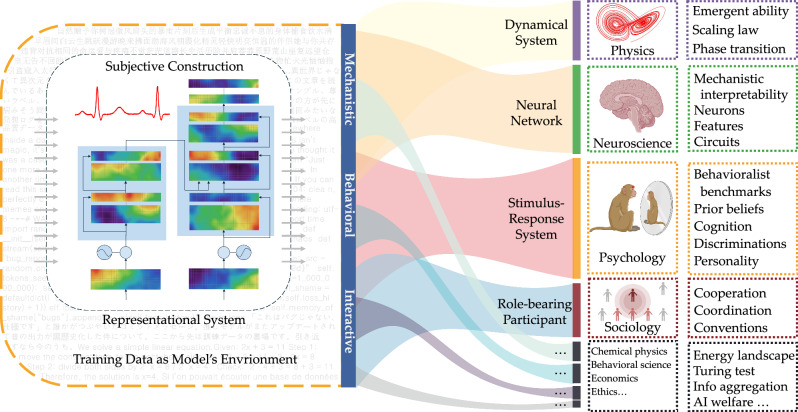
Current efforts to understand Large Language Models (LLMs) are largely metaphorical. Researchers map LLMs onto familiar domains, from physics and neuroscience to psychology and sociology, each illuminating specific facets while obscuring others. We chart these metaphors across mechanistic, behavioral, and interactive scales and delineate their explanatory boundaries. Crucially, this metaphorical projection creates a recursive loop of anthropomorphism, fueling the “genuine understanding” versus “pattern matching” impasse. As an alternative approach, we propose machine experientialism, positing that LLMs build their own form of understanding from training corpora. The priority shifts from cataloging LLMs’ human-like traits to uncovering their distinct logic that emerges from this text-based world.
Overview
CoChat Summary
## TL;DR
The paper argues that research on large language models is overly driven by metaphor and anthropomorphism, which obscures the distinction between human projection and machine cognition. It proposes “machine experientialism” as a framework for understanding LLMs as systems that construct their own internal reality from training text rather than as human-like minds.
## Key findings
- The authors map LLM research metaphors across mechanistic, behavioral, and interactive scales, and argue that each lens illuminates only a slice of the system while hiding others.
- They identify a recursive anthropomorphism loop: treating LLMs as human-like encourages the “genuine understanding” vs. “pattern matching” debate and blurs machine capability with user projection.
- They propose machine experientialism, extending experientialism to LLMs: the model’s “cognition” is framed as a subjective construction of understanding from its textual environment through its Transformer architecture.
- The paper cites a recent temporal cognition study in which models rated year similarities from 1525 to 2524, found subjective temporal reference points and Weber-Fechner-law-like behavior, and identified “temporal-preferential neurons” plus a hierarchical reconstruction from numerical to abstract temporal representations.
## Methods
- Conceptual/theoretical review rather than an empirical experiment: the paper synthesizes interdisciplinary metaphors used to study LLMs, including physics, neuroscience, psychology, sociology, economics, and behavioral science.
- It organizes the literature into mechanistic, behavioral, and interactive scales and evaluates each metaphor’s explanatory reach and limits.
- It uses one external empirical example on temporal cognition to illustrate the machine-experientialist interpretation.
## Limitations
- The paper states that each metaphor “foregrounds a selective slice of LLM” and “backgrounds others,” so no single framework gives a complete account.
- It notes that mechanistic approaches can be too specific, have poor transferability across model families, face computational explosion, and may reintroduce data complexity.
- It also makes evident that the paper is largely argumentative and synthetic rather than an original empirical study; this is evident from the text.
Model-written summary. Check it against the paper before relying on it.
Integrity signals
Registry
Cites
Statistics
Figures
Verification
Claims the paper makes
22 Valid · 1 Not valid · 18 Not checked · 60 Own results and interpretations
The cited sources support only part of this claim — read each source’s verdict below.
In the paper
“The internal model is jointly shaped by the structure of the external environment and the representational capacity of the system itself, which abstracts the experientialist insight into a substrate-independent principle.”
§ Understanding large language models demands distinguishing human projection from machine cognition > Deconstructing anthropomorphism with experientialism
What the sources say
- Partly supportedcites [70] Clark, A. Whatever next? Predictive brains, situated agents, and the future of cognitive science. Behav. Brain Sci. 36, 181–204 (2013). 23663408 sourceExperimental — accuracy not yet measured
Section 2.2 (p. 9) says an internal generative model learns to match the statistical properties of the world, while §3.2 (p. 13) emphasizes the brain’s actual representational resources. These support the environmental and system-capacity parts of the paraphrase. Our copy does not characterize their relationship as an experientialist insight or establish it as a substrate-independent principle. (LLM, conf=0.82)
- Partly supportedcites [71] Hipólito, I. et al. Markov blankets in the brain. Neurosci. Biobehav. Rev. 125, 88–97 (2021). 33607182 PMC8373616 sourceExperimental — accuracy not yet measured
The Conclusion (page unavailable) describes cognition as arising from an interplay between external conditions and nervous-system self-organisation. Section 1 says the Markov-blanket formulation applies to any random variables, lending some support to a substrate-independent framing. But the paper does not establish that an internal model is jointly shaped by environmental structure and the system’s representational capacity; the Discussion (page unavailable) treats the form of the implicit internal model as a question for future work. (LLM, conf=0.85)
- Partly supportedcites [72] Li, L. & Li, C. Formalizing Lacanian psychoanalysis through the free energy principle. Front. Psychol. 16, 1574650 (2025). 40547582 PMC12180394 sourceExperimental — accuracy not yet measured
The Free energy principle section describes beliefs formed from prior expectations and sensory evidence, and Theoretical convergence describes experience as constructed through internal representational systems. The FEP-RSI model section says the model abstracts away from specific neural functions. These passages support an interplay between the environment and internal representation, but do not establish the claimed substrate-independent principle or frame it as an abstraction of an experientialist insight; no page numbers are available in our copy. (LLM, conf=0.80)
plainstates a cause- Asserted: passes — The authors put it forward as true.
- Checkable: unclear — It is unclear whether it could be checked against evidence.
- Load-bearing: passes — The paper’s conclusions depend on it.
- Based: passes — The paper gives a reason why it holds.
- Partly supported
Every source the paper cites for this claim was checked and supports it.
In the paper
“There is also hybrid evidence that the effects of CoT rely on both (noisy) reasoning and memorization of training data69.”
§ Understanding large language models demands distinguishing human projection from machine cognition > Deconstructing anthropomorphism with experientialism
What the sources say
- Supportedcites [69] Prabhakar, A. et al. Deciphering the Factors Influencing the Efficacy of Chain-of-Thought: Probability, Memorization, and Noisy Reasoning. In Findings of the Association for Computational Linguistics (EMNLP 2024). source
The Conclusion (Section 5) says the shift-cipher results suggest that CoT reasoning is both memorization-influenced and noisy, displaying traits of memorization and generalization. The Introduction (Section 1) likewise describes the findings as a middle ground between memorization and reasoning. The citing sentence presents this as evidence, consistent with the paper's qualified conclusion. (LLM, conf=0.92)
plainstates a cause- Asserted: passes — The authors put it forward as true.
- Checkable: passes — It can be checked against evidence.
- Load-bearing: unclear — It is unclear whether the paper’s conclusions depend on it.
- Based: passes — The paper gives a reason why it holds.
- Supported
The cited sources support only part of this claim — read each source’s verdict below.
In the paper
“No prior technology has been subjected to such intensive investigation of human-like characteristics like morality49, personality62, social intelligence63 and consciousness64.”
§ Understanding large language models demands distinguishing human projection from machine cognition > Deconstructing anthropomorphism with experientialism
What the sources say
- Partly supportedcites [49] Abdulhai, M. et al. Moral foundations of large language models. In Proceedings of the 2024 Conference on Empirical Methods in Natural Language Processing (ACL, 2024). sourceExperimental — accuracy not yet measured
The Introduction and Section 2.1 describe research investigating LLMs’ moral judgments and moral frameworks, supporting the morality portion of the citation. The paper does not compare the intensity of that investigation with research on prior technologies, so it does not support the sentence’s unprecedented-investigation claim. The adjacent citations, not this paper, accompany the other listed characteristics. (LLM, conf=0.83)
- Supportedcites [62] Chen, R. et al. Persona vectors: Monitoring and controlling character traits in language models. Preprint at https://arxiv.org/abs/2507.21509 (2025). source
Citation 62 is attached to “personality,” and the paper directly investigates personality traits in language models. The Introduction (p. 3) describes extracting persona vectors for a range of traits. The sentence’s comparison with prior technologies is the citing authors’ broader framing, not a finding attributed specifically to this source. (LLM, conf=0.88)
- Not matchedcites [63] Zhou, X. et al. SOTOPIA: Interactive Evaluation for Social Intelligence in Language Agents. In The Twelfth International Conference on Learning Representations (ICLR, 2024).
Its entry has no title and year that we can search by.
plain- Asserted: passes — The authors put it forward as true.
- Checkable: passes — It can be checked against evidence.
- Load-bearing: unclear — It is unclear whether the paper’s conclusions depend on it.
- Based: passes — The paper gives a reason why it holds.
- Partly supported
The cited sources support only part of this claim — read each source’s verdict below.
In the paper
“Multi-agent simulations show that LLM agents exhibit key social traits like trust and coordination54,55;”
§ Understanding large language models demands distinguishing human projection from machine cognition > Seeing LLM through our eyes
What the sources say
- Not checked — no full text of the sourcecites [54] Xie, C. et al. Can large language model agents simulate human trust behavior? Adv. neural Inf. Process. Syst. 37, 15674–15729 (2024). source
- Partly supportedcites [55] Park, J. S. et al. Generative agents: Interactive simulacra of human behavior. In Proceedings of the 36th Annual ACM Symposium on User Interface Software and Technology (ACM, 2023). sourceExperimental — accuracy not yet measured
Section 7.1.2 (page not available) reports coordination around a party in a 25-agent simulation, as well as new relationships among agents. Section 7.1.1 measures relationships through mutual awareness, not trust; the paper does not establish that the agents exhibited trust. (LLM, conf=0.86)
plainstates a cause- Asserted: passes — The authors put it forward as true.
- Checkable: passes — It can be checked against evidence.
- Load-bearing: unclear — It is unclear whether the paper’s conclusions depend on it.
- Based: passes — The paper gives a reason why it holds.
Every source the paper cites for this claim was checked and supports it.
In the paper
“This philosophical stance finds a parallel in cognitive science, particularly the Bayesian cognition school70.”
§ Understanding large language models demands distinguishing human projection from machine cognition > Deconstructing anthropomorphism with experientialism
What the sources say
- Supportedcites [70] Clark, A. Whatever next? Predictive brains, situated agents, and the future of cognitive science. Behav. Brain Sci. 36, 181–204 (2013). 23663408 source
Section 2.4 describes a cognitive-science framework linking cognitive neuroscience, computational modelling, and Bayesian approaches to evidence and uncertainty. Section 2.2 explains how that framework applies Bayesian principles to neural representation and inference, supporting the cited parallel with Bayesian cognition. The citing sentence does not specify the philosophical stance further. (LLM, conf=0.86)
plainstates an association- Asserted: passes — The authors put it forward as true.
- Checkable: passes — It can be checked against evidence.
- Load-bearing: passes — The paper’s conclusions depend on it.
- Based: passes — The paper gives a reason why it holds.
- Supported
24 more claims · 7 with their cited sources checked
Create a free account to see all 101 claims and to verify the 2 references still open.
- Probably not a substantial claim. 64
- It may state two separate claims as one. 18
Citations
Cites
Vaswani, A., Shazeer, N., Parmar, N., Uszkoreit, J., Jones, L., Gomez, A. N., Kaiser, L., & Polosukhin, I. (2017) · arXiv · doi:10.48550/arxiv.1706.03762 · Cited by 120,404 · cited 1×
“Mechanistically, LLM primarily refers to the Transformer architecture 18 .”
Language Models are Few-Shot Learners
Brown, T. B., Mann, B., Ryder, N., Subbiah, M., Kaplan, J., Dhariwal, P., Neelakantan, A., Shyam, P., Sastry, G., Askell, A., et al. (2020) · arXiv · doi:10.48550/arxiv.2005.14165 · Cited by 23,372
The Ecological Approach to Visual Perception: Classic Edition
Gibson, J. J. (2014) · doi:10.4324/9781315740218 · Cited by 12,132
Whatever next? Predictive brains, situated agents, and the future of cognitive science
Clark, A. (2013) · Behavioral and Brain Sciences · doi:10.1017/s0140525x12000477 · Cited by 5,924
Chain-Of-Thought Prompting Elicits Reasoning in Large Language Models
Wei, J., Wang, X., Schuurmans, D., Bosma, M., Ichter, B., Xia, F., Chi, E., Le, Q. V., & Zhou, D. (2022) · Advances in Neural Information Processing Systems 35 · doi:10.52202/068431-1800 · Cited by 4,505 · cited 1×
“The user ’ s input, comprising instructions, few-shot examples, and system-level rules, sets a speci fi c role (e.g. a helpful assistant), task (e.g. solve a math question), and desired behavior (e.g. think stepby step) 33 .”
On seeing human: A three-factor theory of anthropomorphism
Epley, N., Waytz, A., & Cacioppo, J. T. (2007) · Psychological Review · doi:10.1037/0033-295x.114.4.864 · Cited by 4,069 · cited 1×
“This innate instinct can generalize to non-human machine, particularly when users communicate with LLM through human language for social interaction 60 .”
The Ecological Approach To Visual Perception
Gibson, J. J. (2013) · Psychology Press eBooks · doi:10.4324/9780203767764 · Cited by 2,564
Generative Agents: Interactive Simulacra of Human Behavior
Park, J. S., O'Brien, J., Cai, C. J., Morris, M. R., Liang, P., & Bernstein, M. S. (2023) · Proceedings of the 36th Annual ACM Symposium on User Interface Software and Technology · doi:10.1145/3586183.3606763 · Cited by 2,187 · cited 1×
“Multi-agent simulations show that LLM agents exhibit key social traits like trust and coordination 54,55 ; decentralized LLM populations spontaneously form shared conventions and collective biases that can be ef fi ciently adopted and propagated 56 .”
Core mechanisms in ‘theory of mind’
Leslie, A. M., Friedman, O., & German, T. P. (2004) · Trends in Cognitive Sciences · doi:10.1016/j.tics.2004.10.001 · Cited by 800 · cited 1×
“The social reality of LLM is co-constructed by the user ’ s cognitive mechanism of Theory of Mind 58 .”
Active Inference: The Free Energy Principle in Mind, Brain, and Behavior
Parr, T., Pezzulo, G., & Friston, K. J. (2022) · doi:10.7551/mitpress/12441.001.0001 · Cited by 651
Using cognitive psychology to understand GPT-3
Binz, M., & Schulz, E. (2023) · Proceedings of the National Academy of Sciences · doi:10.1073/pnas.2218523120 · Cited by 559 · cited 2×
“By adapting well-established experimental paradigms, this approach charts LLM ’ s representational and processing properties from observable behaviors 36 .”
Using large language models in psychology
Demszky, D., Yang, D., Yeager, D. S., Bryan, C. J., Clapper, M., Chandhok, S., Eichstaedt, J. C., Hecht, C., Jamieson, J., Johnson, M., et al. (2023) · Nature Reviews Psychology · doi:10.1038/s44159-023-00241-5 · Cited by 369
Language-Specific Neurons: The Key to Multilingual Capabilities in Large Language Models
Tang, T., Luo, W., Huang, H., Zhang, D., Wang, X., Zhao, X., Wei, F., & Wen, J.-R. (2024) · Proceedings of the conference - Association for Computational Linguistics. Meeting · doi:10.18653/v1/2024.acl-long.309 · Cited by 339
Active inference, communication and hermeneutics
Friston, K. J., & Frith, C. D. (2015) · Cortex · doi:10.1016/j.cortex.2015.03.025 · Cited by 266 · cited 1×
“As a prosocial species, humans keep modeling and inferring others ’ intents and emotions during communication 59 .”
The Superintelligent Will: Motivation and Instrumental Rationality in Advanced Artificial Agents
Bostrom, N. (2012) · Minds and Machines · doi:10.1007/s11023-012-9281-3 · Cited by 254
Hagendorff, T., Fabi, S., & Kosinski, M. (2023) · Nature Computational Science · doi:10.1038/s43588-023-00527-x · Cited by 243 · cited 1×
“Forinstance, psychology providesscalesandteststo evaluate LLM ’ s cognitive biases 7 ; neuroscience investigates the features and circuitswithinLLM 8 ;statisticalphysicsprovidesacomplexitydescriptionof the emergent ability 9 and scaling law 10 ; and economics likens LLM to a market that aggregates…”
Knowledge Neurons in Pretrained Transformers
Dai, D., Dong, L., Hao, Y., Sui, Z., Chang, B., & Wei, F. (2022) · Proceedings of the 60th Annual Meeting of the Association for Computational Linguistics (Volume 1: Long Papers) · doi:10.18653/v1/2022.acl-long.581 · Cited by 187 · cited 1×
“Akin to ‘ grandmother cell ’ intuition in neuroscience, researchers initially focus on neurons or attention heads for linguistic features, such as ‘ knowledge neuron ’ 25 , ‘ safety neuron ’ 26 , and ‘ multilingual neuron ’ 27 .”
Winning Gold at IMO 2025 with a Model-Agnostic Verification-and-Refinement PipelinePreprint
Huang, Y., & Yang, L. F. (2025) · arXiv (Cornell University) · doi:10.48550/arxiv.2507.15855 · Cited by 140
A foundation model to predict and capture human cognition
Binz, M., Akata, E., Bethge, M., Brändle, F., Callaway, F., Coda-Forno, J., Dayan, P., Demircan, C., Eckstein, M. K., Éltető, N., et al. (2025) · Nature · doi:10.1038/s41586-025-09215-4 · Cited by 119 · cited 2×
“The model is treated as a tractable proxy for human as a cognitive model whose behavior is fi t to and used to predict human data 44,45 .”
Emergent social conventions and collective bias in LLM populations
Ashery, A. F., Aiello, L. M., & Baronchelli, A. (2025) · Science Advances · doi:10.1126/sciadv.adu9368 · Cited by 81 · cited 1×
“Multi-agent simulations show that LLM agents exhibit key social traits like trust and coordination 54,55 ; decentralized LLM populations spontaneously form shared conventions and collective biases that can be ef fi ciently adopted and propagated 56 .”
Hipólito, I., Ramstead, M. J. D., Convertino, L., Bhat, A., Friston, K., & Parr, T. (2021) · Neuroscience & Biobehavioral Reviews · doi:10.1016/j.neubiorev.2021.02.003 · Cited by 79
LLMs Simulate Big5 Personality Traits: Further Evidence
Sorokovikova, A., Rezagholi, S., Fedorova, N., & Yamshchikov, I. P. (2024) · doi:10.18653/v1/2024.personalize-1.7 · Cited by 77
LLMs differ from human cognition because they are not embodied
Chemero, A. P. (2023) · Nature Human Behaviour · doi:10.1038/s41562-023-01723-5 · Cited by 75 · cited 1×
“Although it lacks human embodiment and social history 6 , countless users are genuinely falling in love with it.”
Large language models predict human sensory judgments across six modalities
Marjieh, R., Sucholutsky, I., van Rijn, P., Jacoby, N., & Griffiths, T. L. (2024) · Scientific Reports · doi:10.1038/s41598-024-72071-1 · Cited by 73 · cited 2×
“…judgment task suggests that LLMs can predict human perceptual similarity judgements across multiple modalities (e.g., auditory and visual) 40 ; a two-step-reversal bandit task indicates LLM ’ s weakness in re fl ective belief updating 15 ; deliberation-harmful tasks reveal mixed…”
Large AI models are cultural and social technologies
Farrell, H., Gopnik, A., Shalizi, C., & Evans, J. (2025) · Science · doi:10.1126/science.adt9819 · Cited by 73 · cited 2×
“…(brain) 5 , chemical physics (molecular system) 13 , statistical physics (complex system) 9 , information theory (informational channel) 14 , cognitive psychology (epistemic subject) 15 , behavioral science (interactive agent) 16 ,economics(market) 11 ,andsociology(sociotechnicalsystem) 17 .”
EconAgent: Large Language Model-Empowered Agents for Simulating Macroeconomic Activities
Li, N., Gao, C., Li, M., Li, Y., & Liao, Q. (2024) · Proceedings of the 62nd Annual Meeting of the Association for Computational Linguistics (Volume 1: Long Papers) · doi:10.18653/v1/2024.acl-long.829 · Cited by 59 · cited 1×
“Recent critiques cautioned that treating model outputs as interchangeable with human behavioral data without verifying the underlying cognitive equivalence 44,54,76 may compromise the reproducibility of such results in human participants and their overall reliability 77,78 .”
AI emerges as the frontier in behavioral science
Meng, J. (2024) · Proceedings of the National Academy of Sciences · doi:10.1073/pnas.2401336121 · Cited by 57 · cited 1×
“…(brain) 5 , chemical physics (molecular system) 13 , statistical physics (complex system) 9 , information theory (informational channel) 14 , cognitive psychology (epistemic subject) 15 , behavioral science (interactive agent) 16 ,economics(market) 11 ,andsociology(sociotechnicalsystem) 17 .”
Take caution in using LLMs as human surrogates
Gao, Y., Lee, D., Burtch, G., & Fazelpour, S. (2025) · Proceedings of the National Academy of Sciences · doi:10.1073/pnas.2501660122 · Cited by 52 · cited 1×
“Recent critiques cautioned that treating model outputs as interchangeable with human behavioral data without verifying the underlying cognitive equivalence 44,54,76 may compromise the reproducibility of such results in human participants and their overall reliability 77,78 .”
Large Language Model-Empowered Agents for Simulating Macroeconomic ActivitiesPreprint
Li, N., Gao, C., Li, Y., & Liao, Q. (2023) · SSRN Electronic Journal · doi:10.2139/ssrn.4606937 · Cited by 48
Moral Foundations of Large Language Models
Abdulhai, M., Serapio-García, G., Crepy, C., Valter, D., Canny, J., & Jaques, N. (2024) · Proceedings of the 2024 Conference on Empirical Methods in Natural Language Processing · doi:10.18653/v1/2024.emnlp-main.982 · Cited by 45
Shojaee, P., Mirzadeh, I., Alizadeh, K., Horton, M., Bengio, S., & Farajtabar, M. (2025) · arXiv · doi:10.48550/arxiv.2506.06941 · Cited by 45 · cited 1×
“It is capable of resolving complex GitHub issues 2 , but can easily fail at simple logical puzzles 3 .”
Large language models and emergence: a complex systems perspective
Krakauer, D. C., Mitchell, M., & Krakauer, J. W. (2026) · Philosophical Transactions of the Royal Society A Mathematical Physical and Engineering Sciences · doi:10.1098/rsta.2025.0014 · Cited by 45
AI Surrogates and illusions of generalizability in cognitive science
Crockett, M. J., & Messeri, L. R. (2025) · Trends in Cognitive Sciences · doi:10.1016/j.tics.2025.09.012 · Cited by 36
Studying large language models as compression algorithms for human culture
Buttrick, N. R. (2024) · Trends in Cognitive Sciences · doi:10.1016/j.tics.2024.01.001 · Cited by 33 · cited 1×
“…(brain) 5 , chemical physics (molecular system) 13 , statistical physics (complex system) 9 , information theory (informational channel) 14 , cognitive psychology (epistemic subject) 15 , behavioral science (interactive agent) 16 ,economics(market) 11 ,andsociology(sociotechnicalsystem) 17 .”
Can Large Language Model Agents Simulate Human Trust Behavior?
Xie, C., Chen, C., Jia, F., Ye, Z., Lai, S., Shu, K., Gu, J., Bibi, A., Hu, Z., Jurgens, D., et al. (2024) · Advances in Neural Information Processing Systems 37 · doi:10.52202/079017-0501 · Cited by 31 · cited 2×
“Recent critiques cautioned that treating model outputs as interchangeable with human behavioral data without verifying the underlying cognitive equivalence 44,54,76 may compromise the reproducibility of such results in human participants and their overall reliability 77,78 .”
From Imitation to Introspection: Probing Self-Consciousness in Language Models
Chen, S., Yu, S., Zhao, S., & Lu, C. (2025) · Findings of the Association for Computational Linguistics: ACL 2025 · doi:10.18653/v1/2025.findings-acl.392 · Cited by 29
Long, R., Sebo, J., Butlin, P., Finlinson, K., Fish, K., Harding, J., Pfau, J., Sims, T., Birch, J., & Chalmers, D. (2024) · arXiv · doi:10.48550/arxiv.2411.00986 · Cited by 27
Physics of language models: Part 3.3, knowledge capacity scaling laws
Allen-Zhu, Z., & Li, Y. (2025) · doi:10.2139/ssrn.5250617 · Cited by 17
Auditing medical multi-agent AI reveals risks of false consensus
Zhu, Y., Gu, L., Wang, Z., Sang, H., Sui, D., Tang, W., Mi, L., Wang, Y., Gao, J., Yao, L., et al. (2025) · arXiv · doi:10.48550/arxiv.2510.10185 · Cited by 17
Self-citationModeling Earth-Scale Human-Like Societies with One Billion AgentsPreprint
Guan, H., He, J., Fan, L., Ren, Z., He, S., Yu, X., Chen, Y., Xu, X., Zheng, S., Gao, Y., et al. (2025) · arXiv (Cornell University) · doi:10.48550/arxiv.2506.12078 · Cited by 17
Defeating Nondeterminism in LLM Inference
Lab, T. M., He, H., & Lab, T. M. (2025) · doi:10.64434/tml.20250910 · Cited by 16 · cited 1×
“To make the generation more responsive, engineering optimizations include quantization, speculative decoding, and parallelism, further introducing uncertainty of model ’ s behavior 34 .”
Prabhakar, A., Griffiths, T. L., & McCoy, R. T. (2024) · Findings of the Association for Computational Linguistics: EMNLP 2024 · doi:10.18653/v1/2024.findings-emnlp.212 · Cited by 14
Generative Psychometrics—An Emerging Frontier in Mental Health Measurement
Galatzer‐Levy, I. R., Tomašev, N., Chung, S., & Williams, G. (2025) · JAMA Psychiatry · doi:10.1001/jamapsychiatry.2025.3258 · Cited by 11 · cited 1×
“LLMs serve as a stand-in for human participants that can generate responses at scale or a generative engine for stimuli and hypotheses 46,47 .”
Niroomand, M. P., Dicks, L., Pyzer‐Knapp, E. O., & Wales, D. J. (2024) · Digital Discovery · doi:10.1039/d3dd00204g · Cited by 10 · cited 1×
“…tools from their established disciplines to analyzing LLM, including but not limited to neuroscience (brain) 5 , chemical physics (molecular system) 13 , statistical physics (complex system) 9 , information theory (informational channel) 14 , cognitive psychology (epistemic subject) 15 ,…”
Li, L., Kong, S., Zhao, H., Li, C., Teng, Y., & Wang, Y. (2025) · Psychiatry and Clinical Neurosciences · doi:10.1111/pcn.13781 · Cited by 10 · cited 1×
“From the user ’ s perspective, LLM is thus constituted as a perceived social presence, yet is not a real person, offering a unique space for self-disclosure and exploration 61 .”
Self-citationJudgments of learning distinguish humans from large language models in predicting memory
Huff, M., & Ulakci, E. (2025) · Scientific Reports · doi:10.1038/s41598-025-22290-x · Cited by 9 · cited 2×
“…performance effects of chain-of-thought (CoT) 41 ; judgments of learning reveal the divergence between humans and LLMs in metacognitive monitoring 42 ; decision-making tasks indicate an additive bias in LLMs 42 ; prototype theory inspiredstudyrevealsdistinctconceptualrepresentationswithinLLMs 43…”
Cognitive phantoms in large language models through the lens of latent variables
Peereboom, S., Schwabe, I., & Kleinberg, B. (2025) · Computers in Human Behavior: Artificial Humans · doi:10.1016/j.chbah.2025.100161 · Cited by 8
A Survey of Post-Training Scaling in Large Language Models
Lai, H., Liu, X., Gao, J., Cheng, J., Qi, Z., Xu, Y., Yao, S., Zhang, D., Du, J., Hou, Z., et al. (2025) · Proceedings of the 63rd Annual Meeting of the Association for Computational Linguistics (Volume 1: Long Papers) · doi:10.18653/v1/2025.acl-long.140 · Cited by 8
Physics of Language Models: Part 3.2, Knowledge Manipulation
Allen-Zhu, Z., & Li, Y. (2025) · doi:10.2139/ssrn.5250621 · Cited by 8
Persona Vectors: Monitoring and Controlling Character Traits in Language Models
Chen, R., Arditi, A., Sleight, H., Evans, O., & Lindsey, J. (2025) · arXiv · doi:10.48550/arxiv.2507.21509 · Cited by 7
Formalizing Lacanian psychoanalysis through the free energy principle
Li, L., & Li, C. (2025) · Frontiers in Psychology · doi:10.3389/fpsyg.2025.1574650 · Cited by 4 · cited 1×
“Without direct access to the environment beyond this boundary, it must construct and optimize an internal model that infers the hidden causes of the sensory signals it receives 72,73 .”
Self-citationFrom Imitation to Introspection: Probing Self-Consciousness in Language Models
Chen, S., Yu, S., Zhao, S., & Lu, C. (2024) · arXiv · doi:10.48550/arxiv.2410.18819 · Cited by 4
Hendrycks, D., Song, D., Szegedy, C., Lee, H., Gal, Y., Brynjolfsson, E., Li, S., Zou, A., Levine, L., Han, B., et al. (2025) · arXiv · doi:10.48550/arxiv.2510.18212 · Cited by 3
The Other Mind: How Language Models Exhibit Human Temporal Cognition
Li, L., Yao, Y., Wang, Y., Li, C., Teng, Y., & Wang, Y. (2026) · Proceedings of the AAAI Conference on Artificial Intelligence · doi:10.1609/aaai.v40i42.40871 · Cited by 1
Self-citationWords That Make Language Models Perceive
Wang, S. L., Isola, P., & Cheung, B. (2025) · arXiv · doi:10.48550/arxiv.2510.02425
Gong, F., & Xia, Z. (2022) · arXiv (Cornell University) · doi:10.48550/arxiv.2212.00005
Mechanistic Origin of Moral Indifference in Language Models
Li, L., Teng, Y., & Wang, Y. (2026) · arXiv · doi:10.48550/arxiv.2603.15615
Self-citationOpening the Black Box of Deep Neural Networks via Information
Shwartz-Ziv, R., & Tishby, N. (2017) · arXiv · doi:10.48550/arxiv.1703.00810
Large Language Models and Emergence: A Complex Systems Perspective
Krakauer, D. C., Krakauer, J. W., & Mitchell, M. (2025) · arXiv · doi:10.48550/arxiv.2506.11135
Research works printed but not linked: 19
- Jimenez, C. E. et al. Swe-bench: Can language models resolve real-world github issues? In The Twelfth International Conference on Learning Representations (ICLR 2024).
- Lakoff, G. & Johnson, M. Metaphors We Live By (University of Chicago press, 2024).
- Ton, J.-F. et al. Understanding Chain-of-Thought in LLMs through Information Theory. In Forty-second International Conference on Machine Learning (ICML, 2025).
- Li, L. et al. Reflection-Bench: Evaluating Epistemic Agency in Large Language Models. In Forty-second International Conference on Machine Learning (ICML, 2025). It adopts a psychological perspective, utilizing a suite of cognitive tasks to analyze the epistemic agency and dynamic reflection capabilities of LLMs.
- Choromanska, A. et al. The loss surfaces of multilayer networks. In Artificial Intelligence and Statistics (PMLR, 2015).
- Carson, J. D. A Statistical Physics of Language Model Reasoning. In ICML 2025 Workshop on Reliable and Responsible Foundation Models (ICML, 2025).
- Zhao, Y. et al. Understanding and enhancing safety mechanisms of LLMs via safety-specific neuron. In The Thirteenth International Conference on Learning Representations (ICLR, 2025).
- Gurnee, W. & Tegmark, M. Language Models Represent Space and Time. In The Twelfth International Conference on Learning Representations (ICLR, 2024).
- Alain, G. & Bengio, Y. Understanding intermediate layers using linear classifier probes. In The Fifth International Conference on Learning Representations (ICLR, 2017).
- Park, K. et al. The Linear Representation Hypothesis and the Geometry of Large Language Models. In International Conference on Machine Learning (PMLR 2024).
- Latour, B. Science in Action: How to Follow Scientists and Engineers through Society (Harvard University Press, 1987).
- Sanborn, A. & Griffiths, T. Markov chain Monte Carlo with people. In Advances in Neural Information Processing Systems 20 (NIPS, 2007).
- Zhu, J.-Q. et al. Recovering Mental Representations from Large Language Models with Markov Chain Monte Carlo. In Proceedings of the Annual Meeting of the Cognitive Science Society (Cognitive Science Society, 2024).
- Zhu, J.-Q. & Griffiths, T. Eliciting the Priors of Large Language Models using Iterated In-Context Learning. In Proceedings of the Annual Meeting of the Cognitive Science Society (Cognitive Science Society, 2025).
- Liu, R. et al. Mind Your Step (by Step): Chain-of-Thought can Reduce Performance on Tasks where Thinking Makes Humans Worse. In Forty-second International Conference on Machine Learning (ICML, 2025).
- Shani, C. et al. From Tokens to Thoughts: How LLMs and Humans Trade Compression for Meaning. In The Fourteenth International Conference on Learning Representations (ICLR 2026).
- Binz, M. and Schulz, E. Turning large language models into cognitive models. In International Conference on Learning Representations (ICLR, 2024).
- Zhou, X. et al. SOTOPIA: Interactive Evaluation for Social Intelligence in Language Agents. In The Twelfth International Conference on Learning Representations (ICLR, 2024).
- Mirzadeh, S. I. et al. GSM-Symbolic: Understanding the Limitations of Mathematical Reasoning in Large Language Models. In The Thirteenth International Conference on Learning Representations (ICLR, 2025).
Cited by
Representational alignment yields generalizable safety in language modelsPreprint
Li, L., Teng, Y., Wang, Y., & Hu, X. (2026) · arXiv (Cornell University) · doi:10.48550/arxiv.2609.04022
“Unlike humans, who develop conceptual understanding through embodied interaction with their lived environments, LLMs acquire conceptual representations from vast training corpora through the Transformer architecture 12-14 .”
Self-citation
Metadata
- Authors
- Li, L., Teng, Y., Wang, Y., & Hu, X.
- Affiliations
- Shanghai Artificial Intelligence Laboratory (CN)
- Corresponding author
- Teng, Yan
- Venue
- Communications Psychology
- Published
- 2026-07-16
- Volume
- 4
- Issue
- 1
- ISSN
- 2731-9121 (ISSN-L)
- PMC
- PMC13376899
- OpenAlex
- W7169052305
- Cited by
- 0
- References
- 39
- FWCI
- 0.00
- Type
- journal article
- Language
- en
- Open access
- gold
- doi.org
- Licence
- cc-by
- creativecommons.org/licenses/by/4.0 (tdm)
- creativecommons.org/licenses/by/4.0 (vor)
- Locations
- Communications Psychology (publishedVersion, cc-by)
- PubMed Central (publishedVersion, cc-by)
- PubMed (publishedVersion)
- DOAJ (DOAJ: Directory of Open Access Journals) (submittedVersion)
- Topics
- Social Sciences › Arts and Humanities › History and Philosophy of Science › Cybernetics and Technology in Society
- Social Sciences › Arts and Humanities › Philosophy › Philosophy and Theoretical Science
- Physical Sciences › Computer Science › Artificial Intelligence › Topic Modeling
- Keywords
- large language models, machine cognition, anthropomorphism, training corpus
About these checks
Registry, retraction, Cites and statistics results are computed, not judged, with one exception: a printed reference that no index lists is read once by a model before it counts as a citation error. Claims are extracted by a model and kept only when their quote appears verbatim in the text; each cited source is then checked, with a model’s help, for whether it says what the claim relies on. Those verdicts can be wrong — read the claim’s quote and the cited source before relying on one.
The claim verdicts this report counts are experimental: their accuracy is not yet measured.
A language model drew the claims from the paper on 2026-10-01, under version 3 of the claim definition (model deepseek-v4.1-flash, prompt extract-v3).
A second model labelled each claim on 2026-10-01 (model jev-1.13-20260917, definition revision gold-guideline-v0.2).
Cited sources are checked with a language model’s help (gpt-6-sol).
Statistics and arithmetic are recomputed, not judged.
Confidence bands are shown only for fields calibrated on our annotated test set. None is calibrated yet, so no band is shown.
What counts as a claim ›How we measure confidence ›How we check this ›
Are you an author, or do you see a problem with this page? Request a review
Data sources
Bibliographic data: Semantic Scholar, OpenAlex, Crossref.
Contains information from the Semantic Scholar Academic Graph Datasets, made available under the ODC Attribution License (ODC-BY 1.0).
Semantic Scholar’s data is described in: Kinney, R., et al. (2023). The Semantic Scholar Open Data Platform. arXiv:2301.10140.
