

Phase I dose escalation and pharmacokinetic study of pluronic polymer-bound doxorubicin (SP1049C) in patients with advanced cancer
Open accessThe DOI matches its Crossref record; 20 of the 20 references it cites were found in a registry or an index.
Abstract
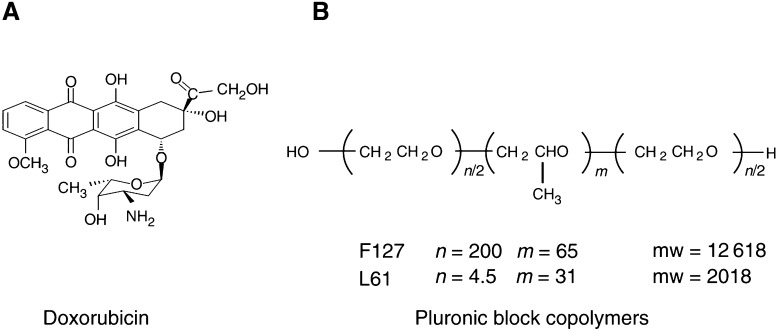
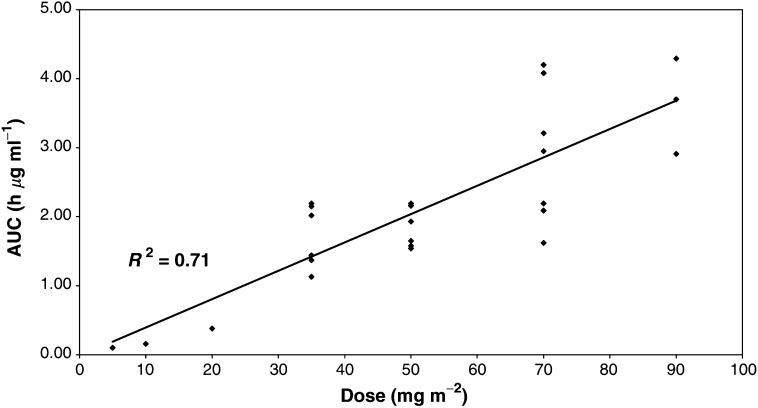
SP1049C is a novel anticancer agent containing doxorubicin and two nonionic pluronic block copolymers. In preclinical studies, SP1049C demonstrated increased efficacy compared to doxorubicin. The objectives of this first phase I study were to determine the toxicity profile, dose-limiting toxicity, maximum tolerated dose and pharmacokinetic profile of SP1049C, and to document any antitumour activity. The starting dose was 5 mg m(-2) (doxorubicin content) as an intravenous infusion once every 3 weeks for up to six cycles. A total of 26 patients received 78 courses at seven dose levels. The dose-limiting toxicity was myelosuppression and DLT was reached at 90 mg m(-2). The maximum tolerated dose was 70 mg m(-2) and is recommended for future trials. The pharmacokinetic profile of SP1049C showed a slower clearance than has been reported for conventional doxorubicin. Evidence of antitumour activity was seen in some patients with advanced resistant solid tumours. Phase II trials with this agent are now warranted to further define its antitumour activity and safety profile.
Overview
The claims and statistics of this paper haven’t been checked yet.
Free: it reads the open-access text and checks the first 5 claims that cite a source we can check. Create a free account to check every claim.
Integrity signals
Registry
Cites
Statistics
Figures
Verification
Claims the paper makes
The claims and statistics of this paper haven’t been checked yet.
Free: it reads the open-access text and checks the first 5 claims that cite a source we can check. Create a free account to check every claim.
Claims other papers make about this one
Each is checked against this paper’s own text: does it say what the citing paper says it does?
The cited source doesn’t support the claim as written.
In the citing paper
“Side effects could be largely mitigated in both preclinical and clinical studies by using polymeric micelle formulations.”
From Polymeric micelles for the delivery of poorly soluble drugs: From nanoformulation to clinical approval. (2020) · cites this paper as [17]
Checked by a reasoning model — may be wrong.
Experimental — accuracy not yet measuredThe source backs part of the claim, not all of it — or backs it for a different population, condition or comparison.
In the citing paper
“In the phase I clinical trial, SP1049C exhibited a similar PK profile of doxorubicin to the conventional doxorubicin formulation and a similar MTD of 70 mg/m2 in the patients with metastatic or recurrent solid tumors [17].”
From Polymeric micelles for the delivery of poorly soluble drugs: From nanoformulation to clinical approval. (2020) · cites this paper as [17]
Experimental — accuracy not yet measuredThe source backs part of the claim, not all of it — or backs it for a different population, condition or comparison.
In the citing paper
“SP1049C is a doxorubicin-loaded Pluronic®-based formulation which was developed by Supratek Pharma Inc. and was the first polymeric micelle drug formulation to enter clinical trials in 1999 [17].”
From Polymeric micelles for the delivery of poorly soluble drugs: From nanoformulation to clinical approval. (2020) · cites this paper as [17]
Experimental — accuracy not yet measured
Self-check
Percentages, sums and reported differences re-computed from the paper’s own numbers.
The self-check needs the paper’s full text.
Citations
Cites
Vasey, P. A., Kaye, S. B., Morrison, R. A., Twelves, C. J., Wilson, P., Duncan, R., Thomson, A. H., Murray, L. S., Hilditch, T. E., Murray, T., et al. (1999) · PubMed · Cited by 870
Handbook of Pharmaceutical Excipients
Kibbe, A. H. (2003) · Medical Entomology and Zoology · Cited by 713
Muggia, F. M., Hainsworth, J. D., Jeffers, S., Miller, P., Groshen, S., Tan, M., Roman, L., Uziely, B., Muderspach, L., Garcia, A., et al. (1997) · Journal of Clinical Oncology · doi:10.1200/jco.1997.15.3.987 · Cited by 647 · cited 1×
“Liposomal drug delivery systems with doxorubicin have been extensively investigated in relapsed ovarian cancer (Muggia et al, 1997), breast cancer (Ranson et al, 1997) and others (Law et al, 1994; Schwartz and Caspar, 1995; Ellerhorst et al, 1999; Harrington et al, 2001; Judson et al, 2001).”
BackgroundPluronic® block copolymers for overcoming drug resistance in cancer
Kabanov, A. V., Batrakova, E. V., & Alakhov, V. Y. (2002) · Advanced Drug Delivery Reviews · doi:10.1016/s0169-409x(02)00047-9 · Cited by 636 · cited 1×
“…including inhibition of drug efflux transporters, abolishment of drug sequestration in acidic compartments, inhibition of the glutathione (GSH)/glutathione (GST) detoxification system and reduction of ATP selectively in MDR cells (Venne et al, 1996; Batrakova et al, 2001; Kabanov et al, 2002).”
BackgroundSelf-citationMedical Applications of Liposomes
(1998) · Elsevier eBooks · doi:10.1016/b978-0-444-82917-7.x5000-5 · Cited by 416
Judson, I., Radford, J. A., Harris, M., Blay, J.-Y., van Hoesel, Q., le Cesne, A., van Oosterom, A. T., Clemons, M. J., Kamby, C., Hermans, C., et al. (2001) · European Journal of Cancer · doi:10.1016/s0959-8049(01)00050-8 · Cited by 392 · cited 1×
“Liposomal drug delivery systems with doxorubicin have been extensively investigated in relapsed ovarian cancer (Muggia et al, 1997), breast cancer (Ranson et al, 1997) and others (Law et al, 1994; Schwartz and Caspar, 1995; Ellerhorst et al, 1999; Harrington et al, 2001; Judson et al, 2001).”
BackgroundRanson, M. R., Carmichael, J., O'Byrne, K., Stewart, S., Smith, D., & Howell, A. (1997) · Journal of Clinical Oncology · doi:10.1200/jco.1997.15.10.3185 · Cited by 293 · cited 3×
“…used to try and improve the therapeutic efficacy and toxicity profile of doxorubicin including the development of anthracycline analogues and the incorporation of anthracyclines into drug delivery vehicles, such as liposomes and polymeric drug conjugates (Ranson et al, 1997; Vasey et al, 1999).”
BackgroundMethodSelf-citationBlock copolymer-based formulation of doxorubicin. From cell screen to clinical trials
Alakhov, V., Klinski, E., Li, S., Pietrzynski, G., Venne, A., Batrakova, E., Bronitch, T., & Kabanov, A. (1999) · Colloids and Surfaces B: Biointerfaces · doi:10.1016/s0927-7765(99)00064-8 · Cited by 266 · cited 4×
“Of particular note is the evidence of antitumour activity of SP1049C in doxorubicin-resistant tumours (Batrakova et al, 1996) and in multiple drug resistance (MDR) cells (Venne et al, 1996; Alakhov et al, 1999).”
BackgroundInfluentialSelf-citationVenne, A., Li, S., Mandeville, R., Kabanov, A. V., & Alakhov, V. Y. (1996) · PubMed · Cited by 264
Self-citationBatrakova, E. V., Li, S., Elmquist, W. F., Miller, D. W., Alakhov, V. Y., & Kabanov, A. V. (2001) · British Journal of Cancer · doi:10.1054/bjoc.2001.2165 · Cited by 229 · cited 1×
“…including inhibition of drug efflux transporters, abolishment of drug sequestration in acidic compartments, inhibition of the glutathione (GSH)/glutathione (GST) detoxification system and reduction of ATP selectively in MDR cells (Venne et al, 1996; Batrakova et al, 2001; Kabanov et al, 2002).”
BackgroundSelf-citation
Research works printed but not linked: 1
- 14. Lohri A, Gelmon KA, Embree L, Mayer L, Cullis P, Saletan S, Goldie J (1991) Phase I/II study of liposome encapsulated doxorubicin (TLC-D-99) in non small cell lung cancer. Proc Am Soc Clin Oncol 10: A292
Cited by
Items 301–386 of 386
Ehsanimehr, S., Badr, K., Dehaen, W., Shafiei‐Irannejad, V., & Moghadam, P. N. (2024) · Current Drug Delivery · doi:10.2174/0115672018340056240924183806 · Cited by 6
“[39, 40] SP1017 (Canada), [41, 42] Fluosol-DA (Japan) [43]and RheothRx (Canada).”
van Gaal, E. V. B., & Crommelin, D. J. A. (2015) · AAPS advances in the pharmaceutical sciences series · doi:10.1007/978-3-319-16241-6_2 · Cited by 12
Polara, H., Shah, T. V., Babanyinah, G. K., Wang, H., Bhadran, A., Biewer, M. C., & Stefan, M. C. (2025) · Biomacromolecules · doi:10.1021/acs.biomac.5c00280 · Cited by 5
Polymeric Micelles in Targeted Drug Delivery
Murthy, R. S. R. (2014) · Advances in delivery science and technology · doi:10.1007/978-3-319-11355-5_16 · Cited by 7
Amphiphilic Block Copolymer Based Nanocarriers for Drug and Gene Delivery
Xiong, X.-B., & Lavasanifar, A. (2011) · Fundamental biomedical technologies · doi:10.1007/978-94-007-1248-5_10 · Cited by 5
Du, J., & Lu, H. (2012) · Wiley eBooks · doi:10.1002/0471440264.pst547 · Cited by 5
Vargas, S. J. R., Soares, T. S., Sosa, F. H. B., & Hespanhol, M. C. (2025) · Journal of Chemical & Engineering Data · doi:10.1021/acs.jced.5c00298 · Cited by 4
Polymeric Micelles for Cancer‐Targeted Drug Delivery
Chen, H., Ge, Z., & Kataoka, K. (2014) · Wiley eBooks · doi:10.1002/9783527672752.ch4 · Cited by 4
Polymer–Drug Conjugate in Focal Drug Delivery
Swami, R., Kumar, D. K., Khan, W., Sistla, R., & Shastri, N. R. (2013) · Advances in delivery science and technology · doi:10.1007/978-1-4614-9434-8_5 · Cited by 4
“In phase I trials, PK1 was given as a short infusion every 3 weeks, and it had a maximum tolerated dose of 320 mg/m 2 (doxorubicin equivalent) [ 69 ].”
BackgroundPolymeric micelles in biomedical science
Bhawani, S. A., Ahmad, F. B., Ibrahim, M. N. M., & Yakout, A. A. (2019) · Elsevier eBooks · doi:10.1016/b978-0-12-816504-1.00005-3 · Cited by 6
Borah, P., Shivling, V. D., Banik, B. K., & Sahoo, B. M. (2020) · Current Organic Synthesis · doi:10.2174/1570179417666200503050106 · Cited by 4
Chemische Ansätze für synthetische Wirkstofftransportsysteme für systemische Anwendungen
Braatz, D., Cherri, M., Tully, M., Dimde, M., Ma, G., Mohammadifar, E., Reisbeck, F., Ahmadi, V., Schirner, M., & Haag, R. (2022) · Angewandte Chemie · doi:10.1002/ange.202203942 · Cited by 4
Bioactive materials in drug delivery systems
Zhao, X. (2011) · Elsevier eBooks · doi:10.1533/9780857092939.2.247 · Cited by 5
Polymers in Drug Delivery: Concepts, Developments and Potential
Chen, R. (2013) · Advances in predictive, preventive and personalised medicine · doi:10.1007/978-94-007-6010-3_1 · Cited by 5
Mehta, A., Ghaghada, K. B., & Mukundan, S. (2013) · Springer eBooks · doi:10.1007/978-1-4419-5858-7_14 · Cited by 3
Extracellular pH‐Activated Nanocarriers for Enhanced Drug Delivery to Tumors
Yuan, Y., Mao, C., Du, J., Yang, X., & Wang, J. (2014) · Wiley eBooks · doi:10.1002/9783527672752.ch11 · Cited by 3
[Recent advance in the mechanism study of polymeric inhibitors of P-glycoprotein].
Huang, L.-M., Zhao, J., Wang, G., & Zhou, J. (2010) · PubMed · Cited by 3
Overcoming efflux transporter-mediated resistance in cancer by using nanomedicines
Kumarasamy, M., & Sosnik, A. (2019) · Elsevier eBooks · doi:10.1016/b978-0-12-816434-1.00011-5 · Cited by 4
Kinetic analysis as an approach to studying specific features of lysozyme—pluronic complexes
Shnitko, A. V., Chernysheva, M. G., Levashov, P. A., & Badun, G. A. (2021) · Russian Chemical Bulletin · doi:10.1007/s11172-021-3230-3 · Cited by 3
Role of new pharmaceutical technologies in enhancing the selectivity of antitumor drugs
Оборотова, Н. А., & Санарова, Е. В. (2013) · Russian Journal of General Chemistry · doi:10.1134/s1070363213120529 · Cited by 3
Nanotechnology in medicine-Nanomedicine
Gupta, S. R. N. (2016) · Journal of Pharmaceutical Care & Health Systems · Cited by 3
Effects of block copolymer micelles on the pharmacokinetics of encapsulated drugs
Binkhathlan, Z., & Lavasanifar, A. (2019) · Elsevier eBooks · doi:10.1016/b978-0-12-816200-2.00017-7 · Cited by 7
Pavlov, D. N., Alexandrova, N. A., Krylova, O. O., Pohl, P., & Melik‐Nubarov, N. S. (2006) · Journal of Drug Delivery Science and Technology · doi:10.1016/s1773-2247(06)50048-6 · Cited by 3
Advancing Small-Molecule Immunotherapy Through Polymeric Micelle Delivery
Suwal, K., Lee, H., Bashyal, S., Kim, D., Cho, H. J., & Hwang, D. (2026) · Pharmaceutics · doi:10.3390/pharmaceutics18040418 · Cited by 3
Ray, S., & Singh, D. (2024) · Current Drug Therapy · doi:10.2174/0115748855302263240910060240 · Cited by 3
Nanomedicine in Cancer Treatment
Kim, J., & Cho, M. (2014) · Wiley eBooks · doi:10.1002/9781118856017.ch10 · Cited by 2
Multifunctional Polymeric Micelles for Drug Delivery and Therapeutics
Sawdon, A. J., & Peng, C. (2013) · Wiley eBooks · doi:10.1002/9781118636299.ch15 · Cited by 2
Polymer-Based Nanoparticulate Systems as Versatile Agents in the Prognosis and Therapy of Cancer
Tiwari, M. D., & Bellare, J. (2012) · Proceedings of the National Academy of Sciences India Section B Biological Sciences · doi:10.1007/s40011-012-0075-4 · Cited by 2
“[147] have reported slower clearance rate of doxorubicin delivered via pluronic block copolymers (SP1049C) in Phase I preclinical trials on patients with advanced cancer.”
BackgroundAraby, M. M. E., Nassar, A. H., & Shaaban, H. (2006) · International Journal of Botany · doi:10.3923/ijb.2006.177.186 · Cited by 3
Temperature-Sensitive Pharmaceutical Nanocarriers
Navarro, G. (2016) · IMPERIAL COLLEGE PRESS eBooks · doi:10.1142/9781783267231_0005 · Cited by 2
Gombotz, W. R., & Hoffman, A. S. (2012) · Elsevier eBooks · doi:10.1016/b978-0-08-087780-8.00094-2 · Cited by 3
Recent Progress of Doxorubicin Nanomedicine in Hematologic Malignancies
Qu, Y., Niu, T., Liu, Z., Chu, B., Zhang, L., & Qian, Z. (2017) · Nanoscience and Nanotechnology Letters · doi:10.1166/nnl.2017.2589 · Cited by 2
Yusa, S., Bahadur, P., Matsuoka, H., & Sato, T. (2018) · MDPI eBooks · doi:10.3390/books978-3-03842-808-4 · Cited by 2
Polymeric Nanoparticles as Theranostics for Targeting Solid Tumors
Gautam, L., Thakur, P. S., Goel, I., Sankar, M., Jain, A., Shrivastava, P., Vyas, S., & Vyas, S. P. (2022) · Environmental chemistry for a sustainable world · doi:10.1007/978-3-031-14848-4_10 · Cited by 2
Wang, T. (2012) · Digital Repository Service (Northeastern University) · doi:10.17760/d20002706 · Cited by 4
Clinical translation of polymeric micelles into market
Raslan, M., Eslam, M. S., Sara, A. R., & Sabri, N. A. (2022) · Elsevier eBooks · doi:10.1016/b978-0-323-89868-3.00008-2 · Cited by 1
Micellar Structures as Drug Delivery Systems
Nishiyama, N., Cabral, H., & Kataoka, K. (2011) · Wiley eBooks · doi:10.1002/9783527634057.ch32 · Cited by 1
Micellar paclitaxel in the treatment of patients with tumors of the female reproductive system
Кедрова, А. Г., Krasilnikov, S. E., Астахов, Д. А., & Kosyy, V. V. (2019) · Tumors of female reproductive system · doi:10.17650/1994-4098-2019-15-3-37-43 · Cited by 1
Polymeric Nanosystems for Integrated Image-Guided Cancer Therapy
Singh, A., Iyer, A. K., & Amiji, M. M. (2014) · Frontiers in nanobiomedical research · doi:10.1142/9789814520652_0006 · Cited by 1
Polysaccharide-based Polyion Complex Micelles as New Delivery Systems for Hydrophilic Cationic Drugs
Soliman, G. M. (2009) · doi:10.71781/4636 · Cited by 3
Development of copolymer based nanocarriers for imaging and therapy
Arranja, A. (2015) · theses.fr (ABES) · doi:10.70675/d1b86555z2af4z452azaed0zb1c8a83f1cd3 · Cited by 1
Stimuli-Responsive Materials: Thermo- and pH-Responsive Polymers for Drug Delivery
Singh, J., & Kaur, H. (2017) · CRC Press eBooks · doi:10.1081/e-ebppc-120050042 · Cited by 1
Drug Delivery: Tumor-Targeted Systems
Li, Y., & Lee, C.-P. (2015) · Taylor & Francis eBooks · doi:10.1081/e-ebpp-120050256 · Cited by 1
Π-π Stacked Polymeric Micelles as Carriers of Anticancer Therapeutics for Hematological Malignancies
Varela-Moreira, A. (2020) · Utrecht University Repository (Utrecht University) · doi:10.33540/145 · Cited by 2
Stimuli-Responsive Materials: Thermo- and pH-Responsive Polymers for Drug Delivery
Singh, J., & Kaur, H. (2016) · Taylor & Francis eBooks · doi:10.1081/e-ebpp-120050042 · Cited by 1
Miller, K., & Satchi‐Fainaro, R. (2008) · Wiley eBooks · doi:10.1002/9780470048672.wecb462 · Cited by 1
TARGETED THERAPY FOR LIVER FIBROSIS AND CANCER
Zhang, Y. (2014) · D-Scholarship@Pitt (University of Pittsburgh)
López, M. V. L. (2011) · LA Referencia (Red Federada de Repositorios Institucionales de Publicaciones Científicas)
Synthesis and Solution Properties of Water-soluble Fullerene Polymeric Systems
Yao, Z. (2011) · UWSpace (University of Waterloo)
"Nanotheranostics" for Tumor Imaging and Targeted Drug Delivery.
Zou, P. (2011) · Deep Blue (University of Michigan)
PH SENSITIVE RNA AND DRUG DELIVERY SYSTEMS
Sutton, D. M. (2007) · OhioLink ETD Center (Ohio Library and Information Network)
Frank, D. (2015) · University of the Witwatersrand, Johannesburg Institutional Repository on DSpace (University of the Witwatersrand, Johannesburg)
Modulating liposomal stealth properties to evade RES and target tumors.
McNeeley, K. M. (2008) · SMARTech Repository (Georgia Institute of Technology) · Cited by 1
MODULATING LIPSOMAL STEALTH PROPERTIES TO EVADE
McNeeley, K. M. (2008)
Leonard, F., & Godin, B. (2016) · Fundamental biomedical technologies · doi:10.1007/978-3-319-43525-1_4 · Cited by 1
The potential of silica nanoparticles as oral drug carriers
Neumeyer, A. (2010) · Publications of the UdS (Saarland University) · doi:10.22028/d291-22664
“Hitherto, about 20 nanoparticle-based formulations are in clinical use referring to the promising properties of these novel materials (Danson et al., 2004; Gabizon et al., 2006; Gradishar, 2006; Valle et al., 2010).”
BackgroundMikhail, A. S. (2013) · TSpace (University of Toronto)
Hoang, B. (2014) · TSpace (University of Toronto)
Wang, Z. (2017) · Human Biology
Development of block copolymer based nanocarriers for the solubilization and delivery of valspodar
Binkhathlan, Z. (2011) · ERA: Education and Research Archive (University of Alberta) · doi:10.7939/r35t2f · Cited by 1
Amphiphilic Polymers: Drug Delivery
Rafael, D. F. D. S., Videira, M., Oliva, M., Ferreira, D., Sarmento, B. F. C. C., & Andrade, F. (2015) · Taylor & Francis eBooks · doi:10.1081/e-ebpp-120049256
Vimala, K., Asaikkutti, A., & Kannan, S. (2021) · Elsevier eBooks · doi:10.1016/b978-0-12-821013-0.00008-8
Organic–Organic Hybrid Nanoassemblies
(2013) · CRC Press eBooks · doi:10.1201/b15390-4
Min, K. H., Lee, H. J., & Lee, S. C. (2020) · Elsevier eBooks · doi:10.1016/b978-0-08-102983-1.00005-3
Regulatory pathways and prospects for polymeric micelles
Jasim, A. A., Ashi, L., Mahmud, A. A., Pandey, M., Amin, M. C. I. M., & Greish, K. F. (2022) · Elsevier eBooks · doi:10.1016/b978-0-323-89868-3.00010-0
Polymeric micelles for theranostic uses
Ray, S., Seth, S., Bhattacharyya, U. K., & Sen, M. (2023) · Elsevier eBooks · doi:10.1016/b978-0-323-89953-6.00007-6 · Cited by 1
Novel Strategies Preventing Emergence of MDR in Breast Cancer
Malviya, R., Singh, A. K., & Yadav, D. (2023) · Wiley eBooks · doi:10.1002/9781394209866.ch9
El‐Shorbagi, A., Chaudhary, S., Kumar, H., Verma, H. C., Tripathi, P. N., Giri, A., Agarwal, G., Dumoga, S., & Gupta, R. K. (2024) · Biomedical & Pharmacology Journal · doi:10.13005/bpj/2949
A review on polymer micelles as drug carriers
Kadlag, P., Salave, G. R., Aher, P. R., & Jadhav, A. D. (2025) · Journal of Pharmacognosy and Phytochemistry · doi:10.22271/phyto.2025.v14.i3c.15374
“The miceller incorporated drugs for pharmacokinetic and bio-distribution is mainly determined by the surface properties, sixe and micelles stability and this is not more affected by the property of loaded drug [37] .”
Saraiva, N. M., Alves, A. C., Barbosa, A. I., Marinho, A., Reis, S., Correia‐da‐Silva, M., & Costa, P. C. (2025) · Pharmaceutics · doi:10.3390/pharmaceutics17060771
Research Progress of Ultrasound-Responsive Polymeric Microparticles in the Field of Bone Repair
袁, 小. (2025) · Advances in Clinical Medicine · doi:10.12677/acm.2025.1561875
Self-Microemulsifying Materials
Holowka, E. P., & Bhatia, S. K. (2014) · Springer eBooks · doi:10.1007/978-1-4939-1998-7_4
Investigating the Fundamental Molecular Interactions Responsible for Polymer Mucoadhesion
Watchorn, J. (2023) · TSpace (University of Toronto) · Cited by 2
Photobiological properties of photoactive nanoparticles for the treatment of cancer
Reshetov, V. (2012) · theses.fr (ABES) · doi:10.70675/52e8988ez1c0cz49ccz86f1z0fe30feb8af2
Etudes d'auto-assemblages polydiacétylèniques et applications biologiques
Morin-Picardat, E. (2012) · theses.fr (ABES) · doi:10.70675/b28d0f69z282fz4cbcza603z78d13db48a27
AKA-ANY-GRAH, S. (2012) · theses.fr (ABES) · doi:10.70675/c57d0679za721z4c24zbc18zaf64b7852f19
Conception of nanosized hybrid liposome/polymer particles for hydrophilic drug delivery
Ahmed, S. (2020) · theses.fr (ABES) · doi:10.70675/97e7e211z582cz4fabz833cz0f6ebaee42fa · Cited by 1
Patel, Y. H., Ranch, K. M., Jani, H., Patel, C. R., Jacob, S., Mohamed, M. R., & Boddu, S. H. S. (2026) · Elsevier eBooks · doi:10.1016/b978-0-443-36453-2.00012-4
Polymeric micelles as versatile shuttles: Strategic approaches for glioblastoma-targeted delivery
Verma, M., Kumar, A., Kanaujiya, S., Subhashchandra, G. K., Mittal, K., & Rajinikanth, P. S. (2026) · Journal of Drug Delivery Science and Technology · doi:10.1016/j.jddst.2026.108622
Vallés‐Martí, A., Manelkar, A., Simpson, C. R., Kinderman, P., de Jonge‐Muller, E. S. M., der Wielen, A. V., Janson, S. G. T., Alrawahneh, A., Zihao, L., Tomar, T., et al. (2026) · Drug Delivery and Translational Research · doi:10.1007/s13346-026-02187-6
Polymer prodrug approaches with stimuli responsiveness: a promising strategy for cancer chemotherapy
Kolay, S., Kar, S., Choudhury, N., & Molla, M. R. (2026) · Polymer Chemistry · doi:10.1039/d6py00518g
Bhatia, S. K. (2010) · Springer eBooks · doi:10.1007/978-1-4419-6920-0_9
Metadata
- Authors
- Danson, S., Ferry, D., Alakhov, V, Margison, J., Kerr, D., Jowle, D., Brampton, M., Halbert, G., & Ranson, M.
- Affiliations
- The Christie Hospital (GB)
- Queen Elizabeth Hospital Birmingham (GB)
- Supratek Pharma (Canada) (CA)
- Cancer Research UK (GB)
- University of Strathclyde (GB)
- Corresponding author
- Ranson, M
- Venue
- British Journal of Cancer
- Published
- 2004-05-04
- Volume
- 90
- Issue
- 11
- Pages
- 2085-2091
- ISSN
- 0007-0920 (ISSN-L)
- 1532-1827
- PMC
- PMC2409484
- OpenAlex
- W2159334966
- Cited by
- 382
- References
- 20
- Citations by year
- 2026: 6 · 2025: 7 · 2024: 8 · 2023: 8 · 2022: 17 · 2021: 7 · 2020: 18 · 2019: 13 · 2018: 11 · 2017: 22 · 2016: 26 · 2015: 26 · 2014: 26 · 2013: 32 · 2012: 26
- FWCI
- 5.82
- Type
- journal article
- Language
- en
- Open access
- hybrid
- doi.org
- Licence
- cc-by-nc-sa
- www.springer.com/tdm (unspecified)
- Locations
- British Journal of Cancer (publishedVersion, cc-by-nc-sa)
- PubMed Central (publishedVersion, cc-by)
- PubMed (publishedVersion)
- White Rose Research Online (University of Leeds, The University of Sheffield, University of York) (acceptedVersion)
- Topics
- Physical Sciences › Materials Science › Biomaterials › Nanoparticle-Based Drug Delivery
- Life Sciences › Biochemistry, Genetics and Molecular Biology › Molecular Biology › Cancer therapeutics and mechanisms
- Health Sciences › Medicine › Cardiology and Cardiovascular Medicine › Chemotherapy-induced cardiotoxicity and mitigation
- Keywords
- doxorubicin, Pluronic block copolymers, advanced cancer, dose-limiting toxicity, myelosuppression, maximum tolerated dose, pharmacokinetics, antitumour activity, drug resistance, solid tumors
- MeSH terms
- Adult, Aged, Antibiotics, Antineoplastic, Doxorubicin, Female, Humans, Infusions, Intravenous, Male, Middle Aged, Neoplasms, Polymers, Poloxamer, Maximum Tolerated Dose
About these checks
Registry, retraction, Cites and statistics results are computed, not judged, with one exception: a printed reference that no index lists is read once by a model before it counts as a citation error. Claims are extracted by a model and kept only when their quote appears verbatim in the text; each cited source is then checked, with a model’s help, for whether it says what the claim relies on. Those verdicts can be wrong — read the claim’s quote and the cited source before relying on one.
Statistics and arithmetic are recomputed, not judged.
Confidence bands are shown only for fields calibrated on our annotated test set. None is calibrated yet, so no band is shown.
What counts as a claim ›How we measure confidence ›How we check this ›
Are you an author, or do you see a problem with this page? Request a review
Data sources
Bibliographic data: Semantic Scholar, OpenAlex, Crossref.
Contains information from the Semantic Scholar Academic Graph Datasets, made available under the ODC Attribution License (ODC-BY 1.0).
Semantic Scholar’s data is described in: Kinney, R., et al. (2023). The Semantic Scholar Open Data Platform. arXiv:2301.10140.
