

Building an organic computing device with multiple interconnected brains
Open accessThe DOI matches its Crossref record; 17 of the 18 references it cites were found in a registry or an index.
Abstract
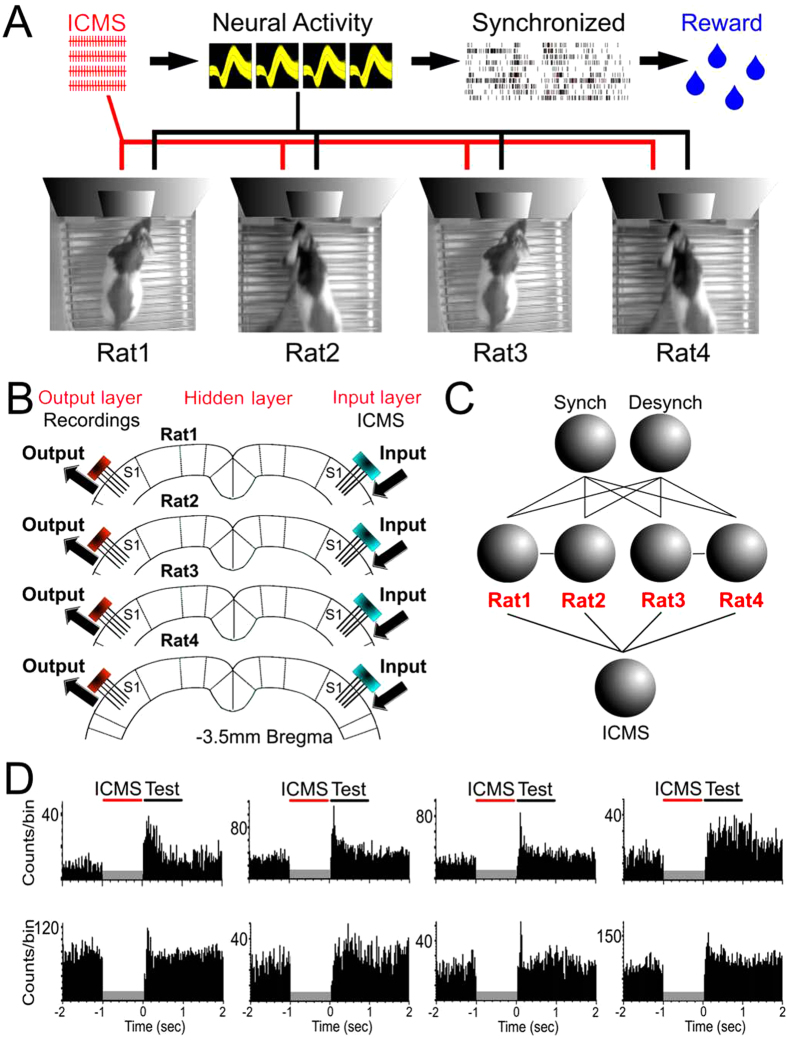
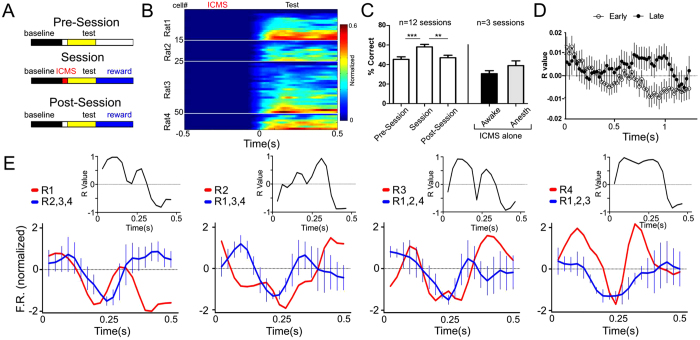
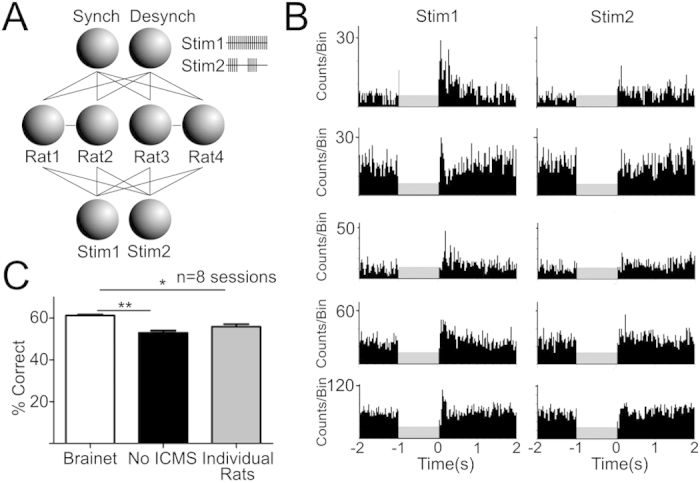
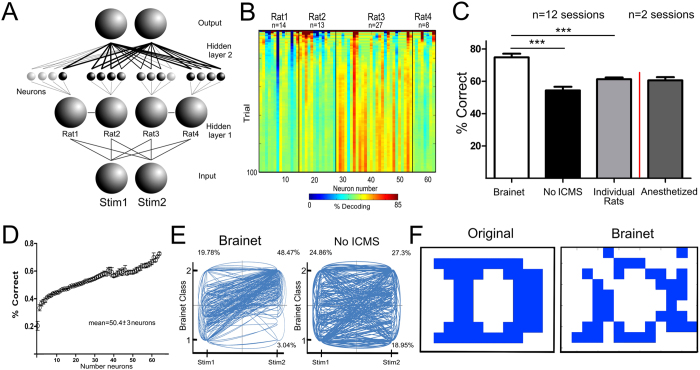
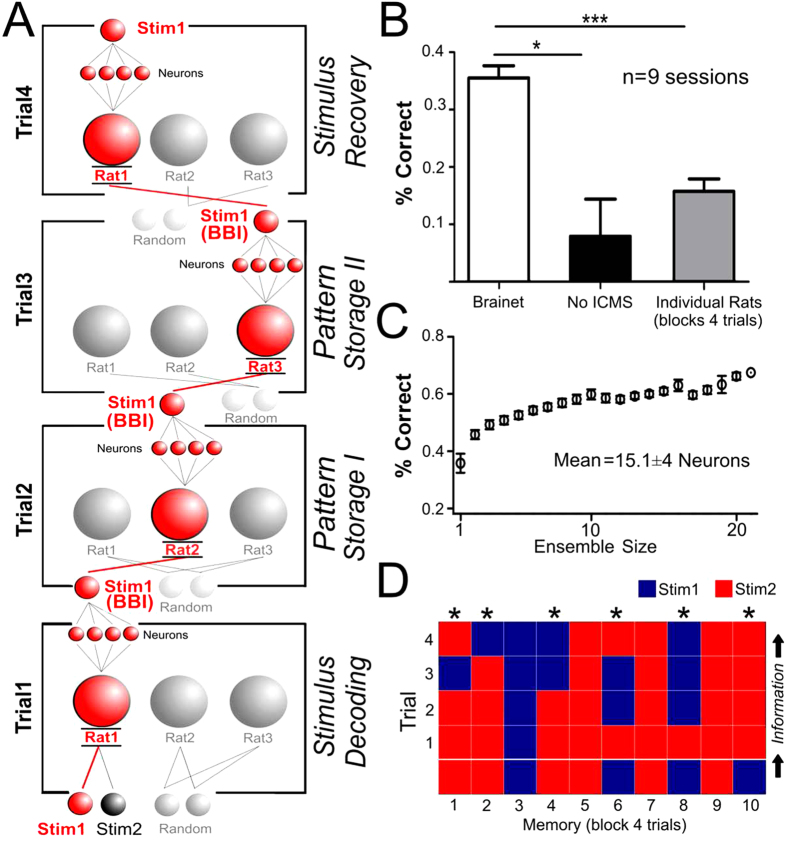
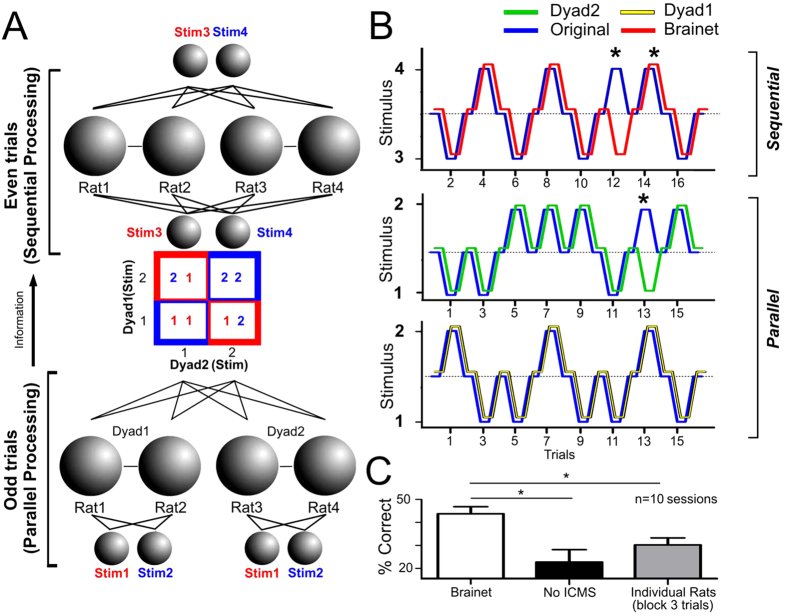
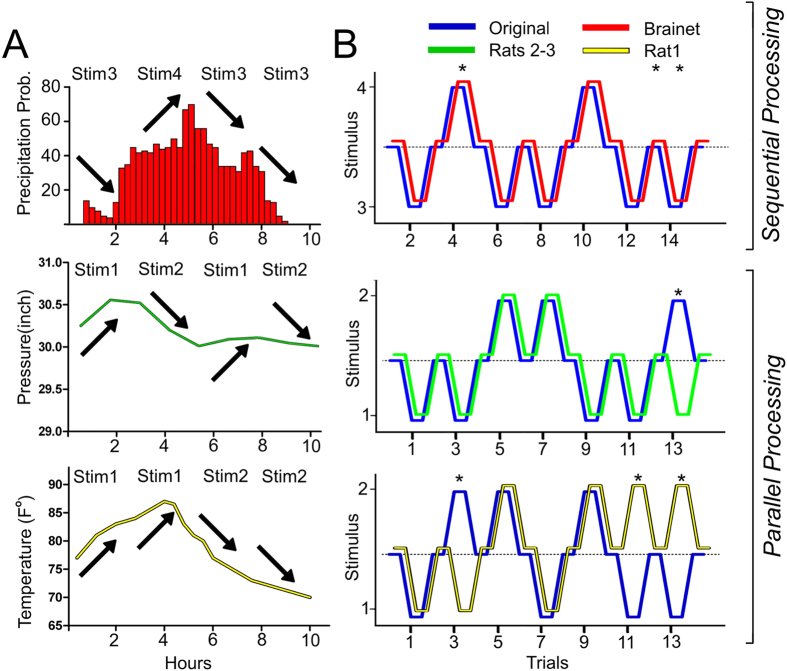
Recently, we proposed that Brainets, i.e. networks formed by multiple animal brains, cooperating and exchanging information in real time through direct brain-to-brain interfaces, could provide the core of a new type of computing device: an organic computer. Here, we describe the first experimental demonstration of such a Brainet, built by interconnecting four adult rat brains. Brainets worked by concurrently recording the extracellular electrical activity generated by populations of cortical neurons distributed across multiple rats chronically implanted with multi-electrode arrays. Cortical neuronal activity was recorded and analyzed in real time and then delivered to the somatosensory cortices of other animals that participated in the Brainet using intracortical microstimulation (ICMS). Using this approach, different Brainet architectures solved a number of useful computational problems, such as discrete classification, image processing, storage and retrieval of tactile information and even weather forecasting. Brainets consistently performed at the same or higher levels than single rats in these tasks. Based on these findings, we propose that Brainets could be used to investigate animal social behaviors as well as a test bed for exploring the properties and potential applications of organic computers.
Overview
The claims and statistics of this paper haven’t been checked yet.
Free: it reads the open-access text and checks the first 5 claims that cite a source we can check. Create a free account to check every claim.
Integrity signals
Registry
Cites
Statistics
Figures
Verification
Claims the paper makes
The claims and statistics of this paper haven’t been checked yet.
Free: it reads the open-access text and checks the first 5 claims that cite a source we can check. Create a free account to check every claim.
Claims other papers make about this one
Each is checked against this paper’s own text: does it say what the citing paper says it does?
The source backs part of the claim, not all of it — or backs it for a different population, condition or comparison.
In the citing paper
“However, the animals were entirely unaware of both the actual task being solved and of their collaboration with others”
From BrainNet: A Multi-Person Brain-to-Brain Interface for Direct Collaboration Between Brains (2019) · cites this paper as [24]
Experimental — accuracy not yet measuredThe source backs part of the claim, not all of it — or backs it for a different population, condition or comparison.
In the citing paper
“A four-brain Brainet system was dubbed an “organic computer” for mimicking simple computer-like operations, such as information-input retention, in a memory-like buffer composed of four serially connected rat brains (Pais-Vieira et al., 2015). This experimental Brainet system always outperformed single-brain computation performance, particularly for discrimination tasks, in which the four brains “”
From Human Brain/Cloud Interface (2019) · cites this paper as Pais-Vieira et al., 2015
Experimental — accuracy not yet measuredThe cited source says what the claim attributes to it.
In the citing paper
“More closely related to our study is the work of Pais-Vieira et al.24, who used implanted electrodes to both decode information from and transmit information to the somatosensory cortices of multiple rodents to demonstrate the possibility of distributing computations across multiple brains.”
From BrainNet: A Multi-Person Brain-to-Brain Interface for Direct Collaboration Between Brains (2019) · cites this paper as [24]
The cited source says what the claim attributes to it.
In the citing paper
“The brains of the rats were linked to solve several computational problems including a weather forecasting task based on weather data from a local airport.”
From BrainNet: A Multi-Person Brain-to-Brain Interface for Direct Collaboration Between Brains (2019) · cites this paper as [24]
Self-check
Percentages, sums and reported differences re-computed from the paper’s own numbers.
The self-check needs the paper’s full text.
Citations
Cites
Introduction to parallel computing
(2004) · Choice Reviews Online · doi:10.5860/choice.42-0990 · Cited by 1,843
Learning to control a brain–machine interface for reaching and grasping by primates
Carmena, J. M., Lebedev, M. A., Crist, R. E., O'Doherty, J. E., Santucci, D. M., Dimitrov, D. F., Patil, P. G., Henriquez, C. S., & Nicolelis, M. A. L. (2003) · PLoS Biology · doi:10.1371/journal.pbio.0000042 · Cited by 1,761 · cited 1×
“According to this analysis, Brainets formed by larger cortical neuronal ensembles performed better than those containing just a few neurons 9 .”
MethodSelf-citationCombinatorics and Graph Theory
Harris, J., Hirst, J. L., & Mossinghoff, M. (2008) · Undergraduate Texts in Mathematics · doi:10.1007/978-0-387-79711-3 · Cited by 347
The Mathematical Analysis of Logic: Being an Essay Towards a Calculus of Deductive Reasoning
Boole, G. (2007) · Medical Entomology and Zoology · Cited by 309
Methods for NEURAL ENSEMBLE RECORDINGS
(1998) · CRC Press eBooks · doi:10.1201/9781420048254 · Cited by 285
Self-citationA Brain-to-Brain Interface for Real-Time Sharing of Sensorimotor Information
Pais-Vieira, M., Lebedev, M., Kunicki, C., Wang, J., & Nicolelis, M. A. L. (2013) · Scientific Reports · doi:10.1038/srep01319 · Cited by 252 · cited 4×
“These features are of utmost importance since they allowed Brainets to retain the computational aptitudes of the awake brain 11 and, in addition, to benefit from emergent properties resulting from the interactions between multiple individuals 2 .”
BackgroundMethodResultInfluentialSelf-citationConscious Brain-to-Brain Communication in Humans Using Non-Invasive Technologies
Grau, C., Ginhoux, R., Riera, A., Nguyen, T. L., Chauvat, H., Berg, M., Amengual, J. L., Pascual-Leone, A., & Ruffini, G. (2014) · PLoS ONE · doi:10.1371/journal.pone.0105225 · Cited by 211
A Direct Brain-to-Brain Interface in Humans
Rao, R. P. N., Stocco, A., Bryan, M., Sarma, D., Youngquist, T. M., Wu, J., & Prat, C. S. (2014) · PLoS ONE · doi:10.1371/journal.pone.0111332 · Cited by 210
Layer-Specific Somatosensory Cortical Activation During Active Tactile Discrimination
Krupa, D. J., Wiest, M. C., Shuler, M. G., Laubach, M., & Nicolelis, M. A. L. (2004) · Science · doi:10.1126/science.1093318 · Cited by 208 · cited 1×
“These features are of utmost importance since they allowed Brainets to retain the computational aptitudes of the awake brain 11 and, in addition, to benefit from emergent properties resulting from the interactions between multiple individuals 2 .”
BackgroundSelf-citationNon-Invasive Brain-to-Brain Interface (BBI): Establishing Functional Links between Two Brains
Yoo, S.-S., Kim, H., Filandrianos, E., Taghados, S. J., & Park, S. (2013) · PLoS ONE · doi:10.1371/journal.pone.0060410 · Cited by 127
Cited by
Brain-Machine Interfaces: From Basic Science to Neuroprostheses and Neurorehabilitation
Lebedev, M. A., & Nicolelis, M. A. L. (2017) · Physiological Reviews · doi:10.1152/physrev.00027.2016 · Cited by 653
“In the same context, the concept of Brainets takes multitasking BMI designs to the next level by combining multiple brains into a higher order computational entity (614, 616, 657).”
BackgroundMethodInfluentialSelf-citationKrucoff, M. O., Rahimpour, S., Slutzky, M. W., Edgerton, V. R., & Turner, D. A. (2016) · Frontiers in Neuroscience · doi:10.3389/fnins.2016.00584 · Cited by 187
“Other investigators have connected the brains of several animals into a single system, or “brainet,” where the animals try to achieve a single objective using brain control only (Pais-Vieira et al., 2015; Ramakrishnan et al., 2015).”
BackgroundNeurotechnologies for Human Cognitive Augmentation: Current State of the Art and Future Prospects
Cinel, C., Valeriani, D., & Poli, R. (2019) · Frontiers in Human Neuroscience · doi:10.3389/fnhum.2019.00013 · Cited by 178
“Recently, intracortical micro-electrode arrays have started to be used to convey information gathered from one rat’s brain to another (more on this in section 3.1.4, e.g., Deadwyler et al., 2013; Pais-Vieira et al., 2013) and to improve memory (Hampson et al., 2018) (see also section 3.3).”
InfluentialExplainable Artificial Intelligence for Neuroscience: Behavioral Neurostimulation
Fellous, J.-M., Sapiro, G., Rossi, A., Mayberg, H., & Ferrante, M. (2019) · Frontiers in Neuroscience · doi:10.3389/fnins.2019.01346 · Cited by 155
BrainNet: A Multi-Person Brain-to-Brain Interface for Direct Collaboration Between Brains
Jiang, L., Stocco, A., Losey, D. M., Abernethy, J. A., Prat, C. S., & Rao, R. P. N. (2019) · Scientific Reports · doi:10.1038/s41598-019-41895-7 · Cited by 190
Neural Substrate Expansion for the Restoration of Brain Function
Chen, H.-C. I., Jgamadze, D., Serruya, M. D., Cullen, D. K., Wolf, J. A., & Smith, D. H. (2016) · Frontiers in Systems Neuroscience · doi:10.3389/fnsys.2016.00001 · Cited by 128
“In these brain-to-brain interfaces, it has been suggested that healthy brains could serve as computational substrate and data sources for damaged brains or that complex tasks could be performed using the summed computational capacities of multiple brains (Pais-Vieira et al., 2015).”
BackgroundMind Reading and Writing: The Future of Neurotechnology
Roelfsema, P. R., Denys, D., & Klink, P. C. (2018) · Trends in Cognitive Sciences · doi:10.1016/j.tics.2018.04.001 · Cited by 107
“Entirely new forms of communication might be possible through neurotechnology if the thoughts of one person could be made accessible to another person in their native neural format or other form [116].”
On the Necessity of Ethical Guidelines for Novel Neurotechnologies
Goering, S., & Yuste, R. (2016) · Cell · doi:10.1016/j.cell.2016.10.029 · Cited by 94
“Some experiments have demonstrated the capacity to connect neural activity of even three different experimental animals for a common purpose (Pais-Vieira et al., 2015).”
BackgroundMartins, N. R. B., Angelica, A., Chakravarthy, K., Svidinenko, Y., Boehm, F. J., Opris, I., Lebedev, M. A., Swan, M., Garan, S. A., Rosenfeld, J. V., et al. (2019) · Frontiers in Neuroscience · doi:10.3389/fnins.2019.00112 · Cited by 91
Self-citationRobots mediating interactions between animals for interspecies collective behaviors
Bonnet, F., Mills, R., Szopek, M., Schönwetter-Fuchs, S., Halloy, J., Bogdan, S., Correia, L., Mondada, F., & Schmickl, T. (2019) · Science Robotics · doi:10.1126/scirobotics.aau7897 · Cited by 73
“We envision robotic systems that can discover by themselves new properties of biohybrid artificial intelligence toward synthetic transitions ( 42 ) and organic computing devices ( 43 ), where robots could passively evolve among animals.”
Lee, W., Kim, S., Kim, B., Lee, C., Chung, Y. A., Kim, L., & Yoo, S. (2017) · PLoS ONE · doi:10.1371/journal.pone.0178476 · Cited by 69
“The bidirectional connectivity, augmented with the increase in bandwidth in neural communication, casts interesting possibility—one example was recently demonstrated by Nicolelis and colleagues whereby the cell-level recordings and stimulation effectively inter-connected the neural functions of rodents in jointly perf…”
BackgroundRao, R. P. N. (2019) · Current Opinion in Neurobiology · doi:10.1016/j.conb.2019.03.008 · Cited by 77
“More recently, brain-to-brain interfaces have been used to create a network of brains or “BrainNet” allowing groups of humans [55] or rats [56] to solve tasks collaboratively.”
Pais-Vieira, M., Yadav, A. P., Moreira, D., Guggenmos, D. J., Silva‐dos‐Santos, A., Lebedev, M., & Nicolelis, M. A. L. (2016) · Scientific Reports · doi:10.1038/srep32814 · Cited by 62
Self-citationStocco, A., Prat, C. S., Losey, D. M., Cronin, J. A., Wu, J., Abernethy, J. A., & Rao, R. P. N. (2015) · PLOS ONE · doi:10.1371/journal.pone.0137303 · Cited by 57
Ethical issues in neuroprosthetics
Glannon, W. (2016) · Journal of Neural Engineering · doi:10.1088/1741-2560/13/2/021002 · Cited by 59
“…been used by one research group in developing models using implanted electrodes linking rat and primate brains to study how multiple neural connections in two or more brains can facilitate execution of coordinated motor and cognitive tasks (Nicolelis and Lebedev 2009, Pais-Vieira et al 2013, 2015).”
MethodBlockchain Temporality: Smart Contract Time Specifiability with Blocktime
Swan, M. (2016) · Lecture notes in computer science · doi:10.1007/978-3-319-42019-6_12 · Cited by 74
Interfacing to the brain’s motor decisions
Mirabella, G., & Lebedev, M. (2016) · Journal of Neurophysiology · doi:10.1152/jn.00051.2016 · Cited by 57
“In the other two studies conducted in rats, BTBIs enabled information exchange between different brains (PaisVieira et al. 2013; Pais-Vieira et al. 2015).”
BackgroundMethodSelf-citationExtended Cognition and the Internet: A Review of Current Issues and Controversies
Smart, P. R. (2017) · Philosophy & Technology · doi:10.1007/s13347-016-0250-2 · Cited by 70
Assessing the Risks Posed by the Convergence of Artificial Intelligence and Biotechnology
O'Brien, J. T., & Nelson, C. (2020) · Health Security · doi:10.1089/hs.2019.0122 · Cited by 53
“This would benefit the applicability of such a framework to other scenarios or technologies rather than narrowly limiting it to a specific issue.”
BackgroundJangwan, N. S., Ashraf, G. M., Ram, V., Singh, V., Alghamdi, B. S. A., Abuzenadah, A. M., & Singh, M. F. (2022) · Frontiers in Systems Neuroscience · doi:10.3389/fnsys.2022.1000495 · Cited by 74
Moioli, R. C., Nardelli, P. H. J., Barros, M. T., Saad, W., Hekmatmanesh, A., Silva, P. E. G., de Sena, A. S., Dzaferagic, M., Šiljak, H., Leekwijck, W. V., et al. (2021) · IEEE Communications Surveys & Tutorials · doi:10.1109/comst.2021.3090778 · Cited by 69
“Futuristic technological solutions like Neuralink’s novel brain implant [8] or the Internet of Brains [9] are perfect illustrations of potential opportunities ahead.”
BackgroundSynthetic biology routes to bio-artificial intelligence
Nesbeth, D., Zaikin, A. A., Saka, Y., Romano, M. C., Giuraniuc, C. V., Игоревич, К. О., & Laptyeva, T. V. (2016) · Essays in Biochemistry · doi:10.1042/ebc20160014 · Cited by 46
A Survey on Brain-Computer Interface-Inspired Communications: Opportunities and Challenges
Hu, H., Wang, Z., Zhao, X., Li, R., Li, A., Si, Y., Wang, J., Zhou, T., & Xu, T. (2024) · IEEE Communications Surveys & Tutorials · doi:10.1109/comst.2024.3396847 · Cited by 53
Cyborg Insects: Bug or a Feature?
Šiljak, H., Nardelli, P. H. J., & Moioli, R. C. (2022) · IEEE Access · doi:10.1109/access.2022.3172980 · Cited by 37
“Such direct brain–to–brain links have been shown to facilitate cooperative problem-solving tasks in rats and monkeys [118], [119], resembling an organic computer, thus swarms of cyborg insects may lead to novel, complex intelligent systems.”
BackgroundCyberattacks on Miniature Brain Implants to Disrupt Spontaneous Neural Signaling
Bernal, S. L., Celdrán, A. H., Maimó, L. F., Barros, M. T., Balasubramaniam, S., & Pérez, G. M. (2020) · IEEE Access · doi:10.1109/access.2020.3017394 · Cited by 37
“…scenarios such as the provision of sensory feedback to prosthetic or robotic limbs [3], treatment of neurodegenerative diseases or disorders like Alzheimer’s or depression [4], and even futuristic applications such as interconnected networks of brains [5] or brains connected to the Internet [6].”
BackgroundCybersecurity in Brain-Computer Interfaces: RFID-based design-theoretical framework
Ajrawi, S. A., Rao, R. R., & Sarkar, M. (2020) · Informatics in Medicine Unlocked · doi:10.1016/j.imu.2020.100489 · Cited by 28
The Borg–eye and the We–I. The production of a collective living body through wearable computers
Liberati, N. (2018) · AI & Society · doi:10.1007/s00146-018-0840-x · Cited by 32
Direct Communication Between Brains: A Systematic PRISMA Review of Brain-To-Brain Interface
Nam, C. S., Traylor, Z., Chen, M., Jiang, X., Feng, W., & Chhatbar, P. Y. (2021) · Frontiers in Neurorobotics · doi:10.3389/fnbot.2021.656943 · Cited by 28
“, 2014) to creating biological neural networks (Pais-Vieira et al., 2015).”
BackgroundMethodYao, D., Zhang, Y., Liu, T., Xu, P., Gong, D., Lu, J., Xia, Y., Luo, C., Guo, D., Dong, L., et al. (2020) · Cognitive Neurodynamics · doi:10.1007/s11571-020-09577-7 · Cited by 27
Koo, B., Koh, C. S., Park, H.-Y., Lee, H.-G., Chang, J. W., Choi, S., & Shin, H.-C. (2017) · Scientific Reports · doi:10.1038/s41598-017-02521-6 · Cited by 22
A Brain to Spine Interface for Transferring Artificial Sensory Information
Yadav, A. P., Li, D., & Nicolelis, M. A. L. (2020) · Scientific Reports · doi:10.1038/s41598-020-57617-3 · Cited by 22
Self-citationOptimizing Computer–Brain Interface Parameters for Non-invasive Brain-to-Brain Interface
LaRocco, J., & Paeng, D. (2020) · Frontiers in Neuroinformatics · doi:10.3389/fninf.2020.00001 · Cited by 23
Brain–Computer Interface—A Brain-in-the-Loop Communication System
Gao, X., Wang, Y., Chen, X., Liu, B., & Gao, S. (2025) · Proceedings of the IEEE · doi:10.1109/jproc.2025.3600389 · Cited by 32
“Cross-species systems typically involve human subjects controlling the movement trajectories of animals like mice or cockroaches [275], [279], while same-species systems often focus on enhancing cooperative performance in interactions [280].”
Brunk, M. G. K., Deane, K. E., Kisse, M., Deliano, M., Vieweg, S., Ohl, F. W., Lippert, M., & Happel, M. F. K. (2019) · Scientific Reports · doi:10.1038/s41598-019-56926-6 · Cited by 22
Lu, L., Wang, R., & Luo, M. (2020) · Science China Life Sciences · doi:10.1007/s11427-020-1675-x · Cited by 18
Generating artificial sensations with spinal cord stimulation in primates and rodents
Yadav, A. P., Li, S., Krucoff, M. O., Lebedev, M., Abd‐El‐Barr, M. M., & Nicolelis, M. A. L. (2021) · Brain stimulation · doi:10.1016/j.brs.2021.04.024 · Cited by 17
Self-citationMerging Minds: The Conceptual and Ethical Impacts of Emerging Technologies for Collective Minds
Lyreskog, D. M., Zohny, H., Savulescu, J., & Singh, I. (2023) · Neuroethics · doi:10.1007/s12152-023-09516-3 · Cited by 19
Computational neuroscience and neuroinformatics: Recent progress and resources
Nayak, L., Dasgupta, A., Das, R., Ghosh, K., & De, R. K. (2018) · Journal of Biosciences · doi:10.1007/s12038-018-9813-y · Cited by 26
Egg Model Training Protocol for Stereotaxic Neurosurgery and Microelectrode Implantation
Andreoli, L., Pereira, H. S. G., & Morya, E. (2017) · World Neurosurgery · doi:10.1016/j.wneu.2017.12.099 · Cited by 15
Rascoe, A., Sharma, P., & Shah, P. K. (2018) · Frontiers in Neuroscience · doi:10.3389/fnins.2018.00472 · Cited by 13
Neurosciences and 6G: Lessons from and Needs of Communicative BrainsPreprint
Moioli, R. C., Nardelli, P. H. J., Barros, M. T., Saad, W., Hekmatmanesh, A., Gória, P., de Sena, A. S., Dzaferagic, M., Šiljak, H., Leekwijck, W. V., et al. (2020) · arXiv (Cornell University) · doi:10.48550/arxiv.2004.01834 · Cited by 14
“Futuristic technological solutions like Neuralink [8] or the Internet of Brains [9] are a perfect illustration of the potential opportunities ahead.”
BackgroundBrain‐to‐brain interface technology: A brief history, current state, and future goals
Vakilipour, P., & Fekrvand, S. (2024) · International Journal of Developmental Neuroscience · doi:10.1002/jdn.10334 · Cited by 15
“…flow between brains, from indirect unidirectional systems to direct unidirectional and indirect bidirectional types (James, 2012) and also from single sender and receiver to multisender and single receiver and the newest defined brain-net systems (Jiang et al., 2018; Pais-Vieira et al., 2015).”
Yang, L., Li, M., Yang, L., Wang, H., Wan, H., & Shang, Z. (2020) · Brain Research Bulletin · doi:10.1016/j.brainresbull.2020.04.015 · Cited by 11
Liv, N., & Greenbaum, D. S. (2023) · Advances in neuroethics · doi:10.1007/978-3-031-26801-4_13 · Cited by 16
Brain Co-processors: Using AI to Restore and Augment Brain Function
Rao, R. P. N. (2021) · Handbook of Neuroengineering · doi:10.1007/978-981-15-2848-4_32-1 · Cited by 12
Nature and Human Brain: Information-sharing Paradigms
Volobuev, A. N., Romanov, D. V., & Иванович, Р. П. (2021) · Bulletin of Science and Practice · doi:10.33619/2414-2948/62/06 · Cited by 10
Ahn, S. (2016) · Technology in Society · doi:10.1016/j.techsoc.2016.08.003 · Cited by 9
The Future of Brain-Computer Interfaces: Blockchaining Your Way into a Cloudmind
Swan, M. (2016) · Journal of Ethics and Emerging Technologies · doi:10.55613/jeet.v26i2.60 · Cited by 9
Adversarial Neural Network Training for Secure and Robust Brain-to-Brain Communication
Ahmadi, H., Kuhestani, A., & Mesin, L. (2024) · IEEE Access · doi:10.1109/access.2024.3376657 · Cited by 9
Ethical and social aspects of neural prosthetics
Glannon, W. (2021) · Progress in Biomedical Engineering · doi:10.1088/2516-1091/ac23e6 · Cited by 10
Neurointerface implemented with Oscillator Motifs
Talanov, M. O., Suleimanova, A., Leukhin, A., Mikhailova, Y., Toschev, A. S., Militskova, A., Lavrov, I. A., & Magid, E. (2021) · IEEE/RSJ International Conference on Intelligent Robots and Systems (IROS) · doi:10.1109/iros51168.2021.9636089 · Cited by 6
“As examples of closed loop systems we should mention a number of interesting projects focused on Brain-Machine-Brain Interface [19], [20], [21], [22] As the example of the brain network project, Pais-Vieira et al. [23] have connected several rat brains to a network of brains called Brainet.”
BackgroundConscious Brain-to-Brain Communication Using Noninvasive Technologies☆
Ruffini, G. (2016) · Elsevier eBooks · doi:10.1016/b978-0-12-802452-2.00018-4 · Cited by 6
Silva‐dos‐Santos, A. (2017) · Frontiers in Psychology · doi:10.3389/fpsyg.2017.00105 · Cited by 6
Modern Approaches to Augmenting the Brain Functions
Opriș, I. C., Noga, B. R., Lebedev, M., & Casanova, M. F. (2021) · Contemporary clinical neuroscience · doi:10.1007/978-3-030-54564-2_4 · Cited by 4
Self-citationNeural Prosthetics: Neuroscientific and Philosophical Aspects of Changing the Brain
Glannon, W. (2021) · doi:10.1093/oso/9780198813910.001.0001 · Cited by 7
Brain-Machine Interface-Based Rat-Robot Behavior Control
Zhang, J., Xu, K., Zhang, S., Wang, Y., Zheng, N., Pan, G., Chen, W., Wu, Z., & Zheng, X. (2019) · Advances in experimental medicine and biology · doi:10.1007/978-981-13-2050-7_5 · Cited by 4
Cognitive Augmentation Via a Brain/Cloud Interface
Angelica, A., Opriș, I. C., Lebedev, M., & Boehm, F. (2021) · Contemporary clinical neuroscience · doi:10.1007/978-3-030-54564-2_17 · Cited by 3
Self-citationIs There a Place in Human Consciousness Where Surveillance Cannot Go?Noor: A Brain Opera
Pearlman, E. (2020) · Leonardo · doi:10.1162/leon_a_02008 · Cited by 3
Brunk, M. G. K., Deane, K. E., Kisse, M., Deliano, M., Vieweg, S., Ohl, F. W., Lippert, M., & Happel, M. F. K. (2019) · bioRxiv (Cold Spring Harbor Laboratory) · doi:10.1101/669168 · Cited by 3
Evaluation of synthetic setae pads for dry attachment of an ultrasound transducer
LaRocco, J., Min, S., & Paeng, D. (2019) · IEEE Healthcare Innovations and Point of Care Technologies Conference (HI-POCT) · doi:10.1109/hi-poct45284.2019.8962885 · Cited by 2
“While non-invasive, transcranial-focused ultrasound (TFUS)-based brain-to-brain interface (BBI) systems have been implemented, dry transducers could greatly increase their accessibility [27] [28] [29].”
BackgroundAuditory and Visual Prosthetics
Glannon, W. (2021) · Oxford University Press eBooks · doi:10.1093/oso/9780198813910.003.0001 · Cited by 2
When Two Become One: Singular Duos and the Neuroethical Frontiers of Brain-to-Brain Interfaces
Zohny, H., & Savulescu, J. (2024) · Cambridge Quarterly of Healthcare Ethics · doi:10.1017/s0963180124000197 · Cited by 3
“Multiple animal studies have been carried out over recent years exploring how direct neural connections between individual animals can enhance performance on numerous tasks.”
Getting It Together: Psychological Unity and Deflationary Accounts of Animal Metacognition
Comstock, G., & Bauer, W. A. (2018) · Acta Analytica · doi:10.1007/s12136-018-0340-0 · Cited by 3
“^ Brainets are groups of three or more animal brains (mice in some experiments, monkeys in others) accomplishing a common task by Bcooperating and exchanging information in real time through direct brain-to-brain interfaces^ (Pais-Vieira et al. 2015).”
BackgroundRomanchuk, N., Volobuev, A. N., & Bulgakova, S. V. (2023) · Bulletin of Science and Practice · doi:10.33619/2414-2948/95/10 · Cited by 1
In conversation with Miguel Nicolelis
Howells, H. (2026) · Nature Neuroscience · doi:10.1038/s41593-026-02467-x · Cited by 1
An automatic experimental apparatus to study arm reaching in New World monkeys
Yin, A. S., An, J., Lehew, G., Lebedev, M., & Nicolelis, M. A. L. (2016) · Journal of Neuroscience Methods · doi:10.1016/j.jneumeth.2016.02.017 · Cited by 1
Self-citationBrain-Machine Interface Technology in Neurosurgery
Rosenfeld, J. V., & Broekman, M. L. D. (2020) · Cambridge University Press eBooks · doi:10.1017/9781108643887.023 · Cited by 2
Augmentation Through Interconnection: Brain-Nets and Telemedicine
Lebedev, M., Shaderkin, I. A., Ryabkov, I. V., & Lebedev, G. S. (2021) · Contemporary clinical neuroscience · doi:10.1007/978-3-030-54564-2_16 · Cited by 1
Self-citationFrom Perception to Action: Brain-to-Brain Information Transmission of Pigeons
Yang, L., Yang, L., Wang, H., Li, M., & Shang, Z. (2024) · Journal of Bionic Engineering · doi:10.1007/s42235-024-00581-9 · Cited by 1
“The BtBI system research based on ICMS has made some progress, in which ICMS have been used as an information encoding mode to realize the real-time transmission of perception-action information between multiple brains of rats and monkeys [2, 24, 25 ].”
Complex and Surprising Dynamics in Gene Regulatory Networks
Chen, S., & Zaikin, A. A. (2020) · Springer eBooks · doi:10.1007/978-981-33-4033-6_12 · Cited by 1
Rao, R. P. N. (2018) · arXiv (Cornell University) · doi:10.48550/arxiv.1811.11876 · Cited by 1
Atweh, J. A., Carroll, T., & Hill, R. (2023) · doi:10.31124/advance.23536392 · Cited by 1
Atweh, J. A., Carroll, T., & Hill, R. (2023) · doi:10.31124/advance.23536392.v1 · Cited by 1
Conditioned Standard BCI CODEC – A theoretical proposal
Pankovski, T. (2018) · Biologically Inspired Cognitive Architectures · doi:10.1016/j.bica.2018.04.004
Is There a Place in Human Consciousness Where Surveillance Cannot Go? Noor: A Brain Opera
Pearlman, E. (2019) · Leonardo · doi:10.1162/leon_a_01807
Brain-to-brain Wireless Communication and Technologies Beyond 5GPreprint
Melgarejo, D. C., Moioli, R. C., & Nardelli, P. H. J. (2019) · arXiv (Cornell University) · doi:10.48550/arxiv.2001.00466
“Early interest in BBC came from the potential for expanding human communication and social interaction capabilities [1]– [4].”
Brain-to-Brain Communication Based on Wireless Technologies: Actual and Future PerspectivesPreprint
Melgarejo, D. C., Moioli, R. C., & Nardelli, P. H. J. (2019) · arXiv (Cornell University) · doi:10.48550/arxiv.1912.12192
“Early interest in B2BC came from the potential for expanding human communication and social interaction capabilities [1]– [4].”
BackgroundImplications of Neurotechnology: Brain Recording and Intervention
Haselager, P. (2021) · Cambridge University Press eBooks · doi:10.1017/9781108623056.017
Brain–Computer Interfaces for Movement
Glannon, W. (2021) · Oxford University Press eBooks · doi:10.1093/oso/9780198813910.003.0003
Brain–Computer and Brain-to-Brain Interfaces for Communication
Glannon, W. (2021) · Oxford University Press eBooks · doi:10.1093/oso/9780198813910.003.0004
Glannon, W. (2021) · Oxford University Press eBooks · doi:10.1093/oso/9780198813910.003.0007
Translation in the Third Millennium
Schaeffer, M. J. (2022) · Cambridge University Press eBooks · doi:10.1017/9781108616119.030
Mental and Neural Causation in Brain–Computer and Brain-to-Brain Interfaces
Glannon, W. (2021) · Oxford University Press eBooks · doi:10.1093/oso/9780198813910.003.0005
Glannon, W. (2021) · Oxford University Press eBooks · doi:10.1093/oso/9780198813910.003.0006
Neurostimulation for Neurological and Psychiatric Disorders
Glannon, W. (2021) · Oxford University Press eBooks · doi:10.1093/oso/9780198813910.003.0002
The Upper Limit: An Essay on Mental Integrity and Mental Enhancement
Martins, H. (2022) · Medicine Law & Society · doi:10.18690/mls.15.2.217-240.2022 · Cited by 1
“…we can consider: 1. technologies for new communication and coordination capacities between two or more “normal” brains for solving problems (Pais - Vieira et al., 2015); or 2. new sensory capacities like eco-guidance, allowing the brain to receive stimulation when proximity is detected by…”
BackgroundTsuleiskiri, E. G. (2022) · International Scientific and Practical Conference «Innovative Technologies in Science and Education» (ITSE) · doi:10.23947/itse.2022.203-206
A Path to Science Fiction Style Technology Applications? The Example of Brain-to-Brain Interfaces
Hildt, E. (2023) · Advances in neuroethics · doi:10.1007/978-3-031-26801-4_6
Brain Co-processors: Ethical and Social Implications
Rao, R. P. N., & Schönau, A. (2023) · Advances in neuroethics · doi:10.1007/978-3-031-26801-4_10 · Cited by 1
“Buenos jueces” en el proceso civil: dogmática y neurociencia
Delgado, N. C. (2022) · Revista de Derecho de la Pontificia Universidad Católica de Valparaíso · doi:10.4151/s0718-68512022000-1375 · Cited by 2
Glannon, W. (2021) · Oxford University Press eBooks · doi:10.1093/oso/9780198813910.002.0008
Advance Praise for Neural Prosthetics
Glannon, W. (2021) · Oxford University Press eBooks · doi:10.1093/oso/9780198813910.002.0001
Glannon, W. (2021) · Oxford University Press eBooks · doi:10.1093/oso/9780198813910.002.0003
Glannon, W. (2021) · Oxford University Press eBooks · doi:10.1093/oso/9780198813910.002.0007
Glannon, W. (2021) · Oxford University Press eBooks · doi:10.1093/oso/9780198813910.002.0004
Unruly Bodies: Queer Taxonomies and Trans-Species Becomings
Tavella, E. (2024) · V&R unipress eBooks · doi:10.14220/9783737016377.31
Bridging BCI and Communications: A MIMO Framework for EEG-to-ECoG Wireless Channel Modeling
Wang, J., Wang, Z., Xu, T., Si, Y., Li, A., Zhou, T., Zhao, X., & Hu, H. (2025) · IEEE Wireless Communications Letters · doi:10.1109/lwc.2025.3639102
“The corresponding emerging domain, named BCI-Inspired Communications [3], has also seen early exploration of its key concepts, including wireless-based BCI [4], communication modulation in BCI [1], brain-to-brain communications [5], and brain access to 6G network [2], [6].”
Pataranutaporn, P., Albrecht, C., Archiwaranguprok, C., Karny, S., & Baez, A. (2026) · Augmented Humans International Conference (AHs) · doi:10.1145/3795011.3795070
“More speculatively, brain-brain interface research has demonstrated rudimentary transfer of information and learned skills between biological systems [54], suggesting that similar transfers between AI and biological systems may be possible.”
Serruya, M. D. (2026) · Frontiers in Human Neuroscience · doi:10.3389/fnhum.2026.1893045
Metadata
- Authors
- Pais-Vieira, M., Chiuffa, G., Lebedev, M., Yadav, A., & Nicolelis, M. A. L.
- Affiliations
- Duke University (US)
- Corresponding author
- Nicolelis, Miguel A. L.
- Venue
- Scientific Reports
- Published
- 2015-07-09
- Volume
- 5
- Issue
- 1
- Pages
- 11869-11869
- ISSN
- 2045-2322 (ISSN-L)
- PMC
- PMC4497302
- OpenAlex
- W2255302334
- Cited by
- 99
- References
- 18
- Citations by year
- 2026: 3 · 2025: 2 · 2024: 6 · 2023: 7 · 2022: 6 · 2021: 24 · 2020: 12 · 2019: 13 · 2018: 7 · 2017: 6 · 2016: 12 · 2015: 1
- FWCI
- 4.04
- Type
- journal article
- Language
- en
- Update notices
- correction (2015-10-15)
- Open access
- gold
- doi.org
- Licence
- cc-by
- creativecommons.org/licenses/by/4.0 (tdm)
- creativecommons.org/licenses/by/4.0 (vor)
- Locations
- Scientific Reports (publishedVersion, cc-by)
- PubMed Central (publishedVersion, cc-by)
- PubMed (publishedVersion)
- Funders
- National Institutes of Health
- National Institute of Mental Health (DP1MH099903)
- National Institute of Neurological Disorders and Stroke (R01NS073125)
- National Institute of Dental and Craniofacial Research (R01DE011451)
- National Center for Chronic Disease Prevention and Health Promotion (DP1MH099903)
- Eunice Kennedy Shriver National Institute of Child Health and Human Development (RC1HD063390)
- Topics
- Life Sciences › Neuroscience › Cellular and Molecular Neuroscience › Neuroscience and Neural Engineering
- Life Sciences › Neuroscience › Cognitive Neuroscience › Neural dynamics and brain function
- Life Sciences › Neuroscience › Cognitive Neuroscience › EEG and Brain-Computer Interfaces
- Keywords
- organic computing, brain-to-brain interfaces, rat brain, microelectrode arrays, intracortical microstimulation, cortical neuronal activity, somatosensory cortex, image processing, weather forecasting, animal social behavior, distributed neural networks
- MeSH terms
- Animals, Behavior, Animal, Brain, Electric Stimulation, Electrodes, Implanted, Neurons, Rats, Long-Evans, Rats
About these checks
Registry, retraction, Cites and statistics results are computed, not judged, with one exception: a printed reference that no index lists is read once by a model before it counts as a citation error. Claims are extracted by a model and kept only when their quote appears verbatim in the text; each cited source is then checked, with a model’s help, for whether it says what the claim relies on. Those verdicts can be wrong — read the claim’s quote and the cited source before relying on one.
Statistics and arithmetic are recomputed, not judged.
Confidence bands are shown only for fields calibrated on our annotated test set. None is calibrated yet, so no band is shown.
What counts as a claim ›How we measure confidence ›How we check this ›
Are you an author, or do you see a problem with this page? Request a review
Data sources
Bibliographic data: Semantic Scholar, OpenAlex, Crossref.
Contains information from the Semantic Scholar Academic Graph Datasets, made available under the ODC Attribution License (ODC-BY 1.0).
Semantic Scholar’s data is described in: Kinney, R., et al. (2023). The Semantic Scholar Open Data Platform. arXiv:2301.10140.
