

The DOI matches its Crossref record; 55 of the 55 references it cites were found in a registry or an index.
Decanalization, brain development and risk of schizophrenia
Abstract
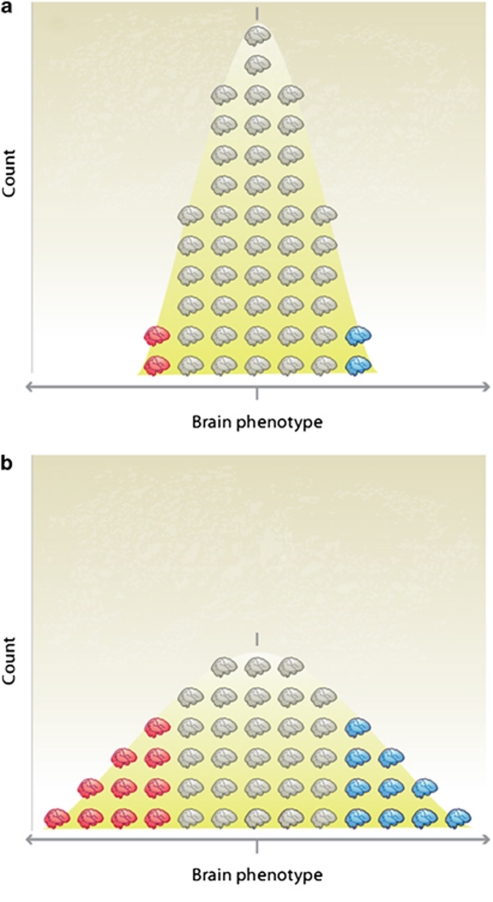
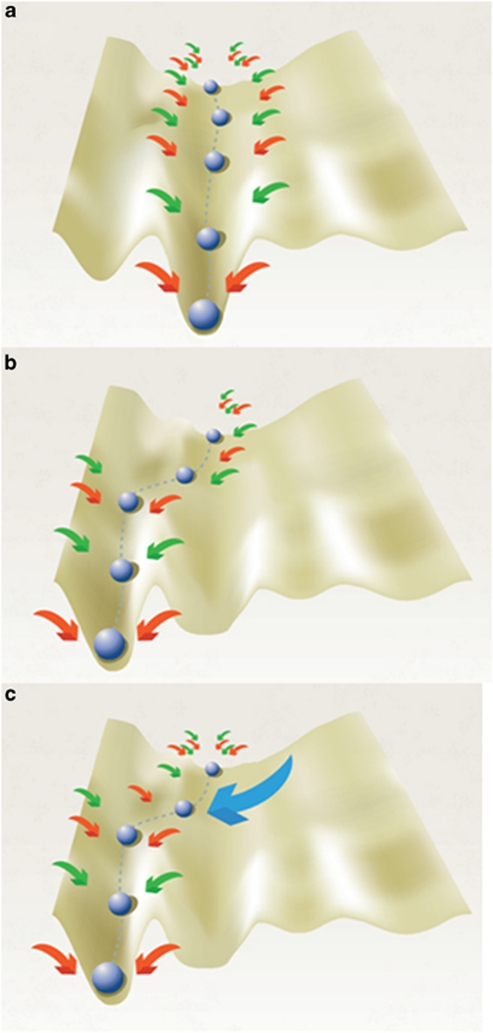
Waddington's original description of canalization refers to the ability of an organism to maintain phenotypic fidelity in the face of environmental and/or genetic perturbation. Development of the human brain requires exposure to a 'wild-type' environment-one that supports the optimal set of instructions for development. Recently derived brain structures in our species, such as the expanded neocortex, may be more vulnerable to decanalization because there has been insufficient time to evolve buffering capacity. On the basis of modern notions of decanalization, we provide perspectives on selected environmental and genetic risk factors for schizophrenia, and we discuss strengths and weaknesses of this conceptual framework. We argue that if we are to build a solid foundation for translational psychiatry, we must explore models that attempt to capture the complexity of the interaction between genetic and non-genetic risk factors in mediating and modulating brain development.
Overview
The claims and statistics of this paper haven’t been checked yet.
Run the check — free, no account needed. It reads the open-access text and checks the sources it cites.
Integrity signals
Registry
Cites
Statistics
Figures
Verification
Claims the paper makes
The claims and statistics of this paper haven’t been checked yet.
Run the check — free, no account needed. It reads the open-access text and checks the sources it cites.
Claims other papers make about this one
Each is checked against this paper’s own text: does it say what the citing paper says it does?
In the citing paper
“Such “decanalization” of development results in lasting developmental anomalies with all of the behavioral consequences of an improperly wired NN (81–83).”
From Behavior-related gene regulatory networks: A new level of organization in the brain (2020) · cites this paper as [81]
Self-check
Percentages, sums and reported differences re-computed from the paper’s own numbers.
The self-check needs the paper’s full text.
Citations
Cites
Holick, M. F. (2007) · New England Journal of Medicine · doi:10.1056/nejmra070553 · Cited by 13,720
Common polygenic variation contributes to risk of schizophrenia and bipolar disorder
The International Schizophrenia Consortium (2009) · Nature · doi:10.1038/nature08185 · Cited by 4,821
The period of susceptibility to the physiological effects of unilateral eye closure in kittens
Hubel, D. H., & Wiesel, T. N. (1970) · The Journal of Physiology · doi:10.1113/jphysiol.1970.sp009022 · Cited by 3,030
Schizophrenia as a Complex Trait: Evidence From a Meta-analysis of Twin Studies
Sullivan, P. F., Kendler, K. S., & Neale, M. C. (2003) · Archives of General Psychiatry · doi:10.1001/archpsyc.60.12.1187 · Cited by 2,356
Enriched environments, experience-dependent plasticity and disorders of the nervous system
Nithianantharajah, J., & Hannan, A. J. (2006) · Nature Reviews Neuroscience · doi:10.1038/nrn1970 · Cited by 1,771
Self-citationCommon variants conferring risk of schizophrenia
†Genetic Risk and Outcome in Psychosis (GROUP), Stefansson, H., Ophoff, R. A., Steinberg, S., Andreassen, O. A., Cichon, S., Rujescu, D., Werge, T., Pietiläinen, O. P. H., Mors, O., et al. (2009) · Nature · doi:10.1038/nature08186 · Cited by 1,677
The environment and schizophrenia
van Os, J., Kenis, G., & Rutten, B. P. F. (2010) · Nature · doi:10.1038/nature09563 · Cited by 1,572
Evolution of the neocortex: a perspective from developmental biology
Rakic, P. (2009) · Nature reviews. Neuroscience · doi:10.1038/nrn2719 · Cited by 1,565
Rare chromosomal deletions and duplications increase risk of schizophrenia
The International Schizophrenia Consortium (2008) · Nature · doi:10.1038/nature07239 · Cited by 1,475
Distribution of the vitamin D receptor and 1α-hydroxylase in human brain
Eyles, D. W., Smith, S., Kinobe, R., Hewison, M., & McGrath, J. J. (2005) · Journal of Chemical Neuroanatomy · doi:10.1016/j.jchemneu.2004.08.006 · Cited by 1,444
Self-citationExperience and brain development
Greenough, W. T., Black, J. E., & Wallace, C. S. (1987) · Child Development · doi:10.2307/1130197 · Cited by 1,398
Schizophrenia and migration: A meta-analysis and review
Cantor-Graae, E., & Selten, J.-P. (2005) · American Journal of Psychiatry · doi:10.1176/appi.ajp.162.1.12 · Cited by 1,237
Common variants on chromosome 6p22.1 are associated with schizophrenia
Shi, J., Levinson, D. F., Duan, J., Sanders, A. R., Zheng, Y., Pe’er, I., Dudbridge, F., Holmans, P., Whittemore, A. S., Mowry, B. J., et al. (2009) · Nature · doi:10.1038/nature08192 · Cited by 1,179
Canalization of Development and Genetic Assimilation of Acquired Characters
Waddington, C. H. (1959) · Nature · doi:10.1038/1831654a0 · Cited by 1,109
McGrath, J., Saha, S., Welham, J., El Saadi, O., MacCauley, C., & Chant, D. (2004) · BMC Medicine · doi:10.1186/1741-7015-2-13 · Cited by 1,072
Self-citationA systematic, large-scale resequencing screen of X-chromosome coding exons in mental retardation
Tarpey, P. S., Smith, R., Pleasance, E., Whibley, A., Edkins, S., Hardy, C., O'Meara, S., Latimer, C., Dicks, E., Menzies, A., et al. (2009) · Nature Genetics · doi:10.1038/ng.367 · Cited by 603
Fearon, P., Kirkbride, J. B., Morgan, C., Dazzan, P., Morgan, K. D., Lloyd, T., Hutchinson, G. A., Tarrant, J., Fung, W. L. A., Holloway, J. D., et al. (2006) · Psychological Medicine · doi:10.1017/s0033291706008774 · Cited by 556
Social defeat: Risk factor for schizophrenia?
Selten, J.-P., & Cantor-Graae, E. (2005) · British Journal of Psychiatry · doi:10.1192/bjp.187.2.101 · Cited by 551
Uncovering cryptic genetic variation
Gibson, G., & Dworkin, I. (2004) · Nature Reviews Genetics · doi:10.1038/nrg1426 · Cited by 546 · cited 2×
“as a buffer to allow an organism exposed to an unexpected environmental stress, or to a de novo mutation, to resist the transition to alternative phenotypes.(6)”
BackgroundSelf-citationEvolutionary capacitance as a general feature of complex gene networks
Bergman, A., & Siegal, M. L. (2003) · Nature · doi:10.1038/nature01765 · Cited by 523
McCann, J. C., & Ames, B. N. (2008) · The FASEB Journal · doi:10.1096/fj.07-9326rev · Cited by 411
Davies, G., Welham, J., Chant, D., Torrey, E. F., & McGrath, J. (2003) · Schizophrenia Bulletin · doi:10.1093/oxfordjournals.schbul.a007030 · Cited by 400
Self-citationEnrich the environment to empower the brain
Sale, A., Berardi, N., & Maffei, L. (2009) · Trends in Neurosciences · doi:10.1016/j.tins.2008.12.004 · Cited by 341
Environmental enrichment slows disease progression in R6/2 Huntington's disease mice
Hockly, E., Cordery, P. M., Woodman, B., Mahal, A., Van Dellen, A., Blakemore, C., Lewis, C. M., Hannan, A. J., & Bates, G. P. (2002) · Annals of Neurology · doi:10.1002/ana.10094 · Cited by 330
Self-citationCannabis, the mind and society: the hash realities
Murray, R. M., Morrison, P. D., Henquet, C., & Forti, M. D. (2007) · Nature reviews. Neuroscience · doi:10.1038/nrn2253 · Cited by 328
WEAVER, I. C. G., DIORIO, J., SECKL, J. R., SZYF, M., & MEANEY, M. J. (2004) · Annals of the New York Academy of Sciences · doi:10.1196/annals.1321.099 · Cited by 327
Hypothesis: Is low prenatal vitamin D a risk-modifying factor for schizophrenia?
McGrath, J. (1999) · Schizophrenia Research · doi:10.1016/s0920-9964(99)00052-3 · Cited by 323
Self-citationSchizophrenia: a common disease caused by multiple rare alleles
McClellan, J. M., Susser, E., & King, M.-C. (2007) · British Journal of Psychiatry · doi:10.1192/bjp.bp.106.025585 · Cited by 296
Urbanization and psychosis: a study of 1942–1978 birth cohorts in The Netherlands
Marcelis, M. C., Navarro‐Mateu, F., Murray, R. M., Selten, J., & van Os, J. (1998) · Psychological Medicine · doi:10.1017/s0033291798006898 · Cited by 294
Decanalization and the origin of complex disease
Gibson, G. (2009) · Nature Reviews Genetics · doi:10.1038/nrg2502 · Cited by 285
Self-citationMcGrath, J. J., Welham, J., Scott, J. G., Varghese, D., Degenhardt, L. J., Hayatbakhsh, M. R., Alati, R., Williams, G. M., Bor, W., & Najman, J. M. (2010) · Archives of General Psychiatry · doi:10.1001/archgenpsychiatry.2010.6 · Cited by 280
Self-citationDevelopmental vitamin D deficiency causes abnormal brain development
Eyles, D. W., Feron, F. P., Cui, X., Kesby, J. P., Harms, L. R., Ko, P., McGrath, J. J., & Burne, T. H. J. (2009) · Psychoneuroendocrinology · doi:10.1016/j.psyneuen.2009.04.015 · Cited by 256
Self-citationWaterland, R. A., Travisano, M., & Tahiliani, K. G. (2007) · The FASEB Journal · doi:10.1096/fj.07-8229com · Cited by 200
Nithianantharajah, J., Barkus, C., Murphy, M., & Hannan, A. J. (2007) · Neurobiology of Disease · doi:10.1016/j.nbd.2007.11.006 · Cited by 198
Self-citationExperience effects on brain development: possible contributions to psychopathology
Grossman, A. W., Churchill, J. D., McKinney, B. C., Kodish, I. M., Otte, S. L., & Greenough, W. T. (2002) · Journal of Child Psychology and Psychiatry · doi:10.1111/1469-7610.t01-1-00102 · Cited by 187
The neurodevelopmental hypothesis of schizophrenia: a review of recent developments
McGrath, J. J., Feron, F. P., Burne, T. H. J., Mackay‐Sim, A., & Eyles, D. W. (2003) · Annals of Medicine · doi:10.1080/07853890310010005 · Cited by 186
Self-citationIs Epigenetics an Important Link between Early Life Events and Adult Disease?
Waterland, R. A. (2009) · Hormone Research in Paediatrics · doi:10.1159/000178030 · Cited by 157
Weaver, I. C. G., Plante, P. L., Weaver, S., Parent, A., Sharma, S., Diorio, J. C., Chapman, K. E., Seckl, J. R., Szyf, M., & Meaney, M. J. (2001) · Molecular and Cellular Endocrinology · doi:10.1016/s0303-7207(01)00635-9 · Cited by 156
The Neurodevelopmental Hypothesis of Schizophrenia
Piper, M., Beneyto, M., Burne, T. H. J., Eyles, D. W., Lewis, D. A., & McGrath, J. J. (2012) · Psychiatric Clinics of North America · doi:10.1016/j.psc.2012.06.002 · Cited by 133
Self-citationMcOmish, C., Burrows, E. L., Howard, M. L., Scarr, E., Kim, D., Shin, H.-S., Dean, B., van den Buuse, M., & Hannan, A. J. (2007) · Molecular Psychiatry · doi:10.1038/sj.mp.4002046 · Cited by 130
Self-citationThe determination of neuronal fate in the cerebral cortex
McConnell, S. K. (1989) · Trends in Neurosciences · doi:10.1016/0166-2236(89)90041-6 · Cited by 113
Narrowing the Boundaries of the Genetic Architecture of Schizophrenia
Wray, N. R., & Visscher, P. M. (2009) · Schizophrenia Bulletin · doi:10.1093/schbul/sbp137 · Cited by 107
Dworkin, I. M., Pálsson, A., Birdsall, K., & Gibson, G. C. (2003) · Current Biology · doi:10.1016/j.cub.2003.10.001 · Cited by 99
Self-citationSelection for an Invariant Character—‘Vibrissa Number’—in the House Mouse
Dun, R., & Fraser, A. (1958) · Nature · doi:10.1038/1811018a0 · Cited by 94
Dealberto, M.-J. (2010) · Acta Psychiatrica Scandinavica · doi:10.1111/j.1600-0447.2009.01535.x · Cited by 76
High throughput analysis of gene expression in the human brain
Colantuoni, C., Purcell, A. E., Bouton, C. M. L. S., & Pevsner, J. (2000) · Journal of Neuroscience Research · Cited by 74
van Dellen, A., Grote, H., & Hannan, A. J. (2005) · Clinical and Experimental Pharmacology and Physiology · doi:10.1111/j.1440-1681.2005.04313.x · Cited by 60
Self-citationFamilial and non-familial risk factors for schizophrenia: A population-based study
Mortensen, P. B., Pedersen, C. B., Westergaard, T., Wohlfahrt, J., Ewald, H., Mors, O. N., Andersen, P. K., & Melbye, M. (1998) · Schizophrenia Research · doi:10.1016/s0920-9964(97)88318-1 · Cited by 51
How the epigenome contributes to the development of psychiatric disorders
Bredy, T. W., Sun, Y. E., & Kobor, M. S. (2010) · Developmental Psychobiology · doi:10.1002/dev.20424 · Cited by 51
Schizophrenia: The making of a troubled mind
Dobbs, D. E. (2010) · Nature · doi:10.1038/468154a · Cited by 40
Woolf, C. M. (1997) · Psychological Medicine · doi:10.1017/s003329179700473x · Cited by 37
The Prevention of Schizophrenia
Brown, A. S., & McGrath, J. J. (2010) · Schizophrenia Bulletin · doi:10.1093/schbul/sbq122 · Cited by 33
Self-citationLicinio, J. (2011) · Translational Psychiatry · doi:10.1038/tp.2011.3 · Cited by 31
Gene-environment interactions of theeyelessmutant inDrosophila melanogaster
Hunt, D. M., & Burnet, B. (1969) · Genetics Research · doi:10.1017/s0016672300002949 · Cited by 7
Mental health: don't overlook environment and its risk factors
McGrath, J. J., & Selten, J. (2008) · Nature · doi:10.1038/454824b · Cited by 6
Self-citation
Cited by
Behavior-related gene regulatory networks: A new level of organization in the brain
Sinha, S., Jones, B. M., Traniello, I. M., Bukhari, S. A., Halfon, M. S., Hofmann, H. A., Huang, S., Katz, P. S., Keagy, J., Lynch, V. J., et al. (2020) · Proceedings of the National Academy of Sciences · doi:10.1073/pnas.1921625117 · Cited by 85
Chromatin regulators, phenotypic robustness, and autism risk
Suliman, R., Ben-David, E., & Shifman, S. (2014) · Frontiers in Genetics · doi:10.3389/fgene.2014.00081 · Cited by 28
Burrows, E. L. (2013) · Frontiers in Behavioral Neuroscience · doi:10.3389/fnbeh.2013.00157 · Cited by 17
Metadata
- Authors
- McGrath, J. J., Hannan, A. J., & Gibson, G.
- Venue
- Translational Psychiatry
- Published
- 2011-06-28
- Volume
- 1
- Issue
- 6
- Pages
- e14-e14
- ISSN
- 2158-3188
- PMC
- PMC3309463
- Cited by
- 45
- References
- 55
- Language
- en
About these checks
Registry, retraction, Cites and statistics results are computed, not judged, with one exception: a printed reference that no index lists is read once by a model before it counts as a citation error. Claims are extracted by a model and kept only when their quote appears verbatim in the text; each cited source is then checked, with a model’s help, for whether it says what the claim relies on. Those verdicts can be wrong — read the claim’s quote and the cited source before relying on one.
Statistics and arithmetic are recomputed, not judged.
Confidence bands are shown only for fields calibrated on our annotated test set. None is calibrated yet, so no band is shown.
What counts as a claim ›How we measure confidence ›How we check this ›
Are you an author, or do you see a problem with this page? Request a review
Data sources
Bibliographic data: Semantic Scholar, OpenAlex, Crossref.
Contains information from the Semantic Scholar Academic Graph Datasets, made available under the ODC Attribution License (ODC-BY 1.0).
Semantic Scholar’s data is described in: Kinney, R., et al. (2023). The Semantic Scholar Open Data Platform. arXiv:2301.10140.
