

The DOI matches its Crossref record; 9 of the 9 references it cites were found in a registry or an index.
The ever-expanding limits of enzyme catalysis and biodegradation: polyaromatic, polychlorinated, polyfluorinated, and polymeric compounds
Abstract
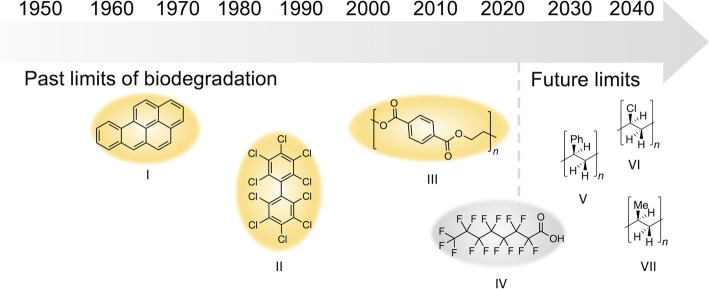
Biodegradation is simply the metabolism of anthropogenic, or otherwise unwanted, chemicals in our environment, typically by microorganisms. The metabolism of compounds commonly found in living things is limited to several thousand metabolites whereas ∼100 million chemical substances have been devised by chemical synthesis, and ∼100 000 are used commercially. Since most of those compounds are not natively found in living things, and some are toxic or carcinogenic, the question arises as to whether there is some organism somewhere with the enzymes that can biodegrade them. Repeatedly, anthropogenic chemicals have been denoted ‘non-biodegradable,’ only to find they are reactive with one or more enzyme(s). Enzyme reactivity has been organized into categories of functional group transformations. The discovery of new functional group transformations has continually expanded our knowledge of enzymes and biodegradation. This expansion of new-chemical biodegradation is driven by the evolution and spread of newly evolved enzymes. This review describes the biodegradation of widespread commercial chemicals with a focus on four classes: polyaromatic, polychlorinated, polyfluorinated, and polymeric compounds. Polyaromatic hydrocarbons include some of the most carcinogenic compounds known. Polychlorinated compounds include polychlorinated biphenyls (PCBs) and many pesticides of the twentieth century. Polyfluorinated compounds are a major focus of bioremediation efforts today. Polymers are clogging landfills, killing aquatic species in the oceans and increasingly found in our bodies. All of these classes of compounds, each thought at one time to be non-biodegradable, have been shown to react with natural enzymes. The known limits of enzyme catalysis, and hence biodegradation, are continuing to expand.
Overview
The claims and statistics of this paper haven’t been checked yet.
Run the check — free, no account needed. It reads the open-access text and checks the sources it cites.
Integrity signals
Registry
Cites
Statistics
Figures
Verification
Claims the paper makes
The claims and statistics of this paper haven’t been checked yet.
Run the check — free, no account needed. It reads the open-access text and checks the sources it cites.
Claims other papers make about this one
Each is checked against this paper’s own text: does it say what the citing paper says it does?
In the citing paper
“However, the identification of specific microorganisms or enzymes that catalyze the defluorination of PFAS remains limited (1, 48–50).”
From Toward the development of a molecular toolkit for the microbial remediation of per-and polyfluoroalkyl substances (2024) · cites this paper as [50]
Self-check
Percentages, sums and reported differences re-computed from the paper’s own numbers.
The self-check needs the paper’s full text.
Citations
Cites
A bacterium that degrades and assimilates poly(ethylene terephthalate)
Yoshida, S., Hiraga, K., Takehana, T., Taniguchi, I., Yamaji, H., Maeda, Y., Toyohara, K., Miyamoto, K., Kimura, Y., & Oda, K. (2016) · Science · doi:10.1126/science.aad6359 · Cited by 3,367
Automatic Chemical Design Using a Data-Driven Continuous Representation of Molecules
Gómez-Bombarelli, R., Wei, J. N., Duvenaud, D., Hernández-Lobato, J. M., Sánchez-Lengeling, B., Sheberla, D., Aguilera-Iparraguirre, J., Hirzel, T. D., Adams, R. P., & Aspuru-Guzik, A. (2018) · ACS Central Science · doi:10.1021/acscentsci.7b00572 · Cited by 3,106
Evidence that the Great Pacific Garbage Patch is rapidly accumulating plastic
Lebreton, L., Slat, B., Ferrari, F., Sainte-Rose, B., Aitken, J., Marthouse, R., Hajbane, S., Cunsolo, S., Schwarz, A., Levivier, A., et al. (2018) · Scientific Reports · doi:10.1038/s41598-018-22939-w · Cited by 1,839
The Moderately Efficient Enzyme: Evolutionary and Physicochemical Trends Shaping Enzyme Parameters
Bar-Even, A., Noor, E., Savir, Y., Liebermeister, W., Davidi, D., Tawfik, D. S., & Milo, R. (2011) · Biochemistry · doi:10.1021/bi2002289 · Cited by 1,050
Phthalates and other additives in plastics: human exposure and associated health outcomes
Meeker, J. D., Sathyanarayana, S., & Swan, S. H. (2009) · Philosophical Transactions of the Royal Society B: Biological Sciences · doi:10.1098/rstb.2008.0268 · Cited by 835
Huang, S., & Jaffé, P. R. (2019) · Environmental Science & Technology · doi:10.1021/acs.est.9b04047 · Cited by 524
Challenges with verifying microbial degradation of polyethylene
Montazer, Z., Habibi Najafi, M. B., & Levin, D. B. (2020) · Polymers · doi:10.3390/polym12010123 · Cited by 397
Kim, H. R., Lee, H. M., Yu, H. C., Jeon, E., Lee, S., Li, J., & Kim, D.-H. (2020) · Environmental Science & Technology · doi:10.1021/acs.est.0c01495 · Cited by 334
Dos and do nots when assessing the biodegradation of plastics
Zumstein, M. T., Narayan, R., Kohler, H.-P. E., McNeill, K., & Sander, M. (2019) · Environmental Science & Technology · doi:10.1021/acs.est.9b04513 · Cited by 139
Research works printed but not linked: 109
- 1951, The Chemical Activities of Bacteria
- 1999, Biodegradation and Bioremediation
- 2012, Microbial diversity and degradation of pollutants, J. Bioremed. Biodeg., 3, e128, 10.4172/2155-6199.1000e128 · DOI
- 2020, Artificial intelligence leaps into chemical space, Chem. Eng. News, 98, 30, 10.1021/cen-09813-cover · DOI
- 1998, Prokaryotes: the unseen majority, Proc. Natl Acad. Sci. U.S.A., 95, 6578, 10.1073/pnas.95.12.6578 · DOI · Paper page
- 2009, Exploring protein fitness landscapes by directed evolution, Nat. Rev. Mol. Cell. Biol., 10, 866, 10.1038/nrm2805 · DOI
- 2000, History of the enzyme nomenclature system, Bioinformatics, 16, 34, 10.1093/bioinformatics/16.1.34 · DOI
- 2017, How many chemicals are in use today, Chem. Eng. News, 95, 23, 10.1021/cen-09509-govpol · DOI
- 1997, Microbial biocatalysis and biodegradation informatics, Nat. Biotechnol., 15, 1406, 10.1038/nbt1297-1406 · DOI
- 2017, The unsteady state and inertia of chemical regulation under the US toxic substances control act, PLoS Biol., 15, 1, 10.1371/journal.pbio.2002404 · DOI
- 2003, Microbial pathway prediction: a functional group approach, J. Chem. Inf. Comput. Sci., 43, 1051, 10.1021/ci034018f · DOI
- 2008, Data-driven extraction of relative reasoning rules to limit combinatorial explosion in biodegradation pathway prediction, Bioinformatics, 24, 2079, 10.1093/bioinformatics/btn378 · DOI
- 2011, The University of Minnesota pathway prediction system: multi-level prediction and visualization, Nucleic Acids Res., 39, W406, 10.1093/nar/gkr200 · DOI
- 2010, Predicting biodegradation products and pathways: a hybrid knowledge-based and machine learning based approach, Bioinformatics, 26, 814, 10.1093/bioinformatics/btq024 · DOI
- 2016, enviPath-The environmental contaminant biotransformation pathway resource, Nucleic Acids Res., 44, D502, 10.1093/nar/gkv1229 · DOI
- 2010, PathPred: an enzyme-catalyzed metabolic pathway prediction server, Nucleic Acids Res., 38, W138, 10.1093/nar/gkq318 · DOI
- 2009, Computational framework for predictive biodegradation, Biotechnol. Bioeng., 104, 1086, 10.1002/bit.22489 · DOI
- 2017, CATALOGIC 301c model: validation and improvement, SAR QSAR Environ. Res., 28, 511, 10.1080/1062936X.2017.1343255 · DOI
- 2017, Eawag-Soil in enviPath: a new resource for exploring regulatory pesticide soil biodegradation pathways and half-life data, Environ. Sci. Process Impacts, 19, 449, 10.1039/c6em00697c · DOI
- 2018, The distribution of bacterial doubling times in the wild, Proc. Biol. Sci., 285, 20180789, 10.1098/rspb.2018.0789 · DOI
- 1978, Role of flexibility of the specificity, control and evolution of enzymes, FEBS Lett., 62, E47, 10.1016/0014-5793(76)80853-8 · DOI
- 2015, An evolutionary biochemist's perspective on promiscuity, Trends Biochem. Sci., 40, 72, 10.1016/j.tibs.2014.12.004 · DOI
- 2017, Shining a light on enzyme promiscuity, Curr. Opin. Struct. Biol., 47, 167, 10.1016/j.sbi.2017.11.001 · DOI
- 2009, Evolution of efficient pathways for degradation of anthropogenic chemicals, Nat. Chem. Biol., 5, 559, 10.1038/nchembio.197 · DOI
- 2010, Bacterial ammeline metabolism by guanine deaminase, J. Bacteriol., 192, 1106, 10.1128/JB.01243-09 · DOI
- 2017, Emergence of a catalytic tetrad during evolution of a highly active artificial aldolase, Nat. Chem., 9, 50, 10.1038/nchem.2596 · DOI
- 2019, Innovation by evolution: bringing new chemistry to life (Nobel Lecture), Angew. Chem. Int. Ed. Engl., 58, 14420, 10.1002/anie.201907729 · DOI
- 2015, Properties and biotechnological applications of natural and engineered haloalkane dehalogenases, Appl. Microbiol. Biotechnol., 99, 9865, 10.1007/s00253-015-6954-x · DOI
- 2016, Directed evolution of cytochrome c for carbon-silicon bond formation: bringing silicon to life, Science, 354, 1048, 10.1126/science.aah6219 · DOI
- 2018, A bird's-eye view of enzyme evolution: chemical, physicochemical, and physiological considerations, Chem. Rev., 118, 8786, 10.1021/acs.chemrev.8b00039 · DOI
- 2008, The Triazine Herbicides
- 2011, Evolution of atrazine-degrading capabilities in the environment, Appl. Microbiol. Biotechnol., 96, 1175, 10.1007/s00253-012-4495-0 · DOI
- Gan, 2003, Pesticide Decontamination and Detoxification, 37, 10.1021/bk-2004-0863 · DOI
- 2001, Complete nucleotide sequence and organization of the atrazine catabolic plasmid pADP-1 from Pseudomonas sp. ADP, J. Bacteriol., 183, 5684, 10.1128/JB.183.19.5684-5697.2001 · DOI
- 1998, The atrazine catabolism genes atzABC are widespread and highly conserved, J. Bacteriol., 180, 1951, 10.1128/JB.180.7.1951-1954.1998 · DOI
- 2001, Novel enzyme activities and functional plasticity revealed by recombining homologous enzymes, Chem. Biol., 8, 891, 10.1016/S1074-5521(01)00061-8 · DOI
- 2001, Melamine deaminase and atrazine chlorohydrolase: 98% identical but functionally different, J. Bacteriol., 183, 2405, 10.1128/JB.183.8.2405-2410.2001 · DOI
- 2012, Intramolecular epistasis and the evolution of a new enzymatic function, PLoS ONE, 7, 11, 10.1371/journal.pone.0039822 · DOI
- 1998, Degradation of 1,3-dichloropropene by Pseudomonas cichorii 170, Appl. Environ. Microbiol., 64, 2931, 10.1128/AEM.64.8.2931-2936.1998 · DOI
- 2004, Evolution of enzymatic activity in the tautomerase superfamily: mechanistic and structural studies of the 1,3-dichloropropene catabolic enzymes, Bioorg. Chem., 32, 376, 10.1016/j.bioorg.2004.05.006 · DOI
- 2006, Evolution of enzymatic activity in the tautomerase superfamily: mechanistic and structural consequences of the L8R mutation in 4-oxalocrotonate tautomerase, Biochemistry, 45, 7700, 10.1021/bi0600603 · DOI
- 2017, Polycyclic aromatic hydrocarbons: a critical review of environmental occurrence and bioremediation, Environ. Manag., 60, 758, 10.1007/s00267-017-0896-2 · DOI
- 2019, Gas-phase synthesis of triphenylene, ChemPhysChem, 20, 791, 10.1002/cphc.201801154 · DOI
- 1937, The induction of tumours by methylcholanthrene in two strains of mice, J. Path. Bact., 45, 171, 10.1002/path.1700450116 · DOI
- 2017, Polycyclic aromatic hydrocarbons and PAH-related DNA adducts, J. Appl. Genet., 58, 321, 10.1007/s13353-016-0380-3 · DOI
- 1955, Detoxication of drugs and other foreign compounds by liver microsomes, Science, 121, 603, 10.1126/science.121.3147.603 · DOI
- 1968, A soluble cytochrome P-450 functional in methylene hydroxylation, J. Biol. Chem., 243, 3543, 10.1016/S0021-9258(18)93343-0 · DOI
- 1949, Metabolism of polycyclic compounds; formation of 1,2-dihydroxy-1,2-dihydronaphthalenes, Biochem. J., 44, 361, 10.1042/bj0440361 · DOI
- 1958, Oxidative metabolism of polycyclic hydrocarbons by soil Pseudomonads, Nature., 182, 373, 10.1038/182373a0 · DOI
- 1975, Initial reactions in the oxidation of naphthalene by Pseudomonas putida, Biochemistry, 14, 575, 10.1021/bi00674a018 · DOI
- 1975, Oxidation of the carcinogens benzo[a]pyrene and benzo[a]anthracene to dihydrodiols by a bacterium, Science, 189, 295, 10.1126/science.1145203 · DOI
- Ramaswamy, S. (2011) Naphthalene 1,2-Dioxygenase. Encyclopedia of Inorganic and Bioinorganic Chemistry · DOI
- 2004, Degradation of benzo[a]pyrene by Mycobacterium vanbaalenii PYR-1, Appl. Environ. Microbiol., 70, 340, 10.1128/aem.70.1.340-345.2004 · DOI
- 2016, Anaerobic microbial degradation of hydrocarbons: from enzymatic reactions to the environment, J. Mol. Microbiol. Biotechnol., 26, 25, 10.1159/000443997 · DOI
- 2018, Anaerobic degradation of phenanthrene by a sulfate-reducin enrichment culture, Environ. Microbiol., 20, 3589, 10.1111/1462-2920.14335 · DOI
- 2020, Biocatalytic in vitro and in vivo FMN prenylation and (de)carboxylase activation, ACS Chem. Biol., 15, 1874, 10.1021/acschembio.0c00136 · DOI
- 2020, The 5,6,7,8-tetrahydro-2-naphthoyl-CoA reductase reaction in the anaerobic degradation of naphthalene and identification of downstream metabolites, Appl. Environ. Microbiol., 86, e00996, 10.1128/AEM.00996-20 · DOI
- 2019, One-megadalton metalloenzyme complex in Geobacter metallireducens involved in benzene ring reduction beyond the biological redox window, Proc. Natl. Acad. Sci U.S.A., 116, 2259, 10.1073/pnas.1819636116 · DOI
- 2000, KEGG: Kyoto encyclopedia of genes and genomes, Nucleic Acids Res., 28, 27, 10.1093/nar/28.1.27 · DOI · Paper page
- 2020, The MetaCyc database of metabolic pathways and enzymes - a 2019 update, Nucleic Acids Res., 48, D445, 10.1093/nar/gkz862 · DOI
- 1994, Dehalogenation in environmental biotechnology, Curr. Opin. Biotechnol., 5, 260, 10.1016/0958-1669(94)90027-2 · DOI
- 2015, Biological activity of recently discovered halogenated marine natural products, Mar. Drugs, 13, 4044, 10.3390/md13074044 · DOI
- 1994, Genetics and biochemistry of 1,2- dichloroethane degradation, Biodegradation, 5, 249, 10.1007/BF00696463 · DOI
- 2002, A review of bacterial methyl halide degradation: biochemistry, genetics and molecular ecology, Environ. Microbiol., 4, 193, 10.1046/j.1462- 2920.2002.00290.x · DOI
- 1987, Microbial degradation of synthetic recalcitrant compounds, Biotechnol. Adv., 5, 85, 10.1016/0734-9750(87)90005-x · DOI
- 1991, Reductive dechlorination catalyzed by bacterial transition-metal coenzymes, Environ. Sci. Technol., 25, 715, 10.1021/es00016a017 · DOI
- 1989, Coenzyme F430 as a possible catalyst for the reductive dehalogenation of chlorinated C1 hydrocarbons in methanogenic bacteria, Biochemistry, 28, 10061, 10.1021/bi00452a027 · DOI
- 1993, Reductive dehalogenation by cytochrome P450CAM: substrate binding and catalysis, Biochemistry, 32, 9355, 10.1021/bi00087a014 · DOI · Paper page
- 2017, Biochemistry of catabolic reductive dehalogenation, Annu. Rev. Biochem., 86, 357, 10.1146/annurev-biochem-061516-044829 · DOI · Paper page
- 2001, Formation and detoxification of reactive intermediates in the metabolism of chlorinated ethenes, J. Biotechnol., 85, 81, 10.1016/s0168-1656(00)00364-3 · DOI
- 2004, Biocatalytic degradation of pollutants, Curr. Opin. Biotechnol., 15, 374, 10.1016/j.copbio.2004.06.003 · DOI
- 1990, Haloalkene oxidation by the soluble methane monooxygenase from Methylosinus trichosporium OB3b: mechanistic and environmental implications, Biochemistry, 29, 6419, 10.1021/bi00479a013 · DOI · Paper page
- 1989, Degradation of chlorinated aliphatic hydrocarbons by Methylosinus trichosporium OB3b expressing soluble methane monooxygenase, Appl. Environ. Microbiol., 55, 2819, 10.1128/AEM.55.11.2819-2826.1989 · DOI
- 1994, Metabolism of polyhalogenated compounds by a genetically engineered bacterium, Nature, 368, 627, 10.1038/368627a0 · DOI
- 1987, Polychlorinated biphenyl dechlorination in aquatic sediments, Science, 236, 709, 10.1126/science.236.4802.709 · DOI · Paper page
- 1995, Aerobic and anaerobic PCB biodegradation in the environment, Environ. Health Perspect., 103, 97
- 2014, Structural basis for organohalide respiration, Science, 346, 455, 10.1126/science.1258118 · DOI · Paper page
- 2015, Reductive dehalogenase structure suggests a mechanism for B12-dependent dehalogenation, Nature, 517, 513, 10.1038/nature13901 · DOI
- 2018, NADP(H)-driven organohalide reduction by a nonrespiratory reductive dehalogenase, Biochemistry, 57, 3493, 10.1021/acs.biochem.8b00255 · DOI
- 1989, Dehalogenation of lindane by a variety of porphyrins and corrins, Appl. Environ. Microbiol., 55, 1258, 10.1128/AEM.55.5.1258-1261.1989 · DOI
- 2015, Vitamin B12-catalysed reactions, Chem. Soc. Rev., 44, 3391, 10.1039/c5cs00165j · DOI
- 2020, Insights into origins and function of the unexplored majority of the reductive dehalogenase gene family as a result of genome assembly and ortholog group classification, Environ. Sci. Process Impacts, 22, 663, 10.1039/c9em00605b · DOI
- 2013, Diversity of reductive dehalogenase genes from environmental samples and enrichment cultures identified with degenerate primer PCR screens, Front. Microbiol., 4, 341, 10.3389/fmicb.2013.00341 · DOI
- 2014, Natural and engineered biosynthesis of fluorinated natural products, Chem. Soc. Rev., 43, 6527, 10.1039/c4cs00027g · DOI
- 1984, Stereochemical studies on a plasmid-coded fluoroacetate halidohydrolase, Bioorg. Chem., 12, 197, 10.1016/0045-2068(84)90003-8 · DOI
- 2019, Degradation of 3-fluoroaniline by Rhizobium sp. JF-3, Biodegradation, 30, 433, 10.1007/s10532-019-09885-8 · DOI
- 2016, ATP-dependent C-F bond cleavage allows the complete degradation of 4-fluoroaromatics without oxygen, mBio, 7, e00990-16, 10.1128/mBio.00990-16 · DOI · Paper page
- 2015, The biodegradation vs. biotransformation of fluorosubstituted aromatics, Appl. Microbiol. Biotechnol., 99, 7433, 10.1007/s00253-015-6817-5 · DOI · Paper page
- 1992, Advanced Organic Chemistry
- 2019, A review of the pathways of human exposure to poly- and perfluoroalkyl substances (PFASs) and present understanding of health effects, J. Expo. Sci. Environ. Epidemiol., 29, 131, 10.1038/s41370-018-0094-1 · DOI · Paper page
- 2019, Defluorination of Per- and polyfluoroalkyl substances (PFASs) with hydrated electrons: structural dependence and implications to PFAS remediation and management, Environ. Sci. Technol., 53, 3718, 10.1021/acs.est.8b06648 · DOI
- 2020, Reductive transformation of perfluorooctanesulfonate by NiFe-activated carbon, J. Hazard. Mater., 397, 122782, 10.1016/j.jhazmat.2020.122782 · DOI
- 2020, Persulfate-based degradation of perfluorooctanoic acid (PFOA) and perfluorooctane sulfonate (PFOS) in aqueous solution: review on influences, mechanisms and prospective, J. Hazard. Mater., 5, 122405, 10.1016/j.jhazmat.2020.122405 · DOI
- 2019, Breakdown products from perfluorinated alkyl substances (PFAS) degradation in a plasma- based water treatment process, Environ. Sci. Tech., 53, 2731, 10.1021/acs.est.8b07031 · DOI · Paper page
- 2012, Radical coupling reactions in lignin synthesis: a density functional theory study, J. Phys. Chem. B., 116, 4760, 10.1021/jp2122449 · DOI
- 2017, Lignin degradation: microorganisms, enzymes involved, genomes analysis and evolution, FEMS Microbiol. Rev., 41, 941, 10.1093/femsre/fux049 · DOI · Paper page
- 2008, Polymer history, Design. Monomers Polymers, 11, 1, 10.1163/156855508X292383 · DOI
- 2015, Plastic Products, 83
- 2020, Closing the Loop on the Plastics Dilemma: Proceedings of A Workshop in Brief, 10.17226/25647 · DOI
- 2019, Toxicological considerations of nano-sized plastics, AIMS Environ. Sci., 6, 367, 10.3934/environsci.2019.5.367 · DOI
- 2017, Development of tailored indigenous marine consortia for the degradation of naturally weathered polyethylene films, PLoS ONE, 12, e0183984, 10.1371/journal.pone.0183984 · DOI
- 2013, Bacteria-mediated bisphenol A degradation, Appl. Microbiol. Biotechnol., 97, 5681, 10.1007/s00253-013-4949-z · DOI
- 2018, Characterization and engineering of a plastic- degrading aromatic polyesterase, Proc. Natl Acad. Sci. U.S.A., 115, E4350, 10.1073/pnas.1718804115 · DOI
- 2014, Structural and functional studies on a thermostable polyethylene terephthalate degrading hydrolase from Thermobifida fusca, Appl. Microbiol. Biotechnol., 98, 7815, 10.1007/s00253-014-5672-0 · DOI
- 2020, An engineered PET depolymerase to break down and recycle plastic bottles, Nature, 580, 216, 10.1038/s41586-020-2149-4 · DOI · Paper page
- 2020, Tuning the properties of furandicarboxylic acid-based polyesters with copolymerization: a review, Polymers, 12, 1209, 10.3390/polym12061209 · DOI
- 2020, Nanocellulose reinforced thermoplastic starch (TPS), polylactic acid (PLA), and polybutylene succinate (PBS) for food packaging applications, Front. Chem., 8, 213, 10.3389/fchem.2020.00213 · DOI
- 1982, Influence of monooxygenase inducers on the metabolic profile of phenanthrene in rat-liver microsomes, Toxicology, 25, 333, 10.1016/0300-483X(82)90111-1 · DOI
- 1999, Beijerinckia sp strain B1: a strain by any other name, J. Ind. Microbiol. Biotechnol., 23, 284, 10.1038/sj.jim.2900715 · DOI
Cited by
Sorted by citations
Per- and polyfluoroalkyl substances in the environment
Evich, M. G., Davis, M. J. B., McCord, J. P., Acrey, B., Awkerman, J. A., Knappe, D. R. U., Lindstrom, A. B., Speth, T. F., Tebes-Stevens, C., Strynar, M. J., et al. (2022) · Science · doi:10.1126/science.abg9065 · Cited by 2,157
“In addition, there remain uncertainties regarding the levels of impurities or synthetic byproducts and lifecycle emissions of these polymers, which may impact degradation rates, further necessitating nontargeted analyses in conjunction with transformation prediction simulators, like EnviPath (75) and the Chemical Tran…”
Berhanu, A., Mutanda, I., Taolin, J., Qaria, M. A., Yang, B., & Zhu, D. (2023) · Science of The Total Environment · doi:10.1016/j.scitotenv.2022.160010 · Cited by 294
Wackett, L. P. (2022) · Microbial Biotechnology · doi:10.1111/1751-7915.13928 · Cited by 165
Self-citationHu, M., & Scott, C. (2024) · Applied and Environmental Microbiology · doi:10.1128/aem.00157-24 · Cited by 63
Metadata
- Authors
- Wackett, L. P., & Robinson, S. L.
- Affiliations
- Department of Biochemistry, Molecular Biology and Biophysics, University of Minnesota, Twin Cities, Minneapolis, MN 55108, U.S.A.
- Biotechnology Institute, University of Minnesota, Twin Cities, Minneapolis, MN 55108, U.S.A.
- ORCID
- Wackett, Lawrence P.
- Venue
- Biochemical Journal
- Publisher
- Portland Press Ltd.
- Published
- 2020-08-14
- Volume
- 477
- Issue
- 15
- Pages
- 2875-2891
- ISSN
- 0264-6021
- 1470-8728
- PMC
- PMC7428800
- Cited by
- 71
- References
- 9
- Language
- en
About these checks
Registry, retraction, Cites and statistics results are computed, not judged, with one exception: a printed reference that no index lists is read once by a model before it counts as a citation error. Claims are extracted by a model and kept only when their quote appears verbatim in the text; each cited source is then checked, with a model’s help, for whether it says what the claim relies on. Those verdicts can be wrong — read the claim’s quote and the cited source before relying on one.
Statistics and arithmetic are recomputed, not judged.
Confidence bands are shown only for fields calibrated on our annotated test set. None is calibrated yet, so no band is shown.
What counts as a claim ›How we measure confidence ›How we check this ›
Are you an author, or do you see a problem with this page? Request a review
