

The DOI matches its Crossref record; 44 of the 46 references it cites were found in a registry or an index.
Trimethylamine N-oxide in atherogenesis: impairing endothelial self-repair capacity and enhancing monocyte adhesion
Open accessAbstract
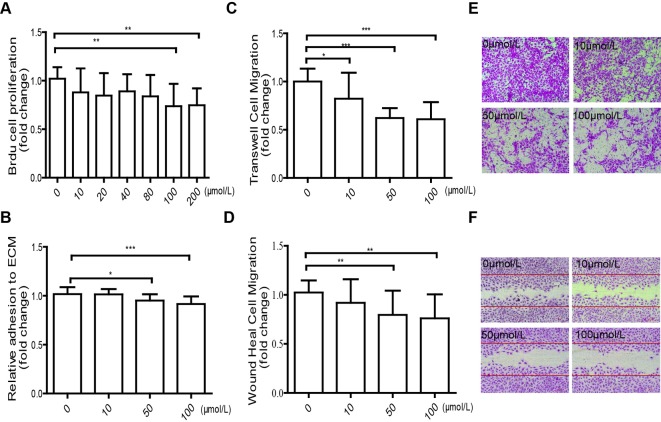
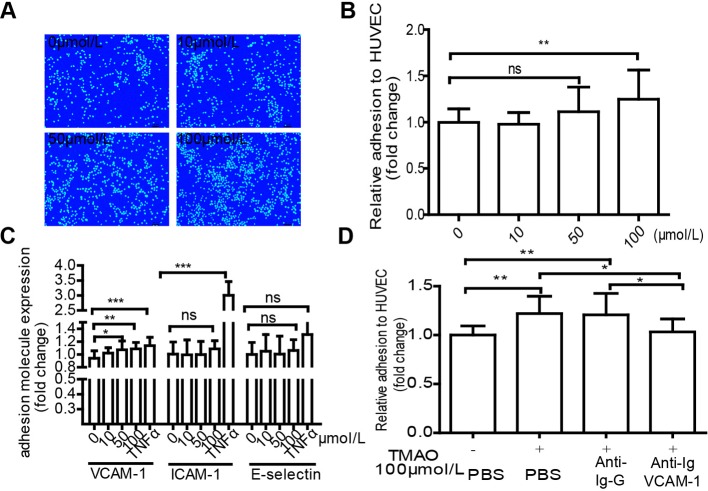
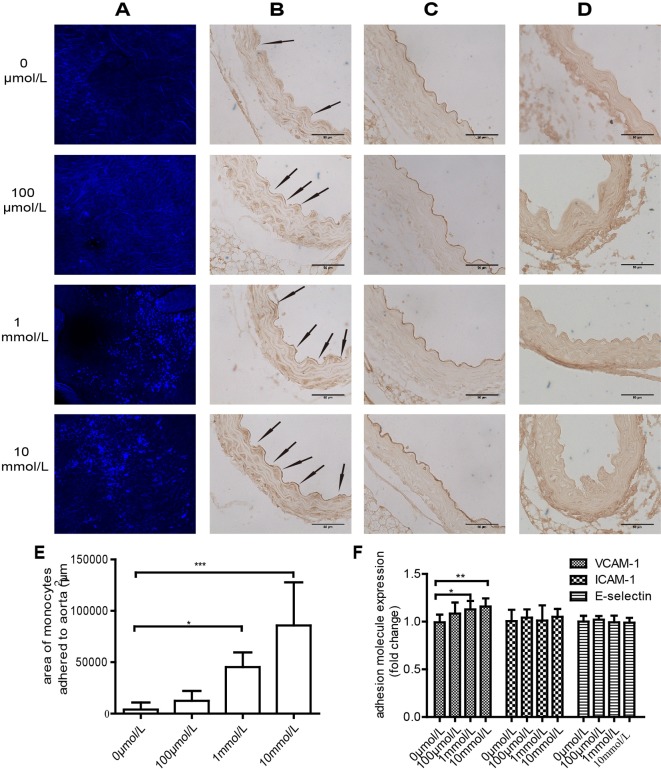
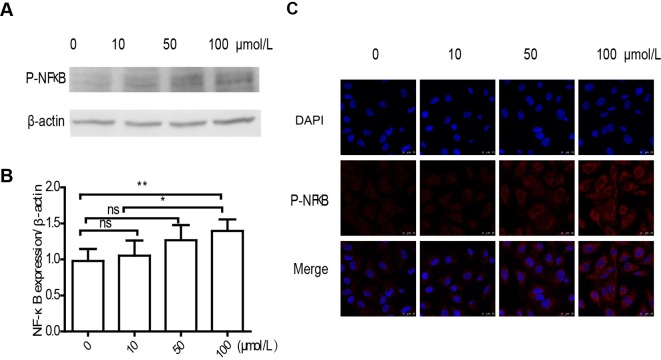
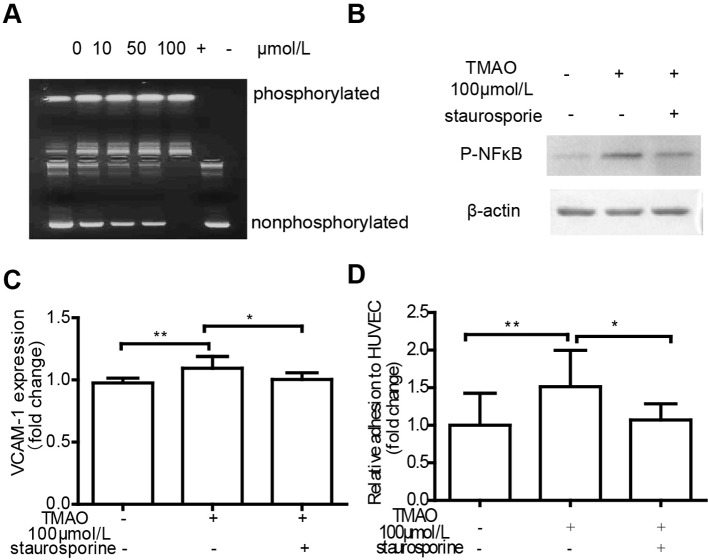
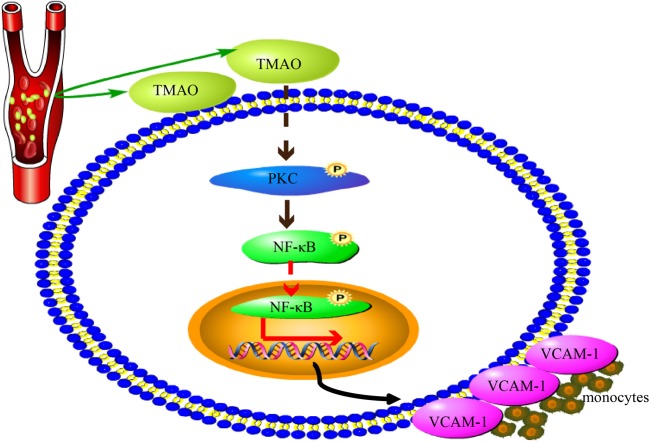
Several studies have reported a strong association between high plasma level of trimethylamine N-oxide (TMAO) and atherosclerosis development. However, the exact mechanism underlying this correlation is unknown. In the present study, we try to explore the impact of TMAO on endothelial dysfunction. After TMAO treatment, human umbilical vein endothelial cells (HUVECs) showed significant impairment in cellular proliferation and HUVECs-extracellular matrix (ECM) adhesion compared with control. Likewise, TMAO markedly suppressed HUVECs migration in transwell migration assay and wound healing assay. In addition, we found TMAO up-regulated vascular cell adhesion molecule-1 (VCAM-1) expression, promoted monocyte adherence, activated protein kinase C (PKC) and p-NF-κB. Interestingly, TMAO-stimulated VCAM-1 expression and monocyte adherence were diminished by PKC inhibitor. These results demonstrate that TMAO promotes early pathological process of atherosclerosis by accelerating endothelial dysfunction, including decreasing endothelial self-repair and increasing monocyte adhesion. Furthermore, TMAO-induced monocyte adhesion is partly attributable to activation of PKC/NF-κB/VCAM-1.
Overview
The claims and statistics of this paper haven’t been checked yet.
Run the check — free, no account needed. It reads the open-access text and checks the sources it cites.
Integrity signals
Registry
Cites
Statistics
Figures
Verification
Claims the paper makes
The claims and statistics of this paper haven’t been checked yet.
Run the check — free, no account needed. It reads the open-access text and checks the sources it cites.
Claims other papers make about this one
Each is checked against this paper’s own text: does it say what the citing paper says it does?
In the citing paper
“some studies performed on human monocytic THP-1 cells and human umbilical vein endothelial cells (HUVEC) showed that TMAO treatment enhanced monocyte adhesion through the PKC/NF-κB pathway, thus increasing the expression of VCAM-1 [58].”
From Implication of Trimethylamine N-Oxide (TMAO) in Disease: Potential Biomarker or New Therapeutic Target (2018) · cites this paper as [58]
Self-check
Percentages, sums and reported differences re-computed from the paper’s own numbers.
The self-check needs the paper’s full text.
Citations
Cites
Jaffe, E. A., Nachman, R., Becker, C. G., & Minick, C. (1973) · Journal of Clinical Investigation · doi:10.1172/jci107470 · Cited by 7,146
Heart Disease and Stroke Statistics—2015 Update: A Report From the American Heart Association
Mozaffarian, D., Benjamin, E. J., Go, A. S., Arnett, D. K., Blaha, M. J., Cushman, M., de Ferranti, S., Després, J.-P., Fullerton, H. J., Howard, V. J., et al. (2015) · Circulation · doi:10.1161/cir.0000000000000152 · Cited by 5,797
Gut flora metabolism of phosphatidylcholine promotes cardiovascular disease
Wang, Z., Klipfell, E., Bennett, B. J., Koeth, R., Levison, B. S., DuGar, B., Feldstein, A. E., Britt, E. B., Fu, X., Chung, Y.-M., et al. (2011) · Nature · doi:10.1038/nature09922 · Cited by 5,597
HEART DISEASE AND STROKE STATISTICS–2014 UPDATE: A REPORT FROM THE AMERICAN HEART ASSOCIATION
Tarver, T. (2014) · Journal of Consumer Health on the Internet · doi:10.1080/15398285.2014.902284 · Cited by 5,595
Intestinal microbiota metabolism of l-carnitine, a nutrient in red meat, promotes atherosclerosis
Koeth, R. A., Wang, Z., Levison, B. S., Buffa, J. A., Org, E., Sheehy, B. T., Britt, E. B., Fu, X., Wu, Y., Li, L., et al. (2013) · Nature Medicine · doi:10.1038/nm.3145 · Cited by 4,386
Intestinal microbial metabolism of phosphatidylcholine and cardiovascular risk
Tang, W. H. W., Wang, Z., Levison, B. S., Koeth, R. A., Britt, E. B., Fu, X., Wu, Y., & Hazen, S. L. (2013) · New England Journal of Medicine · doi:10.1056/nejmoa1109400 · Cited by 3,400
Bonetti, P. O., Lerman, L. O., & Lerman, A. (2003) · Arteriosclerosis Thrombosis and Vascular Biology · doi:10.1161/01.atv.0000051384.43104.fc · Cited by 2,234
Tang, W. H. W., Wang, Z., Kennedy, D. J., Wu, Y., Buffa, J. A., Agatisa-Boyle, B., Li, X. S., Levison, B. S., & Hazen, S. L. (2015) · Circulation Research · doi:10.1161/circresaha.116.305360 · Cited by 1,223
Activation of Protein Kinase C Isoforms and Its Impact on Diabetic Complications
Geraldes, P., & King, G. L. (2010) · Circulation Research · doi:10.1161/circresaha.110.217117 · Cited by 1,019
Seldin, M. M., Meng, Y., Qi, H., Zhu, W., Wang, Z., Hazen, S. L., Lusis, A. J., & Shih, D. M. (2016) · Journal of the American Heart Association · doi:10.1161/jaha.115.002767 · Cited by 911
Cited by
Sorted by citations
Dietary metabolism, the gut microbiome, and heart failure
Tang, W. H. W., Li, D. Y., & Hazen, S. L. (2019) · Nature Reviews Cardiology · doi:10.1038/s41569-018-0108-7 · Cited by 789
The Gut Microbiota and Inflammation: An Overview
Bander, Z. A., Nitert, M. D., Mousa, A., & Naderpoor, N. (2020) · International Journal of Environmental Research and Public Health · doi:10.3390/ijerph17207618 · Cited by 804
Janeiro, M., Ramírez, M., Milagro, F., Martínez, J., & Solas, M. (2018) · Nutrients · doi:10.3390/nu10101398 · Cited by 631
Functions of Gut Microbiota Metabolites, Current Status and Future Perspectives
Liu, J., Tan, Y., Cheng, H., Zhang, D., Feng, W., & Peng, C. (2022) · Aging and disease · doi:10.14336/ad.2022.0104 · Cited by 529
“domain–containing 3 (NLRP3) inflammasome [143].”
Gut microbiota and cardiovascular disease: opportunities and challenges
Kazemian, N., Mahmoudi, M., Halperin, F. A., Wu, J. C., & Pakpour, S. (2020) · Microbiome · doi:10.1186/s40168-020-00821-0 · Cited by 404
Lim, Y. J., Sidor, N. A., Tonial, N. C., Che, A., & Urquhart, B. L. (2021) · Toxins · doi:10.3390/toxins13020142 · Cited by 400
Yang, S., Li, X., Yang, F., Zhao, R., Pan, X., Liang, J., Tian, L., Li, X., Liu, L., Xing, Y., et al. (2019) · Frontiers in Pharmacology · doi:10.3389/fphar.2019.01360 · Cited by 360
TMAO: how gut microbiota contributes to heart failure
Zhang, Y., Wang, Y., Ke, B., & Du, J. (2020) · Translational research · doi:10.1016/j.trsl.2020.08.007 · Cited by 311
Trimethylamine N-oxide promotes atherosclerosis via CD36-dependent MAPK/JNK pathway
Geng, J., Yang, C., Wang, B., Zhang, X., Hu, T., Gu, Y., & Li, J. (2018) · Biomedicine & Pharmacotherapy · doi:10.1016/j.biopha.2017.11.016 · Cited by 297
Ke, Y., Li, D., Zhao, M., Liu, C., Liu, J., Zeng, A., Shi, X., Cheng, S., Pan, B., Zheng, L., et al. (2018) · Free Radical Biology and Medicine · doi:10.1016/j.freeradbiomed.2018.01.007 · Cited by 285
Self-citationvan den Munckhof, I., Kurilshikov, A., ter Horst, R., Riksen, N. P., Joosten, L. A. B., Zhernakova, A., Fu, J., Keating, S. T., Netea, M. G., Graaf, J. D., et al. (2018) · Obesity Reviews · doi:10.1111/obr.12750 · Cited by 281
“The same research group later found that TMAO up-regulated vascular cell adhesion molecule-1 (VCAM-1) expression and promoted monocyte adherence (100).”
BackgroundThe gut microbial metabolite trimethylamine N-oxide and cardiovascular diseases
Zhen, J., Zhou, Z., He, M., Han, H.-X., Lv, E., Wen, P., Liu, X., Wang, Y., Cai, X., Tian, J., et al. (2023) · Frontiers in Endocrinology · doi:10.3389/fendo.2023.1085041 · Cited by 248
Liu, Y., & Dai, M. (2020) · Mediators of Inflammation · doi:10.1155/2020/4634172 · Cited by 235
“In addition, data showed that TMAO had an impact on endothelial inflammatory injury [52], which will be discussed in the following paragraphs detailedly.”
BackgroundDuttaroy, A. K. (2021) · Nutrients · doi:10.3390/nu13010144 · Cited by 239
The Role of Gut Microbiota in Atherosclerosis and Hypertension
Ma, J., & Li, H. (2018) · Frontiers in Pharmacology · doi:10.3389/fphar.2018.01082 · Cited by 234
Gut Microbiota-Derived TMAO: A Causal Factor Promoting Atherosclerotic Cardiovascular Disease?
Canyelles, M., Borràs, C., Rotllán, N., Tondo, M., Escolá‐Gil, J. C., & Blanco‐Vaca, F. (2023) · International Journal of Molecular Sciences · doi:10.3390/ijms24031940 · Cited by 218
“TMAO also induced the xpression of cytokines and adhesion molecules in endothelial cells, thereby promoting onocyte adherence [68]; this induction required the nuclear factor kappa-light-chain-enhancer of activated B cells signaling pathway [8] (Figure 2).”
Gut microbiota in atherosclerosis: focus on trimethylamine N‐oxide
Zhu, Y., Li, Q., & Jiang, H. (2020) · Apmis · doi:10.1111/apm.13038 · Cited by 210
“Furthermore, TMAO damages the self-repairing capacity of injured endothelial cells (63).”
BackgroundArias, N., Arboleya, S., Allison, J., Kaliszewska, A., Higarza, S. G., Gueimonde, M., & Arias, J. L. (2020) · Nutrients · doi:10.3390/nu12082340 · Cited by 210
Al-Obaide, M. A. I., Singh, R., Datta, P., Rewers-Felkins, K., Salguero, M. V., Al‐Obaidi, I., Kottapalli, K. R., & Vasylyeva, T. L. (2017) · Journal of Clinical Medicine · doi:10.3390/jcm6090086 · Cited by 208
“This speculation is ba ed on rece t findings that showe TMAO’s association with c rdiov scular dise se [28,29].”
BackgroundInfluentialLyu, M., Wang, Y., Fan, G., Wang, X., Xu, S.-Y., & Zhu, Y. (2017) · Frontiers in Microbiology · doi:10.3389/fmicb.2017.02146 · Cited by 197
“, 2016), reduced endothelial self-repair, and increased monocyte adhesion partly via the pathway of protein kinase C (PKC)/NF-κB/vascular cell adhesion molecule-1 (VCAM-1) activation (Ma et al., 2017).”
BackgroundHost-microbiome interactions: Gut-Liver axis and its connection with other organs
Anand, S., & Mande, S. S. (2022) · npj Biofilms and Microbiomes · doi:10.1038/s41522-022-00352-6 · Cited by 201
The gut microbiota and its interactions with cardiovascular disease
Xu, H., Wang, X., Feng, W., Liu, Q., Zhou, S., Liu, Q., & Cai, L. (2020) · Microbial Biotechnology · doi:10.1111/1751-7915.13524 · Cited by 196
The gut microbiota as a novel regulator of cardiovascular function and disease
Battson, M. L., Lee, D. M., Weir, T. L., & Gentile, C. L. (2017) · The Journal of Nutritional Biochemistry · doi:10.1016/j.jnutbio.2017.12.010 · Cited by 191
Trimethylamine N‐oxide: breathe new life
Subramaniam, S., & Fletcher, C. (2018) · British Journal of Pharmacology · doi:10.1111/bph.13959 · Cited by 171
“There are very few studies have demonstrated the association 1348 British Journal of Pharmacology (2018) 175 1344–1353 Table 2 Association of TMAO with various diseases Species/cells Effects and proposed mechanisms References TMAO and heart failure Human -↑ Heart failure -Diastolic dysfunction and poor survival Tang e…”
BackgroundInfluentialInteraction between gut microbiome and cardiovascular disease
Peng, J., Xiao, X., Hu, M., & Zhang, X. (2018) · Life Sciences · doi:10.1016/j.lfs.2018.10.063 · Cited by 180
Trimethylamine N-Oxide Exacerbates Cardiac Fibrosis via Activating the NLRP3 Inflammasome
Li, X., Geng, J., Zhao, J., Ni, Q., Zhao, C., Zheng, Y., Chen, X., & Wang, L. (2019) · Frontiers in Physiology · doi:10.3389/fphys.2019.00866 · Cited by 164
The gut microbiome and cardiovascular disease: current knowledge and clinical potential
Ahmad, A. F., Dwivedi, G., O’Gara, F., Caparros-Martin, J. A., & Ward, N. C. (2019) · American Journal of Physiology-Heart and Circulatory Physiology · doi:10.1152/ajpheart.00376.2019 · Cited by 165
Chou, R., Chen, C., Chen, I., Huang, H.-L., Lu, Y., Kuo, C., Chang, C., Huang, P., Chen, J., & Lin, S. (2019) · Scientific Reports · doi:10.1038/s41598-019-40638-y · Cited by 135
The role of the gut microbiota in health and cardiovascular diseases
Wang, L., Wang, S., Zhang, Q., He, C., Fu, C., & Wei, Q. (2022) · Molecular Biomedicine · doi:10.1186/s43556-022-00091-2 · Cited by 132
Extracellular Vesicles: Mechanisms in Human Health and Disease
Malloci, M., Perdomo, L., Veerasamy, M., Andriantsitohaina, R., Simard, G., & Martínez, M. C. (2018) · Antioxidants and Redox Signaling · doi:10.1089/ars.2017.7265 · Cited by 131
“Indeed, that accumulation of EVs within the atherosclerotic plaque may represent an endogenous signal of neovascularization and vulnerability.”
Role and Effective Therapeutic Target of Gut Microbiota in Heart Failure
Jia, Q., Li, H., Zhou, H., Zhang, X., Zhang, A., Xie, Y., Li, Y., Lv, S., & Zhang, J. (2019) · Cardiovascular Therapeutics · doi:10.1155/2019/5164298 · Cited by 119
The potential of tailoring the gut microbiome to prevent and treat cardiometabolic disease
Chakaroun, R., Olsson, L. M., & Bäckhed, F. (2022) · Nature Reviews Cardiology · doi:10.1038/s41569-022-00771-0 · Cited by 131
Inflammation in Coronary Microvascular Dysfunction
Sagris, M., Theofilis, P., Antonopoulos, A. S., Oikonomou, E., Paschaliori, C., Galiatsatos, N., Tsioufis, K., & Tousoulis, D. (2021) · International Journal of Molecular Sciences · doi:10.3390/ijms222413471 · Cited by 115
“Studies showed that increased TMAO level induced the activation of NF-kappa B (NF-κB) pathway and increased the expression of pro-inflammatory genes including inflammatory cytokines, adhesion molecules and chemokines [96].”
BackgroundWitkowski, M., Witkowski, M., Friebel, J., Buffa, J. A., Li, X. S., Wang, Z., Sangwan, N., Li, L., DiDonato, J. A., Tizian, C., et al. (2021) · Cardiovascular Research · doi:10.1093/cvr/cvab263 · Cited by 122
Savi, M., Bocchi, L., Bresciani, L., Falco, A., Quaini, F., Mena, P. R., Brighenti, F., Crozier, A., Stilli, D., & Rio, D. D. (2018) · Molecules · doi:10.3390/molecules23030549 · Cited by 112
Berberine treatment reduces atherosclerosis by mediating gut microbiota in apoE-/- mice
Shi, Y., Hu, J., Geng, J., Hu, T., Wang, B., Yan, W., Jiang, Y., Li, J., & Liu, S. (2018) · Biomedicine & Pharmacotherapy · doi:10.1016/j.biopha.2018.08.148 · Cited by 111
Simó, C., & García‐Cañas, V. (2020) · Food & Function · doi:10.1039/d0fo01237h · Cited by 112
Praveenraj, S. S., Sonali, S., Anand, N., Hediyal, T. A., Vichitra, C., Kalyan, M., Kanna, P. V., Chandana, K. A., Paneyala, S., Mahalakshmi, A. M., et al. (2022) · Molecular Neurobiology · doi:10.1007/s12035-022-02990-5 · Cited by 116
“Furthermore, TMAO levels are also associated with increased production of pro-inflammatory chemokines and inflammatory cytokines [36, 37].”
BackgroundHigh Mobility Group Box 1 Mediates TMAO-Induced Endothelial Dysfunction
Singh, G. B., Zhang, Y., Boini, K. M., & Koka, S. (2019) · International Journal of Molecular Sciences · doi:10.3390/ijms20143570 · Cited by 103
“TMAO has been reported to activate protein kinase C (PKC)/NF-kB, resulting in enhanced expression of vascular cell adhesion molecule 1 (VCAM-1) and monocyte adhesion [17].”
BackgroundThe Role of the Oral Microbiome in the Development of Diseases
Kozak, M., & Pawlik, A. (2023) · International Journal of Molecular Sciences · doi:10.3390/ijms24065231 · Cited by 108
“TMAO enhances foam cell formation and increases VCAM-1 (Vascular cell adhesion molecule-1) expression, which enhances monocyte adhesion to the endothelium [101].”
BackgroundGut-Derived Metabolites and Their Role in Immune Dysfunction in Chronic Kidney Disease
Glorieux, G., Gryp, T., & Perna, A. F. (2020) · Toxins · doi:10.3390/toxins12040245 · Cited by 95
“This points to the fact that TMAO promotes an early pathological process of atherosclerosis [95].”
BackgroundShanmugham, M., Bellanger, S., & Leo, C. H. (2023) · Pharmaceuticals · doi:10.3390/ph16040504 · Cited by 103
Yao, M., Liao, P., Zhao, X., & Wang, L. (2020) · BMC Cardiovascular Disorders · doi:10.1186/s12872-019-01310-5 · Cited by 90
Gut Microbiota and Atherosclerosis
Li, D. Y., & Tang, W. H. W. (2017) · Current Atherosclerosis Reports · doi:10.1007/s11883-017-0675-9 · Cited by 90
The gut microbiome and thromboembolism
Hasan, R. A., Koh, A. Y., & Zia, A. N. (2020) · Thrombosis Research · doi:10.1016/j.thromres.2020.03.003 · Cited by 86
Microbiota in Gut‐Heart Axis: Metabolites and Mechanisms in Cardiovascular Disease
Kondapalli, N. B., Katari, V., Dalal, K. K., Paruchuri, S. M., & Thodeti, C. K. (2025) · Comprehensive physiology · doi:10.1002/cph4.70024 · Cited by 98
Circulating Metabolites Originating from Gut Microbiota Control Endothelial Cell Function
Amedei, A., & Morbidelli, L. (2019) · Molecules · doi:10.3390/molecules24213992 · Cited by 84
“Reduced EC repair by TMAO has also been reported in in vitro studies [60].”
BackgroundTrimethylamine-N-Oxide (TMAO) as a Rising-Star Metabolite: Implications for Human Health
Caradonna, E., Abate, F., Schiano, E., Paparella, F., Ferrara, F., Vanoli, E., Difruscolo, R., Goffredo, V. M., Amato, B., Setacci, C., et al. (2025) · Metabolites · doi:10.3390/metabo15040220 · Cited by 93
Oktaviono, Y. H., Lamara, A. D., Saputra, P. B. T., Arnindita, J. N., Pasahari, D., Saputra, M. E., & Suasti, N. M. A. (2023) · Biomolecules and Biomedicine · doi:10.17305/bb.2023.8893 · Cited by 92
Role of the Gut Microbiome in the Development of Atherosclerotic Cardiovascular Disease
Samarraie, A. A., Pichette, M., & Rousseau, G. (2023) · International Journal of Molecular Sciences · doi:10.3390/ijms24065420 · Cited by 78
Chan, M. M.-Y., Yang, X., Wang, H., Saaoud, F., Sun, Y., & Fong, D. (2019) · Nutrients · doi:10.3390/nu11081821 · Cited by 68
“TMAO (100 µM) also downregulates the production of nitric oxide and increases the mRNA and protein expression of the intercellular adhesion molecule (ICAM) and the vascular cell adhesion protein (VCAM) in primary HUVECs [82,85].”
BackgroundRoles of Gut Microbial Metabolites in Diabetic Kidney Disease
Fang, Q., Liu, N., Zheng, B., Guo, F., Zeng, X., Huang, X., & Ouyang, D. (2021) · Frontiers in Endocrinology · doi:10.3389/fendo.2021.636175 · Cited by 71
Ilyas, A., Wijayasinghe, Y. S., Khan, I., Samaloty, N. M. E., Adnan, M., Dar, T. A., Poddar, N. K., Singh, L. R., Sharma, H., & Khan, S. (2022) · Frontiers in Molecular Biosciences · doi:10.3389/fmolb.2022.964624 · Cited by 73
Chen, P., Li, S., Koh, Y., Wu, J.-C., Yang, M., Ho, C., & Pan, M. (2019) · Journal of Agricultural and Food Chemistry · doi:10.1021/acs.jafc.9b03092 · Cited by 69
Modulation of Endothelial Function by TMAO, a Gut Microbiota-Derived Metabolite
Querio, G., Antoniotti, S., Geddo, F., Levi, R. C., & Gallo, M. P. (2023) · International Journal of Molecular Sciences · doi:10.3390/ijms24065806 · Cited by 70
Chamieh, C. E., Liabeuf, S., & Massy, Z. A. (2022) · Toxins · doi:10.3390/toxins14040280 · Cited by 69
Targeting Trimethylamine N-Oxide: A New Therapeutic Strategy for Alleviating Atherosclerosis
Jing, L., Zhang, H., Xiang, Q., Shen, L., Guo, X., Zhai, C., & Hu, H. (2022) · Frontiers in Cardiovascular Medicine · doi:10.3389/fcvm.2022.864600 · Cited by 69
From obesity through gut microbiota to cardiovascular diseases: a dangerous journey
Marzullo, P., Renzo, L. D., Pugliese, G., Siena, M. D., Barrea, L., Muscogiuri, G., Colao, A., & Savastano, S. (2020) · International Journal of Obesity Supplements · doi:10.1038/s41367-020-0017-1 · Cited by 64
The role of trimethylamine‐N‐Oxide in the development of Alzheimer's disease
Buawangpong, N., Pinyopornpanish, K., Siri‐Angkul, N., Chattipakorn, N., & Chattipakorn, S. C. (2021) · Journal of Cellular Physiology · doi:10.1002/jcp.30646 · Cited by 59
Tacconi, E., Palma, G., Biase, D. D., Luciano, A., Barbieri, M., de Nigris, F., & Bruzzese, F. (2023) · Nutrients · doi:10.3390/nu15030563 · Cited by 62
Gut microbiota metabolites as integral mediators in cardiovascular diseases (Review)
Zhu, Y., Shui, X., Liang, Z., Huang, Z., Qi, Y., He, Y., Chen, C., Luo, H., & Lei, W. (2020) · International Journal of Molecular Medicine · doi:10.3892/ijmm.2020.4674 · Cited by 60
“Moreover, TMAO has been shown to accelerate endothelial cell dysfunction by activating the protein kinase c (PKc)/nuclear factor-κB (NF-κB)/vascular cell adhesion molecule 1 (VcAM-1) pathway during the pathological process of atherosclerosis (38).”
BackgroundTMA/TMAO in Hypertension: Novel Horizons and Potential Therapies
Zhang, W., Wang, Y., Zhang, A., Ding, Y., Zhang, X., Jia, Q.-J., Zhu, Y., Li, Y., Lv, S., & Zhang, J. (2021) · Journal of Cardiovascular Translational Research · doi:10.1007/s12265-021-10115-x · Cited by 59
Gut Microbiota Modulation as a Novel Therapeutic Strategy in Cardiometabolic Diseases
Mutalub, Y. B., Abdulwahab, M., Mohammed, A., Yahkub, A. M., Al-Mhanna, S. B., Yusof, W., Tang, S. P., Rasool, A. H. G., & Mokhtar, S. S. (2022) · Foods · doi:10.3390/foods11172575 · Cited by 64
Cross-Talk between Gut Microbiota and Heart via the Routes of Metabolite and Immunity
Bu, J., & Wang, Z. (2018) · Gastroenterology Research and Practice · doi:10.1155/2018/6458094 · Cited by 59
“During proinflammation, (1) TMAO can promote the expression of scavenger receptors (SRs) in the macrophage, such as CD36 and SR-A [5, 30]; (2) TMAO can also activate the well-known mitogenactivated protein kinase, extracellular signal-related kinase, and nuclear factor-κB signaling cascade in primary human aortic endo…”
BackgroundPostbiotic-Enabled Targeting of the Host-Microbiota-Pathogen Interface: Hints of Antibiotic Decline?
Puccetti, M., Xiroudaki, S., Ricci, M., & Giovagnoli, S. (2020) · Pharmaceutics · doi:10.3390/pharmaceutics12070624 · Cited by 59
“On the other hand, recent works have shown that higher trimethylamine-N-oxide levels induced the activation of the NF-κB pathway and increased the expression of pro-inflammatory cytokines, adhesion molecules, and chemokines [191,231].”
BackgroundDiNicolantonio, J. J., McCarty, M. F., & O’Keefe, J. H. (2019) · Open Heart · doi:10.1136/openhrt-2018-000890 · Cited by 59
Yamagata, K., Hashiguchi, K., Yamamoto, H., & Tagami, M. (2019) · Journal of Cardiovascular Pharmacology · doi:10.1097/fjc.0000000000000747 · Cited by 57
Samulak, J. J., Sawicka, A. K., Hartmane, D., Grı̄nberga, S., Pugovičs, O., Łysiak−Szydłowska, W., & Olek, R. A. (2018) · Annals of Nutrition and Metabolism · doi:10.1159/000495037 · Cited by 54
Relationship between gut microbiota and type 2 diabetic erectile dysfunction in Sprague-Dawley rats
Li, H., Qi, T., Huang, Z., Ying, Y., Zhang, Y., Wang, B., Ye, L., Zhang, B., Chen, D., & Chen, J. (2017) · Journal of Huazhong University of Science and Technology [Medical Sciences] · doi:10.1007/s11596-017-1767-z · Cited by 52
Li, Y., Lü, H., Guo, J., Zhang, M., Zheng, H., Liu, Y., & Liu, W. (2023) · Annals of Medicine · doi:10.1080/07853890.2023.2215542 · Cited by 54
“Thus, disruption of kidney function, together with dysbiosis of gut microbiota, leads to increased circulating TMAO concentrations in patients with CKD including end-stage kidney disease (ESKD) [15–17], which in turn exacerbates kidney damage by promoting inflammation [18–21].”
BackgroundMicrobiota of the gastrointestinal tract: Friend or foe?
Senchukova, M. A. (2023) · World Journal of Gastroenterology · doi:10.3748/wjg.v29.i1.19 · Cited by 56
Angiogenesis, a key point in the association of gut microbiota and its metabolites with disease
Wang, Y., Bai, M., Peng, Q., Li, L., Tian, F., Guo, Y., & Jing, C. (2024) · European journal of medical research · doi:10.1186/s40001-024-02224-5 · Cited by 51
“TMAO also induces endothelial cell dysfunction and promotes apoptosis in vascular endothelial cells by increasing the expression of adhesion molecules [131].”
Farhangi, M. A., & Vajdi, M. (2020) · Nutrition Reviews · doi:10.1093/nutrit/nuaa111 · Cited by 50
Trimethylamine N-Oxide in Heart Failure: A Meta-Analysis of Prognostic Value
Li, X., Fan, Z., Cui, J., Li, D., Lu, J., Cui, X., Xie, L., Wu, Y., Lin, Q., & Li, Y. (2022) · Frontiers in Cardiovascular Medicine · doi:10.3389/fcvm.2022.817396 · Cited by 47
Lim, T., Ryu, J., Lee, K., Park, S. Y., & Hwang, K. T. (2020) · Nutrients · doi:10.3390/nu12082448 · Cited by 47
“Also, another possible molecular mechanism has been suggested that uptake of TMAO into cells would mediate activation of NF-κB through collaborating with protein kinase C activator [11].”
BackgroundTherapeutic potential of natural products against atherosclerosis: Targeting on gut microbiota
Zhao, X., Oduro, P. K., Tong, W., Wang, Y., Gao, X., & Wang, Q. (2020) · Pharmacological Research · doi:10.1016/j.phrs.2020.105362 · Cited by 47
PRMT5 critically mediates TMAO-induced inflammatory response in vascular smooth muscle cells
Liu, H., Jia, K., Ren, Z., Sun, J. T., & Pan, L. (2022) · Cell Death and Disease · doi:10.1038/s41419-022-04719-7 · Cited by 51
“PRMT5 promotes TMAO-induced VCAM-1 expression via methylation of NF-κB p65 Activation of NF-κB is crucial for driving VCAM-1 gene expression [14].”
BackgroundTrimethylamine/Trimethylamine-N-Oxide as a Key Between Diet and Cardiovascular Diseases
He, S., Jiang, H., Zhuo, C., & Jiang, W. (2021) · Cardiovascular Toxicology · doi:10.1007/s12012-021-09656-z · Cited by 46
“It is discovered that TMAO promotes cellular senescence through oxidative stress and endothelial dysfunction through activating PKC/NF-κB/VCAM-1 pathway [48, 49].”
BackgroundCimmino, G., Muscoli, S., Rosa, S. D., Cesaro, A., Perrone, M. A., Selvaggio, S., Selvaggio, G., Aimo, A., Pedrinelli, R., Mercuro, G., et al. (2023) · Journal of Cardiovascular Medicine · doi:10.2459/jcm.0000000000001450 · Cited by 45
Involvement of Organic Cation Transporters in the Kinetics of Trimethylamine N-oxide
Miyake, T., Mizuno, T., Mochizuki, T., Kimura, M., Matsuki, S., Irie, S., Ieiri, I., Maeda, K., & Kusuhara, H. (2017) · Journal of Pharmaceutical Sciences · doi:10.1016/j.xphs.2017.04.067 · Cited by 44
Liu, S., He, F., Zheng, T., Wan, S., Chen, J., Yang, F., Xu, X., & Pei, X. (2021) · Molecular Nutrition & Food Research · doi:10.1002/mnfr.202100014 · Cited by 45
Gut Microbiota: Critical Controller and Intervention Target in Brain Aging and Cognitive Impairment
Li, H., Ni, J., & Qing, H. (2021) · Frontiers in Aging Neuroscience · doi:10.3389/fnagi.2021.671142 · Cited by 44
Pathogenic Mechanisms of Trimethylamine N-Oxide-induced Atherosclerosis and Cardiomyopathy
Zheng, Y., & He, J. (2021) · Current Vascular Pharmacology · doi:10.2174/1570161119666210812152802 · Cited by 46
Use of dietary phytochemicals for inhibition of trimethylamine N-oxide formation
Iglesias‐Carres, L., Hughes, M. D., Steele, C. N., Ponder, M. A., Davy, K. P., & Neilson, A. P. (2021) · The Journal of Nutritional Biochemistry · doi:10.1016/j.jnutbio.2021.108600 · Cited by 43
Ji, C., Yin, L., Mo, Y., Lu, Z., Lu, F., Lin, Q., Liu, X., Zou, C., & Wu, Y. (2021) · Frontiers in Pharmacology · doi:10.3389/fphar.2021.780924 · Cited by 41
Querio, G., Antoniotti, S., Geddo, F., Levi, R. C., & Gallo, M. P. (2022) · International Journal of Molecular Sciences · doi:10.3390/ijms23073982 · Cited by 46
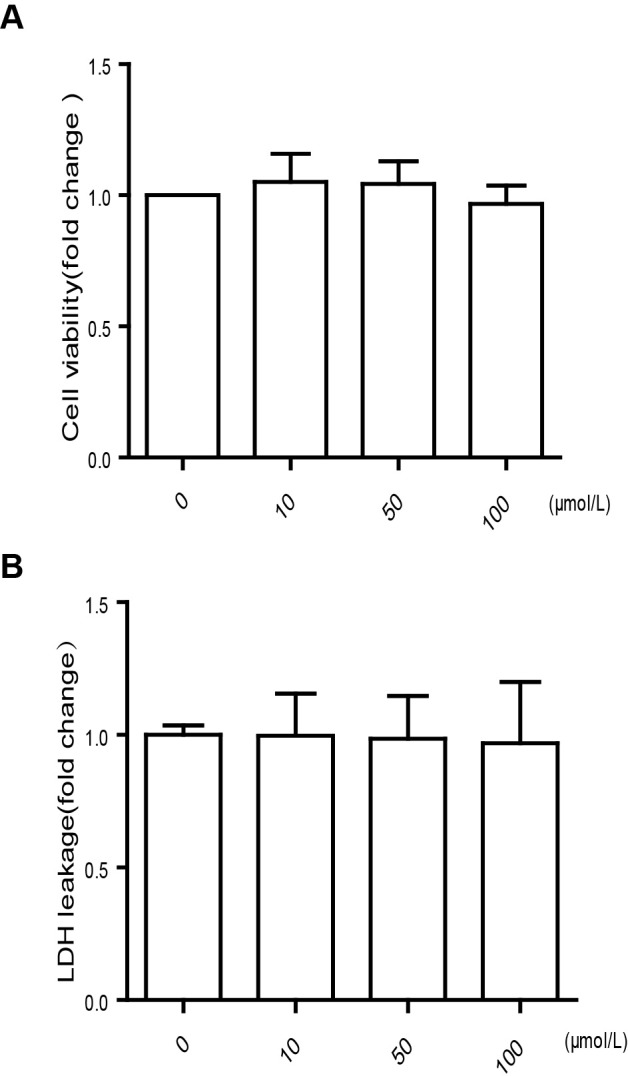
“, that show n re uction in human umbilical vein endothelial cell (HUVEC) viability after 24 h of treatment wit TMAO (0, 10, 50, 100 μm l/L) [25].”
Wu, Y., Rong, X., Pan, M., Wang, T., Yang, H., Chen, X., Xiao, Z., & Zhao, C. (2022) · Frontiers in Cell and Developmental Biology · doi:10.3389/fcell.2022.840171 · Cited by 42
Gut Microbiota Composition and Cardiovascular Disease: A Potential New Therapeutic Target?
Belli, M., Barone, L., Longo, S., Prandi, F. R., Lecis, D., Mollace, R., Margonato, D., Muscoli, S., Sergi, D., Federici, M., et al. (2023) · International Journal of Molecular Sciences · doi:10.3390/ijms241511971 · Cited by 43
“VCAM-1 expression and monocyte adhesion [57].”
BackgroundLuo, Z., Yu, X., Wang, C., Zhao, H., Wang, X., & Guan, X. (2023) · Journal of Physiology and Biochemistry · doi:10.1007/s13105-023-00984-y · Cited by 41
“* p 0.05, ** p 0.01, *** p 0.001, compared between the groups by t -test) cell viability in endothelial cells [9, 37].”
InfluentialEffects of gut microbiota on atherosclerosis through hydrogen sulfide
Gui, D.-D., Luo, W., Yan, B., Ren, Z., Tang, Z., Liu, L.-S., Zhang, J., & Jiang, Z.-S. (2021) · European Journal of Pharmacology · doi:10.1016/j.ejphar.2021.173916 · Cited by 40
Krueger, E. S., Lloyd, T. S., & Tessem, J. S. (2021) · Nutrients · doi:10.3390/nu13082873 · Cited by 41
Role of Gut Microbial Metabolites in Cardiovascular Diseases—Current Insights and the Road Ahead
Datta, S., Pasham, S., Sandeep, I. S., Boini, K. M., & Koka, S. (2024) · International Journal of Molecular Sciences · doi:10.3390/ijms251810208 · Cited by 42
“…monocyte adhesion to endothelial cells during foam cell formation TMAO also promotes monocyte adhesion to endothelial cells during foam cell formation and increases the count of scavenger receptors on macrophages [134,135]. and increases the count of scavenger receptors on macrophages [134,135].”
BackgroundChen, C., Leu, H., Wang, S., Tsai, S., Chou, R., Lu, Y., Tsai, Y., Kuo, C., Huang, P., Chen, J., et al. (2022) · Antioxidants and Redox Signaling · doi:10.1089/ars.2021.0115 · Cited by 41
“The TMAO elevation has been shown to cause vascular injury and promote endothelial cell inflammation by triggering NLRP3 inflammasome formation and activation (Boini et al, 2017; Ma et al, 2017) (Supplementary Fig.”
Further insight into systemic sclerosis from the vasculopathy perspective
Ren, H., Liu, L., Xiao, Y., Shi, Y., Zeng, Z., Ding, Y. P., Zou, P., & Xiao, R. (2023) · Biomedicine & Pharmacotherapy · doi:10.1016/j.biopha.2023.115282 · Cited by 41
Vascular Cognitive Impairment and the Gut Microbiota
Li, S., Shao, Y., Li, K., HuangFu, C., Wang, W., Liu, Z., Cai, Z., & Zhao, B. (2018) · Journal of Alzheimer s Disease · doi:10.3233/jad-171103 · Cited by 40
“This result showed that TMAO may impair the endothelial cell self-repair capacity by activating protein kinase C/NF-κ B and leading to the elevated expression of vascular cell adhesion molecule-1 and monocyte adhesion [54].”
Role of S-Equol, Indoxyl Sulfate, and Trimethylamine N-Oxide on Vascular Function
Matsumoto, T., Kojima, M., Takayanagi, K., Taguchi, K., & Kobayashi, T. (2020) · American Journal of Hypertension · doi:10.1093/ajh/hpaa053 · Cited by 39
Wang, A., Dongcheng, C., Zhang, H., Li, Q., Yan, Z., Qiu, Y., Xu, H., & Keji, C. (2019) · Pharmacological Research · doi:10.1016/j.phrs.2019.02.018 · Cited by 37
Gut Microbiota and Cardiovascular Diseases
Anselmi, G., Gagliardi, L., Egidi, G., Leone, S., Gasbarrini, A., Miggiano, G. A. D., & Galiuto, L. (2020) · Cardiology in Review · doi:10.1097/crd.0000000000000327 · Cited by 37
Non-alcoholic fatty liver disease: a metabolic burden promoting atherosclerosis
Zhang, L., She, Z., Li, H., & Zhang, X. (2020) · Clinical Science · doi:10.1042/cs20200446 · Cited by 39
Ding, H., Liu, J., Chen, Z., Huang, S., Yan, C., Kwek, E., He, Z., Zhu, H., & Chen, Z. (2023) · Food & Function · doi:10.1039/d3fo04396g · Cited by 36
Metadata
- Authors
- Ma, G., Pan, B., Chen, Y., Guo, C., Zhao, M., Zheng, L., & Chen, B.
- Affiliations
- Department of Cardiology, Beijing Tian Tan Hospital, Capital Medical University, Beijing 100050, China
- Peking University (CN)
- Capital Medical University (CN)
- Corresponding author
- Zheng, LeMin
- Chen, BuXing
- Venue
- Bioscience Reports
- Publisher
- Portland Press Ltd.
- Published
- 2017-03-02
- Volume
- 37
- Issue
- 2
- ISSN
- 0144-8463 (ISSN-L)
- 1573-4935
- PMC
- PMC5333780
- OpenAlex
- W2583372114
- Cited by
- 267
- References
- 46
- Citations by year
- 2026: 14 · 2025: 35 · 2024: 29 · 2023: 45 · 2022: 36 · 2021: 31 · 2020: 35 · 2019: 18 · 2018: 16 · 2017: 8
- FWCI
- 15.59
- Type
- journal article
- Language
- en
- Open access
- gold
- doi.org
- Locations
- Bioscience Reports (publishedVersion, cc-by)
- Europe PMC (PubMed Central) (publishedVersion, cc-by)
- PubMed Central (publishedVersion, cc-by)
- PubMed (publishedVersion)
- Greater South Information System
- Funders
- Academy of Medical Sciences
- National Natural Science Foundation of China (81172500, 81170101, 81570321, 81370235)
- Chinese Academy of Sciences
- Chinese Academy of Medical Sciences
- Topics
- Health Sciences › Medicine › Physiology (medical) › Nitric Oxide and Endothelin Effects
- Life Sciences › Immunology and Microbiology › Immunology › Atherosclerosis and Cardiovascular Diseases
- Health Sciences › Medicine › Immunology and Allergy › Cell Adhesion Molecules Research
- Keywords
- trimethylamine N-oxide, atherosclerosis, endothelial dysfunction, monocyte adhesion, VCAM-1, protein kinase C, NF-κB, endothelial cell migration, endothelial cell proliferation, extracellular matrix adhesion, human umbilical vein endothelial cells
- MeSH terms
- Cell Adhesion, Cells, Cultured, Humans, Methylamines, Monocytes, Protein Kinase C, Signal Transduction, NF-kappa B, Vascular Cell Adhesion Molecule-1, Atherosclerosis, Human Umbilical Vein Endothelial Cells
About these checks
Registry, retraction, Cites and statistics results are computed, not judged, with one exception: a printed reference that no index lists is read once by a model before it counts as a citation error. Claims are extracted by a model and kept only when their quote appears verbatim in the text; each cited source is then checked, with a model’s help, for whether it says what the claim relies on. Those verdicts can be wrong — read the claim’s quote and the cited source before relying on one.
Statistics and arithmetic are recomputed, not judged.
Confidence bands are shown only for fields calibrated on our annotated test set. None is calibrated yet, so no band is shown.
What counts as a claim ›How we measure confidence ›How we check this ›
Are you an author, or do you see a problem with this page? Request a review
