

Galaxy morphology classification based on Convolutional vision Transformer (CvT)
Open accessThe DOI matches its Crossref record; 28 of the 28 references it cites were found in a registry or an index.
Abstract
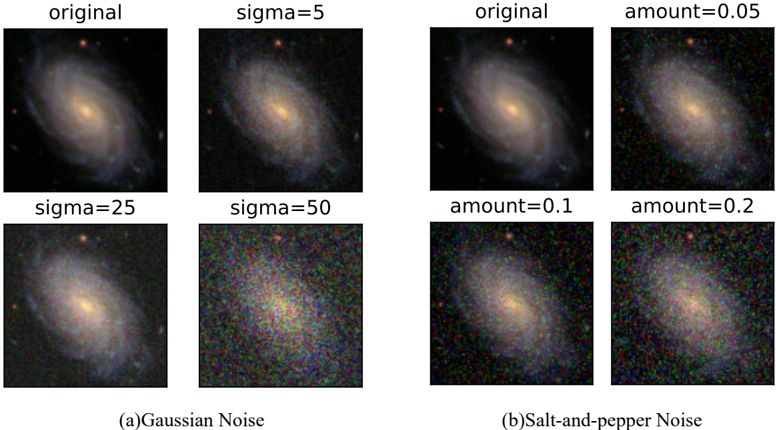
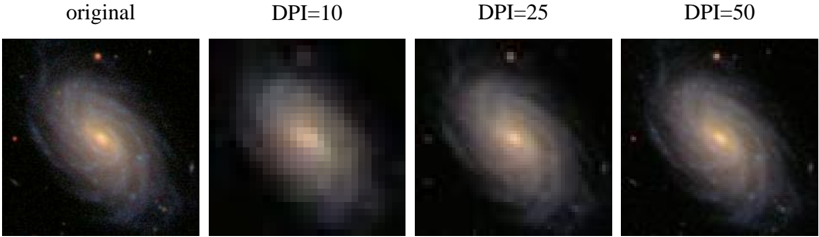
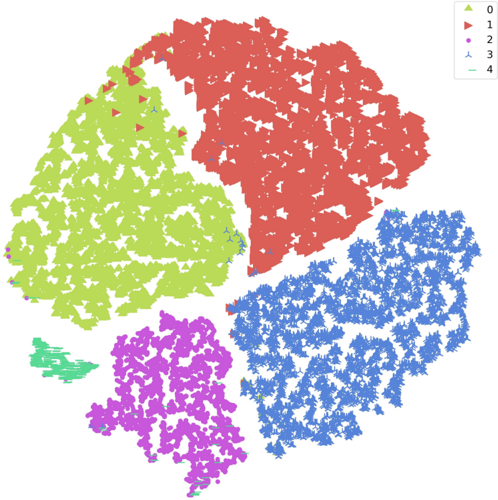
Context.The classification of galaxy morphology is among the most active fields in astronomical research today. With the development of artificial intelligence technology, deep learning is a useful tool in the classification of the morphology of galaxies and significant progress has been made in this domain. However, there is still some room for improvement in terms of classification accuracy, automation, and related issues. Aims.Convolutional vision Transformer (CvT) is an improved version of the Vision Transformer (ViT) model. It improves the performance of the ViT model by introducing a convolutional neural network (CNN). This study explores the performance of the CvT model in the area of galaxy morphology classification. Methods.In this work, the CvT model was applied, for the first time, in a five-class classification task of galaxy morphology. We added different types and degrees of noise to the original galaxy images to verify that the CvT model achieves good classification performance, even in galaxy images with low signal-to-noise ratios (S/Ns). Then, we also validated the classification performance of the CvT model for galaxy images at different redshifts based on the low-redshift dataset GZ2 and the high-redshift dataset Galaxy Zoo CANDELS. In addition, we visualized and analyzed the classification results of the CvT model based on the t-distributed stochastic neighborhood -embedding (t-SNE) algorithm. Results.We find that (1) compared with other five-class classification models of galaxy morphology based on CNN models, the average accuracy, precision, recall, and F1_score evaluation metrics of the CvT classification model are all higher than 98%, which is an improvement of at least 1% compared with those based on CNNs; (2) the classification visualization results show that different categories of galaxies are separated from each other in multi-dimensional space. Conclusions.The application of the CvT model to the classification study of galaxy morphology is a novel undertaking that carries important implications for future studies.
Overview
The claims and statistics of this paper haven’t been checked yet.
Free: it reads the open-access text and checks the first 5 claims that cite a source we can check. Create a free account to check every claim.
Integrity signals
Registry
Cites
Statistics
Figures
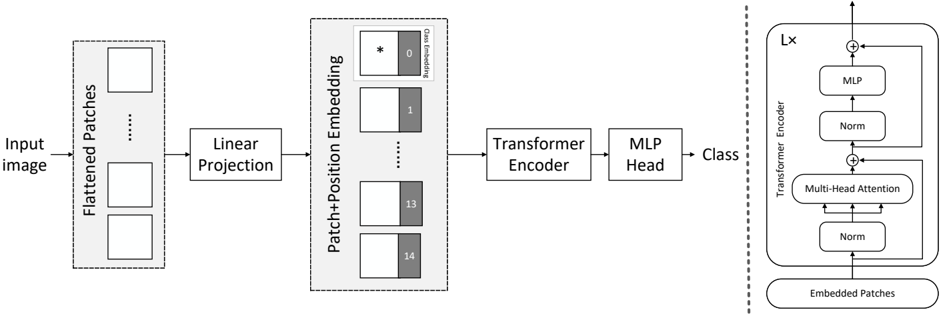
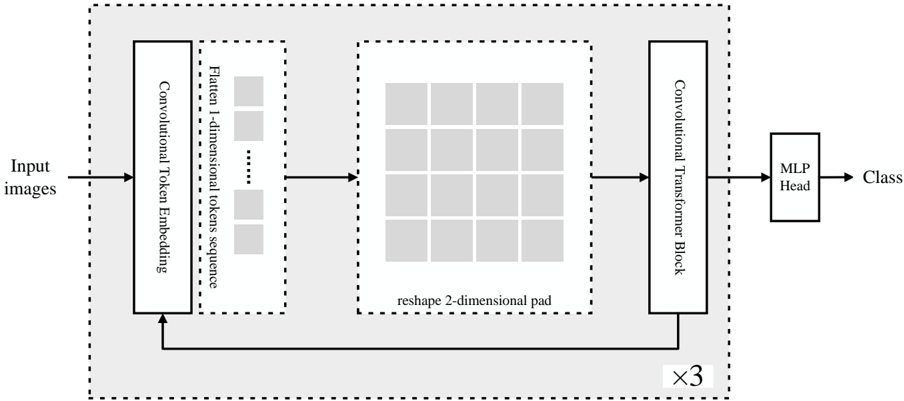
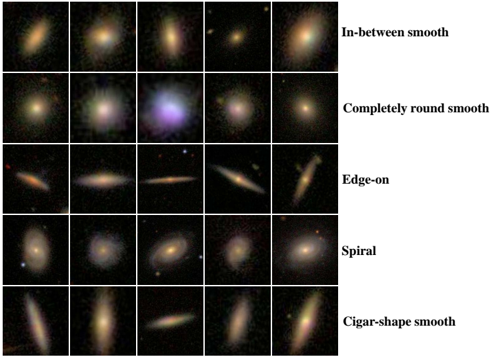
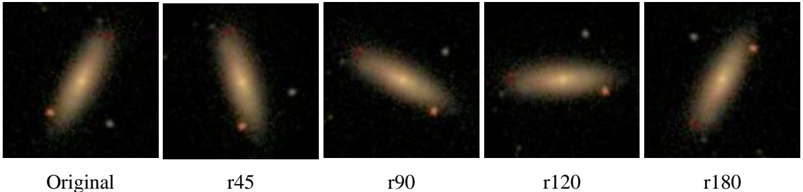
Verification
Claims the paper makes
The claims and statistics of this paper haven’t been checked yet.
Free: it reads the open-access text and checks the first 5 claims that cite a source we can check. Create a free account to check every claim.
Self-check
Percentages, sums and reported differences re-computed from the paper’s own numbers.
The self-check needs the paper’s full text.
Citations
Cites
The Sloan Digital Sky Survey: Technical Summary
York, D. G., Adelman, J., Anderson, Jr., Anderson, S. F., Annis, J., Bahcall, N. A., Bakken, J. A., Barkhouser, R., Bastian, S., Berman, E., et al. (2000) · The Astronomical Journal · doi:10.1086/301513 · Cited by 10,366
scikit-image: image processing in Python
van der Walt, S., Schönberger, J. L., Nunez-Iglesias, J., Boulogne, F., Warner, J. D., Yager, N., Gouillart, E., & Yu, T. (2014) · PeerJ · doi:10.7717/peerj.453 · Cited by 6,794
THE SEVENTH DATA RELEASE OF THE SLOAN DIGITAL SKY SURVEY
Abazajian, K. N., Adelman-McCarthy, J. K., Agüeros, M. A., Allam, S. S., Prieto, C. A., An, D., Anderson, K. S. J., Anderson, S. F., Annis, J., Bahcall, N. A., et al. (2009) · The Astrophysical Journal Supplement Series · doi:10.1088/0067-0049/182/2/543 · Cited by 5,341
HuggingFace's Transformers: State-of-the-art Natural Language Processing
Wolf, T., Debut, L., Sanh, V., Chaumond, J., Delangue, C., Moi, A., Cistac, P., Rault, T., Louf, R., Funtowicz, M., et al. (2019) · arXiv · doi:10.48550/arxiv.1910.03771 · Cited by 3,347
CvT: Introducing Convolutions to Vision Transformers
Wu, H., Xiao, B., Codella, N., Liu, M., Dai, X., Yuan, L., & Zhang, L. (2021) · 2021 IEEE/CVF International Conference on Computer Vision (ICCV) · doi:10.1109/iccv48922.2021.00009 · Cited by 2,444
The 2dF Galaxy Redshift Survey: spectra and redshifts
Colless, M., Dalton, G., Maddox, S., Sutherland, W., Norberg, P., Cole, S., Bland-Hawthorn, J., Bridges, T., Cannon, R., Collins, C., et al. (2001) · Monthly Notices of the Royal Astronomical Society · doi:10.1046/j.1365-8711.2001.04902.x · Cited by 2,367
The Large Sky Area Multi-Object Fiber Spectroscopic Telescope (LAMOST)
Cui, X.-Q., Zhao, Y.-H., Chu, Y.-Q., Li, G.-P., Li, Q., Zhang, L.-P., Su, H.-J., Yao, Z.-Q., Wang, Y.-N., Xing, X.-Z., et al. (2012) · Research in Astronomy and Astrophysics · doi:10.1088/1674-4527/12/9/003 · Cited by 1,720
Self-citationLintott, C. J., Schawinski, K., Slosar, A., Land, K., Bamford, S., Thomas, D., Raddick, M. J., Nichol, R. C., Szalay, A., Andreescu, D., et al. (2008) · Monthly Notices of the Royal Astronomical Society · doi:10.1111/j.1365-2966.2008.13689.x · Cited by 1,488
2021 IEEE/CVF International Conference on Computer Vision (ICCV)
(2021) · doi:10.1109/iccv48922.2021 · Cited by 985
Willett, K. W., Lintott, C. J., Bamford, S. P., Masters, K. L., Simmons, B. D., Casteels, K. R. V., Edmondson, E. M., Fortson, L. F., Kaviraj, S., Keel, W. C., et al. (2013) · Monthly Notices of the Royal Astronomical Society · doi:10.1093/mnras/stt1458 · Cited by 659
Research works printed but not linked: 8
- 2. Ai, L. P., Xu, Q. F., Du, L. T., et al. 2022, Acta Astron. Sin., 63, 42
- 4. Chu, X., Tian, Z., Zhang, B., Wang, X., & Shen, C. 2023, in The Eleventh International Conference on Learning Representations
- 14. Han, K., Xiao, A., Wu, E., et al. 2021, in Advances in Neural Information Pro- cessing Systems, 34, eds. M. Ranzato, A. Beygelzimer, Y. Dauphin, P. Liang, & J. W. Vaughan (Curran Associates, Inc.), 15908
- 18. Karpoor, P. 2022, in Am. Astron. Soc. Meeting Abstracts, 54, 201.
- 21. Paszke, A., Gross, S., Massa, F., et al. 2019, Advances in Neural Information Processing Systems, eds. H. Wallach, H. Larochelle, A. Beygelzimer, et al. (Curran Associates, Inc.), 32
- 22. Pedregosa, F., Varoquaux, G., Gramfort, A., et al. 2011, J. Mach. Learn. Res., 12, 2825
- 26. Vaswani, A., Shazeer, N., Parmar, N., et al. 2017, in Advances in Neural Information Processing Systems (Curran Associates, Inc.)
- 28. Wang, W., Xie, E., Li, X., et al. 2021, in 2021 IEEE/CVF International Confer- ence on Computer Vision (ICCV), 548
Cited by
Examining vision foundation models for classification and detection in optical and radio astronomy
Lastufka, E., Bait, O., Drozdova, M., Kinakh, V., Piras, D., Audard, M., Dessauges-Zavadsky, M., Holotyak, T., Schaerer, D., & Voloshynovskiy, S. (2025) · Astronomy and Astrophysics · doi:10.1051/0004-6361/202553691 · Cited by 21
Stellar Classification with Vision Transformer and SDSS Photometric Images
Yang, Y., & Li, X. (2024) · Universe · doi:10.3390/universe10050214 · Cited by 14
Galaxy Morphological Classification with Zernike Moments and Machine Learning Approaches
Ghaderi, H., Alipour, N., & Safari, H. (2025) · The Astrophysical Journal Supplement Series · doi:10.3847/1538-4365/ada8ab · Cited by 8
Thavasimuthu, R., Vidhya, P. M., Sridhar, S., Sasirekha, S. P., & Sherubha, P. (2024) · Polymers for Advanced Technologies · doi:10.1002/pat.6506 · Cited by 7
Miao, J., Tu, L., Liu, H., & Zhao, J. N. (2025) · The Astrophysical Journal Supplement Series · doi:10.3847/1538-4365/adca34 · Cited by 7
“…fi cant progress has been made in galaxy image classi fi cation thanks to deep learning techniques ( S. Dieleman et al. 2015; G. Martin et al. 2020; J. Li et al. 2022; S. Wei et al. 2022; J. Cao et al. 2024 ) , which reduce the time and human resources required during the visual inspection process.”
Applying vision transformers to the spectral analysis of astronomical objects
Moraes, L. F. S., Becker, I., Protopapas, P., & Cabrera-Vives, G. (2026) · Astronomy and Astrophysics · doi:10.1051/0004-6361/202555748 · Cited by 5
Parlange, R., Cuevas-Tello, J. C., Valenzuela, O., Cabrera-Rosas, O. D. J., Verdugo, T., More, A., & Jaelani, A. T. (2025) · Monthly Notices of the Royal Astronomical Society · doi:10.1093/mnras/staf1747 · Cited by 5
Convolutional Vision Transformer for Cosmology Parameter InferencePreprint
Gondhalekar, Y., & Moriwaki, K. (2024) · arXiv (Cornell University) · doi:10.48550/arxiv.2411.14392 · Cited by 5
“CvT has been previously applied in [4], who found it better than CNN and ViT for classifying galaxy morphologies.”
Weak galaxy object detection using improved YOLOX model with feature map knowledge distillation
Yan, R., Yin, Z., Liu, W., Hu, D., Luo, A.-L., Kong, X., & Yu, X. (2025) · Expert Systems with Applications · doi:10.1016/j.eswa.2025.128647 · Cited by 4
Yeganehmehr, A., & Ebrahimnezhad, H. (2024) · Astronomy and Computing · doi:10.1016/j.ascom.2024.100898 · Cited by 5
Pearson, J. F., Dickinson, H. J., Serjeant, S., Walmsley, M., Fortson, L., Kruk, S., Masters, K. L., Simmons, B. D., Smethurst, R. J., Lintott, C. J., et al. (2025) · Monthly Notices of the Royal Astronomical Society · doi:10.1093/mnras/staf2250 · Cited by 4
Classification of spiral galaxies by spiral arm number using convolutional neural network
Lee, M. W., Soo, J. Y. H., & Sharoni, S. M. H. (2025) · Astronomy and Computing · doi:10.1016/j.ascom.2025.100965 · Cited by 5
DeepAP: Deep Learning-based Aperture Photometry Feasibility Assessment and Aperture Size Prediction
Du, Z., Li, Q.-B., Rui, Y., Liu, Y.-L., Wu, Y.-T., Li, D., Seng, B.-F., Xuan, Y.-F., & Feng, F. (2025) · Research in Astronomy and Astrophysics · doi:10.1088/1674-4527/adf716 · Cited by 3
COSMOS2025: Machine Learning Classification of Early- and Late-type Galaxies at 0 < z < 3
Asadi, V., & Sheikhi, N. (2026) · The Astrophysical Journal · doi:10.3847/1538-4357/ae4eca · Cited by 3
“…( CNNs ) —have been applied to separate galaxy populations morphologically based on imaging data ( e.g., H. Domínguez Sánchez et al. 2018; T.-Y. Cheng et al. 2021; P. Bhambra et al. 2022; G. Fang et al. 2023; J. Cao et al. 2024; K. Iyer et al. 2024; Z. Luo et al. 2025; S. Pandya et al. 2025 ) .”
COUGS-DESI: A Catalog of Unusual Galaxies with polar Structures in the DESI Legacy Imaging Surveys
Bahr, S. K. H., Mosenkov, A. V., Guerrette, J. A., Jensen, I. H., George, J. X., Spigarelli, T. E., Smith, R. P., Burton, B., Beckstead, K. W., Seguine, J., et al. (2026) · Astronomy and Astrophysics · doi:10.1051/0004-6361/202558534 · Cited by 3
Galaxy Morphology Classification Based on VGG19 Deep Convolutional Neural Network
Fernando, T. S. C., Rathnayake, S. C., & Dissanayaka, K. (2024) · International Conference on Advancements in Computing (ICAC) · doi:10.1109/icac64487.2024.10851157 · Cited by 3
Morphological Classification of Galaxies using Enhanced Deep Learning Model
Nemade, R., Jha, S., Anand, H., & Chandrasekaran, S. (2024) · International Conference on Communication, Computing and Industry 4.0 (C2I4) · doi:10.1109/c2i663243.2024.10895611 · Cited by 4
“The introduction of enhanced CNN models [15] that automate and improve galaxy morphology classification, incorporating techniques such as advanced regularization and optimization to ensure stable and efficient training.”
Predicting galaxy morphology using attention-enhanced ResNets
Gupta, A., Kaur, K., & Jindal, N. (2024) · Earth Science Informatics · doi:10.1007/s12145-024-01449-6 · Cited by 3
“The morphological classification of such galaxies is crucial in astronomy because it allows one to compare and arrange a large number of galaxies based only on their visual depiction (Cao et al. 2024).”
Galaxy image simplification using Generative AI
Erukude, S. T., & Shamir, L. (2025) · Astronomy and Computing · doi:10.1016/j.ascom.2025.100990 · Cited by 2
“…2025; Abd Elfattah et al., 2013; Shamir, 2023; Kuminski and Shamir, 2018; Shamir, 2016; Bastanfard et al., 2019; Kwik et al., 2022; Huertas-Company, 2021; Ma et al., 2023; Cheng et al., 2023; Urechiatu and Frincu, 2024; Cao et al., 2024; Misra et al., 2020; Walmsley, 2021; Walmsley et al., 2023).”
Galaxy Morphology Classification using Deep Learning: A Compact Survey
Sangvikar, V., Yan, H., Lu, X., Sonawane, B., & Jing, Y. (2025) · International Conference on Big Data, Artificial Intelligence and Internet of Things Engineering (ICBAIE) · doi:10.1109/icbaie66852.2025.11326592 · Cited by 2
“Cao et al. [6] extended this with CvT (convolutional vision transformer), boosting irregular galaxy classification by ∼ 5% compared to CNN baselines, particularly in faint CANDELS galaxies at z > 1 .”
InfluentialTufenkci, S., & Alagöz, B. B. (2025) · Advances in Space Research · doi:10.1016/j.asr.2025.12.027 · Cited by 1
Galaxy morphology classification: Uncertainty modeling and out of distribution detection
Prakash, P., Desai, S., & Srijith, P. K. (2026) · Astronomy and Computing · doi:10.1016/j.ascom.2026.101180 · Cited by 1
Xu, Z., Choi, Y., Yi, C., Park, C., Park, J., Park, H., & Song, S. (2026) · Aerospace · doi:10.3390/aerospace13030222
Capturing Star Formation Activity from Compressed Photometric Images of Galaxies
Oh, K., & Turp, M. D. (2025) · The Astrophysical Journal · doi:10.3847/1538-4357/adf63d
“In parallel, Vision Transformers (ViT, Vaswani et al. 2017; Dosovitskiy et al. 2021) have made significant contributions to various tasks (Gao et al. 2021; Gheflati & Rivaz 2022; Lin et al. 2021; Tanzi et al. 2022; Cao et al. 2024; Parker et al. 2024).”
GalaFormer: Towards Unraveling of Galaxy Morphology
Sarkar, A., Mukherjee, A., Palit, S., & Bhattacharya, U. (2025) · Communications in computer and information science · doi:10.1007/978-3-032-04657-4_12
A Comprehensive Investigation of Attention-Based CNNs for Galaxy Morphology Classification
Zhao, C. (2025) · Science and Technology of Engineering Chemistry and Environmental Protection · doi:10.61173/62mfz234
Convolutional Neural Networks for Automatic Classification of Galaxy Shapes
Mutchu, T., Thejeswini, A., Nithya, S., Manohari, V. G., & S, N. N. R. (2025) · Advances in intelligent systems and computing · doi:10.1007/978-981-96-8563-9_37
Arafat, Y., Begum, R., Rahman, M. S., & Kibria, M. K. (2025) · International Journal of Statistical Sciences · doi:10.3329/ijss.v25i2.85778
A systematic evaluation of vision transformers for galaxy classification
Pani, P. (2024) · TRAP@NCI (National College of Ireland)
Spectromer: a Visual Transformer-Based Model for Spectral Data
Strano Moraes, L. F. (2025) · Digital Access to Scholarship at Harvard (DASH) (Harvard University)
Li, Y., Cai, J., Yang, H., Wang, J., & Hu, L. (2026) · The Astronomical Journal · doi:10.3847/1538-3881/ae4577
“Barchi et al. 2020; S. Wei et al. 2022; J. Cao et al. 2024 ) ; and numerical simulation technologies reproduce the evolutionary processes of galaxy pairs to verify observational conclusions.”
Shrivastava, R., & Jain, R. (2026) · AIP conference proceedings · doi:10.1063/5.0317433
Galaxy morphology classification from telescope images using the mountain gazelle optimizer
Yeganehmehr, A., Ebrahimnezhad, H., & Shamir, L. (2026) · New Astronomy · doi:10.1016/j.newast.2026.102565
AstroSight: Galaxy Morphology Classification with Multimodal Large Language Models
He, B., Zhao, F., Wang, Y., Chen, P., Wang, X., Ma, D., Xu, H., & Li, H. (2026) · Publications of the Astronomical Society of the Pacific · doi:10.1088/1538-3873/ae5f46 · Cited by 1
Godines, D., & Prescott, M. K. M. (2026) · Publications of the Astronomical Society of the Pacific · doi:10.1088/1538-3873/ae56be
“Transformer-based architectures are also proving powerful for astronomical imaging and classification ( Yao-Yu Lin et al. 2021; Cao et al. 2024; Yang & Li 2024 ) , yielding state-of-art performance in a variety of settings.”
Large-scale performance evaluation of galaxy image classification models trained on small datasets
Mūžas, T., Misiūnas, A. V. M., & Meškauskas, T. (2026) · Nonlinear Analysis Modelling and Control · doi:10.15388/namc.2026.31.47651
Peng, F., Liu, Y., & Ding, L. (2026) · Astronomy and Astrophysics · doi:10.1051/0004-6361/202659995
Conger, K., Rudnick, G., Finn, R., Koopmann, R. A., Vulcani, B., Zaritsky, D., Castignani, G., Combes, F., Lucia, G. D., Fossati, M., et al. (2026) · arXiv (Cornell University) · doi:10.48550/arxiv.2609.01739
Enhanced Galaxy Morphology Classification with Synthetic Data Augmentation and Vision Transformers
Kamath, V., Araganji, S. S., Sagar, T. M., Rajesh, S. S., & Krupa, N. (2026) · International Conference on Machine Learning Technologies (ICMLT) · doi:10.1109/icmlt69916.2026.11688459
“A broader architectural comparison is provided by recent survey work that systematically evaluates convolutional neural networks, Vision Transformers, graph neural networks and hybrid models for galaxy morphology classification across multiple datasets and survey conditions [12] [13] [4] [5].”
Spatio-temporal Deep Learning for Moving-object Tracklet Verification in Wide-field Optical Surveys
Zhao, H., Sun, R., Yuan, K., & Yu, S. (2026) · Publications of the Astronomical Society of the Pacific · doi:10.1088/1538-3873/aea2d6
“These advances have stimulated growing interest in applying transformer-based models to astronomical image analysis, including source classification, transient detection, and image restoration ( Cao et al. 2024 ) .”
Modern Deep Learning Approaches for Galaxy Classification
Katsaros, D., Ζαχαριά, Α., Kravariti, S.-D., & Papakostas, D. (2025) · Proceedings of the International Astronomical Union · doi:10.1017/s1743921326105754
“This paper uses the dataset from the GZ project available on the Kaggle platform, which has been used by other studies as well, e.g., Cao et al. (2024); Variawa et al. (2022).”
Detection of HI Holes in NGC 6946 Using Artificial Intelligence: New Candidates from moment-0 Maps
Orozco-Aguilera, M. T., Barbosa-Santillán, L. I., Flores-Pulido, L., & Guzman-Velázquez, B. P. (2026) · Mathematics · doi:10.3390/math14203664
Xie, M., Fang, G., Lin, Z., Zhang, M., Yin, X., Zhu, S., Dai, Y., Guo, X., Song, J., & Xu, J. (2026) · Monthly Notices of the Royal Astronomical Society · doi:10.1093/mnras/stag1998
Semi-Supervised Galaxy Morphology Classification Using Convolutional Vision Transformers
Christen, E. M. (2026) · Scholar Commons (University of South Carolina)
Metadata
- Authors
- Cao, J., Xu, T., Deng, Y., Deng, L., Yang, M., Liu, Z., & Zhou, W.
- Affiliations
- Chinese Academy of Sciences (CN)
- Venue
- Astronomy & Astrophysics
- Publisher
- EDP Sciences
- Published
- 2024-03
- Volume
- 683
- Pages
- A42
- ISSN
- 0004-6361 (ISSN-L)
- 1432-0746
- OpenAlex
- W4391493884
- Cited by
- 32
- References
- 26
- Citations by year
- 2026: 12 · 2025: 14 · 2024: 6
- FWCI
- 6.04
- Type
- journal article
- Language
- en
- Open access
- gold
- doi.org
- Licence
- Locations
- Astronomy and Astrophysics (publishedVersion, cc-by)
- Springer Link (Chiba Institute of Technology) (submittedVersion)
- Funders
- National Nature Science Foundation of China
- Scientific Research Foundation Project of Yunnan Education Department
- Yunnan Fundamental Research Projects
- Yunnan Revitalization Talent Support Program
- Topics
- Physical Sciences › Physics and Astronomy › Astronomy and Astrophysics › Galaxies: Formation, Evolution, Phenomena
- Physical Sciences › Computer Science › Computer Vision and Pattern Recognition › Advanced Neural Network Applications
- Physical Sciences › Computer Science › Computer Vision and Pattern Recognition › Remote-Sensing Image Classification
- Keywords
- galaxy morphology classification, convolutional vision transformer, galaxy images, low signal-to-noise ratio, noise robustness, galaxy redshifts, t-SNE visualization, classification accuracy
About these checks
Registry, retraction, Cites and statistics results are computed, not judged, with one exception: a printed reference that no index lists is read once by a model before it counts as a citation error. Claims are extracted by a model and kept only when their quote appears verbatim in the text; each cited source is then checked, with a model’s help, for whether it says what the claim relies on. Those verdicts can be wrong — read the claim’s quote and the cited source before relying on one.
Statistics and arithmetic are recomputed, not judged.
Confidence bands are shown only for fields calibrated on our annotated test set. None is calibrated yet, so no band is shown.
What counts as a claim ›How we measure confidence ›How we check this ›
Are you an author, or do you see a problem with this page? Request a review
Data sources
Bibliographic data: Semantic Scholar, OpenAlex, Crossref.
Contains information from the Semantic Scholar Academic Graph Datasets, made available under the ODC Attribution License (ODC-BY 1.0).
Semantic Scholar’s data is described in: Kinney, R., et al. (2023). The Semantic Scholar Open Data Platform. arXiv:2301.10140.
