

Prevalence of Depression, Anxiety, and Stress during COVID-19 Pandemic
Open accessThe DOI matches its Crossref record; 42 of the 42 references it cites were found in a registry or an index.
Abstract
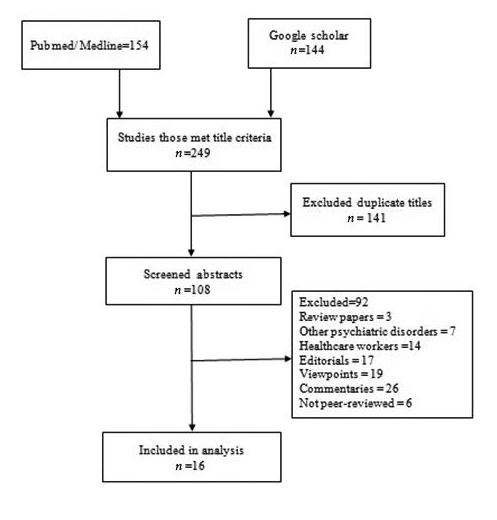
The coronavirus disease 2019 (COVID-19) crisis has greatly affected human lives across the world. Uncertainty and quarantine have been affecting people's mental health. Estimations of mental health problems are needed immediately for the better planning and management of these concerns at a global level. A rapid scoping review was conducted to get the estimation of mental health problems in the COVID-19 pandemic during the first 7 months. Peer-reviewed, data-based journal articles published in the English language were searched in the PubMed, Medline, and Google Scholar electronic databases from December 2019 to June 2020. Papers that met the inclusion criteria were analyzed and discussed in this review. A total of 16 studies were included. Eleven studies were from China, two from India, and one from Spain, Italy, and Iran. Prevalence of all forms of depression was 20%, anxiety 35%, and stress 53% in the combined study population of 113,285 individuals. The prevalence rate of all forms of depression, anxiety, stress, sleep problems, and psychological distress in general population was found to be higher during COVID-19 pandemic.
Overview
The claims and statistics of this paper haven’t been checked yet.
Free: it reads the open-access text and checks the first 5 claims that cite a source we can check. Create a free account to check every claim.
Integrity signals
Registry
Cites
Statistics
Figures
Verification
Claims the paper makes
The claims and statistics of this paper haven’t been checked yet.
Free: it reads the open-access text and checks the first 5 claims that cite a source we can check. Create a free account to check every claim.
Claims other papers make about this one
Each is checked against this paper’s own text: does it say what the citing paper says it does?
The cited source says what the claim attributes to it.
In the citing paper
“The rates of anxious-depressive symptoms found in the current study are lower than in other studies conducted in early 2020, at the beginning of the pandemic [33,34] but consistent with the other investigations conducted during the pandemic [8,17,18,35,36].”
From Anxiety and Depression during the Second Wave of the COVID-19 Pandemic: The Role of Coping Strategies (2023) · cites this paper as [35]
Self-check
Percentages, sums and reported differences re-computed from the paper’s own numbers.
The self-check needs the paper’s full text.
Citations
Cites
Wang, C., Pan, R., Wan, X., Tan, Y., Xu, L., Ho, C. S., & Ho, R. C. (2020) · International Journal of Environmental Research and Public Health · doi:10.3390/ijerph17051729 · Cited by 9,923
The psychological impact of the COVID-19 epidemic on college students in China
Cao, W., Fang, Z., Hou, G., Han, M., Xu, X., Dong, J., & Zheng, J. (2020) · Psychiatry Research · doi:10.1016/j.psychres.2020.112934 · Cited by 5,843
Holmes, E. A., O'Connor, R. C., Perry, V. H., Tracey, I., Wessely, S., Arseneault, L., Ballard, C., Christensen, H., Cohen Silver, R., Everall, I., et al. (2020) · The Lancet Psychiatry · doi:10.1016/s2215-0366(20)30168-1 · Cited by 5,715
Using social and behavioural science to support COVID-19 pandemic response
Bavel, J. J. V., Baicker, K., Boggio, P. S., Capraro, V., Cichocka, A., Cikara, M., Crockett, M. J., Crum, A. J., Douglas, K. M., Druckman, J. N., et al. (2020) · Nature Human Behaviour · doi:10.1038/s41562-020-0884-z · Cited by 4,964
Mental health and the COVID-19 pandemic
Pfefferbaum, B., & North, C. S. (2020) · New England Journal of Medicine · doi:10.1056/nejmp2008017 · Cited by 4,378
Qiu, J., Shen, B., Zhao, M., Wang, Z., Xie, B., & Xu, Y. (2020) · General Psychiatry · doi:10.1136/gpsych-2020-100213 · Cited by 4,307
Huang, Y., & Zhao, N. (2020) · Psychiatry Research · doi:10.1016/j.psychres.2020.112954 · Cited by 3,736
Pappa, S., Ntella, V., Giannakas, T., Giannakoulis, V. G., Papoutsi, E., & Katsaounou, P. (2020) · Brain Behavior and Immunity · doi:10.1016/j.bbi.2020.05.026 · Cited by 3,617
Timely mental health care for the 2019 novel coronavirus outbreak is urgently needed
Xiang, Y.-T., Yang, Y., Li, W., Zhang, L., Zhang, Q., Cheung, T., & Ng, C. H. (2020) · The Lancet Psychiatry · doi:10.1016/s2215-0366(20)30046-8 · Cited by 3,598
The outbreak of COVID-19 coronavirus and its impact on global mental health
Torales, J., O’Higgins, M., Castaldelli-Maia, J. M., & Ventriglio, A. (2020) · International Journal of Social Psychiatry · doi:10.1177/0020764020915212 · Cited by 3,013
Cited by
The relationship between fear of COVID-19 and mental health problems: A meta-analysis
Şimşir, Z., Koç, H., Seki, T., & Griffiths, M. D. (2022) · Death Studies · doi:10.1080/07481187.2021.1889097 · Cited by 219
Assessing the Psychological Impact of COVID-19 among College Students: An Evidence of 15 Countries
Batra, K., Sharma, M., Batra, R., Singh, T. P., & Schvaneveldt, N. (2021) · Healthcare · doi:10.3390/healthcare9020222 · Cited by 198
Self-citationSaddik, B. A., Hussein, A., Albanna, A., Elbarazi, I., Al-Shujairi, A., Sharif‐Askari, F. S., Temsah, M.-H. A., Stip, É., Hamid, Q. A., & Halwani, R. (2021) · BMC Psychiatry · doi:10.1186/s12888-021-03213-2 · Cited by 185
Bhat, S., & Chokroverty, S. (2021) · Sleep Medicine · doi:10.1016/j.sleep.2021.07.021 · Cited by 171
“depression are well known to have reciprocal relationships with insomnia [5,6], and it has been shown that the prevalence of all forms of psychological distress in the general population has been higher during the pandemic [7,8].”
BackgroundDistance Learning in the COVID-19 Era: Perceptions in Southern Italy
Ferraro, F., Ambra, F. I., Aruta, L., & Iavarone, M. L. (2020) · Education Sciences · doi:10.3390/educsci10120355 · Cited by 140
“The whole situation produced a significant negative impact on students, with an increase in the number of cases of mental distress [13], with spikes in depression, anxiety, and stress cases [14,15].”
BackgroundSabour, S., Zhang, W., Xiao, X., Zhang, Y., Zheng, Y., Wen, J., Zhao, J., & Huang, M. (2023) · Frontiers in Digital Health · doi:10.3389/fdgth.2023.1133987 · Cited by 102
“We did not find a significant interaction effect of Group Time on positive affect (F[2, 244] 1⁄4 1:58, p 1⁄4 1:208, h2 1⁄4 0:013).”
BackgroundMethodResultInfluentialTareke, S. A., Lelisho, M. E., Hassen, S. S., Seid, A. A., Jemal, S. S., Teshale, B. M., Wotale, T. W., & Pandey, B. K. (2022) · Journal of Racial and Ethnic Health Disparities · doi:10.1007/s40615-021-01195-1 · Cited by 103
“According to another comprehensive review analysis, the prevalence of depression, anxiety, and stress was 20%, 35%, and 53%, respectively [18].”
BackgroundSimegn, W., Dagnew, B., Yeshaw, Y., Yitayih, S., Woldegerima, B., & Dagne, H. (2021) · PLoS ONE · doi:10.1371/journal.pone.0251670 · Cited by 107
“The prevalence of depression, anxiety and stress is high among the general population during the COVID-19 pandemic [7].”
BackgroundAl-Rasheed, M. M., Fekih‐Romdhane, F., Jahrami, H., Pires, G. N., Saif, Z., Alenezi, A. F., Humood, A. M., Chen, W., Dai, H., Bragazzi, N. L., et al. (2022) · Sleep Medicine · doi:10.1016/j.sleep.2022.06.020 · Cited by 104
Rafiei, A., Zahedifar, R., Sitaula, C., & Marzbanrad, F. (2022) · IEEE Access · doi:10.1109/access.2022.3190502 · Cited by 103
Bikomeye, J. C., Namin, S., Anyanwu, C., Rublee, C. S., Ferschinger, J., Leinbach, K., Lindquist, P., Hoppe, A., Hoffman, L., Hegarty, J., et al. (2021) · International Journal of Environmental Research and Public Health · doi:10.3390/ijerph18168420 · Cited by 95
Chen, S., Huang, W., Zhang, M., Song, Y. H., Zhao, C., Sun, H., Wang, Y., Wang, J., Sun, Y., Zhou, L., et al. (2024) · EClinicalMedicine · doi:10.1016/j.eclinm.2024.103014 · Cited by 80
“14 – 17 Next, we analyzed adversely affected by the pandemic.”
Autism Spectrum Disorder Prediction in Children Using Machine Learning
Abdelwahab, M. M., Al-Karawi, K. A., Hasanin, E. M., & Semary, H. E. (2024) · Journal of Disability Research · doi:10.57197/jdr-2023-0064 · Cited by 80
“This test instrument would predict autistic symptoms in an individual and determine whether or not that individual requires a thorough autism examination (Lakhan et al., 2020; Alenizi and Al-Karawi, 2022).”
BackgroundCOVID-19 Pandemic and Stress: Coping with the New Normal
Bhattacharjee, A., & Ghosh, T. (2021) · Journal of Prevention and Health Promotion · doi:10.1177/26320770211050058 · Cited by 74
“A study comprising of 113,285 participants from India, China, Spain, Italy, and Iran revealed that among this surveyed population, the prevalence of depression, anxiety and stress was 20%, 35%, and 53%, respectively, during the pandemic and it seems to be increasing day by day (Lakhan et al., 2020).”
BackgroundShin, H., Kang, Y., Choi, K. W., Kim, S., Ham, B., & Choi, Y. (2023) · Analytical Chemistry · doi:10.1021/acs.analchem.3c00215 · Cited by 61
Caycho‐Rodríguez, T., Tomás, J. M., Vilca, L. W., Carbajal‐León, C., Cervigni, M., Gallegos, M., Martino, P., Barés, I., Calandra, M., Anacona, C. A. R., et al. (2021) · Frontiers in Psychology · doi:10.3389/fpsyg.2021.695989 · Cited by 62
Xu, Z., Zhang, D., Xu, D. R., Li, X., Xie, Y. J., Sun, W. J., Lee, E. K. P., Yip, B. H. K., Xiao, S., & Wong, S. Y.-S. (2021) · PLoS ONE · doi:10.1371/journal.pone.0259012 · Cited by 57
“Globally, the prevalence of depression and anxiety was 20% and 35%, respectively, during the COVID-19 outbreak [10].”
BackgroundYao, X., Xu, X., Chan, K. L., Chen, S., Assink, M., & Gao, S. (2022) · Journal of Affective Disorders · doi:10.1016/j.jad.2022.09.116 · Cited by 55
“It has been reported that the average prevalence of depression, anxiety, and stress among the general population during the COVID-19 pandemic was 45%, 47%, and 53%, respectively (Lakhan et al., 2020; Necho et al., 2021).”
BackgroundAljaberi, M. A. A., Al-Sharafi, M. A., Uzir, M. U. H., Sabah, A., Ali, A. M., Lee, K., Alsalahi, A., Noman, S., & Lin, C. (2023) · Healthcare · doi:10.3390/healthcare11172418 · Cited by 55
“The review also reports a combined prevalence of all forms of depression of 20% among a study population of 113,285 individuals [69].”
BackgroundHardiness moderates the effects of COVID-19 stress on anxiety and depression
Bartone, P. T., McDonald, K., Hansma, B. J., & Solomon, J. (2022) · Journal of Affective Disorders · doi:10.1016/j.jad.2022.08.045 · Cited by 61
Osses-Anguita, Á. E., Sánchez, T. S., Soto-Goñi, X., García-González, M., Fariñas, F. A., Cid-Verdejo, R., Romero, E. A. S., & Jiménez‐Ortega, L. (2023) · International Journal of Environmental Research and Public Health · doi:10.3390/ijerph20032452 · Cited by 49
Exploring Adaptive Graph Topologies and Temporal Graph Networks for EEG-Based Depression Detection
Luo, G., Rao, H., An, P., Li, Y., Hong, R., Chen, W., & Chen, S. (2023) · IEEE Transactions on Neural Systems and Rehabilitation Engineering · doi:10.1109/tnsre.2023.3320693 · Cited by 50
“Moreover, the outbreak of the COVID-19 pandemic has exacerbated the situation, leading to a surge in depression cases worldwide [4], [5], [6], [7].”
BackgroundLong-COVID and comorbid depression and anxiety two years into the COVID-19 pandemic
Rudenstine, S., Schulder, T., Bhatt, K. J., McNeal, K., Ettman, C. K., & Galea, S. (2022) · Psychiatry Research · doi:10.1016/j.psychres.2022.114924 · Cited by 45
“The social isolation, interpersonal conflicts, and many economic and health-related stressors, brought on by COVID-19 and which became chronic for many, have contributed to significant increases in psychological distress (Abdalla et al., 2021; Daly & Robinson, 2021; Ettman et al., 2021, 2020; Fruehwirth et al., 2021;…”
BackgroundIndividualized Virtual Reality for Increasing Self-Compassion: Evaluation Study
Halim, I., Stemmet, L., Hach, S., Porter, R., Liang, H., Vaezipour, A., Henry, J. D., & Baghaei, N. (2023) · JMIR Mental Health · doi:10.2196/47617 · Cited by 45
“COVID-19 lockdowns and restrictions could also be a major influence on depressive symptoms, as shown in studies conducted during the pandemic [64,65].”
ResultJuchnowicz, D., Baj, J., Forma, A., Karakuła, K. H., Sitarz, R., Bogucki, J., & Karakuła‐Juchnowicz, H. (2021) · Journal of Clinical Medicine · doi:10.3390/jcm10050944 · Cited by 43
“In a study that combined the population of 113,285 individuals, it was demonstrated that the prevalence rate and intensity of depression, anxiety, and stress were significantly higher during the pandemic; besides, sleep disturbances and more intense psychological distress were also observed in a studied population [26…”
BackgroundWouters-Soomers, L., Ruysseveldt, J. V., Bos, A. E. R., & Jacobs, N. (2022) · Frontiers in Psychology · doi:10.3389/fpsyg.2022.920908 · Cited by 42
Personalizing Nutrition Strategies: Bridging Research and Public Health
Clemente‐Suárez, V. J., Peris-Ramos, H. C., Redondo-Flórez, L., Beltrán-Velasco, A. I., Martín-Rodríguez, A., David-Fernandez, S., Sepulveda, R. A. Y., & Tornero-Aguilera, J. F. (2024) · Journal of Personalized Medicine · doi:10.3390/jpm14030305 · Cited by 51
“Specifically, anxiety disorders affect more than 300 million people worldwide, with at least 58 million diagnoses in children and adolescents [245,246].”
BackgroundCOVID-19 and mental health in Australia – a scoping review
Zhao, Y., Leach, L., Walsh, E., Batterham, P. J., Calear, A. L., Phillips, C. B., Olsen, A., Doan, T. T., LaBond, C., & Banwell, C. L. (2022) · BMC Public Health · doi:10.1186/s12889-022-13527-9 · Cited by 44
“interrupted daily routines, unemployment and underemployment, loss of income, reduced social support, financial distress, and loneliness) [38].”
BackgroundPécout, C., Pain, É., Chekroun, M., Champeix, C., Kulak, C., Prieto, R., van Vugt, J., Gilchrist, K., & Lainé-Pellet, A.-F. (2021) · International Journal of Environmental Research and Public Health · doi:10.3390/ijerph18136697 · Cited by 42
“described the prevalence of depression (20%), anxiety (35%), and stress level (53%) in the general population [29].”
BackgroundEvaluating a telehealth single-session consultation service for clients on psychotherapy wait-lists.
Sung, J. Y., Bugatti, M., Vivian, D., & Schleider, J. L. (2023) · Practice Innovations · doi:10.1037/pri0000207 · Cited by 42
Depression diagnosis based on electroencephalography power ratios
Chang, J., & Choi, Y. W. (2023) · Brain and Behavior · doi:10.1002/brb3.3173 · Cited by 41
Bohlken, J., Kostev, K., Riedel-Heller, S. G., Hoffmann, W. U., & Michalowsky, B. (2021) · Journal of Psychiatric Research · doi:10.1016/j.jpsychires.2021.08.016 · Cited by 40
Soleimani, H., Nasrollahizadeh, A., Nasrollahizadeh, A., Razeghian, I., Molaei, M. M., Hakim, D. A., Nasir, K., Al-Kindi, S. G., & Hosseini, K. (2024) · BMC Cardiovascular Disorders · doi:10.1186/s12872-024-04390-0 · Cited by 38
Impacts on and Care of Psychiatric Patients during the Outbreak of COVID-19
Puangsri, P., Jinanarong, V., & Wattanapisit, A. (2021) · Clinical Practice and Epidemiology in Mental Health · doi:10.2174/1745017902117010052 · Cited by 47
Wickord, L.-C., & Quaiser-Pohl, C. M. (2022) · Behavioral Sciences · doi:10.3390/bs12040099 · Cited by 38
“Another reason might be the fact that the current COVID-19 pandemic has increased the general stress level to such an extent that coping mechanisms that are commonly used, such as social exchange in person, is now limited to the smartphone, and therefore no longer as effective as before, because digital exchanges cann…”
BackgroundDepresi, Kecemasan, dan Stres Remaja selama Pandemi Covid-19.
Pertiwi, S. T., Moeliono, M. F., & Kendhawati, L. (2021) · JURNAL Al-AZHAR INDONESIA SERI HUMANIORA · doi:10.36722/sh.v6i2.497 · Cited by 32
Preferences for Hotels with Biophilic Design Attributes in the Post-COVID-19 Era
Khozaei, F., Carbon, C., Nia, M. H., & Kim, M. J. (2022) · Buildings · doi:10.3390/buildings12040427 · Cited by 33
“Studies have reported higher psychological distress during COVID-19, especially among people from countries with the highest number of cases with a longer duration of challenges caused by the pandemic [41].”
BackgroundResultKvarstein, E. H., Frøyhaug, M., Pettersen, M. S., Carlsen, S., Ekberg, A., Fjermestad‐Noll, J., Ulvestad, D. A., Gikling, E. L., Hjermann, E., Lindberget, K., et al. (2023) · Frontiers in Psychiatry · doi:10.3389/fpsyt.2023.1163347 · Cited by 35
“Sum scores ≥10 indicate clinically relevant depressive symptoms (73, 74).”
BackgroundYadav, R., Yadav, P., Kumar, S., & Kumar, R. (2021) · Journal of Neurosciences in Rural Practice · doi:10.1055/s-0040-1722811 · Cited by 33
Yang, Y., Kim, H., Kang, M.-J., Baik, H., Choi, Y.-S., Jang, E.-J., Chang, E.-J., Yun, S. Y., Park, M., Park, E., et al. (2023) · Scientific Reports · doi:10.1038/s41598-023-49702-0 · Cited by 32
Stoppok, P., Teufel, M., Jahre, L. M., Rometsch, C., Müßgens, D., Bingel, U., Skoda, E., & Bäuerle, A. (2022) · JMIR Formative Research · doi:10.2196/37682 · Cited by 29
“Second, the data collection took place during the COVID-19 pandemic when the prevalence of depression was elevated [59].”
BackgroundShalev, T., Winocur-Arias, O., Friedman-Rubin, P., Naim, G., Keren, L., Eli, I., & Emodi‐Perlman, A. (2023) · BMC Oral Health · doi:10.1186/s12903-023-03447-4 · Cited by 27
“It is now well supported that the pandemic resulted in increased levels of stress, depression and anxiety all around the globe [32–35].”
BackgroundScott, C. P., Mach, L., Lucas, K. M., & Myers, A. E. (2024) · Human Ecology · doi:10.1007/s10745-023-00462-5 · Cited by 29
“Research that emerged from the COVID-19 pandemic revealed declining mental health levels globally (Lakhan et al., 2020) often associated with the nature deficit correlated with lockdowns (Tomasso et al., 2021).”
Freitas, F. D. F., de Medeiros, A. C. Q., & Lopes, F. D. A. (2021) · Frontiers in Psychology · doi:10.3389/fpsyg.2021.645754 · Cited by 28
Wang, S., Chong, Z. Y., Zhang, C., & Xu, W. (2024) · Depression and Anxiety · doi:10.1155/da/6205475 · Cited by 27
Sultana, N., Asaduzzaman, M., Siddique, A. B., Khatun, H., Bari, F. S., Islam, M. N., Tabassum, A., Mondol, A. S., Sayem, M. A., Abdullah, A. Y. M., et al. (2022) · BMC Psychology · doi:10.1186/s40359-022-00974-7 · Cited by 25
Miola, A., Caiolo, S., Pontoni, G., Pozzan, E., Moriglia, C., Simionato, F., Garofalo, S., Perini, G., & Sambataro, F. (2023) · International Journal of Environmental Research and Public Health · doi:10.3390/ijerph20042974 · Cited by 24
“The rates of anxious-depressive symptoms found in the current study are lower than in other studies conducted in early 2020, at the beginning of the pandemic [33,34] but consistent with the other investigations conducted during the pandemic [8,17,18,35,36].”
ResultHubungan Tingkat Stres Remaja Dengan Kemampuan Beradaptasi Di Asrama Pondok Pesantren Sabrun Jamil
Bau, N. A., Kadir, L., & Abudi, R. (2022) · Jambura Journal of Epidemiology · doi:10.37905/jje.v1i1.15076 · Cited by 24
Sex and age affect acute and persisting COVID-19 illness
Vasilevskaya, A., Mushtaque, A., Tsang, M. Y., Alwazan, B., Herridge, M. S., Cheung, A. M., & Tartaglia, M. C. (2023) · Scientific Reports · doi:10.1038/s41598-023-33150-x · Cited by 24
Leitner, M., Pötz, G., Berger, M., Fellner, M., Spat, S., & Koini, M. (2024) · PLoS ONE · doi:10.1371/journal.pone.0297207 · Cited by 23
Misra, A. V., Mamdouh, H. M., Dani, A., Mitchell, V., Hussain, H. Y., Ibrahim, G. M., Dalky, H. F., & Alnakhi, W. K. (2022) · BMC Psychology · doi:10.1186/s40359-022-00986-3 · Cited by 23
Changes in COVID-19 Perception and in TMD Prevalence after 1 Year of Pandemic in Italy
Scelza, G., Amato, A., Rongo, R., Nucci, L., D’Ambrosio, F., & Martina, S. (2022) · European Journal of Dentistry · doi:10.1055/s-0042-1755192 · Cited by 21
“Similar to the previous study, high levels of stress were found more prevalently in women and young people.”
Nash, C. (2022) · Challenges · doi:10.3390/challe13020028 · Cited by 23
COVID-19′s Psychological Impact on Chronic Disease Patients Seeking Medical Care
Salah, H., Rabie, A. S. I., Said, A. S. A., AlAhmad, M. M., Shaaban, A. H., Khalil, D. M., Hussein, R. R. S., & Khodary, A. (2023) · Healthcare · doi:10.3390/healthcare11060888 · Cited by 25
“medical care among the Egyptian population [27].”
Pagès, N., Gorgui, J., Wang, C., Wang, X., Zhao, J., Tchuente, V., Lacasse, A., Côté, S. M., King, S., Muanda, F. T., et al. (2022) · International Journal of Environmental Research and Public Health · doi:10.3390/ijerph191912386 · Cited by 21
“Yes, in Crisis We Pray”. The Role of Prayer in Coping with Pandemic Fears
Szałachowski, R. R., & Tuszyńska-Bogucka, W. (2021) · Religions · doi:10.3390/rel12100824 · Cited by 24
“Published research increased the alert on serious psychological effects of the COVID19 pandemic worldwide (Juchnowicz et al. 2021; Lakhan et al. 2020; Nguyen et al. 2020; Salari et al. 2020; Sood 2020; Torales et al. 2020; Walecka et al. 2021).”
BackgroundLangjord, T., Pedersen, G., Bovim, T., Christensen, T. B., Eikenæs, I. U.-M., Hove, O., Kildahl, A. N., Mork, E., Norheim, A. B., Ramleth, R., et al. (2023) · Frontiers in Psychiatry · doi:10.3389/fpsyt.2023.1258025 · Cited by 21
Riesel, A., Härpfer, K., Kathmann, N., & Klawohn, J. (2021) · Biological Psychiatry Global Open Science · doi:10.1016/j.bpsgos.2021.08.004 · Cited by 20
Tušl, M., Thelen, A., Marcus, K., Peters, A., Shalaeva, E. V., Scheckel, B., Sykora, M. D., Elayan, S., Naslund, J. A., Shankardass, K., et al. (2022) · Discover Mental Health · doi:10.1007/s44192-022-00017-y · Cited by 19
“1 3 to an increase in emotional distress [3, 4].”
BackgroundShan, D., Liu, C., Li, S., & Zheng, Y. (2022) · Frontiers in Psychiatry · doi:10.3389/fpsyt.2022.977361 · Cited by 19
“As a result, the fear of contracting the virus, high unemployment due to economic loss, interrupted daily routine during recurrent periods of lockdown, the inability of engaging in most canceled outdoor events and other factors induced by COVID-19 severely impacted public mental health (5).”
Navarrete, F., Marín, M., Martínez-Hostyn, L., Rubio, G., & Manzanares, J. (2026) · International Journal of Molecular Sciences · doi:10.3390/ijms27031430 · Cited by 19
Sitarz, R., Forma, A., Karakuła, K. H., Juchnowicz, D., Baj, J., Bogucki, J., & Karakuła‐Juchnowicz, H. (2021) · Journal of Clinical Medicine · doi:10.3390/jcm10214964 · Cited by 20
Gizdić, A., Baxter, T., Barrantes-Vidal, N., & Park, S. (2023) · Psychiatry Research Communications · doi:10.1016/j.psycom.2023.100126 · Cited by 21
Abdoli, N., Farnia, V., Jahangiri, S., Radmehr, F., Alikhani, M., Abdoli, P., Davarinejad, O., Dürsteler, K. M., Brühl, A. B., Bahmani, D. S., et al. (2021) · International Journal of Environmental Research and Public Health · doi:10.3390/ijerph18126289 · Cited by 19
First-onset major depression during the COVID-19 pandemic: A predictive machine learning model
Caldirola, D., Daccò, S., Cuniberti, F., Grassi, M., Alciati, A., Torti, T., & Perna, G. (2022) · Journal of Affective Disorders · doi:10.1016/j.jad.2022.04.145 · Cited by 18
“C a l d i r o l a e t a l . et al., 2020; Lakhan et al., 2020; Liu et al., 2020a, 2020b; Luo et al., 2020; Salari et al., 2020; Solomou and Constantinidou, 2020; Wu et al., 2021).”
Murkar, A., Kendzerska, T., Shlik, J., Quilty, L. C., Saad, M., & Robillard, R. (2022) · BMC Psychiatry · doi:10.1186/s12888-022-04185-7 · Cited by 19
Lisiecka, A., Chimicz, D., & Lewicka-Zelent, A. (2023) · International Journal of Environmental Research and Public Health · doi:10.3390/ijerph20064969 · Cited by 17
Sudarnoto, L. F., Handoko, M. T., Riyanto, A., & Arini, D. P. (2025) · Social Sciences & Humanities Open · doi:10.1016/j.ssaho.2025.101485 · Cited by 19
Schoene, D., Schnekenberg, L. G., Pallesen, L., Barlinn, J., Puetz, V., Barlinn, K., & Siepmann, T. (2022) · Life · doi:10.3390/life12010075 · Cited by 18
“This is consistent with the observation that prevalence of mental health problems in the general population showed a substantial increase during the COVID-19 pandemic [30].”
ResultBurak, D. (2022) · Child Indicators Research · doi:10.1007/s12187-022-09971-z · Cited by 19
“In these studies, it was stated that individuals from different age groups and countries generally had high levels of anxiety toward COVID-19 (Lakhan et al., 2020; Öz-Ceviz et al., 2020; Wang et al., 2020), this anxiety created stress and affected psychological problems such as depression…”
BackgroundSocial Media, Anxiety and COVID-19 Lockdown Measurement Compliance
Rodríguez-Besteiro, S., Beltrán-Velasco, A. I., Tornero-Aguilera, J. F., Martínez–González, M. B., Navarro-Jiménez, E., Sepulveda, R. A. Y., & Clemente‐Suárez, V. J. (2023) · International Journal of Environmental Research and Public Health · doi:10.3390/ijerph20054416 · Cited by 17
“Indeed, when compared with other time periods, depression, anxiety, stress, sleep problems, motivation and psychological distress in general population prevalence was found to be higher during the COVID-19 pandemic [79].”
BackgroundLelisho, M. E., & Tareke, S. A. (2022) · Journal of Racial and Ethnic Health Disparities · doi:10.1007/s40615-022-01251-4 · Cited by 17
“Staying at home has been linked to the development of depression symptoms, particularly in college students [8].”
BackgroundResultHope across cultures: Lessons from the International Hope Barometer
Krafft, A. M., Guse, T., & Slezáčková, A. (2023) · Cross-cultural advancements in positive psychology · doi:10.1007/978-3-031-24412-4 · Cited by 17
Helping families help themselves: The (Un)intended impacts of a digital parenting program
Amaral, S., Dinarte-Diaz, L., Domínguez, P., & Perez-Vincent, S. M. (2023) · Journal of Development Economics · doi:10.1016/j.jdeveco.2023.103181 · Cited by 16
Visnjic, A. M., Kök, K., Višnjić, J., Jovanović, T., & Marković, R. (2023) · Frontiers in Public Health · doi:10.3389/fpubh.2023.1140961 · Cited by 18
Prevalence of eating disorders among Saudi female university students during the COVID-19 outbreak
El–Akabawy, G., Abukhaled, J., Alabdullah, D. W., Aleban, S. A., Almuqhim, S. A., & Assiri, R. (2022) · Journal of Taibah University Medical Sciences · doi:10.1016/j.jtumed.2022.02.001 · Cited by 20
Mechanism of online emotional support accompany group for stress: The role of social support
Zhang, Y., Huang, H.-L., Tang, D., Lu, X., Fan, F., & Pan, J. (2023) · Frontiers in Psychology · doi:10.3389/fpsyg.2022.1047364 · Cited by 17
“The prevalence rate of all forms of depression, anxiety, stress, sleep problems, and psychological distress in the general population was found to be higher during the COVID-19 pandemic (Lakhan et al., 2020; Li et al., 2020; Marmarosh et al., 2020).”
BackgroundSzyszkowska, J., & Bala, A. (2023) · International Journal of Psychophysiology · doi:10.1016/j.ijpsycho.2023.05.351 · Cited by 17
Kennedy, B., Sims-Rhodes, N., Avendano, J., Mathew, J., O'Brien, K. P., Chek, C. J. W., & Sass, S. M. (2023) · Journal of Happiness and Health · doi:10.47602/johah.v4i1.54 · Cited by 19
“It is important to note that data for this study was collected during the initial months of the COVID-19 pandemic (in June and July of 2020), when anxiety and depression levels were generally higher than pre-pandemic levels (e.g., Lakhan et al., 2020).”
BackgroundJiang, Y., Yi, Z., Yao, Y., Hu, Y., Li, F., & Ma, H. (2023) · Frontiers in Psychiatry · doi:10.3389/fpsyt.2022.991449 · Cited by 15
“The depression diagnosis rate during the epidemic has increased significantly compared to before the epidemic (10, 17, 34).”
BackgroundRówni i równiejsi. O odmiennych postawach wobec uchodźców z Ukrainy oraz granicy polsko-białoruskiej
Górska, P. (2024) · Wydawnictwo Liberi Libri eBooks · doi:10.47943/lib.9788363487645.rozdzial05 · Cited by 17
Anxiety, Stress Perception, and Coping Strategies among Students with COVID-19 Exposure
Shpakou, A., Krajewska-Kułak, E., Cybulski, M., Sokołowska, D., Andryszczyk, M., Kleszczewska, E., Loginovich, Y., Owoc, J., Tarasov, A. V., Skoblina, N., et al. (2023) · Journal of Clinical Medicine · doi:10.3390/jcm12134404 · Cited by 19
“The tool is used to assess typical ways of reacting to situations of severe stress [34].”
MethodFlow and Flourishing During the Pandemic: The Roles of Strengths Use and Playful Design
Liu, W., Zhang, W., van der Linden, D., & Bakker, A. B. (2023) · Journal of Happiness Studies · doi:10.1007/s10902-023-00670-2 · Cited by 15
“…al., 2020) and hypervigilance (Zhang et al., 2022), may moderate the level of rumination associated with COVID-19, research has shown that there is an overall prevalence of mental health decline (e.g., depression and anxiety) during the COVID-19 pandemic (Ettman et al., 2020; Lakhan et al., 2020).”
The clinical neuroscience of lucid dreaming
Tzioridou, S., Campillo-Ferrer, T., Cañas-Martín, J., Schlüter, L., Torres-Platas, S. G., Gott, J., Soffer‐Dudek, N., Stumbrys, T., & Dresler, M. (2025) · Neuroscience & Biobehavioral Reviews · doi:10.1016/j.neubiorev.2025.106011 · Cited by 17
Köckritz, J., İlgen, B., Cohrdes, C., & Hattab, G. (2025) · Scientific Reports · doi:10.1038/s41598-025-18413-z · Cited by 14
“For example, NLP has been instrumental in tracking COVID-19 news coverage 41 , assessing the accuracy of information shared, and identifying linguistic patterns in reporting.”
Kvarstein, E. H., Zahl, K., Stänicke, L. I., Pettersen, M. S., Baltzersen, Å.-L., Johansen, M. S., Eikenæs, I. U.-M., Arnevik, E. A., Hummelen, B., Wilberg, T., et al. (2021) · Nordic Journal of Psychiatry · doi:10.1080/08039488.2021.1934110 · Cited by 14
“The coronavirus (Covid-19) outbreak, defined in March 2020 as global pandemic, was rapidly followed by international reports demonstrating considerable challenges to mental health [1] as well as mental health services [2].”
BackgroundAlassaf, A. M., Almulhim, B., Alghamdi, S. A., & Mallineni, S. K. (2021) · Healthcare · doi:10.3390/healthcare9080959 · Cited by 14
“A recent study [40] found a higher prevalence rate of anxiety, depression, sleep problems, stress, and psychological distress among the general population during this pandemic outbreak.”
BackgroundAssefa, Z. M., Haile, T. G., Wazema, D. H., Tafese, W. T., Berrie, F. W., Beketie, E. D., Hailemariam, B. Z., Zewudie, B. T., Teke, N. E., & Metebo, K. N. (2021) · SAGE Open Nursing · doi:10.1177/23779608211064374 · Cited by 14
“The pandemic has not only impacted all ongoing activities but has led to a tremendous negative effect on the mental health and wellbeing of entire societies and is a primacy to be addressed urgently (Lakhan et al., 2020; Sher, 2020; United Nations, 2020).”
BackgroundCOVID-19 and impairment of mental health: public health perspective
Shrivastava, S. R., & Shrivastava, P. S. (2021) · African Health Sciences · doi:10.4314/ahs.v21i4.5 · Cited by 17
Mintziori, G., Duntas, L. H., Veneti, S., & Goulis, D. G. (2022) · International Journal of Environmental Research and Public Health · doi:10.3390/ijerph19095277 · Cited by 14
“The prevalence of psychological stress and anxiety was increased even before the COVID-19 era [80].”
BackgroundPawar, N., Kumar, N. S., Vikram, A., Sembiah, S., & Rajawat, G. (2022) · Journal of Family Medicine and Primary Care · doi:10.4103/jfmpc.jfmpc_616_21 · Cited by 14
“While a review article published in 2020, included a total of 11 studies from India, China, Italy Spain and Iran with a pooled population of 113,285 individuals, the prevalence of depression was found to be 20%.[7] The prevalence of depression in India ranges from 1.”
BackgroundAgrawal, N., Agrawal, P. K., Lal, P., Gupta, P. K., Singh, A. P., & Garg, R. (2022) · Journal of South Asian Federation of Obstetrics and Gynaecology · doi:10.5005/jp-journals-10006-2027 · Cited by 14
The Mental Health of the Peruvian Older Adult during the COVID-19 Pandemic
Fhon, J. R. S., Villanueva‐Benites, M. E., Gómez-Luján, M. D. P., Mocarro-Aguilar, M. R., Arpasi-Quispe, O., Gómez, R. Y. P., Huarcaya, S. S. L., & Espinoza, Z. E. L. (2022) · International Journal of Environmental Research and Public Health · doi:10.3390/ijerph192416893 · Cited by 15
“In addition, a review identified that the prevalence of anxiety was 35% and stress was 53% in a population of 113,285 people and that these rates were higher during the COVID-19 pandemic [12], which will demand greater attention from mental health services.”
Foti, G., Bondanini, G., Finstad, G. L., Alessio, F., & Giorgi, G. (2023) · Administrative Sciences · doi:10.3390/admsci13040116 · Cited by 14
“Indeed, the SARS-CoV-2 pandemic, while not perfectly meeting the diagnostic criteria for PTSD, led to severe psychological and post-traumatic consequences (Wang et al. 2020; Lakhan et al. 2020).”
Chai, W., & Shek, D. T. L. (2023) · Psychiatry Research · doi:10.1016/j.psychres.2023.115666 · Cited by 13
“Different studies concertedly suggest a high and increased level of depression (around 33,7 % in a review) and anxiety (around 35 % in a review) in the general population although there were study-based variances (Lakhan et al., 2020; Salari et al., 2020).”
BackgroundLu, L., Liu, G., Xu, Y., Jiang, J., & Wei, Z. (2024) · Frontiers in Psychiatry · doi:10.3389/fpsyt.2024.1297112 · Cited by 13
“When people are in a state of extreme stress, they tend to experience a series of psychological problems such as anxiety and depression (5 – 9).”
BackgroundThampanichwat, C., Wongvorachan, T., Bunyarittikit, S., Chunhajinda, P., Phaibulputhipong, P., & Wongmahasiri, R. (2024) · Buildings · doi:10.3390/buildings14082508 · Cited by 14
Dalky, H. F., Aljawarneh, Y. M., Rajab, L. M., Almas, S., Mazemi, F. A., Ali, L. A., Abdulghani, S., & Shamsi, S. A. (2022) · International Journal of Environmental Research and Public Health · doi:10.3390/ijerph191912487 · Cited by 14
“of 113,285 individuals, the prevalence of depression, anxiety, and stress was 20%, 35%, and 53%, respectively [4].”
BackgroundFacial Affect Recognition in Depression Using Human Avatars
Monferrer, M., García, A. S., Ricarte, J. J., Montes, M. J., Fernández-Sotos, P., & Fernández‐Caballero, A. (2023) · Applied Sciences · doi:10.3390/app13031609 · Cited by 13
Sequelae of long COVID, known and unknown: A review of updated information
Asakawa, T., Cai, Q., Shen, J., Zhang, Y., Li, Y., Chen, P., Luo, W., Zhang, J., Zhou, J., Zeng, H., et al. (2023) · BioScience Trends · doi:10.5582/bst.2023.01039 · Cited by 14
Metadata
- Authors
- Lakhan, R., Agrawal, A., & Sharma, M.
- Affiliations
- Department of Health and Human Performance, Seabury Center, Berea, Kentucky, United States
- All India Institute of Medical Sciences Bhopal (IN)
- University of Nevada, Las Vegas (US)
- Venue
- Journal of Neurosciences in Rural Practice
- Publisher
- Scientific Scholar
- Published
- 2020-09-11
- Volume
- 11
- Issue
- 4
- Pages
- 519-525
- ISSN
- 0976-3147 (ISSN-L)
- PMC
- PMC7595780
- OpenAlex
- W3086788763
- Cited by
- 421
- References
- 40
- Citations by year
- 2026: 20 · 2025: 62 · 2024: 87 · 2023: 112 · 2022: 98 · 2021: 41 · 2020: 1
- FWCI
- 4.93
- Type
- journal article
- Language
- en
- Open access
- gold
- doi.org
- Licence
- Locations
- Journal of Neurosciences in Rural Practice (publishedVersion, cc-by-nc-nd)
- PubMed Central (publishedVersion, cc-by-nc-nd)
- PubMed (publishedVersion)
- Digital Scholarship - UNLV (University of Nevada Reno) (acceptedVersion, cc-by-nc-nd)
- DOAJ (DOAJ: Directory of Open Access Journals) (acceptedVersion)
- Digital Scholarship - UNLV (University of Nevada Reno) (submittedVersion, cc-by)
- Topics
- Social Sciences › Psychology › Clinical Psychology › COVID-19 and Mental Health
- Health Sciences › Medicine › Public Health, Environmental and Occupational Health › Maternal Mental Health During Pregnancy and Postpartum
- Health Sciences › Medicine › Psychiatry and Mental health › Mental Health Treatment and Access
- Keywords
- COVID-19 pandemic, depression, anxiety, stress, prevalence, mental health, psychological distress, sleep disorders, quarantine, uncertainty
About these checks
Registry, retraction, Cites and statistics results are computed, not judged, with one exception: a printed reference that no index lists is read once by a model before it counts as a citation error. Claims are extracted by a model and kept only when their quote appears verbatim in the text; each cited source is then checked, with a model’s help, for whether it says what the claim relies on. Those verdicts can be wrong — read the claim’s quote and the cited source before relying on one.
Statistics and arithmetic are recomputed, not judged.
Confidence bands are shown only for fields calibrated on our annotated test set. None is calibrated yet, so no band is shown.
What counts as a claim ›How we measure confidence ›How we check this ›
Are you an author, or do you see a problem with this page? Request a review
Data sources
Bibliographic data: Semantic Scholar, OpenAlex, Crossref.
Contains information from the Semantic Scholar Academic Graph Datasets, made available under the ODC Attribution License (ODC-BY 1.0).
Semantic Scholar’s data is described in: Kinney, R., et al. (2023). The Semantic Scholar Open Data Platform. arXiv:2301.10140.
