

Prevalence of Depression, Anxiety, and Stress during COVID-19 Pandemic
Open accessThe DOI matches its Crossref record; 42 of the 42 references it cites were found in a registry or an index.
Abstract
The coronavirus disease 2019 (COVID-19) crisis has greatly affected human lives across the world. Uncertainty and quarantine have been affecting people's mental health. Estimations of mental health problems are needed immediately for the better planning and management of these concerns at a global level. A rapid scoping review was conducted to get the estimation of mental health problems in the COVID-19 pandemic during the first 7 months. Peer-reviewed, data-based journal articles published in the English language were searched in the PubMed, Medline, and Google Scholar electronic databases from December 2019 to June 2020. Papers that met the inclusion criteria were analyzed and discussed in this review. A total of 16 studies were included. Eleven studies were from China, two from India, and one from Spain, Italy, and Iran. Prevalence of all forms of depression was 20%, anxiety 35%, and stress 53% in the combined study population of 113,285 individuals. The prevalence rate of all forms of depression, anxiety, stress, sleep problems, and psychological distress in general population was found to be higher during COVID-19 pandemic.
Overview
The claims and statistics of this paper haven’t been checked yet.
Free: it reads the open-access text and checks the first 5 claims that cite a source we can check. Create a free account to check every claim.
Integrity signals
Registry
Cites
Statistics
Figures
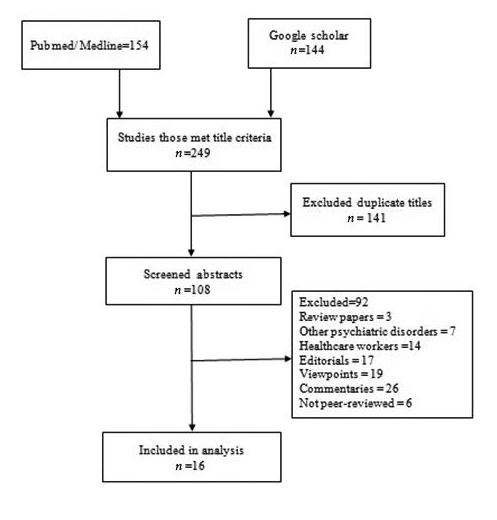
Verification
Claims the paper makes
The claims and statistics of this paper haven’t been checked yet.
Free: it reads the open-access text and checks the first 5 claims that cite a source we can check. Create a free account to check every claim.
Claims other papers make about this one
Each is checked against this paper’s own text: does it say what the citing paper says it does?
The cited source says what the claim attributes to it.
In the citing paper
“The rates of anxious-depressive symptoms found in the current study are lower than in other studies conducted in early 2020, at the beginning of the pandemic [33,34] but consistent with the other investigations conducted during the pandemic [8,17,18,35,36].”
From Anxiety and Depression during the Second Wave of the COVID-19 Pandemic: The Role of Coping Strategies (2023) · cites this paper as [35]
Self-check
Percentages, sums and reported differences re-computed from the paper’s own numbers.
The self-check needs the paper’s full text.
Citations
Cites
Wang, C., Pan, R., Wan, X., Tan, Y., Xu, L., Ho, C. S., & Ho, R. C. (2020) · International Journal of Environmental Research and Public Health · doi:10.3390/ijerph17051729 · Cited by 9,923
The psychological impact of the COVID-19 epidemic on college students in China
Cao, W., Fang, Z., Hou, G., Han, M., Xu, X., Dong, J., & Zheng, J. (2020) · Psychiatry Research · doi:10.1016/j.psychres.2020.112934 · Cited by 5,843
Holmes, E. A., O'Connor, R. C., Perry, V. H., Tracey, I., Wessely, S., Arseneault, L., Ballard, C., Christensen, H., Cohen Silver, R., Everall, I., et al. (2020) · The Lancet Psychiatry · doi:10.1016/s2215-0366(20)30168-1 · Cited by 5,715
Using social and behavioural science to support COVID-19 pandemic response
Bavel, J. J. V., Baicker, K., Boggio, P. S., Capraro, V., Cichocka, A., Cikara, M., Crockett, M. J., Crum, A. J., Douglas, K. M., Druckman, J. N., et al. (2020) · Nature Human Behaviour · doi:10.1038/s41562-020-0884-z · Cited by 4,964
Mental health and the COVID-19 pandemic
Pfefferbaum, B., & North, C. S. (2020) · New England Journal of Medicine · doi:10.1056/nejmp2008017 · Cited by 4,378
Qiu, J., Shen, B., Zhao, M., Wang, Z., Xie, B., & Xu, Y. (2020) · General Psychiatry · doi:10.1136/gpsych-2020-100213 · Cited by 4,307
Huang, Y., & Zhao, N. (2020) · Psychiatry Research · doi:10.1016/j.psychres.2020.112954 · Cited by 3,736
Pappa, S., Ntella, V., Giannakas, T., Giannakoulis, V. G., Papoutsi, E., & Katsaounou, P. (2020) · Brain Behavior and Immunity · doi:10.1016/j.bbi.2020.05.026 · Cited by 3,617
Timely mental health care for the 2019 novel coronavirus outbreak is urgently needed
Xiang, Y.-T., Yang, Y., Li, W., Zhang, L., Zhang, Q., Cheung, T., & Ng, C. H. (2020) · The Lancet Psychiatry · doi:10.1016/s2215-0366(20)30046-8 · Cited by 3,598
The outbreak of COVID-19 coronavirus and its impact on global mental health
Torales, J., O’Higgins, M., Castaldelli-Maia, J. M., & Ventriglio, A. (2020) · International Journal of Social Psychiatry · doi:10.1177/0020764020915212 · Cited by 3,013
Cited by
Items 101–200 of 462
Identyfikacje Polaków i ich konsekwencje
Puchała, D., & Bilewicz, M. (2024) · Wydawnictwo Liberi Libri eBooks · doi:10.47943/lib.9788363487645.rozdzial10 · Cited by 13
Polski Sondaż Uprzedzeń 2021: metodologia badania
Bulska, D., & Świderska, A. (2024) · Wydawnictwo Liberi Libri eBooks · doi:10.47943/lib.9788363487645.rozdzial12 · Cited by 12
Toruńczyk‐Ruiz, S., & Cárdenas, D. (2024) · Wydawnictwo Liberi Libri eBooks · doi:10.47943/lib.9788363487645.rozdzial11 · Cited by 12
Emocja wstrętu a postawy międzygrupowe
Świderska, A., & Hansen, K. (2024) · Wydawnictwo Liberi Libri eBooks · doi:10.47943/lib.9788363487645.rozdzial07 · Cited by 12
Liminality, disruption, and change: A prismatic look at pandemic education
Fisher, M. E., Dorner, M. A., Maghzi, K. S., Achieng-Evensen, C., Whitaker, L. C., Hansell, F., Amant, J. S., & Gapinski, S. M. (2021) · Prospects · doi:10.1007/s11125-021-09563-9 · Cited by 15
Li, G., Liu, H., Qiu, C., & Tang, W. (2022) · Frontiers in Psychiatry · doi:10.3389/fpsyt.2022.971800 · Cited by 12
Tardy, A.-L., Marguet, S., Costantino, H., Stewart, A. F., Mackie, D. S., Saba, G., & Amand, C. (2023) · BMC Public Health · doi:10.1186/s12889-023-15754-0 · Cited by 13
Development of the Adult Pandemic Attitude Scale (A-PAS)
Seong, M., Park, J., Chung, S., & Sok, S. R. (2021) · International Journal of Environmental Research and Public Health · doi:10.3390/ijerph18126311 · Cited by 12
“This supports the findings of Lakhan, Agrawal, and Sharma [62] that pandemic situations can cause emotional problems while giving people mental distress, such as depression, anxiety, and stress.”
ResultTwo Waves of COVID-19 in University Setting: Mental Health and Underlying Risk Factors
Křeménková, L., Novotný, J., & Kvintová, J. (2021) · Frontiers in Psychology · doi:10.3389/fpsyg.2021.780071 · Cited by 11
Tata, D. D., Bianchi, D., Pompili, S., & Laghi, F. (2023) · International Journal of Environmental Research and Public Health · doi:10.3390/ijerph20043466 · Cited by 11
“During the pandemic, individuals experienced higher levels of emotional distress, anxiety, and depression symptoms [31], which are triggering factors for problematic eating behaviors [32].”
BackgroundXu, J., Laurent, J. G. C., Chan, V., Khiewpun, D., Purcell, W. M., Spengler, J. D., & Tomasso, L. P. (2024) · Building and Environment · doi:10.1016/j.buildenv.2024.111984 · Cited by 12
Sayar, H., Wilberg, T., Eikenæs, I. U.-M., Ekberg, A., Leitemo, K., Morken, K. T. E., Oftedal, E., Omvik, S., Ulvestad, D. A., Pedersen, G., et al. (2025) · Frontiers in Psychiatry · doi:10.3389/fpsyt.2025.1558654 · Cited by 12
“Sum scores ≥ 10 indicate clinically relevant depressive symptoms (46, 47).”
Gold, D., Sharman, A., & Thomas, D. (2022) · Humanities and Social Sciences Communications · doi:10.1057/s41599-022-01079-7 · Cited by 13
“Here are a few examples from the literature: ● Stress: Lakhan et al. (2020); Pandey et al. (2020); Serafini et al. (2020); Han et al. (2020) ● Violence: Devi (2020); Han et al. (2020) ● Addictions: Jemberie et al. (2020); Han et al. (2020); Kirzinger et al. (2020) ● Lack of exercise: Kaur et al. (2020) ● Inadequate nu…”
BackgroundInfluentialYatkin, E., Aral, N., GÜNEŞ, L. C., & Tosun, S. (2023) · Frontiers in Psychology · doi:10.3389/fpsyg.2023.1184788 · Cited by 13
“Overall, the pandemic has disrupted children’s routines, social interactions, and education, leading to elevated stress, anxiety, and depression (Huang and Zhao, 2020; Lakhan et al., 2020; Qiu et al., 2020; Jang et al., 2023).”
BackgroundCavanah, L. R., Ray, P. K., Goldhirsh, J. L., Huey, L. Y., & Piper, B. J. (2025) · Frontiers in Psychiatry · doi:10.3389/fpsyt.2025.1450111 · Cited by 11
The prevalence of stress during the COVID-19 pandemic: an umbrella review
Rarani, M. A., Rezaei, S., Aghdash, S. A., Bashzar, S., Allahverdi, S., & Mohseni, M. (2025) · BMC Public Health · doi:10.1186/s12889-025-24922-3 · Cited by 10
“Consequently, the COVID-19 crisis became an uncontrollable stressor [8].”
UĞUR, A., & Sarı, T. (2022) · Humanistic Perspective · doi:10.47793/hp.1075810 · Cited by 12
Güzelsoy, N., Ravens‐Sieberer, U., Westenhöfer, J., Devine, J., Erhart, M., Hölling, H., & Kaman, A. (2022) · Frontiers in Psychiatry · doi:10.3389/fpsyt.2022.901783 · Cited by 13
Han, J., Lee, H., Kim, T., & Lee, S.-Y. (2024) · Healthcare · doi:10.3390/healthcare12151467 · Cited by 13
“During the COVID-19 pandemic, the prevalence rates of various mental health issues, including depression, anxiety, stress, sleep problems, and overall psychological distress, were observed to be higher in the general population [2,3].”
BackgroundFaro, A., Nunes, D., & Falk, D. (2025) · Frontiers in Psychology · doi:10.3389/fpsyg.2025.1440054 · Cited by 11
“Recommendations or protocols for identifying and managing depressive symptoms are also incorporated as they are a clinical condition often linked to adjustment difficulties during the pandemic (Lakhan et al., 2020).”
Kvarstein, E. H., Zahl, K., Stänicke, L. I., Pettersen, M. S., Baltzersen, Å.-L., Johansen, M. S., Eikenæs, I. U.-M., Hummelen, B., Wilberg, T., Arnevik, E. A., et al. (2021) · Nordic Journal of Psychiatry · doi:10.1080/08039488.2021.1942980 · Cited by 13
“els of depression and anxiety during the COVID-19 pandemic [5].”
BackgroundResultSundarakumar, J. S., Abhishek, M. L., Hameed, S. K. S., Teams, S. &. T. S., & Ravindranath, V. (2022) · Health Science Reports · doi:10.1002/hsr2.901 · Cited by 10
Williams, C. E., Berkowitz, D., & Rackin, H. (2022) · Journal of Social Issues · doi:10.1111/josi.12567 · Cited by 11
“Needless to say, the pandemic also brought tremendous societal changes and has been associated with increased stress, anxiety, and poor mental health (Lakhan et al., 2020; Omowale et al., 2021).”
BackgroundValencia, P. D., Torres-Quispe, M. A., Sánchez-Cayo, S., Aguilar, R. R. B., & Acevedo-Cahuana, A. G. (2022) · Journal of Affective Disorders · doi:10.1016/j.jad.2022.08.088 · Cited by 11
COVID-19 Infection and Vaccination and Its Relation to Amyloidosis: What Do We Know Currently?
Leung, W. Y., Wu, H. H. L., Floyd, L., Ponnusamy, A., & Chinnadurai, R. (2023) · Vaccines · doi:10.3390/vaccines11071139 · Cited by 10
A Comparison of Mental Health Symptoms among Adults Who Vape Nicotine, Cannabis, or Both
Salinas, K. Z., Saran, S., Saulnier, K. G., Hoglen, B., Houser, K. R., Krebs, N. M., Kaynak, Ö., Bordner, C. R., Yingst, J. M., Foulds, J., et al. (2023) · Substance Use & Misuse · doi:10.1080/10826084.2023.2294956 · Cited by 9
“Additionally, data was collected during the COVID-19 pandemic when global rates of depression, anxiety, and stress were high (Lakhan et al., 2020).”
BackgroundYazıcı‐Kabadayı, S. (2024) · Stress and Health · doi:10.1002/smi.3480 · Cited by 14
Lin, T. (2025) · Stress and Health · doi:10.1002/smi.70058 · Cited by 10
“Such prolonged stressors have been shown to deplete psychological resources, impair self‐regulation, and undermine job performance (Lakhan et al. 2020; Trougakos et al. 2020).”
Yang, Y., Zhang, X., Xie, W., Li, J., & Wang, Y. (2023) · Early Childhood Research Quarterly · doi:10.1016/j.ecresq.2023.05.006 · Cited by 9
Erdoğan, S., Can, A. A., Abiç, A., & YILMAZ, D. V. (2022) · Archives of Psychiatric Nursing · doi:10.1016/j.apnu.2022.07.021 · Cited by 9
Kelle, N., Bünning, M., & Simonson, J. (2025) · Social Indicators Research · doi:10.1007/s11205-025-03566-1 · Cited by 8
“…of the pandemic on increasing levels of loneliness (Huxhold & Tesch-Römer, 2023; Kasar & Karaman, 2021), depressive symptoms (Bäuerle et al., 2020; Lakhan et al., 2020 ) and social exclusion (Hajek & König, 2022; Seifert et al., 2021) have been extensively documented, little research has focused…”
Kosić, A., Kenfack, C. S. K., & Ai, A. L. (2023) · Medical Research Archives · doi:10.18103/mra.v11i2.3517 · Cited by 9
A novel approach to anxiety level prediction using small sets of judgment and survey variables
Bari, S., Kim, B.-W., Vike, N. L., Lalvani, S., Stefanopoulos, L., Maglaveras, N., Block, M. P., Strawn, J. R., Katsaggelos, A. K., & Breiter, H. C. (2024) · npj Mental Health Research · doi:10.1038/s44184-024-00074-x · Cited by 10
“Fourth,thecohortwassampledduringtheCOVID-19pan-demic,inwhichgreaterincidentsoflonelinessandanxietyhavebeen reported 78,79 .”
Alharbi, A. A., Shukr, B. S., Algethami, M. A., Alhumaidi, F. Y., & Mohaymidan, N. M. (2024) · Cureus · doi:10.7759/cureus.65827 · Cited by 8
Naik, B. N., Pandey, S., Rao, R., Verma, M., & Singh, P. K. (2022) · Osong Public Health and Research Perspectives · doi:10.24171/j.phrp.2021.0316 · Cited by 10
Senan, S., Halbrook, Y. J., Kornbrot, D. E., & Msetfi, R. M. (2022) · Preventive Medicine Reports · doi:10.1016/j.pmedr.2022.101836 · Cited by 8
“For example, Lakhan et al. (2020) conducted a rapid scoping review of 16 papers published in the first seven months of the pandemic (December 2019 to June 2020).”
Food literacy as a resilience factor in response to health-related uncertainty
Gianni, M., Reitano, A., Fazio, M., Gkimperiti, A., Karanasios, N., & Taylor, D. W. (2022) · British Food Journal · doi:10.1108/bfj-10-2021-1145 · Cited by 10
Kabir, A., & Brinsworth, J. (2022) · Journal of Homosexuality · doi:10.1080/00918369.2022.2130022 · Cited by 8
Yılmaz, S. A., & Öner, P. (2023) · Scandinavian Journal of Clinical and Laboratory Investigation · doi:10.1080/00365513.2023.2175236 · Cited by 8
“Different clinical problems such as depression, anxiety and sleep disorders were encountered during the COVID-19 pandemic [11].”
BackgroundFactors Affecting Stress and Mental Health During the COVID-19 Pandemic
Park, J., Lee, S. I., Lee, J., Youn, H., & Kim, S. G. (2023) · Psychiatry Investigation · doi:10.30773/pi.2022.0211 · Cited by 8
Cirimele, F., Pastorelli, C., Favini, A., Remondi, C., Zuffianò, A., Basili, E., Thartori, E., Gerbino, M., & Gregori, F. (2022) · Frontiers in Psychology · doi:10.3389/fpsyg.2022.805740 · Cited by 8
Helping Families Help Themselves? Heterogeneous Effects of a Digital Parenting Program
Amaral, S., Diaz, L. D., Domínguez, P., & Perez-Vincent, S. M. (2021) · World Bank, Washington, DC eBooks · doi:10.1596/1813-9450-9850 · Cited by 8
“The pandemic affected households’ economic security and created a highly stressful environment (Robillard et al., 2020; Salari et al., 2020; Lakhan et al., 2020).”
BackgroundRafiei, A., & Wang, Y. (2022) · IEEE Symposium Series on Computational Intelligence (SSCI) · doi:10.1109/ssci51031.2022.10022271 · Cited by 8
Swain, V. D., Ye, J., Ramesh, S. K., Mondal, A., Abowd, G. D., & Choudhury, M. D. (2024) · JMIR Formative Research · doi:10.2196/52316 · Cited by 12
“In addition to the physical risk posed by a crisis event, individuals are likely to experience disruptions to their mental health as they try to cope with the disaster [1,6-11].”
BackgroundTrends and associated factors of mental health diagnoses in Catalan Primary Care (2010–2019)
Mas, A., Clougher, D., Anmella, G., Valenzuela‐Pascual, C., Prisco, M. D., Oliva, V., Fico, G., Grande, I., Morilla, I., Segú, X., et al. (2024) · European Psychiatry · doi:10.1192/j.eurpsy.2024.1793 · Cited by 7
“Concomitantly,researchhasfocusedonelucidating bothindividualbehaviouralcopingmechanismsandbroaderpol-icyinterventionsthatmayservetomitigatetheirmentalhealth consequencesinthepopulation[23 – 27].”
Arora, P., & Dahiya, S. (2025) · Procedia Computer Science · doi:10.1016/j.procs.2025.04.368 · Cited by 7
Guo, M., Liu, A., Wang, X., & Liu, Y. (2024) · Mindfulness · doi:10.1007/s12671-024-02342-5 · Cited by 7
“It was found that during the COVID-19 epidemic, individuals experienced elevated levels of depression, anxiety, stress, and psychological distress (Lakhan et al., 2020).”
A Comparative Analysis of Different Preprocessing Pipelines for EEG-based Mental Stress Detection
Troyee, T. G., Khondakar, M. F. K., Hasan, M., & Chowdhury, M. H. (2024) · International Conference on Electrical Engineering and Information Communication Technology · doi:10.1109/iceeict62016.2024.10534380 · Cited by 7
“Stress and mental instability are all a result of the national lockdown, job loss, and general suffering [3].”
BackgroundBreaking the Silence: Whisper-Driven Emotion Recognition in AI Mental Support Models
Qu, X., Sun, Z., Feng, S., Chen, C., & Tian, T. (2024) · IEEE Conference on Artificial Intelligence (CAI) · doi:10.1109/cai59869.2024.00063 · Cited by 7
“It was revealed that the prevalence is 20% for depression, 35% for anxiety and 53% for stress in a combined study population of 113,285 individuals from Dec 2019 to Jun 2020 [1].”
Li, Y., Hou, T., Cheng, M., Miao, Y., Yeerjang, Y., Sheng, C., Xue, K., Wu, C., Zhang, S., Yan, Q., et al. (2023) · BMC Public Health · doi:10.1186/s12889-022-14369-1 · Cited by 7
A Systematic Review of Architectural Atmosphere That Fosters Mindfulness Constructs
Thampanichwat, C., Sirisakdi, L., Petsirasan, S., Wutisun, D., Singkham, S., Wongvorachan, T., Phaibulputhipong, P., Bunyarittikit, S., & Wongmahasiri, R. (2025) · Buildings · doi:10.3390/buildings15142443 · Cited by 6
Aldughmi, M., Aburub, A. S., & Al‐Sharman, A. (2024) · Sleep And Breathing · doi:10.1007/s11325-024-03030-3 · Cited by 6
“Also, taking into account the time of data collection, depression, and insomnia were highly prevalent during the pandemic [30].”
Pugi, D., Dèttore, D., Marazziti, D., Ferretti, F., Coluccia, A., Coccia, M. E., & Pozza, A. (2021) · PubMed Central · doi:10.36131/cnfioritieditore20210605 · Cited by 6
“Clinical Neuropsychiatry (2021) 18, 6 319 of anxious and depressive symptoms significantly increased also in the general population during the pandemic (Lakhan et al., 2020; Salari et al., 2020).”
BackgroundDistance learning challenges and prospects during Covid-19 in the context of adolescent education
Rzhanova, S. A., Vobolevich, A., Dmitrichenkova, S. V., Dolzhich, E. A., & Мамедова, Л. В. (2022) · Social Work in Mental Health · doi:10.1080/15332985.2022.2055439 · Cited by 6
Koçak, O. (2022) · Religions · doi:10.3390/rel13100956 · Cited by 6
An Automated Stress Recognition for Digital Healthcare: Towards E-Governance
Phukan, O. C., Singh, G., Tiwari, S. M., & Butt, S. (2022) · Communications in computer and information science · doi:10.1007/978-3-031-22950-3_10 · Cited by 6
Managing the unexpected: Bicultural identity integration during the COVID-19 emergency
Shamloo, S. E., Cocco, V. M., Faccini, M., Benet‐Martínez, V., & Trifiletti, E. (2023) · International Journal of Intercultural Relations · doi:10.1016/j.ijintrel.2023.101781 · Cited by 6
Faccio, E., Bottecchia, M., & Rocelli, M. (2023) · International Journal of Environmental Research and Public Health · doi:10.3390/ijerph20196863 · Cited by 6
“Depressive moods, anxiety, and distress surged during the pandemic [16], affecting people’s well-being and placing many at an increased risk of vulnerability.”
BackgroundThomas, A., & Tranel, D. (2023) · Psychological Assessment · doi:10.1037/pas0001261 · Cited by 6
Factors related to students’ psychological distress during COVID-19 disruption across countries
Rožman, M., Liaw, Y., & Chen, M. (2023) · Large-scale Assessments in Education · doi:10.1186/s40536-023-00186-4 · Cited by 7
“On top of that, adolescents share similar concerns with adults like fear of infection for themselves and their loved ones, family finance, limited private space at home, interrupted daily routine, constant news exposure, and uncertainty about the future (Ellis et al., 2020; Lakhan et al., 2020).”
BackgroundDuke, D. O., Allard, D., Dysart, S., Hogan, K. O., Phelan, S., Rawlings, L., & Stoklosa, H. (2023) · JAMIA Open · doi:10.1093/jamiaopen/ooad097 · Cited by 6
Embitterment during the COVID-19 Pandemic in Reaction to Injustice, Humiliation, and Breach of Trust
Linden, M., Arnold, C. P., & Muschalla, B. (2022) · Psychiatry International · doi:10.3390/psychiatryint3030016 · Cited by 6
COVID anxiety and its predictors among Slovak adolescents
Jozefiaková, B., Kaščáková, N., Fürstová, J., Šarníková, G., Hašto, J., & Tavel, P. (2022) · Frontiers in Psychology · doi:10.3389/fpsyg.2022.993003 · Cited by 6
Mousavi, S. S., Molanorouzi, K., Shojaei, M., & Bahari, S. M. (2023) · Sleep Medicine Research · doi:10.17241/smr.2022.01543 · Cited by 5
“Anxiety is well known to have reciprocal relationships with insomnia, and it has been shown that during the pandemic, the prevalence of all forms of psychological distress in the general population was higher [10].”
BackgroundZhao, D., Bai, B., & Bai, C. (2024) · Psychology in the Schools · doi:10.1002/pits.23085 · Cited by 5
Shazley, O., Wiciak, M. T., & Santhosh, D. (2025) · Frontiers in Psychiatry · doi:10.3389/fpsyt.2025.1521395 · Cited by 6
Höhn, A. M., Ascone, L., Lohse, L., Kugler, D., Lambert, M., Wege, N., Wittmann, F., Riedel-Heller, S. G., Luppa, M., Elsayed, M., et al. (2025) · International Journal of Environmental Research and Public Health · doi:10.3390/ijerph22040478 · Cited by 5
“In addition, a lower income is associated with an increased risk of mental disorders, whereas a higher income is associated with a decreased risk [21].”
de Andrade, P. R. A., Motta, R. C., & Fonseca‐Santos, B. (2025) · International Journal of Pharmaceutics · doi:10.1016/j.ijpharm.2025.126173 · Cited by 5
A Vicious Cycle? Group-Level Analysis of Intra-Individual Dynamics in Mental Health Variables
Bommer, J., Schwartz, B., Klein, C., Rupp, J., Katalinic, A., Assmann, N., Borsche, M., Balck, A., Föh, B., Lutz, W., et al. (2024) · Cognitive Therapy and Research · doi:10.1007/s10608-024-10517-6 · Cited by 6
“This heightened stress likely contributed to the rise in mental disorders during the pandemic (Lakhan et al., 2020).”
Fuentes-Ferrada, R., Cerda-Planas, C., & Fernández, M. B. (2022) · International Journal of Latin American Religions · doi:10.1007/s41603-022-00184-4 · Cited by 6
“In turn, in the first seven months of the pandemic, a higher prevalence of depression, anxiety, and stress was observed than in the months before the pandemic (Lakhan et al. 2020).”
Kartol, A., & Söner, O. (2022) · Psicologia Reflexão e Crítica · doi:10.1186/s41155-022-00242-y · Cited by 5
“Many studies in the literature have investigated the depression, anxiety, and stress levels of individuals during the COVID-19 pandemic (Arafa et al., 2021; Feng et al., 2020; Gallagher et al., 2020; Lakhan et al., 2020; Satici et al., 2021; Stanton et al., 2020; Verma & Mishra, 2020; Yıldırım & Güler, 2021; Zandifar…”
BackgroundTRABZON, Ş., İlhan, P., Sert, H., & SARIDAŞ, A. (2023) · Information Research · doi:10.47989/394 · Cited by 5
Seitz, M., Frick, U., Tallon, M., Gotthardt, K. A., & Rakoczy, K. (2024) · Humanities and Social Sciences Communications · doi:10.1057/s41599-024-03012-6 · Cited by 5
“…anxiety symptoms, and major depression, as measured by validated, standardised survey questions, have been reported for Italy (Brivio et al., 2021), Ireland (Daly et al., 2021), Germany (Bäuerle et al., 2020; Hajek and König, 2021), and other non-European countries (Lakhan et al., 2020).”
İzolasyon ve karantinanın ruh sağlığı üzerine etkileri
Aslan, E., & Türkili, S. (2021) · Mersin üniversitesi sağlık bilimleri dergisi/Mersin üniversitesi sağlık bilimleri dergisi · doi:10.26559/mersinsbd.868398 · Cited by 6
Correlates of COVID-19 Pandemic on Anxiety among Adults in Appalachia, USA
Lakhan, R., Summers, L., Tataw, D. B., Hackbert, P. H., & Sharma, M. (2021) · Journal of Research in Health Sciences · doi:10.34172/jrhs.2021.68 · Cited by 6
Self-citationImpacto psicosocial del Covid-19 en jóvenes del municipio de Malambo-Atlántico, Colombia
Parra, M., Raby, N. D. L., Escalona-Oliveros, J. F., & Borbarán, M. A. R. (2022) · doi:10.31876/rcs.v28i2.37933 · Cited by 7
PENGARUH PET ATTACHMENT DAN DUKUNGAN SOSIAL TERHADAP STRES PADA DEWASA AWAL SELAMA PANDEMI COVID-19
Duma, T. G. K. (2022) · Berajah Journal · doi:10.47353/bj.v2i2.98 · Cited by 8
Lafarge, C., Milani, R. M., Cahill, S., & Görzig, A. (2022) · Adversity and Resilience Science · doi:10.1007/s42844-022-00079-5 · Cited by 5
Hernández-Peña, K. T., Gea-García, G. M., García, J. P. F., Martínez-Aranda, L. M., & Antúnez, R. M. (2022) · Sustainability · doi:10.3390/su15010486 · Cited by 5
Palancı, M. (2023) · International e-Journal of Educational Studies · doi:10.31458/iejes.1296769 · Cited by 4
Impact of emerging COVID-19 variants on psychosocial health: A systematic review
Kumar, P., Sarkar, M., Femenías, Y. M., Gnanaraj, R., Martinez, D., Pisfil-Farroñay, Y., Chaudhary, L., Agrawal, P., Kaushal, G. P., Mbwogge, M., et al. (2025) · Journal of Family Medicine and Primary Care · doi:10.4103/jfmpc.jfmpc_606_24 · Cited by 4
Risk Factors and Prevalence of Suicide in Chilean University Students
Martínez-Líbano, J., Yeomans‐Cabrera, M., Barahona-Fuentes, G. D. F., Ramírez, N. S., Lara, R. I., Silva, V., & Okamoto, R. (2025) · Psychiatry International · doi:10.3390/psychiatryint6020049 · Cited by 4
“This condition was exacerbated post-pandemic, where the differences with the male gender increased even more [50].”
Dragan, M., Szumiał, S., Grajewski, P., Kluska, J., Przewłoka, P., & Lotzin, A. (2025) · Current Psychology · doi:10.1007/s12144-025-08388-5 · Cited by 4
Factors associated with depressive disorders in college students using quantile regression analysis
Xu, H., Zhang, C., Wang, Z., Zhang, C., Peng, L., & Liu, X. (2025) · BMC Psychiatry · doi:10.1186/s12888-025-07334-w · Cited by 5
“A meta-analysis shows that about 33.6% of college students experience depression [9], which is much higher than the 20% found in the general population [10].”
InfluentialEffect of COVID-19 on Stress and Biomarkers: An Exploratory Cross-Sectional Study
Kumari, A., Itagi, A. B. H., Rukadikar, C. A., Amudharaj, D., Naik, B. N., Juhi, A., Naik, S., & Dipankar, S. P. (2023) · Cureus · doi:10.7759/cureus.35702 · Cited by 6
“Public health actions, such as lockdowns, social distancing, and home quarantine, can make people feel isolated and lonely and can increase stress and anxiety [2].”
BackgroundSocial Bottom-Up Approaches in Post-COVID-19 Scenario: The AGOGHÈ Project
Ferraro, F., de Ruggiero, F., Marino, S., & Ferraro, G. (2021) · Social Sciences · doi:10.3390/socsci10070274 · Cited by 6
“In this context, in the Spring of 2021, the association developed the AGOGHÈ Project with the aim of producing innovative entrepreneurial models following the global socioeconomic changes caused by COVID-19 (Baldwin and Mauro 2020; Giovannella et al. 2020; Lakhan et al. 2020; Nicola et al. 2020; Sher 2020).”
BackgroundInfluentialMojahedi, M., Esmaeili, A., Sahranavard, S., & Salmani, F. (2023) · Modern Care Journal · doi:10.5812/modernc-133701 · Cited by 4
Dweik, R. A., Rahman, M. A., Ahamed, F. M., Ramada, H., Sheble, Y. A., ElTaher, S., Cross, W. M., & Elsori, D. H. (2023) · PLoS ONE · doi:10.1371/journal.pone.0282479 · Cited by 4
Resilience, loneliness, and anxiety during COVID-19 pandemic in the U.S.
Mahapatra, N., Yoon, S., Ojha, M. U., & Okine, L. (2024) · Journal of Human Behavior in the Social Environment · doi:10.1080/10911359.2023.2293972 · Cited by 4
“…al., 2020); 2) experiencing severe COVID-19 related illness (El-Gabalawy & Sommer, 2021); 3) restricted social contacts, online learning, uncertainties regarding the future and participants’ careers (Rehman et al., 2021) and; 4) the perception of the pandemic’s impact on life (Lakhan et al., 2020).”
ACNN-LSTM: A Novel Deep Learning Approach for Decoding Depression from Resting-State EEG
(2024) · International journal of intelligent engineering and systems · doi:10.22266/ijies2024.0630.42 · Cited by 6
Choi, H., & Marinescu, I. (2025) · PLoS ONE · doi:10.1371/journal.pone.0318586 · Cited by 4
“Available studies document the prevalence of general anxiety during COVID-19, but workplace anxiety specifically was not sufficiently addressed [22,41].”
Continuous Sweep for Binary Quantification Learning
Kloos, K., Karch, J. D., Meertens, Q., Scholtus, S., & de Rooij, M. (2026) · Journal of Classification · doi:10.1007/s00357-026-09548-3 · Cited by 4
“In epidemiology, for example, the prevalence of COVID-19 in the population determined how governments responded to the pandemic (Rath et al., 2020; Lakhan et al., 2020).”
Liu, B., Huynh, E., Li, C., & Wu, Q. F. (2022) · BMJ Open · doi:10.1136/bmjopen-2022-061719 · Cited by 4
Choi, E.-J., & Choi, Y. (2022) · International Journal of Mental Health Promotion · doi:10.32604/ijmhp.2022.022641 · Cited by 4
Silva-Santos, S., Monteiro, A. M., Barbosa, T. M., Teixeira, J. E., Branquinho, L., Ferraz, R. M. P., & Forte, P. M. (2023) · International Journal of Environmental Research and Public Health · doi:10.3390/ijerph20054651 · Cited by 5
Miyata, H., Yamasaki, K., ChaeEun, N., & Ishikawa, H. (2023) · International Journal of Environmental Research and Public Health · doi:10.3390/ijerph20105873 · Cited by 4
Shaheen, A. M., Hamdan, K. M., Allari, R. S., Al-Bashaireh, A. M., Smadi, A. A., Amre, H., & Albqoor, M. A. (2024) · SAGE Open Nursing · doi:10.1177/23779608241254221 · Cited by 5
“A rapid scoping review of 16 studies that included 113,285 participants estimated mental health problems within the fi rst seven months of the pandemic showed that the prevalence of stress, anxiety, and depression was 53%, 35%, and 20%, respectively (Lakhan et al., 2020).”
BackgroundHandayani, K. D. (2022) · Contagion Scientific Periodical Journal of Public Health and Coastal Health · doi:10.30829/contagion.v4i1.10844 · Cited by 4
Micheli, N., Porcelli, P., Barrault-Couchouron, M., & Dantzer, C. (2022) · Frontiers in Psychology · doi:10.3389/fpsyg.2022.996559 · Cited by 3
“As a result, the pandemic has created not only the “perfect storm” for an augmentation of anxiety and depression (Barzilay et al., 2020; Lakhan et al., 2020; Prete et al., 2020; Salari et al., 2020; Boden et al., 2021), which increased through the two lockdown periods (Lu et al.”
BackgroundFarzin, M., Majd, M. A., & Ghamari, M. (2024) · Practice in Clinical Psychology · doi:10.32598/jpcp.12.1.917.1 · Cited by 3
Metadata
- Authors
- Lakhan, R., Agrawal, A., & Sharma, M.
- Affiliations
- Department of Health and Human Performance, Seabury Center, Berea, Kentucky, United States
- All India Institute of Medical Sciences Bhopal (IN)
- University of Nevada, Las Vegas (US)
- Venue
- Journal of Neurosciences in Rural Practice
- Publisher
- Scientific Scholar
- Published
- 2020-09-11
- Volume
- 11
- Issue
- 4
- Pages
- 519-525
- ISSN
- 0976-3147 (ISSN-L)
- PMC
- PMC7595780
- OpenAlex
- W3086788763
- Cited by
- 421
- References
- 40
- Citations by year
- 2026: 20 · 2025: 62 · 2024: 87 · 2023: 112 · 2022: 98 · 2021: 41 · 2020: 1
- FWCI
- 4.93
- Type
- journal article
- Language
- en
- Open access
- gold
- doi.org
- Licence
- Locations
- Journal of Neurosciences in Rural Practice (publishedVersion, cc-by-nc-nd)
- PubMed Central (publishedVersion, cc-by-nc-nd)
- PubMed (publishedVersion)
- Digital Scholarship - UNLV (University of Nevada Reno) (acceptedVersion, cc-by-nc-nd)
- DOAJ (DOAJ: Directory of Open Access Journals) (acceptedVersion)
- Digital Scholarship - UNLV (University of Nevada Reno) (submittedVersion, cc-by)
- Topics
- Social Sciences › Psychology › Clinical Psychology › COVID-19 and Mental Health
- Health Sciences › Medicine › Public Health, Environmental and Occupational Health › Maternal Mental Health During Pregnancy and Postpartum
- Health Sciences › Medicine › Psychiatry and Mental health › Mental Health Treatment and Access
- Keywords
- COVID-19 pandemic, depression, anxiety, stress, prevalence, mental health, psychological distress, sleep disorders, quarantine, uncertainty
About these checks
Registry, retraction, Cites and statistics results are computed, not judged, with one exception: a printed reference that no index lists is read once by a model before it counts as a citation error. Claims are extracted by a model and kept only when their quote appears verbatim in the text; each cited source is then checked, with a model’s help, for whether it says what the claim relies on. Those verdicts can be wrong — read the claim’s quote and the cited source before relying on one.
Statistics and arithmetic are recomputed, not judged.
Confidence bands are shown only for fields calibrated on our annotated test set. None is calibrated yet, so no band is shown.
What counts as a claim ›How we measure confidence ›How we check this ›
Are you an author, or do you see a problem with this page? Request a review
Data sources
Bibliographic data: Semantic Scholar, OpenAlex, Crossref.
Contains information from the Semantic Scholar Academic Graph Datasets, made available under the ODC Attribution License (ODC-BY 1.0).
Semantic Scholar’s data is described in: Kinney, R., et al. (2023). The Semantic Scholar Open Data Platform. arXiv:2301.10140.
