

Prevalence of Depression, Anxiety, and Stress during COVID-19 Pandemic
Open accessThe DOI matches its Crossref record; 42 of the 42 references it cites were found in a registry or an index.
Abstract
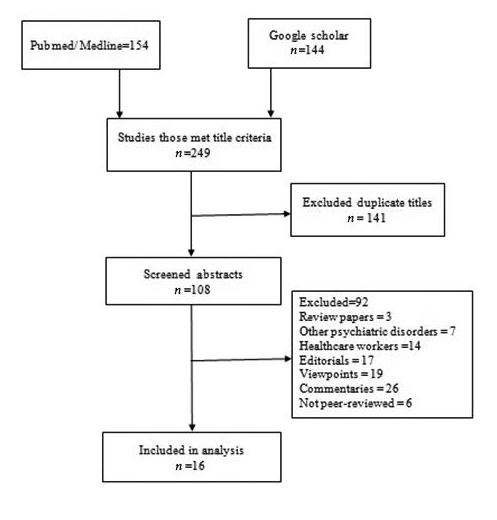
The coronavirus disease 2019 (COVID-19) crisis has greatly affected human lives across the world. Uncertainty and quarantine have been affecting people's mental health. Estimations of mental health problems are needed immediately for the better planning and management of these concerns at a global level. A rapid scoping review was conducted to get the estimation of mental health problems in the COVID-19 pandemic during the first 7 months. Peer-reviewed, data-based journal articles published in the English language were searched in the PubMed, Medline, and Google Scholar electronic databases from December 2019 to June 2020. Papers that met the inclusion criteria were analyzed and discussed in this review. A total of 16 studies were included. Eleven studies were from China, two from India, and one from Spain, Italy, and Iran. Prevalence of all forms of depression was 20%, anxiety 35%, and stress 53% in the combined study population of 113,285 individuals. The prevalence rate of all forms of depression, anxiety, stress, sleep problems, and psychological distress in general population was found to be higher during COVID-19 pandemic.
Overview
The claims and statistics of this paper haven’t been checked yet.
Free: it reads the open-access text and checks the first 5 claims that cite a source we can check. Create a free account to check every claim.
Integrity signals
Registry
Cites
Statistics
Figures
Verification
Claims the paper makes
The claims and statistics of this paper haven’t been checked yet.
Free: it reads the open-access text and checks the first 5 claims that cite a source we can check. Create a free account to check every claim.
Claims other papers make about this one
Each is checked against this paper’s own text: does it say what the citing paper says it does?
The cited source says what the claim attributes to it.
In the citing paper
“The rates of anxious-depressive symptoms found in the current study are lower than in other studies conducted in early 2020, at the beginning of the pandemic [33,34] but consistent with the other investigations conducted during the pandemic [8,17,18,35,36].”
From Anxiety and Depression during the Second Wave of the COVID-19 Pandemic: The Role of Coping Strategies (2023) · cites this paper as [35]
Self-check
Percentages, sums and reported differences re-computed from the paper’s own numbers.
The self-check needs the paper’s full text.
Citations
Cites
Wang, C., Pan, R., Wan, X., Tan, Y., Xu, L., Ho, C. S., & Ho, R. C. (2020) · International Journal of Environmental Research and Public Health · doi:10.3390/ijerph17051729 · Cited by 9,923
The psychological impact of the COVID-19 epidemic on college students in China
Cao, W., Fang, Z., Hou, G., Han, M., Xu, X., Dong, J., & Zheng, J. (2020) · Psychiatry Research · doi:10.1016/j.psychres.2020.112934 · Cited by 5,843
Holmes, E. A., O'Connor, R. C., Perry, V. H., Tracey, I., Wessely, S., Arseneault, L., Ballard, C., Christensen, H., Cohen Silver, R., Everall, I., et al. (2020) · The Lancet Psychiatry · doi:10.1016/s2215-0366(20)30168-1 · Cited by 5,715
Using social and behavioural science to support COVID-19 pandemic response
Bavel, J. J. V., Baicker, K., Boggio, P. S., Capraro, V., Cichocka, A., Cikara, M., Crockett, M. J., Crum, A. J., Douglas, K. M., Druckman, J. N., et al. (2020) · Nature Human Behaviour · doi:10.1038/s41562-020-0884-z · Cited by 4,964
Mental health and the COVID-19 pandemic
Pfefferbaum, B., & North, C. S. (2020) · New England Journal of Medicine · doi:10.1056/nejmp2008017 · Cited by 4,378
Qiu, J., Shen, B., Zhao, M., Wang, Z., Xie, B., & Xu, Y. (2020) · General Psychiatry · doi:10.1136/gpsych-2020-100213 · Cited by 4,307
Huang, Y., & Zhao, N. (2020) · Psychiatry Research · doi:10.1016/j.psychres.2020.112954 · Cited by 3,736
Pappa, S., Ntella, V., Giannakas, T., Giannakoulis, V. G., Papoutsi, E., & Katsaounou, P. (2020) · Brain Behavior and Immunity · doi:10.1016/j.bbi.2020.05.026 · Cited by 3,617
Timely mental health care for the 2019 novel coronavirus outbreak is urgently needed
Xiang, Y.-T., Yang, Y., Li, W., Zhang, L., Zhang, Q., Cheung, T., & Ng, C. H. (2020) · The Lancet Psychiatry · doi:10.1016/s2215-0366(20)30046-8 · Cited by 3,598
The outbreak of COVID-19 coronavirus and its impact on global mental health
Torales, J., O’Higgins, M., Castaldelli-Maia, J. M., & Ventriglio, A. (2020) · International Journal of Social Psychiatry · doi:10.1177/0020764020915212 · Cited by 3,013
Cited by
Items 201–300 of 462
Vural, M. E., GEÇER, H., HACIKELEŞOĞLU, H., & Yıldırım, M. (2025) · Religions · doi:10.3390/rel16060666 · Cited by 3
Bari, S., Vike, N. L., Kim, B.-W., Block, M. P., Stefanopoulos, L., Katsaggelos, A. K., & Breiter, H. C. (2026) · npj Mental Health Research · doi:10.1038/s44184-025-00181-3 · Cited by 3
“Fourth, data were collected during the COVID-19 pandemic when the incidences of anxiety and depression were reported higher 108,109 , potentially leading to a greater incidence of substance use behaviors.”
Kattari, L., & Anderson‐Carpenter, K. D. (2023) · Journal of Affective Disorders · doi:10.1016/j.jad.2023.02.052 · Cited by 3
Evaluation of concordance in estimation of excess mortality due to COVID‐19 pandemic
Verma, V., Nath, D. C., & Khan, H. T. A. (2023) · Journal of Evaluation in Clinical Practice · doi:10.1111/jep.13866 · Cited by 3
Shanazz, K., Nalloor, R., & Vazdarjanova, A. I. (2023) · Frontiers in Behavioral Neuroscience · doi:10.3389/fnbeh.2023.1231563 · Cited by 3
“It is imperative to understand the relationship between anxiety and stress in the short and long term, especially given the high prevalence of anxiety and stress caused by the COVID-19 pandemic across the world (Al Omari et al., 2020; Kamal and Othman, 2020; Lakhan et al., 2020; Alnazly et al., 2021; Shah et al., 2021…”
BackgroundMcCann, B., Hunter, S. C., McAloney‐Kocaman, K., McCarthy, P. J., Smith, J., & Calveley, E. (2023) · PLoS ONE · doi:10.1371/journal.pone.0293393 · Cited by 3
López, C. Q., Vera, V. D. G., & Zea, R. M. (2023) · Springer eBooks · doi:10.1007/978-3-031-38627-5_34 · Cited by 4
Odah, M. M., Ewis, A. A., Alkudaysi, F. M., Alhasani, T. M., Alessi, A. A., AlKudaysi, Y. M. Y., Alfaqih, K. A. M., Alfaqih, M. A., Almatrafi, A. A., Nmnkani, A. Z., et al. (2024) · Cureus · doi:10.7759/cureus.56081 · Cited by 3
Kim, A. M., & Lee, J.-S. (2024) · Alcohol · doi:10.1016/j.alcohol.2024.03.012 · Cited by 4
Filiz, B., Özyol, F. Ç., Güven, B., Korur, E. N., Yüksel, Y., Yavuz, C. İ., Ding, K., Yang, J. G., Durstine, J. L., Chin, M.-K., et al. (2024) · Cadernos de Saúde Pública · doi:10.1590/0102-311xen057123 · Cited by 3
Oh, J. W., Gwon, S. H., Lee, S., & Son, N. (2024) · Journal of Psychiatric Research · doi:10.1016/j.jpsychires.2024.07.048 · Cited by 3
Han, G.-S., & Park, J.-A. (2024) · Healthcare · doi:10.3390/healthcare12191924 · Cited by 3
“A study involving 113,285 individuals revealed that within the first seven months of the pandemic, the prevalence of depression, anxiety, and stress reached 20%, 35%, and 53%, respectively [5].”
BackgroundSuicidal ideation and mental illnesses during the COVID-19 pandemic in Canada
Dopko, R. L., Liu, L., & Contreras, G. A. (2024) · Discover Psychology · doi:10.1007/s44202-024-00253-z · Cited by 3
MENTAL HEALTH, RESILIENT COPING AND HOPE AMONG SAO PAULO RESIDENTS DURING COVID-19 SOCIAL DISTANCING
Pires, L. C., de Santana, W. F., Romano, F. S., Takayanagi, J. F. G. B., Tavares, G. H., Lusby, C., Uvinha, R. R., & de Oliveira, N. R. C. (2024) · Psicologia e Saúde em Debate · doi:10.22289/2446-922x.v10a2a18 · Cited by 3
Riobueno‐Naylor, A., Clay, L., Aubé, B. S. S., & Lai, B. S. (2024) · Disaster Medicine and Public Health Preparedness · doi:10.1017/dmp.2024.140 · Cited by 3
Peng, Y., Ke, Y., Cai, R., Lv, B., Liu, S., Liu, Y., Li, X., Song, H., & Chen, Q. (2025) · One Health · doi:10.1016/j.onehlt.2025.101116 · Cited by 3
“This shift is manifested in daily life through persistent feelings of fatigue [33], stress [34], and anxiety [35].”
Hunter, A. M., Smith, M. S., Begay, A. B., Teufel‐Shone, N. I., Jarrat-Snider, K., Goldtooth, C., Begay, M., Joseph, D. H., Castagno, A. E., Roddy, J. K., et al. (2025) · American Indian and Alaska Native Mental Health Research · doi:10.5820/aian.3203.2025.42 · Cited by 3
“…body of literature has shown that the combination of the rapid transmission of the virus, high COVID-19-associated fatalities, and drastic COVID-19 mitigation measures have had adverse psychological and mental wellbeing impacts on the general population (Lakhan et al., 2020; Levine et al., 2022).”
Neuropsychiatrische Aspekte von COVID-19 – Eine narrative Übersicht
Rittmannsberger, H., Barth, M., Malik, P., & Yazdi, K. (2021) · Fortschritte der Neurologie · Psychiatrie · doi:10.1055/a-1523-3850 · Cited by 4
“Typischer Weise handelt es sich um kurz nach der Infektion auftretende, nur wenige Tage dauernde und gut auf An-tipsychotika ansprechende Psychosen, oft mit manischer Sympto-matik, bei bis dahin psychiatrisch unauffälligen Personen [58–61].”
BackgroundInfluentialChanges in cardiovascular-related health behaviors during the COVID-19 pandemic
Kim, E., Jung, C., Kim, D. J., Ko, S., Lee, H., Lee, K., Kang, D. R., Ryu, S. K., Lee, W., Rhee, E., et al. (2023) · Cardiovascular Prevention and Pharmacotherapy · doi:10.36011/cpp.2023.5.e2 · Cited by 3
The 50 most-cited review papers on physical activity and depression: A bibliometric analysis
Zhai, L., & Xu, M. L. (2023) · Complementary Therapies in Clinical Practice · doi:10.1016/j.ctcp.2023.101745 · Cited by 5
Yu, L., Guo, S., Ji, W., Sun, H., Lee, S.-N., & Zhang, D. (2023) · Medicina · doi:10.3390/medicina59101772 · Cited by 4
“…large number of populations exhibited higher prevalences of anxiety and depression during the COVID-19 pandemic, which may have arisen from the fear of contracting the virus, the lack of effective treatment, the risk of death caused by the virus, and the uncertainty of controlling the virus [119].”
BackgroundFannin, A., Hooley, C., & Nelson, E. J. (2024) · Journal of Occupational and Environmental Medicine · doi:10.1097/jom.0000000000003042 · Cited by 4
“55 Stress, anxiety, and negative affect increased during the pandemic 44 as did mental health – related absenteeism in certain occupational groups.”
BackgroundManiou, T. A., & Papadopoulou, L. (2024) · Media Watch · doi:10.1177/09760911241238376 · Cited by 3
“Various studies found that during the COVID-19 crisis, levels of depression, anxiety, stress, sleep problems and psychological distress were higher in the general population (Lakhan et al., 2020).”
BackgroundIelmini, M., Casarin, J., Callegari, C., Bellini, A., Favata, M. G., Giudici, A., Ghezzi, F., Cromi, A., & Caselli, I. (2024) · Journal of Clinical Medicine · doi:10.3390/jcm13113148 · Cited by 3
“…relocate the subject of concern from the surgery to the pandemic situations and its consequences, experiencing the end of the hospitalization as the end of the extreme distance from family members and benefiting from the idea of being discharged without contracting the COVID-19 infection [19,20].”
BackgroundQuality of life and psychopathology in different COVID-19 pandemic periods: A longitudinal study
Triantafillou, E., Tsellos, P., Christodoulou, N., Tzavara, C. K., & Christodoulou, G. N. (2024) · Psychiatriki · doi:10.22365/jpsych.2024.010 · Cited by 4
Alie, M. S., Girma, D., Negesse, Y., Adugna, A., & Abebe, G. F. (2024) · Frontiers in Public Health · doi:10.3389/fpubh.2024.1407269 · Cited by 3
Digital assessment of cognitive-affective biases related to mental health
Park, S.-E., Chung, J., Lee, J., Kim, M. J., Kim, J., Jeon, H. J., Kim, H., Woo, C., Kim, H., & Lee, S. A. (2024) · PLOS Digital Health · doi:10.1371/journal.pdig.0000595 · Cited by 3
Freitas, F. D. F., Santos, J. C. C., de Medeiros, A. C. Q., & Lopes, F. D. A. (2021) · Revista Brasileira de Extensão Universitária · doi:10.36661/2358-0399.2021v12i2.12306 · Cited by 7
“…constante às notícias e a perda econômica são fatores intimamente relacionados ao surgimento da ansiedade (Akdeniz et al., 2020; Cornine, 2020; Lakhan et al., 2020; Volino-Souza et al., 2020; Shigemura et al., 2020, Wang et al., 2020; Zhou et al., 2020), observou-se a importância de oferecer…”
BackgroundPal, A., Panigrahi, S. K., & Majumdar, S. (2022) · Journal of Education and Health Promotion · doi:10.4103/jehp.jehp_398_21 · Cited by 3
“did a scoping review with the inclusion of 16 studies around the world and showed the prevalence of anxiety is estimated to be 35%.[21] We found clinically relevant anxiety level among 10.”
BackgroundHelping Families Help Themselves? The (Un)intended Impacts of a Digital Parenting Program
Amaral, S., Dinarte, L., Domínguez, P., & Perez-Vincent, S. M. (2022) · doi:10.18235/0004123 · Cited by 4
Winter, M. R., Probst, T., John, D. T., & Pryss, R. C. (2025) · Data in Brief · doi:10.1016/j.dib.2025.111967 · Cited by 3
“The COVID-19 pandemic presented challenges to global mental health, particularly affecting stress levels across diverse populations [ 3 ].”
Gwadiso, X. A., Taliep, N., Ismail, G., James (née Louw), S., & Swart, L.-A. (2025) · Journal of Theoretical Social Psychology · doi:10.1155/jts5/8167323 · Cited by 2
Anti-stigmatizing: a collaborative autoethnography on recovery from depression
Zhu, D., & Lyu, K. (2024) · Frontiers in Psychiatry · doi:10.3389/fpsyt.2024.1360967 · Cited by 2
“” Particularly since the COVID-19 pandemic, the prevalence of depression has been rising, making it a leading cause of disability and death (3).”
Integrating Grief Counseling in Responses to Disasters and Epidemics
Ramamurthy, C., & Juvva, S. (2023) · Indian Journal of Social Psychiatry · doi:10.4103/ijsp.ijsp_78_22 · Cited by 2
Managing type 2 diabetes during the COVID-19 pandemic in Ghana: a qualitative study
Amankwah‐Poku, M., Gordon-Mensah, G., & Asante, K. O. (2025) · Cardiovascular Diabetology – Endocrinology Reports · doi:10.1186/s40842-024-00213-5 · Cited by 2
Medical and Psychological Distress in Male COVID-19 Survivors with Lung Damage
Guskova, O. A., Приленский, Б. Ю., Stoyanova, I. Y., Yaroslavskaya, E. I., Avdeeva, K. S., & Petelina, T. I. (2025) · SibScript · doi:10.21603/sibscript-2025-27-2-149-162 · Cited by 2
Chasson, M., Borelli, J. L., Shai, D., & Ben‐Ari, O. T. –. (2025) · Behavioral Sciences · doi:10.3390/bs15060717 · Cited by 3
“The pandemic brought prolonged uncertainty, health concerns, social isolation, and financial hardship (Altig et al., 2020; Brülhart et al., 2021; Lakhan et al., 2020; Necho et al., 2021).”
Chang, J. (2025) · Frontiers in Psychiatry · doi:10.3389/fpsyt.2025.1707099 · Cited by 3
“The recent COVID-19 pandemic has further exacerbated global rates of depression, anxiety, and stress (2).”
Correlation of Depression, Anxiety and Stress with Quality of Life in COVID-19 Pandemic
Rashid, A., Mudassar, U., Tariq, I., Zaheer, A., Iftikhar, M., Mazhar, N., et al. (2021) · Esculapio · doi:10.51273/esc21.2517218 · Cited by 2
Stefańska, M., Koker, R. D., Vos, J., Wachter, E. D., Dębiec-Bąk, A., & Ptak, A. (2023) · International Journal of Environmental Research and Public Health · doi:10.3390/ijerph20054311 · Cited by 2
“During the COVID-19 pandemic, there was an increasing percentage of all forms of mood disorders: depression by 20%, anxiety by 35%, and stress by 53% in a combined research population of 113,285 people in 16 studies conducted in China, India, Spain, and Italy [49].”
BackgroundBae, M.-H. (2023) · Journal of Men s Health · doi:10.22514/jomh.2023.029 · Cited by 3
“These long-term lifestyle changes have increased stress levels [8], which have been associated with increased alcohol consumption and rates of alcohol abuse [9].”
Molins, F., & Serrano, M. Á. (2023) · Retos · doi:10.17163/ret.n25.2023.03 · Cited by 2
Gandino, G., Civilotti, C., Finzi, S., Gaboardi, M., Guazzini, A., Novara, C., Procentese, F., Santinello, M., Sola, T., Veglia, F., et al. (2023) · Current Psychology · doi:10.1007/s12144-023-04737-4 · Cited by 2
“To name a few aspects, significant increases in addiction, depression, anxiety, insomnia, and negative emotions in general have been reported (Dubey and Tripathi, 2020; Lakhan et al., 2020; Pieh et al., 2021; Prati, 2021).”
Mastering the COVID-19 Pandemic Crisis: From Anxiety to Hope
Krafft, A. M., Chukwuorji, J. C., Choubisa, R., Comte, S., Fenouillet, F., Flores-Lucas, V., Guse, T., Kasprzak, E. K., Martin‐Krumm, C., Marujo, H. Á., et al. (2023) · Cross-cultural advancements in positive psychology · doi:10.1007/978-3-031-24412-4_9 · Cited by 3
Hertanto, A. C. H., Marchianti, A. C. N., & Hasan, M. (2023) · Amerta Nutrition · doi:10.20473/amnt.v7i2.2023.283-294 · Cited by 4
Ideologiczne podstawy akceptacji przemocy wobec migrantów
Winiewski, M. H., Świderska, A., & Bulska, D. (2024) · Wydawnictwo Liberi Libri eBooks · doi:10.47943/lib.9788363487645.rozdzial04 · Cited by 15
Postawy Polaków i Polek wobec mniejszości: raport z Polskiego Sondażu Uprzedzeń 2021
Mirucka, M., Zochniak, K., & Bulska, D. (2024) · Wydawnictwo Liberi Libri eBooks · doi:10.47943/lib.9788363487645.rozdzial01 · Cited by 3
The investigation of progress and application related to chatbot in psychology
Li, Z. (2024) · Applied and Computational Engineering · doi:10.54254/2755-2721/37/20230501 · Cited by 2
Oertel, N. T. (2024) · Frontiers in Psychology · doi:10.3389/fpsyg.2024.1325982 · Cited by 2
Kumar, D., Rohilla, K. K., Gupta, P., Kalyani, V. C., & Kumar, R. (2024) · Journal of Family Medicine and Primary Care · doi:10.4103/jfmpc.jfmpc_1434_23 · Cited by 2
“…in an unimaginably precarious situation which was linked to a greater level of stress, anxiety, and depression among the general public and HCPs. [6,14] This study also emphasizes the impact of stress and poor sleep during the COVID‑19 pandemic on HCPs. [15] People’s health and wellbeing may be…”
BackgroundNordmeyer, L., Leikert, C., Sannemann, L., Keller, K., Leminski, C., Meixner, A., Peltzer, S., Werner, B., Kuntz, L., Pfaff, H., et al. (2024) · BMC Psychology · doi:10.1186/s40359-024-01693-x · Cited by 2
Fernandez, A. R. L., Laud-Iligan, H. G., & Relleve, C. C. O. (2023) · Journal of Advanced Guidance and Counseling · doi:10.21580/jagc.2023.4.2.16478 · Cited by 4
“Similar to what Lakhan et al., 2020 reported in 2020, the COVID-19 pandemic was associated with greater rates of depression, anxiety, stress, sleep issues, and psychological discomfort in the general population.”
ResultIslam, A. F. M. M., Ahmed, K. T., Raihan, M. A., Ahmed, T., Hossain, M. S., Eshad, M. K. A., Mahmud, M. H., Shill, P. K., Islam, S., & Siraj, M. A. (2024) · PLOS mental health. · doi:10.1371/journal.pmen.0000014 · Cited by 2
Khan, Y. S., Alsrhani, A., Kaneez, S., Fatima, M., Iqbal, K., Alruwaili, M., & Farhana, A. (2024) · PubMed Central · Cited by 2
Das, M., Mondal, N. C., Chaudhuri, A., & Saldanha, D. (2024) · Journal of the Scientific Society · doi:10.4103/jss.jss_38_23 · Cited by 3
Bianchini, G., Kinnear, A., & Bodell, L. P. (2024) · Sex Roles · doi:10.1007/s11199-024-01532-8 · Cited by 2
“established (Lakhan et al., 2020; Turna et al., 2021), limited research has examined COVID-19 pandemic-related changes in gender and sexuality.”
Musso, P., Iannello, N. M., Silletti, F., Cassibba, R., Laganà, C., Albiero, P., Barrett, M. D., Inguglia, C., Liga, F., Coco, A. L., et al. (2024) · Emerging Adulthood · doi:10.1177/21676968241288271 · Cited by 2
“Anxiety levels surged during the pandemic compared to pre-pandemic times (Lakhan et al., 2020), and optimism about the future of society declined noticeably (Ripoll et al., 2021).”
Koçak, O., Yıldırım, M., Şimşek, O. M., & Çevık, O. (2025) · Nursing Open · doi:10.1002/nop2.70204 · Cited by 2
“This, in turn, contributed to increased levels of psychological problems such as stress, anxiety, and depression among individuals (Abuselidze and Mamaladze 2020; Jain et al. 2020; Koçak 2021b; Kumar et al. 2021; Lakhan et al. 2020).”
Scoresby, K. J., Springer, C. M., & Loeffler, D. N. (2025) · Current Psychology · doi:10.1007/s12144-025-07780-5 · Cited by 2
den Cruyce, N. V., Hoof, E. V., Godderis, L., Gérard, S., & Leuven, F. V. (2021) · Humanities and Social Sciences Communications · doi:10.1057/s41599-021-01008-0 · Cited by 2
Psychological Perspectives on COVID-19
Hosseini-Nezhad, S., Safdar, S. F., Hosseini-Nezhad, P., & Luu, L. A. N. (2022) · Contributions to economics · doi:10.1007/978-3-030-89996-7_14 · Cited by 5
Delgado, M. E. P., Pérez, J. J. M., García-Moreno, M. A., López, C. A., Cordón, R. D. A., & González-Salvador, T. (2022) · Clínica Contemporánea · doi:10.5093/cc2022a4 · Cited by 3
COVID-19: Physical Activity Behavior Change among Athletes in Québec (Canada)
Marceau, P., & Pons, F. (2022) · International Journal of Environmental Research and Public Health · doi:10.3390/ijerph192113853 · Cited by 3
“The uncertainty about the pandemic resulted in the prevalence rate of stress proving to be higher in the general population during this period [19].”
BackgroundLi, J., Zhu, S., & Gao, W. (2022) · European Journal of Cancer Care · doi:10.1111/ecc.13762 · Cited by 2
“…al., 2021; Mink van der Molen et al., 2021) among patients with breast cancer during the COVID-19 pandemic, which were much higher than the prevalence of symptoms of anxiety and depression in the general population during the pandemic (Cenat et al., 2021; Lakhan et al., 2020; Salari et al., 2020).”
BackgroundJovanović, T., & Visnjic, A. M. (2023) · Medicina · doi:10.3390/medicina59010180 · Cited by 3
“news, interrupted daily routine, economic losses and inability to participate in social events, contributed in many ways to a poor mental state [4].”
BackgroundSaint-Martin, H., Dorey, J., Herrmann, M., Laurent, B., Lebrun-Givois, C., Perrot, C., Edjolo, A., Ouss, L., Pongan, É., & Rouch, I. (2025) · European Psychiatry · doi:10.1186/s12877-025-06422-6 · Cited by 2
“In addition, numerous studies have demonstrated the impact of the Covid-19 pandemic on psychological health across different populations, with an increase in depressive and anxious symptoms [20, 21], fatigue, loneliness and poor well-being [22, 23] or PTSD symptoms [24] (for reviews, see [25, 26]).”
Akello, H., Kennelly, B., & Cullinan, J. (2022) · Research Square · doi:10.21203/rs.3.rs-1496609/v1 · Cited by 2
Digital nomadism in Southeast Asia: its cultural identities and the new labor model
Zhong, W. (2022) · Chula Digiverse · doi:10.58837/chula.the.2022.334 · Cited by 11
Monteiro, B., Galhardo, A., Senra, H., Pinto‐Gouveia, J., & Cunha, M. (2024) · Stress and Health · doi:10.1002/smi.3440 · Cited by 1
Leikuma-Rimicāne, L., Ceballos, R. F., Baloran, E. T., & Medina, M. N. (2023) · Recoletos Multidisciplinary Research Journal · doi:10.32871/rmrj2311.01.05 · Cited by 1
Effects of Bio-Tuning Intervention on Stress, Depression, and Anxiety During the COVID-19 Pandemic
Sanillan, J. (2023) · American Journal of Biomedical Science & Research · doi:10.34297/ajbsr.2023.19.002590 · Cited by 1
Stress exposure due to the COVID-19 pandemic on menstrual abnormalities: A systematic review
Nugroho, S. B., Utomo, B., Frety, E. E., Sa’adi, A., & Fauziyah, S. (2023) · Majalah Obstetri & Ginekologi · doi:10.20473/mog.v31i32023.150-156 · Cited by 1
Rasizm wobec osób czarnych w Polsce
Bieńkowski, M., Winiewski, M. H., & Ohia-Nowak, M. A. (2024) · Wydawnictwo Liberi Libri eBooks · doi:10.47943/lib.9788363487645.rozdzial03 · Cited by 4
Brief report: Impact of a horseback riding lesson on youth well-being during the COVID-19 pandemic
McArthur, A. D., Boucher, A., & Syrnyk, C. (2024) · Journal of Equine Rehabilitation · doi:10.1016/j.eqre.2024.100009 · Cited by 1
Shazley, O., Wiciak, M. T., & Santhosh, D. (2023) · JMIR Formative Research · doi:10.2196/53803 · Cited by 1
Biazus, E. L., Zanini, G. D. S., Luciano, A. R. M. B., & Verardi, C. E. L. (2024) · Caderno Pedagógico · doi:10.54033/cadpedv21n10-128 · Cited by 1
Household size and depressive symptoms during the COVID-19 pandemic: A gendered analysis
Kollamparambil, U., & Oyenubi, A. (2024) · Development Southern Africa · doi:10.1080/0376835x.2024.2408651 · Cited by 1
“…effect of the COVID-19 pandemic on mental wellbeing is well-documented with evidence emerging across various countries on a surge in anxiety (Lakhan et al., 2020; Roy et al., 2020), elevated depressive symptoms (Oyenubi & Kollamparambil, 2020; Chen et al., 2021), and an increase in suicide…”
Spirituality as an International Coping Method during Covid-19
Sabuncu, B. C., Kosić, A., & Ai, A. L. (2024) · OBM Integrative and Complementary Medicine · doi:10.21926/obm.icm.2404059 · Cited by 1
Riches, S., & Nicholson, S. L. (2025) · International Journal of Spa and Wellness · doi:10.1080/24721735.2025.2450151 · Cited by 1
“Many people experience problems related to stress (Lakhan et al., 2020; Salari et al., 2020).”
Wassif, G. O., El-Awady, M. Y., Nagi, M. W., & Mossad, I. M. (2025) · Journal of the Egyptian Public Health Association · doi:10.1186/s42506-025-00191-1 · Cited by 1
“One of the primary concerns was the pandemic’s effect on mental health, particularly the rise in depression, anxiety, stress, and emotional and behavioral changes [4, 5].”
Levit, N. S., Filosof, K., Glazer, J., & Goldstein, D. A. (2025) · Pharmacoepidemiology · doi:10.3390/pharma4030016 · Cited by 1
“The COVID-19 pandemic had a tremendous effect on mental health and anxiety [15,24,25], which might have impacted the adherence to the black box warning.”
Cui, H. (2025) · Psychology in the Schools · doi:10.1002/pits.70070 · Cited by 1
“In recent years, particularly since the outbreak of COVID ‐ 19, an increasing number of young people have been experiencing psychological, social, and behavioral difficulties during their transition to adulthood among the global children (Inchley et al. 2016; Lakhan et al. 2020; Patton et al. 2016).”
Giri, R., Singh, A., & Sharma, R. K. (2025) · Discover Life · doi:10.1007/s11084-025-09714-4 · Cited by 1
Psychological and Cognitive Sequelae of COVID ‐19: Systematic Review and Meta‐Analysis
Boufleuer, E., Vieira, T. W., Sakamoto, V. T. M., Anschau, F., Tavares, J. P., Filho, F. F. D., & Pai, D. D. (2026) · Journal of Psychiatric and Mental Health Nursing · doi:10.1111/jpm.70139 · Cited by 2
Powerless and pressured: Mental health vulnerabilities in the context of prolonged blackouts in Cuba
Broche‐Pérez, Y., & Fernández-Fleites, Z. (2026) · Social Science & Medicine · doi:10.1016/j.socscimed.2026.119419 · Cited by 1
Psychological and Social Impact of Lockdown due to Covid-19
Ibad, N., Beig, A. A., Bukharie, F., Iftikhar, I., Rasool, J., & Shakoor, A. (2021) · Pakistan Journal of Medical and Health Sciences · doi:10.53350/pjmhs211561309 · Cited by 1
Anxiety and depression disorders on health workers in COVID and non-COVID wards of Sanglah Hospital
Ariani, N. K. P., Lesmana, C. B. J., Sitanggang, A. R. P., & Pasaribu, I. L. M. (2022) · International Journal of Health Sciences · doi:10.53730/ijhs.v6n1.3027 · Cited by 1
“Influenza infection, having a close member or friend afflicted with the virus, and a strong fear of infection have all been shown as significant predictors of posttraumatic stress disorder (Ouassou et al., 2020; Lakhan et al., 2020; Li et al., 2020).”
BackgroundBurjaq, R., & Hammoudeh, S. (2023) · IntechOpen eBooks · doi:10.5772/intechopen.102225 · Cited by 2
“9% in women in Spain reported experiencing stress [22].”
BackgroundFreude durch Sport und Bewegung bei psychischen Erkrankungen
Kreppke, J.-N., Cody, R., Faude, O., & Gerber, M. (2022) · Praxis · doi:10.1024/1661-8157/a003830 · Cited by 1
Gupta, M., Gupta, V. K., Kaur, N., Hari, P. K., Gupta, V., Goyal, K., & Goyal, H. (2021) · SAS Journal of Medicine · doi:10.36347/sasjm.2021.v07i12.004 · Cited by 1
Physical activity to ameliorate the negative mental health effects of COVID-19-induced confinement
Alomari, M. A., Alzoubi, K. H., Khabour, O. F., & Zraigat, L. A. (2022) · Informatics in Medicine Unlocked · doi:10.1016/j.imu.2022.100976 · Cited by 1
“These changes include increased negative emotions [23,46], stress, anxiety [32,47], depression [33], and feelings of fear [34], worry [46], and loneliness [36].”
Dobiała, E., Gulczyńska, A., Małecki, R., Efremova, P., Ławicka, J., Karmolińska-Jagodzik, E., & Kirillov, I. (2022) · International Journal of Environmental Research and Public Health · doi:10.3390/ijerph19127361 · Cited by 1
“The authors also emphasize the significance of the higher incidence of depression, particularly among young women [4,5].”
BackgroundCahyanti, I. Y., Ambarini, T. K., Kusumastuti, D., Abdillah, A. A., & Baswara, T. (2022) · Jurnal Abdi Insani · doi:10.29303/abdiinsani.v9i3.694 · Cited by 1
Zhang, Z., Wang, X., Wang, W. J., Zhang, J., Shan, L., & Li, Y. (2022) · International Journal of Gynecology & Obstetrics · doi:10.1002/ijgo.14516 · Cited by 1
Mansor, M. Z., & Ahmad, A. (2022) · INTERNATIONAL JOURNAL OF CARE SCHOLARS · doi:10.31436/ijcs.v5i3.267 · Cited by 1
Mandal, S., Misra, P., Kant, S., Sangral, M., & Kardam, P. (2022) · Yoga Mimamsa · doi:10.4103/ym.ym_107_22 · Cited by 1
Saade, Y., Dure‐Molla, M. D. L., Fournier, B., Kerner, S. P., Colon, P., Carra, M. C., & Bouchard, P. (2023) · PLoS ONE · doi:10.1371/journal.pone.0281390 · Cited by 1
“Indeed, it has been shown that the occurrence of anxiety and mental health problems has increased in all populations during the COVID-19 pandemic [14].”
BackgroundXu, T., Zheng, K., & Wu, X. (2023) · Healthcare · doi:10.3390/healthcare11070986 · Cited by 1
“Additionally, a large number of studies showed that public concern and worries about COVID-19 might affect sleep quality, causing nig tmares, awakenings, and other pr blems [10,11,34,35,45,46].”
BackgroundAdams-Sadiqi, G., & Jiang, Y. (2023) · Canadian Journal of Family and Youth / Le Journal Canadien de Famille et de la Jeunesse · doi:10.29173/cjfy29921 · Cited by 2
Sundarakumar, J. S., Abhishek, M. L., Malo, P. K., Ravindranath, V., & Collaborators, O. B. O. S. (2023) · Frontiers in Psychiatry · doi:10.3389/fpsyt.2023.954557 · Cited by 1
Metadata
- Authors
- Lakhan, R., Agrawal, A., & Sharma, M.
- Affiliations
- Department of Health and Human Performance, Seabury Center, Berea, Kentucky, United States
- All India Institute of Medical Sciences Bhopal (IN)
- University of Nevada, Las Vegas (US)
- Venue
- Journal of Neurosciences in Rural Practice
- Publisher
- Scientific Scholar
- Published
- 2020-09-11
- Volume
- 11
- Issue
- 4
- Pages
- 519-525
- ISSN
- 0976-3147 (ISSN-L)
- PMC
- PMC7595780
- OpenAlex
- W3086788763
- Cited by
- 421
- References
- 40
- Citations by year
- 2026: 20 · 2025: 62 · 2024: 87 · 2023: 112 · 2022: 98 · 2021: 41 · 2020: 1
- FWCI
- 4.93
- Type
- journal article
- Language
- en
- Open access
- gold
- doi.org
- Licence
- Locations
- Journal of Neurosciences in Rural Practice (publishedVersion, cc-by-nc-nd)
- PubMed Central (publishedVersion, cc-by-nc-nd)
- PubMed (publishedVersion)
- Digital Scholarship - UNLV (University of Nevada Reno) (acceptedVersion, cc-by-nc-nd)
- DOAJ (DOAJ: Directory of Open Access Journals) (acceptedVersion)
- Digital Scholarship - UNLV (University of Nevada Reno) (submittedVersion, cc-by)
- Topics
- Social Sciences › Psychology › Clinical Psychology › COVID-19 and Mental Health
- Health Sciences › Medicine › Public Health, Environmental and Occupational Health › Maternal Mental Health During Pregnancy and Postpartum
- Health Sciences › Medicine › Psychiatry and Mental health › Mental Health Treatment and Access
- Keywords
- COVID-19 pandemic, depression, anxiety, stress, prevalence, mental health, psychological distress, sleep disorders, quarantine, uncertainty
About these checks
Registry, retraction, Cites and statistics results are computed, not judged, with one exception: a printed reference that no index lists is read once by a model before it counts as a citation error. Claims are extracted by a model and kept only when their quote appears verbatim in the text; each cited source is then checked, with a model’s help, for whether it says what the claim relies on. Those verdicts can be wrong — read the claim’s quote and the cited source before relying on one.
Statistics and arithmetic are recomputed, not judged.
Confidence bands are shown only for fields calibrated on our annotated test set. None is calibrated yet, so no band is shown.
What counts as a claim ›How we measure confidence ›How we check this ›
Are you an author, or do you see a problem with this page? Request a review
Data sources
Bibliographic data: Semantic Scholar, OpenAlex, Crossref.
Contains information from the Semantic Scholar Academic Graph Datasets, made available under the ODC Attribution License (ODC-BY 1.0).
Semantic Scholar’s data is described in: Kinney, R., et al. (2023). The Semantic Scholar Open Data Platform. arXiv:2301.10140.
