

The dorsal anterior cingulate cortex is selective for pain: Results from large-scale reverse inference
Open accessThe DOI matches its Crossref record; 59 of the 59 references it cites were found in a registry or an index; none of the 19 sources its claims cite is checked for support yet.
Abstract
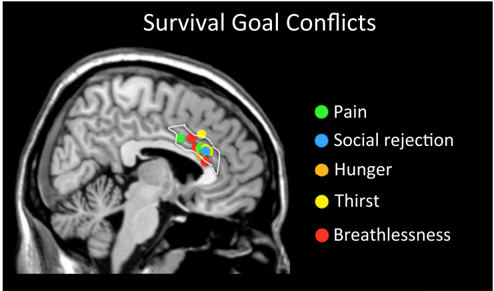
Dorsal anterior cingulate cortex (dACC) activation is commonly observed in studies of pain, executive control, conflict monitoring, and salience processing, making it difficult to interpret the dACC's specific psychological function. Using Neurosynth, an automated brainmapping database [of over 10,000 functional MRI (fMRI) studies], we performed quantitative reverse inference analyses to explore the best general psychological account of the dACC function P(Ψ process|dACC activity). Results clearly indicated that the best psychological description of dACC function was related to pain processing--not executive, conflict, or salience processing. We conclude by considering that physical pain may be an instance of a broader class of survival-relevant goals monitored by the dACC, in contrast to more arbitrary temporary goals, which may be monitored by the supplementary motor area.
Overview
CoChat Summary
TL;DR
Using Neurosynth, the paper performs large-scale forward and reverse inference analyses to ask what psychological process is most selectively associated with dorsal anterior cingulate cortex (dACC) activity. It concludes that dACC activity is best and selectively linked to pain, whereas executive, conflict, and salience terms show forward inference but not reliable reverse inference to dACC.
Key findings
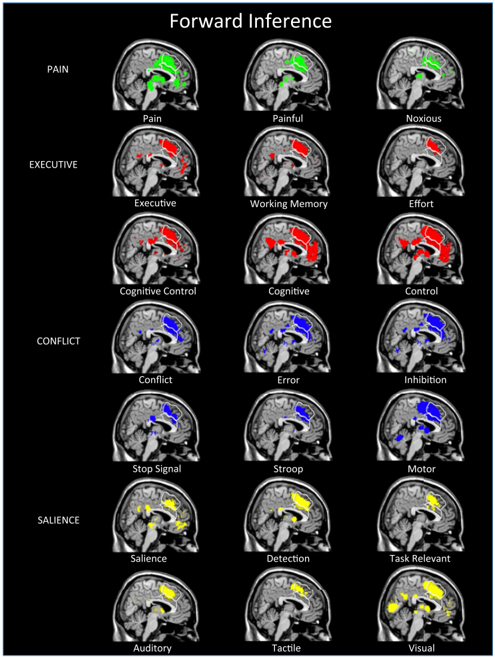
- Forward inference reproduced prior findings: pain, executive, conflict, and salience terms all produced at least some reliable dACC activity, though many effects were dACC-adjacent in SMA/pre-SMA.
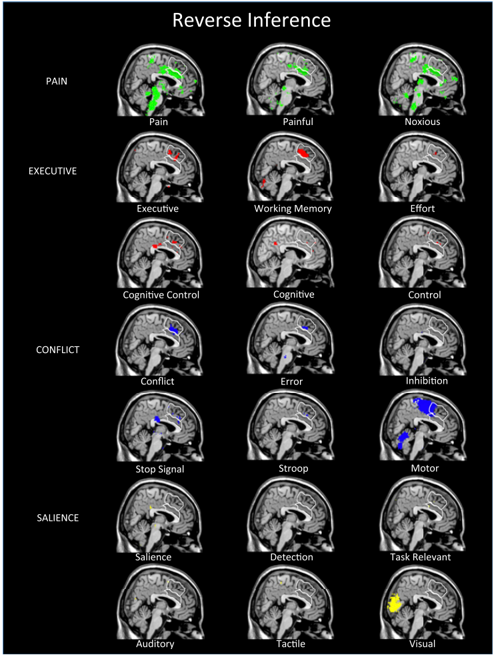
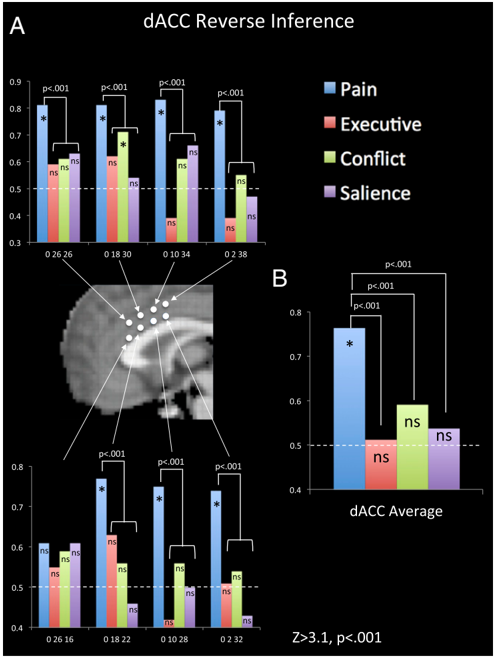
- Reverse inference showed that only pain-related terms (“pain,” “painful,” “noxious”) had broad coverage across dACC; dACC activity could be attributed to pain in seven of eight foci, to conflict in one of eight foci, and to neither executive nor salience at any of the eight foci.
- The maximum pain Z-score in dACC (11.98 at coordinates 0, 20, 28) was significantly higher than the maximum Z-score anywhere in the brain for “executive” (6.67), “conflict” (5.46), and “salience” (6.09) (P < 0.001).
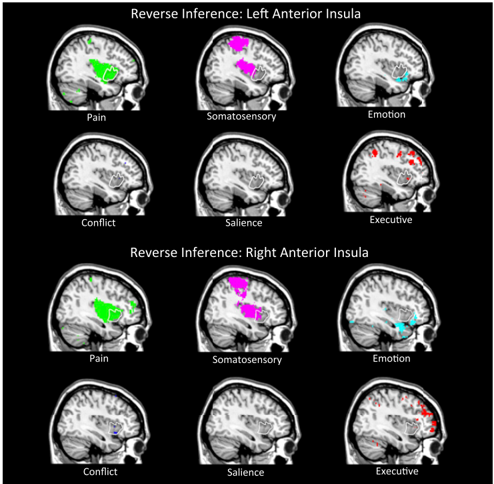
- Across all Neurosynth terms, “pain” was the top term for six of eight dACC locations; at one other location it was second after “clinically,” and at the last location the top term was “chronic pain.” The paper also reports that the anterior insula reverse inference maps were selective for pain.
Methods
- Neurosynth was used to conduct forward and reverse inference analyses on 10,903 neuroimaging studies available as of June 2015; no new data were collected.
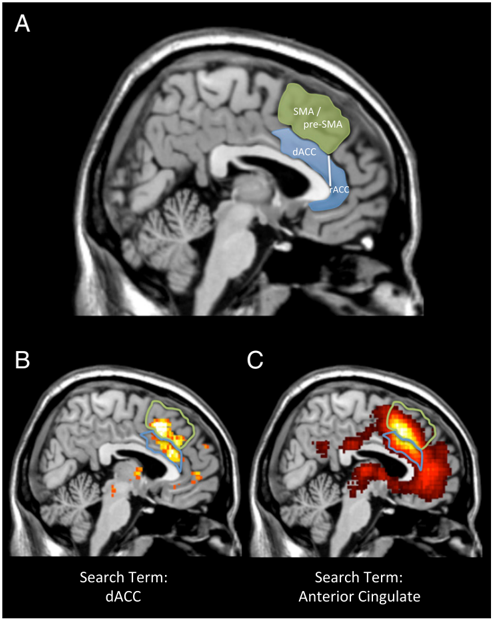
- The paper first located the dACC by forward inference for the term “dACC,” then ran forward inference maps for pain, executive control, conflict processing, and salience terms, and then ran reverse inference maps for the same terms.
- Quantitative reverse inference compared Z-scores and posterior probabilities across eight equally spaced midline dACC foci for “pain” (410 studies), “executive” (531), “conflict” (246), and “salience” (222), using a threshold of Z > 3.1, P < 0.001; statistical analyses were carried out on Z-scores.
Limitations
- The paper states that Neurosynth is automated and does not perform content analyses of term usage, treats activations and deactivations alike, is affected by confirmation biases in reporting, and uses linguistic terms rather than task trial types or specific psychological states.
- The paper addresses possible base-rate and term-specificity concerns, arguing that frequency is controlled by setting the Bayesian prior for every term to 0.50 and that both loosely and tightly defined non-pain constructs failed to produce dACC reverse inference effects.
- The paper notes individual variability in neuroanatomy, especially an additional paracingulate sulcus that can extend dACC dorsally, which Neurosynth does not take into account; it argues this would still leave evidence of a dorso-ventral gradient distinguishing pain from some non-pain effects.
Model-written summary. Check it against the paper before relying on it.
Integrity signals
Registry
Cites
Statistics
Figures
Verification
Claims the paper makes
0 Valid · 2 Not valid · 15 Not checked · 65 Own results and interpretations
A result the paper reports from its own data — it cites no other source for it, so there is none to check. The quote shows it is in the paper.
In the paper
“Despite the fact that there are several hundred psychological terms in the Neurosynth database,”
§ The dorsal anterior cingulate cortex is selective for pain: Results from large-scale reverse inference > Step 3: Reverse Inference in the dACC
plainstates an association- Asserted: passes — The authors put it forward as true.
- Checkable: passes — It can be checked against evidence.
- Load-bearing: passes — The paper’s conclusions depend on it.
- Based: passes — The paper gives a reason why it holds.
A result the paper reports from its own data — it cites no other source for it, so there is none to check. The quote shows it is in the paper.
In the paper
“Specifically, the forward inference maps for”
§ The dorsal anterior cingulate cortex is selective for pain: Results from large-scale reverse inference > Step 2: Forward Inference in the dACC
plain- Asserted: passes — The authors put it forward as true.
- Checkable: passes — It can be checked against evidence.
- Load-bearing: passes — The paper’s conclusions depend on it.
- Based: passes — The paper gives a reason why it holds.
A result the paper reports from its own data — it cites no other source for it, so there is none to check. The quote shows it is in the paper.
In the paper
“What was striking in this dACC analysis is that the neuroimaging literature may have mislabeled the location of the dACC in many studies, and this mislabeling may have played a part in the current misunderstanding regarding dACC functionality.”
§ The dorsal anterior cingulate cortex is selective for pain: Results from large-scale reverse inference > Step 1: Locating the dACC
hedgedstates a possible cause- Asserted: passes — The authors put it forward as true.
- Checkable: passes — It can be checked against evidence.
- Load-bearing: passes — The paper’s conclusions depend on it.
- Based: passes — The paper gives a reason why it holds.
A result the paper reports from its own data — it cites no other source for it, so there is none to check. The quote shows it is in the paper.
In the paper
“The same is true if the term”
§ The dorsal anterior cingulate cortex is selective for pain: Results from large-scale reverse inference > Step 1: Locating the dACC
plain- Asserted: passes — The authors put it forward as true.
- Checkable: passes — It can be checked against evidence.
- Load-bearing: passes — The paper’s conclusions depend on it.
- Based: passes — The paper gives a reason why it holds.
A result the paper reports from its own data — it cites no other source for it, so there is none to check. The quote shows it is in the paper.
In the paper
“Only within the dACC did we find this distortion.”
§ The dorsal anterior cingulate cortex is selective for pain: Results from large-scale reverse inference > Step 1: Locating the dACC
plain- Asserted: passes — The authors put it forward as true.
- Checkable: passes — It can be checked against evidence.
- Load-bearing: passes — The paper’s conclusions depend on it.
- Based: passes — The paper gives a reason why it holds.
47 more claims
Create a free account to see all 82 claims and every source verdict.
- Probably not a substantial claim. 17
- It may state two separate claims as one. 17
- The quote only partly states this claim. 1
Claims other papers make about this one
Each is checked against this paper’s own text: does it say what the citing paper says it does?
The source backs part of the claim, not all of it — or backs it for a different population, condition or comparison.
In the citing paper
“Relatedly, the dACC may relate to survival goals, making it sensitive to social rejection, a central component of social anxiety disorder (Lieberman & Eisenberger, 2015).”
From Changes in functional connectivity with cognitive behavioral therapy for social anxiety disorder predict outcomes at follow-up (2020) · cites this paper as Lieberman & Eisenberger, 2015
Experimental — accuracy not yet measuredThe cited source says what the claim attributes to it.
In the citing paper
“Changes in amygdala-dACC connectivity through treatment may reflect less coupling between threat-detection (Phelps & LeDoux, 2005) and social distress (Lieberman & Eisenberger, 2015) regions respectively during implicit emotion regulation, which in turn relate to superior outcomes at follow-up.”
From Changes in functional connectivity with cognitive behavioral therapy for social anxiety disorder predict outcomes at follow-up (2020) · cites this paper as Lieberman & Eisenberger, 2015
The cited source says what the claim attributes to it.
In the citing paper
“Historically, the ACC has been associated with a multitude of psychological functions; however, a reverse-inference meta-analysis indicated that the dACC specifically is related to pain and distress-related emotions rather than conflict, salience, or executive processes (Jahn, Nee, Alexander, & Brown, 2016; Lieberman & Eisenberger, 2015).”
From Changes in functional connectivity with cognitive behavioral therapy for social anxiety disorder predict outcomes at follow-up (2020) · cites this paper as Lieberman & Eisenberger, 2015
Statistics recomputed
Every reported test result, recomputed from its test statistic and degrees of freedom. A result shows as not adding up only once an independent check has confirmed it.
- Consistentz > 3.1reported p < .001 · recomputed p = .002
“Z > 3.1, p < .001”
Self-check
Percentages, sums and reported differences re-computed from the paper’s own numbers.
Self-check results appear here once an independent check has confirmed them.
Citations
Cites
The need to belong: Desire for interpersonal attachments as a fundamental human motivation.
Baumeister, R. F., & Leary, M. R. (1995) · Psychological Bulletin · doi:10.1037//0033-2909.117.3.497 · Cited by 23,245 · cited 1×
“We have argued that social rejection represents a threat to the survival-relevant goal of social connection (32, 33).”
BackgroundSocial Relationships and Mortality Risk: A Meta-analytic Review
Holt-Lunstad, J., Smith, T. B., & Layton, J. B. (2010) · PLoS Medicine · doi:10.1371/journal.pmed.1000316 · Cited by 7,272 · cited 1×
“We have argued that social rejection represents a threat to the survival-relevant goal of social connection (32, 33).”
BackgroundCognitive and emotional influences in anterior cingulate cortex
Bush, G., Luu, P., & Posner, M. I. (2000) · Trends in Cognitive Sciences · doi:10.1016/s1364-6613(00)01483-2 · Cited by 6,259 · cited 2×
“001) was at the coordinates (8, 24, 24) in the dACC in a region for which the strongest term in the Neurosynth reverse inference map is “pain.”
BackgroundSaliency, switching, attention and control: a network model of insula function
Menon, V., & Uddin, L. Q. (2010) · Brain Structure and Function · doi:10.1007/s00429-010-0262-0 · Cited by 5,592
Meta-Analytic Procedures for Social Research
Rosenthal, R. (1991) · doi:10.4135/9781412984997 · Cited by 4,635
Meta-Analytic Procedures for Social Research.
Metcalfe, A., & Rosenthal, R. (1994) · The Statistician · doi:10.2307/2348600 · Cited by 4,249
Large-scale automated synthesis of human functional neuroimaging data.
Yarkoni, T., Poldrack, R. A., Nichols, T. E., Van Essen, D. C., & Wager, T. D. (2011) · Nature Methods · doi:10.1038/nmeth.1635 · Cited by 3,686 · cited 4×
“Prior work has noted the close alignment between anatomically defined and Neurosynth-derived boundaries (13).”
BackgroundMethodInfluentialConflict monitoring and anterior cingulate cortex: an update
Botvinick, M. M., Cohen, J. D., & Carter, C. S. (2004) · Trends in Cognitive Sciences · doi:10.1016/j.tics.2004.10.003 · Cited by 3,623
Emotional processing in anterior cingulate and medial prefrontal cortex
Etkin, A., Egner, T., & Kalisch, R. (2011) · Trends in Cognitive Sciences · doi:10.1016/j.tics.2010.11.004 · Cited by 3,059
Pain Affect Encoded in Human Anterior Cingulate But Not Somatosensory Cortex
Rainville, P., Duncan, G. H., Price, D. D., Carrier, B., & Bushnell, M. C. (1997) · Science · doi:10.1126/science.277.5328.968 · Cited by 2,687 · cited 1×
“Sensory Aspects of Pain in dACC If “pain” is the term most closely associated with dACC activity, what does this finding suggest about the dACC’s function? Is it a dedicated physical pain module? One prominent account of dACC suggests that it is involved in the affective, but not the sensory, aspect of pain processing…”
Background
Cited by
Items 101–200 of 242
The Neuroscience of Human Decision-Making Through the Lens of Learning and Memory
Fellows, L. K. (2016) · Current topics in behavioral neurosciences · doi:10.1007/7854_2016_468 · Cited by 28
“The dACC in particular, and adjacent regions within DMF, including supplementary motor complex and preSMA, have, of course, been implicated in many other aspects of controlled behavior, notably conflict, error monitoring, and pain processing (Botvinick and Cohen 2014; Modirrousta and Fellows 2008; Holroyd et al. 2004;…”
BackgroundDampney, R. (2018) · Frontiers in Neuroscience · doi:10.3389/fnins.2018.00343 · Cited by 23
“One theory, the neural alarm hypothesis, proposes that area 32 generates immediate responses to painful stimuli, without cognitive appraisal of this stimulus (Lieberman and Eisenberger, 2015).”
BackgroundResultSandman, C. F., Young, K. S., Burklund, L. J., Saxbe, D. E., Lieberman, M. D., & Craske, M. G. (2020) · Behaviour Research and Therapy · doi:10.1016/j.brat.2020.103612 · Cited by 22
“2), participants viewed images of emotional facial expressions (anger, fear, disgust) or geometric shapes while instructed to complete labeling or matching tasks (for full details of the a ff ect labeling task see Burklund, Craske, Taylor, & Lieberman, 2015).”
BackgroundInfluentialSelf-citationInflammation and the Central Nervous System in Inflammatory Rheumatic Disease
Kaplan, C. M., Minc, A., Basu, N., & Schrepf, A. (2019) · Current Rheumatology Reports · doi:10.1007/s11926-019-0870-5 · Cited by 27
Neural networks during delay discounting as trans-disease marker: A meta-analytical review
Chen, Z., Becker, B., Qin, P., Lei, W. I., Chen, J., Liu, P., Lin, T., Zhang, C., Zhang, R., Wang, M., et al. (2021) · Journal of Psychiatric Research · doi:10.1016/j.jpsychires.2021.05.008 · Cited by 25
Abductive reasoning in cognitive neuroscience: weak and strong reverse inference
Calzavarini, F., & Cevolani, G. (2022) · Synthese · doi:10.1007/s11229-022-03585-2 · Cited by 27
Petre, B., Kragel, P. A., Atlas, L. Y., Geuter, S., Jepma, M., Koban, L., Krishnan, A., López‐Solà, M., Losin, E. A. R., Roy, M., et al. (2022) · PLoS Biology · doi:10.1371/journal.pbio.3001620 · Cited by 22
“Previously, some of these areas have been suggested to be pain specific (a24pr) [27] or “fundamental” to pain (OP1) [26] (regions labeled using the scheme of [40]).”
BackgroundHo, S.-H. S., Nakamura, Y., & Swain, J. E. (2021) · Frontiers in Psychology · doi:10.3389/fpsyg.2020.603385 · Cited by 26
“, intense emotional responses related to belief-violating or survivalthreatening prediction errors (Lieberman and Eisenberger, 2015).”
BackgroundIoannides, A. A., Liu, L., & Kostopoulos, G. (2019) · Frontiers in Neuroscience · doi:10.3389/fnins.2019.00814 · Cited by 22
Network convergence zones in the anterior midcingulate cortex
Margulies, D. S., & Uddin, L. Q. (2019) · Handbook of clinical neurology · doi:10.1016/b978-0-444-64196-0.00007-8 · Cited by 23
Behavioral Studies Using Large-Scale Brain Networks – Methods and Validations
Liu, M., Amey, R. C., Backer, R., Simon, J. P., & Forbes, C. E. (2022) · Frontiers in Human Neuroscience · doi:10.3389/fnhum.2022.875201 · Cited by 25
Lieberman, M. D., Burns, S. M., Torre, J. B., & Eisenberger, N. I. (2016) · Proceedings of the National Academy of Sciences · doi:10.1073/pnas.1603186113 · Cited by 20
Self-citationGao, W., Li, Y., Yuan, J., & He, Q. (2025) · Depression and Anxiety · doi:10.1155/da/9559056 · Cited by 34
“Moreover, developmental psychology studies indicated that adolescents with more severe social anxiety symptoms than older adults showed hyperactivation of the bilateral amygdala and insula in social evaluation experiments, which has been linked to “ social pain ” neural circuits [57].”
Zhang, M.-L., Wang, H., Fu, F., & Yu, L. (2017) · Scientific Reports · doi:10.1038/srep45930 · Cited by 19
Grief, Mindfulness and Neural Predictors of Improvement in Family Dementia Caregivers
Jain, F. A., Connolly, C. G., Moore, L. C., Leuchter, A. F., Abrams, M., Ben-Yelles, R. W., Chang, S. E., Ramirez Gomez, L. A., Huey, N., Lavretsky, H., et al. (2019) · Frontiers in Human Neuroscience · doi:10.3389/fnhum.2019.00155 · Cited by 18
Grief, Mindfulness and Neural Predictors of Improvement in Family Dementia Caregivers
Jain, F. A., Connolly, C. G., Christov-Moore, L., Leuchter, A. F., Abrams, M., Ben-Yelles, R. W., Chang, S., Gomez, L. A. R., Huey, N. D., Lavretsky, H., et al. (2018) · doi:10.31231/osf.io/kqje7 · Cited by 18
Action-mode subnetworks for decision-making, action control, and feedback
D’Andrea, C. B., Laumann, T. O., Newbold, D. J., Lynch, C. J., Hadji, M., Nelson, S. M., Nielsen, A. N., Chauvin, R. J., Krimmel, S. R., Snyder, A. Z., et al. (2025) · Proceedings of the National Academy of Sciences · doi:10.1073/pnas.2502021122 · Cited by 30
“…task initiation ( 9 , 28 , 29 ), arousal ( 21 , 22 ), motor control ( 42 , 47 , 48 ), cognitive conflict ( 36 , 40 ), errors ( 33 ), and pain monitoring ( 52 – 54 ), how can a concise account of dACC, and of the broader AMN in which it participates, account for this dizzying range of functionality?”
Toward Studying Cognition in a Dish
Rouleau, N., Murugan, N. J., & Kaplan, D. L. (2021) · Trends in Cognitive Sciences · doi:10.1016/j.tics.2021.01.005 · Cited by 21
Mathew, J., Adhia, D. B., Hall, M. J., Ridder, D. D., & Mani, R. (2023) · Journal of Pain · doi:10.1016/j.jpain.2023.11.012 · Cited by 20
Can Over-the-Counter Pain Medications Influence Our Thoughts and Emotions?
Ratner, K. G., Kaczmarek, A. R., & Hong, Y. (2018) · Policy Insights from the Behavioral and Brain Sciences · doi:10.1177/2372732217748965 · Cited by 19
“…is contentious, and over a decade later, the relationship between social pain and physical pain continues to be debated (Eisenberger, 2015; Iannetti, Salomons, Moayedi, Mouraux, & Davis, 2013; Kross, Berman, Mischel, Smith, & Wager, 2011; Lieberman & Eisenberger, 2015; Wager et al., 2016).”
BackgroundPass it on? The neural responses to rejection in the context of a family study on maltreatment
van den Berg, L. J. M., Tollenaar, M. S., Pittner, K., Block, L. C.-D., Buisman, R. S. M., van IJzendoorn, M. H., & Elzinga, B. M. (2018) · Social Cognitive and Affective Neuroscience · doi:10.1093/scan/nsy035 · Cited by 21
“Because the boundaries of ACC subdivisions are to date not well defined (Lieberman and Eisenberger, 2015; Rotge et al., 2015), and the whole brain peak voxels of the ACC were located in different areas of the ACC dependent on whether participants were playing with strangers or family members (see Figure 2), we extract…”
MethodEffect of experimental orthodontic pain on gray and white matter functional connectivity
Zhang, F., Li, F. Y., Yang, H. W., Yu, J. Z., Lai, W., Roberts, N., Jia, Z., & Gong, Q. (2020) · CNS Neuroscience & Therapeutics · doi:10.1111/cns.13557 · Cited by 16
Tu, C., Lee, Y., Chen, Y., Chen, C., Lu, W.-C., Chen, Y., & Yang, S. (2021) · Journal of Clinical Medicine · doi:10.3390/jcm10204731 · Cited by 20
“The dACC has been suggested to be involved in pain processing, which is associated with the survival-related goal [33,34].”
BackgroundMind the gender gap: The social neuroscience of belonging
Rippon, G. (2023) · Frontiers in Human Neuroscience · doi:10.3389/fnhum.2023.1094830 · Cited by 19
“These areas are linked to the processing of aversive states such as physical pain (Lieberman and Eisenberger, 2015) or with social pain (Somerville et al.”
BackgroundAntinociception induced by galanin in anterior cingulate cortex in rats with acute inflammation
Zhang, M.-L., Fu, F., & Yu, L. (2016) · Neuroscience Letters · doi:10.1016/j.neulet.2016.12.034 · Cited by 14
Brain responses to the vicarious facilitation of pain by facial expressions of pain and fear
Khatibi, A., Roy, M., Chen, J.-I., Gill, L.-N., Piché, M., & Rainville, P. (2022) · Social Cognitive and Affective Neuroscience · doi:10.1093/scan/nsac056 · Cited by 16
“The contribution of the ACC and aMCC to both the firsthand and observational experiences of pain has been widely discussed in the literature (Jackson et al., 2006; Lamm et al., 2011; Lieberman and Eisenberger, 2015; Krishnan et al., 2016; Zaki et al., 2016; Zhou et al., 2020).”
BackgroundImaging the neural substrate of trigeminal neuralgia pain using deep learning
Liang, Y., Zhao, Q., Hu, Z., Bo, K., Meyyappan, S., Neubert, J. K., & Ding, M. (2023) · Frontiers in Human Neuroscience · doi:10.3389/fnhum.2023.1144159 · Cited by 14
“Although both types of methods have identified important painrelated regions, such as the thalamus, the correlation method failed to identify other significant pain-related regions, including the caudate, dACC, and postcentral gyrus, all areas of the so-called pain matrix; these regions were readily identified by the…”
Gao, F., Fan, J., Xia, J., Soondrum, T., Liu, W., Du, H., Zhu, J., Tan, C., & Zhu, X. (2020) · Journal of Affective Disorders · doi:10.1016/j.jad.2020.12.131 · Cited by 17
Highly unstable heterogeneous representations in VIP interneurons of the anterior cingulate cortex
Johnson, C., Kretsge, L. N., Yen, W., Sriram, B., O’Connor, A., Liu, R. S., Jimenez, J., Phadke, R. A., Wingfield, K. K., Yeung, C., et al. (2022) · Molecular Psychiatry · doi:10.1038/s41380-022-01485-y · Cited by 17
Early bilateral and massive compromise of the frontal lobes
Ibáñez, A. M., Zimerman, M., Sedeño, L., Lori, N. F., Rapacioli, M., Cardona, J. F., Suárez-García, D. M. A., Herrera, E., García, A. M., & Manes, F. F. (2018) · NeuroImage Clinical · doi:10.1016/j.nicl.2018.02.026 · Cited by 14
“Results from this database have been used in previous functional connectivity research (Kong et al., 2017; Lieberman and Eisenberger, 2015; Pauli et al., 2016).”
Randles, D., Benjamin, R., Martens, J. P., & Heine, S. J. (2018) · PLoS ONE · doi:10.1371/journal.pone.0204640 · Cited by 19
“…role of the ACC, which may be implicated in a variety of other cognitive or affective processes that go beyond our current focus—for example, pain [42], social pain [43] distress more generally [42,44,43], and others (see, e.g., [45,46,47])—there is firm evidence that the ACC is activated by…”
BackgroundSocial regulation of survival circuits through learning
Olsson, A., FeldmanHall, O., Haaker, J., & Hensler, T. (2018) · Current Opinion in Behavioral Sciences · doi:10.1016/j.cobeha.2018.09.016 · Cited by 19
Modulating the Activity of vmPFC Regulates Informational Social Conformity: A tDCS Study
Li, Y., Wang, J., Ye, H., & Luo, J. (2020) · Frontiers in Psychology · doi:10.3389/fpsyg.2020.566977 · Cited by 18
“Neuroimaging shows increasing activity in the anterior insula during violations of expectation in both social and nonsocial contexts (Chang and Sanfey, 2011; Lieberman and Eisenberger, 2015).”
BackgroundLe, T. M., Chen, Y., Chaudhary, S., & Li, C. R. (2021) · Addiction Neuroscience · doi:10.1016/j.addicn.2021.100004 · Cited by 20
Desmidt, T., Dujardin, P., Andersson, F., Brizard, B., Réméniéras, J.-P., Gissot, V., Arlicot, N., Barantin, L., Espitalier, F., Belzung, C., et al. (2023) · Molecular Psychiatry · doi:10.1038/s41380-023-02217-6 · Cited by 12
Mussio, C. A., Harte, S. E., & Borszcz, G. S. (2019) · Journal of Pain · doi:10.1016/j.jpain.2019.06.003 · Cited by 13
Rahman, S., Mulvihill, K. G., Wood, C., Quah, S., Horst, N. K., Clarke, H. F., Cockcroft, G. J., Santangelo, A., & Roberts, A. (2021) · Cerebral Cortex · doi:10.1093/cercor/bhab121 · Cited by 8
Paul, K., Tik, M., Hahn, A., Sladky, R., Geissberger, N., Wirth, E.-M., Kranz, G. S., Pfabigan, D. M., Kraus, C., Lanzenberger, R. R., et al. (2021) · Scientific Reports · doi:10.1038/s41598-021-01881-4 · Cited by 16
The obsessions of the green-eyed monster: jealousy and the female brain
Steis, N., Oddo-Sommerfeld, S., Echterhoff, G., Thiel, A., Thiel, J., Briem, K., Ciaramidaro, A., Freitag, C. M., Mecklinger, A., Unterhorst, K., et al. (2019) · Sexual & Relationship Therapy · doi:10.1080/14681994.2019.1615047 · Cited by 11
Brain Sensitivity to Exclusion is Associated with Core Network Closure
Bayer, J., O’Donnell, M. B., Cascio, C. N., & Falk, E. B. (2018) · Scientific Reports · doi:10.1038/s41598-018-33624-3 · Cited by 14
The role of mPFC and MTL neurons in human choice under goal-conflict
Gazit, T., Gonen, T., Gurevitch, G., Cohen, N., Strauss, I., Zeevi, Y., Yamin, H. G., Fahoum, F., Hendler, T., & Fried, I. (2020) · Nature Communications · doi:10.1038/s41467-020-16908-z · Cited by 14
Yoder, K. J., Harenski, C. L., Kiehl, K. A., & Decety, J. (2022) · NeuroImage Clinical · doi:10.1016/j.nicl.2022.102984 · Cited by 17
Trieu, M., Foster, A. E., Yaseen, Z. S., Beaubian, C., & Calati, R. (2019) · Springer eBooks · doi:10.1007/978-3-030-29876-0_2 · Cited by 17
Thompson, W. H., & Fransson, P. (2017) · Scientific Reports · doi:10.1038/srep44259 · Cited by 11
“22.”
Integrative Modeling of Prefrontal Cortex
Alexander, W. H., Vassena, E., Deraeve, J., & Langford, Z. D. (2017) · Journal of Cognitive Neuroscience · doi:10.1162/jocn_a_01138 · Cited by 13
“However, considering that ACC has also been extensively implicated in processing affective information (Lieberman & Eisenberger, 2015; Rotge et al., 2015; Chandrasekhar et al., 2008; Bush, Luu, & Posner, 2000), it seems unlikely that the two regions are dissociated by their role in emotional…”
Wang, M., Deng, Y., Liu, Y., Suo, T., Guo, B., Eickhoff, S. B., Xu, J., & Rao, H. (2024) · Neuroscience & Biobehavioral Reviews · doi:10.1016/j.neubiorev.2024.105607 · Cited by 14
Christensen, R. H., Al‐Khazali, H. M., Melchior, A. G., Ashina, M., & Ashina, H. (2025) · The Journal of Headache and Pain · doi:10.1186/s10194-025-02088-y · Cited by 11
“Impor-tantly, both whole-brain and ROI analyses implicated the midcingulate cortex, supporting the involvement of a broader pain processing network [12, 29, 31].”
Persson, E., Asutay, E., Heilig, M. A., Löfberg, A., Pedersen, N. L., Västfjäll, D., & Tinghög, G. (2019) · Psychological Science · doi:10.1177/0956797619849894 · Cited by 12
“…between social pain and physical pain (Eisenberger, 2012; Eisenberger & Lieberman, 2004; Eisenberger, Lieberman, & Williams, 2003; Kross, Berman, Mischel, Smith, & Wager, 2011; Kross, Egner, Ochsner, Hirsch, & Downey, 2007; Lieberman & Eisenberger, 2015; Wager et al., 2016; Woo et al., 2014).”
BackgroundThe cingulo-opercular network is composed of two distinct sub-systemsPreprint
Gratton, C., Dworetsky, A., Adeyemo, B., Seitzman, B. A., Smith, D. M., Petersen, S. E., & Neta, M. (2022) · bioRxiv (Cold Spring Harbor Laboratory) · doi:10.1101/2022.09.16.508254 · Cited by 11
Dogahe, M. H., Ramezani, S., Reihanian, Z., Raminfard, S., Feizkhah, A., Alijani, B., & Herfeh, S. S. (2023) · Psychiatry Research Neuroimaging · doi:10.1016/j.pscychresns.2023.111709 · Cited by 11
Neuroanatomy of the nociceptive system: From nociceptors to brain networks
Motzkin, J. C., Basbaum, A. I., & Crowther, A. (2024) · International review of neurobiology · doi:10.1016/bs.irn.2024.10.008 · Cited by 16
Media use and brain development during adolescence
Crone, E. A., & Konijn, E. A. (2018) · Yearbook of pediatric endocrinology · doi:10.1530/ey.15.7.4 · Cited by 9
DelDonno, S. R., Karstens, A. J., Cerny, B. M., Kling, L. R., Jenkins, L. M., Stange, J. P., Nusslock, R., Shankman, S. A., & Langenecker, S. A. (2019) · Journal of Clinical and Experimental Neuropsychology · doi:10.1080/13803395.2019.1585519 · Cited by 14
“…ROIs for the following regions based on MNI coordinates reported in relevant meta-analyses: right VS (12, 10, −6) and left VS (−12, 10, −6; Bartra, McGuire, & Kable, 2013), dACC (0, 18, 49; Lieberman & Eisenberger, 2015), and right DLPFC (40, 32, 30) and left DLPFC (−40, 32, 30; Owen et al., 2005).”
Brain Mapping of Behavioral Domains Using Multi-Scale Networks and Canonical Correlation Analysis
Fernandez-Iriondo, I., Jiménez-Marín, A., Sierra, B., Aginako, N., Bonifazi, P., & Cortés, J. M. (2022) · Frontiers in Neuroscience · doi:10.3389/fnins.2022.889725 · Cited by 11
“The role of the anterior cingulate cortex within the salience network in relation to pain processing is well-known (Seeley, 2019) and also in age-related affective pain (Vogt, 2005; Lieberman and Eisenberger, 2015; Terrasa et al., 2021).”
Background“No pain, no gain”: The impact of autonomous sensory meridian response on pain perception
McErlean, A. B. J., Ellis, L., & Walsh, J. (2022) · Perception · doi:10.1177/03010066221108273 · Cited by 10
“…have shown increased activity within the anterior cingulate cortex and insula (Lochte et al., 2018) which are also implicated in pain perception (Lieberman & Eisenberger, 2015; Segerdahl et al., 2015) interoception (Garfinkel & Critchley, 2013), and emotion processing (Lindquist et al., 2012)…”
Prefrontal Cortex in Control: Broadening the Scope to Identify Mechanisms
Alexander, W. H., Brown, J. W., Collins, A. G. E., Hayden, B. Y., & Vassena, E. (2017) · Journal of Cognitive Neuroscience · doi:10.1162/jocn_a_01154 · Cited by 7
Ojha, A., Foran, W., Calabro, F. J., Sydnor, V. J., Petrie, D. J., Parr, A. C., Famalette, A., Phang, N., Sista, A., Sorrells, S. F., et al. (2025) · Cell Reports · doi:10.1016/j.celrep.2025.116265 · Cited by 8
“179 Investigation of functional interactions with more distributed circuitry is likely to advance our understanding of how the human amygdala supports myriad functions beyond affective and cognitive control investigated here, including aspects of pain, 29,181 reward, 182 and social processing.”
Mathew, J., Adhia, D. B., Smith, M. L., Ridder, D. D., & Mani, R. (2024) · Clinical EEG and Neuroscience · doi:10.1177/15500594241264892 · Cited by 6
“3,116,152,153 Previous studies have reported reduced functional and structural activity of the PFC in various chronic pain populations 154 – 158 and have reported successful noninvasive stimulation of the PFC for treating chronic pain.”
Wang, S., Su, Q., Qin, W., Yu, C., & Liang, M. (2023) · NeuroImage · doi:10.1016/j.neuroimage.2023.120049 · Cited by 6
Levsen, M. P., & Bartholow, B. D. (2018) · Cognitive Affective & Behavioral Neuroscience · doi:10.3758/s13415-018-0639-8 · Cited by 9
Alterations of distributed neuronal network oscillations during acute pain in freely-moving mice
Ponsel, S., Zhang, J., Pilz, M., Yanovsky, Y., Brankačk, J., & Draguhn, A. (2020) · IBRO Reports · doi:10.1016/j.ibror.2020.08.001 · Cited by 6
“At the same time, our present findings underline the importance of the anterior cingulate cortex (ACC) in pain processing (Hutchison et al., 1999; Lieberman and Eisenberger, 2015; Bliss et al., 2016; Meda et al., 2019).”
BackgroundResultHeckendorf, E., Huffmeijer, R., Bakermans‐Kranenburg, M. J., & van IJzendoorn, M. H. (2016) · Frontiers in Human Neuroscience · doi:10.3389/fnhum.2016.00231 · Cited by 8
“Frontiers in Human Neuroscience | www.frontiersin.org 1 May 2016 | Volume 10 | Article 231”
BackgroundLiloia, D., Costa, T., Cauda, F., & Manuello, J. (2024) · Advances in Clinical and Experimental Medicine · doi:10.17219/acem/186816 · Cited by 5
Exploring the role of empathy in prolonged grief reactions to bereavement
Yoshiike, T., Benedetti, F., Moriguchi, Y., Vai, B., Aggio, V., Asano, K., Ito, M., Ikeda, H., Ohmura, H., Honma, M., et al. (2023) · Scientific Reports · doi:10.1038/s41598-023-34755-y · Cited by 9
Classification of chronic pain using fMRI data: Unveiling brain activity patterns for diagnosis
Rejula, V., Anitha, J., & Robinson, B. (2023) · TURKISH JOURNAL OF ELECTRICAL ENGINEERING & COMPUTER SCIENCES · doi:10.55730/1300-0632.4034 · Cited by 5
Bhavna, K., Akhter, A., Banerjee, R., & Roy, D. (2024) · Frontiers in Neuroinformatics · doi:10.3389/fninf.2024.1392661 · Cited by 9
Brain Processing of Gastrointestinal Sensory Signaling
Farmer, A. D., Ruffle, J. K., & Aziz, Q. (2018) · Elsevier eBooks · doi:10.1016/b978-0-12-809954-4.00016-5 · Cited by 8
Neurocircuitry of Anxiety Disorders
Daffre, C., Oliver, K. I., & Pace-Schott, E. F. (2019) · Current clinical psychiatry · doi:10.1007/978-3-030-30687-8_2 · Cited by 10
Martinelli, A., Kreifelts, B., Wildgruber, D., Bernhard, A., Ackermann, K., Freitag, C. M., & Schwenck, C. (2021) · Social Neuroscience · doi:10.1080/17470919.2021.1908420 · Cited by 6
“Within a social context, SN activation is consistently reported in response to perceived social rejection or exclusion (Eisenberger, 2012; Lamm & Singer, 2010; Lieberman & Eisenberger, 2015; Singer et al., 2004), whereby further studies support a more general Figure 3.”
BackgroundSchmitgen, A., Saal, J., Sankaran, N., Desai, M., Joseph, I., Starr, P. A., Chang, E. F., & Shirvalkar, P. R. (2021) · Frontiers in Neurology · doi:10.3389/fneur.2021.669172 · Cited by 6
Altruistic responses to the most vulnerable involve sensorimotor processes
Vickers, B. D., Seidler, R. D., Stansfield, R. B., Weissman, D. H., & Preston, S. D. (2023) · Frontiers in Psychiatry · doi:10.3389/fpsyt.2023.1140986 · Cited by 7
“, (44, 45, 102)], it seems worthwhile to investigate the possibility that activation in sensorimotor and pACC/aMCC regions during empathic pain paradigms does not just represent salience, surprise, or motor resonance, but also directed attention to facilitate responses to unexpected, salient events that require immedi…”
BackgroundLong, E. U., Wheeler, N., & Cunningham, W. A. (2020) · Cortex · doi:10.1016/j.cortex.2020.02.025 · Cited by 7
Shared neural representations of cognitive conflict and negative affect in the medial frontal cortexPreprint
Vermeylen, L., Wisniewski, D., González‐García, C., Hoofs, V., Notebaert, W., & Braem, S. (2019) · bioRxiv (Cold Spring Harbor Laboratory) · doi:10.1101/824839 · Cited by 6
Shah, K., Totty, M. S., Bach, S. V., Valentine, M. R., Chandra, A., AlGrain, H. A., Divecha, H. R., Miller, R. A., Siewe, F. R. M., Kwon, S. H., et al. (2026) · Cell Reports · doi:10.1016/j.celrep.2026.117500 · Cited by 6
“Given the prominent role of the dACC in pain perception and processing, 14 we next asked whether transcriptional signatures associated with chronic pain states map onto specific spatial domains and cell types in the dACC.”
Zhou, Y., Zhou, D., Zhang, Z., Jia, H., Chen, F., Ran, L., Chen, X., Wan, L., Wang, Y., & Wang, W. (2025) · Frontiers in Psychiatry · doi:10.3389/fpsyt.2025.1582971 · Cited by 6
Defecatory urge increases cognitive control and intertemporal patience in healthy volunteers
Zhao, D., Corsetti, M., Moeini‐Jazani, M., Weltens, N., Tuk, M. A., Jan, T., Warlop, L., & Oudenhove, L. V. (2019) · Neurogastroenterology & Motility · doi:10.1111/nmo.13600 · Cited by 5
The Cognitive Neuroscience of Fear Learning
Stjepanović, D., & LaBar, K. S. (2018) · Wiley eBooks · doi:10.1002/9781119170174.epcn102 · Cited by 4
“…consistent with existing links between these two regions and the anticipation and experience of pain (Koyama, McHaffie, Laurienti, & Coghill, 2005; Lieberman & Eisenberger, 2015; Simmons, Matthews, Stein, & Paulus, 2004), as well as autonomic arousal (Critchley, Tang, Glaser, Butterworth, &…”
BackgroundChristensen, R. H., Al‐Khazali, H. M., Ashina, M., Vashchenko, N., Domínguez-Moreno, R., Tolnai, D., & Ashina, H. (2025) · Cephalalgia · doi:10.1177/03331024251362830 · Cited by 5
“Evidence from animal and human studies of pain con fi rms robust activation in this region, and partial ablation can ameliorate intractable cancer pain (34,35).”
Clarke, S., Mugglestone, S., Lojkiewiez, M., Marquez, J., Bault, N., Fouragnan, E. F., & Hughes, S. (2026) · Nature Communications · doi:10.1038/s41467-026-72934-3 · Cited by 8
Application of functional connectivity to cognitive neurosciences
Forbes, C. E., & Liu, M. (2025) · Elsevier eBooks · doi:10.1016/b978-0-443-19099-5.00010-6 · Cited by 4
Placebo and nocebo effect in pain
Belleï-Rodriguez, C.-É., & Colloca, L. (2025) · Handbook of clinical neurology · doi:10.1016/b978-0-443-29884-4.00017-0 · Cited by 3
Causal interactions in brain networks predict pain levels in trigeminal neuralgia
Liang, Y., Zhao, Q., Neubert, J. K., & Ding, M. (2024) · Brain Research Bulletin · doi:10.1016/j.brainresbull.2024.110947 · Cited by 4
Brain Mechanisms to Regulate Negative Reactions to Social Exclusion
Chester, D. S., & Riva, P. (2016) · Springer eBooks · doi:10.1007/978-3-319-33033-4_12 · Cited by 10
Li, Y., Pan, Y., & Zhao, D. (2025) · Biological Psychiatry · doi:10.1016/j.biopsych.2025.05.011 · Cited by 5
Reproducible, Generalizable Brain Models of Affective Processes
Kragel, P. A., & Wager, T. D. (2019) · Nebraska Symposium on Motivation/The Nebraska symposium on motivation · doi:10.1007/978-3-030-27473-3_8 · Cited by 3
Fitzgerald, J., Belleau, E. L., Ehret, L. E., Trevino, C. M., Brasel, K., Larson, C., & deRoon-Cassini, T. (2020) · Journal of Pain · doi:10.1016/j.jpain.2020.07.002 · Cited by 2
Marchand, S. (2024) · Springer eBooks · doi:10.1007/978-3-031-56541-0_3 · Cited by 4
Reverse Inference, Abduction, and Probability in Cognitive Neuroscience
Coraci, D., Calzavarini, F., & Cevolani, G. (2022) · Springer eBooks · doi:10.1007/978-3-030-68436-5_60-1 · Cited by 2
Zhang, Z. (2022) · Developmental Review · doi:10.1016/j.dr.2022.101052 · Cited by 5
Zanitti, G., Soto, Y., Iovène, V., Martínez, M. V., Rodriguez, R. O., Simari, G. I., & Wassermann, D. (2022) · Neuroinformatics · doi:10.1007/s12021-022-09612-4 · Cited by 5
Evoked pain intensity representation is distributed across brain systems: A multistudy mega-analysisPreprint
Petre, B., Kragel, P. A., Atlas, L. Y., Geuter, S., Jepma, M., Koban, L., Krishnan, A., López‐Solà, M., Roy, M., Woo, C., et al. (2020) · bioRxiv (Cold Spring Harbor Laboratory) · doi:10.1101/2020.07.04.182873 · Cited by 2
“…centuries of neuroscientific inquiry into the architecture of brain representations, the best way to characterize pain remains the subject of active debate (Segerdahl et al. 2015b; Davis et al. 2015; Lieberman and Eisenberger 2015; Wager et al. 2016; Segerdahl et al. 2015a; Liberati et al. 2016).”
BackgroundNi, Y., Potter, R. F., & James, T. W. (2025) · Cognitive Affective & Behavioral Neuroscience · doi:10.3758/s13415-025-01278-0 · Cited by 1
“…which revealed a network of regions previously implicated in pain processing (including dACC, S1, and parietal operculum, Jahn et al., 2016; Kanda et al., 2000; Lieberman & Eisenberger, 2015; Ploner et al., 1999) that was more sensitive to the spatial proximity of aversive than appetitive agents.”
Lee, M., & Gonzalez, M. Z. (2025) · Cognitive Affective & Behavioral Neuroscience · doi:10.3758/s13415-025-01354-5 · Cited by 1
“The dACC activation is often assumed to reflect psychological distress associated with social misalignment (Lieberman & Eisenberger, 2015).”
The Relationships Between Neural Activity and In-Game Hitting Performance in Baseball
Themanson, J. R., Norton, G., Daly, E., Thoma, L., & Sheese, B. E. (2023) · Journal of Sport and Exercise Psychology · doi:10.1123/jsep.2022-0181 · Cited by 2
Cheong, Y., Lee, S., Okazawa, H., Kosaka, H., & Jung, M. (2024) · Psychiatry and Clinical Neurosciences · doi:10.1111/pcn.13648 · Cited by 1
“We speculate a trade-off between the two pain genes for the subgroup 1: reduced activation in dACC for COMT met carriers may lead to overactivation for OPRM1 A/A. Pain selectivity of ACC has long been in dispute 68,69 because ACC subserves multiple functions.”
BackgroundInference to the best neuroscientific explanation
Coraci, D., Douven, I., & Cevolani, G. (2024) · Studies in History and Philosophy of Science Part A · doi:10.1016/j.shpsa.2024.06.009 · Cited by 2
Does the Pain of Rejection Promote the Pleasure of Revenge?
Chester, D. S. (2016) · UKnowledge (University of Kentucky) · doi:10.13023/etd.2016.092 · Cited by 1
“Further criticisms have been levied against the claim that the dACC is selective for pain (as argued by Lieberman & Eisenberger, 2015).”
BackgroundfMRI and Human Pain Perception
Iannetti, G. D., & Apkarian, A. V. (2020) · Oxford University Press eBooks · doi:10.1093/oxfordhb/9780190860509.013.11 · Cited by 2
Yanes, J. A. (2018) · Cited by 1
Addressing reverse inference in structural brain alterationsPreprint
Cauda, F., Nani, A., Liloia, D., Manuello, J., Premi, E., Duca, S., Fox, P. T., & Costa, T. (2019) · bioRxiv (Cold Spring Harbor Laboratory) · doi:10.1101/536847 · Cited by 1
“Difficulties in making a reverse inference correctly have been extensively discussed in the debate raised after the publication of Lieberman and Eisenberger (35) (36-42), who claimed that activity of the anterior dorsal cingulate is selective for pain.”
BackgroundMethodInfluential
Metadata
- Authors
- Lieberman, M. D., & Eisenberger, N. I.
- Affiliations
- University of California, Los Angeles (US)
- Venue
- Proceedings of the National Academy of Sciences
- Publisher
- National Academy of Sciences
- Published
- 2015-11-18
- Volume
- 112
- Issue
- 49
- Pages
- 15250-15255
- ISSN
- 0027-8424 (ISSN-L)
- 1091-6490
- PMC
- PMC4679028
- OpenAlex
- W2179752489
- Semantic Scholar
- 530c34f5ef0286fe9f0423083895d6bcd1aae322
- Cited by
- 274
- References
- 56
- Citations by year
- 2026: 12 · 2025: 17 · 2024: 16 · 2023: 21 · 2022: 20 · 2021: 26 · 2020: 50 · 2019: 36 · 2018: 36 · 2017: 19 · 2016: 20
- FWCI
- 9.85
- Type
- journal article
- Language
- en
- Open access
- hybrid
- doi.org
- Licence
- cc-by
- Locations
- Proceedings of the National Academy of Sciences (publishedVersion, cc-by)
- Europe PMC (PubMed Central) (publishedVersion)
- PubMed Central (publishedVersion)
- PubMed (publishedVersion)
- eScholarship (California Digital Library) (submittedVersion, cc-by-nc-nd)
- Topics
- Life Sciences › Neuroscience › Cognitive Neuroscience › Neural and Behavioral Psychology Studies
- Health Sciences › Medicine › Physiology (medical) › Pain Mechanisms and Treatments
- Life Sciences › Neuroscience › Cognitive Neuroscience › Pain Management and Placebo Effect
- Keywords
- dorsal anterior cingulate cortex, pain processing, reverse inference, Neurosynth, executive function, conflict monitoring, salience processing, goal tracking, supplementary motor area
- MeSH terms
- Gyrus Cinguli, Humans, Magnetic Resonance Imaging, Pain
About these checks
Registry, retraction, Cites and statistics results are computed, not judged, with one exception: a printed reference that no index lists is read once by a model before it counts as a citation error. Claims are extracted by a model and kept only when their quote appears verbatim in the text; each cited source is then checked, with a model’s help, for whether it says what the claim relies on. Those verdicts can be wrong — read the claim’s quote and the cited source before relying on one.
A language model drew the claims from the paper on 2026-10-18, under version 3 of the claim definition (model deepseek-v4.1-flash, prompt extract-v3).
A second model labelled each claim on 2026-10-18 (model jev-1.13-20260917, definition revision gold-guideline-v0.2).
Statistics and arithmetic are recomputed, not judged.
Confidence bands are shown only for fields calibrated on our annotated test set. None is calibrated yet, so no band is shown.
What counts as a claim ›How we measure confidence ›How we check this ›
Are you an author, or do you see a problem with this page? Request a review
Data sources
Bibliographic data: Semantic Scholar, OpenAlex, Crossref.
Contains information from the Semantic Scholar Academic Graph Datasets, made available under the ODC Attribution License (ODC-BY 1.0).
Semantic Scholar’s data is described in: Kinney, R., et al. (2023). The Semantic Scholar Open Data Platform. arXiv:2301.10140.
