

Global increase and geographic convergence in antibiotic consumption between 2000 and 2015
Open accessThe DOI matches its Crossref record; 43 of the 43 references it cites were found in a registry or an index.
Abstract
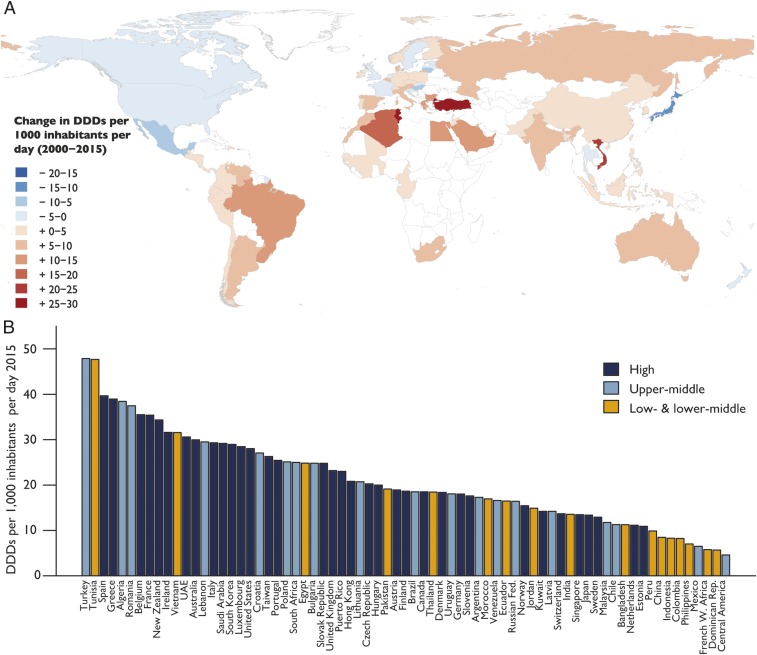
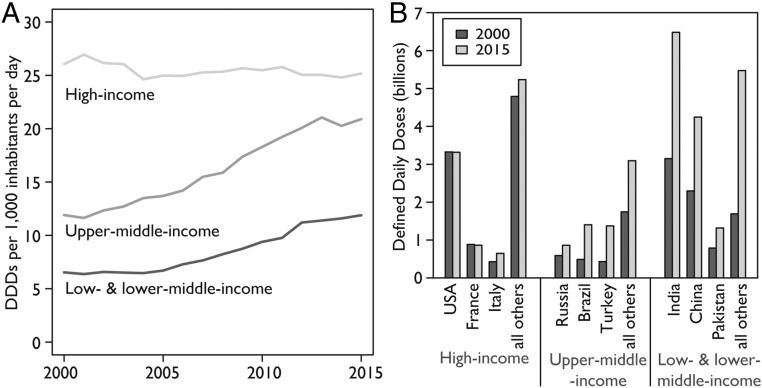
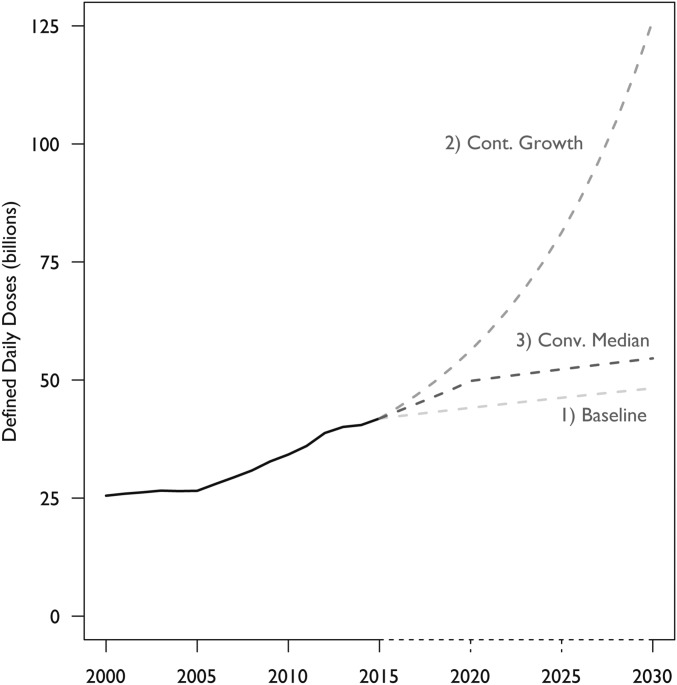
Significance: Antibiotic resistance, driven by antibiotic consumption, is a growing global health threat. Our report on antibiotic use in 76 countries over 16 years provides an up-to-date comprehensive assessment of global trends in antibiotic consumption. We find that the antibiotic consumption rate in low- and middle-income countries (LMICs) has been converging to (and in some countries surpassing) levels typically observed in high-income countries. However, inequities in drug access persist, as many LMICs continue to be burdened with high rates of infectious disease-related mortality and low rates of antibiotic consumption. Our findings emphasize the need for global surveillance of antibiotic consumption to support policies to reduce antibiotic consumption and resistance while providing access to these lifesaving drugs.
Overview
The claims and statistics of this paper haven’t been checked yet.
Free: it reads the open-access text and checks the first 5 claims that cite a source we can check. Create a free account to check every claim.
Integrity signals
Registry
Cites
Statistics
Figures
Verification
Claims the paper makes
The claims and statistics of this paper haven’t been checked yet.
Free: it reads the open-access text and checks the first 5 claims that cite a source we can check. Create a free account to check every claim.
Claims other papers make about this one
Each is checked against this paper’s own text: does it say what the citing paper says it does?
The cited source says what the claim attributes to it.
In the citing paper
“A study indicated that between 2000 and 2015, antibiotic consumption (expressed in defined daily doses [DDD]) increased by 65% worldwide, largely driven by LMICs.”
From Over-the-Counter Sale of Antibiotics in India: A Qualitative Study of Providers’ Perspectives across Two States (2021) · cites this paper as [7]
The cited source says what the claim attributes to it.
In the citing paper
“In India, it increased from 3.2 to 6.5 billion DDDs (103%) [7].”
From Over-the-Counter Sale of Antibiotics in India: A Qualitative Study of Providers’ Perspectives across Two States (2021) · cites this paper as [7]
Self-check
Percentages, sums and reported differences re-computed from the paper’s own numbers.
The self-check needs the paper’s full text.
Citations
Cites
Liu, Y.-Y., Wang, Y., Walsh, T. R., Yi, L.-X., Zhang, R., Spencer, J., Doi, Y., Tian, G., Dong, B., Huang, X., et al. (2016) · The Lancet Infectious Diseases · doi:10.1016/s1473-3099(15)00424-7 · Cited by 5,398
Antibiotic resistance-the need for global solutions
Laxminarayan, R., Duse, A., Wattal, C., Zaidi, A. K. M., Wertheim, H. F. L., Sumpradit, N., Vlieghe, E., Hara, G. L., Gould, I. M., Goossens, H., et al. (2013) · The Lancet Infectious Diseases · doi:10.1016/s1473-3099(13)70318-9 · Cited by 4,439
Self-citationTipping elements in the Earth’s climate system
Lenton, T. M., Held, H., Kriegler, E., Hall, J. W., Lucht, W., Rahmstorf, S., & Schellnhuber, H. J. (2008) · Proceedings of the National Academy of Sciences · doi:10.1073/pnas.0705414105 · Cited by 3,982 · cited 1×
“As with climate change, there may be an unknown tipping point (47), and this could herald a future without effective antibiotics.”
BackgroundExtended-Spectrum β-Lactamases: a Clinical Update
Paterson, D. L., & Bonomo, R. A. (2005) · Clinical Microbiology Reviews · doi:10.1128/cmr.18.4.657-686.2005 · Cited by 3,491
Outpatient antibiotic use in Europe and association with resistance: a cross-national database study
Goossens, H., Ferech, M., Vander Stichele, R., & Elseviers, M. (2005) · The Lancet · doi:10.1016/s0140-6736(05)17907-0 · Cited by 3,359 · cited 1×
“The association between antibiotic consumption and resistance is well documented across spatial and temporal scales at individual hospitals (5), nursing homes (6), primary care facilities (7), and communities (8), as well as across countries (9).”
BackgroundSelf-citationGlobal antibiotic consumption 2000 to 2010: an analysis of national pharmaceutical sales data
Van Boeckel, T. P., Gandra, S., Ashok, A., Caudron, Q., Grenfell, B. T., Levin, S. A., & Laxminarayan, R. (2014) · The Lancet Infectious Diseases · doi:10.1016/s1473-3099(14)70780-7 · Cited by 2,280 · cited 1×
“The largest prior study reported that antibiotic consumption increased 36% between 2000 and 2010 in 71 countries (15).”
BackgroundSelf-citationCostelloe, C., Metcalfe, C., Lovering, A., Mant, D., & Hay, A. D. (2010) · BMJ · doi:10.1136/bmj.c2096 · Cited by 1,981 · cited 1×
“The association between antibiotic consumption and resistance is well documented across spatial and temporal scales at individual hospitals (5), nursing homes (6), primary care facilities (7), and communities (8), as well as across countries (9).”
BackgroundTesting for Serial Correlation in Linear Panel-data Models
Drukker, D. M. (2003) · The Stata Journal: Promoting communications on statistics and Stata · doi:10.1177/1536867x0300300206 · Cited by 1,569 · cited 1×
“Serial correlation was assessed using the Wooldridge test (19).”
MethodAccess to effective antimicrobials: a worldwide challenge
Laxminarayan, R., Matsoso, P., Pant, S., Brower, C., Røttingen, J.-A., Klugman, K., & Davies, S. (2016) · The Lancet · doi:10.1016/s0140-6736(15)00474-2 · Cited by 1,465
Self-citationDengue, Urbanization and Globalization: The Unholy Trinity of the 21st Century
Gubler, D. J. (2011) · Tropical Medicine and Health · doi:10.2149/tmh.2011-s05 · Cited by 1,098
Urbanisation and infectious diseases in a globalised world
Alirol, E., Getaz, L., Stoll, B., Chappuis, F., & Loutan, L. (2011) · The Lancet Infectious Diseases · doi:10.1016/s1473-3099(10)70223-1 · Cited by 704 · cited 1×
“However, GDP growth in LMICs is also linked with increasing urbanization, which can facilitate the transmission of infectious diseases (23) and may contribute to the link between GDP growth and antibiotic consumption.”
BackgroundHow urbanization affects the epidemiology of emerging infectious diseases
Neiderud, C.-J. (2015) · Infection Ecology & Epidemiology · doi:10.3402/iee.v5.27060 · Cited by 633
Malhotra-Kumar, S., Lammens, C., Coenen, S., Van Herck, K., & Goossens, H. (2007) · The Lancet · doi:10.1016/s0140-6736(07)60235-9 · Cited by 545
Self-citationJohnson, A. P., & Woodford, N. (2013) · Journal of Medical Microbiology · doi:10.1099/jmm.0.052555-0 · Cited by 411 · cited 1×
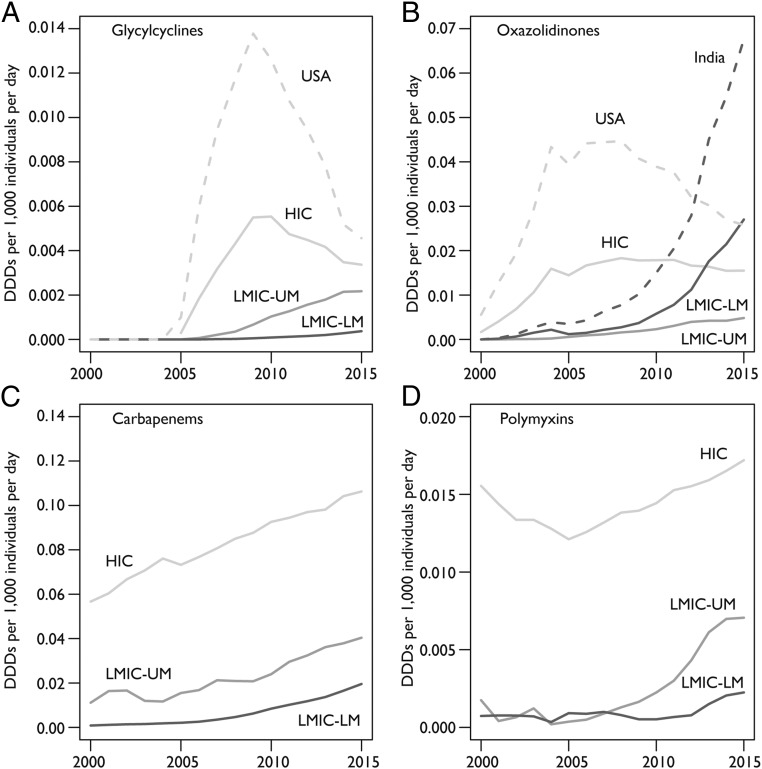
“This rise is consistent with a well-documented increase in the number of infections resistant to carbapenems and colistin (34, 35).”
Sabuncu, E., David, J., Bernède-Bauduin, C., Pépin, S., Leroy, M., Boëlle, P.-Y., Watier, L., & Guillemot, D. (2009) · PLoS Medicine · doi:10.1371/journal.pmed.1000084 · Cited by 406 · cited 1×
“Efforts to reduce unnecessary or inappropriate use based on awareness campaigns have resulted in lower antibiotic consumption rates in some highconsuming HICs (20).”
BackgroundEpidemiology and burden of multidrug-resistant bacterial infection in a developing country
Lim, C., Takahashi, E., Hongsuwan, M., Wuthiekanun, V., Thamlikitkul, V., Hinjoy, S., Day, N. P., Peacock, S. J., & Limmathurotsakul, D. (2016) · eLife · doi:10.7554/elife.18082 · Cited by 317
Versporten, A., Bolokhovets, G., Ghazaryan, L., Abilova, V., Pyshnik, G., Spasojevic, T., Korinteli, I., Raka, L., Kambaralieva, B., Cizmovic, L., et al. (2014) · The Lancet Infectious Diseases · doi:10.1016/s1473-3099(14)70071-4 · Cited by 290
Self-citationFridkin, S. K., Edwards, J. R., Courval, J. M., Hill, H., Tenover, F. C., Lawton, R., Gaynes, R. P., McGowan, J. E., & for the Intensive Care Antimicrobial Resistance Epidemiology (ICARE) Project and the National Nosocomial Infections Surveillance (NNIS) System Hospitals (2001) · Annals of Internal Medicine · doi:10.7326/0003-4819-135-3-200108070-00009 · Cited by 279
Outpatient antibiotic prescribing in the United States: 2000 to 2010
Lee, G. C., Reveles, K. R., Attridge, R. T., Lawson, K. A., Mansi, I. A., Lewis, J. S., & Frei, C. R. (2014) · BMC Medicine · doi:10.1186/1741-7015-12-96 · Cited by 231
Weaver, S. C. (2013) · Trends in Microbiology · doi:10.1016/j.tim.2013.03.003 · Cited by 225 · cited 1×
“Furthermore, rising incidence of nonbacterial infections associated with urbanization, such as dengue, chikungunya (25, 26), and viral diarrheal illnesses (27), is a significant driver of inappropriate consumption of antibiotics in LMICs.”
BackgroundEstimating Worldwide Current Antibiotic Usage: Report of Task Force 1
Col, N. F., & O'Connor, R. W. (1987) · Clinical Infectious Diseases · doi:10.1093/clinids/9.supplement_3.s232 · Cited by 203
Collineau, L., Belloc, C., Stärk, K. D. C., Hémonic, A., Postma, M., Dewulf, J., & Chauvin, C. (2017) · Zoonoses and Public Health · doi:10.1111/zph.12298 · Cited by 186 · cited 2×
“Surveillance data on country-level antibiotic use are needed to (i) monitor national and global trends over time; (ii) compare antibiotic use among countries; (iii) provide a baseline for the evaluation of future efforts to reduce antibiotic use; (iv) enable epidemiological analysis of the association between antibiot…”
BackgroundUrban Air Pollution and Respiratory Infections
Brugha, R. E., & Grigg, J. (2014) · Paediatric Respiratory Reviews · doi:10.1016/j.prrv.2014.03.001 · Cited by 180 · cited 1×
“Additionally, declining air quality associated with urbanization and continued use of solid fuels for cooking also drives antibiotic consumption in LMICs by increasing the incidence of acute respiratory-tract infections (28).”
BackgroundDaneman, N., Bronskill, S. E., Gruneir, A., Newman, A. M., Fischer, H. D., Rochon, P. A., Anderson, G. M., & Bell, C. M. (2015) · JAMA Internal Medicine · doi:10.1001/jamainternmed.2015.2770 · Cited by 174 · cited 1×
“The association between antibiotic consumption and resistance is well documented across spatial and temporal scales at individual hospitals (5), nursing homes (6), primary care facilities (7), and communities (8), as well as across countries (9).”
BackgroundAntibiotic effectiveness: Balancing conservation against innovation
Laxminarayan, R. (2014) · Science · doi:10.1126/science.1254163 · Cited by 170 · cited 1×
“Innovative pricing mechanisms should be developed to improve access to lifesaving drugs for vulnerable populations (38) without compromising their future efficacy (31).”
BackgroundSelf-citationDo, N. T. T., Ta, N. T. D., Tran, N. T. H., Than, H. M., Vu, B. T. N., Hoang, L. B., van Doorn, H. R., Vu, D. T. V., Cals, J. W. L., Chandna, A., et al. (2016) · The Lancet Global Health · doi:10.1016/s2214-109x(16)30142-5 · Cited by 166 · cited 1×
“Access to vaccines and pointof-care diagnostics could similarly reduce unnecessary antibiotic consumption in resource-poor settings (42), both directly through vaccination against bacterial illnesses, such as the PCV (43, 44), or indirectly by reducing viral illnesses that often are treated unnecessarily with antibiot…”
BackgroundGandra, S., Mojica, N., Klein, E. Y., Ashok, A., Nerurkar, V., Kumari, M., Ramesh, U., Dey, S., Vadwai, V., Das, B. R., et al. (2016) · International Journal of Infectious Diseases · doi:10.1016/j.ijid.2016.08.002 · Cited by 149 · cited 1×
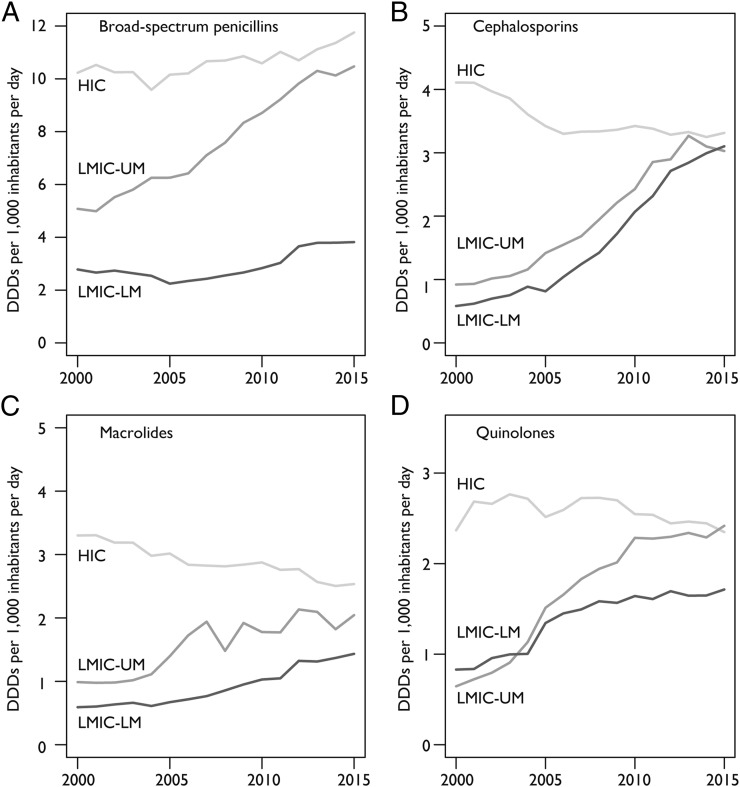
“Similarly, with increasing quinolone resistance in Salmonella Typhi (32), cephalosporins have become the treatment of choice for this infection in both outpatient (cefixime, cefpodoxime) and inpatient (ceftriaxone) settings (33).”
BackgroundSelf-citationLawes, T., López-Lozano, J.-M., Nebot, C. A., Macartney, G., Subbarao-Sharma, R., Dare, C. R. J., Wares, K. D., & Gould, I. M. (2015) · The Lancet Infectious Diseases · doi:10.1016/s1473-3099(15)00315-1 · Cited by 143
Population-Based Impact of Pneumococcal Conjugate Vaccine in Young Children
Poehling, K. A., LaFleur, B., Szilagyi, P. G., Edwards, K. M., Mitchel, E. F., Barth, R. D., Schwartz, B., & Griffin, M. R. (2004) · PEDIATRICS · doi:10.1542/peds.2003-0592-f · Cited by 110 · cited 2×
“The explanatory variables included per capita gross domestic product E3464 | www.pnas.org/cgi/doi/10.1073/pnas.1717295115 Klein et al. D ow nl oa de d by g ue st o n D ec em be r 5, 2 02 1 (GDP; purchasing power parity); imports of goods and services as a percentage of GDP (as a measure of trade); measles vaccination…”
BackgroundInfluentialSteinke, D., & Davey, P. (2001) · Clinical Infectious Diseases · doi:10.1086/321848 · Cited by 109 · cited 1×
“The association between antibiotic consumption and resistance is well documented across spatial and temporal scales at individual hospitals (5), nursing homes (6), primary care facilities (7), and communities (8), as well as across countries (9).”
BackgroundChallenges and Opportunities for Typhoid Fever Control: A Call for Coordinated Action
Steele, A. D., Burgess, D. C. H., Diaz, Z. I., Carey, M. E., & Zaidi, A. K. M. (2016) · Clinical Infectious Diseases · doi:10.1093/cid/civ976 · Cited by 102 · cited 1×
“Increasing incidence of bacterial infections, such as enteric fever (24), has been associated with rapid urbanization and increased consumption of antibiotics.”
BackgroundNandi, A., Megiddo, I., Ashok, A., Verma, A., & Laxminarayan, R. (2016) · Social Science & Medicine · doi:10.1016/j.socscimed.2016.08.049 · Cited by 92 · cited 1×
“For example, a recent study in India demonstrated that improved water quality could significantly reduce the burden of childhood diarrheal diseases, which in turn would reduce antibiotic consumption (40).”
BackgroundSelf-citationExtending the cure policy responses to the growing threat of antibiotic resistance
Laxminarayan, R., & Malani, A. (2007) · Cited by 90
Self-citationDinh, D. T., Le, M. T. Q., Vuong, C. D., Hasebe, F., & Morita, K. (2011) · Tropical Medicine and Health · doi:10.2149/tmh.2010-21 · Cited by 83
Blommaert, A., Marais, C., Hens, N., Coenen, S., Müller, A., Goossens, H., & Beutels, P. (2013) · Journal of Antimicrobial Chemotherapy · doi:10.1093/jac/dkt377 · Cited by 80
Self-citationKotwani, A., & Holloway, K. (2014) · Tropical Medicine & International Health · doi:10.1111/tmi.12327 · Cited by 78 · cited 2×
“Innovative pricing mechanisms should be developed to improve access to lifesaving drugs for vulnerable populations (38) without compromising their future efficacy (31).”
BackgroundUN High-Level Meeting on antimicrobials—what do we need?
Laxminarayan, R., Amábile-Cuevas, C. F., Cars, O., Evans, T., Heymann, D. L., Hoffman, S. J., Holmes, A. H., Mendelson, M., Sridhar, D., Woolhouse, M. E. J., et al. (2016) · The Lancet · doi:10.1016/s0140-6736(16)31079-0 · Cited by 78
Self-citationQuinolone and cephalosporin resistance in enteric fever
Capoor, M. R., & Nair, D. (2010) · Journal of Global Infectious Diseases · doi:10.4103/0974-777x.68529 · Cited by 48 · cited 1×
“Similarly, with increasing quinolone resistance in Salmonella Typhi (32), cephalosporins have become the treatment of choice for this infection in both outpatient (cefixime, cefpodoxime) and inpatient (ceftriaxone) settings (33).”
BackgroundHögberg, L. D., Müller, A., Zorzet, A., Monnet, D. L., & Cars, O. (2014) · The Lancet Infectious Diseases · doi:10.1016/s1473-3099(14)70987-9 · Cited by 47
Bruyndonckx, R., Hens, N., Aerts, M., Goossens, H., Molenberghs, G., & Coenen, S. (2014) · Journal of Antimicrobial Chemotherapy · doi:10.1093/jac/dku063 · Cited by 40 · cited 2×
“Also, the number of units per package and the amount of active substance per unit has increased over time in Europe and perhaps also in other continents (45).”
BackgroundResultSelf-citationBaeyens, A., & Goffin, T. (2014) · PubMed · Cited by 35
Is It Time for a Coordinated and Longitudinal Approach to Antibiotic Stewardship Education?
Shekarchian, S., Schwartz, B. S., Teherani, A., Irby, D. M., & Chin-Hong, P. V. (2016) · Clinical Infectious Diseases · doi:10.1093/cid/ciw419 · Cited by 9
Senior, K. (2007) · The Lancet Infectious Diseases · doi:10.1016/s1473-3099(07)70094-4 · Cited by 4 · cited 1×
“Although consumption of the newer second-line drugs glycylcyclines and oxazolidinones declined in the United States after the Food and Drug Administration warned of a higher risk of death compared with other drugs used to treat similar infections (36, 37), globally the consumption of these drugs has increased.”
Background
Research works printed but not linked: 1
- ; Institut de veille sanitaire (InVS) et Agence nationale de sécurité du médicament et des produits de santé (ANSM) Consommation d’antibiotiques et résistance aux antibiotiques en France : Nécessité d’une mobilisation déterminée et durable. Bilan des Données de Surveillance . [Antibiotic consumption and antibiotic resistance in France: The need for a determined and sustainable mobilization. Review of Surveillance Data ] (Institut de veille sanitaire Saint-Maurice France) pp 1-16. French. (2015).
Cited by
Patel, M., Kumar, R., Kishor, K., Mlsna, T., Pittman, C. U., & Mohan, D. (2019) · Chemical Reviews · doi:10.1021/acs.chemrev.8b00299 · Cited by 2,654
Antimicrobial Resistance: A Growing Serious Threat for Global Public Health
Salam, M. A., Al-Amin, M. Y., Salam, M. T., Pawar, J. S., Akhter, N., Rabaan, A. A., & Alqumber, M. A. A. (2023) · Healthcare · doi:10.3390/healthcare11131946 · Cited by 2,338
Antimicrobial Resistance: Implications and Costs
Dadgostar, P. (2019) · Infection and Drug Resistance · doi:10.2147/idr.s234610 · Cited by 2,024
Occurrence and toxicity of antibiotics in the aquatic environment: A review
Kovalakova, P., Cizmas, L., McDonald, T. J., Marsalek, B., Feng, M., & Sharma, V. K. (2020) · Chemosphere · doi:10.1016/j.chemosphere.2020.126351 · Cited by 1,464
Defining and combating antibiotic resistance from One Health and Global Health perspectives
Hernando-Amado, S., Coque, T. M., Baquero, F., & Martínez, J. L. (2019) · Nature Microbiology · doi:10.1038/s41564-019-0503-9 · Cited by 1,224
Metadata
- Authors
- Klein, E. Y., Van Boeckel, T. P., Martinez, E. M., Pant, S., Gandra, S., Levin, S. A., Goossens, H., & Laxminarayan, R.
- Affiliations
- Center for Disease Dynamics, Economics & Policy (US)
- Institute of Integrative Biology, ETH Zürich, CH-8006 Zürich, Switzerland;
- Princeton University (US)
- University of Antwerp (BE)
- Corresponding author
- Klein, Eili Y.
- Levin, Simon A.
- ORCID
- Venue
- Proceedings of the National Academy of Sciences
- Publisher
- National Academy of Sciences
- Published
- 2018-03-26
- Volume
- 115
- Issue
- 15
- Pages
- E3463-E3470
- ISSN
- 0027-8424 (ISSN-L)
- 1091-6490
- PMC
- PMC5899442
- OpenAlex
- W2791781902
- Cited by
- 3,232
- References
- 43
- Citations by year
- 2026: 247 · 2025: 416 · 2024: 456 · 2023: 476 · 2022: 432 · 2021: 490 · 2020: 386 · 2019: 252 · 2018: 71
- FWCI
- 183.08
- Type
- journal article
- Language
- en
- Open access
- hybrid
- doi.org
- Licence
- Locations
- Proceedings of the National Academy of Sciences (publishedVersion, cc-by)
- Europe PMC (PubMed Central) (publishedVersion, cc-by)
- PubMed Central (publishedVersion, cc-by)
- PubMed (publishedVersion)
- IFPRI E-brary (International Food Policy Research Institute) (submittedVersion, other-oa)
- CGSPace A Repository of Agricultural Research Outputs (Consultative Group for International Agricultural Research) (submittedVersion, other-oa)
- International Food Policy Research Institute (International Food Policy Research Institute) (submittedVersion, other-oa)
- Repository for Publications and Research Data (ETH Zurich) (submittedVersion, cc-by)
- ETH Zürich Research Collection (cc-by)
- Funders
- Bill and Melinda Gates Foundation (OPP1112355)
- Princeton Environmental Institute, Princeton University (N/A)
- ETH Zurich's Center for Adaptation to a Changing Environment (N/A)
- HHS | Centers for Disease Control and Prevention (16IPA1609425, 16IPA1609424)
- Topics
- Health Sciences › Medicine › Infectious Diseases › Antibiotic Use and Resistance
- Health Sciences › Medicine › Microbiology (medical) › Antibiotic Resistance in Bacteria
- Physical Sciences › Environmental Science › Pollution › Pharmaceutical and Antibiotic Environmental Impacts
- Keywords
- antibiotic use, last-resort antibiotics, carbapenems, polymyxins, oxazolidinones, glycylcyclines, high-income countries, low- and middle-income countries, antibiotic resistance, consumption projections, antibiotic access
- MeSH terms
- Anti-Bacterial Agents, Bacterial Infections, Drug Resistance, Microbial, Economics, Health Services Accessibility, Humans
About these checks
Registry, retraction, Cites and statistics results are computed, not judged, with one exception: a printed reference that no index lists is read once by a model before it counts as a citation error. Claims are extracted by a model and kept only when their quote appears verbatim in the text; each cited source is then checked, with a model’s help, for whether it says what the claim relies on. Those verdicts can be wrong — read the claim’s quote and the cited source before relying on one.
Statistics and arithmetic are recomputed, not judged.
Confidence bands are shown only for fields calibrated on our annotated test set. None is calibrated yet, so no band is shown.
What counts as a claim ›How we measure confidence ›How we check this ›
Are you an author, or do you see a problem with this page? Request a review
Data sources
Bibliographic data: Semantic Scholar, OpenAlex, Crossref.
Contains information from the Semantic Scholar Academic Graph Datasets, made available under the ODC Attribution License (ODC-BY 1.0).
Semantic Scholar’s data is described in: Kinney, R., et al. (2023). The Semantic Scholar Open Data Platform. arXiv:2301.10140.
