

Global increase and geographic convergence in antibiotic consumption between 2000 and 2015
Open accessThe DOI matches its Crossref record; 43 of the 43 references it cites were found in a registry or an index.
Abstract
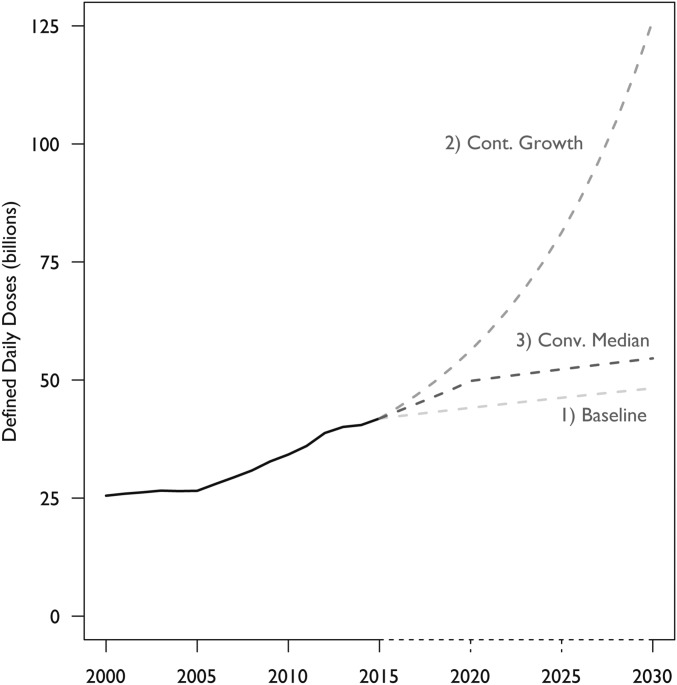
Significance: Antibiotic resistance, driven by antibiotic consumption, is a growing global health threat. Our report on antibiotic use in 76 countries over 16 years provides an up-to-date comprehensive assessment of global trends in antibiotic consumption. We find that the antibiotic consumption rate in low- and middle-income countries (LMICs) has been converging to (and in some countries surpassing) levels typically observed in high-income countries. However, inequities in drug access persist, as many LMICs continue to be burdened with high rates of infectious disease-related mortality and low rates of antibiotic consumption. Our findings emphasize the need for global surveillance of antibiotic consumption to support policies to reduce antibiotic consumption and resistance while providing access to these lifesaving drugs.
Overview
The claims and statistics of this paper haven’t been checked yet.
Free: it reads the open-access text and checks the first 5 claims that cite a source we can check. Create a free account to check every claim.
Integrity signals
Registry
Cites
Statistics
Figures
Verification
Claims the paper makes
The claims and statistics of this paper haven’t been checked yet.
Free: it reads the open-access text and checks the first 5 claims that cite a source we can check. Create a free account to check every claim.
Claims other papers make about this one
Each is checked against this paper’s own text: does it say what the citing paper says it does?
The cited source says what the claim attributes to it.
In the citing paper
“A study indicated that between 2000 and 2015, antibiotic consumption (expressed in defined daily doses [DDD]) increased by 65% worldwide, largely driven by LMICs.”
From Over-the-Counter Sale of Antibiotics in India: A Qualitative Study of Providers’ Perspectives across Two States (2021) · cites this paper as [7]
The cited source says what the claim attributes to it.
In the citing paper
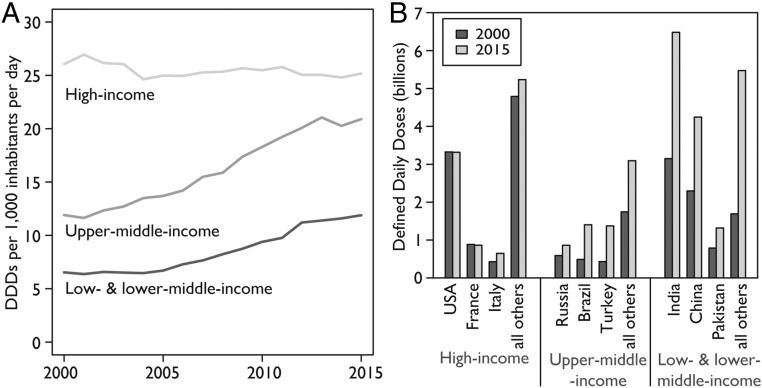
“In India, it increased from 3.2 to 6.5 billion DDDs (103%) [7].”
From Over-the-Counter Sale of Antibiotics in India: A Qualitative Study of Providers’ Perspectives across Two States (2021) · cites this paper as [7]
Self-check
Percentages, sums and reported differences re-computed from the paper’s own numbers.
The self-check needs the paper’s full text.
Citations
Cites
Liu, Y.-Y., Wang, Y., Walsh, T. R., Yi, L.-X., Zhang, R., Spencer, J., Doi, Y., Tian, G., Dong, B., Huang, X., et al. (2016) · The Lancet Infectious Diseases · doi:10.1016/s1473-3099(15)00424-7 · Cited by 5,398
Antibiotic resistance-the need for global solutions
Laxminarayan, R., Duse, A., Wattal, C., Zaidi, A. K. M., Wertheim, H. F. L., Sumpradit, N., Vlieghe, E., Hara, G. L., Gould, I. M., Goossens, H., et al. (2013) · The Lancet Infectious Diseases · doi:10.1016/s1473-3099(13)70318-9 · Cited by 4,439
Self-citationTipping elements in the Earth’s climate system
Lenton, T. M., Held, H., Kriegler, E., Hall, J. W., Lucht, W., Rahmstorf, S., & Schellnhuber, H. J. (2008) · Proceedings of the National Academy of Sciences · doi:10.1073/pnas.0705414105 · Cited by 3,982 · cited 1×
“As with climate change, there may be an unknown tipping point (47), and this could herald a future without effective antibiotics.”
BackgroundExtended-Spectrum β-Lactamases: a Clinical Update
Paterson, D. L., & Bonomo, R. A. (2005) · Clinical Microbiology Reviews · doi:10.1128/cmr.18.4.657-686.2005 · Cited by 3,491
Outpatient antibiotic use in Europe and association with resistance: a cross-national database study
Goossens, H., Ferech, M., Vander Stichele, R., & Elseviers, M. (2005) · The Lancet · doi:10.1016/s0140-6736(05)17907-0 · Cited by 3,359 · cited 1×
“The association between antibiotic consumption and resistance is well documented across spatial and temporal scales at individual hospitals (5), nursing homes (6), primary care facilities (7), and communities (8), as well as across countries (9).”
BackgroundSelf-citationGlobal antibiotic consumption 2000 to 2010: an analysis of national pharmaceutical sales data
Van Boeckel, T. P., Gandra, S., Ashok, A., Caudron, Q., Grenfell, B. T., Levin, S. A., & Laxminarayan, R. (2014) · The Lancet Infectious Diseases · doi:10.1016/s1473-3099(14)70780-7 · Cited by 2,280 · cited 1×
“The largest prior study reported that antibiotic consumption increased 36% between 2000 and 2010 in 71 countries (15).”
BackgroundSelf-citationCostelloe, C., Metcalfe, C., Lovering, A., Mant, D., & Hay, A. D. (2010) · BMJ · doi:10.1136/bmj.c2096 · Cited by 1,981 · cited 1×
“The association between antibiotic consumption and resistance is well documented across spatial and temporal scales at individual hospitals (5), nursing homes (6), primary care facilities (7), and communities (8), as well as across countries (9).”
BackgroundTesting for Serial Correlation in Linear Panel-data Models
Drukker, D. M. (2003) · The Stata Journal: Promoting communications on statistics and Stata · doi:10.1177/1536867x0300300206 · Cited by 1,569 · cited 1×
“Serial correlation was assessed using the Wooldridge test (19).”
MethodAccess to effective antimicrobials: a worldwide challenge
Laxminarayan, R., Matsoso, P., Pant, S., Brower, C., Røttingen, J.-A., Klugman, K., & Davies, S. (2016) · The Lancet · doi:10.1016/s0140-6736(15)00474-2 · Cited by 1,465
Self-citationDengue, Urbanization and Globalization: The Unholy Trinity of the 21st Century
Gubler, D. J. (2011) · Tropical Medicine and Health · doi:10.2149/tmh.2011-s05 · Cited by 1,098
Research works printed but not linked: 1
- 21. Institut de veille sanitaire (InVS) et Agence nationale de sécurité du médicament et des produits de santé (ANSM) (2015) Consommation d'antibiotiques et résistance aux antibiotiques en France : Nécessité d'une mobilisation déterminée et durable. Bilan des Données de Surveillance. [Antibiotic consumption and antibiotic resistance in France: The need for a determined and sustainable mobilization. Review of Surveil- lance Data] (Institut de veille sanitaire, Saint-Maurice, France), pp 1-16. French.
Cited by
Patel, M., Kumar, R., Kishor, K., Mlsna, T., Pittman, C. U., & Mohan, D. (2019) · Chemical Reviews · doi:10.1021/acs.chemrev.8b00299 · Cited by 2,654
Antimicrobial Resistance: A Growing Serious Threat for Global Public Health
Salam, M. A., Al-Amin, M. Y., Salam, M. T., Pawar, J., Akhter, N., Rabaan, A. A., & Alqumber, M. A. A. (2023) · doi:10.20944/preprints202305.0555.v1 · Cited by 2,411
Antimicrobial Resistance: A Growing Serious Threat for Global Public Health
Salam, M. A., Al-Amin, M. Y., Salam, M. T., Pawar, J. S., Akhter, N., Rabaan, A. A., & Alqumber, M. A. A. (2023) · Healthcare · doi:10.3390/healthcare11131946 · Cited by 2,338
Antimicrobial Resistance: Implications and Costs
Dadgostar, P. (2019) · Infection and Drug Resistance · doi:10.2147/idr.s234610 · Cited by 2,024
Occurrence and toxicity of antibiotics in the aquatic environment: A review
Kovalakova, P., Cizmas, L., McDonald, T. J., Marsalek, B., Feng, M., & Sharma, V. K. (2020) · Chemosphere · doi:10.1016/j.chemosphere.2020.126351 · Cited by 1,464
Defining and combating antibiotic resistance from One Health and Global Health perspectives
Hernando-Amado, S., Coque, T. M., Baquero, F., & Martínez, J. L. (2019) · Nature Microbiology · doi:10.1038/s41564-019-0503-9 · Cited by 1,224
Global monitoring of antimicrobial resistance based on metagenomics analyses of urban sewage
Hendriksen, R. S., Munk, P., Njage, P., van Bunnik, B., McNally, L., Lukjancenko, O., Röder, T., Nieuwenhuijse, D., Pedersen, S. K., Kjeldgaard, J., et al. (2019) · Nature Communications · doi:10.1038/s41467-019-08853-3 · Cited by 1,199
Global trends in antimicrobial resistance in animals in low- and middle-income countries
Van Boeckel, T. P., Pires, J., Silvester, R., Zhao, C., Song, J., Criscuolo, N. G., Gilbert, M., Bonhoeffer, S., & Laxminarayan, R. (2019) · Science · doi:10.1126/science.aaw1944 · Cited by 1,160
Self-citationAntibiotic pollution in surface fresh waters: Occurrence and effects
Danner, M.-C., Robertson, A., Behrends, V., & Reiss, J. (2019) · Science of The Total Environment · doi:10.1016/j.scitotenv.2019.01.406 · Cited by 1,136
Oberoi, A. S., Jia, Y., Zhang, H., Khanal, S. K., & Lu, H. (2019) · Environmental Science & Technology · doi:10.1021/acs.est.9b01131 · Cited by 1,061
Antibiotics in the Soil Environment—Degradation and Their Impact on Microbial Activity and Diversity
Cycoń, M., Mrozik, A., & Piotrowska-Seget, Z. (2019) · Frontiers in Microbiology · doi:10.3389/fmicb.2019.00338 · Cited by 1,054
“Leading consumers of antibiotics between low and middle-income countries were India, China, and Pakistan (Klein et al., 2018).”
Backgroundβ-Lactamases and β-Lactamase Inhibitors in the 21st Century
Tooke, C. L., Hinchliffe, P., Bragginton, E. C., Colenso, C. K., Hirvonen, V. H. A., Takebayashi, Y., & Spencer, J. (2019) · Journal of Molecular Biology · doi:10.1016/j.jmb.2019.04.002 · Cited by 1,016
Zainab, S. M., Junaid, M., Xu, N., & Malik, R. N. (2020) · Water Research · doi:10.1016/j.watres.2020.116455 · Cited by 1,018
Antibiotic Pollution in the Environment: From Microbial Ecology to Public Policy
Kraemer, S. A., Ramachandran, A., & Perron, G. G. (2019) · Microorganisms · doi:10.3390/microorganisms7060180 · Cited by 932
“Yet, the global use of antibiotics increased steadily over the past decades, both due to an augmentation of antibiotic use in human medicine and in other sectors of commercial activity [15].”
BackgroundAssessment of global health risk of antibiotic resistance genes
Zhang, Z., Zhang, Q., Wang, T., Xu, N., Lu, T., Hong, W., Penuelas, J., Gillings, M., Wang, M., Gao, W., et al. (2022) · Nature Communications · doi:10.1038/s41467-022-29283-8 · Cited by 976
Antibiotics as Major Disruptors of Gut Microbiota
Ramirez, J., Guarner, F., Bustos Fernandez, L., Maruy, A., Sdepanian, V. L., & Cohen, H. (2020) · Frontiers in Cellular and Infection Microbiology · doi:10.3389/fcimb.2020.572912 · Cited by 898
“Antibiotic use in childhood has been associated with several negative outcomes later in life, including the development of obesity, asthma, allergy, and IBD (Cho et al., 2012; Bokulich et al., 2016; Korpela et al., 2016; Turta and Rautava, 2016).”
BackgroundWang, J., Chu, L., Wojnárovits, L., & Takács, E. (2020) · Science of The Total Environment · doi:10.1016/j.scitotenv.2020.140997 · Cited by 895
Global antibiotic consumption and usage in humans, 2000–18: a spatial modelling study
Browne, A. J., Chipeta, M. G., Haines-Woodhouse, G., Kumaran, E. P. A., Hamadani, B. H. K., Zaraa, S., Henry, N. J., Deshpande, A., Reiner, R. C., Day, N. P. J., et al. (2021) · The Lancet Planetary Health · doi:10.1016/s2542-5196(21)00280-1 · Cited by 865
Conventional and emerging technologies for removal of antibiotics from wastewater
Phoon, B. L., Ong, C. C., Mohamed Saheed, M. S., Show, P.-L., Chang, J.-S., Ling, T. C., Lam, S. S., & Juan, J. C. (2020) · Journal of Hazardous Materials · doi:10.1016/j.jhazmat.2020.122961 · Cited by 810
Impact of antibiotics on the human microbiome and consequences for host health
Patangia, D. V., Anthony Ryan, C., Dempsey, E., Paul Ross, R., & Stanton, C. (2022) · MicrobiologyOpen · doi:10.1002/mbo3.1260 · Cited by 754
“Despite this, antibiotics are still widely prescribed in disease treatment and studies have reported increased consumption of antibiotics in certain countries in the past number of years (Adriaenssens et al., 2011; Klein et al., 2018).”
BackgroundCollignon, P., Beggs, J. J., Walsh, T. R., Gandra, S., & Laxminarayan, R. (2018) · The Lancet Planetary Health · doi:10.1016/s2542-5196(18)30186-4 · Cited by 750
Self-citationRising incidence of early-onset colorectal cancer — a call to action
Akimoto, N., Ugai, T., Zhong, R., Hamada, T., Fujiyoshi, K., Giannakis, M., Wu, K., Cao, Y., Ng, K., & Ogino, S. (2021) · Nature Reviews Clinical Oncology · doi:10.1038/s41571-020-00445-1 · Cited by 728
Antibiotics in the environment: causes and consequences
Polianciuc, S. I., Gurzău, A. E., Kiss, B., Ștefan, M. G., & Loghin, F. (2020) · Medicine and Pharmacy Reports · doi:10.15386/mpr-1742 · Cited by 692
Global Trends in Antimicrobial Use in Food Animals from 2017 to 2030
Tiseo, K., Huber, L., Gilbert, M., Robinson, T. P., & Van Boeckel, T. P. (2020) · Antibiotics · doi:10.3390/antibiotics9120918 · Cited by 689
“It has also been estimated that there will be an increase of 15% for AMU in humans between 2015 and 2030 [29].”
BackgroundAhmad, F., Zhu, D., & Sun, J. (2021) · Environmental Sciences Europe · doi:10.1186/s12302-021-00505-y · Cited by 610
Antibiotic Resistance: One Health One World Outlook
Aslam, B., Khurshid, M., Arshad, M. I., Muzammil, S., Rasool, M., Yasmeen, N., Shah, T., Chaudhry, T. H., Rasool, M. H., Shahid, A., et al. (2021) · Frontiers in Cellular and Infection Microbiology · doi:10.3389/fcimb.2021.771510 · Cited by 609
“Regardless of many national and international regulations for antibiotics use, a study has highlighted that global antibiotic consumption has signi fi cantly increased (between 2000 and 2015), and its consumption will double in 2030 (Klein et al., 2018).”
InfluentialGlobal trends in antimicrobial use in aquaculture
Schar, D., Klein, E. Y., Laxminarayan, R., Gilbert, M., & Van Boeckel, T. P. (2020) · Scientific Reports · doi:10.1038/s41598-020-78849-3 · Cited by 595
Self-citationScaria, J., Anupama, K. V., & Nidheesh, P. V. (2021) · Science of The Total Environment · doi:10.1016/j.scitotenv.2021.145291 · Cited by 588
The challenge of antimicrobial resistance: What economics can contribute
Roope, L. S. J., Smith, R. D., Pouwels, K. B., Buchanan, J., Abel, L., Eibich, P., Butler, C. C., Tan, P. S., Walker, A. S., Robotham, J. V., et al. (2019) · Science · doi:10.1126/science.aau4679 · Cited by 575
“2) (71), likely causing both temperatures and AMR to increase.”
BackgroundThe Impact of Tetracycline Pollution on the Aquatic Environment and Removal Strategies
Amangelsin, Y., Semenova, Y., Dadar, M., Aljofan, M., & Bjørklund, G. (2023) · Antibiotics · doi:10.3390/antibiotics12030440 · Cited by 557
“(2018) predicted that the utilization of antibacterial drugs will continue to grow to 200% by 2030 [7].”
BackgroundAntibiotic resistance in Pseudomonas aeruginosa – Mechanisms, epidemiology and evolution
Botelho, J., Grosso, F., & Peixe, L. (2019) · Drug Resistance Updates · doi:10.1016/j.drup.2019.07.002 · Cited by 550
Klein, E. Y., Milkowska-Shibata, M., Tseng, K. K., Sharland, M., Gandra, S., Pulcini, C., & Laxminarayan, R. (2021) · The Lancet Infectious Diseases · doi:10.1016/s1473-3099(20)30332-7 · Cited by 500
Self-citationAntimicrobial peptides as therapeutic agents: opportunities and challenges
Mahlapuu, M., Björn, C., & Ekblom, J. (2020) · Critical Reviews in Biotechnology · doi:10.1080/07388551.2020.1796576 · Cited by 484
Singh, R., Singh, A. P., Kumar, S., Giri, B. S., & Kim, K.-H. (2019) · Journal of Cleaner Production · doi:10.1016/j.jclepro.2019.06.243 · Cited by 471
Chen, G., Yu, Y., Liang, L., Duan, X., Li, R., Lu, X., Yan, B., Li, N., & Wang, S. (2021) · Journal of Hazardous Materials · doi:10.1016/j.jhazmat.2020.124461 · Cited by 470
Global trends in antibiotic consumption during 2016–2023 and future projections through 2030
Klein, E. Y., Impalli, I., Poleon, S., Denoel, P., Cipriano, M., Van Boeckel, T. P., Pecetta, S., Bloom, D. E., & Nandi, A. (2024) · Proceedings of the National Academy of Sciences · doi:10.1073/pnas.2411919121 · Cited by 436
Self-citationWang, Y., Yang, Y., Liu, X., Zhao, J., Liu, R., & Xing, B. (2021) · Environmental Science & Technology · doi:10.1021/acs.est.1c04509 · Cited by 449
Anh, H. Q., Le, T. P. Q., Da Le, N., Lu, X. X., Duong, T. T., Garnier, J., Rochelle-Newall, E., Zhang, S., Oh, N.-H., Oeurng, C., et al. (2021) · Science of The Total Environment · doi:10.1016/j.scitotenv.2020.142865 · Cited by 443
Adsorption of ciprofloxacin from water: A comprehensive review
Igwegbe, C. A., Oba, S. N., Aniagor, C. O., Adeniyi, A. G., & Ighalo, J. O. (2021) · Journal of Industrial and Engineering Chemistry · doi:10.1016/j.jiec.2020.09.023 · Cited by 441
Antibiotic perturbations to the gut microbiome
Fishbein, S. R. S., Mahmud, B., & Dantas, G. (2023) · Nature Reviews Microbiology · doi:10.1038/s41579-023-00933-y · Cited by 440
Early-onset colorectal cancer: initial clues and current views
Hofseth, L. J., Hebert, J. R., Chanda, A., Chen, H., Love, B. L., Pena, M. M., Murphy, E. A., Sajish, M., Sheth, A., Buckhaults, P. J., et al. (2020) · Nature Reviews Gastroenterology & Hepatology · doi:10.1038/s41575-019-0253-4 · Cited by 428
Distribution of antibiotic resistance genes in the environment
Zhuang, M., Achmon, Y., Cao, Y., Liang, X., Chen, L., Wang, H., Siame, B. A., & Leung, K. Y. (2021) · Environmental Pollution · doi:10.1016/j.envpol.2021.117402 · Cited by 422
Antimicrobial Resistance: Addressing a Global Threat to Humanity
Walsh, T. R., Gales, A. C., Laxminarayan, R., & Dodd, P. C. (2023) · PLOS Medicine · doi:10.1371/journal.pmed.1004264 · Cited by 403
Self-citationEngineered biochar – A sustainable solution for the removal of antibiotics from water
Krasucka, P., Pan, B., Sik Ok, Y., Mohan, D., Sarkar, B., & Oleszczuk, P. (2021) · Chemical Engineering Journal · doi:10.1016/j.cej.2020.126926 · Cited by 401
Drug-resistant enteric fever worldwide, 1990 to 2018: a systematic review and meta-analysis
Browne, A. J., Kashef Hamadani, B. H., Kumaran, E. A. P., Rao, P., Longbottom, J., Harriss, E., Moore, C. E., Dunachie, S., Basnyat, B., Baker, S., et al. (2020) · BMC Medicine · doi:10.1186/s12916-019-1443-1 · Cited by 396
“Antimicrobial treatment of a primarily preventable infection fuels antimicrobial use [129] and contributes to the resistance problem by exposing bystander organisms to antimicrobials [130].”
BackgroundAntimicrobial resistance in low- and middle-income countries: current status and future directions
Sulis, G., Sayood, S., & Gandra, S. (2022) · Expert Review of Anti-infective Therapy · doi:10.1080/14787210.2021.1951705 · Cited by 379
“all rate of antibiotic consumption has only increased in LMICs [16,53,106].”
BackgroundSelf-citationMestrovic, T., Robles Aguilar, G., Swetschinski, L. R., Ikuta, K. S., Gray, A. P., Davis Weaver, N., Han, C., Wool, E. E., Gershberg Hayoon, A., Hay, S. I., et al. (2022) · The Lancet Public Health · doi:10.1016/s2468-2667(22)00225-0 · Cited by 384
Zhao, R., Feng, J., Liu, J., Fu, W., Li, X., & Li, B. (2019) · Water Research · doi:10.1016/j.watres.2018.12.034 · Cited by 383
Zhao, R., Yu, K., Zhang, J., Zhang, G., Huang, J., Ma, L., Deng, C., Li, X., & Li, B. (2020) · Water Research · doi:10.1016/j.watres.2020.116318 · Cited by 375
A global metagenomic map of urban microbiomes and antimicrobial resistance
Danko, D., Bezdan, D., Afshin, E. E., Ahsanuddin, S., Bhattacharya, C., Butler, D. J., Chng, K. R., Donnellan, D., Hecht, J., Jackson, K., et al. (2021) · Cell · doi:10.1016/j.cell.2021.05.002 · Cited by 373
Genomic surveillance for antimicrobial resistance — a One Health perspective
Djordjevic, S. P., Jarocki, V. M., Seemann, T., Cummins, M. L., Watt, A. E., Drigo, B., Wyrsch, E. R., Reid, C. J., Donner, E., & Howden, B. P. (2024) · Nature Reviews Genetics · doi:10.1038/s41576-023-00649-y · Cited by 342
“Many microbes cannot be cultured, and a significant benefit of metagenomics is that it allows One Health AMR”
Zheng, D., Yin, G., Liu, M., Chen, C., Jiang, Y., Hou, L., & Zheng, Y. (2021) · Science of The Total Environment · doi:10.1016/j.scitotenv.2021.146009 · Cited by 348
Global geographic trends in antimicrobial resistance: the role of international travel
Frost, I., Van Boeckel, T. P., Pires, J., Craig, J., & Laxminarayan, R. (2019) · Journal of Travel Medicine · doi:10.1093/jtm/taz036 · Cited by 338
Self-citationDhingra, S., Rahman, N. A. A., Peile, E., Rahman, M., Sartelli, M., Hassali, M. A., Islam, T., Islam, S., & Haque, M. (2020) · Frontiers in Public Health · doi:10.3389/fpubh.2020.535668 · Cited by 329
“Additionally, antimicrobials dispensing standard in Egypt does not meet the national guideline in both qualities and quantities, which ultimately results in increasing drug resistance and the loss of healthcare budget (279, 280).”
BackgroundThe Lancet Infectious Diseases Commission on antimicrobial resistance: 6 years later
Laxminarayan, R., Van Boeckel, T., Frost, I., Kariuki, S., Khan, E. A., Limmathurotsakul, D., Larsson, D. G. J., Levy-Hara, G., Mendelson, M., Outterson, K., et al. (2020) · The Lancet Infectious Diseases · doi:10.1016/s1473-3099(20)30003-7 · Cited by 324
Self-citationConsiderations and Caveats in Combating ESKAPE Pathogens against Nosocomial Infections
Ma, Y., Wang, C., Li, Y., Li, J., Wan, Q., Chen, J., Tay, F. R., & Niu, L. (2020) · Advanced Science · doi:10.1002/advs.201901872 · Cited by 314
Bradley, K. C., Finsterbusch, K., Schnepf, D., Crotta, S., Llorian, M., Davidson, S., Fuchs, S. Y., Staeheli, P., & Wack, A. (2019) · Cell Reports · doi:10.1016/j.celrep.2019.05.105 · Cited by 313
“Between 2000 and 2015, worldwide antibiotic consumption is believed to have increased by 65%, much of whichmay be linked to inappropriate treatment of pollution- and viral-based illnesses (Klein et al., 2018).”
BackgroundSulis, G., Adam, P., Nafade, V., Gore, G., Daniels, B., Daftary, A., Das, J., Gandra, S., & Pai, M. (2020) · PLOS Medicine · doi:10.1371/journal.pmed.1003139 · Cited by 297
“A multinational survey conducted across 76 countries to determine the magnitude of antibiotic consumption and its trend over time revealed a dramatic increase between 2000 and 2015 (+65% globally), mostly driven by a sharp rise in low- and middle-income countries (LMICs) (+114%), where the levels of antibiotic consump…”
BackgroundSelf-citationHiller, C. X., Hübner, U., Fajnorova, S., Schwartz, T., & Drewes, J. E. (2019) · Science of The Total Environment · doi:10.1016/j.scitotenv.2019.05.315 · Cited by 297
A Review of Antimicrobial Resistance in Poultry Farming within Low-Resource Settings
Hedman, H. D., Vasco, K. A., & Zhang, L. (2020) · Animals · doi:10.3390/ani10081264 · Cited by 289
“Moreover, it is predicted that soon the AMU rates of majority of LMICs will surpass those of HICs [29].”
BackgroundInfluentialLynn, D. J., Benson, S. C., Lynn, M. A., & Pulendran, B. (2022) · Nature Reviews Immunology · doi:10.1038/s41577-021-00554-7 · Cited by 289
Quality Unknown: The Invisible Water Crisis
Damania, R., Desbureaux, S., Rodella, A.-S., Russ, J., & Zaveri, E. (2019) · World Bank, Washington, DC eBooks · doi:10.1596/978-1-4648-1459-4 · Cited by 284
Xiong, Q., Hu, L.-X., Liu, Y.-S., Zhao, J.-L., He, L.-Y., & Ying, G.-G. (2021) · Environment International · doi:10.1016/j.envint.2021.106594 · Cited by 280
Critical Importance of a One Health Approach to Antimicrobial Resistance
White, A., & Hughes, J. M. (2019) · EcoHealth · doi:10.1007/s10393-019-01415-5 · Cited by 276
Evaluating antimicrobial resistance in the global shrimp industry
Thornber, K., Verner‐Jeffreys, D., Hinchliffe, S., Rahman, M. M., Bass, D., & Tyler, C. R. (2020) · Reviews in Aquaculture · doi:10.1111/raq.12367 · Cited by 276
“In low and middle income countries (LMICs), antibiotic consumption in both humans and animals is increasing (Van Boeckel et al. 2015; Klein et al. 2018), although precise data is often difficult to obtain since usage is widely unregulated and indiscriminate, with antibiotics freely available ‘over the counter’ and lit…”
BackgroundInfluentialPrasannamedha, G., & Kumar, P. S. (2020) · Journal of Cleaner Production · doi:10.1016/j.jclepro.2019.119553 · Cited by 268
Do, N. T. T., Vu, H. T. L., Nguyen, C. T. K., Punpuing, S., Khan, W. A., Gyapong, M., Asante, K. P., Munguambe, K., Gómez-Olivé, F. X., John-Langba, J., et al. (2021) · The Lancet Global Health · doi:10.1016/s2214-109x(21)00024-3 · Cited by 269
Chen, Y., Jiang, C., Wang, Y., Song, R., Tan, Y., Yang, Y., & Zhang, Z. (2022) · Environmental Science & Technology · doi:10.1021/acs.est.2c03413 · Cited by 264
Rationalizing antimicrobial therapy in the ICU: a narrative review
Timsit, J.-F., Bassetti, M., Cremer, O., Daikos, G., de Waele, J., Kallil, A., Kipnis, E., Kollef, M., Laupland, K., Paiva, J.-A., et al. (2019) · Intensive Care Medicine · doi:10.1007/s00134-019-05520-5 · Cited by 266
Coque, T. M., Cantón, R., Pérez-Cobas, A. E., Fernández-de-Bobadilla, M. D., & Baquero, F. (2023) · Microorganisms · doi:10.3390/microorganisms11041050 · Cited by 258
“Nonetheless, AMU data are still unavailable in most countries and hospitals, and antimicrobial exposure is generally reflected as AMC [94].”
BackgroundInfluentialA survey of sub-inhibitory concentrations of antibiotics in the environment
Chow, L. K. M., Ghaly, T. M., & Gillings, M. R. (2021) · Journal of Environmental Sciences · doi:10.1016/j.jes.2020.05.030 · Cited by 258
Antibiotic pollution and associated antimicrobial resistance in the environment
Barathe, P., Kaur, K., Reddy, S., Shriram, V., & Kumar, V. (2024) · Journal of Hazardous Materials Letters · doi:10.1016/j.hazl.2024.100105 · Cited by 257
Differential Drivers of Antimicrobial Resistance across the World
Vikesland, P., Garner, E., Gupta, S., Kang, S., Maile-Moskowitz, A., & Zhu, N. (2019) · Accounts of Chemical Research · doi:10.1021/acs.accounts.8b00643 · Cited by 254
Stapleton, M. J., Ansari, A. J., & Hai, F. I. (2023) · Water Research · doi:10.1016/j.watres.2023.119790 · Cited by 253
Algae-mediated antibiotic wastewater treatment: a critical review
Li, S., Show, P. L., Ngo, H. H., & Ho, S.-H. (2022) · Environmental Science and Ecotechnology · doi:10.1016/j.ese.2022.100145 · Cited by 253
Langbehn, R. K., Michels, C., & Soares, H. M. (2021) · Environmental Pollution · doi:10.1016/j.envpol.2021.116603 · Cited by 249
Hacıosmanoğlu, G. G., Mejías, C., Martín, J., Santos, J. L., Aparicio, I., & Alonso, E. (2022) · Journal of Environmental Management · doi:10.1016/j.jenvman.2022.115397 · Cited by 245
“A recent study reported that in 2030 the global use of antibiotics will increase by 200% in comparison to 2015, if adequate policy measures are not taken (Klein et al., 2018).”
BackgroundNguyen, L. H., Örtqvist, A. K., Cao, Y., Simon, T. G., Roelstraete, B., Song, M., Joshi, A. D., Staller, K., Chan, A. T., Khalili, H., et al. (2020) · The Lancet Gastroenterology & Hepatology · doi:10.1016/s2468-1253(20)30267-3 · Cited by 244
Mansouri, F., Chouchene, K., Roche, N., & Ksibi, M. (2021) · Applied Sciences · doi:10.3390/app11146659 · Cited by 242
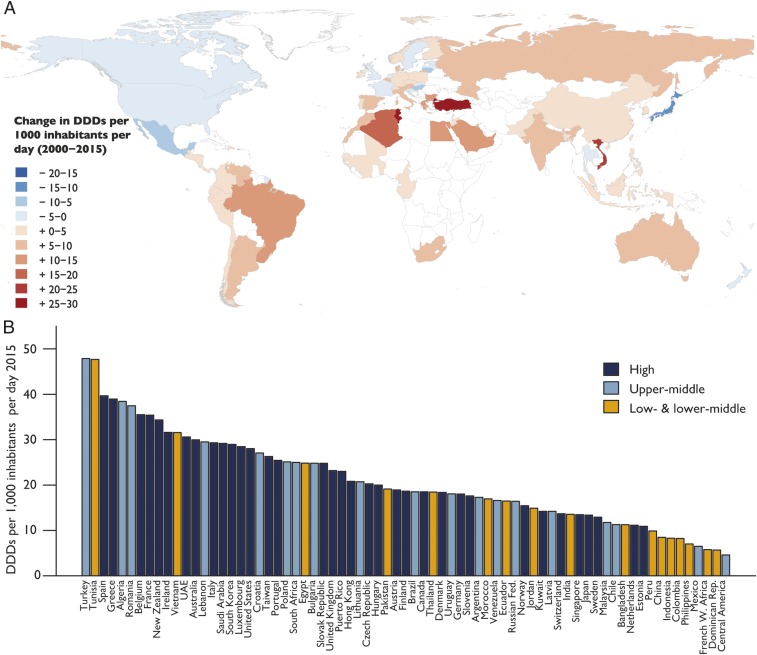
“Klein et al. [11] reported that Tunisia was considered the second ‐ highest consumer of antibiotics in 76 countries analyzed between the years 2000–2015, and consumption was estimated at around 47 defined daily doses per 1.000 inhabitants per day.”
InfluentialStrategies to Improve Antimicrobial Utilization with a Special Focus on Developing Countries
Godman, B., Egwuenu, A., Haque, M., Malande, O. O., Schellack, N., Kumar, S., Saleem, Z., Sneddon, J., Hoxha, I., Islam, S., et al. (2021) · Life · doi:10.3390/life11060528 · Cited by 237
“Rising AMR rates are due to a number of factors including rising antimicrobial utilization especially in LMICs [20,21], with the overuse of antimicrobials linked with increasing AMR [19,22,23].”
BackgroundMethodLi, J., Zhao, L., Feng, M., Huang, C.-H., & Sun, P. (2021) · Water Research · doi:10.1016/j.watres.2021.117463 · Cited by 226
The Mortality Burden of Multidrug-resistant Pathogens in India: A Retrospective, Observational Study
Gandra, S., Tseng, K. K., Arora, A., Bhowmik, B., Robinson, M. L., Panigrahi, B., Laxminarayan, R., & Klein, E. Y. (2019) · Clinical Infectious Diseases · doi:10.1093/cid/ciy955 · Cited by 227
Self-citationXi, M., Cui, K., Cui, M., Ding, Y., Guo, Z., Chen, Y., Li, C., & Li, X. (2021) · Chemical Engineering Journal · doi:10.1016/j.cej.2021.129902 · Cited by 225
The Role of Integrative and Conjugative Elements in Antibiotic Resistance Evolution
Botelho, J., & Schulenburg, H. (2021) · Trends in Microbiology · doi:10.1016/j.tim.2020.05.011 · Cited by 225
Li, J., Li, W., Liu, K., Guo, Y., Ding, C., Han, J., & Li, P. (2022) · Journal of Hazardous Materials · doi:10.1016/j.jhazmat.2022.129628 · Cited by 221
Leveraging diet to engineer the gut microbiome
Wolter, M., Grant, E. T., Boudaud, M., Steimle, A., Pereira, G. V., Martens, E. C., & Desai, M. S. (2021) · Nature Reviews Gastroenterology & Hepatology · doi:10.1038/s41575-021-00512-7 · Cited by 211
Antibiotic drug-resistance as a complex system driven by socio-economic growth and antibiotic misuse
Malik, B., & Bhattacharyya, S. (2019) · Scientific Reports · doi:10.1038/s41598-019-46078-y · Cited by 221
Nandi, A., Pecetta, S., & Bloom, D. E. (2023) · eClinicalMedicine · doi:10.1016/j.eclinm.2023.101848 · Cited by 220
Löffler, P., Escher, B. I., Baduel, C., Virta, M. P., & Lai, F. Y. (2023) · Environmental Science & Technology · doi:10.1021/acs.est.2c09854 · Cited by 215
Lewnard, J. A., Charani, E., Gleason, A., Hsu, L. Y., Khan, W. A., Karkey, A., Chandler, C. I. R., Mashe, T., Khan, E. A., Bulabula, A. N. H., et al. (2024) · The Lancet · doi:10.1016/s0140-6736(24)00862-6 · Cited by 220
Self-citationFuturistic Non-antibiotic Therapies to Combat Antibiotic Resistance: A Review
Kumar, M., Sarma, D. K., Shubham, S., Kumawat, M., Verma, V., Nina, P. B., JP, D., Kumar, S., Singh, B., & Tiwari, R. R. (2021) · Frontiers in Microbiology · doi:10.3389/fmicb.2021.609459 · Cited by 216
“…2011) Amoxicillin 1972 1977 (Fischer et al., 2010; Roy, 2011) Methicillin 1960 1960 (Jevons, 1961) Cephalosporins (β-Lactam) Cefotaxime 1980 1983 (Knothe et al., 1983) Ceftaroline 2010 2011 (FDA, 2010; CDC, 2013) Avibactam inhibits serine β-lactamases enzyme Ceftazidime (3rd Generation…”
Raja Lakshmi, P., Nanjan, P., Kannan, S., & Shanmugaraju, S. (2021) · Coordination Chemistry Reviews · doi:10.1016/j.ccr.2021.213793 · Cited by 216
Hawash, H. B., Moneer, A. A., Galhoum, A. A., Elgarahy, A. M., Mohamed, W. A. A., Samy, M., El-Seedi, H. R., Gaballah, M. S., Mubarak, M. F., & Attia, N. F. (2023) · Journal of Water Process Engineering · doi:10.1016/j.jwpe.2023.103490 · Cited by 212
Li, S., Yang, Y., Zheng, H., Zheng, Y., He, C.-S., Lai, B., Ma, J., & Nan, J. (2022) · Water Research · doi:10.1016/j.watres.2022.119176 · Cited by 211
Wang, J., Xu, S., Zhao, K., Song, G., Zhao, S., & Liu, R. (2023) · Science of The Total Environment · doi:10.1016/j.scitotenv.2023.162772 · Cited by 206
Helmy, Y. A., Taha-Abdelaziz, K., Hawwas, H. A. E.-H., Ghosh, S., AlKafaas, S. S., Moawad, M. M. M., Saied, E. M., Kassem, I. I., & Mawad, A. M. M. (2023) · Antibiotics · doi:10.3390/antibiotics12020274 · Cited by 200
Kairigo, P., Ngumba, E., Sundberg, L.-R., Gachanja, A., & Tuhkanen, T. (2020) · Science of The Total Environment · doi:10.1016/j.scitotenv.2020.137580 · Cited by 208
Introduction to host microbiome symbiosis in health and disease
Malard, F., Dore, J., Gaugler, B., & Mohty, M. (2021) · Mucosal Immunology · doi:10.1038/s41385-020-00365-4 · Cited by 209
Pareek, V., Gupta, R., & Panwar, J. (2018) · Materials Science and Engineering: C · doi:10.1016/j.msec.2018.04.093 · Cited by 205
Hu, J., Li, X., Liu, F., Fu, W., Lin, L., & Li, B. (2022) · Journal of Hazardous Materials · doi:10.1016/j.jhazmat.2021.127661 · Cited by 204
Metadata
- Authors
- Klein, E. Y., Van Boeckel, T. P., Martinez, E. M., Pant, S., Gandra, S., Levin, S. A., Goossens, H., & Laxminarayan, R.
- Affiliations
- Center for Disease Dynamics, Economics & Policy (US)
- Institute of Integrative Biology, ETH Zürich, CH-8006 Zürich, Switzerland;
- Princeton University (US)
- University of Antwerp (BE)
- Corresponding author
- Klein, Eili Y.
- Levin, Simon A.
- ORCID
- Venue
- Proceedings of the National Academy of Sciences
- Publisher
- National Academy of Sciences
- Published
- 2018-03-26
- Volume
- 115
- Issue
- 15
- Pages
- E3463-E3470
- ISSN
- 0027-8424 (ISSN-L)
- 1091-6490
- PMC
- PMC5899442
- OpenAlex
- W2791781902
- Cited by
- 3,232
- References
- 43
- Citations by year
- 2026: 247 · 2025: 416 · 2024: 456 · 2023: 476 · 2022: 432 · 2021: 490 · 2020: 386 · 2019: 252 · 2018: 71
- FWCI
- 183.08
- Type
- journal article
- Language
- en
- Open access
- hybrid
- doi.org
- Licence
- Locations
- Proceedings of the National Academy of Sciences (publishedVersion, cc-by)
- Europe PMC (PubMed Central) (publishedVersion, cc-by)
- PubMed Central (publishedVersion, cc-by)
- PubMed (publishedVersion)
- IFPRI E-brary (International Food Policy Research Institute) (submittedVersion, other-oa)
- CGSPace A Repository of Agricultural Research Outputs (Consultative Group for International Agricultural Research) (submittedVersion, other-oa)
- International Food Policy Research Institute (International Food Policy Research Institute) (submittedVersion, other-oa)
- Repository for Publications and Research Data (ETH Zurich) (submittedVersion, cc-by)
- ETH Zürich Research Collection (cc-by)
- Funders
- Bill and Melinda Gates Foundation (OPP1112355)
- Princeton Environmental Institute, Princeton University (N/A)
- ETH Zurich's Center for Adaptation to a Changing Environment (N/A)
- HHS | Centers for Disease Control and Prevention (16IPA1609425, 16IPA1609424)
- Topics
- Health Sciences › Medicine › Infectious Diseases › Antibiotic Use and Resistance
- Health Sciences › Medicine › Microbiology (medical) › Antibiotic Resistance in Bacteria
- Physical Sciences › Environmental Science › Pollution › Pharmaceutical and Antibiotic Environmental Impacts
- Keywords
- antibiotic use, last-resort antibiotics, carbapenems, polymyxins, oxazolidinones, glycylcyclines, high-income countries, low- and middle-income countries, antibiotic resistance, consumption projections, antibiotic access
- MeSH terms
- Anti-Bacterial Agents, Bacterial Infections, Drug Resistance, Microbial, Economics, Health Services Accessibility, Humans
About these checks
Registry, retraction, Cites and statistics results are computed, not judged, with one exception: a printed reference that no index lists is read once by a model before it counts as a citation error. Claims are extracted by a model and kept only when their quote appears verbatim in the text; each cited source is then checked, with a model’s help, for whether it says what the claim relies on. Those verdicts can be wrong — read the claim’s quote and the cited source before relying on one.
Statistics and arithmetic are recomputed, not judged.
Confidence bands are shown only for fields calibrated on our annotated test set. None is calibrated yet, so no band is shown.
What counts as a claim ›How we measure confidence ›How we check this ›
Are you an author, or do you see a problem with this page? Request a review
Data sources
Bibliographic data: Semantic Scholar, OpenAlex, Crossref.
Contains information from the Semantic Scholar Academic Graph Datasets, made available under the ODC Attribution License (ODC-BY 1.0).
Semantic Scholar’s data is described in: Kinney, R., et al. (2023). The Semantic Scholar Open Data Platform. arXiv:2301.10140.
