

Multiple prebiotic metals mediate translation
Open accessPublished version of a preprint
The DOI matches its Crossref record; 67 of the 67 references it cites were found in a registry or an index.
Abstract
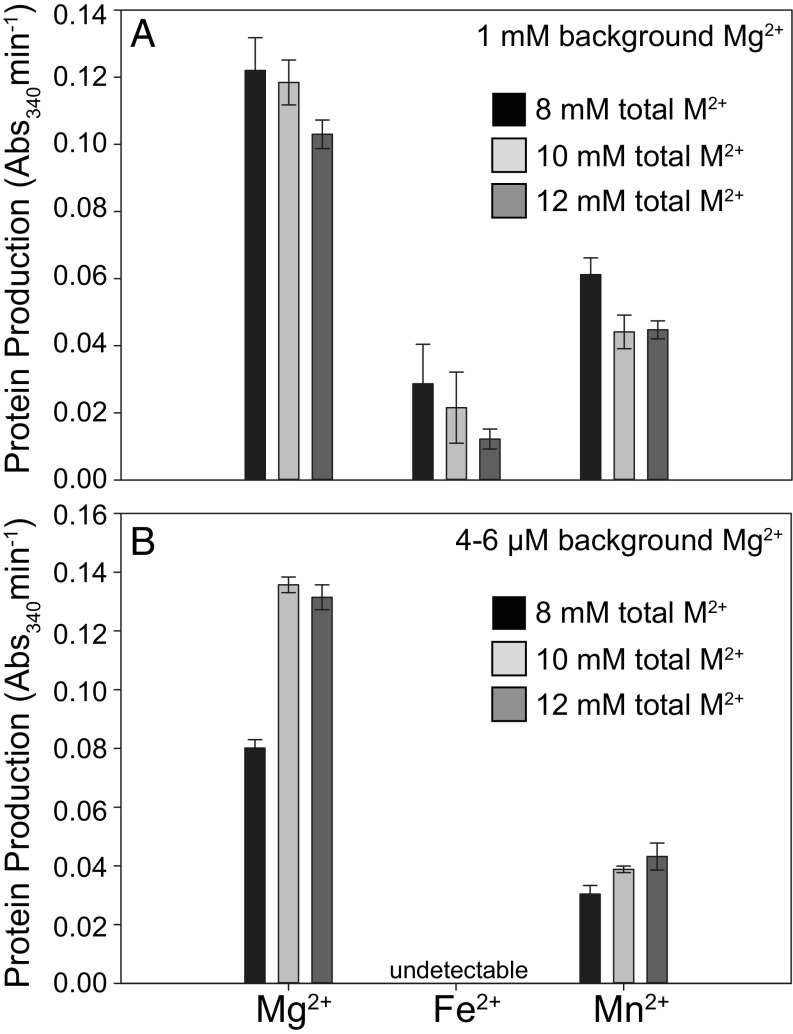
Significance: Ribosomes are found in every living organism, where they are responsible for the translation of messenger RNA into protein. The ribosome’s centrality to cell function is underscored by its evolutionary conservation; the core structure has changed little since its inception ∼4 billion years ago when ecosystems were anoxic and metal-rich. The ribosome is a model system for the study of bioinorganic chemistry, owing to the many highly coordinated divalent metal cations that are essential to its function. We studied the structure, function, and cation content of the ribosome under early Earth conditions (low O 2 , high Fe 2+ , and high Mn 2+ ). Our results expand the roles of Fe 2+ and Mn 2+ in ancient and extant biochemistry as cofactors for ribosomal structure and function.
Overview
The claims and statistics of this paper haven’t been checked yet.
Free: it reads the open-access text and checks the first 5 claims that cite a source we can check. Create a free account to check every claim.
Integrity signals
Registry
Cites
Statistics
Figures
Verification
Claims the paper makes
The claims and statistics of this paper haven’t been checked yet.
Free: it reads the open-access text and checks the first 5 claims that cite a source we can check. Create a free account to check every claim.
Claims other papers make about this one
Each is checked against this paper’s own text: does it say what the citing paper says it does?
The source backs part of the claim, not all of it — or backs it for a different population, condition or comparison.
In the citing paper
“In sum, the ribosome acts as a site of counterion condensation that buffers both K+ and Mg2+, and possibly other ions.70”
From Metals in Motion: Understanding Labile Metal Pools in Bacteria (2025) · cites this paper as [70]
Experimental — accuracy not yet measuredThe source backs part of the claim, not all of it — or backs it for a different population, condition or comparison.
In the citing paper
“These results suggest that the repertoire of ribosome-associated cations may be variable in cells, and that the ribosome may serve as a general cation buffer.70”
From Metals in Motion: Understanding Labile Metal Pools in Bacteria (2025) · cites this paper as [70]
Experimental — accuracy not yet measuredThe cited source says what the claim attributes to it.
In the citing paper
“In particular, the importance of relevant metals and metal clusters in the Hadean has settled in experimental work that recreates the origin of biochemistry in vitro, including carbon cycling [98,103,153], nitrogen fixation [154], ribosomal translation [155], and even the generation of pH gradients [156].”
From The Future of Origin of Life Research: Bridging Decades-Old Divisions (2020) · cites this paper as [155]
The cited source says what the claim attributes to it.
In the citing paper
“Similarly, ribosomes can bind >500 Fe2+ ions, although these ribosomes were less functional than those reconstituted with Mn2+.”
From Metals in Motion: Understanding Labile Metal Pools in Bacteria (2025) · cites this paper as [70]
The cited source says what the claim attributes to it.
In the citing paper
“Indeed, E. coli ribosomes can bind up to 500 Mn2+ ions and are still active in translation.70”
From Metals in Motion: Understanding Labile Metal Pools in Bacteria (2025) · cites this paper as [70]
Self-check
Percentages, sums and reported differences re-computed from the paper’s own numbers.
The self-check needs the paper’s full text.
Citations
Cites
The Complete Atomic Structure of the Large Ribosomal Subunit at 2.4 Å Resolution
Ban, N., Nissen, P., Hansen, J., Moore, P. B., & Steitz, T. A. (2000) · Science · doi:10.1126/science.289.5481.905 · Cited by 3,327 · cited 1×
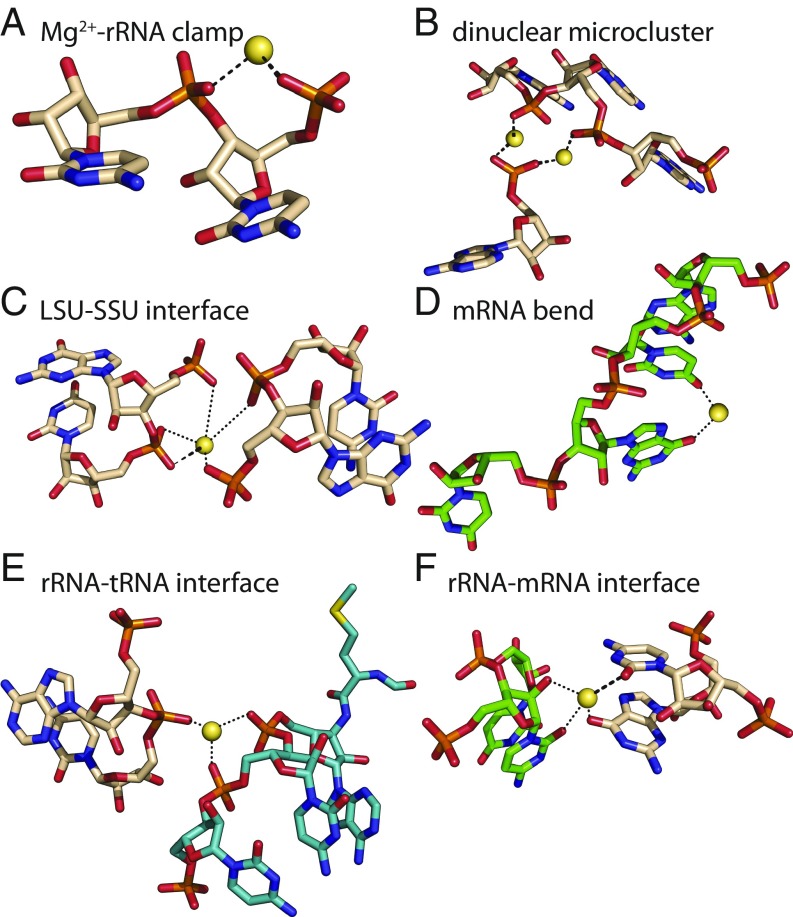
“The atomic coordinates of a Mg-rRNA clamp were initially 239 extracted from the X-ray structure of the Haloarcula marismortui LSU (PDB 1JJ2) (53).”
MethodThe Chemical Evolution of the Atmosphere and Oceans
Holland, H. D. (1984) · doi:10.1515/9780691220239 · Cited by 1,836
Femtomolar Sensitivity of Metalloregulatory Proteins Controlling Zinc Homeostasis
Outten, C. E., & O'Halloran, A. T. V. (2001) · Science · doi:10.1126/science.1060331 · Cited by 1,489
Structures of the Bacterial Ribosome at 3.5 Å Resolution
Schuwirth, B. S., Borovinskaya, M. A., Hau, C. W., Zhang, W., Vila-Sanjurjo, A., Holton, J. M., & Cate, J. H. D. (2005) · Science · doi:10.1126/science.1117230 · Cited by 1,418 · cited 1×
“1B), and at the small subunit−large subunit (SSU−LSU) interface (14) (Fig.”
The biological chemistry of the elements: the inorganic chemistry of life
(1992) · Choice Reviews Online · doi:10.5860/choice.30-0286 · Cited by 1,321 · cited 1×
“While intracellular Mg is around 10 M (46), specific physiological or environmental conditions can significantly elevate intracellular Fe and Mn.”
BackgroundStructure of the 70 S Ribosome Complexed with mRNA and tRNA
Selmer, M., Dunham, C. M., Murphy, F. V., Weixlbaumer, A., Petry, S., Kelley, A. C., Weir, J. R., & Ramakrishnan, V. (2006) · Science · doi:10.1126/science.1131127 · Cited by 1,283 · cited 2×
“SSU/mRNA Critical bend in mRNA between the P-site and A-site codons (16, 55) Maintains correct reading frame on mRNA ∼10 (34)”
Ferruginous conditions: a dominant feature of the ocean through Earth's history
Poulton, S. W., & Canfield, D. E. (2011) · Elements · doi:10.2113/gselements.7.2.107 · Cited by 1,018 · cited 2×
“173 Were Mg, Fe, and Mn collaborators as cofactors on the ancient Earth, when Fe and Mn were 174 more abundant (1-5), and Mg was less abundant (2), than today? What was the role of Fe and Mn in 175 the origin and early evolution of the translational system? Finally, what are the implications for ribosome176 bound Fe i…”
BackgroundTinoco, I., & Bustamante, C. (1999) · Journal of Molecular Biology · doi:10.1006/jmbi.1999.3001 · Cited by 1,010
The Biological Chemistry of the Elements: The Inorganic Chemistry of Life
Fraústo da Silva, J. J. R., & Williams, R. J. P. (2001) · doi:10.1093/oso/9780198508472.001.0001 · Cited by 1,005
Ribosome Structure and the Mechanism of Translation
Ramakrishnan, V. (2002) · Cell · doi:10.1016/s0092-8674(02)00619-0 · Cited by 938
Cited by
Oxidative Stress in Bacteria and the Central Dogma of Molecular Biology
Fasnacht, M., & Polacek, N. (2021) · Frontiers in Molecular Biosciences · doi:10.3389/fmolb.2021.671037 · Cited by 243
“However, it has been shown that these Mg ions can be replaced by Fe and Mn without significant loss of activity, mimicking the conditions of the early anoxic Earth (Athavale et al., 2012; Bray et al., 2018).”
BackgroundInfluentialRoot of the Tree: The Significance, Evolution, and Origins of the Ribosome
Bowman, J. C., Petrov, A. S., Frenkel-Pinter, M., Penev, P. I., & Williams, L. D. (2020) · Chemical Reviews · doi:10.1021/acs.chemrev.9b00742 · Cited by 197
Self-citationThe Impact of Oxidative Stress on Ribosomes: From Injury to Regulation
Shcherbik, N., & Pestov, D. G. (2019) · Cells · doi:10.3390/cells8111379 · Cited by 160
“When tested in anoxic conditions, Fe2+ ions can functionally substitute Mg2+ in rRNA folding and cell-free translation, owing to the close geometry of the RNA-Mg2+ and RNA-Fe2+ complexes and possibly reflecting the ribosome′s origins in an iron-rich and oxygen-poor prebiotic environment [104,105].”
BackgroundThe Future of Origin of Life Research: Bridging Decades-Old Divisions
Preiner, M., Asche, S., Becker, S., Betts, H. C., Boniface, A., Camprubi, E., Chandru, K., Erastova, V., Garg, S. G., Khawaja, N., et al. (2020) · Life · doi:10.3390/life10030020 · Cited by 140
“In particular, the importance of relevant metals and metal clusters in the Hadean has settled in experimental work that recreates the origin of biochemistry in vitro, including carbon cycling [98,103,153], nitrogen fixation [154], ribosomal translation [155], and even the generation of pH gradients [156].”
BackgroundCamprubí, E., de Leeuw, J. W., House, C. H., Raulin, F., Russell, M. J., Spang, A., Tirumalai, M. R., & Westall, F. (2019) · Space Science Reviews · doi:10.1007/s11214-019-0624-8 · Cited by 84
Fried, S. D., Fujishima, K., Makarov, M., Cherepashuk, I., & Hlouchová, K. (2022) · Journal of The Royal Society Interface · doi:10.1098/rsif.2021.0641 · Cited by 90
“Importantly from a prebiotic perspective, Mg in the ribosome can be substituted with Fe, a metal that was more abundant in early oceans [53].”
BackgroundReconstituted cell-free protein synthesis using in vitro transcribed tRNAs
Hibi, K., Amikura, K., Sugiura, N., Masuda, K., Ohno, S., Yokogawa, T., Ueda, T., & Shimizu, Y. (2020) · Communications Biology · doi:10.1038/s42003-020-1074-2 · Cited by 84
Smethurst, D. G. J., & Shcherbik, N. (2021) · Journal of Biological Chemistry · doi:10.1016/j.jbc.2021.101374 · Cited by 69
“In fact, the recapitulated conditions mimicking the anoxic earth environment supported a hypothesis that a ribosome represents an extraordinarily well-conserved RNA–protein structure that existed in a complex with Fe ions when earth’s atmosphere was depleted of oxygen (3, 20).”
BackgroundInfluentialThe elements of life: A biocentric tour of the periodic table
(2023) · Advances in Microbial Physiology · doi:10.1016/bs.ampbs.2022.11.001 · Cited by 71
Emergence of metal selectivity and promiscuity in metalloenzymes
Eom, H., & Song, W. J. (2019) · JBIC Journal of Biological Inorganic Chemistry · doi:10.1007/s00775-019-01667-0 · Cited by 77
Metal ion availability and homeostasis as drivers of metabolic evolution and enzyme function
Aulakh, S. K., Varma, S. J., & Ralser, M. (2022) · Current Opinion in Genetics & Development · doi:10.1016/j.gde.2022.101987 · Cited by 55
Origin of Life on Mars: Suitability and Opportunities
Clark, B. C., Kolb, V. M., Steele, A., House, C. H., Lanza, N., Gasda, P. J., VanBommel, S. J. V., NEWSOM, H. E., & Martínez‐Frías, J. (2021) · Life · doi:10.3390/life11060539 · Cited by 59
“For example, at least five separate functions in ribosomal activity require Mg2+ [211] (although Fe2+ and Mn2+ can substitute for some of these functions [212]).”
BackgroundThe Peptidyl Transferase Center: a Window to the Past
Tirumalai, M. R., Rivas, M., Tran, Q., & Fox, G. E. (2021) · Microbiology and Molecular Biology Reviews · doi:10.1128/mmbr.00104-21 · Cited by 53
“ing translation under experimental conditions (195).”
Iron: Life’s primeval transition metal
Johnson, J. E., Present, T. M., & Valentine, J. S. (2024) · Proceedings of the National Academy of Sciences · doi:10.1073/pnas.2318692121 · Cited by 55
Human ribosomal G-quadruplexes regulate heme bioavailability
Mestre-Fos, S., Ito, C., Moore, C. M., Reddi, A. R., & Williams, L. D. (2020) · Journal of Biological Chemistry · doi:10.1074/jbc.ra120.014332 · Cited by 55
Self-citationSleeping ribosomes: Bacterial signaling triggers RaiA mediated persistence to aminoglycosides
Lang, M., Krin, E., Korlowski, C., Sismeiro, O., Varet, H., Coppée, J.-Y., Mazel, D., & Baharoglu, Z. (2021) · iScience · doi:10.1016/j.isci.2021.103128 · Cited by 49
Metals in Motion: Understanding Labile Metal Pools in Bacteria
Helmann, J. D. (2025) · Biochemistry · doi:10.1021/acs.biochem.4c00726 · Cited by 49
Goldilocks and RNA: where Mg2+ concentration is just right
Guth-Metzler, R., Mohamed, A. M., Cowan, E. T., Henning, A., Ito, C., Frenkel‐Pinter, M., Wartell, R. M., Glass, J. B., & Williams, L. D. (2023) · Nucleic Acids Research · doi:10.1093/nar/gkad124 · Cited by 45
“Goldilocks behaviors of RNA should extend beyond Mg2+ to species such as Fe2+, which also promote both RNA folding and cleavage (47,68).”
BackgroundSelf-citationNeuroprotective Potential of Non-Digestible Oligosaccharides: An Overview of Experimental Evidence
Divyashri, G., Sadanandan, B., Murthy, K. N. C., Shetty, K., & Mamta, K. (2021) · Frontiers in Pharmacology · doi:10.3389/fphar.2021.712531 · Cited by 36
Cellular Adaptations to Cytoplasmic Mg2+ Limitation
Groisman, E. A., & Chan, C. (2021) · Annual Review of Microbiology · doi:10.1146/annurev-micro-020518-115606 · Cited by 36
Transition metals enhance prebiotic depsipeptide oligomerization reactions involving histidine
Frenkel‐Pinter, M., Sargon, A. B., Glass, J. B., Hud, N. V., & Williams, L. D. (2021) · RSC Advances · doi:10.1039/d0ra07965k · Cited by 36
Self-citationYang, Y., & Karbstein, K. (2024) · Annual Review of Cell and Developmental Biology · doi:10.1146/annurev-cellbio-111822-113326 · Cited by 31
The Grayness of the Origin of Life
Smith, H. H., Hyde, A. S., Simkus, D. N., Libby, E., Maurer, S., Graham, H. V., Kempes, C. P., Lollar, B. S., Chou, L., Ellington, A. D., et al. (2021) · Life · doi:10.3390/life11060498 · Cited by 37
“Such substitutions, when possible, have catalytic efficiency costs but are necessary adaptations to a dynamic environment for both ancient and modern life [72,73].”
BackgroundIron-Induced Respiration Promotes Antibiotic Resistance in Actinomycete Bacteria
Choi, J.-S., Seok, Y., Cho, Y., & Roe, J. (2022) · mBio · doi:10.1128/mbio.00425-22 · Cited by 27
“One can postulate that iron may have altered the ribosomes to become more resistant to kanamycin, considering that iron could replace magnesium, an essential cofactor in the ribosome (23).”
BackgroundCofactors as Molecular Fossils To Trace the Origin and Evolution of Proteins
Chu, X., & Zhang, H. (2020) · ChemBioChem · doi:10.1002/cbic.202000027 · Cited by 28
Evolutionary History of Bioessential Elements Can Guide the Search for Life in the Universe
Kaçar, B., Garcia, A. K., & Anbar, A. D. (2020) · ChemBioChem · doi:10.1002/cbic.202000500 · Cited by 26
Cutting in-line with iron: ribosomal function and non-oxidative RNA cleavage
Guth-Metzler, R., Bray, M. S., Frenkel‐Pinter, M., Suttapitugsakul, S., Montllor-Albalate, C., Bowman, J. C., Wu, R., Reddi, A. R., Okafor, C. D., Glass, J. B., et al. (2020) · Nucleic Acids Research · doi:10.1093/nar/gkaa586 · Cited by 26
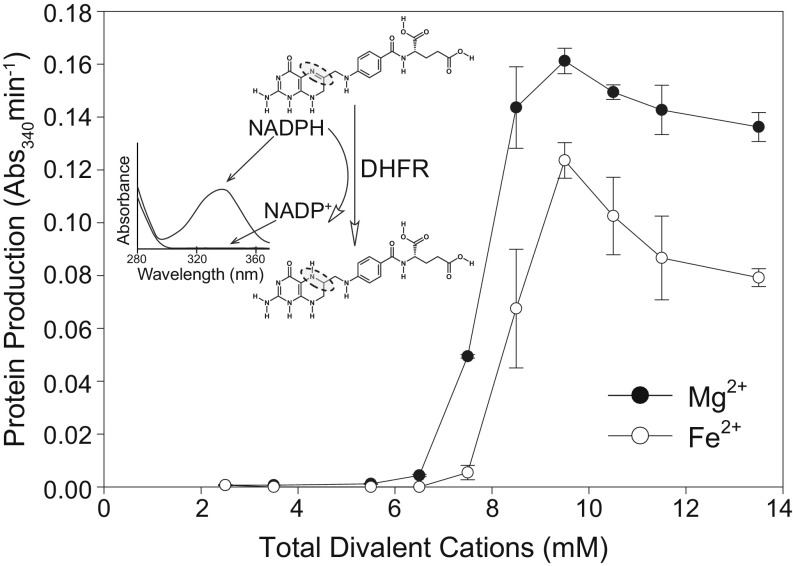
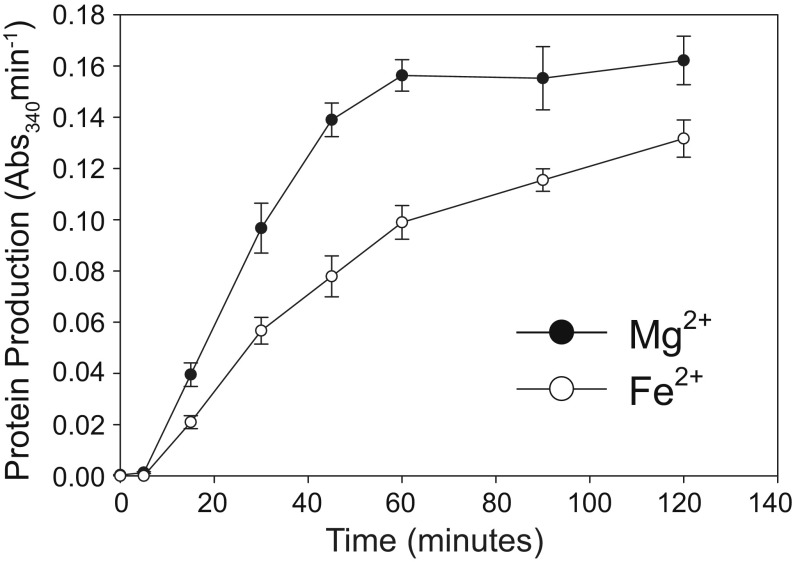
“Translation was reduced in the presence of Fe2+ compared to Mg2+, consistent with our previous work (37).”
BackgroundResultSelf-citationThe molecular landscape of cellular metal ion biology
Aulakh, S. K., Lemke, O., Szyrwiel, L., Kamrad, S., Chen, Y., Hartl, J., Mülleder, M., Nielsen, J., & Ralser, M. (2025) · Cell Systems · doi:10.1016/j.cels.2025.101319 · Cited by 19
Schnettler, J. D., Wang, M. S., Gantz, M., Bunzel, H. A., Karas, C., Hollfelder, F., & Hecht, M. H. (2024) · Nature Chemistry · doi:10.1038/s41557-024-01490-4 · Cited by 18
Resolving the History of Life on Earth by Seeking Life As We Know It on Mars
Carr, C. E. (2022) · Astrobiology · doi:10.1089/ast.2021.0043 · Cited by 20
“These regions have changed little over 4 billion years (Bray et al., 2018).”
BackgroundIn search of the RNA world on Mars
Mojarro, A., Jin, L., Szostak, J. W., Head, J. W., III, & Zuber, M. T. (2021) · Geobiology · doi:10.1111/gbi.12433 · Cited by 19
Iron-mediated degradation of ribosomes under oxidative stress is attenuated by manganese
Smethurst, D. G. J., Kovalev, N., McKenzie, E. R., Pestov, D. G., & Shcherbik, N. (2020) · Journal of Biological Chemistry · doi:10.1074/jbc.ra120.015025 · Cited by 17
“This agrees with the reported interaction of Fe(21) with ribosomes (48) and indicates that these ions in the cleavage events demonstrated in vitro and in cells in Fig.”
BackgroundMethodHernández, R. B., Moteshareie, H., Burnside, D. J., McKay, B. C., & Golshani, A. (2019) · Scientific Reports · doi:10.1038/s41598-019-42907-2 · Cited by 14
White and green rust chimneys accumulate RNA in a ferruginous chemical garden
Helmbrecht, V., Weingart, M., Klein, F., Braun, D., & Orsi, W. D. (2023) · Geobiology · doi:10.1111/gbi.12572 · Cited by 14
“Furthermore, Fe 2 + can replace Mg 2 + as the dominant divalent cation during key catalytic RNA functions (Athavale et al., 2012; Bray et al., 2018), indicating that Fe 2 + was a potential important chelator of RNA in the ferrugi-nous prebiotic oceans.”
BackgroundReplacing Mg2+ by Fe2+ for RNA‐Cleaving DNAzymes
Moon, W. J., & Liu, J. (2019) · ChemBioChem · doi:10.1002/cbic.201900344 · Cited by 11
Freshwater and Evaporite Brine Compositions on Hadean Earth: Priming the Origins of Life
Sahai, N., Adebayo, S., & Schoonen, M. A. A. (2022) · Astrobiology · doi:10.1089/ast.2020.2396 · Cited by 11
“…and Fe 2 + can act as a cofactor in ribosomal RNA-catalyzed single-electron transfer reactions at much lower levels ( m molar) than Mg 2 + (Hsiao et al. , 2013); furthermore, Fe 2 + and other transition metals at millimolar concentrations can promote translation in bacteria (Bray et al. , 2018).”
The evolution of proteome: From the primeval to the very dawn of LUCA
Palacios-Pérez, M., & José, M. V. (2019) · Biosystems · doi:10.1016/j.biosystems.2019.04.007 · Cited by 11
Xu, J., & Cotruvo, J. A. (2022) · Current Opinion in Chemical Biology · doi:10.1016/j.cbpa.2022.102135 · Cited by 11
Hernández, R. B., de Souza-Pinto, N. C., Kleinjans, J. C. S., van Herwijnen, M. H. M., Piepers, J. A. F., Moteshareie, H., Burnside, D. J., & Golshani, A. (2021) · Toxics · doi:10.3390/toxics9120348 · Cited by 11
Mohamadi, S., Karimi, S., & Tavallali, V. (2024) · Heliyon · doi:10.1016/j.heliyon.2024.e25322 · Cited by 9
Prebiotic Iron Originates the Peptidyl Transfer Origin
Lin, S.-Y., Wang, Y.-C., & Hsiao, C. (2019) · Molecular Biology and Evolution · doi:10.1093/molbev/msz034 · Cited by 8
Cueto-Diaz, E. J., Gálvez, S., Colín-García, M., & Mateo‐Martí, E. (2023) · Life · doi:10.3390/life13040908 · Cited by 6
“(2018) [9] studied the structure, function, and cation content of ribosomes under conditions of the early Earth; they demonstrated that iron and manganese (Fe2+ and Mn2+) are essential cofactors for the structure and function of ribosomes.”
BackgroundMontacié, C., Riondet, C., Wei, L. S., Darrière, T., Weiss, A., Pontvianne, F., Escande, M., de Bures, A., Jobet, E., Barbarossa, A., et al. (2023) · Journal of Experimental Botany · doi:10.1093/jxb/erad180 · Cited by 7
McKaig, J. M., Kim, M., & Carr, C. E. (2024) · Astrobiology · doi:10.1089/ast.2023.0101 · Cited by 7
Mysteries of metallome evolution: Integrating insights from the Earth and life sciences
Rico, K. I., Garcia, A. K., Saito, M. A., Kaçar, B., & Anbar, A. D. (2024) · Elsevier eBooks · doi:10.1016/b978-0-323-99762-1.00143-1 · Cited by 3
Methods for thermal denaturation studies of nucleic acids in complex with fluorogenic dyes
Aufdembrink, L. M., Hoog, T. G., Pawlak, M. R., Bachan, B. F., Heili, J. M., & Engelhart, A. E. (2019) · Methods in enzymology on CD-ROM/Methods in enzymology · doi:10.1016/bs.mie.2019.05.029 · Cited by 4
Acute Manganese Exposure Modifies the Translation Machinery via PI3K/Akt Signaling in Glial Cells
Soto‐Verdugo, J., Silva-Parra, J., Hernández‐Kelly, L. C., & Ortega, A. (2022) · ASN NEURO · doi:10.1177/17590914221131452 · Cited by 3
“The control of the translation machinery provides an immediate mechanism of response to environmental signals (Browning and Bailey-Serres, 2015).”
BackgroundFioroni, M. (2021) · Advances in astrobiology and biogeophysics · doi:10.1007/978-3-030-81039-9_1 · Cited by 2
Origin of ribonucleotide recognition motifs through ligand mimicry at early earth
Mozumdar, D., & Roy, R. N. (2024) · RNA Biology · doi:10.1080/15476286.2024.2423149 · Cited by 2
“In addition to Mg 2+ other metal ions also play a crucial role in RNA-dependent processes [77,78,104], including RNA folding and catalysis [100,105–109], self assembly [110] and polymerization [47,111] (Figure 3B).”
Liu, J., & Feng, G. (2024) · Frontiers in Nutrition · doi:10.3389/fnut.2024.1443090 · Cited by 1
A window into transition metal availability in early palaeoproterozoic seawater
Nke, A. Y., Rickaby, R. E. M., Tsikos, H., Mason, P. R. D., Mhlanga, X., & Tostevin, R. (2025) · Scientific Reports · doi:10.1038/s41598-025-27806-z · Cited by 2
“While Mn can substitute for Mg in many cellular roles 51–53 , it would perform poorly, slowing down cellular regulation and reducing the ability of cells to quickly respond to external stimuli.”
Kaçar, B., Anbar, A. D., Garcia, A. K., Seefeldt, L. C., & Konhauser, K. O. (2021) · doi:10.3847/25c2cfeb.8073c38a · Cited by 1
De, T., Coin, L., Herberg, J. A., Johnson, M. R., & Järvelin, M. (2025) · Scientific Reports · doi:10.1038/s41598-025-94839-9 · Cited by 1
“Magnesium like iron is a divalent cation and is part of more than 300 enzymes in the human body and forms an important part of protein translation machinery 55 and protects the mitochondria from oxidative stress 56 .”
Investigation of divalent metal ion detection using 17E DNAzyme Biosensor
Moon, W. J. (2021) · UWSpace (University of Waterloo)
Abuladze, M. K., Sokhadze, V. M., Namchevadze, E. N., Asatiani, N. V., Kartvelishvili, T., & Sapojnikova, N. A. (2025) · Cell Biochemistry and Biophysics · doi:10.1007/s12013-025-01688-4
“The ribosome exhibits signi fi cant sensitivity to ionic circumstances [35, 36].”
RNA−Iron complexes catalyse prebiotic oxygen generation
Wang, Y.-C., Tu, J.-H., Yu, L.-C., & Hsiao, C. (2026) · Communications Chemistry · doi:10.1038/s42004-026-01935-6
Shi, X., Cai, H., Tang, W., Wei, E., Zhao, M., & Zhao, Y. Q. (2026) · BMC Chemistry · doi:10.1186/s13065-026-01802-4
“Cu(II), a transition metal of considerable geochemical abundance and pronounced redox activity, is of particular interest [8].”
Integrated spectral-compositional analysis of listvenites, and implications for Mars
Sarkar, R., Cloutis, E., Applin, D. M., Turenne, N. N., Mège, D., Beinlich, A., & Mertzman, S. A. (2026) · Icarus · doi:10.1016/j.icarus.2026.117282
Gruchola, S., Westall, F., Knecht, L. N., Schmidt, P. K., Riedo, A., Tulej, M., Foucher, F., & Wurz, P. (2026) · The Planetary Science Journal · doi:10.3847/psj/ae9839
Metadata
- Authors
- Bray, M. S., Lenz, T. K., Haynes, J. W., Bowman, J. C., Petrov, A. S., Reddi, A. R., Hud, N. V., Williams, L. D., & Glass, J. B.
- Affiliations
- Georgia Institute of Technology (US)
- Corresponding author
- Williams, Loren Dean
- Glass, Jennifer B.
- ORCID
- Venue
- Proceedings of the National Academy of Sciences
- Publisher
- National Academy of Sciences
- Published
- 2018-11-09
- Volume
- 115
- Issue
- 48
- Pages
- 12164-12169
- ISSN
- 0027-8424 (ISSN-L)
- 1091-6490
- PMC
- PMC6275528
- OpenAlex
- W2846967238
- Cited by
- 58
- References
- 67
- Citations by year
- 2026: 4 · 2025: 5 · 2024: 7 · 2023: 5 · 2022: 7 · 2021: 14 · 2020: 8 · 2019: 8
- FWCI
- 2.67
- Type
- journal article
- Language
- en
- Open access
- hybrid
- doi.org
- Licence
- Locations
- Proceedings of the National Academy of Sciences (publishedVersion, cc-by-nc-nd)
- bioRxiv (Cold Spring Harbor Laboratory) (acceptedVersion)
- Europe PMC (PubMed Central) (publishedVersion, cc-by-nc-nd)
- PubMed Central (publishedVersion, cc-by-nc-nd)
- PubMed (publishedVersion)
- eScholarship (California Digital Library) (submittedVersion)
- eScholarship (California Digital Library) (submittedVersion, cc-by-nc-nd)
- Funders
- National Aeronautics and Space Administration (NNX14AJ87G, NNX16AJ28G, NNX16AJ29G)
- Topics
- Life Sciences › Biochemistry, Genetics and Molecular Biology › Molecular Biology › RNA and protein synthesis mechanisms
- Physical Sciences › Physics and Astronomy › Astronomy and Astrophysics › Origins and Evolution of Life
- Physical Sciences › Chemistry › Inorganic Chemistry › Metal-Catalyzed Oxygenation Mechanisms
- Keywords
- ribosome, iron, manganese, divalent metal cations, ribosomal translation, early Earth conditions, anoxia, bioinorganic chemistry
About these checks
Registry, retraction, Cites and statistics results are computed, not judged, with one exception: a printed reference that no index lists is read once by a model before it counts as a citation error. Claims are extracted by a model and kept only when their quote appears verbatim in the text; each cited source is then checked, with a model’s help, for whether it says what the claim relies on. Those verdicts can be wrong — read the claim’s quote and the cited source before relying on one.
Statistics and arithmetic are recomputed, not judged.
Confidence bands are shown only for fields calibrated on our annotated test set. None is calibrated yet, so no band is shown.
What counts as a claim ›How we measure confidence ›How we check this ›
Are you an author, or do you see a problem with this page? Request a review
Data sources
Bibliographic data: Semantic Scholar, OpenAlex, Crossref.
Contains information from the Semantic Scholar Academic Graph Datasets, made available under the ODC Attribution License (ODC-BY 1.0).
Semantic Scholar’s data is described in: Kinney, R., et al. (2023). The Semantic Scholar Open Data Platform. arXiv:2301.10140.
