

Multiple prebiotic metals mediate translation
Open accessPublished version of a preprint
The DOI matches its Crossref record; 67 of the 67 references it cites were found in a registry or an index.
Abstract
Significance: Ribosomes are found in every living organism, where they are responsible for the translation of messenger RNA into protein. The ribosome’s centrality to cell function is underscored by its evolutionary conservation; the core structure has changed little since its inception ∼4 billion years ago when ecosystems were anoxic and metal-rich. The ribosome is a model system for the study of bioinorganic chemistry, owing to the many highly coordinated divalent metal cations that are essential to its function. We studied the structure, function, and cation content of the ribosome under early Earth conditions (low O 2 , high Fe 2+ , and high Mn 2+ ). Our results expand the roles of Fe 2+ and Mn 2+ in ancient and extant biochemistry as cofactors for ribosomal structure and function.
Overview
The claims and statistics of this paper haven’t been checked yet.
Free: it reads the open-access text and checks the first 5 claims that cite a source we can check. Create a free account to check every claim.
Integrity signals
Registry
Cites
Statistics
Figures


Verification
Claims the paper makes
The claims and statistics of this paper haven’t been checked yet.
Free: it reads the open-access text and checks the first 5 claims that cite a source we can check. Create a free account to check every claim.
Claims other papers make about this one
Each is checked against this paper’s own text: does it say what the citing paper says it does?
The source backs part of the claim, not all of it — or backs it for a different population, condition or comparison.
In the citing paper
“In sum, the ribosome acts as a site of counterion condensation that buffers both K+ and Mg2+, and possibly other ions.70”
From Metals in Motion: Understanding Labile Metal Pools in Bacteria (2025) · cites this paper as [70]
Experimental — accuracy not yet measuredThe source backs part of the claim, not all of it — or backs it for a different population, condition or comparison.
In the citing paper
“These results suggest that the repertoire of ribosome-associated cations may be variable in cells, and that the ribosome may serve as a general cation buffer.70”
From Metals in Motion: Understanding Labile Metal Pools in Bacteria (2025) · cites this paper as [70]
Experimental — accuracy not yet measuredThe cited source says what the claim attributes to it.
In the citing paper
“In particular, the importance of relevant metals and metal clusters in the Hadean has settled in experimental work that recreates the origin of biochemistry in vitro, including carbon cycling [98,103,153], nitrogen fixation [154], ribosomal translation [155], and even the generation of pH gradients [156].”
From The Future of Origin of Life Research: Bridging Decades-Old Divisions (2020) · cites this paper as [155]
The cited source says what the claim attributes to it.
In the citing paper
“Similarly, ribosomes can bind >500 Fe2+ ions, although these ribosomes were less functional than those reconstituted with Mn2+.”
From Metals in Motion: Understanding Labile Metal Pools in Bacteria (2025) · cites this paper as [70]
The cited source says what the claim attributes to it.
In the citing paper
“Indeed, E. coli ribosomes can bind up to 500 Mn2+ ions and are still active in translation.70”
From Metals in Motion: Understanding Labile Metal Pools in Bacteria (2025) · cites this paper as [70]
Self-check
Percentages, sums and reported differences re-computed from the paper’s own numbers.
The self-check needs the paper’s full text.
Citations
Cites
The Complete Atomic Structure of the Large Ribosomal Subunit at 2.4 Å Resolution
Ban, N., Nissen, P., Hansen, J., Moore, P. B., & Steitz, T. A. (2000) · Science · doi:10.1126/science.289.5481.905 · Cited by 3,327 · cited 1×
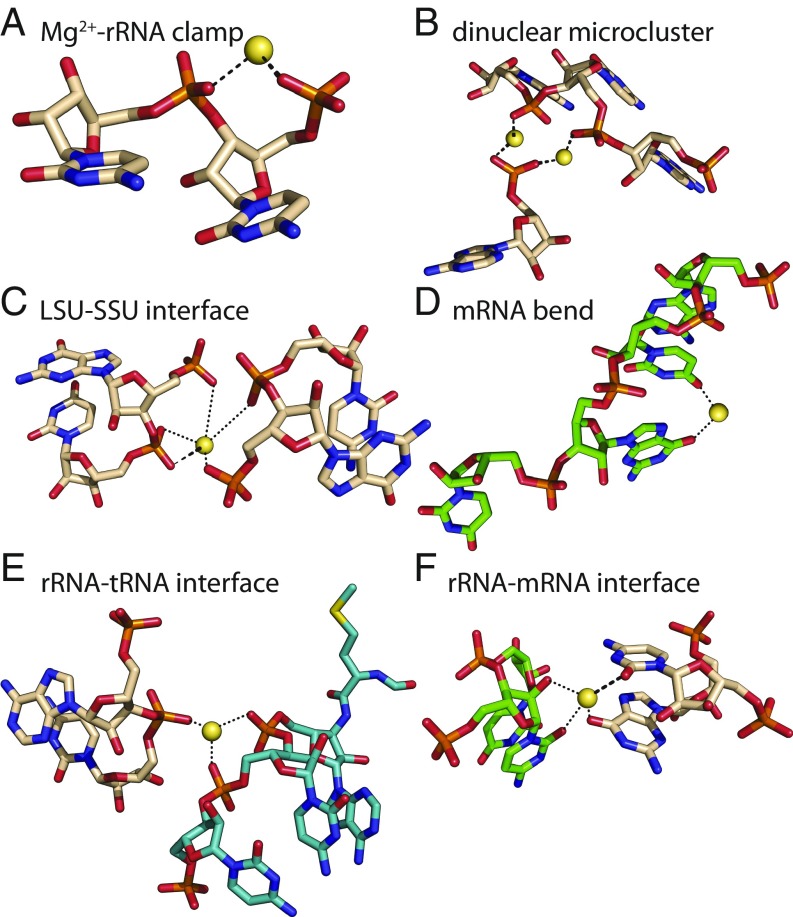
“The atomic coordinates of a Mg-rRNA clamp were initially 239 extracted from the X-ray structure of the Haloarcula marismortui LSU (PDB 1JJ2) (53).”
MethodThe Chemical Evolution of the Atmosphere and Oceans
Holland, H. D. (1984) · doi:10.1515/9780691220239 · Cited by 1,836
Femtomolar Sensitivity of Metalloregulatory Proteins Controlling Zinc Homeostasis
Outten, C. E., & O'Halloran, A. T. V. (2001) · Science · doi:10.1126/science.1060331 · Cited by 1,489
Structures of the Bacterial Ribosome at 3.5 Å Resolution
Schuwirth, B. S., Borovinskaya, M. A., Hau, C. W., Zhang, W., Vila-Sanjurjo, A., Holton, J. M., & Cate, J. H. D. (2005) · Science · doi:10.1126/science.1117230 · Cited by 1,418 · cited 1×
“1B), and at the small subunit−large subunit (SSU−LSU) interface (14) (Fig.”
The biological chemistry of the elements: the inorganic chemistry of life
(1992) · Choice Reviews Online · doi:10.5860/choice.30-0286 · Cited by 1,321 · cited 1×
“While intracellular Mg is around 10 M (46), specific physiological or environmental conditions can significantly elevate intracellular Fe and Mn.”
BackgroundStructure of the 70 S Ribosome Complexed with mRNA and tRNA
Selmer, M., Dunham, C. M., Murphy, F. V., Weixlbaumer, A., Petry, S., Kelley, A. C., Weir, J. R., & Ramakrishnan, V. (2006) · Science · doi:10.1126/science.1131127 · Cited by 1,283 · cited 2×
“SSU/mRNA Critical bend in mRNA between the P-site and A-site codons (16, 55) Maintains correct reading frame on mRNA ∼10 (34)”
Ferruginous conditions: a dominant feature of the ocean through Earth's history
Poulton, S. W., & Canfield, D. E. (2011) · Elements · doi:10.2113/gselements.7.2.107 · Cited by 1,018 · cited 2×
“173 Were Mg, Fe, and Mn collaborators as cofactors on the ancient Earth, when Fe and Mn were 174 more abundant (1-5), and Mg was less abundant (2), than today? What was the role of Fe and Mn in 175 the origin and early evolution of the translational system? Finally, what are the implications for ribosome176 bound Fe i…”
BackgroundTinoco, I., & Bustamante, C. (1999) · Journal of Molecular Biology · doi:10.1006/jmbi.1999.3001 · Cited by 1,010
The Biological Chemistry of the Elements: The Inorganic Chemistry of Life
Fraústo da Silva, J. J. R., & Williams, R. J. P. (2001) · doi:10.1093/oso/9780198508472.001.0001 · Cited by 1,005
Ribosome Structure and the Mechanism of Translation
Ramakrishnan, V. (2002) · Cell · doi:10.1016/s0092-8674(02)00619-0 · Cited by 938
Wilkinson, K. A., Merino, E. J., & Weeks, K. M. (2006) · Nature Protocols · doi:10.1038/nprot.2006.249 · Cited by 780 · cited 3×
“S1), as previously 190 described (32, 52); and for monovalent cations in combination Mg, Fe, or Mn (Fig.”
BackgroundMethodAccumulation of Mn(II) in Deinococcus radiodurans Facilitates Gamma-Radiation Resistance
Daly, M. J., Gaidamakova, E. K., Matrosova, V. Y., Vasilenko, A., Zhai, M., Venkateswaran, A., Hess, M., Omelchenko, M. V., Kostandarithes, H. M., Makarova, K. S., et al. (2004) · Science · doi:10.1126/science.1103185 · Cited by 623
HIERARCHY AND DYNAMICS OF RNA FOLDING
Brion, P., & Westhof, E. (1997) · Annual Review of Biophysics and Biomolecular Structure · doi:10.1146/annurev.biophys.26.1.113 · Cited by 557 · cited 1×
“We found that isolated rRNA folds to essentially the same global state (37, 38) with Mg, Fe, or Mn under anoxia.”
Cell‐free production and stable‐isotope labeling of milligram quantities of proteins
Kigawa, T., Yabuki, T., Yoshida, Y., Tsutsui, M., Ito, Y., Shibata, T., & Yokoyama, S. (1999) · FEBS Letters · doi:10.1016/s0014-5793(98)01620-2 · Cited by 491 · cited 8×
“A-site tRNA/ P-site tRNA tRNA-tRNA interface (27) Stabilize tRNAs in the PTC ~10 (34)”
BackgroundMethodInfluentialRibozymes: A Distinct Class of Metalloenzymes
Pyle, A. M. (1993) · Science · doi:10.1126/science.7688142 · Cited by 438 · cited 2×
“50 51 Multiple types of cationic species can interact productively with RNAs in a variety of systems (18-20).”
The crystal structure of elongation factor EF-Tu from Thermus aquaticus in the GTP conformation
Kjeldgaard, M., Nissen, P., Thirup, S., & Nyborg, J. (1993) · Structure · doi:10.1016/0969-2126(93)90007-4 · Cited by 395 · cited 1×
“EF-Tu GTP binding site (55) Stabilizes the transition state 5-15 (56)”
BackgroundStructure and Mechanism of a Metal-Sensing Regulatory RNA
Dann, C. E., Wakeman, C. A., Sieling, C. L., Baker, S. C., Irnov, I., & Winkler, W. C. (2007) · Cell · doi:10.1016/j.cell.2007.06.051 · Cited by 386 · cited 1×
“SHAPE provides quantitative, nucleotide-resolution information about RNA flexibility, base pairing, and 3D structure, and has previously been used to monitor the influence of cations, small molecules, or proteins on RNA structure (27 – 32).”
BackgroundCusack, S. (1997) · Current Opinion in Structural Biology · doi:10.1016/s0959-440x(97)80161-3 · Cited by 378
Metal ions in the structure and function of RNA
Pyle, A. (2002) · JBIC Journal of Biological Inorganic Chemistry · doi:10.1007/s00775-002-0387-6 · Cited by 376 · cited 2×
“Multiple types of cationic species can interact productively with RNAs in a variety of systems (18 – 20).”
A new understanding of the decoding principle on the ribosome
Demeshkina, N., Jenner, L., Westhof, E., Yusupov, M., & Yusupova, G. (2012) · Nature · doi:10.1038/nature10913 · Cited by 375 · cited 1×
“Functional Mg ions stabilize a critical bend in 46 mRNA between the P-site and A-site codons (15) (Fig.”
BackgroundMortimer, S. A., & Weeks, K. M. (2007) · Journal of the American Chemical Society · doi:10.1021/ja0704028 · Cited by 364 · cited 2×
“SHAPE (28, 32, 33) was conducted on the ~2900 nt Thermus thermophilus 180 23 rRNA (LSU) in 250 mM monovalent cation (Na or K) to favor formation of secondary structure, and 181 in 250 mM Na or K plus various divalent cation (10 mM MgCl2, 2.”
MethodThe contribution of metal ions to the structural stability of the large ribosomal subunit
KLEIN, D. J., MOORE, P. B., & STEITZ, T. A. (2004) · RNA · doi:10.1261/rna.7390804 · Cited by 325 · cited 2×
“Regardless, the general effectiveness of Mn or Fe for Mg substitutions in the 138 translation system is astounding considering the enormous number of divalent cations associated with a 139 given ribosome, and the broad scope of their structural and functional roles (10, 11) (Table 1, Fig.”
BackgroundTabor, S., & Richardson, C. C. (1989) · Proceedings of the National Academy of Sciences · doi:10.1073/pnas.86.11.4076 · Cited by 288 · cited 3×
“Functional Mg-to-Mn substitution has 56 long been known for DNA polymerases (24-26).”
BackgroundResultRibosomal RNA in Alzheimer Disease Is Oxidized by Bound Redox-active Iron
Honda, K., Smith, M. A., Zhu, X., Baus, D., Merrick, W. C., Tartakoff, A. M., Hattier, T., Harris, P. L., Siedlak, S. L., Fujioka, H., et al. (2005) · Journal of Biological Chemistry · doi:10.1074/jbc.m500526200 · Cited by 280 · cited 1×
“173 Were Mg, Fe, and Mn collaborators as cofactors on the ancient Earth, when Fe and Mn were 174 more abundant (1-5), and Mg was less abundant (2), than today? What was the role of Fe and Mn in 175 the origin and early evolution of the translational system? Finally, what are the implications for ribosome176 bound Fe i…”
BackgroundManganese as a Replacement for Magnesium and Zinc: Functional Comparison of the Divalent Ions
Bock, C. W., Katz, A. K., Markham, G. D., & Glusker, J. P. (1999) · Journal of the American Chemical Society · doi:10.1021/ja9906960 · Cited by 272 · cited 2×
“These findings suggest that functional substitutions of Mn 134 or Fe for Mg can occur in large ribozymes, similar to previous reports for protein enzymes and small 135 ribozymes (24-26, 39, 40).”
ResultThe Mismetallation of Enzymes during Oxidative Stress
Imlay, J. A. (2014) · Journal of Biological Chemistry · doi:10.1074/jbc.r114.588814 · Cited by 270 · cited 2×
“These findings suggest that functional substitutions of Mn 2 + or Fe 2 + for Mg 2 + can occur in large ribozymes, similar to previous reports for protein enzymes and small ribozymes (24 – 26, 39, 40).”
Origin and evolution of the ribosome
Fox, G. E. (2010) · Cold Spring Harbor Perspectives in Biology · doi:10.1101/cshperspect.a003483 · Cited by 258 · cited 1×
“5 Ga) in low-O2, high-Fe , and high-Mn conditions (8).”
Manganese mineralogy and diagenesis in the sedimentary rock record
Johnson, J. E., Webb, S. M., Ma, C., & Fischer, W. W. (2016) · Geochimica et Cosmochimica Acta · doi:10.1016/j.gca.2015.10.027 · Cited by 245
Iron oxides, divalent cations, silica, and the early earth phosphorus crisis
Jones, C., Nomosatryo, S., Crowe, S. A., Bjerrum, C. J., & Canfield, D. E. (2015) · Geology · doi:10.1130/g36044.1 · Cited by 226 · cited 2×
“173 Were Mg, Fe, and Mn collaborators as cofactors on the ancient Earth, when Fe and Mn were 174 more abundant (1-5), and Mg was less abundant (2), than today? What was the role of Fe and Mn in 175 the origin and early evolution of the translational system? Finally, what are the implications for ribosome176 bound Fe i…”
BackgroundCations in charge: magnesium ions in RNA folding and catalysis
Bowman, J. C., Lenz, T. K., Hud, N. V., & Williams, L. D. (2012) · Current Opinion in Structural Biology · doi:10.1016/j.sbi.2012.04.006 · Cited by 204 · cited 1×
“The 143 high capacity of ribosomes for Fe and Mn reflects all rRNA-associated divalent cations, including 144 condensed, glassy and chelated divalent cations (42), and in addition, we presume that Fe or Mn can 145 associate with a variety of rProteins, including those previously shown to bind Zn (e.”
BackgroundSelf-citationNucleic Acid Catalysis: Metals, Nucleobases, and Other Cofactors
Ward, W. L., Plakos, K., & DeRose, V. J. (2014) · Chemical Reviews · doi:10.1021/cr400476k · Cited by 177 · cited 2×
“50 51 Multiple types of cationic species can interact productively with RNAs in a variety of systems (18-20).”
BackgroundResultCauses and consequences of mid-Proterozoic anoxia: CAUSES OF MID-PROTEROZOIC ANOXIA
Derry, L. A. (2015) · Geophysical Research Letters · doi:10.1002/2015gl065333 · Cited by 147 · cited 2×
“173 Were Mg, Fe, and Mn collaborators as cofactors on the ancient Earth, when Fe and Mn were 174 more abundant (1-5), and Mg was less abundant (2), than today? What was the role of Fe and Mn in 175 the origin and early evolution of the translational system? Finally, what are the implications for ribosome176 bound Fe i…”
RiboVision suite for visualization and analysis of ribosomes
Bernier, C. R., Petrov, A. S., Waterbury, C. C., Jett, J. R., Li, F., Freil, L., Xiong, X., Wang, L., Migliozzi, B. L. R., Hershkovits, E., et al. (2014) · Faraday Discussions · doi:10.1039/c3fd00126a · Cited by 112 · cited 3×
“These figures were generated with the program RiboVision (66).”
MethodInfluentialSelf-citationZheng, H., Shabalin, I. G., Handing, K. B., Bujnicki, J. M., & Minor, W. (2015) · Nucleic Acids Research · doi:10.1093/nar/gkv225 · Cited by 107 · cited 1×
“The observation that >500 Fe or Mn ions can associate with a bacterial ribosome is consistent with the number of Mg ions observed by X-ray diffraction [100 to 1,000 Mg per ribosome (41)], and supports a model in which Fe or Mn has replaced Mg as the dominant divalent cation in our experiments.”
O 2 availability impacts iron homeostasis in Escherichia coli
Beauchene, N. A., Mettert, E. L., Moore, L. J., Keleş, S., Willey, E. R., & Kiley, P. J. (2017) · Proceedings of the National Academy of Sciences · doi:10.1073/pnas.1707189114 · Cited by 95 · cited 1×
“coli contains ~10 times higher labile Fe 2+ 162 (~10 M) than in the presence of O2 (~10 -5 M (49)).”
BackgroundBidentate RNA–magnesium clamps: On the origin of the special role of magnesium in RNA folding
Petrov, A. S., Bowman, J. C., Harvey, S. C., & Williams, L. D. (2011) · RNA · doi:10.1261/rna.2390311 · Cited by 94 · cited 4×
“In ribosomes, Mg ions 43 engaged in a variety of structural roles (Table 1), including in Mg-rRNA clamps (12, 13) (Fig.”
BackgroundMethodInfluentialSelf-citationRNA Folding and Catalysis Mediated by Iron (II)
Athavale, S. S., Petrov, A. S., Hsiao, C., Watkins, D., Prickett, C. D., Gossett, J. J., Lie, L., Bowman, J. C., O’Neill, E. B., Bernier, C. R., et al. (2012) · PLoS ONE · doi:10.1371/journal.pone.0038024 · Cited by 92 · cited 3×
“Additional details on calculations adapted from previous publications (12, 22) are described in SI Appendix.”
InfluentialSelf-citationStructure of EF-G–ribosome complex in a pretranslocation state
Chen, Y., Feng, S., Kumar, V., Ero, R., & Gao, Y. (2013) · Nature Structural & Molecular Biology · doi:10.1038/nsmb.2645 · Cited by 90 · cited 1×
“EF-G GTP binding site (57) Stabilizes the transition state n.”
BackgroundNucleoside diphosphate kinase from Myxococcus xanthus. II. Biochemical characterization.
Muñoz‐Dorado, J., Inouye, S., & Inouye, M. (1990) · Journal of Biological Chemistry · doi:10.1016/s0021-9258(19)39859-x · Cited by 86 · cited 1×
“Nucleosidediphosphate kinase NTP binding site (63) Stabilizes the transition state >1 (63)”
BackgroundMagnesium binding by Escherichia coli ribosomes
Goldberg, A. L. (1966) · Journal of Molecular Biology · doi:10.1016/s0022-2836(66)80134-1 · Cited by 84 · cited 3×
“1 B ), and at the small subunit − large subunit (SSU − LSU) interface (14) (Fig.”
Translation: The Universal Structural Core of Life
Bernier, C. R., Petrov, A. S., Kovacs, N. A., Penev, P. I., & Williams, L. D. (2018) · Molecular Biology and Evolution · doi:10.1093/molbev/msy101 · Cited by 83 · cited 1×
“The common core of the 40 ribosome, and many other aspects of the translation system, have remained essentially frozen since the 41 last universal common ancestor (9).”
BackgroundSelf-citationYonath, A. (2002) · Annual Review of Biophysics and Biomolecular Structure · doi:10.1146/annurev.biophys.31.082901.134439 · Cited by 77
Hsiao, C., & Williams, L. D. (2009) · Nucleic Acids Research · doi:10.1093/nar/gkp119 · Cited by 70 · cited 5×
“1a), in 44 dinuclear microclusters that frame the peptidyl transferase center (PTC) (13) (Fig.”
BackgroundInfluentialSelf-citationATP: AMP Phosphotransferase from Baker's Yeast. Purification and Properties
Itô, Y., Tomasselli, A. G., & Noda, L. H. (1980) · European Journal of Biochemistry · doi:10.1111/j.1432-1033.1980.tb04477.x · Cited by 61 · cited 2×
“Indeed, the relative activity of myokinase 156 and arginine t-RNA synthetase are both lower with Mn or Fe than with Mg (44, 45).”
BackgroundThe role of magnesium in the hydrolysis of sodium pyrophosphate by inorganic pyrophosphatase
Bloch-Frankenthal, L. (1954) · Biochemical Journal · doi:10.1042/bj0570087 · Cited by 54 · cited 1×
“Pyrophosphatase Active site (64) Stabilizes the transition state >7 (65)”
BackgroundRNA–Magnesium–Protein Interactions in Large Ribosomal Subunit
Petrov, A. S., Bernier, C. R., Hsiao, C., Okafor, C. D., Tannenbaum, E., Stern, J. G., Gaucher, E. A., Schneider, D., Hud, N. V., Harvey, S. C., et al. (2012) · The Journal of Physical Chemistry B · doi:10.1021/jp304723w · Cited by 52 · cited 1×
“Mg ions also interact with some rProteins (17).”
Self-citationThe structure of E.coli soluble inorganic pyrophosphatase at 2.7 Å resolution
Kankare, J. A., Neal, G. S., Salminen, T. A., Glumhoff, T., Cooperman, B. S., Lahti, R., & Goldman, A. (1994) · Protein Engineering Design and Selection · doi:10.1093/protein/7.7.823 · Cited by 49 · cited 1×
“Pyrophosphatase Active site (65) Stabilizes the transition state >7 (66)”
Creatine Kinase: Stability, Inactivation, Reactivation
Morin, L. G. (1977) · Clinical Chemistry · doi:10.1093/clinchem/23.4.646 · Cited by 47 · cited 1×
“Aminoacyl-tRNA synthetases ATP binding site (59) Stabilizes the transition state >1 (60) Methionyl-tRNA transformylase ATP binding site (61) Stabilizes the transition state 7 (61) Creatine kinase NTP binding site (62) Stabilizes the transition state ∼5 (62) Myokinase Acceptor NDP binding site (63) Stabilizes the trans…”
Lövgren, T. N.-E., Petersson, A., & Loftfield, R. B. (1978) · Journal of Biological Chemistry · doi:10.1016/s0021-9258(17)37975-9 · Cited by 47
Zn(II) Binding to Escherichia coli 70S Ribosomes
Hensley, M. P., Tierney, D. L., & Crowder, M. W. (2011) · Biochemistry · doi:10.1021/bi200619w · Cited by 45
Molecular paleontology: a biochemical model of the ancestral ribosome
Hsiao, C., Lenz, T. K., Peters, J. K., Fang, P.-Y., Schneider, D. M., Anderson, E. J., Preeprem, T., Bowman, J. C., O'Neill, E. B., Lie, L., et al. (2013) · Nucleic Acids Research · doi:10.1093/nar/gkt023 · Cited by 45 · cited 1×
“SHAPE provides quantitative, nucleotide-resolution information about RNA flexibility, base 69 pairing, and 3D structure, and has previously been used to monitor the influence of cations, small 70 molecules, or proteins on RNA structure (27-32).”
Self-citationZinskie, J. A., Ghosh, A., Trainor, B. M., Shedlovskiy, D., Pestov, D. G., & Shcherbik, N. (2018) · Journal of Biological Chemistry · doi:10.1074/jbc.ra118.004174 · Cited by 42 · cited 1×
“173 Were Mg, Fe, and Mn collaborators as cofactors on the ancient Earth, when Fe and Mn were 174 more abundant (1-5), and Mg was less abundant (2), than today? What was the role of Fe and Mn in 175 the origin and early evolution of the translational system? Finally, what are the implications for ribosome176 bound Fe i…”
BackgroundOkafor, C. D., Lanier, K. A., Petrov, A. S., Athavale, S. S., Bowman, J. C., Hud, N. V., & Williams, L. D. (2017) · Nucleic Acids Research · doi:10.1093/nar/gkx171 · Cited by 38 · cited 5×
“These findings suggest that functional substitutions of Mn 134 or Fe for Mg can occur in large ribozymes, similar to previous reports for protein enzymes and small 135 ribozymes (24-26, 39, 40).”
BackgroundResultInfluentialSelf-citation[11] Properties and specificity of methionyl-tRNAfMet formyltransferase from Escherichia coli
Blanquet, S., Dessen, P., & Kahn, D. (1984) · Methods in enzymology on CD-ROM/Methods in enzymology · doi:10.1016/0076-6879(84)06013-4 · Cited by 37 · cited 1×
“Methionyl-tRNA transformylase ATP binding site (60) Stabilizes the transition state 7 (60)”
BackgroundThermodynamic Origins of Monovalent Facilitated RNA Folding
Holmstrom, E. D., Fiore, J. L., & Nesbitt, D. J. (2012) · Biochemistry · doi:10.1021/bi201420a · Cited by 35 · cited 1×
“S1), as previously 190 described (32, 52); and for monovalent cations in combination Mg, Fe, or Mn (Fig.”
BackgroundIn vitro evolution of distinct self-cleaving ribozymes in diverse environments
Popović, M., Fliss, P. S., & Ditzler, M. A. (2015) · Nucleic Acids Research · doi:10.1093/nar/gkv648 · Cited by 33 · cited 2×
“As predicted by this model, functional Mg-to-Fe substitutions under anoxic 54 conditions were experimentally verified to support RNA folding and catalysis by ribozymes (22, 23), a 55 DNA polymerase, a DNA ligase, and an RNA polymerase (24).”
BackgroundResultAminoacylation of tRNA. Magnesium requirement and spermidine effect
THIEBE, R. (1975) · FEBS Letters · doi:10.1016/0014-5793(75)80901-x · Cited by 21 · cited 1×
“Aminoacyl-tRNA synthetases ATP binding site (59) Stabilizes the transition state >1 (60) Methionyl-tRNA transformylase ATP binding site (61) Stabilizes the transition state 7 (61) Creatine kinase NTP binding site (62) Stabilizes the transition state ∼5 (62) Myokinase Acceptor NDP binding site (63) Stabilizes the trans…”
BackgroundDomain III of the T. thermophilus 23S rRNA folds independently to a near-native state
Athavale, S. S., Gossett, J. J., Hsiao, C., Bowman, J. C., O’Neill, E. B., Hershkovitz, E., Preeprem, T., Hud, N. V., Wartell, R. M., Harvey, S. C., et al. (2012) · RNA · doi:10.1261/rna.030692.111 · Cited by 21 · cited 1×
“SHAPE provides quantitative, nucleotide-resolution information about RNA flexibility, base 69 pairing, and 3D structure, and has previously been used to monitor the influence of cations, small 70 molecules, or proteins on RNA structure (27-32).”
MethodSelf-citationDecoding on the ribosome depends on the structure of the mRNA phosphodiester backbone
Keedy, H. E., Thomas, E. N., & Zaher, H. S. (2018) · Proceedings of the National Academy of Sciences · doi:10.1073/pnas.1721431115 · Cited by 19 · cited 1×
“SSU/mRNA Critical bend in mRNA between the Psite and A-site codons (16, 54) Maintains correct reading frame mRNA ~10 (34)”
BackgroundLitman, R. M. (1971) · Journal of Molecular Biology · doi:10.1016/0022-2836(71)90203-8 · Cited by 17 · cited 3×
“Functional Mg-to-Mn substitution has 56 long been known for DNA polymerases (24-26).”
BackgroundResultImprint of Ancient Evolution on rRNA Folding
Lanier, K. A., Athavale, S. S., Petrov, A. S., Wartell, R. M., & Williams, L. D. (2016) · Biochemistry · doi:10.1021/acs.biochem.6b00168 · Cited by 16
Self-citationVasavada, K. V., Kaplan, J. I., & Rao, D. N. (1984) · Biochemistry · doi:10.1021/bi00300a025 · Cited by 15 · cited 1×
“Aminoacyl-tRNA synthetases ATP binding site (59) Stabilizes the transition state >1 (60) Methionyl-tRNA transformylase ATP binding site (61) Stabilizes the transition state 7 (61) Creatine kinase NTP binding site (62) Stabilizes the transition state ∼5 (62) Myokinase Acceptor NDP binding site (63) Stabilizes the trans…”
BackgroundCampuzano, S., & Modolell, J. (1981) · European Journal of Biochemistry · doi:10.1111/j.1432-1033.1981.tb06298.x · Cited by 9 · cited 1×
“EF-Tu GTP binding site (55) Stabilizes the transition state 5-15 (56)”
BackgroundProtein-free ribosomal RNA folds to a near-native state in the presence of Mg 2+
Lenz, T. K., Norris, A., Hud, N. V., & Williams, L. D. (2017) · RSC Advances · doi:10.1039/c7ra08696b · Cited by 9 · cited 2×
“We previously used SHAPE to show that the LSU 71 rRNA adopts a near-native state in the presence of Mg, with the core inter-domain architecture of the 72 assembled ribosome and residues positioned for interactions with rProteins (33).”
MethodSelf-citationFolding and Catalysis Near Life’s Origin: Support for Fe2+ as a Dominant Divalent Cation
Okafor, C. D., Bowman, J. C., Hud, N. V., Glass, J. B., & Williams, L. D. (2018) · Nucleic acids and molecular biology · doi:10.1007/978-3-319-93584-3_8 · Cited by 7 · cited 1×
“52 Recent results support a model in which Fe and Mn, along with Mg, were critical cofactors in ancient 53 nucleic acid function (21).”
ResultSelf-citationStudies on arginyl-tRNA synthetase from Escherichia coli B. Dual role of metals in enzyme catalysis.
Craine, J. E., & Peterkofsky, A. (1976) · Journal of Biological Chemistry · doi:10.1016/s0021-9258(17)33951-0 · Cited by 7
Prończuk, A., Baliga, B. S., & Munro, H. N. (1968) · Biochemical Journal · doi:10.1042/bj1100783 · Cited by 6 · cited 1×
“5 mM, total divalent cation concentration, minimal translation occurred with either Fe 97 or Mg, as expected (36).”
Background
Cited by
Oxidative Stress in Bacteria and the Central Dogma of Molecular Biology
Fasnacht, M., & Polacek, N. (2021) · Frontiers in Molecular Biosciences · doi:10.3389/fmolb.2021.671037 · Cited by 243
“However, it has been shown that these Mg ions can be replaced by Fe and Mn without significant loss of activity, mimicking the conditions of the early anoxic Earth (Athavale et al., 2012; Bray et al., 2018).”
BackgroundInfluentialRoot of the Tree: The Significance, Evolution, and Origins of the Ribosome
Bowman, J. C., Petrov, A. S., Frenkel-Pinter, M., Penev, P. I., & Williams, L. D. (2020) · Chemical Reviews · doi:10.1021/acs.chemrev.9b00742 · Cited by 197
Self-citationThe Impact of Oxidative Stress on Ribosomes: From Injury to Regulation
Shcherbik, N., & Pestov, D. G. (2019) · Cells · doi:10.3390/cells8111379 · Cited by 158
“When tested in anoxic conditions, Fe2+ ions can functionally substitute Mg2+ in rRNA folding and cell-free translation, owing to the close geometry of the RNA-Mg2+ and RNA-Fe2+ complexes and possibly reflecting the ribosome′s origins in an iron-rich and oxygen-poor prebiotic environment [104,105].”
BackgroundThe Future of Origin of Life Research: Bridging Decades-Old Divisions
Preiner, M., Asche, S., Becker, S., Betts, H. C., Boniface, A., Camprubi, E., Chandru, K., Erastova, V., Garg, S. G., Khawaja, N., et al. (2020) · Life · doi:10.3390/life10030020 · Cited by 140
“In particular, the importance of relevant metals and metal clusters in the Hadean has settled in experimental work that recreates the origin of biochemistry in vitro, including carbon cycling [98,103,153], nitrogen fixation [154], ribosomal translation [155], and even the generation of pH gradients [156].”
BackgroundCamprubí, E., de Leeuw, J. W., House, C. H., Raulin, F., Russell, M. J., Spang, A., Tirumalai, M. R., & Westall, F. (2019) · Space Science Reviews · doi:10.1007/s11214-019-0624-8 · Cited by 84
Metadata
- Authors
- Bray, M. S., Lenz, T. K., Haynes, J. W., Bowman, J. C., Petrov, A. S., Reddi, A. R., Hud, N. V., Williams, L. D., & Glass, J. B.
- Affiliations
- Georgia Institute of Technology (US)
- Corresponding author
- Williams, Loren Dean
- Glass, Jennifer B.
- ORCID
- Venue
- Proceedings of the National Academy of Sciences
- Publisher
- National Academy of Sciences
- Published
- 2018-11-09
- Volume
- 115
- Issue
- 48
- Pages
- 12164-12169
- ISSN
- 0027-8424 (ISSN-L)
- 1091-6490
- PMC
- PMC6275528
- OpenAlex
- W2846967238
- Cited by
- 58
- References
- 67
- Citations by year
- 2026: 4 · 2025: 5 · 2024: 7 · 2023: 5 · 2022: 7 · 2021: 14 · 2020: 8 · 2019: 8
- FWCI
- 2.67
- Type
- journal article
- Language
- en
- Open access
- hybrid
- doi.org
- Licence
- Locations
- Proceedings of the National Academy of Sciences (publishedVersion, cc-by-nc-nd)
- bioRxiv (Cold Spring Harbor Laboratory) (acceptedVersion)
- Europe PMC (PubMed Central) (publishedVersion, cc-by-nc-nd)
- PubMed Central (publishedVersion, cc-by-nc-nd)
- PubMed (publishedVersion)
- eScholarship (California Digital Library) (submittedVersion)
- eScholarship (California Digital Library) (submittedVersion, cc-by-nc-nd)
- Funders
- National Aeronautics and Space Administration (NNX14AJ87G, NNX16AJ28G, NNX16AJ29G)
- Topics
- Life Sciences › Biochemistry, Genetics and Molecular Biology › Molecular Biology › RNA and protein synthesis mechanisms
- Physical Sciences › Physics and Astronomy › Astronomy and Astrophysics › Origins and Evolution of Life
- Physical Sciences › Chemistry › Inorganic Chemistry › Metal-Catalyzed Oxygenation Mechanisms
- Keywords
- ribosome, iron, manganese, divalent metal cations, ribosomal translation, early Earth conditions, anoxia, bioinorganic chemistry
About these checks
Registry, retraction, Cites and statistics results are computed, not judged, with one exception: a printed reference that no index lists is read once by a model before it counts as a citation error. Claims are extracted by a model and kept only when their quote appears verbatim in the text; each cited source is then checked, with a model’s help, for whether it says what the claim relies on. Those verdicts can be wrong — read the claim’s quote and the cited source before relying on one.
Statistics and arithmetic are recomputed, not judged.
Confidence bands are shown only for fields calibrated on our annotated test set. None is calibrated yet, so no band is shown.
What counts as a claim ›How we measure confidence ›How we check this ›
Are you an author, or do you see a problem with this page? Request a review
Data sources
Bibliographic data: Semantic Scholar, OpenAlex, Crossref.
Contains information from the Semantic Scholar Academic Graph Datasets, made available under the ODC Attribution License (ODC-BY 1.0).
Semantic Scholar’s data is described in: Kinney, R., et al. (2023). The Semantic Scholar Open Data Platform. arXiv:2301.10140.
