

The DOI matches its Crossref record; 7 of the 7 references it cites were found in a registry or an index.
Reducing debt improves psychological functioning and changes decision-making in the poor
Open accessAbstract
Significance: The impact of chronic debt on the poor is psychological, not just financial. We hypothesize that chronic debt impairs psychological functioning and decision-making, contributing to the poverty trap. This is because debt is not considered fungible and is viewed as costly mental accounts that consume cognitive bandwidth. We test this using quasiexperimental evidence from a one-off, unanticipated debt-relief program worth several months’ household income. Comparing the poor before and after debt relief, those with more debt accounts paid off experienced greater improvements in cognitive functioning, reported less anxiety, and became less present-biased. These findings provide actionable evidence for poverty-alleviation policy.
Overview
The claims and statistics of this paper haven’t been checked yet.
Run the check — free, no account needed. It reads the open-access text and checks the sources it cites.
Integrity signals
Registry
Cites
Statistics
Figures
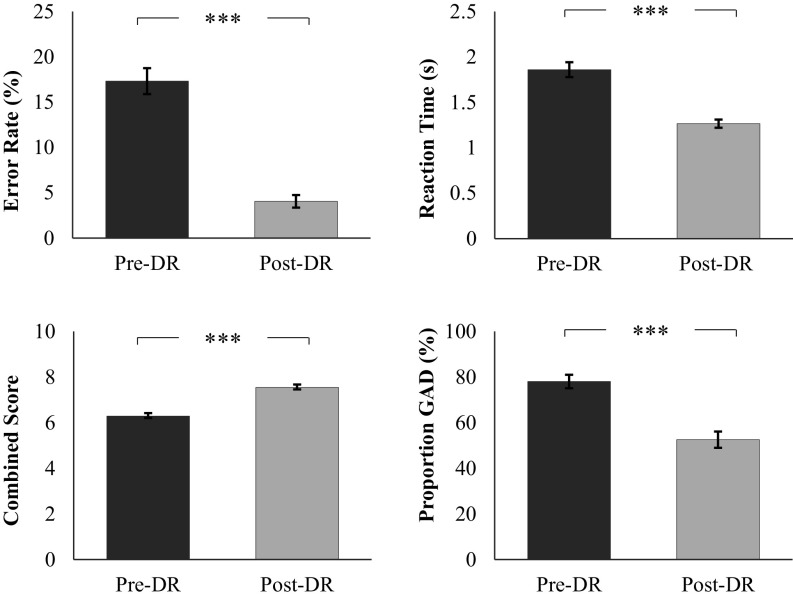
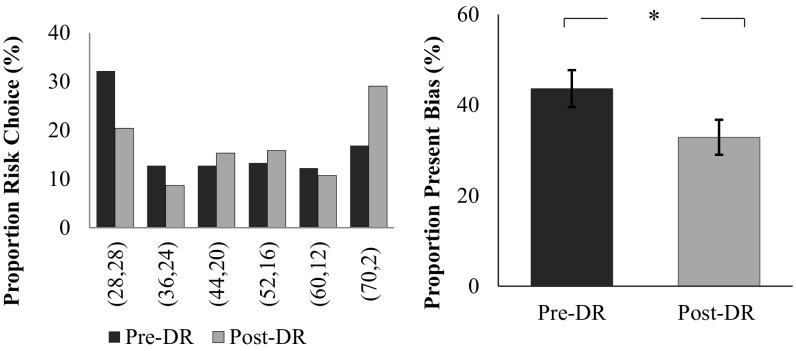
Verification
Claims the paper makes
The claims and statistics of this paper haven’t been checked yet.
Run the check — free, no account needed. It reads the open-access text and checks the sources it cites.
Claims other papers make about this one
Each is checked against this paper’s own text: does it say what the citing paper says it does?
The source backs part of the claim, not all of it — or backs it for a different population, condition or comparison.
In the citing paper
“However, they found only weak descriptive evidence of a mediating role of cognitive control underlying this effect.”
From Poverty and economic decision making: a review of scarcity theory (2022) · cites this paper as Ong et al. (2019)
Experimental — accuracy not yet measuredThe cited source says what the claim attributes to it.
In the citing paper
“They found that low-income Singaporean participants performed significantly better on a cognitive control task (Flanker task) after debt relief than before.”
From Poverty and economic decision making: a review of scarcity theory (2022) · cites this paper as Ong et al. (2019)
The cited source says what the claim attributes to it.
In the citing paper
“Because this study used a pre-post design to identify treatment effects, similar to the harvest study of Mani et al. (2013a), learning effects and potential confounders might have affected the results.”
From Poverty and economic decision making: a review of scarcity theory (2022) · cites this paper as Ong et al. (2019)
The cited source says what the claim attributes to it.
In the citing paper
“Similar to the effect on time discounting, suggestive evidence for a mediating role of cognitive control was weak.”
From Poverty and economic decision making: a review of scarcity theory (2022) · cites this paper as Ong et al. (2019)
The cited source says what the claim attributes to it.
In the citing paper
“Only a study of Ong et al. (2019) found that debt relief reduced risk aversion.”
From Poverty and economic decision making: a review of scarcity theory (2022) · cites this paper as Ong et al. (2019)
The cited source says what the claim attributes to it.
In the citing paper
“In their study among Singaporean low-income households, Ong et al. (2019) showed that debt relief reduced present bias.”
From Poverty and economic decision making: a review of scarcity theory (2022) · cites this paper as Ong et al. (2019)
The cited source says what the claim attributes to it.
In the citing paper
“First, it is unclear how financial scarcity affects risk aversion as studies have shown positive (Ong et al. 2019), negative (Dalton et al. 2019), or no effects (Carvalho et al. 2016).”
From Poverty and economic decision making: a review of scarcity theory (2022) · cites this paper as Ong et al. 2019
The cited source says what the claim attributes to it.
In the citing paper
“Participants showed improved cognitive control and reduced negative affect, risk aversion, and present bias after debt relief”
From Poverty and economic decision making: a review of scarcity theory (2022) · cites this paper as Ong et al. (2019)
Self-check
Percentages, sums and reported differences re-computed from the paper’s own numbers.
The self-check needs the paper’s full text.
Citations
Cites
Diamond, A. (2013) · Annual Review of Psychology · doi:10.1146/annurev-psych-113011-143750 · Cited by 13,268
Golden eggs and hyperbolic discounting
Laibson, D. (1997) · The Quarterly Journal of Economics · doi:10.1162/003355397555253 · Cited by 6,122
Poverty impedes cognitive function.
Mani, A., Mullainathan, S., Shafir, E., & Zhao, J. (2013) · Science · doi:10.1126/science.1238041 · Cited by 2,967 · cited 3×
“To explore external validity, we compared our study to the two closest field studies examining the effects of poverty on psychological functioning and decisionmaking (2, 13).”
BackgroundResultInfluentialSome Consequences of Having Too Little
Shah, A. K., Mullainathan, S., & Shafir, E. (2012) · Science · doi:10.1126/science.1222426 · Cited by 1,567
A meta-analysis of the impact of short-term sleep deprivation on cognitive variables
Lim, J., & Dinges, D. F. (2010) · Psychological Bulletin · doi:10.1037/a0018883 · Cited by 1,389
II. NIH TOOLBOX COGNITION BATTERY (CB): MEASURING EXECUTIVE FUNCTION AND ATTENTION
Zelazo, P. D., Anderson, J. E., Richler, J., Wallner-Allen, K., Beaumont, J. L., & Weintraub, S. (2013) · Monographs of the Society for Research in Child Development · doi:10.1111/mono.12032 · Cited by 823
Stress-induced changes in human decision-making are reversible
Soares, J. M., Sampaio, A., Ferreira, L. M., Santos, N. C., Marques, F., Palha, J. A., Cerqueira, J. J., & Sousa, N. (2012) · Translational Psychiatry · doi:10.1038/tp.2012.59 · Cited by 183
Research works printed but not linked: 39
- 10.1126/science.1232491 · DOI · Paper page
- 10.1257/jep.21.1.141 · DOI · Paper page
- J Bricker A Kennickell K Moore J Sabelhaus Changes in U.S. family finances from 2007 to 2010: Evidence from the survey of consumer finances. Federal Reserve Bulletin (Board of Governors of the Federal Reserve System Washington DC). Available at https://www.federalreserve.gov/Pubs/Bulletin/2012/articles/scf/scf.htm. Accessed June 1 2018. (2012). · DOI
- 10.1353/eca.2004.0018 · DOI
- 10.1287/mksc.17.1.4 · DOI
- 10.1002/(SICI)1099-0771(199909)12:3<183::AID-BDM318>3.0.CO;2-F · DOI
- 10.1287/mnsc.36.6.643 · DOI
- 10.1509/jmkr.48.SPL.S38 · DOI
- J Gathergood, Debt and depression: Causal links and social norm effects. Econ J (Lond) 122, 1094–1114 (2012).
- 10.1016/j.cpr.2013.08.009 · DOI
- 10.1257/aer.20140481 · DOI · Paper page
- EB Dean, F Schilbach, H Schofield, Poverty and cognitive function. The Economics of Asset Accumulation and Poverty Traps (University of Chicago Press, Chicago, 2017).
- 10.1257/jep.32.2.115 · DOI
- 10.1509/jmr.11.0272 · DOI
- 10.1093/jcr/ucw037 · DOI
- 10.1007/s10683-009-9230-z · DOI · Paper page
- J Slotkin, NIH Toolbox Scoring and Interpretation Guide (Northwestern University and National Institutes of Health, Chicago, 2012).
- MR Liebowitz, Generalized anxiety order (includes overanxious disorder of childhood). DSM IV Sourcebook, ed TA Widiger (American Psychiatric Association, Washington, DC) Vol 2 (1996).
- 10.1007/s10560-012-0263-3 · DOI
- 10.1080/10875549.2012.747998 · DOI
- 10.1093/sleep/28.6.707 · DOI
- 10.1017/S1355617715000351 · DOI · Paper page
- 10.1086/261740 · DOI
- 10.1162/JEEA.2008.6.6.1109 · DOI · Paper page
- 10.1257/aer.100.1.557 · DOI
- 10.1016/S1090-5138(02)00097-1 · DOI · Paper page
- 10.1007/s11166-010-9103-z · DOI
- 10.1257/000282802762024674 · DOI
- 10.1257/app.2.1.193 · DOI
- JD Cohen KM Ericson D Laibson JM White Measuring time preferences. National Bureau of Economic Research Working Paper 22455 (National Bureau of Economic Research Cambridge MA). (2016). · DOI
- 10.1257/aer.102.7.3357 · DOI
- 10.1073/pnas.0812360106 · DOI
- 10.1037/bul0000035 · DOI
- 10.1037/0278-7393.29.2.298 · DOI · Paper page
- 10.1257/aer.100.3.1238 · DOI · Paper page
- 10.1111/jeea.12055 · DOI · Paper page
- 10.1073/pnas.1317908111 · DOI
- A Bandura Self-Efficacy: The Exercise of Control (W. H. Freeman, New York, 1997).
- 10.1002/pam.21854 · DOI
Cited by
Sorted by citations
Poverty and economic decision making: a review of scarcity theory
de Bruijn, E.-J., & Antonides, G. (2022) · Theory and Decision · doi:10.1007/s11238-021-09802-7 · Cited by 277
Metadata
- Authors
- Ong, Q., Theseira, W., & Ng, I. Y. H.
- Affiliations
- National University of Singapore (SG)
- Singapore University of Social Sciences (SG)
- Corresponding author
- Ong, Qiyan
- Venue
- Proceedings of the National Academy of Sciences
- Publisher
- National Academy of Sciences
- Published
- 2019-03-25
- Volume
- 116
- Issue
- 15
- Pages
- 7244-7249
- ISSN
- 0027-8424 (ISSN-L)
- 1091-6490
- PMC
- PMC6462060
- OpenAlex
- W2923558166
- Cited by
- 154
- References
- 7
- Citations by year
- 2026: 15 · 2025: 30 · 2024: 27 · 2023: 29 · 2022: 24 · 2021: 19 · 2020: 7 · 2019: 3
- FWCI
- 10.55
- Type
- journal article
- Language
- en
- Open access
- hybrid
- doi.org
- Licence
- Locations
- Proceedings of the National Academy of Sciences (publishedVersion, cc-by-nc-nd)
- Europe PMC (PubMed Central) (publishedVersion, cc-by-nc-nd)
- PubMed Central (publishedVersion, cc-by-nc-nd)
- PubMed (publishedVersion)
- National University of Singapore (submittedVersion)
- RePEc: Research Papers in Economics (submittedVersion)
- Radboud Repository (Radboud University) (submittedVersion)
- Topics
- Social Sciences › Decision Sciences › General Decision Sciences › Decision-Making and Behavioral Economics
- Social Sciences › Economics, Econometrics and Finance › Finance › Financial Literacy, Pension, Retirement Analysis
- Social Sciences › Sociology and Political Science › Income, Poverty, and Inequality
- Keywords
- debt relief, mental accounting, cognitive function, anxiety, present bias, decision-making, poverty reduction, low-income households
- MeSH terms
- Adult, Decision Making, Family Characteristics, Female, Humans, Income, Male, Middle Aged, Poverty, Singapore
About these checks
Registry, retraction, Cites and statistics results are computed, not judged, with one exception: a printed reference that no index lists is read once by a model before it counts as a citation error. Claims are extracted by a model and kept only when their quote appears verbatim in the text; each cited source is then checked, with a model’s help, for whether it says what the claim relies on. Those verdicts can be wrong — read the claim’s quote and the cited source before relying on one.
Statistics and arithmetic are recomputed, not judged.
Confidence bands are shown only for fields calibrated on our annotated test set. None is calibrated yet, so no band is shown.
What counts as a claim ›How we measure confidence ›How we check this ›
Are you an author, or do you see a problem with this page? Request a review
How to cite
Cite CoChat for the checks on this page, and the paper for its own findings.
- This page
- CoChat. (2026). Citation check: Reducing debt improves psychological functioning and changes decision-making in the poor. https://app.cochat.ai/papers/10.1073/pnas.1810901116
- The paper
- Ong, Q., Theseira, W., & Ng, I. Y. H. (2019). Reducing debt improves psychological functioning and changes decision-making in the poor. Proceedings of the National Academy of Sciences. https://doi.org/10.1073/pnas.1810901116
