

Integration in emerging social networks explains academic failure and success
Open accessThe DOI matches its Crossref record; 43 of the 44 references it cites were found in a registry or an index.
Abstract
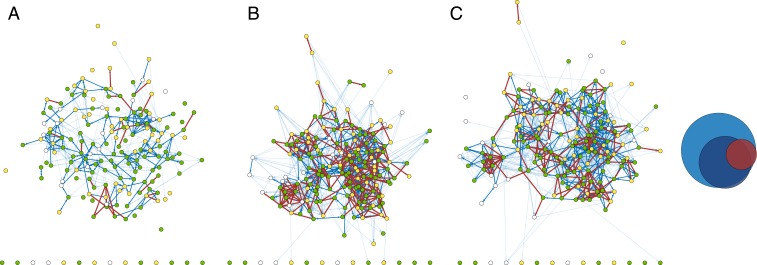
Significance: Understanding the factors that explain academic failure and success of university students is a core interest of educational researchers, teachers, and managers. We demonstrate how the dynamic social networks that informally evolve between students can affect their academic performance. We closely followed the emergence of multiple social networks within a cohort of 226 undergraduate university students. They were strangers to each other on their first day at university, but developed densely knit social networks through time. We show that functional studying relationships tended to evolve from informal friendship relations. In a critical examination period after one year, these networks proved to be crucial: Socially isolated students had significantly lower examination grades and were more likely to drop out of university.
Overview
The claims and statistics of this paper haven’t been checked yet.
Free: it reads the open-access text and checks the first 5 claims that cite a source we can check. Create a free account to check every claim.
Integrity signals
Registry
Cites
Statistics
Figures
Verification
Claims the paper makes
The claims and statistics of this paper haven’t been checked yet.
Free: it reads the open-access text and checks the first 5 claims that cite a source we can check. Create a free account to check every claim.
Claims other papers make about this one
Each is checked against this paper’s own text: does it say what the citing paper says it does?
The source backs part of the claim, not all of it — or backs it for a different population, condition or comparison.
In the citing paper
“The social networks of students have been argued to be an important factor in buffering stress and helping them to be more effective [5].”
From Students under lockdown: Comparisons of students’ social networks and mental health before and during the COVID-19 crisis in Switzerland (2020) · cites this paper as [5]
Experimental — accuracy not yet measuredThe source backs part of the claim, not all of it — or backs it for a different population, condition or comparison.
In the citing paper
“Friendship, interaction, social support, and studying with others have been argued to impact their well-being and academic success, but they often require meeting opportunities and informal settings to develop [5, 13].”
From Students under lockdown: Comparisons of students’ social networks and mental health before and during the COVID-19 crisis in Switzerland (2020) · cites this paper as [5]
Experimental — accuracy not yet measuredThe check wasn’t confident either way, so it gives no verdict — never disputed.
In the citing paper
“and concerns about their social networks [20, 21].”
From Psychological correlates of perceived loneliness in college students before and during the COVID-19 stay-at-home period: a longitudinal study (2023) · cites this paper as [21]
Experimental — accuracy not yet measured
Self-check
Percentages, sums and reported differences re-computed from the paper’s own numbers.
The self-check needs the paper’s full text.
Citations
Cites
Granovetter, M. S. (1973) · American Journal of Sociology · doi:10.1086/225469 · Cited by 40,491
Birds of a Feather: Homophily in Social Networks
McPherson, M., Smith-Lovin, L., & Cook, J. M. (2001) · Annual Review of Sociology · doi:10.1146/annurev.soc.27.1.415 · Cited by 18,567 · cited 1×
“To take into account that observations in the sample are not independent, but could be dependent through processes of homophily (27)—for example, high-achieving individuals choosing each other as study partners—or social influence (28)— individuals becoming more similar to their study partners—we additionally fit netw…”
(1990) · Choice Reviews Online · doi:10.5860/choice.27-6637 · Cited by 16,594
Gamst, F. C. (1991) · Anthropology of Work Review · doi:10.1525/awr.1991.12.3.19 · Cited by 7,932
Structural Holes and Good Ideas
Burt, R. S. (2004) · American Journal of Sociology · doi:10.1086/421787 · Cited by 5,642
Network Analysis in the Social Sciences
Borgatti, S. P., Mehra, A., Brass, D. J., & Labianca, G. (2009) · Science · doi:10.1126/science.1165821 · Cited by 4,254
Skill formation and the economics of investing in disadvantaged children
Heckman, J. J. (2006) · Science · doi:10.1126/science.1128898 · Cited by 3,559
Lazer, D., Pentland, A., Adamic, L., Aral, S., Barabási, A.-L., Brewer, D., Christakis, N., Contractor, N., Fowler, J., Gutmann, M., et al. (2009) · Science · doi:10.1126/science.1167742 · Cited by 3,365
A SOCIAL CAPITAL THEORY OF CAREER SUCCESS.
Seibert, S. E., Kraimer, M. L., & Liden, R. C. (2001) · Academy of Management Journal · doi:10.2307/3069452 · Cited by 2,414
Springer, L., Stanne, M. E., & Donovan, S. S. (1999) · Review of Educational Research · doi:10.3102/00346543069001021 · Cited by 1,943 · cited 1×
“Educational interventions therefore often focus on enforcing teamwork and collaboration within the classroom (32).”
Research works printed but not linked: 2
- Robins G 2015 Doing Social Network Research SAGE London
- Ripley RM Snijders TAB Boda Z Vörös A Preciado Lopez P 2018 Manual for SIENA Version 4.0 (Nuffield College and Department of Statistics, University of Oxford, Oxford), Accessed May 24, 2018
Cited by
Items 101–200 of 212
An analysis approach for blended learning based on weighted multiplex networks
Su, Z. M., Li, Y., Liu, Z., Sun, J., Yang, Z., & Liu, S. (2023) · Educational Technology Research and Development · doi:10.1007/s11423-023-10266-5 · Cited by 5
“Existing research has found that friendship ties informally evolve into studying relationships over the academic year and reported that studying together with others has a strong impact on students’ success at the examination (Stadtfeld et al., 2019).”
BackgroundWho will participate in online collaborative problem solving? A longitudinal network analysis
Wang, C., & Xiao, J. (2023) · Interactive Learning Environments · doi:10.1080/10494820.2023.2266523 · Cited by 7
“…have discovered that relationships between o ffl ine learners have a signi fi cant impact on academic performance in o ffl ine learning scenarios (Stadtfeld et al., 2019), with individuals at the periphery of a learner network having lower academic performance and being more likely to drop out…”
Blum, Y., Akhavan, S., Rogers, M. L., Astudillo‐García, C. I., Çinka, E., Yılmaz, F. K., Peper‐Nascimento, J., Streb, J., Chistopolskaya, K. A., Cohen, L. J., et al. (2024) · Journal of Affective Disorders · doi:10.1016/j.jad.2024.02.087 · Cited by 5
Configurations of collaborations based on learning orientations amongst medical students
Han, F., & Ellis, R. A. (2020) · Advances in Health Sciences Education · doi:10.1007/s10459-020-09999-2 · Cited by 6
Soledad en la Alta Capacidad Intelectual: Factores de Riesgo y Estrategias de Afrontamiento
Gómez-León, M. I. (2020) · Revista de Psicoterapia · doi:10.33898/rdp.v31i117.364 · Cited by 15
Pulgar, J., Ramírez, D., Umanzor, A., Candia, C., & Sánchez, I. (2022) · Physical Review Physics Education Research · doi:10.1103/physrevphyseducres.18.010146 · Cited by 57
“[59] Christoph Stadtfeld, András Vörös, Timon Elmer, Zsófia Boda, and Isabel J Raabe.”
BackgroundWong, T. A., Tan, K. T. L., Darmaraj, S. R., Loo, J. T. K., & Ng, A. H. H. (2024) · Higher Education Skills and Work-based Learning · doi:10.1108/heswbl-12-2023-0332 · Cited by 9
Self-regulated learning in STEM: non-academics matter
Azizi, M., & Dewsbury, B. M. (2025) · Journal of Microbiology and Biology Education · doi:10.1128/jmbe.00166-25 · Cited by 7
“Social-based academic factors captured students’ attribution of performance to peer influence and supportive environments (63, 64 ().”
Sakellariou, C. N. (2025) · Frontiers in Psychology · doi:10.3389/fpsyg.2024.1478320 · Cited by 10
Conformal Prediction for Network-Assisted Regression
Lunde, R., Levina, E., & Zhu, J. (2025) · Journal of the American Statistical Association · doi:10.1080/01621459.2025.2506198 · Cited by 35
Isralowitz, R., Yehudai, M., Sugawara, D., Masuyama, A., Porat, S.-L. R., Dagan, A., & Reznik, A. (2022) · Social Sciences · doi:10.3390/socsci11120561 · Cited by 7
Taher, T. M. J., & Ali, D. M. (2024) · Kufa Medical Journal · doi:10.36330/kmj.v20i1.13900 · Cited by 6
The unstable social networks of students: Where does dissimilarity drive tie dissolution?
Franken, R., Bekhuis, H., & Tolsma, J. (2024) · Sociological Forum · doi:10.1111/socf.13034 · Cited by 5
Differences in perceived social connection help explain SES-based gaps in well-being
Fang, W. M., Courtney, A. L., Jackson, M. O., & Zaki, J. (2025) · Social Networks · doi:10.1016/j.socnet.2025.03.004 · Cited by 5
deJonge, M. L., Sabiston, C. M., Hamza, C. A., & Darnell, S. C. (2025) · Psychology of sport and exercise · doi:10.1016/j.psychsport.2025.102846 · Cited by 9
Callimaci, A., Fortin, A., Lux, G., Caron, M., & Smaïli, N. (2023) · Accounting Education · doi:10.1080/09639284.2023.2232342 · Cited by 5
“Students ’ social networks have been identi fi ed as an important factor in bu ff ering stress and increasing academic success (Stadtfeld et al., 2019).”
Gaussian Mixture Models for Stochastic Block Models with Non-Vanishing Noise
Mathews, H., Mayya, V., Volfovsky, A., & Reeves, G. (2019) · IEEE International Workshop on Computational Advances in Multi-Sensor Adaptive Processing · doi:10.1109/camsap45676.2019.9022612 · Cited by 4
“Network data are of paramount importance across many modern scientific fields [1–4].”
BackgroundStrategic reciprocity improves academic performance in public elementary school childrenPreprint
Candia, C., Landaeta, V., Hidalgo, C. A., & Rodríguez‐Sickert, C. (2019) · arXiv (Cornell University) · doi:10.48550/arxiv.1909.11713 · Cited by 8
“Introduction In recent decades, several studies have shown a significant correlation between a student’s position in a social network and their academic performance [1, 2, 3, 4, 5, 6, 7, 8, 9].”
BackgroundTHE ROLE OF CAMPUS RECREATION IN FACILITATING SOCIOCULTURAL ADAPTATION
Önal, L., & Biricik, Y. S. (2025) · Beden Eğitimi ve Spor Bilimleri Dergisi · doi:10.61962/bsd.1615014 · Cited by 6
Cowen, D. R., Stark, T., Frey, V., & Flache, A. (2025) · Social Networks · doi:10.1016/j.socnet.2025.10.001 · Cited by 3
Networking a career: Individual adaptation in the network ecology of faculty
Kim, L., Smith, S., Dahlander, L., & McFarland, D. A. (2022) · Social Networks · doi:10.1016/j.socnet.2022.04.002 · Cited by 3
Treatment effect estimation with observational network data using machine learning
Emmenegger, C., Spohn, M.-L., Elmer, T., & Bühlmann, P. (2025) · Journal of Causal Inference · doi:10.1515/jci-2023-0082 · Cited by 14
“In the Swiss StudentLife Study, we investigated the EATE of study time on the grade point average of university examinations, accounting for spillover effects due to friendship relations.”
InfluentialSelf-citationMepham, K., Vörös, A., & Stadtfeld, C. (2025) · Network Science · doi:10.1017/nws.2025.2 · Cited by 4
“The friendship data have been analyzed in prior publications (Stadtfeld et al., 2019; Elmer and Stadtfeld, 2020; Raabe, Boda and Stadtfeld, 2019; Boda et al., 2020).”
Self-citationComplex Network Analysis of Mass Violation, Specifically Mass Killing
Erum, I., Malick, R. A. S., Ahmed, G., & Cherifi, H. (2022) · Entropy · doi:10.3390/e24081017 · Cited by 3
“, on US migration networks data [7], conflicting data [4,5], human life/interactions [20,21], railway express network [22], ecological networks [23,24], social media network data [25,26], and biological network data [27–29].”
BackgroundVinerean, M., Liljekvist, Y., & Bengü, E. (2023) · Open Education Studies · doi:10.1515/edu-2022-0184 · Cited by 3
“In addition, social inclusion contributes to students ’ identity formation, stress management, and improved academic performance ( Stadtfeld, Vörös, Elmer, Boda, & Raabe, 2019 ) .”
BackgroundLi, Q., Wang, M., Hao, X., Yang, C., Wang, J., Sun, Y., & Wu, H. Z. (2025) · Social Psychiatry and Psychiatric Epidemiology · doi:10.1007/s00127-025-02852-0 · Cited by 7
“For college students, PSS is an important pathway in relieving students’ negative emotions and promoting academic productivity [23].”
The Impact of Social Emotional Learning Skills on Creativity
Saygi, M. M., Yildirim, Y., & Taban, F. (2021) · Advances in educational technologies and instructional design book series · doi:10.4018/978-1-7998-8287-9.ch009 · Cited by 3
Word-of-Mouth in Social Media Advertising: 'Likes' on Facebook AdsPreprint
Agarwal, A., Lee, S., & Whinston, A. B. (2017) · SSRN Electronic Journal · doi:10.2139/ssrn.3065564 · Cited by 3
Academic and Social Integration
Stephen, J. S. (2024) · Springer texts in education · doi:10.1007/978-3-031-54439-2_6 · Cited by 2
Crossing the distance: University student newcomer socialization in online semesters—a case study
Berger, S., Stadler, M. J., Sailer, M., Eberle, J., Cooper-Thomas, H. D., & Stegmann, K. (2024) · Unterrichtswissenschaft · doi:10.1007/s42010-024-00206-4 · Cited by 2
“Recent research confirms the vital contribution of class attendance to academic success (Kassarnig et al. 2018) and highlights the importance of positive social ties in the K first academic year (Stadtfeld et al. 2019).”
Digital communication and tie formation amongst freshmen students during and after the pandemic
Gilsbach, J. M., & Stauder, J. (2025) · Social Networks · doi:10.1016/j.socnet.2024.12.002 · Cited by 4
Horita, Y., & Yamazaki, M. (2023) · Japanese Psychological Research · doi:10.1111/jpr.12451 · Cited by 6
Instagram's Impact on Rural Colombian English Education: A Fourth Industrial Revolution Perspective
Méndez, N. C. (2024) · Journal of Digital Learning and Education · doi:10.52562/jdle.v4i2.1056 · Cited by 4
A Special Issue Introduction: The Intersection of Metacognition and Intelligence
Son, L. K., & Hausman, H. (2024) · Journal of Intelligence · doi:10.3390/jintelligence12090084 · Cited by 2
“This is especially important given the complex social–affective landscape that influences learning in school across all ages (Bliuc et al. 2017; Rozek et al. 2019; Schonert-Reichl 2019; Stadtfeld et al. 2019).”
BackgroundKornienko, O., Burson, E., Young, D. L., Godfrey, E. B., & Garner, P. W. (2024) · Social Development · doi:10.1111/sode.12780 · Cited by 2
Pettinelli, P., Fernández‐Verdejo, R., Fredes, C., Parada, A., & Aguirre, C. A. (2024) · Revista Médica Clínica Las Condes · doi:10.1016/j.rmclc.2024.09.002 · Cited by 4
Luo, L., Tise, J. C., Patterson, M. S., Alge, D. L., & Hernandez, P. R. (2025) · Biomedical Engineering Education · doi:10.1007/s43683-025-00170-0 · Cited by 2
“However, other studies found that peer performance was associated only with performance in academic networks, but such associations were not found in friendship networks [9, 82].”
InfluentialBalancing Friendship and Exploration: Grouping Strategies and Their Impact on Classroom Dynamics
Pulgar, J., Órdenes-Escobar, M., Ramírez, D., & Candia, C. (2025) · The Journal of Experimental Education · doi:10.1080/00220973.2025.2495244 · Cited by 3
“Social interactions in the classroom have been the focus of a myriad of research efforts, spanning studies on peer relationships, collaborative learning, and social hierarchies (Commeford et al., 2022; Dou et al., 2016; Stadtfeld et al., 2019; Weber et al., 2020).”
Behnam, B., Paknazar, F., Mirmohammadkhani, M., Akhbari, M., Hosseini, S. M., & Sabahi, P. (2020) · International Journal of Learning Teaching and Educational Research · doi:10.26803/ijlter.19.3.3 · Cited by 2
“Academic failure of students has been explained with a variety of individual and socioeconomic problems (Ibabe, 2016; Stadtfeld et al., 2019).”
BackgroundKleszczewska-Albińska, A. (2021) · Postępy Psychiatrii i Neurologii · doi:10.5114/ppn.2021.108476 · Cited by 2
“It is argued that peer support helps to improve mental health mostly by increasing an individual’s effectiveness and lowering their level of stress [45].”
BackgroundRafkhani, T., Fanani, M., & Nuhriawangsa, A. M. P. (2021) · Jurnal Gizi Klinik Indonesia · doi:10.22146/ijcn.70661 · Cited by 9
“Di sisi lain, interaksi sosial yang kurang menyebabkan berkurangnya dukungan sosial dan berpotensi memengaruhi kesehatan mental pada siswa [41].”
BackgroundE-learning experiences of students in Pakistan during COVID-19: Barriers and perceptions
., N., & Wajahat, S. (2023) · E-Learning and Digital Media · doi:10.1177/20427530231217945 · Cited by 6
“Literature suggests that students ’ social networks play a crucial role in mitigating stress and assisting them to be more effective (Stadtfeld et al., 2019).”
BackgroundMatouš, P., Pollack, J., & Helm, J. (2022) · Social Networks · doi:10.1016/j.socnet.2022.01.005 · Cited by 3
Functional brain network architecture supporting the learning of social networks in humansPreprint
Tompson, S., Kahn, A. E., Falk, E. B., Vettel, J. M., & Bassett, D. S. (2019) · doi:10.31234/osf.io/r46gj · Cited by 2
“For example, integration into friendship networks in the first year of college predicts future success (Stadtfeld et al., 2019) and more diverse social networks in immigrants predict better psychological well-being and cultural adjustment (Repke and Benet-Martínez, 2018).”
The dynamics of U.S. college network formation on FacebookPreprint
Overgoor, J., State, B., & Adamic, L. A. (2020) · arXiv (Cornell University) · doi:10.48550/arxiv.2011.01967 · Cited by 2
“More recently, data for studies of network formation during college have generally come from one of three sources of data: in-person surveys [17, 45, 51, 54], email data [29, 30, 36], and friendship data from Facebook [27, 33–35, 53, 56].”
The Swiss Student Life Study: CodebookPreprint
Elmer, T., Mepham, K., Hoffman, M., Boda, Z., Raabe, I. J., Vörös, A., & Stadtfeld, C. (2022) · PsyArXiv (OSF Preprints) · doi:10.31234/osf.io/9abjk · Cited by 3
Self-citationThe Mason: Health Starts Here Prospective Cohort StudyPreprint
Cuellar, A. E., Adams, L. M., de Jonge, E., Espina, V. A., Espinoza, L., Fischer, S. F., Frankenfeld, C. L., Hines, D. A., Kornienko, O., Lawrence, H. Y., et al. (2020) · Research Square · doi:10.21203/rs.3.rs-115934/v1 · Cited by 2
“Moreover, this risk is disproportionately experienced by select racial and ethnic groups (30).”
BackgroundBolaños, L. D. C. (2020) · MOspace Institutional Repository (University of Missouri) · doi:10.32469/10355/83760 · Cited by 2
Students’ networks influence on academic performance: An exploratory study
Duarte, C., Pinheiro, F. L., & Naranjo-Zolotov, M. (2022) · Iberian Conference on Information Systems and Technologies (CISTI) · doi:10.23919/cisti54924.2022.9820019 · Cited by 1
Meier, N., Greenhalgh, T., Hughes, G., & Papoutsi, C. (2024) · Qualitative Health Research · doi:10.1177/10497323231225150 · Cited by 1
“…qualitative studies have shown that the number and strength of social relations within academia are a strong predictor of academic progression in general and academic publishing in particular (Blackford, 2018; Epstein & Elhalaby, 2023; Godechot, 2016; Jensen & Jetten, 2015; Stadtfeld et al., 2019).”
Elliott, J., & Minichiello, A. (2024) · ASEE Annual Conference & Exposition · doi:10.18260/1-2--47726 · Cited by 1
Similarities in mindset between adolescents’ friends and cooperation partners
Benneker, I. M. B., Lee, N. C., de Swart, F., & van Atteveldt, N. (2025) · Social Psychology of Education · doi:10.1007/s11218-025-10028-6 · Cited by 1
“This is in line with Stadtfeld et al. (2019) who demonstrated that newly formed friendships between older adolescents at the beginning of the academic year evolve into cooperation relationships during the academic year.”
Elliott, J., Christensen, D. E., Chasmar, J., & Scherf, K. (2025) · ASEE Annual Conference & Exposition · doi:10.18260/1-2--56967 · Cited by 1
Noori, K., & Bashardost, Z. (2026) · Journal of Social Sciences & Humanities · doi:10.62810/jssh.v3i1.187 · Cited by 1
Racial microaggression and anxiety in young adults: The moderating role of social support networks
Vitoroulis, I., Buchan-Pham, C., Feng, R. Y., Abu-Obseh, F., Andrews, N. C. Z., Guimond, F., Ryder, A. G., & Santo, J. B. (2026) · International Journal of Behavioral Development · doi:10.1177/01650254261416399 · Cited by 1
Padilla-Guevara, J., Irene-Mendoza, J. A., Goycochea-Rodrigo, L. K., Palomino-Ccasa, J., Llanos, J. J. M., & Cjuno, J. (2026) · Frontiers in Education · doi:10.3389/feduc.2026.1793974 · Cited by 1
Brown, M., Smith, R., Tipton, J. A., & Leitner, G. (2026) · Review of Educational Research · doi:10.3102/00346543261438444 · Cited by 1
Do personal relationships boost academic performance more for women than for men?
Dokuka, S., & Mikhaylova, O. R. (2023) · Journal of Social and Personal Relationships · doi:10.1177/02654075231205319 · Cited by 1
“Stadtfeld et al. (2019, p. 795) concluded that “ even seemingly non-instrumental social relations like positive interaction and friendship can be bene fi cial, as they naturally evolve into collaboration ties ” .”
BackgroundWork in Progress: Developing Disambiguation Methods for Large-Scale Educational Network Data
Weaver, A., & Elliott, J. (2024) · ASEE Zone IV Conference · doi:10.18260/1-2--44760 · Cited by 1
A study on the impact of COVID-19 on the mental health of undergraduate students
Vaidya, H., Agarwal, N., Kotipalli, S., Anand, A. A., & Vara Lakshmi, S. (2024) · Asian Journal of Management and Commerce · doi:10.22271/27084515.2024.v5.i1d.264 · Cited by 2
Alieva, D. (2024) · CSR, sustainability, ethics & governance · doi:10.1007/978-3-031-49353-9_20 · Cited by 1
The floating duck syndrome: biased social learning leads to effort–reward imbalances
Akçay, E., & Ohashi, R. (2024) · Evolutionary Human Sciences · doi:10.1017/ehs.2024.20 · Cited by 1
“Indeed, recent studies have started looking at social effects on academic success (Stadtfeld et al., 2019), although we are far from a detailed understanding for how students learn from each other and how this affects their decisions about study, work and extracurricular activities.”
Work In Progress: A Scoping Review of Social Network Analysis Methods in Engineering Education
Elliot, J., & Nielson, A. (2024) · ASEE Rocky Mountain Section Conference · doi:10.18260/1-2-1114-49420 · Cited by 1
Siek, M., & Lim, K. (2024) · International Conference on Cybernetics and Intelligent System (ICORIS) · doi:10.1109/icoris63540.2024.10903797 · Cited by 1
“Stadtfeld [16] supports the idea of intervention where students create spaces and develop positive relationships among students.”
Teaching the social psychology of interpersonal relationships in an online setting
Talbot, C., & Pownall, M. (2021) · Psychology Teaching Review · doi:10.53841/bpsptr.2021.27.2.41 · Cited by 1
Vörös, A., Boda, Z., Elmer, T., Hoffman, M., Mepham, K., Raabe, I. J., & Stadtfeld, C. (2022) · Social Networks · doi:10.1016/j.socnet.2022.01.012 · Cited by 1
Self-citationDas Ich und die Anderen – Sozialität und Wohlbefinden in studentischen Lebenswelten
Kunz, A. M., & Stanisavljević, M. (2022) · Springer eBooks · doi:10.1007/978-3-662-65344-9_5 · Cited by 1
Ali, N. A., Feroz, A. S., Akber, N., & Khoja, A. A. (2023) · Arab Gulf Journal of Scientific Research · doi:10.1108/agjsr-12-2022-0309 · Cited by 3
Crawford, B., Muhlert, N., MacDonald, G., & Lawrence, A. D. (2020) · bioRxiv (Cold Spring Harbor Laboratory) · doi:10.1101/2020.02.03.916999 · Cited by 2
“We deliberately chose to study a population of university students, because of the ecological relevance of joining new social groups.(1) Additionally, each participant imagined just one scenario.”
InfluentialMixing dynamics and group imbalance lead to degree inequality in face-to-face interaction.Preprint
Oliveira, M., Karimi, F., Zens, M., Schaible, J., Génois, M., & Strohmaier, M. (2021) · arXiv (Cornell University) · Cited by 1
Ability-Grouping and Relational Exclusion Within Schools in Chile
Ortega, L., Allende, C., & Valenzuela, J. P. (2024) · Springer eBooks · doi:10.1007/978-3-319-31816-5_4390-1 · Cited by 1
Perception of individual traits, age, and teaching modality drive social networks among studentsPreprint
Pulgar, J., Ramírez, D., & Candia, C. (2022) · SocArXiv (OSF Preprints) · doi:10.31235/osf.io/yh8qc · Cited by 2
Ruswa, N., & Nhase, Z. (2026) · Journal of Education and Learning Technology · doi:10.38159/jelt.20267410
On the fate of social networking sites of deceased academics in the Covid-19 era and beyond
da Silva, J. A. T. (2020) · Current Research in Behavioral Sciences · doi:10.1016/j.crbeha.2020.100007
Pivoting academic skills support online: a critical reflection on practice
Nolan, J., & Jamieson, H. (2021) · Journal of Learning Development in Higher Education · doi:10.47408/jldhe.vi22.729
“…and sense of belonging; universities need to consider how to create a sense of community and belonging when delivering teaching and support online (Stadtfeld et al., 2019; Elmer et al., 2020; Hodges et al., 2020; Nordmaan et al., 2020; Raaper and Brown, 2020; Lederer et al., 2021; Pownall et…”
BackgroundLoneliness and social interaction dynamics: An ambulatory assessment study in a student populationPreprint
Elmer, T., & Lodder, G. M. A. (2021) · PsyArXiv (OSF Preprints) · doi:10.31234/osf.io/4gq68
Self-citationHorita, Y., & Yamazaki, M. (2022) · doi:10.31234/osf.io/xu8k3
Implementing New Resources for STEM Education: 21st Century Skills After COVID
Guneri, N., Ozgel, Y., Yildirim, Y., & Taban, F. (2022) · Advances in educational technologies and instructional design book series · doi:10.4018/978-1-7998-7776-9.ch009
Phan, T. Q., Ding, D., Bhattacharya, P., & Airoldi, E. M. (2021) · Research Square · doi:10.21203/rs.3.rs-646237/v1
“While self-reported surveys can provide rich multi-relational information (6), they are often limited in time span, and are vulnerable to various sample-selection and response biases (11, 12).”
BackgroundTransformation of learning and teaching in rehabilitation sciences: A case study from South Africa
Khuabi, L. J., Bardien, F., de Beer, A., Louw, A., Koegelenberg, A., Baxter, A., Schmutz, A. M. S., Gaskin, A., Gerber, B., Joseph, C., et al. (2022) · Human functioning, technology and health · doi:10.4102/aosis.2022.bk357 · Cited by 2
The Role Of Informal Communication Networks In Academic Careers
Domunco, C. F. (2023) · European Proceedings of Educational Sciences · doi:10.15405/epes.23045.109
Social Capital development amongst college and university students in online and classroom education
Aun, W. T., Liang, K. T. T., Darmaraj, S. R., Khun, J. L. T., & Hong, A. N. H. (2022) · Annals of Computer Science and Information Systems · doi:10.15439/2022m9527 · Cited by 1
Liu, H., Liu, Z., Sun, D., & Liu, Y. (2023) · Soft Computing · doi:10.1007/s00500-023-08652-5
RetractedLandaeta, V., Candia, C., Pulgar, J., Fábrega, J., Varela, J. J., Yaikin, T., Monge, C., & Rodríguez‐Sickert, C. (2023) · doi:10.31235/osf.io/bvmj4
Casas, D. G., Barbé, A. D., García, E. M., & Gálvez-Nieto, J. L. (2023) · International Social Work · doi:10.1177/00208728231190183 · Cited by 1
“…in the face of stressful or traumatic events, since its predictive capacity in academic motivation has been evidenced (Camacho et al., 2021; Tinajero et al., 2020), and it has been considered as a determining dimension to reduce stress and to cope with academic demands (Stadtfeld et al., 2019).”
Prakaschandra, R., Meyer, R., & Bhagwan, R. (2023) · African Journal of Health Professions Education · doi:10.7196/ajhpe.2023.v15i4.830 · Cited by 1
Nunes, M. A., Vivacqua, C. A., de Barros, T. V. S., Siroky, A. N., & Costa, E. G. (2023) · STEAM-H: Science, Technology, Engineering, Agriculture, Mathematics & Health · doi:10.1007/978-3-031-41352-0_1
A Theoretical Review: The Role of Knowledge-Based Symmetry in Engineering Student Collaboration
Elliott, J. (2024) · ASEE Annual Conference & Exposition · doi:10.18260/1-2--42535
Closeness facilitating interaction among Japanese learners of English
Tu, S. P. (2024) · AILA Review · doi:10.1075/aila.24014.tu · Cited by 2
Network position and academic achievement in middle school
Horowitz, J. T., & Hamm, J. V. (2025) · Sociological Forum · doi:10.1111/socf.13044
“But while there is considerable evidence that many friendships evolve into academic resource sharing in young adulthood (Stadtfeld et al., 2019), there is some question of the extent of knowledge transfer around study skills and academic content in early adolescence.”
Motivation and attitude of BSEd-Science major students of Divine Word College of San Jose
Balmes, A. L. E., Valera, J. S., Galay-Limos, J. A., & Lazaro, N. J. (2025) · International Journal of Research Studies in Educational Technology · doi:10.5861/ijrset.2025.25007
Untangling the Link between Self-Efficacy and Loneliness: An Exploratory Study among Youth
Arora, P., & Singh, R. (2024) · International Journal of Reviews and Research in Social Sciences · doi:10.52711/2454-2687.2024.00042
Cambia, J. M., Wannasri, A., Yang, C., Lee, C., & Tsai, M. (2025) · Journal of Adolescence · doi:10.1002/jad.70014
Pulgar, J., Ruyt, P. D., Martínez-Salinas, F. J., Melo, C. C. E., Vargas, F., & Sánchez, I. (2025) · Teachers and Teaching · doi:10.1080/13540602.2025.2565798
“…in social network studies to characterise popular students (Pulgar et al., 2023; Sundstrom et al., 2022), working relationships (Grunspan et al., 2014; Putnik et al., 2016; Stadtfeld et al., 2019; Vignery & Laurier, 2020), the cohesiveness of the classroom (Brewe et al., 2012), among other goals.”
Social Networks in Early Adolescence: Introduction to the Special Issue
Kisfalusi, D., & Takács, K. (2025) · The Journal of Early Adolescence · doi:10.1177/02724316251347668 · Cited by 1
“…into the social networks of positive and supportive peer relationships in an educational context and belonging to peer groups with pro-achievement norms have been found to have a positive effect on educational success (Coleman, 1988; Ivaniushina & Alexandrov, 2017; Stadtfeld et al., 2018).”
Additional file 1 of Academic failures and co-location social networks in campus
Lu, S., Zhao, J., & Wang, H. (2022) · Figshare · doi:10.6084/m9.figshare.19226962
Criminal Investigative Failures: A Network Analysis
Rossmo, D. K., Bouchard, M., & Summers, L. (2025) · Justice Quarterly · doi:10.1080/07418825.2025.2594189 · Cited by 1
“…to demonstrate the failure of prevention efforts in reducing zoonotic infections (Conrady et al., 2024); and in education, to explain university student academic failure (Stadtfeld et al., 2019) and explore causal factor systems influencing school failure of at-risk youth (Bembich, 2020).”
Linking Adolescents’ Monitoring and Regulation Processes to Learning and Social Classroom NetworksPreprint
van Loon, M. H., Daum, M. M., & Elmer, T. (2025) · SSRN Electronic Journal · doi:10.2139/ssrn.5939721
Self-citationExploring Psychosocial Stress Among Hong Kong Medical Students During COVID-19: A Case-Control Study
Abdalla, A. M., Hassan, I., & Nour, M. O. (2025) · Interdisciplinary Research in Medical Sciences Specialty · doi:10.51847/9ahrp2wyd9
When the Classroom Disappeared: The Paradox of Assortativity in Co-Enrollment Networks
Lee, B., Bae, J., So, J., & Shin, E. K. (2026) · Social Constellations A World Perspective · doi:10.66630/sc.2026.0007
Metadata
- Authors
- Stadtfeld, C., Vörös, A., Elmer, T., Boda, Z., & Raabe, I. J.
- Affiliations
- ETH Zurich (CH)
- University of Zurich (CH)
- Corresponding author
- Stadtfeld, Christoph
- Venue
- Proceedings of the National Academy of Sciences
- Publisher
- National Academy of Sciences
- Published
- 2018-12-24
- Volume
- 116
- Issue
- 3
- Pages
- 792-797
- ISSN
- 0027-8424 (ISSN-L)
- 1091-6490
- PMC
- PMC6338824
- OpenAlex
- W2906675977
- Cited by
- 212
- References
- 42
- Citations by year
- 2026: 17 · 2025: 28 · 2024: 33 · 2023: 36 · 2022: 37 · 2021: 28 · 2020: 27 · 2019: 5
- FWCI
- 48.74
- Type
- journal article
- Language
- en
- Open access
- hybrid
- doi.org
- Licence
- Locations
- Proceedings of the National Academy of Sciences (publishedVersion, cc-by-nc-nd)
- Europe PMC (PubMed Central) (publishedVersion, cc-by-nc-nd)
- PubMed Central (publishedVersion, cc-by-nc-nd)
- PubMed (publishedVersion)
- Zurich Open Repository and Archive (University of Zurich) (acceptedVersion)
- RePEc: Research Papers in Economics (submittedVersion)
- University of Birmingham Research Portal (University of Birmingham) (submittedVersion)
- Research Explorer (The University of Manchester) (submittedVersion)
- Repository for Publications and Research Data (ETH Zurich) (submittedVersion, cc-by-nc-nd)
- Zurich Open Repository and Archive (University of Zurich) (submittedVersion)
- ETH Zürich Research Collection
- Funders
- Swiss National Science Foundation (10001A_169965)
- Topics
- Social Sciences › Education › Educational Outcomes and Influences
- Social Sciences › Education › Higher Education Research Studies
- Physical Sciences › Physics and Astronomy › Statistical and Nonlinear Physics › Complex Network Analysis Techniques
- Keywords
- social networks, academic performance, network integration, friendship formation, study groups, social ties, dynamic networks, undergraduate engineering students, university students, socioeconomic background, perceived intelligence
- MeSH terms
- Academic Failure, Academic Success, Humans, Students, Switzerland, Universities, Social Networking
About these checks
Registry, retraction, Cites and statistics results are computed, not judged, with one exception: a printed reference that no index lists is read once by a model before it counts as a citation error. Claims are extracted by a model and kept only when their quote appears verbatim in the text; each cited source is then checked, with a model’s help, for whether it says what the claim relies on. Those verdicts can be wrong — read the claim’s quote and the cited source before relying on one.
Statistics and arithmetic are recomputed, not judged.
Confidence bands are shown only for fields calibrated on our annotated test set. None is calibrated yet, so no band is shown.
What counts as a claim ›How we measure confidence ›How we check this ›
Are you an author, or do you see a problem with this page? Request a review
Data sources
Bibliographic data: Semantic Scholar, OpenAlex, Crossref.
Contains information from the Semantic Scholar Academic Graph Datasets, made available under the ODC Attribution License (ODC-BY 1.0).
Semantic Scholar’s data is described in: Kinney, R., et al. (2023). The Semantic Scholar Open Data Platform. arXiv:2301.10140.
