

Interpreting contemporary trends in atmospheric methane
Open accessThe DOI matches its Crossref record; 129 of the 129 references it cites were found in a registry or an index.
Abstract
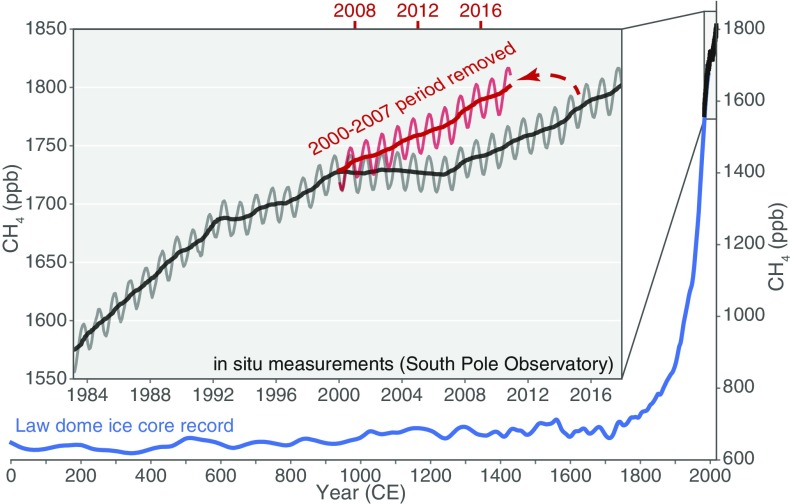
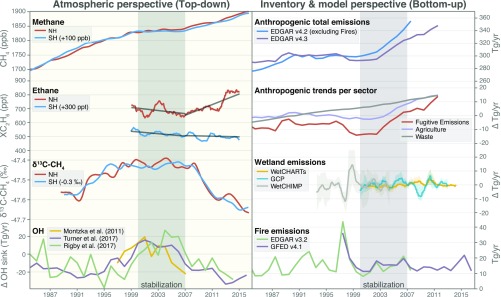
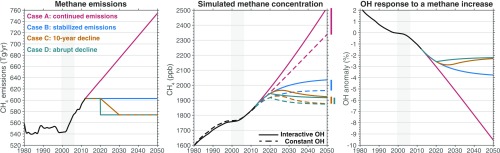
Atmospheric methane plays a major role in controlling climate, yet contemporary methane trends (1982–2017) have defied explanation with numerous, often conflicting, hypotheses proposed in the literature. Specifically, atmospheric observations of methane from 1982 to 2017 have exhibited periods of both increasing concentrations (from 1982 to 2000 and from 2007 to 2017) and stabilization (from 2000 to 2007). Explanations for the increases and stabilization have invoked changes in tropical wetlands, livestock, fossil fuels, biomass burning, and the methane sink. Contradictions in these hypotheses arise because our current observational network cannot unambiguously link recent methane variations to specific sources. This raises some fundamental questions: ( i ) What do we know about sources, sinks, and underlying processes driving observed trends in atmospheric methane? ( ii ) How will global methane respond to changes in anthropogenic emissions? And ( iii ), What future observations could help resolve changes in the methane budget? To address these questions, we discuss potential drivers of atmospheric methane abundances over the last four decades in light of various observational constraints as well as process-based knowledge. While uncertainties in the methane budget exist, they should not detract from the potential of methane emissions mitigation strategies. We show that net-zero cost emission reductions can lead to a declining atmospheric burden, but can take three decades to stabilize. Moving forward, we make recommendations for observations to better constrain contemporary trends in atmospheric methane and to provide mitigation support.
Overview
The claims and statistics of this paper haven’t been checked yet.
Free: it reads the open-access text and checks the first 5 claims that cite a source we can check. Create a free account to check every claim.
Integrity signals
Registry
Cites
Statistics
Figures
Verification
Claims the paper makes
The claims and statistics of this paper haven’t been checked yet.
Free: it reads the open-access text and checks the first 5 claims that cite a source we can check. Create a free account to check every claim.
Claims other papers make about this one
Each is checked against this paper’s own text: does it say what the citing paper says it does?
In the citing paper
“If emissions of CH4 from anthropogenic and natural sources continue to rise as they have since 2007, this could decrease global mean OH by up to 10% by 2050 [147], increasing the atmospheric lifetime and concentrations of CH4 in a positive feedback.”
From Changes in tropospheric air quality related to the protection of stratospheric ozone in a changing climate (2023) · cites this paper as [147]
Self-check
Percentages, sums and reported differences re-computed from the paper’s own numbers.
The self-check needs the paper’s full text.
Citations
Cites
Thring, M. W. (1977) · Electronics and Power · doi:10.1049/ep.1977.0180 · Cited by 7,338
Carbon and hydrogen isotope systematics of bacterial formation and oxidation of methane
Whiticar, M. J. (1999) · Chemical Geology · doi:10.1016/s0009-2541(99)00092-3 · Cited by 3,146
(2010) · doi:10.5194/acp-10-11707-2010 · Cited by 2,859
Three decades of global methane sources and sinks
Kirschke, S., Bousquet, P., Ciais, P., Saunois, M., Canadell, J. G., Dlugokencky, E. J., Bergamaschi, P., Bergmann, D., Blake, D. R., Bruhwiler, L., et al. (2013) · Nature Geoscience · doi:10.1038/ngeo1955 · Cited by 2,247
Simultaneously Mitigating Near-Term Climate Change and Improving Human Health and Food Security
Shindell, D., Kuylenstierna, J. C. I., Vignati, E., van Dingenen, R., Amann, M., Klimont, Z., Anenberg, S. C., Muller, N., Janssens-Maenhout, G., Raes, F., et al. (2012) · Science · doi:10.1126/science.1210026 · Cited by 1,382
The Total Carbon Column Observing Network
Wunch, D., Toon, G. C., Blavier, J.-F. L., Washenfelder, R. A., Notholt, J., Connor, B. J., Griffith, D. W. T., Sherlock, V., & Wennberg, P. O. (2011) · Philosophical Transactions of the Royal Society A: Mathematical, Physical and Engineering Sciences · doi:10.1098/rsta.2010.0240 · Cited by 1,309
Assessment of methane emissions from the U.S. oil and gas supply chain
Alvarez, R. A., Zavala-Araiza, D., Lyon, D. R., Allen, D. T., Barkley, Z. R., Brandt, A. R., Davis, K. J., Herndon, S. C., Jacob, D. J., Karion, A., et al. (2018) · Science · doi:10.1126/science.aar7204 · Cited by 1,187
Self-citationThe global methane budget 2000–2012
Saunois, M., Bousquet, P., Poulter, B., Peregon, A., Ciais, P., Canadell, J. G., Dlugokencky, E. J., Etiope, G., Bastviken, D., Houweling, S., et al. (2016) · Earth System Science Data · doi:10.5194/essd-8-697-2016 · Cited by 1,060
Self-citationContribution of anthropogenic and natural sources to atmospheric methane variability
Bousquet, P., Ciais, P., Miller, J. B., Dlugokencky, E. J., Hauglustaine, D. A., Prigent, C., Van der Werf, G. R., Peylin, P., Brunke, E.-G., Carouge, C., et al. (2006) · Nature · doi:10.1038/nature05132 · Cited by 996
Three‐dimensional model synthesis of the global methane cycle
Fung, I., John, J., Lerner, J., Matthews, E., Prather, M., Steele, L. P., & Fraser, P. J. (1991) · Journal of Geophysical Research: Atmospheres · doi:10.1029/91jd01247 · Cited by 958
Research works printed but not linked: 1
- IPCC 2013 Climate change 2013: The physical science basis. Contribution of Working Group I to the Fifth Assessment Report of the Intergovernmental Panel on Climate Change, (IPCC, Cambridge Univ Press, New York), Technical Report
Cited by
Items 101–200 of 483
Vanselow, S., Schneising, O., Buchwitz, M., Reuter, M., Bovensmann, H., Boesch, H., & Burrows, J. P. (2024) · Atmospheric chemistry and physics · doi:10.5194/acp-24-10441-2024 · Cited by 42
“The reasons for this unique behavior are still highly debated (Nisbet et al., 2016; Turner et al., 2019).”
BackgroundThompson, R. L., Montzka, S. A., Vollmer, M. K., Arduini, J., Crotwell, M., Krummel, P. B., Lunder, C., Mühle, J., O’Doherty, S., Prinn, R. G., et al. (2024) · Atmospheric chemistry and physics · doi:10.5194/acp-24-1415-2024 · Cited by 43
East, J. D., Jacob, D. J., Jervis, D., Balasus, N., Estrada, L., Hancock, S. E., Sulprizio, M. P., Thomas, J. M., Wang, X., Chen, Z., et al. (2025) · Nature Communications · doi:10.1038/s41467-025-67122-8 · Cited by 40
Kulawik, S. S., Worden, J. R., Payne, V. H., Fu, D., Wofsy, S. C., McKain, K., Sweeney, C., Daube, B. C., Lipton, A. E., Polonsky, I. N., et al. (2021) · Atmospheric measurement techniques · doi:10.5194/amt-14-335-2021 · Cited by 39
Fettig, C. J., Egan, J. M., Delb, H., Hilszczański, J., Kautz, M., Munson, A. S., Nowak, J. T., & Negrón, J. F. (2021) · Elsevier eBooks · doi:10.1016/b978-0-12-822145-7.00006-4 · Cited by 39
Revisiting the Global Methane Cycle Through Expert Opinion
Rosentreter, J. A., Alcott, L., Maavara, T., Sun, X., Zhou, Y., Planavsky, N. J., & Raymond, P. A. (2024) · Earth s Future · doi:10.1029/2023ef004234 · Cited by 41
“…methane emissions to anthropogenic or natural sources is increasingly challenging due to the impact of human activities on “natural habitats” but of great importance given that current observational networks cannot link recent methane variations to specific sources (Turner et al., 2019).”
BackgroundConil, S., Helle, J., Langrene, L., Laurent, O., Delmotte, M., & Ramonet, M. (2019) · Atmospheric measurement techniques · doi:10.5194/amt-12-6361-2019 · Cited by 40
Lang, R., Goldberg, S. D., Blagodatsky, S., Piepho, H., Hoyt, A. M., Harrison, R. D., Xu, J., & Cadisch, G. (2020) · Soil Biology and Biochemistry · doi:10.1016/j.soilbio.2020.107796 · Cited by 38
Climate and Tropospheric Oxidizing Capacity
Fiore, A. M., Mickley, L. J., Zhu, Q., & Baublitz, C. B. (2024) · Annual Review of Earth and Planetary Sciences · doi:10.1146/annurev-earth-032320-090307 · Cited by 41
Analysis of microbial methane oxidation capacity of landfill soil cover using quorum sensing
Zhang, M. Z., Chiu, C. F., & Wang, Y. (2025) · Environmental Research · doi:10.1016/j.envres.2025.120781 · Cited by 37
Raiten, D. J., Allen, L. H., Slavin, J. L., Mitloehner, F. M., Thoma, G. J., Haggerty, P. A., & Finley, J. W. (2020) · Current Developments in Nutrition · doi:10.1093/cdn/nzaa087 · Cited by 37
“A recent National Academy of Sciences publication on the global CH4 budget put much focus on CH4 from ASFs (37).”
BackgroundLelandais, L., Xueref-Rémy, I., Riandet, A., Blanc, P.-É., Armengaud, A., Oppo, S., Yohia, C., Ramonet, M., & Delmotte, M. (2022) · Atmospheric Environment · doi:10.1016/j.atmosenv.2022.119020 · Cited by 36
Defratyka, S., Paris, J.-D., Yver-Kwok, C., Loeb, D., France, J. L., Helmore, J., Yarrow, N., Gros, V., & Bousquet, P. (2021) · Atmospheric measurement techniques · doi:10.5194/amt-14-5049-2021 · Cited by 35
Understanding nighttime methane signals at the Amazon Tall Tower Observatory (ATTO)
Botía, S., Gerbig, C., Marshall, J., Lavrič, J. V., Walter, D., Pöhlker, C., Holanda, B. A., Fisch, G., de Araújo, A. C., Sá, M., et al. (2020) · Atmospheric chemistry and physics · doi:10.5194/acp-20-6583-2020 · Cited by 34
Wang, F., Maksyutov, S. S., Janardanan, R., Tsuruta, A., Ito, A., Morino, I., Yoshida, Y., Tohjima, Y., Kaiser, J. W., Janssens‐Maenhout, G., et al. (2020) · Environmental Research Letters · doi:10.1088/1748-9326/abd352 · Cited by 34
Nitrogen and Phosphorus Control Soil Methane Uptake in Tropical Montane Forests
Martinson, G. O., Müller, A. K., Matson, A. L., Corre, M. D., & Veldkamp, E. (2021) · Journal of Geophysical Research Biogeosciences · doi:10.1029/2020jg005970 · Cited by 34
Surface plasmon resonance induced methane gas sensor in hollow core anti-resonant fiber
Li, Y., Chen, H., Chen, Q., Li, H., & Gao, Z. (2023) · Optical Fiber Technology · doi:10.1016/j.yofte.2023.103293 · Cited by 34
Hydrogen Oxidation Influences Glycogen Accumulation in a Verrucomicrobial Methanotroph
Carere, C. R., McDonald, B., Peach, H. A., Greening, C., Gapes, D. J., Collet, C., & Stott, M. B. (2019) · Frontiers in Microbiology · doi:10.3389/fmicb.2019.01873 · Cited by 34
Singh, U., Algren, M., Schoeneberger, C., Lavallais, C. M., O’Connell, M. G., Oke, D., Liang, C., Das, S., Salas, S. D., & Dunn, J. B. (2022) · iScience · doi:10.1016/j.isci.2022.105661 · Cited by 32
Feron, S. C., Malhotra, A., Bansal, S., Fluet‐Chouinard, E., McNicol, G., Knox, S., Delwiche, K., Cordero, R. R., Ouyang, Z., Zhang, Z., et al. (2024) · Global Change Biology · doi:10.1111/gcb.17131 · Cited by 32
Meteorological Drivers of Permian Basin Methane Anomalies Derived from TROPOMI
Crosman, E. T. (2021) · Remote Sensing · doi:10.3390/rs13050896 · Cited by 31
Douglas, P., Stratigopoulos, E., Park, S., & Phan, D. (2021) · Biogeosciences · doi:10.5194/bg-18-3505-2021 · Cited by 31
“…of freshwater CH4 emissions, changes in the strength of this source through time, and the relative importance of wetland versus inland water CH4 emissions all remain highly uncertain (Pison et al., 2013; Schaefer et al., 2016; Ganesan et al., 2018; Saunois et al., 2019; Turner et al., 2019).”
BackgroundInfluentialEnhanced CH4 emissions from global wildfires likely due to undetected small fires
Zhao, J., Ciais, P., Chevallier, F., Canadell, J. G., van der Velde, I. R., Chuvieco, E., Chen, Y., Zhang, Q., He, K., & Zheng, B. (2025) · Nature Communications · doi:10.1038/s41467-025-56218-w · Cited by 30
“The ongoing debate regarding OH variation 46 and the challenges in simulating its nonlinear chemistry in global models emphasize the need for further work to re fi ne OH fi eld estimates.”
Scafutto, R. D. M., van der Werff, H. M. A., Bakker, W. H., van der Meer, F. D., & Filho, C. R. D. S. (2020) · International Journal of Applied Earth Observation and Geoinformation · doi:10.1016/j.jag.2020.102233 · Cited by 30
“Observations show that CH4 concentration in the atmosphere has been rising since 2007 (Saunois et al., 2016; Turner et al., 2019).”
BackgroundSpatiotemporal Geostatistical Analysis and Global Mapping of CH4 Columns from GOSAT Observations
Li, L., Lei, L., Song, H., Zeng, Z., & He, Z. (2022) · Remote Sensing · doi:10.3390/rs14030654 · Cited by 30
Aerobic and anaerobic methane oxidation in a seasonally anoxic basin
Steinsdóttir, H. G. R., Schauberger, C., Mhatre, S., Thamdrup, B., & Bristow, L. A. (2022) · Limnology and Oceanography · doi:10.1002/lno.12074 · Cited by 30
Perspective on Sorption Enhanced Bifunctional Catalysts to Produce Hydrocarbons
Jo, S. B., Cruz, L., Shah, S., Wasantwisut, S., Phan, A., & Gilliard‐AbdulAziz, K. L. (2022) · ACS Catalysis · doi:10.1021/acscatal.2c01646 · Cited by 29
Zimmerle, D. J., Duggan, G. P., Vaughn, T., Bell, C., Lute, C. D., Bennett, K. E., Kimura, Y., Cardoso‐Saldaña, F. J., & Allen, D. T. (2022) · The Science of The Total Environment · doi:10.1016/j.scitotenv.2022.153653 · Cited by 29
“(Turner et al., 2019; Zhang et al., 2021; Milkov et al., 2020).”
Shah, A., Laurent, O., Lienhardt, L., Broquet, G., Martinez, R. A. R., Allegrini, E., & Ciais, P. (2023) · Atmospheric measurement techniques · doi:10.5194/amt-16-3391-2023 · Cited by 28
An observation-based, reduced-form model for oxidation in the remote marine troposphere
Baublitz, C. B., Fiore, A. M., Ludwig, S., Nicely, J. M., Wolfe, G. M., Murray, L. T., Commane, R., Prather, M. J., Anderson, D. C., Correa, G. J. P., et al. (2023) · Proceedings of the National Academy of Sciences · doi:10.1073/pnas.2209735120 · Cited by 27
Space-based observations of tropospheric ethane map emissions from fossil fuel extraction
Brewer, J. F., Millet, D. B., Wells, K. C., Payne, V. H., Kulawik, S. S., Vigouroux, C., Cady‐Pereira, K., Pernak, R., & Zhou, M. (2024) · Nature Communications · doi:10.1038/s41467-024-52247-z · Cited by 30
The Role of Anthropogenic Activities, Energy Demand, and Global Climate Change
Priyadarshini, L. A. S., Kaushik, V., & Kataria, R. (2025) · Advances in geographical and environmental sciences · doi:10.1007/978-981-96-0535-4_2 · Cited by 27
Anderson, D. C., Lindsay, A., DeCarlo, P. F., & Wood, E. C. (2021) · Environmental Science & Technology · doi:10.1021/acs.est.1c00294 · Cited by 27
Riddick, S. N., Cheptonui, F., Yuan, K., Mbua, M., Day, R. E., Vaughn, T., Duggan, A., Bennett, K. E., & Zimmerle, D. J. (2022) · Sensors · doi:10.3390/s22197410 · Cited by 26
“This increase in mixing ratio is largely attributed to increased anthropogenic emissions [3].”
BackgroundHu, W. X., Qin, K., Lu, F., Ding, L., & Cohen, J. B. (2024) · International Journal of Coal Science & Technology · doi:10.1007/s40789-024-00700-1 · Cited by 26
Potential of Clumped Isotopes in Constraining the Global Atmospheric Methane Budget
Chung, E., & Arnold, T. (2021) · Global Biogeochemical Cycles · doi:10.1029/2020gb006883 · Cited by 25
“therefore raising the incentive for this measurement effort (Ganesan et al., 2019; Haghnegahdar et al., 2017; Turner et al., 2019; Whitehill et al., 2017).”
BackgroundThe Biogeochemical Methane Cycle
Whiticar, M. J. (2020) · Springer eBooks · doi:10.1007/978-3-319-54529-5_5-1 · Cited by 26
Chua, G., Naïk, V., & Horowitz, L. W. (2023) · Atmospheric chemistry and physics · doi:10.5194/acp-23-4955-2023 · Cited by 24
Thanwerdas, J., Saunois, M., Berchet, A., Pison, I., Hauglustaine, D. A., Ramonet, M., Crévoisier, C., Baier, B. C., Sweeney, C., & Bousquet, P. (2019) · doi:10.5194/acp-2019-925 · Cited by 24
Ai, X., Hu, C., Yang, Y., Zhang, L., Liu, H., Zhang, J., Chen, X., Bai, G., & Xiao, W. (2023) · Journal of Environmental Sciences · doi:10.1016/j.jes.2023.03.010 · Cited by 24
Lundberg, D. J., Kim, J. H., Tu, Y., Ritt, C. L., & Strano, M. S. (2024) · Nature Catalysis · doi:10.1038/s41929-024-01251-z · Cited by 23
“https://doi.org/10.1038/s41929-024-01251-z the activity of AOX (Supplementary Note 8).”
InfluentialBižić, M., Grossart, H., & Ionescu, D. (2020) · Wiley eBooks · doi:10.1002/9780470015902.a0028892 · Cited by 23
Current potential of CH 4 emission estimates using TROPOMI in the Middle East
Liu, M., Ronald van der, A., van Weele, M., Bryan, L., Eskes, H. J., Veefkind, P. J., Liu, Y., Lin, X., de Laat, J., & Ding, J. (2024) · Atmospheric measurement techniques · doi:10.5194/amt-17-5261-2024 · Cited by 22
“Methane (CH 4 ) is the second most important greenhouse gas of which the abundance kept increasing in the last decades (Turner et al., 2019; Saunois et al., 2020; Eyring et al., 2021), with a short-term stable concentration level between the years 2000 and 2006 (Dlugokencky et al., 2009; Rigby et…”
BackgroundRobison, A. L., Wollheim, W. M., Perryman, C. R., Cotter, A. R., Mackay, J. E., Varner, R. K., Clarizia, P. E., & Ernakovich, J. G. (2022) · Frontiers in Environmental Science · doi:10.3389/fenvs.2021.791305 · Cited by 23
“There remains uncertainty in how much aquatic CH 4 emissions are contributing to variation in atmospheric δ 13 C-CH 4 values (Turner et al., 2019), thus expanding measurement of aquatic CH 4 isotopes remains a valuable endeavor.”
Han, T., Xie, C., Liu, Y., Yang, Y., Zhang, Y., Huang, Y., Gao, X., Zhang, X., Bao, F., & Li, S. (2024) · Atmospheric measurement techniques · doi:10.5194/amt-17-677-2024 · Cited by 22
Increased methane emissions from oil and gas following the Soviet Union’s collapse
He, T., Boyd, R., Varon, D. J., & Turner, A. J. (2024) · Proceedings of the National Academy of Sciences · doi:10.1073/pnas.2314600121 · Cited by 22
Self-citationTan, Z., Yao, H., Melack, J. M., Grossart, H., Jansen, J., Selvam, B. P., Sargsyan, K., & Leung, L.-Y. R. (2024) · Journal of Advances in Modeling Earth Systems · doi:10.1029/2024ms004275 · Cited by 22
“However, unlike the upward trend of atmospheric CO 2 , atmospheric CH 4 levels increased little in the 1990s and early 2000s but have resumed growing since 2007 (Bousquet et al., 2006; Dlugokencky et al., 2003, 2009; Nisbet et al., 2014; Turner et al., 2019).”
Level0 to Level1B processor for MethaneAIR
Conway, E. K., Souri, A. H., Benmergui, J., Sun, K., Liu, X., Staebell, C., Miller, C. C., Franklin, J. E., Samra, J. E., Wilzewski, J., et al. (2024) · Atmospheric measurement techniques · doi:10.5194/amt-17-1347-2024 · Cited by 24
Hu, Y., Yue, X., Tian, C., Zhou, H., Fu, W., Zhao, X. F., Zhao, Y., & Chen, Y. (2023) · Frontiers in Environmental Science · doi:10.3389/fenvs.2023.1275742 · Cited by 21
Jiang, L., Chu, Y., Zhang, X., Wang, J., He, X., Liu, C., Chen, T., & He, R. (2022) · Environmental Research · doi:10.1016/j.envres.2022.114102 · Cited by 20
Rennick, C., Arnold, T., Safi, E., Drinkwater, A., Dylag, C., Webber, E. M., Pearce, R., Worton, D. R., Bausi, F., & Lowry, D. C. (2021) · Analytical Chemistry · doi:10.1021/acs.analchem.1c01103 · Cited by 20
Gnanamoorthy, P., Chakraborty, S., Nagarajan, R., Ramasubramanian, R., Selvam, V., Burman, P. K. D., Sarathy, P. P., Zeeshan, M., Song, Q., & Zhang, Y. (2021) · Estuaries and Coasts · doi:10.1007/s12237-021-00988-1 · Cited by 21
“Methane is emitted from various sources, including wetlands, and during anthropogenic activities such as agriculture, power production, and urban waste disposal (Saunois et al. 2017; Turner et al. 2019; Rosentreter et al. 2021).”
BackgroundQin, X., Li, Y., Wan, Y., Fan, M., Liao, Y., Li, Y., Wang, B., Gao, Q., Wu, H., & Chen, X. (2020) · Agriculture Ecosystems & Environment · doi:10.1016/j.agee.2020.106930 · Cited by 19
Underestimated Dry Season Methane Emissions from Wetlands in the Pantanal
Li, M., Kort, E. A., Bloom, A. A., Wu, D., Plant, G., Gerlein‐Safdi, C., & Pu, T. (2024) · Environmental Science & Technology · doi:10.1021/acs.est.3c09250 · Cited by 21
Self-citationJin, Z., He, J., & Wang, W. (2024) · Remote Sensing · doi:10.3390/rs16142525 · Cited by 19
Microbial Community Structures and Methanogenic Functions in Wetland Peat Soils
Prasitwuttisak, W., Hoshiko, Y., Maeda, T., Haraguchi, A., & Yanagawa, K. (2022) · Microbes and Environments · doi:10.1264/jsme2.me22004 · Cited by 19
“Increases in atmospheric methane occurred between 1982 and 2000 (Turner et al. , 2019).”
Zhang, G., Cao, J., Deng, Y., Lai, H., Jiang, X., Fang, Y., Kuang, Z., Yang, S., Liang, Q., Fu, P., et al. (2023) · Marine and Petroleum Geology · doi:10.1016/j.marpetgeo.2023.106200 · Cited by 18
Xiao, W., Xia, Y., Wei, S., Chen, Y., & Yang, S. (2025) · Nanomaterials · doi:10.3390/nano15030208 · Cited by 18
Effect of elevated CO2 on plant growth, active constituents, and production
Kaur, H., Kumar, A., Choudhary, A., Sharma, S., Choudhary, D. R., & Mehta, S. (2023) · Elsevier eBooks · doi:10.1016/b978-0-323-99978-6.00016-9 · Cited by 18
Isotope Effects and the Atmosphere
Carlstad, J. M., & Boering, K. A. (2023) · Annual Review of Physical Chemistry · doi:10.1146/annurev-physchem-061020-053429 · Cited by 18
Zonal variability of methane trends derived from satellite data
Hachmeister, J., Schneising, O., Buchwitz, M., Burrows, J. P., Notholt, J., & Buschmann, M. (2024) · Atmospheric chemistry and physics · doi:10.5194/acp-24-577-2024 · Cited by 17
“In the sixth section we investigate CAMS/INV fluxes to help with the interpretation of our previous results.”
Controlling Factors of Methane in Tropical Lakes of Different Depths
Mendoza‐Pascual, M. U., Itoh, M., Aguilar, J. I., Padilla, K. S. A. R., Papa, R. D. S., & Okuda, N. (2021) · Journal of Geophysical Research Biogeosciences · doi:10.1029/2020jg005828 · Cited by 17
“Tropical lakes may affect the global CH4 budget (Turner et al., 2019) through the production of CH4 in anoxic deep waters and sediments due to high temperatures and strong thermal stratification throughout the year (Bastviken, 2010; Bastviken, Cole, Pace, & Tranvik, 2004; Pasche et al.”
BackgroundOrtega, I., Hannigan, J. W., Buchholz, R. R., & Pfister, G. G. (2021) · Atmospheric Environment · doi:10.1016/j.atmosenv.2021.118663 · Cited by 19
Johannisson, J., & Hiete, M. (2020) · C – Journal of Carbon Research · doi:10.3390/c6020024 · Cited by 17
“The high methane concentrations are mainly caused by anthropogenic emissions (354 ± 45 Tg CH4 year−1 [3]) such as cattle breeding, rice cultivation, extraction of fossil raw materials and biodegradable waste management [3], whereas natural emissions (202 ± 35 Tg CH4 year−1 [3]) remain unchanged [9,10].”
BackgroundGoverning atmospheric oxidation capacity is the key to synergistic air quality and climate gains
Tan, Z., Ma, X., Lu, K. D., Li, X., Zhu, Q., Röhrer, F., Novelli, A., Fuchs, H., Wahner, A., Whalley, L., et al. (2026) · One Earth · doi:10.1016/j.oneear.2025.101569 · Cited by 16
Mahalakshmi, D. V., Pathakoti, M., Asuri, K. L., Peethani, S., Shaik, I., Sundara, R. K., Sagar, V. K., Pushpanathan, R., Tiwari, Y. K., & Chauhan, P. (2024) · Atmospheric chemistry and physics · doi:10.5194/acp-24-12843-2024 · Cited by 16
Shang, Z., Wu, H., Wang, G., Cui, R., Li, B., Gong, T., Guo, G., Qiu, X., Li, C., & Dong, L. (2025) · Photoacoustics · doi:10.1016/j.pacs.2025.100691 · Cited by 16
“Methane (CH 4 ) is a transparent, odorless greenhouse gas with a significant thermal retention ability, being 100 times stronger than carbon dioxide (CO 2 ) over 25 years [1].”
Shaalan, N. M., & Hamad, D. (2025) · Sensors and Actuators B Chemical · doi:10.1016/j.snb.2025.137865 · Cited by 16
Sun, Y., Zhang, Q., Li, K., Huo, Y., & Zhang, Y. (2022) · The Science of The Total Environment · doi:10.1016/j.scitotenv.2022.157282 · Cited by 16
Methanotrophs dominate methanogens and act as a methane sink in a subterranean karst cave
Cheng, X., Zeng, Z., Liu, X., Li, L., Wang, H., Zhao, R., Bodelier, P. L. E., Wang, W., Wang, Y., & Tuovinen, O. H. (2023) · The Science of The Total Environment · doi:10.1016/j.scitotenv.2023.164562 · Cited by 16
Anderson, D. C., Duncan, B. N., Liu, J., Nicely, J. M., Strode, S. A., Follette‐Cook, M. B., Souri, A. H., Ziemke, J. R., Abad, G. G., & Ayazpour, Z. (2024) · Geophysical Research Letters · doi:10.1029/2024gl108531 · Cited by 16
“Methane has increased globally over the study period (Turner et al., 2019), however, suggesting an offsetting Because of its short lifetime, long‐range transport of HCHO is unlikely (Vigouroux et al., 2009), although a reduction of emissions in HCHO precursors, such as longer‐lived VOCs, could…”
BackgroundMethodCao, X., Wu, X., Zhang, X., Wu, T., Li, R., Wei, X., Hu, G., Wang, D., Liu, Y., Fan, X., et al. (2023) · Atmospheric Research · doi:10.1016/j.atmosres.2023.106811 · Cited by 15
Economics of enhanced methane oxidation relative to carbon dioxide removal
Hickey, C., & Allen, M. R. (2024) · Environmental Research Letters · doi:10.1088/1748-9326/ad4898 · Cited by 15
Standardized Reporting Needed to Improve Accuracy of Flaring Data
Schade, G. W. (2021) · Energies · doi:10.3390/en14206575 · Cited by 15
“Increasing again since the mid 2000s [1], geoscientists have scrutinized its sources and recently concluded that a combination of two dominant anthropogenic sources are to blame: the increased mining, distribution, and use of fossil gas, and the rise of biogenic methane emissions, largely related to enteric fermentati…”
BackgroundAssimilation of GOSAT Methane in the Hemispheric CMAQ; Part I: Design of the Assimilation System
Voshtani, S., Ménard, R., Walker, T., & Hakami, A. (2022) · Remote Sensing · doi:10.3390/rs14020371 · Cited by 15
The Earth's atmosphere – A stable isotope perspective and review
Hoefs, J., & Harmon, R. S. (2022) · Applied Geochemistry · doi:10.1016/j.apgeochem.2022.105355 · Cited by 16
Sun, K., Yousefi, M., Miller, C. C., Chance, K., Abad, G. G., Gordon, I. E., Liu, X., O’Sullivan, E., Sioris, C. E., & Wofsy, S. C. (2022) · Atmospheric measurement techniques · doi:10.5194/amt-15-3721-2022 · Cited by 15
Kenea, S. T., Lee, H., Patra, P. K., Li, S., Labzovskii, L. D., & Joo, S. (2022) · Atmospheric Environment · doi:10.1016/j.atmosenv.2022.119437 · Cited by 15
Sinha, U., Dindoruk, B., & Soliman, M. (2023) · Geoenergy Science and Engineering · doi:10.1016/j.geoen.2022.211389 · Cited by 15
Mannisenaho, V., Tsuruta, A., Backman, L., Houweling, S., Segers, A. J., Krol, M., Saunois, M., Poulter, B., Zhang, Z., Lan, X., et al. (2023) · Atmosphere · doi:10.3390/atmos14071121 · Cited by 17
Global warming and greenhouse effect resulted from oil, gas, and petrochemical units
Ravanchi, M. T., & Soleimani, M. (2023) · Elsevier eBooks · doi:10.1016/b978-0-323-95154-8.00002-5 · Cited by 15
Toward a versatile spaceborne architecture for immediate monitoring of the global methane pledge
Wang, Y., Guo, X., Huo, Y., Li, M., Pan, Y., Yu, S., Baklanov, A. A., Rosenfeld, D., Seinfeld, J. H., & Li, P. (2023) · Atmospheric chemistry and physics · doi:10.5194/acp-23-5233-2023 · Cited by 15
Agricultural methane and its role as a greenhouse gas
Lynch, J. (2019) · University of Oxford · doi:10.56661/0f7f7b1e · Cited by 15
“What is certain is that actions to reduce any anthropogenic methane emissions present important opportunities for reaching our climate mitigation targets (10).”
BackgroundLin, J. J. Y., Buehler, C., Datta, A., Gentner, D. R., Koehler, K. A., & Zamora, M. L. (2023) · Environmental Science Atmospheres · doi:10.1039/d2ea00100d · Cited by 14
Liu, Y., Yao, X., Zhou, L., Ming, T., Li, W., & de Richter, R. K. (2024) · Atmosphere · doi:10.3390/atmos15091046 · Cited by 14
Trends and variability in methane concentrations over the Southeastern Arabian Peninsula
Francis, D., Weston, M., Fonseca, R., Temimi, M., & Suwaidi, A. A. (2023) · Frontiers in Environmental Science · doi:10.3389/fenvs.2023.1177877 · Cited by 14
“The mechanisms driving the increase in atmospheric methane concentration are a topic for debate (c.f. Jackson et al., 2020; Lan et al., 2021; Lauvaux et al., 2022; Turner et al., 2019).”
BackgroundMoon, J., Shim, C., Seo, J., & Han, J. (2024) · Environmental Monitoring and Assessment · doi:10.1007/s10661-024-12449-w · Cited by 14
“…methane budget can result from a combination of three factors: anthropogenic and natural sources and OH radical decrease in the atmosphere, but the exact amounts and the causes have not yet been identified (Rigby et al., 2017; Nis-bet et al., 2019; Turner et al., 2019; Rosentreter et al., 2021).”
BackgroundQuantifying methane emissions in the Uintah Basin during wintertime stagnation episodes
Foster, C. S., Crosman, E. T., Horel, J. D., Lyman, S. N., Fasoli, B., Bares, R., & Lin, J. C. (2019) · Elementa Science of the Anthropocene · doi:10.1525/elementa.362 · Cited by 14
Will a Transition to Timber Construction Cool the Climate?
Churkina, G., & Organschi, A. (2022) · Sustainability · doi:10.3390/su14074271 · Cited by 14
The challenges of measuring methane from space with a LIDAR
Riris, H., Numata, K., Wu, S. T., & Fahey, M. E. (2019) · CEAS Space Journal · doi:10.1007/s12567-019-00274-8 · Cited by 14
Shah, A., Laurent, O., Broquet, G., Philippon, C., Kumar, P., Allegrini, E., & Ciais, P. (2024) · Environmental Science Atmospheres · doi:10.1039/d3ea00138e · Cited by 14
Limited evidence that tropical inundation and precipitation powered the 2020–2022 methane surge
Ying, X., Kort, E. A., Bloom, A. A., Gerlein‐Safdi, C., Pu, T., & Bilir, T. E. (2025) · Communications Earth & Environment · doi:10.1038/s43247-025-02438-3 · Cited by 13
“Wetlands are the largest and most uncertain natural source of methane, contributing 30 – 40% to the total CH 4 emissions 3,12 .”
Self-citationKangasaho, V., Tsuruta, A., Backman, L., Mäkinen, P., Houweling, S., Segers, A. J., Krol, M., Dlugokencky, E. J., Michel, S., White, J. W. C., et al. (2022) · Atmosphere · doi:10.3390/atmos13060888 · Cited by 13
Tan, H., Zhang, L., Lu, X. H., Zhao, Y., Yao, B., Parker, R. J., & Boesch, H. (2022) · Atmospheric chemistry and physics · doi:10.5194/acp-22-1229-2022 · Cited by 13
“The regrowth of the atmospheric CH4 mixing ratio has drawn worldwide attention and led to many different or even contradictory explanations (Zhang et al., 2021; Yin et al., 2021; Zhao et al., 2019; Turner et al., 2019; Maasakkers et al., 2019).”
BackgroundInfluentialKomal, K., Soni, D., Singh, K., & Aggarwal, S. G. (2023) · Journal of Environmental Sciences · doi:10.1016/j.jes.2023.06.023 · Cited by 13
Kim, B., Zhang, Y., Zeebe, R. E., & Shen, J. (2025) · Nature Geoscience · doi:10.1038/s41561-025-01784-3 · Cited by 12
Shafaay, S., Mohamed, S., & Swillam, M. A. (2023) · Sensors · doi:10.3390/s23229220 · Cited by 12
“The industrial revolution has led to a substantial rise in atmospheric methane concentration, soaring from approximately 800 parts per billion (ppb) in the early 1900s to over 1800 ppb in 2016 [61].”
BackgroundLee, B. H., Munger, J. W., Wofsy, S. C., Rizzo, L. V., Yoon, J., Turner, A. J., Thornton, J. A., & Swann, A. L. S. (2024) · Geophysical Research Letters · doi:10.1029/2023gl107214 · Cited by 12
“…the importance of capturing not only the magnitude of NO emissions but responses to evolving conditions given the sensitive response of the oxidative capacity, particularly in and above forests in tropical regions where methane oxidation is likely fastest and least certain (Turner et al., 2019).”
Self-citationA Qualitative Assessment of the Trends, Distribution and Sources of Methane in South Africa
Shikwambana, L., Mokgoja, B., & Mhangara, P. (2022) · Sustainability · doi:10.3390/su14063528 · Cited by 12
Moguel, R. G., Vogel, F., Ars, S., Schaefer, H., Turnbull, J. C., & Douglas, P. (2022) · Atmospheric chemistry and physics · doi:10.5194/acp-22-2121-2022 · Cited by 12
Metadata
- Authors
- Turner, A. J., Frankenberg, C., & Kort, E. A.
- Affiliations
- University of California, Berkeley (US)
- California Institute of Technology (US)
- University of Michigan (US)
- Corresponding author
- Turner, Alexander J.
- Frankenberg, Christian
- Kort, Eric A.
- Venue
- Proceedings of the National Academy of Sciences
- Publisher
- National Academy of Sciences
- Published
- 2019-02-07
- Volume
- 116
- Issue
- 8
- Pages
- 2805-2813
- ISSN
- 0027-8424 (ISSN-L)
- 1091-6490
- PMC
- PMC6386658
- OpenAlex
- W2915027405
- Cited by
- 426
- References
- 128
- Citations by year
- 2026: 48 · 2025: 44 · 2024: 70 · 2023: 80 · 2022: 61 · 2021: 62 · 2020: 40 · 2019: 18
- FWCI
- 23.26
- Type
- journal article
- Language
- en
- Open access
- hybrid
- doi.org
- Licence
- Locations
- Proceedings of the National Academy of Sciences (publishedVersion, cc-by-nc-nd)
- Europe PMC (PubMed Central) (publishedVersion, cc-by-nc-nd)
- PubMed Central (publishedVersion, cc-by-nc-nd)
- PubMed (publishedVersion)
- CaltechAUTHORS (California Institute of Technology) (submittedVersion, cc-by-nc-nd)
- NOAA Institutional Repository (submittedVersion)
- Funders
- Adolph C. and Mary Sprague Miller Institute for Basic Research in Science, University of California Berkeley
- Topics
- Physical Sciences › Environmental Science › Global and Planetary Change › Atmospheric and Environmental Gas Dynamics
- Physical Sciences › Earth and Planetary Sciences › Atmospheric Science › Atmospheric chemistry and aerosols
- Physical Sciences › Environmental Science › Environmental Chemistry › Methane Hydrates and Related Phenomena
- Keywords
- atmospheric methane, methane trends, methane budget, methane sources and sinks, tropical wetlands, livestock methane emissions, biomass burning, methane sinks, anthropogenic emissions, methane mitigation, climate change
About these checks
Registry, retraction, Cites and statistics results are computed, not judged, with one exception: a printed reference that no index lists is read once by a model before it counts as a citation error. Claims are extracted by a model and kept only when their quote appears verbatim in the text; each cited source is then checked, with a model’s help, for whether it says what the claim relies on. Those verdicts can be wrong — read the claim’s quote and the cited source before relying on one.
Statistics and arithmetic are recomputed, not judged.
Confidence bands are shown only for fields calibrated on our annotated test set. None is calibrated yet, so no band is shown.
What counts as a claim ›How we measure confidence ›How we check this ›
Are you an author, or do you see a problem with this page? Request a review
Data sources
Bibliographic data: Semantic Scholar, OpenAlex, Crossref.
Contains information from the Semantic Scholar Academic Graph Datasets, made available under the ODC Attribution License (ODC-BY 1.0).
Semantic Scholar’s data is described in: Kinney, R., et al. (2023). The Semantic Scholar Open Data Platform. arXiv:2301.10140.
