

Interpreting contemporary trends in atmospheric methane
Open accessThe DOI matches its Crossref record; 129 of the 129 references it cites were found in a registry or an index.
Abstract
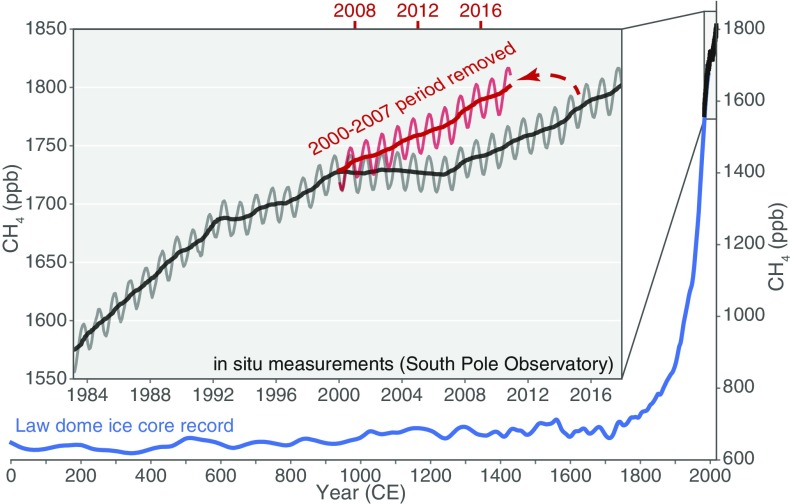
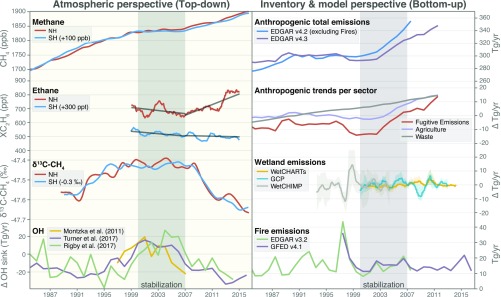
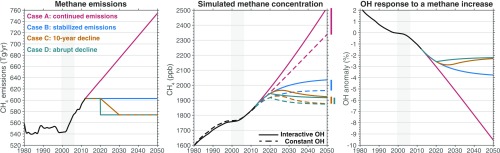
Atmospheric methane plays a major role in controlling climate, yet contemporary methane trends (1982–2017) have defied explanation with numerous, often conflicting, hypotheses proposed in the literature. Specifically, atmospheric observations of methane from 1982 to 2017 have exhibited periods of both increasing concentrations (from 1982 to 2000 and from 2007 to 2017) and stabilization (from 2000 to 2007). Explanations for the increases and stabilization have invoked changes in tropical wetlands, livestock, fossil fuels, biomass burning, and the methane sink. Contradictions in these hypotheses arise because our current observational network cannot unambiguously link recent methane variations to specific sources. This raises some fundamental questions: ( i ) What do we know about sources, sinks, and underlying processes driving observed trends in atmospheric methane? ( ii ) How will global methane respond to changes in anthropogenic emissions? And ( iii ), What future observations could help resolve changes in the methane budget? To address these questions, we discuss potential drivers of atmospheric methane abundances over the last four decades in light of various observational constraints as well as process-based knowledge. While uncertainties in the methane budget exist, they should not detract from the potential of methane emissions mitigation strategies. We show that net-zero cost emission reductions can lead to a declining atmospheric burden, but can take three decades to stabilize. Moving forward, we make recommendations for observations to better constrain contemporary trends in atmospheric methane and to provide mitigation support.
Overview
The claims and statistics of this paper haven’t been checked yet.
Free: it reads the open-access text and checks the first 5 claims that cite a source we can check. Create a free account to check every claim.
Integrity signals
Registry
Cites
Statistics
Figures
Verification
Claims the paper makes
The claims and statistics of this paper haven’t been checked yet.
Free: it reads the open-access text and checks the first 5 claims that cite a source we can check. Create a free account to check every claim.
Claims other papers make about this one
Each is checked against this paper’s own text: does it say what the citing paper says it does?
In the citing paper
“If emissions of CH4 from anthropogenic and natural sources continue to rise as they have since 2007, this could decrease global mean OH by up to 10% by 2050 [147], increasing the atmospheric lifetime and concentrations of CH4 in a positive feedback.”
From Changes in tropospheric air quality related to the protection of stratospheric ozone in a changing climate (2023) · cites this paper as [147]
Self-check
Percentages, sums and reported differences re-computed from the paper’s own numbers.
The self-check needs the paper’s full text.
Citations
Cites
Thring, M. W. (1977) · Electronics and Power · doi:10.1049/ep.1977.0180 · Cited by 7,338
Carbon and hydrogen isotope systematics of bacterial formation and oxidation of methane
Whiticar, M. J. (1999) · Chemical Geology · doi:10.1016/s0009-2541(99)00092-3 · Cited by 3,146
(2010) · doi:10.5194/acp-10-11707-2010 · Cited by 2,859
Three decades of global methane sources and sinks
Kirschke, S., Bousquet, P., Ciais, P., Saunois, M., Canadell, J. G., Dlugokencky, E. J., Bergamaschi, P., Bergmann, D., Blake, D. R., Bruhwiler, L., et al. (2013) · Nature Geoscience · doi:10.1038/ngeo1955 · Cited by 2,247
Simultaneously Mitigating Near-Term Climate Change and Improving Human Health and Food Security
Shindell, D., Kuylenstierna, J. C. I., Vignati, E., van Dingenen, R., Amann, M., Klimont, Z., Anenberg, S. C., Muller, N., Janssens-Maenhout, G., Raes, F., et al. (2012) · Science · doi:10.1126/science.1210026 · Cited by 1,382
The Total Carbon Column Observing Network
Wunch, D., Toon, G. C., Blavier, J.-F. L., Washenfelder, R. A., Notholt, J., Connor, B. J., Griffith, D. W. T., Sherlock, V., & Wennberg, P. O. (2011) · Philosophical Transactions of the Royal Society A: Mathematical, Physical and Engineering Sciences · doi:10.1098/rsta.2010.0240 · Cited by 1,309
Assessment of methane emissions from the U.S. oil and gas supply chain
Alvarez, R. A., Zavala-Araiza, D., Lyon, D. R., Allen, D. T., Barkley, Z. R., Brandt, A. R., Davis, K. J., Herndon, S. C., Jacob, D. J., Karion, A., et al. (2018) · Science · doi:10.1126/science.aar7204 · Cited by 1,187
Self-citationThe global methane budget 2000–2012
Saunois, M., Bousquet, P., Poulter, B., Peregon, A., Ciais, P., Canadell, J. G., Dlugokencky, E. J., Etiope, G., Bastviken, D., Houweling, S., et al. (2016) · Earth System Science Data · doi:10.5194/essd-8-697-2016 · Cited by 1,060
Self-citationContribution of anthropogenic and natural sources to atmospheric methane variability
Bousquet, P., Ciais, P., Miller, J. B., Dlugokencky, E. J., Hauglustaine, D. A., Prigent, C., Van der Werf, G. R., Peylin, P., Brunke, E.-G., Carouge, C., et al. (2006) · Nature · doi:10.1038/nature05132 · Cited by 996
Three‐dimensional model synthesis of the global methane cycle
Fung, I., John, J., Lerner, J., Matthews, E., Prather, M., Steele, L. P., & Fraser, P. J. (1991) · Journal of Geophysical Research: Atmospheres · doi:10.1029/91jd01247 · Cited by 958
Research works printed but not linked: 1
- IPCC 2013 Climate change 2013: The physical science basis. Contribution of Working Group I to the Fifth Assessment Report of the Intergovernmental Panel on Climate Change, (IPCC, Cambridge Univ Press, New York), Technical Report
Cited by
Items 201–300 of 483
Rainfall can significantly reduce pond methane emissions by depressing ebullition
Niu, X., Yan, Z., Wu, W., Hua, Z., Hao, L., & Rosentreter, J. A. (2025) · Water Research · doi:10.1016/j.watres.2025.124167 · Cited by 12
Characteristics of atmospheric pollutants over the northeastern region of India
Pathak, B., & Bhuyan, P. K. (2021) · Elsevier eBooks · doi:10.1016/b978-0-12-816693-2.00016-0 · Cited by 11
Variations of Stable Isotope Ratios in Nature
Hoefs, J. (2021) · Springer textbooks in earth sciences, geography and environment · doi:10.1007/978-3-030-77692-3_3 · Cited by 12
Mashiyi, N., Shikwambana, L., & Kganyago, M. (2024) · Geocarto International · doi:10.1080/10106049.2024.2306266 · Cited by 11
“Global studies by several researcher have also shown increasing trends of CH 4 concentrations overtime (He et al. 2020; Turner et al. 2019; Van Dingenen et al. 2018).”
Leifer, I., & Melton, C. (2021) · Atmospheric Pollution Research · doi:10.1016/j.apr.2021.101145 · Cited by 11
Characterization and DNA Stable-Isotope Probing of Methanotrophic Bioaerosols
Dillon, K. P., Krumins, V., Deshpande, A. S., Kerkhof, L. J., Mainelis, G., & Fennell, D. E. (2022) · Microbiology Spectrum · doi:10.1128/spectrum.03421-22 · Cited by 11
“due to anthropogenic activities is methane, the concentration of which is over 1,800 ppb on average in the atmosphere (27, 28).”
BackgroundLeach, N. J., Nicholls, Z., Jenkins, S., Smith, C., Lynch, J., Cain, M. L., Wu, B., Tsutsui, J., & Allen, M. R. (2020) · Geoscientific Model Development · doi:10.5194/gmd-2019-379 · Cited by 11
“Carbon dioxide, nitrous oxide, and methane We assume the forcing relationship for carbon dioxide is well approximated by the combination of a logarithmic and square-root term (Ramaswamy et al., 2001), f CO22 = 0; both the methane and nitrous oxide concentration–forcing relationships are approximated by a square-root t…”
MethodHan, P., Zeng, N., Yao, B., Zhang, W. J., Quan, W., Wang, P., Wang, T., Zhou, M., Cai, Q., Zhang, Y., et al. (2025) · Atmospheric chemistry and physics · doi:10.5194/acp-25-4965-2025 · Cited by 10
“…sources (e.g., fossil fuel exploitation), and atmospheric CH 4 can be removed by sinks via chemical oxidation involving hydroxyl radicals (OH) and dry soil sinks involving aerobic methane-oxidizing bacteria (Saunois et al., 2020; Turner et al., 2019; Tan et al., 2022; Lin et al., 2021).”
The Global Carbon and Oxygen Cycles
Schlesinger, W. H., & Bernhardt, E. S. (2020) · Elsevier eBooks · doi:10.1016/b978-0-12-814608-8.00011-6 · Cited by 10
Spatial and temporal patterns of methane uptake in the urban environment
Bezyk, Y., Sówka, I., Górka, M., & Nęcki, J. (2021) · Urban Climate · doi:10.1016/j.uclim.2021.101073 · Cited by 10
Geum, S., Park, H., Choi, H., Kim, Y., Lee, H., Joo, S., Oh, Y., Michel, S., & Park, S. (2023) · The Science of The Total Environment · doi:10.1016/j.scitotenv.2023.168433 · Cited by 10
Missing wintertime methane emissions from New York City related to combustion
Schiferl, L. D., Hallward-Driemeier, A., Zhao, Y., Toledo‐Crow, R., & Commane, R. (2025) · Atmospheric chemistry and physics · doi:10.5194/acp-25-15683-2025 · Cited by 9
Prajesh, P. J., Ragunath, K. P., & Neethirajan, S. R. (2026) · Environmental Science Advances · doi:10.1039/d5va00425j · Cited by 9
Clean air policy makes methane harder to control due to longer lifetime
Fu, B., Li, J., Jiang, Y., Chen, Z., & Li, B. (2024) · One Earth · doi:10.1016/j.oneear.2024.06.010 · Cited by 9
A Better Understanding of Atmospheric Methane Sources Using 13CH3D and 12CH2D2 Clumped Isotopes
Haghnegahdar, M., Hultquist, N., Hamovit, N. D., Yarwood, S. A., Bouyon, A., Kaufman, A. J., Sun, J., Magen, C., & Farquhar, J. D. (2024) · Journal of Geophysical Research Biogeosciences · doi:10.1029/2024jg008172 · Cited by 9
“Since 2007, the average global increase of methane concentration has been ∼ 6 ppb/year (Bousquet et al., 2011; Dlugokencky et al., 2011; Kirschke et al., 2013; Montzka et al., 2011; Turner et al., 2017, 2019).”
Insights into the Genomic Potential of a Methylocystis sp. from Amazonian Floodplain Sediments
Gontijo, J. B., Paula, F. S., Venturini, A. M., Mandro, J. A., Bodelier, P. L. E., & Tsai, S. M. (2022) · Microorganisms · doi:10.3390/microorganisms10091747 · Cited by 9
“The atmospheric concentration of methane (CH4) has increased steadily since the l900s [1].”
BackgroundWang, S., Gariépy, Y., Adekunle, A., & Raghavan, V. (2024) · Fuel · doi:10.1016/j.fuel.2024.131431 · Cited by 9
Bocanegra, S. B. (2022) · doi:10.18174/573967 · Cited by 11
Sulfide stress tolerance as a controller of methane production in temperate wetlands
Bechtold, E. K., Ellenbogen, J., Xin, D., Pacheco, M., Toner, B. M., Chin, Y., Arnold, W. A., Bansal, S., & Wilkins, M. J. (2025) · The ISME Journal · doi:10.1093/ismejo/wraf196 · Cited by 8
“Methane (CH 4 ), a greenhouse gas with a warming potential ∼ 28 times greater than carbon dioxide, has rapidly increased in concentration, highlighting its critical role in climate change dynamics [1–3].”
Voshtani, S., Ménard, R., Walker, T., & Hakami, A. (2023) · Atmosphere · doi:10.3390/atmos14040758 · Cited by 9
Demonstration of the long wavelength InAs/InAsSb type-II superlattice based methane sensor
Martyniuk, P. M., Wojtas, J., Michalczewski, K., Gawron, W., Mikołajczyk, J., & Krishna, S. (2021) · Sensors and Actuators A Physical · doi:10.1016/j.sna.2021.113107 · Cited by 8
Methane Clumped Isotopologue Variability from Ebullition in a Mid-latitude Lake
Lalk, E. J., Velez, A., & Ono, S. (2024) · ACS Earth and Space Chemistry · doi:10.1021/acsearthspacechem.3c00282 · Cited by 8
Local and regional enhancements of CH 4 , CO, and CO 2 inferred from TCCON column measurements
Mottungan, K., Roychoudhury, C., Brocchi, V., Gaubert, B., Tang, W., Mirrezaei, M. A., McKinnon, J., Guo, Y., GRIFFITH, D. W. T., Feist, D. G., et al. (2024) · Atmospheric measurement techniques · doi:10.5194/amt-17-5861-2024 · Cited by 8
Climate Change Action Alights on Satellite Detection of Methane
O'Neill, S. (2022) · Engineering · doi:10.1016/j.eng.2022.07.003 · Cited by 8
Pang, X., Shang, Q., Chen, L., Sun, S., Zhao, G., Wu, Z., Zhao, C., Lu, Y., Sun, Q., Lyu, Y., et al. (2024) · Journal of Environmental Sciences · doi:10.1016/j.jes.2024.03.045 · Cited by 7
Padilla, R., Adame, J. A., Hidalgo, P. J., Bolívar, J. P., & Yela, M. (2024) · Atmospheric Environment · doi:10.1016/j.atmosenv.2024.120665 · Cited by 7
A Comprehensive Review of State-of-the-art Optical Methods for Methane Gas Detection
Khandaker, S., Shaipuzaman, N., Hasan, M. M., Aspar, M. A. S. M., & Manap, H. (2024) · Pertanika journal of science & technology · doi:10.47836/pjst.32.6.19 · Cited by 7
Defratyka, S., France, J. L., Fisher, R., Lowry, D. C., Fernandez, J. M., Bakkaloglu, S., Yver-Kwok, C., Paris, J.-D., Bousquet, P., Arnold, T., et al. (2025) · Tellus B · doi:10.16993/tellusb.1878 · Cited by 7
Organic–Inorganic Nanohybrids for the Removal of Environmental Pollutants
Babar, Z. B., Shahi, A., Rauf, A., Sattar, H., & Rızwan, K. (2022) · Materials horizons · doi:10.1007/978-981-19-4538-0_13 · Cited by 7
Behbahani, H. S., & Green, M. (2023) · ACS in focus · doi:10.1021/acsinfocus.7e7016 · Cited by 8
Voshtani, S., Ménard, R., Walker, T., & Hakami, A. (2022) · Remote Sensing · doi:10.3390/rs14020375 · Cited by 7
Li, Y., Chen, H., Li, H., Yin, Z., & Gu, M. (2024) · Physica Scripta · doi:10.1088/1402-4896/ad4c25 · Cited by 6
Hydroxyl Interannual Variability Impacts Estimation of Regional Methane Emissions
Belikov, D., Patra, P. K., & Saitoh, N. (2026) · Journal of Geophysical Research Atmospheres · doi:10.1029/2025jd044457 · Cited by 6
“The precise reasons for this slowdown and subsequent rebound in CH 4 growth rates remain unclear (Nisbet & Manning, 2019; Saunois et al., 2020; Turner et al., 2017, 2019).”
InfluentialFinding the Missing Link in Methane Emission Inventories Using Aircraft and Mobile Observations
Chang, D. Y., Jeong, S., Oh, E., Sim, S., Kim, Y., Park, C., Park, H., Kim, J.-H., Kim, J., Park, J., et al. (2021) · Asia-Pacific Journal of Atmospheric Sciences · doi:10.1007/s13143-021-00248-z · Cited by 6
Quantification of Ecosystem-Scale Methane Sinks Observed in a Tropical Rainforest in Hainan, China
Liu, Z., Li, H., Wu, F., Wang, H., Chen, H., Zhu, Q., Yang, G., Liu, W., Chen, D., Li, Y., et al. (2022) · Land · doi:10.3390/land11020154 · Cited by 6
Distribution, reactivity and vertical fluxes of methane in the Guadalquivir Estuary (SW Spain)
Sánchez-Rodríguez, J., Ortega, T., Sierra, A., Mestre, M., Ponce, R., Fernández‐Puga, M. C., & Forja, J. M. (2023) · The Science of The Total Environment · doi:10.1016/j.scitotenv.2023.167758 · Cited by 6
Lu, C. F., Jiang, W., Gao, W., He, G., & Sun, C. (2024) · Atmospheric Pollution Research · doi:10.1016/j.apr.2024.102044 · Cited by 6
Couplet, V., Montero, M. M., & Crucifix, M. C. (2025) · Geoscientific model development · doi:10.5194/gmd-18-3081-2025 · Cited by 6
Staudhammer, C. L., Malone, S. L., Zhao, J., Yu, Z., Starr, G., & Oberbauer, S. F. (2022) · Agricultural and Forest Meteorology · doi:10.1016/j.agrformet.2022.108972 · Cited by 6
Ming, T., de Richter, R. K., Felzer, B. S., & Li, W. (2025) · Atmosphere · doi:10.3390/atmos16040406 · Cited by 5
Waldmann, P., Eckl, M., Knez, L., Gottschaldt, K.-D., Fiehn, A., Mallaun, C., Gałkowski, M., Kiemle, C., Hutjes, R., Röckmann, T., et al. (2026) · Atmospheric measurement techniques · doi:10.5194/amt-19-185-2026 · Cited by 5
“The reasons for the large increase are not fully understood (Michel et al., 2024; Thoning et al., 2022; Zhang et al., 2022; Turner et al., 2019; Schaefer et al., 2016; Nis-bet et al., 2016 .”
Schooling, C. N., Feng, L., Woodwark, A. J. P., Arnstein, A., Green, P. D., & Palmer, P. I. (2026) · Atmospheric measurement techniques · doi:10.5194/amt-19-7279-2026 · Cited by 5
State of the Art in Monitoring Methane Emissions from Arctic–boreal Wetlands and Lakes
Mahdianpari, M., Sonnentag, O., Mohammadimanesh, F., Radman, A., Marjani, M., Morse, P. D., Marsh, P., Lavoie, M., Risk, D., Wu, J., et al. (2026) · Remote Sensing · doi:10.3390/rs18060926 · Cited by 5
Yan, Y., Huang, X., Du, K., Li, S. Y., Liang, Y., Wang, S., Yuan, X., Ferry, J. G., & Yan, Z. (2026) · Trends in biotechnology · doi:10.1016/j.tibtech.2026.04.019 · Cited by 5
Managed Forests and Methane: Recent Research and Prospects for Best Management Practices
Thomas, S. C., Gorgolewski, A., & Vantellingen, J. (2022) · The handbook of environmental chemistry · doi:10.1007/698_2022_937 · Cited by 5
Temperature neutrality and Irish methane policy
Wheatley, J. (2023) · Climate Policy · doi:10.1080/14693062.2023.2191921 · Cited by 5
“In reality, the atmospheric concentration of methane has been increasing at a rate of ≈ 10 ppbv yr − 1 in recent years (Turner et al., 2019), challenging the goal of limiting warming to 1.5 ◦ C (Ravishankara et al., 2021).”
BackgroundInfluentialUnusual response of O 3 and CH 4 to NO 2 emissions reduction in Japan during the COVID-19 pandemic
Phan, A. T., & Fukui, H. (2023) · International Journal of Digital Earth · doi:10.1080/17538947.2023.2297844 · Cited by 5
“…), carbon monoxide (CO) and non-methane volatile organic compounds (NMVOCs) have an in fl uence on the methane (CH 4 ) lifetime by a ff ecting the atmospheric mixing ratio of hydroxyl radicals (OH) (Akimoto and Tanimoto 2022), which act as a primary sink for CH 4 (Turner, Frankenberg, and Kort 2019).”
Unraveling the dynamics of atmospheric methane: the impact of anthropogenic and natural emissions
Fu, B., Jiang, Y., Chen, G., Lu, M., Lai, Y., Suo, X., & Li, B. (2024) · Environmental Research Letters · doi:10.1088/1748-9326/ad4617 · Cited by 5
“The differences of methane growth within different phases is very large and leads to contradictory explanations [2, 8].”
BackgroundCircular Waste Management System and Greenhouse Gases Reduction
Botle, A., Salgaonkar, S., Tiwari, R., Barabde, G., & Herlekar, M. (2024) · Springer eBooks · doi:10.1007/978-3-031-58441-1_22 · Cited by 5
Extreme Hydrological Events and Reservoir Methane Emissions
Sherman, B. S., & Ford, P. W. (2022) · Frontiers in Environmental Science · doi:10.3389/fenvs.2022.893180 · Cited by 4
“The post 2007 increase in the atmospheric CH4 inventory has been attributed to changes in the strength of both the natural and anthropogenic components as well as changes in the tropospheric oxidation rate, but these attributions remain uncertain and in some cases contradictory (Turner et al., 2019; Lan et al., 2021).”
BackgroundGlobal inventory of doubly substituted isotopologues of methane (Δ 13 CH 3 D and Δ 12 CH 2 D 2 )
Defratyka, S., Fernandez, J. M., Adnew, G. A., Dong, G., Douglas, P., Eldridge, D. L., Etiope, G., Giunta, T., Haghnegahdar, M., Hristov, A. N., et al. (2025) · Earth system science data · doi:10.5194/essd-17-6889-2025 · Cited by 4
Xiao, Y., Li, Z., Sulo, J., Han, S., Verma, P. C., Miljevic, B., Wang, H., Ristovski, Z., & Wang, B. (2025) · Environmental Science & Technology · doi:10.1021/acs.est.5c10153 · Cited by 4
Xu, B., Wang, X., Li, J., Li, J., & Zhang, G. (2026) · Applied Geochemistry · doi:10.1016/j.apgeochem.2026.106760 · Cited by 4
Szopa, S., Cooper, O. R., Collins, B., Fiore, A. M., Lee, J., Lin, M., Lu, X., Naïk, V., Turnock, S. T., West, J. J., et al. (2026) · Philosophical Transactions of the Royal Society A Mathematical Physical and Engineering Sciences · doi:10.1098/rsta.2025.0272 · Cited by 4
Bourtsoukidis, E., Germain-Piaulenne, E., Gros, V., Quehe, P.-Y., Pikridas, M., Byron, J., Williams, J., Gliddon, D., Mohamed, R., Ekaabi, R., et al. (2024) · Journal of Geophysical Research Atmospheres · doi:10.1029/2024jd041621 · Cited by 4
“…in this region have uncovered substantial inconsistencies among top‐down estimates, inventory‐based estimates, and direct atmospheric observations (Germain‐Piaulenne et al., 2024; Maasakkers et al., 2019; Paris et al., 2021; Stavert et al., 2022; Turner et al., 2019; Zavala‐Araiza et al., 2015).”
Tong, C., Tan, J., Luo, M., Huang, J., Xiao, S., Liu, B., & Morris, J. T. (2024) · Fundamental Research · doi:10.1016/j.fmre.2024.01.013 · Cited by 4
“The distribution of these mineralized products is important because of the greater warming potential of CH 4 and its explosive growth in the atmosphere [10] .”
Ndem, P., Biose, O., Effiong, E., Udegbe, S., Ukpebor, J. E., Ifijen, I. H., & Ukpebor, E. E. (2025) · Environmental Monitoring and Assessment · doi:10.1007/s10661-025-14356-0 · Cited by 4
“Its main anthropogenic sources are rice and livestock farming, oil and gas production and distribution, coal mining, municipal landfills, and biomass combustion (Flores-Jimenez et al., 2019; Turner et al., 2019).”
Dayoub, W., Ahmad, S., Riaz, M., Sajid, M. S., Bilal, G., & Hussain, K. (2023) · International Journal of Environmental Science and Technology · doi:10.1007/s13762-023-05320-x · Cited by 4
“The specific causes of the increasing CH 4 concentration, in terms of anthropogenic and natural emission activities, CC, and tropospheric oxidant changes, are yet unclear (Nisbet et al. 2019; Turner et al. 2019).”
Unveiling methane sensing mechanisms of graphene and its derivatives
He, J., & Li, X. (2024) · Sensors and Actuators A Physical · doi:10.1016/j.sna.2024.115634 · Cited by 4
Methane Growth Rate Estimation and Its Causes in Western Canada Using Satellite Observations
Islam, S. M. N., Jackson, P. L., Sweeney, C., McKain, K., Frankenberg, C., Aben, I., Parker, R. J., Boesch, H., & Wunch, D. (2021) · Journal of Geophysical Research Atmospheres · doi:10.1029/2020jd033948 · Cited by 4
“However, a broadly-accepted explanation has not yet been found because the renewed growth period is characterized by a source-sink imbalance of only 3.0% and there are large uncertainties in the emissions from individual source sectors (Turner et al., 2019).”
BackgroundInfluentialSelf-citationCharacterizing methane (CH4) emissions in urban environments (Paris)
Defratyka, S. (2021) · theses.fr (ABES) · doi:10.70675/492bebb7zb939z4150z800cz2af483caefe6 · Cited by 4
Hillier, A., Webber, E. M., Hopkinson, E., Wilson, F., Nehrbass‐Ahles, C., Brewer, P. J., Worton, D. R., Rennick, C., Arnold, T., Moossen, H., et al. (2025) · Analytical Chemistry · doi:10.1021/acs.analchem.4c06540 · Cited by 3
Gadhavi, H., Arora, A., Jain, C. D., Sha, M. K., Hase, F., Frey, M., Ramachandran, S., & Jayaraman, A. (2025) · Atmospheric measurement techniques · doi:10.5194/amt-18-4497-2025 · Cited by 3
Solar Chimney Power Plant plus Solar Pond to Remove Atmospheric Methane: A Novel Concept
Xiong, H., Peng, C., Ming, T., de Richter, R. K., Li, W., Yuan, Q., Yuan, Y., & Zhou, N. (2025) · Journal of Thermal Science · doi:10.1007/s11630-025-2192-4 · Cited by 3
“Before the 1760s atmospheric methane levels are about 0.394 ‒ 0.459 mg/m³ (600 ‒ 700 ppb) [1].”
InfluentialLi, M., Huang, S., Wang, J., Gu, D., Hu, T., Liu, R., Li, G., & Lu, J. (2025) · Journal of Material Cycles and Waste Management · doi:10.1007/s10163-025-02386-2 · Cited by 3
“Organic fractions of MSW, such as kitchen waste, release methane during anaerobic fermentation (AF) [14, 16, 17].”
Iron‐Bearing Minerals as Potential Indicators of Paleo‐Methane Seepage Evolution
Wang, P., Ma, J., Liu, D., Zhang, G., Shi, T., Jin, M., Cao, J., Chen, F., Zhang, L., Liu, K., et al. (2025) · Journal of Geophysical Research Oceans · doi:10.1029/2025jc022576 · Cited by 3
Liu, C., Shang, Z., Li, S., Yang, Z., Shi, S., Fan, Y., Li, F., Gong, T., Ma, Y., 邱选兵, et al. (2026) · Sensors and Actuators B Chemical · doi:10.1016/j.snb.2026.140318 · Cited by 3
Oh, Y., Bruhwiler, L., Lan, X., Halder, S., Riddell‐Young, B., Basu, S., Miller, J. B., Michel, S., Schuldt, K., Andrews, A. E., et al. (2026) · Nature Communications · doi:10.1038/s41467-026-74777-4 · Cited by 3
“Some studies have questioned the usefulness of atmospheric δ 13 C-CH 4 measurements for constraining CH 4 sources and sinks, citing large uncertainties in isotopic source signatures 30 .”
Global methane emissions from rice paddies are now increasingly quantifiable
Mehla, M. K., Singh, A., Jeong, J., & Ran, L. (2026) · Communications Earth & Environment · doi:10.1038/s43247-026-03902-4 · Cited by 3
Masiello, G., Mastro, P., Serio, C., Falabella, F., & Pasquariello, P. (2022) · doi:10.1117/12.2642873 · Cited by 3
Liu, X., Huang, Y., Chen, Y., Feng, X., Li, J., Xu, Y., Chen, Y., Gu, D., Sun, H., Ning, Z., et al. (2025) · Atmospheric chemistry and physics · doi:10.5194/acp-25-17629-2025 · Cited by 3
In search of better models for explaining atmospheric methane accumulation
Ederer, P., & Iliushyk, T. (2025) · Animal Frontiers · doi:10.1093/af/vfaf001 · Cited by 3
“As Turner et al. (2019) concluded about the empirical data situation (page 2810): “it is now abundantly clear that these in situ observations alone are not sufficient for unequivocally partitioning contemporary variations in atmospheric methane from 1980 to the present to specific source/ sink…”
Maazallahi, H. (2022) · Utrecht University Repository (Utrecht University) · doi:10.33540/1457 · Cited by 3
From Archaea to the atmosphere: remotely sensing Arctic methanePreprint
Varner, R. K., Cronin, D. R., Crill, P., Palace, M., Mccalley, C. K., Deng, J. J., Herrick, C., Kuhn, M. A., Hodgkins, S. B., McArthur, K. J., et al. (2025) · bioRxiv (Cold Spring Harbor Laboratory) · doi:10.1101/2025.02.13.638097 · Cited by 3
Song, S., An, W., Wang, M., Jin, W., Zhang, Q., & Li, J. (2024) · Journal of Physics Conference Series · doi:10.1088/1742-6596/2679/1/012056 · Cited by 2
Fang, C., Parker, R. J., Sembhi, H., Anjum, A., & Balzter, H. (2025) · Remote Sensing of Environment · doi:10.1016/j.rse.2025.114828 · Cited by 2
Wan, Y., Liu, Y., Liu, Y., & Xiao, Q. (2025) · Atmospheric Pollution Research · doi:10.1016/j.apr.2025.102736 · Cited by 2
Mengistu, A. G., Tsuruta, A., Berchet, A., Thompson, R. L., Tenkanen, M., Lindqvist, H., Markkanen, T., Leppänen, A., Laitinen, A., Martinez, A., et al. (2026) · Atmospheric chemistry and physics · doi:10.5194/acp-26-12295-2026 · Cited by 2
Assessing climate and air quality benefits of methane mitigation for U.S. landfills
Folorunsho, A. H., Dudhia, J., Jiang, L., Yokochi, A., & Li, Y. (2026) · Journal of Environmental Management · doi:10.1016/j.jenvman.2026.128707 · Cited by 2
Ward, R. H., Western, L. M., Tunnicliffe, R. L., Fillola, E., Tsuruta, A., Aalto, T., & Ganesan, A. L. (2026) · Atmospheric measurement techniques · doi:10.5194/amt-19-813-2026 · Cited by 2
“…Network (COCCON) (Frey et al., 2019) or vertical profile measurements from AirCore devices on balloon flights (Degen et al., 2024) and aircraft campaigns (Paris et al., 2014; Narbaud et al., 2023), remains crucial for ensuring accuracy, reliability and the monitoring of biases (Turner et al., 2019).”
Luo, Z., Zhang, Z., Ren, Y., Gan, Y., & Chen, Z. (2026) · Earth Systems and Environment · doi:10.1007/s41748-026-01093-8 · Cited by 2
“Accurate monitoring of methane emissions is essential for understanding their spatial and temporal distribution, identifying major sources, and assessing the effectiveness of reduction policies (Turner et al. 2019).”
Incorporating methane isotopologues alters tropical and subtropical methane emission estimates
Yu, X., Canadell, J. G., Henze, D. K., Patra, P. K., Saunois, M., Cen, X., Lan, X., Riddell‐Young, B., Röckmann, T., & Jackson, R. B. (2026) · Nature Communications · doi:10.1038/s41467-026-72668-2 · Cited by 2
“…individual sectors reveals contributions of 110 [87 – 112] Tg/y from fossil fuels, 137 [131 – 140] Tg/y from live-stock, 92 [88 – 94] Tg/y from wastewater and land fi lls, 34 [27 – 34] Tg/y from rice cultivation, and 30 [28 – 31] Tg/y from other anthropogenic sources (such as industrial combustion).”
Heterogeneous Iodine Chemistry Impacts Reactive Halogen and Oxidant Abundances
Moon, A. R., Liu, L., Wang, X., Chan, Y., Fritzmann, A., Pound, R. J., Lees, A., Marden, L., Evans, M. J., Carpenter, L. J., et al. (2026) · Geophysical Research Letters · doi:10.1029/2026gl122644 · Cited by 2
“The range in methane lifetime and OH is non‐negligible since Turner et al. (2019) found that methane trends between 2007 and 2017 could be explained by a source‐sink imbalance of around ∼ 3%.”
Li, N., Zhong, B., Wu, W., Mei, X., Liu, R., Liu, X., Li, X., Abdul, R., Yi, S., Zhou, L., et al. (2026) · Journal of Environmental Sciences · doi:10.1016/j.jes.2026.05.048 · Cited by 2
Su, X., Han, G., Yue, Y., Chen, C., Pei, Z., Luo, H., Qin, K., & Gong, W. Y. (2026) · Remote Sensing · doi:10.3390/rs18111765 · Cited by 2
Hou, X., Hossaini, R., Wild, O., Mazzeo, A., Pope, R. J., Wang, Y., Wang, S., Zhao, Y., Lee, J. D., Zhu, B., et al. (2026) · Atmospheric chemistry and physics · doi:10.5194/acp-26-13767-2026 · Cited by 2
“(NO ), methane (CH ), carbon monoxide (CO), and most Turner et al., 2019 .”
An Improved CH4 Profile Retrieving Method for Ground-Based Differential Absorption Lidar
Fan, L., Wan, Y., & Dai, Y. (2024) · Atmosphere · doi:10.3390/atmos15080937 · Cited by 2
A Multi-head Self-attention LSTM Model for UK Methane Prediction
Alhnaity, B., Li, B., Partridge, T., & Meng, Q. (2024) · International Conference on Computers and Artificial Intelligence Technology (CAIT) · doi:10.1109/cait64506.2024.10963263 · Cited by 2
“Despite the global shutdowns during the COVID-19 pandemic, methane levels continued to rise [3].”
The Post‐2020 Surge in Global Atmospheric Methane Observed in Ground‐Based Observations
Wu, J., Luo, S., Zeng, Z., Turner, A. J., Wunch, D., García, O., Hase, F., Kivi, R., Ohyama, H., Morino, I., et al. (2026) · Earth and Space Science · doi:10.22541/au.171386602.26426238/v1 · Cited by 2
Self-citationGreenhouse Gass Emission form Agriculture and their Effective Mitigation Techniques: A Review
Durani, A., Kakar, K., Baber, B. M., Hashemi, T., Gulab, G., & Safi, Z. (2024) · Nangarhar University international journal of biosciences. · doi:10.70436/nuijb.v3i02.206 · Cited by 2
Kadhum, S. A., Hussain, L., Azeez, O. S., Abed, S. A., & Jaafar, B. I. (2025) · Bulletin of Atmospheric Science and Technology · doi:10.1007/s42865-024-00084-9 · Cited by 2
“Tropospheric O 3 is an exclusively secondary air pollutant linked to detrimental impacts on human health, such as asthma (Turner et al. 2019; Mar et al. 2022).”
Hung, J., Liu, L., Palm, M., Mariani, Z., Manney, G. L., Millan, L. F., & Strong, K. (2025) · Journal of Geophysical Research Atmospheres · doi:10.1029/2024jd042847 · Cited by 2
“On a global scale, these gases are primarily produced through a combination of fossil fuel use, agriculture, landfills, wetlands, and wildfires (e.g., Kirschke et al., 2013; A. J. Turner et al., 2019; Tian et al., 2020).”
Sellmaier, A., Damm, E., Sachs, T., Kirbus, B., Wiekenkamp, I., Rinke, A., Pätzold, F., Nomura, D., Lampert, A., & Rex, M. (2025) · Atmospheric chemistry and physics · doi:10.5194/acp-25-17685-2025 · Cited by 2
Monitoring and Assessment of Air Pollution
Tiwari, S., Chen, B., & Singh, A. (2020) · Environmental chemistry for a sustainable world · doi:10.1007/978-981-15-3481-2_2 · Cited by 2
Chowdhury, T., Ety, N. J., Murshed, W. E., & Chaudhury, A. (2023) · EarthArXiv (California Digital Library) · doi:10.31223/x5jh3p · Cited by 2
Yuan, J., Xiang, J., Liu, D., & Ding, W. (2025) · Agriculture Ecosystems & Environment · doi:10.1016/j.agee.2025.109876 · Cited by 1
Analysis of Methane (CH4) Distribution in Northeast Asia Based on Satellite Measurement Data
Koo, J., Lee, S.-J., Lee, T., Lee, D., Yeo, M. J., Song, H., Jeong, S., & Hong, J. (2025) · Journal of Korean Society for Atmospheric Environment · doi:10.5572/kosae.2025.41.5.826 · Cited by 1
Asediya, V., Shekh, M. A., Sorathiya, K. K., PANDYA, P. R., Duggirala, S. M., Patel, A. C., Czarnik, U., Pareek, C. S., & Jadhao, S. B. (2026) · Scientific Reports · doi:10.1038/s41598-025-29303-9 · Cited by 1
“Enteric-methane abatement contributes to targets under the Paris Agreement and the Global Methane Pledge 84–86 .”
Mapping U.S. Surface Methane With Artificial Neural Networks
Bade, M., & Li, Y. (2026) · Earth Systems and Environment · doi:10.1007/s41748-025-00989-1 · Cited by 1
“Surface measurements more effectively detect local accumulation within the planetary boundary layer, emphasizing the influence of regional emis - sion sources, limited dispersion, and diurnal boundary layer dynamics (Kirschke et al. 2013; Turner et al. 2019).”
Rahman, M. M., Shults, R., Arshad, A., Sankaran, R., Tran, T., Keshk, H. M., Raihan, A., Lakshmi, V., & Rahman, M. (2026) · IEEE Journal of Selected Topics in Applied Earth Observations and Remote Sensing · doi:10.1109/jstars.2026.3668054 · Cited by 1
“Although it has a relatively short atmospheric lifetime of about 9–12 years, its strong infrared absorption capacity makes it a significant contributor to global warming [2].”
Metadata
- Authors
- Turner, A. J., Frankenberg, C., & Kort, E. A.
- Affiliations
- University of California, Berkeley (US)
- California Institute of Technology (US)
- University of Michigan (US)
- Corresponding author
- Turner, Alexander J.
- Frankenberg, Christian
- Kort, Eric A.
- Venue
- Proceedings of the National Academy of Sciences
- Publisher
- National Academy of Sciences
- Published
- 2019-02-07
- Volume
- 116
- Issue
- 8
- Pages
- 2805-2813
- ISSN
- 0027-8424 (ISSN-L)
- 1091-6490
- PMC
- PMC6386658
- OpenAlex
- W2915027405
- Cited by
- 426
- References
- 128
- Citations by year
- 2026: 48 · 2025: 44 · 2024: 70 · 2023: 80 · 2022: 61 · 2021: 62 · 2020: 40 · 2019: 18
- FWCI
- 23.26
- Type
- journal article
- Language
- en
- Open access
- hybrid
- doi.org
- Licence
- Locations
- Proceedings of the National Academy of Sciences (publishedVersion, cc-by-nc-nd)
- Europe PMC (PubMed Central) (publishedVersion, cc-by-nc-nd)
- PubMed Central (publishedVersion, cc-by-nc-nd)
- PubMed (publishedVersion)
- CaltechAUTHORS (California Institute of Technology) (submittedVersion, cc-by-nc-nd)
- NOAA Institutional Repository (submittedVersion)
- Funders
- Adolph C. and Mary Sprague Miller Institute for Basic Research in Science, University of California Berkeley
- Topics
- Physical Sciences › Environmental Science › Global and Planetary Change › Atmospheric and Environmental Gas Dynamics
- Physical Sciences › Earth and Planetary Sciences › Atmospheric Science › Atmospheric chemistry and aerosols
- Physical Sciences › Environmental Science › Environmental Chemistry › Methane Hydrates and Related Phenomena
- Keywords
- atmospheric methane, methane trends, methane budget, methane sources and sinks, tropical wetlands, livestock methane emissions, biomass burning, methane sinks, anthropogenic emissions, methane mitigation, climate change
About these checks
Registry, retraction, Cites and statistics results are computed, not judged, with one exception: a printed reference that no index lists is read once by a model before it counts as a citation error. Claims are extracted by a model and kept only when their quote appears verbatim in the text; each cited source is then checked, with a model’s help, for whether it says what the claim relies on. Those verdicts can be wrong — read the claim’s quote and the cited source before relying on one.
Statistics and arithmetic are recomputed, not judged.
Confidence bands are shown only for fields calibrated on our annotated test set. None is calibrated yet, so no band is shown.
What counts as a claim ›How we measure confidence ›How we check this ›
Are you an author, or do you see a problem with this page? Request a review
Data sources
Bibliographic data: Semantic Scholar, OpenAlex, Crossref.
Contains information from the Semantic Scholar Academic Graph Datasets, made available under the ODC Attribution License (ODC-BY 1.0).
Semantic Scholar’s data is described in: Kinney, R., et al. (2023). The Semantic Scholar Open Data Platform. arXiv:2301.10140.
