

The DOI matches its Crossref record; 53 of the 53 references it cites were found in a registry or an index.
Paf1C regulates RNA polymerase II progression by modulating elongation rate
Open accessAbstract
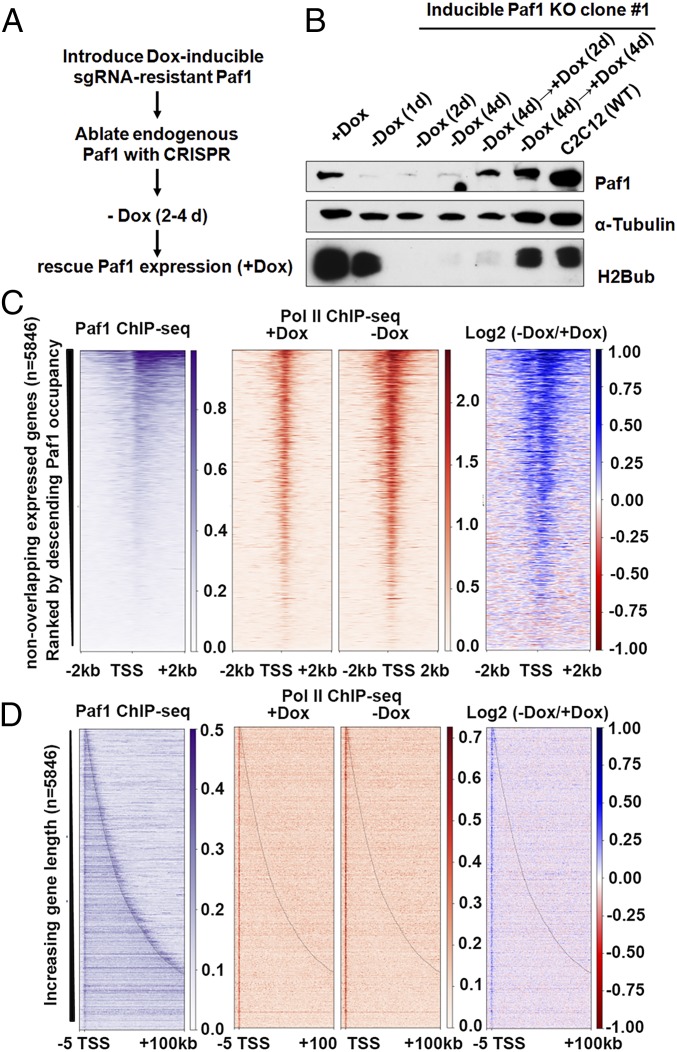
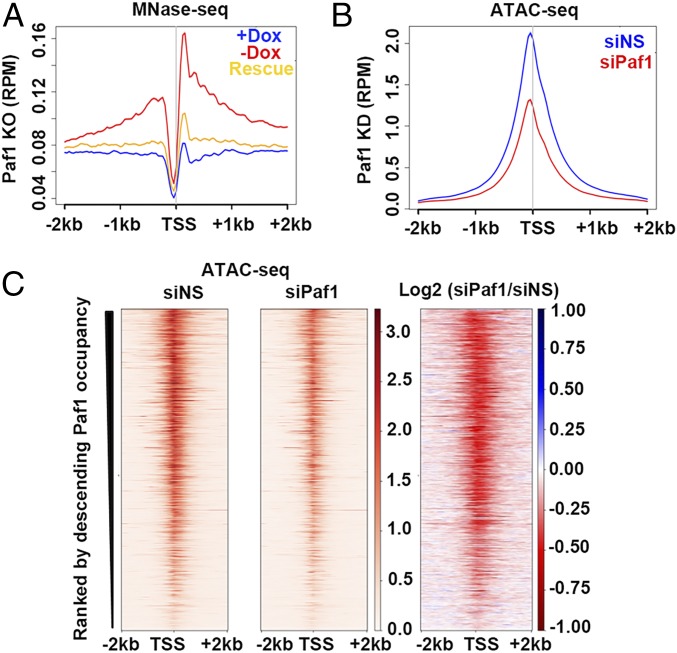
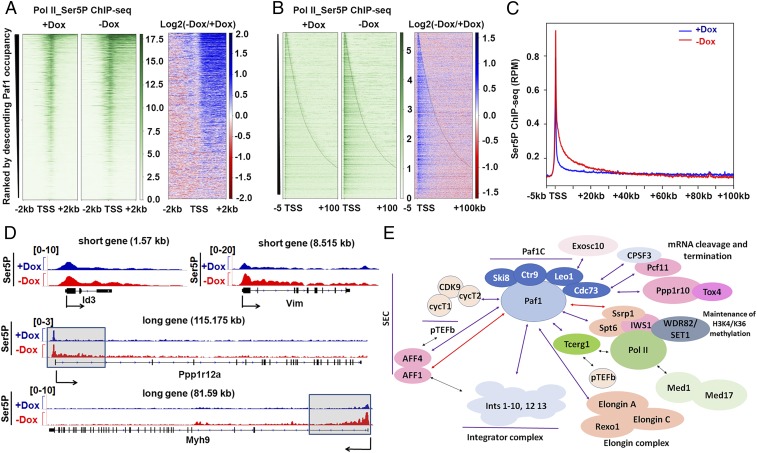
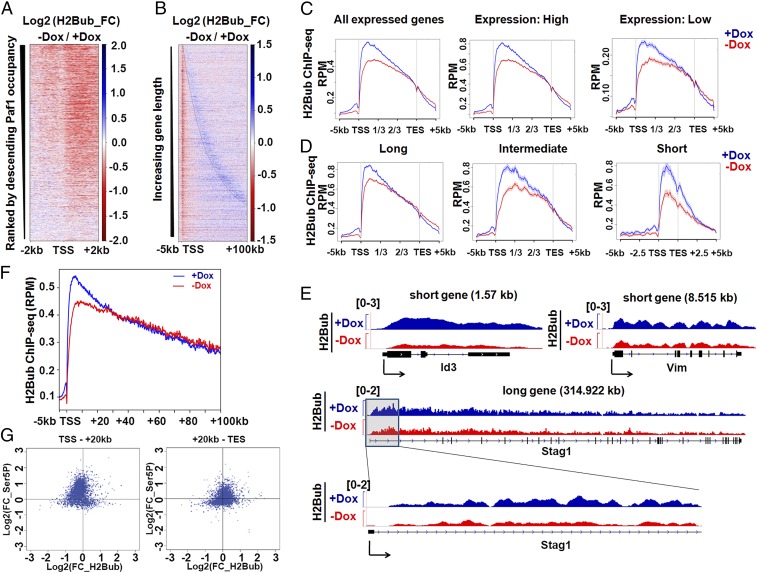
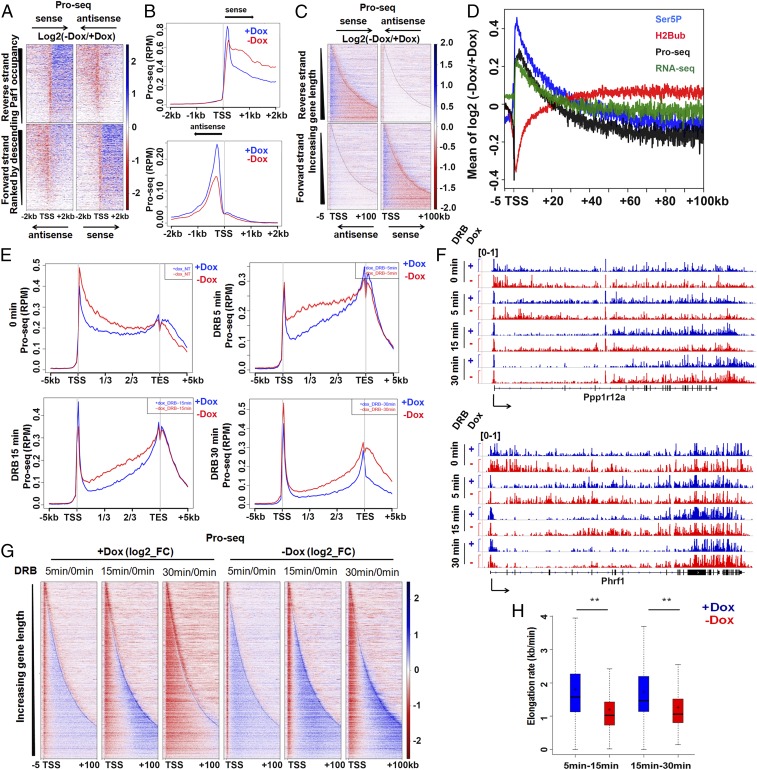
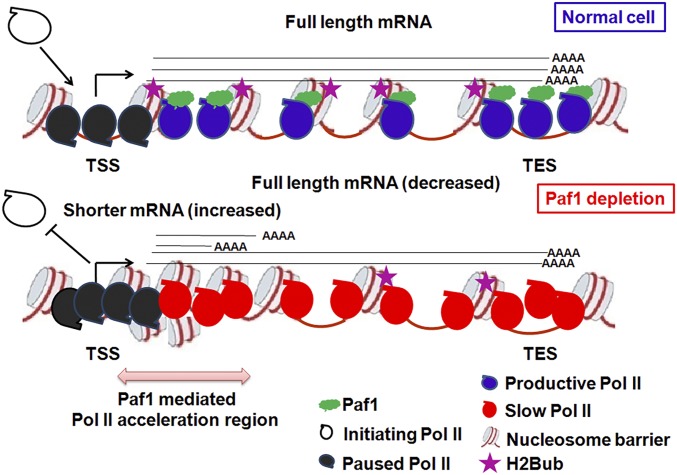
Elongation factor Paf1C regulates several stages of the RNA polymerase II (Pol II) transcription cycle, although it is unclear how it modulates Pol II distribution and progression in mammalian cells. We found that conditional ablation of Paf1 resulted in the accumulation of unphosphorylated and Ser5 phosphorylated Pol II around promoter-proximal regions and within the first 20 to 30 kb of gene bodies, respectively. Paf1 ablation did not impact the recruitment of other key elongation factors, namely, Spt5, Spt6, and the FACT complex, suggesting that Paf1 function may be mechanistically distinguishable from each of these factors. Moreover, loss of Paf1 triggered an increase in TSS-proximal nucleosome occupancy, which could impose a considerable barrier to Pol II elongation past TSS-proximal regions. Remarkably, accumulation of Ser5P in the first 20 to 30 kb coincided with reductions in histone H2B ubiquitylation within this region. Furthermore, we show that nascent RNA species accumulate within this window, suggesting a mechanism whereby Paf1 loss leads to aberrant, prematurely terminated transcripts and diminution of full-length transcripts. Importantly, we found that loss of Paf1 results in Pol II elongation rate defects with significant rate compression. Our findings suggest that Paf1C is critical for modulating Pol II elongation rates by functioning beyond the pause-release step as an “accelerator” over specific early gene body regions.
Overview
The claims and statistics of this paper haven’t been checked yet.
Run the check — free, no account needed. It reads the open-access text and checks the sources it cites.
Integrity signals
Registry
Cites
Statistics
Figures
Verification
Claims the paper makes
The claims and statistics of this paper haven’t been checked yet.
Run the check — free, no account needed. It reads the open-access text and checks the sources it cites.
Claims other papers make about this one
Each is checked against this paper’s own text: does it say what the citing paper says it does?
The cited source says what the claim attributes to it.
In the citing paper
“Paf1C specifically increases RNA Pol II velocity within the first part of gene bodies in mice (Hou et al, 2019), although no effect of the loss of this factor could be measured in budding yeast (Mason & Struhl, 2005).”
From RNA polymerase II speed: a key player in controlling and adapting transcriptome composition (2021) · cites this paper as Hou et al, 2019
Self-check
Percentages, sums and reported differences re-computed from the paper’s own numbers.
The self-check needs the paper’s full text.
Citations
Cites
c-Myc Regulates Transcriptional Pause Release
Rahl, P. B., Lin, C. Y., Seila, A. C., Flynn, R. A., McCuine, S., Burge, C. B., Sharp, P. A., & Young, R. A. (2010) · Cell · doi:10.1016/j.cell.2010.03.030 · Cited by 1,279
Promoter-proximal pausing of RNA polymerase II: emerging roles in metazoans
Adelman, K., & Lis, J. T. (2012) · Nature Reviews Genetics · doi:10.1038/nrg3293 · Cited by 1,221
Precise Maps of RNA Polymerase Reveal How Promoters Direct Initiation and Pausing
Kwak, H., Fuda, N. J., Core, L. J., & Lis, J. T. (2013) · Science · doi:10.1126/science.1229386 · Cited by 849
Nascent transcript sequencing visualizes transcription at nucleotide resolution
Churchman, L. S., & Weissman, J. S. (2011) · Nature · doi:10.1038/nature09652 · Cited by 823
RNA Exosome Depletion Reveals Transcription Upstream of Active Human Promoters
Preker, P., Nielsen, J. S., Kammler, S., Lykke‐Andersen, S., Christensen, M. S., Mapendano, C. K., Schierup, M. H., & Jensen, T. H. (2008) · Science · doi:10.1126/science.1164096 · Cited by 777
Pavri, R., Zhu, B., Li, G., Trojer, P., Mandal, S. S., Shilatifard, A., & Reinberg, D. (2006) · Cell · doi:10.1016/j.cell.2006.04.029 · Cited by 708
Transcription Elongation Factors Repress Transcription Initiation from Cryptic Sites
Kaplan, C. D., Laprade, L., & Winston, F. (2003) · Science · doi:10.1126/science.1087374 · Cited by 597
Jonkers, I., Kwak, H., & Lis, J. T. (2014) · eLife · doi:10.7554/elife.02407 · Cited by 581
Baillat, D., Hakimi, M., Näär, A. M., Shilatifard, A., Cooch, N. S., & Shiekhattar, R. (2005) · Cell · doi:10.1016/j.cell.2005.08.019 · Cited by 548
Mahat, D. B., Kwak, H., Booth, G. T., Jonkers, I. H., Danko, C. G., Patel, R. K., Waters, C. T., Munson, K. M., Core, L. J., & Lis, J. T. (2016) · Nature Protocols · doi:10.1038/nprot.2016.086 · Cited by 517
Cited by
Sorted by citations
Structure and mechanism of the RNA polymerase II transcription machineryPreprint
Schier, A. C., & Taatjes, D. J. (2020) · Genes & Development · doi:10.1101/gad.335679.119 · Cited by 327
RNA polymerase II speed: a key player in controlling and adapting transcriptome composition
Muniz, L., Nicolas, E., & Trouche, D. (2021) · The EMBO Journal · doi:10.15252/embj.2020105740 · Cited by 198
“Indeed, in mammalian cells most studies only consider very long genes to accurately decipher an elongation speed (Saponaro et al , 2014; Cortazar et al , 2019; Gregersen et al , 2019; Hou et al , 2019; Sheridan et al , 2019; Fan et al , 2020).”
Structure of complete Pol II–DSIF–PAF–SPT6 transcription complex reveals RTF1 allosteric activation
Vos, S. M., Farnung, L., Linden, A., Urlaub, H., & Cramer, P. (2020) · Nature Structural & Molecular Biology · doi:10.1038/s41594-020-0437-1 · Cited by 160
Understanding the interplay between CpG island-associated gene promoters and H3K4 methylation
Hughes, A. L., Kelley, J. R., & Klose, R. J. (2020) · Biochimica et Biophysica Acta (BBA) - Gene Regulatory Mechanisms · doi:10.1016/j.bbagrm.2020.194567 · Cited by 139
Two distinct mechanisms of RNA polymerase II elongation stimulation in vivo
Žumer, K., Maier, K. C., Farnung, L., Jaeger, M. G., Rus, P., Winter, G. E., & Cramer, P. (2021) · Molecular Cell · doi:10.1016/j.molcel.2021.05.028 · Cited by 112
Francette, A. M., Tripplehorn, S. A., & Arndt, K. M. (2021) · Journal of Molecular Biology · doi:10.1016/j.jmb.2021.166979 · Cited by 104
SPT5 stabilization of promoter-proximal RNA polymerase II
Aoi, Y., Takahashi, Y.-H., Shah, A. P., Iwanaszko, M., Rendleman, E. J., Khan, N. H., Cho, B.-K., Goo, Y. A., Ganesan, S., Kelleher, N. L., et al. (2021) · Molecular Cell · doi:10.1016/j.molcel.2021.08.006 · Cited by 107
CDK9 keeps RNA polymerase II on track
Egloff, S. (2021) · Cellular and Molecular Life Sciences · doi:10.1007/s00018-021-03878-8 · Cited by 104
Transcriptional elongation control in developmental gene expression, aging, and disease
Aoi, Y., & Shilatifard, A. (2023) · Molecular Cell · doi:10.1016/j.molcel.2023.10.004 · Cited by 89
Arnold, M., Bressin, A., Jasnovidova, O., Meierhofer, D., & Mayer, A. (2021) · Molecular Cell · doi:10.1016/j.molcel.2021.06.026 · Cited by 75
SPT6 functions in transcriptional pause/release via PAF1C recruitment
Aoi, Y., Shah, A. P., Ganesan, S., Soliman, S. H. A., Cho, B.-K., Goo, Y. A., Kelleher, N. L., & Shilatifard, A. (2022) · Molecular Cell · doi:10.1016/j.molcel.2022.06.037 · Cited by 74
A CSB-PAF1C axis restores processive transcription elongation after DNA damage repair
van den Heuvel, D., Spruijt, C. G., González-Prieto, R., Kragten, A., Paulsen, M. T., Zhou, D., Wu, H., Apelt, K., van der Weegen, Y., Yang, K., et al. (2021) · Nature Communications · doi:10.1038/s41467-021-21520-w · Cited by 70
Mechanisms of Transcription Elongation Factor DSIF (Spt4–Spt5)
Decker, T.-M. (2020) · Journal of Molecular Biology · doi:10.1016/j.jmb.2020.09.016 · Cited by 71
Regulation of Promoter Proximal Pausing of RNA Polymerase II in Metazoans
Dollinger, R., & Gilmour, D. S. (2021) · Journal of Molecular Biology · doi:10.1016/j.jmb.2021.166897 · Cited by 75
A CSB-PAF1C axis restores processive transcription elongation after DNA damage repair
van den Heuvel, D., Spruijt, C. G., González-Prieto, R., Kragten, A., Paulsen, M. T., Zhou, D., Wu, H., Apelt, K., van der Weegen, Y., Yang, K., et al. (2020) · doi:10.1101/2020.01.04.894808 · Cited by 69
Coordinated regulation of RNA polymerase II pausing and elongation progression by PAF1
Wang, Z., Song, A., Xu, H., Hu, S., Tao, B., Peng, L., Wang, J., Li, J., Yu, J., Wang, L., et al. (2022) · Science Advances · doi:10.1126/sciadv.abm5504 · Cited by 62
Live imaging of transcription sites using an elongating RNA polymerase II–specific probe
Uchino, S., Ito, Y., Sato, Y., Handa, T., Ohkawa, Y., Tokunaga, M., & Kimurâ, H. (2021) · The Journal of Cell Biology · doi:10.1083/jcb.202104134 · Cited by 58
Multiplexed single-cell characterization of alternative polyadenylation regulators
Kowalski, M. H., Wessels, H., Linder, J., Dalgarno, C., Mascio, I., Choudhary, S., Hartman, A., Hao, Y., Kundaje, A. B., & Satija, R. (2024) · Cell · doi:10.1016/j.cell.2024.06.005 · Cited by 56
BRD4: a general regulator of transcription elongation
Altendorfer, E., Mochalova, Y., & Mayer, A. (2022) · Transcription · doi:10.1080/21541264.2022.2108302 · Cited by 59
PHF3 Regulates Neuronal Gene Expression Through the New Pol II CTD Reader Domain SPOC
Appel, L.-M., Franke, V., Bruno, M., Grishkovskaya, I., Kasiliauskaitė, A., Kaufmann, T., Schoeberl, U. E., Puchinger, M. G., Kostrhon, S., Ebenwaldner, C., et al. (2020) · Nature Communications · doi:10.1038/s41467-021-26360-2 · Cited by 51
Jia, N., Guo, C., Nakazawa, Y., van den Heuvel, D., Luijsterburg, M. S., & Ogi, T. (2021) · DNA repair · doi:10.1016/j.dnarep.2021.103192 · Cited by 50
A gene silencing screen uncovers diverse tools for targeted gene repression in Arabidopsis
Wang, M., Zhong, Z., Gallego‐Bartolomé, J., Li, Z., Feng, S., Kuo, H. Y., Kan, R. L., Lam, H., Richey, J. C., Tang, L., et al. (2023) · Nature Plants · doi:10.1038/s41477-023-01362-8 · Cited by 49
The cell biology of HIV-1 latency and rebound
Mbonye, U. R., & Karn, J. (2024) · Retrovirology · doi:10.1186/s12977-024-00639-w · Cited by 57
CDK9 and PP2A regulate RNA polymerase II transcription termination and coupled RNA maturation
Tellier, M., Zaborowska, J., Neve, J., Nojima, T., Hester, S., Fournier, M. L., Furger, A., & Murphy, S. (2022) · EMBO Reports · doi:10.15252/embr.202154520 · Cited by 44
CDK12: cellular functions and therapeutic potential of versatile player in cancer
Pilařová, K., Herudek, J., & Blažek, D. (2020) · NAR Cancer · doi:10.1093/narcan/zcaa003 · Cited by 43
The 7SK/P-TEFb snRNP controls ultraviolet radiation-induced transcriptional reprogramming
Studniarek, C., Tellier, M., Martin, P. G. P., Murphy, S., Kiss, T., & Egloff, S. (2021) · Cell Reports · doi:10.1016/j.celrep.2021.108965 · Cited by 38
Sparse dictionary learning recovers pleiotropy from human cell fitness screens
Pan, J., Kwon, J. J., Talamas, J. A., Borah, A. A., Vazquez, F., Boehm, J. S., Tsherniak, A., Zitnik, M., McFarland, J. M., & Hahn, W. C. (2022) · Cell Systems · doi:10.1016/j.cels.2021.12.005 · Cited by 37
The PAF1 complex promotes 3′ processing of pervasive transcripts
Liu, X., Guo, Z., Han, J., Peng, B., Zhang, B., Li, H., Hu, X., David, C. J., & Chen, M. (2022) · Cell Reports · doi:10.1016/j.celrep.2022.110519 · Cited by 36
Qiu, M., Yin, Z., Wang, H., Lei, L., Li, C., Cui, Y., Dai, R., Yang, P., Xiang, Y., Li, Q., et al. (2023) · Science Advances · doi:10.1126/sciadv.adf8698 · Cited by 40
MLL fusion proteins and transcriptional control
Slany, R. K. (2020) · Biochimica et Biophysica Acta (BBA) - Gene Regulatory Mechanisms · doi:10.1016/j.bbagrm.2020.194503 · Cited by 31
Ardehali, M. B., Damle, M., Perea-Resa, C., Blower, M. D., & Kingston, R. E. (2021) · Journal of Biological Chemistry · doi:10.1074/jbc.ra120.015877 · Cited by 30
Chimeric RNA ASTN2-PAPPAas aggravates tumor progression and metastasis in human esophageal cancer
Wang, L., Xiong, X., Yao, Z., Zhu, J., Lin, Y., Lin, W., Li, K., Xu, X., Guo, Y. Z., Chen, Y., et al. (2020) · Cancer Letters · doi:10.1016/j.canlet.2020.10.052 · Cited by 28
MLL-AF4 cooperates with PAF1 and FACT to drive high-density enhancer interactions in leukemia
Crump, N. T., Smith, A., Godfrey, L., Dopico-Fernandez, A. M., Denny, N., Harman, J. R., Hamley, J. C., Jackson, N., Chahrour, C., Riva, S. G., et al. (2023) · Nature Communications · doi:10.1038/s41467-023-40981-9 · Cited by 28
Ellison, M. A., Namjilsuren, S., Shirra, M. K., Blacksmith, M. S., Schusteff, R. A., Kerr, E. M., Fang, F., Xiang, Y., Shi, Y., & Arndt, K. M. (2023) · Nucleic Acids Research · doi:10.1093/nar/gkad180 · Cited by 26
Emerging roles of BET proteins in transcription and co‐transcriptional RNA processing
Eischer, N., Arnold, M., & Mayer, A. (2022) · Wiley Interdisciplinary Reviews - RNA · doi:10.1002/wrna.1734 · Cited by 26
Trinh, D.-C., Martin, M., Bald, L., Maizel, A., Tréhin, C., & Hamant, O. (2023) · Proceedings of the National Academy of Sciences · doi:10.1073/pnas.2302441120 · Cited by 24
Defining the divergent enzymatic properties of RNA polymerases I and II
Jacobs, R. Q., Ingram, Z. M., Lucius, A. L., & Schneider, D. A. (2020) · Journal of Biological Chemistry · doi:10.1074/jbc.ra120.015904 · Cited by 24
Structure of the transcribing RNA polymerase II–Elongin complex
Chen, Y., Kokić, G., Dienemann, C., Dybkov, O., Urlaub, H., & Cramer, P. (2023) · Nature Structural & Molecular Biology · doi:10.1038/s41594-023-01138-w · Cited by 24
PAF1 cooperates with YAP1 in metaplastic ducts to promote pancreatic cancer
Nimmakayala, R. K., Ogunleye, A. O., Parte, S. C., Kumar, N. K., Raut, P., Varadharaj, V., Perumal, N. K., Nallasamy, P., Rauth, S., Cox, J. L., et al. (2022) · Cell Death and Disease · doi:10.1038/s41419-022-05258-x · Cited by 23
Francette, A. M., & Arndt, K. M. (2024) · Cell Reports · doi:10.1016/j.celrep.2024.114730 · Cited by 21
Soliman, S. H. A., Cisneros, W. J., Iwanaszko, M., Aoi, Y., Ganesan, S., Walter, M., Zeidner, J. M., Mishra, R. K., Kim, E., Wolinsky, S. M., et al. (2023) · Science Advances · doi:10.1126/sciadv.adf2468 · Cited by 21
Bressin, A., Jasnovidova, O., Arnold, M., Altendorfer, E., Trajkovski, F., Kratz, T. A., Handzlik, J. E., Hnisz, D., & Mayer, A. (2023) · Nature Communications · doi:10.1038/s41467-023-40633-y · Cited by 22
The HIV-1 Transcriptional Program: From Initiation to Elongation Control
D’Orso, I. (2024) · Journal of Molecular Biology · doi:10.1016/j.jmb.2024.168690 · Cited by 21
SETD1A regulates transcriptional pause release of heme biosynthesis genes in leukemia
Hoshii, T., Perlee, S. C., Kikuchi, S., Rahmutulla, B., Fukuyo, M., Masuda, T., Ohtsuki, S., Soga, T., Nabet, B., & Kaneda, A. (2022) · Cell Reports · doi:10.1016/j.celrep.2022.111727 · Cited by 18
Li, P., Wu, J., Liu, S., Lu, R., Jiang, H., Wang, N., Luo, M., Guo, L., Xiao, J., Bu, L., et al. (2022) · Proceedings of the National Academy of Sciences · doi:10.1073/pnas.2205013119 · Cited by 17
Jurynec, M. J., Bai, X., Bisgrove, B. W., Jackson, H., Nechiporuk, A. V., Palu, R. A. S., Grunwald, H. A., Su, Y., Hoshijima, K., Yost, H. J., et al. (2019) · Development · doi:10.1242/dev.180133 · Cited by 17
Tognacca, R. S., Kubaczka, M. G., Servi, L., Rodríguez, F. S., Herz, M. A. G., & Petrillo, E. (2020) · Transcription · doi:10.1080/21541264.2020.1796473 · Cited by 17
Elongin A regulates transcription in vivo through enhanced RNA polymerase processivity
Wang, Y., Hou, L., Ardehali, M. B., Kingston, R. E., & Dynlacht, B. D. (2020) · Journal of Biological Chemistry · doi:10.1074/jbc.ra120.015876 · Cited by 17
Self-citationThe mechanism of YAP/TAZ transactivation and dual targeting for cancer therapy
Yu, M., Wang, J., Zhang, X., Zhang, H., Li, C., Li, J., Lin, J., Zheng, J., Huang, L., Li, Y., et al. (2025) · Nature Communications · doi:10.1038/s41467-025-59309-w · Cited by 18
NELF focuses sites of initiation and maintains promoter architecture
Santana, J. F., Spector, B. M., Suarez, G. A., Luse, D. S., & Price, D. H. (2024) · Nucleic Acids Research · doi:10.1093/nar/gkad1253 · Cited by 19
Novel mutations in the Myo5a gene cause a dilute coat color phenotype in mice
Zhang, H., Wu, Z., Yang, L., Zhang, Z., Chen, H., & Ren, J. (2021) · The FASEB Journal · doi:10.1096/fj.201903141rr · Cited by 16
The chromatin remodeler Ino80 mediates RNAPII pausing site determination
Cheon, Y., Han, S., Kim, T., Hwang, D., & Lee, D. (2021) · Genome biology · doi:10.1186/s13059-021-02500-1 · Cited by 14
The Paf1 complex positively regulates enhancer activity in mouse embryonic stem cells
Ding, L., Paszkowski‐Rogacz, M., Mircetic, J., Chakraborty, D., & Buchholz, F. (2020) · Life Science Alliance · doi:10.26508/lsa.202000792 · Cited by 16
RNA Polymerase II Activity Control of Gene Expression and Involvement in Disease
Kuldell, J. C., & Kaplan, C. D. (2024) · Journal of Molecular Biology · doi:10.1016/j.jmb.2024.168770 · Cited by 16
Zheng, J.-J., He, Y., Liu, Y., Li, F.-S., Cui, Z. Y., Du, X., Wang, C., & Wu, Y. (2020) · Radiation Oncology · doi:10.1186/s13014-020-01580-w · Cited by 14
Self-citationObermeyer, S., Stöckl, R., Schnekenburger, T., Moehle, C., Schwartz, U., & Grasser, K. D. (2022) · Frontiers in Plant Science · doi:10.3389/fpls.2022.974625 · Cited by 14
Versluis, P. P., Graham, T. G. W., Eng, V. F., Ebenezer, J., Darzacq, X., Zipfel, W. R., & Lis, J. T. (2024) · Molecular Cell · doi:10.1016/j.molcel.2024.07.009 · Cited by 12
The Paf1 complex is required for RNA polymerase II removal in response to DNA damage
Chen, F., Liu, B., Zhou, H., & Long, J. (2022) · Proceedings of the National Academy of Sciences · doi:10.1073/pnas.2207332119 · Cited by 11
Keep calm and reboot – how cells restart transcription after DNA damage and DNA repair
Donnio, L., & Giglia‐Mari, G. (2024) · FEBS Letters · doi:10.1002/1873-3468.14964 · Cited by 11
Pal, S., & Biswas, D. (2023) · Gene · doi:10.1016/j.gene.2023.147571 · Cited by 11
Nucleolar Pol II interactome reveals TBPL1, PAF1, and Pol I at intergenic rDNA drive rRNA biogenesis
Khosraviani, N., Yerlici, V. T., St‐Germain, J. R., Hou, Y. Y., Cao, S. B., Ghali, C., Bokros, M., Krishnan, R., Hakem, R., Lee, S., et al. (2024) · Nature Communications · doi:10.1038/s41467-024-54002-w · Cited by 14
Tripplehorn, S. A., Lardo, S. M., Shirra, M. K., Marvil, H. G., Hainer, S. J., & Arndt, K. M. (2025) · Nucleic Acids Research · doi:10.1093/nar/gkaf816 · Cited by 10
Владимирович, С. П., & Rubtsova, M. P. (2021) · Biochemistry (Moscow) · doi:10.1134/s0006297921090091 · Cited by 10
Fischer, N. L., Boyer, M. A., Bradley, W. P., Spruce, L. A., Fazelinia, H., & Shin, S. (2022) · bioRxiv (Cold Spring Harbor Laboratory) · doi:10.1101/2022.04.20.488957 · Cited by 10
IWS1 positions downstream DNA to globally stimulate Pol II elongation
Zheenbekova, A., Walshe, J. L., Ochmann, M., Bäuerle, M., Neef, U., Maier, K. C., Rus, P., Yan, Y., Urlaub, H., Cramer, P., et al. (2025) · Nature Communications · doi:10.1038/s41467-025-62913-5 · Cited by 9
Different elongation factors distinctly modulate RNA polymerase II transcription in Arabidopsis
Obermeyer, S., Schrettenbrunner, L., Stöckl, R., Schwartz, U., & Grasser, K. D. (2023) · Nucleic Acids Research · doi:10.1093/nar/gkad825 · Cited by 8
Cdc73 protects Notch-induced T-cell leukemia cells from DNA damage and mitochondrial stress
Melnick, A. F., McCarter, A. C., Liang, S., Liu, Y. E., Wang, Q., Jerome, N. A., Choe, E., Kunnath, N., Bodanapu, G., Mullin, C., et al. (2023) · Blood · doi:10.1182/blood.2023020144 · Cited by 9
Self-citationTranscription‐coupled repair: tangled up in convoluted repair
Schiffmacher, D. A. L., Pai, Y. J., Pines, A., & Vermeulen, W. (2025) · FEBS Journal · doi:10.1111/febs.70104 · Cited by 10
Birkenheuer, C. H., & Baines, J. D. (2024) · Journal of Virology · doi:10.1128/jvi.00712-24 · Cited by 8
Biochemical strategies of E3 ubiquitin ligases target viruses in critical diseases
Dubey, A. R., Jagtap, Y. A., Kumar, P., Patwa, S. M., Kinger, S., Kumar, A., Singh, S., Prasad, A., Jana, N. R., & Mishra, A. (2021) · Journal of Cellular Biochemistry · doi:10.1002/jcb.30143 · Cited by 8
CPA-Perturb-seq: Multiplexed single-cell characterization of alternative polyadenylation regulatorsPreprint
Kowalski, M. H., Wessels, H., Linder, J., Choudhary, S., Hartman, A., Hao, Y., Mascio, I., Dalgarno, C., Kundaje, A. B., & Satija, R. (2023) · bioRxiv (Cold Spring Harbor Laboratory) · doi:10.1101/2023.02.09.527751 · Cited by 8
Kinetic control of mammalian transcription elongation
Wang, Y., Chen, X., Kümmecke, M., Watters, J. W., Cohen, J. E., Xu, Y., & Liu, S. (2025) · Nature Structural & Molecular Biology · doi:10.1038/s41594-025-01707-1 · Cited by 7
Self-citationChe, Z., Liu, X., Dai, Q., Fang, K., Guo, C., Yue, J., Fang, H., Xie, P., Luo, Z., & Lin, C. (2023) · Journal of Molecular Cell Biology · doi:10.1093/jmcb/mjad049 · Cited by 7
Ubiquitin-proteasome system regulation of a key gene regulatory factor, Paf1C
Barman, P., Ferdoush, J., Kaja, A., Chakraborty, P., Uprety, B., Bhaumik, R., Bhaumik, R., & Bhaumik, S. R. (2023) · Gene · doi:10.1016/j.gene.2023.148004 · Cited by 7
Blanco‐Touriñán, N., Pérez-Alemany, J., Bourbousse, C., Latrasse, D., Aït-Mohamed, O., Benhamed, M., Barnèche, F., Blázquez, M. A., Gallego‐Bartolomé, J., & Alabadí, D. (2024) · PLANT PHYSIOLOGY · doi:10.1093/plphys/kiae041 · Cited by 8
Promoter Proximity Defines Mutation Window for VH and VΚ Genes Rearranged to Different J Genes
Heltzel, J. M. H., Maul, R. W., Yang, W. W., & Gearhart, P. J. (2022) · The Journal of Immunology · doi:10.4049/jimmunol.2101002 · Cited by 6
The innate immune factor RPRD2/REAF and its role in the Lv2 restriction of HIV
Jackson-Jones, K. A., McKnight, Á., & Sloan, R. D. (2023) · mBio · doi:10.1128/mbio.02572-21 · Cited by 6
CircRNA encoded-peptide: Potential stock in the transcriptomics market
Ma, S., Su, S., Zhang, X., Wang, X., & Yi, H. (2025) · Life Sciences · doi:10.1016/j.lfs.2025.123643 · Cited by 5
Tei, S., Bando, M., Sakata, T., Yoshimura, A., Natsume, T., Kanemaki, M. T., Sutani, T., & Shirahige, K. (2026) · Nature Communications · doi:10.1038/s41467-026-76738-3 · Cited by 4
Rtf1 Transcriptionally Regulates Neonatal and Adult Cardiomyocyte Biology
Langenbacher, A. D., Lu, F., Crisman, L., Huang, Z. Y. S., Chapski, D. J., Vondriska, T. M., Wang, Y., Gao, C., & Chen, J. (2023) · Journal of Cardiovascular Development and Disease · doi:10.3390/jcdd10050221 · Cited by 4
Self-citationBhandare, P., Narain, A., Hofstetter, J., Rummel, T., Wenzel, J., Schülein‐Völk, C., Lamer, S., Eilers, U., Schlösser, A., Eilers, M., et al. (2024) · Nucleic Acids Research · doi:10.1093/nar/gkae1219 · Cited by 4
RPRD Proteins Control Transcription in Human CellsPreprint
Winczura, K., Ceylan, H., Śledziowska, M., Jones, M., Fagarasan, H., Wang, J., Saponaro, M., Arnold, R. R., Hebenstreit, D., & Grzechnik, P. (2021) · bioRxiv (Cold Spring Harbor Laboratory) · doi:10.1101/2021.06.20.449126 · Cited by 4
Fanourgakis, S., Synacheri, A., Lavigne, M. D., Konstantopoulos, D., & Fousteri, M. I. (2022) · Computational and Structural Biotechnology Journal · doi:10.1016/j.csbj.2022.12.013 · Cited by 3
The Archer and the Prey: The Duality of PAF1C in Antiviral Immunity
Kenaston, M. W., & Shah, P. S. (2023) · Viruses · doi:10.3390/v15051032 · Cited by 3
Lu, Q., Shi, W., Zhang, F., & Ding, Y. (2024) · The Plant Journal · doi:10.1111/tpj.16707 · Cited by 3
Qin, Y. L., Zhou, Y., Cao, Y., Ren, Y., Deng, P., Jiang, J., & Wang, Z. (2023) · International Journal of Molecular Sciences · doi:10.3390/ijms24108730 · Cited by 2
Wang, J., Fendler, N. L., Shukla, A., Wu, S.-Y., Challa, A., Lee, J., Joachimiak, Ł. A., Minna, J. D., Chiang, C., Vos, S. M., et al. (2024) · Molecular Cell · doi:10.1016/j.molcel.2024.10.020 · Cited by 2
PAF1C restores transcription after DNA damage independently of promoting histone mark deposition
van Schie, J. J. M., de Groot, B. A. F. J., van den Heuvel, D., & Luijsterburg, M. S. (2026) · EMBO Reports · doi:10.1038/s44319-026-00761-0 · Cited by 2
PAF1c depletion confers chemoresistance to topoisomerase inhibitors
Li, D., Zhu, C., Wang, T., 陈奇辉, & Chen, Q. (2026) · Cell Insight · doi:10.1016/j.cellin.2026.100332 · Cited by 2
Transcriptomic profiling implicates PAF1 in both active and repressive immune regulatory networks
Kenaston, M. W., Pham, O., Petit, M. J., & Shah, P. S. (2022) · BMC Genomics · doi:10.1186/s12864-022-09013-6 · Cited by 2
The role of RNA polymerase II transcript elongation factors in plant stress responses
Grasser, K. D. (2024) · Journal of Experimental Botany · doi:10.1093/jxb/erae472 · Cited by 3
Dynamic regulation of promoter-proximal RNA polymerase II pausing
Guo, C., Luo, Z., & Lin, C. (2020) · Chinese Science Bulletin (Chinese Version) · doi:10.1360/tb-2020-0581 · Cited by 2
Sanchez, G., Barbier, J., Elie, C., Kiernan, R. E., & Rouquier, S. (2020) · bioRxiv (Cold Spring Harbor Laboratory) · doi:10.1101/2020.09.17.297960 · Cited by 2
Namjilsuren, S., & Arndt, K. M. (2026) · Genes & Development · doi:10.1101/gad.353379.125 · Cited by 2
Huffines, A. K., Yang, N. J., & Schneider, D. A. (2025) · Journal of Molecular Biology · doi:10.1016/j.jmb.2025.169220 · Cited by 1
Ambrosi, C. M., Pfaendler, R., Eleftheriou, K., Butz, S., Recchia, D. C., Bao, X., da Silva, R. C., Kupfer, N., Lagerwaard, I. M., Vlaming, H., et al. (2026) · The EMBO Journal · doi:10.1038/s44318-026-00768-2 · Cited by 1
Transcription pause and elongation regulators mediate somatic hypermutation
Wu, L., Yadavalli, A. D., Crowe‐McAuliffe, C., Ha, Q., Barkestani, M. N., Rommasi, F., Fianu, I., Šenigl, F., & Schatz, D. G. (2026) · Nature · doi:10.1038/s41586-026-11092-4 · Cited by 1
Li, R., Phaonakrop, N., Lohmaneeratana, K., Roytrakul, S., & Thamchaipenet, A. (2025) · PeerJ · doi:10.7717/peerj.19361 · Cited by 1
New mechanisms of DELLA protein regulation and activity in Arabidopsis
Blanco‐Touriñán, N. (2020) · doi:10.4995/thesis/10251/149477 · Cited by 1
Metadata
- Authors
- Hou, L., Wang, Y., Liu, Y., Zhang, N., Shamovsky, I., Nudler, E., Tian, B., & Dynlacht, B. D.
- Affiliations
- NYU Langone Health (US)
- Rutgers New Jersey Medical School (US)
- New York University (US)
- Howard Hughes Medical Institute (US)
- Corresponding author
- Dynlacht, Brian David
- ORCID
- Venue
- Proceedings of the National Academy of Sciences
- Publisher
- National Academy of Sciences
- Published
- 2019-06-28
- Volume
- 116
- Issue
- 29
- Pages
- 14583-14592
- ISSN
- 0027-8424 (ISSN-L)
- 1091-6490
- PMC
- PMC6642404
- OpenAlex
- W2955819370
- Cited by
- 129
- References
- 53
- Citations by year
- 2026: 11 · 2025: 13 · 2024: 20 · 2023: 21 · 2022: 18 · 2021: 22 · 2020: 22 · 2019: 2
- FWCI
- 5.29
- Type
- journal article
- Language
- en
- Open access
- hybrid
- doi.org
- Licence
- Locations
- Proceedings of the National Academy of Sciences (publishedVersion, cc-by-nc-nd)
- PubMed Central (publishedVersion, cc-by-nc-nd)
- PubMed (publishedVersion)
- Funders
- NIH (R01GM122395, R01GM126891)
- Topics
- Life Sciences › Biochemistry, Genetics and Molecular Biology › Molecular Biology › Genomics and Chromatin Dynamics
- Life Sciences › Biochemistry, Genetics and Molecular Biology › Molecular Biology › Chromatin Remodeling and Cancer
- Life Sciences › Biochemistry, Genetics and Molecular Biology › Molecular Biology › RNA Research and Splicing
- Keywords
- Paf1C, RNA polymerase II, transcription elongation, elongation rate, Ser5 phosphorylation, histone H2B ubiquitylation, nascent RNA, early termination, Spt5, Spt6, FACT complex, gene body, conditional gene deletion
- MeSH terms
- Animals, Carrier Proteins, Cell Line, Histones, Promoter Regions, Genetic, RNA Polymerase II, Myoblasts, RNA, Small Interfering, Mice, Ubiquitination, Gene Knockout Techniques, Transcription Elongation, Genetic, Transcription Termination, Genetic, CRISPR-Cas Systems
About these checks
Registry, retraction, Cites and statistics results are computed, not judged, with one exception: a printed reference that no index lists is read once by a model before it counts as a citation error. Claims are extracted by a model and kept only when their quote appears verbatim in the text; each cited source is then checked, with a model’s help, for whether it says what the claim relies on. Those verdicts can be wrong — read the claim’s quote and the cited source before relying on one.
Statistics and arithmetic are recomputed, not judged.
Confidence bands are shown only for fields calibrated on our annotated test set. None is calibrated yet, so no band is shown.
What counts as a claim ›How we measure confidence ›How we check this ›
Are you an author, or do you see a problem with this page? Request a review
