

The effects of communicating uncertainty on public trust in facts and numbers
Open accessThe DOI matches its Crossref record; 42 of the 42 references it cites were found in a registry or an index.
Abstract
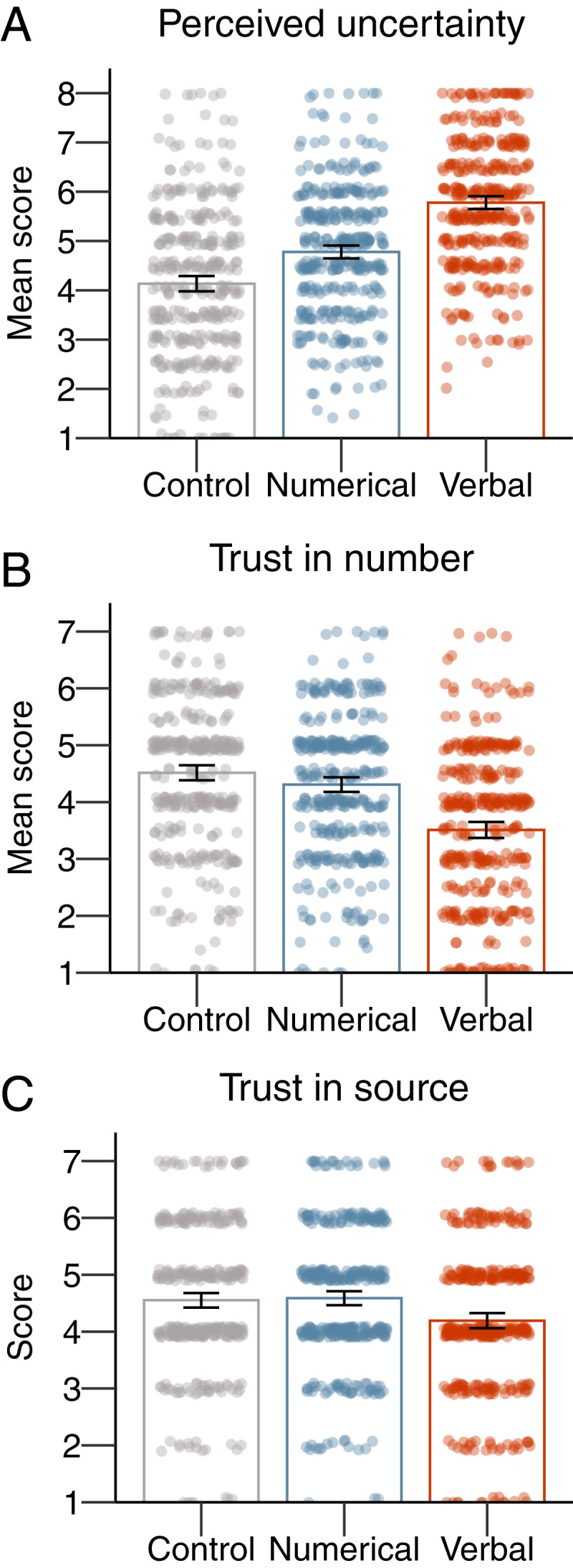
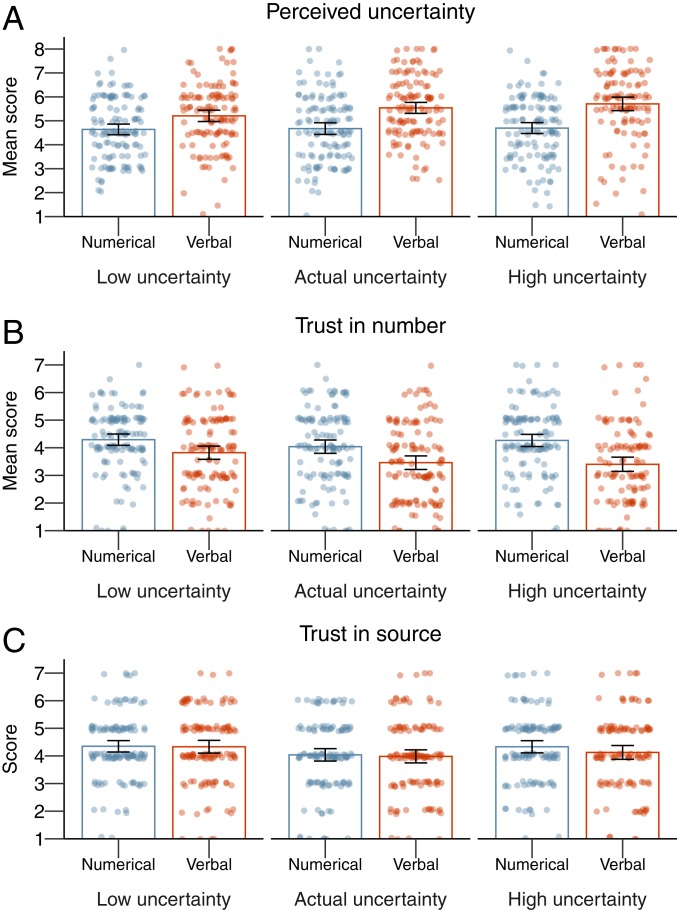
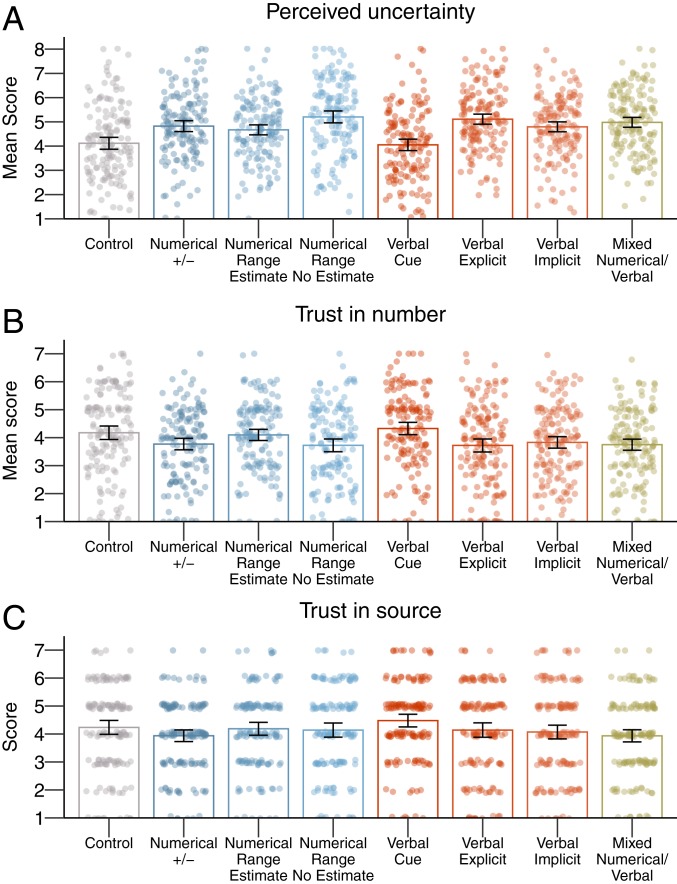
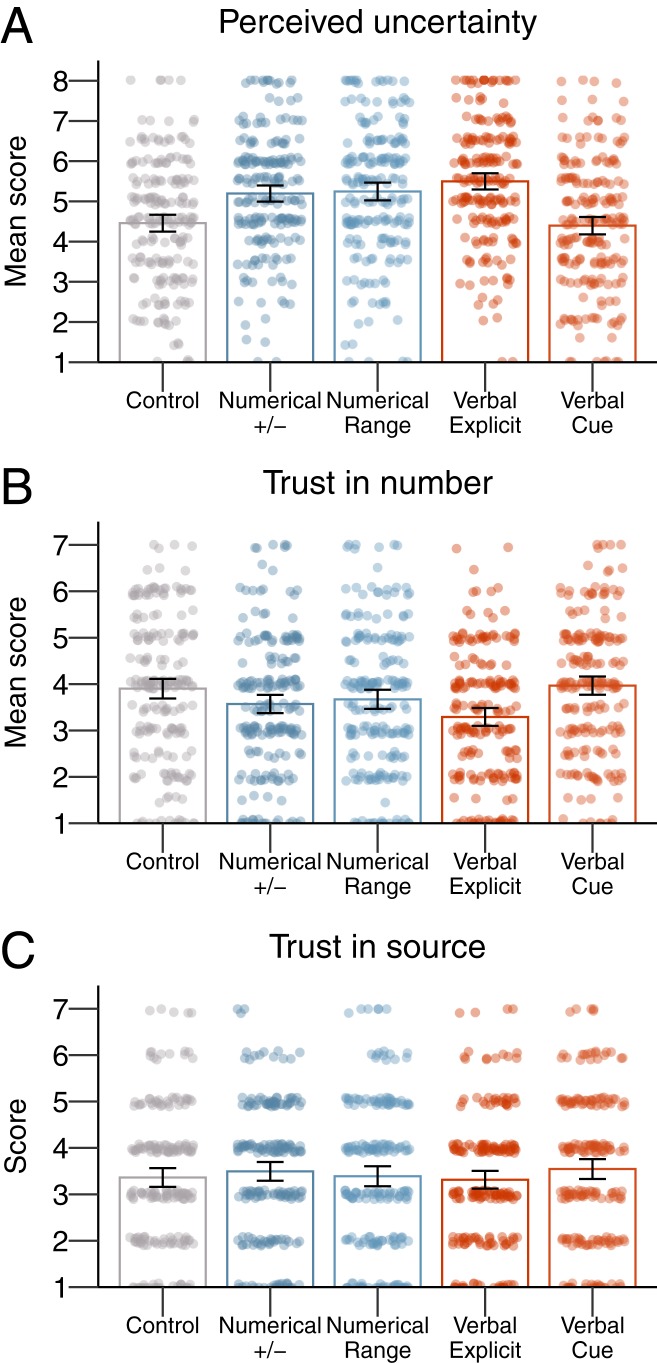
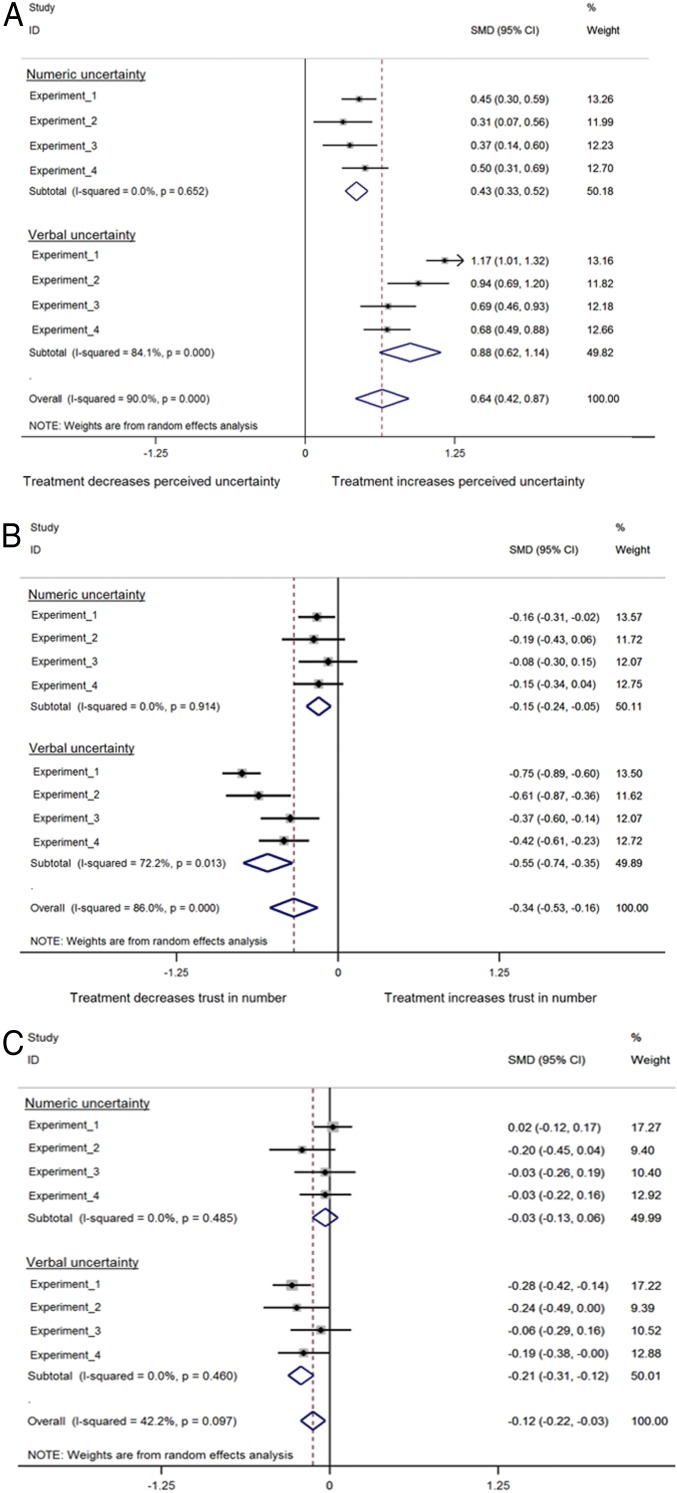
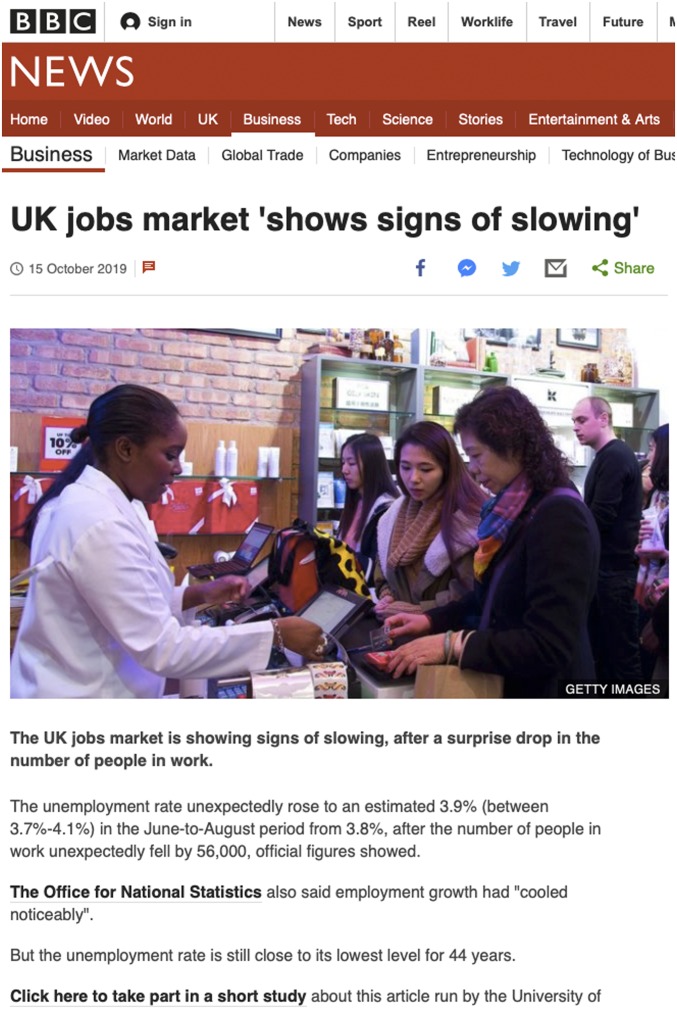
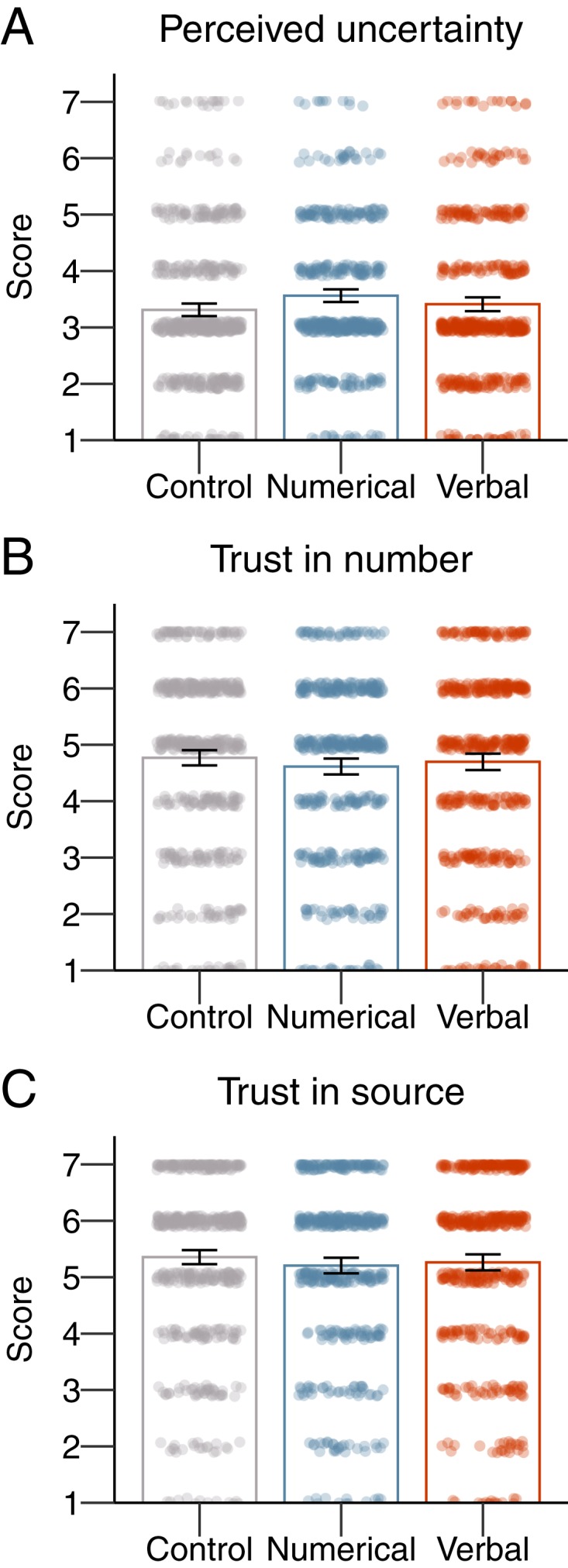
Uncertainty is inherent to our knowledge about the state of the world yet often not communicated alongside scientific facts and numbers. In the “posttruth” era where facts are increasingly contested, a common assumption is that communicating uncertainty will reduce public trust. However, a lack of systematic research makes it difficult to evaluate such claims. We conducted five experiments—including one preregistered replication with a national sample and one field experiment on the BBC News website (total n = 5,780)—to examine whether communicating epistemic uncertainty about facts across different topics (e.g., global warming, immigration), formats (verbal vs. numeric), and magnitudes (high vs. low) influences public trust. Results show that whereas people do perceive greater uncertainty when it is communicated, we observed only a small decrease in trust in numbers and trustworthiness of the source, and mostly for verbal uncertainty communication. These results could help reassure all communicators of facts and science that they can be more open and transparent about the limits of human knowledge.
Overview
The claims and statistics of this paper haven’t been checked yet.
Free: it reads the open-access text and checks the first 5 claims that cite a source we can check. Create a free account to check every claim.
Integrity signals
Registry
Cites
Statistics
Figures
Verification
Claims the paper makes
The claims and statistics of this paper haven’t been checked yet.
Free: it reads the open-access text and checks the first 5 claims that cite a source we can check. Create a free account to check every claim.
Claims other papers make about this one
Each is checked against this paper’s own text: does it say what the citing paper says it does?
The cited source doesn’t support the claim as written.
In the citing paper
“anticipated them to be less useful (d = 0.17, P < 0.001)”
From Expressions of uncertainty in online science communication hinder information diffusion (2024) · cites this paper as [9]
Checked by a reasoning model — may be wrong.
Experimental — accuracy not yet measuredThe source backs part of the claim, not all of it — or backs it for a different population, condition or comparison.
In the citing paper
“trusted uncertain messages less (d = 0.39, P < 0.001)”
From Expressions of uncertainty in online science communication hinder information diffusion (2024) · cites this paper as [9]
Experimental — accuracy not yet measuredThe source backs part of the claim, not all of it — or backs it for a different population, condition or comparison.
In the citing paper
“Most importantly, recent studies have shown that incorporating uncertain language in science communication reduces trust in the message content as well as in its source, and even hinders information diffusion20–22.”
From Scientific publications that use promotional language in the abstract receive more citations and public attention (2025) · cites this paper as [21]
Experimental — accuracy not yet measuredThe source backs part of the claim, not all of it — or backs it for a different population, condition or comparison.
In the citing paper
“A sequence of several experiments by van der Bles and colleagues (2020) concluded that verbal (but not numerical) expressions of uncertainty slightly reduced participants' own levels of certainty as well as their trust in the message source.”
From A review of the effects of uncertainty in public science communication (2020) · cites this paper as van der Bles et al., 2020
Experimental — accuracy not yet measuredThe cited source says what the claim attributes to it.
In the citing paper
“Despite worry by some scientists that communicating uncertainty would lower public trust in science 151,152 , there is little conclusive evidence to support this claim 153 .”
From Predictors and consequences of intellectual humility (2022) · cites this paper as [153]
8 more claims about this paper
Create a free account to see every claim other papers make about this one.
Self-check
Percentages, sums and reported differences re-computed from the paper’s own numbers.
The self-check needs the paper’s full text.
Citations
Cites
(2007) · Medical Entomology and Zoology · Cited by 9,612
Prolific.ac—A subject pool for online experiments
Palan, S., & Schitter, C. (2018) · Journal of Behavioral and Experimental Finance · doi:10.1016/j.jbef.2017.12.004 · Cited by 3,450
Beyond the Turk: Alternative platforms for crowdsourcing behavioral research
Peer, E., Brandimarte, L., Samat, S., & Acquisti, A. (2017) · Journal of Experimental Social Psychology · doi:10.1016/j.jesp.2017.01.006 · Cited by 2,957
Predictably irrational: the hidden forces that shape our decisions
(2008) · Choice Reviews Online · doi:10.5860/choice.46-0969 · Cited by 2,514
Ambiguity Aversion and Comparative Ignorance
Fox, C. R., & Tversky, A. (1995) · The Quarterly Journal of Economics · doi:10.2307/2946693 · Cited by 1,022
Education at a Glance 2018: OECD Indicators
OECD (2018) · Education at a Glance · doi:10.1787/eag-2018-en · Cited by 854
Ambiguity Aversion and Comparative Ignorance
Fox, C. R., & Tversky, A. (2000) · Choices, Values, and Frames · doi:10.1017/cbo9780511803475.031 · Cited by 670
Tolerance of uncertainty: Conceptual analysis, integrative model, and implications for healthcare
Hillen, M. A., Gutheil, C. M., Strout, T. D., Smets, E. M. A., & Han, P. K. J. (2017) · Social Science & Medicine · doi:10.1016/j.socscimed.2017.03.024 · Cited by 536
Gaining trust as well as respect in communicating to motivated audiences about science topics
Fiske, S. T., & Dupree, C. (2014) · Proceedings of the National Academy of Sciences · doi:10.1073/pnas.1317505111 · Cited by 496
Communicating uncertainty about facts, numbers and science
van der Bles, A. M., van der Linden, S., Freeman, A. L. J., Mitchell, J., Galvao, A. B., Zaval, L., & Spiegelhalter, D. J. (2019) · Royal Society Open Science · doi:10.1098/rsos.181870 · Cited by 456
Self-citation
Research works printed but not linked: 4
- Pew Research Center, Beyond distrust: How Americans view their government. https://www.people-press.org/2015/11/23/beyond-distrust-how-americans-view-their-government/. Accessed 5 March 2020.
- Dunwoody S., Hendriks F., Massarani L., Peters H. P., “How journalists deal with scientific uncertainty and what that means for the audience” in 15th International Public Communication of Science and Technology Conference (PCST 2018) (Public Communication of Science and Technology, 2018), pp. 3– 6.
- Druzdzel M. J., Verbal Uncertainty Expressions: Literature Review (Carnegie Mellon University, Pittsburgh, PA, 1989).
- IPCC, “Summary for policymakers” in Climate Change 2013: The Physical Science Basis. Contribution of Working Group I to the Fifth Assessment Report of the Intergovernmental Panel on Climate Change, Stocker T. F., Eds. (IPCC, 2013), pp. 33– 36.
Cited by
Items 101–200 of 415
Measuring Sentence-Level and Aspect-Level (Un)certainty in Science Communications
Pei, J., & Jurgens, D. (2021) · Proceedings of the 2021 Conference on Empirical Methods in Natural Language Processing · doi:10.18653/v1/2021.emnlp-main.784 · Cited by 21
Multiple Hazard Uncertainty Visualization Challenges and Paths Forward
Padilla, L., Dryhurst, S., Hosseinpour, H., & Kruczkiewicz, A. (2021) · Frontiers in Psychology · doi:10.3389/fpsyg.2021.579207 · Cited by 21
van Horen, F., Meijers, M. H. C., Zhang, Y., Delaney, M., Nezami, A., & Lange, P. A. M. V. (2024) · PLoS ONE · doi:10.1371/journal.pone.0299883 · Cited by 21
Sharma, P., Singh, A., & Sharma, N. K. (2022) · Journal of Herbal Medicine · doi:10.1016/j.hermed.2022.100578 · Cited by 21
Political expression of academics on Twitter
Garg, P., & Fetzer, T. (2025) · Nature Human Behaviour · doi:10.1038/s41562-025-02199-1 · Cited by 21
Do claims about certainty make estimates less certain?
Teigen, K. H., & Juanchich, M. (2024) · Cognition · doi:10.1016/j.cognition.2024.105911 · Cited by 20
Ribeiro, F. S., Schröder, V. E., Krüger, R., & Leist, A. K. (2021) · Psychiatry Research · doi:10.1016/j.psychres.2021.114090 · Cited by 20
Lu, Y., Ji, Z., Zhang, X., Zheng, Y., & Liang, H. (2020) · International Journal of Environmental Research and Public Health · doi:10.3390/ijerph18010147 · Cited by 21
Post, B., Badea, C., Faisal, A. A., & Brett, S. J. (2022) · AI and Ethics · doi:10.1007/s43681-022-00230-z · Cited by 19
Impact of pandemic proximity and media use on risk perception during COVID-19 in China
Zhou, S. (2022) · Geomatics Natural Hazards and Risk · doi:10.1080/19475705.2021.2003875 · Cited by 19
Simonovic, N., Taber, J. M., Scherr, C. L., Dean, M., Hua, J., Howell, J. L., Chaudhry, B. M., Wain, K. E., & Politi, M. C. (2022) · Journal of Behavioral Medicine · doi:10.1007/s10865-022-00384-5 · Cited by 18
Lu, J., Zhang, M., Zheng, Y., & Li, Q. (2021) · International Journal of Environmental Research and Public Health · doi:10.3390/ijerph182211933 · Cited by 18
The effect of uncertainty communication on public trust depends on belief–evidence consistency
Dries, C., McDowell, M., Schneider, C. R., & Rebitschek, F. G. (2025) · PNAS Nexus · doi:10.1093/pnasnexus/pgaf071 · Cited by 19
Regularized Aggregation of One-Off Probability Predictions
Satopää, V. (2022) · Operations Research · doi:10.1287/opre.2021.2224 · Cited by 17
Marinescu, V., Fox, B., Cristea, D., Rovenţa-Frumuşani, D., Marinache, R., & Branea, S. (2021) · Sustainability · doi:10.3390/su13094609 · Cited by 17
Managing the COVID-19 pandemic: predictors of trust in institutions in Romania
Bârgăoanu, A., Corbu, N., Buturoiu, R., & Durach, F. (2021) · Kybernetes · doi:10.1108/k-12-2020-0913 · Cited by 16
Communication of Statistics and Evidence in Times of Crisis
Schneider, C. R., Kerr, J. R., Dryhurst, S., & Aston, J. A. D. (2023) · Annual Review of Statistics and Its Application · doi:10.1146/annurev-statistics-040722-052011 · Cited by 16
Lee, S., Jones-Jang, S. M., Chung, M., Lee, E. W. J., & Diehl, T. (2023) · Mass Communication & Society · doi:10.1080/15205436.2023.2268053 · Cited by 17
Trust in public institutions in the age of disinformation
Ručinská, S., Fečko, M., & Mitaľ, O. (2023) · Central and Eastern European eDem and eGov Days · doi:10.1145/3603304.3604075 · Cited by 16
Αποστολόπουλος, Ν., Kakouris, A., Liargovas, P. G., Petropoulos, D. P., & Anastasopoulou, E. E. (2023) · Journal of International Food & Agribusiness Marketing · doi:10.1080/08974438.2023.2183300 · Cited by 16
The elephant in the room: tackling taboos in women's healthcare
Kapoor, A., & McKinnon, M. (2021) · Journal of Science Communication · doi:10.22323/2.20010310 · Cited by 15
A Meta-Analysis Synthesizing the Effects of Three Uncertainty Types in Science Communication
Zaifu, G., Liu, K., & Chen, M. (2025) · Science Communication · doi:10.1177/10755470251314129 · Cited by 15
Lu, J., Zhang, H., Xiao, Y., & Wang, Y. (2024) · JMIR AI · doi:10.2196/47240 · Cited by 15
Onyeaka, H. N. (2025) · Food Safety and Risk · doi:10.1186/s40550-025-00116-y · Cited by 15
Futterleib, H., Thomm, E., & Bauer, J. (2022) · Frontiers in Education · doi:10.3389/feduc.2022.1006766 · Cited by 14
Revenge of the Experts: Will Covid-19 Renew or Diminish Public Trust in Science?
Eichengreen, B. J., Aksoy, C. G., & Saka, O. (2020) · National Bureau of Economic Research · doi:10.3386/w28112 · Cited by 14
Dhungana, A., Doyle, E. E. H., Prasanna, R., & McDonald, G. W. (2025) · Environment Systems & Decisions · doi:10.1007/s10669-025-10039-w · Cited by 15
On masks and masking: epistemic harms and science communication
Intemann, K. K., & de Melo‐Martín, I. (2023) · Synthese · doi:10.1007/s11229-023-04322-z · Cited by 13
McDowell, M., & Kause, A. (2021) · Risk Analysis · doi:10.1111/risa.13739 · Cited by 13
Chen, S. X., Ye, F. T.-F., Cheng, K. L., Ng, J. C. K., Lam, B. C. P., Hui, B. P. H., Au, A. K. Y., Wu, W. C. H., Gu, D., & Zeng, Y. (2023) · PNAS Nexus · doi:10.1093/pnasnexus/pgad318 · Cited by 13
Advancing Systemic Risk Assessment for Complex, Interdependent Systems: A Research Agenda
Logan, T. M., Rachunok, B., Hardaway, K., Bristow, D., Reilly, A., Johnson, D., Johansson, J., Cremen, G., Boakye, J., & Schweizer, P. (2026) · Risk Analysis · doi:10.1111/risa.70243 · Cited by 13
Dhungana, A., Doyle, E. E. H., McDonald, G. W., & Prasanna, R. (2025) · International Journal of Disaster Risk Reduction · doi:10.1016/j.ijdrr.2025.105260 · Cited by 13
Arifin, G. Y. (2024) · American Journal of Scholarly Research and Innovation · doi:10.63125/4m5fjb12 · Cited by 15
Politicized Scientists: Credibility Cost of Political Expression on Twitter
Alabrese, E., Capozza, F., & Garg, P. (2026) · CESifo · doi:10.65864/o4drmo4qkx · Cited by 13
Panwar, V., Wilkinson, E., & Pelling, M. (2024) · Disasters · doi:10.1111/disa.12644 · Cited by 13
Lisi, M. (2023) · Royal Society Open Science · doi:10.1098/rsos.230417 · Cited by 12
Broad Medical Uncertainty and the ethical obligation for openness
Brown, R. C. H., de Barra, M., & Earp, B. D. (2022) · Synthese · doi:10.1007/s11229-022-03666-2 · Cited by 12
Digital Inclusion: International Policy and Research
Yates, S. J., & Carmi, E. (2024) · Palgrave studies in digital inequalities · doi:10.1007/978-3-031-28930-9 · Cited by 11
Uncertainty, expertise, and persuasion: A replication and extension of
Løhre, E., Chandrashekar, S. P., Mayiwar, L., & Hærem, T. (2024) · Journal of Experimental Social Psychology · doi:10.1016/j.jesp.2024.104619 · Cited by 12
Narrative visualizations: Depicting accumulating risks and increasing trust in data
Fansher, M., Walls, L., Hao, C., Subramonyam, H., Boduroğlu, A., Shah, P., & Witt, J. K. (2025) · Cognitive Research Principles and Implications · doi:10.1186/s41235-025-00613-w · Cited by 11
Polarized framing of scientific uncertainty during COVID-19 pandemic in Morocco
Zag, H., & Mifdal, M. (2024) · Atlantic Journal of Communication · doi:10.1080/15456870.2024.2370274 · Cited by 11
How Should Time Estimates Be Structured to Increase Customer Satisfaction?
Hu, B., Gaertig, C., & Dietvorst, B. J. (2024) · Management Science · doi:10.1287/mnsc.2023.00137 · Cited by 11
Leffrang, D., & Müller, O. (2024) · Journal of Forecasting · doi:10.1002/for.3222 · Cited by 11
The Power of Numeric Evidence in Science Communication
Peters, E. M., & Bunquin, J. B. (2024) · Current Directions in Psychological Science · doi:10.1177/09637214241242465 · Cited by 11
Filindra, A., Büyüker, B., & Kaplan, N. J. (2022) · Polity · doi:10.1086/722763 · Cited by 11
Jansen, P., Colley, M., Pfeifer, T., & Rukzio, E. (2024) · Transportation Research Part F Traffic Psychology and Behaviour · doi:10.1016/j.trf.2024.05.015 · Cited by 10
McCartney, M., Sullivan, F., & Heneghan, C. J. (2020) · BMJ Evidence-Based Medicine · doi:10.1136/bmjebm-2020-111541 · Cited by 10
Graulich, N., Arnold, J. C., Sorge, S., & Kubsch, M. (2024) · Waxmann Verlag GmbH eBooks · doi:10.31244/9783830997962 · Cited by 10
Zhao, R., Lu, X., Yang, J., & Li, B. (2024) · Journal of Medical Internet Research · doi:10.2196/51910 · Cited by 10
Gani, S., Arnal, L., Beattie, L. I., Hillier, J. K., Illingworth, S., Lanza, T., Mohadjer, S., Pulkkinen, K., Roop, H., Stewart, I. S., et al. (2024) · Geoscience Communication · doi:10.5194/gc-7-251-2024 · Cited by 10
Marine minerals’ role in future holistic mineral resource management
Ellefmo, S. L., Aberle, N., Hagspiel, V., Ingulstad, M., & Aasly, K. (2022) · Geological Society London Special Publications · doi:10.1144/sp526-2022-30 · Cited by 10
A consistent terminology to communicate ground-related uncertainty
Erharter, G. H., Lacasse, S., Tschuchnigg, F., Tentschert, E., Becker, D., & Phoon, K. (2024) · Engineering Geology · doi:10.1016/j.enggeo.2024.107744 · Cited by 10
Expressions of uncertainty in online science communication hinder information diffusion
Stavrova, O., Kleinberg, B., Evans, A. M., & Ivanović, M. (2024) · PNAS Nexus · doi:10.1093/pnasnexus/pgae439 · Cited by 9
Lawson, B. T., Chadwick, A., Hall, N.-A., & Vaccari, C. (2024) · Information Communication & Society · doi:10.1080/1369118x.2024.2400141 · Cited by 9
Climate change effects on ecosystem services: Disentangling drivers of mixed responses
Delos, M. C., Johnson, C. G., Weiskopf, S. R., & Cushing, J. A. (2025) · PLoS ONE · doi:10.1371/journal.pone.0306017 · Cited by 9
Hijazi, R., Gesser‐Edelsburg, A., Feder‐Bubis, P., & Mesch, G. S. (2022) · Frontiers in Public Health · doi:10.3389/fpubh.2022.1012822 · Cited by 10
State of the ART? Two New Tools for Risk Communication in Health Technology Assessments
Grimm, S. E., Pouwels, X., Ramaekers, B. L. T., Wijnen, B. F. M., Otten, T., Grutters, J. P. C., & Joore, M. A. (2021) · PharmacoEconomics · doi:10.1007/s40273-021-01060-3 · Cited by 9
Wardman, J. K., & Bouder, F. E. (2022) · Journal of Risk Research · doi:10.1080/13669877.2022.2053391 · Cited by 9
Anatomy of a Conspiracy Theory: Law, Politics, and Science Denialism in the Era of COVID-19
Sherwin, B. D. (2021) · Texas A&M Law Scholarship (Texas A&M University School of Law) · doi:10.37419/lr.v8.i3.3 · Cited by 9
Stavrova, O., Kleinberg, B., Evans, A. M., & Ivanović, M. (2025) · Communications Psychology · doi:10.1038/s44271-025-00293-8 · Cited by 8
Mickelsson, M., & Oljans, E. (2025) · Discover Sustainability · doi:10.1007/s43621-025-01631-w · Cited by 8
Yongsatianchot, N., & Marsella, S. (2022) · IEEE Transactions on Affective Computing · doi:10.1109/taffc.2022.3173812 · Cited by 8
Health policy and controlling Covid-19 in England: sociological insights
Calnan, M. (2020) · Emerald Open Research · doi:10.35241/emeraldopenres.13726.2 · Cited by 8
Ambiguity and self-protection: evidence from social distancing under the COVID-19 pandemic
Kishishita, D., Tung, H. H., & Wang, C. I. (2022) · Japanese Economic Review · doi:10.1007/s42973-022-00120-3 · Cited by 7
What do people make of “Ecosystem Based Fisheries Management”?
Briguglio, M., Ramírez‐Monsalve, P., Abela, G., & Armelloni, E. N. (2025) · Frontiers in Marine Science · doi:10.3389/fmars.2025.1553838 · Cited by 8
Béchard, B., Kimmerle, J., Lawarée, J., Bédard, P.-O., Straus, S. E., & Ouimet, M. (2022) · International Journal of Environmental Research and Public Health · doi:10.3390/ijerph19106234 · Cited by 7
Ethical challenges in biomarker research and precision medicine – a qualitative study in dermatology
Fritzsche, M.-C., Hangel, N., & Buyx, A. (2025) · BMC Medical Ethics · doi:10.1186/s12910-025-01258-6 · Cited by 7
Winkle, C. M. V., Aguirre, D. P. S., & Liu-Lastres, B. (2023) · Tourism Recreation Research · doi:10.1080/02508281.2023.2243769 · Cited by 7
Achar, J. C., Firman, J. W., Tran, C., Kim, D., Cronin, M., & Öberg, G. (2024) · Regulatory Toxicology and Pharmacology · doi:10.1016/j.yrtph.2024.105716 · Cited by 7
Uncertainty Communication in a High-Trust Society: Source Type, Political Preference, and Trust
Ihlen, Ø., Fladmoe, A., & Steen‐Johnsen, K. (2023) · International journal of communication · Cited by 7
Wilson, A. M., Mussio, I., Chilton, S., Gerald, L. B., Jones, R. M., Drews, F. A., LaKind, J. S., & Beamer, P. I. (2022) · International Journal of Environmental Research and Public Health · doi:10.3390/ijerph192316092 · Cited by 7
Fattorini, E. (2023) · Tecnoscienza · doi:10.6092/issn.2038-3460/17606 · Cited by 7
Ayuningtyas, D., Oktarina, R., Pebrina, A., Sakka, A., Rozali, R., Barinda, S., & Pramesti, A. (2024) · Journal of Public Health Research · doi:10.1177/22799036241237947 · Cited by 7
Kittel, B., Kalleitner, F., & Schiestl, D. W. (2021) · SocArXiv (OSF Preprints) · doi:10.31235/osf.io/q9b23 · Cited by 6
Ngo, T. T. A., NGUYEN, N. Q. H., & Nguyen, N. A. (2026) · Telematics and Informatics Reports · doi:10.1016/j.teler.2026.100327 · Cited by 6
Paek, H., & Hove, T. B. (2024) · Journal of Risk Research · doi:10.1080/13669877.2024.2311410 · Cited by 6
Minnich, A., Roggenkamp, H., & Lange, A. (2024) · Journal of Economic Behavior & Organization · doi:10.1016/j.jebo.2024.106778 · Cited by 6
Time for an Update: Belief Updating Based on Ambiguous Scientific Evidence
Schreiner, M. R., Pütter, J. Q., & Rebholz, T. R. (2024) · Zeitschrift für Psychologie · doi:10.1027/2151-2604/a000571 · Cited by 6
Vromans, R., van Goor, L. M. A., & Pauws, S. C. (2024) · Journal of Risk Research · doi:10.1080/13669877.2024.2368191 · Cited by 6
Mapping patterns of trust in science and scientists
Younger-Khan, S. (2025) · Current Opinion in Psychology · doi:10.1016/j.copsyc.2025.102203 · Cited by 6
Tosoni, E., Salo, A. A., Govaerts, J., & Zio, E. (2020) · Data in Brief · doi:10.1016/j.dib.2020.105780 · Cited by 6
Perceptions towards Government Communication Strategies on COVID-19 Vaccination in Kenya
Aswani, D. R. (2021) · Asian Journal of Humanities and Social Studies · doi:10.24203/ajhss.v9i5.6755 · Cited by 6
How to maintain trustworthiness when doctors act as policy advocates
Walsh, S., Taylor-Robinson, D. C., Spiegelhalter, D. J., & Brayne, C. (2024) · BMJ · doi:10.1136/bmj-2024-079929 · Cited by 5
Self-citationCaution as a Response to Scientific Uncertainty: A Groundwater Game Experiment
Ahn, M., Baldwin, E., & Girone, D. (2024) · International Journal of the Commons · doi:10.5334/ijc.1347 · Cited by 5
Béchard, B., Gramaccia, J. A., Gagnon, D., Laouan-Sidi, E. A., Dubé, È., Ouimet, M., de Hemptinne, D., & Tremblay, S. (2024) · JMIR Formative Research · doi:10.2196/52871 · Cited by 5
Fostering trustworthy information: countering disinformation when there are no bare facts
Boumans, M. J., Ferwerda, J., Goldenberg, M. J., Leonelli, S., Russo, F., Traag, V., & Wardekker, A. (2025) · Royal Society Open Science · doi:10.1098/rsos.250654 · Cited by 5
Ansari, S., & Alam, M. Z. (2025) · ACM International Workshop on Multimedia AI against Disinformation (MAD) · doi:10.1145/3733567.3735568 · Cited by 5
Rovenskaya, E., Kaplan, D., & Sizov, S. (2021) · IIASA PURE (International Institute of Applied Systems Analysis) · Cited by 5
Communication of Uncertainty in AI Regulations
Phutane, A. S. (2023) · Community Change · doi:10.21061/cc.v4i2.a.50 · Cited by 5
Duke, M. C. (2024) · Intelligence & National Security · doi:10.1080/02684527.2024.2392376 · Cited by 5
Mohr, M. V., Hackenburg, K., Tanzer, M., Fotopoulou, A., Campbell, C., & Tsakiris, M. (2024) · Politics and the Life Sciences · doi:10.1017/pls.2024.11 · Cited by 5
The power of numbers in natural hazard communication
Peters, E. M., Blow, A., Chapman, D. A., & Shoots‐Reinhard, B. L. (2025) · Journal of Risk Research · doi:10.1080/13669877.2025.2512082 · Cited by 5
Why and When Ethical Leadership Signals Enhance Employer Attractiveness: A Moderated Mediation Model
Möbert, A., Masling, A., & Kastenmüller, A. (2025) · Journal of Personnel Psychology · doi:10.1027/1866-5888/a000367 · Cited by 5
The Rationality of COVID-19 Vaccine Hesitancy
Kelsall, J. (2023) · Episteme · doi:10.1017/epi.2023.47 · Cited by 5
Post-COVID-19 WHO Reform: Ethical Considerations
de Campos, T. C. (2021) · Public Health Ethics · doi:10.1093/phe/phab011 · Cited by 5
Health policy and controlling Covid-19 in England: sociological insights
Calnan, M. (2020) · Emerald Open Research · doi:10.1108/eor-02-2023-0013 · Cited by 5
Media representations of synthetic biology in China
Wang, M., & Du, L. (2023) · Trends in biotechnology · doi:10.1016/j.tibtech.2023.06.002 · Cited by 4
When GenAI writes public foresight reports: Effects on convincing citizens
Zumbrunn, L., & Guenduez, A. A. (2025) · Public Policy and Administration · doi:10.1177/09520767251403049 · Cited by 4
Fian, L., Vaupotič, N., Richter, I., Koelmans, A. A., & Pahl, S. (2026) · Public Understanding of Science · doi:10.1177/09636625251410494 · Cited by 4
Discussing trust and resilience: The need for a healthy dose of distrust
Scharte, B. (2024) · Risk Hazards & Crisis in Public Policy · doi:10.1002/rhc3.12287 · Cited by 4
Metadata
- Authors
- van der Bles, A. M., van der Linden, S., Freeman, A. L. J., & Spiegelhalter, D. J.
- Affiliations
- Winton Centre for Risk and Evidence Communication, University of Cambridge, Cambridge CB3 0WA, United Kingdom;
- University of Cambridge (GB)
- Venue
- Proceedings of the National Academy of Sciences
- Publisher
- National Academy of Sciences
- Published
- 2020-03-23
- Volume
- 117
- Issue
- 14
- Pages
- 7672-7683
- ISSN
- 0027-8424 (ISSN-L)
- 1091-6490
- PMC
- PMC7149229
- OpenAlex
- W3012585012
- Cited by
- 348
- References
- 42
- Citations by year
- 2026: 61 · 2025: 41 · 2024: 48 · 2023: 39 · 2022: 70 · 2021: 61 · 2020: 28
- FWCI
- 66.33
- Type
- journal article
- Language
- en
- Open access
- hybrid
- doi.org
- Licence
- Locations
- Proceedings of the National Academy of Sciences (publishedVersion, cc-by)
- PubMed Central (publishedVersion, cc-by)
- PubMed (publishedVersion)
- University of Groningen research database (University of Groningen / Centre for Information Technology) (submittedVersion, cc-by)
- Apollo (University of Cambridge) (submittedVersion)
- Apollo (University of Cambridge) (submittedVersion, cc-by)
- Apollo
- Apollo (cc-by)
- Funders
- Nuffield Foundation (OSP/43227)
- Topics
- Social Sciences › Sociology and Political Science › Risk Perception and Management
- Social Sciences › Sociology and Political Science › Climate Change Communication and Perception
- Social Sciences › Sociology and Political Science › Misinformation and Its Impacts
- Keywords
- epistemic uncertainty, uncertainty communication, public trust, source trustworthiness, science communication, global warming, immigration, BBC News
- MeSH terms
- Communication, Humans, Meta-Analysis as Topic, Internet, Uncertainty, Trust
About these checks
Registry, retraction, Cites and statistics results are computed, not judged, with one exception: a printed reference that no index lists is read once by a model before it counts as a citation error. Claims are extracted by a model and kept only when their quote appears verbatim in the text; each cited source is then checked, with a model’s help, for whether it says what the claim relies on. Those verdicts can be wrong — read the claim’s quote and the cited source before relying on one.
Statistics and arithmetic are recomputed, not judged.
Confidence bands are shown only for fields calibrated on our annotated test set. None is calibrated yet, so no band is shown.
What counts as a claim ›How we measure confidence ›How we check this ›
Are you an author, or do you see a problem with this page? Request a review
Data sources
Bibliographic data: Semantic Scholar, OpenAlex, Crossref.
Contains information from the Semantic Scholar Academic Graph Datasets, made available under the ODC Attribution License (ODC-BY 1.0).
Semantic Scholar’s data is described in: Kinney, R., et al. (2023). The Semantic Scholar Open Data Platform. arXiv:2301.10140.
