

The effects of communicating uncertainty on public trust in facts and numbers
Open accessThe DOI matches its Crossref record; 42 of the 42 references it cites were found in a registry or an index.
Abstract
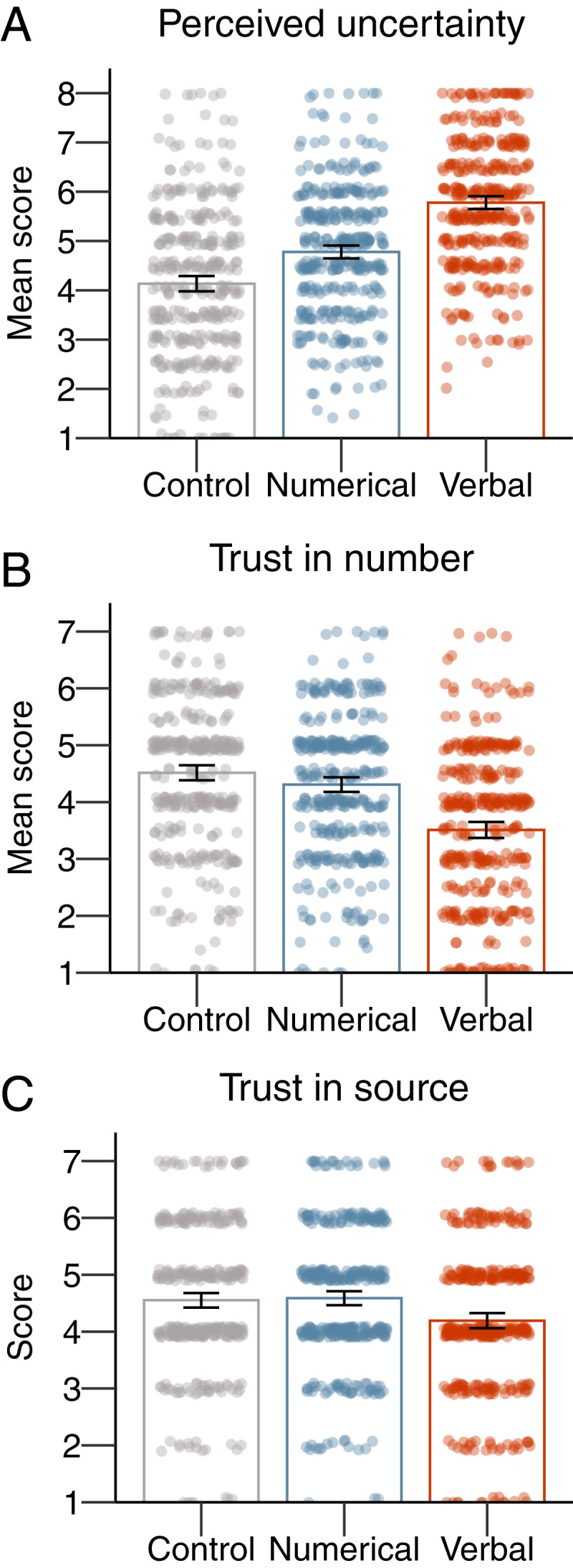
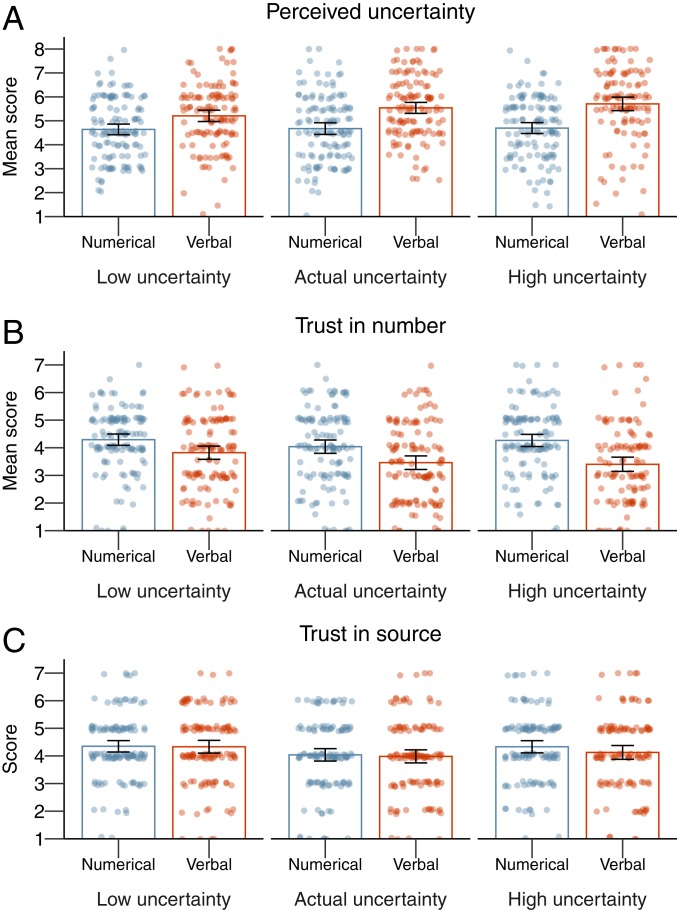
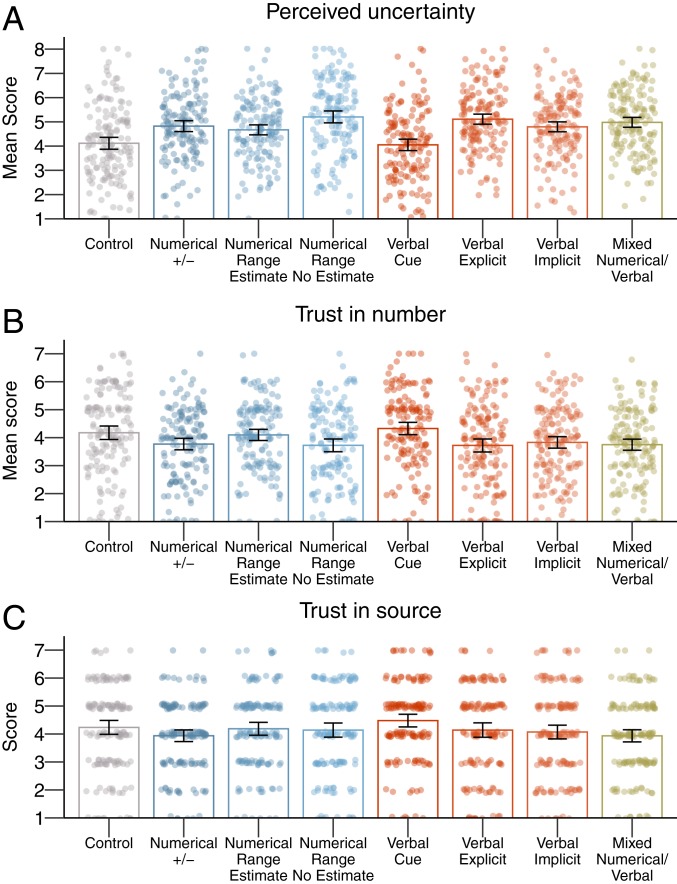
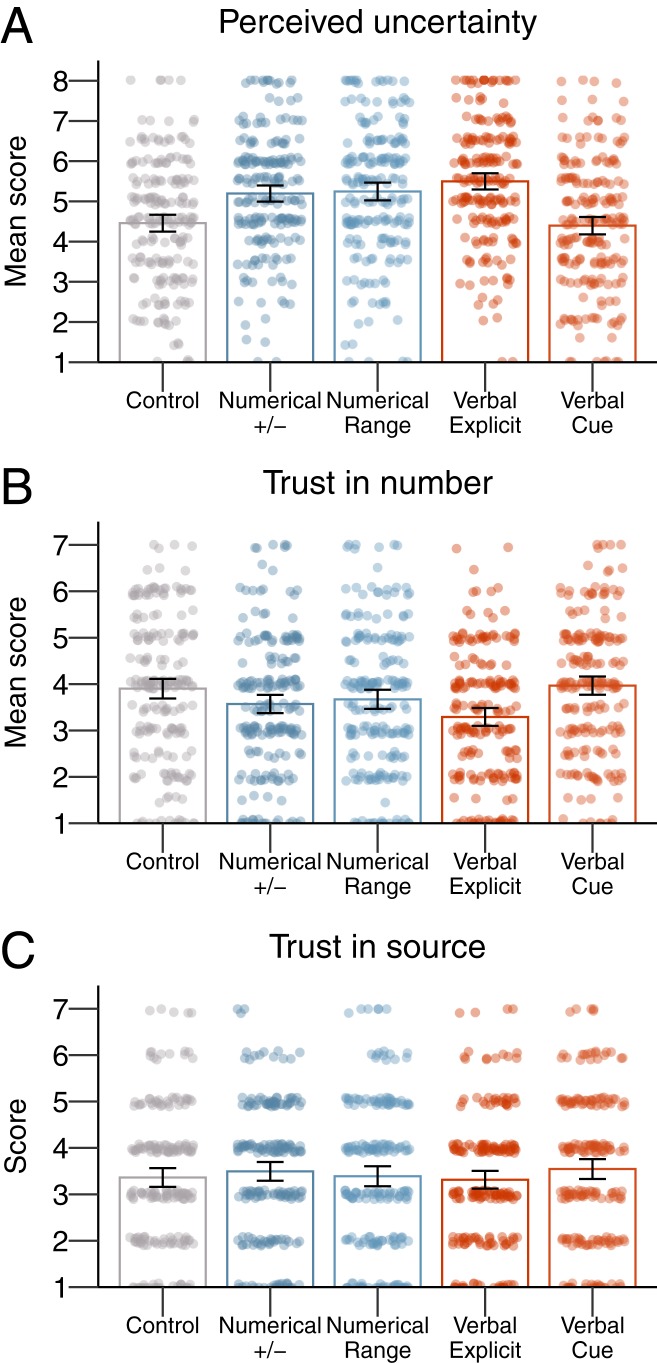
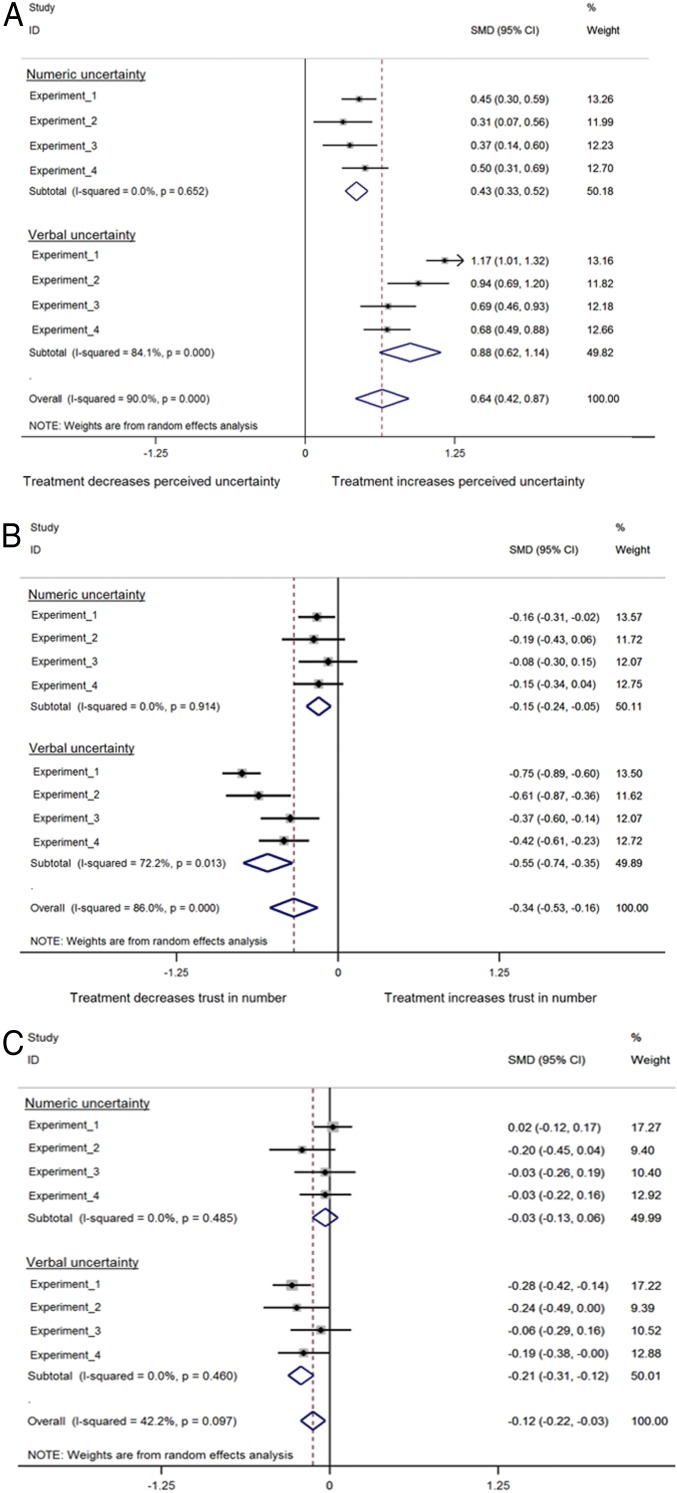
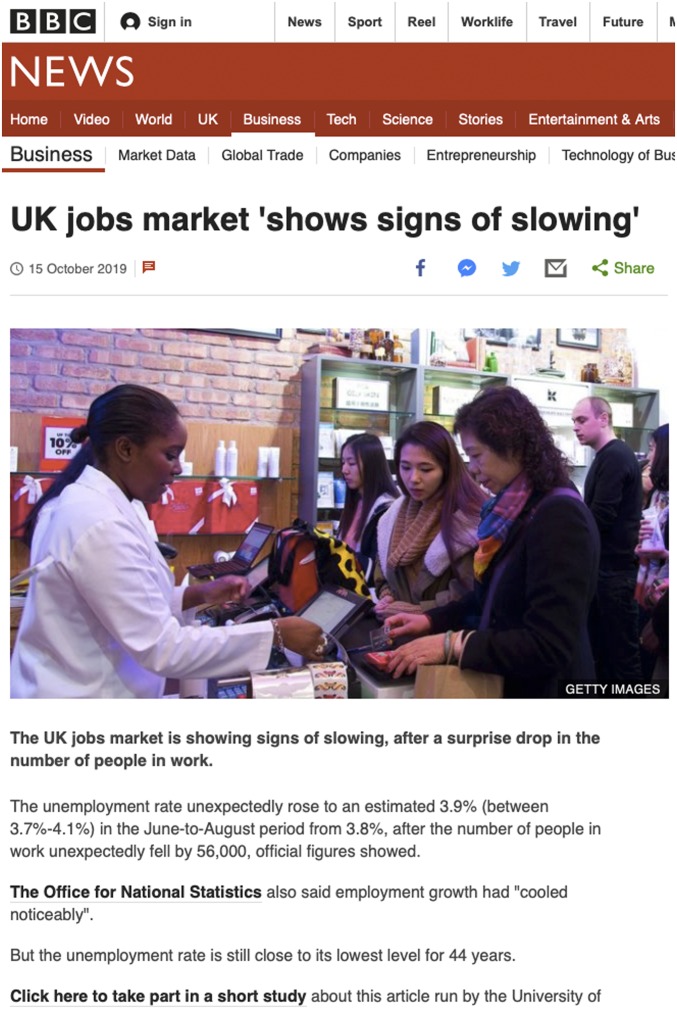
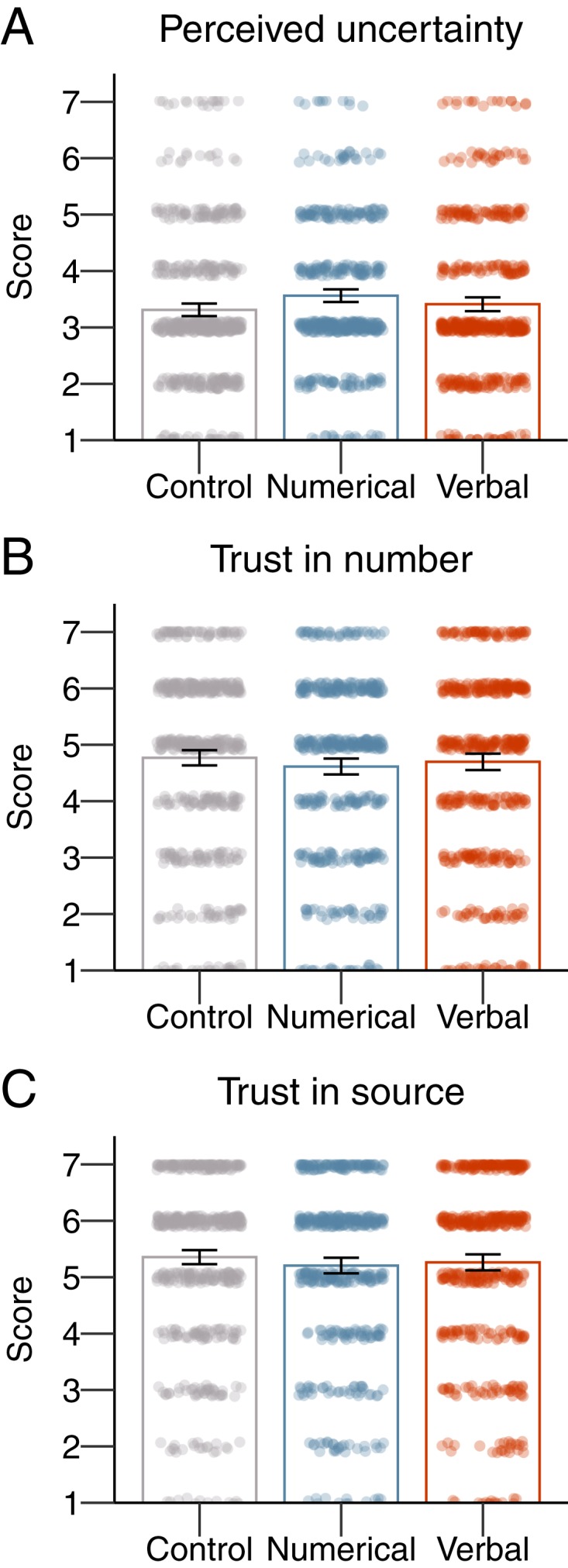
Uncertainty is inherent to our knowledge about the state of the world yet often not communicated alongside scientific facts and numbers. In the “posttruth” era where facts are increasingly contested, a common assumption is that communicating uncertainty will reduce public trust. However, a lack of systematic research makes it difficult to evaluate such claims. We conducted five experiments—including one preregistered replication with a national sample and one field experiment on the BBC News website (total n = 5,780)—to examine whether communicating epistemic uncertainty about facts across different topics (e.g., global warming, immigration), formats (verbal vs. numeric), and magnitudes (high vs. low) influences public trust. Results show that whereas people do perceive greater uncertainty when it is communicated, we observed only a small decrease in trust in numbers and trustworthiness of the source, and mostly for verbal uncertainty communication. These results could help reassure all communicators of facts and science that they can be more open and transparent about the limits of human knowledge.
Overview
The claims and statistics of this paper haven’t been checked yet.
Free: it reads the open-access text and checks the first 5 claims that cite a source we can check. Create a free account to check every claim.
Integrity signals
Registry
Cites
Statistics
Figures
Verification
Claims the paper makes
The claims and statistics of this paper haven’t been checked yet.
Free: it reads the open-access text and checks the first 5 claims that cite a source we can check. Create a free account to check every claim.
Claims other papers make about this one
Each is checked against this paper’s own text: does it say what the citing paper says it does?
The cited source doesn’t support the claim as written.
In the citing paper
“anticipated them to be less useful (d = 0.17, P < 0.001)”
From Expressions of uncertainty in online science communication hinder information diffusion (2024) · cites this paper as [9]
Checked by a reasoning model — may be wrong.
Experimental — accuracy not yet measuredThe source backs part of the claim, not all of it — or backs it for a different population, condition or comparison.
In the citing paper
“trusted uncertain messages less (d = 0.39, P < 0.001)”
From Expressions of uncertainty in online science communication hinder information diffusion (2024) · cites this paper as [9]
Experimental — accuracy not yet measuredThe source backs part of the claim, not all of it — or backs it for a different population, condition or comparison.
In the citing paper
“Most importantly, recent studies have shown that incorporating uncertain language in science communication reduces trust in the message content as well as in its source, and even hinders information diffusion20–22.”
From Scientific publications that use promotional language in the abstract receive more citations and public attention (2025) · cites this paper as [21]
Experimental — accuracy not yet measuredThe source backs part of the claim, not all of it — or backs it for a different population, condition or comparison.
In the citing paper
“A sequence of several experiments by van der Bles and colleagues (2020) concluded that verbal (but not numerical) expressions of uncertainty slightly reduced participants' own levels of certainty as well as their trust in the message source.”
From A review of the effects of uncertainty in public science communication (2020) · cites this paper as van der Bles et al., 2020
Experimental — accuracy not yet measuredThe cited source says what the claim attributes to it.
In the citing paper
“Despite worry by some scientists that communicating uncertainty would lower public trust in science 151,152 , there is little conclusive evidence to support this claim 153 .”
From Predictors and consequences of intellectual humility (2022) · cites this paper as [153]
8 more claims about this paper
Create a free account to see every claim other papers make about this one.
Self-check
Percentages, sums and reported differences re-computed from the paper’s own numbers.
The self-check needs the paper’s full text.
Citations
Cites
(2007) · Medical Entomology and Zoology · Cited by 9,612
Prolific.ac—A subject pool for online experiments
Palan, S., & Schitter, C. (2018) · Journal of Behavioral and Experimental Finance · doi:10.1016/j.jbef.2017.12.004 · Cited by 3,450
Beyond the Turk: Alternative platforms for crowdsourcing behavioral research
Peer, E., Brandimarte, L., Samat, S., & Acquisti, A. (2017) · Journal of Experimental Social Psychology · doi:10.1016/j.jesp.2017.01.006 · Cited by 2,957
Predictably irrational: the hidden forces that shape our decisions
(2008) · Choice Reviews Online · doi:10.5860/choice.46-0969 · Cited by 2,514
Ambiguity Aversion and Comparative Ignorance
Fox, C. R., & Tversky, A. (1995) · The Quarterly Journal of Economics · doi:10.2307/2946693 · Cited by 1,022
Education at a Glance 2018: OECD Indicators
OECD (2018) · Education at a Glance · doi:10.1787/eag-2018-en · Cited by 854
Ambiguity Aversion and Comparative Ignorance
Fox, C. R., & Tversky, A. (2000) · Choices, Values, and Frames · doi:10.1017/cbo9780511803475.031 · Cited by 670
Tolerance of uncertainty: Conceptual analysis, integrative model, and implications for healthcare
Hillen, M. A., Gutheil, C. M., Strout, T. D., Smets, E. M. A., & Han, P. K. J. (2017) · Social Science & Medicine · doi:10.1016/j.socscimed.2017.03.024 · Cited by 536
Gaining trust as well as respect in communicating to motivated audiences about science topics
Fiske, S. T., & Dupree, C. (2014) · Proceedings of the National Academy of Sciences · doi:10.1073/pnas.1317505111 · Cited by 496
Communicating uncertainty about facts, numbers and science
van der Bles, A. M., van der Linden, S., Freeman, A. L. J., Mitchell, J., Galvao, A. B., Zaval, L., & Spiegelhalter, D. J. (2019) · Royal Society Open Science · doi:10.1098/rsos.181870 · Cited by 456
Self-citation
Research works printed but not linked: 4
- Pew Research Center, Beyond distrust: How Americans view their government. https://www.people-press.org/2015/11/23/beyond-distrust-how-americans-view-their-government/. Accessed 5 March 2020.
- Dunwoody S., Hendriks F., Massarani L., Peters H. P., “How journalists deal with scientific uncertainty and what that means for the audience” in 15th International Public Communication of Science and Technology Conference (PCST 2018) (Public Communication of Science and Technology, 2018), pp. 3– 6.
- Druzdzel M. J., Verbal Uncertainty Expressions: Literature Review (Carnegie Mellon University, Pittsburgh, PA, 1989).
- IPCC, “Summary for policymakers” in Climate Change 2013: The Physical Science Basis. Contribution of Working Group I to the Fifth Assessment Report of the Intergovernmental Panel on Climate Change, Stocker T. F., Eds. (IPCC, 2013), pp. 33– 36.
Cited by
Items 201–300 of 415
Stedtnitz, C., Szewach, P., & Johns, R. (2024) · Public Opinion Quarterly · doi:10.1093/poq/nfae010 · Cited by 4
Attitudes Towards Science During the Covid-19 Pandemic: A Psychological Network Approach
Wingen, T., Lecuona, O. Z., & Dohle, S. (2022) · European Journal of Health Communication · doi:10.47368/ejhc.2022.105 · Cited by 4
Modeling Emotion-Focused Coping as a Decision Process
Yongsatianchot, N., & Marsella, S. (2022) · International Conference on Affective Computing and Intelligent Interaction and workshops · doi:10.1109/acii55700.2022.9953834 · Cited by 4
Jou, Y., Mariñas, K. A., Saflor, C. S., Young, M. N., Prasetyo, Y. T., & Persada, S. F. (2022) · Healthcare · doi:10.3390/healthcare10081483 · Cited by 4
Lachlan, K. A., Gilbert, C., Hutter, E., & Spence, P. R. (2023) · Atlantic Journal of Communication · doi:10.1080/15456870.2023.2173363 · Cited by 4
Henze, F., Faßbender, D., & Stiller, C. (2022) · IEEE Intelligent Vehicles Symposium · doi:10.1109/iv51971.2022.9827197 · Cited by 4
Valentini, C., Ihlen, Ø., & Tench, R. (2022) · Routledge eBooks · doi:10.4324/9781003184669-4 · Cited by 4
From ‘good’ intentions to principled practices and beyond: ethical issues in risk communication
Cerase, A. (2020) · Geological Society London Special Publications · doi:10.1144/sp508-2020-104 · Cited by 4
Effective Sample Size for the Kaplan-Meier Estimator: A Valuable Measure of Uncertainty?
Hackmann, T., Thomassen, D., Stiggelbout, A. M., le Cessie, S., Putter, H., de Wreede, L. C., Steyerberg, E. W., & on behalf of the 4D PICTURE Consortium (2025) · The American Statistician · doi:10.1080/00031305.2025.2542390 · Cited by 4
Anglin, S. M., Rath, E., Yuodsnukis, J., & Miller, N. E. (2025) · Collabra Psychology · doi:10.1525/collabra.133914 · Cited by 4
Science journalists and public trust: comparative insights from Germany, Italy, and Lithuania
Mahr, D., Bussoletti, A., Coenen, C., Comunello, F., Baniukevič, J., & Weinberger, N. (2025) · Journal of Science Communication · doi:10.22323/149220250818111637 · Cited by 4
Digital Communication Strategy for Government Public Relations in Indonesia and Thailand
Nurfalah, F., Nuruzzaman, M., Khumayah, S., & Irawan, N. (2026) · International Journal of Communication and Public Relation · doi:10.47604/ijcpr.3595 · Cited by 4
European Sentiment in time of crises. The point of view of young university students
Parito, M., Calle, R. D. P., & D’Ambrosi, L. (2023) · SocietàMutamentoPolitica · doi:10.36253/smp-13441 · Cited by 4
von Ameln, F., & Iwers-Stelljes, T. A. (2021) · Gruppe Interaktion Organisation Zeitschrift für Angewandte Organisationspsychologie (GIO) · doi:10.1007/s11612-021-00611-8 · Cited by 4
Recchia, G. L., Schneider, C. R., & Freeman, A. L. J. (2021) · BMJ Open · doi:10.1136/bmjopen-2020-047731 · Cited by 3
Self-citationBienassis, K. D., Esmail, L. C., Lopert, R., & Klazinga, N. (2023) · doi:10.1787/d91edcf5-de · Cited by 3
Patwary, A. K., Kumar, P., Zainol, N. A., Hassan, N. B., Parvez, M. O., Ahmad, R., & Supina, S. (2025) · Journal of Culinary Science & Technology · doi:10.1080/15428052.2025.2517646 · Cited by 3
Democratic Falsehoods: Legitimate Fictions in Public Speech
Lepoutre, M. (2026) · doi:10.1093/9780198916017.001.0001 · Cited by 3
Meese, W. B. (2025) · Personality and Social Psychology Review · doi:10.1177/10888683251403209 · Cited by 3
Dries, C., Schneider, C. R., Oeberst, A., McDowell, M., Egharevba, G., & Rebitschek, F. G. (2026) · Royal Society Open Science · doi:10.1098/rsos.251896 · Cited by 3
Klimabildung in der VUCA-Welt: Mit Ungewissheiten und Unsicherheiten umgehen (lernen)
Hanke, M., & Lübke, B. (2025) · Springer eBooks · doi:10.1007/978-3-658-48374-6_20 · Cited by 3
Li, X. A., Hubbard, K., & Hwang, J. (2025) · Frontiers in Public Health · doi:10.3389/fpubh.2025.1611711 · Cited by 3
Measuring and Communicating the Uncertainty in Official Economic Statistics
Mazzi, G. L., Mitchell, J., & Carausu, F. (2021) · Journal of Official Statistics · doi:10.2478/jos-2021-0013 · Cited by 3
Deng, F., & Zhu, S. (2025) · Business Process Management Journal · doi:10.1108/bpmj-12-2024-1237 · Cited by 3
Gilman, S. E., Govender, T., Augustin, D., & Yu, J. (2023) · Journal of Child Psychology and Psychiatry · doi:10.1111/jcpp.13842 · Cited by 3
Public views of coronavirus science and scientists: findings from a cross-sectional survey
Gooberman‐Hill, R., Taylor, M. L., Maude, U., Yardley, L., Huxtable, R., Stubbs, J., & Peters, T. J. (2021) · Wellcome Open Research · doi:10.12688/wellcomeopenres.16780.2 · Cited by 3
Unreviewed science in the news: Why and how journalists cover preprint research
Fleerackers, A. (n.d.) · Summit (Simon Fraser University) · Cited by 3
Network Informational Complexity, Epistemic Political Efficacy, and Fact-Checking
Hopp, T. (2024) · International journal of communication · Cited by 3
When the public does not trust science: What can journalists do about it?
Lyons, S., & Lidberg, J. (2024) · The Australian Journalism Review · doi:10.1386/ajr_00165_1 · Cited by 3
Gritzka, S., Angerer, P., & Diebig, M. (2023) · Journal of Occupational and Environmental Medicine · doi:10.1097/jom.0000000000002997 · Cited by 2
Scientific Accountability: Detecting Salient Features of Retracted Articles
Usman, M., & Balke, W. (2025) · ACM Web Science Conference (WebSci) · doi:10.1145/3717867.3717885 · Cited by 2
Crisis Narratives and Communication: An Evaluation of CDC Messages About COVID-19 Information
Lorenzo, S. B. (2026) · International Journal of Strategic Communication · doi:10.1080/1553118x.2026.2660769 · Cited by 2
Lepoutre, M. (2025) · Ergo an Open Access Journal of Philosophy · doi:10.3998/ergo.8579 · Cited by 2
Building on Sand? Third-Party Sustainability Measures in the Business Literature
Timmer, T., Delmas, M. A., Corbett, C., Boiral, O., & Guillaumie, L. (2026) · Social Science Research Network · doi:10.1177/10860266261443020 · Cited by 2
Garcia‐Argibay, M., Wootton, R. E., Larsson, H., Mattheisen, M., Polimanti, R., & Meier, S. M. (2026) · Molecular Psychiatry · doi:10.1038/s41380-026-03484-9 · Cited by 2
Uncertainty Communication by AI Assistants: The Effects on User Trust
Siegling, L. B. (2020) · Utrecht University Repository (Utrecht University) · Cited by 2
Overcoming Obstacles to Collective Action by Communicating Compassion in Science
Hester, E. B., Ivanov, B., & Parker, K. A. (2021) · Wiley eBooks · doi:10.1002/9781119751809.ch7 · Cited by 2
Evidence-informed decision-making in public health in Canada: a qualitative exploration
Romano, I., Clark, E., Quiambao, J., Horn, M., Dare, L., Rogers, K., & Dobbins, M. (2024) · International Journal of Evidence-Based Healthcare · doi:10.1097/xeb.0000000000000454 · Cited by 2
Attribution methods related to past and projected changes, and to extreme events
Hay, J. E., & Williams, P. D. (2023) · Elsevier eBooks · doi:10.1016/b978-0-323-85541-9.00001-8 · Cited by 2
Liangdong, L. U., Zhengjian, X. U., Wei, J., & Jia, X. U. (2023) · 资源科学 · doi:10.18402/resci.2023.04.03 · Cited by 2
Depth-to-Bedrock Mapping in Wisconsin
Hart, D. J., Mauel, S. W., Luczaj, J. A., & Stewart, E. (2021) · Open-file report - Wisconsin Geological and Natural History Survey · doi:10.54915/jnvo5885 · Cited by 2
The Impact of Uncertainty Visualization on Trust in Thematic Maps
Srivastava, V., Lei, F., MacEachren, A. M., & Maciejewski, R. (2026) · CHI Conference on Human Factors in Computing Systems · doi:10.1145/3772318.3790743 · Cited by 2
Charting Scenarios: A Framework for Uncertainty Visualization in Data Journalism PracticePreprint
Possin, B., & Kinkeldey, C. (2025) · OSF Preprints (OSF Preprints) · doi:10.31219/osf.io/n3bk4_v1 · Cited by 2
Trust in the Digital Age: Mechanisms of Formation, Erosion, and Restoration in Health Information
Alabri, A. (2026) · IntechOpen eBooks · doi:10.5772/intechopen.1013748 · Cited by 1
Dehdarirad, T., & Schirone, M. (2023) · Journal of Information Science · doi:10.1177/01655515231176650 · Cited by 1
Lee, W., Hwang, K., Kim, S., Ban, G., Song, Y., & Park, W. (2026) · International Journal of Human-Computer Interaction · doi:10.1080/10447318.2026.2638556 · Cited by 1
Establishing Trust in Science Communication
Curtis, C., Gillespie, N. A., & Okimoto, T. G. (2023) · Springer eBooks · doi:10.1007/978-3-030-91628-2_5 · Cited by 1
Reporting uncertified science in the news media during the Covid-19 pandemicPreprint
Schalkwyk, F. B. V., & Dudek, J. (2022) · doi:10.14293/111.000/000025.v1 · Cited by 1
Using blogs to make peer-reviewed research more accessible
Young, N. T., Lewis, B. L., Kerr, E., & Nair, P. H. (2022) · Physics Education Research Conference (PERC) · doi:10.1119/perc.2022.pr.young_n · Cited by 1
Fjæran, L., Gould, K. P., Berg, S. H., & Lofthus, L. (2025) · Risk Hazards & Crisis in Public Policy · doi:10.1002/rhc3.70043 · Cited by 1
Uncertainty displays in pandemic dashboards: a review of COVID-19 use cases
Tessema, T., Shahezian, M., Vasquez, H. M., Rosella, L., & Donmez, B. (2026) · Frontiers in Digital Health · doi:10.3389/fdgth.2026.1869108 · Cited by 1
Gerken, M. (2022) · Oxford University Press eBooks · doi:10.1093/oso/9780198857273.003.0006 · Cited by 1
Scientific Justification as the Basis of Scientific Testimony
Gerken, M. (2022) · Oxford University Press eBooks · doi:10.1093/oso/9780198857273.003.0004 · Cited by 1
From Storytelling to Truth-Telling: Narrative Integrity in Science Communication
van Laer, T., & Chaxel, A. (2026) · Science Communication · doi:10.1177/10755470261475623 · Cited by 1
Thomas, J. C., Düsing, K., van den Bogaert, V., Greving, H., Bruckermann, T., Schumann, A., BRANDT, M. J., Lewanzik, D., Voigt, C. C., Harms, U., et al. (2026) · Discover Education · doi:10.1007/s44217-026-01441-w · Cited by 1
Recchia, G. L., Moser, K. S., & Freeman, A. L. J. (2024) · MDM Policy & Practice · doi:10.1177/23814683241226660 · Cited by 1
Self-citationRethinking trust in AI: empirical insights from labor and healthcare domains
Jung, Y., Oh, P., & Zhai, J. (2026) · Communication and Change · doi:10.1007/s44382-026-00029-0 · Cited by 1
Trust and the COVID-19 Pandemic
Rudisill, C., & Harrison, S. E. (2024) · Cambridge University Press eBooks · doi:10.1017/9781009438438.024 · Cited by 1
Pena y comunicación en la sociedad de la posverdad
Lázaro, F. G. S. (2021) · Anales de la Cátedra Francisco Suárez · doi:10.30827/acfs.vi1.16564 · Cited by 1
Zhang, Y., & Li, X. (2025) · Journal of Health Psychology · doi:10.1177/13591053251382443 · Cited by 1
Systems metrology for future cities at the smart metrology campus (SMC)
Jung, B., Hutzschenreuter, D., Wehming, M., Ulbig, M., Peltason, V., & Kammeyer, A. (2025) · Measurement · doi:10.1016/j.measurement.2025.119197 · Cited by 1
Hitchins, K., & Reynolds, J. P. (2025) · International Journal of Drug Policy · doi:10.1016/j.drugpo.2025.104909 · Cited by 1
CAREER: Rethinking How Middle and High School Students Analyze and Interpret Ecological DataPreprint
Rosenberg, J. M. (2023) · OSF Preprints (OSF Preprints) · doi:10.31219/osf.io/8jbtv · Cited by 1
Die Spielregeln professioneller Kommunikation
Jankowitsch, R. M. (2021) · Springer eBooks · doi:10.1007/978-3-658-33175-7_2 · Cited by 1
Kumar, D., & Dey, T. (2022) · Journal of Patient Experience · doi:10.1177/23743735221089696 · Cited by 1
Büchter, R. B., & Wiegard, B. (2022) · Springer Reference Pflege, Therapie, Gesundheit · doi:10.1007/978-3-662-62800-3_130-1 · Cited by 1
Büchter, R. B., & Wiegard, B. (2023) · Springer Reference Pflege, Therapie, Gesundheit · doi:10.1007/978-3-662-67055-2_130 · Cited by 1
Matzko, M. E., Floryan, M. A., Loyo, C. L., O'Leary, C. N., & Stout, A. E. (2021) · MIT Science Policy Review · doi:10.38105/spr.a0k8wrx6ma · Cited by 1
Ningrum, P. K. (2025) · theses.fr (ABES) · doi:10.70675/cb5199baz28b9z4b73zb5f7z36d58a485d64 · Cited by 1
Владимировна, П. О., Robertson, D. A., & Lunn, P. (2025) · Psychology and Health · doi:10.1080/08870446.2025.2598041 · Cited by 1
van Burgsteden, L., Molder, H. T., Hoey, E. M., & Hulst, H. (2025) · Language & Communication · doi:10.1016/j.langcom.2025.02.005 · Cited by 1
Sangwa, S., & Mutabazi, P. (2025) · Open Journal of Science Philosophy & Theology · doi:10.65655/6ns1g281 · Cited by 1
Polygenic Risk Scores in Clinical Care
Soper, E. R., & Abul‐Husn, N. S. (2022) · Advances in Molecular Pathology · doi:10.1016/j.yamp.2022.07.001 · Cited by 1
Uncertainty communication, trust and health promotion
Gretton, J. D., & Mastroianni, A. (2025) · Health Promotion and Chronic Disease Prevention in Canada · doi:10.24095/hpcdp.45.10.04 · Cited by 1
Mohammed, I. B., Oguntula, A. O., & Ojo, O. M. (2026) · doi:10.69739/jsdl.v1i2.2494 · Cited by 1
Filindra, A., Büyüker, B., & Kaplan, N. J. (2021) · SSRN Electronic Journal · doi:10.2139/ssrn.3983330 · Cited by 1
Conditi, N. (2024) · AMS Dottorato Institutional Doctoral Theses Repository (University of Bologna) · doi:10.48676/unibo/amsdottorato/11407 · Cited by 2
White, B., Ficorella, L., Yang, X., Czene, K., Eriksson, M., Hall, P., Archer, S., Tischkowitz, M. D., Usher‐Smith, J. A., Easton, D. F., et al. (2026) · JCO Precision Oncology · doi:10.1200/po-25-00852 · Cited by 1
Media Communication in the COVID-19 Pandemic and its Issues
Tanaka, M., Ishibashi, M., Yu, H., Lim, D., Yang, K., Sekiya, N., Toriumi, F., & Yoshida, M. (2022) · Iryo To Shakai · doi:10.4091/iken.32-71 · Cited by 1
Temporal characteristics of disaster data: how to avoid misconceptions, misinterpretation, or misuse
Visser, H., de Bruin, S., Bouwer, L. M., & Petersen, A. C. (2026) · International Journal of Disaster Risk Reduction · doi:10.1016/j.ijdrr.2026.106188 · Cited by 1
Nagappa, A. N., & Naik, V. (2022) · Springer eBooks · doi:10.1007/978-981-16-9213-0_5 · Cited by 1
Diener, L., & Fero, M. (2022) · On-line Journal Modelling the New Europe · doi:10.24193/ojmne.2022.39.03 · Cited by 1
Liu, D., & Niu, X. (2026) · Journal of theoretical and applied electronic commerce research · doi:10.3390/jtaer21090291
Negotiating trust during times of uncertainty: haemophilia and AIDS
Sekhar, M., & Jadhav, S. (2023) · Journal of the British Academy · doi:10.5871/jba/011s6.069
AI-driven Acceleration and the Evaluation Bottleneck in Science: A Conceptual FrameworkPreprint
Rana, P., Varshney, L. R., & Varshney, K. R. (2026) · SSRN Electronic Journal · doi:10.2139/ssrn.7318643
Health Behaviours and Policies during Covid-19
Costa‐Font, J. (2024) · Cambridge University Press eBooks · doi:10.1017/9781009438438.016
Schue, J. L., Fesshaye, B., Miller, E. S., Singh, P., Karron, R. A., Jessani, S., Asim, M. A., Okwaro, F. M., Badzi, C. D., Amoah, E. M., et al. (2025) · Vaccine · doi:10.1016/j.vaccine.2025.127721
Arslan, J., Benke, K. K., Cajas, S. A., Castro, R., Celi, L. A., Cruz-Suarez, G. A., Reyes, R. D., Engelmann, J., Ercole, A., Hilel, A., et al. (2026) · medRxiv · doi:10.64898/2026.02.06.26345664
Cause of death in fatal cases associated with positive COVID-19 PCR tests
Peterson, C., Makram, J., Mallah, H., Yang, S., & Berdine, G. G. (2021) · The Southwest Respiratory and Critical Care Chronicles · doi:10.12746/swrccc.v9i40.903
Conclusion: Guiding Falsehoods
Lepoutre, M. (2026) · Oxford University Press eBooks · doi:10.1093/9780198916017.003.0007
Lepoutre, M. (2026) · Oxford University Press eBooks · doi:10.1093/9780198916017.003.0002
Lepoutre, M. (2026) · Oxford University Press eBooks · doi:10.1093/9780198916017.003.0006
Lepoutre, M. (2026) · Oxford University Press eBooks · doi:10.1093/9780198916017.003.0004
Lepoutre, M. (2026) · Oxford University Press eBooks · doi:10.1093/9780198916017.003.0005
Introduction: The Idea of Democratic Falsehoods
Lepoutre, M. (2026) · Oxford University Press eBooks · doi:10.1093/9780198916017.003.0001
Lepoutre, M. (2026) · Oxford University Press eBooks · doi:10.1093/9780198916017.003.0003
Zur Legitimierung der Expertentätigkeit im Rahmen von politischen Beratungs- und Lobbyprozessen
Thunert, M. (2024) · Springer eBooks · doi:10.1007/978-3-658-43365-9_2
Effective Health Communication: A Game Changer for Tackling the COVID-19 Pandemic Crisis
Pandey, B. (2021) · Vidhyayana · doi:10.58213/5ggz5440
Communicating Calibrated Uncertainty at the Point of Dispensing
Hassan, L., Khalaf, O., Jaber, R., & Mostafa, R. H. (2026) · Archives of Pharmacy Practice · doi:10.51847/vz1sqyhtmd
Metadata
- Authors
- van der Bles, A. M., van der Linden, S., Freeman, A. L. J., & Spiegelhalter, D. J.
- Affiliations
- Winton Centre for Risk and Evidence Communication, University of Cambridge, Cambridge CB3 0WA, United Kingdom;
- University of Cambridge (GB)
- Venue
- Proceedings of the National Academy of Sciences
- Publisher
- National Academy of Sciences
- Published
- 2020-03-23
- Volume
- 117
- Issue
- 14
- Pages
- 7672-7683
- ISSN
- 0027-8424 (ISSN-L)
- 1091-6490
- PMC
- PMC7149229
- OpenAlex
- W3012585012
- Cited by
- 348
- References
- 42
- Citations by year
- 2026: 61 · 2025: 41 · 2024: 48 · 2023: 39 · 2022: 70 · 2021: 61 · 2020: 28
- FWCI
- 66.33
- Type
- journal article
- Language
- en
- Open access
- hybrid
- doi.org
- Licence
- Locations
- Proceedings of the National Academy of Sciences (publishedVersion, cc-by)
- PubMed Central (publishedVersion, cc-by)
- PubMed (publishedVersion)
- University of Groningen research database (University of Groningen / Centre for Information Technology) (submittedVersion, cc-by)
- Apollo (University of Cambridge) (submittedVersion)
- Apollo (University of Cambridge) (submittedVersion, cc-by)
- Apollo
- Apollo (cc-by)
- Funders
- Nuffield Foundation (OSP/43227)
- Topics
- Social Sciences › Sociology and Political Science › Risk Perception and Management
- Social Sciences › Sociology and Political Science › Climate Change Communication and Perception
- Social Sciences › Sociology and Political Science › Misinformation and Its Impacts
- Keywords
- epistemic uncertainty, uncertainty communication, public trust, source trustworthiness, science communication, global warming, immigration, BBC News
- MeSH terms
- Communication, Humans, Meta-Analysis as Topic, Internet, Uncertainty, Trust
About these checks
Registry, retraction, Cites and statistics results are computed, not judged, with one exception: a printed reference that no index lists is read once by a model before it counts as a citation error. Claims are extracted by a model and kept only when their quote appears verbatim in the text; each cited source is then checked, with a model’s help, for whether it says what the claim relies on. Those verdicts can be wrong — read the claim’s quote and the cited source before relying on one.
Statistics and arithmetic are recomputed, not judged.
Confidence bands are shown only for fields calibrated on our annotated test set. None is calibrated yet, so no band is shown.
What counts as a claim ›How we measure confidence ›How we check this ›
Are you an author, or do you see a problem with this page? Request a review
Data sources
Bibliographic data: Semantic Scholar, OpenAlex, Crossref.
Contains information from the Semantic Scholar Academic Graph Datasets, made available under the ODC Attribution License (ODC-BY 1.0).
Semantic Scholar’s data is described in: Kinney, R., et al. (2023). The Semantic Scholar Open Data Platform. arXiv:2301.10140.
