

The effects of communicating uncertainty on public trust in facts and numbers
Open accessThe DOI matches its Crossref record; 42 of the 42 references it cites were found in a registry or an index.
Abstract
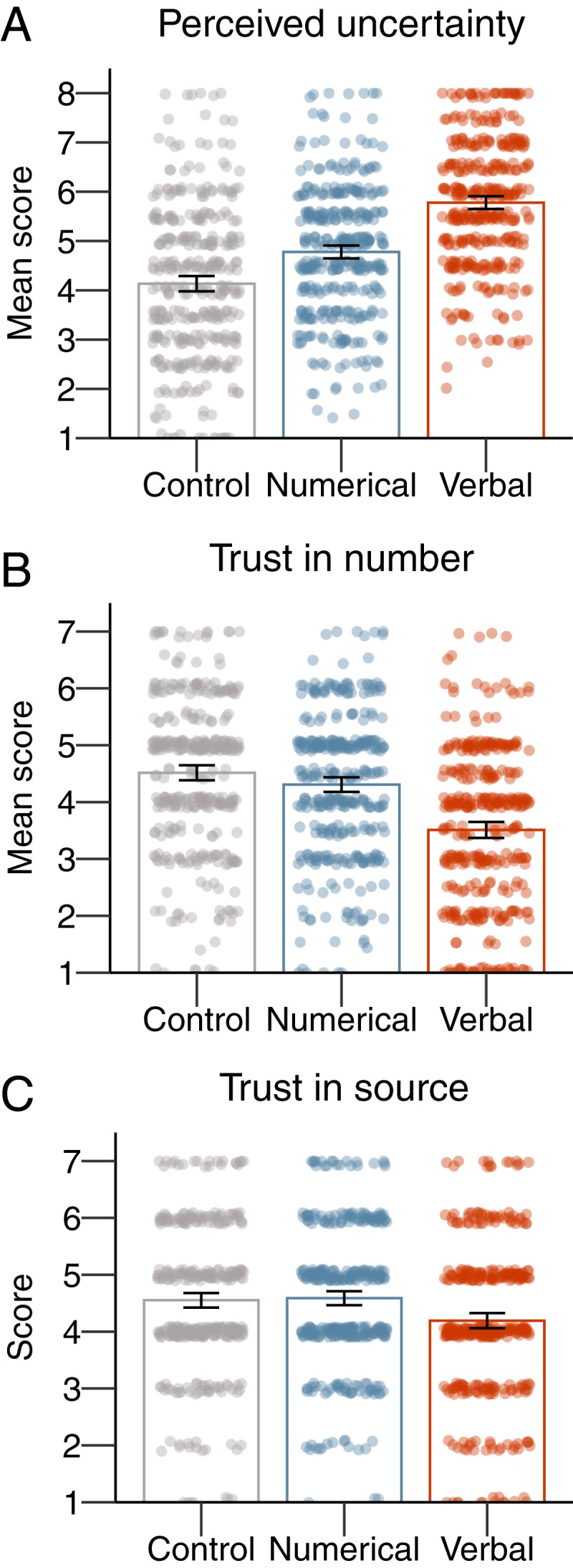
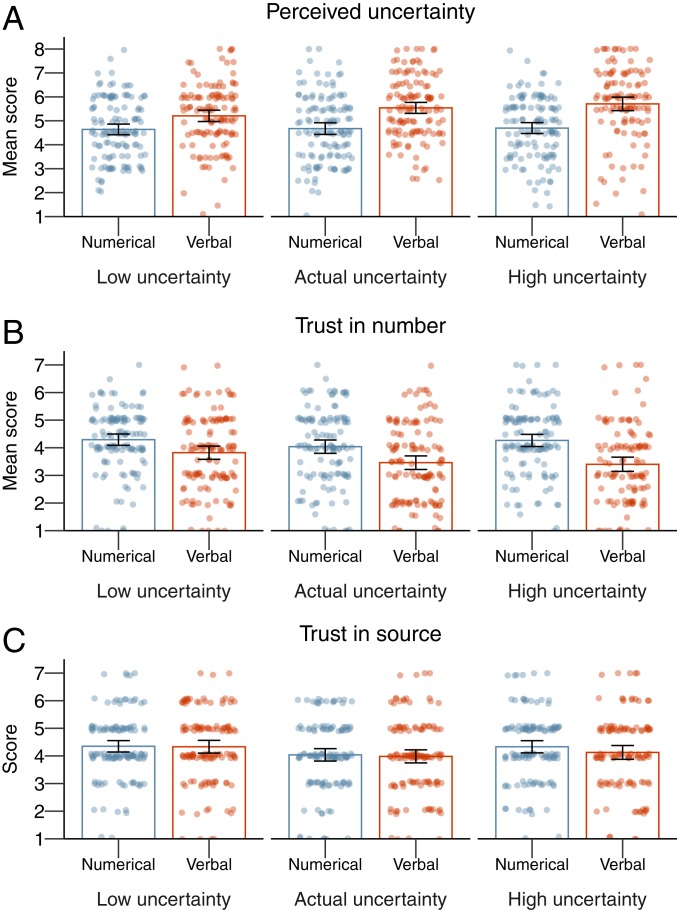
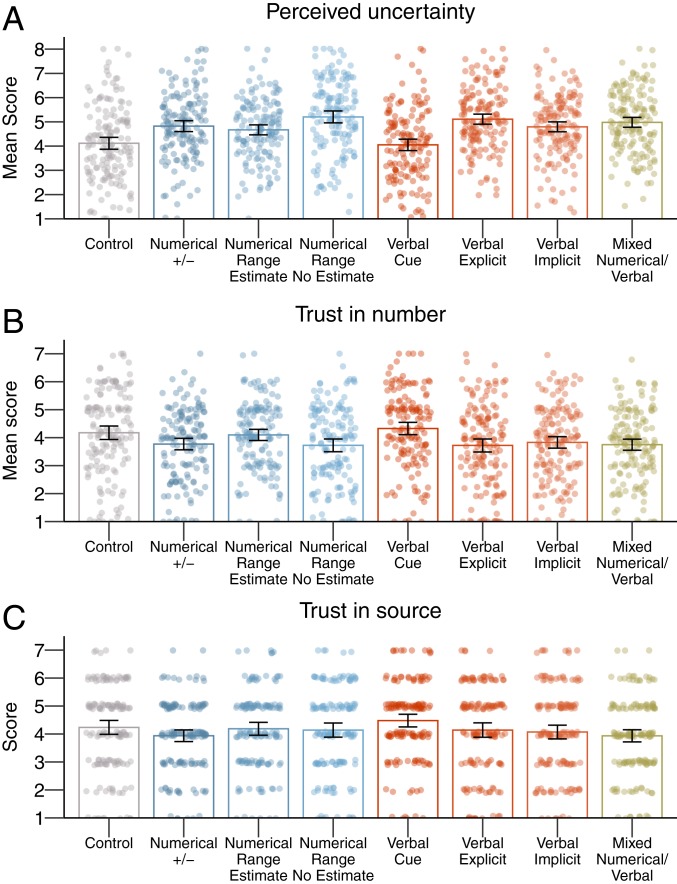
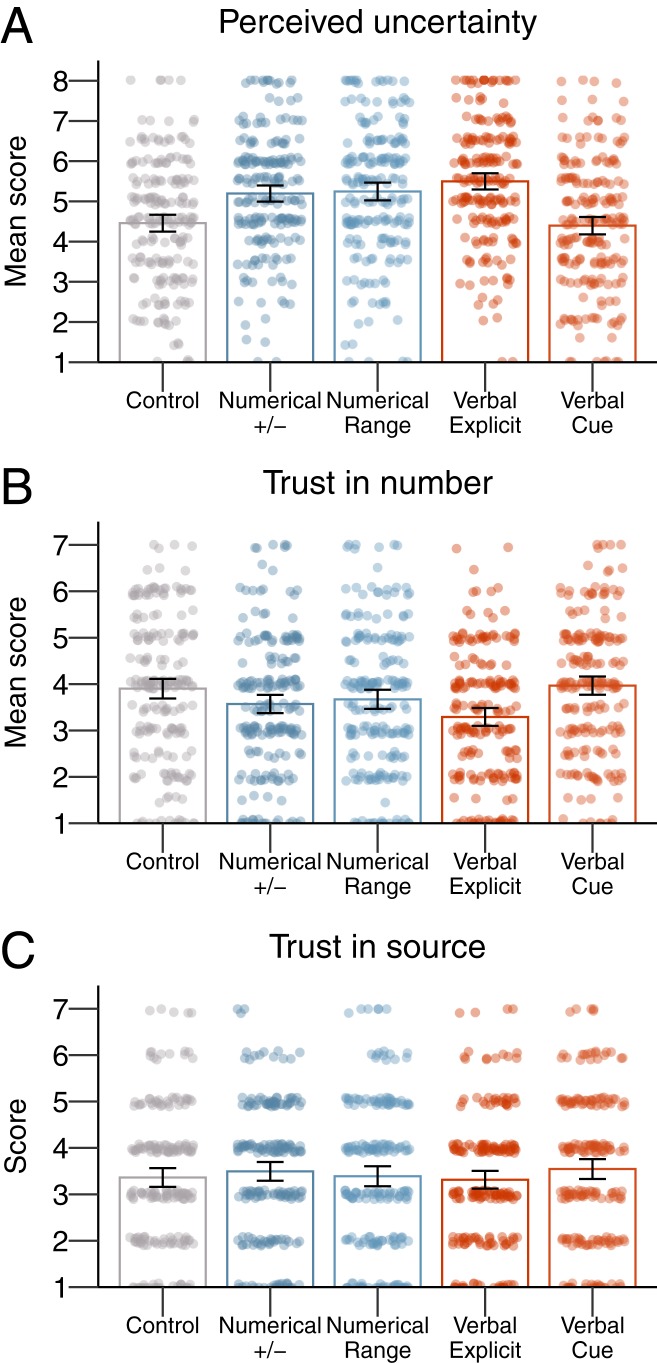
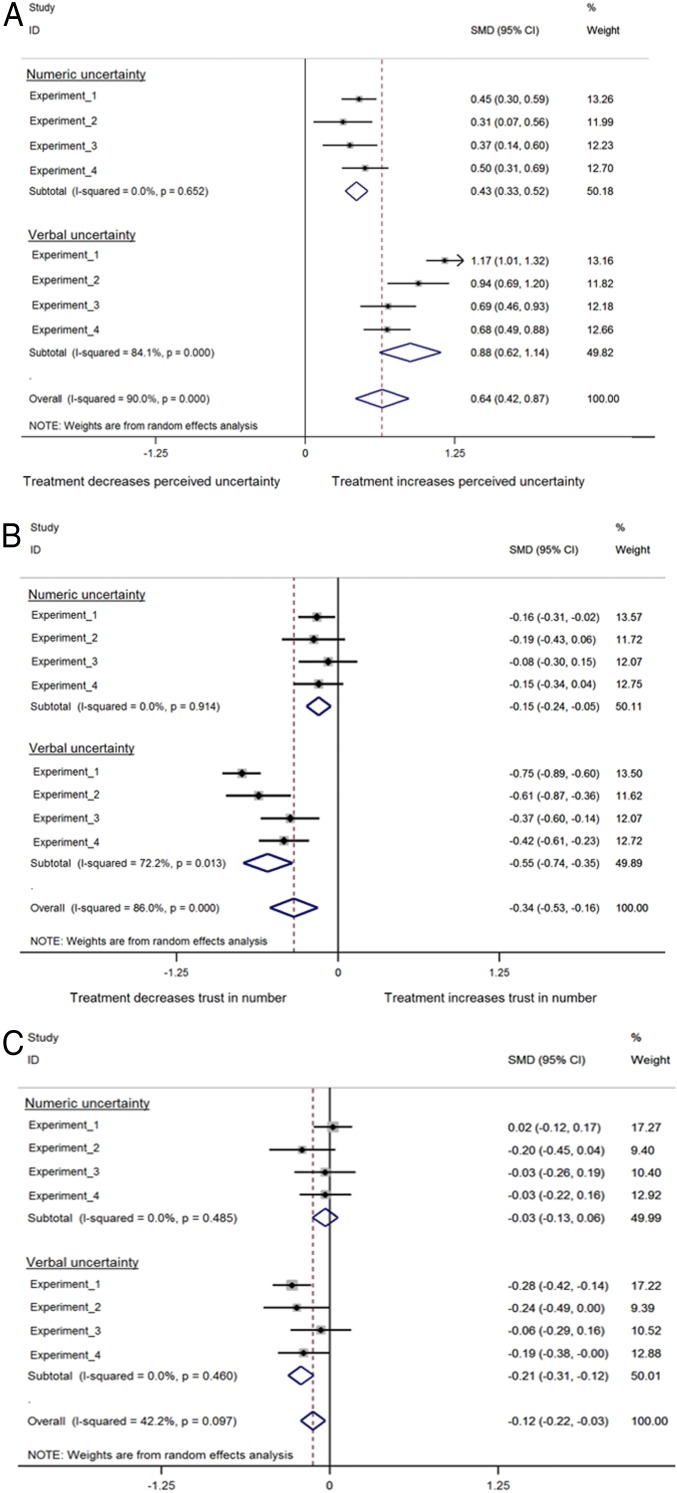
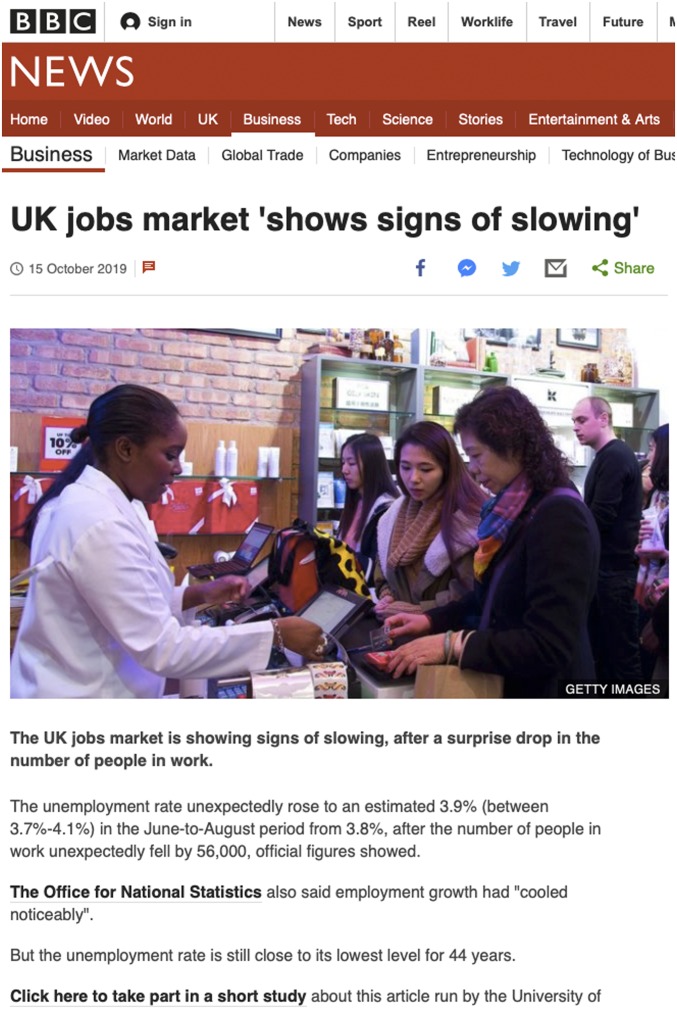
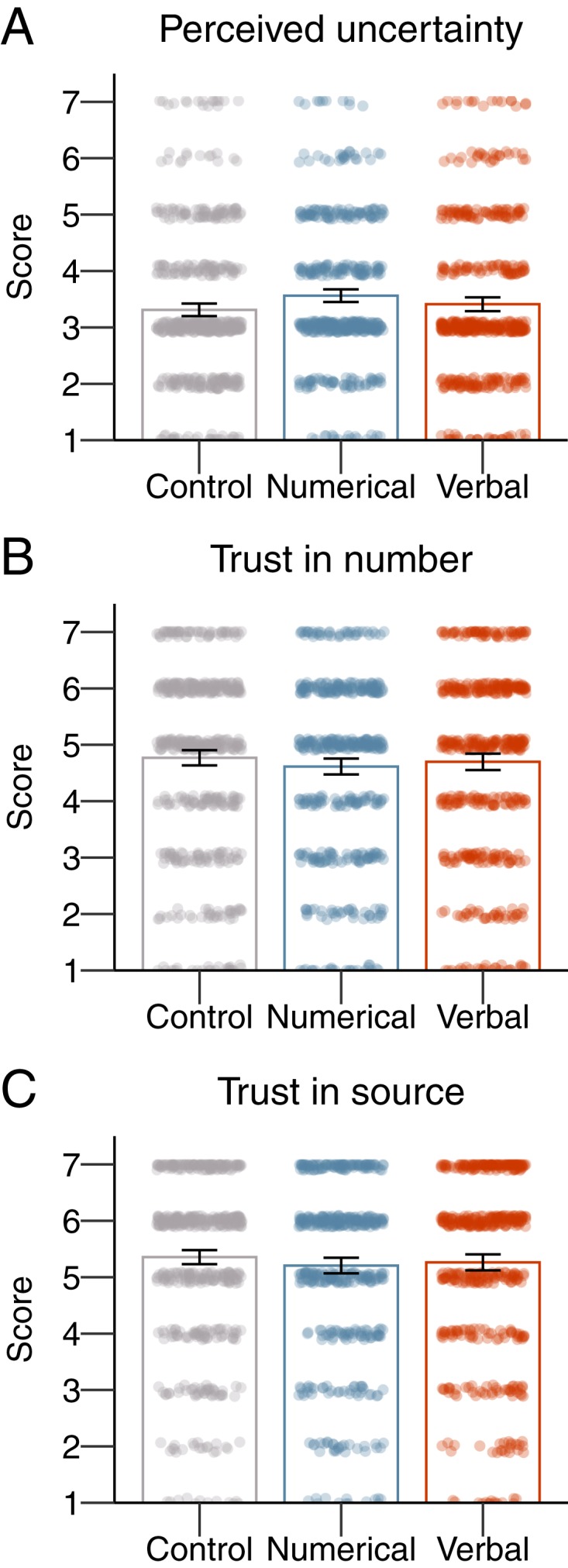
Uncertainty is inherent to our knowledge about the state of the world yet often not communicated alongside scientific facts and numbers. In the “posttruth” era where facts are increasingly contested, a common assumption is that communicating uncertainty will reduce public trust. However, a lack of systematic research makes it difficult to evaluate such claims. We conducted five experiments—including one preregistered replication with a national sample and one field experiment on the BBC News website (total n = 5,780)—to examine whether communicating epistemic uncertainty about facts across different topics (e.g., global warming, immigration), formats (verbal vs. numeric), and magnitudes (high vs. low) influences public trust. Results show that whereas people do perceive greater uncertainty when it is communicated, we observed only a small decrease in trust in numbers and trustworthiness of the source, and mostly for verbal uncertainty communication. These results could help reassure all communicators of facts and science that they can be more open and transparent about the limits of human knowledge.
Overview
The claims and statistics of this paper haven’t been checked yet.
Free: it reads the open-access text and checks the first 5 claims that cite a source we can check. Create a free account to check every claim.
Integrity signals
Registry
Cites
Statistics
Figures
Verification
Claims the paper makes
The claims and statistics of this paper haven’t been checked yet.
Free: it reads the open-access text and checks the first 5 claims that cite a source we can check. Create a free account to check every claim.
Claims other papers make about this one
Each is checked against this paper’s own text: does it say what the citing paper says it does?
The cited source doesn’t support the claim as written.
In the citing paper
“anticipated them to be less useful (d = 0.17, P < 0.001)”
From Expressions of uncertainty in online science communication hinder information diffusion (2024) · cites this paper as [9]
Checked by a reasoning model — may be wrong.
Experimental — accuracy not yet measuredThe source backs part of the claim, not all of it — or backs it for a different population, condition or comparison.
In the citing paper
“trusted uncertain messages less (d = 0.39, P < 0.001)”
From Expressions of uncertainty in online science communication hinder information diffusion (2024) · cites this paper as [9]
Experimental — accuracy not yet measuredThe source backs part of the claim, not all of it — or backs it for a different population, condition or comparison.
In the citing paper
“Most importantly, recent studies have shown that incorporating uncertain language in science communication reduces trust in the message content as well as in its source, and even hinders information diffusion20–22.”
From Scientific publications that use promotional language in the abstract receive more citations and public attention (2025) · cites this paper as [21]
Experimental — accuracy not yet measuredThe source backs part of the claim, not all of it — or backs it for a different population, condition or comparison.
In the citing paper
“A sequence of several experiments by van der Bles and colleagues (2020) concluded that verbal (but not numerical) expressions of uncertainty slightly reduced participants' own levels of certainty as well as their trust in the message source.”
From A review of the effects of uncertainty in public science communication (2020) · cites this paper as van der Bles et al., 2020
Experimental — accuracy not yet measuredThe cited source says what the claim attributes to it.
In the citing paper
“Despite worry by some scientists that communicating uncertainty would lower public trust in science 151,152 , there is little conclusive evidence to support this claim 153 .”
From Predictors and consequences of intellectual humility (2022) · cites this paper as [153]
8 more claims about this paper
Create a free account to see every claim other papers make about this one.
Self-check
Percentages, sums and reported differences re-computed from the paper’s own numbers.
The self-check needs the paper’s full text.
Citations
Cites
(2007) · Medical Entomology and Zoology · Cited by 9,612
Prolific.ac—A subject pool for online experiments
Palan, S., & Schitter, C. (2018) · Journal of Behavioral and Experimental Finance · doi:10.1016/j.jbef.2017.12.004 · Cited by 3,450
Beyond the Turk: Alternative platforms for crowdsourcing behavioral research
Peer, E., Brandimarte, L., Samat, S., & Acquisti, A. (2017) · Journal of Experimental Social Psychology · doi:10.1016/j.jesp.2017.01.006 · Cited by 2,957
Predictably irrational: the hidden forces that shape our decisions
(2008) · Choice Reviews Online · doi:10.5860/choice.46-0969 · Cited by 2,514
Ambiguity Aversion and Comparative Ignorance
Fox, C. R., & Tversky, A. (1995) · The Quarterly Journal of Economics · doi:10.2307/2946693 · Cited by 1,022
Education at a Glance 2018: OECD Indicators
OECD (2018) · Education at a Glance · doi:10.1787/eag-2018-en · Cited by 854
Ambiguity Aversion and Comparative Ignorance
Fox, C. R., & Tversky, A. (2000) · Choices, Values, and Frames · doi:10.1017/cbo9780511803475.031 · Cited by 670
Tolerance of uncertainty: Conceptual analysis, integrative model, and implications for healthcare
Hillen, M. A., Gutheil, C. M., Strout, T. D., Smets, E. M. A., & Han, P. K. J. (2017) · Social Science & Medicine · doi:10.1016/j.socscimed.2017.03.024 · Cited by 536
Gaining trust as well as respect in communicating to motivated audiences about science topics
Fiske, S. T., & Dupree, C. (2014) · Proceedings of the National Academy of Sciences · doi:10.1073/pnas.1317505111 · Cited by 496
Communicating uncertainty about facts, numbers and science
van der Bles, A. M., van der Linden, S., Freeman, A. L. J., Mitchell, J., Galvao, A. B., Zaval, L., & Spiegelhalter, D. J. (2019) · Royal Society Open Science · doi:10.1098/rsos.181870 · Cited by 456
Self-citation
Research works printed but not linked: 4
- Pew Research Center, Beyond distrust: How Americans view their government. https://www.people-press.org/2015/11/23/beyond-distrust-how-americans-view-their-government/. Accessed 5 March 2020.
- Dunwoody S., Hendriks F., Massarani L., Peters H. P., “How journalists deal with scientific uncertainty and what that means for the audience” in 15th International Public Communication of Science and Technology Conference (PCST 2018) (Public Communication of Science and Technology, 2018), pp. 3– 6.
- Druzdzel M. J., Verbal Uncertainty Expressions: Literature Review (Carnegie Mellon University, Pittsburgh, PA, 1989).
- IPCC, “Summary for policymakers” in Climate Change 2013: The Physical Science Basis. Contribution of Working Group I to the Fifth Assessment Report of the Intergovernmental Panel on Climate Change, Stocker T. F., Eds. (IPCC, 2013), pp. 33– 36.
Cited by
Items 301–400 of 415
Admitting Ignorance: The Perception of “I Don’t Know” Responses from Knowledge SourcesPreprint
Mushkat, T., & Mayo, R. (2026) · SSRN Electronic Journal · doi:10.2139/ssrn.6852418
How Journalists Can Foster Humble Inquiry in their Work and their ReadersPreprint
al‐Gharbi, M. (2025) · SSRN Electronic Journal · doi:10.2139/ssrn.5604750
Gerken, M. (2022) · Oxford University Press eBooks · doi:10.1093/oso/9780198857273.005.0001
Public Scientific Testimony II: Science Reporting
Gerken, M. (2022) · Oxford University Press eBooks · doi:10.1093/oso/9780198857273.003.0007
Gerken, M. (2022) · Oxford University Press eBooks · doi:10.1093/oso/9780198857273.002.0008
Gerken, M. (2022) · Oxford University Press eBooks · doi:10.1093/oso/9780198857273.003.0003
Coda: Scientific Testimony, Cognitive Diversity, and Epistemic Injustice
Gerken, M. (2022) · Oxford University Press eBooks · doi:10.1093/oso/9780198857273.003.0009
Gerken, M. (2022) · Oxford University Press eBooks · doi:10.1093/oso/9780198857273.003.0005
Gerken, M. (2022) · Oxford University Press eBooks · doi:10.1093/oso/9780198857273.002.0006
Gerken, M. (2022) · Oxford University Press eBooks · doi:10.1093/oso/9780198857273.003.0001
Gerken, M. (2022) · Oxford University Press eBooks · doi:10.1093/oso/9780198857273.002.0003
Testimony and the Scientific Enterprise
Gerken, M. (2022) · Oxford University Press eBooks · doi:10.1093/oso/9780198857273.003.0002
The Significance of Scentific Testimony
Gerken, M. (2022) · Oxford University Press eBooks · doi:10.1093/oso/9780198857273.003.0008
Gerken, M. (2022) · Oxford University Press eBooks · doi:10.1093/oso/9780198857273.002.0004
Teachers dealing with disciplinary uncertainty in the context of climate change education
Hanke, M., Paseka, A., & Sprenger, S. (2026) · International Research in Geographical and Environmental Education · doi:10.1080/10382046.2026.2711054
Day, E., Trevino, S. D., Chinn, L. K., Schweer-Collins, M., Grant, S., & Tanner‐Smith, E. E. (2026) · Evaluation Review · doi:10.1177/0193841x261475375
Augsburg, F. I., Prochazka, F., Thomm, E., & Bauer, J. (2026) · Public Understanding of Science · doi:10.1177/09636625261484418
Towards a Deliberative Framework for Systemic Risk Communication
Hofbauer, B., Guimarães, R. R. D. M., Schweizer, P., Hochrainer‐Stigler, S., & Dryhurst, S. (2026) · IOP Conference Series Earth and Environmental Science · doi:10.1088/1755-1315/1668/1/012007
Evaluating Uncertainty Representation in IDNs
Barbara, J., Koenitz, H., & Haahr, M. (2025) · Lecture notes in computer science · doi:10.1007/978-3-032-12408-1_13
Hedging, ambiguity, and the rejection of misinformation: evidence from Chinese readers
Li, R., & Fu, C. (2026) · Frontiers in Psychology · doi:10.3389/fpsyg.2026.1880060
Pathways, Challenges, and Opportunities for Public Anthropology, Impact and Commercialisation
Boag, C. J., & Lemon, I. (2026) · Anthropological Forum · doi:10.1080/00664677.2026.2636030
Ahmadisharaf, E., Terui, S., Warner, L. A. S., Ajami, N., Gao, V., Benham, B. L., Zhang, Q., & Boyer, E. W. (2026) · Journal of Environmental Engineering · doi:10.1061/joeedu.eeeng-8709
Bureaucratic science: a public choice analysis of gatekeeping during COVID-19
Winsberg, E. B. (2025) · Synthese · doi:10.1007/s11229-025-05375-y
van de Ven, I., & van der Beek, S. (2026) · Television & New Media · doi:10.1177/15274764261445370
Teeli, A. A., & Hussain, S. (2026) · Health Marketing Quarterly · doi:10.1080/07359683.2026.2639254
Punishment and Communication in the Post-Truth Society
Lázaro, F. G. S. (2023) · Legal studies in international, european and comparative criminal law · doi:10.1007/978-3-031-13413-5_10
Mecatti, F., & Romio, S. (2026) · Wiley eBooks · doi:10.1002/9781118445112.stat08093
Dryhurst, S., & Freeman, A. L. J. (2023) · Apollo (University of Cambridge) · doi:10.57874/jyfm-np04
Self-citationLearning from Economists: Climate Change Policies in Petro-Rich EconomiesPreprint
Toews, G., & Suvorov, A. (2025) · SSRN Electronic Journal · doi:10.2139/ssrn.5996039
van der Linden, L., Vromans, R., Kunneman, F., Marion, D., Lambooij, M., Sanders, J. G., & Emiel, K. (2025) · Journal of Media and Communication Studies · doi:10.5897/jmcs2025.0850
Rep, M. I., Meijboom, F. L. B., Kieft, S. D. E., van Daal, M., Verhaar, M. C., & van Balkom, B. W. M. (2026) · NAM journal. · doi:10.1016/j.namjnl.2026.100134
Feeling the unseen: Clear air turbulence as a window into climate communication challenges
Yu, H., He, M., Yang, L., van de Pas, R., & Liang, D. (2026) · Environmental Impact Assessment Review · doi:10.1016/j.eiar.2026.108539
Beyond Dissemination: From Critical Science Literacy to Citizen Neuroscience
Raschle, N. M., Federici, E., Hauser, T. U., & Dresler, M. (2026) · European Journal of Neuroscience · doi:10.1111/ejn.70727
The scientific impotence excuse as a bounded defence against unwelcome evidencePreprint
Futterleib, H., Thomm, E., Mehlkop, G., & Bauer, J. (2026) · Research Square · doi:10.21203/rs.3.rs-10573510/v1
Communication of Uncertainty in AI Regulations
Phutane, A. S. (2023) · Community Change · doi:10.21061/cc.v5i1.a.50
What Is the Best Word to Describe AI Uncertainty: Confidence, Certainty, Reliability, or Accuracy?
Newendorp, A. K., & Brucciani, L. D. R. (2026) · Proceedings of the Human Factors and Ergonomics Society Annual Meeting · doi:10.1177/10711813261495702
Djanggih, H. (2026) · Research Square · doi:10.21203/rs.3.rs-11460998/v1
Long, D., Liu, H., & Li, L. (2026) · Food Quality and Preference · doi:10.1016/j.foodqual.2026.106137
Lee, N., & Lee, S. (2026) · Journal of Risk Research · doi:10.1080/13669877.2026.2738114
Revisiting Scientific Uncertainty in Science Diplomacy on Emerging Climate Technologies
Augsburg, F. I. (2026) · Springer eBooks · doi:10.1007/978-3-032-29473-9_6
Karpenko, O., Kukhta, M., GUDZENKO, O., Sobolieva, N., & Bondаrenko, N. V. (2026) · Iberoamerican Journal of Science Measurement and Communication · doi:10.47909/ijsmc.392
Li, R., Chen, B., & Fu, C. (2026) · Journal of Multilingual and Multicultural Development · doi:10.1080/01434632.2026.2672748
The Credibility Cost of Scientists’ Political Expression on Social Media
Alabrese, E., & Capozza, F. (2026) · The Economists Voice · doi:10.1515/ev-2026-0041
Infocomics vs Infodemics: How Comics Utilise Health, Data and Media Literacies
Feigenbaum, A., McDougall, J., & Tønnesen, O. D. (2024) · Palgrave studies in digital inequalities · doi:10.1007/978-3-031-28930-9_8
Cornish, F., & Leitão, A. (2026) · International Journal of Disaster Risk Reduction · doi:10.1016/j.ijdrr.2026.106260
Alsaqqa, H. H., & Alwawi, A. A. (2026) · Frontiers in Public Health · doi:10.3389/fpubh.2026.1714896
Zarifi, M., Chordaki, E., Arapostathis, S., Τσατσαρώνη, Ε., Ninos, G., & Patiniotis, M. (2026) · Sociological Research Online · doi:10.1177/13607804261451760
Gao, Y., He, T., Chen, S., Chu, X., & Wang, T. (2026) · Journal of Air Transport Management · doi:10.2139/ssrn.6413183
Dryhurst, S., & Freeman, A. L. J. (2024) · Apollo (University of Cambridge) · doi:10.57874/9vn0-jg91
Self-citationÇoban, G. Ş. A., & Chen, Y. (2026) · Science Activities · doi:10.1080/00368121.2026.2642749
McLaughlin, C., Haverila, K. C., & Haverila, M. J. (2026) · SSRN Electronic Journal · doi:10.2139/ssrn.7417195
Zwei Annäherungen an eine Bildung für nachhaltige Entwicklung in der Physik-Lehrkräftebildung
Bliesmer, K., Komorek, M., & Tischer, J. (2024) · Waxmann Verlag GmbH eBooks · doi:10.31244/9783830997962.07
Vaccine Misinformation in the Digital Age: A Narrative Review
Atiba, O. (2026) · American Journal of Infectious Diseases · doi:10.3844/ajidsp.2026.32.45
Polycentric Science Diplomacy in an Age of Disruption
Lüdert, J., & Waehlisch, M. (2026) · Springer eBooks · doi:10.1007/978-3-032-29473-9_1
European public support for climate mitigation measures is resilient to uncertainty informationPreprint
Sorgato, V., Krainz, M., Brosch, T., & Trutnevyte, E. (2025) · Research Square · doi:10.21203/rs.3.rs-7534864/v1
Marzocchi, W., Montanari, A., & the RETURN-uncertainty task force (2026) · Natural hazards and earth system sciences · doi:10.5194/nhess-26-4861-2026
Signature patterns in digital representations of health before acute illness
Post, B. (2024) · Spiral (Imperial College London) · doi:10.25560/149050
Controversy and Group Certainty Jointly Shape Everyday Moral JudgmentsPreprint
Chen, Z., Shin, M., Nguyen, T. D., Klein, C., Tan, C., Schuster, N., Carroll, N. G., Tran, A., & Xie, L. (2026) · arXiv (Cornell University) · doi:10.48550/arxiv.2609.04750
Beltrán, E. D. M., & Carangui, A. K. U. (2026) · Sage Sphere of Technology Sciences Discoveries And Society · doi:10.63688/3ywk9638
Tanner, K. (2021) · LSHTM Research Online (London School of Hygiene and Tropical Medicine) · doi:10.17037/pubs.04663978
Same words, different functions: function-sensitive crisis governance under collective threat
Niederlohmann, E. (2026) · Frontiers in Social Psychology · doi:10.3389/frsps.2026.1871827
Multi-Scale Genomic Surveillance and Disease Modeling of COVID-19
Pilapil, J. D. (2025) · doi:10.14711/thesis-hdl152518
Promoting COVID-19 vaccine acceptance: analysis of media messaging in India
Yashas, P. R., & Mehra, A. (2023) · Media Asia · doi:10.1080/01296612.2023.2282241
Balla, A. (2026) · Journal of Northern Europe Academy for Studies and Research · doi:10.53348/nea3se33
Wright, K. (2025) · Lancaster EPrints (Lancaster University) · doi:10.17635/lancaster/thesis/2765
Evidence, Uncertainty and Belief Revision in the Evaluation of Digital Information
Ortig‘aliyevna, J. N. (2026) · Manuscript on History and Humanities
Virtual Reality Behavior Change Interventions for Environmental Sustainability
Nirhamo, E. (2026) · UTUPub (University of Turku)
Suckert, L., & Pool, H. (2026) · Social Inclusion · doi:10.17645/si.12998
Should We Communicate the Uncertainty of Educational Effects to Teachers?
Lortie‐Forgues, H., Sio, U. N., & Inglis, M. (2026) · Journal of Research on Educational Effectiveness · doi:10.1080/19345747.2026.2692973 · Cited by 1
From Validity to Inter-Subjectivity: An Argument for Reliability Signals in Search EnvironmentsPreprint
van der Sluis, F. (2025) · Research at the University of Copenhagen (University of Copenhagen) · doi:10.48550/arxiv.2604.01186
Imo, I., Agyare-Kwabi, K., Adesoji, A. D., Odukoya, D., & Sarfo, I. (2026) · SSRN Electronic Journal · doi:10.2139/ssrn.7176278
Imo, I., Agyare-Kwabi, K., Adesoji, A. D., Odukoya, D., & Sarfo, I. (2026) · SSRN Electronic Journal · doi:10.2139/ssrn.7200860
Computing and Communicating Uncertainty for Responsible Human-AI Decision-making
Prabhudesai, S. (2026) · Deep Blue (University of Michigan) · doi:10.7302/dspace/30708
Miller, E., Carter, O., & Anderson, J. (2025) · International Journal of Pharma Growth Research Review · doi:10.54660/ijpgrr.2025.2.2.70-79
Aumentar la confianza pública en la vacunación contra el COVID 19: El papel de los gobiernos
OECD (2021) · Medidas políticas clave de la OCDE ante el coronavirus (Covid-19) · doi:10.1787/4e654177-es
Climate Justice and Conditions for Trustworthy AI Risk Information in Bangladesh
Mridha, M. E., Akter, S., Islam, T., & Mannan, K. A. (2026) · Journal of Pandemic Disaster and Recession · doi:10.64907/xkmf.v6.i4.jpdr.1
(2024) · Directory of Open access Books (OAPEN Foundation)
Henze, F. (2023) · Repository KITopen (Karlsruhe Institute of Technology) · doi:10.5445/ir/1000157910
Science Denial im naturwissenschaftlichen Unterricht begegnen
Kubsch, M., & Neumann, I. (2024) · Waxmann Verlag GmbH eBooks · doi:10.31244/9783830997962.27
Honda, H., Kumazaki, H., & Ueda, K. (2026) · Psychonomic Bulletin & Review · doi:10.3758/s13423-026-03032-0
The Use and Usefulness of Corporate Sustainability Information
Timmer, T. H. (2026) · eScholarship (California Digital Library)
Hitchins, K., & Reynolds, J. P. (2025) · PsyArXiv (OSF Preprints) · doi:10.31234/osf.io/48yg7_v1
Schneider, C. R., Freeman, A. L. J., Spiegelhalter, D., & van der Linden, S. (2021) · doi:10.1371/journal.pone.0259048.r001
Self-citationTransparente medizinische Risikokommunikation: Eine ethische Verantwortung?
Wegwarth, O., & Michl, S. (2024) · Zeitschrift für medizinische Ethik · doi:10.30965/29498570-20240096
Enagogo, C. A. (2024) · Le dépôt institutionnel (Université du Québec à Trois-Rivières)
Smith, D. R., Buckell, J., Hancock, T. O., Morrell, L., & Pouwels, K. B. (2026) · medRxiv · doi:10.64898/2026.05.21.26353824
Janprasit, W. (2023) · Journal of Communication Arts
Valcich, A. D. (2025) · Digital Commons - Salve Regina (Salve Regina University)
✶ Credence Grammar: The Public Language of Partial Belief
Stilwell, P. (n.d.) · PhilPapers (PhilPapers Foundation)
Zoeken naar zekerheid? Hoe beleidsmakers werken met onzekerheid
Lammers, W. (2025) · Lirias
Decoding Transparency - How to Foster Public Trust in Responsible AI Innovation in Law Enforcement
Ferreira, I. G., Galuzzi, O., Pashkevich, V., & Dorotić, M. (2026) · Lirias (KU Leuven)
Le rapport à l’incertitude en sciences chez des enfants d’école élémentaire
Stierlin, J. (2023) · HAL
Garro, C., Wisbar, A., Possin, B., & Kinkeldey, C. (2026) · arXiv (Cornell University) · doi:10.48550/arxiv.2611.03018
Cognitive Science Society 2025, Koolen, R., Spapens, I., Swerts, M. G. J., & Vromans, R. (2025) · Tilburg University Research Portal · doi:10.48448/ghxb-2z66
Non-verbal uncertainty cues impact assessments of verbal probability information
Spapens, I., Vromans, R., Koolen, R., & Swerts, M. G. J. (2026) · Journal of Risk Research · doi:10.1080/13669877.2026.2722632
(2021) · IWA Publishing eBooks · doi:10.2166/9781780401034_0111
Is Science Effectively Conveyed to the Public? A Case Study of Genetically Modified Mosquito Release
Vemuri, K., Vemuri, N., & Munukutla, S. (2021) · Journal of Student Research · doi:10.47611/jsrhs.v10i4.1972
Metadata
- Authors
- van der Bles, A. M., van der Linden, S., Freeman, A. L. J., & Spiegelhalter, D. J.
- Affiliations
- Winton Centre for Risk and Evidence Communication, University of Cambridge, Cambridge CB3 0WA, United Kingdom;
- University of Cambridge (GB)
- Venue
- Proceedings of the National Academy of Sciences
- Publisher
- National Academy of Sciences
- Published
- 2020-03-23
- Volume
- 117
- Issue
- 14
- Pages
- 7672-7683
- ISSN
- 0027-8424 (ISSN-L)
- 1091-6490
- PMC
- PMC7149229
- OpenAlex
- W3012585012
- Cited by
- 348
- References
- 42
- Citations by year
- 2026: 61 · 2025: 41 · 2024: 48 · 2023: 39 · 2022: 70 · 2021: 61 · 2020: 28
- FWCI
- 66.33
- Type
- journal article
- Language
- en
- Open access
- hybrid
- doi.org
- Licence
- Locations
- Proceedings of the National Academy of Sciences (publishedVersion, cc-by)
- PubMed Central (publishedVersion, cc-by)
- PubMed (publishedVersion)
- University of Groningen research database (University of Groningen / Centre for Information Technology) (submittedVersion, cc-by)
- Apollo (University of Cambridge) (submittedVersion)
- Apollo (University of Cambridge) (submittedVersion, cc-by)
- Apollo
- Apollo (cc-by)
- Funders
- Nuffield Foundation (OSP/43227)
- Topics
- Social Sciences › Sociology and Political Science › Risk Perception and Management
- Social Sciences › Sociology and Political Science › Climate Change Communication and Perception
- Social Sciences › Sociology and Political Science › Misinformation and Its Impacts
- Keywords
- epistemic uncertainty, uncertainty communication, public trust, source trustworthiness, science communication, global warming, immigration, BBC News
- MeSH terms
- Communication, Humans, Meta-Analysis as Topic, Internet, Uncertainty, Trust
About these checks
Registry, retraction, Cites and statistics results are computed, not judged, with one exception: a printed reference that no index lists is read once by a model before it counts as a citation error. Claims are extracted by a model and kept only when their quote appears verbatim in the text; each cited source is then checked, with a model’s help, for whether it says what the claim relies on. Those verdicts can be wrong — read the claim’s quote and the cited source before relying on one.
Statistics and arithmetic are recomputed, not judged.
Confidence bands are shown only for fields calibrated on our annotated test set. None is calibrated yet, so no band is shown.
What counts as a claim ›How we measure confidence ›How we check this ›
Are you an author, or do you see a problem with this page? Request a review
Data sources
Bibliographic data: Semantic Scholar, OpenAlex, Crossref.
Contains information from the Semantic Scholar Academic Graph Datasets, made available under the ODC Attribution License (ODC-BY 1.0).
Semantic Scholar’s data is described in: Kinney, R., et al. (2023). The Semantic Scholar Open Data Platform. arXiv:2301.10140.
