

DNA methylation enables transposable element-driven genome expansion
Open accessThe DOI matches its Crossref record; 64 of the 64 references it cites were found in a registry or an index.
Abstract
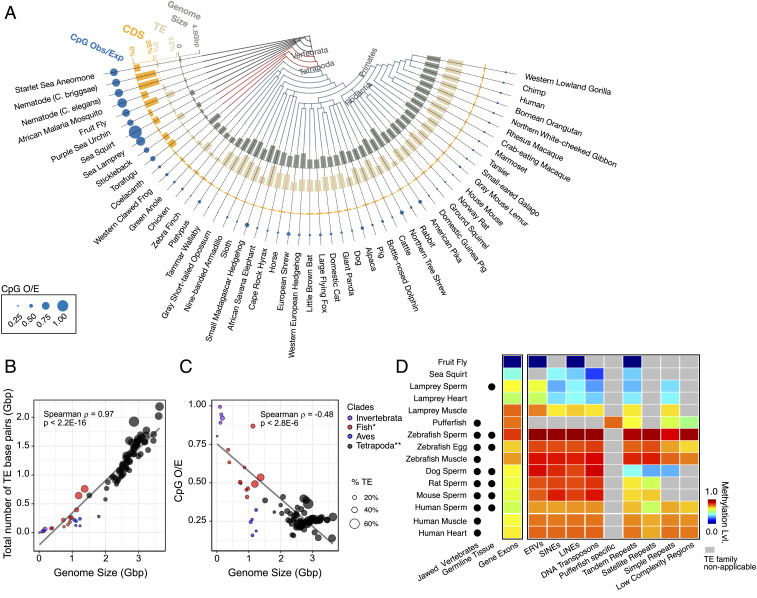
Significance: We examined recent whole-genome data of 53 organisms and found that the substantial differences in their genome sizes can be largely explained by the proportion of transposable elements (TEs) within them. TEs coexist with their host largely because CpG methylation suppresses their transcription. Genome expansion is therefore dependent to a large extent on the action of DNA methyltransferases, which evolved at roughly the same time as TEs. A long-term outcome of CpG methylation is an increase in C-to-T transition mutations both in the TEs and host DNA, which leads to a decreased proportion of CpG dinucleotides over evolutionary time. The survival of TEs in the host genome also provides extra DNA that may be repurposed for host regulatory functions.
Overview
The claims and statistics of this paper haven’t been checked yet.
Free: it reads the open-access text and checks the first 5 claims that cite a source we can check. Create a free account to check every claim.
Integrity signals
Registry
Cites
Statistics
Figures
Verification
Claims the paper makes
The claims and statistics of this paper haven’t been checked yet.
Free: it reads the open-access text and checks the first 5 claims that cite a source we can check. Create a free account to check every claim.
Claims other papers make about this one
Each is checked against this paper’s own text: does it say what the citing paper says it does?
The source backs part of the claim, not all of it — or backs it for a different population, condition or comparison.
In the citing paper
“Second, repetitive elements display reduced sequence variation compared to other regions, in particular younger repeats with little time to accumulate mutations (47).”
From DNA language models are powerful predictors of genome-wide variant effects (2023) · cites this paper as [47]
Experimental — accuracy not yet measured
Self-check
Percentages, sums and reported differences re-computed from the paper’s own numbers.
The self-check needs the paper’s full text.
Citations
Cites
BEDTools: a flexible suite of utilities for comparing genomic features
Quinlan, A. R., & Hall, I. M. (2010) · Bioinformatics · doi:10.1093/bioinformatics/btq033 · Cited by 27,437
Integrative analysis of 111 reference human epigenomes
Roadmap Epigenomics Consortium, Kundaje, A., Meuleman, W., Ernst, J., Bilenky, M., Yen, A., Heravi-Moussavi, A., Kheradpour, P., Zhang, Z., Wang, J., et al. (2015) · Nature · doi:10.1038/nature14248 · Cited by 6,368 · cited 1×
“For the enhancer analysis, we studied the 15-state chromHMM annotation generated from the Roadmap Epigenome Project (60).”
Functions of DNA methylation: islands, start sites, gene bodies and beyond
Jones, P. A. (2012) · Nature Reviews Genetics · doi:10.1038/nrg3230 · Cited by 6,061 · cited 1×
“Discussion DNA methylation has roles in the control of gene expression at the levels of transcription initiation and elongation as well as in the function of regulatory elements such as promoters, enhancers, and insulators; those roles are relatively well understood (29).”
Self-citationFIMO: scanning for occurrences of a given motif
Grant, C. E., Bailey, T. L., & Noble, W. S. (2011) · Bioinformatics · doi:10.1093/bioinformatics/btr064 · Cited by 4,247
Epigenetics in human disease and prospects for epigenetic therapy
Egger, G., Liang, G., Aparicio, A., & Jones, P. A. (2004) · Nature · doi:10.1038/nature02625 · Cited by 3,232 · cited 1×
“We know that Alus can act as “ methylation centers ” after insertion into host DNA, whereby methylation subsequently spreads into the flanking DNA (13 – 15).”
Self-citationThe Significance of Responses of the Genome to Challenge
McClintock, B. (1984) · Science · doi:10.1126/science.15739260 · Cited by 2,617 · cited 1×
“Although the functional significance of these size differences remains enigmatic (2), much of the variability can be explained by the presence of repetitive DNA, particularly transposable elements (TEs), which were identified by Barbara McClintock many years ago (3).”
Zerbino, D. R., Achuthan, P., Akanni, W., Amode, M. R., Barrell, D., Bhai, J., Billis, K., Cummins, C., Gall, A., Girón, C. G., et al. (2018) · Nucleic Acids Research · doi:10.1093/nar/gkx1098 · Cited by 2,605 · cited 1×
“The genome sequence and transcript annotation was retrieved from Ensembl release 87 (47 vertebrates) and Ensembl metazoa (6 invertebrates) release 38 (56).”
Britten, R. J., & Davidson, E. H. (1969) · Science · doi:10.1126/science.165.3891.349 · Cited by 2,064 · cited 1×
“The presence of multiple transcription factor binding sites (TFBSs) in TE-derived DNA led to the hypothesis that TEs might provide a ready source of DNA that could be co-opted by the cell to help regulate gene expression (16, 21, 22), summarized in previous reviews (23, 24).”
Genome-Wide Evolutionary Analysis of Eukaryotic DNA Methylation
Zemach, A., McDaniel, I. E., Silva, P., & Zilberman, D. (2010) · Science · doi:10.1126/science.1186366 · Cited by 1,793 · cited 1×
“Inverte-brates have small genomes, few TEs, higher percentages of coding sequence, and little CpG loss because they do not have strong intergenic CpG methylation (11).”
Cytosine methylation and the ecology of intragenomic parasites
Yoder, J. A., Walsh, C. P., & Bestor, T. H. (1997) · Trends in Genetics · doi:10.1016/s0168-9525(97)01181-5 · Cited by 1,562 · cited 1×
“The central role of cytosine methylation in repressing the transcription of evolutionarily young TEs (i.e., those more recently inserted) has been well-described (5, 33).”
Regulatory activities of transposable elements: from conflicts to benefits
Chuong, E. B., Elde, N. C., & Feschotte, C. (2017) · Nature Reviews Genetics · doi:10.1038/nrg.2016.139 · Cited by 1,489 · cited 1×
“The presence of multiple transcription factor binding sites (TFBSs) in TE-derived DNA led to the hypothesis that TEs might provide a ready source of DNA that could be co-opted by the cell to help regulate gene expression (16, 21, 22), summarized in previous reviews (23, 24).”
Transposable elements and the evolution of regulatory networks
Feschotte, C. (2008) · Nature Reviews Genetics · doi:10.1038/nrg2337 · Cited by 1,328 · cited 2×
“Although it is tempting to suggest that TEs become activated for the selective advantage of the host, the hypothesis that TE activity rewires regulatory networks (16, 22, 50) is complicated at several levels.”
Molecular basis of base substitution hotspots in Escherichia coli
Coulondre, C., Miller, J. H., Farabaugh, P. J., & Gilbert, W. (1978) · Nature · doi:10.1038/274775a0 · Cited by 1,193 · cited 1×
“These insightful observations were made before the advent of whole-genome sequencing and did not fully appreciate that cytosine methylation was inherently strongly mutagenic (9).”
A piRNA Pathway Primed by Individual Transposons Is Linked to De Novo DNA Methylation in Mice
Aravin, A. A., Sachidanandam, R., Bourc'his, D., Schaefer, C., Pezic, D., Toth, K. F., Bestor, T., & Hannon, G. J. (2008) · Molecular Cell · doi:10.1016/j.molcel.2008.09.003 · Cited by 1,173 · cited 1×
“The DNA methylation at TEs in mammalian germlines has also been suggested to be guided by host factors including Piwi-interacting RNA (piRNA) (38, 39).”
Transcription of IAP endogenous retroviruses is constrained by cytosine methylation
Walsh, C. P., Chaillet, J. R., & Bestor, T. H. (1998) · Nature Genetics · doi:10.1038/2413 · Cited by 1,105 · cited 1×
“, those more recently inserted) has been well-described (5, 33).”
Kuramochi-Miyagawa, S., Watanabe, T., Gotoh, K., Totoki, Y., Toyoda, A., Ikawa, M., Asada, N., Kojima, K., Yamaguchi, Y., Ijiri, T. W., et al. (2008) · Genes & Development · doi:10.1101/gad.1640708 · Cited by 925 · cited 1×
“The DNA methylation at TEs in mammalian germlines has also been suggested to be guided by host factors including Piwi-interacting RNA (piRNA) (38, 39).”
Kulakovskiy, I. V., Vorontsov, I. E., Yevshin, I. S., Sharipov, R. N., Fedorova, A. D., Rumynskiy, E. I., Medvedeva, Y. A., Magana-Mora, A., Bajic, V. B., Papatsenko, D. A., et al. (2018) · Nucleic Acids Research · doi:10.1093/nar/gkx1106 · Cited by 917
The DNA methylation landscape of human early embryos
Guo, H., Zhu, P., Yan, L., Li, R., Hu, B., Lian, Y., Yan, J., Ren, X., Lin, S., Li, J., et al. (2014) · Nature · doi:10.1038/nature13544 · Cited by 913 · cited 1×
“The potentially lethal effects of inappropriate ERV expression have been suggested by the observation that a group of young ERVs is not demethylated even during the programmed genomic demethylation in preimplantation embryonic development (34, 35) and in primordial germ cell development (36).”
Transposable elements have rewired the core regulatory network of human embryonic stem cells
Kunarso, G., Chia, N.-Y., Jeyakani, J., Hwang, C., Lu, X., Chan, Y.-S., Ng, H.-H., & Bourque, G. (2010) · Nature Genetics · doi:10.1038/ng.600 · Cited by 777 · cited 1×
“This is also consistent with earlier discoveries highlighting the more active use of TE-derived TFBSs in regulating stem cell renewal and differentiation (52, 53).”
Landscape of Somatic Retrotransposition in Human Cancers
Lee, E., Iskow, R., Yang, L., Gokcumen, O., Haseley, P., Luquette, L. J., Lohr, J. G., Harris, C. C., Ding, L., Wilson, R. K., et al. (2012) · Science · doi:10.1126/science.1222077 · Cited by 762
A Unique Gene Regulatory Network Resets the Human Germline Epigenome for Development
Tang, W. W. C., Dietmann, S., Irie, N., Leitch, H. G., Floros, V. I., Bradshaw, C. R., Hackett, J. A., Chinnery, P. F., & Surani, M. A. (2015) · Cell · doi:10.1016/j.cell.2015.04.053 · Cited by 670 · cited 1×
“The potentially lethal effects of inappropriate ERV expression have been suggested by the observation that a group of young ERVs is not demethylated even during the programmed genomic demethylation in preimplantation embryonic development (34, 35) and in primordial germ cell development (36).”
Deininger, P. (2011) · Genome Biology · doi:10.1186/gb-2011-12-12-236 · Cited by 651 · cited 1×
“We used Alu elements as examples because unlike LINEs and ERVs, which are CpG-rich only in their promoter/long terminal repeat (LTR) regions, Alus are CpG-rich throughout their 280-bp sequences before their initial insertion or transposition (10, 12).”
KRAB zinc-finger proteins contribute to the evolution of gene regulatory networks
Imbeault, M., Helleboid, P.-Y., & Trono, D. (2017) · Nature · doi:10.1038/nature21683 · Cited by 623 · cited 1×
“Two notable candidates that act on the transcriptional level are KZNFs (40, 41) and the tumor suppressor protein p53, which both evolved roughly contemporaneously with the TE-mediated genome expansion and genome-wide DNA methylation in vertebrates (42, 43).”
Evolution of the mammalian transcription factor binding repertoire via transposable elements
Bourque, G., Leong, B., Vega, V. B., Chen, X., Lee, Y. L., Srinivasan, K. G., Chew, J.-L., Ruan, Y., Wei, C.-L., Ng, H. H., et al. (2008) · Genome Research · doi:10.1101/gr.080663.108 · Cited by 589 · cited 1×
“The insertion of a TE has been proposed to speed up the process of enhancer creation by providing extra DNA containing preexisting regulatory sequences compatible with the host transcription factors (20).”
Origin of a substantial fraction of human regulatory sequences from transposable elements
Jordan, I. K., Rogozin, I. B., Glazko, G. V., & Koonin, E. V. (2003) · Trends in Genetics · doi:10.1016/s0168-9525(02)00006-9 · Cited by 577 · cited 3×
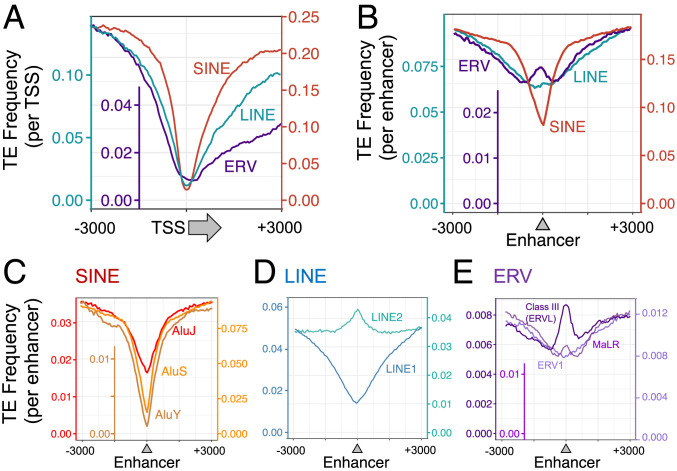
“An earlier study looked at the promoter as a broad region and found that 25% of such regions harbor TEs (16).”
An evolutionary arms race between KRAB zinc-finger genes ZNF91/93 and SVA/L1 retrotransposons
Jacobs, F. M. J., Greenberg, D., Nguyen, N., Haeussler, M., Ewing, A. D., Katzman, S., Paten, B., Salama, S. R., & Haussler, D. (2014) · Nature · doi:10.1038/nature13760 · Cited by 506 · cited 1×
“ZNF91 and ZNF93 have undergone fast, recent evolution in primates to keep up with the accumulation of mutations that allow TEs to escape host suppression (44).”
Restricting retrotransposons: a review
Goodier, J. L. (2016) · Mobile DNA · doi:10.1186/s13100-016-0070-z · Cited by 436 · cited 1×
“These mechanisms have been summarized in previous reviews (49).”
The DNA methyltransferase DNMT3C protects male germ cells from transposon activity
Barau, J., Teissandier, A., Zamudio, N., Roy, S., Nalesso, V., Hérault, Y., Guillou, F., & Bourc’his, D. (2016) · Science · doi:10.1126/science.aah5143 · Cited by 389
Wang, T., Zeng, J., Lowe, C. B., Sellers, R. G., Salama, S. R., Yang, M., Burgess, S. M., Brachmann, R. K., & Haussler, D. (2007) · Proceedings of the National Academy of Sciences · doi:10.1073/pnas.0703637104 · Cited by 388 · cited 1×
“Although it is tempting to suggest that TEs become activated for the selective advantage of the host, the hypothesis that TE activity rewires regulatory networks (16, 22, 50) is complicated at several levels.”
L1 retrotransposition occurs mainly in embryogenesis and creates somatic mosaicism
Kano, H., Godoy, I., Courtney, C., Vetter, M. R., Gerton, G. L., Ostertag, E. M., & Kazazian, H. H. (2009) · Genes & Development · doi:10.1101/gad.1803909 · Cited by 370 · cited 1×
“This is also consistent with earlier discoveries highlighting the more active use of TE-derived TFBSs in regulating stem cell renewal and differentiation (52, 53).”
Göke, J., Lu, X., Chan, Y.-S., Ng, H.-H., Ly, L.-H., Sachs, F., & Szczerbinska, I. (2015) · Cell Stem Cell · doi:10.1016/j.stem.2015.01.005 · Cited by 368 · cited 1×
“The potentially lethal effects of inappropriate ERV expression have been suggested by the observation that a group of young ERVs is not demethylated even during the programmed genomic demethylation in preimplantation embryonic development (34, 35) and in primordial germ cell development (36).”
KAP1 Protein: An Enigmatic Master Regulator of the Genome
Iyengar, S., & Farnham, P. J. (2011) · Journal of Biological Chemistry · doi:10.1074/jbc.r111.252569 · Cited by 367 · cited 1×
“TRIM28 is known for its role in transcriptionally corepressing ERVs by binding to the ERV-targeting KRAB zinc-finger proteins (KZNFs) and subsequently mobilizing additional repressor proteins such as SETDB1, HP1, and the nucleosome remodeling and deacetylation (NuRD) complex (25).”
The Origins and Evolution of the p53 Family of Genes
Belyi, V. A., Ak, P., Markert, E., Wang, H., Hu, W., Puzio-Kuter, A., & Levine, A. J. (2010) · Cold Spring Harbor Perspectives in Biology · doi:10.1101/cshperspect.a001198 · Cited by 344 · cited 1×
“Two notable candidates that act on the transcriptional level are KZNFs (40, 41) and the tumor suppressor protein p53, which both evolved roughly contemporaneously with the TE-mediated genome expansion and genome-wide DNA methylation in vertebrates (42, 43).”
Chromatin analysis in human early development reveals epigenetic transition during ZGA
Wu, J., Xu, J., Liu, B., Yao, G., Wang, P., Lin, Z., Huang, B., Wang, X., Li, T., Shi, S., et al. (2018) · Nature · doi:10.1038/s41586-018-0080-8 · Cited by 339 · cited 1×
“The chromatin accessibility in human early embryos was obtained from a recent study (57).”
Tiggers and DNA transposon fossils in the human genome.
Smit, A. F., & Riggs, A. D. (1996) · Proceedings of the National Academy of Sciences · doi:10.1073/pnas.93.4.1443 · Cited by 337 · cited 1×
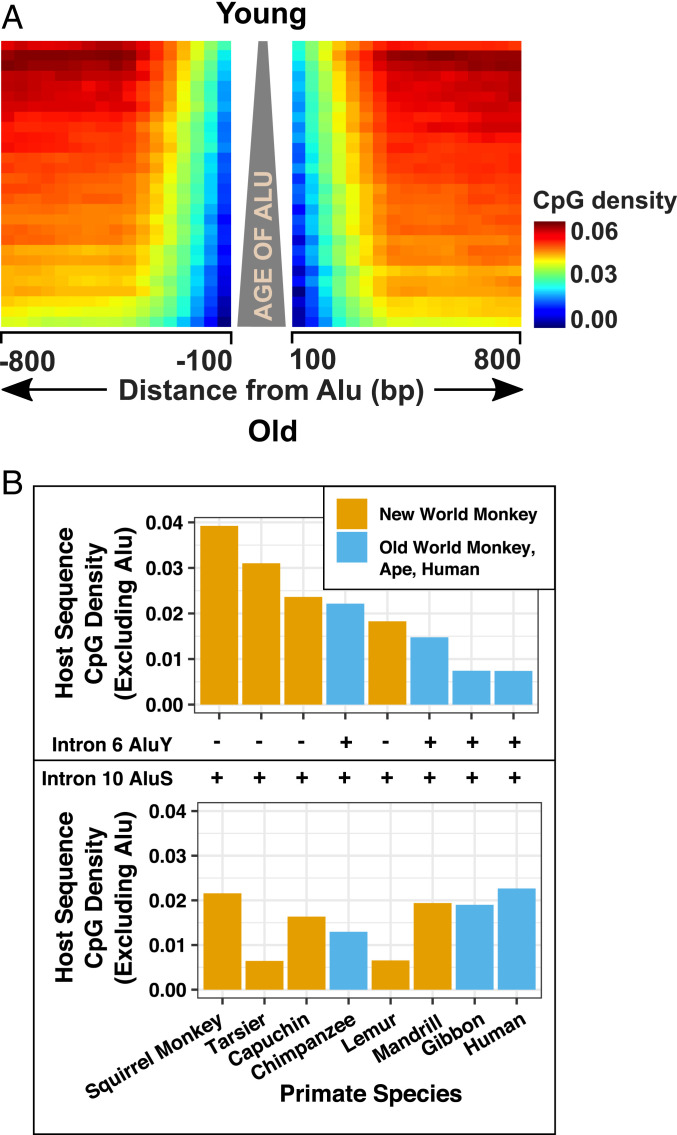
“We downloaded human repeat masker data (58, 59) and grouped 1,142,278 Alu elements by internal CpG density.”
MIRs are classic, tRNA-derived SINEs that amplified before the mammalian radiation
Smit, A. F. A., & Riggs, A. D. (1995) · Nucleic Acids Research · doi:10.1093/nar/23.1.98 · Cited by 239 · cited 2×
“TE definitions were downloaded from RepeatMasker (58).”
Polak, P., & Domany, E. (2006) · BMC Genomics · doi:10.1186/1471-2164-7-133 · Cited by 237 · cited 3×
“We downloaded exon definitions and transcript definitions for humans from GENCODE database release 26.”
Bestor, T. H. (1990) · Philosophical Transactions of the Royal Society of London. B, Biological Sciences · doi:10.1098/rstb.1990.0002 · Cited by 230 · cited 2×
“Thirty years ago, Bestor (7) proposed that an important function of DNA cytosine methylation was to silence the expression of TEs.”
Whole-genome analysis of Alu repeat elements reveals complex evolutionary history
Price, A. L., Eskin, E., & Pevzner, P. A. (2004) · Genome Research · doi:10.1101/gr.2693004 · Cited by 213 · cited 5×
“To confirm this genome-wide analysis, we focused on a relatively recent AluY insertion into intron 6 of the TP53 gene which took place in Old World monkeys and apes after they had separated from New World monkeys (10).”
InfluentialDe novo DNA methylation of endogenous retroviruses is shaped by KRAB-ZFPs/KAP1 and ESET
Rowe, H. M., Friedli, M., Offner, S., Verp, S., Mesnard, D., Marquis, J., Aktas, T., & Trono, D. (2013) · Development · doi:10.1242/dev.087585 · Cited by 191 · cited 3×
“TRIM28 is known for its role in transcriptionally corepressing ERVs by binding to the ERV-targeting KRAB zinc-finger proteins (KZNFs) and subsequently mobilizing additional repressor proteins such as SETDB1 , HP1 , and the nucleosome remodeling and deacetylation (NuRD) complex (25).”
The Role of DNA Methylation in Invertebrates: Developmental Regulation or Genome Defense?
Regev, A., Lamb, M. J., & Jablonka, E. (1998) · Molecular Biology and Evolution · doi:10.1093/oxfordjournals.molbev.a025992 · Cited by 173 · cited 1×
“For example, Regev et al. (31) have argued that its role in gene control might have preceded its participation in TE suppression, thus contributing to genome evolution in additional ways.”
Transposons, Genome Size, and Evolutionary Insights in Animals
Canapa, A., Barucca, M., Biscotti, M. A., Forconi, M., & Olmo, E. (2015) · Cytogenetic and Genome Research · doi:10.1159/000444429 · Cited by 164 · cited 2×
“Although the functional significance of these size differences remains enigmatic (2), much of the variability can be explained by the presence of repetitive DNA, particularly transposable elements (TEs), which were identified by Barbara McClintock many years ago (3).”
de Souza, F. S. J., Franchini, L. F., & Rubinstein, M. (2013) · Molecular Biology and Evolution · doi:10.1093/molbev/mst045 · Cited by 161 · cited 1×
“This is consistent with prior reports of a lack of direct evidence that TEs are conclusively used as cis-regulatory elements (51).”
Transposable elements and an epigenetic basis for punctuated equilibria
Zeh, D. W., Zeh, J. A., & Ishida, Y. (2009) · BioEssays · doi:10.1002/bies.200900026 · Cited by 159 · cited 1×
“The presence of multiple transcription factor binding sites (TFBSs) in TE-derived DNA led to the hypothesis that TEs might provide a ready source of DNA that could be co-opted by the cell to help regulate gene expression (16, 21, 22), summarized in previous reviews (23, 24).”
Is There an Upper Limit to Genome Size?
Hidalgo, O., Pellicer, J., Christenhusz, M. J. M., Schneider, H., Leitch, A. R., & Leitch, I. J. (2017) · Trends in Plant Science · doi:10.1016/j.tplants.2017.04.005 · Cited by 159 · cited 1×
“E genomes contain much more DNA than necessary for the protein-coding and noncoding genes they contain, and they show as much as 64,000-fold variation in their sizes (1).”
Quenneville, S., Turelli, P., Bojkowska, K., Raclot, C., Offner, S., Kapopoulou, A., & Trono, D. (2012) · Cell Reports · doi:10.1016/j.celrep.2012.08.043 · Cited by 156 · cited 3×
“TRIM28 is known for its role in transcriptionally corepressing ERVs by binding to the ERV-targeting KRAB zinc-finger proteins (KZNFs) and subsequently mobilizing additional repressor proteins such as SETDB1 , HP1 , and the nucleosome remodeling and deacetylation (NuRD) complex (25).”
Evolution of Alu Elements toward Enhancers
Su, M., Han, D., Boyd-Kirkup, J., Yu, X., & Han, J.-D. J. (2014) · Cell Reports · doi:10.1016/j.celrep.2014.03.011 · Cited by 154 · cited 1×
“We have shown here that most of them need to be mutated to be optimized for such exaptation, which is consistent with previous observations in ERVs (54) and Alu elements (55) that C-to-T and other mutations are needed to complete TE co-option.”
Magewu, A. N., & Jones, P. A. (1994) · Molecular and Cellular Biology · doi:10.1128/mcb.14.6.4225 · Cited by 151
Self-citationRestriction of diverse retroviruses by SAMHD1
Gramberg, T., Kahle, T., Bloch, N., Wittmann, S., Müllers, E., Daddacha, W., Hofmann, H., Kim, B., Lindemann, D., & Landau, N. R. (2013) · Retrovirology · doi:10.1186/1742-4690-10-26 · Cited by 137
Gombart, A. F., Saito, T., & Koeffler, H. P. (2009) · BMC Genomics · doi:10.1186/1471-2164-10-321 · Cited by 127 · cited 1×
“For example, Alu sequences are known to harbor a compendium of sequence-binding motifs for nuclear receptors such as RAR , VDR , and LXR (26, 27), but most of the occupancy by these TFs lies in non-TE genomic territory in the human soma ( SI Appendix , Table S1).”
Ohtani, H., Liu, M., Zhou, W., Liang, G., & Jones, P. A. (2018) · Genome Research · doi:10.1101/gr.234229.118 · Cited by 127 · cited 1×
“Its role as a suppressor of the transcription of TEs (30) is also widely accepted.”
Self-citationDNA methyltransferase-3a interacts with p53 and represses p53-mediated gene expression
Wang, Y. A., Kamarova, Y., Shen, K. C., Jiang, Z., Hahn, M. J., Wang, Y., & Brooks, S. C. (2005) · Cancer Biology & Therapy · doi:10.4161/cbt.4.10.2073 · Cited by 92 · cited 1×
“The tumor suppressor p53 is known for its interaction with DNMT3A (45) and for cooperation with DNA methylation in the epigenetic silencing of transposable elements (46).”
Multiple effects govern endogenous retrovirus survival patterns in human gene introns
van de Lagemaat, L. N., Medstrand, P., & Mager, D. L. (2006) · Genome Biology · doi:10.1186/gb-2006-7-9-r86 · Cited by 91 · cited 1×
“A possible explanation for the asymmetry is that newly inserted TEs might interfere with transcription pausing or firstintron splicing (18).”
Yates, P. A., Burman, R. W., Mummaneni, P., Krussel, S., & Turker, M. S. (1999) · Journal of Biological Chemistry · doi:10.1074/jbc.274.51.36357 · Cited by 90
Transposable element recruitments in the mammalian placenta: impacts and mechanisms
Emera, D., & Wagner, G. P. (2012) · Briefings in Functional Genomics · doi:10.1093/bfgp/els013 · Cited by 90 · cited 1×
“We have shown here that most of them need to be mutated to be optimized for such exaptation, which is consistent with previous observations in ERVs (54) and Alu elements (55) that C-to-T and other mutations are needed to complete TE co-option.”
Impact of Alu repeats on the evolution of human p53 binding sites
Cui, F., Sirotin, M. V., & Zhurkin, V. B. (2011) · Biology Direct · doi:10.1186/1745-6150-6-2 · Cited by 85 · cited 1×
“S2 and prior studies (26 – 28).”
Takai, D. (2003) · Molecular Biology and Evolution · doi:10.1093/molbev/msh040 · Cited by 83 · cited 1×
“This relationship is consistent with our earlier report that fewer TEs are found at bidirectional promoter regions in which two proximal TSSs are oriented away from each other (17).”
Self-citationDeregulation of Retroelements as an Emerging Therapeutic Opportunity in Cancer
Ishak, C. A., Classon, M., & De Carvalho, D. D. (2018) · Trends in Cancer · doi:10.1016/j.trecan.2018.05.008 · Cited by 79 · cited 1×
“RNA helicases such as MDA5 and RIG-I were found to target ERV transcripts activated from DNMT inhibitor administration (47).”
Sex brings transposons and genomes into conflict
Bestor, T. H. (1999) · Genetica · doi:10.1023/a:1003990818251 · Cited by 79
Yang, A. S., Gonzalgo, M. L., Zingg, J.-M., Millar, R. P., Buckley, J. D., & Jones, P. A. (1996) · Journal of Molecular Biology · doi:10.1006/jmbi.1996.0246 · Cited by 70 · cited 5×
“We used Alu elements as examples because unlike LINEs and ERVs, which are CpG-rich only in their promoter/long terminal repeat (LTR) regions, Alus are CpG-rich throughout their 280-bp sequences before their initial insertion or transposition (10, 12).”
InfluentialSelf-citationStudies of DNA methylation in animals
Bird, A., Tate, P., Nan, X., Campoy, J., Meehan, R., Cross, S., Tweedie, S., Charlton, J., & Macleod, D. (1995) · Journal of Cell Science · doi:10.1242/jcs.1995.supplement_19.5 · Cited by 64 · cited 1×
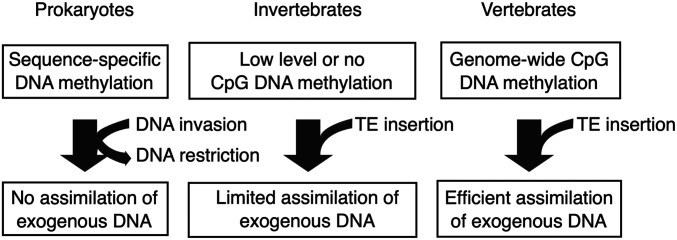
“Bird and others (8), using methylation-sensitive restriction enzymes, subsequently found that invertebrates had either very little or highly compartmentalized regions of CpG methylation, whereas vertebrates had intergenic and far more widespread modification patterns (Fig.”
Sex brings transposons and genomes into conflict
Bestor, T. H. (2000) · Springer eBooks · doi:10.1007/978-94-011-4156-7_28 · Cited by 64
Grandi, F. C., Rosser, J. M., Newkirk, S. J., Yin, J., Jiang, X., Xing, Z., Whitmore, L., Bashir, S., Ivics, Z., Izsvák, Z., et al. (2015) · Genome Research · doi:10.1101/gr.185132.114 · Cited by 47 · cited 1×
“The spread of methylation and rarely demethylation from TEs was previously demonstrated in locus-specific manner for Alu (10) and L1 (32) sequences through comparative analysis, underscoring their role in creating the epigenetic and eventually the genetic landscape of the mammalian germline.”
Levine, A. J. (2017) · Oncotarget · doi:10.18632/oncotarget.14805 · Cited by 18 · cited 1×
“The tumor suppressor p53 is known for its interaction with DNMT3A (45) and for cooperation with DNA methylation in the epigenetic silencing of transposable elements (46).”
Cited by
The Chinese pine genome and methylome unveil key features of conifer evolution
Niu, S., Li, J., Bo, W., Yang, W., Zuccolo, A., Giacomello, S., Chen, X., Han, F., Yang, J., Song, Y., et al. (2022) · Cell · doi:10.1016/j.cell.2021.12.006 · Cited by 362
“A negative correlation between the TE insertion time and DNA methylation level was observed in many small angiosperm genomes (Wang et al., 2019; Zhou et al., 2020); however, we did not find evidence that the methylation declined as the insertion age increased in P. tabuliformis (Figures 5C and 5F).”
InfluentialTaming transposable elements in vertebrates: from epigenetic silencing to domestication
Almeida, M. V., Vernaz, G., Putman, A. L. K., & Miska, E. A. (2022) · Trends in Genetics · doi:10.1016/j.tig.2022.02.009 · Cited by 144
The Epigenetic Hallmarks of Cancer
Esteller, M., Dawson, M. A., Kadoch, C., Rassool, F. V., Jones, P. A., & Baylin, S. B. (2024) · Cancer Discovery · doi:10.1158/2159-8290.cd-24-0296 · Cited by 160
Self-citationDNA language models are powerful predictors of genome-wide variant effects
Benegas, G., Batra, S. S., & Song, Y. S. (2023) · Proceedings of the National Academy of Sciences · doi:10.1073/pnas.2311219120 · Cited by 157
Transposable elements in mammalian chromatin organization
Lawson, H. A., Liang, Y., & Wang, T. (2023) · Nature Reviews Genetics · doi:10.1038/s41576-023-00609-6 · Cited by 144
Metadata
- Authors
- Zhou, W., Liang, G., Molloy, P. L., & Jones, P. A.
- Affiliations
- Children's Hospital of Philadelphia (US)
- University of Southern California (US)
- Commonwealth Scientific and Industrial Research Organisation (AU)
- Van Andel Institute (US)
- Corresponding author
- Zhou, Wanding
- Jones, Peter A.
- Venue
- Proceedings of the National Academy of Sciences
- Publisher
- National Academy of Sciences
- Published
- 2020-07-27
- Volume
- 117
- Issue
- 32
- Pages
- 19359-19366
- ISSN
- 0027-8424 (ISSN-L)
- 1091-6490
- PMC
- PMC7431005
- OpenAlex
- W3046171324
- Cited by
- 181
- References
- 64
- Citations by year
- 2026: 22 · 2025: 38 · 2024: 31 · 2023: 33 · 2022: 33 · 2021: 24
- FWCI
- 14.52
- Type
- journal article
- Language
- en
- Open access
- hybrid
- doi.org
- Licence
- Locations
- Proceedings of the National Academy of Sciences (publishedVersion, cc-by-nc-nd)
- PubMed Central (publishedVersion, cc-by-nc-nd)
- PubMed (publishedVersion)
- Funders
- HHS | NIH | National Cancer Institute (CA209859)
- Van Andel Research Institute (NA)
- Topics
- Life Sciences › Biochemistry, Genetics and Molecular Biology › Genetics › Chromosomal and Genetic Variations
- Life Sciences › Biochemistry, Genetics and Molecular Biology › Molecular Biology › Epigenetics and DNA Methylation
- Life Sciences › Biochemistry, Genetics and Molecular Biology › Molecular Biology › Genomics and Chromatin Dynamics
- Keywords
- DNA methylation, transposable elements, genome size, CpG, cytosine deamination, C>T mutations, genome expansion, enhancers, gene expression regulation, transposon silencing, whole genome sequencing
- MeSH terms
- Cytosine, DNA Transposable Elements, Gene Expression Regulation, Mutation, Promoter Regions, Genetic, Genome, CpG Islands, DNA Methylation, Eukaryota, Genome Size
About these checks
Registry, retraction, Cites and statistics results are computed, not judged, with one exception: a printed reference that no index lists is read once by a model before it counts as a citation error. Claims are extracted by a model and kept only when their quote appears verbatim in the text; each cited source is then checked, with a model’s help, for whether it says what the claim relies on. Those verdicts can be wrong — read the claim’s quote and the cited source before relying on one.
Statistics and arithmetic are recomputed, not judged.
Confidence bands are shown only for fields calibrated on our annotated test set. None is calibrated yet, so no band is shown.
What counts as a claim ›How we measure confidence ›How we check this ›
Are you an author, or do you see a problem with this page? Request a review
Data sources
Bibliographic data: Semantic Scholar, OpenAlex, Crossref.
Contains information from the Semantic Scholar Academic Graph Datasets, made available under the ODC Attribution License (ODC-BY 1.0).
Semantic Scholar’s data is described in: Kinney, R., et al. (2023). The Semantic Scholar Open Data Platform. arXiv:2301.10140.
