

DNA methylation enables transposable element-driven genome expansion
Open accessThe DOI matches its Crossref record; 64 of the 64 references it cites were found in a registry or an index.
Abstract
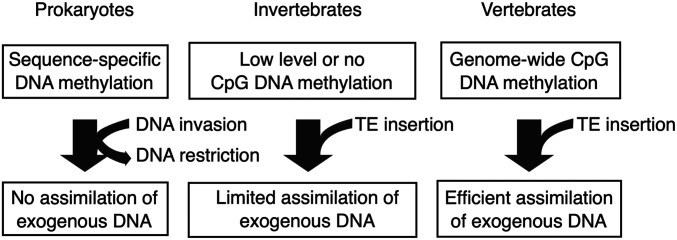
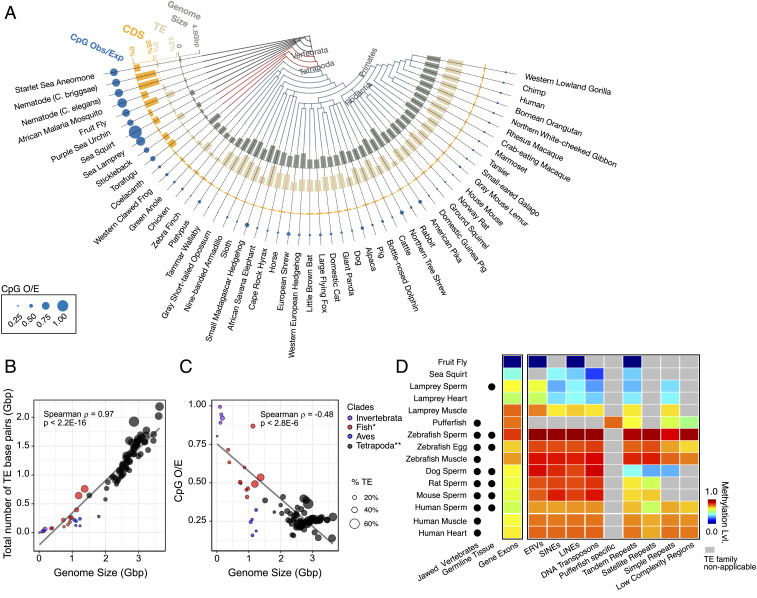
Significance: We examined recent whole-genome data of 53 organisms and found that the substantial differences in their genome sizes can be largely explained by the proportion of transposable elements (TEs) within them. TEs coexist with their host largely because CpG methylation suppresses their transcription. Genome expansion is therefore dependent to a large extent on the action of DNA methyltransferases, which evolved at roughly the same time as TEs. A long-term outcome of CpG methylation is an increase in C-to-T transition mutations both in the TEs and host DNA, which leads to a decreased proportion of CpG dinucleotides over evolutionary time. The survival of TEs in the host genome also provides extra DNA that may be repurposed for host regulatory functions.
Overview
The claims and statistics of this paper haven’t been checked yet.
Free: it reads the open-access text and checks the first 5 claims that cite a source we can check. Create a free account to check every claim.
Integrity signals
Registry
Cites
Statistics
Figures
Verification
Claims the paper makes
The claims and statistics of this paper haven’t been checked yet.
Free: it reads the open-access text and checks the first 5 claims that cite a source we can check. Create a free account to check every claim.
Claims other papers make about this one
Each is checked against this paper’s own text: does it say what the citing paper says it does?
The source backs part of the claim, not all of it — or backs it for a different population, condition or comparison.
In the citing paper
“Second, repetitive elements display reduced sequence variation compared to other regions, in particular younger repeats with little time to accumulate mutations (47).”
From DNA language models are powerful predictors of genome-wide variant effects (2023) · cites this paper as [47]
Experimental — accuracy not yet measured
Self-check
Percentages, sums and reported differences re-computed from the paper’s own numbers.
The self-check needs the paper’s full text.
Citations
Cites
BEDTools: a flexible suite of utilities for comparing genomic features
Quinlan, A. R., & Hall, I. M. (2010) · Bioinformatics · doi:10.1093/bioinformatics/btq033 · Cited by 27,437
Integrative analysis of 111 reference human epigenomes
Roadmap Epigenomics Consortium, Kundaje, A., Meuleman, W., Ernst, J., Bilenky, M., Yen, A., Heravi-Moussavi, A., Kheradpour, P., Zhang, Z., Wang, J., et al. (2015) · Nature · doi:10.1038/nature14248 · Cited by 6,368 · cited 1×
“For the enhancer analysis, we studied the 15-state chromHMM annotation generated from the Roadmap Epigenome Project (60).”
Functions of DNA methylation: islands, start sites, gene bodies and beyond
Jones, P. A. (2012) · Nature Reviews Genetics · doi:10.1038/nrg3230 · Cited by 6,061 · cited 1×
“Discussion DNA methylation has roles in the control of gene expression at the levels of transcription initiation and elongation as well as in the function of regulatory elements such as promoters, enhancers, and insulators; those roles are relatively well understood (29).”
Self-citationFIMO: scanning for occurrences of a given motif
Grant, C. E., Bailey, T. L., & Noble, W. S. (2011) · Bioinformatics · doi:10.1093/bioinformatics/btr064 · Cited by 4,247
Epigenetics in human disease and prospects for epigenetic therapy
Egger, G., Liang, G., Aparicio, A., & Jones, P. A. (2004) · Nature · doi:10.1038/nature02625 · Cited by 3,232 · cited 1×
“We know that Alus can act as “ methylation centers ” after insertion into host DNA, whereby methylation subsequently spreads into the flanking DNA (13 – 15).”
Self-citationThe Significance of Responses of the Genome to Challenge
McClintock, B. (1984) · Science · doi:10.1126/science.15739260 · Cited by 2,617 · cited 1×
“Although the functional significance of these size differences remains enigmatic (2), much of the variability can be explained by the presence of repetitive DNA, particularly transposable elements (TEs), which were identified by Barbara McClintock many years ago (3).”
Zerbino, D. R., Achuthan, P., Akanni, W., Amode, M. R., Barrell, D., Bhai, J., Billis, K., Cummins, C., Gall, A., Girón, C. G., et al. (2018) · Nucleic Acids Research · doi:10.1093/nar/gkx1098 · Cited by 2,605 · cited 1×
“The genome sequence and transcript annotation was retrieved from Ensembl release 87 (47 vertebrates) and Ensembl metazoa (6 invertebrates) release 38 (56).”
Britten, R. J., & Davidson, E. H. (1969) · Science · doi:10.1126/science.165.3891.349 · Cited by 2,064 · cited 1×
“The presence of multiple transcription factor binding sites (TFBSs) in TE-derived DNA led to the hypothesis that TEs might provide a ready source of DNA that could be co-opted by the cell to help regulate gene expression (16, 21, 22), summarized in previous reviews (23, 24).”
Genome-Wide Evolutionary Analysis of Eukaryotic DNA Methylation
Zemach, A., McDaniel, I. E., Silva, P., & Zilberman, D. (2010) · Science · doi:10.1126/science.1186366 · Cited by 1,793 · cited 1×
“Inverte-brates have small genomes, few TEs, higher percentages of coding sequence, and little CpG loss because they do not have strong intergenic CpG methylation (11).”
Cytosine methylation and the ecology of intragenomic parasites
Yoder, J. A., Walsh, C. P., & Bestor, T. H. (1997) · Trends in Genetics · doi:10.1016/s0168-9525(97)01181-5 · Cited by 1,562 · cited 1×
“The central role of cytosine methylation in repressing the transcription of evolutionarily young TEs (i.e., those more recently inserted) has been well-described (5, 33).”
Cited by
The Chinese pine genome and methylome unveil key features of conifer evolution
Niu, S., Li, J., Bo, W., Yang, W., Zuccolo, A., Giacomello, S., Chen, X., Han, F., Yang, J., Song, Y., et al. (2022) · Cell · doi:10.1016/j.cell.2021.12.006 · Cited by 362
“A negative correlation between the TE insertion time and DNA methylation level was observed in many small angiosperm genomes (Wang et al., 2019; Zhou et al., 2020); however, we did not find evidence that the methylation declined as the insertion age increased in P. tabuliformis (Figures 5C and 5F).”
InfluentialTaming transposable elements in vertebrates: from epigenetic silencing to domestication
Almeida, M. V., Vernaz, G., Putman, A. L. K., & Miska, E. A. (2022) · Trends in Genetics · doi:10.1016/j.tig.2022.02.009 · Cited by 144
The Epigenetic Hallmarks of Cancer
Esteller, M., Dawson, M. A., Kadoch, C., Rassool, F. V., Jones, P. A., & Baylin, S. B. (2024) · Cancer Discovery · doi:10.1158/2159-8290.cd-24-0296 · Cited by 160
Self-citationDNA language models are powerful predictors of genome-wide variant effects
Benegas, G., Batra, S. S., & Song, Y. S. (2023) · Proceedings of the National Academy of Sciences · doi:10.1073/pnas.2311219120 · Cited by 157
Transposable elements in mammalian chromatin organization
Lawson, H. A., Liang, Y., & Wang, T. (2023) · Nature Reviews Genetics · doi:10.1038/s41576-023-00609-6 · Cited by 144
Thind, A. S., Monga, I., Thakur, P. K., Kumari, P., Dindhoria, K., Krzak, M., Ranson, M., & Ashford, B. (2021) · Briefings in Bioinformatics · doi:10.1093/bib/bbab259 · Cited by 129
Transposable element regulation and expression in cancer
Grundy, E. E., Diab, N., & Chiappinelli, K. B. (2021) · FEBS Journal · doi:10.1111/febs.15722 · Cited by 132
Therapeutic targeting of DNA methylation alterations in cancer
Lee, A. V., Nestler, K. A., & Chiappinelli, K. B. (2024) · Pharmacology & Therapeutics · doi:10.1016/j.pharmthera.2024.108640 · Cited by 124
Shao, C., Sun, S., Liu, K., Wang, J., Li, S., Liu, Q., Deagle, B. E., Seim, I., Biscontin, A., Wang, Q., et al. (2023) · Cell · doi:10.1016/j.cell.2023.02.005 · Cited by 119
TFs for TEs: the transcription factor repertoire of mammalian transposable elements
Hermant, C., & Torres‐Padilla, M. (2021) · Genes & Development · doi:10.1101/gad.344473.120 · Cited by 115
“While these older elements have not yet been extensively ascribed to gene regulatory functions, L2 has recently been found to bemore frequently represented within enhancers than younger LINE elements (Zhou et al. 2020).”
BackgroundThe Dynamism of Transposon Methylation for Plant Development and Stress Adaptation
Ramakrishnan, M., Satish, L., Kalendar, R. N., Narayanan, M., Kandasamy, S., Sharma, A., Emamverdian, A., Wei, Q., & Zhou, M. (2021) · International Journal of Molecular Sciences · doi:10.3390/ijms222111387 · Cited by 98
“TE silencing is caused by miR‐ NAs or epigenetic mechanisms, such as DNA methylation or chromatin remodelling [38,41].”
BackgroundRole of Transposable Elements in Genome Stability: Implications for Health and Disease
Bhat, A., Ghatage, T., Bhan, S., Lahane, G. P., Dhar, A., Kumar, R., PANDITA, R. K., Bhat, K. M., Ramos, K. S., & Pandita, T. K. (2022) · International Journal of Molecular Sciences · doi:10.3390/ijms23147802 · Cited by 90
“that the increased transition rate of methylated cytosine to thymine in the TE DNA and other mutations confer a new cis-regulatory function to the TEs [41].”
BackgroundInfluentialDomesticated cannabinoid synthases amid a wild mosaic cannabis pangenome
Lynch, R. C., Padgitt‐Cobb, L. K., Garfinkel, A. R., Knaus, B. J., Hartwick, N. T., Allsing, N. A., Aylward, A., Bentz, P. C., Carey, S. B., Mamerto, A., et al. (2025) · Nature · doi:10.1038/s41586-025-09065-0 · Cited by 87
Genetic Variation and Unintended Risk in the Context of Old and New Breeding Techniques
Singer, S. D., Laurie, J. D., Bilichak, A., Kumar, S., & Singh, J. (2021) · Critical Reviews in Plant Sciences · doi:10.1080/07352689.2021.1883826 · Cited by 77
“Another means through which SNVs can occur is through C to T transitions that arise from the spontaneous deamination of methylated cytosines (Zhou et al., 2020), which are very common in plant genomes and play a substantial role in epigenetic gene silencing (Pikaard and Scheid, 2014).”
BackgroundEpigenetic reprogramming in mouse and human primordial germ cells
Lee, S.-M., & Surani, M. A. (2024) · Experimental & Molecular Medicine · doi:10.1038/s12276-024-01359-z · Cited by 62
“DNA methylation plays a signi fi cant role in regulating the expression of TEs 57 .”
Zhu, Q., Sang, F., Withey, S., Tang, W. W. C., Dietmann, S., Klisch, D., Ramos‐Ibeas, P., Zhang, H., Requena, C. E., Hájková, P., et al. (2021) · Cell Reports · doi:10.1016/j.celrep.2021.108735 · Cited by 63
Immune surveillance of senescence: potential application to age-related diseases
Wang, T., & Nakanishi, M. (2024) · Trends in Cell Biology · doi:10.1016/j.tcb.2024.06.007 · Cited by 54
The sugar kelp Saccharina latissima I: recent advances in a changing climate
Diehl, N., Li, H., Scheschonk, L., Burgunter‐Delamare, B., Niedzwiedz, S., Forbord, S., Sæther, M., Bischof, K., & Monteiro, C. (2023) · Annals of Botany · doi:10.1093/aob/mcad173 · Cited by 52
“Methylations in the CG, CHG and CHH contexts were found to act in silencing transposable elements in and outside of genes (Zhou et al. , 2020) or to act in regulation of transcript expression (Dubin et al. , 2015; L. Zhang et al. , 2018 a ; Boquete et al. , 2021).”
BackgroundGenome stability from the perspective of telomere length
Lu, X., & Liu, L. (2023) · Trends in Genetics · doi:10.1016/j.tig.2023.10.013 · Cited by 50
Evolution of complex genome architecture in gymnosperms
Wan, T., Gong, Y., Liu, Z., Zhou, Y., Dai, C., & Wang, Q. (2022) · GigaScience · doi:10.1093/gigascience/giac078 · Cited by 49
“The necessity of TE silencing has been widely acknowledged, and the epigenetic control of DNA sequences is considered the vital nuclear defence system of plant genomes to the destructive potential of TEs [63].”
InfluentialComparative epigenome analysis using Infinium DNA methylation BeadChips
Ding, W., Kaur, D., Horvath, S., & Zhou, W. (2023) · Briefings in Bioinformatics · doi:10.1093/bib/bbac617 · Cited by 49
Self-citationA decade of dinoflagellate genomics illuminating an enigmatic eukaryote cell
Lin, S. (2024) · BMC Genomics · doi:10.1186/s12864-024-10847-5 · Cited by 48
“Similar TE domestication by epigenetic regulation seems common in eukaryotes [54], and methylation of trans-posable elements is presumably a major driving force of genome expansion in all eukaryotes [55].”
BackgroundThe Role of DNA Methylation in Genome Defense in Cnidaria and Other Invertebrates
Ying, H., Hayward, D. C., Klimovich, A. V., Bosch, T. C. G., Baldassarre, L., Neeman, T. M., Forêt, S., Huttley, G. A., Reitzel, A. M., Fraune, S., et al. (2022) · Molecular Biology and Evolution · doi:10.1093/molbev/msac018 · Cited by 45
Tang, X., Zheng, P., Li, X., Wu, H., Wei, D., Liu, Y., & Huang, G. (2022) · Methods · doi:10.1016/j.ymeth.2022.04.011 · Cited by 43
DNA methyltransferase CHROMOMETHYLASE3 prevents ONSEN transposon silencing under heat stress
Nozawa, K., Chen, J., Jiang, J., Leichter, S. M., Yamada, M., Suzuki, T., Liu, F., Ito, H., & Zhong, X. (2021) · PLoS Genetics · doi:10.1371/journal.pgen.1009710 · Cited by 41
“For instance, cytosine mutation to thymine of CpG dinucleotide can cause CpG loss and disable the methylation on TE DNA, allowing TEs to take on regulatory functions in the host genome [34].”
BackgroundPulmonate slug evolution is reflected in the de novo genome of Arion vulgaris Moquin-Tandon, 1855
Chen, Z., Doğan, Ö., Guiglielmoni, N., Guichard, A., & Schrödl, M. (2022) · Scientific Reports · doi:10.1038/s41598-022-18099-7 · Cited by 39
Lawlor, M. A., & Ellison, C. E. (2023) · Current Opinion in Genetics & Development · doi:10.1016/j.gde.2023.102092 · Cited by 35
Male gametophyte development in flowering plants: A story of quarantine and sacrifice
Liu, L., & Wang, T. (2021) · Journal of Plant Physiology · doi:10.1016/j.jplph.2021.153365 · Cited by 35
Skorupa, M., Szczepanek, J., Mazur, J., Domagalski, K., Tretyn, A., & Tyburski, J. (2021) · PLoS ONE · doi:10.1371/journal.pone.0251675 · Cited by 35
“There is a lot of literature data showing that the effect of stress on the plant induces changes in methylation in many regions of the TE sequence leading to their mobilization/silencing [35, 36].”
BackgroundZhang, L., Yan, S. L., Gong, W., Zhao, G., Xiao, S., Lin, H., Li, Y., Liao, Z., Zhang, S., Hu, G., et al. (2024) · Cell Reports · doi:10.1016/j.celrep.2024.114902 · Cited by 35
Transposable element 5mC methylation state of blood cells predicts age and disease
Morandini, F., Lu, J. Y., Rechsteiner, C., Shadyab, A. H., Casanova, R., Snively, B. M., Seluanov, A., & Gorbunova, V. A. (2024) · Nature Aging · doi:10.1038/s43587-024-00757-2 · Cited by 34
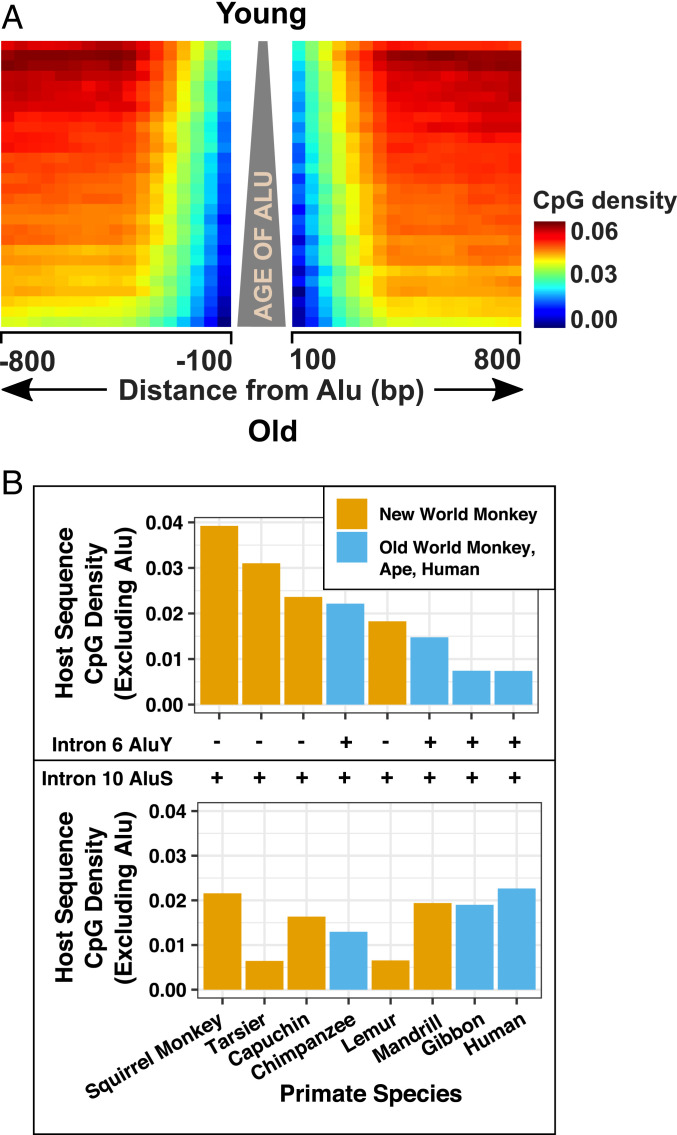
“For example, young L1s have a higher CpG density, which is gradually lost over evolutionary timescales because of C>T mutations 40 , and CpG density affects the rate of passive methylation loss 41,42 .”
HSV-1 and Endogenous Retroviruses as Risk Factors in Demyelination
Bello‐Morales, R., Andreu, S., Ripa, I., & López‐Guerrero, J. A. (2021) · International Journal of Molecular Sciences · doi:10.3390/ijms22115738 · Cited by 32
“DNA methylation is the main strategy to silence TEs in higher eukaryotes, and genome expansion may be largely dependent on the action of DNA methyltransferases, which have evolved with TEs [73].”
BackgroundDNA methylation enables recurrent endogenization of giant viruses in an animal relative
Sarre, L. A., Kim, I. V., Ovchinnikov, V. Y., Olivetta, M., Suga, H., Dudin, O., Sebé-Pedrós, A., & de Mendoza, A. (2024) · Science Advances · doi:10.1126/sciadv.ado6406 · Cited by 32
“Therefore, the genome of Amoebidium is possibly permissive to TE expansions because 5mC can silence these novel insertions by reducing their potential deleterious effects, similar to what has been proposed for vertebrates ( 41 ),”
Karoii, D. H., & Azizi, H. (2023) · Cell Biochemistry and Function · doi:10.1002/cbf.3838 · Cited by 24
“73 Epigenetic level and posttranscriptional level are at least two levels of piRNA ‐ related TE suppression.”
BackgroundLi, S., Lv, C.-C., Lan, L.-N., Jiang, K.-L., Zhang, Y., Li, N., Deng, C., & Gao, W. (2021) · Horticulture Research · doi:10.1038/s41438-021-00633-9 · Cited by 30
Hologenome analysis reveals independent evolution to chemosymbiosis by deep-sea bivalves
Guo, Y., Meng, L., Wang, M., Zhong, Z., Li, D., Zhang, Y., Li, H., Zhang, H., Seim, I., Li, Y., et al. (2023) · BMC Biology · doi:10.1186/s12915-023-01551-z · Cited by 30
Low-input and single-cell methods for Infinium DNA methylation BeadChips
Lee, S. M., Loo, C. E., Prasasya, R. D., Bartolomei, M. S., Kohli, R. M., & Zhou, W. (2024) · Nucleic Acids Research · doi:10.1093/nar/gkae127 · Cited by 30
“The role of methylation retention in TE regulation is further supported by the higher methylation retention in evolutionarily younger TE subfamilies than older TE families ( 64 ) (Figure 6 F).”
BackgroundSelf-citationMarino, A., Debaecker, G., Fiston-Lavier, A.-S., Haudry, A., & Nabholz, B. (2025) · eLife · doi:10.7554/elife.100574.3 · Cited by 29
The Role of DNA Methylation and DNA Methyltransferases in Cancer
Weisenberger, D. J., Lakshminarasimhan, R., & Liang, G. (2022) · Advances in experimental medicine and biology · doi:10.1007/978-3-031-11454-0_13 · Cited by 30
Self-citationTransposable Element Interactions Shape the Ecology of the Deer Mouse Genome
Gozashti, L., Feschotte, C., & Hoekstra, H. E. (2023) · Molecular Biology and Evolution · doi:10.1093/molbev/msad069 · Cited by 29
“In mammals, ERVs are the primary targets of KZNF suppression, whereas LINEs and SINEs are less frequently targeted, probably because ERV insertions are more regulatorily potent and therefore more deleterious (Wolf et al. 2015; Zhou et al. 2020).”
BackgroundTaming transposable elements in livestock and poultry: a review of their roles and applications
Zhao, P., Peng, C., Fang, L., Wang, Z., & Liu, G. E. (2023) · Genetics Selection Evolution · doi:10.1186/s12711-023-00821-2 · Cited by 27
“Moreover, TE can be regulated by context-specific patterns of chromatin marks in embryonic stem cells [16], and TE-driven DNA methylation allows genome expansion [17].”
BackgroundEpigenetic biomarkers for animal welfare monitoring
Whelan, R., Tönges, S., Böhl, F., & Lyko, F. (2023) · Frontiers in Veterinary Science · doi:10.3389/fvets.2022.1107843 · Cited by 26
“of transposable elements can result in increased genome methylation levels (36).”
BackgroundSpermatozoa methylome and its sensitivity to water temperature in a teleost fish
Brionne, A., Goupil, A.-S., Kica, S., Lareyre, J., Labbé, C., & Laurent, A. (2023) · The Science of The Total Environment · doi:10.1016/j.scitotenv.2023.164077 · Cited by 26
Rewiring of chromatin state and gene expression by transposable elements
Ohtani, H., & Iwasaki, Y. W. (2021) · Development Growth & Differentiation · doi:10.1111/dgd.12735 · Cited by 26
“The TEs, also known as “moving genes,” have integrated themselves and jumped from one locus to another in host genomes during vertebrate evolution (Bestor, 1999; Yoder et al., 1997; Zhou et al., 2020).”
BackgroundInfluentialGC content of plant genes is linked to past gene duplications
Bowers, J., Tang, H., Burke, J. M., & Paterson, A. H. (2022) · PLoS ONE · doi:10.1371/journal.pone.0261748 · Cited by 26
“An argument against such a mechanism is that transposable element activity can be enhanced by disrupting their normal hyper-methylated state—indeed, transposon activity is known to increase when sequences are hypo-methylated [51, 52].”
BackgroundHsu, P., Yu, S., Tsai, Y., Chang, J.-Y., Tsai, L., Ye, C.-H., Song, N.-Y., Yau, L.-C., & Lin, S. (2021) · Journal of Biomedical Science · doi:10.1186/s12929-021-00754-2 · Cited by 26
DNA methylation profiles in the blood of newborn term infants born to mothers with obesity
Sasaki, A., Murphy, K. E., Briollais, L., McGowan, P. O., & Matthews, S. G. (2022) · PLoS ONE · doi:10.1371/journal.pone.0267946 · Cited by 25
“The role of intergenic DNA methylation modifications associated with environmental exposures is not well understood, but may regulate the activity of distant enhancers and the transcriptional repression of transposable elements [83, 84].”
BackgroundComputational Methods for Single-Cell DNA Methylome Analysis
Iqbal, W., & Zhou, W. (2022) · Genomics Proteomics & Bioinformatics · doi:10.1016/j.gpb.2022.05.007 · Cited by 24
Self-citationBrennan, R. S., deMayo, J. A., Finiguerra, M. B., Baumann, H., Dam, H. G., & Pespeni, M. H. (2025) · Proceedings of the National Academy of Sciences · doi:10.1073/pnas.2422782122 · Cited by 23
Epigenetic inheritance is unfaithful at intermediately methylated CpG sites
Hay, A. D., Kessler, N. J., Gebert, D., Takahashi, N., Tavares, H., Teixeira, F. K., & Ferguson‐Smith, A. C. (2023) · Nature Communications · doi:10.1038/s41467-023-40845-2 · Cited by 22
“24), but rarely in exons 26,27 .”
Kaleem, M., Azmi, L., Shahzad, N., Taha, M., Kumar, S., Mujtaba, M. A., Hazazi, A. Y., & Kayali, A. (2025) · Naunyn-Schmiedeberg s Archives of Pharmacology · doi:10.1007/s00210-025-04217-5 · Cited by 22
“It accomplishes this by inhibiting the transcription of repetitive elements, such as transposable elements and retroviruses, effectively preventing their movement and integration into the genome (Zhou et al. 2020).”
Zhao, D., Zhang, Y., Lu, Y., Fan, L., Zhang, Z., Zheng, J., & Chai, M. (2022) · Journal of genetics and genomics/Journal of Genetics and Genomics · doi:10.1016/j.jgg.2021.12.009 · Cited by 22
Transcription of Endogenous Retroviruses: Broad and Precise Mechanisms of Control
Jarosz, A. S., & Halo, J. V. (2024) · Viruses · doi:10.3390/v16081312 · Cited by 21
Deciphering recent transposition patterns in plants through comparison of 811 genome assemblies
Huang, Y., Sahu, S. K., & Liu, X. (2025) · Plant Biotechnology Journal · doi:10.1111/pbi.14570 · Cited by 21
“DNA methylation and epigenetic silencing are crucial for TE regulation across various eukaryotic genomes (Stuart et al ., 2016; Zhou et al ., 2020).”
Wibowo, A. T., Antúnez-Sánchez, J., Dawson, A., Price, J. L., Meehan, C., Wrightsman, T., Collenberg, M., Bezrukov, I., Becker, C., Benhamed, M., et al. (2022) · PLoS Genetics · doi:10.1371/journal.pgen.1010479 · Cited by 20
“As such, the methylation of transposons has been selected to provide new regulatory functions in most eukaryotic genomes [35].”
BackgroundDDM1-Mediated TE Silencing in Plants
Akinmusola, R. Y., Wilkins, C.-A., & Doughty, J. (2023) · Plants · doi:10.3390/plants12030437 · Cited by 20
Shin, H., Leung, A., Costello, K. R., Senapati, P., Kato, H., Moore, R. E., Lee, M., Lin, D., Tang, X., Pirrotte, P., et al. (2023) · eLife · doi:10.7554/elife.85595 · Cited by 20
Distinct Retrotransposon Evolution Profile in the Genome of Rabbit (Oryctolagus cuniculus)
Yang, N., Zhao, B., Chen, Y., D’Alessandro, E., Chen, C., Ji, T., Wu, X., & Song, C. (2021) · Genome Biology and Evolution · doi:10.1093/gbe/evab168 · Cited by 20
“Usually, larger genomes contain a higher TE content and vice versa (Hawkins et al. 2006; Chalopin et al. 2015; Zhou et al. 2020), and in both plant and animal kingdoms, genome size is positively correlated with the size of the mobilome in many lineages (Hawkins et al. 2006; Gao et al. 2016).”
BackgroundThe L1-dependant and Pol III transcribed Alu retrotransposon, from its discovery to innate immunity
Stenz, L. (2021) · Molecular Biology Reports · doi:10.1007/s11033-021-06258-4 · Cited by 19
“Interestingly, these organisms present a decreasing proportion of CpG dinucleotides over evolutionary time [38].”
BackgroundPierron, F., Héroin, D., Daffe, G., Daramy, F., Barré, A., Bouchez, O., Romero‐Ramirez, A., Gonzalez, P., & Nikolski, M. (2022) · Environmental Epigenetics · doi:10.1093/eep/dvac022 · Cited by 18
“Especially, the fact that these changes can be inherited across several generations raises the possibility that epigenetic mutations could contribute not only to heritable phenotypic traits and transgenerational diseases but also to evolution by acting as precursors of genetic mutations [3, 4].”
BackgroundDing, Y., Zou, L., Ramakrishnan, M., Chen, Y., Zhu, B., Yu, L., & Zhou, M. (2024) · Industrial Crops and Products · doi:10.1016/j.indcrop.2024.118108 · Cited by 18
Marino, A., Debaecker, G., Fiston-Lavier, A.-S., Haudry, A., & Nabholz, B. (2025) · eLife · doi:10.7554/elife.100574 · Cited by 17
“Such coevolutionary dynamics are, for example, determined by TE silencing mechanisms, which evolve differently across lineages and might influence the degree of genome expansion ( Lechner et al., 2013 ; Zhou et al., 2020 ; Wang et al., 2023 ).”
Genome-wide methylation patterns from canine nanopore assemblies
Schall, P. Z., Winkler, P. A., Petersen‐Jones, S. M., Yuzbasiyan‐Gurkan, V., & Kidd, J. M. (2023) · G3 Genes Genomes Genetics · doi:10.1093/g3journal/jkad203 · Cited by 17
“DNA methylation is a defense used to silence expression of mobile elements to restrict their proliferation (Zhou et al. 2020).”
BackgroundMethodGuynes, K., Sarre, L. A., Carrillo‐Baltodano, A. M., Davies, B. E., Xu, L., Liang, Y., Martín-Zamora, F. M., Hurd, P. J., de Mendoza, A., & Martín-Durán, J. M. (2024) · Genome biology · doi:10.1186/s13059-024-03346-z · Cited by 18
“5e) and proposed to be a mechanism to suppress TE activity, particularly in lineages with high transposon burden [76].”
BackgroundPalazzo, A. J., Escuder, E., D’Addabbo, P., Lovero, D., & Marsano, R. M. (2021) · Molecular Phylogenetics and Evolution · doi:10.1016/j.ympev.2021.107090 · Cited by 17
Comprehensive analysis of epigenetic modifications in alfalfa under cadmium stress
Chen, L., Li, X., Liu, H., He, F., Li, M., Long, R., Wang, X., Kang, J., & Yang, Q. (2024) · Journal of Hazardous Materials · doi:10.1016/j.jhazmat.2024.136545 · Cited by 15
Ecological genomics in the Northern krill uncovers loci for local adaptation across ocean basins
Unneberg, P., Larsson, M., Olsson, A., Wallerman, O., Petri, A., Bunikis, I., Pettersson, O. V., Papetti, C., Gíslason, Á., Glenner, H., et al. (2024) · Nature Communications · doi:10.1038/s41467-024-50239-7 · Cited by 14
“CpG-methylation can silence the expression of harmful transposable elements (TEs), paradoxically allowing them to persist and contribute to genome expansion 36 .”
Phylogenomic signatures of repeat-induced point mutations across the fungal kingdom
Badet, T., & Croll, D. (2025) · PLoS Biology · doi:10.1371/journal.pbio.3003433 · Cited by 14
“Such genomic defense systems are widespread among eukaryotes and are based on DNA or histone methylation, as well as RNA interference (RNAi) [9–11].”
Extensive horizontal transfer of transposable elements shapes fungal mobilomes
Romeijn, J., Bañales, I., & Seidl, M. F. (2025) · Current Biology · doi:10.1016/j.cub.2025.11.012 · Cited by 14
The Future of Epigenetics: Emerging Technologies and Clinical Applications
Iyer, K. A., Tenchov, R., Sasso, J. M., Thite, T., Deng, Y., & Zhou, Q. A. (2026) · ACS Pharmacology & Translational Science · doi:10.1021/acsptsci.5c00729 · Cited by 15
Carducci, F., Carotti, E., Gerdol, M., Greco, S., Canapa, A., Barucca, M., & Biscotti, M. A. (2021) · Scientific Reports · doi:10.1038/s41598-021-94193-6 · Cited by 14
Genetic co-option into plant–filamentous pathogen interactions
Macquet, J., Mounichetty, S., & Raffaele, S. (2022) · Trends in Plant Science · doi:10.1016/j.tplants.2022.06.011 · Cited by 14
Epigenetics across the evolutionary tree: New paradigms from non‐model animals
Sadler, K. C. (2022) · BioEssays · doi:10.1002/bies.202200036 · Cited by 14
Differential usage of DNA modifications in neurons, astrocytes, and microglia
Tooley, K. B., Chucair‐Elliott, A. J., Ocañas, S. R., Machalinski, A. H., Pham, K. D., Hoolehan, W., Kulpa, A. M., Stanford, D. R., & Freeman, W. M. (2023) · Epigenetics & Chromatin · doi:10.1186/s13072-023-00522-6 · Cited by 15
Hossain, S. M., Lynch‐Sutherland, C. F., Chatterjee, A., Macaulay, E. C., & Eccles, M. R. (2021) · Epigenomes · doi:10.3390/epigenomes5030016 · Cited by 13
“It can also indirectly regulate gene expression through the methylation of regulatory elements such as enhancers, insulators and lncRNAs [74].”
BackgroundThe ‘Alu-ome’ shapes the epigenetic environment of regulatory elements controlling cellular defense
Costallat, M., Batsché, É., Rachez, C., & Muchardt, C. (2022) · Nucleic Acids Research · doi:10.1093/nar/gkac346 · Cited by 13
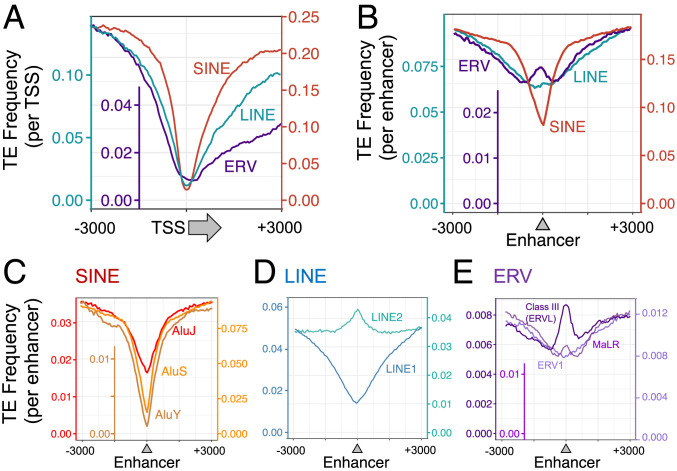
“But mostly, transposable elements are excluded from RE, and most sites of transcription initiation are located in repeat-free regions (Ferrari et al., 2020; Kang et al., 2006; Zhou et al., 2020).”
MITE infestation accommodated by genome editing in the germline genome of the ciliate Blepharisma
Seah, B. K. B., Singh, M., Emmerich, C., Singh, A. D., Woehle, C., Hüettel, B., Byerly, A., Stover, N. A., Sugiura, M., Harumoto, T., et al. (2023) · Proceedings of the National Academy of Sciences · doi:10.1073/pnas.2213985120 · Cited by 13
“When seen from a nonteleological perspective, however, it is precisely because CpG-mediated transposon inactivation is so effective at preventing exposure to selection that transposons persist in the genome (69).”
BackgroundLebherz, M. K., Fouks, B., Schmidt, J., Bornberg‐Bauer, E., & Grandchamp, A. (2024) · Genome Biology and Evolution · doi:10.1093/gbe/evae134 · Cited by 13
Vatov, E., & Gechev, T. (2025) · Plant Stress · doi:10.1016/j.stress.2025.100812 · Cited by 12
Host ZAP activity correlates with the levels of CpG suppression in primate lentiviruses
Nchioua, R., Kmieć, D., Krchlíková, V., Mattes, S., Noettger, S., Bibollet‐Ruche, F., Russell, R. M., Sparrer, K. M. J., Charpentier, T., Tardy, F., et al. (2025) · Proceedings of the National Academy of Sciences · doi:10.1073/pnas.2419489122 · Cited by 12
“…the lemur germline several Mya ( 51 ), it remains unknown whether it originally displayed higher CpG levels or whether this feature evolved following germline invasion of the lemur genome over evolutionary time due to transcriptional silencing by the action of DNA methyl-transferases ( 55 ).”
Aluru, N., Fields, D. M., Shema, S. D., Skiftesvik, A. B., & Browman, H. I. (2021) · Ecology and Evolution · doi:10.1002/ece3.8309 · Cited by 12
“More recently, it has become clear that DNA methylation in other genomic regions, such as intergenic and gene body methylation, also play important roles in gene regulation (Jeziorska et al., 2017; Zhou et al., 2020).”
BackgroundZhang, X. P., & Jacobs, D. K. (2022) · Genome Biology and Evolution · doi:10.1093/gbe/evab284 · Cited by 12
“The correlation between overall methylation levels and repeat content has been unclear, although it is well documented that metazoan genome size and overall methylation level are positively correlated (Lechner et al. 2013; Zhou et al. 2020).”
Wang, M., Bissonnette, N., Laterrière, M., Dudemaine, P.-L., Gagné, D., Roy, J., Sirard, M., & Ibeagha-Awemu, E. M. (2024) · BMC Biology · doi:10.1186/s12915-024-01843-y · Cited by 12
“The methylation of REs contributed to genome expansion and also provided opportunities for transcriptional control by RE-based regulatory sites [61, 64].”
BackgroundDNA Methylation Reflects Cis‐Genetic Differentiation Across the European Crow Hybrid Zone
Meröndun, J., & Wolf, J. B. W. (2025) · Molecular Ecology · doi:10.1111/mec.70026 · Cited by 11
“…variation are currently limited to increased deamination of methylated cytosines—a process with potential evolutionary implications (Cooper and Krawczak 1989; Feinberg and Irizarry 2010; Hanson et al. 2022)—and this effect is particularly pronounced within transposable elements (Zhou et al. 2020).”
Patel, D., Tiusanen, V., Karttunen, K., Pihlajamaa, P., & Sahu, B. (2025) · Communications Biology · doi:10.1038/s42003-025-08413-0 · Cited by 11
Giassa, I., & Alexiou, P. (2021) · Biology · doi:10.3390/biology10090896 · Cited by 11
Epigenetic dysregulation of transposable elements in cognitive impairment and Alzheimer’s disease
Cavalier, A. N., Smith, M., McWilliams, G. T., McEntee, C. M., Bettcher, B. M., Coughlan, C. M., & LaRocca, T. J. (2025) · GeroScience · doi:10.1007/s11357-025-01765-9 · Cited by 10
Evolutionary insights into 3D genome organization and epigenetic landscape ofVigna mungo
Junaid, A., Singh, B. P., & Bhatia, S. (2023) · Life Science Alliance · doi:10.26508/lsa.202302074 · Cited by 10
“Cytosine methylation represses transposons activity, rendering them immobile, which can be co-opted by the host genome and potentially contributes to an evolutionary innovation over a time period (Zhou et al, 2020).”
BackgroundAncient Darwinian replicators nested within eubacterial genomes
Bertels, F., & Rainey, P. B. (2022) · BioEssays · doi:10.1002/bies.202200085 · Cited by 10
How to optimally sample a sequence for rapid analysis
Frith, M. C., Shaw, J., & Spouge, J. L. (2023) · Bioinformatics · doi:10.1093/bioinformatics/btad057 · Cited by 10
“This is not really true: in particular, vertebrates have a high rate of cg→ tg/ca substitutions [36].”
BackgroundBeumer, N., Imbusch, C. D., Kaufmann, T., Schmidleithner, L., Guetter, K., Stüve, P., Marchel, H., Weichenhan, D., Bähr, M., Ruhland, B., et al. (2025) · Nature Immunology · doi:10.1038/s41590-025-02210-x · Cited by 9
“TEs contribute to gene regulatory functions, and DNA methylation suppresses their activity 28,35,36 .”
You, J. S., Pierce, S., Liang, G., & Jones, P. A. (2025) · Proceedings of the National Academy of Sciences · doi:10.1073/pnas.2502963122 · Cited by 9
Self-citationAfshari, N., Koturbash, I., Boerma, M., Newhauser, W. D., Williams, J., Kratz, M., Willey, J. S., & Chancellor, J. C. (2024) · International Journal of Molecular Sciences · doi:10.3390/ijms25021015 · Cited by 9
“DNA methylation serves as a key mechanism of transcriptional silencing for repetitive elements [92].”
BackgroundKavaklıoğlu, G., Podhornik, A., Vcelkova, T., Marjanović, J., Beck, M. A., Phan-Canh, T., Mair, T., Miccolo, C., Drino, A., Doni, M., et al. (2025) · eLife · doi:10.7554/elife.96850 · Cited by 9
“Workflow and analysis are described in detail in the Supplementary information .”
Arms races between selfish genetic elements and their host defence in termites
Qiu, B., Elsner, D., & Korb, J. (2026) · Nature Communications · doi:10.1038/s41467-026-69550-6 · Cited by 9
Yamazaki, J., Matsumoto, Y., Jelínek, J., Ishizaki, T., Maeda, S., Watanabe, K., Ishihara, G., Yamagishi, J., & Takiguchi, M. (2021) · Scientific Reports · doi:10.1038/s41598-021-89279-0 · Cited by 9
Fish species lifespan prediction from promoter cytosine‐phosphate‐guanine density
Budd, A. M., Mayne, B. T., Berry, O., & Jarman, S. (2023) · Molecular Ecology Resources · doi:10.1111/1755-0998.13774 · Cited by 9
Virgen, A. L., Yadav, N. S., Byeon, B., Ilnytskyy, Y., & Kovalchuk, I. (2025) · Life · doi:10.3390/life15030502 · Cited by 8
“They play a key role in regulating transposable element activity, which can lead to the creation of new genomic structures, including insertions, deletions, and duplications [44].”
Subedi, U., Hughes, K. B., Chen, G., Hannoufa, A., & Singer, S. D. (2023) · Methods in molecular biology · doi:10.1007/978-1-0716-3159-1_16 · Cited by 8
Monsen, Ø., Grønvold, L., Datsomor, A. K., Harvey, T. N., Kijas, J., Suh, A., Hvidsten, T. R., & Sandve, S. R. (2025) · Genome Research · doi:10.1101/gr.278931.124 · Cited by 8
“One potential weakness with this method is that the host genomes ’ silencing of TE activity through methylation (Zhou et al. 2020a,b) also impacts mutation rates (Fryxell and Moon 2005; Zhou et al. 2020a,b), which could bias age estimates.”
Metadata
- Authors
- Zhou, W., Liang, G., Molloy, P. L., & Jones, P. A.
- Affiliations
- Children's Hospital of Philadelphia (US)
- University of Southern California (US)
- Commonwealth Scientific and Industrial Research Organisation (AU)
- Van Andel Institute (US)
- Corresponding author
- Zhou, Wanding
- Jones, Peter A.
- Venue
- Proceedings of the National Academy of Sciences
- Publisher
- National Academy of Sciences
- Published
- 2020-07-27
- Volume
- 117
- Issue
- 32
- Pages
- 19359-19366
- ISSN
- 0027-8424 (ISSN-L)
- 1091-6490
- PMC
- PMC7431005
- OpenAlex
- W3046171324
- Cited by
- 181
- References
- 64
- Citations by year
- 2026: 22 · 2025: 38 · 2024: 31 · 2023: 33 · 2022: 33 · 2021: 24
- FWCI
- 14.52
- Type
- journal article
- Language
- en
- Open access
- hybrid
- doi.org
- Licence
- Locations
- Proceedings of the National Academy of Sciences (publishedVersion, cc-by-nc-nd)
- PubMed Central (publishedVersion, cc-by-nc-nd)
- PubMed (publishedVersion)
- Funders
- HHS | NIH | National Cancer Institute (CA209859)
- Van Andel Research Institute (NA)
- Topics
- Life Sciences › Biochemistry, Genetics and Molecular Biology › Genetics › Chromosomal and Genetic Variations
- Life Sciences › Biochemistry, Genetics and Molecular Biology › Molecular Biology › Epigenetics and DNA Methylation
- Life Sciences › Biochemistry, Genetics and Molecular Biology › Molecular Biology › Genomics and Chromatin Dynamics
- Keywords
- DNA methylation, transposable elements, genome size, CpG, cytosine deamination, C>T mutations, genome expansion, enhancers, gene expression regulation, transposon silencing, whole genome sequencing
- MeSH terms
- Cytosine, DNA Transposable Elements, Gene Expression Regulation, Mutation, Promoter Regions, Genetic, Genome, CpG Islands, DNA Methylation, Eukaryota, Genome Size
About these checks
Registry, retraction, Cites and statistics results are computed, not judged, with one exception: a printed reference that no index lists is read once by a model before it counts as a citation error. Claims are extracted by a model and kept only when their quote appears verbatim in the text; each cited source is then checked, with a model’s help, for whether it says what the claim relies on. Those verdicts can be wrong — read the claim’s quote and the cited source before relying on one.
Statistics and arithmetic are recomputed, not judged.
Confidence bands are shown only for fields calibrated on our annotated test set. None is calibrated yet, so no band is shown.
What counts as a claim ›How we measure confidence ›How we check this ›
Are you an author, or do you see a problem with this page? Request a review
Data sources
Bibliographic data: Semantic Scholar, OpenAlex, Crossref.
Contains information from the Semantic Scholar Academic Graph Datasets, made available under the ODC Attribution License (ODC-BY 1.0).
Semantic Scholar’s data is described in: Kinney, R., et al. (2023). The Semantic Scholar Open Data Platform. arXiv:2301.10140.
