

STING mediates neurodegeneration and neuroinflammation in nigrostriatal α-synucleinopathy
Open accessThe DOI matches its Crossref record; 50 of the 50 references it cites were found in a registry or an index.
Abstract
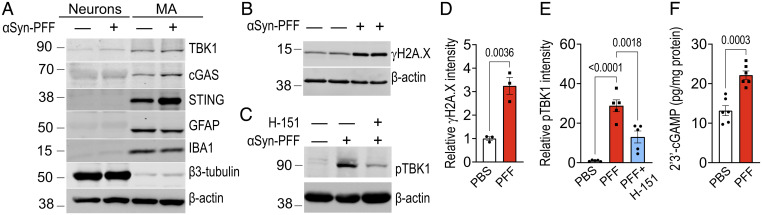
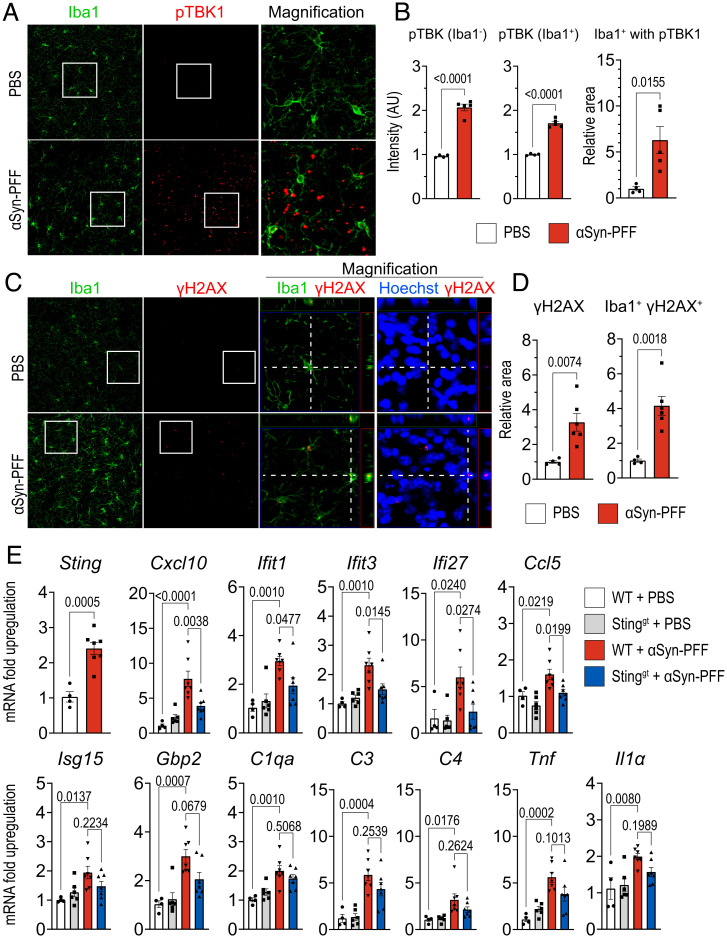
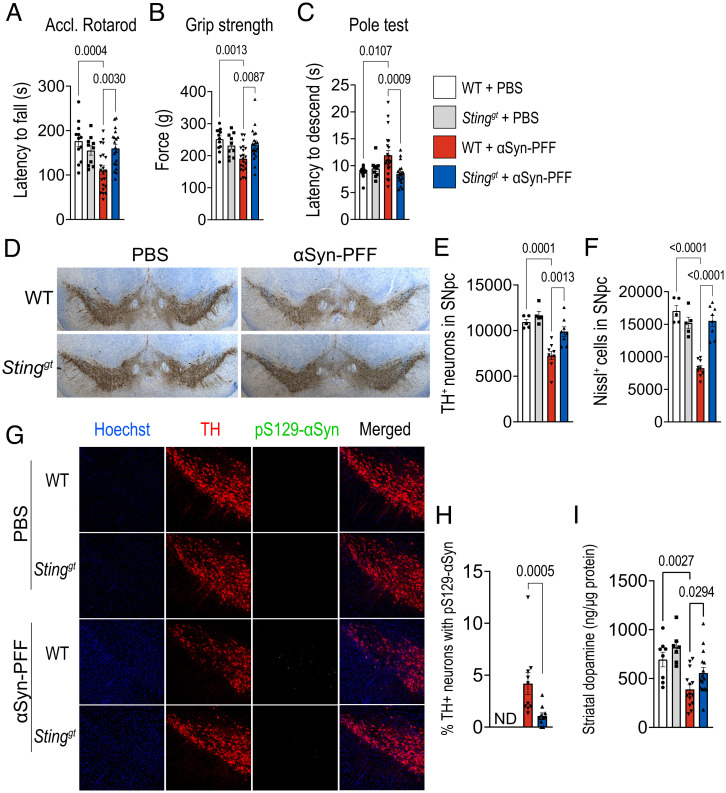
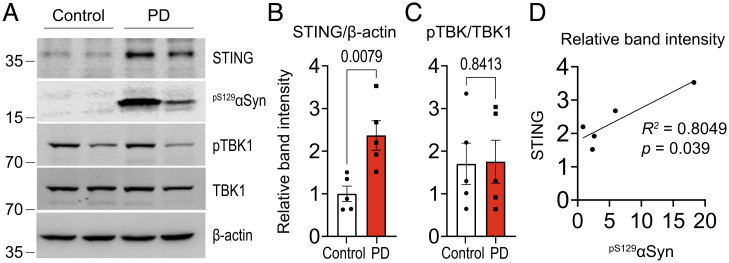
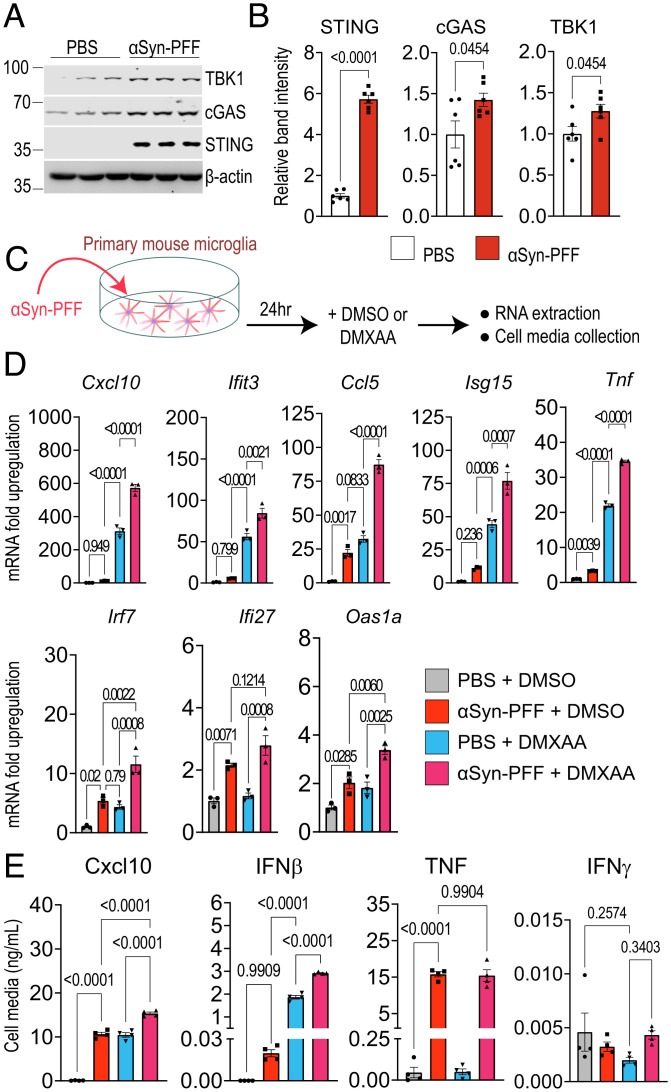
Significance: It is increasingly recognized that chronic neuroinflammation is causally relevant to neurodegeneration. In Parkinson’s disease (PD), α-synuclein pathology activates inflammatory signaling that disturbs parenchymal homeostasis and disrupts neuron-glia interactions. Herein, we report that the innate immune cyclic GMP-AMP synthase (cGAS)/stimulator of interferon genes (STING) DNA-sensing pathway is activated in a mouse model of α-synucleinopathy and parkinsonism, leading to type-I interferon activation that precedes the onset of neurodegeneration. Remarkably, STING-deficient mice were protected from dopaminergic neuron loss in this model. We also show that αSyn aggregates can increase STING expression and augment canonical STING activation, suggesting a possible generalized propensity for exaggerated antiviral responses in neurological states with STING elevation. Our results suggest that STING inhibition may be therapeutic in idiopathic PD and possibly other human α-synucleinopathies.
Overview
The claims and statistics of this paper haven’t been checked yet.
Free: it reads the open-access text and checks the first 5 claims that cite a source we can check. Create a free account to check every claim.
Integrity signals
Registry
Cites
Statistics
Figures
Verification
Claims the paper makes
The claims and statistics of this paper haven’t been checked yet.
Free: it reads the open-access text and checks the first 5 claims that cite a source we can check. Create a free account to check every claim.
Claims other papers make about this one
Each is checked against this paper’s own text: does it say what the citing paper says it does?
The cited source says what the claim attributes to it.
In the citing paper
“α-synuclein pathology was found to cause STING-dependent neuroinflammation and dopaminergic neurodegeneration.408,409”
From Role of neuroinflammation in neurodegeneration development (2023) · cites this paper as [408]
The cited source says what the claim attributes to it.
In the citing paper
“Together with previous studies in models of Alzheimer’s disease53, Parkinson’s disease54,55, amyotrophic lateral sclerosis and frontotemporal dementia56, and Nieman–Pick’s disease57, our study reveals notable convergence on cGAS–STING signalling in chronic neurodegenerative conditions.”
From cGAS–STING drives ageing-related inflammation and neurodegeneration (2023) · cites this paper as [55]
Self-check
Percentages, sums and reported differences re-computed from the paper’s own numbers.
The self-check needs the paper’s full text.
Citations
Cites
1 retracted
RETRACTED ARTICLE: Parkin and PINK1 mitigate STING-induced inflammation
Sliter, D. A., Martinez, J., Hao, L., Chen, X., Sun, N., Fischer, T. D., Burman, J. L., Li, Y., Zhang, Z., Narendra, D. P., et al. (2018) · Nature · doi:10.1038/s41586-018-0448-9 · Cited by 1,287
RetractedSpillantini, M. G., Schmidt, M. L., Lee, V. M.-Y., Trojanowski, J. Q., Jakes, R., & Goedert, M. (1997) · Nature · doi:10.1038/42166 · Cited by 8,382
Lipid rafts as a membrane-organizing principle
Lingwood, D., & Simons, K. (2010) · Science · doi:10.1126/science.1174621 · Cited by 4,417
Evidence for the Formation of Symmetric and Asymmetric DLPC-DAPC Lipid Bilayer Domains
Ritter, M., Schmidt, S., Jakab, M., Paulmichl, M., & Henderson, R. (2013) · Cellular Physiology and Biochemistry · doi:10.1159/000350122 · Cited by 3,923
STING is an endoplasmic reticulum adaptor that facilitates innate immune signalling
Ishikawa, H., & Barber, G. N. (2008) · Nature · doi:10.1038/nature07317 · Cited by 3,576 · cited 1×
“The cGAS/STING system initiates an inflammatory antiviral program through both type-I interferon (IFN-I) and nuclear factor kappa-light-chain-enhancer of activated B cells (NF-κB) signaling (18, 19).”
BackgroundMcGeer, P. L., Itagaki, S., Boyes, B. E., & McGeer, E. G. (1988) · Neurology · doi:10.1212/wnl.38.8.1285 · Cited by 2,990
Luk, K. C., Kehm, V., Carroll, J., Zhang, B., O’Brien, P., Trojanowski, J. Q., & Lee, V. M.-Y. (2012) · Science · doi:10.1126/science.1227157 · Cited by 2,563
The cGAS–STING pathway as a therapeutic target in inflammatory diseases
Decout, A., Katz, J. D., Venkatraman, S., & Ablasser, A. (2021) · Nature Reviews Immunology · doi:10.1038/s41577-021-00524-z · Cited by 2,309
cGAS surveillance of micronuclei links genome instability to innate immunity
Mackenzie, K. J., Carroll, P., Martin, C.-A., Murina, O., Fluteau, A., Simpson, D. J., Olova, N., Sutcliffe, H., Rainger, J. K., Leitch, A., et al. (2017) · Nature · doi:10.1038/nature23449 · Cited by 1,752
CGAS produces a 2′-5′-linked cyclic dinucleotide second messenger that activates STING.
Ablasser, A., Goldeck, M., Cavlar, T., Deimling, T., Witte, G., Röhl, I., Hopfner, K.-P., Ludwig, J., & Hornung, V. (2013) · Nature · doi:10.1038/nature12306 · Cited by 1,695 · cited 1×
“A distinct element of innate immunity not previously investigated in relationship to αSyn pathology is the cyclic GMP-AMP synthase (cGAS) sensor of cytosolic double-stranded DNA (dsDNA) and its mediator, stimulator of interferon genes (STING) (16, 17).”
Background
Cited by
Items 201–277 of 277
Bezrukova, A. I., Basharova, K. S., Galkina, E. S., Epifanivskaya, O. S., Baydakova, G. V., Zakharova, E. Y., Pchelina, S. N., & Т.С., У. (2026) · Biomeditsinskaya Khimiya · doi:10.18097/pbmcr1616 · Cited by 1
Liu, X., Lv, M., Liu, D., Baowen, 张. Z., Zhang, M., & Xianjuan, 寇. K. (2026) · Molecular Neurobiology · doi:10.1007/s12035-026-05924-7 · Cited by 1
Harazin, A., Reinert, L. S., Alam, P., Hoy, L., Marnow, A. B., Nielsen, J. L., Lorentzen, A., Otzen, D. E., Paludan, S. R., & Nielsen, M. S. (2026) · Cell Biochemistry and Function · doi:10.1002/cbf.70240 · Cited by 1
Li, P., Wu, T., Chen, M., Wang, N., Jia, X., Chen, Z., & Duan, R. (2026) · Brain Behavior and Immunity · doi:10.1016/j.bbi.2026.106935 · Cited by 2
Caspase-3 regulates RNA splicing and mitochondrial dynamics in microglia during Parkinson’s disease
Medina-Guzman, R., Bahatyrevich-Kharitonik, B., St‐Pierre, M., Márquez-Pérez, S., Gavilán, E., Rodríguez, C. C., Flores-Cortes, A., García-Valiente, R., Argüelles, S., Kavanagh, E. T., et al. (2026) · Cell Death and Disease · doi:10.1038/s41419-026-09141-x · Cited by 1
Zhang, C., & Yang, Z. (2026) · Brain Research Bulletin · doi:10.1016/j.brainresbull.2026.112118 · Cited by 1
Daniali, M., Channer, B., Curley, E. O., Amirfallah, A., Kist, T., Montilla, J., Kosashvili, S., Sheldon, L., Stauch, K. L., Jackson, J. G., et al. (2026) · Cell Reports · doi:10.1016/j.celrep.2026.118118 · Cited by 1
Nucleic Acid-Mediated Inflammatory Diseases
Mandal, D. P., & Bhattacharjee, S. (2023) · Springer eBooks · doi:10.1007/978-981-19-8520-1_2 · Cited by 1
Antiviral immunity rewired for axon regeneration
Jiang, M., & Zeng, W. (2023) · Cell Reports Medicine · doi:10.1016/j.xcrm.2022.100907 · Cited by 1
Moleón, V. R., Alende, C., Fotouhi, M., Ayoubi, R., Southern, K., Laflamme, C., & NeuroSGC/YCharOS/EDDU collaborative group (2024) · F1000Research · doi:10.12688/f1000research.155929.2 · Cited by 1
Passarella, S., Brandes, K., Dankert, E., Cavalli, P., Kröger, A., Dieterich, D. C., & Landgraf, P. (2023) · bioRxiv (Cold Spring Harbor Laboratory) · doi:10.1101/2023.09.25.559304 · Cited by 1
Samidurai, M., Chennakesavan, K., Sarkar, S., Malovic, E., Nguyen, H. M., Singh, L., Kumar, A., Ealy, A., Janarthanam, C., Palanisamy, B. N., et al. (2025) · bioRxiv (Cold Spring Harbor Laboratory) · doi:10.1101/2025.03.18.643982 · Cited by 1
Recinto, S. J., MacDonald, A., Premachandran, S., Liu, L., Bayati, A., Rodriguez, L., Nguyen, M., Petit, F., Mukherjee, S., Larmanjat, J., et al. (2026) · bioRxiv (Cold Spring Harbor Laboratory) · doi:10.64898/2026.01.07.694713 · Cited by 1
Stray self-nucleic acids: the emerging drivers of neurodegeneration
McDonald, B. K., Laohamonthonkul, P., & Yu, C. (2023) · Trends in Cell Biology · doi:10.1016/j.tcb.2023.02.006
Todd, B. P., Luo, Z., Gilkes, N., Chimenti, M. S., Peterson, Z. J., Mix, M. R., Harty, J. T., Nickl‐Jockschat, T., Ferguson, P. J., Bassuk, A. G., et al. (2023) · Figshare · doi:10.6084/m9.figshare.23993241
Todd, B. P., Luo, Z., Gilkes, N., Chimenti, M. S., Peterson, Z. J., Mix, M. R., Harty, J. T., Nickl‐Jockschat, T., Ferguson, P. J., Bassuk, A. G., et al. (2023) · Figshare · doi:10.6084/m9.figshare.23993244
ВИРУСО-ЭПИГЕНЕТИЧЕСКАЯ ГИПОТЕЗА ЭТИОПАТОГЕНЕЗА БОЛЕЗНИ ПАРКИНСОНА
Mustafin, R. N. (2024) · Успехи геронтологии · doi:10.34922/ae.2024.37.5.003
Neuroprotective effects and mechanisms of the YiQiWenYangSanHan formula on Parkinson's disease mice
Liu, J., Di, D., Sun, S., Sun, Y., Zhou, S., Liu, J., Qin, Z., Yang, X., Wang, X., Xu, Z., et al. (2025) · IBRO Neuroscience Reports · doi:10.1016/j.ibneur.2025.03.014
Liao, Q., Yang, Y., Li, Y., Zhang, J., Fan, K., Guo, Y., Chen, J., Chen, Y., Zhu, P., Huang, L., et al. (2024) · Figshare · doi:10.6084/m9.figshare.26340141
Wang, D., Hongling, G., Qin, Q., Li, J., Zhao, J., Qu, Y., Li, J., 熊永洁, Min, Z., Mao, Z., et al. (2024) · Figshare · doi:10.6084/m9.figshare.25010473
Zhu, X., Liu, W., Tang, X., Chen, Y., Ge, X., Ke, Q., Liang, X., Gan, Y., Zheng, Y., Zou, M., et al. (2024) · Figshare · doi:10.6084/m9.figshare.26590784
Zhu, X., Liu, W., Tang, X., Chen, Y., Ge, X., Ke, Q., Liang, X., Gan, Y., Zheng, Y., Zou, M., et al. (2024) · Figshare · doi:10.6084/m9.figshare.26590763
Ni, B., Yang, Z., Zhou, T., Zhou, H., Zhou, Y., Lin, S., Xu, H., Lin, X., Yi, W., He, C., et al. (2024) · Figshare · doi:10.6084/m9.figshare.26738847
Zhu, X., Liu, W., Tang, X., Chen, Y., Ge, X., Ke, Q., Liang, X., Gan, Y., Zheng, Y., Zou, M., et al. (2024) · Figshare · doi:10.6084/m9.figshare.26590769
Liao, Q., Yang, Y., Li, Y., Zhang, J., Fan, K., Guo, Y., Chen, J., Chen, Y., Zhu, P., Huang, L., et al. (2024) · Figshare · doi:10.6084/m9.figshare.26751619
Liao, Q., Yang, Y., Li, Y., Zhang, J., Fan, K., Guo, Y., Chen, J., Chen, Y., Zhu, P., Huang, L., et al. (2024) · Figshare · doi:10.6084/m9.figshare.26339918
Zhu, X., Liu, W., Tang, X., Chen, Y., Ge, X., Ke, Q., Liang, X., Gan, Y., Zheng, Y., Zou, M., et al. (2024) · Figshare · doi:10.6084/m9.figshare.26590790
Zhu, X., Liu, W., Tang, X., Chen, Y., Ge, X., Ke, Q., Liang, X., Gan, Y., Zheng, Y., Zou, M., et al. (2024) · Figshare · doi:10.6084/m9.figshare.26590772
Zhu, X., Liu, W., Tang, X., Chen, Y., Ge, X., Ke, Q., Liang, X., Gan, Y., Zheng, Y., Zou, M., et al. (2024) · Figshare · doi:10.6084/m9.figshare.26590778
Zhu, X., Liu, W., Tang, X., Chen, Y., Ge, X., Ke, Q., Liang, X., Gan, Y., Zheng, Y., Zou, M., et al. (2024) · Figshare · doi:10.6084/m9.figshare.26590781
Ni, B., Yang, Z., Zhou, T., Zhou, H., Zhou, Y., Lin, S., Xu, H., Lin, X., Yi, W., He, C., et al. (2024) · Figshare · doi:10.6084/m9.figshare.26103972
Liao, Q., Yang, Y., Li, Y., Zhang, J., Fan, K., Guo, Y., Chen, J., Chen, Y., Zhu, P., Huang, L., et al. (2024) · Figshare · doi:10.6084/m9.figshare.26751616
Zhu, X., Liu, W., Tang, X., Chen, Y., Ge, X., Ke, Q., Liang, X., Gan, Y., Zheng, Y., Zou, M., et al. (2024) · Figshare · doi:10.6084/m9.figshare.26590766
Zhu, X., Liu, W., Tang, X., Chen, Y., Ge, X., Ke, Q., Liang, X., Gan, Y., Zheng, Y., Zou, M., et al. (2024) · Figshare · doi:10.6084/m9.figshare.26590787
Todd, B. P., Luo, Z., Gilkes, N., Chimenti, M. S., Peterson, Z. J., Mix, M. R., Harty, J. T., Nickl-Jockschat, T., Ferguson, P. J., Bassuk, A. G., et al. (2023) · Figshare · doi:10.6084/m9.figshare.23993247
Zhu, X., Liu, W., Tang, X., Chen, Y., Ge, X., Ke, Q., Liang, X., Gan, Y., Zheng, Y., Zou, M., et al. (2024) · Figshare · doi:10.6084/m9.figshare.26590775
Ni, B., Yang, Z., Zhou, T., Zhou, H., Zhou, Y., Lin, S., Xu, H., Lin, X., Yi, W., He, C., et al. (2024) · Figshare · doi:10.6084/m9.figshare.26103752
Rissardo, J. P., & Caprara, A. L. F. (2026) · Brain Circulation · doi:10.4103/bc.bc_75_25
Hu, S. H., Kou, Z., Chen, B., Yang, Y., & You, Y. (2026) · Neurochemical Research · doi:10.1007/s11064-026-04719-5
Sauter, M. M., Noel, H. R., & Brandt, C. R. (2026) · Experimental Eye Research · doi:10.1016/j.exer.2026.111009
Protein•DNA Mesh Assembly Drives dsDNA-Specific and Duplex Length-Dependent Activation of cGASPreprint
Wu, S., Stallings, C. M., Torres, S., Antiochos, B., & Sohn, J. (2026) · SSRN Electronic Journal · doi:10.2139/ssrn.6978764
A DNA Threshold of Four G/C Base Pairs Drives Intramolecular β-Sheet Formation in α-Synuclein
Zhang, Y.-H., Gong, S., Yuan, Y., & Shen, L. (2026) · Chinese Journal of Polymer Science · doi:10.1007/s10118-026-3674-x
Li, M., Li, W., Liu, Y., Fu, T., Peng, K., Wang, C., Zhang, J., Feng, Y., & Wu, X. (2026) · Molecular Neurobiology · doi:10.1007/s12035-026-05976-9
Zhang, Q., Liu, M., Cao, W.-J., Zou, W., Zhang, P., Tang, Y.-Y., & Tang, X. (2026) · Biochimica et Biophysica Acta (BBA) - Molecular Basis of Disease · doi:10.1016/j.bbadis.2026.168314
Т.С., У., Bezrukova, A. I., Basharova, K. S., & Н., П. С. (2026) · CyberLeninK (CyberLeninka)
Ahmad, A., & Khan, M. M. (2026) · Molecular Neurobiology · doi:10.1007/s12035-026-06061-x
Wu, Y., Zhang, X., Gao, C., Zhang, Z., Liao, X., & Kang, Y. M. (2026) · Cellular and Molecular Neurobiology · doi:10.1007/s10571-026-01786-8
Huang, Y., Li, M., Wang, M., Chen, Z., Huang, W., Yu, B., Wang, M., Chen, Y., & Li, M. (2026) · Cell Biology and Toxicology · doi:10.1007/s10565-026-10238-4
Xinyuan, Y. U., Song, Y. A. O., Xu, P., & Wang, A. (2026) · Journal of Zhejiang University (Medical Sciences) · doi:10.3724/zdxbyxb-2026-0036
Turcan, A., Hou, K., Lin, K. Z., Pfenning, A. R., Sakaue, S., & Zhang, M. J. (2026) · medRxiv · doi:10.64898/2026.08.20.26360914
The cGAS-STING pathway in inflammaging and neuroinflammation
Zhang, C., Liu, C., Zhao, Y., Wang, H., Fang, Z., He, Z., Mao, Y., & Yang, H. (2026) · Science China Life Sciences · doi:10.1007/s11427-026-3414-8
Mechanisms of cGAS-STING-mediated chronic inflammation and targeted interventions in brain aging
ZHANG, H., Yu, D., Xu, P., & Wu, Q. (2026) · Journal of Zhejiang University (Medical Sciences) · doi:10.3724/zdxbyxb-2026-0033
Bai, Z., & Chen, Z. (2026) · Theranostics · doi:10.7150/thno.141774
Liu, H., Zhang, Y., Zhuo, Z., Zhong, W., Yan, M., & 赵重波 (2026) · Experimental and Therapeutic Medicine · doi:10.3892/etm.2026.13286
The Role of cGAS-STING-Driven PANoptosis in Neurodegenerative Diseases and Therapeutic Prospects
Hou, X., & Yu, W. (2026) · Cells · doi:10.3390/cells15181631
陈, 旸., & Li, Y. (2026) · Scientia Sinica Chimica · doi:10.1360/ssc-2026-0161
Interpreting Viral Associations in Neurodegenerative Diseases
Hedström, A. K. (2026) · International Journal of Molecular Sciences · doi:10.3390/ijms27188185
Höfs, L., Luksch, H., Schulze, F., Rösen‐Wolff, A., & Falkenburger, B. H. (2026) · Scientific Reports · doi:10.1038/s41598-026-70399-4
Wang, C., Jin, Y., & Cai, W. (2026) · Journal of Molecular Neuroscience · doi:10.1007/s12031-026-02604-y
Kim, S.-E., Kim, D.-Y., Park, J.-E., Leem, Y., Park, J.-S., & Kim, H.-S. (2026) · International Immunopharmacology · doi:10.1016/j.intimp.2026.117478
Usenko, T. S., Bezrukova, A. I., Basharova, K. S., Grigor’eva, E. V., Pavlova, S. V., Baydakova, G., Miliukhina, I. V., Zakharova, E. Y., & Pchelina, S. (2026) · Biochemistry (Moscow) · doi:10.1134/s0006297926601644
Carr, L. M. (2024) · Adelaide Research & Scholarship (AR&S) (University of Adelaide)
BLOOD AND CEREBROSPINAL FLUID BIOMARKERS OF COGNITIVE IMPAIRMENT IN PARKINSON’S DISEASE
Spiliopoulos, K. C., Vavougios, G. D., & Ntoskas, T. (2024) · ΑΡΧΕΙΑ ΚΛΙΝΙΚΗΣ ΝΕΥΡΟΛΟΓΙΑΣ
Sequential modulation of the cGAS-STING pathway promotes spinal cord injury repair
Peng, Q., Gu, M., Li, H., Chen, L., Wu, X., Yuan, M., Luo, L., 温世荣, 朱昌来, 朱昌来, et al. (2026) · Journal of Advanced Research · doi:10.1016/j.jare.2026.10.023
The mitochondrial epigenome and noncoding genome in aging and brain diseases
Shawky, A.-E.-M. A., Huang, H.-T., Parikh, D., & Morris-Blanco, K. C. (2026) · Trends in Neurosciences · doi:10.1016/j.tins.2026.09.007
Liu, Y., Halliday, G. M., & Fu, Y. (2026) · bioRxiv (Cold Spring Harbor Laboratory) · doi:10.64898/2026.10.06.757209
Resilience and vulnerability in the midbrain dopamine system during aging
McMurtrie, G., Mabry, S. J., Glausier, J. R., Rocha, E. M., & Freyberg, Z. (2026) · Trends in Neurosciences · doi:10.1016/j.tins.2026.09.008
Gao, C., Shi, R., Jiang, X., Chai, H., & He, X. (2026) · Journal of the Neurological Sciences · doi:10.1016/j.jns.2026.126237
Dopamine turns mitochondrial stress into inflammation
Pacheco, R. (2026) · Cell Reports · doi:10.1016/j.celrep.2026.118138
Liu, X., Xu, S., Zhang, S., Li, W., Chen, J., Zhao, M., Ye, C., Liu, Y., Liu, G., 杜艳军, et al. (2026) · Biomolecules · doi:10.3390/biom16111596
Liu, Y., Chen, J., & Yang, Y. (2026) · NeuroImage Clinical · doi:10.1016/j.nicl.2026.104091
Lee, H.-J., & Lee, S. (2026) · Experimental & Molecular Medicine · doi:10.1038/s12276-026-01891-0
Aleksejenko, N. (2026) · Dublin City University Open Access Institutional Repository (Dublin City University)
When genomes burn: how DNA damage ignites inflammation and fuels ageing
Theodorakis, E., & Garinis, G. A. (2026) · Philosophical Transactions of the Royal Society B Biological Sciences · doi:10.1098/rstb.2025.0337
Liu, Y., Li, Y., Xue, L., Xiao, J., Li, P., Xue, W., Li, C., Guo, H., & Chen, Y. (2022) · doi:10.3389/fphar.2022.1033982.s001
Preparation of Mouse Primary Microglia Cultures for α-Synuclein Propagation
Ma, Z., Zhang, T., Xiong, K., Jiang, M., Zhang, S., & Meng, H. (2026) · Methods in molecular biology · doi:10.1007/978-1-0716-5699-0_13
Metadata
- Authors
- Hinkle, J. T., Patel, J., Panicker, N., Karuppagounder, S. S., Biswas, D., Belingon, B., Chen, R., Brahmachari, S., Pletnikova, O., Troncoso, J. C., Dawson, V. L., & Dawson, T. M.
- Affiliations
- Johns Hopkins University (US)
- Department of Pathology, Johns Hopkins University School of Medicine, Baltimore, MD 21205
- Corresponding author
- Dawson, Valina L.
- Dawson, Ted M.
- ORCID
- Venue
- Proceedings of the National Academy of Sciences
- Publisher
- National Academy of Sciences
- Published
- 2022-04-08
- Volume
- 119
- Issue
- 15
- Pages
- e2118819119-e2118819119
- ISSN
- 0027-8424 (ISSN-L)
- 1091-6490
- PMC
- PMC9169780
- OpenAlex
- W4223610665
- Cited by
- 240
- References
- 50
- Citations by year
- 2026: 62 · 2025: 56 · 2024: 66 · 2023: 41 · 2022: 15
- FWCI
- 24.34
- Type
- journal article
- Language
- en
- Open access
- hybrid
- doi.org
- Licence
- Locations
- Proceedings of the National Academy of Sciences (publishedVersion, cc-by-nc-nd)
- PubMed Central (publishedVersion, cc-by-nc-nd)
- PubMed (publishedVersion)
- Funders
- JPB Foundation (n/a)
- Farmer Family Foundation (n/a)
- HHS | NIH | National Institute of General Medical Sciences (T32 GM136577)
- HHS | NIH | National Institute on Aging (F30AG067643, K99AG066862, P50AG05146)
- Maryland Stem Cell Research Fund (2017-MSCRFF-3838)
- Topics
- Health Sciences › Medicine › Clinical Neurology › Parkinson's Disease Mechanisms and Treatments
- Life Sciences › Neuroscience › Neurology › Neuroinflammation and Neurodegeneration Mechanisms
- Life Sciences › Immunology and Microbiology › Immunology › interferon and immune responses
- Keywords
- STING, synucleinopathies, Parkinson's disease, neuroinflammation, dopaminergic neuron loss, microglia, TBK1, DNA double-strand break response, γH2AX, interferon response, preformed fibrils, substantia nigra pars compacta, mitochondrial DNA damage, oxidative stress
- MeSH terms
- Synucleinopathies, Neuroinflammatory Diseases, STING Protein, Animals, Interferon Type I, Membrane Proteins, Nucleotidyltransferases, Parkinson Disease, Signal Transduction, Neurodegenerative Diseases, Mice, Dopaminergic Neurons
About these checks
Registry, retraction, Cites and statistics results are computed, not judged, with one exception: a printed reference that no index lists is read once by a model before it counts as a citation error. Claims are extracted by a model and kept only when their quote appears verbatim in the text; each cited source is then checked, with a model’s help, for whether it says what the claim relies on. Those verdicts can be wrong — read the claim’s quote and the cited source before relying on one.
Statistics and arithmetic are recomputed, not judged.
Confidence bands are shown only for fields calibrated on our annotated test set. None is calibrated yet, so no band is shown.
What counts as a claim ›How we measure confidence ›How we check this ›
Are you an author, or do you see a problem with this page? Request a review
Data sources
Bibliographic data: Semantic Scholar, OpenAlex, Crossref.
Contains information from the Semantic Scholar Academic Graph Datasets, made available under the ODC Attribution License (ODC-BY 1.0).
Semantic Scholar’s data is described in: Kinney, R., et al. (2023). The Semantic Scholar Open Data Platform. arXiv:2301.10140.
