

STING mediates neurodegeneration and neuroinflammation in nigrostriatal α-synucleinopathy
Open accessThe DOI matches its Crossref record; 50 of the 50 references it cites were found in a registry or an index.
Abstract
Significance: It is increasingly recognized that chronic neuroinflammation is causally relevant to neurodegeneration. In Parkinson’s disease (PD), α-synuclein pathology activates inflammatory signaling that disturbs parenchymal homeostasis and disrupts neuron-glia interactions. Herein, we report that the innate immune cyclic GMP-AMP synthase (cGAS)/stimulator of interferon genes (STING) DNA-sensing pathway is activated in a mouse model of α-synucleinopathy and parkinsonism, leading to type-I interferon activation that precedes the onset of neurodegeneration. Remarkably, STING-deficient mice were protected from dopaminergic neuron loss in this model. We also show that αSyn aggregates can increase STING expression and augment canonical STING activation, suggesting a possible generalized propensity for exaggerated antiviral responses in neurological states with STING elevation. Our results suggest that STING inhibition may be therapeutic in idiopathic PD and possibly other human α-synucleinopathies.
Overview
The claims and statistics of this paper haven’t been checked yet.
Free: it reads the open-access text and checks the first 5 claims that cite a source we can check. Create a free account to check every claim.
Integrity signals
Registry
Cites
Statistics
Figures
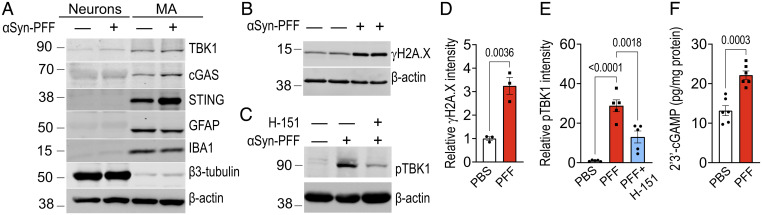
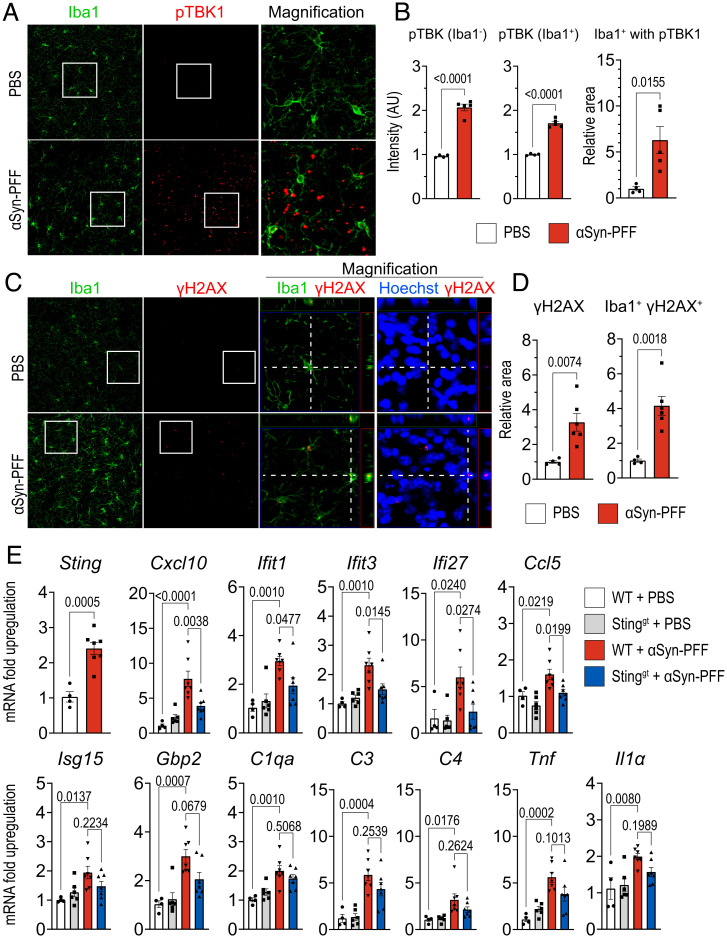
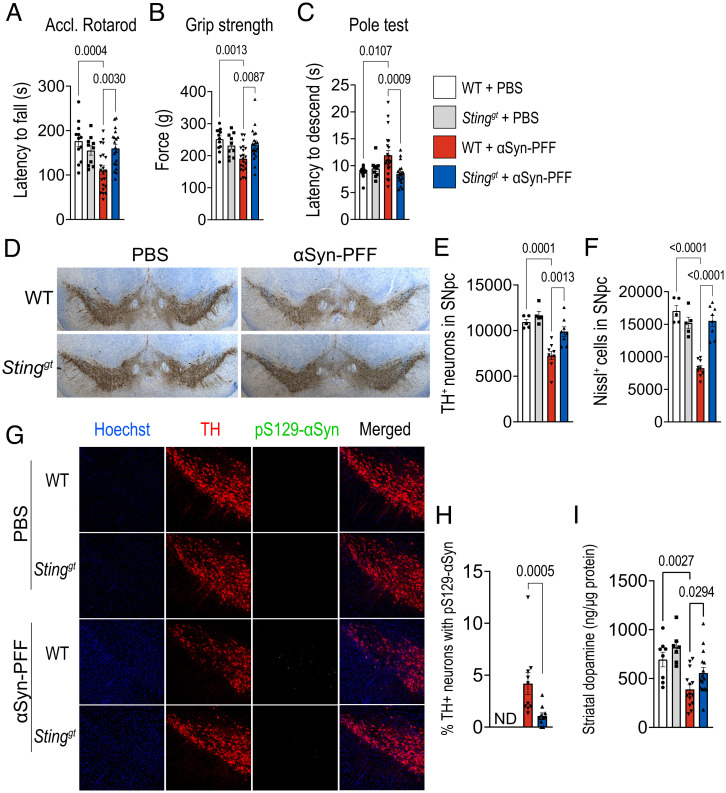
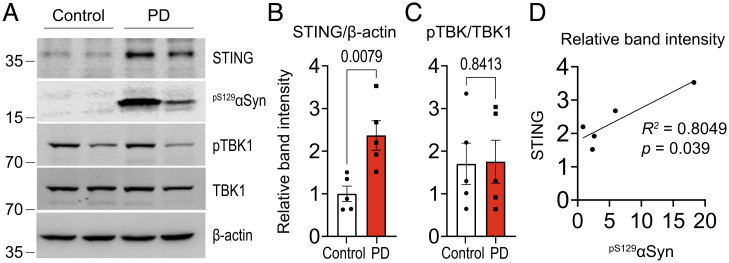
Verification
Claims the paper makes
The claims and statistics of this paper haven’t been checked yet.
Free: it reads the open-access text and checks the first 5 claims that cite a source we can check. Create a free account to check every claim.
Claims other papers make about this one
Each is checked against this paper’s own text: does it say what the citing paper says it does?
The cited source says what the claim attributes to it.
In the citing paper
“α-synuclein pathology was found to cause STING-dependent neuroinflammation and dopaminergic neurodegeneration.408,409”
From Role of neuroinflammation in neurodegeneration development (2023) · cites this paper as [408]
The cited source says what the claim attributes to it.
In the citing paper
“Together with previous studies in models of Alzheimer’s disease53, Parkinson’s disease54,55, amyotrophic lateral sclerosis and frontotemporal dementia56, and Nieman–Pick’s disease57, our study reveals notable convergence on cGAS–STING signalling in chronic neurodegenerative conditions.”
From cGAS–STING drives ageing-related inflammation and neurodegeneration (2023) · cites this paper as [55]
Self-check
Percentages, sums and reported differences re-computed from the paper’s own numbers.
The self-check needs the paper’s full text.
Citations
Cites
1 retracted
RETRACTED ARTICLE: Parkin and PINK1 mitigate STING-induced inflammation
Sliter, D. A., Martinez, J., Hao, L., Chen, X., Sun, N., Fischer, T. D., Burman, J. L., Li, Y., Zhang, Z., Narendra, D. P., et al. (2018) · Nature · doi:10.1038/s41586-018-0448-9 · Cited by 1,287
RetractedSpillantini, M. G., Schmidt, M. L., Lee, V. M.-Y., Trojanowski, J. Q., Jakes, R., & Goedert, M. (1997) · Nature · doi:10.1038/42166 · Cited by 8,382
Lipid rafts as a membrane-organizing principle
Lingwood, D., & Simons, K. (2010) · Science · doi:10.1126/science.1174621 · Cited by 4,417
Evidence for the Formation of Symmetric and Asymmetric DLPC-DAPC Lipid Bilayer Domains
Ritter, M., Schmidt, S., Jakab, M., Paulmichl, M., & Henderson, R. (2013) · Cellular Physiology and Biochemistry · doi:10.1159/000350122 · Cited by 3,923
STING is an endoplasmic reticulum adaptor that facilitates innate immune signalling
Ishikawa, H., & Barber, G. N. (2008) · Nature · doi:10.1038/nature07317 · Cited by 3,576 · cited 1×
“The cGAS/STING system initiates an inflammatory antiviral program through both type-I interferon (IFN-I) and nuclear factor kappa-light-chain-enhancer of activated B cells (NF-κB) signaling (18, 19).”
BackgroundMcGeer, P. L., Itagaki, S., Boyes, B. E., & McGeer, E. G. (1988) · Neurology · doi:10.1212/wnl.38.8.1285 · Cited by 2,990
Luk, K. C., Kehm, V., Carroll, J., Zhang, B., O’Brien, P., Trojanowski, J. Q., & Lee, V. M.-Y. (2012) · Science · doi:10.1126/science.1227157 · Cited by 2,563
The cGAS–STING pathway as a therapeutic target in inflammatory diseases
Decout, A., Katz, J. D., Venkatraman, S., & Ablasser, A. (2021) · Nature Reviews Immunology · doi:10.1038/s41577-021-00524-z · Cited by 2,309
cGAS surveillance of micronuclei links genome instability to innate immunity
Mackenzie, K. J., Carroll, P., Martin, C.-A., Murina, O., Fluteau, A., Simpson, D. J., Olova, N., Sutcliffe, H., Rainger, J. K., Leitch, A., et al. (2017) · Nature · doi:10.1038/nature23449 · Cited by 1,752
CGAS produces a 2′-5′-linked cyclic dinucleotide second messenger that activates STING.
Ablasser, A., Goldeck, M., Cavlar, T., Deimling, T., Witte, G., Röhl, I., Hopfner, K.-P., Ludwig, J., & Hornung, V. (2013) · Nature · doi:10.1038/nature12306 · Cited by 1,695 · cited 1×
“A distinct element of innate immunity not previously investigated in relationship to αSyn pathology is the cyclic GMP-AMP synthase (cGAS) sensor of cytosolic double-stranded DNA (dsDNA) and its mediator, stimulator of interferon genes (STING) (16, 17).”
Background
Cited by
Role of neuroinflammation in neurodegeneration development
Zhang, W., Xiao, D., Mao, Q., & Xia, H. (2023) · Signal Transduction and Targeted Therapy · doi:10.1038/s41392-023-01486-5 · Cited by 1,668
cGAS–STING drives ageing-related inflammation and neurodegeneration
Gulen, M. F., Samson, N., Keller, A., Schwabenland, M., Liu, C., Glück, S., Thacker, V. V., Favre, L., Mangeat, B., Kroese, L. J., et al. (2023) · Nature · doi:10.1038/s41586-023-06373-1 · Cited by 1,104
Regulation of cGAS–STING signalling and its diversity of cellular outcomes
Zhang, Z., & Zhang, C. (2025) · Nature Reviews Immunology · doi:10.1038/s41577-024-01112-7 · Cited by 287
Neuronal NLRP3 is a parkin substrate that drives neurodegeneration in Parkinson’s disease
Panicker, N., Kam, T.-I., Wang, H., Neifert, S., Chou, S.-C., Kumar, M., Brahmachari, S., Jhaldiyal, A., Hinkle, J. T., Akkentli, F., et al. (2022) · Neuron · doi:10.1016/j.neuron.2022.05.009 · Cited by 215
Self-citationThe immune system in Parkinson's disease: what we know so far
Roodveldt, C., Bernardino, L. I., Çakmak, Ö. Ö., Dragić, M., Fladmark, K. E., Ertan, S., Aktaş, B., Pita, C., Ciglar, L., Garraux, G., et al. (2024) · Brain · doi:10.1093/brain/awae177 · Cited by 174
Mechanism and therapeutic potential of targeting cGAS-STING signaling in neurological disorders
Huang, Y., Liu, B., Sinha, S. C., Amin, S., & Gan, L. (2023) · Molecular Neurodegeneration · doi:10.1186/s13024-023-00672-x · Cited by 164
“STING inactivation in the αSyn-PFF mice attenuated IFN-I signaling, α-Syn PFF-induced motor deficits, pathological αSyn accumulation, and dopaminergic neuron loss [59].”
BackgroundInnate immune activation in neurodegenerative diseases
Castro-Gomez, S., & Heneka, M. T. (2024) · Immunity · doi:10.1016/j.immuni.2024.03.010 · Cited by 162
Mitophagy and cGAS–STING crosstalk in neuroinflammation
Zhou, X., Wang, J., Yu, L., Qiao, G., Qin, D., Yuen-Kwan Law, B., Ren, F., Wu, J., & Wu, A. (2024) · Acta Pharmaceutica Sinica B · doi:10.1016/j.apsb.2024.05.012 · Cited by 131
α-Synuclein pathology as a target in neurodegenerative diseases
Park, H.-J., Kam, T., Dawson, V. L., & Dawson, T. M. (2024) · Nature Reviews Neurology · doi:10.1038/s41582-024-01043-w · Cited by 126
Self-citationSTING trafficking as a new dimension of immune signaling
Jeltema, D., Abbott, K., & Yan, N. (2023) · The Journal of Experimental Medicine · doi:10.1084/jem.20220990 · Cited by 124
Mitochondrial dysfunction in chronic neuroinflammatory diseases (Review)
Qin, P., Sun, Y., & Li, L. (2024) · International Journal of Molecular Medicine · doi:10.3892/ijmm.2024.5371 · Cited by 114
Th17 cells and inflammation in neurological disorders: Possible mechanisms of action
Shi, Y., Wei, B., Li, L., Wang, B., & Sun, M. (2022) · Frontiers in Immunology · doi:10.3389/fimmu.2022.932152 · Cited by 108
Thadathil, N., Delotterie, D. F., Xiao, J., Hori, R., McDonald, M. P., & Khan, M. M. (2021) · Molecular Neurobiology · doi:10.1007/s12035-020-02109-8 · Cited by 94
Szego, E. M., Malz, L., Bernhardt, N., Rösen-Wolff, A., Falkenburger, B. H., & Luksch, H. (2022) · eLife · doi:10.7554/elife.81943 · Cited by 94
“, 2012), and because STING has been implicated in the pathogenesis of PD (Hinkle et al., 2022; Sliter et al., 2018).”
BackgroundMicroglia heterogeneity, modeling and cell-state annotation in development and neurodegeneration
Fumagalli, L., Nazlie Mohebiany, A., Premereur, J., Polanco Miquel, P., Bijnens, B., Van de Walle, P., Fattorelli, N., & Mancuso, R. (2025) · Nature Neuroscience · doi:10.1038/s41593-025-01931-4 · Cited by 90
Inflammasome assembly in neurodegenerative diseases
Singh, J., Habean, M. L., & Panicker, N. (2023) · Trends in Neurosciences · doi:10.1016/j.tins.2023.07.009 · Cited by 83
Self-citationMicroglial cGAS drives neuroinflammation in the MPTP mouse models of Parkinson's disease
Ma, C., Liu, Y., Li, S., Ma, C., Huang, J., Wen, S., Yang, S., & Wang, B. (2023) · CNS Neuroscience & Therapeutics · doi:10.1111/cns.14157 · Cited by 82
The Interplay between α-Synuclein and Microglia in α-Synucleinopathies
Deyell, J., Sriparna, M., Ying, M., & Mao, X. (2023) · International Journal of Molecular Sciences · doi:10.3390/ijms24032477 · Cited by 79
Zhang, Y., Zou, M., Wu, H., Zhu, J., & Jin, T. (2024) · Neurobiology of Disease · doi:10.1016/j.nbd.2024.106710 · Cited by 81
Li, X., Chen, X., Zheng, L., Chen, M., Zhang, Y., Zhu, R., Chen, J., Gu, J., Yin, Q., Jiang, H., et al. (2023) · Acta Pharmaceutica Sinica B · doi:10.1016/j.apsb.2023.08.015 · Cited by 80
Li, H., Cai, R., Zhou, Y., Jiang, Y., & Tan, S. (2025) · Journal of Neuroinflammation · doi:10.1186/s12974-025-03563-8 · Cited by 79
Wang, B., Wang, Y., Qiu, J., Gao, S., Yu, S., Sun, D., & Lou, H. (2023) · International Immunopharmacology · doi:10.1016/j.intimp.2023.110827 · Cited by 76
Liu, Y., Guttman, L. C., Dawson, V. L., & Dawson, T. M. (2024) · Biochemical Pharmacology · doi:10.1016/j.bcp.2024.116174 · Cited by 73
Self-citationcGAS/STING signalling pathway in senescence and oncogenesis
Yu, L., & Liu, P. (2024) · Seminars in Cancer Biology · doi:10.1016/j.semcancer.2024.08.007 · Cited by 73
STING signaling in the brain: Molecular threats, signaling activities, and therapeutic challenges
Yang, K., Tang, Z., Xing, C., & Yan, N. (2023) · Neuron · doi:10.1016/j.neuron.2023.10.014 · Cited by 69
Relationship between the cGAS−STING and NF-κB pathways-role in neurotoxicity
Zhong, S., Zhou, Q., Yang, J., Zhang, Z., Zhang, X., Liu, J., Chang, X., & Wang, H. (2024) · Biomedicine & Pharmacotherapy · doi:10.1016/j.biopha.2024.116698 · Cited by 69
Najem, H., Lea, S. T., Tripathi, S., Hurley, L., Chen, C.-H., William, I., Sooreshjani, M., Bowie, M. L., Hartley, G. P., Dussold, C., et al. (2024) · Journal of Clinical Investigation · doi:10.1172/jci175033 · Cited by 69
STING-Triggered CNS Inflammation in Human Neurodegenerative Diseases
Ferecskó, A. S., Smallwood, M. J., Moore, A., Liddle, C., Newcombe, J., Holley, J., Whatmore, J., Gutowski, N. J., & Eggleton, P. (2023) · Biomedicines · doi:10.3390/biomedicines11051375 · Cited by 65
Liu, Y., Zhang, B., Duan, R., & Liu, Y. (2024) · Neuroscience · doi:10.1016/j.neuroscience.2024.04.009 · Cited by 63
cGAS-STING targeting offers novel therapeutic opportunities in neurological diseases
Wang, H., Fleishman, J. S., Wu, S., Wang, G., Du, L., Li, J., & Du, J. (2025) · Ageing Research Reviews · doi:10.1016/j.arr.2025.102691 · Cited by 59
Wu, C., Zhang, S., Sun, H., Li, A., Hou, F., Qi, L., & Liao, H. (2024) · Journal of Neuroinflammation · doi:10.1186/s12974-024-03086-8 · Cited by 54
“Similarly, in other kinds of central nervous system diseases, such as Alzheimer’s disease [25, 26], Parkinson’s disease [27, 28], multiple sclerosis [29], neuropathic pain [30], ageing-related neurodegeneration [31], subarachnoid hemorrhage [32], and traumatic brain injury [33, 34], the regulatory…”
BackgroundWang, R., Sun, H., Cao, Y., Zhang, Z., Chen, Y., Wang, X., Liu, L., Wu, J., Xu, H., Wu, D., et al. (2024) · Science Signaling · doi:10.1126/scisignal.adk8249 · Cited by 53
Mitochondrial DAMPs: Key mediators in neuroinflammation and neurodegenerative disease pathogenesis
Yu, H., Ren, K., Jin, Y., Zhang, L., Liu, H., Huang, Z., Zhang, Z., Chen, X., Yang, Y., & Wei, Z. (2024) · Neuropharmacology · doi:10.1016/j.neuropharm.2024.110217 · Cited by 51
Mechanisms of genotoxicity and proteotoxicity induced by the metalloids arsenic and antimony
Wysocki, R., Rodrigues, J. I., Litwin, I., & Tamás, M. J. (2023) · Cellular and Molecular Life Sciences · doi:10.1007/s00018-023-04992-5 · Cited by 50
Interferon signaling pathways in health and disease
Wen, C., Lan, Q., Wang, Y., Ni, Y., Wong, A. S. T., & Liu, D. (2025) · Molecular Biomedicine · doi:10.1186/s43556-025-00381-5 · Cited by 52
(Re)building the nervous system: A review of neuron–glia interactions from development to disease
Demmings, M. D., Chagas, L. D. S., Traetta, M. E., Rodrigues, R. S., Acutain, M. F., Barykin, E. P., Datusalia, A. K., German‐Castelan, L., Mattera, V. S., Mazengenya, P., et al. (2024) · Journal of Neurochemistry · doi:10.1111/jnc.16258 · Cited by 49
Grotemeyer, A., Fischer, J. F., Koprich, J. B., Brotchie, J. M., Blum, R., Volkmann, J., & Ip, C. W. (2023) · Journal of Neuroinflammation · doi:10.1186/s12974-023-02759-0 · Cited by 48
Hussain, M., Chu, X., Sahbaz, B. D., Gray, S. H., Pekhale, K., Park, J. H., Croteau, D. L., & Bohr, V. A. (2023) · Free Radical Biology and Medicine · doi:10.1016/j.freeradbiomed.2023.03.262 · Cited by 49
Ma, Y., Liu, Z., Deng, L., Du, J., Fan, Z., Ma, T., Xiong, J., Xiuyun, X., Gu, N., Di, Z., et al. (2024) · Journal of Translational Medicine · doi:10.1186/s12967-024-05239-y · Cited by 50
Neuroinflammation in Age-Related Neurodegenerative Diseases: Role of Mitochondrial Oxidative Stress
Abadin, X., de Dios, C., Zubillaga, M., Ivars, E., Puigròs, M., Marí, M., Morales, A., Vizuete, M., Vitórica, J., Trullás, R., et al. (2024) · Antioxidants · doi:10.3390/antiox13121440 · Cited by 47
Ma, Y., Song, R., & Duan, C. (2025) · Frontiers in Immunology · doi:10.3389/fimmu.2025.1542369 · Cited by 47
Cdk5 and aberrant cell cycle activation at the core of neurodegeneration
Requejo-Aguilar, R. (2023) · Neural Regeneration Research · doi:10.4103/1673-5374.360165 · Cited by 43
Zhu, X., Liu, W., Tang, X., Chen, Y.-L., Ge, X., Ke, Q., Liang, X., Gan, Y., Zheng, Y., Zou, M., et al. (2023) · Journal of Neuroinflammation · doi:10.1186/s12974-023-02804-y · Cited by 46
Mishra, Y., Kumar, A., & Kaundal, R. K. (2024) · Molecular Neurobiology · doi:10.1007/s12035-024-04412-0 · Cited by 46
Zhou, S., Li, T., Zhang, W. Y., Wu, J., Hong, H., Quan, W., Qiao, X.-Y., Cui, C., Qiao, C.-M., Zhao, W., et al. (2024) · Neural Regeneration Research · doi:10.4103/nrr.nrr-d-23-01684 · Cited by 47
DNA Damage-Mediated Neurotoxicity in Parkinson’s Disease
Wang, Z., Li, Y., Pu, J., & Zhang, B. (2023) · International Journal of Molecular Sciences · doi:10.3390/ijms24076313 · Cited by 46
Alpha-synuclein–mediated DNA damage, STING activation, and neuroinflammation in Parkinson’s disease
Standaert, D. G., & Childers, G. M. (2022) · Proceedings of the National Academy of Sciences · doi:10.1073/pnas.2204058119 · Cited by 40
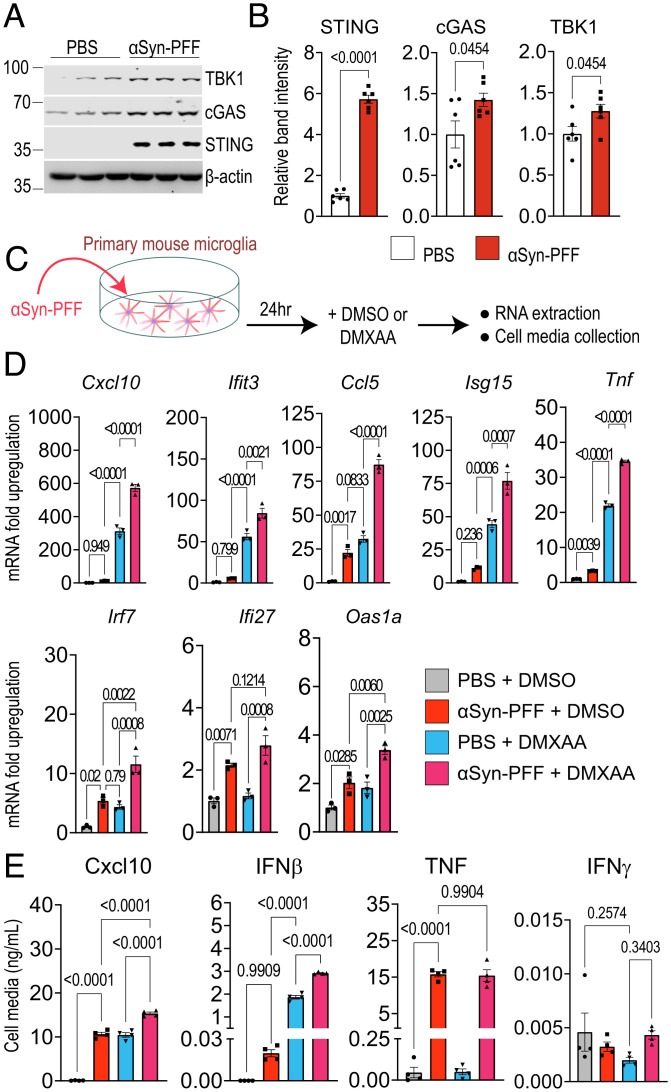
“(4) show that activation of cGAS/STING results in microglial up-regulation of proinflammatory chemokines including CXCL10, which is known to promote the trafficking of T cells to the area of inflammation.”
BackgroundInfluentialStimulator of interferon genes (STING): Key therapeutic targets in ischemia/reperfusion injury
Lv, J., Xuanxuan, Z., Xing, C., Chen, Y., Bian, H., Yin, H., Gu, X., & Su, L. (2023) · Biomedicine & Pharmacotherapy · doi:10.1016/j.biopha.2023.115458 · Cited by 40
Zhao, W., Liu, Z., Wu, J., Liu, A., & Yan, J. (2025) · Neural Regeneration Research · doi:10.4103/nrr.nrr-d-24-01343 · Cited by 39
The cytosolic DNA‐sensing cGAS – STING pathway in neurodegenerative diseases
Guo, X., Yang, L., Wang, J., Wu, Y., Li, Y., Du, L.-X., Li, L., Fang, Z., & Zhang, X. (2024) · CNS Neuroscience & Therapeutics · doi:10.1111/cns.14671 · Cited by 39
Wei, X., Huang, G., Liu, J., Ge, J., Zhang, W., & Mei, Z. (2023) · Biomedicine & Pharmacotherapy · doi:10.1016/j.biopha.2023.114619 · Cited by 38
Avola, R., Furnari, A. G., Graziano, A. C. E., Russo, A., & Cardile, V. (2024) · Antioxidants · doi:10.3390/antiox13020178 · Cited by 39
LRRK2 kinase inhibition protects against Parkinson's disease-associated environmental toxicants
Ilieva, N. M., Hoffman, E. K., Ghalib, M., Greenamyre, J. T., & Miranda, B. R. D. (2024) · Neurobiology of Disease · doi:10.1016/j.nbd.2024.106522 · Cited by 35
Meibers, H. E., Warrick, K. A., VonHandorf, A., Vallez, C. N., Kawarizadeh, K., Saha, I., Donmez, O. A., Jain, V. G., Kottyan, L. C., Weirauch, M. T., et al. (2023) · Cell Reports · doi:10.1016/j.celrep.2023.113180 · Cited by 36
Khan, S., Delotterie, D. F., Xiao, J., Thangavel, R., Hori, R. T., Koprich, J. B., Alway, S. E., McDonald, M. P., & Khan, M. M. (2025) · Brain Behavior and Immunity · doi:10.1016/j.bbi.2025.106065 · Cited by 34
Glial interference: impact of type I interferon in neurodegenerative diseases
Roy, E. R., & Cao, W. (2022) · Molecular Neurodegeneration · doi:10.1186/s13024-022-00583-3 · Cited by 34
Ni, B., Yang, Z., Zhou, T., Zhou, H. Q., Yang, Z., Lin, S., Xu, H., Lin, X., Yi, W., He, C., et al. (2024) · Journal of Neuroinflammation · doi:10.1186/s12974-024-03155-y · Cited by 33
Liu, Y., Duan, R., Li, P., Zhang, B., & Liu, Y. (2024) · International Journal of Immunopathology and Pharmacology · doi:10.1177/03946320241229041 · Cited by 33
α-Synuclein pathology and mitochondrial dysfunction: Toxic partners in Parkinson's disease
Mingo, Y. B., Galvis, M. L. E., & Henderson, M. X. (2025) · Neurobiology of Disease · doi:10.1016/j.nbd.2025.106889 · Cited by 32
Liu, X., Zheng, Z., Xue, C., Wang, X., Li, J., Liu, Z., Xin, W., Xu, X., Zhou, D., Yao, L., et al. (2025) · Inflammation · doi:10.1007/s10753-025-02291-8 · Cited by 32
Szegő, É. M., Höfs, L., Antoniou, A., Dinter, E., Bernhardt, N. R., Schneider, A., Monte, D. A. D., & Falkenburger, B. H. (2025) · Nature Communications · doi:10.1038/s41467-025-59249-5 · Cited by 31
Gąssowska-Dobrowolska, M., Olech-Kochańczyk, G., Culmsee, C., & Adamczyk, A. (2024) · Journal of Inflammation Research · doi:10.2147/jir.s468609 · Cited by 31
α-Synuclein disrupts microglial autophagy through STAT1-dependent suppression of Ulk1 transcription
Pei, C., Hou, X., Ma, Z., Tu, H., Qian, H.-C., Li, Y., Li, K., Liu, C., Ouyang, L., Liu, J., et al. (2024) · Journal of Neuroinflammation · doi:10.1186/s12974-024-03268-4 · Cited by 30
The cGAS-STING pathway: Mechanism and medical implications
Hooftman, A., Keller, A., & Ablasser, A. (2026) · Cell · doi:10.1016/j.cell.2026.06.001 · Cited by 31
Shao, L., Hu, F., Xu, R., Nie, H., Zhang, H., & Ping, Z. (2023) · Current Molecular Medicine · doi:10.2174/0115665240263859231018110107 · Cited by 29
STING Deletion Protects Against Amyloid β‐induced Alzheimer's Disease Pathogenesis
Thanos, J. M., Campbell, O. C., Cowan, M. N., Bruch, K. R., Moore, K. A., Ennerfelt, H. E., Natale, N. R., Mangalmurti, A., Kerur, N., & Lukens, J. R. (2025) · Alzheimer's & Dementia · doi:10.1002/alz.70305 · Cited by 26
“11 Recent studies have also begun to define instrumental roles for cGAS and STING in multiple neurodegenerative diseases, including amyotrophic lateral sclerosis, 16 primary tauopathies, 17 Parkinson’s disease, 18 and aging-associated dementia.”
Immune cell metabolic dysfunction in Parkinson’s disease
Mark, J. R., & Tansey, M. G. (2025) · Molecular Neurodegeneration · doi:10.1186/s13024-025-00827-y · Cited by 26
Type I interferon signalling and interferon‐responsive microglia in health and disease
López‐Atalaya, J. P., & Bhojwani-Cabrera, A. M. (2025) · FEBS Journal · doi:10.1111/febs.70126 · Cited by 26
Yang, Y.-N., Zhang, M.-Q., Yu, F.-L., Han, B., Bao, M.-Y., Yan-He, Yan-he, & Zhang, Y. (2023) · Biochemical Pharmacology · doi:10.1016/j.bcp.2023.115717 · Cited by 26
Wang, D., Gao, H., Qin, Q., Li, J., Zhao, J., Qu, Y., Li, J., Xiong, Y., Min, Z., Mao, Z., et al. (2024) · Journal of Translational Medicine · doi:10.1186/s12967-024-04881-w · Cited by 25
“Previous studies have demonstrated that α-synuclein aggregation also contributes to neurodegeneration and inflammation via the IFN-I pathway [51].”
BackgroundHan, C., Wang, H., Zhang, M., Wu, L., Wang, A., Yang, P., Gao, Y., Zhang, C., Gao, J., Xue, T., et al. (2025) · Journal of Neuroinflammation · doi:10.1186/s12974-025-03517-0 · Cited by 25
Interplay of cGAS with micronuclei: Regulation and diseases
Guo, X., Hintzsche, H., Xu, W., Ni, J., Xue, J., & Wang, X. (2022) · Mutation Research/Reviews in Mutation Research · doi:10.1016/j.mrrev.2022.108440 · Cited by 25
The cGAS–STING Pathway in Diabetic Retinopathy and age-related Macular Degeneration
Hu, B., Ma, J., & Duerfeldt, A. S. (2023) · Future Medicinal Chemistry · doi:10.4155/fmc-2022-0301 · Cited by 24
Xiao, M., Chen, Y., & Mu, J. (2024) · Experimental Neurology · doi:10.1016/j.expneurol.2024.114937 · Cited by 24
Dynamic STING repression orchestrates immune cell development and function
Knox, K., Jeltema, D., Dobbs, N., Yang, K., Xing, C., Song, K., Tang, Z., Torres-Ramirez, G., Wang, J., Gao, S., et al. (2025) · Science Immunology · doi:10.1126/sciimmunol.ado9933 · Cited by 23
Todd, B. P., Luo, Z., Gilkes, N., Chimenti, M. S., Peterson, Z. J., Mix, M. R., Harty, J. T., Nickl‐Jockschat, T., Ferguson, P. J., Bassuk, A. G., et al. (2023) · Acta Neuropathologica Communications · doi:10.1186/s40478-023-01635-5 · Cited by 23
Circadian regulation of microglia function: Potential targets for treatment of Parkinson’s Disease
Kou, L., Chi, X., Sun, Y., Yin, S., Wu, J., Zou, W., Wang, Y., Jin, Z., Huang, J., Xiong, N., et al. (2024) · Ageing Research Reviews · doi:10.1016/j.arr.2024.102232 · Cited by 23
Li, H., Qian, J., Wang, Y., Wang, J., Mi, X., Qu, L., Song, N., & Xie, J. (2024) · Ageing Research Reviews · doi:10.1016/j.arr.2024.102288 · Cited by 23
Dong, Y., Liu, G., Situ, X., Lei, X., Zhang, T., Zhu, X., Jin, H., Liu, Y., & Shou, S. (2024) · Inflammation · doi:10.1007/s10753-024-02081-8 · Cited by 23
Mitochondrial DNA: a molecular switch driving sterile neuroinflammation
Jauhari, A., Singh, T., Carlisle, D. L., & Friedlander, R. M. (2026) · Translational Neurodegeneration · doi:10.1186/s40035-026-00540-w · Cited by 23
Qin, F., Cai, B., Cao, R., Bai, X., Yuan, J., Zhang, Y., Liu, Y., Chen, T., Liu, F., Sun, W., et al. (2023) · Proceedings of the National Academy of Sciences · doi:10.1073/pnas.2308853120 · Cited by 21
Liao, Q., Yang, Y., Li, Y., Zhang, J., Fan, K., Guo, Y., Chen, J., Chen, Y., Zhu, P., Huang, L., et al. (2024) · Cell Communication and Signaling · doi:10.1186/s12964-024-01723-6 · Cited by 21
Mitochondrial dysfunction, cause or consequence in neurodegenerative diseases?
Acker, Z. P. V., Leroy, T., & Annaert, W. G. (2024) · BioEssays · doi:10.1002/bies.202400023 · Cited by 21
cGAS-like receptors drive a systemic STING-dependent host response in Drosophila
Ai, X., Deng, H., Li, X., Wei, Z., Chen, Y., Yin, T., Zhang, J., Huang, J., Li, H., Lin, X., et al. (2024) · Cell Reports · doi:10.1016/j.celrep.2024.115081 · Cited by 21
Xue, Y., Chen, Y.-J., Qin, M.-Z., Shang, F.-F., Lu, Y., Sun, Y., Bian, L., Zhang, A., Yu, Y., & Ding, C. (2025) · Acta Pharmacologica Sinica · doi:10.1038/s41401-025-01540-8 · Cited by 21
The cGAS-STING axis: a comprehensive review from immune defense to disease pathogenesis
Sood, A. (2025) · Immunologic Research · doi:10.1007/s12026-025-09648-z · Cited by 20
STING-mediated neuroinflammation: a therapeutic target in neurodegenerative diseases
Zhang, H., He, Z., Yin, C., Yang, S., Li, J., Lin, H. R., Hu, G., Wu, A., Qin, D., Yu, L., et al. (2025) · Frontiers in Aging Neuroscience · doi:10.3389/fnagi.2025.1659216 · Cited by 20
Mercado, G., Käufer, C., Richter, F., & Peelaerts, W. (2024) · Journal of Parkinson s Disease · doi:10.3233/jpd-240195 · Cited by 20
cGLRs Join Their Cousins of Pattern Recognition Receptor Family to Regulate Immune Homeostasis
Kumar, V., & Stewart, J. H. (2024) · International Journal of Molecular Sciences · doi:10.3390/ijms25031828 · Cited by 19
Xie, J., Cheng, J., Ko, H., & Tang, Y. (2024) · EMBO Molecular Medicine · doi:10.1038/s44321-024-00046-w · Cited by 18
Introducing the Role of Genotoxicity in Neurodegenerative Diseases and Neuropsychiatric Disorders
Kisby, G. E., Wilson, D. M., & Spencer, P. S. (2024) · International Journal of Molecular Sciences · doi:10.3390/ijms25137221 · Cited by 18
Passarella, S., Kethiswaran, S., Brandes, K., Tsai, I.-C., Cebulski, K., Kröger, A., Dieterich, D. C., & Landgraf, P. (2024) · Frontiers in Aging Neuroscience · doi:10.3389/fnagi.2024.1429005 · Cited by 18
Therapeutic Targets in Innate Immunity to Tackle Alzheimer’s Disease
Serradas, M. L., Ding, Y., Martorell, P., Kulińska, I., & Castro‐Gomez, S. (2024) · Cells · doi:10.3390/cells13171426 · Cited by 17
Zou, W., Kou, L., Wang, Y., Jin, Z., Xiong, N., Wang, T., & Xia, Y. (2025) · npj Parkinson's Disease · doi:10.1038/s41531-025-01005-z · Cited by 17
Wang, W., Wang, L., Zhong, X., Dong, L., Zhang, L., & Hu, J. X. (2025) · Cell Biochemistry and Function · doi:10.1002/cbf.70146 · Cited by 16
Zhong, H., Lu, K., Wang, L., Wang, W., Wei, P., & Liu, X. (2025) · Translational Psychiatry · doi:10.1038/s41398-025-03312-8 · Cited by 15
Senescence in Aging and Alzheimer’s Disease
Sun, L., & Chen, C. (2025) · Aging and Disease · doi:10.14336/ad.2025.1201 · Cited by 15
Cytosolic DNA sensors and glial responses to endogenous DNA
Suptela, A. J., & Marriott, I. (2023) · Frontiers in Immunology · doi:10.3389/fimmu.2023.1130172 · Cited by 15
A-Syn(ful) MAM: A Fresh Perspective on a Converging Domain in Parkinson’s Disease
Barbuti, P. A. (2024) · International Journal of Molecular Sciences · doi:10.3390/ijms25126525 · Cited by 14
Zhu, S., Zhang, L., Tong, P., Chen, J., Wang, C., Wang, Z., Liu, J., Duan, P., Jiang, Q., Zhou, Y., et al. (2025) · Investigative Ophthalmology & Visual Science · doi:10.1167/iovs.66.4.14 · Cited by 14
Metadata
- Authors
- Hinkle, J. T., Patel, J., Panicker, N., Karuppagounder, S. S., Biswas, D., Belingon, B., Chen, R., Brahmachari, S., Pletnikova, O., Troncoso, J. C., Dawson, V. L., & Dawson, T. M.
- Affiliations
- Johns Hopkins University (US)
- Department of Pathology, Johns Hopkins University School of Medicine, Baltimore, MD 21205
- Corresponding author
- Dawson, Valina L.
- Dawson, Ted M.
- ORCID
- Venue
- Proceedings of the National Academy of Sciences
- Publisher
- National Academy of Sciences
- Published
- 2022-04-08
- Volume
- 119
- Issue
- 15
- Pages
- e2118819119-e2118819119
- ISSN
- 0027-8424 (ISSN-L)
- 1091-6490
- PMC
- PMC9169780
- OpenAlex
- W4223610665
- Cited by
- 240
- References
- 50
- Citations by year
- 2026: 62 · 2025: 56 · 2024: 66 · 2023: 41 · 2022: 15
- FWCI
- 24.34
- Type
- journal article
- Language
- en
- Open access
- hybrid
- doi.org
- Licence
- Locations
- Proceedings of the National Academy of Sciences (publishedVersion, cc-by-nc-nd)
- PubMed Central (publishedVersion, cc-by-nc-nd)
- PubMed (publishedVersion)
- Funders
- JPB Foundation (n/a)
- Farmer Family Foundation (n/a)
- HHS | NIH | National Institute of General Medical Sciences (T32 GM136577)
- HHS | NIH | National Institute on Aging (F30AG067643, K99AG066862, P50AG05146)
- Maryland Stem Cell Research Fund (2017-MSCRFF-3838)
- Topics
- Health Sciences › Medicine › Clinical Neurology › Parkinson's Disease Mechanisms and Treatments
- Life Sciences › Neuroscience › Neurology › Neuroinflammation and Neurodegeneration Mechanisms
- Life Sciences › Immunology and Microbiology › Immunology › interferon and immune responses
- Keywords
- STING, synucleinopathies, Parkinson's disease, neuroinflammation, dopaminergic neuron loss, microglia, TBK1, DNA double-strand break response, γH2AX, interferon response, preformed fibrils, substantia nigra pars compacta, mitochondrial DNA damage, oxidative stress
- MeSH terms
- Synucleinopathies, Neuroinflammatory Diseases, STING Protein, Animals, Interferon Type I, Membrane Proteins, Nucleotidyltransferases, Parkinson Disease, Signal Transduction, Neurodegenerative Diseases, Mice, Dopaminergic Neurons
About these checks
Registry, retraction, Cites and statistics results are computed, not judged, with one exception: a printed reference that no index lists is read once by a model before it counts as a citation error. Claims are extracted by a model and kept only when their quote appears verbatim in the text; each cited source is then checked, with a model’s help, for whether it says what the claim relies on. Those verdicts can be wrong — read the claim’s quote and the cited source before relying on one.
Statistics and arithmetic are recomputed, not judged.
Confidence bands are shown only for fields calibrated on our annotated test set. None is calibrated yet, so no band is shown.
What counts as a claim ›How we measure confidence ›How we check this ›
Are you an author, or do you see a problem with this page? Request a review
Data sources
Bibliographic data: Semantic Scholar, OpenAlex, Crossref.
Contains information from the Semantic Scholar Academic Graph Datasets, made available under the ODC Attribution License (ODC-BY 1.0).
Semantic Scholar’s data is described in: Kinney, R., et al. (2023). The Semantic Scholar Open Data Platform. arXiv:2301.10140.
