

Foster care leads to sustained cognitive gains following severe early deprivation
Open accessThe DOI matches its Crossref record; 33 of the 33 references it cites were found in a registry or an index; 1 of the 11 sources its claims cite were checked for support.
Abstract
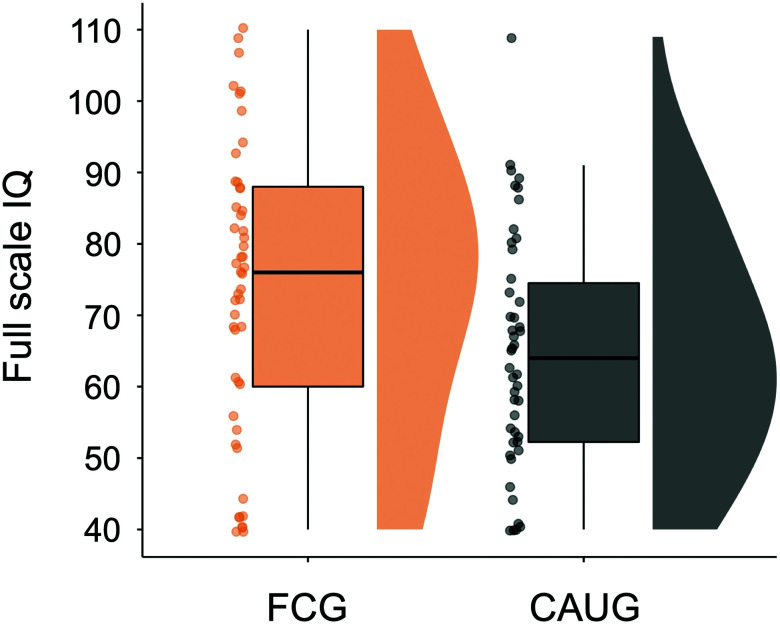
This study examined longitudinal data from the Bucharest Early Intervention Project, a randomized controlled trial of foster care as an alternative to institutional care following exposure to severe psychosocial deprivation. We report data from 135 participants assessed in early adulthood (age 18 y). We find that 16 y after randomization occurred, those who had been randomized to high-quality foster care had significantly higher IQ scores (9 points, 0.6 SD) than those randomized to care as usual. Mediation analyses provide evidence that the causal effect of the intervention on cognitive ability in early adulthood could be explained, in part, by higher-quality caregiving and attachment security. These findings indicate that early investment in family care as an alternative to institutional care leads to sustained gains in cognitive ability. Fostering caregiving relationships is a likely mechanism of the intervention. In addition, exploratory analyses indicate that stable placements throughout childhood are associated with the greatest long-term gains in cognitive ability. Whether early interventions for infants and young children lead to lasting change has significant implications for decisions to invest in programs aimed at improving children’s developmental outcomes.
Overview
CoChat Summary
TL;DR
Using the Bucharest Early Intervention Project randomized trial, individuals randomized to foster care after early institutionalization had early-adulthood IQ scores 9.00 points above those assigned to care as usual. The effect persisted nearly 14 years after the intervention ended and was mediated by early caregiving quality and attachment security, though ever-institutionalized adults still scored far below never-institutionalized peers.
Key findings
- In intent-to-treat analyses at age 18 y, the foster care group (FCG) had a mean FSIQ of 73.49 versus 64.65 in the care-as-usual group (CAUG): B = 9.00, β = 0.45, SE = 4.04, P = 0.026, R² = 0.05; n = 95 (49 randomized to foster care). Significant domain effects were found for verbal comprehension (B = 11.09, P = 0.003) and processing speed (B = 7.75, P = 0.024), while perceptual reasoning and working memory were not statistically significant (working memory P = 0.053).
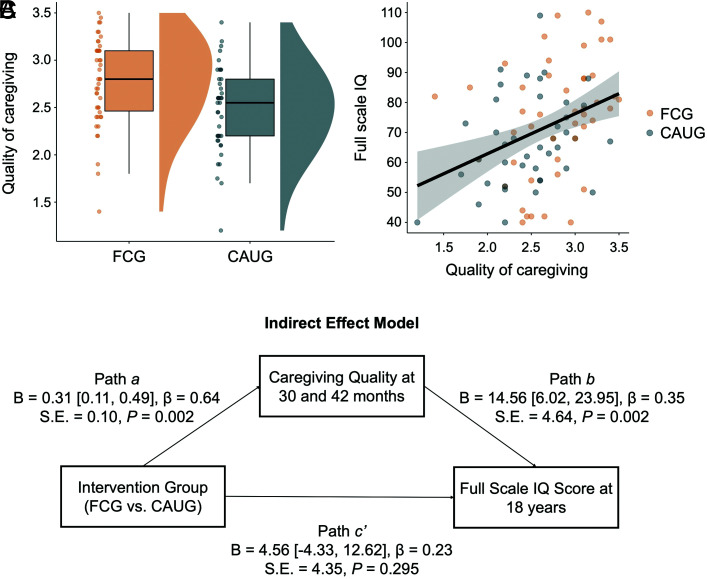
- Caregiving quality was higher in the FCG than the CAUG (R² = 0.10) and was associated with higher age-18 FSIQ (R² = 0.13). In mediation models, the indirect effect through caregiving quality was 4.44, and the intervention effect was no longer significant when caregiving quality was included; attachment security at age 42 mo also mediated the effect (indirect effect = 6.42). Caregiving quality explained 49% of the intervention effect on FSIQ, and attachment security explained 71%.
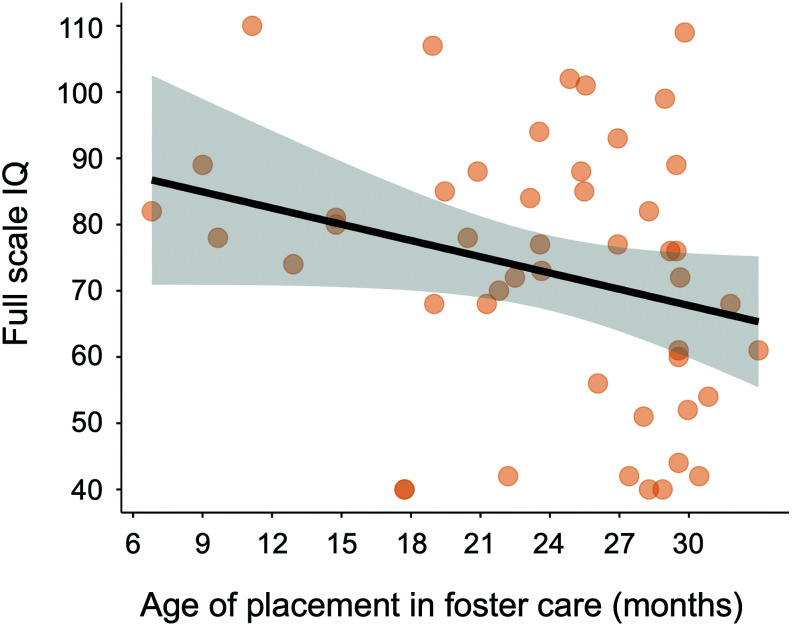
- Exploratory analyses found a small negative association between age of placement into foster care and age-18 FSIQ (B = −0.81, β = −0.25, SE = 0.42, P = 0.050, R² = 0.06), with earlier placement tending to predict higher FSIQ.
- Compared with never-institutionalized children (NIG), ever-institutionalized individuals (EIG) had much lower age-18 FSIQ: mean 69.21 versus 94.75, B = 26.21, β = 1.20, SE = 3.01, P < 0.001, R² = 0.30; EIG scores were lower across all four cognitive domains.
Methods
- The study used data from the Bucharest Early Intervention Project, an RCT (NCT00747396) in which young children living in Romanian institutions were assessed at a mean age of 22 mo at baseline and randomized to high-quality foster care (FCG) or care as usual (CAUG). The current follow-up included 135 participants: 95 from the original trial (46 CAUG, 49 FCG) and 40 never-institutionalized community comparison children (NIG), assessed at a mean age of 18.74 y (SD = 0.65); 47% female/53% male.
- Cognitive ability at age 18 y was assessed with the WISC-IV, yielding a full-scale IQ composite and four domain scores. Because of floor effects and nonnormality, analyses used Tobit models estimated with robust weighted least squares; five participants too cognitively impaired to complete the WISC-IV had scores imputed to 40 for tables and figures.
- Caregiving quality was assessed at ages 30 and 42 mo using the Observational Record of the Caregiving Environment, coded from videotaped child–preferred-caregiver interactions and averaged into a composite of sensitivity, stimulation of development, positive regard, flat affect (reverse coded), and detachment (reverse coded). Attachment security was assessed at age 42 mo via a strange situation procedure.
Limitations
- The paper states that the sample is small and cannot be increased for the ever-institutionalized group; small trials may limit the accuracy of statistical estimates. It also states that prenatal care and pre-/postnatal nutrition could not be examined, and that the NIG is a comparison but not a “control” group for those placed in institutions.
- The paper states that it used the WISC-IV rather than an adult intelligence instrument, precluding adult age-based norms, and that the liberal substitution approach deviates from Wechsler recommendations; these choices were made to address very low scores and floor effects. It also notes that other environmental aspects beyond the caregiving relationship were not included.
- The paper states that exploratory analyses of placement stability and age of placement are not intent-to-treat and cannot support causal conclusions; it also notes that the association between placement stability and IQ is challenging to interpret because children and adolescents with lower IQ may be at greater risk for placement instability.
Model-written summary. Check it against the paper before relying on it.
Integrity signals
Registry
Cites
Statistics
Figures
Verification
Claims the paper makes
1 Valid · 0 Not valid · 9 Not checked · 38 Own results and interpretations
The sources with a verdict support this claim; the rest weren’t checked yet, have no full text we could read, or their verdicts aren’t rated yet.
In the paper
“Consistent with prior research examining the association between caregiving quality and IQ in childhood (6, 11), individuals who experienced higher quality of caregiving in early childhood had significantly higher FSIQ scores in early adulthood (R2 = 0.13; Fig. 2B).”
§ Foster care leads to sustained cognitive gains following severe early deprivation > Results > Caregiving Relationships as a Mechanism of Intervention Effects.
What the sources say
- Supportedcites [6] N. A. Fox, A. N. Almas, K. A. Degnan, C. A. Nelson, C. H. Zeanah, The effects of severe psychosocial deprivation and foster care intervention on cognitive development at 8 years of age: Findings from the Bucharest Early Intervention Project. J. Child Psychol. Psychiatry 52, 919– 928 (2011). 21244422 PMC4088941 source
The citation supports the sentence’s reference to prior research on caregiving quality and IQ in childhood; the early-adulthood FSIQ result and R² = 0.13 are the citing authors’ own finding. In the Results, attachment security at 42 months was significantly associated with a typical childhood IQ profile among foster-care children. The Discussion also reports higher full-scale IQ at age 8 among children who remained in BEIP foster homes. (LLM, conf=0.90)
- Not checked yetcites [11] A. T. Smyke; BEIP Core Group, The caregiving context in institution-reared and family-reared infants and toddlers in Romania. J. Child Psychol. Psychiatry 48, 210– 218 (2007). 17300560 source
plainstates an association- Asserted: passes — The authors put it forward as true.
- Checkable: passes — It can be checked against evidence.
- Load-bearing: passes — The paper’s conclusions depend on it.
- Based: passes — The paper gives a reason why it holds.
- Supported
A result the paper reports from its own data — it cites no other source for it, so there is none to check. The quote shows it is in the paper.
In the paper
“In a formal test of mediation, we identified a significant indirect effect of the foster care intervention on FSIQ at age 18 y through the quality of early caregiving (indirect effect = 4.44; Fig. 2C).”
§ Foster care leads to sustained cognitive gains following severe early deprivation > Results > Caregiving Relationships as a Mechanism of Intervention Effects.
plainstates a cause- Asserted: passes — The authors put it forward as true.
- Checkable: passes — It can be checked against evidence.
- Load-bearing: passes — The paper’s conclusions depend on it.
- Based: passes — The paper gives a reason why it holds.
- Rests on an assumption not shown here.
A result the paper reports from its own data — it cites no other source for it, so there is none to check. The quote shows it is in the paper.
In the paper
“Importantly, however, our exploratory analyses on placement stability (SI Appendix) indicate that stable family placements were associated with sustained effects of the intervention.”
§ Foster care leads to sustained cognitive gains following severe early deprivation > Discussion
hedgedstates an association- Asserted: passes — The authors put it forward as true.
- Checkable: passes — It can be checked against evidence.
- Load-bearing: passes — The paper’s conclusions depend on it.
- Based: passes — The paper gives a reason why it holds.
A result the paper reports from its own data — it cites no other source for it, so there is none to check. The quote shows it is in the paper.
In the paper
“Participants with any history of institutionalization (i.e., EIG) had FSIQ scores that were, on average, 26.21 points below those of community comparison participants (Table 2).”
§ Foster care leads to sustained cognitive gains following severe early deprivation > Results > Comparison with Never-Institutionalized Children.
plainstates an association- Asserted: passes — The authors put it forward as true.
- Checkable: passes — It can be checked against evidence.
- Load-bearing: passes — The paper’s conclusions depend on it.
- Based: passes — The paper gives a reason why it holds.
- Rests on 2 assumptions not shown here.
A result the paper reports from its own data — it cites no other source for it, so there is none to check. The quote shows it is in the paper.
In the paper
“As expected (9), caregiving quality was significantly higher in the FCG than in the CAUG (R2 = 0.10; Fig. 2A).”
- Also stated in: § Discussion · plain
“Indeed, randomization led to differences in quality of care observed in early childhood”
§ Foster care leads to sustained cognitive gains following severe early deprivation > Results > Caregiving Relationships as a Mechanism of Intervention Effects.
plainstates an association- Asserted: passes — The authors put it forward as true.
- Checkable: passes — It can be checked against evidence.
- Load-bearing: passes — The paper’s conclusions depend on it.
- Based: passes — The paper gives a reason why it holds.
- Also stated in: § Discussion · plain
27 more claims
Create a free account to see all 48 claims and to verify the 10 references still open.
- It may state two separate claims as one. 8
- Probably not a substantial claim. 13
Claims other papers make about this one
Each is checked against this paper’s own text: does it say what the citing paper says it does?
The cited source says what the claim attributes to it.
In the citing paper
“insights from the BEIP indicate that institutionalization and foster care have a profound impact on various adverse outcomes in young adulthood, including executive functioning (Wade et al., 2023) and cognitive ability (Humphreys et al., 2022; Tan et al., 2023)”
From Long-term cardiometabolic effects of early institutionalization and foster care: Evidence from the Bucharest Early Intervention Project (2026) · cites this paper as Humphreys et al., 2022
The cited source says what the claim attributes to it.
In the citing paper
“↑ IQ (Almas et al., 2016;Fox et al., 2011;Humphreys et al., 2022;King et al., 2023;Nelson et al., 2007)”
From Resilience following severe early life neglect: A review of longitudinal evidence from the Bucharest Early Intervention Project (2026) · cites this paper as Humphreys et al., 2022
The cited source says what the claim attributes to it.
In the citing paper
“We administered the WISC-IV rather than the Weschler Adult Intelligence Scale (Wechsler, 2008) in order to prevent potential floor effects in the EIG.”
From Resting brain activity in early childhood predicts IQ at 18 years (2023) · cites this paper as Humphreys et al., 2022
Citations
Cites
R: A Language and Environment for Statistical Computing
R Core Team (2025) · doi:10.32614/r.manuals · Cited by 352,181
Estimation of Relationships for Limited Dependent Variables
Tobin, J. (1958) · Econometrica · doi:10.2307/1907382 · Cited by 6,996 · cited 2×
“In addition, our use of Tobit models (22) allowed us to include participants with functioning so low that they were unable to complete this cognitive assessment.”
MethodWechsler Adult Intelligence Scale
(2007) · Encyclopedia of Measurement and Statistics · doi:10.4135/9781412952644.n478 · Cited by 2,008
Early Childhood Education: Young Adult Outcomes From the Abecedarian Project
Campbell, F. A., Ramey, C. T., Pungello, E., Sparling, J., & Miller-Johnson, S. (2002) · Applied Developmental Science · doi:10.1207/s1532480xads0601_05 · Cited by 1,144 · cited 1×
“scores and educational attainment than their counterparts in early adulthood (age 21 y) (15).”
BackgroundCognitive Recovery in Socially Deprived Young Children: The Bucharest Early Intervention Project
Nelson, C. A., Zeanah, C. H., Fox, N. A., Marshall, P. J., Smyke, A. T., & Guthrie, D. (2007) · Science · doi:10.1126/science.1143921 · Cited by 951
Self-citationSameroff, A. J., Seifer, R., Baldwin, A., & Baldwin, C. (1993) · Child Development · doi:10.2307/1131438 · Cited by 856
Sameroff, A. J., Seifer, R., Baldwin, A. L., & Baldwin, C. P. (1993) · Child Development · doi:10.1111/j.1467-8624.1993.tb02896.x · Cited by 855 · cited 2×
“Thus, consistent with prior work from our group (18), we created two groups from the 49 FCG children based on their continuous placement with the BEIP-sponsored foster family through age 18 y.”
MethodResultLasting Effects of Early Education: A Report from the Consortium for Longitudinal Studies
Lazar, I., Darlington, R., Murray, H., Royce, J., Snipper, A., & Ramey, C. T. (1982) · Monographs of the Society for Research in Child Development · doi:10.2307/1165938 · Cited by 802 · cited 1×
“Despite previous evidence that the effects of interventions aimed to increase cognitive ability often fade out (1, 10), the causal effects of the BEIP foster care intervention nearly 14 y following the end of the intervention provide compelling evidence about the persistence of IQ changes through environmental interve…”
BackgroundHandbook of Infant Mental Health
Sprunger, L. W. (1995) · Journal of the American Academy of Child & Adolescent Psychiatry · doi:10.1097/00004583-199504000-00020 · Cited by 787
Wechsler Intelligence Scale for Children
(2021) · Encyclopedia of Evolutionary Psychological Science · doi:10.1007/978-3-319-19650-3_305559 · Cited by 670
Research works printed but not linked: 2
- M. Brookwood, The Orphans of Davenport: Eugenics, the Great Depression, and the War over Children’s Intelligence (Liveright, 2021).
- L. K. Muthén, B. O. Muthén, Mplus User’s Guide (Muthén & Muthén, ed. 8, 2017).
Cited by
Early deprivation alters structural brain development from middle childhood to adolescence
Sheridan, M. A., Mukerji, C. E., Wade, M., Humphreys, K. L., Garrisi, K., Goel, S., Patel, K., Fox, N. A., Zeanah, C. H., Nelson, C. A., et al. (2022) · Science Advances · doi:10.1126/sciadv.abn4316 · Cited by 84
Self-citationAnnual Research Review: Early intervention viewed through the lens of developmental neuroscience
Nelson, C. A., Sullivan, E., & Engelstad, A. (2023) · Journal of Child Psychology and Psychiatry · doi:10.1111/jcpp.13858 · Cited by 84
Self-citationDanese, A., & Widom, C. S. (2024) · The Lancet Psychiatry · doi:10.1016/s2215-0366(24)00224-4 · Cited by 42
Nelson, C. A., Fox, N. A., & Zeanah, C. H. (2023) · Current Directions in Psychological Science · doi:10.1177/09637214231201079 · Cited by 39
“For example, foster-care children in stable care exhibited fewer symptoms of psychopathology (Humphreys et al., 2015) and had higher IQs (Humphreys et al., 2022).”
BackgroundMethodSelf-citationResting brain activity in early childhood predicts IQ at 18 years
Tan, E., Tang, A., Debnath, R., Humphreys, K. L., Zeanah, C. H., Nelson, C. A., & Fox, N. A. (2023) · Developmental Cognitive Neuroscience · doi:10.1016/j.dcn.2023.101287 · Cited by 22
Self-citationHerzberg, M. P., Nielsen, A. N., Luby, J. L., & Sylvester, C. M. (2024) · Neuropsychopharmacology · doi:10.1038/s41386-024-01947-7 · Cited by 29
A Systematic Review of Interventions to Ameliorate the Impact of Adversity on Brain Development.
McDermott, C. L., Norton, E., & Mackey, A. (2023) · Neuroscience and Biobehavioral Reviews · doi:10.1016/j.neubiorev.2023.105391 · Cited by 15
Zeytinoglu, S., Tang, A., Zeanah, C. H., Nelson, C. A., Almas, A. N., & Fox, N. A. (2022) · Developmental Science · doi:10.1111/desc.13309 · Cited by 18
Self-citationDevelopmental mechanisms linking deprivation and threat to psychopathology and school outcomes
Murgueitio, N., Sheridan, M. A., Bauer, D. J., & Propper, C. B. (2024) · Development and Psychopathology · doi:10.1017/s0954579424001664 · Cited by 22
Self-citationPetrican, R., Fornito, A., & Boyland, E. J. (2023) · Biological Psychiatry · doi:10.1016/j.biopsych.2023.06.023 · Cited by 16
“For instance, positive 72 parenting can dampen the impact of external stressors and genetic vulnerability to 73 psychopathology, thereby promoting superior cognitive functioning in childhood and 74 adolescence (16, 17).”
BackgroundPatterns of brain-wide associations reflect socioeconomics
Marek, S. A., Donohue, M. R., Karcher, N. R., Hoyniak, C. P., Chauvin, R. J., Meyer, A. C., Miller, J. M., Van, A. N., Wang, A., Baden, N. J., et al. (2026) · Science · doi:10.1126/science.aee6213 · Cited by 27
“Moreover, IQ scores are higher for individuals adopted out of institutional care compared with those who were not ( 96 ).”
Practice and Policy Regarding Child Neglect: Lessons from Studies of Institutional Deprivation
Zeanah, C. H., & King, L. S. (2022) · Annual Review of Developmental Psychology · doi:10.1146/annurev-devpsych-121020-031658 · Cited by 10
Self-citationSand, H., Sticca, F., Wehrle, F. M., Eichelberger, D. A., Simoni, H., Jenni, O. G., & Lannen, P. (2024) · Child Abuse & Neglect · doi:10.1016/j.chiabu.2024.106917 · Cited by 10
“Some evidence suggests that although environmental enrichment following early institutionalization can lead to some degree of recovery, the increased risk of deficits in cognitive functioning persists over time (Humphreys et al., 2022).”
InfluentialJoffe, A. R., & Robertson, C. M. T. (2025) · Journal of Intensive Care Medicine · doi:10.1177/08850666251340646 · Cited by 9
“12,25 Those randomized to foster care, especially when placed before the age of 2 years, and when the foster placement was stable over time, also had improved electroencephalogram patterns, white matter volume, prefrontal cortex (PFC) thickness, indiscriminate behavior through age 8 years, stress…”
Longitudinal associations between birth-to-six cortical growth and childhood neurocognitive function
Davis, M. M., Woodburn, M., Nugiel, T., Rakesh, D., Tate, M., Asciutto, W., Lin, W., Cohen, J. R., & Sheridan, M. A. (2025) · Proceedings of the National Academy of Sciences · doi:10.1073/pnas.2418176122 · Cited by 6
“…development and later function comes from substantial evidence from animal models ( 19 – 21 ) and numerous studies in humans demonstrating that environmental experiences between 0 to 4 y shape both cognitive function ( 22 – 26 ) and brain structure ( 27 , 28 ) in middle childhood and adolescence.”
Self-citationCognitive Functioning of Children in Out-of-Home Care
Eiberg, M. (2023) · Journal of Child & Adolescent Trauma · doi:10.1007/s40653-023-00580-8 · Cited by 8
“…deprived institutionalized children have shown significant changes in brain development and cognitive improvement over time when placed in long-term foster care compared to peers who remained institutionalized (Almas et al., 2016; Fox et al., 2011; Humphreys et al., 2022; Sheridan et al., 2012 ).”
BackgroundNiu, Y., Buzzell, G. A., Cosmoiu, A., Fox, N. A., Nelson, C. A., Zeanah, C. H., & Humphreys, K. L. (2024) · Research on Child and Adolescent Psychopathology · doi:10.1007/s10802-024-01193-x · Cited by 7
“Consistent with prior studies (Buz-zell et al., 2020 ; Humphreys et al., 2022 ; McDermott et al., 2013 ; Troller-Renfree et al., 2016 ), we hypothesized that lower levels of irritability would be associated with a short percent time in institutional care, a younger age of placement into foster…”
BackgroundResultSelf-citationArnett, A. B., Antúnez, M., Zeanah, C. H., Fox, N. A., & Nelson, C. A. (2025) · Journal of Child Psychology and Psychiatry · doi:10.1111/jcpp.14110 · Cited by 3
Self-citationRosenberg, B. M., Moreira, J. F. G., Leal, A. S. M., Saragosa‐Harris, N. M., Gaines, E., Meredith, W., McCann, C. F., Coury, S. M., Waizman, Y. H., Ninova, E., et al. (2025) · Biological Psychiatry · doi:10.1016/j.biopsych.2026.03.035 · Cited by 3
Lurie, L. A., Gruhn, M. A., Garrisi, K., McLaughlin, K. A., Humphreys, K. L., Zeanah, C. H., Fox, N. A., Nelson, C. A., & Sheridan, M. A. (2025) · Developmental Science · doi:10.1111/desc.70043 · Cited by 2
Self-citationMens, M. M. J., Jopling, E., Hare, M., Drury, S. S., Nelson, C. A., Zeanah, C. H., Fox, N. A., & Slopen, N. (2026) · Development and Psychopathology · doi:10.1017/s0954579426101540 · Cited by 1
“…BEIP indicate that institutionalization and foster care have a profound impact on various adverse outcomes in young adulthood, including executive functioning (Wade et al., 2023) and cognitive ability (Humphreys et al., 2022; Tan et al., 2023), the effect on cardiometabolic health remains unclear.”
Self-citationHare, M. M., Humphreys, K. L., Cosmoiu, A., Fox, N. A., Nelson, C. A., & Zeanah, C. H. (2026) · Developmental Psychology · doi:10.1037/dev0002029 · Cited by 1
Self-citationToward Understanding and Halting Legacies of Trauma
Taylor, W., Korobkova, L., Bhinderwala, N., & Dias, B. G. (2025) · Biological Psychiatry · doi:10.1016/j.biopsych.2025.02.010 · Cited by 1
A life course approach to mental health and well-being
Keyes, K. M., & Martínez‐Alés, G. (2025) · Oxford University Press eBooks · doi:10.1093/oso/9780198895961.003.0012 · Cited by 2
The importance of a family for cognitive development: A commentary
Gunnar, M. R. (2022) · Proceedings of the National Academy of Sciences · doi:10.1073/pnas.2213908119 · Cited by 1
“the Bucharest Early Intervention Project (BEIP) (1), “Foster care leads to sustained cognitive gains following severe”
BackgroundIntelligence differences and environmental experiences
Colom, R., & Román, F. J. (2024) · Elsevier eBooks · doi:10.1016/b978-0-12-820480-1.00161-3 · Cited by 1
Holt-Gosselin, B., Adri, F., Humphreys, K. L., & Nelson, C. A. (2026) · Development and Psychopathology · doi:10.1017/s0954579426101837
“Inregardtocognition, children randomized to foster care exhibited higher IQ scores (Almas et al., 2016; Fox et al., 2011; Humphreys et al., 2022; King et al., 2023; Nelson et al., 2007), as well as better performance on attention (Ghera et al., 2009), working memory (Bos et al., 2009), inhibitory…”
Self-citationTowards understanding and halting legacies of traumaPreprint
Taylor, W. F., Korobkova, L., Bhinderwala, N., & Dias, B. G. (2024) · doi:10.31234/osf.io/7jxat
A Life-Span Perspective on the Effects of Early-Life Adversity on Cognitive Aging
Manavbasi, I. E., & Stine‐Morrow, E. A. L. (2024) · Oxford University Press eBooks · doi:10.1093/oxfordhb/9780197677131.013.25
Lucke, C. M., Stone, K. J., Gustafson, K. L., & Kroupina, M. (2024) · Journal of Developmental & Behavioral Pediatrics · doi:10.1097/dbp.0000000000001336
“22 The importance of stability in care and developing a healthy attachment to caregivers has enduring effects.”
Barbosa‐Torres, C., Bueso‐Izquierdo, N., Arévalo‐Martínez, A., & Manso, J. M. M. (2025) · Acta Neuropsychiatrica · doi:10.1017/neu.2025.19
Centering the Young Child: A Developmental Case for Child Welfare Reform
Harden, B. J., & Zeanah, C. H. (2025) · Families in Society The Journal of Contemporary Social Services · doi:10.1177/10443894251328144 · Cited by 1
“…psychosocial neglect in early life is associated with long-term impairments in IQ and in executive functions, that is, the ability to plan ahead, adapt to changes, make sound judgments, and control impulses (Humphreys et al., 2022; Mackes et al., 2020; Sonuga-Barke et al., 2017; Wade et al., 2022).”
Self-citationKorunmaya İhtiyacı Olan Çocukların Psikososyal Durumları: Ergoterapinin Rolü ve Önemi
Yalçın, A., & Abaoğlu, H. (2025) · Sağlık Profesyonelleri Araştırma Dergisi · doi:10.57224/jhpr.1620003
Blondet, C., Roy, A. C., Farnè, A., & Gomez, A. (2026) · Journal of Neural Transmission · doi:10.1007/s00702-026-03112-4
The Economics of Institutional Care in Pakistan: Poverty, Protection Risks, and Family-based Reform
Murtaza, A., Sohag, M. A., & Korejo, M. T. (2026) · Institutionalised Children Explorations and Beyond · doi:10.1177/23493003261467107
Manso, E. L., Mérida, N. M., Pasarín, L. G., & Bernedo, I. M. (2026) · Children & Society · doi:10.1111/chso.70088
Sousa, M., Cadime, I., Cruz, O., & Cruz, S. (2026) · Child and Adolescent Social Work Journal · doi:10.1007/s10560-026-01138-x
Metadata
- Authors
- Humphreys, K. L., King, L. S., Guyon-Harris, K. L., Sheridan, M. A., McLaughlin, K. A., Radulescu, A., Nelson, C. A., Fox, N. A., & Zeanah, C. H.
- Affiliations
- Tulane University (US)
- Department of Psychiatry and Behavioral Sciences, Tulane University School of Medicine, New Orleans, LA 70112
- University of North Carolina at Chapel Hill (US)
- Harvard University (US)
- Institute of Child Development, Bucharest, 010919 Romania
- Boston Children's Hospital (US)
- University of Maryland, College Park (US)
- Corresponding author
- Humphreys, Kathryn L.
- ORCID
- Venue
- Proceedings of the National Academy of Sciences
- Publisher
- National Academy of Sciences
- Published
- 2022-09-12
- Volume
- 119
- Issue
- 38
- Pages
- e2119318119-e2119318119
- ISSN
- 0027-8424 (ISSN-L)
- 1091-6490
- PMC
- PMC9499516
- OpenAlex
- W4295309339
- Cited by
- 36
- References
- 32
- Citations by year
- 2026: 7 · 2025: 10 · 2024: 9 · 2023: 6 · 2022: 4
- FWCI
- 8.39
- Type
- journal article
- Language
- en
- Open access
- hybrid
- doi.org
- Licence
- Locations
- Proceedings of the National Academy of Sciences (publishedVersion, cc-by-nc-nd)
- PubMed Central (publishedVersion, cc-by-nc-nd)
- PubMed (publishedVersion)
- Carolina Digital Repository (University of North Carolina at Chapel Hill) (submittedVersion, cc-by-nc-nd)
- UNC Libraries
- Funders
- HHS | NIH | National Institute of Mental Health (MH091363)
- HHS | Health Resources and Services Administration (T32HP22240)
- HHS | NIH | Eunice Kennedy Shriver National Institute of Child Health and Human Development (F32HD105385)
- John D. and Catherine T. MacArthur Foundation (n/a)
- Jacobs Foundation (2017-1261-05)
- Topics
- Social Sciences › Sociology and Political Science › Child Welfare and Adoption
- Social Sciences › Education › Early Childhood Education and Development
- Social Sciences › Psychology › Clinical Psychology › Child Abuse and Trauma
- Keywords
- foster care, institutional care, early deprivation, psychosocial deprivation, cognitive development, IQ, early intervention, caregiving quality, attachment security, Bucharest Early Intervention Project, early adulthood, child development
- MeSH terms
- Child, Institutionalized, Child, Preschool, Cognition, Foster Home Care, Humans, Infant, Intelligence Tests, Psychosocial Deprivation, Early Intervention, Educational
About these checks
Registry, retraction, Cites and statistics results are computed, not judged, with one exception: a printed reference that no index lists is read once by a model before it counts as a citation error. Claims are extracted by a model and kept only when their quote appears verbatim in the text; each cited source is then checked, with a model’s help, for whether it says what the claim relies on. Those verdicts can be wrong — read the claim’s quote and the cited source before relying on one.
A language model drew the claims from the paper on 2026-10-05, under version 3 of the claim definition (model deepseek-v4.1-flash, prompt extract-v3).
A second model labelled each claim on 2026-10-05 (model jev-1.13-20260917, definition revision gold-guideline-v0.2).
Cited sources are checked with a language model’s help (gpt-6-sol).
Statistics and arithmetic are recomputed, not judged.
Confidence bands are shown only for fields calibrated on our annotated test set. None is calibrated yet, so no band is shown.
What counts as a claim ›How we measure confidence ›How we check this ›
Are you an author, or do you see a problem with this page? Request a review
Data sources
Bibliographic data: Semantic Scholar, OpenAlex, Crossref.
Contains information from the Semantic Scholar Academic Graph Datasets, made available under the ODC Attribution License (ODC-BY 1.0).
Semantic Scholar’s data is described in: Kinney, R., et al. (2023). The Semantic Scholar Open Data Platform. arXiv:2301.10140.
