

The DOI matches its Crossref record; 49 of the 49 references it cites were found in a registry or an index.
The Peroxisome Proliferator-activated Receptor δ Promotes Lipid Accumulation in Human Macrophages
Open accessAbstract
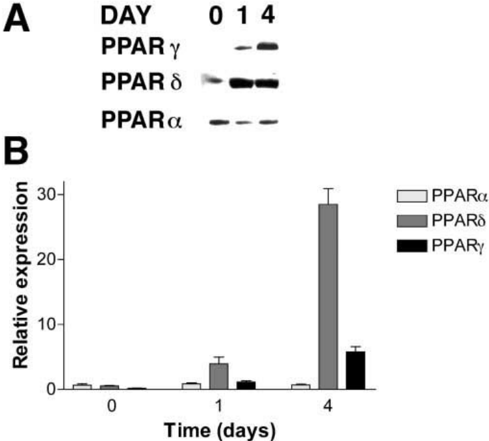
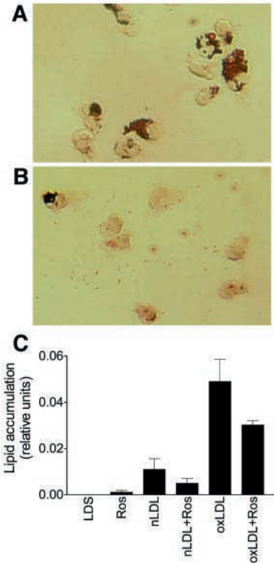
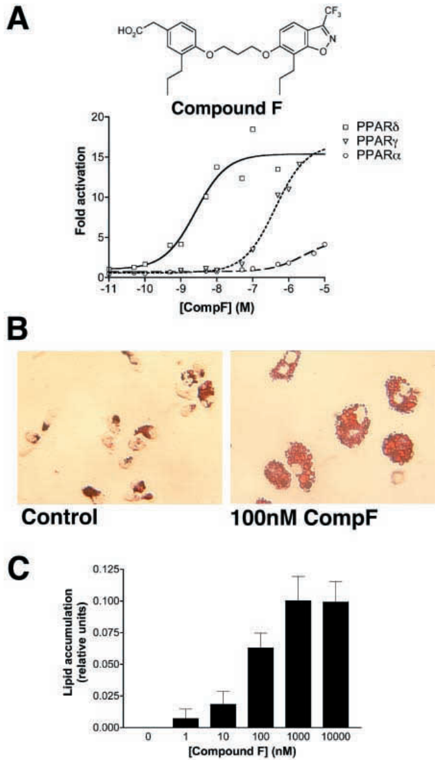
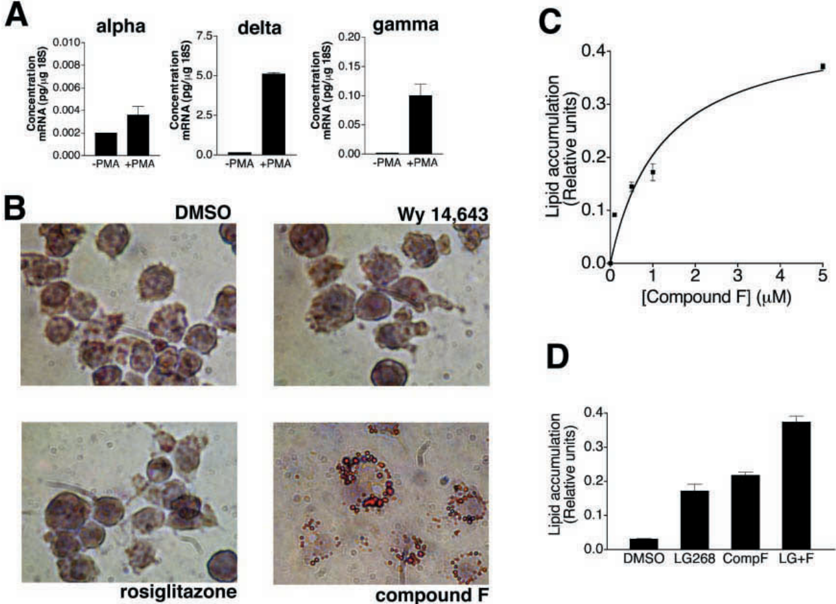
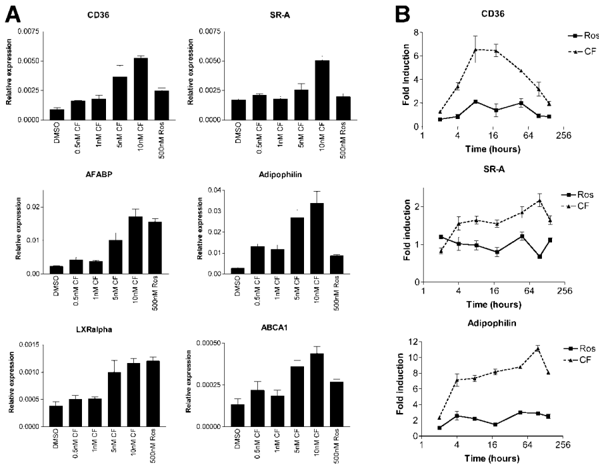
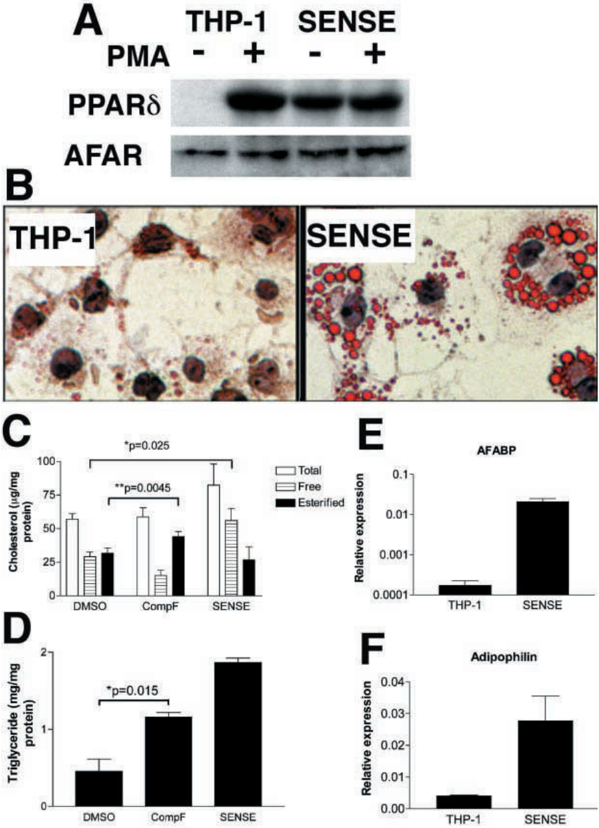
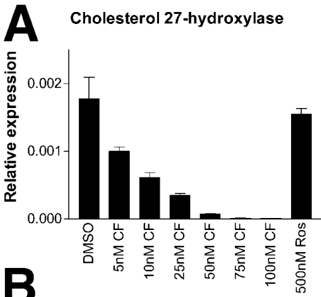
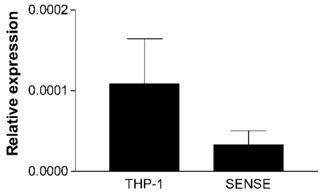
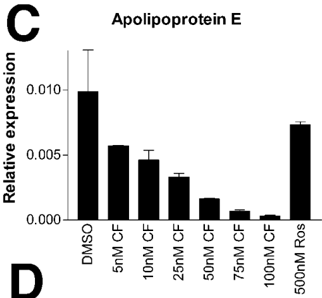
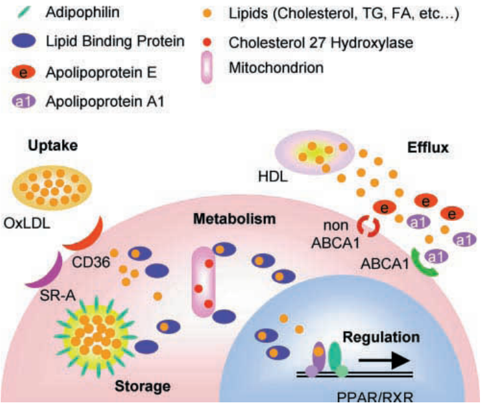
The peroxisome proliferator-activated receptors (PPARs) are a family of fatty acid-activated transcription factors which control lipid homeostasis and cellular differentiation. PPARalpha (NR1C1) controls lipid oxidation and clearance in hepatocytes and PPARgamma (NR1C3) promotes preadipocyte differentiation and lipogenesis. Drugs that activate PPARalpha are effective in lowering plasma levels of lipids and have been used in the management of hyperlipidemia. PPARgamma agonists increase insulin sensitivity and are used in the management of type 2 diabetes. In contrast, there are no marketed drugs that selectively target PPARdelta (NR1C2) and the physiological roles of PPARdelta are unclear. In this report we demonstrate that the expression of PPARdelta is increased during the differentiation of human macrophages in vitro. In addition, a highly selective agonist of PPARdelta (compound F) promotes lipid accumulation in primary human macrophages and in macrophages derived from the human monocytic cell line, THP-1. Compound F increases the expression of genes involved in lipid uptake and storage such as the class A and B scavenger receptors (SRA, CD36) and adipophilin. PPARdelta activation also represses key genes involved in lipid metabolism and efflux, i.e. cholesterol 27-hydroxylase and apolipoprotein E. We have generated THP-1 sublines that overexpress PPARdelta and have confirmed that PPARdelta is a powerful promoter of macrophage lipid accumulation. These data suggest that PPARdelta may play a role in the pathology of diseases associated with lipid-filled macrophages, such as atherosclerosis, arthritis, and neurodegeneration.
Overview
The claims and statistics of this paper haven’t been checked yet.
Run the check — free, no account needed. It reads the open-access text and checks the sources it cites.
Integrity signals
Registry
Cites
Statistics
Figures
Verification
Claims the paper makes
The claims and statistics of this paper haven’t been checked yet.
Run the check — free, no account needed. It reads the open-access text and checks the sources it cites.
Claims other papers make about this one
Each is checked against this paper’s own text: does it say what the citing paper says it does?
The cited source says what the claim attributes to it.
In the citing paper
“This is likely reasoned by the abundant expression of PPARd, a hallmark of THP-1 cell differentiation (Vosper et al., 2001) (Supplemental Fig. 16).”
The cited source says what the claim attributes to it.
In the citing paper
“Consequently, the PPARd activation promotes lipid accumulation in THP-1 macrophages in the presence of serum (Vosper et al., 2001).”
The cited source says what the claim attributes to it.
In the citing paper
“As we did not use any lipoproteins as stimulus, the studies of Vosper et al. (2001) on PPARd and lipid accumulation in macrophages most accurately resemble our experimental setup.”
The cited source says what the claim attributes to it.
In the citing paper
“In line with our findings, the treatment with a PPARd agonist upregulated the expression of genes involved in lipid metabolism, including CD36 and PLIN2, in this study.”
Self-check
Percentages, sums and reported differences re-computed from the paper’s own numbers.
The self-check needs the paper’s full text.
Citations
Cites
Stimulation of adipogenesis in fibroblasts by PPARγ2, a lipid-activated transcription factor
Tontonoz, P., Hu, E., & Spiegelman, B. M. (1994) · Cell · doi:10.1016/0092-8674(94)90006-x · Cited by 3,564
The peroxisome proliferator-activated receptor-γ is a negative regulator of macrophage activation
Ricote, M., Li, A. C., Willson, T. M., Kelly, C. J., & Glass, C. K. (1998) · Nature · doi:10.1038/34178 · Cited by 3,525
PPAR-γ agonists inhibit production of monocyte inflammatory cytokines
Jiang, C., Ting, A. T., & Seed, B. (1998) · Nature · doi:10.1038/34184 · Cited by 2,899
15-Deoxy-Δ12,14-Prostaglandin J2 is a ligand for the adipocyte determination factor PPARγ
FORMAN, B. M., Tontonoz, P., Chen, J., Brun, R. P., Spiegelman, B. M., & Evans, R. M. (1995) · Cell · doi:10.1016/0092-8674(95)90193-0 · Cited by 2,857
Apolipoprotein E polymorphism and atherosclerosis.
Davignon, J., Gregg, R. E., & Sing, C. F. (1988) · Arteriosclerosis: An Official Journal of the American Heart Association, Inc. · doi:10.1161/01.atv.8.1.1 · Cited by 1,981
Roles of PPARs in health and disease
Kersten, S., Desvergne, B., & Wahli, W. (2000) · Nature · doi:10.1038/35013000 · Cited by 1,956
Oxidized LDL Regulates Macrophage Gene Expression through Ligand Activation of PPARγ
Nagy, L., Tontonoz, P., Alvarez, J. G. A., Chen, H.-W., & Evans, R. M. (1998) · Cell · doi:10.1016/s0092-8674(00)81574-3 · Cited by 1,861
PPARγ Promotes Monocyte/Macrophage Differentiation and Uptake of Oxidized LDL
Tontonoz, P., Nagy, L., Alvarez, J. G. A., Thomázy, V. A., & Evans, R. M. (1998) · Cell · doi:10.1016/s0092-8674(00)81575-5 · Cited by 1,815
Kliewer, S. A., Umesono, K., Noonan, D. J., Heyman, R. A., & Evans, R. M. (1992) · Nature · doi:10.1038/358771a0 · Cited by 1,746
Anti-inflammatory cyclopentenone prostaglandins are direct inhibitors of IκB kinase
Rossi, A., Kapahi, P., Natoli, G., Takahashi, T., Chen, Y., Karin, M., & Santoro, M. G. (2000) · Nature · doi:10.1038/47520 · Cited by 1,303
Research works printed but not linked: 3
- Cullen, 1987, Methods Enzymol., 152, 692
- Wu, 1994, Mol. Cell. Biol., 14, 2129
- Kang, 1997, Mutat. Res., 382, 57
Cited by
Sorted by citations
Lipids and Lipid-Based Formulations: Optimizing the Oral Delivery of Lipophilic Drugs
Porter, C. J. H., Trevaskis, N. L., & Charman, W. N. (2007) · Nature Reviews Drug Discovery · doi:10.1038/nrd2197 · Cited by 1,824
Peroxisome-Proliferator-Activated Receptor δ Activates Fat Metabolism to Prevent Obesity
Wang, Y.-X., Lee, C.-H., Tiep, S., Yu, R. T., Ham, J., Kang, H., & Evans, R. M. (2003) · Cell · doi:10.1016/s0092-8674(03)00269-1 · Cited by 1,296
Emerging roles of PPARS in inflammation and immunity
Daynes, R. A., & Jones, D. C. (2002) · Nature reviews. Immunology · doi:10.1038/nri912 · Cited by 926
Minireview: Lipid Metabolism, Metabolic Diseases, and Peroxisome Proliferator-Activated Receptors
Lee, C., Olson, P., & Evans, R. M. (2003) · Endocrinology · doi:10.1210/en.2003-0288 · Cited by 891
The role of peroxisome proliferator-activated receptors (PPAR) in immune responses
Christofides, A., Konstantinidou, E., Jani, C., & Boussiotis, V. A. (2020) · Metabolism · doi:10.1016/j.metabol.2020.154338 · Cited by 746
PAT proteins, an ancient family of lipid droplet proteins that regulate cellular lipid stores
Bickel, P. E., Tansey, J. T., & Welte, M. A. (2009) · Biochimica et Biophysica Acta (BBA) - Molecular and Cell Biology of Lipids · doi:10.1016/j.bbalip.2009.04.002 · Cited by 671
PPAR : a dagger in the heart of the metabolic syndrome
Barish, G. D. (2006) · Journal of Clinical Investigation · doi:10.1172/jci27955 · Cited by 641
Transcriptional Repression of Atherogenic Inflammation: Modulation by PPARδ
Lee, C., Chawla, A., Urbiztondo, N., Liao, D., Boisvert, W. A., & Evans, R. M. (2003) · Science · doi:10.1126/science.1087344 · Cited by 580
Peroxisome-proliferator-activated receptors and cancers: complex stories
Michalik, L., Desvergne, B., & Wahli, W. (2004) · Nature reviews. Cancer · doi:10.1038/nrc1254 · Cited by 576
Li, A. C., Binder, C. J., Gutierrez, A., Brown, K. K., Plotkin, C. R., Pattison, J., Valledor, A. F., Davis, R. A., Willson, T. M., Witztum, J. L., et al. (2004) · Journal of Clinical Investigation · doi:10.1172/jci18730 · Cited by 580
Marx, N., Duez, H., Fruchart, J.-C., & Staels, B. (2004) · Circulation Research · doi:10.1161/01.res.0000127122.22685.0a · Cited by 501
HDL as a target in the treatment of atherosclerotic cardiovascular disease
Linsel‐Nitschke, P., & Tall, A. R. (2005) · Nature Reviews Drug Discovery · doi:10.1038/nrd1658 · Cited by 489
Barbier, O., Pineda‐Torra, I., Duguay, Y., Blanquart, C., Fruchart, J., Glineur, C., & Staels, B. (2002) · Arteriosclerosis Thrombosis and Vascular Biology · doi:10.1161/01.atv.0000015598.86369.04 · Cited by 417
Dressel, U., Allen, T. L., Pippal, J. B., Rohde, P. R., Lau, P., & Muscat, G. E. O. (2003) · Molecular Endocrinology · doi:10.1210/me.2003-0151 · Cited by 370
Macrophage polarization and meta-inflammation
Li, C., Xu, M. M., Wang, K., Adler, A. J., Vella, A. T., & Zhou, B. (2017) · Translational research · doi:10.1016/j.trsl.2017.10.004 · Cited by 376
Foam cell formation: A new target for fighting atherosclerosis and cardiovascular disease
Maguire, E. M., Pearce, S. W. A., & Xiao, Q. (2018) · Vascular Pharmacology · doi:10.1016/j.vph.2018.08.002 · Cited by 380
Perilipins: a diversity of intracellular lipid droplet proteins
Itabe, H., Yamaguchi, T., Nimura, S., & Sasabe, N. (2017) · Lipids in Health and Disease · doi:10.1186/s12944-017-0473-y · Cited by 373
PPAR- and LXR-dependent pathways controlling lipid metabolism and the development of atherosclerosis
Li, A. C., & Glass, C. K. (2004) · Journal of Lipid Research · doi:10.1194/jlr.r400010-jlr200 · Cited by 357
Berry, D. C., & Noy, N. (2009) · Molecular and Cellular Biology · doi:10.1128/mcb.01742-08 · Cited by 345
Peroxisome Proliferator–Activated Receptors as Transcriptional Nodal Points and Therapeutic Targets
Brown, J. D., & Plutzky, J. (2007) · Circulation · doi:10.1161/circulationaha.104.475673 · Cited by 345
Sznaidman, M. L., Haffner, C. D., Maloney, P., Fivush, A. M., Chao, E. Y. H., Goreham, D. M., Sierra, M. L., Grumelec, C. L., Xu, H. E., Montana, V. G., et al. (2003) · Bioorganic & Medicinal Chemistry Letters · doi:10.1016/s0960-894x(03)00207-5 · Cited by 319
Chang, B. H., Li, L., Paul, A., Taniguchi, S., Nannegari, V., Heird, W. C., & Chan, L. (2006) · Molecular and Cellular Biology · doi:10.1128/mcb.26.3.1063-1076.2006 · Cited by 309
PPARδ is a very low-density lipoprotein sensor in macrophages
Chawla, A., Lee, C.-H., Barak, Y., He, W., Rosenfeld, J., Liao, D., Han, J., Kang, H., & Evans, R. M. (2003) · Proceedings of the National Academy of Sciences · doi:10.1073/pnas.0337331100 · Cited by 305
Nuclear receptors in macrophage biology: at the crossroads of lipid metabolism and inflammation
Castrillo, A., & Tontonoz, P. (2004) · Annual Review of Cell and Developmental Biology · doi:10.1146/annurev.cellbio.20.012103.134432 · Cited by 260
PPARs, Obesity, and Inflammation
Stienstra, R., Duval, C., Müller, M., & Kersten, S. (2007) · PPAR Research · doi:10.1155/2007/95974 · Cited by 287
CD36: Implications in cardiovascular disease
Febbraio, M., & Silverstein, R. L. (2007) · The International Journal of Biochemistry & Cell Biology · doi:10.1016/j.biocel.2007.03.012 · Cited by 254
F ATTY A CID T RANSPORT A CROSS M EMBRANES : Relevance to Nutrition and Metabolic Pathology
Hajri, T., & Abumrad, N. A. (2002) · Annual Review of Nutrition · doi:10.1146/annurev.nutr.22.020402.130846 · Cited by 258
Activation of PPARβ/δ Induces Endothelial Cell Proliferation and Angiogenesis
Piqueras, L., Reynolds, A. R., Hodivala‐Dilke, K., Alfranca, A., Redondo, J. M., Hatae, T., Tanabe, T., Warner, T. D., & Bishop‐Bailey, D. (2006) · Arteriosclerosis Thrombosis and Vascular Biology · doi:10.1161/01.atv.0000250972.83623.61 · Cited by 247
The role of PPARs in atherosclerosis
Duval, C., Chinetti, G., Trottein, F., Fruchart, J., & Staels, B. (2002) · Trends in Molecular Medicine · doi:10.1016/s1471-4914(02)02385-7 · Cited by 249
Schmuth, M., Haqq, C. M., Cairns, W. J., Holder, J. C., Dorsam, S. T., Chang, S., Lau, P., Fowler, A. J., Chuang, G. S., Moser, A. H., et al. (2004) · Journal of Investigative Dermatology · doi:10.1111/j.0022-202x.2004.22412.x · Cited by 244
Nabiev, I. R., Mitchell, S., Davies, A. M., Williams, Y., Kelleher, D. P., Moore, R., Gun’ko, Y. K., Byrne, S. J., Ракович, Ю. П., Donegan, J. F., et al. (2007) · Nano Letters · doi:10.1021/nl0719832 · Cited by 231
Kutlu, B., Cardozo, A. K., Darville, M. I., Kruhøffer, M., Magnusson, N. E., Orntoft, T. F., & Eizirik, D. L. (2003) · Diabetes · doi:10.2337/diabetes.52.11.2701 · Cited by 230
Nakata, K., Tanaka, Y., Nakano, T., Adachi, T., Tanaka, H., Kaminuma, T., & Ishikawa, T. (2006) · Drug Metabolism and Pharmacokinetics · doi:10.2133/dmpk.21.437 · Cited by 213
PPARδ-mediated antiinflammatory mechanisms inhibit angiotensin II-accelerated atherosclerosis
Takata, Y., Liu, J., Yin, F., Collins, A. R., Lyon, C. J., Lee, C., Atkins, A. R., Downes, M., Barish, G. D., Evans, R. M., et al. (2008) · Proceedings of the National Academy of Sciences · doi:10.1073/pnas.0708647105 · Cited by 211
PPARs and the Cardiovascular System
Hamblin, M., Chang, L., Fan, Y., Zhang, J., & Chen, Y. E. (2008) · Antioxidants and Redox Signaling · doi:10.1089/ars.2008.2280 · Cited by 210
Yamaguchi, T., Matsushita, S., Motojima, K., Hirose, F., & Osumi, T. (2006) · Journal of Biological Chemistry · doi:10.1074/jbc.m601682200 · Cited by 204
The PPARδ agonist GW0742X reduces atherosclerosis in LDLR−/− mice
Graham, T. L., Mookherjee, C., Suckling, K. E., Palmer, C. N. A., & Patel, L. (2005) · Atherosclerosis · doi:10.1016/j.atherosclerosis.2004.12.028 · Cited by 202
Self-citationNadra, K., Anghel, S. I., Joye, E., Tan, N. S., Modak, S. B., Trono, D., Wahli, W., & Desvergne, B. (2006) · Molecular and Cellular Biology · doi:10.1128/mcb.26.8.3266-3281.2006 · Cited by 199
Holst, D., Luquet, S. H., Nogueira, V., Kristiansen, K., Leverve, X. M., & Grimaldi, P. A. (2003) · Biochimica et Biophysica Acta (BBA) - Molecular and Cell Biology of Lipids · doi:10.1016/s1388-1981(03)00071-4 · Cited by 193
Skeletal muscle and nuclear hormone receptors: Implications for cardiovascular and metabolic disease
Smith, A. G., & Muscat, G. E. O. (2005) · The International Journal of Biochemistry & Cell Biology · doi:10.1016/j.biocel.2005.03.002 · Cited by 182
Stephen, R. L., Gustafsson, M. C. U., Jarvis, M. C., Tatoud, R., Marshall, B. R., Knight, D. A., Ehrenborg, E., Harris, A. L., Wolf, C. R., & Palmer, C. N. A. (2004) · Cancer Research · doi:10.1158/0008-5472.can-03-2760 · Cited by 181
Self-citationThe Metabolic Syndrome: Peroxisome Proliferator-Activated Receptor γ and Its Therapeutic Modulation
Gurnell, M., Savage, D. B., Chatterjee, K., & O’Rahilly, S. (2003) · The Journal of Clinical Endocrinology & Metabolism · doi:10.1210/jc.2003-030435 · Cited by 178
PPARs: Transcription Factors Controlling Lipid and Lipoprotein Metabolism
Bocher, V., Pineda‐Torra, I., Fruchart, J., & Staels, B. (2002) · Annals of the New York Academy of Sciences · doi:10.1111/j.1749-6632.2002.tb04258.x · Cited by 180
Up-regulation of ADRP in fatty liver in human and liver steatosis in mice fed with high fat diet
Motomura, W., Inoue, M., Ohtake, T., Takahashi, N., Nagamine, M., Tanno, S., Kohgo, Y., & Okumura, T. (2005) · Biochemical and Biophysical Research Communications · doi:10.1016/j.bbrc.2005.12.121 · Cited by 180
Obesity, Peroxisome Proliferator-Activated Receptor, and Atherosclerosis in Type 2 Diabetes
Blaschke, F., Takata, Y., Caglayan, E., Law, R. E., & Hsueh, W. A. (2006) · Arteriosclerosis Thrombosis and Vascular Biology · doi:10.1161/01.atv.0000191663.12164.77 · Cited by 176
Adipophilin Enhances Lipid Accumulation and Prevents Lipid Efflux From THP-1 Macrophages
Larigauderie, G., Furman, C., Jaye, M., Lasselin, C., Copin, C., Fruchart, J., Castro, G. R., & Rouis, M. (2004) · Arteriosclerosis Thrombosis and Vascular Biology · doi:10.1161/01.atv.0000115638.27381.97 · Cited by 174
Role of CD36 in membrane transport of long-chain fatty acids
Ibrahimi, A., & Abumrad, N. A. (2002) · Current Opinion in Clinical Nutrition & Metabolic Care · doi:10.1097/00075197-200203000-00004 · Cited by 180
de Almeida, P. E., Silva, A. R., Maya‐Monteiro, C. M., Törőcsik, D., D’Ávila, H., Dezsö, B., Magalhães, K. G., Castro-Faria-Neto, H. C., Nagy, L., & Bozza, P. T. (2009) · The Journal of Immunology · doi:10.4049/jimmunol.0900365 · Cited by 171
Decoding Transcriptional Programs Regulated by PPARs and LXRs in the Macrophage
Ricote, M., Valledor, A. F., & Glass, C. K. (2003) · Arteriosclerosis Thrombosis and Vascular Biology · doi:10.1161/01.atv.0000103951.67680.b1 · Cited by 164
Touyz, R., & Schiffrin, E. (2006) · Vascular pharmacology · doi:10.1016/j.vph.2005.11.014 · Cited by 158
Minireview: A Novel Pathway of Prostacyclin Signaling—Hanging Out with Nuclear Receptors
Lim, H. J., & Dey, S. K. (2002) · Endocrinology · doi:10.1210/en.2002-220159 · Cited by 155
Masuda, Y., Itabe, H., Odaki, M., Hama, K., Fujimoto, Y., Mori, M., Sasabe, N., Aoki, J., Arai, H., & Takano, T. (2005) · Journal of Lipid Research · doi:10.1194/jlr.m500170-jlr200 · Cited by 148
Mechanisms of Macrophage Polarization in Insulin Signaling and Sensitivity
Orliaguet, L., Dalmas, É., Drareni, K., Venteclef, N., & Alzaïd, F. (2020) · Frontiers in Endocrinology · doi:10.3389/fendo.2020.00062 · Cited by 151
Dobrosi, N., Tóth, B. I., Nagy, G., Dózsa, A., Géczy, T., Nagy, L., Zouboulis, C. C., Paus, R., Kovács, L., & Bíró, T. (2008) · The FASEB Journal · doi:10.1096/fj.07-104877 · Cited by 142
Skogsberg, J., Kannisto, K., Cassel, T. N., Hamsten, A., Eriksson, P. O., & Ehrenborg, E. (2003) · Arteriosclerosis Thrombosis and Vascular Biology · doi:10.1161/01.atv.0000064383.88696.24 · Cited by 133
Peroxisome-proliferator-activated receptors regulate redox signaling in the cardiovascular system
Kim, T. (2013) · World Journal of Cardiology · doi:10.4330/wjc.v5.i6.164 · Cited by 133
Bishop‐Bailey, D., & Wray, J. A. (2003) · Prostaglandins & Other Lipid Mediators · doi:10.1016/s0090-6980(03)00003-0 · Cited by 131
PPARs and other nuclear receptors in inflammation
RIZZO, G., & Fiorucci, S. (2006) · Current Opinion in Pharmacology · doi:10.1016/j.coph.2006.03.012 · Cited by 128
Dalen, K. T., Ulven, S. M., Arntsen, B. M., Solaas, K., & Nebb, H. I. (2006) · Journal of Lipid Research · doi:10.1194/jlr.m500459-jlr200 · Cited by 129
On the mechanism for PPAR agonists to enhance ABCA1 gene expression
Ogata, M., Tsujita, M., Hossain, M. A., Akita, N., Gonzalez, F. J., Staels, B., Suzuki, S., Fukutomi, T., Kimura, G., & Yokoyama, S. (2009) · Atherosclerosis · doi:10.1016/j.atherosclerosis.2009.01.008 · Cited by 120
Tan, N. S., Michalik, L., Desvergne, B., & Wahli, W. (2005) · The Journal of Steroid Biochemistry and Molecular Biology · doi:10.1016/j.jsbmb.2004.12.025 · Cited by 119
Targett‐Adams, P., McElwee, M. J., Ehrenborg, E., Gustafsson, M. C. U., Palmer, C. N., & McLauchlan, J. (2005) · Biochimica et Biophysica Acta (BBA) - Gene Structure and Expression · doi:10.1016/j.bbaexp.2005.01.017 · Cited by 117
Self-citationChinetti, G., Fruchart, J., & Staels, B. (2003) · Current Opinion in Lipidology · doi:10.1097/00041433-200310000-00006 · Cited by 105
Overexpression of Angiopoietin-Like Protein 4 Protects Against Atherosclerosis Development
Georgiadi, A., Wang, Y., Stienstra, R., Tjeerdema, N., Janssen, A., Stalenhoef, A., van der Vliet, J. A., de Roos, A., Tamsma, J. T., Smit, J. W. A., et al. (2013) · Arteriosclerosis, Thrombosis, and Vascular Biology · doi:10.1161/atvbaha.113.301698 · Cited by 86
Edvardsson, U., Ljungberg, A., Lindén, D., William‐Olsson, L., Peilot, H., Ahnmark, A., & Oscarsson, J. (2005) · Journal of Lipid Research · doi:10.1194/jlr.m500203-jlr200 · Cited by 101
Nuclear receptor signaling in macrophages
Valledor, A. F., & Ricote, M. (2003) · Biochemical Pharmacology · doi:10.1016/j.bcp.2003.10.016 · Cited by 104
Zhang, J., Fu, M., Zhu, X., Xiao, Y., Mou, Y., Zheng, H., Akinbami, M. A., Wang, Q., & Chen, Y. E. (2002) · Journal of Biological Chemistry · doi:10.1074/jbc.m110580200 · Cited by 99
Schumann, T., Adhikary, T., Wortmann, A., Finkernagel, F., Lieber, S., Schnitzer, E., Legrand, N., Schober, Y., Nockher, W. A., Toth, P. M., et al. (2015) · Oncotarget · doi:10.18632/oncotarget.3826 · Cited by 99
Pourcet, B., Fruchart, J., Staels, B., & Glineur, C. (2006) · Expert Opinion on Emerging Drugs · doi:10.1517/14728214.11.3.379 · Cited by 102
Anti-Atherosclerotic and Anti-Inflammatory Actions of Sesame Oil
Narasimhulu, C. A., Selvarajan, K., Litvinov, D. Y., & Parthasarathy, S. (2015) · Journal of Medicinal Food · doi:10.1089/jmf.2014.0138 · Cited by 97
Peroxisome proliferator-activated receptor agonists, hyperlipidaemia, and atherosclerosis
Vosper, H., Khoudoli, G. A., Graham, T. L., & Palmer, C. N. A. (2002) · Pharmacology & Therapeutics · doi:10.1016/s0163-7258(02)00232-2 · Cited by 95
Self-citationRegulation of lipid droplet-associated proteins by peroxisome proliferator-activated receptors
Rodriguez, M. A. D. L. R., & Kersten, S. (2017) · Biochimica et Biophysica Acta (BBA) - Molecular and Cell Biology of Lipids · doi:10.1016/j.bbalip.2017.07.007 · Cited by 97
Krüppel-like family of transcription factors: an emerging new frontier in fat biology
Brey, C. W., Nelder, M. P., Hailemariam, T. K., Gaugler, R. R., & Hashmi, S. (2009) · International Journal of Biological Sciences · doi:10.7150/ijbs.5.622 · Cited by 93
Russell, T. D., Palmer, C. A., Orlicky, D. J., Fischer, A., Rudolph, M. C., Neville, M. C., & McManaman, J. L. (2007) · Journal of Lipid Research · doi:10.1194/jlr.m600474-jlr200 · Cited by 92
Self-citationKnowles, H. J., Poele, R. T., Workman, P., & Harris, A. L. (2006) · Biochemical Pharmacology · doi:10.1016/j.bcp.2005.11.019 · Cited by 90
Magliano, D. C., Bargut, T. C. L., de Carvalho, S. N., Águila, M. B., Mandarim‐de‐Lacerda, C. A., & Souza‐Mello, V. (2013) · PLoS ONE · doi:10.1371/journal.pone.0064258 · Cited by 89
Wallace, J. M., Schwarz, M., Coward, P., Houze, J. B., Sawyer, J. K., Kelley, K. L., Chai, A., & Rudel, L. L. (2005) · Journal of Lipid Research · doi:10.1194/jlr.m500002-jlr200 · Cited by 88
Peroxisome proliferator-activated receptor δ
Bojic, L. A., & Huff, M. W. (2013) · Current Opinion in Lipidology · doi:10.1097/mol.0b013e32835cc949 · Cited by 89
Boitier, E., Gautier, J., & Roberts, R. A. (2003) · Comparative Hepatology · doi:10.1186/1476-5926-2-3 · Cited by 86
Yamazaki, Y., Abe, K., Toma, T., Nishikawa, M., Ozawa, H., Okuda, A., Araki, T., Oda, S., Inoue, K., Shibuya, K., et al. (2007) · Bioorganic & Medicinal Chemistry Letters · doi:10.1016/j.bmcl.2007.05.066 · Cited by 84
Mandard, S., & Patsouris, D. (2013) · PPAR Research · doi:10.1155/2013/613864 · Cited by 84
Glinghammar, B., Skogsberg, J., Hamsten, A., & Ehrenborg, E. (2003) · Biochemical and Biophysical Research Communications · doi:10.1016/s0006-291x(03)01384-6 · Cited by 81
PPAR agonists in the treatment of atherosclerosis
Francis, G. A. (2003) · Current Opinion in Pharmacology · doi:10.1016/s1471-4892(03)00014-6 · Cited by 81
Bildirici, İ., Roh, C., Schaiff, W. T., Lewkowski, B. M., Nelson, D. M., & Sadovsky, Y. (2003) · The Journal of Clinical Endocrinology & Metabolism · doi:10.1210/jc.2003-030628 · Cited by 81
PPARγ and metabolism: insights from the study of human genetic variants
Gurnell, M. (2003) · Clinical Endocrinology · doi:10.1046/j.1365-2265.2003.01767.x · Cited by 80
Larigauderie, G., Cuaz‐Pérolin, C., Younes‐Chennoufi, A. B., Furman, C., Lasselin, C., Copin, C., Jaye, M., Fruchart, J., & Rouis, M. (2006) · FEBS Journal · doi:10.1111/j.1742-4658.2006.05357.x · Cited by 80
Lipids and the immune response: from molecular mechanisms to clinical applications
Yaqoob, P. (2003) · Current Opinion in Clinical Nutrition & Metabolic Care · doi:10.1097/00075197-200303000-00002 · Cited by 79
Lv, Z., Xing, K., Li, G., Liu, D., & Guo, Y. (2018) · Frontiers in Physiology · doi:10.3389/fphys.2018.01493 · Cited by 81
Peroxisome Proliferator‐Activated Receptor β/δ in the Brain: Facts and Hypothesis
Hall, M. G., Quignodon, L., & Desvergne, B. (2008) · PPAR Research · doi:10.1155/2008/780452 · Cited by 80
Vallvé, J.-C., Uliaque, K., Girona, J., Cabré, A., Ribalta, J., Heras, M., & Masana, L. (2002) · Atherosclerosis · doi:10.1016/s0021-9150(02)00046-1 · Cited by 78
Cellular metabolism of tumor‐associated macrophages – functional impact and consequences
Rabold, K., Netea, M. G., Adema, G. J., & Netea-Maier, R. T. (2017) · FEBS Letters · doi:10.1002/1873-3468.12771 · Cited by 82
Li, A. C., & Palinski, W. (2005) · The Annual Review of Pharmacology and Toxicology · doi:10.1146/annurev.pharmtox.46.120604.141247 · Cited by 77
PPARs and LXRs: atherosclerosis goes nuclear
Barish, G. D., & Evans, R. M. (2004) · Trends in Endocrinology and Metabolism · doi:10.1016/j.tem.2004.03.003 · Cited by 76
Niacin: a re‐emerging pharmaceutical for the treatment of dyslipidaemia
Vosper, H. (2009) · British Journal of Pharmacology · doi:10.1111/j.1476-5381.2009.00349.x · Cited by 75
Self-citationNielsen, R., Grøntved, L., Stunnenberg, H. G., & Mandrup, S. (2006) · Molecular and Cellular Biology · doi:10.1128/mcb.02266-05 · Cited by 77
Gurnell, M. (2005) · Best Practice & Research Clinical Endocrinology & Metabolism · doi:10.1016/j.beem.2005.10.001 · Cited by 73
Schmidt, S. M., Schag, K., Müller, M., Weinschenk, T., Appel, S., Schoor, O., Weck, M. M., Grünebach, F., Kanz, L., Stevanović, S., et al. (2004) · Cancer Research · doi:10.1158/0008-5472.can-03-2538 · Cited by 72
Takahashi, S., Tanaka, T., Kodama, T., & Sakai, J. (2006) · Pharmacological Research · doi:10.1016/j.phrs.2006.03.019 · Cited by 71
Retinoic acid has different effects on UCP1 expression in mouse and human adipocytes
Murholm, M., Isidor, M. S., Basse, A. L., Winther, S., Sørensen, C., Skovgaard‐Petersen, J., Nielsen, M. M., Hansen, A. S., Quistorff, B., & Hansen, J. B. (2013) · BMC Cell Biology · doi:10.1186/1471-2121-14-41 · Cited by 69
PPARs as therapeutic targets in cardiovascular disease
van Bilsen, M., & van Nieuwenhoven, F. A. (2010) · Expert Opinion on Therapeutic Targets · doi:10.1517/14728222.2010.512917 · Cited by 67
Metadata
- Authors
- Vosper, H., Patel, L., Graham, T. L., Khoudoli, G. A., Hill, A., Macphee, C. H., Pinto, I., Smith, S. A., Suckling, K. E., Wolf, C. R., & Palmer, C. N. A.
- Affiliations
- Ninewells Hospital (GB)
- GlaxoSmithKline (United Kingdom) (GB)
- Corresponding author
- Palmer, Colin N.A.
- Venue
- Journal of Biological Chemistry
- Publisher
- Elsevier BV
- Published
- 2001-11
- Volume
- 276
- Issue
- 47
- Pages
- 44258-44265
- ISSN
- 0021-9258 (ISSN-L)
- OpenAlex
- W2103618523
- Cited by
- 268
- References
- 49
- Citations by year
- 2026: 2 · 2025: 4 · 2024: 3 · 2023: 3 · 2022: 3 · 2021: 3 · 2020: 4 · 2019: 3 · 2018: 7 · 2017: 7 · 2016: 6 · 2015: 7 · 2014: 2 · 2013: 10 · 2012: 7
- FWCI
- 8.32
- Type
- journal article
- Language
- en
- Open access
- hybrid
- doi.org
- Licence
- Locations
- Journal of Biological Chemistry (publishedVersion, cc-by)
- PubMed (publishedVersion)
- Discovery Research Portal (University of Dundee) (publishedVersion)
- Funders
- British Heart Foundation
- Topics
- Life Sciences › Biochemistry, Genetics and Molecular Biology › Molecular Biology › Peroxisome Proliferator-Activated Receptors
- Life Sciences › Biochemistry, Genetics and Molecular Biology › Biochemistry › Cholesterol and Lipid Metabolism
- Life Sciences › Biochemistry, Genetics and Molecular Biology › Clinical Biochemistry › Paraoxonase enzyme and polymorphisms
- Keywords
- PPARδ, peroxisome proliferator-activated receptors, macrophage lipid accumulation, macrophage differentiation, compound F, scavenger receptors, CD36, adipophilin, apolipoprotein E, lipid metabolism, atherosclerosis, THP-1 cells
- MeSH terms
- Animals, Cell Line, Cholesterol, Gene Expression Regulation, Humans, Macrophages, Transcription Factors, Receptors, Cytoplasmic and Nuclear, Lipid Metabolism
About these checks
Registry, retraction, Cites and statistics results are computed, not judged, with one exception: a printed reference that no index lists is read once by a model before it counts as a citation error. Claims are extracted by a model and kept only when their quote appears verbatim in the text; each cited source is then checked, with a model’s help, for whether it says what the claim relies on. Those verdicts can be wrong — read the claim’s quote and the cited source before relying on one.
Statistics and arithmetic are recomputed, not judged.
Confidence bands are shown only for fields calibrated on our annotated test set. None is calibrated yet, so no band is shown.
What counts as a claim ›How we measure confidence ›How we check this ›
Are you an author, or do you see a problem with this page? Request a review
