

The DOI matches its Crossref record; 72 of the 72 references it cites were found in a registry or an index.
The 2-Cys Peroxiredoxin Alkyl Hydroperoxide Reductase C Binds Heme and Participates in Its Intracellular Availability in Streptococcus agalactiae
Abstract
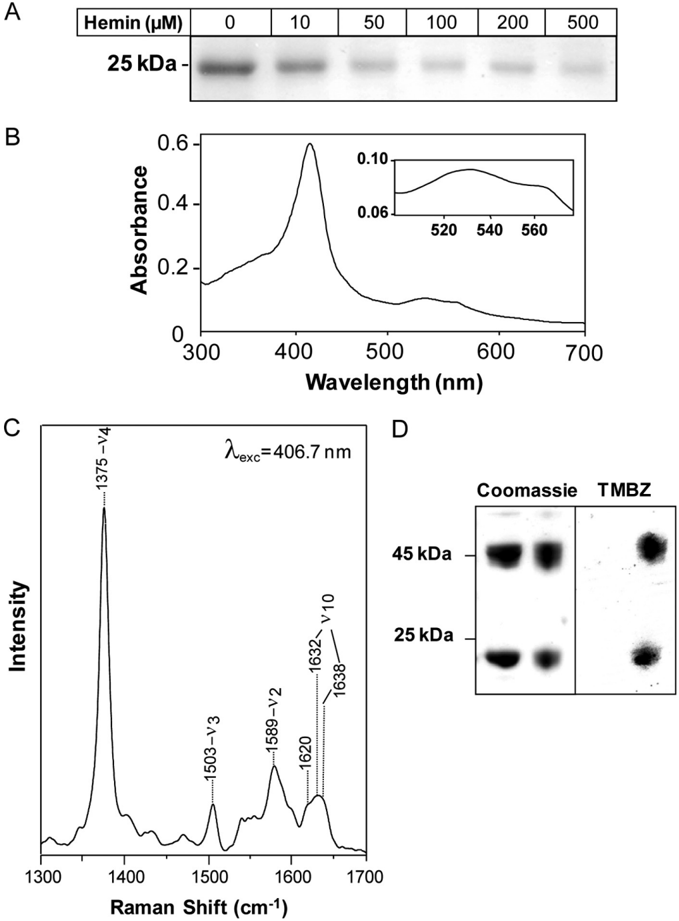
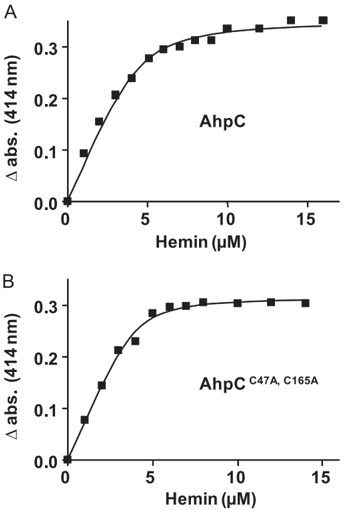
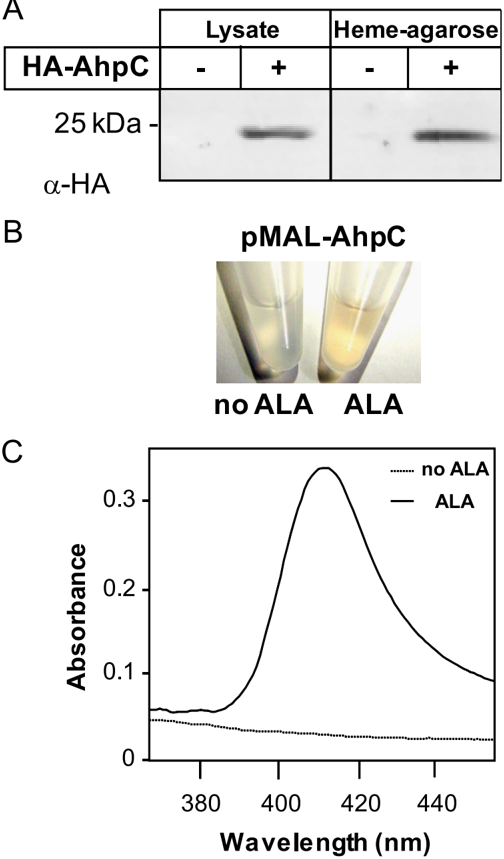
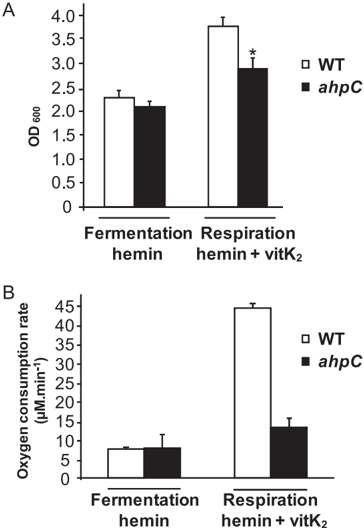
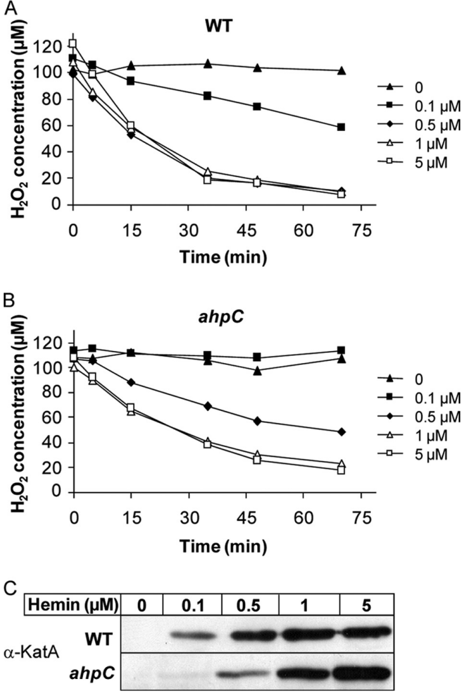
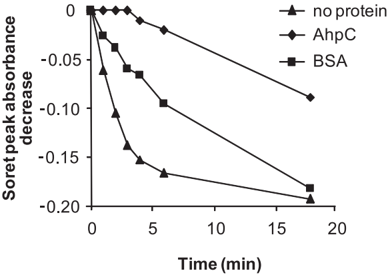
Heme is a redox-reactive molecule with vital and complex roles in bacterial metabolism, survival, and virulence. However, few intracellular heme partners were identified to date and are not well conserved in bacteria. The opportunistic pathogen Streptococcus agalactiae (group B Streptococcus) is a heme auxotroph, which acquires exogenous heme to activate an aerobic respiratory chain. We identified the alkyl hydroperoxide reductase AhpC, a member of the highly conserved thiol-dependent 2-Cys peroxiredoxins, as a heme-binding protein. AhpC binds hemin with a K(d) of 0.5 microm and a 1:1 stoichiometry. Mutagenesis of cysteines revealed that hemin binding is dissociable from catalytic activity and multimerization. AhpC reductase activity was unchanged upon interaction with heme in vitro and in vivo. A group B Streptococcus ahpC mutant displayed attenuation of two heme-dependent functions, respiration and activity of a heterologous catalase, suggesting a role for AhpC in heme intracellular fate. In support of this hypothesis, AhpC-bound hemin was protected from chemical degradation in vitro. Our results reveal for the first time a role for AhpC as a heme-binding protein.
Overview
The claims and statistics of this paper haven’t been checked yet.
Run the check — free, no account needed. It reads the open-access text and checks the sources it cites.
Integrity signals
Registry
Cites
Statistics
Figures
Verification
Claims the paper makes
The claims and statistics of this paper haven’t been checked yet.
Run the check — free, no account needed. It reads the open-access text and checks the sources it cites.
Claims other papers make about this one
Each is checked against this paper’s own text: does it say what the citing paper says it does?
The cited source says what the claim attributes to it.
In the citing paper
“It is thought that instead, these proteins function to store heme and promote its utilization (54, 127).”
From Overcoming the Heme Paradox: Heme Toxicity and Tolerance in Bacterial Pathogens (2010) · cites this paper as [54]
In the citing paper
“The mutation of either of these proteins, however, does not result in increased heme sensitivity (54, 127).”
From Overcoming the Heme Paradox: Heme Toxicity and Tolerance in Bacterial Pathogens (2010) · cites this paper as [54]
In the citing paper
“AhpC is a 2-Cys peroxiredoxin family protein, but its peroxidase activity does not depend on its heme-binding status (54).”
From Overcoming the Heme Paradox: Heme Toxicity and Tolerance in Bacterial Pathogens (2010) · cites this paper as [54]
In the citing paper
“Other cytoplasmic proteins such as AhpC in S. agalactiae and HutZ in V. cholerae also bind heme (54, 127).”
From Overcoming the Heme Paradox: Heme Toxicity and Tolerance in Bacterial Pathogens (2010) · cites this paper as [54]
Self-check
Percentages, sums and reported differences re-computed from the paper’s own numbers.
The self-check needs the paper’s full text.
Citations
Cites
Cleavage of Structural Proteins during the Assembly of the Head of Bacteriophage T4
LAEMMLI, U. K. (1970) · Nature · doi:10.1038/227680a0 · Cited by 249,961
Raza, H., John, A., & Nemmar, A. (2013) · Cellular Physiology and Biochemistry · doi:10.1159/000350087 · Cited by 47,221
Mechanisms for copper acquisition, distribution and regulation
Kim, B.-E., Nevitt, T., & Thiele, D. J. (2008) · Nature Chemical Biology · doi:10.1038/nchembio.72 · Cited by 1,588
Wolff, S. P. (1994) · Methods in Enzymology · doi:10.1016/s0076-6879(94)33021-2 · Cited by 1,244
Free heme toxicity and its detoxification systems in human
Kumar, S., & Bandyopadhyay, U. (2005) · Toxicology Letters · doi:10.1016/j.toxlet.2005.03.004 · Cited by 852
Jang, H. H., Lee, K. O., Chi, Y. H., Jung, B. G., Park, S. K., Park, J. H., Lee, J. R., Lee, S. S., Moon, J. C., Yun, J. W., et al. (2004) · Cell · doi:10.1016/j.cell.2004.05.002 · Cited by 767
Passage of Heme-Iron Across the Envelope of Staphylococcus aureus
Mazmanian, S. K., Skaar, E. P., Gaspar, A. H., Humayun, M., Gornicki, P., Jelenska, J., Joachmiak, A., Missiakas, D. M., & Schneewind, O. (2003) · Science · doi:10.1126/science.1081147 · Cited by 593
Efficient insertional mutagenesis in lactococci and other gram-positive bacteria
Maguin, E., Prévost, H., Ehrlich, S. D., & Gruss, A. (1996) · Journal of Bacteriology · doi:10.1128/jb.178.3.931-935.1996 · Cited by 486
Self-citationHigh-efficiency gene inactivation and replacement system for gram-positive bacteria
Biswas, I., Gruss, A., Ehrlich, S. D., & Maguin, E. (1993) · Journal of Bacteriology · doi:10.1128/jb.175.11.3628-3635.1993 · Cited by 443
Self-citationIron-Source Preference of Staphylococcus aureus Infections
Skaar, E. P., Humayun, M., Bae, T., DeBord, K. L., & Schneewind, O. (2004) · Science · doi:10.1126/science.1099930 · Cited by 440
Trieu-Cuot, P., & Courvalin, P. (1983) · Gene · doi:10.1016/0378-1119(83)90022-7 · Cited by 369
Self-citationAdvances in our understanding of peroxiredoxin, a multifunctional, mammalian redox protein
Fujii, J., & Ikeda, Y. (2002) · Redox Report · doi:10.1179/135100002125000352 · Cited by 369
Dimers to Doughnuts: Redox-Sensitive Oligomerization of 2-Cysteine Peroxiredoxins,
Wood, Z. A., Poole, L. B., Hantgan, R. R., & Karplus, P. A. (2002) · Biochemistry · doi:10.1021/bi012173m · Cited by 339
Bacterial heme sources: the role of heme, hemoprotein receptors and hemophores
Wandersman, C., & Stojiljkovic, I. (2000) · Current Opinion in Microbiology · doi:10.1016/s1369-5274(00)00078-3 · Cited by 318
Heme is involved in microRNA processing
Faller, M., Matsunaga, M., Yin, S., Loo, J. A., & Guo, F. (2007) · Nature Structural & Molecular Biology · doi:10.1038/nsmb1182 · Cited by 295
Heme binds to a short sequence that serves a regulatory function in diverse proteins.
Zhang, L., & Guarente, L. (1995) · The EMBO Journal · doi:10.1002/j.1460-2075.1995.tb07005.x · Cited by 290
IsdG and IsdI, Heme-degrading Enzymes in the Cytoplasm of Staphylococcus aureus
Skaar, E. P., Gaspar, A. H., & Schneewind, O. (2004) · Journal of Biological Chemistry · doi:10.1074/jbc.m307952200 · Cited by 282
Hirotsu, S., Abe, Y., Okada, K., Nagahara, N., Hori, H., Nishino, T., & Hakoshima, T. (1999) · Proceedings of the National Academy of Sciences · doi:10.1073/pnas.96.22.12333 · Cited by 252
Heme Degradation by Reactive Oxygen Species
Nagababu, E., & Rifkind, J. M. (2004) · Antioxidants and Redox Signaling · doi:10.1089/ars.2004.6.967 · Cited by 230
Molecular pathogenesis of neonatal group B streptococcal infection: no longer in its infancy
Doran, K. S., & Nizet, V. (2004) · Molecular Microbiology · doi:10.1111/j.1365-2958.2004.04266.x · Cited by 219
Expression and Characterization of a Heme Oxygenase (Hmu O) fromCorynebacterium diphtheriae
Wilks, A., & Schmitt, M. P. (1998) · Journal of Biological Chemistry · doi:10.1074/jbc.273.2.837 · Cited by 208
A rapid and efficient method for site-directed mutagenesis using one- step overlap extension PCR
Urban, A. (1997) · Nucleic Acids Research · doi:10.1093/nar/25.11.2227 · Cited by 205
Dap1/PGRMC1 Binds and Regulates Cytochrome P450 Enzymes
Hughes, A. L., Powell, D. W., Bard, M., Eckstein, J., Barbuch, R., Link, A. J., & Espenshade, P. J. (2007) · Cell Metabolism · doi:10.1016/j.cmet.2006.12.009 · Cited by 204
Swillens, S. (1995) · Molecular Pharmacology · doi:10.1016/s0026-895x(25)08761-9 · Cited by 189
McCoubrey, W. K., Huang, T. J., & Maines, M. D. (1997) · Journal of Biological Chemistry · doi:10.1074/jbc.272.19.12568 · Cited by 184
HDP—A Novel Heme Detoxification Protein from the Malaria Parasite
Jani, D., Nagarkatti, R., Beatty, W., Angel, R., Slebodnick, C., Andersen, J., Kumar, S., & Rathore, D. (2008) · PLoS Pathogens · doi:10.1371/journal.ppat.1000053 · Cited by 166
Why Heme Needs to Be Degraded to Iron, Biliverdin IXα, and Carbon Monoxide?
Sassa, S. (2004) · Antioxidants and Redox Signaling · doi:10.1089/ars.2004.6.819 · Cited by 147
Crusade for iron: iron uptake in unicellular eukaryotes and its significance for virulence
Šuťák, R., Lesuisse, E., Tachezy, J., & Richardson, D. R. (2008) · Trends in Microbiology · doi:10.1016/j.tim.2008.03.005 · Cited by 146
Chuang, M., Wu, M., Lo, W., Lin, J., Wong, C., & Chiou, S. (2006) · Proceedings of the National Academy of Sciences · doi:10.1073/pnas.0510770103 · Cited by 142
Purification, characterization, and cloning of a heme-binding protein (23 kDa) in rat liver cytosol
Iwahara, S.-I., Satoh, H., Song, D.-X., Webb, J., Burlingame, A. L., Nagae, Y., & Müller‐Eberhard, U. (1995) · Biochemistry · doi:10.1021/bi00041a017 · Cited by 140
Mu, Z. M., Yin, X. Y., & Prochownik, E. V. (2002) · Journal of Biological Chemistry · doi:10.1074/jbc.m206066200 · Cited by 138
Processing of Heme and Heme-Containing Proteins by Bacteria
Stojiljkovic, I., & Perkins-Balding, D. (2002) · DNA and Cell Biology · doi:10.1089/104454902753759708 · Cited by 134
Heme and virulence: how bacterial pathogens regulate, transport and utilize heme
Wilks, A., & Burkhard, K. A. (2007) · Natural Product Reports · doi:10.1039/b604193k · Cited by 131
Enterococcus faecalis Heme-Dependent Catalase
Frankenberg, L., Brugna, M., & Hederstedt, L. (2002) · Journal of Bacteriology · doi:10.1128/jb.184.22.6351-6356.2002 · Cited by 127
Rezaı̈ki, L., Cesselin, B., Yamamoto, Y., Vido, K., West, E. V., Gaudu, P., & Gruss, A. (2004) · Molecular Microbiology · doi:10.1111/j.1365-2958.2004.04217.x · Cited by 116
Self-citationYamamoto, Y., Poyart, C., Trieu‐Cuot, P., Lamberet, G., Gruss, A., & Gaudu, P. (2005) · Molecular Microbiology · doi:10.1111/j.1365-2958.2005.04555.x · Cited by 109
Self-citationZederbauer, M., Furtmüller, P. G., Brogioni, S., Jakopitsch, C., Smulevich, G., & Obinger, C. (2007) · Natural Product Reports · doi:10.1039/b604178g · Cited by 106
Reversible Binding of Heme to Proteins in Cellular Signal Transduction
Hou, S., Reynolds, M. F., Horrigan, F. T., Heinemann, S. H., & Hoshi, T. (2006) · Accounts of Chemical Research · doi:10.1021/ar040020w · Cited by 104
Molecular Genetic Identification of a Pathway for Heme Binding to Cytochrome b 6
Kuras, R., de Vitry, C., Choquet, Y., et al. (1997) · Journal of Biological Chemistry · doi:10.1074/jbc.272.51.32427 · Cited by 103
Guimarães, B. G., Souchon, H., Honoré, N., Saint‐Joanis, B., Brosch, R., Shepard, W., Cole, S. T., & Alzari, P. M. (2005) · Journal of Biological Chemistry · doi:10.1074/jbc.m503076200 · Cited by 100
Enterococcus faecalis V583 Contains a Cytochrome bd -Type Respiratory Oxidase
Winstedt, L., Frankenberg, L., Hederstedt, L., & von Wachenfeldt, C. (2000) · Journal of Bacteriology · doi:10.1128/jb.182.13.3863-3866.2000 · Cited by 99
Intracellular metalloporphyrin metabolism in Staphylococcus aureus
Reniere, M. L., Torres, V. J., & Skaar, E. P. (2007) · BioMetals · doi:10.1007/s10534-006-9032-0 · Cited by 99
The effects of heme-binding proteins on the peroxidative and catalatic activities of hemin
Grinberg, L. N., O'Brien, P. J., & Hrkal, Z. (1999) · Free Radical Biology and Medicine · doi:10.1016/s0891-5849(99)00082-9 · Cited by 95
Lansky, I. B., Lukat-Rodgers, G. S., Block, D., Rodgers, K. R., Ratliff, M., & Wilks, A. (2006) · Journal of Biological Chemistry · doi:10.1074/jbc.m600824200 · Cited by 92
Poole, R. K., Hatch, L. P., Cleeter, M. W. J., Gibson, F., Cox, G. B., & Wu, G. (1993) · Molecular Microbiology · doi:10.1111/j.1365-2958.1993.tb02673.x · Cited by 91
[19] Ferrylmyoglobin: Formation and chemical reactivity toward electron-donating compounds
Giulivi, C., & Cadenas, E. (1994) · Methods in enzymology on CD-ROM/Methods in enzymology · doi:10.1016/s0076-6879(94)33022-0 · Cited by 81
CcsBA is a cytochrome c synthetase that also functions in heme transport
Frawley, E. R., & Kranz, R. G. (2009) · Proceedings of the National Academy of Sciences · doi:10.1073/pnas.0903132106 · Cited by 81
Li, Y., & Ragsdale, S. W. (2007) · Journal of Biological Chemistry · doi:10.1074/jbc.m700664200 · Cited by 80
Activity, Peroxide Compound Formation, and Heme d Synthesis inEscherichia coliHPII Catalase
Obinger, C., Maj, M. C., Nicholls, P. J., & Loewen, P. C. (1997) · Archives of Biochemistry and Biophysics · doi:10.1006/abbi.1997.9988 · Cited by 78
Rochat, T., Miyoshi, A., Gratadoux, J., Duwat, P., Sourice, S., Azevedo, V., & Langella, P. (2005) · Microbiology · doi:10.1099/mic.0.27861-0 · Cited by 71
Dimer-Oligomer Interconversion of Wild-type and Mutant Rat 2-Cys Peroxiredoxin
Matsumura, T., Okamoto, K., Iwahara, S.-I., Hori, H., Takahashi, Y., Nishino, T., & Abe, Y. (2007) · Journal of Biological Chemistry · doi:10.1074/jbc.m705753200 · Cited by 70
Immenschuh, S., Iwahara, S.-I., Satoh, H., Nell, C., Katz, N. R., & Müller‐Eberhard, U. (1995) · Biochemistry · doi:10.1021/bi00041a018 · Cited by 68
Role of a Bacterial Organic Hydroperoxide Detoxification System in Preventing Catalase Inactivation
Wang, G., Conover, R. C., Benoit, S. L., Olczak, A. A., Olson, J. W., Johnson, M. K., & Maier, R. J. (2004) · Journal of Biological Chemistry · doi:10.1074/jbc.m408450200 · Cited by 63
Othman, S., Lirzin, A. L., & Desbois, A. (1994) · Biochemistry · doi:10.1021/bi00255a026 · Cited by 62
The Interaction of Covalently Bound Heme with the Cytochrome c Maturation Protein CcmE
Uchida, T., Stevens, J. M., Daltrop, O., Harvat, E. M., Lin, H., Ferguson, S. J., & Kitagawa, T. (2004) · Journal of Biological Chemistry · doi:10.1074/jbc.m408963200 · Cited by 61
Kaur, A. P., Lansky, I. B., & Wilks, A. (2009) · Journal of Biological Chemistry · doi:10.1074/jbc.m806068200 · Cited by 55
Kéry, V., Elleder, D., & Kraus, J. P. (1995) · Archives of Biochemistry and Biophysics · doi:10.1006/abbi.1995.1005 · Cited by 54
Kitagawa, T., Ozaki, Y., Kyogoku, Y., & Horio, T. (1977) · Biochimica et Biophysica Acta (BBA) - Protein Structure · doi:10.1016/0005-2795(77)90234-3 · Cited by 45
Perally, S., LaCourse, E. J., Campbell, A. M., & Brophy, P. M. (2008) · Journal of Proteome Research · doi:10.1021/pr800395x · Cited by 45
Schneider, S., Sharp, K. H., Barker, P. D., & Paoli, M. (2006) · Journal of Biological Chemistry · doi:10.1074/jbc.m607516200 · Cited by 41
Biochemical and Mutational Characterization of the Heme Chaperone CcmE Reveals a Heme Binding Site
Enggist, E., Schneider, M. J., Schulz, H., & Thöny‐Meyer, L. (2002) · Journal of Bacteriology · doi:10.1128/jb.185.1.175-183.2003 · Cited by 41
Evidence for siderophore‐dependent iron acquisition in group B streptococcus
Clancy, A., Loar, J. W., Speziali, C. D., Oberg, M. D., Heinrichs, D. E., & Rubens, C. E. (2005) · Molecular Microbiology · doi:10.1111/j.1365-2958.2005.04974.x · Cited by 40
The ShuS Protein of Shigella dysenteriae Is a Heme-Sequestering Protein That Also Binds DNA
Wilks, A. (2001) · Archives of Biochemistry and Biophysics · doi:10.1006/abbi.2000.2250 · Cited by 37
Concepts of Heme distribution within hepatocytes
Müller‐Eberhard, U., & Vincent, S. H. (1985) · Biochemical Pharmacology · doi:10.1016/0006-2952(85)90749-x · Cited by 36
Kawazu, S., Ikenoue, N., Takemae, H., Komaki‐Yasuda, K., & Kano, S. (2005) · FEBS Journal · doi:10.1111/j.1742-4658.2005.04611.x · Cited by 33
Tong, Y., & Guo, M. (2007) · JBIC Journal of Biological Inorganic Chemistry · doi:10.1007/s00775-007-0226-x · Cited by 32
The reaction of hemin with H2O2
Kremer, M. L. (1989) · European Journal of Biochemistry · doi:10.1111/j.1432-1033.1989.tb15162.x · Cited by 32
Gaillot, O., Poyart, C., Berche, P., & Trieu‐Cuot, P. (1997) · Gene · doi:10.1016/s0378-1119(97)00548-9 · Cited by 30
Self-citationContrasting nuclear dynamics of the caspase-activated DNase (CAD) in dividing and apoptotic cells
Lechardeur, D., Xu, M., & Lukács, G. L. (2004) · The Journal of Cell Biology · doi:10.1083/jcb.200404105 · Cited by 27
Self-citation[33] Detection of hemoproteins in SDS-polyacrylamide gels
Moore, R. W., Welton, A. F., & Aust, S. D. (1978) · Methods in enzymology on CD-ROM/Methods in enzymology · doi:10.1016/s0076-6879(78)52035-1 · Cited by 20
Immenschuh, S., Nell, C., Iwahara, S.-I., Katz, N. R., & Müller‐Eberhard, U. (1997) · Biochemical and Biophysical Research Communications · doi:10.1006/bbrc.1997.6166 · Cited by 20
Detection of Heme-Binding Proteins in Epidemic Strains of Burkholderia cepacia
Smalley, J. W., Charalabous, P., Birss, A. J., & Hart, C. A. (2001) · Clinical and Diagnostic Laboratory Immunology · doi:10.1128/cdli.8.3.509-514.2001 · Cited by 14
Research works printed but not linked: 2
- Nagababu, 2004, Antioxid. Redox. Signal., 6, 967
- Sassa, 2004, Antioxid. Redox. Signal., 6, 819
Cited by
Overcoming the Heme Paradox: Heme Toxicity and Tolerance in Bacterial Pathogens
Anzaldi, L. L., & Skaar, E. P. (2010) · Infection and Immunity · doi:10.1128/iai.00613-10 · Cited by 295
Aerobic Respiration Metabolism in Lactic Acid Bacteria and Uses in Biotechnology
Pedersen, M. B., Gaudu, P., Lechardeur, D., Petit, M.-A., & Gruss, A. (2012) · Annual Review of Food Science and Technology · doi:10.1146/annurev-food-022811-101255 · Cited by 197
Self-citationLechardeur, D., Cesselin, B., Liebl, U., Vos, M. H., Fernandez, A., Brun, C., Gruss, A., & Gaudu, P. (2012) · Journal of Biological Chemistry · doi:10.1074/jbc.m111.297531 · Cited by 93
Self-citationAdaptation to Aerobic Environment of Lactobacillus johnsonii/gasseri Strains
Maresca, D., Zotta, T., & Mauriello, G. (2018) · Frontiers in Microbiology · doi:10.3389/fmicb.2018.00157 · Cited by 66
“However, heme-binding proteins and heme homeostasis systems have been investigated in several LAB strains competent for aerobic respiration (Gaudu et al., 2003; Lechardeur et al., 2010, 2011; Sawai et al., 2012).”
BackgroundIron acquisition and regulation systems in Streptococcus species
Ge, R., & Sun, X. (2014) · Metallomics · doi:10.1039/c4mt00011k · Cited by 48
Metadata
- Authors
- Lechardeur, D., Fernandez, A., Robert, B., Gaudu, P., Trieu-Cuot, P., Lamberet, G., & Gruss, A.
- Venue
- Journal of Biological Chemistry
- Publisher
- Elsevier BV
- Published
- 2010-05
- Volume
- 285
- Issue
- 21
- Pages
- 16032-16041
- ISSN
- 0021-9258
- Cited by
- 47
- References
- 72
- Language
- en
- Licence
- www.elsevier.com/tdm/userlicense/1.0/ (tdm)
- creativecommons.org/licenses/by/4.0/ (vor, 3786 d)
About these checks
Registry, retraction, Cites and statistics results are computed, not judged, with one exception: a printed reference that no index lists is read once by a model before it counts as a citation error. Claims are extracted by a model and kept only when their quote appears verbatim in the text; each cited source is then checked, with a model’s help, for whether it says what the claim relies on. Those verdicts can be wrong — read the claim’s quote and the cited source before relying on one.
Statistics and arithmetic are recomputed, not judged.
Confidence bands are shown only for fields calibrated on our annotated test set. None is calibrated yet, so no band is shown.
What counts as a claim ›How we measure confidence ›How we check this ›
Are you an author, or do you see a problem with this page? Request a review
Data sources
Bibliographic data: Semantic Scholar, OpenAlex, Crossref.
Contains information from the Semantic Scholar Academic Graph Datasets, made available under the ODC Attribution License (ODC-BY 1.0).
Semantic Scholar’s data is described in: Kinney, R., et al. (2023). The Semantic Scholar Open Data Platform. arXiv:2301.10140.
