

The DOI matches its Crossref record; 2 of the 2 references it cites were found in a registry or an index.
miR-155 Regulates Immune Modulatory Properties of Mesenchymal Stem Cells by Targeting TAK1-binding Protein 2
Overview
The claims and statistics of this paper haven’t been checked yet.
Run the check — free, no account needed. It reads the open-access text and checks the sources it cites.
Integrity signals
Registry
Cites
Statistics
Figures
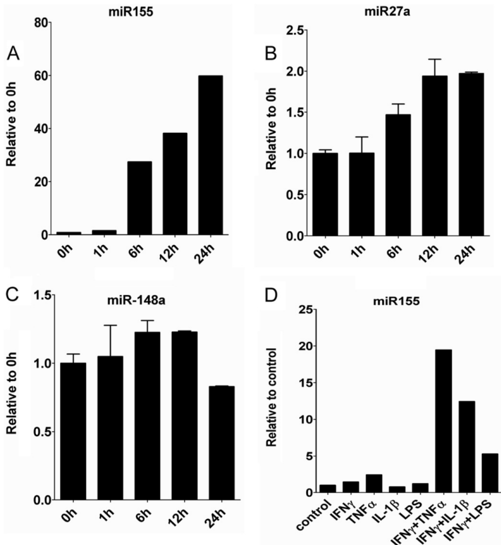
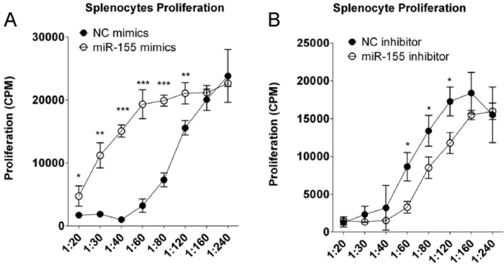
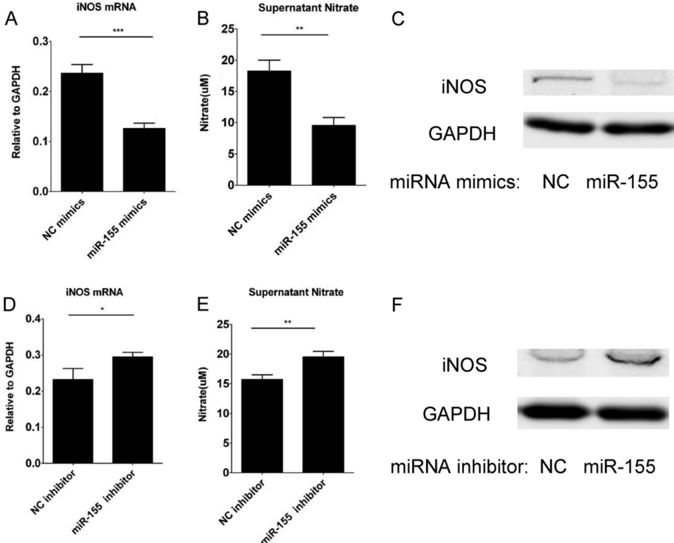
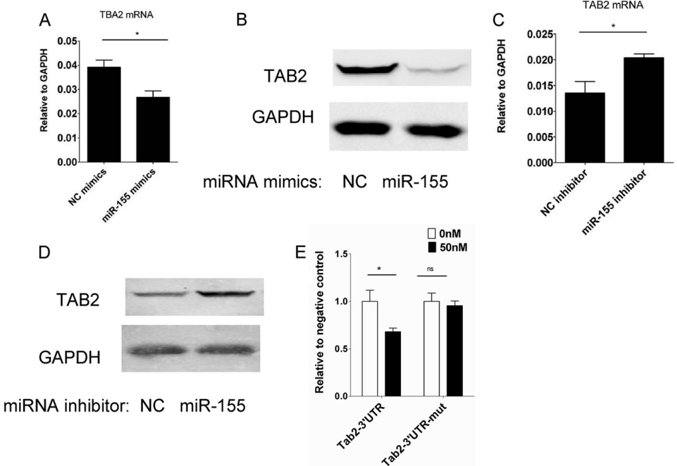
Verification
Claims the paper makes
The claims and statistics of this paper haven’t been checked yet.
Run the check — free, no account needed. It reads the open-access text and checks the sources it cites.
Claims other papers make about this one
Each is checked against this paper’s own text: does it say what the citing paper says it does?
The source backs part of the claim, not all of it — or backs it for a different population, condition or comparison.
In the citing paper
“The miR-155 is a multifunctional microRNA and it can modulate inflammatory responses in both a positive and negative way [40-48].”
From miR-155 induction in microglial cells suppresses Japanese encephalitis virus replication and negatively modulates innate immune responses (2014) · cites this paper as [43]
Experimental — accuracy not yet measured
Self-check
Percentages, sums and reported differences re-computed from the paper’s own numbers.
The self-check needs the paper’s full text.
Citations
Cites
Species Variation in the Mechanisms of Mesenchymal Stem Cell-Mediated Immunosuppression
Ren, G., Su, J., Zhang, L., Zhao, X., Ling, W., L'huillie, A., Zhang, J., Lu, Y., Roberts, A. I., Ji, W., et al. (2009) · Stem Cells · doi:10.1002/stem.118 · Cited by 597
Self-citationMesenchymal stem cells: a new strategy for immunosuppression and tissue repair
Shi, Y., Hu, G., Su, J., Li, W., Chen, Q., Shou, P., Xu, C., Chen, X., Huang, Y., Zhu, Z., et al. (2010) · Cell Research · doi:10.1038/cr.2010.44 · Cited by 575
Self-citation
Research works printed but not linked: 23
- Pittenger, 1999, Multilineage potential of adult human mesenchymal stem cells, Science, 284, 143, 10.1126/science.284.5411.143 · DOI · Paper page
- Jiang, 2002, Pluripotency of mesenchymal stem cells derived from adult marrow, Nature, 418, 41, 10.1038/nature00870 · DOI
- Horwitz, 2005, Clarification of the nomenclature for MSC: The International Society for Cellular Therapy position statement, Cytotherapy, 7, 393, 10.1080/14653240500319234 · DOI
- Caplan, 2007, Adult mesenchymal stem cells for tissue engineering versus regenerative medicine, J. Cell. Physiol., 213, 341, 10.1002/jcp.21200 · DOI · Paper page
- Le Blanc, 2004, Treatment of severe acute graft-versus-host disease with third party haploidentical mesenchymal stem cells, Lancet, 363, 1439, 10.1016/S0140-6736(04)16104-7 · DOI · Paper page
- Ren, 2008, Mesenchymal stem cell-mediated immunosuppression occurs via concerted action of chemokines and nitric oxide, Cell Stem Cell, 2, 141, 10.1016/j.stem.2007.11.014 · DOI · Paper page
- Shi, 2012, How mesenchymal stem cells interact with tissue immune responses, Trends Immunol., 33, 136, 10.1016/j.it.2011.11.004 · DOI
- Ren, G., Zhao, X., Zhang, L., Zhang, J., L'Huillier, A., Ling, W., Roberts, A. I., Le, A. D., Shi, S., Shao, C., Shi, Y., Inflammatory cytokine-induced intercellular adhesion molecule-1 and vascular cell adhesion molecule-1 in mesenchymal stem cells are critical for immunosuppression. J. Immunol. 184, 2321–2328 · DOI
- Xu, 2007, Immunosuppressive properties of cloned bone marrow mesenchymal stem cells, Cell Res., 17, 240, 10.1038/cr.2007.4 · DOI
- O'Connell, 2010, Physiological and pathological roles for microRNAs in the immune system, Nat. Rev. Immunol., 10, 111, 10.1038/nri2708 · DOI · Paper page
- Baltimore, 2008, MicroRNAs: new regulators of immune cell development and function, Nat. Immunol., 9, 839, 10.1038/ni.f.209 · DOI
- O'Connell, 2007, MicroRNA-155 is induced during the macrophage inflammatory response, Proc. Natl. Acad. Sci. U.S.A., 104, 1604, 10.1073/pnas.0610731104 · DOI · Paper page
- Ceppi, 2009, MicroRNA-155 modulates the interleukin-1 signaling pathway in activated human monocyte-derived dendritic cells, Proc. Natl. Acad. Sci. U.S.A., 106, 2735, 10.1073/pnas.0811073106 · DOI · Paper page
- O'Connell, 2009, Inositol phosphatase SHIP1 is a primary target of miR-155, Proc. Natl. Acad. Sci. U.S.A., 106, 7113, 10.1073/pnas.0902636106 · DOI · Paper page
- Eskildsen, 2011, MicroRNA-138 regulates osteogenic differentiation of human stromal (mesenchymal) stem cells in vivo, Proc. Natl. Acad. Sci. U.S.A., 108, 6139, 10.1073/pnas.1016758108 · DOI
- Kanayama, 2004, TAB2 and TAB3 activate the NF-κB pathway through binding to polyubiquitin chains, Mol. Cell, 15, 535, 10.1016/j.molcel.2004.08.008 · DOI
- Lewis, 2003, Prediction of mammalian microRNA targets, Cell, 115, 787, 10.1016/S0092-8674(03)01018-3 · DOI · Paper page
- Zhou, 2010, miR-155 and its star-form partner miR-155* cooperatively regulate type I interferon production by human plasmacytoid dendritic cells, Blood, 116, 5885, 10.1182/blood-2010-04-280156 · DOI · Paper page
- Parekkadan, 2010, Mesenchymal stem cells as therapeutics, Annu. Rev. Biomed. Eng., 12, 87, 10.1146/annurev-bioeng-070909-105309 · DOI
- Singer, 2011, Mesenchymal stem cells: mechanisms of inflammation, Annu. Rev. Pathol., 6, 457, 10.1146/annurev-pathol-011110-130230 · DOI
- Huang, 2010, MicroRNA-204 regulates Runx2 protein expression and mesenchymal progenitor cell differentiation, Stem Cells, 28, 357, 10.1002/stem.288 · DOI
- Lakshmipathy, 2008, Concise review: MicroRNA expression in multipotent mesenchymal stromal cells, Stem Cells, 26, 356, 10.1634/stemcells.2007-0625 · DOI
- Kim, 2009, MiR-21 regulates adipogenic differentiation through the modulation of TGF-β signaling in mesenchymal stem cells derived from human adipose tissue, Stem Cells, 27, 3093, 10.1002/stem.235 · DOI · Paper page
Cited by
Sorted by citations
Nitric oxide synthase in innate and adaptive immunity: an update
Bogdan, C. (2015) · Trends in Immunology · doi:10.1016/j.it.2015.01.003 · Cited by 862
Pareek, S., Roy, S., Kumari, B., Jain, P., Banerjee, A., & Vrati, S. (2014) · Journal of Neuroinflammation · doi:10.1186/1742-2094-11-97 · Cited by 121
Ayadilord, M., Nasseri, S., Emadian Razavi, F., Saharkhiz, M., Rostami, Z., & Naseri, M. (2021) · Cell Biochemistry and Function · doi:10.1002/cbf.3659 · Cited by 30
Metadata
- Authors
- Xu, C., Ren, G., Cao, G., Chen, Q., Shou, P., Zheng, C., Du, L., Han, X., Jiang, M., Yang, Q., Lin, L., Wang, G., Yu, P., Zhang, X., Cao, W., Brewer, G., Wang, Y., & Shi, Y.
- Venue
- Journal of Biological Chemistry
- Publisher
- Elsevier BV
- Published
- 2013-04
- Volume
- 288
- Issue
- 16
- Pages
- 11074-11079
- ISSN
- 0021-9258
- Cited by
- 84
- References
- 2
- Language
- en
About these checks
Registry, retraction, Cites and statistics results are computed, not judged, with one exception: a printed reference that no index lists is read once by a model before it counts as a citation error. Claims are extracted by a model and kept only when their quote appears verbatim in the text; each cited source is then checked, with a model’s help, for whether it says what the claim relies on. Those verdicts can be wrong — read the claim’s quote and the cited source before relying on one.
Statistics and arithmetic are recomputed, not judged.
Confidence bands are shown only for fields calibrated on our annotated test set. None is calibrated yet, so no band is shown.
What counts as a claim ›How we measure confidence ›How we check this ›
Are you an author, or do you see a problem with this page? Request a review
