

The DOI matches its Crossref record; 58 of the 58 references it cites were found in a registry or an index.
Structure and Biosynthesis of Two Exopolysaccharides Produced by Lactobacillus johnsonii FI9785
Open accessAbstract
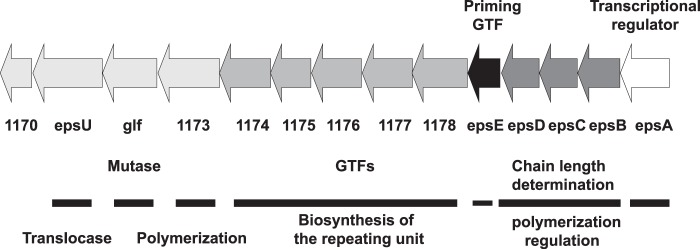
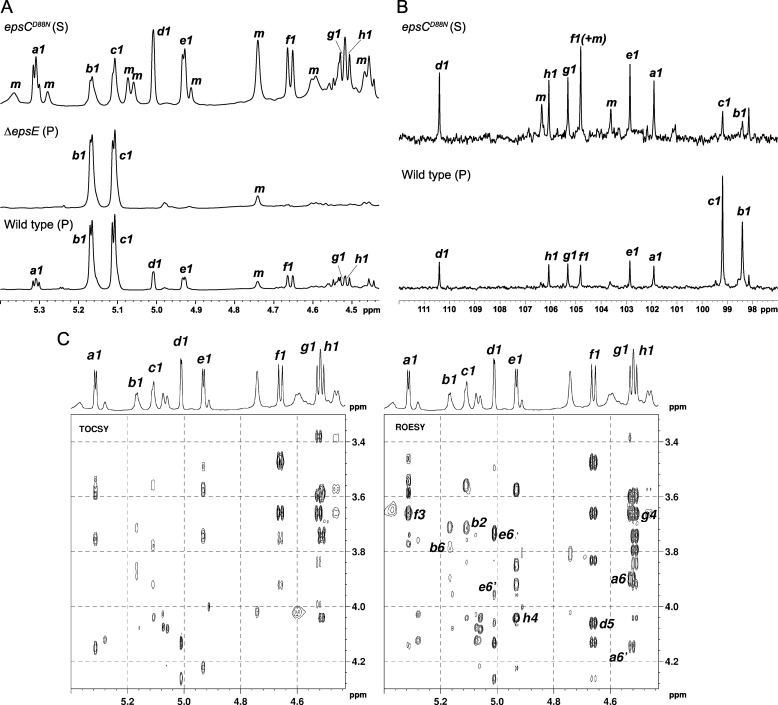
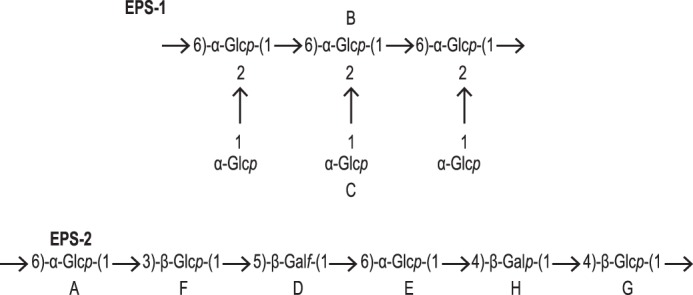
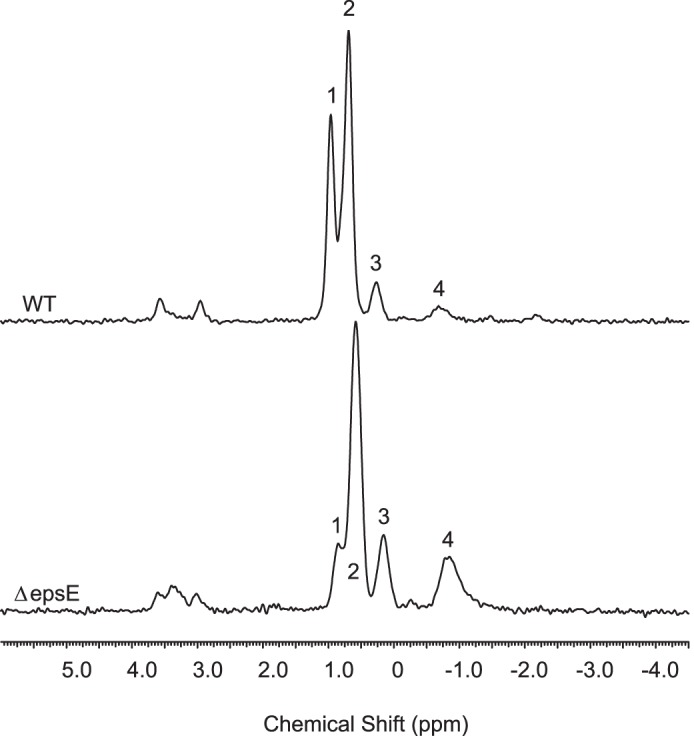
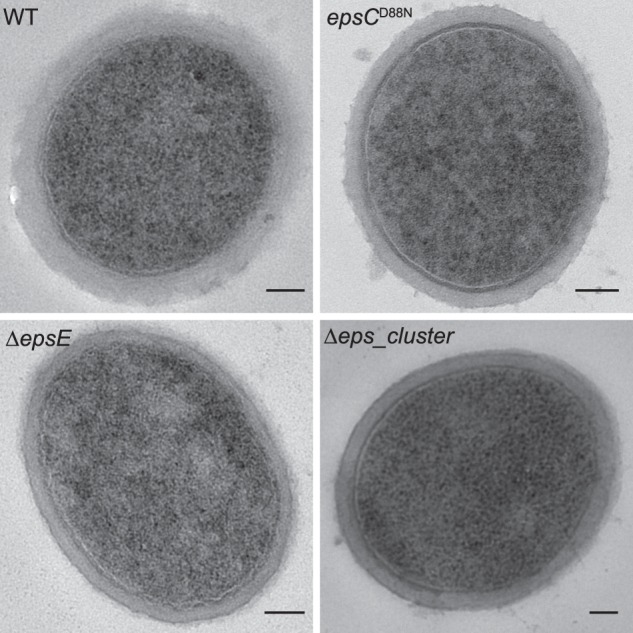
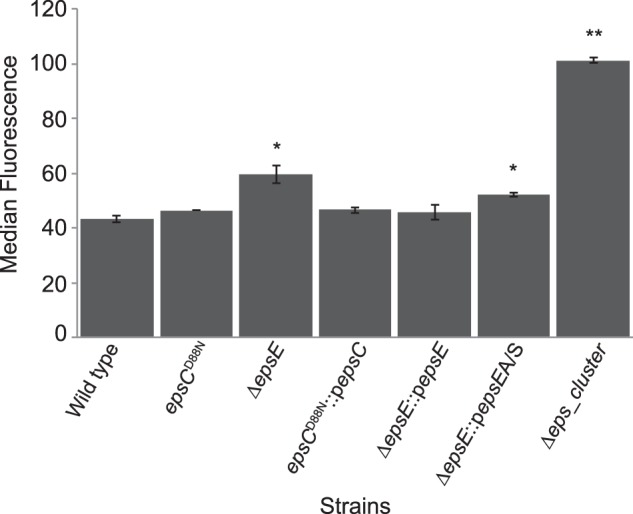
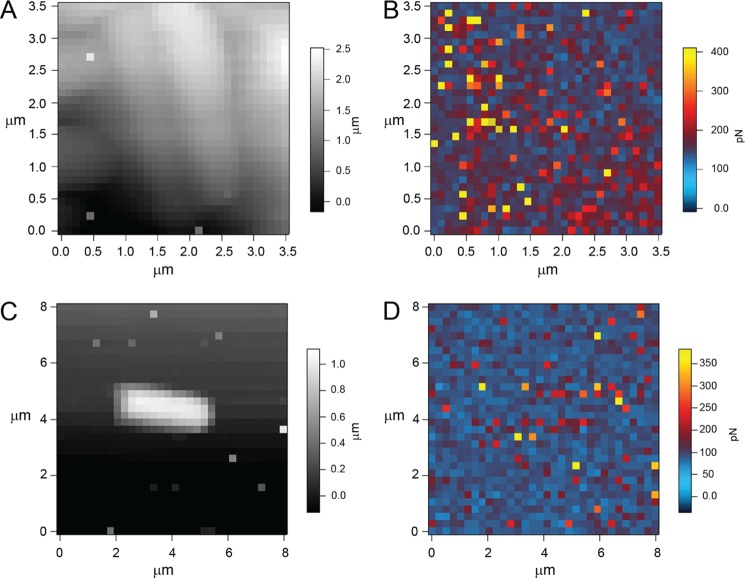
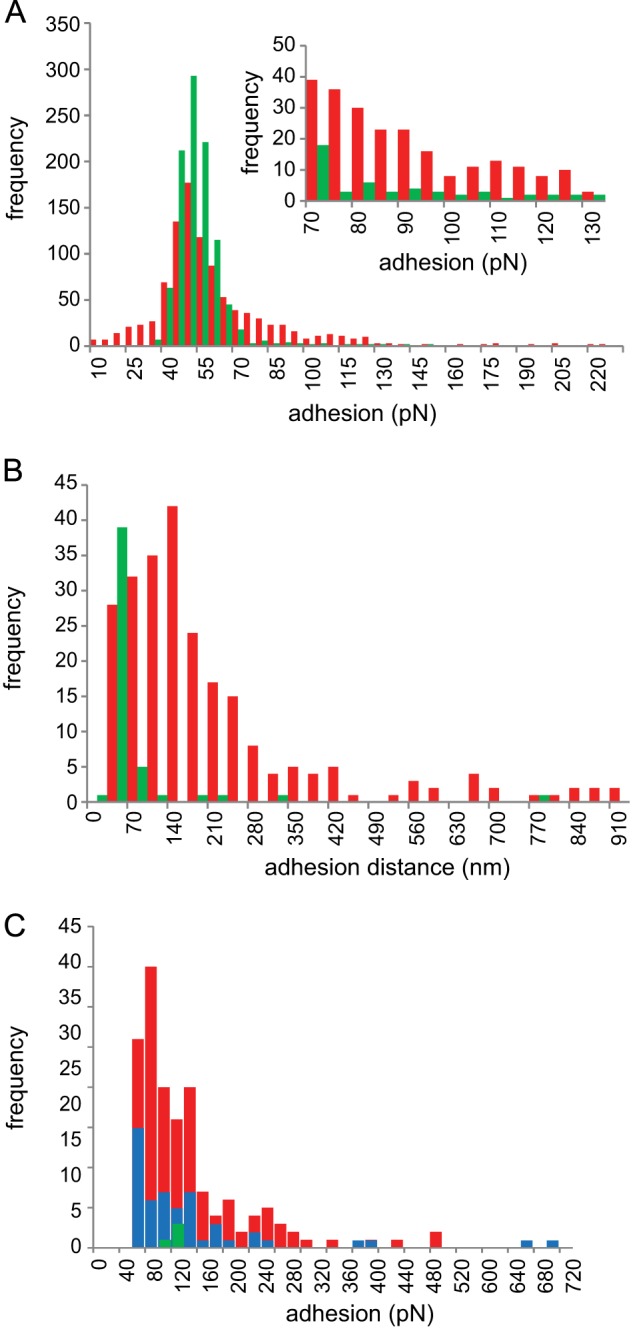
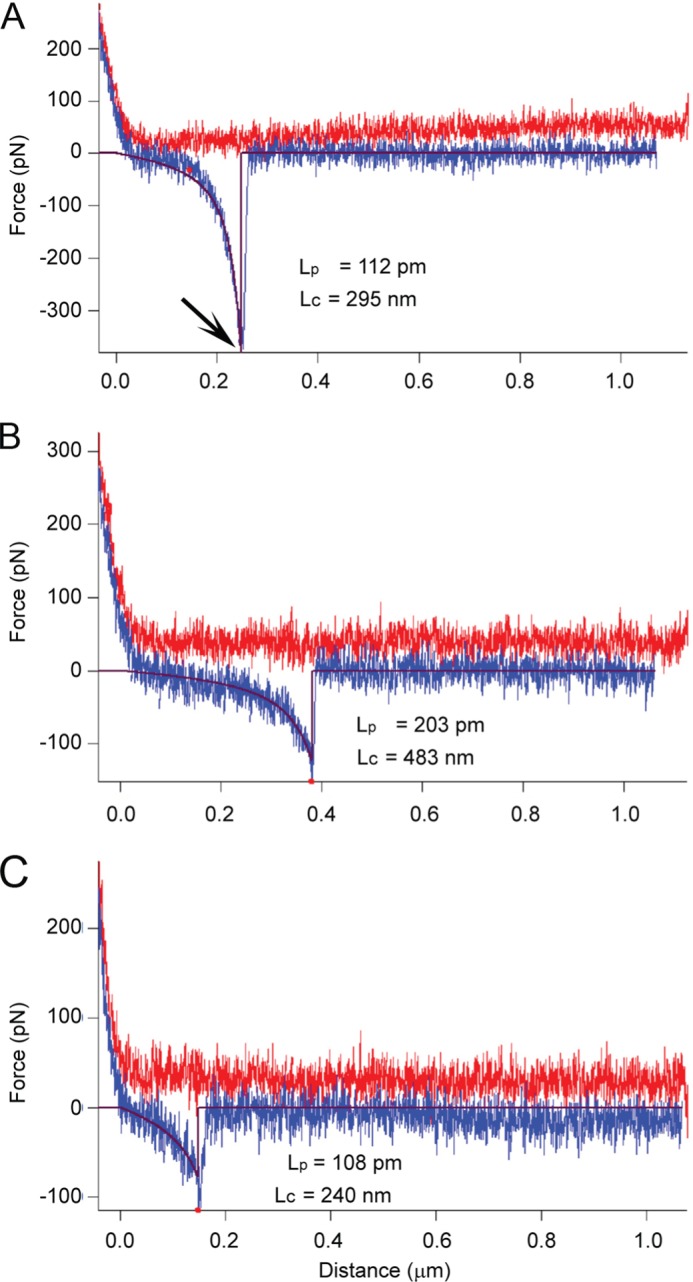
Exopolysaccharides were isolated and purified from Lactobacillus johnsonii FI9785, which has previously been shown to act as a competitive exclusion agent to control Clostridium perfringens in poultry. Structural analysis by NMR spectroscopy revealed that L. johnsonii FI9785 can produce two types of exopolysaccharide: EPS-1 is a branched dextran with the unusual feature that every backbone residue is substituted with a 2-linked glucose unit, and EPS-2 was shown to have a repeating unit with the following structure: -6)-α-Glc p -(1–3)-β-Glc p -(1–5)-β-Gal f -(1–6)-α-Glc p -(1–4)-β-Gal p -(1–4)-β-Glc p -(1-. Sites on both polysaccharides were partially occupied by substituent groups: 1-phosphoglycerol and O -acetyl groups in EPS-1 and a single O -acetyl group in EPS-2. Analysis of a deletion mutant (Δ epsE ) lacking the putative priming glycosyltransferase gene located within a predicted eps gene cluster revealed that the mutant could produce EPS-1 but not EPS-2, indicating that epsE is essential for the biosynthesis of EPS-2. Atomic force microscopy confirmed the localization of galactose residues on the exterior of wild type cells and their absence in the Δ epsE mutant. EPS2 was found to adopt a random coil structural conformation. Deletion of the entire 14-kb eps cluster resulted in an acapsular mutant phenotype that was not able to produce either EPS-2 or EPS-1. Alterations in the cell surface properties of the EPS-specific mutants were demonstrated by differences in binding of an anti-wild type L. johnsonii antibody. These findings provide insights into the biosynthesis and structures of novel exopolysaccharides produced by L. johnsonii FI9785, which are likely to play an important role in biofilm formation, protection against harsh environment of the gut, and colonization of the host. Background: Bacterial cell surface polysaccharides are important in pathogenesis, cell adhesion, and protection against harsh environments. Results: Two novel exopolysaccharide (EPS) structures were identified in Lactobacillus johnsonii . Conclusion: The eps cluster is essential for production of both EPS, but epsE is required only for the heteropolymer. Significance: This study will guide functional analysis of EPS in survival and colonization of gut commensals.
Overview
The claims and statistics of this paper haven’t been checked yet.
Run the check — free, no account needed. It reads the open-access text and checks the sources it cites.
Integrity signals
Registry
Cites
Statistics
Figures
Verification
Claims the paper makes
The claims and statistics of this paper haven’t been checked yet.
Run the check — free, no account needed. It reads the open-access text and checks the sources it cites.
Claims other papers make about this one
Each is checked against this paper’s own text: does it say what the citing paper says it does?
The source backs part of the claim, not all of it — or backs it for a different population, condition or comparison.
In the citing paper
“EPS produced by Lb. johnsonii FI9785 may favor the colonization of probiotic bacteria in the host gastrointestinal tract by replacing pathogenic bacteria in a competitive inhibition mode [145].”
From Lactic Acid Bacteria Exopolysaccharides Producers: A Sustainable Tool for Functional Foods (2021) · cites this paper as [145]
Experimental — accuracy not yet measured
Self-check
Percentages, sums and reported differences re-computed from the paper’s own numbers.
The self-check needs the paper’s full text.
Citations
Cites
Statistical mechanics of chain molecules
Flory, P. J., & Volkenstein, M. V. (1969) · Biopolymers · doi:10.1002/bip.1969.360080514 · Cited by 6,449
Calibration of atomic-force microscope tips
Hutter, J. L., & Bechhoefer, J. (1993) · Review of Scientific Instruments · doi:10.1063/1.1143970 · Cited by 4,205
Röntgenuntersuchung gelöster Fadenmoleküle
Kratky, O., & Porod, G. (1949) · Recueil des Travaux Chimiques des Pays-Bas · doi:10.1002/recl.19490681203 · Cited by 1,994
Heteropolysaccharides from lactic acid bacteria
Vuyst, L. D., & Degeest, B. (1999) · FEMS Microbiology Reviews · doi:10.1111/j.1574-6976.1999.tb00395.x · Cited by 840
Genetic Analysis of the Capsular Biosynthetic Locus from All 90 Pneumococcal Serotypes
Bentley, S. D., Aanensen, D. M., Mavroidi, A., Saunders, D., Rabbinowitsch, E., Collins, M. D., Donohoe, K., Harris, D. J., Murphy, L., Quail, M. A., et al. (2006) · PLoS Genetics · doi:10.1371/journal.pgen.0020031 · Cited by 759
Fanning, S., Hall, L. J., Cronin, M. A., Zomer, A., MacSharry, J. A., Goulding, D., Motherway, M. O., Shanahan, F., Nally, K., Dougan, G., et al. (2012) · Proceedings of the National Academy of Sciences · doi:10.1073/pnas.1115621109 · Cited by 563
New Perspectives for Lactobacilli Exopolysaccharides
Badel, S., Bernardi, T., & Michaud, P. (2011) · Biotechnology Advances · doi:10.1016/j.biotechadv.2010.08.011 · Cited by 497
Efficient insertional mutagenesis in lactococci and other gram-positive bacteria
Maguin, E., Prévost, H., Ehrlich, S. D., & Gruss, A. (1996) · Journal of Bacteriology · doi:10.1128/jb.178.3.931-935.1996 · Cited by 486
van Hijum, S. A. F. T., Kralj, S., Ozimek, L. K., Dijkhuizen, L., & van Geel-Schutten, I. H. (2006) · Microbiology and Molecular Biology Reviews · doi:10.1128/mmbr.70.1.157-176.2006 · Cited by 466
Statistical mechanics of chain molecules
Volkenstein, M. (1970) · Biopolymers · doi:10.1002/bip.1970.360090311 · Cited by 446
Cited by
Sorted by citations
Polysaccharide Production by Lactic Acid Bacteria: From Genes to Industrial Applications
Zeidan, A. A., Poulsen, V. K., Janzen, T., Buldo, P., Derkx, P. M. F., Øregaard, G., & Neves, A. R. (2017) · FEMS Microbiology Reviews · doi:10.1093/femsre/fux017 · Cited by 326
Castro-Bravo, N., Wells, J. M., Margolles, A., & Ruas-Madiedo, P. (2018) · Frontiers in Microbiology · doi:10.3389/fmicb.2018.02426 · Cited by 284
The Critical Roles of Polysaccharides in Gut Microbial Ecology and Physiology
Porter, N. T., & Martens, E. C. (2017) · Annual Review of Microbiology · doi:10.1146/annurev-micro-102215-095316 · Cited by 251
Nanoencapsulation for Probiotic Delivery
Centurion, F., Basit, A. W., Liu, J., Gaisford, S., Rahim, M. A., & Kalantar‐Zadeh, K. (2021) · ACS Nano · doi:10.1021/acsnano.1c09951 · Cited by 225
Dertli̇, E., Mayer, M. J., & Narbad, A. (2015) · BMC Microbiology · doi:10.1186/s12866-015-0347-2 · Cited by 216
Metadata
- Authors
- Dertli, E., Colquhoun, I. J., Gunning, A. P., Bongaerts, R. J., Le Gall, G., Bonev, B. B., Mayer, M. J., & Narbad, A.
- Affiliations
- Quadram Institute (GB)
- University of Nottingham (GB)
- Corresponding author
- Mayer, Melinda J.
- Venue
- Journal of Biological Chemistry
- Publisher
- Elsevier BV
- Published
- 2013-11
- Volume
- 288
- Issue
- 44
- Pages
- 31938-31951
- ISSN
- 0021-9258 (ISSN-L)
- PMC
- PMC3814790
- OpenAlex
- W1964087334
- Cited by
- 134
- References
- 58
- Citations by year
- 2026: 13 · 2025: 13 · 2024: 4 · 2023: 13 · 2022: 11 · 2021: 10 · 2020: 14 · 2019: 13 · 2018: 10 · 2017: 11 · 2016: 4 · 2015: 14 · 2014: 4
- FWCI
- 10.85
- Type
- journal article
- Language
- en
- Open access
- hybrid
- doi.org
- Licence
- Locations
- Journal of Biological Chemistry (publishedVersion, cc-by)
- Europe PMC (PubMed Central) (publishedVersion, cc-by)
- PubMed Central (publishedVersion, cc-by)
- PubMed (publishedVersion)
- DSpace@Bayburt (submittedVersion, cc-by-nc-nd)
- UEA Digital Repository (University of East Anglia) (submittedVersion)
- Funders
- Biotechnology and Biological Sciences Research Council ((BB/J004529/1, BBS/E/F/00044453, BB/J004545/1)
- Topics
- Life Sciences › Agricultural and Biological Sciences › Food Science › Polysaccharides Composition and Applications
- Life Sciences › Agricultural and Biological Sciences › Food Science › Probiotics and Fermented Foods
- Life Sciences › Immunology and Microbiology › Microbiology › Escherichia coli research studies
- Keywords
- exopolysaccharides, exopolysaccharide biosynthesis, heteropolymers, galactose substitution, O-acetylation, cell surface polysaccharides, biofilm formation
- MeSH terms
- Bacterial Proteins, Carbohydrate Conformation, Genes, Bacterial, Multigene Family, Glucosyltransferases, Lactobacillus, Mutation, Polysaccharides, Bacterial
About these checks
Registry, retraction, Cites and statistics results are computed, not judged, with one exception: a printed reference that no index lists is read once by a model before it counts as a citation error. Claims are extracted by a model and kept only when their quote appears verbatim in the text; each cited source is then checked, with a model’s help, for whether it says what the claim relies on. Those verdicts can be wrong — read the claim’s quote and the cited source before relying on one.
Statistics and arithmetic are recomputed, not judged.
Confidence bands are shown only for fields calibrated on our annotated test set. None is calibrated yet, so no band is shown.
What counts as a claim ›How we measure confidence ›How we check this ›
Are you an author, or do you see a problem with this page? Request a review
