

The DOI matches its Crossref record; 2 of the 2 references it cites were found in a registry or an index.
The Direct Peroxisome Proliferator-activated Receptor Target Fasting-induced Adipose Factor (FIAF/PGAR/ANGPTL4) Is Present in Blood Plasma as a Truncated Protein That Is Increased by Fenofibrate Treatment
Overview
The claims and statistics of this paper haven’t been checked yet.
Run the check — free, no account needed. It reads the open-access text and checks the sources it cites.
Integrity signals
Registry
Cites
Statistics
Figures
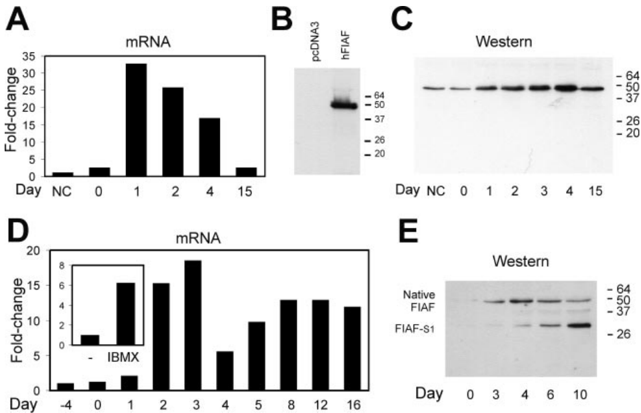
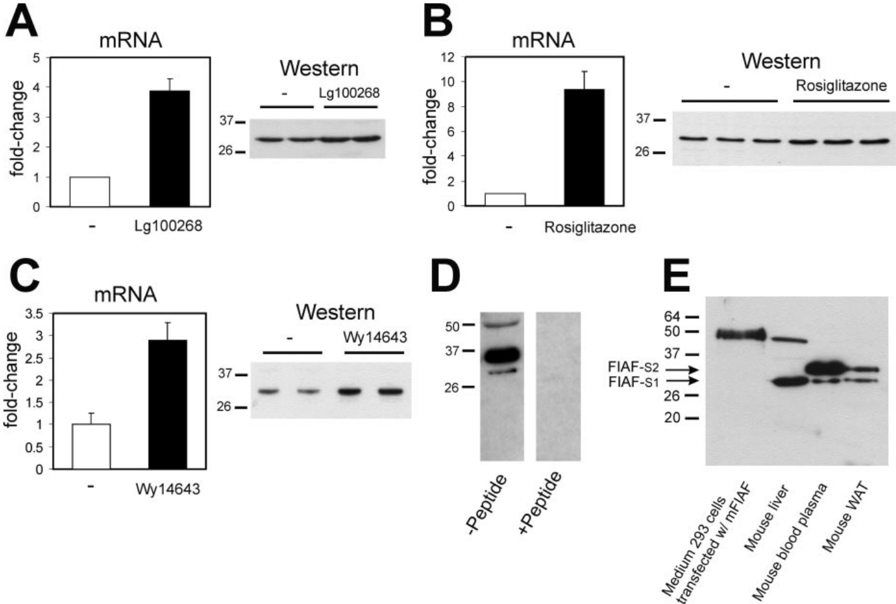
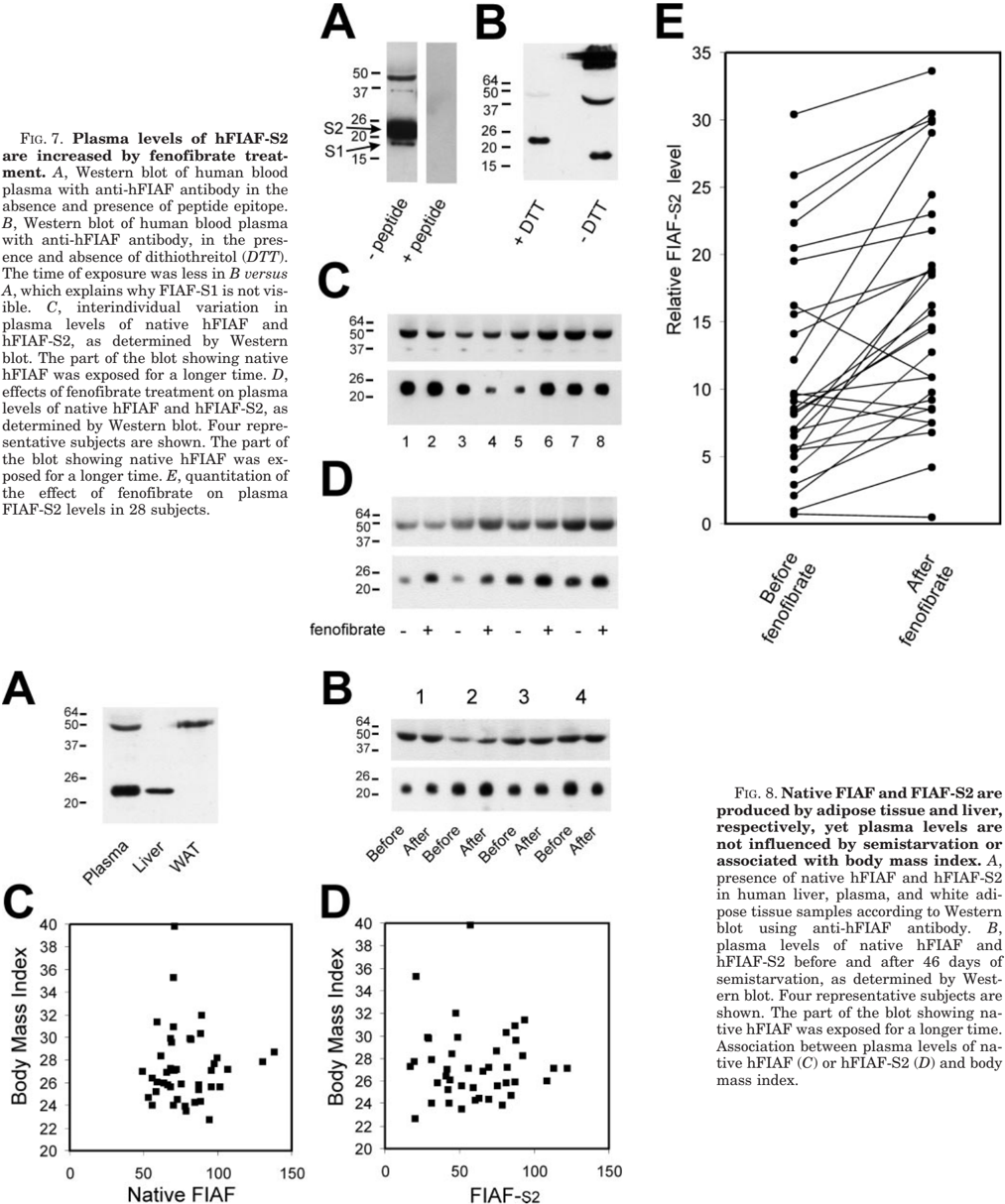
Verification
Claims the paper makes
The claims and statistics of this paper haven’t been checked yet.
Run the check — free, no account needed. It reads the open-access text and checks the sources it cites.
Claims other papers make about this one
Each is checked against this paper’s own text: does it say what the citing paper says it does?
In the citing paper
“ANGPTL4 expressed in the liver is cleaved at a much higher rate than ANGPTL4 expressed in the adipose (88),”
From Regulation of lipoprotein metabolism by ANGPTL3, ANGPTL4, and ANGPTL8 (2021) · cites this paper as [88]
In the citing paper
“Early studies showed that much of liver-derived ANGPTL4 is proteolytically cleaved (88).”
From Regulation of lipoprotein metabolism by ANGPTL3, ANGPTL4, and ANGPTL8 (2021) · cites this paper as [88]
Self-check
Percentages, sums and reported differences re-computed from the paper’s own numbers.
The self-check needs the paper’s full text.
Citations
Cites
Positional cloning of the mouse obese gene and its human homologue
Zhang, Y., Proenca, R., Maffei, M., Barone, M., Leopold, L., & Friedman, J. M. (1994) · Nature · doi:10.1038/372425a0 · Cited by 13,419
Adipose Tissue as an Endocrine Organ
Ahima, R. S., & Flier, J. S. (2000) · Trends in Endocrinology & Metabolism · doi:10.1016/s1043-2760(00)00301-5 · Cited by 1,608
Research works printed but not linked: 38
- Steppan, 2001, Nature, 409, 307, 10.1038/35053000 · DOI · Paper page
- Banerjee, 2004, Science, 303, 1195, 10.1126/science.1092341 · DOI
- Kim, 2001, J. Biol. Chem., 276, 11252, 10.1074/jbc.C100028200 · DOI
- Hu, 1996, J. Biol. Chem., 271, 10697, 10.1074/jbc.271.18.10697 · DOI
- Scherer, 1995, J. Biol. Chem., 270, 26746, 10.1074/jbc.270.45.26746 · DOI
- Arita, 1999, Biochem. Biophys. Res. Commun., 257, 79, 10.1006/bbrc.1999.0255 · DOI · Paper page
- Cianflone, 1989, J. Biol. Chem., 264, 426, 10.1016/S0021-9258(17)31275-9 · DOI
- Samad, 1996, J. Clin. Invest., 97, 37, 10.1172/JCI118404 · DOI
- Frederich, 1992, Hypertension, 19, 339, 10.1161/01.HYP.19.4.339 · DOI
- Trayhurn, 2000, Am. J. Physiol., 279, R2329
- Wallenius, 2002, Nat. Med., 8, 75, 10.1038/nm0102-75 · DOI · Paper page
- Hotamisligil, 1993, Science, 259, 87, 10.1126/science.7678183 · DOI · Paper page
- Kersten, 2000, J. Biol. Chem., 275, 28488, 10.1074/jbc.M004029200 · DOI · Paper page
- Kim, 2000, Biochem. J., 346, 603, 10.1042/bj3460603 · DOI
- Yoon, 2000, Mol. Cell. Biol., 20, 5343, 10.1128/MCB.20.14.5343-5349.2000 · DOI · Paper page
- Belanger, 2002, J. Mol. Cell Cardiol., 34, 765, 10.1006/jmcc.2002.2021 · DOI
- Le Jan, 2003, Am. J. Pathol., 162, 1521, 10.1016/S0002-9440(10)64285-X · DOI
- Koishi, 2002, Nat. Genet., 30, 151, 10.1038/ng814 · DOI · Paper page
- Shimizugawa, 2002, J. Biol. Chem., 277, 33742, 10.1074/jbc.M203215200 · DOI · Paper page
- Shimamura, 2003, Biochem. Biophys. Res. Commun., 301, 604, 10.1016/S0006-291X(02)03058-9 · DOI
- Yoshida, 2002, J. Lipid Res., 43, 1770, 10.1194/jlr.C200010-JLR200 · DOI · Paper page
- Desvergne, 1999, Endocr. Rev., 20, 649
- Mandard, 2004, Cell Mol. Life Sci., 61, 393, 10.1007/s00018-003-3216-3 · DOI
- Wabitsch, 2001, Int. J. Obes. Relat. Metab. Disord., 25, 8, 10.1038/sj.ijo.0801520 · DOI
- Di Poi, 2002, Mol. Cell, 10, 721, 10.1016/S1097-2765(02)00646-9 · DOI
- Mars, 2003, Int. J. Obes. Relat. Metab. Disord., 27, 574, 10.1038/sj.ijo.0802266 · DOI
- Hukshorn, 2003, Am. J. Clin. Nutr., 77, 771, 10.1093/ajcn/77.4.771 · DOI
- Lawrence, 2001, J. Biol. Chem., 276, 31521, 10.1074/jbc.M103306200 · DOI
- Hsu, 2001, J. Biol. Chem., 276, 27950, 10.1074/jbc.M100258200 · DOI
- Fruebis, 2001, Proc. Natl. Acad. Sci. U. S. A., 98, 2005, 10.1073/pnas.98.4.2005 · DOI
- Harris, 1989, Arch. Biochem. Biophys., 275, 315, 10.1016/0003-9861(89)90379-2 · DOI
- Steiner, 1998, Curr. Opin. Chem. Biol., 2, 31, 10.1016/S1367-5931(98)80033-1 · DOI
- Croissandeau, 2002, J. Cell Sci., 115, 1203, 10.1242/jcs.115.6.1203 · DOI
- Banerjee, 2001, J. Biol. Chem., 276, 25970, 10.1074/jbc.M103109200 · DOI
- Chen, 2002, J. Endocrinol., 175, 499, 10.1677/joe.0.1750499 · DOI
- Ono, 2003, J. Biol. Chem., 278, 41804, 10.1074/jbc.M302861200 · DOI · Paper page
- Ge, 2004, J. Biol. Chem., 279, 2038, 10.1074/jbc.M307583200 · DOI · Paper page
- Hansmannel, 2003, Biochem. Biophys. Res. Commun., 311, 149, 10.1016/j.bbrc.2003.09.185 · DOI
Cited by
Sorted by citations
Feige, J. N., Gelman, L., Michalik, L., Desvergne, B., & Wahli, W. (2006) · Progress in Lipid Research · doi:10.1016/j.plipres.2005.12.002 · Cited by 786
Self-citationKoerner, A., Kratzsch, J., & Kiess, W. (2005) · Best Practice & Research Clinical Endocrinology & Metabolism · doi:10.1016/j.beem.2005.07.008 · Cited by 471
Köster, A., Chao, Y. B., Mosior, M., Ford, A., Gonzalez-DeWhitt, P. A., Hale, J. E., Li, D., Qiu, Y., Fraser, C. C., Yang, D. D., et al. (2005) · Endocrinology · doi:10.1210/en.2005-0476 · Cited by 427
Mandard, S., Zandbergen, F., van Straten, E., Wahli, W., Kuipers, F., Müller, M., & Kersten, S. (2006) · Journal of Biological Chemistry · doi:10.1074/jbc.m506519200 · Cited by 433
Self-citationWang, B., Wood, I. S., & Trayhurn, P. (2007) · Pflügers Archiv - European Journal of Physiology · doi:10.1007/s00424-007-0301-8 · Cited by 392
Metadata
- Authors
- Mandard, S., Zandbergen, F., Tan, N. S., Escher, P., Patsouris, D., Koenig, W., Kleemann, R., Bakker, A., Veenman, F., Wahli, W., Müller, M., & Kersten, S.
- Venue
- Journal of Biological Chemistry
- Publisher
- Elsevier BV
- Published
- 2004-08
- Volume
- 279
- Issue
- 33
- Pages
- 34411-34420
- ISSN
- 0021-9258
- Cited by
- 231
- References
- 2
- Language
- en
About these checks
Registry, retraction, Cites and statistics results are computed, not judged, with one exception: a printed reference that no index lists is read once by a model before it counts as a citation error. Claims are extracted by a model and kept only when their quote appears verbatim in the text; each cited source is then checked, with a model’s help, for whether it says what the claim relies on. Those verdicts can be wrong — read the claim’s quote and the cited source before relying on one.
Statistics and arithmetic are recomputed, not judged.
Confidence bands are shown only for fields calibrated on our annotated test set. None is calibrated yet, so no band is shown.
What counts as a claim ›How we measure confidence ›How we check this ›
Are you an author, or do you see a problem with this page? Request a review
