

Survival in the Presence of Antifungals
Open accessThe DOI matches its Crossref record; 107 of the 107 references it cites were found in a registry or an index.
Abstract
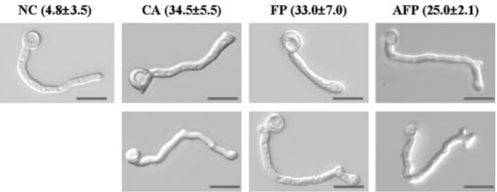
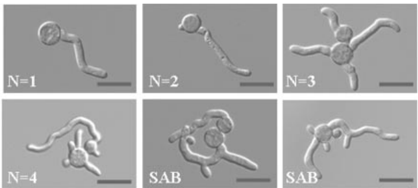
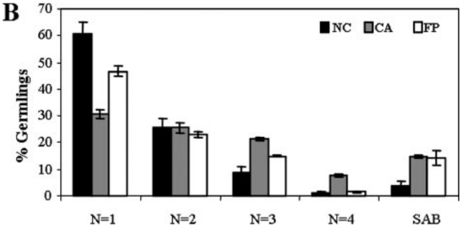
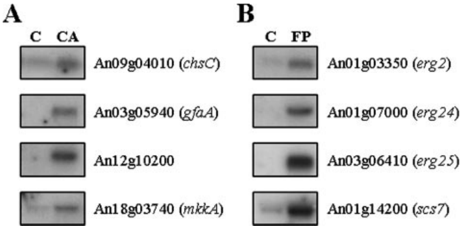
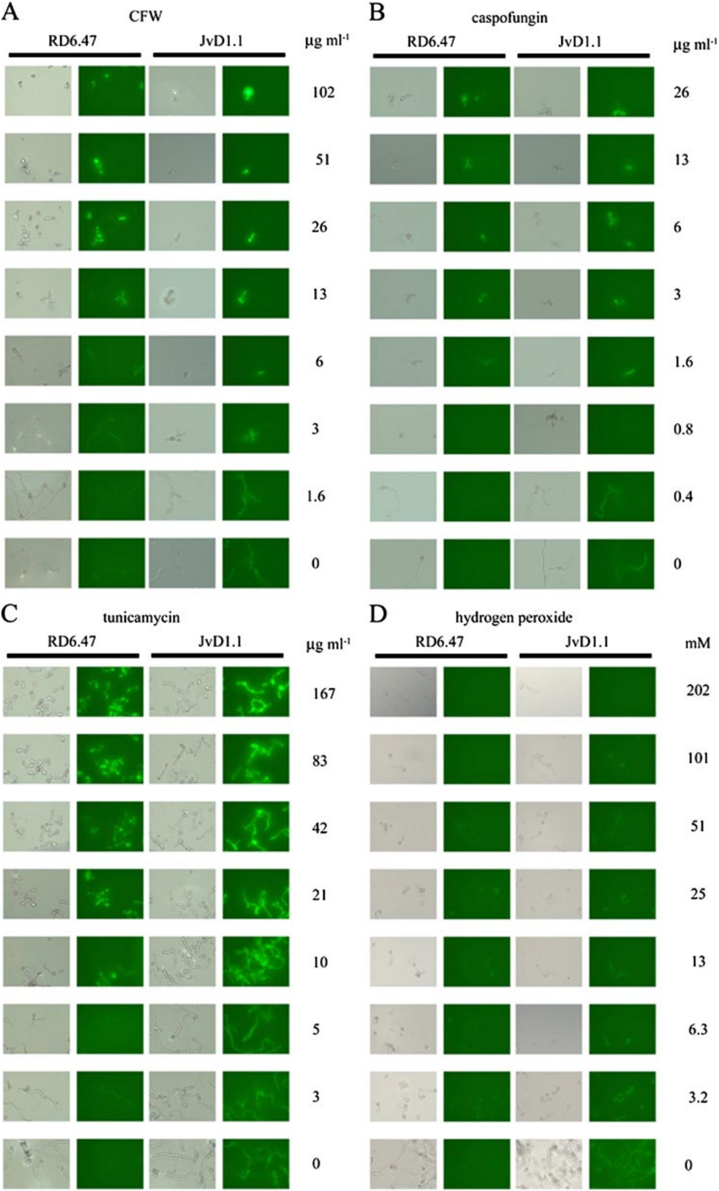
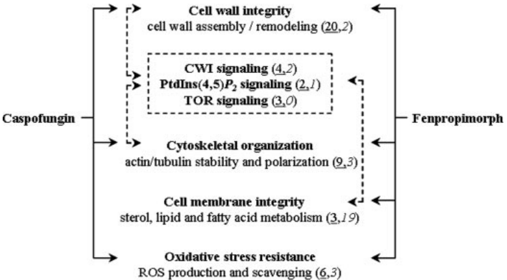
How yeast cells respond to cell wall stress is relatively well understood; however, how filamentous fungi cope with cell wall damage is largely unexplored. Here we report the first transcriptome analysis of Aspergillus niger exposed to the antifungal compounds caspofungin, an inhibitor of beta-1,3-glucan synthesis, and fenpropimorph, which inhibits ergosterol synthesis. The presence of sublethal drug concentrations allowed A. niger to adapt to the stress conditions and to continue growth by the establishment of new polarity axes and formation of new germ tubes. By comparing the expression profile between caspofungin-exposed and nonexposed A. niger germlings, we identified a total of 172 responsive genes out of 14,509 open reading frames present on the Affymetrix microarray chips. Among 165 up-regulated genes, mainly genes predicted to function in (i) cell wall assembly and remodeling, (ii) cytoskeletal organization, (iii) signaling, and (iv) oxidative stress response were affected. Fenpropimorph modulated expression of 43 genes, of which 41 showed enhanced expression. Here, genes predicted to function in (i) membrane reconstruction, (ii) lipid signaling, (iii) cell wall remodeling, and (iv) oxidative stress response were identified. Northern analyses of selected genes were used to confirm the microarray analyses. The results further show that expression of the agsA gene encoding an alpha-1,3-glucan synthase is up-regulated by both compounds. Using two PagsA-GFP reporter strains of A. niger and subjecting them to 16 different antifungal compounds, including caspofungin and fenpropimorph, we could show that agsA is specifically activated by compounds interfering directly or indirectly with cell wall biosynthesis.
Overview
The claims and statistics of this paper haven’t been checked yet.
Free: it reads the open-access text and checks the first 5 claims that cite a source we can check. Create a free account to check every claim.
Integrity signals
Registry
Cites
Statistics
Figures
Verification
Claims the paper makes
The claims and statistics of this paper haven’t been checked yet.
Free: it reads the open-access text and checks the first 5 claims that cite a source we can check. Create a free account to check every claim.
Claims other papers make about this one
Each is checked against this paper’s own text: does it say what the citing paper says it does?
The source backs part of the claim, not all of it — or backs it for a different population, condition or comparison.
In the citing paper
“Our functional analyses demonstrate that CHS3 is crucial during hyphal growth in the absence of Phr1p and support the notion that Chs3p is the major compensatory chitin synthase both in cell wall stress and HWS in fungi [21, 28, 47, 62, 63].”
From Genomic and functional analyses unveil the response to hyphal wall stress in Candida albicans cells lacking β(1,3)-glucan remodeling (2016) · cites this paper as [21]
Experimental — accuracy not yet measuredThe check wasn’t confident either way, so it gives no verdict — never disputed.
In the citing paper
“PHR1 is also transcriptionally induced in response to heat stress, to treatments with the antifungal drug caspofungin and during infection [21–24].”
From Genomic and functional analyses unveil the response to hyphal wall stress in Candida albicans cells lacking β(1,3)-glucan remodeling (2016) · cites this paper as [21]
Experimental — accuracy not yet measuredThe check wasn’t confident either way, so it gives no verdict — never disputed.
In the citing paper
“Our functional analyses demonstrate that CHS3 is crucial during hyphal growth in the absence of Phr1p and support the notion that Chs3p is the major compensatory chitin synthase both in cell wall stress and HWS in fungi [21, 28, 47, 62, 63].”
From Genomic and functional analyses unveil the response to hyphal wall stress in Candida albicans cells lacking β(1,3)-glucan remodeling (2016) · cites this paper as [21]
Experimental — accuracy not yet measured
Self-check
Percentages, sums and reported differences re-computed from the paper’s own numbers.
The self-check needs the paper’s full text.
Citations
Cites
Chitosan as antimicrobial agent: applications and mode of action.
Rabea, E. I., Badawy, M. E.-T., Stevens, C. V., Smagghe, G., & Steurbaut, W. (2003) · Biomacromolecules · doi:10.1021/bm034130m · Cited by 3,123
FUNCTIONS OF LIPID RAFTS IN BIOLOGICAL MEMBRANES
Brown, D. A., & London, E. (1998) · Annual Review of Cell and Developmental Biology · doi:10.1146/annurev.cellbio.14.1.111 · Cited by 2,948
Imlay, J. A. (2003) · Annual Review of Microbiology · doi:10.1146/annurev.micro.57.030502.090938 · Cited by 2,203
The structure and synthesis of the fungal cell wall
Bowman, S. M., & Free, S. J. (2006) · BioEssays · doi:10.1002/bies.20441 · Cited by 1,317
Genome sequencing and analysis of the versatile cell factory Aspergillus niger CBS 513.88
Pel, H. J., de Winde, J. H., Archer, D. B., Dyer, P. S., Hofmann, G., Schaap, P. J., Turner, G., de Vries, R. P., Albang, R., Albermann, K., et al. (2007) · Nature Biotechnology · doi:10.1038/nbt1282 · Cited by 1,173
Self-citationCell Wall Integrity Signaling in Saccharomyces cerevisiae
Levin, D. E. (2005) · Microbiology and Molecular Biology Reviews · doi:10.1128/mmbr.69.2.262-291.2005 · Cited by 1,136
Ruepp, A. (2004) · Nucleic Acids Research · doi:10.1093/nar/gkh894 · Cited by 1,133
Transformation of Aspergillus based on the hygromycin B resistance marker from Escherichia coli
Punt, P. J., Oliver, R. P., Dingemanse, M. A., Pouwels, P. H., & van den Hondel, C. A. M. J. J. (1987) · Gene · doi:10.1016/0378-1119(87)90164-8 · Cited by 937
Cell Wall Assembly in Saccharomyces cerevisiae
Lesage, G., & Bussey, H. (2006) · Microbiology and Molecular Biology Reviews · doi:10.1128/mmbr.00038-05 · Cited by 849
Cell wall construction in Saccharomyces cerevisiae
Klis, F. M., Boorsma, A., & De Groot, P. W. J. (2006) · Yeast · doi:10.1002/yea.1349 · Cited by 759
Research works printed but not linked: 3
- Klis, F. M., Ram, A. F., and de Groot, P. W. J. (2007) in The Mycota VIII (Howard, R. J., and Gow, N. A. R., eds) pp. 97-120, Springer-Verlag, Berlin
- Bagnat, M., Keranen, S., Shevchenko, A., Shevchenko, A., and Simons, K. (2000) Proc. Natl. Acad. Sci. U. S. A. 97, 3254 -3259 · doi:10.1073/pnas.97.7.3254 · Paper page
- Hirsch, J. P., and Henry, S. A. (1986) Mol. Cell. Biol. 6, 3320 -3328
Cited by
Fungal echinocandin resistance
Walker, L. A., Gow, N. A. R., & Munro, C. A. (2010) · Fungal Genetics and Biology · doi:10.1016/j.fgb.2009.09.003 · Cited by 267
Meyer, V., Wanka, F., van Gent, J., Arentshorst, M., van den Hondel, C. A. M. J. J., & Ram, A. F. J. (2011) · Applied and Environmental Microbiology · doi:10.1128/aem.02740-10 · Cited by 218
“Based on our previous transcriptomic analyses (27), we suspected that these cfr genes might be important for the survival of A.”
BackgroundSelf-citationCairns, T. C., Zheng, X., Zheng, P., Sun, J., & Meyer, V. (2019) · Biotechnology for Biofuels · doi:10.1186/s13068-019-1400-4 · Cited by 174
Self-citationFortwendel, J. R., Juvvadi, P. R., Perfect, B. Z., Rogg, L. E., Perfect, J. R., & Steinbach, W. J. (2010) · Antimicrobial Agents and Chemotherapy · doi:10.1128/aac.00854-09 · Cited by 153
“These functional categories include carbohydrate and lipid metabolism genes, protein synthesis genes, and even a smaller subset of genes involved in energy generation (1, 19, 24).”
BackgroundThe CWI Pathway: Regulation of the Transcriptional Adaptive Response to Cell Wall Stress in Yeast
Sanz, A., García, R., Rodríguez-Peña, J., & Arroyo, J. (2017) · Journal of Fungi · doi:10.3390/jof4010001 · Cited by 149
“fumigatus [23,24,87,88] and can compromise the clinical treatment success [25,89,90].”
BackgroundArroyo, J., Farkaš, V., Sanz, A. B., & Cabib, E. (2016) · Cellular Microbiology · doi:10.1111/cmi.12615 · Cited by 140
Kwon, M. J., Arentshorst, M., Roos, E. D., van den Hondel, C. A. M. J. J., Meyer, V., & Ram, A. F. J. (2011) · Molecular Microbiology · doi:10.1111/j.1365-2958.2010.07524.x · Cited by 140
Self-citationMela, F., Fritsche, K., de Boer, W., van Veen, J. A., de Graaff, L. H., van den Berg, M., & Leveau, J. H. J. (2011) · The ISME Journal · doi:10.1038/ismej.2011.29 · Cited by 130
“niger to caspofungin (Meyer et al., 2007), an antibiotic that inhibits the synthesis of the fungal cell wall component b-1,3-glucan.”
BackgroundPark, G., Pan, S., & Borkovich, K. A. (2008) · Eukaryotic Cell · doi:10.1128/ec.00466-07 · Cited by 125
Yoshimi, A., Sano, M., 稲葉, 梓., Kokubun, Y., Fujioka, T., Mizutani, O., Hagiwara, D., Fujikawa, T., Nishimura, M., Yano, S., et al. (2013) · PLoS ONE · doi:10.1371/journal.pone.0054893 · Cited by 113
“Cell wall stress–inducing compounds often induce the expression of cell wall–related genes [10,13,36,37].”
BackgroundAnnotation of stress–response proteins in the aspergilli
Miskei, M., Karányi, Z., & Pócsi, I. (2008) · Fungal Genetics and Biology · doi:10.1016/j.fgb.2008.07.013 · Cited by 107
“…of stress signalling and regulation in filamentous fungi may help us to find new targets for future antifungal drug design (Rementeria et al., 2005; Meyer et al., 2007), to develop more stresstolerant and high producer industrial strains (Emri et al., 1997, 1999; MacKenzie et al., 2005; Pócsi et…”
Damveld, R. A., Franken, A., Arentshorst, M., Punt, P. J., Klis, F. M., van den Hondel, C. A. M. J. J., & Ram, A. F. J. (2008) · Genetics · doi:10.1534/genetics.107.073148 · Cited by 88
“The screen is based on the observation that the agsA gene, which encodes a putative a-1,3-glucan synthase, is strongly induced in response to different forms of cell wall stress (Damveld et al. 2005a; Meyer et al. 2007b).”
BackgroundSelf-citationGonzález‐Guerrero, M., Oger, E., Benabdellah, K., Azcón‐Aguilar, C., Lanfranco, L., & Ferrol, N. (2010) · Current Genetics · doi:10.1007/s00294-010-0298-y · Cited by 88
“This physiological status is mirrored by an up-regulation of a number of genes related to oxidative stress in fungal cells exposed to SBI (Bammert and Fostel 2000; Meyer et al. 2007 ).”
BackgroundGenetics, Genetic Manipulation, and Approaches to Strain Improvement of Filamentous Fungi
Meyer, V., Ram, A. F. J., & Punt, P. J. (2014) · ASM Press eBooks · doi:10.1128/9781555816827.ch22 · Cited by 72
Self-citationAltwasser, R., Baldin, C., Weber, J., Guthke, R., Kniemeyer, O., Brakhage, A. A., Linde, J., & Valiante, V. (2015) · PLOS ONE · doi:10.1371/journal.pone.0136932 · Cited by 63
“This finding confirmed previous results reported for Aspergillus niger, in which the exposition to caspofungin induced the cell wall biosynthesis and cell wall reshuffling, thereby mainly affecting sugar metabolism [32].”
ResultExploitation of genomics in fungicide research: current status and future perspectives
Cools, H. J., & Hammond-Kosack, K. E. (2012) · Molecular Plant Pathology · doi:10.1111/mpp.12001 · Cited by 69
Survival Strategies of Yeast and Filamentous Fungi against the Antifungal Protein AFP
Ouedraogo, J., Hagen, S., Spielvogel, A., Engelhardt, S., & Meyer, V. (2011) · Journal of Biological Chemistry · doi:10.1074/jbc.m110.203588 · Cited by 65
Self-citationJørgensen, T. R., Nitsche, B. M., Lamers, G. E. M., Arentshorst, M., van den Hondel, C. A. M. J. J., & Ram, A. F. J. (2010) · Applied and Environmental Microbiology · doi:10.1128/aem.00450-10 · Cited by 69
Self-citationBinder, U., Benčina, M., Eigentler, A., Meyer, V., & Marx, F. (2011) · BMC Microbiology · doi:10.1186/1471-2180-11-209 · Cited by 63
Self-citationCopper-induced adaptation, oxidative stress and its tolerance in Aspergillus niger UCP1261
Luna, M. A. C., Vieira, E. R., Okada, K., de Campos‐Takaki, G. M., & do Nascimento, A. E. (2015) · Electronic Journal of Biotechnology · doi:10.1016/j.ejbt.2015.09.006 · Cited by 58
Reconstruction of Signaling Networks Regulating Fungal Morphogenesis by Transcriptomics
Meyer, V., Arentshorst, M., Flitter, S. J., Nitsche, B. M., Kwon, M. J., Reynaga‐Peña, C. G., Bartnicki-García, S., van den Hondel, C. A. M. J. J., & Ram, A. F. J. (2009) · Eukaryotic Cell · doi:10.1128/ec.00050-09 · Cited by 57
“for (phospho)lipid, TORC2, and CWI signaling during polarity control (67).”
BackgroundSelf-citationPaege, N., Jung, S., SchäPe, P., Müller-Hagen, D., Ouedraogo, J., Heiderich, C., Jedamzick, J., Nitsche, B. M., van den Hondel, C. A. M. J. J., Ram, A. F. J., et al. (2016) · PLoS ONE · doi:10.1371/journal.pone.0165755 · Cited by 53
“The effect of antifungals was studied as described in [37].”
BackgroundMethodSelf-citationThe antifungal protein PAF interferes with PKC/MPK and cAMP/PKA signalling of Aspergillus nidulans
Binder, U., Oberparleiter, C., Meyer, V., & Marx, F. (2010) · Molecular Microbiology · doi:10.1111/j.1365-2958.2009.06936.x · Cited by 62
“growth by interfering with the cell wall biosynthesis, such as Congo red (CR), Calcofluor white (CFW), caffeine, caspofungin or micafungin activate the Mpk and induce the CWI pathway in unicellular and filamentous fungi (Reinoso-Martin et al., 2003; Monge et al., 2006; Fujioka et al., 2007; Meyer et al., 2007; reviewe…”
BackgroundSelf-citationCurrent status of systems biology in Aspergilli
Andersen, M. R., & Nielsen, J. (2008) · Fungal Genetics and Biology · doi:10.1016/j.fgb.2008.07.006 · Cited by 63
Cobos, R., Barreiro, C., Mateos, R. M., & Coque, J. J. R. (2010) · Proteome Science · doi:10.1186/1477-5956-8-46 · Cited by 52
Bolton, M. D., Ebert, M. K., Faino, L., Rivera-Varas, V. V., de Jonge, R., de Peer, Y. V., Thomma, B. P. H. J., & Secor, G. A. (2016) · Fungal Genetics and Biology · doi:10.1016/j.fgb.2016.04.003 · Cited by 49
Park, J., Hulsman, M., Arentshorst, M., Breeman, M., Alazi, E., Lagendijk, E. L., Rocha, M. C., Malavazi, I., Nitsche, B. M., van den Hondel, C. A. M. J. J., et al. (2016) · Cellular Microbiology · doi:10.1111/cmi.12624 · Cited by 47
Self-citationvan Munster, J. M., Nitsche, B. M., Akeroyd, M., Dijkhuizen, L., van der Maarel, M. J. E. C., & Ram, A. F. J. (2015) · PLoS ONE · doi:10.1371/journal.pone.0116269 · Cited by 46
Self-citationMartínez‐Cruz, J., Romero, D., de Vicente, A., & Pérez‐García, A. (2016) · New Phytologist · doi:10.1111/nph.14297 · Cited by 43
Yang, X., Zhang, L., Xiang, Y., Du, L., Huang, X., & Liu, Y. (2020) · Scientific Reports · doi:10.1038/s41598-020-69434-9 · Cited by 49
Antifungal Peptides of the AFP Family Revisited: Are These Cannibal Toxins?
Meyer, V., & Jung, S. (2018) · Microorganisms · doi:10.3390/microorganisms6020050 · Cited by 44
Self-citationGenome mining and functional genomics for siderophore production in Aspergillus niger
Franken, A. C. W., Lechner, B. E., Werner, E. R., Haas, H., Lokman, B. C., Ram, A. F. J., van den Hondel, C. A. M. J. J., de Weert, S., & Punt, P. J. (2014) · Briefings in Functional Genomics · doi:10.1093/bfgp/elu026 · Cited by 42
Self-citationDebiane, D., Calonne-Salmon, M., Fontaine, J., Laruelle, F., Grandmougin‐Ferjani, A., & Sahraoui, A. L. (2011) · Fungal Biology · doi:10.1016/j.funbio.2011.06.003 · Cited by 42
Henning, L. M., Simon, U., Abdullayev, A., Schmidt, B., Pohl, C., Guitar, T. N., Vakifahmetoglu, C., Meyer, V., Bekheet, M. F., & Gurlo, A. (2022) · ACS Omega · doi:10.1021/acsomega.1c05748 · Cited by 39
Self-citationCushion, M. T., Ashbaugh, A., Hendrix, K., Linke, M. J., Macioce-Tisdale, N. L., Sayson, S. G., & Porollo, A. (2018) · Antimicrobial Agents and Chemotherapy · doi:10.1128/aac.02513-17 · Cited by 46
Kwon, M. J., Arentshorst, M., Fiedler, M. R. M., de Groen, F. L. M., Punt, P. J., Meyer, V., & Ram, A. F. J. (2013) · Microbiology · doi:10.1099/mic.0.074252-0 · Cited by 37
Self-citationPuig, M., Moragrega, C., Ruz, L., Calderón, C. E., Cazorla, F. M., Montesinos, E., & Llorente, I. (2015) · Fungal Biology · doi:10.1016/j.funbio.2015.10.007 · Cited by 38
The Cell Wall of Filamentous Fungi
Osherov, N., & Yarden, O. (2014) · ASM Press eBooks · doi:10.1128/9781555816636.ch17 · Cited by 37
Kwon, M. J., Nitsche, B. M., Arentshorst, M., Jørgensen, T. R., Ram, A. F. J., & Meyer, V. (2013) · PLoS ONE · doi:10.1371/journal.pone.0068946 · Cited by 40
“niger [45] were up-regulated as well: agtA, a GPIanchored alpha-glucanosyltransferase and two putative cell wall protein encoding genes phiA and An12g10200.”
BackgroundSelf-citationα- and β-1,3-Glucan Synthesis and Remodeling
Wagener, J., Striegler, K., & Wagener, N. (2020) · Current topics in microbiology and immunology · doi:10.1007/82_2020_200 · Cited by 49
Fiedler, M. R. M., Lorenz, A., Nitsche, B. M., van den Hondel, C. A. M. J. J., Ram, A. F. J., & Meyer, V. (2014) · Fungal Biology and Biotechnology · doi:10.1186/s40694-014-0005-8 · Cited by 31
Self-citationLiu, X., Zhang, X., & Zhang, Z. (2010) · FEBS Letters · doi:10.1016/j.febslet.2010.02.039 · Cited by 28
“Recently, transcriptome analysis [16] revealed that the expression of several genes involved in oxidative stress resistance in Aspergillus niger, including a homologue of the S.”
Backgroundvan Leeuwe, T. M., Wattjes, J., Niehues, A., Forn‐Cuní, G., Geoffrion, N., Mélida, H., Arentshorst, M., Molina, A., Tsang, A., Meijer, A. H., et al. (2020) · The Cell Surface · doi:10.1016/j.tcsw.2020.100039 · Cited by 28
“(2007) and an overview of all cell wall integrity (CWI) response-related genes as previously described (Meyer et al., 2007; Park et al., 2016).”
BackgroundInfluentialSelf-citationWang, Q., Ji, Y., Qu, Y.-Y., Qi, Y.-K., Li, D., Liu, Z., & Wu, X. (2020) · Biological Control · doi:10.1016/j.biocontrol.2020.104372 · Cited by 26
Allicin-induced global gene expression profile of Saccharomyces cerevisiae
Yu, L., Guo, N., Meng, R., Liu, B., Tang, X., Jin, J., Cui, Y., & Deng, X. (2010) · Applied Microbiology and Biotechnology · doi:10.1007/s00253-010-2709-x · Cited by 25
Methods for Investigating the UPR in Filamentous Fungi
Guillemette, T., Ram, A. F. J., Carvalho, N. D. S. P., Joubert, A., Simoneau, P., & Archer, D. B. (2011) · Methods in enzymology on CD-ROM/Methods in enzymology · doi:10.1016/b978-0-12-385114-7.00001-5 · Cited by 24
Self-citationVacuolar H+-ATPase plays a key role in cell wall biosynthesis of Aspergillus niger
Schachtschabel, D., Arentshorst, M., Lagendijk, E. L., & Ram, A. F. J. (2011) · Fungal Genetics and Biology · doi:10.1016/j.fgb.2011.12.008 · Cited by 21
Self-citationSchachtschabel, D., Arentshorst, M., Nitsche, B. M., Morris, S., Nielsen, K. F., van den Hondel, C. A. M. J. J., Klis, F. M., & Ram, A. F. J. (2013) · PLoS ONE · doi:10.1371/journal.pone.0078102 · Cited by 19
Self-citationDelgado, J., Owens, R. A., Doyle, S., Asensio, M. A., & Núñez, F. (2015) · Applied Microbiology and Biotechnology · doi:10.1007/s00253-015-7020-4 · Cited by 23
Li, S., Ma, J., Li, S., Chen, F., Song, C., Zhang, H., Jiang, M., & Shen, N. (2022) · International Journal of Molecular Sciences · doi:10.3390/ijms232315432 · Cited by 19
“tion function of expelling toxic substances [18].”
BackgroundInfluentialIdentification of modules in Aspergillus niger by gene co-expression network analysis
van den Berg, R. A., Braaksma, M., van der Veen, D., WERF, M. J. V. D., Punt, P. J., John van der, O. O. S. T., & de Graaff, L. H. (2010) · Fungal Genetics and Biology · doi:10.1016/j.fgb.2010.03.005 · Cited by 16
Bitencourt, T. A., Macedo, C., Franco, M. E., Rocha, M. C., Moreli, I. S., Cantelli, B. A. M., Sanches, P. R., Beleboni, R. O., Malavazi, I., Passos, G. A. S., et al. (2019) · BMC Genomics · doi:10.1186/s12864-019-5792-0 · Cited by 16
Oger, E., Ghignone, S., Campagnac, E., Fontaine, J., Grandmougin‐Ferjani, A., & Lanfranco, L. (2009) · Fungal Genetics and Biology · doi:10.1016/j.fgb.2009.03.002 · Cited by 16
Cong, L., Fan, D., Li, Y., Chen, Y., Huang, L., & Xia, Y. (2018) · BMC Microbiology · doi:10.1186/s12866-018-1225-5 · Cited by 16
“Likewise, ABC transporters have the efflux function of excreting toxic substances [33].”
BackgroundConrad, T., Kniemeyer, O., Henkel, S. G., Krüger, T., Mattern, D. J., Valiante, V., Guthke, R., Jacobsen, I. D., Brakhage, A. A., Vlaic, S., et al. (2018) · BMC Systems Biology · doi:10.1186/s12918-018-0620-8 · Cited by 17
Guzmán-Armenteros, T. M., Guerra, L. S., Ruales, J., & Ramos, L. A. (2025) · Foods · doi:10.3390/foods14020261 · Cited by 14
“This distinction arises from multiple factors, encompassing the distinctive structural and physiological attributes of fungal membranes, the repercussions of osmotic imbalances on cellular water equilibrium, and the differential adaptations of yeasts and LABs to osmotic stress [47–51].”
Degani, G., Ragni, E., Botias, P., Ravasio, D., Calderon, J., Pianezzola, E., Rodriguez-Peña, J. M., Vanoni, M. A., Arroyo, J., Fonzi, W. A., et al. (2016) · BMC Genomics · doi:10.1186/s12864-016-2853-5 · Cited by 10
van Leeuwe, T. M., Arentshorst, M., Forn‐Cuní, G., Geoffrion, N., Tsang, A., Delvigne, F., Meijer, A. H., Ram, A. F. J., & Punt, P. J. (2020) · Microorganisms · doi:10.3390/microorganisms8121918 · Cited by 11
“Under these very specific cultivation conditions, it was shown before that fungal growth occurs only on the metal sheets and not (or in very limited amount) in the liquid phase [40,45].”
BackgroundMethodSelf-citationMa, Q., Wu, H., Xie, S., Zhao, B.-S., Yin, X., Ding, S., Guo, Y., Xu, C., Zang, R., Geng, Y., et al. (2022) · International Journal of Biological Macromolecules · doi:10.1016/j.ijbiomac.2022.07.250 · Cited by 10
Li, L., Wang, R., Liang, X., Gai, Y., Jiao, C., & Wang, M. (2023) · Agronomy · doi:10.3390/agronomy13061553 · Cited by 11
“found that the expression of glutathione transferase was significantly up-regulated in Aspergillus Niger under the stress of caspofrngin and fenpropimorph to protect the cells from damage by reactive oxygen species [63].”
BackgroundMarui, J., Yoshimi, A., Hagiwara, D., Fujii-Watanabe, Y., Oda, K., Koike, H., Tamano, K., Ishii, T., Sano, M., Machida, M., et al. (2010) · Applied Microbiology and Biotechnology · doi:10.1007/s00253-010-2627-y · Cited by 12
“In Aspergillus niger, the promoter of the agsA gene encoding α-1,3-glucan synthase has been used as a reporter fused with GFP for monitoring activation of cell wall integrity signaling ( Meyer et al. 2007 ) and for isolating the novel gene important for cell wall biosynthesis (Damveld et al. 2008).”
MethodEchinocandin activity againstAspergillusspp. and the importance of pharmacodynamics
Lewis, J. S. (2009) · Medical Mycology · doi:10.1080/13693780802603698 · Cited by 11
Hernández, A., Serrano, G., Pérez‐Castiñeira, J. R., & Serrano, A. (2015) · Biochimica et Biophysica Acta (BBA) - Molecular Cell Research · doi:10.1016/j.bbamcr.2015.09.001 · Cited by 7
Aspergillus : A Cell Factory with Unlimited Prospects
Nitsche, B. M. (2013) · CRC Press eBooks · doi:10.1201/b15250-4 · Cited by 6
Bombek, L. K., Lapornik, A., Ukmar, M., Matis, M., Črešnar, B., Katalinić, J. P., & Žakelj‐Mavrič, M. (2008) · Steroids · doi:10.1016/j.steroids.2008.08.004 · Cited by 7
Characterization of Pneumocystis murina Bgl2, an Endo-β-1,3-Glucanase and Glucanosyltransferase
Kutty, G., Davis, A. S., Schuck, K. N., Masterson, M., Wang, H., Liu, Y., & Kovacs, J. A. (2019) · The Journal of Infectious Diseases · doi:10.1093/infdis/jiz172 · Cited by 6
“albicans and Aspergillus niger, a subinhibitory dose of micafungin or caspofungin has been reported to increase the expression of Bgl2 [27, 28].”
BackgroundAspergillus: A Cell Factory with Unlimited Prospects
Fiedler, M. R. M., Nitsche, B. M., Wanka, F., & Meyer, V. (2013) · CRC Press eBooks · doi:10.1201/b15250-2 · Cited by 7
Self-citationMartens‐Uzunova, E. S. (2008) · doi:10.18174/122007 · Cited by 6
Mannan is a context-dependent shield that modifies virulence in Nakaseomyces glabratus
Ribeiro, G. F., Priest, E. L., Heaney, H., Richardson, J. P., & Childers, D. S. (2025) · Virulence · doi:10.1080/21505594.2025.2491650 · Cited by 4
Li, G., & Wilson, R. A. (2021) · Methods in molecular biology · doi:10.1007/978-1-0716-1613-0_8 · Cited by 4
Залепкина, С. А., Смирнов, В. Ф., Борисов, А. В., & Matsulevich, Z. V. (2019) · Russian Journal of Genetics · doi:10.1134/s1022795419030177 · Cited by 4
Sun, P., Zhang, L., & Li, Z. (2022) · European Journal of Plant Pathology · doi:10.1007/s10658-022-02571-1 · Cited by 5
“In the TR, six DEGs enriched inmonocarboxylate transporters (MCT) and ABC transporter proteins respectively were upregulated, these genes function as efflux transporters to translocate antifungal items out of cells and contribute to the development of tolerance to antifungals (Meyer et al., 2007; Rawal, 2014), (Fig.”
BackgroundScreening for Compounds Exerting Antifungal Activities
Ouedraogo, J., Lagendijk, E. L., van den Hondel, C. A. M. J. J., Ram, A. F. J., & Meyer, V. (2012) · Springer eBooks · doi:10.1007/978-1-4614-2356-0_17 · Cited by 3
Self-citationNitsche, B. M., & Meyer, V. (2014) · Springer eBooks · doi:10.1007/978-3-642-45218-5_9 · Cited by 4
Self-citationZamith‐Miranda, D., Amatuzzi, R. F., Martins, S. T., Vieira, A. Z., da Rocha, I. M., Rodrigues, M. L., Trentin, G., Almeida, F. B. D. R., Nakayasu, E. S., Nosanchuk, J. D., et al. (2020) · bioRxiv (Cold Spring Harbor Laboratory) · doi:10.1101/2020.12.04.411843 · Cited by 3
“fumigatus, of which many mRNAs related to this pathway are upregulated in the presence of the antifungal (51).”
BackgroundOst, K. J., Arentshorst, M., Moerschbacher, B. M., Dirks‐Hofmeister, M. E., & Ram, A. F. J. (2025) · The Cell Surface · doi:10.1016/j.tcsw.2025.100141 · Cited by 2
“The analysis was performed on data published by Paege et al., 2016 and Sch ¨ ape et al., analysis showed a stronger response of agsA , agsC , and agsE to the cell wall-stressing compound caspofungin than to tunicamycin or its mutants (Meyer et al., 2007).”
Self-citationEvaluation of bacterial endophytes from turfgrass for effective biocontrol of dollar spot disease
Jin, P., Jiang, S., Qiao, P., Dong, Y., Zhou, Y., Jung, G., Yang, Z., & Hu, J. (2025) · Pest Management Science · doi:10.1002/ps.8928 · Cited by 2
Response of Psychrotolerant Fungus Mucor flavus to Cell Wall Stress, Induced by Azo Dyes
Saharova, S. A., Ianutsevich, E. A., Danilova, O. A., Kochkina, G. A., & Tereshina, V. M. (2026) · International Journal of Molecular Sciences · doi:10.3390/ijms27114927 · Cited by 1
“However, in mucoromycetes, there are no glucans in the hyphal CW and they may have a different marker [17].”
Keeping, A. J., & Collins, R. A. (2011) · Fungal Genetics and Biology · doi:10.1016/j.fgb.2011.02.007 · Cited by 1
Barthel, L., Kunz, P., King, R., & Meyer, V. (2024) · Springer eBooks · doi:10.1007/978-3-031-63164-1_15 · Cited by 2
Self-citationInvestigating and exploiting fungal natural products in Aspergillus spp.
Miralles, L. M. (2015) · Arrow@dit (Dublin Institute of Technology) · Cited by 1
Ouedraogo, J. (2011) · DepositOnce · doi:10.14279/depositonce-3013
Characterization of the Neurospora Varkud Satellite Plasmid and Transcript in vivo
Keeping, A. J. (2012) · TSpace (University of Toronto)
Liu, M., Cui, J., Wang, X., & Guo, Y. (2025) · Agronomy · doi:10.3390/agronomy15092176
Engel, A., Ferrari, F., Meyer, M., Strub, J., Spichty, M., Bertsch, C., Schaeffer‐Reiss, C., Tarnus, C., Albrecht, S. J. ‐., & Goddard, M. (2025) · Analytical Biochemistry · doi:10.1016/j.ab.2025.115988 · Cited by 1
Chitin in the fungal cell wall: Towards valorization of spent biomass of Aspergillus niger
van Leeuwe, T. M. (2020) · Leiden Repository (Leiden University)
Galland, E. (2013) · theses.fr (ABES) · doi:10.70675/cea4cde4z7649z41a5z8597z63e86dea636a · Cited by 1
Chuppa-Tostain, G. (2016) · theses.fr (ABES) · doi:10.70675/85d2dfb7zfbd2z494az8522z88e060b21220 · Cited by 1
Metadata
- Authors
- Meyer, V., Damveld, R. A., Arentshorst, M., Stahl, U., van den Hondel, C. A. M. J. J., & Ram, A. F. J.
- Affiliations
- Leiden University (NL)
- Corresponding author
- Meyer, Vera
- Venue
- Journal of Biological Chemistry
- Publisher
- Elsevier BV
- Published
- 2007-11
- Volume
- 282
- Issue
- 45
- Pages
- 32935-32948
- ISSN
- 0021-9258 (ISSN-L)
- OpenAlex
- W1964252744
- Cited by
- 85
- References
- 106
- Citations by year
- 2026: 1 · 2025: 6 · 2024: 1 · 2023: 1 · 2022: 4 · 2021: 1 · 2020: 6 · 2019: 4 · 2018: 4 · 2017: 1 · 2016: 7 · 2015: 6 · 2014: 5 · 2013: 6 · 2012: 3
- FWCI
- 2.64
- Type
- journal article
- Language
- en
- Open access
- hybrid
- doi.org
- Licence
- cc-by
- www.elsevier.com/tdm/userlicense/1.0/ (tdm)
- creativecommons.org/licenses/by/4.0/ (vor, 4702 d)
- Locations
- Journal of Biological Chemistry (publishedVersion, cc-by)
- PubMed (publishedVersion)
- Leiden Repository (Leiden University) (submittedVersion)
- Data Archiving and Networked Services (DANS) (submittedVersion, other-oa)
- Topics
- Life Sciences › Biochemistry, Genetics and Molecular Biology › Molecular Biology › Fungal and yeast genetics research
- Health Sciences › Medicine › Infectious Diseases › Antifungal resistance and susceptibility
- Health Sciences › Medicine › Infectious Diseases › Fungal Infections and Studies
- Keywords
- Aspergillus niger, caspofungin, fenpropimorph, antifungal resistance, ergosterol synthesis inhibition, cell wall stress response, transcriptome, germ tube formation, oxidative stress response, cell wall remodeling, lipid signaling
- MeSH terms
- Caspofungin, Antifungal Agents, Aspergillus niger, Morpholines, Transcription, Genetic, Gene Expression Regulation, Fungal, Genome, Fungal, Cell Polarity, Gene Expression Profiling, Echinocandins, Lipopeptides
About these checks
Registry, retraction, Cites and statistics results are computed, not judged, with one exception: a printed reference that no index lists is read once by a model before it counts as a citation error. Claims are extracted by a model and kept only when their quote appears verbatim in the text; each cited source is then checked, with a model’s help, for whether it says what the claim relies on. Those verdicts can be wrong — read the claim’s quote and the cited source before relying on one.
Statistics and arithmetic are recomputed, not judged.
Confidence bands are shown only for fields calibrated on our annotated test set. None is calibrated yet, so no band is shown.
What counts as a claim ›How we measure confidence ›How we check this ›
Are you an author, or do you see a problem with this page? Request a review
Data sources
Bibliographic data: Semantic Scholar, OpenAlex, Crossref.
Contains information from the Semantic Scholar Academic Graph Datasets, made available under the ODC Attribution License (ODC-BY 1.0).
Semantic Scholar’s data is described in: Kinney, R., et al. (2023). The Semantic Scholar Open Data Platform. arXiv:2301.10140.
