

Survival in the Presence of Antifungals
Open accessThe DOI matches its Crossref record; 107 of the 107 references it cites were found in a registry or an index.
Abstract
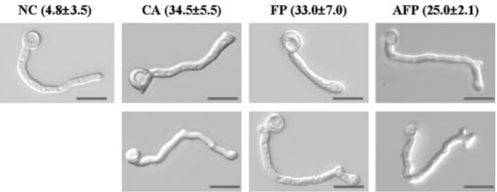
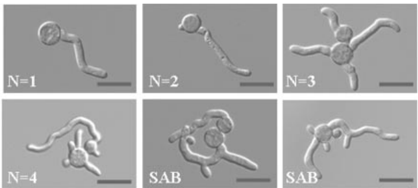
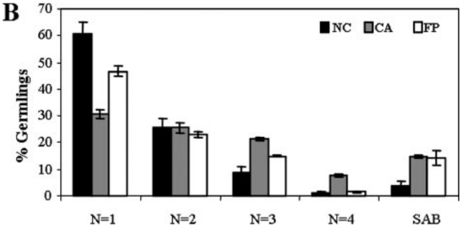
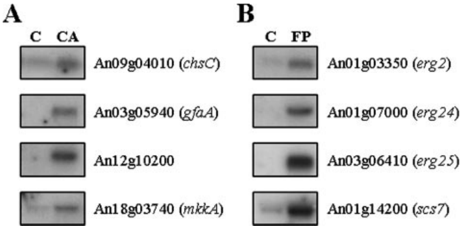
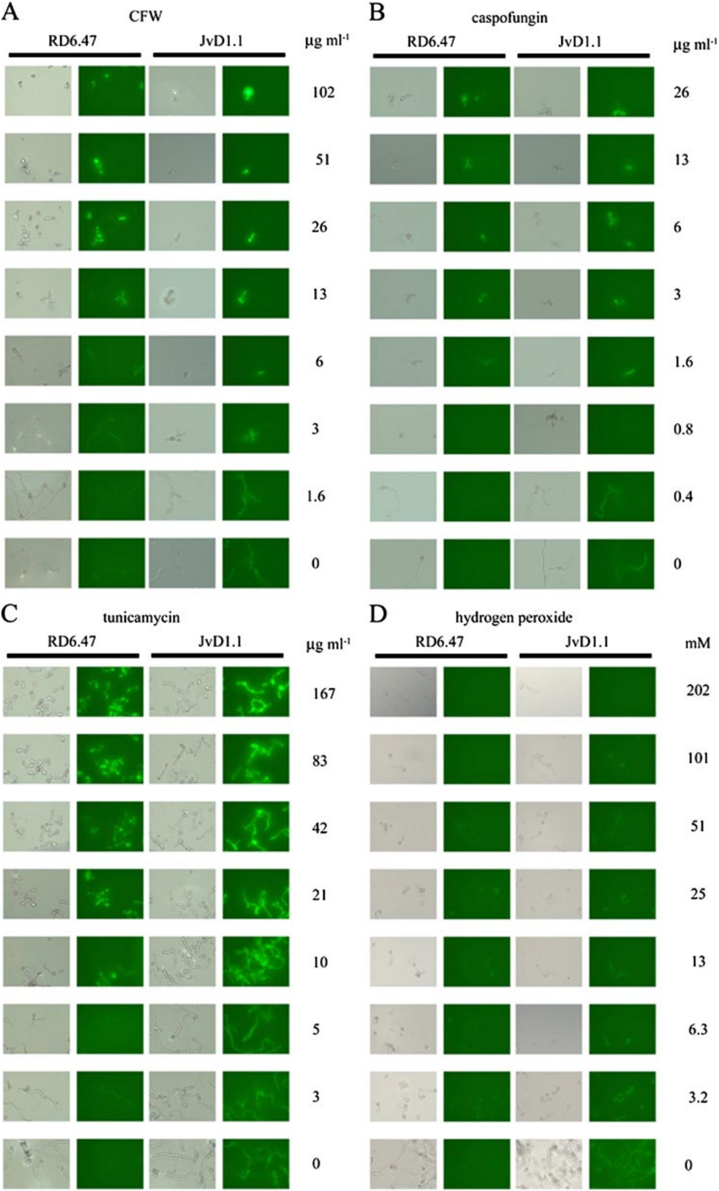
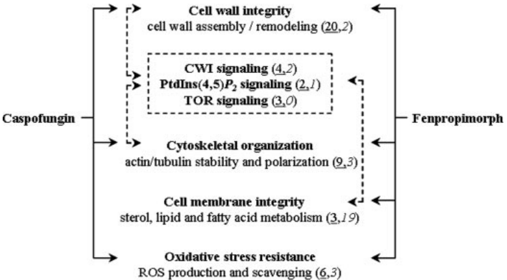
How yeast cells respond to cell wall stress is relatively well understood; however, how filamentous fungi cope with cell wall damage is largely unexplored. Here we report the first transcriptome analysis of Aspergillus niger exposed to the antifungal compounds caspofungin, an inhibitor of beta-1,3-glucan synthesis, and fenpropimorph, which inhibits ergosterol synthesis. The presence of sublethal drug concentrations allowed A. niger to adapt to the stress conditions and to continue growth by the establishment of new polarity axes and formation of new germ tubes. By comparing the expression profile between caspofungin-exposed and nonexposed A. niger germlings, we identified a total of 172 responsive genes out of 14,509 open reading frames present on the Affymetrix microarray chips. Among 165 up-regulated genes, mainly genes predicted to function in (i) cell wall assembly and remodeling, (ii) cytoskeletal organization, (iii) signaling, and (iv) oxidative stress response were affected. Fenpropimorph modulated expression of 43 genes, of which 41 showed enhanced expression. Here, genes predicted to function in (i) membrane reconstruction, (ii) lipid signaling, (iii) cell wall remodeling, and (iv) oxidative stress response were identified. Northern analyses of selected genes were used to confirm the microarray analyses. The results further show that expression of the agsA gene encoding an alpha-1,3-glucan synthase is up-regulated by both compounds. Using two PagsA-GFP reporter strains of A. niger and subjecting them to 16 different antifungal compounds, including caspofungin and fenpropimorph, we could show that agsA is specifically activated by compounds interfering directly or indirectly with cell wall biosynthesis.
Overview
The claims and statistics of this paper haven’t been checked yet.
Free: it reads the open-access text and checks the first 5 claims that cite a source we can check. Create a free account to check every claim.
Integrity signals
Registry
Cites
Statistics
Figures
Verification
Claims the paper makes
The claims and statistics of this paper haven’t been checked yet.
Free: it reads the open-access text and checks the first 5 claims that cite a source we can check. Create a free account to check every claim.
Claims other papers make about this one
Each is checked against this paper’s own text: does it say what the citing paper says it does?
The source backs part of the claim, not all of it — or backs it for a different population, condition or comparison.
In the citing paper
“Our functional analyses demonstrate that CHS3 is crucial during hyphal growth in the absence of Phr1p and support the notion that Chs3p is the major compensatory chitin synthase both in cell wall stress and HWS in fungi [21, 28, 47, 62, 63].”
From Genomic and functional analyses unveil the response to hyphal wall stress in Candida albicans cells lacking β(1,3)-glucan remodeling (2016) · cites this paper as [21]
Experimental — accuracy not yet measuredThe check wasn’t confident either way, so it gives no verdict — never disputed.
In the citing paper
“PHR1 is also transcriptionally induced in response to heat stress, to treatments with the antifungal drug caspofungin and during infection [21–24].”
From Genomic and functional analyses unveil the response to hyphal wall stress in Candida albicans cells lacking β(1,3)-glucan remodeling (2016) · cites this paper as [21]
Experimental — accuracy not yet measuredThe check wasn’t confident either way, so it gives no verdict — never disputed.
In the citing paper
“Our functional analyses demonstrate that CHS3 is crucial during hyphal growth in the absence of Phr1p and support the notion that Chs3p is the major compensatory chitin synthase both in cell wall stress and HWS in fungi [21, 28, 47, 62, 63].”
From Genomic and functional analyses unveil the response to hyphal wall stress in Candida albicans cells lacking β(1,3)-glucan remodeling (2016) · cites this paper as [21]
Experimental — accuracy not yet measured
Self-check
Percentages, sums and reported differences re-computed from the paper’s own numbers.
The self-check needs the paper’s full text.
Citations
Cites
Chitosan as antimicrobial agent: applications and mode of action.
Rabea, E. I., Badawy, M. E.-T., Stevens, C. V., Smagghe, G., & Steurbaut, W. (2003) · Biomacromolecules · doi:10.1021/bm034130m · Cited by 3,123
FUNCTIONS OF LIPID RAFTS IN BIOLOGICAL MEMBRANES
Brown, D. A., & London, E. (1998) · Annual Review of Cell and Developmental Biology · doi:10.1146/annurev.cellbio.14.1.111 · Cited by 2,948
Imlay, J. A. (2003) · Annual Review of Microbiology · doi:10.1146/annurev.micro.57.030502.090938 · Cited by 2,203
The structure and synthesis of the fungal cell wall
Bowman, S. M., & Free, S. J. (2006) · BioEssays · doi:10.1002/bies.20441 · Cited by 1,317
Genome sequencing and analysis of the versatile cell factory Aspergillus niger CBS 513.88
Pel, H. J., de Winde, J. H., Archer, D. B., Dyer, P. S., Hofmann, G., Schaap, P. J., Turner, G., de Vries, R. P., Albang, R., Albermann, K., et al. (2007) · Nature Biotechnology · doi:10.1038/nbt1282 · Cited by 1,173
Self-citationCell Wall Integrity Signaling in Saccharomyces cerevisiae
Levin, D. E. (2005) · Microbiology and Molecular Biology Reviews · doi:10.1128/mmbr.69.2.262-291.2005 · Cited by 1,136
Ruepp, A. (2004) · Nucleic Acids Research · doi:10.1093/nar/gkh894 · Cited by 1,133
Transformation of Aspergillus based on the hygromycin B resistance marker from Escherichia coli
Punt, P. J., Oliver, R. P., Dingemanse, M. A., Pouwels, P. H., & van den Hondel, C. A. M. J. J. (1987) · Gene · doi:10.1016/0378-1119(87)90164-8 · Cited by 937
Cell Wall Assembly in Saccharomyces cerevisiae
Lesage, G., & Bussey, H. (2006) · Microbiology and Molecular Biology Reviews · doi:10.1128/mmbr.00038-05 · Cited by 849
Cell wall construction in Saccharomyces cerevisiae
Klis, F. M., Boorsma, A., & De Groot, P. W. J. (2006) · Yeast · doi:10.1002/yea.1349 · Cited by 759
Pflanzenschutz-Nachrichten Bayer
Aktiengesellschaft, F. B. (1962) · Medical Entomology and Zoology · Cited by 688
Lipid rafts function in biosynthetic delivery of proteins to the cell surface in yeast
Bagnat, M. (2000) · Proceedings of the National Academy of Sciences · doi:10.1073/pnas.060034697 · Cited by 574
Miyake, Y., Kozutsumi, Y., Nakamura, S., Fujita, T., & Kawasaki, T. (1995) · Biochemical and Biophysical Research Communications · doi:10.1006/bbrc.1995.1827 · Cited by 536
Molecular Organization of the Alkali-insoluble Fraction ofAspergillus fumigatus Cell Wall
Fontaine, T., Simenel, C., Dubreucq, G., Adam, O., Delepierre, M., Lemoine, J., Vorgias, C. E., Diaquin, M., & Latgé, J.-P. (2000) · Journal of Biological Chemistry · doi:10.1074/jbc.m909975199 · Cited by 436
Jung, U. S., & Levin, D. E. (1999) · Molecular Microbiology · doi:10.1046/j.1365-2958.1999.01667.x · Cited by 421
Lehle, L., & Tanner, W. (1976) · FEBS Letters · doi:10.1016/0014-5793(76)80922-2 · Cited by 355
Down-Regulation of Metallothionein, a Reactive Oxygen Scavenger, by the Small GTPase OsRac1 in Rice
Wong, H. L., Sakamoto, T., Kawasaki, T., Umemura, K., & Shimamoto, K. (2004) · Plant Physiology · doi:10.1104/pp.103.036384 · Cited by 348
García, R., Bermejo, C., Grau, C., Pérez, R., Rodríguez-Peña, J. M., Francois, J., Nombela, C., & Arroyo, J. (2004) · Journal of Biological Chemistry · doi:10.1074/jbc.m312954200 · Cited by 338
Signaling by Target of Rapamycin Proteins in Cell Growth Control
Inoki, K., Ouyang, H., Li, Y., & Guan, K.-L. (2005) · Microbiology and Molecular Biology Reviews · doi:10.1128/mmbr.69.1.79-100.2005 · Cited by 330
Heinisch, J. J., Lorberg, A., Schmitz, H., & Jacoby, J. J. (1999) · Molecular Microbiology · doi:10.1046/j.1365-2958.1999.01375.x · Cited by 322
More Gene Manipulations in Fungi
(1991) · Elsevier eBooks · doi:10.1016/c2009-0-02655-5 · Cited by 320
Kurtz, M. B., Heath, I. B., Marrinan, J., Dreikorn, S., Onishi, J., & Douglas, C. (1994) · Antimicrobial Agents and Chemotherapy · doi:10.1128/aac.38.7.1480 · Cited by 320
Adducin: structure, function and regulation
Matsuoka*, Y., Li, X., & Bennett, V. (2000) · Cellular and Molecular Life Sciences · doi:10.1007/pl00000731 · Cited by 319
Liu, T. T., Lee, R. E. B., Barker, K. S., Lee, R. E., Wei, L., Homayouni, R., & Rogers, P. D. (2005) · Antimicrobial Agents and Chemotherapy · doi:10.1128/aac.49.6.2226-2236.2005 · Cited by 313
Features and functions of covalently linked proteins in fungal cell walls
De Groot, P. W. J., Ram, A. F., & Klis, F. M. (2005) · Fungal Genetics and Biology · doi:10.1016/j.fgb.2005.04.002 · Cited by 309
Self-citationRam, A. F. J., Wolters, A., Hoopen, R. T., & Klis, F. M. (1994) · Yeast · doi:10.1002/yea.320100804 · Cited by 303
Self-citationAudhya, A., & Emr, S. D. (2002) · Developmental Cell · doi:10.1016/s1534-5807(02)00168-5 · Cited by 277
de Nobel, H., Ruiz, C., Martin, H., Morris, W., Brul, S., Molina, M., & Klis, F. M. (2000) · Microbiology · doi:10.1099/00221287-146-9-2121 · Cited by 269
Functions and metabolism of sphingolipids in Saccharomyces cerevisiae
DICKSON, R., SUMANASEKERA, C., & LESTER, R. (2006) · Progress in Lipid Research · doi:10.1016/j.plipres.2006.03.004 · Cited by 265
Genome-wide Analysis of the Response to Cell Wall Mutations in the Yeast Saccharomyces cerevisiae
Lagorce, A., Hauser, N. C., Labourdette, D., Rodriguez, C., Martin-Yken, H., Arroyo, J., Hoheisel, J. D., & François, J. (2003) · Journal of Biological Chemistry · doi:10.1074/jbc.m211604200 · Cited by 254
Fungicide activity through activation of a fungal signalling pathway
Kojima, K., Takano, Y., Yoshimi, A., Tanaka, C., Kikuchi, T., & Okuno, T. (2004) · Molecular Microbiology · doi:10.1111/j.1365-2958.2004.04244.x · Cited by 243
Eyster, K. M. (2007) · Advances in Physiology Education · doi:10.1152/advan.00088.2006 · Cited by 239
Lipid Raft Polarization Contributes to Hyphal Growth in Candida albicans
Martin, S. W., & Konopka, J. B. (2004) · Eukaryotic Cell · doi:10.1128/ec.3.3.675-684.2004 · Cited by 232
The role of reactive oxygen species in cell growth: lessons from root hairs
Carol, R. J. (2006) · Journal of Experimental Botany · doi:10.1093/jxb/erj201 · Cited by 230
J Smits, G., C Kapteyn, J., van den Ende, H., & M Klis, F. (1999) · Current Opinion in Microbiology · doi:10.1016/s1369-5274(99)80061-7 · Cited by 227
Popolo, L., Gilardelli, D., Bonfante, P., & Vai, M. (1997) · Journal of Bacteriology · doi:10.1128/jb.179.2.463-469.1997 · Cited by 226
Hirsch, J. P., & Henry, S. A. (1986) · Molecular and Cellular Biology · doi:10.1128/mcb.6.10.3320 · Cited by 219
Distinct Ceramide Synthases Regulate Polarized Growth in the Filamentous Fungus Aspergillus nidulans
Li, S., Du, L., Yuen, G., & Harris, S. D. (2006) · Molecular Biology of the Cell · doi:10.1091/mbc.e05-06-0533 · Cited by 219
Upregulation of ERG Genes in Candida Species by Azoles and Other Sterol Biosynthesis Inhibitors
Henry, K. W., Nickels, J. T., & Edlind, T. D. (2000) · Antimicrobial Agents and Chemotherapy · doi:10.1128/aac.44.10.2693-2700.2000 · Cited by 216
Offringa, R., de Groot, M. J., Haagsman, H. J., Does, M. P., van den Elzen, P. J., & Hooykaas, P. J. (1990) · The EMBO Journal · doi:10.1002/j.1460-2075.1990.tb07504.x · Cited by 213
Bammert, G. F., & Fostel, J. M. (2000) · Antimicrobial Agents and Chemotherapy · doi:10.1128/aac.44.5.1255-1265.2000 · Cited by 213
Kotchoni, S. O., & Gachomo, E. W. (2006) · Journal of Biosciences · doi:10.1007/bf02704112 · Cited by 212
Kolar, M., Punt, P. J., van den Hondel, C. A. M. J. J., & Schwab, H. (1988) · Gene · doi:10.1016/0378-1119(88)90586-0 · Cited by 207
Agarwal, A. K., Rogers, P. D., Baerson, S. R., Jacob, M. R., Barker, K. S., Cleary, J. D., Walker, L. A., Nagle, D. G., & Clark, A. M. (2003) · Journal of Biological Chemistry · doi:10.1074/jbc.m306291200 · Cited by 204
Ram, A. F. J., Kapteyn, J. C., Montijn, R. C., Caro, L. H. P., Douwes, J. E., Baginsky, W., Mazur, P., van den Ende, H., & Klis, F. M. (1998) · Journal of Bacteriology · doi:10.1128/jb.180.6.1418-1424.1998 · Cited by 200
Self-citationInfluence of Compost Addition to Soil on the Behaviour of Herbicides
Barriuso, E., Houot, S., & Serra-Wittling, C. (1997) · Pesticide Science · doi:10.1002/(sici)1096-9063(199701)49:1<65::aid-ps488>3.0.co;2-z · Cited by 191
The Genetic Basis of Cellular Morphogenesis in the Filamentous Fungus Neurospora crassa
Seiler, S., & Plamann, M. (2003) · Molecular Biology of the Cell · doi:10.1091/mbc.e02-07-0433 · Cited by 189
Metabolism and Molecular Physiology of Saccharomyces Cerevisiae
(1998) · Taylor & Francis eBooks · doi:10.1201/9781482295405 · Cited by 177 · cited 1×
“Moreover, the distribution of polymers, such as chitin, varies markedly between yeast and filamentous fungi (20).”
BackgroundLesage, G., Sdicu, A.-M., Ménard, P., Shapiro, J., Hussein, S., & Bussey, H. (2004) · Genetics · doi:10.1534/genetics.167.1.35 · Cited by 166
Bulik, D. A., Olczak, M., Lucero, H. A., Osmond, B. C., Robbins, P. W., & Specht, C. A. (2003) · Eukaryotic Cell · doi:10.1128/ec.2.5.886-900.2003 · Cited by 159
Ram, A. F. J., Arentshorst, M., Damveld, R. A., vanKuyk, P., Klis, F. M., & van den Hondel, C. A. M. J. J. (2004) · Microbiology · doi:10.1099/mic.0.27249-0 · Cited by 152
Self-citationCharacterization of the transcriptional response to cell wall stress in Saccharomyces cerevisiae
Boorsma, A., Nobel, H. D., Riet, B. T., Bargmann, B., Brul, S., Hellingwerf, K. J., & Klis, F. M. (2004) · Yeast · doi:10.1002/yea.1109 · Cited by 150
Cabib, E., Blanco, N., Grau, C., Rodríguez‐Peña, J. M., & Arroyo, J. (2007) · Molecular Microbiology · doi:10.1111/j.1365-2958.2006.05565.x · Cited by 146
Viaud, M., Simon, A., Brygoo, Y., Pradier, J., & Levis, C. (2003) · Molecular Microbiology · doi:10.1046/j.1365-2958.2003.03798.x · Cited by 144
Klahre, U., & Kost, B. (2006) · The Plant Cell · doi:10.1105/tpc.106.045336 · Cited by 144
Cabib, E. (1991) · Antimicrobial Agents and Chemotherapy · doi:10.1128/aac.35.1.170 · Cited by 141
Latgé, J. P., Mouyna, I., Tekaia, F., Beauvais, A., Debeaupuis, J. P., & Nierman, W. (2005) · Medical Mycology · doi:10.1080/13693780400029155 · Cited by 137
Takeshita, N., Yamashita, S., Ohta, A., & Horiuchi, H. (2006) · Molecular Microbiology · doi:10.1111/j.1365-2958.2006.05030.x · Cited by 133
Cell Cycle Progression and Cell Polarity Require Sphingolipid Biosynthesis in Aspergillus nidulans
Cheng, J., Park, T., Fischl, A. S., & Ye, X. S. (2001) · Molecular and Cellular Biology · doi:10.1128/mcb.21.18.6198-6209.2001 · Cited by 131
Fatty acylation and prenylation of proteins: what's hot in fat
Magee, T., & Seabra, M. C. (2005) · Current Opinion in Cell Biology · doi:10.1016/j.ceb.2005.02.003 · Cited by 129
In Vitro Antifungal Activity of Nikkomycin Z in Combination with Fluconazole or Itraconazole
Li, R. K., & Rinaldi, M. G. (1999) · Antimicrobial Agents and Chemotherapy · doi:10.1128/aac.43.6.1401 · Cited by 129
Fadri, M., Daquinag, A., Wang, S., Xue, T., & Kunz, J. (2005) · Molecular Biology of the Cell · doi:10.1091/mbc.e04-07-0564 · Cited by 129
Franzot, S. P., & Casadevall, A. (1997) · Antimicrobial Agents and Chemotherapy · doi:10.1128/aac.41.2.331 · Cited by 124
Marcireau, C., Guilloton, M., & Karst, F. (1990) · Antimicrobial Agents and Chemotherapy · doi:10.1128/aac.34.6.989 · Cited by 122
ThechsBGene ofAspergillus nidulansIs Necessary for Normal Hyphal Growth and Development
Borgia, P. T., Iarchouk, N., Riggle, P. J., Winter, K. R., Koltin, Y., & Bulawa, C. (1996) · Fungal Genetics and Biology · doi:10.1006/fgbi.1996.0035 · Cited by 118
The Antifungal Protein from Aspergillus giganteus Causes Membrane Permeabilization
Theis, T., Wedde, M., Meyer, V., & Ståhl, U. (2003) · Antimicrobial Agents and Chemotherapy · doi:10.1128/aac.47.2.588-593.2003 · Cited by 113
Self-citationDamveld, R. A., Arentshorst, M., Franken, A. C. W., vanKuyk, P., Klis, F. M., van den Hondel, C. A. M. J. J., & Ram, A. F. J. (2005) · Molecular Microbiology · doi:10.1111/j.1365-2958.2005.04827.x · Cited by 112
Self-citationFritz, R., Lanen, C., Colas, V., & Leroux, P. (1997) · Pesticide Science · doi:10.1002/(sici)1096-9063(199701)49:1<40::aid-ps470>3.0.co;2-y · Cited by 110
Siafakas, A. R., Wright, L. C., Sorrell, T. C., & Djordjevic, J. T. (2006) · Eukaryotic Cell · doi:10.1128/ec.5.3.488-498.2006 · Cited by 104
The Antifungal Protein AFP from Aspergillus giganteus Inhibits Chitin Synthesis in Sensitive Fungi
Hagen, S., Marx, F., Ram, A. F., & Meyer, V. (2007) · Applied and Environmental Microbiology · doi:10.1128/aem.02497-06 · Cited by 102
Self-citationSantarius, M., Lee, C. H., & Anderson, R. A. (2006) · Biochemical Journal · doi:10.1042/bj20060565 · Cited by 100
Damveld, R. A., vanKuyk, P., Arentshorst, M., Klis, F. M., van den Hondel, C. A. M. J. J., & Ram, A. F. J. (2005) · Fungal Genetics and Biology · doi:10.1016/j.fgb.2004.11.006 · Cited by 98
Self-citationZhao, W., Panepinto, J. C., Fortwendel, J. R., Fox, L., Oliver, B. G., Askew, D. S., & Rhodes, J. C. (2006) · Infection and Immunity · doi:10.1128/iai.00565-06 · Cited by 95
Heung, L. J., Luberto, C., Plowden, A., Hannun, Y. A., & Del Poeta, M. (2004) · Journal of Biological Chemistry · doi:10.1074/jbc.m312995200 · Cited by 93
Calonge, T. M., Nakano, K., Arellano, M., Arai, R., Katayama, S., Toda, T., Mabuchi, I., & Pérez, P. (2000) · Molecular Biology of the Cell · doi:10.1091/mbc.11.12.4393 · Cited by 93
Movement of yeast 1,3‐β‐glucan synthase is essential for uniform cell wall synthesis
Utsugi, T., Minemura, M., Hirata, A., Abe, M., Watanabe, D., & Ohya, Y. (2002) · Genes to Cells · doi:10.1046/j.1356-9597.2001.00495.x · Cited by 89
Terashima, H., Yabuki, N., Arisawa, M., Hamada, K., & Kitada, K. (2000) · Molecular and General Genetics MGG · doi:10.1007/s004380000285 · Cited by 85
Fernández-Murray, J. P., & McMaster, C. R. (2005) · Journal of Biological Chemistry · doi:10.1074/jbc.m507700200 · Cited by 85
Alonso‐Monge, R., Real, E., Wojda, I., Bebelman, J., Mager, W. H., & Siderius, M. (2001) · Molecular Microbiology · doi:10.1046/j.1365-2958.2001.02549.x · Cited by 85
Effect of calcofluor white on chitin synthases from Saccharomyces cerevisiae
Roncero, C., Valdivieso, M. H., Ribas, J. C., & Durán, A. (1988) · Journal of Bacteriology · doi:10.1128/jb.170.4.1945-1949.1988 · Cited by 80
Modeling the Qo site of crop pathogens in Saccharomyces cerevisiae cytochrome b
Fisher, N., Brown, A. C., Sexton, G., Cook, A., Windass, J., & Meunier, B. (2004) · European Journal of Biochemistry · doi:10.1111/j.1432-1033.2004.04169.x · Cited by 79
Disordered Cell Integrity Signaling Caused by Disruption of thekexBGene inAspergillus oryzae
Mizutani, O., Nojima, A., Yamamoto, M., Furukawa, K., Fujioka, T., Yamagata, Y., Abe, K., & Nakajima, T. (2004) · Eukaryotic Cell · doi:10.1128/ec.3.4.1036-1048.2004 · Cited by 73
Murray, M., & Greenberg, M. L. (2000) · Molecular Microbiology · doi:10.1046/j.1365-2958.2000.01886.x · Cited by 72
Kumánovics, A., Poruk, K. E., Osborn, K. A., Ward, D. M., & Kaplan, J. (2006) · Journal of Biological Chemistry · doi:10.1074/jbc.m604730200 · Cited by 71
Molecular Mechanism of Terbinafine Resistance in Saccharomycescerevisiae
Leber, R., Fuchsbichler, S., Klobučníková, V., Schweighofer, N., Pitters, E., Wohlfarter, K., Lederer, M., Landl, K., Ruckenstuhl, C., Hapala, I., et al. (2003) · Antimicrobial Agents and Chemotherapy · doi:10.1128/aac.47.12.3890-3900.2003 · Cited by 69
Punt, P. J., Seiboth, B., Weenink, X. O., van Zeijl, C. M. J., Lenders, M., Konetschny, C., Ram, A. F. J., Montijn, R. C., Kubicek, C. P., & van den Hondel, C. A. M. J. J. (2001) · Molecular Microbiology · doi:10.1046/j.1365-2958.2001.02541.x · Cited by 63
Self-citationSaudohar, M., Benčina, M., van de Vondervoort, P. J. I., Panneman, H. J., Legiša, M., Visser, J., & Ruijter, G. J. G. (2002) · Microbiology · doi:10.1099/00221287-148-8-2635 · Cited by 61
The Effect of the erg26-1 Mutation on the Regulation of Lipid Metabolism in Saccharomyces cerevisiae
Baudry, K., Swain, E., Rahier, A., Germann, M., Batta, A., Rondet, S., Mandala, S., Henry, K., Tint, G. S., Edlind, T., et al. (2001) · Journal of Biological Chemistry · doi:10.1074/jbc.m100274200 · Cited by 59
The RHO1‐GAPs SAC7, BEM2 and BAG7 control distinct RHO1 functions in Saccharomyces cerevisiae
Schmidt, A., Schmelzle, T., & Hall, M. N. (2002) · Molecular Microbiology · doi:10.1046/j.1365-2958.2002.03110.x · Cited by 57
Sterol-dependent Regulation of Sphingolipid Metabolism in Saccharomyces cerevisiae
Swain, E., Baudry, K., Stukey, J., McDonough, V., Germann, M., & Nickels, J. T. (2002) · Journal of Biological Chemistry · doi:10.1074/jbc.m204115200 · Cited by 57
ADP ribosylation factor like 2 (Arl2) protein influences microtubule dynamics in breast cancer cells
Béghin, A., Honoré, S., Messana, C., Matera, E., Saussede‐Aim, J., Burlinchon, S., Braguer, D., & Dumontet, C. (2006) · Experimental Cell Research · doi:10.1016/j.yexcr.2006.10.024 · Cited by 44
Cdc42 Is Required for Proper Growth and Development in the Fungal Pathogen Colletotrichum trifolii
Chen, C., Ha, Y., Min, J.-Y., Memmott, S. D., & Dickman, M. B. (2006) · Eukaryotic Cell · doi:10.1128/ec.5.1.155-166.2006 · Cited by 44
Kiso, T., Fujita, K., Ping, X., Tanaka, T., & Taniguchi, M. (2004) · Antimicrobial Agents and Chemotherapy · doi:10.1128/aac.48.5.1739-1748.2004 · Cited by 44
Gorovits, R., & Yarden, O. (2003) · Eukaryotic Cell · doi:10.1128/ec.2.4.699-707.2003 · Cited by 42
Khalaj, V., Brookman, J. L., & Robson, G. D. (2001) · Fungal Genetics and Biology · doi:10.1006/fgbi.2000.1245 · Cited by 41
Müller, C. R., Hjort, C., Hansen, K., & Nielsen, J. (2002) · Microbiology · doi:10.1099/00221287-148-12-4025 · Cited by 39
Mutants affected in the putative diacylglycerol binding site of yeast protein kinase C
Jacoby, J. J., Schmitz, H., & Heinisch, J. J. (1997) · FEBS Letters · doi:10.1016/s0014-5793(97)01287-8 · Cited by 34
A yeast sterol carrier protein with fatty-acid and fatty-acyl-CoA binding activity
Ferreyra, R. G., Burgardt, N. I., Milikowski, D., Melen, G. J., Kornblihtt, A. R., Angelica, E. C. D., Santomé, J. A., & Ermácora, M. R. (2006) · Archives of Biochemistry and Biophysics · doi:10.1016/j.abb.2006.06.024 · Cited by 31
Cycloheximide-induced cPLA2 activation is via the MKP-1 down-regulation and ERK activation
Lin, W., & Hsu, Y.-W. (2000) · Cellular Signalling · doi:10.1016/s0898-6568(00)00090-5 · Cited by 28
Kale, T. A., Hsieh, S.-A. J., Rose, M. W., & Distefano, M. D. (2003) · Current Topics in Medicinal Chemistry · doi:10.2174/1568026033452087 · Cited by 27
Niki, T., Bun‐ya, M., Muro, Y., Kamiryo, T., & Hiraga, Y. (1994) · Yeast · doi:10.1002/yea.320101110 · Cited by 16
Plant GTPases: Regulation of Morphogenesis by ROPs and ROS
Uhrig, J. F., & Hülskamp, M. (2006) · Current Biology · doi:10.1016/j.cub.2006.02.028 · Cited by 13
Biological Monitoring of the Fungicide Epoxiconazol During Application
Oestreich, A., Schmid, P., & Schlatter, C. (1997) · Archives of Environmental Contamination and Toxicology · doi:10.1007/s002449900261 · Cited by 13
New insights into the roles of phosphoinositides and inositol polyphosphates in yeast
Michell, R. H., Perera, N. M., & Dove, S. K. (2003) · Biochemical Society Transactions · doi:10.1042/bst0310011 · Cited by 12
Molecular Organisation and Biogenesis of the cell wall.
Klis, F. M., de Groot, P. W. J., Brul, S., & Hellingwerf, K. J. (2004) · UvA-DARE (University of Amsterdam) · doi:10.1201/9780203503867-12 · Cited by 5
The cell wall of the filamentous fungus Aspergillus niger
Damveld, R. A. (2005) · Leiden Repository (Leiden University) · Cited by 3
Self-citationBiochemistry, cell biology and molecular biology of lipids ofSaccharomyces cerevisiae
Daum, G., Lees, N. D., Bard, M., & Dickson, R. (1998) · Yeast · doi:10.1002/(sici)1097-0061(199812)14:16<1471::aid-yea353>3.0.co;2-y
Research works printed but not linked: 3
- Klis, F. M., Ram, A. F., and de Groot, P. W. J. (2007) in The Mycota VIII (Howard, R. J., and Gow, N. A. R., eds) pp. 97-120, Springer-Verlag, Berlin
- Bagnat, M., Keranen, S., Shevchenko, A., Shevchenko, A., and Simons, K. (2000) Proc. Natl. Acad. Sci. U. S. A. 97, 3254 -3259 · doi:10.1073/pnas.97.7.3254 · Paper page
- Hirsch, J. P., and Henry, S. A. (1986) Mol. Cell. Biol. 6, 3320 -3328
Cited by
Fungal echinocandin resistance
Walker, L. A., Gow, N. A. R., & Munro, C. A. (2010) · Fungal Genetics and Biology · doi:10.1016/j.fgb.2009.09.003 · Cited by 267
Meyer, V., Wanka, F., van Gent, J., Arentshorst, M., van den Hondel, C. A. M. J. J., & Ram, A. F. J. (2011) · Applied and Environmental Microbiology · doi:10.1128/aem.02740-10 · Cited by 218
“Based on our previous transcriptomic analyses (27), we suspected that these cfr genes might be important for the survival of A.”
BackgroundSelf-citationCairns, T. C., Zheng, X., Zheng, P., Sun, J., & Meyer, V. (2019) · Biotechnology for Biofuels · doi:10.1186/s13068-019-1400-4 · Cited by 174
Self-citationFortwendel, J. R., Juvvadi, P. R., Perfect, B. Z., Rogg, L. E., Perfect, J. R., & Steinbach, W. J. (2010) · Antimicrobial Agents and Chemotherapy · doi:10.1128/aac.00854-09 · Cited by 153
“These functional categories include carbohydrate and lipid metabolism genes, protein synthesis genes, and even a smaller subset of genes involved in energy generation (1, 19, 24).”
BackgroundThe CWI Pathway: Regulation of the Transcriptional Adaptive Response to Cell Wall Stress in Yeast
Sanz, A., García, R., Rodríguez-Peña, J., & Arroyo, J. (2017) · Journal of Fungi · doi:10.3390/jof4010001 · Cited by 149
“fumigatus [23,24,87,88] and can compromise the clinical treatment success [25,89,90].”
Background
Metadata
- Authors
- Meyer, V., Damveld, R. A., Arentshorst, M., Stahl, U., van den Hondel, C. A. M. J. J., & Ram, A. F. J.
- Affiliations
- Leiden University (NL)
- Corresponding author
- Meyer, Vera
- Venue
- Journal of Biological Chemistry
- Publisher
- Elsevier BV
- Published
- 2007-11
- Volume
- 282
- Issue
- 45
- Pages
- 32935-32948
- ISSN
- 0021-9258 (ISSN-L)
- OpenAlex
- W1964252744
- Cited by
- 85
- References
- 106
- Citations by year
- 2026: 1 · 2025: 6 · 2024: 1 · 2023: 1 · 2022: 4 · 2021: 1 · 2020: 6 · 2019: 4 · 2018: 4 · 2017: 1 · 2016: 7 · 2015: 6 · 2014: 5 · 2013: 6 · 2012: 3
- FWCI
- 2.64
- Type
- journal article
- Language
- en
- Open access
- hybrid
- doi.org
- Licence
- cc-by
- www.elsevier.com/tdm/userlicense/1.0/ (tdm)
- creativecommons.org/licenses/by/4.0/ (vor, 4702 d)
- Locations
- Journal of Biological Chemistry (publishedVersion, cc-by)
- PubMed (publishedVersion)
- Leiden Repository (Leiden University) (submittedVersion)
- Data Archiving and Networked Services (DANS) (submittedVersion, other-oa)
- Topics
- Life Sciences › Biochemistry, Genetics and Molecular Biology › Molecular Biology › Fungal and yeast genetics research
- Health Sciences › Medicine › Infectious Diseases › Antifungal resistance and susceptibility
- Health Sciences › Medicine › Infectious Diseases › Fungal Infections and Studies
- Keywords
- Aspergillus niger, caspofungin, fenpropimorph, antifungal resistance, ergosterol synthesis inhibition, cell wall stress response, transcriptome, germ tube formation, oxidative stress response, cell wall remodeling, lipid signaling
- MeSH terms
- Caspofungin, Antifungal Agents, Aspergillus niger, Morpholines, Transcription, Genetic, Gene Expression Regulation, Fungal, Genome, Fungal, Cell Polarity, Gene Expression Profiling, Echinocandins, Lipopeptides
About these checks
Registry, retraction, Cites and statistics results are computed, not judged, with one exception: a printed reference that no index lists is read once by a model before it counts as a citation error. Claims are extracted by a model and kept only when their quote appears verbatim in the text; each cited source is then checked, with a model’s help, for whether it says what the claim relies on. Those verdicts can be wrong — read the claim’s quote and the cited source before relying on one.
Statistics and arithmetic are recomputed, not judged.
Confidence bands are shown only for fields calibrated on our annotated test set. None is calibrated yet, so no band is shown.
What counts as a claim ›How we measure confidence ›How we check this ›
Are you an author, or do you see a problem with this page? Request a review
Data sources
Bibliographic data: Semantic Scholar, OpenAlex, Crossref.
Contains information from the Semantic Scholar Academic Graph Datasets, made available under the ODC Attribution License (ODC-BY 1.0).
Semantic Scholar’s data is described in: Kinney, R., et al. (2023). The Semantic Scholar Open Data Platform. arXiv:2301.10140.
