

StAR-related Lipid Transfer (START) Proteins: Mediators of Intracellular Lipid Metabolism
Open accessThe DOI matches its Crossref record; 72 of the 74 references it cites were found in a registry or an index.
Abstract
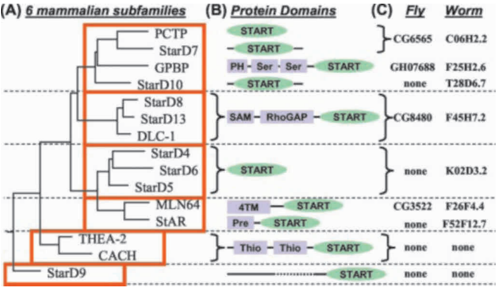
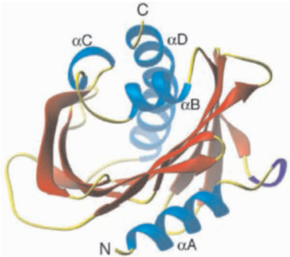
StAR-related lipid transfer (START) 1The abbreviations used are: START, StAR-related lipid transfer; StAR, steroidogenic acute regulatory protein; PCTP, phosphatidylcholine transfer protein; PC, phosphatidylcholine; StarD1, START domain containing 1; GPBP, Goodpasture antigen-binding protein; THEA, thioesterase adiposeassociated; CACH, cytosolic acetyl-CoA hydrolase; DLC-1, deleted in liver cancer 1; PH, Pleckstrin homology; RhoGAP, Rho GTPase-activating protein; SAM, sterile α motif; IMM, inner mitochondrial membrane; OMM, outer mitochondrial membrane; ER, endoplasmic reticulum; NPC, Niemann-Pick C; SRE, sterol regulatory element; SREBP, SRE-binding protein; EST, expressed sequence tag cDNA clone; GP, Goodpasture. domains are ∼210-amino acid lipid binding domains implicated in intracellular lipid transport, lipid metabolism, and cell signaling events. The prototype is the steroidogenic acute regulatory protein (StAR), which transfers cholesterol to mitochondria in steroid hormone-producing cells (1Stocco D.M. Annu. Rev. Physiol. 2001; 63: 193-213Crossref PubMed Scopus (700) Google Scholar). START domains are found in an extensive protein family, including START domain only and multidomain proteins, but lipid ligands have only been identified in a few cases (2Ponting C.P. Aravind L. Trends Biochem. Sci. 1999; 24: 130-132Abstract Full Text Full Text PDF PubMed Scopus (344) Google Scholar). The human and mouse genomes each have 15 genes encoding START domains (Table I), and phylogenetic analysis divides the family into six subfamilies (Fig. 1, A and B) (3Soccio R.E. Adams R.M. Romanowski M.J. Sehayek E. Burley S.K. Breslow J.L. Proc. Natl. Acad. Sci. U. S. A. 2002; 99: 6943-6948Crossref PubMed Scopus (155) Google Scholar).Table INomenclature and chromosomal locations of 15 mammalian START genesStarD nameOther namesMouseHumanStarD1StAR8, 24.5 Mb8, 37.4 MbStAR pseudogene13, 59.8 MbStarD2PCTP11, 90.7 Mb17, 53.6 MbStarD3MLN64, es64, CAB111, 99.1 Mb17, 37.3 MbStarD4CRSP18, 33.4 Mb5, 110.5 MbStarD5None7, 73.3 Mb15, 77.6 MbStarD6None18, 70.8 Mb18, 52.0 MbStarD6 pseudogene10, 56.8 MbStarD7GTT12, 128.3 Mb2, 94.7 MbStarD8KIAA0189-RhoGAPX, 81.9 MbX, 64.1 MbStarD9KIAA13002, 121.1 Mb15, 38.4 MbStarD10PCTP-like, SDCCAG28, CGI-527, 91.1 Mb11, 74.8 MbStarD11GPBP, COL4A3BP13, 93.9 Mb5, 73.5 MbStarD12DLC-1, Arhgap7, p122-RhoGAP8, 35.5 Mb8, 12.7 MbStarD13GT650, 4902678-RhoGAP5, 150.3 Mb13, 31.7 Mb(StarD14)CACH13, 88.9 Mb5, 80.8 Mb(StarD15)THEA, BFIT, KIAA07074, 104.5 Mb1, 54.8 Mb Open table in a new tab X-ray crystal structures have been solved for the MLN64 START domain (4Tsujishita Y. Hurley J.H. Nat. Struct. Biol. 2000; 7: 408-414Crossref PubMed Scopus (450) Google Scholar), StarD4 (5Romanowski M.J. Soccio R.E. Breslow J.L. Burley S.K. Proc. Natl. Acad. Sci. U. S. A. 2002; 99: 6949-6954Crossref PubMed Scopus (142) Google Scholar), and phosphatidylcholine transfer protein (PCTP) (6Roderick S.L. Chan W.W. Agate D.S. Olsen L.R. Vetting M.W. Rajashankar K.R. Cohen D.E. Nat. Struct. Biol. 2002; 9: 507-511PubMed Google Scholar). All three share the same helix-grip fold (7Iyer L.M. Koonin E.V. Aravind L. Proteins. 2001; 43: 134-144Crossref PubMed Scopus (192) Google Scholar), with α-helices at the N and C termini separated by nine β-strands and two shorter α-helices. The curved β-sheet forms a deep pocket with the C-terminal α-helix acting as a lid, resulting in an internal hydrophobic cavity (Fig. 2). The START structure differs from other hydrophobic cavity lipid-binding proteins, such as sterol carrier protein 2 (SCP-2) (8Choinowski T. Hauser H. Piontek K. Biochemistry. 2000; 39: 1897-1902Crossref PubMed Scopus (63) Google Scholar), phosphatidylinositol transfer protein (PITP) (9Yoder M.D. Thomas L.M. Tremblay J.M. Oliver R.L. Yarbrough L.R. Helmkamp Jr., G.M. J. Biol. Chem. 2001; 276: 9246-9252Abstract Full Text Full Text PDF PubMed Scopus (111) Google Scholar), and the fatty acid-binding proteins (FABPs) (10Bernlohr D.A. Simpson M.A. Hertzel A.V. Banaszak L.J. Annu. Rev. Nutr. 1997; 17: 277-303Crossref PubMed Scopus (196) Google Scholar). The PCTP structure was reported with a phosphatidylcholine (PC) molecule in the cavity (6Roderick S.L. Chan W.W. Agate D.S. Olsen L.R. Vetting M.W. Rajashankar K.R. Cohen D.E. Nat. Struct. Biol. 2002; 9: 507-511PubMed Google Scholar), whereas the MLN64 and StarD4 structures contain cavities large enough (∼850 Å3) to accommodate a cholesterol ligand (∼740 Å3) (5Romanowski M.J. Soccio R.E. Breslow J.L. Burley S.K. Proc. Natl. Acad. Sci. U. S. A. 2002; 99: 6949-6954Crossref PubMed Scopus (142) Google Scholar). In each structure, lipid entry or egress would require a major conformational change, most likely opening or unfolding of the C-terminal α-helix lid. In fact, this helix of PCTP has been implicated in membrane binding and PC extraction (11Feng L. Chan W.W. Roderick S.L. Cohen D.E. Biochemistry. 2000; 39: 15399-15409Crossref PubMed Scopus (46) Google Scholar). Furthermore, StAR can form p
Overview
The claims and statistics of this paper haven’t been checked yet.
Free: it reads the open-access text and checks the first 5 claims that cite a source we can check. Create a free account to check every claim.
Integrity signals
Registry
Cites
Statistics
Figures
Verification
Claims the paper makes
The claims and statistics of this paper haven’t been checked yet.
Free: it reads the open-access text and checks the first 5 claims that cite a source we can check. Create a free account to check every claim.
Claims other papers make about this one
Each is checked against this paper’s own text: does it say what the citing paper says it does?
The source backs part of the claim, not all of it — or backs it for a different population, condition or comparison.
In the citing paper
“Analysis of SREBP-responsive transcripts identified a group of proteins termed StarD4, -5, and -6 that are structurally related to StAR, and appear to play major roles in intracellular cholesterol transport (19).”
From The Molecular Biology, Biochemistry, and Physiology of Human Steroidogenesis and Its Disorders (2011) · cites this paper as [19]
Experimental — accuracy not yet measuredThe cited source says what the claim attributes to it.
In the citing paper
“Fifteen START domain (StarD) proteins appear to serve roles in binding and mediating the intracellular transfer of lipids in mammals (19).”
From The Molecular Biology, Biochemistry, and Physiology of Human Steroidogenesis and Its Disorders (2011) · cites this paper as [19]
Self-check
Percentages, sums and reported differences re-computed from the paper’s own numbers.
The self-check needs the paper’s full text.
Citations
Cites
SREBPs: activators of the complete program of cholesterol and fatty acid synthesis in the liver
Horton, J. D., Goldstein, J. L., & Brown, M. S. (2002) · Journal of Clinical Investigation · doi:10.1172/jci15593 · Cited by 4,794
SREBPs: activators of the complete program of cholesterol and fatty acid synthesis in the liver
Horton, J. D., Goldstein, J. L., & Brown, M. S. (2002) · Journal of Clinical Investigation · doi:10.1172/jci0215593 · Cited by 4,092
Genome-wide RNAi analysis of Caenorhabditis elegans fat regulatory genes
Ashrafi, K., Chang, F. Y., Watts, J. L., Fraser, A. G., Kamath, R. S., Ahringer, J., & Ruvkun, G. (2003) · Nature · doi:10.1038/nature01279 · Cited by 980
Transcriptional and Translational Control in the Mammalian Unfolded Protein Response
Harding, H. P., Calfon, M., Urano, F., Novoa, I., & Ron, D. (2002) · Annual Review of Cell and Developmental Biology · doi:10.1146/annurev.cellbio.18.011402.160624 · Cited by 918
StAR protein and the regulation of steroid hormone biosynthesis.
Stocco, D. M. (2001) · Annual Review of Physiology · doi:10.1146/annurev.physiol.63.1.193 · Cited by 917
Rho family proteins: coordinating cell responses
Ridley, A. J. (2001) · Trends in Cell Biology · doi:10.1016/s0962-8924(01)02153-5 · Cited by 766
The pathophysiology and genetics of congenital lipoid adrenal hyperplasia
Bose, H. S., Sugawara, T., Strauss, J. F., & Miller, W. L. (1996) · New England Journal of Medicine · doi:10.1056/nejm199612193352503 · Cited by 676
27-Hydroxycholesterol Is an Endogenous Ligand for Liver X Receptor in Cholesterol-loaded Cells
Fu, X., Menke, J. G., Chen, Y., Zhou, G., MacNaul, K. L., Wright, S. D., Sparrow, C. P., & Lund, E. G. (2001) · Journal of Biological Chemistry · doi:10.1074/jbc.m105805200 · Cited by 572
Structure and lipid transport mechanism of a StAR-related domain
Tsujishita (2000) · Nature Structural Biology · doi:10.1038/75192 · Cited by 535
PHOSPHOLIPID TRANSFER PROTEINS
Wirtz, K. W. A. (1991) · Annual Review of Biochemistry · doi:10.1146/annurev.bi.60.070191.000445 · Cited by 453
Research works printed but not linked: 7
- 6. Roderick, S. L., Chan, W. W., Agate, D. S., Olsen, L. R., Vetting, M. W., Rajashankar, K. R., and Cohen, D. E. (2002) Nat. Struct. Biol. 9, 507-511
- 7. Iyer, L. M., Koonin, E. V., and Aravind, L. (2001) Proteins 43, 134 -144 · DOI · Paper page
- 19. Koh, P. O., Kim, Y. S., Cheon, E. W., Kang, S. S., Cho, G. J., and Choi, W. S. (2002) Mol. Cell 14, 355-360
- 30. Akiyama, N., Sasaki, H., Ishizuka, T., Kishi, T., Sakamoto, H., Onda, M., Hirai, H., Yazaki, Y., Sugimura, T., and Terada, M. (1997) Cancer Res. 57, 3548 -3553
- 31. Moog-Lutz, C., Tomasetto, C., Regnier, C. H., Wendling, C., Lutz, Y., Muller, D., Chenard, M. P., Basset, P., and Rio, M. C. (1997) Int. J. Cancer 71, 183-191 · doi:10.1002/(sici)1097-0215(19970410)71:2<183::aid-ijc10>3.0.co;2-j
- 42. Tall, A. R., Costet, P., and Wang, N. (2002) J. Clin. Invest. 110, 899 -904 · DOI · Paper page
- 64. Ng, I. O., Liang, Z. D., Cao, L., and Lee, T. K. (2000) Cancer Res. 60, 6581-6584
Cited by
The Molecular Biology, Biochemistry, and Physiology of Human Steroidogenesis and Its Disorders
Miller, W. L., & Auchus, R. J. (2011) · Endocrine Reviews · doi:10.1210/er.2010-0013 · Cited by 2,458
Molecular machinery for non-vesicular trafficking of ceramide
Hanada, K., Kumagai, K., Yasuda, S., Miura, Y., Kawano, M., Fukasawa, M., & Nishijima, M. (2003) · Nature · doi:10.1038/nature02188 · Cited by 1,051
“Although START domains are probably absent in yeas”
BackgroundCholesterol Sensing, Trafficking, and Esterification
Chang, T.-Y., Chang, C. C. Y., Ohgami, N., & Yamauchi, Y. (2006) · Annual Review of Cell and Developmental Biology · doi:10.1146/annurev.cellbio.22.010305.104656 · Cited by 633
Early steps in steroidogenesis: intracellular cholesterol trafficking
Miller, W. L., & Bose, H. S. (2011) · Journal of Lipid Research · doi:10.1194/jlr.r016675 · Cited by 554
FAPPs control Golgi-to-cell-surface membrane traffic by binding to ARF and PtdIns(4)P
Godi, A., Campli, A. D., Konstantakopoulos, A., Tullio, G. D., Alessi, D. R., Kular, G. S., Daniele, T., Marra, P., Lucocq, J. M., & Matteis, M. A. D. (2004) · Nature Cell Biology · doi:10.1038/ncb1119 · Cited by 540
“As with FAPP2, they also possess lipid-binding modules: the oxysterol-binding motif and the START domai”
Hu, J., Zhang, Z., Shen, W.-J., & Azhar, S. (2010) · Nutrition & Metabolism · doi:10.1186/1743-7075-7-47 · Cited by 531
“StAR is also a prototype of a family of proteins that contain StAR-related lipid transfer (START) domains (StarD proteins), of which StarD3/MLN64, StarD4, 5 and 6 exhibit steroidogenic potential [235,236,238,240,282287].”
BackgroundKrylova, I. N., Sablin, E. P., Moore, J., Xu, R. X., Waitt, G. M., MacKay, J. A., Juzumiene, D., Bynum, J. M., Madauss, K., Montana, V., et al. (2005) · Cell · doi:10.1016/j.cell.2005.01.024 · Cited by 404
“Crystal structures of phospholipid binding roteins show a large hydrophobic pocket or tunnel ble to bind lipids (Yoder et al., 2001; Hsuan and Cockroft, 2001; Soccio and Breslow, 2003).”
Niemann-Pick type C disease involves disrupted neurosteroidogenesis and responds to allopregnanolone
Griffin, L. D., Gong, W., Verot, L., & Mellon, S. H. (2004) · Nature Medicine · doi:10.1038/nm1073 · Cited by 395
“Although cholesterol transport into mitochondria, which initiates steroidogenesis, requires the steroidogenic acute regulatory protein (StAR) and/or StAR-like molecules in some steroidogenic tissue”
BackgroundRegulation of hexokinase binding to VDAC
Pastorino, J. G., & Hoek, J. B. (2008) · Journal of Bioenergetics and Biomembranes · doi:10.1007/s10863-008-9148-8 · Cited by 385
“Like the TSPO, StAR possesses a cholesterol binding domain (START) [85-88].”
BackgroundGive lipids a START: the StAR-related lipid transfer (START) domain in mammals
Alpy, F., & Tomasetto, C. (2005) · Journal of Cell Science · doi:10.1242/jcs.02485 · Cited by 385
“By contrast, STARD6 is restricted to the testes and is expressed during spermatogenesis in spermatids but not in steroidogenic cells (Soccio and Breslow, 2003; Gomes et al., 2004).”
BackgroundInfluentialSteroidogenic acute regulatory protein (StAR), a novel mitochondrial cholesterol transporter
Miller, W. L. (2007) · Biochimica et Biophysica Acta (BBA) - Molecular and Cell Biology of Lipids · doi:10.1016/j.bbalip.2007.02.012 · Cited by 334
Recent insights on the role of cholesterol in non-alcoholic fatty liver disease
Arguello, G., Balboa, E., Arrese, M., & Zanlungo, S. (2015) · Biochimica et Biophysica Acta (BBA) - Molecular Basis of Disease · doi:10.1016/j.bbadis.2015.05.015 · Cited by 306
Intracellular cholesterol transport
Soccio, R. E., & Breslow, J. L. (2004) · Arteriosclerosis, Thrombosis, and Vascular Biology · doi:10.1161/01.atv.0000131264.66417.d5 · Cited by 297
Self-citationSchrick, K., Nguyen, D., Karlowski, W. M., & Mayer, K. F. (2004) · Genome Biology · doi:10.1186/gb-2004-5-6-r41 · Cited by 279
“Arabidopsis and rice contain 35 and 29 START proteins each, whereas the human and mouse genomes contain 15 each [11], and C.”
BackgroundResultInfluentialRole of mitochondria in steroidogenesis
Papadopoulos, V., & Miller, W. L. (2012) · Best Practice & Research Clinical Endocrinology & Metabolism · doi:10.1016/j.beem.2012.05.002 · Cited by 251
A journey into the world of insect lipid metabolism
Toprak, U., Hegedus, D., Doğan, C., & Güney, G. (2020) · Archives of Insect Biochemistry and Physiology · doi:10.1002/arch.21682 · Cited by 217
Regulation of cholesterol homeostasis
Goedeke, L., & Fernández-Hernando, C. (2012) · Cellular and Molecular Life Sciences · doi:10.1007/s00018-011-0857-5 · Cited by 213
“The START domain proteins are located in the cytoplasm, bound to membranes or in the nucleus, and to date, 16 mammalian START domain proteins have been identified [61, 75].”
BackgroundMiller, W. L. (2007) · Molecular Endocrinology · doi:10.1210/me.2006-0303 · Cited by 216
“Recent work has identified a group of proteins termed StarD4, -5, and -6 that are structurally related to StAR and appear to play major roles in intracellular cholesterol transport (7).”
BackgroundKudo, N., Kumagai, K., Tomishige, N., Yamaji, T., Wakatsuki, S., Nishijima, M., Hanada, K., & Kato, R. (2008) · Proceedings of the National Academy of Sciences · doi:10.1073/pnas.0709191105 · Cited by 210
Disorders in the initial steps of steroid hormone synthesis
Miller, W. L. (2017) · The Journal of Steroid Biochemistry and Molecular Biology · doi:10.1016/j.jsbmb.2016.03.009 · Cited by 205
Fugmann, T., Hausser, A., Schöffler, P., Schmid, S., Pfizenmaier, K., & Olayioye, M. A. (2007) · The Journal of Cell Biology · doi:10.1083/jcb.200612017 · Cited by 200
“START domains are (cid:6) 210 amino acids in length and form a hydrophobic tunnel that accommodates a monomeric lipid (Soccio and Breslow, 2003; Alpy and Tomasetto, 2005).”
CERT-mediated trafficking of ceramide
Hanada, K., Kumagai, K., Tomishige, N., & Yamaji, T. (2009) · Biochimica et Biophysica Acta (BBA) - Molecular and Cell Biology of Lipids · doi:10.1016/j.bbalip.2009.01.006 · Cited by 184
The complexity of sphingolipid biosynthesis in the endoplasmic reticulum
Tidhar, R., & Futerman, A. H. (2013) · Biochimica et Biophysica Acta (BBA) - Molecular Cell Research · doi:10.1016/j.bbamcr.2013.04.010 · Cited by 163
The mammalian START domain protein family in lipid transport in health and disease
Clark, B. J. (2012) · Journal of Endocrinology · doi:10.1530/joe-11-0313 · Cited by 163
“The fate of cytosolic cholesterol bound by STARD3/MLN64 may be direct absorption by a closely associated membrane or transfer to another soluble cholesterol-binding protein, potentially a member of the STARD4 subfamily (Soccio & Breslow 2003, Alpy & Tomasetto 2006).”
BackgroundSakudoh, T., Sezutsu, H., Nakashima, T., Kobayashi, I., Fujimoto, H., Uchino, K., Banno, Y., Iwano, H., Maekawa, H., Tamura, T., et al. (2007) · Proceedings of the National Academy of Sciences · doi:10.1073/pnas.0702860104 · Cited by 162
Cellular cholesterol homeostasis and Alzheimer’s disease
Chang, T.-Y., Yamauchi, Y., Hasan, M. T., & Chang, C. (2017) · Journal of Lipid Research · doi:10.1194/jlr.r075630 · Cited by 155
“2242 Journal of Lipid Research Volume 58, 2017 mammals) (49, 50), including StAR as its first member”
BackgroundStructure of human Niemann–Pick C1 protein
Li, X., Wang, J., Coutavas, E., Shi, H., Hao, Q., & Blobel, G. (2016) · Proceedings of the National Academy of Sciences · doi:10.1073/pnas.1607795113 · Cited by 155
“These loops could serve as docking sites for egress of cholesterol using other transporters, like the START (STeroidogenic Acute Regulatory protein-related lipid Transfer) family of proteins, which are involved in cholesterol transfer from endosomes to the cytoplasmic leaflets of the endoplasmic reticulum or other int…”
BackgroundExtra-adrenal glucocorticoid biosynthesis: implications for autoimmune and inflammatory disorders
Slominski, R. M., Tuckey, R. C., Manna, P. R., Jetten, A. M., Postlethwaite, A., Raman, C., & Slominski, A. T. (2020) · Genes & Immunity · doi:10.1038/s41435-020-0096-6 · Cited by 155
Intracellular Cholesterol Transport by Sterol Transfer Proteins at Membrane Contact Sites
Luo, J., Jiang, L.-Y., Yang, H., & Song, B.-L. (2019) · Trends in Biochemical Sciences · doi:10.1016/j.tibs.2018.10.001 · Cited by 151
CERT and intracellular trafficking of ceramide
Hanada, K., Kumagai, K., Tomishige, N., & Kawano‐Kawada, M. (2007) · Biochimica et Biophysica Acta (BBA) - Molecular and Cell Biology of Lipids · doi:10.1016/j.bbalip.2007.01.009 · Cited by 168
Zhou, X., Thorgeirsson, S. S., & Popescu, N. C. (2003) · Oncogene · doi:10.1038/sj.onc.1207246 · Cited by 158
“…cell cycle, control of and membrane trafficking, apoptosis as well as contribute to oncogenic transformation, cancer progression, and tumor metastasis (Boettner and Van Aelst, 2002; Jaffe and Hall, 2002; Peck et al., 2002; Toksoz and Merdek, 2002; Moon and Zheng, 2003; Soccio and Breslow, 2003).”
BackgroundSTARD4 abundance regulates sterol transport and sensing
Mesmin, B., Pipalia, N. H., Lund, F. W., Ramlall, T. F., Sokolov, A., Eliezer, D., & Maxfield, F. R. (2011) · Molecular Biology of the Cell · doi:10.1091/mbc.e11-04-0372 · Cited by 130
“The family of steroidogenic acute regulatory-related lipid-transfer (START) domain-containing proteins is involved in several aspects of intracellular trafficking of lipids (Soccio and Breslow, 2003; Alpy and Tomasetto, 2005).”
Comparative Structural Analysis of Lipid Binding START Domains
Thorsell, A.-G., Lee, W. H., Persson, C., Siponen, M. I., Nilsson, M., Busam, R. D., Kotenyova, T., Schüler, H., & Lehtiö, L. (2011) · PLoS ONE · doi:10.1371/journal.pone.0019521 · Cited by 128
“The most well-characterized START domain containing proteins have been divided into 6 groups based on their phylogenetic relationships [2,3], but additional members can be assigned to most of these groups.”
BackgroundAndrogen synthesis in adrenarche
Miller, W. L. (2009) · Reviews in Endocrine and Metabolic Disorders · doi:10.1007/s11154-008-9102-4 · Cited by 127
“and appear to play major roles in intracellular cholesterol transport [8].”
BackgroundOxysterol binding proteins: in more than one place at one time?
Olkkonen, V. M., & Levine, T. P. (2004) · Biochemistry and Cell Biology · doi:10.1139/o03-088 · Cited by 124
Cleavage Site Selection within a Folded Substrate by the ATP-dependent Lon Protease
Ondrovičová, G., Liu, T., Singh, K., Tian, B., Li, H., Gakh, O., Perečko, D., Janata, J., Granot, Z., Orly, J., et al. (2005) · Journal of Biological Chemistry · doi:10.1074/jbc.m502796200 · Cited by 133
Structure and function of phosphatidylcholine transfer protein (PC-TP)/StarD2
Kanno, K., Wu, M. K., Scapa, E. F., Roderick, S. L., & Cohen, D. E. (2007) · Biochimica et Biophysica Acta (BBA) - Molecular and Cell Biology of Lipids · doi:10.1016/j.bbalip.2007.04.003 · Cited by 143
“The genomes of humans and mice each contain 15 genes that encode START domains, which may be divided by phylogenetic analysis into six subfamilies [31,32].”
BackgroundDifferential gene regulation of StarD4 and StarD5 cholesterol transfer proteins
Soccio, R. E., Adams, R. M., Maxwell, K. N., & Breslow, J. L. (2005) · Journal of Biological Chemistry · doi:10.1074/jbc.m501778200 · Cited by 118
Self-citationTang, D., Ade, J., Frye, C. A., & Innes, R. W. (2005) · The Plant Journal · doi:10.1111/j.1365-313x.2005.02523.x · Cited by 129
“The START domain is about 200 amino acids long and has also been implicated in lipid binding (Soccio and Breslow, 2003).”
BackgroundInfluentialCholesterol metabolism in pathogenesis of osteoarthritis disease
Farnaghi, S., Crawford, R., Xiao, Y., & Prasadam, I. (2017) · International Journal of Rheumatic Diseases · doi:10.1111/1756-185x.13061 · Cited by 122
Structural and Functional Evolution of the Translocator Protein (18 kDa)
Fan, J., Lindemann, P., G.J. Feuilloley, M., & Papadopoulos, V. (2012) · Current Molecular Medicine · doi:10.2174/1566524011207040369 · Cited by 112
“This interaction occurs via the 38-kDa FK506 binding protein 8 (FKBP8), and in mammalian cells plays a role in the turnover of the mitochondrial steroidogenic acute regulatory protein STAR by a Lon protease [111-113].”
BackgroundModeling the structure of the StART domains of MLN64 and StAR proteins in complex with cholesterol
Murcia, M., Faráldo-Gómez, J. D., Maxfield, F. R., & Roux, B. (2006) · Journal of Lipid Research · doi:10.1194/jlr.m600232-jlr200 · Cited by 111
“The StART domain of the StAR protein (referred to hereafter as StAR-StART) is also the prototype of a larger, only partially characterized family of lipid binding domains found in other eukaryotic proteins, which are essential in a variety of important processes such as lipid transport and metabolism and cell signalin…”
BackgroundRoutes and mechanisms of post‐endosomal cholesterol trafficking: A story that never ends
Luo, J., Jiang, L., Yang, H., & Song, B. (2017) · Traffic · doi:10.1111/tra.12471 · Cited by 101
“There are 15 STARDs in mammals.(20) ORPs are a separate family of STPs named after its original member OSBP,(21) with”
BackgroundWalsh, N., Dale, J., McGraw, K. J., Pointer, M. A., & Mundy, N. I. (2011) · Proceedings of the Royal Society B Biological Sciences · doi:10.1098/rspb.2011.0765 · Cited by 120
START ships lipids across interorganelle space
Alpy, F., & Tomasetto, C. (2014) · Biochimie · doi:10.1016/j.biochi.2013.09.015 · Cited by 101
Mitochondrial cholesterol in health and disease.
García‐Ruiz, C., Marí, M., Colell, A., Morales, A., Caballero, F., Montero, J., Terrones, O., Basáñez, G., & Fernández-Checa, J. C. (2009) · PubMed · doi:10.14670/hh-24.117 · Cited by 114
Non-vesicular sterol transport in cells
Prinz, W. A. (2007) · Progress in Lipid Research · doi:10.1016/j.plipres.2007.06.002 · Cited by 111
“One possibility is that StAR mobilizes cholesterol in the OMM so that it can be transferred to the IMM by another protein.”
InfluentialCasañal, A., Zander, U., Muñoz, C., Dupeux, F., Luque, I., Botella, M. A., Schwab, W., Valpuesta, V., & Marquez, J. A. (2013) · Journal of Biological Chemistry · doi:10.1074/jbc.m113.501528 · Cited by 98
Zhang, Y., Li, Y., Niepel, M. W., Kawano, Y., Han, S., Liu, S., Marsili, A., Larsen, P. R., Lee, C.-H., & Cohen, D. E. (2012) · Proceedings of the National Academy of Sciences · doi:10.1073/pnas.1116011109 · Cited by 98
“In addition to two hot dog-fold thioesterase domains, Acots 11 and 12 each contain a steroidogenic acute regulatory protein-related lipid transfer (START) domain at the C terminus and are named StarD14 and 15, respectively, within the START domain superfamily (4).”
BackgroundKatsube, T., Yamasaki, M., Shiwaku, K., Ishijima, T., Matsumoto, I., Abe, K., & Yamasaki, Y. (2010) · Journal of the Science of Food and Agriculture · doi:10.1002/jsfa.4096 · Cited by 103
Intracellular trafficking of ceramide by ceramide transfer protein
Hanada, K. (2010) · Proceedings of the Japan Academy Series B · doi:10.2183/pjab.86.426 · Cited by 108
Kishida, T., Kostetskii, I., Zhang, Z., Martinez, F., Liu, P., Walkley, S. U., Dwyer, N. K., Blanchette-Mackie, E. J., Radice, G. L., & Strauss, J. F. (2004) · Journal of Biological Chemistry · doi:10.1074/jbc.m400717200 · Cited by 93
Neurosteroids: The StAR Protein in the Brain
Sierra, A. (2004) · Journal of Neuroendocrinology · doi:10.1111/j.1365-2826.2004.01226.x · Cited by 93
Cholesterol binding does not predict activity of the steroidogenic acute regulatory protein, StAR
Baker, B. Y., Epand, R. F., Epand, R. M., & Miller, W. L. (2007) · Journal of Biological Chemistry · doi:10.1074/jbc.m611221200 · Cited by 89
Membrane dynamics and organelle biogenesis—lipid pipelines and vesicular carriers
Stefan, C. J., Trimble, W. S., Grinstein, S., Drin, G., Reinisch, K., De Camilli, P., Cohen, S., Valm, A. M., Lippincott-Schwartz, J., Levine, T. P., et al. (2017) · BMC Biology · doi:10.1186/s12915-017-0432-0 · Cited by 91
“proteins are the steroidogenic acute regulatory protein (StAR)-related lipid-transfer (START) domain family [96, 97] and the oxysterol binding protein (OSBP) and OSBP-related protein (ORP) family [98–100].”
BackgroundOlayioye, M. A., Vehring, S., Müller, P. K., Herrmann, A., Schiller, J., Thiele, C., Lindeman, G. J., Visvader, J. E., & Pomorski, T. G. (2005) · Journal of Biological Chemistry · doi:10.1074/jbc.m413330200 · Cited by 97
Ortega-Gutiérrez, S., Hawkins, E. G., Viso, A., López-Rodríguez, M. L., & Cravatt, B. F. (2004) · Biochemistry · doi:10.1021/bi049395f · Cited by 91
“In general support of this idea, cytosolic lipid-binding proteins have been shown to play major roles in the intracellular transport of a variety of lipids between different membrane compartments, including fatty acids (26), cholesterol ( 27 ), and ceramide (28).”
BackgroundPrediction of molecular mimicry candidates in human pathogenic bacteria
Doxey, A. C., & McConkey, B. J. (2013) · Virulence · doi:10.4161/viru.25180 · Cited by 91
de Tayrac, M., Etcheverry, A., Aubry, M., Saïkali, S., Hamlat, A., Quillien, V., Treut, A. L., Galibert, M., & Mosser, J. (2008) · Genes Chromosomes and Cancer · doi:10.1002/gcc.20618 · Cited by 89
“…expression levels significantly concordant with changes in DNA copy number (Targeted study) and genes with expression levels directly correlated with such changes but not necessarily with a significant differential expression in all glioblastomas (Correlated study) (see Materials and Methods, Fig.”
BackgroundInsights into the mechanisms of sterol transport between organelles
Mesmin, B., Antonny, B., & Drin, G. (2013) · Cellular and Molecular Life Sciences · doi:10.1007/s00018-012-1247-3 · Cited by 101
“In humans, 15 proteins of a conserved family contain a StARrelated lipid transfer (START) domain of ~210 amino-acids with distinct lipid-binding specificities [20].”
Discovery of the molecular machinery CERT for endoplasmic reticulum-to-Golgi trafficking of ceramide
Hanada, K. (2006) · Molecular and Cellular Biochemistry · doi:10.1007/s11010-005-9044-z · Cited by 92
“With regard to other proteins containing START domains, StAR and MLN64 bind cholesterol, and the PC-transfer protein binds PC [33].”
BackgroundBrown, R. E., & Mattjus, P. (2007) · Biochimica et Biophysica Acta (BBA) - Molecular and Cell Biology of Lipids · doi:10.1016/j.bbalip.2007.01.011 · Cited by 91
“Such proteins include sphingolipid activator proteins, CD1 proteins, ceramide transfer protein, phosphoglyceride transfer proteins, other START-related proteins, nonspecific lipid transfer proteins, fatty acid binding proteins, lipocalins, and plant lipid transfer proteins [48,61–75].”
BackgroundHow cholesterol interacts with proteins and lipids during its intracellular transport
Wüstner, D., & Solanko, K. (2015) · Biochimica et Biophysica Acta (BBA) - Biomembranes · doi:10.1016/j.bbamem.2015.05.010 · Cited by 80
“Little is known about the mechanistic details of this transport route, and current knowledge has been reviewed elsewhere [173,174].”
BackgroundBaker, B. Y., Yaworsky, D. C., & Miller, W. L. (2005) · Journal of Biological Chemistry · doi:10.1074/jbc.m510241200 · Cited by 79
MLN64 induces mitochondrial dysfunction associated with increased mitochondrial cholesterol content
Balboa, E., Castro, J., Pinochet, M.-J., Cancino, G. I., Matías, N., Sáez, P. J., Martínez, A., Álvarez, A. R., Garcia-Ruiz, C., Fernandez-Checa, J. C., et al. (2017) · Redox Biology · doi:10.1016/j.redox.2017.02.024 · Cited by 78
“MLN64 (metastatic lymph node protein 64) is expressed in all tissues [1,2] and is an integral membrane protein localized primarily in the late endosomes.”
BackgroundA genetic isolate of congenital lipoid adrenal hyperplasia with atypical clinical findings
Chen, X., Baker, B. Y., Abduljabbar, M. A., & Miller, W. L. (2005) · The Journal of Clinical Endocrinology & Metabolism · doi:10.1210/jc.2004-1323 · Cited by 76
“A possibility that merits investigation is whether some of these individuals express higher levels of other StAR-like molecules, such as the StAR-like domain of MLN64 (37, 38) or the cytoplasmic StAR homologs Star D4–8 (39), which might be able to replace some of the lost StAR activity.”
BackgroundMiliara, X., Garnett, J. A., Tatsuta, T., Abid Ali, F., Baldie, H., Pérez‐Dorado, I., Simpson, P., Yague, E., Langer, T., & Matthews, S. (2015) · EMBO reports · doi:10.15252/embr.201540229 · Cited by 77
“Despite no significant sequence homology, the PRELI-like domain shows a remote structural similarity to other lipid-binding proteins including the phosphatidylinositol transfer proteins (PITPs) [22] and the related cholesterol-binding START domains [23].”
A supergene underlies linked variation in color and morphology in a Holarctic songbird
Funk, E. R., Mason, N. A., Pálsson, S., Albrecht, T., Johnson, J. A., & Taylor, S. A. (2021) · Nature Communications · doi:10.1038/s41467-021-27173-z · Cited by 72
Reverter, M., Rentero, C., de Muga, S. V., Álvarez-Guaita, A., Mulay, V., Cairns, R. F., Wood, P., Monastyrskaya, K., Pol, A., Tebar, F., et al. (2011) · Molecular Biology of the Cell · doi:10.1091/mbc.e11-04-0332 · Cited by 85
“…2002) and cytoplasmic sterol-binding proteins (e.g., oxysterol-binding protein/OSBP-related proteins [OSBP/ORPs], ORP5; Ngo et al., 2010; Du et al., 2011) or through StAR-related lipid transfer domain (START)-domain proteins (Soccio and Breslow, 2003; Alpy and Tomasetto, 2005; Ikonen, 2008).”
BackgroundKanno, K., Wu, M. K., Agate, D. S., Fanelli, B. J., Wagle, N. W., Scapa, E. F., Ukomadu, C., & Cohen, D. E. (2007) · Journal of Biological Chemistry · doi:10.1074/jbc.m703745200 · Cited by 78
Functional characterization of the MENTAL domain
Alpy, F., Latchumanan, V. K., Kedinger, V., Janoshazi, A., Thiele, C., Wendling, C., Rio, M.-C., & Tomasetto, C. (2005) · Journal of Biological Chemistry · doi:10.1074/jbc.m500723200 · Cited by 71
Cholesterol trafficking and distribution
Iaea, D. B., & Maxfield, F. R. (2015) · Essays in Biochemistry · doi:10.1042/bse0570043 · Cited by 70
“There are several protein families that are classified as sterol transfer proteins, which have been shown to be capable of transferring sterols between membranes [41,42].”
Mitochondrial lipid transport at a glance
Scharwey, M., Tatsuta, T., & Langer, T. (2013) · Journal of Cell Science · doi:10.1242/jcs.134130 · Cited by 68
“Fifteen START domain (StarD) proteins have now been demonstrated to have a role in the intracellular transfer of lipids in mammals (Soccio and Breslow, 2003).”
BackgroundMarí, M., Morales, A., Colell, A., García-Ruiz, C., & Fernández-Checa, J. C. (2014) · Redox Biology · doi:10.1016/j.redox.2014.09.005 · Cited by 67
“StARD1 is an outer mitochondrial membrane protein which was first described and best characterized in steroidogenic cells where it plays an essential role in cholesterol transfer to the mitochondrial inner membrane for metabolism by CYP11A1 to generate pregnenolone, the precursor of steroids [89,90].”
BackgroundHedgehog Signaling and Steroidogenesis
Finco, I., LaPensee, C. R., Krill, K. T., & Hammer, G. D. (2015) · Annual Review of Physiology · doi:10.1146/annurev-physiol-061214-111754 · Cited by 77
The molecular aspects of absorption and metabolism of carotenoids and retinoids in vertebrates
Widjaja‐Adhi, M. A. K., & Golczak, M. (2019) · Biochimica et Biophysica Acta (BBA) - Molecular and Cell Biology of Lipids · doi:10.1016/j.bbalip.2019.158571 · Cited by 72
“Unlike GSTP1, StARD3 contains a canonical StART domain that serves as a versatile binding interface for lipids common in plants and animals [369, 370].”
BackgroundMultiple functions of syncytiotrophoblast mitochondria
Martínez, F., Olvera-Sánchez, S., Esparza-Perusquía, M., Gómez-Chang, E., & Flores-Herrera, Ó. (2015) · Steroids · doi:10.1016/j.steroids.2015.09.006 · Cited by 70
Cellular cholesterol homeostasis in vascular endothelial cells
Hassan, H. H., Denis, M., Krimbou, L., Marcil, M., & Genest, J. J. (2006) · Canadian Journal of Cardiology · doi:10.1016/s0828-282x(06)70985-0 · Cited by 73
“Specific transport systems for cholesterol include the steroidogenic acute regulatory protein-related lipid transfer gene family, which includes at least 16 different members; their roles are currently under investigations (30).”
BackgroundGenome-wide identification of loci associated with growth in rainbow trout
Ali, A., Al-Tobasei, R., Lourenco, D. A. L., Leeds, T. D., Kenney, B., & Salem, M. (2020) · BMC Genomics · doi:10.1186/s12864-020-6617-x · Cited by 74
Phospholipid transfer proteins in perspective
WIRTZ, K. W. A. (2006) · FEBS Letters · doi:10.1016/j.febslet.2006.06.065 · Cited by 62
“StarD2) in these mice [12].”
Wei, J., Kang, H. W., & Cohen, D. E. (2009) · Biochemical Journal · doi:10.1042/bj20090039 · Cited by 61
Florin, L., Pegel, A., Becker, E., Hausser, A., Olayioye, M. A., & Kaufmann, H. (2009) · Journal of Biotechnology · doi:10.1016/j.jbiotec.2009.02.014 · Cited by 59
“CERT is a member of the family of steroidogenic acute regulatory protein (StAR)-related lipid transfer (START) proteins (Soccio and Breslow, 2003) and mediates ATP-dependent ceramide transport from the ER to the Golgi complex (Hanada et al., 2003).”
BackgroundSTARD4 Membrane Interactions and Sterol Binding
Iaea, D. B., Dikiy, I., Kiburu, I., Eliezer, D., & Maxfield, F. R. (2015) · Biochemistry · doi:10.1021/acs.biochem.5b00618 · Cited by 57
Role of Mitochondria in Steroidogenesis
Miller, W. L. (2011) · Endocrine Development · doi:10.1159/000321204 · Cited by 57
Steroidogenic Acute Regulatory Protein: Structure, Functioning, and Regulation
Tugaeva, K. V., & Sluchanko, N. N. (2019) · Biochemistry (Moscow) · doi:10.1134/s0006297919140141 · Cited by 65
The Liganding of Glycolipid Transfer Protein Is Controlled by Glycolipid Acyl Structure
Malinina, L. V., Malakhova, M. L., Kanack, A. T., Lu, M., Abagyan, R. A., Brown, R. E., & Patel, D. J. (2006) · PLoS Biology · doi:10.1371/journal.pbio.0040362 · Cited by 57
Ceramides are fuel gauges on the drive to cardiometabolic disease
Wilkerson, J. L., Tatum, S. M., Holland, W. L., & Summers, S. A. (2024) · Physiological Reviews · doi:10.1152/physrev.00008.2023 · Cited by 67
Co-evolution of sphingomyelin and the ceramide transport protein CERT
Hanada, K. (2013) · Biochimica et Biophysica Acta (BBA) - Molecular and Cell Biology of Lipids · doi:10.1016/j.bbalip.2013.06.006 · Cited by 60
PC-TP/StARD2: Of membranes and metabolism
Kang, H. W., Wei, J., & Cohen, D. E. (2010) · Trends in Endocrinology and Metabolism · doi:10.1016/j.tem.2010.02.001 · Cited by 66
Sterols and sphingolipids: Dynamic duo or partners in crime?
Gulati, S., Liu, Y., Munkacsi, A. B., Wilcox, L. J., & Sturley, S. L. (2010) · Progress in Lipid Research · doi:10.1016/j.plipres.2010.03.003 · Cited by 63
“The steroidogenic acute regulatory protein (StAR) is clearly required to deliver cholesterol to the inner membrane of mitochondria for steroid hormone production [44].”
MLN64 and MENTHO, two mediators of endosomal cholesterol transport
Alpy, F., & Tomasetto, C. (2006) · Biochemical Society Transactions · doi:10.1042/bst0340343 · Cited by 53
Lipid Transfer Proteins and Membrane Contact Sites in Human Cancer
Peretti, D., Kim, S., Tufi, R., & Lev, S. (2020) · Frontiers in Cell and Developmental Biology · doi:10.3389/fcell.2019.00371 · Cited by 53
“ABC transporters and Spns2 (spinster homolog 2) can export S1P outside the cell, where it binds to S1PR1 to 5 (sphingosine-1-phosphate receptor), and induces their signal transduction in both autocrine and paracrine manner (Spiegel and Milstien, 2003).”
BackgroundDisorders of Androgen Synthesis – from Cholesterol to Dehydroepiandrosterone
Miller, W. L. (2005) · Medical Principles and Practice · doi:10.1159/000086185 · Cited by 62
Roth, G. E., Gierl, M. S., Vollborn, L., Meise, M., Lintermann, R., & Korge, G. (2004) · Proceedings of the National Academy of Sciences · doi:10.1073/pnas.0308212100 · Cited by 54
Riegelhaupt, J. J., Waase, M. P., Garbarino, J., Cruz, D. E., & Breslow, J. L. (2010) · Journal of Lipid Research · doi:10.1194/jlr.m003095 · Cited by 52
Self-citationKorytowski, W., Wawak, K., Pabisz, P., Schmitt, J. C., Chadwick, A. C., Sahoo, D., & Girotti, A. W. (2015) · Arteriosclerosis, Thrombosis, and Vascular Biology · doi:10.1161/atvbaha.115.306210 · Cited by 49
Sun, C., Lü, J., Yi, G., Yuan, J., Duan, Z., Qu, L., Xu, G., Wang, K., & Yang, N. (2015) · PLoS ONE · doi:10.1371/journal.pone.0137145 · Cited by 54
“STARD13 encodes a protein possessing C-terminal STAR-related lipid transfer domain, which is a classical type of lipid transporter [43, 44].”
BackgroundTuckey, R. C., Nguyen, M. N., & Slominski, A. T. (2008) · The International Journal of Biochemistry & Cell Biology · doi:10.1016/j.biocel.2008.05.006 · Cited by 50
“Specific transporters such as the StAR protein, or other START domain proteins with uncharacterized functions (Miller, 2007; Soccio and Breslow, 2003), could also play a role in intracellular D3 transport. β-Cyclodextrins bind hydrophobic substrates such as cholesterol and D3 and hold them in…”
BackgroundFan, J., & Papadopoulos, V. (2013) · PLoS ONE · doi:10.1371/journal.pone.0076701 · Cited by 48
“This observation is consistent with previous reports that the STARdomain in STARD3 may share the same function as STARD1/ STAR proteins and, noticeably, STAR and STARD3 form one of six conserved subfamilies of the STARD-containing proteins [43,44].”
ResultOverexpression of STARD3 in human monocyte/macrophages induces an anti-atherogenic lipid phenotype
Borthwick, F., Allen, A.-M., Taylor, J. M. W., & Graham, A. (2010) · Clinical Science · doi:10.1042/cs20100266 · Cited by 49
“While some of the observed effects may be due to differences in gene expression and translation levels, despite the delivery of equivalent amounts of DNA to the same number of cells, but may also reflect the efficiency and/or directionality of cellular cholesterol transport achieved [3, 4].”
Background
Metadata
- Authors
- Soccio, R. E., & Breslow, J. L.
- Affiliations
- Rockefeller University (US)
- Corresponding author
- Breslow, Jan L.
- Venue
- Journal of Biological Chemistry
- Publisher
- Elsevier BV
- Published
- 2003-06
- Volume
- 278
- Issue
- 25
- Pages
- 22183-22186
- ISSN
- 0021-9258 (ISSN-L)
- OpenAlex
- W2011920905
- Semantic Scholar
- 63523500744c4a42596cef3a31049061b7999a0c
- Cited by
- 308
- References
- 74
- Citations by year
- 2026: 5 · 2025: 8 · 2024: 15 · 2023: 10 · 2022: 12 · 2021: 12 · 2020: 10 · 2019: 8 · 2018: 6 · 2017: 11 · 2016: 8 · 2015: 16 · 2014: 14 · 2013: 21 · 2012: 15
- FWCI
- 1.81
- Type
- journal article
- Language
- en
- Open access
- hybrid
- doi.org
- Licence
- cc-by
- www.elsevier.com/tdm/userlicense/1.0/ (tdm)
- creativecommons.org/licenses/by/4.0/ (vor, 6324 d)
- Locations
- Journal of Biological Chemistry (publishedVersion, cc-by)
- PubMed (publishedVersion)
- Funders
- National Institutes of Health (GM07739)
- National Heart, Lung, and Blood Institute (R01HL032435, HL32435)
- National Institute of General Medical Sciences (GM 07739, T32GM007739)
- Topics
- Life Sciences › Biochemistry, Genetics and Molecular Biology › Biochemistry › Lipid metabolism and biosynthesis
- Life Sciences › Biochemistry, Genetics and Molecular Biology › Biochemistry › Cholesterol and Lipid Metabolism
- Life Sciences › Biochemistry, Genetics and Molecular Biology › Cancer Research › Cancer, Lipids, and Metabolism
- Keywords
- intracellular lipid transport, lipid metabolism, steroidogenic acute regulatory protein, phosphatidylcholine transfer protein
- MeSH terms
- Animals, Carrier Proteins, Cholesterol, Humans, Intracellular Membranes, Kinetics, Mitochondria, Neoplasm Proteins, Signal Transduction, Evolution, Molecular, Lipid Metabolism
About these checks
Registry, retraction, Cites and statistics results are computed, not judged, with one exception: a printed reference that no index lists is read once by a model before it counts as a citation error. Claims are extracted by a model and kept only when their quote appears verbatim in the text; each cited source is then checked, with a model’s help, for whether it says what the claim relies on. Those verdicts can be wrong — read the claim’s quote and the cited source before relying on one.
Statistics and arithmetic are recomputed, not judged.
Confidence bands are shown only for fields calibrated on our annotated test set. None is calibrated yet, so no band is shown.
What counts as a claim ›How we measure confidence ›How we check this ›
Are you an author, or do you see a problem with this page? Request a review
Data sources
Bibliographic data: Semantic Scholar, OpenAlex, Crossref.
Contains information from the Semantic Scholar Academic Graph Datasets, made available under the ODC Attribution License (ODC-BY 1.0).
Semantic Scholar’s data is described in: Kinney, R., et al. (2023). The Semantic Scholar Open Data Platform. arXiv:2301.10140.
