

StAR-related Lipid Transfer (START) Proteins: Mediators of Intracellular Lipid Metabolism
Open accessThe DOI matches its Crossref record; 72 of the 74 references it cites were found in a registry or an index.
Abstract
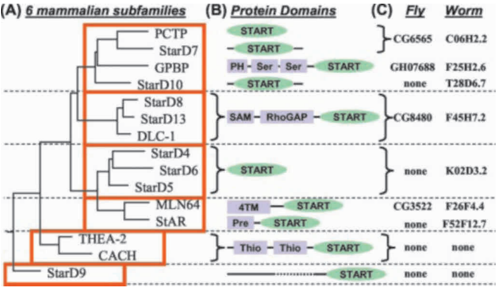
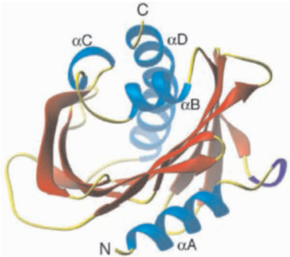
StAR-related lipid transfer (START) 1The abbreviations used are: START, StAR-related lipid transfer; StAR, steroidogenic acute regulatory protein; PCTP, phosphatidylcholine transfer protein; PC, phosphatidylcholine; StarD1, START domain containing 1; GPBP, Goodpasture antigen-binding protein; THEA, thioesterase adiposeassociated; CACH, cytosolic acetyl-CoA hydrolase; DLC-1, deleted in liver cancer 1; PH, Pleckstrin homology; RhoGAP, Rho GTPase-activating protein; SAM, sterile α motif; IMM, inner mitochondrial membrane; OMM, outer mitochondrial membrane; ER, endoplasmic reticulum; NPC, Niemann-Pick C; SRE, sterol regulatory element; SREBP, SRE-binding protein; EST, expressed sequence tag cDNA clone; GP, Goodpasture. domains are ∼210-amino acid lipid binding domains implicated in intracellular lipid transport, lipid metabolism, and cell signaling events. The prototype is the steroidogenic acute regulatory protein (StAR), which transfers cholesterol to mitochondria in steroid hormone-producing cells (1Stocco D.M. Annu. Rev. Physiol. 2001; 63: 193-213Crossref PubMed Scopus (700) Google Scholar). START domains are found in an extensive protein family, including START domain only and multidomain proteins, but lipid ligands have only been identified in a few cases (2Ponting C.P. Aravind L. Trends Biochem. Sci. 1999; 24: 130-132Abstract Full Text Full Text PDF PubMed Scopus (344) Google Scholar). The human and mouse genomes each have 15 genes encoding START domains (Table I), and phylogenetic analysis divides the family into six subfamilies (Fig. 1, A and B) (3Soccio R.E. Adams R.M. Romanowski M.J. Sehayek E. Burley S.K. Breslow J.L. Proc. Natl. Acad. Sci. U. S. A. 2002; 99: 6943-6948Crossref PubMed Scopus (155) Google Scholar).Table INomenclature and chromosomal locations of 15 mammalian START genesStarD nameOther namesMouseHumanStarD1StAR8, 24.5 Mb8, 37.4 MbStAR pseudogene13, 59.8 MbStarD2PCTP11, 90.7 Mb17, 53.6 MbStarD3MLN64, es64, CAB111, 99.1 Mb17, 37.3 MbStarD4CRSP18, 33.4 Mb5, 110.5 MbStarD5None7, 73.3 Mb15, 77.6 MbStarD6None18, 70.8 Mb18, 52.0 MbStarD6 pseudogene10, 56.8 MbStarD7GTT12, 128.3 Mb2, 94.7 MbStarD8KIAA0189-RhoGAPX, 81.9 MbX, 64.1 MbStarD9KIAA13002, 121.1 Mb15, 38.4 MbStarD10PCTP-like, SDCCAG28, CGI-527, 91.1 Mb11, 74.8 MbStarD11GPBP, COL4A3BP13, 93.9 Mb5, 73.5 MbStarD12DLC-1, Arhgap7, p122-RhoGAP8, 35.5 Mb8, 12.7 MbStarD13GT650, 4902678-RhoGAP5, 150.3 Mb13, 31.7 Mb(StarD14)CACH13, 88.9 Mb5, 80.8 Mb(StarD15)THEA, BFIT, KIAA07074, 104.5 Mb1, 54.8 Mb Open table in a new tab X-ray crystal structures have been solved for the MLN64 START domain (4Tsujishita Y. Hurley J.H. Nat. Struct. Biol. 2000; 7: 408-414Crossref PubMed Scopus (450) Google Scholar), StarD4 (5Romanowski M.J. Soccio R.E. Breslow J.L. Burley S.K. Proc. Natl. Acad. Sci. U. S. A. 2002; 99: 6949-6954Crossref PubMed Scopus (142) Google Scholar), and phosphatidylcholine transfer protein (PCTP) (6Roderick S.L. Chan W.W. Agate D.S. Olsen L.R. Vetting M.W. Rajashankar K.R. Cohen D.E. Nat. Struct. Biol. 2002; 9: 507-511PubMed Google Scholar). All three share the same helix-grip fold (7Iyer L.M. Koonin E.V. Aravind L. Proteins. 2001; 43: 134-144Crossref PubMed Scopus (192) Google Scholar), with α-helices at the N and C termini separated by nine β-strands and two shorter α-helices. The curved β-sheet forms a deep pocket with the C-terminal α-helix acting as a lid, resulting in an internal hydrophobic cavity (Fig. 2). The START structure differs from other hydrophobic cavity lipid-binding proteins, such as sterol carrier protein 2 (SCP-2) (8Choinowski T. Hauser H. Piontek K. Biochemistry. 2000; 39: 1897-1902Crossref PubMed Scopus (63) Google Scholar), phosphatidylinositol transfer protein (PITP) (9Yoder M.D. Thomas L.M. Tremblay J.M. Oliver R.L. Yarbrough L.R. Helmkamp Jr., G.M. J. Biol. Chem. 2001; 276: 9246-9252Abstract Full Text Full Text PDF PubMed Scopus (111) Google Scholar), and the fatty acid-binding proteins (FABPs) (10Bernlohr D.A. Simpson M.A. Hertzel A.V. Banaszak L.J. Annu. Rev. Nutr. 1997; 17: 277-303Crossref PubMed Scopus (196) Google Scholar). The PCTP structure was reported with a phosphatidylcholine (PC) molecule in the cavity (6Roderick S.L. Chan W.W. Agate D.S. Olsen L.R. Vetting M.W. Rajashankar K.R. Cohen D.E. Nat. Struct. Biol. 2002; 9: 507-511PubMed Google Scholar), whereas the MLN64 and StarD4 structures contain cavities large enough (∼850 Å3) to accommodate a cholesterol ligand (∼740 Å3) (5Romanowski M.J. Soccio R.E. Breslow J.L. Burley S.K. Proc. Natl. Acad. Sci. U. S. A. 2002; 99: 6949-6954Crossref PubMed Scopus (142) Google Scholar). In each structure, lipid entry or egress would require a major conformational change, most likely opening or unfolding of the C-terminal α-helix lid. In fact, this helix of PCTP has been implicated in membrane binding and PC extraction (11Feng L. Chan W.W. Roderick S.L. Cohen D.E. Biochemistry. 2000; 39: 15399-15409Crossref PubMed Scopus (46) Google Scholar). Furthermore, StAR can form p
Overview
The claims and statistics of this paper haven’t been checked yet.
Free: it reads the open-access text and checks the first 5 claims that cite a source we can check. Create a free account to check every claim.
Integrity signals
Registry
Cites
Statistics
Figures
Verification
Claims the paper makes
The claims and statistics of this paper haven’t been checked yet.
Free: it reads the open-access text and checks the first 5 claims that cite a source we can check. Create a free account to check every claim.
Claims other papers make about this one
Each is checked against this paper’s own text: does it say what the citing paper says it does?
The source backs part of the claim, not all of it — or backs it for a different population, condition or comparison.
In the citing paper
“Analysis of SREBP-responsive transcripts identified a group of proteins termed StarD4, -5, and -6 that are structurally related to StAR, and appear to play major roles in intracellular cholesterol transport (19).”
From The Molecular Biology, Biochemistry, and Physiology of Human Steroidogenesis and Its Disorders (2011) · cites this paper as [19]
Experimental — accuracy not yet measuredThe cited source says what the claim attributes to it.
In the citing paper
“Fifteen START domain (StarD) proteins appear to serve roles in binding and mediating the intracellular transfer of lipids in mammals (19).”
From The Molecular Biology, Biochemistry, and Physiology of Human Steroidogenesis and Its Disorders (2011) · cites this paper as [19]
Self-check
Percentages, sums and reported differences re-computed from the paper’s own numbers.
The self-check needs the paper’s full text.
Citations
Cites
SREBPs: activators of the complete program of cholesterol and fatty acid synthesis in the liver
Horton, J. D., Goldstein, J. L., & Brown, M. S. (2002) · Journal of Clinical Investigation · doi:10.1172/jci15593 · Cited by 4,794
SREBPs: activators of the complete program of cholesterol and fatty acid synthesis in the liver
Horton, J. D., Goldstein, J. L., & Brown, M. S. (2002) · Journal of Clinical Investigation · doi:10.1172/jci0215593 · Cited by 4,092
Genome-wide RNAi analysis of Caenorhabditis elegans fat regulatory genes
Ashrafi, K., Chang, F. Y., Watts, J. L., Fraser, A. G., Kamath, R. S., Ahringer, J., & Ruvkun, G. (2003) · Nature · doi:10.1038/nature01279 · Cited by 980
Transcriptional and Translational Control in the Mammalian Unfolded Protein Response
Harding, H. P., Calfon, M., Urano, F., Novoa, I., & Ron, D. (2002) · Annual Review of Cell and Developmental Biology · doi:10.1146/annurev.cellbio.18.011402.160624 · Cited by 918
StAR protein and the regulation of steroid hormone biosynthesis.
Stocco, D. M. (2001) · Annual Review of Physiology · doi:10.1146/annurev.physiol.63.1.193 · Cited by 917
Rho family proteins: coordinating cell responses
Ridley, A. J. (2001) · Trends in Cell Biology · doi:10.1016/s0962-8924(01)02153-5 · Cited by 766
The pathophysiology and genetics of congenital lipoid adrenal hyperplasia
Bose, H. S., Sugawara, T., Strauss, J. F., & Miller, W. L. (1996) · New England Journal of Medicine · doi:10.1056/nejm199612193352503 · Cited by 676
27-Hydroxycholesterol Is an Endogenous Ligand for Liver X Receptor in Cholesterol-loaded Cells
Fu, X., Menke, J. G., Chen, Y., Zhou, G., MacNaul, K. L., Wright, S. D., Sparrow, C. P., & Lund, E. G. (2001) · Journal of Biological Chemistry · doi:10.1074/jbc.m105805200 · Cited by 572
Structure and lipid transport mechanism of a StAR-related domain
Tsujishita (2000) · Nature Structural Biology · doi:10.1038/75192 · Cited by 535
PHOSPHOLIPID TRANSFER PROTEINS
Wirtz, K. W. A. (1991) · Annual Review of Biochemistry · doi:10.1146/annurev.bi.60.070191.000445 · Cited by 453
Research works printed but not linked: 7
- 6. Roderick, S. L., Chan, W. W., Agate, D. S., Olsen, L. R., Vetting, M. W., Rajashankar, K. R., and Cohen, D. E. (2002) Nat. Struct. Biol. 9, 507-511
- 7. Iyer, L. M., Koonin, E. V., and Aravind, L. (2001) Proteins 43, 134 -144 · DOI · Paper page
- 19. Koh, P. O., Kim, Y. S., Cheon, E. W., Kang, S. S., Cho, G. J., and Choi, W. S. (2002) Mol. Cell 14, 355-360
- 30. Akiyama, N., Sasaki, H., Ishizuka, T., Kishi, T., Sakamoto, H., Onda, M., Hirai, H., Yazaki, Y., Sugimura, T., and Terada, M. (1997) Cancer Res. 57, 3548 -3553
- 31. Moog-Lutz, C., Tomasetto, C., Regnier, C. H., Wendling, C., Lutz, Y., Muller, D., Chenard, M. P., Basset, P., and Rio, M. C. (1997) Int. J. Cancer 71, 183-191 · doi:10.1002/(sici)1097-0215(19970410)71:2<183::aid-ijc10>3.0.co;2-j
- 42. Tall, A. R., Costet, P., and Wang, N. (2002) J. Clin. Invest. 110, 899 -904 · DOI · Paper page
- 64. Ng, I. O., Liang, Z. D., Cao, L., and Lee, T. K. (2000) Cancer Res. 60, 6581-6584
Cited by
Items 101–200 of 308
Olayioye, M. A., Hoffmann, P., Pomorski, T. G., Armes, J. E., Simpson, R. J., Kemp, B. E., Lindeman, G. J., & Visvader, J. E. (2004) · Cancer Research · doi:10.1158/0008-5472.can-03-3731 · Cited by 53
“Of the 15 mammalian START domain-containing proteins, which have been assigned the formal names StarD1–15, Pctp-l/StarD10 displays the highest homology with the Pctp subfamily, consisting of Pctp/StarD2, GTT1/StarD7, and GPBP/StarD11 (41).”
Hepatic cholesterol transport from plasma into bile: implications for gallstone disease
Zanlungo, S., Rigotti, A., & Nervi, F. O. (2004) · Current Opinion in Lipidology · doi:10.1097/00041433-200406000-00007 · Cited by 45
Expression of the Putative Sterol Binding Protein Stard6 Gene Is Male Germ Cell Specific1
Gomes, C., Oh, S.-D., Kim, J.-W., Chun, S.-Y., Lee, K., Kwon, H.-B., & Soh, J. (2005) · Biology of Reproduction · doi:10.1095/biolreprod.104.032672 · Cited by 44
“Steroidogenic acute regulatory (StAR) protein-related lipid transfer (START) domain is believed to bind to hydrophobic lipid molecules [6] to promote intracellular lipid shuttling between subcellular compartments, lipid metabolism, and cell-signaling events [7].”
BackgroundGarbarino, J., Pan, M., Chin, H. F., Lund, F. W., Maxfield, F. R., & Breslow, J. L. (2012) · Journal of Lipid Research · doi:10.1194/jlr.m032227 · Cited by 43
Self-citationNyboer, B., Heiß, K., Mueller, A., & Ingmundson, A. (2017) · International Journal of Medical Microbiology · doi:10.1016/j.ijmm.2017.09.008 · Cited by 53
Tsuchida, K., & Sakudoh, T. (2015) · Archives of Biochemistry and Biophysics · doi:10.1016/j.abb.2014.12.029 · Cited by 50
Point Mutational Analysis of the Liganding Site in Human Glycolipid Transfer Protein
Malakhova, M. L., Malinina, L. V., Pike, H. M., Kanack, A. T., Patel, D. J., & Brown, R. E. (2005) · Journal of Biological Chemistry · doi:10.1074/jbc.m500481200 · Cited by 42
Allan, C. M., Hill, S., Morvaridi, S., Saiki, R., Johnson, J. S., Liau, W.-S., Hirano, K., Kawashima, T., Ji, Z., Loo, J. A., et al. (2013) · Biochimica et Biophysica Acta (BBA) - Molecular and Cell Biology of Lipids · doi:10.1016/j.bbalip.2012.12.007 · Cited by 40
“There are 15 identified members of the START domain protein family in mammals [44].”
BackgroundA PLCδ1-binding protein, p122RhoGAP, is localized in focal adhesions
Kawai, K., Yamaga, M., Iwamae, Y., Kiyota, M., Kamata, H., Hirata, H., Homma, Y., & Yagisawa, H. (2004) · Biochemical Society Transactions · doi:10.1042/bst0321107 · Cited by 41
Alcohol-induced liver disease: when fat and oxidative stress meet
Fernández-Checa, J. C. (2003) · Annals of Hepatology · doi:10.1016/s1665-2681(19)32144-1 · Cited by 43
p38 MAPK regulates steroidogenesis through transcriptional repression of STAR gene
Zaidi, S. K., Shen, W., Bittner, S., Bittner, A., McLean, M. P., Han, J., Davis, R. J., Kraemer, F. B., & Azhar, S. (2014) · Journal of Molecular Endocrinology · doi:10.1530/jme-13-0287 · Cited by 44
“Effect of Bt2cAMP stimulation on mRNA levels of Star and Star-related lipid transfer proteins in MLTC-1 and Y-1 cells The human and mouse genomes each contain 15 genes encoding Star-related lipid transfer (START) domaincontaining proteins (STARD; Soccio & Breslow 2003).”
BackgroundLocalization of StarD5 cholesterol binding protein
Rodríguez‐Agudo, D., Ren, S., Hylemon, P. B., Montañez, R., Redford, K. S., Natarajan, R., Medina, M. Á., Gil, G., & Pandak, W. M. (2006) · Journal of Lipid Research · doi:10.1194/jlr.m500447-jlr200 · Cited by 42
Scapa, E. F., Pocai, A., Wu, M. K., Juárez, R. G., Glenz, L. T., Kanno, K., Li, H. L., Biddinger, S. B., Jelicks, L. A., Rossetti, L., et al. (2008) · The FASEB Journal · doi:10.1096/fj.07-105395 · Cited by 39
Structural Insight into the Self-Sacrifice Mechanism of Enediyne Resistance
Singh, S., Hager, M. H., Zhang, C., Griffith, B. R., Lee, M. S., Hallenga, K., Markley, J. L., & Thorson, J. S. (2006) · ACS Chemical Biology · doi:10.1021/cb6002898 · Cited by 40
Midzak, A., & Papadopoulos, V. (2014) · Traffic · doi:10.1111/tra.12177 · Cited by 38
“(76), and the proteins can be mapped to several distinct subfamilies – many with a characterized ligand, but several with no known ligand.”
BackgroundYue, X., Kong, Y., Zhang, Y., Sun, M., Liu, S., Wu, Z., Gao, L., Liang, X., & Ma, C. (2022) · Cancer Science · doi:10.1111/cas.15449 · Cited by 42
Deleted in liver cancer protein family in human malignancies (Review)
Wilczek, E. (2011) · Oncology Letters · doi:10.3892/ol.2011.345 · Cited by 46
“In particular, StAR localizes to the mitochondria and stimulates the translocation of cholesterol from the outer to the inner mitochondrial membranes (40).”
BackgroundSakudoh, T., Tsuchida, K., & Kataoka, H. (2005) · Biochemical and Biophysical Research Communications · doi:10.1016/j.bbrc.2005.08.241 · Cited by 41
Kim, J.-M., Choi, J.-H., Lee, J. H., Kim, G.-H., Lee, B. H., Kim, H. S., Shin, J.-H., Shin, C.-H., Kim, C. J., Yu, J., et al. (2011) · European Journal of Endocrinology · doi:10.1530/eje-11-0597 · Cited by 36
Hill, R. J., Ringel, A. R., Knuepfer, E., Moon, R. W., Blackman, M. J., & van Ooij, C. (2016) · Journal of Biological Chemistry · doi:10.1074/jbc.m116.740506 · Cited by 36
“Proteins are grouped as described (5, 6).”
Hepatocarcinogenesis and Ceramide/Cholesterol Metabolism
Morales, A., Marí, M., García‐Ruiz, C., Colell, A., & Fernández-Checa, J. C. (2012) · Anti-Cancer Agents in Medicinal Chemistry · doi:10.2174/187152012800228689 · Cited by 37
The TICE Pathway: Mechanisms and Lipid-Lowering Therapies
Grefhorst, A., Verkade, H. J., & Groen, A. K. (2019) · Methodist DeBakey Cardiovascular Journal · doi:10.14797/mdcj-15-1-70 · Cited by 40
The RNA-binding protein, Vg1RBP, is required for pancreatic fate specification
Spagnoli, F. M., & Brivanlou, A. H. (2006) · Developmental Biology · doi:10.1016/j.ydbio.2006.01.022 · Cited by 35
“Indeed, Shirin protein contains two well-conserved domains (RhoGAP and START domains) with uncharacterized roles during embryonic development (Peck et al., 2002; Soccio and Breslow, 2003).”
Genomic signatures of local adaptation reveal source-sink dynamics in a high gene flow fish species
Cure, K., Thomas, L., Hobbs, J., Fairclough, D. V., & Kennington, W. J. (2017) · Scientific Reports · doi:10.1038/s41598-017-09224-y · Cited by 40
The Lipid Transfer Protein StarD7: Structure, Function, and Regulation
Flores‐Martín, J., Rena, V., Angeletti, S., Panzetta-Dutari, G. M., & Genti‐Raimondi, S. (2013) · International Journal of Molecular Sciences · doi:10.3390/ijms14036170 · Cited by 39
“Based on their phylogenetic relationships, the 15 well-characterized mammalian START domain-containing proteins are grouped into six subfamilies [3,12].”
BackgroundKorytowski, W., Pilat, A. K., Schmitt, J. C., & Girotti, A. W. (2013) · Journal of Biological Chemistry · doi:10.1074/jbc.m113.452151 · Cited by 41
Ha, S.-D., Park, S., Han, C. Y., Nguyen, M. L., & Kim, S. O. (2012) · Molecular and Cellular Biology · doi:10.1128/mcb.00494-12 · Cited by 39
“expressed in all tissues (56, 63) and involved in transferring cholesterol from the endolysosomal membrane to the mitochondrial membrane (14, 47, 65).”
BackgroundCholesterol Hydroperoxide Generation, Translocation, and Reductive Turnover in Biological Systems
Girotti, A. W., & Korytowski, W. (2017) · Cell Biochemistry and Biophysics · doi:10.1007/s12013-017-0799-0 · Cited by 38
“proteins are highly specific for Ch and other sterols [41], and also ChOOHs [42].”
BackgroundKang, H. W., Ribich, S. A., Kim, B. W., Hagen, S. J., Bianco, A. C., & Cohen, D. E. (2009) · Journal of Lipid Research · doi:10.1194/jlr.m900013-jlr200 · Cited by 35
Touché! STARD3 and STARD3NL tether the ER to endosomes
Wilhelm, L. P., Tomasetto, C., & Alpy, F. (2016) · Biochemical Society Transactions · doi:10.1042/bst20150269 · Cited by 43
Granulosa Cells: Central Regulators of Female Fertility
Schütz, L. F., & Batalha, I. M. (2024) · Endocrines · doi:10.3390/endocrines5040040 · Cited by 44
“Other proteins have been recognized to transfer cholesterol into the mitochondria of steroidogenic cells, including StarD4, which belongs to a subfamily of StAR-related lipid transfer proteins [26,27].”
Sphingolipids: major regulators of lipid metabolism
Worgall, T. S. (2007) · Current Opinion in Clinical Nutrition & Metabolic Care · doi:10.1097/mco.0b013e328028fda3 · Cited by 32
Revert, F., Ventura, I., Martínez‐Martínez, P., Granero‐Moltó, F., Revert‐Ros, F., Macías, J., & Saus, J. (2008) · Journal of Biological Chemistry · doi:10.1074/jbc.m805026200 · Cited by 32
ApoA-I Lipidation in Primary Mouse Hepatocytes
Zheng, H., Kiss, R. S., Franklin, V., Wang, M., Haidar, B., & Marcel, Y. L. (2005) · Journal of Biological Chemistry · doi:10.1074/jbc.m502200200 · Cited by 34
Borthwick, F., Taylor, J. M. W., Bartholomew, C., & Graham, A. (2009) · FEBS Letters · doi:10.1016/j.febslet.2009.02.042 · Cited by 32
“Recent work implicates proteins containing steroidogenic acute regulatory protein (StAR)-related lipid transfer (START) domains in non-vesicular lipid transport, cell signaling events and, most recently, cellular cholesterol homeostasis [6,7].”
Cholesterol and sphingolipids in alcohol‐induced liver injury
Fernández, A., Colell, A., García‐Ruiz, C., & Fernández-Checa, J. C. (2008) · Journal of Gastroenterology and Hepatology · doi:10.1111/j.1440-1746.2007.05280.x · Cited by 36
TSPO protein binding partners in bacteria, animals, and plants
Hiser, C., Montgomery, B. L., & Ferguson-Miller, S. M. (2021) · Journal of Bioenergetics and Biomembranes · doi:10.1007/s10863-021-09905-4 · Cited by 32
“StAR itself has not been found in plants or bacteria, but many more genes encoding START family proteins have been found in plants than in animals (Soccio and Breslow 2003) and putative START domains have been found in genes from a few bacterial genera and unicellular protists (Schrick et al.”
BackgroundKriska, T., Pilat, A. K., Schmitt, J. C., & Girotti, A. W. (2010) · Journal of Lipid Research · doi:10.1194/jlr.m008342 · Cited by 31
Lin, S., Ikegami, M., Moon, C., Naren, A. P., & Shannon, J. M. (2015) · Journal of Biological Chemistry · doi:10.1074/jbc.m115.666701 · Cited by 30
“The START domain family of proteins comprises 15 members that are known to be involved in lipid or sterol binding (39, 56).”
BackgroundSwarbrick, C. M. D., Roman, N., Cowieson, N. P., Patterson, E. I., Nanson, J. D., Siponen, M. I., Berglund, H., Lehtiö, L., & Forwood, J. K. (2014) · Journal of Biological Chemistry · doi:10.1074/jbc.m114.589408 · Cited by 27
“characterized, but related domains have been shown to act in lipid binding, transferring and sensing domains for phospholipids, sterols, and sphingolipids (19, 20).”
BackgroundMitochondrial targeting of growth suppressor protein DLC2 through the START domain
Ng, D. C.-H., Chan, S. F., Kok, K., Yam, J. W. P., Ching, Y.-P., Ng, I. O., & Jin, D. (2005) · FEBS Letters · doi:10.1016/j.febslet.2005.11.073 · Cited by 34
Schroeder, F., Huang, H., McIntosh, A. L., Atshaves, B. P., Martin, G. G., & Kier, A. B. (2010) · Sub-cellular biochemistry/Subcellular biochemistry · doi:10.1007/978-90-481-8622-8_10 · Cited by 31
Expression and Localization of StarD7 in Trophoblast Cells
Angeletti, S., Rena, V., Nores, R., Fretes, R., Panzetta-Dutari, G. M., & Genti‐Raimondi, S. (2008) · Placenta · doi:10.1016/j.placenta.2008.02.011 · Cited by 29
Role of STARD4 and NPC1 in intracellular sterol transport
Maxfield, F. R., Iaea, D. B., & Pipalia, N. H. (2016) · Biochemistry and Cell Biology · doi:10.1139/bcb-2015-0154 · Cited by 28
Stable reduction of STARD4 alters cholesterol regulation and lipid homeostasis
Iaea, D. B., Spahr, Z. R., Singh, R. K., Chan, R., Zhou, B., Bareja, R., Elemento, O., Paolo, G. D., Zhang, X., & Maxfield, F. R. (2020) · Biochimica et Biophysica Acta (BBA) - Molecular and Cell Biology of Lipids · doi:10.1016/j.bbalip.2020.158609 · Cited by 32
“There are several protein families that are classified as sterol transfer proteins, which have been shown to be capable of transferring sterols between membranes [10, 17-22].”
BackgroundSphingolipid management by an orchestra of lipid transfer proteins
Neumann, S., & Gerrit van, M. E. E. R. (2008) · Biological Chemistry · doi:10.1515/bc.2008.154 · Cited by 31
“…the START domain family of proteins, including lipid transfer proteins for cholesterol (StAR and MLN64), phosphatidylcholine (PCTP), and phosphatidyl-choline and phosphatidylethanolamine (StarD10), all of which are regulated by phosphorylation (Soccio and Breslow, 2003; see Fugmann et al., 2007).”
Shishova, E. Y., Stoll, J. M., Ersoy, B. A., Shrestha, S., Scapa, E. F., Li, Y., Niepel, M. W., Su, Y., Jelicks, L. A., Stahl, G. L., et al. (2011) · Hepatology · doi:10.1002/hep.24393 · Cited by 28
“We selected two closely related START domain proteins.(21) StARD10 is overexpressed in some primary human breast cancers,(22) and like PC-TP, it binds and transfers phosphatidylcholines in vitro.”
MethodRajapaksha, M., Kaur, J., Bose, M., Whittal, R. M., & Bose, H. S. (2013) · Biochemistry · doi:10.1021/bi401125v · Cited by 31
Ibeagha-Awemu, E. M., Li, R., Dudemaine, P.-L., Do, D. N., & Bissonnette, N. (2018) · International Journal of Molecular Sciences · doi:10.3390/ijms19113610 · Cited by 27
“STARD13 encodes for a member of StAR-related lipid transfer (START) proteins which play important roles in the regulation of intracellular lipid metabolism [80].”
BackgroundChapter 2 Organized Trafficking of Anandamide and Related Lipids
Yates, M. L., & Barker, E. L. (2009) · Vitamins and hormones · doi:10.1016/s0083-6729(09)81002-9 · Cited by 31
“The steroidogenic acute regulatory protein (StAR)-related lipid transfer (START) domain protein family is a class of proteins involved in the intracellular transfer of hydrophobic ligands between membranes (Soccio and Breslow, 2003; Wirtz, 2006).”
BackgroundMembrane Contact Sites: Complex Zones for Membrane Association and Lipid Exchange
Quon, E., & Beh, C. T. (2015) · Lipid Insights · doi:10.4137/lpi.s37190 · Cited by 32
STARD3: A Prospective Target for Cancer Therapy
Asif, K., Memeo, L., Palazzolo, S., Frión-Herrera, Y., Parisi, S., Caligiuri, I., Canzonieri, V., Granchi, C., Tuccinardi, T., & Rizzolio, F. (2021) · Cancers · doi:10.3390/cancers13184693 · Cited by 37
“(phosphatidylcholine transfer protein) PCTP/D7/D10) and ceramides (STARD11); group 4 proteins contain the Rho-GTPase-activating domain (STARD8/D12/D13); group 5 contains two thioesterase active domains (STARD14/D15); while group 6 consists of only a single member STARD9 with a motor domain and an FHA domain (N-termina…”
BackgroundŠturm, D. C., & Virant‐Klun, I. (2023) · Reproduction · doi:10.1530/rep-22-0257 · Cited by 29
Calderón‐Domínguez, M., Gil, G., Medina, M. Á., Pandak, W. M., & Rodríguez‐Agudo, D. (2014) · The International Journal of Biochemistry & Cell Biology · doi:10.1016/j.biocel.2014.01.002 · Cited by 40
“The proteins of the START domain superfamily are characterized by a lipid binding domain, which appears in a wide range of proteins involved in several cellular functions, including lipid metabolism and transport, transcriptional regulation and signal transduction [9].”
BackgroundInfluentialWu, M. K., Hyogo, H., Yadav, S. K., Novikoff, P. M., & Cohen, D. E. (2004) · Journal of Lipid Research · doi:10.1194/jlr.m400387-jlr200 · Cited by 27
“In vitro, PC-TP [recently designated StarD2 (6)] catalyzes the intermembrane transfer of phosphatidylcholines, but no other phospholipid class (7).”
New players on the metabolic stage: How do you like Them Acots?
Cohen, D. E. (2012) · Adipocyte · doi:10.4161/adip.21853 · Cited by 28
“Them1 was subsequently incorporated into the Acot family as Acot116 and into the START domain family as StarD14.”
Tillman, M. C., Imai, N., Li, Y., Khadka, M., Okafor, C. D., Juneja, P., Adhiyaman, A., Hagen, S. J., Cohen, D. E., & Ortlund, E. A. (2020) · Proceedings of the National Academy of Sciences · doi:10.1073/pnas.2003877117 · Cited by 28
Korytowski, W., Rodríguez‐Agudo, D., Pilat, A. K., & Girotti, A. W. (2010) · Biochemical and Biophysical Research Communications · doi:10.1016/j.bbrc.2009.12.165 · Cited by 25
Chen, Y., Panter, B., Hussain, A., Gibbs, K., Ferreira, D. W., & Allard, P. (2019) · Reproductive Toxicology · doi:10.1016/j.reprotox.2019.08.001 · Cited by 26
“elegans’ genome codes for 7 proteins, including STRL-1/ StAR, containing a START (StAR-related lipid-transfer domain) and therefore show homology to StAR and are predicted to bind lipids [49], we monitored the expression by qRT-PCR of all seven START domain-containing genes in glp-1 temperature sensitive mutants at pe…”
BackgroundRole of Lipid Transfer Proteins (LTPs) in the Viral Life Cycle
Avula, K., Singh, B., Kumar, P. V., & Syed, G. H. (2021) · Frontiers in Microbiology · doi:10.3389/fmicb.2021.673509 · Cited by 22
Mukherjee, T., Subedi, B., Khosla, A., Begler, E. M., Stephens, P. M., Warner, A. L., Lerma‐Reyes, R., Thompson, K. A., Gunewardena, S., & Schrick, K. (2022) · PLANT PHYSIOLOGY · doi:10.1093/plphys/kiac383 · Cited by 25
Pan, H., Agate, D. S., King, B. L., Wu, M. K., Roderick, S. L., Leiter, E. H., & Cohen, D. E. (2006) · FEBS Letters · doi:10.1016/j.febslet.2006.09.066 · Cited by 23
Mitochondrial Cholesterol and the Paradox in Cell Death
García‐Ruiz, C., Ribas, V., Baulies, A., & Fernández-Checa, J. C. (2016) · Handbook of experimental pharmacology · doi:10.1007/164_2016_110 · Cited by 23
Activation of β-Catenin Signalling Increases StarD7 Gene Expression in JEG-3 Cells
Rena, V., Angeletti, S., Panzetta-Dutari, G. M., & Genti‐Raimondi, S. (2009) · Placenta · doi:10.1016/j.placenta.2009.07.010 · Cited by 23
Impact of Aging on Steroid Hormone Biosynthesis and Secretion
Zaidi, S. K. (2012) · Open Longevity Science · doi:10.2174/1876326x01206010001 · Cited by 26
“StAR is also a prototype of a family of proteins that contain START (StAR-related lipid transfer) domains (StarD proteins) [77], of which StarD3/MLN64, StarD4, StarD5 and StarD6 exhibit steroidogenic potential [78,79].”
BackgroundRegulation of Leydig Cell Cholesterol Metabolism
Azhar, S., & REAVEN, E. P. (2007) · Humana Press eBooks · doi:10.1007/978-1-59745-453-7_8 · Cited by 27
Yamauchi, Y., Reid, P., Sperry, J. B., Furukawa, K., Takeya, M., Chang, C. C. Y., & Chang, T. (2007) · Journal of Biological Chemistry · doi:10.1074/jbc.m703653200 · Cited by 22
Chen, Y.-C., Meier, R. K., Zheng, S., Khundmiri, S. J., Tseng, M. T., Lederer, E. D., Epstein, P. N., & Clark, B. J. (2009) · American Journal of Physiology-Renal Physiology · doi:10.1152/ajprenal.90433.2008 · Cited by 22
“These data suggest a role for STARD5 as a cytosolic sterol transporter that shuttles cholesterol between intracellular membranes; e.g., from the cytoplasm to the ER and/or from the ER to Golgi (24, 30).”
BackgroundInfluentialSterol carrier protein-2 deficiency attenuates diet-induced dyslipidemia and atherosclerosis in mice
He, H., Wang, J., Yannie, P. J., Kakiyama, G., Korzun, W. J., & Ghosh, S. (2018) · Journal of Biological Chemistry · doi:10.1074/jbc.ra118.002290 · Cited by 21
“Although release of FC from the donor membrane is typically rate-limiting, and physical proximity with the acceptor membrane is not required (1, 2), transfer of FC between membranes is enhanced by intracellular transfer/ carrier proteins, such as members of the steroidogenic acute regulatory (StAR) family (3), which a…”
BackgroundLes protéines à domaine START, des trafiquants intracellulaires de lipides
Alpy, F., Legueux, F., Bianchetti, L., & Tomasetto, C. (2009) · médecine/sciences · doi:10.1051/medsci/2009252181 · Cited by 31
“C’est dans le mode de transport non vésiculaire qu’interviennent les protéines à domaine START [(steroidogenic acute regulatory protein) related lipid transfer] qui ont été nommées STARD (START domain containing) [2, 6].”
BackgroundSurface activity and interaction of StarD7 with phospholipid monolayers
Angeletti, S., Maggio, B., & Genti‐Raimondi, S. (2003) · Biochemical and Biophysical Research Communications · doi:10.1016/j.bbrc.2003.12.076 · Cited by 20
Inhibition of DLC-1 gene expression by RNA interference in the colon cancer LoVo cell line
Jin, Y., Tian, X., Shang, Y.-F., & Huang, P. (2008) · Oncology Reports · doi:10.3892/or.19.3.669 · Cited by 21
DLC2/StarD13 plays a role of a tumor suppressor in astrocytoma
El‐Sitt, S., Khalil, B. D., Hanna, S. J., El-Sabban, M. E., Fakhreddine, N., & El‐Sibai, M. (2012) · Oncology Reports · doi:10.3892/or.2012.1819 · Cited by 24
Serum cholestenoic acid as a potential marker of pulmonary cholesterol homeostasis
Meaney, S., Bonfield, T. L., Hansson, M. E. A., Babiker, A., Kavuru, M. S., & Thomassen, M. J. (2004) · Journal of Lipid Research · doi:10.1194/jlr.m400302-jlr200 · Cited by 21
“raises the possibility that a member of this protein family may be responsible for shuttling cholesterol to the mitochondrial lumen in nonsteroidogenic cells (26).”
BackgroundRegulation of Plasma Membrane Sterol Homeostasis by Nonvesicular Lipid Transport
Koh, D. H. Z., & Saheki, Y. (2021) · Contact · doi:10.1177/25152564211042451 · Cited by 25
“They are divided into six subfamilies according to their sequence similarity and ligand binding properties of the START domain (Alpy & Tomasetto, 2014; Soccio & Breslow, 2003).”
BackgroundSánchez‐Solana, B., Wang, D., Qian, X., Parthibane, V., Simanshu, D. K., Acharya, J., & Lowy, D. R. (2021) · Molecular Cancer · doi:10.1186/s12943-021-01439-y · Cited by 21
Cholesterol Redistribution in Pancreatic β-Cells: A Flexible Path to Regulate Insulin Secretion
Galli, A., Arunagiri, A., Dule, N., Castagna, M., Marciani, P., & Perego, C. (2023) · Biomolecules · doi:10.3390/biom13020224 · Cited by 24
Trafficking of oxidative stress-generated lipid hydroperoxides: pathophysiological implications
Girotti, A. W., & Korytowski, W. (2023) · Free Radical Research · doi:10.1080/10715762.2023.2213817 · Cited by 21
Soffientini, U., Caridis, A.-M., Dolan, S., & Graham, A. (2014) · Biochimica et Biophysica Acta (BBA) - Molecular and Cell Biology of Lipids · doi:10.1016/j.bbalip.2014.07.002 · Cited by 23
“fold, found in 15 distinct mammalian proteins (STARD1-D15), providing an adaptable hydrophobic lipid binding or sensing site for sterols, bile acids, phospholipids, ceramides and small drug molecules [19-21].”
BackgroundKang, H. W., Kanno, K., Scapa, E. F., & Cohen, D. E. (2010) · Biochimica et Biophysica Acta (BBA) - Molecular and Cell Biology of Lipids · doi:10.1016/j.bbalip.2009.12.013 · Cited by 21
Overexpression of the cholesterol-binding protein MLN64 induces liver damage in the mouse
Tichauer, J. E., Morales, M. G., Amigo, L., Galdames, L., Klein, A. D., Quiñones, V., Ferrada, C., Alvarez, A. R., Rio, M., Miquel, J. F., et al. (2007) · World Journal of Gastroenterology · doi:10.3748/wjg.v13.i22.3071 · Cited by 22
Regulation of lipid metabolism by sphingolipids
Worgall, T. S. (2008) · Sub-cellular biochemistry/Subcellular biochemistry · doi:10.1007/978-1-4020-8830-8_14 · Cited by 23
The role of mitochondrial dysfunction in ovarian granulosa cells in polycystic ovary syndrome
Yan, X., Ma, D., Li, R., Xu, J., Zou, Y., & He, M. (2025) · Endocrine Connections · doi:10.1530/ec-25-0186 · Cited by 29
“Cholesterol, sourced from plasma or synthesized de novo , is converted into pregnenolone and then progesterone in GCs, which further synthesizes androgens that are converted to estradiol by aromatase (CYP19A1) in GCs (31, 43, 44, 45, 46, 47, 48, 49, 50, 51, 52, 53).”
STARTing to understand MLN64 function in cholesterol transport
Rigotti, A., Cohen, D. E., & Zanlungo, S. (2010) · Journal of Lipid Research · doi:10.1194/jlr.e008854 · Cited by 23
Akula, N., Midzak, A. S., Lecanu, L., & Papadopoulos, V. (2012) · Bioorganic & Medicinal Chemistry Letters · doi:10.1016/j.bmcl.2012.04.058 · Cited by 21
Disruption of Stard10 gene alters the PPARα-mediated bile acid homeostasis
Ito, M., Yamanashi, Y., Toyoda, Y., Izumi‐Nakaseko, H., Oda, S., Sugiyama, A., Kuroda, M., Suzuki, H., Takada, T., & Adachi‐Akahane, S. (2012) · Biochimica et Biophysica Acta (BBA) - Molecular and Cell Biology of Lipids · doi:10.1016/j.bbalip.2012.11.008 · Cited by 22
Phosphatidylcholine transfer protein regulates size and hepatic uptake of high-density lipoproteins
Wu, M. K., & Cohen, D. E. (2005) · American Journal of Physiology-Gastrointestinal and Liver Physiology · doi:10.1152/ajpgi.00194.2005 · Cited by 20
“PC-TP is a member of the steroidogenic acute regulatory (StAR)-related transfer (START) domaincontaining superfamily of proteins (22, 35) and has also been designated StarD2 (30).”
BackgroundPhosphorylation of StarD10 on Serine 284 by Casein Kinase II Modulates Its Lipid Transfer Activity
Olayioye, M. A., Buchholz, M., Schmid, S., Schöffler, P., Hoffmann, P., & Pomorski, T. G. (2007) · Journal of Biological Chemistry · doi:10.1074/jbc.m701990200 · Cited by 18
Eltaher, S., Mourad, A. M. I., Baenziger, P. S., Wegulo, S. N., Belamkar, V., & Sallam, A. (2021) · Frontiers in Genetics · doi:10.3389/fgene.2021.749675 · Cited by 18
“The StART domain is found in many signaling proteins and is believed to have important roles in lipid transport, lipid metabolism and cellular signaling (Soccio and Breslow 2003; Tang et al., 2005).”
BackgroundHatch, G. M., Gu, Y., Xu, F. Y., Cizeau, J., Neumann, S., Park, J.-S., Loewen, S., & Mowat, M. R. A. (2007) · Molecular Biology of the Cell · doi:10.1091/mbc.e06-08-0737 · Cited by 19
“These are Dlc-1 (also named p122RhoGap, Arhgap7), Stard13 (Dlc-2), and StarD8 (KIAA0189 RhoGAP) (Soccio and Breslow, 2003).”
BackgroundExtensive Functional Pleiotropy ofREVOLUTASubstantiated through Forward Genetics
Porth, I. M., Klápště, J., McKown, A. D., Mantia, J. L., Hamelin, R. C., Skyba, O., Unda, F., Friedmann, M. C., Cronk, Q., Ehlting, J., et al. (2013) · PLANT PHYSIOLOGY · doi:10.1104/pp.113.228783 · Cited by 19
“In mammals, besides being important for lipid metabolism and fertility, START domain proteins are also involved in atherosclerosis, autoimmune disease, and cancer and, therefore, are suggested targets for drug development against such diseases (Soccio and Breslow, 2003; Clark, 2012).”
BackgroundElbadawy, H. M., Borthwick, F., Wright, C., Martin, P. E., & Graham, A. (2010) · British Journal of Dermatology · doi:10.1111/j.1365-2133.2010.10102.x · Cited by 16
The changed immunoreactivity of StarD6 after pilocarpine-induced epilepsy
Chang, I. Y., Kim, J. K., Lee, S. M., Kim, J. N., Soh, J., Kim, J. W., & Yoon, S. P. (2009) · Neuroreport · doi:10.1097/wnr.0b013e32832ca264 · Cited by 17
Genetics of Cholesterol Efflux
Iatan, I., Palmyre, A., Alrasheed, S., Ruel, I. L., & Genest, J. J. (2012) · Current Atherosclerosis Reports · doi:10.1007/s11883-012-0247-y · Cited by 20
“The steroidogenic acute regulatory proteins comprise at least 15 proteins involved in cellular cholesterol transport and homeostasis [68].”
BackgroundSterols and their transport in animal development
Ap, P. (2008) · Russian Journal of Developmental Biology · doi:10.1134/s1062360408030016 · Cited by 17
Does the StarD6 mark the same as the StAR in the nervous system?
Chang, I. Y., Jeon, Y. J., Jung, S. M., Jang, Y. H., Ahn, J. B., Park, K. S., & Yoon, S. P. (2010) · Journal of Chemical Neuroanatomy · doi:10.1016/j.jchemneu.2010.06.006 · Cited by 16
Determinants of transhepatic cholesterol flux and their relevance for gallstone formation
Zanlungo, S., & Rigotti, A. (2009) · Liver International · doi:10.1111/j.1478-3231.2009.01972.x · Cited by 17
“The importance of the sterol trafficking capacity of other Star homologues expressed in the liver (74) for the regulation of hepatic cholesterol metabolism and transport has not been addressed.”
BackgroundSTARD3: A Swiss Army Knife for Intracellular Cholesterol Transport
Voilquin, L., Lodi, M., Mattia, T. D., Chenard, M., Mathelin, C., Alpy, F., & Tomasetto, C. (2019) · Contact · doi:10.1177/2515256419856730 · Cited by 24
“The presence of the START domain at the C-terminus qualifies STARD3 as a lipid transfer protein (LTP) from the START superfamily (Figure 1; Alpy & Tomasetto, 2014a; Ponting & Aravind, 1999; Soccio & Breslow, 2003).”
BackgroundZhang, X., Xie, H., Iaea, D. B., Khelashvili, G., Weinstein, H., & Maxfield, F. R. (2022) · Journal of Biological Chemistry · doi:10.1016/j.jbc.2022.102058 · Cited by 13
“The mammalian StarT domain protein family is composed of 15 members that group into six subfamilies based on domain architecture and ligand specificity (13, 14, 16, 17).”
BackgroundCasañal, A., Zander, U., Dupeux, F., Valpuesta, V., & Márquez, J. A. (2013) · Acta Crystallographica Section F Structural Biology and Crystallization Communications · doi:10.1107/s1744309113006945 · Cited by 14
“…widespread in eukaryotes and participate in a variety of processes such as nonvesicular lipid transport and steroid-hormone synthesis in mammals (Soccio & Breslow, 2003) and hormone signalling in plants (Ma et al., 2009; Melcher et al., 2009; Miyazono et al., 2009; Nishimura et al., 2009; Park…”
Background
Metadata
- Authors
- Soccio, R. E., & Breslow, J. L.
- Affiliations
- Rockefeller University (US)
- Corresponding author
- Breslow, Jan L.
- Venue
- Journal of Biological Chemistry
- Publisher
- Elsevier BV
- Published
- 2003-06
- Volume
- 278
- Issue
- 25
- Pages
- 22183-22186
- ISSN
- 0021-9258 (ISSN-L)
- OpenAlex
- W2011920905
- Semantic Scholar
- 63523500744c4a42596cef3a31049061b7999a0c
- Cited by
- 308
- References
- 74
- Citations by year
- 2026: 5 · 2025: 8 · 2024: 15 · 2023: 10 · 2022: 12 · 2021: 12 · 2020: 10 · 2019: 8 · 2018: 6 · 2017: 11 · 2016: 8 · 2015: 16 · 2014: 14 · 2013: 21 · 2012: 15
- FWCI
- 1.81
- Type
- journal article
- Language
- en
- Open access
- hybrid
- doi.org
- Licence
- cc-by
- www.elsevier.com/tdm/userlicense/1.0/ (tdm)
- creativecommons.org/licenses/by/4.0/ (vor, 6324 d)
- Locations
- Journal of Biological Chemistry (publishedVersion, cc-by)
- PubMed (publishedVersion)
- Funders
- National Institutes of Health (GM07739)
- National Heart, Lung, and Blood Institute (R01HL032435, HL32435)
- National Institute of General Medical Sciences (GM 07739, T32GM007739)
- Topics
- Life Sciences › Biochemistry, Genetics and Molecular Biology › Biochemistry › Lipid metabolism and biosynthesis
- Life Sciences › Biochemistry, Genetics and Molecular Biology › Biochemistry › Cholesterol and Lipid Metabolism
- Life Sciences › Biochemistry, Genetics and Molecular Biology › Cancer Research › Cancer, Lipids, and Metabolism
- Keywords
- intracellular lipid transport, lipid metabolism, steroidogenic acute regulatory protein, phosphatidylcholine transfer protein
- MeSH terms
- Animals, Carrier Proteins, Cholesterol, Humans, Intracellular Membranes, Kinetics, Mitochondria, Neoplasm Proteins, Signal Transduction, Evolution, Molecular, Lipid Metabolism
About these checks
Registry, retraction, Cites and statistics results are computed, not judged, with one exception: a printed reference that no index lists is read once by a model before it counts as a citation error. Claims are extracted by a model and kept only when their quote appears verbatim in the text; each cited source is then checked, with a model’s help, for whether it says what the claim relies on. Those verdicts can be wrong — read the claim’s quote and the cited source before relying on one.
Statistics and arithmetic are recomputed, not judged.
Confidence bands are shown only for fields calibrated on our annotated test set. None is calibrated yet, so no band is shown.
What counts as a claim ›How we measure confidence ›How we check this ›
Are you an author, or do you see a problem with this page? Request a review
Data sources
Bibliographic data: Semantic Scholar, OpenAlex, Crossref.
Contains information from the Semantic Scholar Academic Graph Datasets, made available under the ODC Attribution License (ODC-BY 1.0).
Semantic Scholar’s data is described in: Kinney, R., et al. (2023). The Semantic Scholar Open Data Platform. arXiv:2301.10140.
