

StAR-related Lipid Transfer (START) Proteins: Mediators of Intracellular Lipid Metabolism
Open accessThe DOI matches its Crossref record; 72 of the 74 references it cites were found in a registry or an index.
Abstract
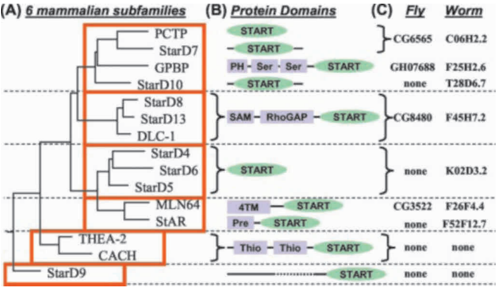
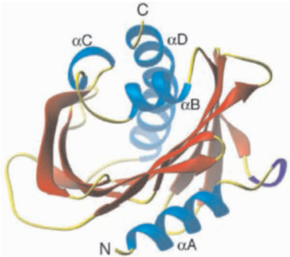
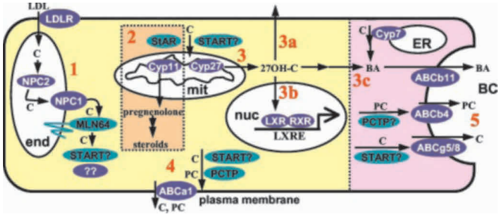
StAR-related lipid transfer (START) 1The abbreviations used are: START, StAR-related lipid transfer; StAR, steroidogenic acute regulatory protein; PCTP, phosphatidylcholine transfer protein; PC, phosphatidylcholine; StarD1, START domain containing 1; GPBP, Goodpasture antigen-binding protein; THEA, thioesterase adiposeassociated; CACH, cytosolic acetyl-CoA hydrolase; DLC-1, deleted in liver cancer 1; PH, Pleckstrin homology; RhoGAP, Rho GTPase-activating protein; SAM, sterile α motif; IMM, inner mitochondrial membrane; OMM, outer mitochondrial membrane; ER, endoplasmic reticulum; NPC, Niemann-Pick C; SRE, sterol regulatory element; SREBP, SRE-binding protein; EST, expressed sequence tag cDNA clone; GP, Goodpasture. domains are ∼210-amino acid lipid binding domains implicated in intracellular lipid transport, lipid metabolism, and cell signaling events. The prototype is the steroidogenic acute regulatory protein (StAR), which transfers cholesterol to mitochondria in steroid hormone-producing cells (1Stocco D.M. Annu. Rev. Physiol. 2001; 63: 193-213Crossref PubMed Scopus (700) Google Scholar). START domains are found in an extensive protein family, including START domain only and multidomain proteins, but lipid ligands have only been identified in a few cases (2Ponting C.P. Aravind L. Trends Biochem. Sci. 1999; 24: 130-132Abstract Full Text Full Text PDF PubMed Scopus (344) Google Scholar). The human and mouse genomes each have 15 genes encoding START domains (Table I), and phylogenetic analysis divides the family into six subfamilies (Fig. 1, A and B) (3Soccio R.E. Adams R.M. Romanowski M.J. Sehayek E. Burley S.K. Breslow J.L. Proc. Natl. Acad. Sci. U. S. A. 2002; 99: 6943-6948Crossref PubMed Scopus (155) Google Scholar).Table INomenclature and chromosomal locations of 15 mammalian START genesStarD nameOther namesMouseHumanStarD1StAR8, 24.5 Mb8, 37.4 MbStAR pseudogene13, 59.8 MbStarD2PCTP11, 90.7 Mb17, 53.6 MbStarD3MLN64, es64, CAB111, 99.1 Mb17, 37.3 MbStarD4CRSP18, 33.4 Mb5, 110.5 MbStarD5None7, 73.3 Mb15, 77.6 MbStarD6None18, 70.8 Mb18, 52.0 MbStarD6 pseudogene10, 56.8 MbStarD7GTT12, 128.3 Mb2, 94.7 MbStarD8KIAA0189-RhoGAPX, 81.9 MbX, 64.1 MbStarD9KIAA13002, 121.1 Mb15, 38.4 MbStarD10PCTP-like, SDCCAG28, CGI-527, 91.1 Mb11, 74.8 MbStarD11GPBP, COL4A3BP13, 93.9 Mb5, 73.5 MbStarD12DLC-1, Arhgap7, p122-RhoGAP8, 35.5 Mb8, 12.7 MbStarD13GT650, 4902678-RhoGAP5, 150.3 Mb13, 31.7 Mb(StarD14)CACH13, 88.9 Mb5, 80.8 Mb(StarD15)THEA, BFIT, KIAA07074, 104.5 Mb1, 54.8 Mb Open table in a new tab X-ray crystal structures have been solved for the MLN64 START domain (4Tsujishita Y. Hurley J.H. Nat. Struct. Biol. 2000; 7: 408-414Crossref PubMed Scopus (450) Google Scholar), StarD4 (5Romanowski M.J. Soccio R.E. Breslow J.L. Burley S.K. Proc. Natl. Acad. Sci. U. S. A. 2002; 99: 6949-6954Crossref PubMed Scopus (142) Google Scholar), and phosphatidylcholine transfer protein (PCTP) (6Roderick S.L. Chan W.W. Agate D.S. Olsen L.R. Vetting M.W. Rajashankar K.R. Cohen D.E. Nat. Struct. Biol. 2002; 9: 507-511PubMed Google Scholar). All three share the same helix-grip fold (7Iyer L.M. Koonin E.V. Aravind L. Proteins. 2001; 43: 134-144Crossref PubMed Scopus (192) Google Scholar), with α-helices at the N and C termini separated by nine β-strands and two shorter α-helices. The curved β-sheet forms a deep pocket with the C-terminal α-helix acting as a lid, resulting in an internal hydrophobic cavity (Fig. 2). The START structure differs from other hydrophobic cavity lipid-binding proteins, such as sterol carrier protein 2 (SCP-2) (8Choinowski T. Hauser H. Piontek K. Biochemistry. 2000; 39: 1897-1902Crossref PubMed Scopus (63) Google Scholar), phosphatidylinositol transfer protein (PITP) (9Yoder M.D. Thomas L.M. Tremblay J.M. Oliver R.L. Yarbrough L.R. Helmkamp Jr., G.M. J. Biol. Chem. 2001; 276: 9246-9252Abstract Full Text Full Text PDF PubMed Scopus (111) Google Scholar), and the fatty acid-binding proteins (FABPs) (10Bernlohr D.A. Simpson M.A. Hertzel A.V. Banaszak L.J. Annu. Rev. Nutr. 1997; 17: 277-303Crossref PubMed Scopus (196) Google Scholar). The PCTP structure was reported with a phosphatidylcholine (PC) molecule in the cavity (6Roderick S.L. Chan W.W. Agate D.S. Olsen L.R. Vetting M.W. Rajashankar K.R. Cohen D.E. Nat. Struct. Biol. 2002; 9: 507-511PubMed Google Scholar), whereas the MLN64 and StarD4 structures contain cavities large enough (∼850 Å3) to accommodate a cholesterol ligand (∼740 Å3) (5Romanowski M.J. Soccio R.E. Breslow J.L. Burley S.K. Proc. Natl. Acad. Sci. U. S. A. 2002; 99: 6949-6954Crossref PubMed Scopus (142) Google Scholar). In each structure, lipid entry or egress would require a major conformational change, most likely opening or unfolding of the C-terminal α-helix lid. In fact, this helix of PCTP has been implicated in membrane binding and PC extraction (11Feng L. Chan W.W. Roderick S.L. Cohen D.E. Biochemistry. 2000; 39: 15399-15409Crossref PubMed Scopus (46) Google Scholar). Furthermore, StAR can form p
Overview
The claims and statistics of this paper haven’t been checked yet.
Free: it reads the open-access text and checks the first 5 claims that cite a source we can check. Create a free account to check every claim.
Integrity signals
Registry
Cites
Statistics
Figures
Verification
Claims the paper makes
The claims and statistics of this paper haven’t been checked yet.
Free: it reads the open-access text and checks the first 5 claims that cite a source we can check. Create a free account to check every claim.
Claims other papers make about this one
Each is checked against this paper’s own text: does it say what the citing paper says it does?
The source backs part of the claim, not all of it — or backs it for a different population, condition or comparison.
In the citing paper
“Analysis of SREBP-responsive transcripts identified a group of proteins termed StarD4, -5, and -6 that are structurally related to StAR, and appear to play major roles in intracellular cholesterol transport (19).”
From The Molecular Biology, Biochemistry, and Physiology of Human Steroidogenesis and Its Disorders (2011) · cites this paper as [19]
Experimental — accuracy not yet measuredThe cited source says what the claim attributes to it.
In the citing paper
“Fifteen START domain (StarD) proteins appear to serve roles in binding and mediating the intracellular transfer of lipids in mammals (19).”
From The Molecular Biology, Biochemistry, and Physiology of Human Steroidogenesis and Its Disorders (2011) · cites this paper as [19]
Self-check
Percentages, sums and reported differences re-computed from the paper’s own numbers.
The self-check needs the paper’s full text.
Citations
Cites
SREBPs: activators of the complete program of cholesterol and fatty acid synthesis in the liver
Horton, J. D., Goldstein, J. L., & Brown, M. S. (2002) · Journal of Clinical Investigation · doi:10.1172/jci15593 · Cited by 4,794
SREBPs: activators of the complete program of cholesterol and fatty acid synthesis in the liver
Horton, J. D., Goldstein, J. L., & Brown, M. S. (2002) · Journal of Clinical Investigation · doi:10.1172/jci0215593 · Cited by 4,092
Genome-wide RNAi analysis of Caenorhabditis elegans fat regulatory genes
Ashrafi, K., Chang, F. Y., Watts, J. L., Fraser, A. G., Kamath, R. S., Ahringer, J., & Ruvkun, G. (2003) · Nature · doi:10.1038/nature01279 · Cited by 980
Transcriptional and Translational Control in the Mammalian Unfolded Protein Response
Harding, H. P., Calfon, M., Urano, F., Novoa, I., & Ron, D. (2002) · Annual Review of Cell and Developmental Biology · doi:10.1146/annurev.cellbio.18.011402.160624 · Cited by 918
StAR protein and the regulation of steroid hormone biosynthesis.
Stocco, D. M. (2001) · Annual Review of Physiology · doi:10.1146/annurev.physiol.63.1.193 · Cited by 917
Rho family proteins: coordinating cell responses
Ridley, A. J. (2001) · Trends in Cell Biology · doi:10.1016/s0962-8924(01)02153-5 · Cited by 766
The pathophysiology and genetics of congenital lipoid adrenal hyperplasia
Bose, H. S., Sugawara, T., Strauss, J. F., & Miller, W. L. (1996) · New England Journal of Medicine · doi:10.1056/nejm199612193352503 · Cited by 676
27-Hydroxycholesterol Is an Endogenous Ligand for Liver X Receptor in Cholesterol-loaded Cells
Fu, X., Menke, J. G., Chen, Y., Zhou, G., MacNaul, K. L., Wright, S. D., Sparrow, C. P., & Lund, E. G. (2001) · Journal of Biological Chemistry · doi:10.1074/jbc.m105805200 · Cited by 572
Structure and lipid transport mechanism of a StAR-related domain
Tsujishita (2000) · Nature Structural Biology · doi:10.1038/75192 · Cited by 535
PHOSPHOLIPID TRANSFER PROTEINS
Wirtz, K. W. A. (1991) · Annual Review of Biochemistry · doi:10.1146/annurev.bi.60.070191.000445 · Cited by 453
Research works printed but not linked: 7
- 6. Roderick, S. L., Chan, W. W., Agate, D. S., Olsen, L. R., Vetting, M. W., Rajashankar, K. R., and Cohen, D. E. (2002) Nat. Struct. Biol. 9, 507-511
- 7. Iyer, L. M., Koonin, E. V., and Aravind, L. (2001) Proteins 43, 134 -144 · DOI · Paper page
- 19. Koh, P. O., Kim, Y. S., Cheon, E. W., Kang, S. S., Cho, G. J., and Choi, W. S. (2002) Mol. Cell 14, 355-360
- 30. Akiyama, N., Sasaki, H., Ishizuka, T., Kishi, T., Sakamoto, H., Onda, M., Hirai, H., Yazaki, Y., Sugimura, T., and Terada, M. (1997) Cancer Res. 57, 3548 -3553
- 31. Moog-Lutz, C., Tomasetto, C., Regnier, C. H., Wendling, C., Lutz, Y., Muller, D., Chenard, M. P., Basset, P., and Rio, M. C. (1997) Int. J. Cancer 71, 183-191 · doi:10.1002/(sici)1097-0215(19970410)71:2<183::aid-ijc10>3.0.co;2-j
- 42. Tall, A. R., Costet, P., and Wang, N. (2002) J. Clin. Invest. 110, 899 -904 · DOI · Paper page
- 64. Ng, I. O., Liang, Z. D., Cao, L., and Lee, T. K. (2000) Cancer Res. 60, 6581-6584
Cited by
Items 201–300 of 308
Thirty years of StAR gazing. Expanding the universe of the steroidogenic acute regulatory protein
Miller, W. L. (2025) · Journal of Endocrinology · doi:10.1530/joe-24-0310 · Cited by 22
Bose, H. S., Whittal, R. M., Debnath, D. K., & Bose, M. (2009) · Biochemistry · doi:10.1021/bi901615v · Cited by 13
Watanabe, S., Matsuyama, S., & Tokuda, H. (2005) · Journal of Biological Chemistry · doi:10.1074/jbc.m509596200 · Cited by 13
Xue, Y., Zhang, H., Tan, K., Ma, H., Li, S., & Zheng, H. (2021) · Food Chemistry Molecular Sciences · doi:10.1016/j.fochms.2021.100072 · Cited by 12
“The StAR gene encodes the steroidogenic acute regulatory (StAR) protein, and the protein with a related lipid transfer domain (START) has been reported as a versatile binding interface for lipids that functions in many distinct processes (Soccio and Breslow, 2003; Swarbrick et al., 2014).”
BackgroundMiyoshi, J., & Takai, Y. (2009) · AfCS-Nature Molecule Pages · doi:10.1038/mp.a002062.01 · Cited by 13
Proteolytic Control of Lipid Metabolism
Sam, P. N., Avery, E., & Claypool, S. M. (2019) · ACS Chemical Biology · doi:10.1021/acschembio.9b00695 · Cited by 13
Iaea, D. B., Mao, S., & Maxfield, F. R. (2014) · Springer eBooks · doi:10.1007/978-1-4939-1112-7_8 · Cited by 13
“[42].”
BackgroundInfluentialLi, P., Zhang, Z., Lv, H., & Sun, P. (2022) · Tissue and Cell · doi:10.1016/j.tice.2022.101971 · Cited by 12
Yatung, S., & Trivedi, A. K. (2024) · Journal of Neuroendocrinology · doi:10.1111/jne.13478 · Cited by 10
“35 A nuclear receptor (Nur77/Nr4a1) is present in steroidogenic cells, and its expression is induced by hormones known to activate StAR expression.”
Korbelik, M., Heger, M., & Girotti, A. W. (2024) · Journal of Lipid Research · doi:10.1016/j.jlr.2024.100729 · Cited by 13
“Intracellular trafficking proteins of the StAR family are specific for Ch and other non-esterified sterol ligands, including ChOOHs such as 7 α / β -OOH (76).”
Katharopoulos, E., Iorgi, N. D., Fernández‐Álvarez, P., Pandey, A. V., Groessl, M., Dubey, S., Camats, N., Napoli, F., Patti, G., Lezzi, M., et al. (2020) · International Journal of Molecular Sciences · doi:10.3390/ijms21176185 · Cited by 10
“This first and rate-limiting step is very important as pregnenolone is the essential precursor for the biosynthesis of all steroids [9,10].”
BackgroundPires, C. V., Oberstaller, J., Wang, C. C. Q., Casandra, D. R., Zhang, M., Chawla, J., Adapa, S. R., Otto, T. D., Ferdig, M. T., Rayner, J. C., et al. (2023) · Microbiology Spectrum · doi:10.1128/spectrum.05014-22 · Cited by 14
“ferring membranous lipid components (46, 47, 49, 50), and ACS7 connects the organ-”
BackgroundHydrophobic Core of the Steroidogenic Acute Regulatory Protein for Cholesterol Transport
Bose, H. S., Whittal, R. M., Bose, M., & Debnath, D. K. (2009) · Biochemistry · doi:10.1021/bi801514e · Cited by 12
The unsolved mystery of apoA-I recycling in adipocyte
Wang, S., Peng, D., & Yi, Y. (2016) · Lipids in Health and Disease · doi:10.1186/s12944-016-0203-x · Cited by 10
“lipid transfer (START) domain protein 3 (StARD3) on late endosomes [60, 61].”
Chang, I. Y., Kim, J. H., Cho, K. W., & Yoon, S. P. (2012) · Acta Histochemica · doi:10.1016/j.acthis.2012.07.001 · Cited by 10
Wu, M. K., & Cohen, D. E. (2005) · American Journal of Physiology-Gastrointestinal and Liver Physiology · doi:10.1152/ajpgi.00107.2005 · Cited by 10
“Phosphatidylcholine transfer protein (PC-TP) is a member of a recently described superfamily of proteins that contains steroidogenic acute regulatory transfer protein-related domains (21, 23, 25, 28).”
BackgroundMECHANISTIC SEQUENCE OF MITOCHONDRIAL CHOLESTEROL TRANSPORT BY StAR PROTEINS
Bose, H. S. (2013) · Cited by 9
Yüksel, B., Kulle, A. E., Gürbüz, F., Welzel, M., Kotan, L. D., Mengen, E., Holterhus, P., Topaloglu, A. K., Grötzinger, J., & Riepe, F. G. (2013) · Hormone Research in Paediatrics · doi:10.1159/000354086 · Cited by 10
Katsumata, N., Horikawa, R., & Tanaka, T. (2006) · Endocrine Journal · doi:10.1507/endocrj.k05-174 · Cited by 8
“This C-terminal 200- to 210-residue motif is known as the StAR-related lipid transfer (START) domain, and this domain is found in many proteins involved in diverse cell functions [28].”
BackgroundHomozygous disruption of Pctp modulates atherosclerosis in apolipoprotein E-deficient mice
Wang, W., Baez, J. M., Maurer, R., Dansky, H. M., & Cohen, D. E. (2006) · Journal of Lipid Research · doi:10.1194/jlr.m600277-jlr200 · Cited by 11
“the steroidogenic acute regulatory-related lipid transfer (START) domain protein superfamily (3).”
BackgroundLee, E. H., Oh, J., Lee, Y., Park, H., Choi, M., Park, S., Kang, S., & Yoon, S. (2012) · Journal of Biochemical and Molecular Toxicology · doi:10.1002/jbt.21409 · Cited by 9
“START is an important StAR domain, and it binds single cholesterol molecules for delivery to P450SCC [35,36].”
BackgroundStructure, function, and lipid sensing activity in the thioesterase superfamily
Little, M., & Ortlund, E. A. (2024) · Biochemical Society Transactions · doi:10.1042/bst20230313 · Cited by 8
Lipid Dyshomeostasis and Inherited Cerebellar Ataxia
Zhao, J., Zhang, H., Fan, X., Yu, X., & Huai, J. (2022) · Molecular Neurobiology · doi:10.1007/s12035-022-02826-2 · Cited by 9
PI(4,5)P2 and Cholesterol: Synthesis, Regulation, and Functions
Rosenhouse‐Dantsker, A., Gazgalis, D., & Logothetis, D. E. (2023) · Advances in experimental medicine and biology · doi:10.1007/978-3-031-21547-6_1 · Cited by 9
StarD5 levels of expression correlate with onset and progression of steatosis and liver fibrosis
Kakiyama, G., Minoiwa, K., Bai-Kamara, N., Hashiguchi, T., Pandak, W. M., & Rodríguez‐Agudo, D. (2024) · American Journal of Physiology-Gastrointestinal and Liver Physiology · doi:10.1152/ajpgi.00024.2024 · Cited by 10
Mboge, M. Y., Ramirez-Mata, A. S., Bullock, A., O’Donnell, R., Mathias, J. V., Davila, J., Frost, S. C., & Frost, S. C. (2019) · Current Topics in Biochemical Research · doi:10.31300/ctbr.20.2019.1-16 · Cited by 8
Disorders in the Initial Steps in Steroidogenesis
Miller, W. L., & Gucev, Z. S. (2013) · Elsevier eBooks · doi:10.1016/b978-0-12-416006-4.00011-9 · Cited by 7
Identification of candidate genes associated with skin yellowness in yellow chickens
He, S., Ren, T., Lin, W., Yang, X., Hao, T., Zhao, G., Luo, W., Nie, Q., & Zhang, X. (2023) · Poultry Science · doi:10.1016/j.psj.2022.102469 · Cited by 8
Pabisz, P., Bazak, J., Sabat, M. J., Girotti, A. W., & Korytowski, W. (2023) · Cell Biochemistry and Biophysics · doi:10.1007/s12013-023-01194-5 · Cited by 9
“It has been proposed that StarD4, for example, moves Ch through the cytosol to the outer Mito membrane, where resident StarD1 and associated proteins then move it to the inner membrane for conversion to pregnenolone [7, 12 – 14].”
BackgroundInfluentialHu, J. H., Qiu, J., Mao, W., Zhong, S., Sun, H., & Mao, K. (2024) · Discover Oncology · doi:10.1007/s12672-024-01434-x · Cited by 7
“STARD7 is a member of the star related lipid transfer superfamily, which plays a crucial role in the transport and binding of lipids and steroids [14].”
BackgroundGirotti, A. W., & Korytowski, W. (2021) · Photochemistry and Photobiology · doi:10.1111/php.13537 · Cited by 8
Pabisz, P., Bazak, J., Girotti, A. W., & Korytowski, W. (2022) · Biochemical and Biophysical Research Communications · doi:10.1016/j.bbrc.2021.12.117 · Cited by 7
Lu, S., He, H., Wang, P., Gou, H., Cao, X., Ma, Z., Chen, B., & Mao, J. (2022) · Physiologia Plantarum · doi:10.1111/ppl.13772 · Cited by 7
What does Evolution Teach us about Nuclear Receptors?
Markov, G. V., Bonneton, F., & Laudet, V. (2010) · Springer eBooks · doi:10.1007/978-90-481-3303-1_2 · Cited by 8
“The Steroidogenic Acute Regulatory-related lipid Transfer (START) domain was first identified in mammals as a lipid-sterol binding motif [27].”
BackgroundSun, Z. N. Y. F. A. Z. Y., Shen, W., Leers‐Sucheta, S., & Azhar, S. (2008) · Open Longevity Science · doi:10.2174/1876326x00802010076 · Cited by 7
“StAR is also a prototype of a family of proteins that contain START (StAR-related lipid transfer) domains (StarD proteins) [36], of which StarD3/ MLN64, StarD4, StarD5 and StarD6 exhibit steroidogenic potential [38,39].”
BackgroundSTARD3: A Lipid Transfer Protein in Breast Cancer and Cholesterol Trafficking
Alpy, F., & Tomasetto, C. (2014) · Springer eBooks · doi:10.1007/978-1-4939-1112-7_6 · Cited by 12
Rosado-Olivieri, E. A., Ramos-Ortiz, G. A., Hernández‐Pasos, J., Díaz-Balzac, C. A., Vázquez‐Rosa, E., Valentín‐Tirado, G., Vega, I. E., & García‐Arrarás, J. E. (2017) · Comparative Biochemistry and Physiology Part B Biochemistry and Molecular Biology · doi:10.1016/j.cbpb.2017.08.004 · Cited by 7
“The domain is conserved through evolution in plants and animals, serving as the binding interface for lipids that function in a myriad of processes (Soccio and Breslow, 2003; Schrick et al., 2003).”
Generation and Reactivity of Lipid Hydroperoxides in Biological Systems
Girotti, A. W., & Korytowski, W. (2013) · Patai's chemistry of functional groups · doi:10.1002/9780470682531.pat0864 · Cited by 7
Mahtha, S. K., Purama, R. K., & Yadav, G. (2021) · Frontiers in Genetics · doi:10.3389/fgene.2021.737194 · Cited by 7
Cavity architecture based modulation of ligand binding tunnels in plant START domains
Mahtha, S. K., Kumari, K., Gaur, V., & Yadav, G. (2023) · Computational and Structural Biotechnology Journal · doi:10.1016/j.csbj.2023.07.039 · Cited by 8
“…perform lipid transport between intracellular compartments, lipid metabolism, lipid signalling modulation and many other physiological processes, and are reported to be involved in cancer, atherosclerosis, autoimmune diseases etc., thus forming potential targets for drug development [13,14].”
Granatosky, E. A., DiPrimio, N., Pickering, J. R. E., Stevens, D. C., Perlstein, E. O., & Taylor, R. E. (2018) · Journal of Natural Products · doi:10.1021/acs.jnatprod.8b00314 · Cited by 7
START domains generate paralog-specific regulons from a single network architecture
Holub, A. S., Choudury, S. G., Andrianova, E. P., Dresden, C. E., Camacho, R. A. U., Zhulin, I. B., & Husbands, A. Y. (2024) · Nature Communications · doi:10.1038/s41467-024-54269-z · Cited by 8
“StARkin domains are present throughout the Tree of life and are de fi ned by a conserved α / β helix grip fold structure 38 – 40 .”
Ni, P., Li, C., Fu, Y., Stover, N. A., & Li, L. (2025) · Journal of Hazardous Materials · doi:10.1016/j.jhazmat.2025.138963 · Cited by 5
Chang, I. Y., Ohn, T., Jeon, Y. J., Lee, K. H., Kim, J. W., Kim, I. Y., & Yoon, S. P. (2013) · Acta Histochemica · doi:10.1016/j.acthis.2013.11.008 · Cited by 5
Shuttle mission in the mitochondrial intermembrane space
Endo, T., & Tamura, Y. (2018) · The EMBO Journal · doi:10.15252/embj.201898993 · Cited by 5
“START domains are ~ 210 residue-long, lipid-binding domains and are likely involved in lipid transport, lipid metabolism, and lipid regulation of signal transduction (Soccio & Breslow, 2003).”
Holub, A. S., Bouley, R. A., Petreaca, R. C., & Husbands, A. Y. (2020) · International Journal of Molecular Sciences · doi:10.3390/ijms21218175 · Cited by 5
Teng, H., Cai, W., Zeng, K., Mao, F., You, M., Wang, T., Zhao, F., & Sun, Z. S. (2013) · Gene · doi:10.1016/j.gene.2013.01.058 · Cited by 6
“Fifteen START domaincontaining proteins (STARD1–STARD15) have been identified in humans (Soccio and Breslow, 2003), and hundreds have been determined in invertebrates, bacteria andplants.”
BackgroundResultInfluentialWang, H., Chen, Y., Zhao, C., Ping, X., Jin, Z., Duan, Q., Song, B., Ren, Z., & Dong, X. (2025) · BMC Genomics · doi:10.1186/s12864-025-11950-x · Cited by 6
“STARD13 was identified as a candidate gene for regulating milk metabolism and production in a bovine mammary gland transcriptome analysis [54].”
Identification of phosphatidylcholine transfer protein-like in the parasite Entamoeba histolytica
Piña‐Vázquez, C., Reyes‐López, M., Mendoza‐Hernández, G., Bermúdez‐Cruz, R. M., & de la Garza, M. (2014) · Biochimie · doi:10.1016/j.biochi.2014.09.007 · Cited by 4
Tian, J., Zhang, S., Liu, Z., Zhuang, Y., Wang, Y., & Jiang, S. (2007) · Cell and Tissue Research · doi:10.1007/s00441-007-0465-8 · Cited by 4
“It is of interest to note that AmphiPCTP START domain is similar to that of mammalian PCTPs (Roderick et al. 2002; Soccio and Breslow 2003) encompassing”
BackgroundInfluentialFu, Y., Yao, M., Qiu, P. S., Song, M., Ni, X., Niu, E., Shi, J., Wang, T., Zhang, Y., Yu, H., et al. (2024) · Theoretical and Applied Genetics · doi:10.1007/s00122-024-04733-7 · Cited by 3
“However, the START domain of other HD-Zip IV TF members has been reported for FAs transfer, lipid sensing, and oil accumulation in mammals or plants (Hirashima et al. 2021; Létourneau et al. 2012; Nagata and Abe 2021; Soccio and Breslow 2003; Tillman et al. 2020).”
Binding and Cytotoxic Trafficking of Cholesterol Hydroperoxides by Sterol Carrier Protein-2
Girotti, A. W., & Kriska, T. (2014) · Methods in molecular biology · doi:10.1007/978-1-4939-1441-8_30 · Cited by 3
Nara, A., & Komiya, T. (2015) · American Journal of Life Sciences · doi:10.11648/j.ajls.s.2015030302.19 · Cited by 4
“The StAR-related lipid transfer (START) domain is made up of approximately 210 amino-acid residues and has been implicated in intracellular membrane transport, lipid metabolism, and cell signaling [16-19].”
BackgroundJefcoate, C. R. E., & Artemenko, I. P. (2004) · Topics in current genetics · doi:10.1007/b97159 · Cited by 3
Xu, X., Mendoza, A., Krumm, C. S., Su, S., Acuña, M., Bare, C. J., Holman, C. D., Cortopassi, M. D., Nicholls, H. T., Dartigue, V., et al. (2024) · Science Signaling · doi:10.1126/scisignal.adk7971 · Cited by 3
Chattopadhyay, A., Tirumalasetty, M. B., Palaia, T. A., Gangula, B., Ruoff, R., Miao, Q., & Hussain, M. M. (2026) · iScience · doi:10.1016/j.isci.2026.115817 · Cited by 3
“36,37 STARD4 functions as a general non-vesicular cholesterol transporter and transports cholesterol from different organelles to mitochondria, whereas STARD1, commonly known as StAR, acts at the OMM to promote cholesterol transfer from the OMM to IMM.”
5,6-epoxycholestanols metabolism and functions: Defining the epoxycholestanoid (EChA) family
Buñay, J., Ayadi, S., Gressein, C., Boudani, M., Commerçon, R., Le, P., Pucheu, L., Record, M., de Médina, P., Silvente‐Poirot, S., et al. (2026) · Progress in Lipid Research · doi:10.1016/j.plipres.2026.101386 · Cited by 5
Thomson, M. (2010) · Current Signal Transduction Therapy · doi:10.2174/157436210791112181 · Cited by 2
“region [41,42] and is lined with a C-terminal α-helix that contains hydrophobic side chains”
BackgroundLoffreda, A., Schlame, M., & Bütikofer, P. (2022) · PLoS ONE · doi:10.1371/journal.pone.0259752 · Cited by 2
Is there potential for estradiol receptor signaling in lophotrochozoans?
Murillo, A., & Wilson, J. Y. (2024) · General and Comparative Endocrinology · doi:10.1016/j.ygcen.2024.114519 · Cited by 2
Wilson, K., & Arunachalam, S. (2024) · Indian Journal of Microbiology · doi:10.1007/s12088-024-01343-1 · Cited by 3
“Proteins with START domains can bind various ligands such as sterols (StAR protein) and phosphatidylcholine (PC-TP) [57].”
Cell Biology and Regulation of Adult and Aging Leydig Cell Steroidogenesis
Papadopoulos, V., Garza, S., & Zirkin, B. R. (2025) · Springer eBooks · doi:10.1007/978-3-031-96376-6_4 · Cited by 2
Vega‐Badillo, J. (2016) · TIP Revista Especializada en Ciencias Químico-Biológicas · doi:10.1016/j.recqb.2016.11.005 · Cited by 3
Genetics and molecular biology
Ikonen, E. (2004) · Current Opinion in Lipidology · doi:10.1097/00041433-200404000-00016 · Cited by 2
AtAPOSTART1, an Arabidopsis thaliana PH-START domain protein involved in seed germination
Resentini, F., Vanzulli, S., Marconi, G., Lucia Colombo, A., Albertini, E., & Masiero, S. (2014) · Plant Biosystems - An International Journal Dealing with all Aspects of Plant Biology · doi:10.1080/11263504.2014.980361 · Cited by 2
“The PH domain, initially identified in pleckstrin (Haslam et al. 1993; Mayer et al. 1993), together with the START domain, is involved in intracellular signalling (Lemmon & Ferguson 2000; Soccio & Breslow 2003).”
Huttunen, H. J., & Kovacs, D. M. (2007) · Springer eBooks · doi:10.1007/978-0-387-35135-3_6 · Cited by 2
“Nonvesicular transport, in general, can be mediated by diffusible carrier proteins such as sterol-carrier proteins (SCP) and members of StAR-related lipid transfer protein (START) family that have hydrophobic cavities to bind cholesterol (Soccio and Breslow, 2003).”
Genetics and molecular biology
Ikonen, E. (2005) · Current Opinion in Lipidology · doi:10.1097/01.mol.0000194124.15216.e4 · Cited by 3
Luo, X., Lu, J., Li, Y., Zhang, X., Gao, L., Xia, T., & Han, Y. (2025) · BMC Plant Biology · doi:10.1186/s12870-025-06619-2 · Cited by 3
“In tea plant, subfamily III and IV CsHDZs harboring START domain were speculated to possess lipid/sterol binding capability involved in transport and metabolism of lipid, or cell signaling transduction [14, 15].”
Dim light at night alters photoperiodic perception in male Syrian hamsters (Mesocricetus auratus)
Hnamler, L., Renthlei, Z., & Trivedi, A. K. (2025) · Photochemical & Photobiological Sciences · doi:10.1007/s43630-025-00812-w · Cited by 1
“A mitochondrial protein, the Steroidogenic Acute Regulatory protein (StAR), transports cholesterol from the outer mitochondrial membrane into the inner mitochondrial membrane ([20]).”
Shostak, K., Chen, Y., Maurizy, C., Rademaker, G., Xu, X., Blomme, A., Close, P., Renson, O., Hul, M. V., Cani, P. D., et al. (2026) · EMBO Molecular Medicine · doi:10.1038/s44321-026-00409-5 · Cited by 1
“In mammals, START domains are found in 15 members (Stard1-Stard15) which can be further classi fi ed into six subfamilies based on the sequence and ligand similarities (Soccio and Breslow, 2003; Alpy and Tomasetto, 2005).”
Distinct lipid transport proteins are regulated by innate immune stimuli
Tsamouri, L. P., Aljadeed, N. M., Olona, A., & Anand, P. (2026) · Discovery Immunology · doi:10.1093/discim/kyag014 · Cited by 2
“The STARD protein family, in contrast, primarily facilitates intracellular cholesterol movement to mitochondria, supporting synthesis and energy metabolism [23, 24].”
Sterol-binding proteins and endosomal cholesterol transport
Du, X., & Yang, H. (2011) · Frontiers in Biology · doi:10.1007/s11515-011-1143-5 · Cited by 1
Clark, B. J., & Stocco, D. M. (2014) · Springer eBooks · doi:10.1007/978-1-4939-1112-7_1 · Cited by 1
Chen, Z., Tang, Y., Jiang, W., & Zhou, X. (2022) · Journal of Biomaterials and Tissue Engineering · doi:10.1166/jbt.2022.2960 · Cited by 1
Is STARD3 A New Biomarker for Breast Cancer?
Korucu, A. N., & İnandıklıoğlu, N. (2024) · European Journal of Breast Health · doi:10.4274/ejbh.galenos.2024.2024-1-7 · Cited by 4
The STARD4 Subfamily: STARD4 and STARD5 in Cholesterol Metabolism
Soccio, R. E. (2014) · Springer eBooks · doi:10.1007/978-1-4939-1112-7_7 · Cited by 1
Self-citationNarce, M., & Poisson, J. (2004) · Current Opinion in Lipidology · doi:10.1097/00041433-200412000-00012 · Cited by 1
Role of hypercholesterolemia in osteoarthritis development
Farnaghi, S. (2017) · Queensland University of Technology · doi:10.5204/thesis.eprints.103634 · Cited by 2
Tillman, M. C., Imai, N., Li, Y., Khadka, M., Okafor, C. D., Juneja, P., Adhiyaman, A., Hagen, S. J., Cohen, D. E., & Ortlund, E. A. (2020) · bioRxiv (Cold Spring Harbor Laboratory) · doi:10.1101/2020.02.18.954917 · Cited by 1
Pil, S. (2011) · InTech eBooks · doi:10.5772/17294
“START domain is an evolutionary conserved protein module of approximately 210 amino acids (Soccio & Breslow, 2003; Alpy & Tomasetto, 2005; Lavigne et al., 2010).”
BackgroundThe role of the deleted in liver cancer protein family in breast epithelial cell transformation
Holeiter, G. (2009) · OPUS Publication Server of the University of Stuttgart (University of Stuttgart) · doi:10.18419/opus-1820
“domain-containing proteins have been identified (62; 63) which are involved in lipid transfer”
BackgroundIntracrine regulation of androgen receptor in prostate cancer
Dillard, P. (2010) · Atlanta University Center Robert W. Woodruff Library (Atlanta University Center Robert W. Woodruff Library)
de Vasconcelos, R. B. (2008) · Americanae (AECID Library) · Cited by 1
Investigation of START Domain Proteins in Human Luteinized Cells and COS-1 Cells
Shi, B. (2013) · Scholar Commons (University of South Carolina)
Cholesterol in the endocytic pathway
Hölttä‐Vuori, M. (2005) · Helda - University of Helsinki Institutional Repository
An investigation into the catalytic activity of porcine cytochrome P450 17α-hydroxylase/17,20-lyase
Fox, C.-L. (2014) · SUNScholar (Stellenbosch University)
processing and utilization for biosynthesis of steroid hormones
Hu, J., Zhang, Z., Shen, W., & Azhar, S. (2010)
Les protéines à domaine START, des trafiquants intracellulaires
Tomasetto, C., Alpy, F., Legueux, F., & Bianchetti, L. (2009)
8 Vetzuur- en cholesterolafgeleiden
Schuit, F. C. (2010) · Bohn Stafleu van Loghum eBooks · doi:10.1007/978-90-313-8225-5_8
Reid, C. (2015) · Scholarship@Western (Western University)
Soffientini, U. (2015) · Journal of Diabetes & Metabolism · doi:10.4172/2155-6156.1000558 · Cited by 1
“Introduction Non-vesicular trafficking of lipids is mediated by two major gene families: the oxysterol-binding protein (OSBP) related proteins (ORPs) [1,2] and the steroidogenic acute regulatory protein (StAR)-related lipid transfer (START) domain family [3-5].”
BackgroundQuon, E. (2018) · Summit (Simon Fraser University)
Hosseini, Y. (2021) · Brock University Digital Repository (Brock University)
He, H., Gou, H., Zhou, Q., Cao, X., Wang, P., Lu, S., Liang, G., Ma, Z., Chen, B., & Mao, J. (2021) · Research Square · doi:10.21203/rs.3.rs-399598/v1
Gallemí, M. (2013) · Dipòsit Digital de la Universitat de Barcelona (Universitat de Barcelona) · Cited by 1
He, H., Lu, S., Gou, H., Cao, X., Wang, P., Ma, Z., Chen, B., & Mao, J. (2022) · Research Square · doi:10.21203/rs.3.rs-1109124/v1
Lu, S., He, H., Gou, H., Zhou, Q., Cao, X., Wang, P., Liang, G., Ma, Z., Chen, B., & Mao, J. (2022) · Research Square · doi:10.21203/rs.3.rs-399598/v2
Vetzuur- en cholesterolafgeleiden
Schuit, F. C. (2019) · Bohn Stafleu van Loghum eBooks · doi:10.1007/978-90-368-2358-6_8
Vetzuur- en cholesterolafgeleiden
Schuit, F. C. (2015) · Bohn Stafleu van Loghum eBooks · doi:10.1007/978-90-368-0620-6_8
Metadata
- Authors
- Soccio, R. E., & Breslow, J. L.
- Affiliations
- Rockefeller University (US)
- Corresponding author
- Breslow, Jan L.
- Venue
- Journal of Biological Chemistry
- Publisher
- Elsevier BV
- Published
- 2003-06
- Volume
- 278
- Issue
- 25
- Pages
- 22183-22186
- ISSN
- 0021-9258 (ISSN-L)
- OpenAlex
- W2011920905
- Semantic Scholar
- 63523500744c4a42596cef3a31049061b7999a0c
- Cited by
- 308
- References
- 74
- Citations by year
- 2026: 5 · 2025: 8 · 2024: 15 · 2023: 10 · 2022: 12 · 2021: 12 · 2020: 10 · 2019: 8 · 2018: 6 · 2017: 11 · 2016: 8 · 2015: 16 · 2014: 14 · 2013: 21 · 2012: 15
- FWCI
- 1.81
- Type
- journal article
- Language
- en
- Open access
- hybrid
- doi.org
- Licence
- cc-by
- www.elsevier.com/tdm/userlicense/1.0/ (tdm)
- creativecommons.org/licenses/by/4.0/ (vor, 6324 d)
- Locations
- Journal of Biological Chemistry (publishedVersion, cc-by)
- PubMed (publishedVersion)
- Funders
- National Institutes of Health (GM07739)
- National Heart, Lung, and Blood Institute (R01HL032435, HL32435)
- National Institute of General Medical Sciences (GM 07739, T32GM007739)
- Topics
- Life Sciences › Biochemistry, Genetics and Molecular Biology › Biochemistry › Lipid metabolism and biosynthesis
- Life Sciences › Biochemistry, Genetics and Molecular Biology › Biochemistry › Cholesterol and Lipid Metabolism
- Life Sciences › Biochemistry, Genetics and Molecular Biology › Cancer Research › Cancer, Lipids, and Metabolism
- Keywords
- intracellular lipid transport, lipid metabolism, steroidogenic acute regulatory protein, phosphatidylcholine transfer protein
- MeSH terms
- Animals, Carrier Proteins, Cholesterol, Humans, Intracellular Membranes, Kinetics, Mitochondria, Neoplasm Proteins, Signal Transduction, Evolution, Molecular, Lipid Metabolism
About these checks
Registry, retraction, Cites and statistics results are computed, not judged, with one exception: a printed reference that no index lists is read once by a model before it counts as a citation error. Claims are extracted by a model and kept only when their quote appears verbatim in the text; each cited source is then checked, with a model’s help, for whether it says what the claim relies on. Those verdicts can be wrong — read the claim’s quote and the cited source before relying on one.
Statistics and arithmetic are recomputed, not judged.
Confidence bands are shown only for fields calibrated on our annotated test set. None is calibrated yet, so no band is shown.
What counts as a claim ›How we measure confidence ›How we check this ›
Are you an author, or do you see a problem with this page? Request a review
Data sources
Bibliographic data: Semantic Scholar, OpenAlex, Crossref.
Contains information from the Semantic Scholar Academic Graph Datasets, made available under the ODC Attribution License (ODC-BY 1.0).
Semantic Scholar’s data is described in: Kinney, R., et al. (2023). The Semantic Scholar Open Data Platform. arXiv:2301.10140.
