

The DOI matches its Crossref record; 53 of the 53 references it cites were found in a registry or an index.
ER stress is not elevated in the 5XFAD mouse model of Alzheimer's disease
Abstract
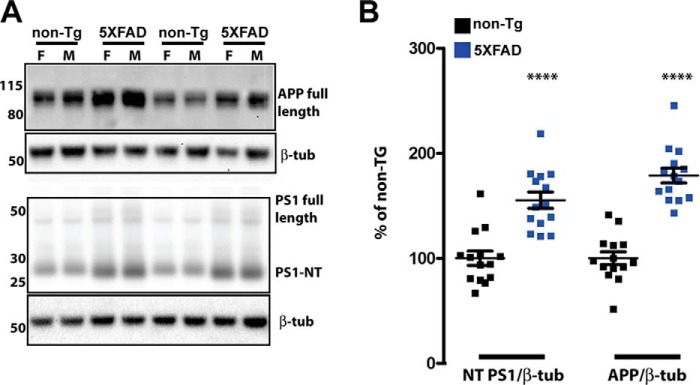
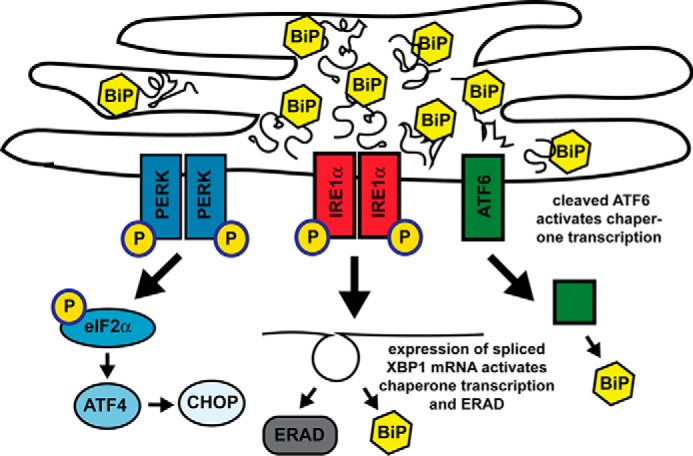
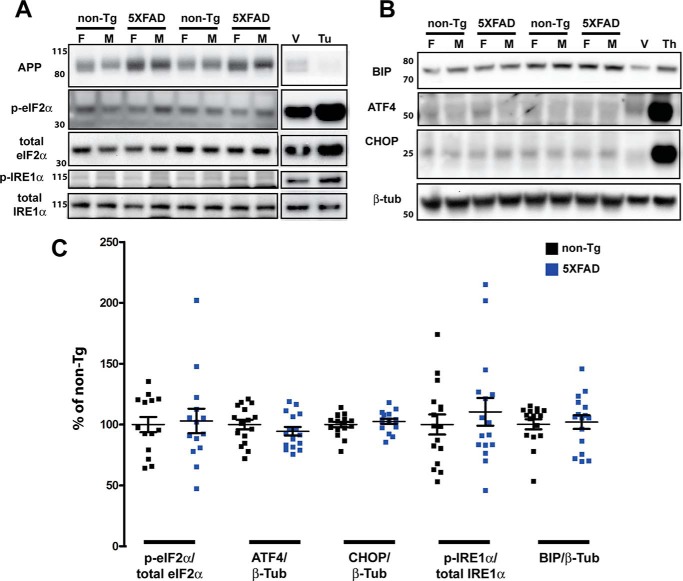
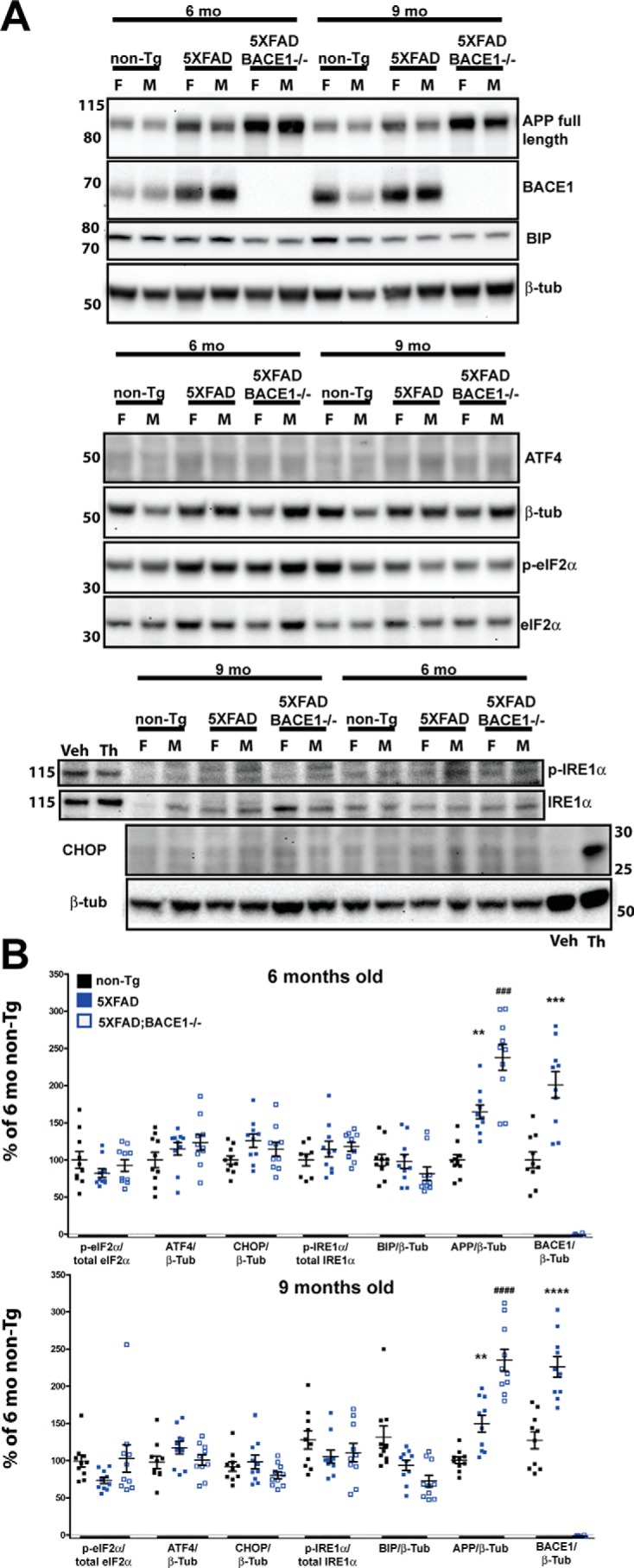
Alzheimer's disease mouse models that overexpress amyloid precursor protein (APP) and presenilin 1 (PS1) form β-amyloid (Aβ) plaques, a hallmark Alzheimer's disease lesion. It has been assumed that the neuroinflammation, synaptic dysfunction, neurodegeneration, and cognitive impairment observed in these mice are caused by cerebral Aβ accumulation. However, it is also possible that accumulation of the overexpressed transmembrane proteins APP and PS1 in the endoplasmic reticulum (ER) triggers chronic ER stress and activation of the unfolded protein response (UPR). The 5XFAD mouse, a widely used amyloid pathology model, overexpresses APP and PS1, displays aggressive amyloid pathology, and has been reported to exhibit ER stress. To systematically evaluate whether 5XFAD mice have increased ER stress, here we used biochemical approaches to assess a comprehensive panel of UPR markers. We report that APP and PS1 levels are 1.8- and 1.5-fold, respectively, of those in 5XFAD compared with nontransgenic brains, indicating that transgenes are not massively overexpressed in 5XFAD mice. Using immunoblotting, we quantified UPR protein levels in nontransgenic, 5XFAD, and 5XFAD;BACE1 −/− mice at 4, 6, and 9 months of age. Importantly, we did not observe elevation of the ER stress markers p-eIF2α, ATF4, CHOP, p-IRE1α, or BiP at any age in 5XFAD or 5XFAD;BACE1 −/− compared with nontransgenic mice. Despite lacking Aβ generation, 5XFAD;BACE1 −/− mice still expressed APP and PS1 transgenes, indicating that their overexpression does not cause ER stress. These results reveal the absence of ER stress in 5XFAD mice, suggesting that artifactual phenotypes associated with overexpression-induced ER stress are not a concern in this model.
Overview
The claims and statistics of this paper haven’t been checked yet.
Run the check — free, no account needed. It reads the open-access text and checks the sources it cites.
Integrity signals
Registry
Cites
Statistics
Figures
Verification
Claims the paper makes
The claims and statistics of this paper haven’t been checked yet.
Run the check — free, no account needed. It reads the open-access text and checks the sources it cites.
Claims other papers make about this one
Each is checked against this paper’s own text: does it say what the citing paper says it does?
The source backs part of the claim, not all of it — or backs it for a different population, condition or comparison.
In the citing paper
“this is explained by increased expression of the Thy1 promoter used to drive the transgenes in this model which has an estrogen response element40,41 resulting in generation of higher levels of Aβ4,42.”
From Systematic phenotyping and characterization of the 5xFAD mouse model of Alzheimer’s disease. (2021) · cites this paper as [41]
Experimental — accuracy not yet measured
Self-check
Percentages, sums and reported differences re-computed from the paper’s own numbers.
The self-check needs the paper’s full text.
Citations
Cites
The amyloid hypothesis of Alzheimer's disease at 25 years
Selkoe, D. J., & Hardy, J. (2016) · EMBO Molecular Medicine · doi:10.15252/emmm.201606210 · Cited by 6,164
Goate, A., Chartier-Harlin, M.-C., Mullan, M., Brown, J., Crawford, F., Fidani, L., Giuffra, L., Haynes, A., Irving, N., James, L., et al. (1991) · Nature · doi:10.1038/349704a0 · Cited by 4,659
Correlative Memory Deficits, Aβ Elevation, and Amyloid Plaques in Transgenic Mice
Hsiao, K., Chapman, P., Nilsen, S., Eckman, C., Harigaya, Y., Younkin, S., Yang, F., & Cole, G. (1996) · Science · doi:10.1126/science.274.5284.99 · Cited by 4,210
Oakley, H., Cole, S. L., Logan, S., Maus, E., Shao, P., Craft, J., Guillozet-Bongaarts, A., Ohno, M., Disterhoft, J., Van Eldik, L., et al. (2006) · The Journal of Neuroscience · doi:10.1523/jneurosci.1202-06.2006 · Cited by 3,530
Self-citationAlzheimer-type neuropathology in transgenic mice overexpressing V717F β-amyloid precursor protein
Games, D., Adams, D., Alessandrini, R., Barbour, R., Borthelette, P., Blackwell, C., Carr, T., Clemens, J., Donaldson, T., Gillespie, F., et al. (1995) · Nature · doi:10.1038/373523a0 · Cited by 2,516
Mullan, M., Crawford, F., Axelman, K., Houlden, H., Lilius, L., Winblad, B., & Lannfelt, L. (1992) · Nature Genetics · doi:10.1038/ng0892-345 · Cited by 1,513
Two amyloid precursor protein transgenic mouse models with Alzheimer disease-like pathology
Sturchler-Pierrat, C., Abramowski, D., Duke, M., Wiederhold, K.-H., Mistl, C., Rothacher, S., Ledermann, B., Bürki, K., Frey, P., Paganetti, P. A., et al. (1997) · Proceedings of the National Academy of Sciences · doi:10.1073/pnas.94.24.13287 · Cited by 1,507
Lewis, J., McGowan, E., Rockwood, J., Melrose, H., Nacharaju, P., Van Slegtenhorst, M., Gwinn-Hardy, K., Murphy, M. P., Baker, M., Yu, X., et al. (2000) · Nature Genetics · doi:10.1038/78078 · Cited by 1,371
Single App knock-in mouse models of Alzheimer’s disease
Saito, T., Matsuba, Y., Mihira, N., Takano, J., Nilsson, P., Itohara, S., Iwata, N., & Saido, T. C. (2014) · Nature Neuroscience · doi:10.1038/nn.3697 · Cited by 1,366
BACE1 is the major β-secretase for generation of Aβ peptides by neurons
Cai, H., Wang, Y., McCarthy, D., Wen, H., Borchelt, D. R., Price, D. L., & Wong, P. C. (2001) · Nature Neuroscience · doi:10.1038/85064 · Cited by 1,064
Chishti, M. A., Yang, D.-S., Janus, C., Phinney, A. L., Horne, P., Pearson, J., Strome, R., Zuker, N., Loukides, J., French, J., et al. (2001) · Journal of Biological Chemistry · doi:10.1074/jbc.m100710200 · Cited by 955
APP mouse models for Alzheimer’s disease preclinical studies.
Sasaguri, H., Nilsson, P., Hashimoto, S., Nagata, K., Saito, T., De Strooper, B., Hardy, J., Vassar, R., Winblad, B., & Saido, T. C. (2017) · The EMBO Journal · doi:10.15252/embj.201797397 · Cited by 793
Self-citationThe Genetics of Alzheimer's Disease
Bertram, L., & Tanzi, R. E. (2012) · Progress in Molecular Biology and Translational Science · doi:10.1016/b978-0-12-385883-2.00008-4 · Cited by 760
The genetics of Alzheimer disease
Tanzi, R. E. (2012) · Cold Spring Harbor Perspectives in Medicine · doi:10.1101/cshperspect.a006296 · Cited by 727
The Unfolded Protein Response Is Activated in Pretangle Neurons in Alzheimer's Disease Hippocampus
Hoozemans, J. J. M., van Haastert, E. S., Nijholt, D. A. T., Rozemuller, A. J. M., Eikelenboom, P., & Scheper, W. (2009) · The American Journal of Pathology · doi:10.2353/ajpath.2009.080814 · Cited by 600
The unfolded protein response is activated in Alzheimer’s disease
Hoozemans, J. J. M., Veerhuis, R., Van Haastert, E. S., Rozemuller, J. M., Baas, F., Eikelenboom, P., & Scheper, W. (2005) · Acta Neuropathologica · doi:10.1007/s00401-005-1038-0 · Cited by 551
Eimer, W. A., & Vassar, R. (2013) · Molecular Neurodegeneration · doi:10.1186/1750-1326-8-2 · Cited by 425 · cited 1×
“At 2–3 months, plaques have begun to form, and they increase quickly in number between 4 and 9 months of age (5), with neuronal loss evident at 9 months (10).”
BackgroundSelf-citationO'Connor, T., Sadleir, K. R., Maus, E., Velliquette, R. A., Zhao, J., Cole, S. L., Eimer, W. A., Hitt, B., Bembinster, L. A., Lammich, S., et al. (2008) · Neuron · doi:10.1016/j.neuron.2008.10.047 · Cited by 421
Self-citationThe unfolded protein response in neurodegenerative diseases: a neuropathological perspective
Scheper, W., & Hoozemans, J. J. M. (2015) · Acta Neuropathologica · doi:10.1007/s00401-015-1462-8 · Cited by 367
Zhao, J., Fu, Y., Yasvoina, M., Shao, P., Hitt, B., O'Connor, T., Logan, S., Maus, E., Citron, M., Berry, R., et al. (2007) · The Journal of Neuroscience · doi:10.1523/jneurosci.4396-06.2007 · Cited by 365
Self-citationGuo, Q., Furukawa, K., Sopher, B. L., Pham, D. G., Xie, J., Robinson, N., Martin, G. M., & Mattson, M. P. (1996) · NeuroReport · doi:10.1097/00001756-199612200-00074 · Cited by 320
Chan, S. L., Mayne, M., Holden, C. P., Geiger, J. D., & Mattson, M. P. (2000) · Journal of Biological Chemistry · doi:10.1074/jbc.m000040200 · Cited by 313
Temporal memory deficits in Alzheimer’s mouse models: Rescue by genetic deletion of BACE1
Ohno, M., Chang, L., Tseng, W., Oakley, H., Citron, M., Klein, W. L., Vassar, R., & Disterhoft, J. F. (2006) · European Journal of Neuroscience · doi:10.1111/j.1460-9568.2005.04551.x · Cited by 298
Self-citationBACE1 gene deletion prevents neuron loss and memory deficits in 5XFAD APP/PS1 transgenic mice
Ohno, M., Cole, S. L., Yasvoina, M., Zhao, J., Citron, M., Berry, R., Disterhoft, J. F., & Vassar, R. (2007) · Neurobiology of Disease · doi:10.1016/j.nbd.2006.12.008 · Cited by 290
Self-citationChang, R. C. C., Wong, A. K. Y., Ng, H.-K., & Hugon, J. (2002) · NeuroReport · doi:10.1097/00001756-200212200-00011 · Cited by 289
Stutzmann, G. E., Caccamo, A., LaFerla, F. M., & Parker, I. (2004) · The Journal of Neuroscience · doi:10.1523/jneurosci.4386-03.2004 · Cited by 278
Downregulation of amyloid precursor protein inhibits neurite outgrowth in vitro.
Allinquant, B., Hantraye, P., Mailleux, P., Moya, K. L., Bouillot, C., & Prochiantz, A. (1995) · The Journal of Cell Biology · doi:10.1083/jcb.128.5.919 · Cited by 257
Unterberger, U., Höftberger, R., Gelpi, E., Flicker, H., Budka, H., & Voigtländer, T. (2006) · Journal of Neuropathology and Experimental Neurology · doi:10.1097/01.jnen.0000218445.30535.6f · Cited by 237
A New Pathogenic Mutation in the APP Gene (I716V) Increases the Relative Proportion of A 42(43)
Eckman, C. B., Mehta, N. D., Crook, R., Perez-tur, J., Prihar, G., Pfeiffer, E., Graff-Radford, N., Hinder, P., Yager, D., Zenk, B., et al. (1997) · Human Molecular Genetics · doi:10.1093/hmg/6.12.2087 · Cited by 236
Emerging roles of ER stress in the etiology and pathogenesis of Alzheimer's disease
Gerakis, Y., & Hetz, C. (2018) · The FEBS Journal · doi:10.1111/febs.14332 · Cited by 226
Lauritzen, I., Pardossi-Piquard, R., Bourgeois, A., Pagnotta, S., Biferi, M.-G., Barkats, M., Lacor, P., Klein, W., Bauer, C., & Checler, F. (2016) · Acta Neuropathologica · doi:10.1007/s00401-016-1577-6 · Cited by 219
Aβ reduction in BACE1 heterozygous null 5XFAD mice is associated with transgenic APP level
Sadleir, K. R., Eimer, W. A., Cole, S. L., & Vassar, R. (2015) · Molecular Neurodegeneration · doi:10.1186/1750-1326-10-1 · Cited by 213 · cited 5×
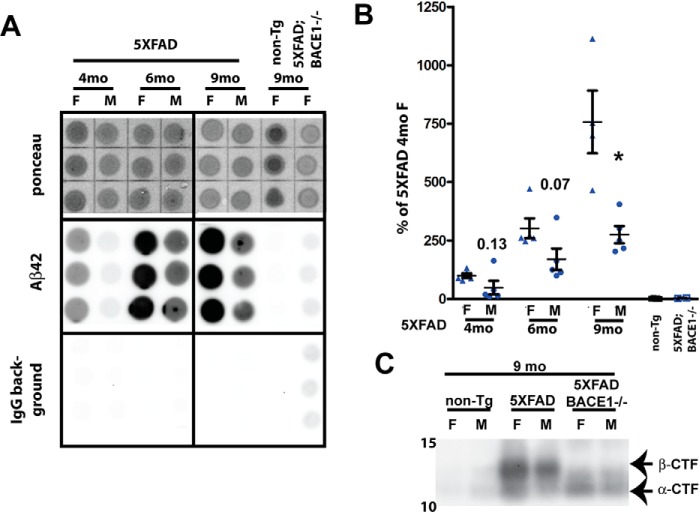
“Therefore, we subtracted the signal of the secondary antibody alone from the A 42 signal before normalizing to Ponceau stain intensity (21).”
BackgroundMethodInfluentialKim, S., Sato, Y., Mohan, P. S., Peterhoff, C., Pensalfini, A., Rigoglioso, A., Jiang, Y., & Nixon, R. A. (2016) · Molecular Psychiatry · doi:10.1038/mp.2015.97 · Cited by 212
Signaling Pathways from the Endoplasmic Reticulum and Their Roles in Disease
Kadowaki, H., & Nishitoh, H. (2013) · Genes · doi:10.3390/genes4030306 · Cited by 212
Activation of the Unfolded Protein Response Is an Early Event in Alzheimer’s and Parkinson’s Disease
Hoozemans, J. J. M., van Haastert, E. S., Nijholt, D. A. T., Rozemüller, A. J. M., & Scheper, W. (2012) · Neurodegenerative Diseases · doi:10.1159/000334536 · Cited by 207
Nijholt, D. A. T., van Haastert, E. S., Rozemüller, A. J. M., Scheper, W., & Hoozemans, J. J. M. (2011) · The Journal of Pathology · doi:10.1002/path.3969 · Cited by 203
Stutzbach, L. D., Xie, S. X., Naj, A. C., Albin, R., Gilman, S., PSP Genetics Study Group, Lee, V. M. Y., Trojanowski, J. Q., Devlin, B., & Schellenberg, G. D. (2013) · Acta Neuropathologica Communications · doi:10.1186/2051-5960-1-31 · Cited by 197
Stable Association of Presenilin Derivatives and Absence of Presenilin Interactions with APP
Thinakaran, G., Regard, J. B., Bouton, C. M. L. S., Harris, C. L., Price, D. L., Borchelt, D., & Sisodia, S. S. (1998) · Neurobiology of Disease · doi:10.1006/nbdi.1998.0171 · Cited by 173
Devi, L., & Ohno, M. (2014) · Neurobiology of Aging · doi:10.1016/j.neurobiolaging.2014.04.031 · Cited by 173
Ho, J. Y. S., Yang, X., Lau, J. C.-F., Hung, C. H.-L., Wuwongse, S., Zhang, Q., Wang, J., Baum, L., So, K., & Chang, R. C. (2012) · Journal of Alzheimer s Disease · doi:10.3233/jad-2011-111037 · Cited by 143
Devi, L., & Ohno, M. (2010) · PLoS ONE · doi:10.1371/journal.pone.0012974 · Cited by 140
Calpain Activation in Alzheimer's Model Mice Is an Artifact of APP and Presenilin Overexpression
Saito, T., Matsuba, Y., Yamazaki, N., Hashimoto, S., & Saido, T. C. (2016) · The Journal of Neuroscience · doi:10.1523/jneurosci.1907-16.2016 · Cited by 121
Cissé, M., Duplan, E., Lorivel, T., Dunys, J., Bauer, C., Meckler, X., Gerakis, Y., Lauritzen, I., & Checler, F. (2016) · Molecular Psychiatry · doi:10.1038/mp.2016.152 · Cited by 113
Additive Effects of PS1 and APP Mutations on Secretion of the 42-Residue Amyloid β-Protein
Citron, M., Eckman, C. B., Diehl, T. S., Corcoran, C., Ostaszewski, B. L., Xia, W., Levesque, G., St. George Hyslop, P., Younkin, S. G., & Selkoe, D. J. (1998) · Neurobiology of Disease · doi:10.1006/nbdi.1998.0183 · Cited by 101
Hashimoto, S., Ishii, A., Kamano, N., Watamura, N., Saito, T., Ohshima, T., Yokosuka, M., & Saido, T. C. (2018) · Journal of Biological Chemistry · doi:10.1074/jbc.m117.811315 · Cited by 76
Devi, L., & Ohno, M. (2013) · PLoS ONE · doi:10.1371/journal.pone.0077335 · Cited by 68
Briggs, D. I., Defensor, E., Memar Ardestani, P., Yi, B., Halpain, M., Seabrook, G., & Shamloo, M. (2017) · eneuro · doi:10.1523/eneuro.0025-17.2017 · Cited by 61
Köhler, C. N., Dinekov, M., & Götz, J. (2014) · Neurobiology of Disease · doi:10.1016/j.nbd.2014.07.006 · Cited by 57
Enhanced -secretase processing alters APP axonal transport and leads to axonal defects
Rodrigues, E. M., Weissmiller, A. M., & Goldstein, L. S. B. (2012) · Human Molecular Genetics · doi:10.1093/hmg/dds297 · Cited by 56
Sadleir, K. R., Eimer, W. A., Kaufman, R. J., Osten, P., & Vassar, R. J. (2014) · PLoS ONE · doi:10.1371/journal.pone.0101643 · Cited by 40
Self-citationRutten, B. P. F., Wirths, O., van de Berg, W. D. J., Lichtenthaler, S. F., Vehoff, J., Steinbusch, H. W. M., Korr, H., Beyreuther, K. T., Multhaup, G., Bayer, T. A., et al. (2003) · Neurobiology of Disease · doi:10.1016/s0969-9961(02)00015-3 · Cited by 39
Mechanisms that lessen benefits of β-secretase reduction in a mouse model of Alzheimer’s disease
Devi, L., & Ohno, M. (2013) · Translational Psychiatry · doi:10.1038/tp.2013.59 · Cited by 38
Elevated Aβ42 in Aged, Non-demented Individuals with Cerebral Atherosclerosis
Sadleir, K. R., Bennett, D. A., Schneider, J. A., & Vassar, R. J. (2013) · Current Alzheimer Research · doi:10.2174/15672050113109990152 · Cited by 15
Self-citation
Cited by
Systematic phenotyping and characterization of the 5xFAD mouse model of Alzheimer’s disease.
Forner, S., Kawauchi, S., Balderrama-Gutierrez, G., Kramár, E. A., Matheos, D. P., Phan, J., Javonillo, D. I., Tran, K. M., Hingco, E., da Cunha, C., et al. (2021) · Scientific Data · doi:10.1038/s41597-021-01054-y · Cited by 501
ER stress and UPR in Alzheimer’s disease: mechanisms, pathogenesis, treatments
Ajoolabady, A., Lindholm, D., Ren, J., & Pratico, D. (2022) · Cell Death & Disease · doi:10.1038/s41419-022-05153-5 · Cited by 261
Sex Differences in Behavior and Molecular Pathology in the 5XFAD Model
Sil, A., Erfani, A., Lamb, N., Copland, R., Riedel, G., & Platt, B. (2022) · Journal of Alzheimer's Disease · doi:10.3233/jad-210523 · Cited by 109
The PERK-Dependent Molecular Mechanisms as a Novel Therapeutic Target for Neurodegenerative Diseases
Rozpędek-Kamińska, W., Siwecka, N., Wawrzynkiewicz, A., Wojtczak, R., Pytel, D., Diehl, J. A., & Majsterek, I. (2020) · International Journal of Molecular Sciences · doi:10.3390/ijms21062108 · Cited by 84
Greve, H. J., Dunbar, A. L., Lombo, C. G., Ahmed, C., Thang, M., Messenger, E. J., Mumaw, C. L., Johnson, J. A., Kodavanti, U. P., Oblak, A. L., et al. (2023) · Brain · doi:10.1093/brain/awac113 · Cited by 82
Metadata
- Authors
- Sadleir, K. R., Popovic, J., & Vassar, R.
- Venue
- Journal of Biological Chemistry
- Publisher
- Elsevier BV
- Published
- 2018-11
- Volume
- 293
- Issue
- 48
- Pages
- 18434-18443
- ISSN
- 0021-9258
- PMC
- PMC6290164
- Cited by
- 60
- References
- 53
- Language
- en
- Licence
- www.elsevier.com/tdm/userlicense/1.0/ (tdm)
- creativecommons.org/licenses/by/4.0/ (vor, 659 d)
- Funders
- HHS | National Institutes of Health (NIH) (R01 AG030142, R01 AG1022560)
About these checks
Registry, retraction, Cites and statistics results are computed, not judged, with one exception: a printed reference that no index lists is read once by a model before it counts as a citation error. Claims are extracted by a model and kept only when their quote appears verbatim in the text; each cited source is then checked, with a model’s help, for whether it says what the claim relies on. Those verdicts can be wrong — read the claim’s quote and the cited source before relying on one.
Statistics and arithmetic are recomputed, not judged.
Confidence bands are shown only for fields calibrated on our annotated test set. None is calibrated yet, so no band is shown.
What counts as a claim ›How we measure confidence ›How we check this ›
Are you an author, or do you see a problem with this page? Request a review
Data sources
Bibliographic data: Semantic Scholar, OpenAlex, Crossref.
Contains information from the Semantic Scholar Academic Graph Datasets, made available under the ODC Attribution License (ODC-BY 1.0).
Semantic Scholar’s data is described in: Kinney, R., et al. (2023). The Semantic Scholar Open Data Platform. arXiv:2301.10140.
