

An Improved Model for Prediction of Retention Times of Tryptic Peptides in Ion Pair Reversed-phase HPLC
Open accessThe DOI matches its Crossref record, with a small difference in title or year; 48 of the 48 references it cites were found in a registry or an index.
Abstract
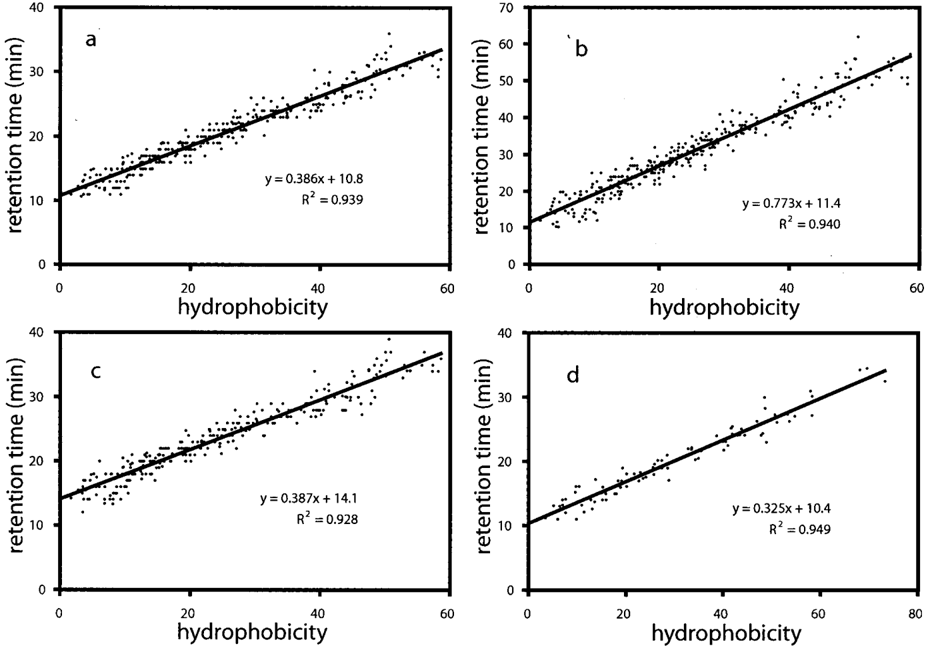
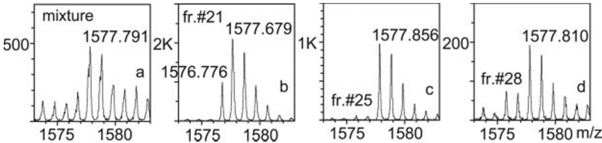
The proposed model is based on the measurement of the retention times of 346 tryptic peptides in the 560- to 4,000-Da mass range, derived from a mixture of 17 protein digests. These peptides were measured in HPLC-MALDI MS runs, with peptide identities confirmed by MS/MS. The model relies on summation of the retention coefficients of the individual amino acids, as in previous approaches, but additional terms are introduced that depend on the retention coefficients for amino acids at the N-terminal of the peptide. In the 17-protein mixture, optimization of two sets of coefficients, along with additional compensation for peptide length and hydrophobicity, yielded a linear dependence of retention time on hydrophobicity, with an R2 value about 0.94. The predictive capability of the model was used to distinguish peptides with close m/z values and for detailed peptide mapping of selected proteins. Its applicability was tested on columns of different sizes, from nano- to narrow-bore, and for direct sample injection, or injection via a pre-column. It can be used for accurate prediction of retention times for tryptic peptides on reversed-phase (300-A pore size) columns of different sizes with a linear water-ACN gradient and with TFA as the ion-pairing modifier.
Overview
The claims and statistics of this paper haven’t been checked yet.
Free: it reads the open-access text and checks the first 5 claims that cite a source we can check. Create a free account to check every claim.
Integrity signals
Registry
Cites
Statistics
Figures
Verification
Claims the paper makes
The claims and statistics of this paper haven’t been checked yet.
Free: it reads the open-access text and checks the first 5 claims that cite a source we can check. Create a free account to check every claim.
Claims other papers make about this one
Each is checked against this paper’s own text: does it say what the citing paper says it does?
The cited source says what the claim attributes to it.
In the citing paper
“Using the SSRC algorithm to determine the hydrophobicity coefficient of peptides de novo (Krokhin et al., 2004), we found that the peptides also eluted at the expected retention time based on their assigned sequences (Figure 4F).”
From Splice-Junction-Based Mapping of Alternative Isoforms in the Human Proteome (2019) · cites this paper as Krokhin et al., 2004
Self-check
Percentages, sums and reported differences re-computed from the paper’s own numbers.
The self-check needs the paper’s full text.
Citations
Cites
Electrospray Ionization for Mass Spectrometry of Large Biomolecules
Fenn, J. B., Mann, M., Meng, C. K., Wong, S. F., & Whitehouse, C. M. (1989) · Science · doi:10.1126/science.2675315 · Cited by 7,634 · cited 5×
“However, the optimum conditions for operation of the HPLC and the mass spectrometer are usually different, so on-line coupling of the HPLC to the mass spectrometer, as commonly used for ESI, may require undesirable compromises for both approaches, as well as requiring strict time constraints.”
BackgroundInfluentialLaser desorption ionization of proteins with molecular masses exceeding 10,000 daltons
Karas, M., & Hillenkamp, F. (1988) · Analytical Chemistry · doi:10.1021/ac00171a028 · Cited by 5,637 · cited 1×
“MALDI (2, 3) and ESI (4), as well as improved instrumentation.”
BackgroundQuantitative analysis of complex protein mixtures using isotope-coded affinity tags
Gygi, S. P., Rist, B., Gerber, S. A., Turecek, F., Gelb, M. H., & Aebersold, R. (1999) · Nature Biotechnology · doi:10.1038/13690 · Cited by 4,683
Direct analysis of protein complexes using mass spectrometry
Link, A. J., Eng, J., Schieltz, D. M., Carmack, E., Mize, G. J., Morris, D. R., Garvik, B. M., & Yates, J. R. (1999) · Nature Biotechnology · doi:10.1038/10890 · Cited by 2,237 · cited 4×
“large-scale high-throughput proteomics (9, 10), because of its”
BackgroundInfluentialMatrix-assisted laser desorption/ionization mass spectrometry of biopolymers.
Hillenkamp, F., Karas, M., Beavis, R. C., & Chait, B. T. (1991) · Analytical Chemistry · doi:10.1021/ac00024a716 · Cited by 1,930 · cited 2×
“9 5% (3) 5% (3) Glyceraldehyde-3-phosphate dehydrogenase (rabbit) 35.”
BackgroundSelf-citationMass Spectrometry in Proteomics
Aebersold, R., & Goodlett, D. R. (2001) · Chemical Reviews · doi:10.1021/cr990076h · Cited by 1,238 · cited 1×
“large-scale high-throughput proteomics (9, 10), because of its”
BackgroundAnalysis of Proteins and Proteomes by Mass Spectrometry
Mann, M., Hendrickson, R. C., & Pandey, A. (2001) · Annual Review of Biochemistry · doi:10.1146/annurev.biochem.70.1.437 · Cited by 1,219 · cited 2×
“molecules, such as membrane proteins (1) or species with”
BackgroundProteolytic 18O Labeling for Comparative Proteomics: Model Studies with Two Serotypes of Adenovirus
Yao, X., Freas, A., Ramirez, J., Demirev, P. A., & Fenselau, C. (2001) · Analytical Chemistry · doi:10.1021/ac001404c · Cited by 759 · cited 1×
“9 81% (12) 77% (9) -Lactalbumin (bovine) 14.”
Verma, R., Chen, S., Feldman, R., Schieltz, D., Yates, J., Dohmen, J., & Deshaies, R. J. (2000) · Molecular Biology of the Cell · doi:10.1091/mbc.11.10.3425 · Cited by 540 · cited 2×
“6 40% (8) 35% (6) Ribonuclease A (bovine) 14.”
Medzihradszky, K. F., Campbell, J. M., Baldwin, M. A., Falick, A. M., Juhasz, P., Vestal, M. L., & Burlingame, A. L. (2000) · Analytical Chemistry · doi:10.1021/ac990809y · Cited by 531
Research works printed but not linked: 4
- Krokhin, O., Cheng, K., Bykova, N., Ens, W., and Standing, K. G. (2003) An (off-line HPLC)-(orthogonal injection MALDI)-(QqTOFMS) instrument par- ticularly useful for the analysis of post-translational modifications. Exam- ples: I. Identification of two phosphorylated sites in tryptic peptides from the ABRF PRG03 sample (bovine protein disulphide isomerase). II. De novo sequencing and analysis of post-translational modifications on SARS viral proteins. 51 th ASMS Conference on Mass Spectrometry and Allied Topics, Montreal, June 8 -12
- Hu, P., Rejtar, T., Preisler, J., and Karger B. L. (2001) LC-MALDI/TOF MS analysis of complex peptide mixtures using vacuum deposition interface. 49th ASMS Conference on Mass Spectrometry and Allied Topics, Chi- cago, IL, May 27-31
- Rejtar, T., Chen, H., Moskovets, E., Li, L., Andreev, V., and Karger B. L. (2003) Universal deposition device for off-line coupling of LC to MALDI MS and MS/MS. 51th ASMS Conference on Mass Spectrometry and Allied Topics, Montreal, June 8 -12
- Krokhin, O., Qian, Y., McNabb, J. R., Spicer, V., Ens, W., and Standing, K. G. (2002) An off-line interface for HPLC and orthogonal MALDI TOF. 50th ASMS Conference on Mass Spectrometry and Allied Topics, Or- lando, FL, June 2-6
Cited by
Items 201–291 of 291
Improving peptide identification using an empirical peptide retention time database
Sun, W., Zhang, L., Yang, R., Shao, C., Zhang, Z., & Gao, Y. (2008) · Rapid Communications in Mass Spectrometry · doi:10.1002/rcm.3851 · Cited by 7
Online protein digestion in membranes between capillary electrophoresis and mass spectrometry
Ryan, K. A., & Bruening, M. L. (2023) · The Analyst · doi:10.1039/d3an00106g · Cited by 6
Pridatchenko, M. L., Perlova, T. Y., Hamidane, H. B., Goloborodko, A. A., Tarasova, I. A., Gorshkov, A. V., Evreinov, V. V., Tsybin, Y. O., & Gorshkov, M. V. (2011) · Analytical and Bioanalytical Chemistry · doi:10.1007/s00216-011-5350-3 · Cited by 6
Klammer, A. A., Yi, X., MacCoss, M. J., & Noble, W. S. (2007) · Springer eBooks · doi:10.1007/978-3-540-71681-5_32 · Cited by 6
“More recent models augment the compositional approach with parameters for peptide length or mass (Mant et al., 1989), or terms for residue context (Mant and Hodges, 2006) or positional effects such as the identity of the N-term residue (Krokhin et al., 2004).”
MethodInfluentialConsistency of a two clinical site sample collection: A proteomics study
Wiesner, C., Hannum, C. H., Reckamp, K. L., Figlin, R. A., DuBridge, R. B., Roy, S. M., Lin, S., Becker, C. H., Jones, T., Hiller, J., et al. (2010) · PROTEOMICS - CLINICAL APPLICATIONS · doi:10.1002/prca.200900206 · Cited by 6
“The retention time is predicted using amino acid composition throughout the peptide but particularly at the amino-terminus, as well as peptide length, following the approach previously published [28] and applied to data generated on the instrumentation used for this study.”
MethodHOPE-Fixation of Lung Tissue Allows Retrospective Proteome and Phosphoproteome Studies
Shevchuk, O., Abidi, N., Klawonn, F., Wissing, J. B., Nimtz, M., Kügler, C., Steinert, M., Goldmann, T., & Jänsch, L. (2014) · Journal of Proteome Research · doi:10.1021/pr500096a · Cited by 6
Watts, E., Potts, G. K., Ready, D. B., Thompson, A. M. G., Lee, J. Y., Escobar, E. E., Patterson, M. J. S., & Brodbelt, J. S. (2021) · Analytical Chemistry · doi:10.1021/acs.analchem.1c01002 · Cited by 5
Proteomic Analysis of Pluripotent Stem Cells
Bendall, S. C., Booy, A., & Lajoie, G. (2007) · Current Protocols in Stem Cell Biology · doi:10.1002/9780470151808.sc01b01s2 · Cited by 6
Szymczak, M., Kamiński, P., Turło, M., Bucholska, J., Mogut, D., Mińkiewicz, P., Mizielińska, M., & Stobińska, M. (2023) · Applied Sciences · doi:10.3390/app13127225 · Cited by 5
Assessing the Hydrophobicity of Glycopeptides Using Reversed-Phase LC and Tandem MS
Wang, J., Yu, A., Cho, B. G., & Mechref, Y. S. (2023) · Journal of Chromatography A · doi:10.1016/j.chroma.2023.464237 · Cited by 5
Cao, W., Ma, D., Kapur, A., Patankar, M. S., Ma, Y., & Li, L. (2011) · Journal of Proteomics · doi:10.1016/j.jprot.2011.08.013 · Cited by 5
“Some models have been published to study the property of retention time such as linear regressor by Krokhin [14], ANN by Petritis [16] etc. Linear regressor relates the retention time as the function of hydrophobicity.”
BackgroundMethodInfluentialGorshkov, A. V., Evreinov, V. V., Tarasova, I. A., & Gorshkov, M. V. (2010) · Journal of Analytical Chemistry · doi:10.1134/s1061934810010028 · Cited by 5
Faber, A.-H., Brunner, A. M., Schimmel, M. T. W., Schot, P. P., de Voogt, P., & van Wezel, A. P. (2023) · The Science of The Total Environment · doi:10.1016/j.scitotenv.2023.163888 · Cited by 5
Macur, K., Bączek, T., Kaliszan, R., Temporini, C., Corana, F., Massolini, G., Grzenkowicz-Wydra, J., & Obuchowski, M. (2009) · BioMed Research International · doi:10.1155/2010/718142 · Cited by 5
Use of models of biomacromolecule separation in AMT database generation for shotgun proteomics
Pridatchenko, M. L., Tarasova, I. A., Guryča, V., Kononikhin, A. S., Adams, C. M., Tolmachev, D. A., Agapov, A. Y., Evreinov, V. V., Popov, I. A., Николаев, Е. Н., et al. (2009) · Biochemistry (Moscow) · doi:10.1134/s0006297909110030 · Cited by 5
An evaluation of multidimensional fingerprinting in the context of clinical proteomics
Lekpor, K., Benoit, M., Butler, H., Schirm, M., Vasilescu, D., Bonter, K., Chelsky, D., Hugo, P., Hunter, J. M., Opiteck, G. J., et al. (2007) · PROTEOMICS - CLINICAL APPLICATIONS · doi:10.1002/prca.200600890 · Cited by 5
“analysis of pooled human plasma samples was submitted to an algorithm that generates an amino acid hydrophobicity model [13].”
MethodprotViz: Visualizing and Analyzing Mass Spectrometry Related Data in Proteomics
Panse, C., & Grossmann, J. (2012) · doi:10.32614/cran.package.protviz · Cited by 5
Gorshkov, A. V., Evreinov, V. V., Pridatchenko, M. L., Tarasova, I. A., Filatova, N. N., Rozdina, I. G., & Gorshkov, M. V. (2011) · Polymer Science Series A · doi:10.1134/s0965545x11120066 · Cited by 4
A Survey of Molecular Descriptors Used in Mass Spectrometry Based Proteomics
Audain, E., Sánchez, A., Vizcaíno, J. A., & Pérez‐Riverol, Y. (2014) · Current Topics in Medicinal Chemistry · doi:10.2174/1568026613666131204113537 · Cited by 4
Moskovets, E. V., Goloborodko, A. A., Gorshkov, A. V., & Gorshkov, M. V. (2012) · Journal of Separation Science · doi:10.1002/jssc.201100798 · Cited by 4
Lobas, A. A., Levitsky, L. I., Fichtenbaum, A., Surin, A. K., Pridatchenko, M. L., Mitulović, G., Gorshkov, A. V., & Gorshkov, M. V. (2017) · Journal of Analytical Chemistry · doi:10.1134/s1061934817140076 · Cited by 4
Mass spectrometric approaches for profiling protein folding and stability
Genereux, J. C. (2019) · Advances in protein chemistry and structural biology · doi:10.1016/bs.apcsb.2019.09.006 · Cited by 4
Effect of 1,1-Dimethylhydrazine on the Induction of Peptides in Galleria Mellonella Hemolymph
Polunin, K. E., Федоткина, О. С., Polunina, I. A., & Buryak, A. K. (2021) · Colloid Journal · doi:10.1134/s1061933x21050124 · Cited by 4
Prediction of peptide retention volumes in gradient reversed phase HPLC
Azarova, I. N., Kuchkina, A. Y., Baram, G. I., & Goldberg, E. (2008) · Russian Journal of Bioorganic Chemistry · doi:10.1134/s1068162008020039 · Cited by 4
Danell, R. M., Ouvry‐Patat, S. A., Scarlett, C. O., Speir, J. P., & Borchers, C. H. (2008) · Journal of the American Society for Mass Spectrometry · doi:10.1016/j.jasms.2008.07.017 · Cited by 4
Agogo-Mawuli, P. S., Sadiya, I., Abramyan, T. M., Bosch, D. E., Emmitte, K. A., Colón-Pérez, L. M., Kosloff, M., & Siderovski, D. P. (2025) · Journal of Biological Chemistry · doi:10.1016/j.jbc.2025.110611 · Cited by 4
Zingale, G. A., Pandino, I., Trivellato, D., Cavaterra, D., Munari, F., Grasso, G., Bell, P. A., Oddone, F., Bocedi, A., Coletta, M., et al. (2025) · Chemical Science · doi:10.1039/d5sc04240b · Cited by 3
Gorshkov, A. V., Goloborodko, A. A., Pridatchenko, M. L., Tarasova, I. A., Rozdina, I. G., Evreinov, V. V., & Gorshkov, M. V. (2017) · Polymer Science Series A · doi:10.1134/s0965545x17030063 · Cited by 3
Schmidt, A., & Antelo-Varela, M. (2022) · CHIMIA International Journal for Chemistry · doi:10.2533/chimia.2022.81 · Cited by 4
Borkar, M. R., & Coutinho, E. C. (2022) · Journal of Chromatography A · doi:10.1016/j.chroma.2022.462967 · Cited by 3
Improved Ranking Functions for Protein and Modification-Site Identifications
Bern, M. W., & Goldberg, D. (2007) · Springer eBooks · doi:10.1007/978-3-540-71681-5_31 · Cited by 3
Guo, J. X., Saiki, T., Thanutchaporn, K., Liu, W., Shimura, A., & Matsui, T. (2015) · Analytical Sciences · doi:10.2116/analsci.31.45 · Cited by 3
Assessing the Quality of Recombinant Products Made in Yeast
Vorauer‐Uhl, K., & Lhota, G. (2019) · Methods in molecular biology · doi:10.1007/978-1-4939-9024-5_19 · Cited by 3
Dwivedi, R. C., Spicer, V., & Krokhin, O. V. (2011) · Springer eBooks · doi:10.1007/978-94-007-0828-0_48 · Cited by 3
Self-citationQuantitation and Standardization of Allergens
Strader, M. B., Zagorski, R., Rabin, R. L., & Slater, J. E. (2024) · Wiley eBooks · doi:10.1002/9781683674023.ch75 · Cited by 3
Improved De Novo Peptide Sequencing using LC Retention Time Information
Frank, Y., Hrúz, T., Tschager, T., & Venzin, V. (2017) · DROPS (Schloss Dagstuhl – Leibniz Center for Informatics) · doi:10.4230/lipics.wabi.2017.26 · Cited by 2
Physicochemical and biochemical characterization of antimicrobial peptides
Quezada, V., Guzmán-Sastoque, P., Rincón-Garcia, M. C., Reyes, L. H., & Cruz, J. C. (2025) · Elsevier eBooks · doi:10.1016/b978-0-443-15393-8.00012-9 · Cited by 2
Proteomic data mining using predicted peptide chromatographic retention times
Tripet, B., Jayadev, M. R., Blow, D., Nguyen, C., Hodges, R. S., & Cios, K. J. (2007) · International Journal of Bioinformatics Research and Applications · doi:10.1504/ijbra.2007.015412 · Cited by 2
Applications of Peptide Retention Time in Proteomic Data Analysis
Shao, C. (2014) · Advances in experimental medicine and biology · doi:10.1007/978-94-017-9523-4_7 · Cited by 2
“N-terminal residues were found to be influence factors to peptides’ retention behavior due to the ion-pairing retention mechanism [19].”
BackgroundGoloborodko, A. A., Mayerhofer, C., Zubarev, A. R., Tarasova, I. A., Gorshkov, A. V., Zubarev, R. A., & Gorshkov, M. V. (2010) · Journal of Analytical Chemistry · doi:10.1134/s1061934810140042 · Cited by 2
Sun, K., Qian, Y. W., Spicer, V., White, N. D. G., & Jayas, D. S. (2013) · Journal of Stored Products Research · doi:10.1016/j.jspr.2013.07.005 · Cited by 2
Self-citationLiu, C., Wang, H., Fu, Y., Yuan, Z., Chi, H., Wang, L., Sun, R.-X., & Simin, H. E. (2010) · Chinese Journal of Chromatography · doi:10.3724/sp.j.1123.2010.00529 · Cited by 2
Computational Approaches to Selected Reaction Monitoring Assay Design
Bessant, C., & Fan, J. (2013) · Methods in molecular biology · doi:10.1007/978-1-62703-392-3_9 · Cited by 2
Targeted Quantification of Isoforms of a Thylakoid-Bound Protein: MRM Method Development
Bru‐Martínez, R., Martínez‐Márquez, A., Carriel, J. M., Sellés‐Marchart, S., Martínez‐Esteso, M. J., Pineda-Lucas, J. L., & Luque, I. (2017) · Methods in molecular biology · doi:10.1007/978-1-4939-7411-5_10 · Cited by 2
“Knowing in advance or predicting the peptide RT [27, 28], transitions can be arranged in their corresponding window.”
BackgroundImproved de novo peptide sequencing using LC retention time information
Frank, Y., Hrúz, T., Tschager, T., & Venzin, V. (2018) · Algorithms for Molecular Biology · doi:10.1186/s13015-018-0132-5 · Cited by 2
Picky – a simple online method designer for targeted proteomicsPreprint
Zauber, H., Kirchner, M., & Selbach, M. (2017) · bioRxiv (Cold Spring Harbor Laboratory) · doi:10.1101/163154 · Cited by 2
Dens, C., Yeung, D., Krokhin, O. V., Laukens, K., & Bittremieux, W. (2024) · bioRxiv (Cold Spring Harbor Laboratory) · doi:10.1101/2024.12.18.629045 · Cited by 2
Self-citationPolunin, K. E., Федоткина, О. С., Polunina, I. A., & Buryak, A. K. (2021) · Colloid Journal · doi:10.1134/s1061933x21060089 · Cited by 1
Computational Methods for the Study of Peroxisomes in Health and Disease
van Wijk, N., & Linial, M. (2022) · Physiology · doi:10.5772/intechopen.103178 · Cited by 1
Prefontaine, A., Liba, J., Spicer, V., Chowdhary, S., Treiber-Kleinke, C., Kubyshkin, V., Koksch, B., Budiša, N., & Krokhin, O. V. (2026) · Journal of Chromatography A · doi:10.1016/j.chroma.2026.466704 · Cited by 1
Self-citationPeptide Purification by Reversed‐Phase Chromatography
Kusebauch, U., McBee, J. K., Bletz, J., Simpson, R. J., & Moritz, R. L. (2010) · Wiley eBooks · doi:10.1002/9783527631803.ch15 · Cited by 1
Yu, Y., Yuan, S., Su, R., Qi, W. D., & He, Z. (2010) · Journal of Liquid Chromatography & Related Technologies · doi:10.1080/10826071003683945 · Cited by 1
“Krokhin, O.V.; Craig, R.; Spicer, V.; Ens, W.; Standing, K.G.; Beavis, R.C.; Wilkins, J.A.”
BackgroundMethodResultInfluentialMacur, K., Temporini, C., Massolini, G., Grzenkowicz-Wydra, J., Obuchowski, M., & Bączek, T. (2010) · Proteome Science · doi:10.1186/1477-5956-8-60 · Cited by 1
“A raising interest in application of peptides retention times prediction to protein identification in proteomics is recently observed [20-24].”
Zhang, J., Zhang, D., Zhang, W., & Xie, H. (2013) · Chinese Journal of Chromatography · doi:10.3724/sp.j.1123.2012.06021 · Cited by 1
Reinert, K., Conrad, T., Kohlbacher, O., Yocum, A. K., Ulintz, P., & Andrews, P. (2008) · Wiley eBooks · doi:10.1002/9783527622832.ch13 · Cited by 1
Krokhin, O. V. (2017) · The Analyst · doi:10.1039/c6an02510b · Cited by 1
Self-citationNBPMF: Novel network-based inference methods for peptide mass fingerprinting
Liang, Z., Lajoie, G., & Zhang, K. (2017) · IEEE International Conference on Cognitive Informatics & Cognitive Computing (ICCI*CC) · doi:10.1109/icci-cc.2017.8109752 · Cited by 1
“And Krokhin’s SSRCalc tool [6] develops the idea of a linear model with different hydrophobicity coefficients for amino acids close to termini of the peptide.”
MethodNBPMF: Novel Peptide Mass Fingerprinting Based on Network Inference
Liang, Z., Lajoie, G., & Zhang, K. (2017) · International Journal of Cognitive Informatics and Natural Intelligence · doi:10.4018/ijcini.2017100103 · Cited by 2
Perez, J. J., & Chen, C. (2018) · Analytical and Bioanalytical Chemistry · doi:10.1007/s00216-018-1377-z · Cited by 1
Modeling the Chromatographic Behavior of Antibacterial Peptides under Conditions of RP HPLC
Polunin, K. E., Федоткина, О. С., Polunina, I. A., & Buryak, A. K. (2022) · Russian Journal of Physical Chemistry A · doi:10.1134/s0036024422060188 · Cited by 1
Zhang, Y., Yang, J., Yuexin, M. A., Ling, C. A. O., & HUANG, Q. (2022) · Chinese Journal of Chromatography · doi:10.3724/sp.j.1123.2021.12012 · Cited by 1
Lee, H., Ju, S., Lee, S., Lee, S. H., Kim, S., Park, N., Hwang, C.-S., Park, K.-S., & Lee, C. (2025) · Journal of Proteome Research · doi:10.1021/acs.jproteome.4c01045 · Cited by 1
Informatics for Mass Spectrometry-Based Protein Characterization
Li, W., Xu, H., & Borisov, O. (2015) · ACS symposium series · doi:10.1021/bk-2015-1202.ch007 · Cited by 2
Shifting the Paradigm: Peptide-Centric Analysis of Systematically Sampled Mass Spectrometry Data
Ting, Y. S. (2016) · ResearchWorks at the University of Washington (University of Washington) · Cited by 1
Epithelial MHC II antigen presentation dynamically informs intestinal homeostasis and injuryPreprint
Holiar, V. V., Rudenko, V., Weller, C., Naumova, M., Lebon, S., Canella, M., Busko, P., Sarusi-Portuguez, A., Shalit, T., Menachem, A. H., et al. (2026) · bioRxiv (Cold Spring Harbor Laboratory) · doi:10.64898/2026.03.18.712348 · Cited by 1
Neuroligins and Neurexins in Alzheimer’s disease
Sindi, I. A. (2014) · The University of Queensland · doi:10.14264/uql.2015.176
Visser, H., & Hoffmann, R. (2005) · Data Archiving and Networked Services (DANS)
Plant Biology Through Quantitative Proteomics
Bygdell, J. (2013) · Epsilon Open Archive (Sveriges lantbruksuniversitet biblioteket (Swedish University of Agricultural Sciences))
HPLC METHOD DEVELOPMENTFOR PROTEINSAND POLYPEPTIDES
Priya, V., & Devi, A. (2013)
Application of peptide retention time in proteome research
Shao, C., & Gao, Y. (2010) · Chinese Journal of Chromatography · doi:10.3724/sp.j.1123.2012.00128
Colloidal Silica as a Platform for Trace Protein Analysis and Recovery
Proaño, E., & Alexis, D. (2011)
GORSHKOV, A. V., Goloborodko, A. A., Придатченко, М. Л., Tarasova, I. A., Роздина, И. Г., Евреинов, В. В., & Gorshkov, M. V. (2017) · Высокомолекулярные соединения А · doi:10.7868/s2308112017030063
Algorithms for Peptide Identification via Tandem Mass Spectrometry
Tschager, T. (2018) · Repository for Publications and Research Data (ETH Zurich) · doi:10.3929/ethz-b-000259599
“The position of the characters in the string is especially important for the first and the last few positions in the string [53, 52].”
BackgroundNBPMF: Novel Approaches for Peptide Mass Fingerprinting Based on Network Inference
Liang, Z., Lajoie, G., & Zhang, K. (2020) · Advances in computational intelligence and robotics book series · doi:10.4018/978-1-7998-3038-2.ch011
Bioinformatics Tools for SRM-MS
Hossain, M. (2020) · Springer eBooks · doi:10.1007/978-3-030-53433-2_5
Mizero, B. (2021) · Mspace (University of Manitoba)
High‐Performance Liquid Chromatography–Mass Spectrometry in Peptide and Protein Analysis
Shen, T. (2021) · Wiley eBooks · doi:10.1002/9780470027318.a1618.pub4
Sisido, M. (2014) · Springer eBooks · doi:10.1007/978-3-642-36199-9_327-1
Optimizing the Chromatographic Separation of Antibacterial Peptides of Galleria mellonella
Polunin, K. E., Федоткина, О. С., Polunina, I. A., & Buryak, A. K. (2022) · Russian Journal of Physical Chemistry A · doi:10.1134/s0036024422080209
On the Separation of Peptides with Inverted Sequences
Gorshkov, A. V., Rozdina, I. G., & Pridatchenko, M. L. (2024) · Polymer Science Series A · doi:10.1134/s0965545x2460100x
О разделении пептидов с инвертированными последовательностями
ГОРШКОВ, А. В., Роздина, И. Г., & Придатченко, М. Л. (2024) · Высокомолекулярные соединения А · doi:10.31857/s2308112024030089
Accelerating high-throughput proteomics with proteome-selective isolation chromatography (P-SLICY)
Yeung, D. (2025) · Mspace (University of Manitoba) · Cited by 1
Liuu, S. (2014) · theses.fr (ABES) · doi:10.70675/642a4f47zb5b3z47e2z9df9z60914a927595 · Cited by 2
“Les temps de rétention intégrés peuvent également être reportés en fonction du facteur d'hydrophobicité calculé selon l'algorithme SSRCalc (Sequence Specific Retention Calculator) développé par Krokhin et Spicer [169,170].”
BackgroundYeung, D., Lao, Y., Spicer, V., Paulo, J., Zahedi, R. P., & Krokhin, O. V. (2026) · Journal of Proteome Research · doi:10.1021/acs.jproteome.5c01175
Self-citationCramer, D. A. T., Torrente-López, A., Moran, A. B., Koeleman, C. A. M., Kaabi, A. A., Anish, C., Beurret, M., & Wuhrer, M. (2026) · Carbohydrate Polymers · doi:10.1016/j.carbpol.2026.125398
Utilization of Tandem-Column UHPLC for High-Throughput Peptide Mapping of Therapeutic Proteins
Dykstra, A. B., Jethva, P. N., Woodall, D. W., & Bondarenko, P. V. (2026) · Analytical Chemistry · doi:10.1021/acs.analchem.6c00962
Artificial Intelligence and Machine Learning in Mass Spectrometry-Based Proteomics and Metabolomics
Basse, K., Szeitz, B., Suits, F., & Horvatovich, P. L. (2026) · Methods in molecular biology · doi:10.1007/978-1-0716-5519-1_13
Proteomic Analysis of Endoplasmic Reticulum Stress in Chinese Hamster Ovary Cells in Culture
Ryan, D. (2026) · Dublin City University Open Access Institutional Repository (Dublin City University)
Cham, J. A. (2009) · OpenGrey (Institut de l'Information Scientifique et Technique)
Metadata
- Authors
- Krokhin, O. V., Craig, R., Spicer, V., Ens, W., Standing, K. G., Beavis, R. C., & Wilkins, J. A.
- Affiliations
- University of Manitoba (CA)
- Corresponding author
- Krokhin, O.V.
- Venue
- Molecular & Cellular Proteomics
- Publisher
- Elsevier BV
- Published
- 2004-09
- Volume
- 3
- Issue
- 9
- Pages
- 908-919
- ISSN
- 1535-9476 (ISSN-L)
- OpenAlex
- W2133258252
- Cited by
- 284
- References
- 46
- Citations by year
- 2026: 6 · 2025: 6 · 2024: 6 · 2023: 9 · 2022: 13 · 2021: 12 · 2020: 9 · 2019: 7 · 2018: 5 · 2017: 15 · 2016: 9 · 2015: 6 · 2014: 14 · 2013: 15 · 2012: 22
- FWCI
- 5.58
- Type
- journal article
- Language
- en
- Open access
- hybrid
- doi.org
- Licence
- cc-by
- www.elsevier.com/tdm/userlicense/1.0/ (tdm)
- www.elsevier.com/legal/tdmrep-license (tdm)
- creativecommons.org/licenses/by/4.0/ (vor, 5852 d)
- Locations
- Molecular & Cellular Proteomics (publishedVersion, cc-by)
- PubMed (publishedVersion)
- Funders
- University of Manitoba
- National Institutes of Health
- Canadian Institutes of Health Research
- Natural Sciences and Engineering Research Council of Canada
- National Institute of General Medical Sciences (R01GM059240, GM 59240)
- Topics
- Physical Sciences › Chemistry › Spectroscopy › Advanced Proteomics Techniques and Applications
- Physical Sciences › Chemistry › Spectroscopy › Mass Spectrometry Techniques and Applications
- Physical Sciences › Chemistry › Analytical Chemistry › Analytical Chemistry and Chromatography
- Keywords
- retention time prediction, tryptic peptides, ion-pair reversed-phase HPLC, hydrophobicity, N-terminal amino acids, peptide length, peptide mapping, protein digests
- MeSH terms
- Amino Acid Sequence, Animals, Chromatography, High Pressure Liquid, Humans, Models, Theoretical, Molecular Sequence Data, Molecular Weight, Peptide Fragments, Peptide Mapping, Trypsin, Neural Networks, Computer, Spectrometry, Mass, Matrix-Assisted Laser Desorption-Ionization, Proteomics, Hydrophobic and Hydrophilic Interactions
About these checks
Registry, retraction, Cites and statistics results are computed, not judged, with one exception: a printed reference that no index lists is read once by a model before it counts as a citation error. Claims are extracted by a model and kept only when their quote appears verbatim in the text; each cited source is then checked, with a model’s help, for whether it says what the claim relies on. Those verdicts can be wrong — read the claim’s quote and the cited source before relying on one.
Statistics and arithmetic are recomputed, not judged.
Confidence bands are shown only for fields calibrated on our annotated test set. None is calibrated yet, so no band is shown.
What counts as a claim ›How we measure confidence ›How we check this ›
Are you an author, or do you see a problem with this page? Request a review
Data sources
Bibliographic data: Semantic Scholar, OpenAlex, Crossref.
Contains information from the Semantic Scholar Academic Graph Datasets, made available under the ODC Attribution License (ODC-BY 1.0).
Semantic Scholar’s data is described in: Kinney, R., et al. (2023). The Semantic Scholar Open Data Platform. arXiv:2301.10140.
