

An Improved Model for Prediction of Retention Times of Tryptic Peptides in Ion Pair Reversed-phase HPLC
Open accessThe DOI matches its Crossref record, with a small difference in title or year; 48 of the 48 references it cites were found in a registry or an index.
Abstract
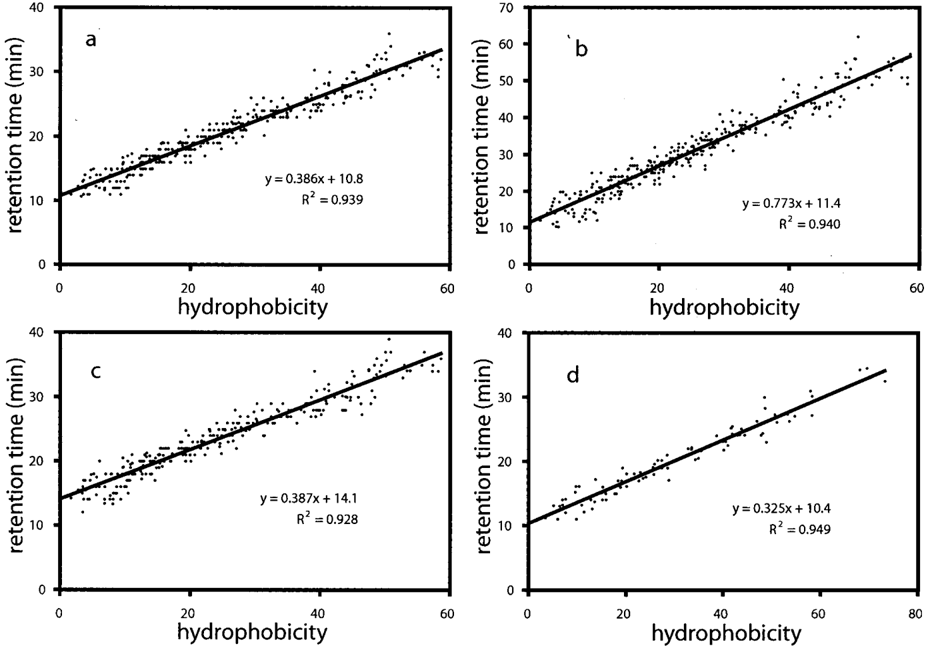
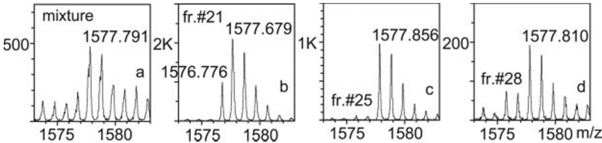
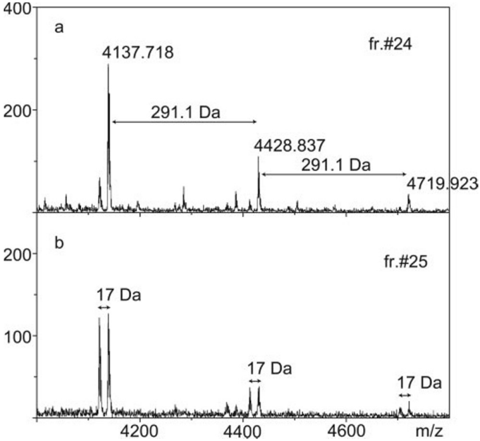
The proposed model is based on the measurement of the retention times of 346 tryptic peptides in the 560- to 4,000-Da mass range, derived from a mixture of 17 protein digests. These peptides were measured in HPLC-MALDI MS runs, with peptide identities confirmed by MS/MS. The model relies on summation of the retention coefficients of the individual amino acids, as in previous approaches, but additional terms are introduced that depend on the retention coefficients for amino acids at the N-terminal of the peptide. In the 17-protein mixture, optimization of two sets of coefficients, along with additional compensation for peptide length and hydrophobicity, yielded a linear dependence of retention time on hydrophobicity, with an R2 value about 0.94. The predictive capability of the model was used to distinguish peptides with close m/z values and for detailed peptide mapping of selected proteins. Its applicability was tested on columns of different sizes, from nano- to narrow-bore, and for direct sample injection, or injection via a pre-column. It can be used for accurate prediction of retention times for tryptic peptides on reversed-phase (300-A pore size) columns of different sizes with a linear water-ACN gradient and with TFA as the ion-pairing modifier.
Overview
The claims and statistics of this paper haven’t been checked yet.
Free: it reads the open-access text and checks the first 5 claims that cite a source we can check. Create a free account to check every claim.
Integrity signals
Registry
Cites
Statistics
Figures
Verification
Claims the paper makes
The claims and statistics of this paper haven’t been checked yet.
Free: it reads the open-access text and checks the first 5 claims that cite a source we can check. Create a free account to check every claim.
Claims other papers make about this one
Each is checked against this paper’s own text: does it say what the citing paper says it does?
The cited source says what the claim attributes to it.
In the citing paper
“Using the SSRC algorithm to determine the hydrophobicity coefficient of peptides de novo (Krokhin et al., 2004), we found that the peptides also eluted at the expected retention time based on their assigned sequences (Figure 4F).”
From Splice-Junction-Based Mapping of Alternative Isoforms in the Human Proteome (2019) · cites this paper as Krokhin et al., 2004
Self-check
Percentages, sums and reported differences re-computed from the paper’s own numbers.
The self-check needs the paper’s full text.
Citations
Cites
Electrospray Ionization for Mass Spectrometry of Large Biomolecules
Fenn, J. B., Mann, M., Meng, C. K., Wong, S. F., & Whitehouse, C. M. (1989) · Science · doi:10.1126/science.2675315 · Cited by 7,634 · cited 5×
“However, the optimum conditions for operation of the HPLC and the mass spectrometer are usually different, so on-line coupling of the HPLC to the mass spectrometer, as commonly used for ESI, may require undesirable compromises for both approaches, as well as requiring strict time constraints.”
BackgroundInfluentialLaser desorption ionization of proteins with molecular masses exceeding 10,000 daltons
Karas, M., & Hillenkamp, F. (1988) · Analytical Chemistry · doi:10.1021/ac00171a028 · Cited by 5,637 · cited 1×
“MALDI (2, 3) and ESI (4), as well as improved instrumentation.”
BackgroundQuantitative analysis of complex protein mixtures using isotope-coded affinity tags
Gygi, S. P., Rist, B., Gerber, S. A., Turecek, F., Gelb, M. H., & Aebersold, R. (1999) · Nature Biotechnology · doi:10.1038/13690 · Cited by 4,683
Direct analysis of protein complexes using mass spectrometry
Link, A. J., Eng, J., Schieltz, D. M., Carmack, E., Mize, G. J., Morris, D. R., Garvik, B. M., & Yates, J. R. (1999) · Nature Biotechnology · doi:10.1038/10890 · Cited by 2,237 · cited 4×
“large-scale high-throughput proteomics (9, 10), because of its”
BackgroundInfluentialMatrix-assisted laser desorption/ionization mass spectrometry of biopolymers.
Hillenkamp, F., Karas, M., Beavis, R. C., & Chait, B. T. (1991) · Analytical Chemistry · doi:10.1021/ac00024a716 · Cited by 1,930 · cited 2×
“9 5% (3) 5% (3) Glyceraldehyde-3-phosphate dehydrogenase (rabbit) 35.”
BackgroundSelf-citationMass Spectrometry in Proteomics
Aebersold, R., & Goodlett, D. R. (2001) · Chemical Reviews · doi:10.1021/cr990076h · Cited by 1,238 · cited 1×
“large-scale high-throughput proteomics (9, 10), because of its”
BackgroundAnalysis of Proteins and Proteomes by Mass Spectrometry
Mann, M., Hendrickson, R. C., & Pandey, A. (2001) · Annual Review of Biochemistry · doi:10.1146/annurev.biochem.70.1.437 · Cited by 1,219 · cited 2×
“molecules, such as membrane proteins (1) or species with”
BackgroundProteolytic 18O Labeling for Comparative Proteomics: Model Studies with Two Serotypes of Adenovirus
Yao, X., Freas, A., Ramirez, J., Demirev, P. A., & Fenselau, C. (2001) · Analytical Chemistry · doi:10.1021/ac001404c · Cited by 759 · cited 1×
“9 81% (12) 77% (9) -Lactalbumin (bovine) 14.”
Verma, R., Chen, S., Feldman, R., Schieltz, D., Yates, J., Dohmen, J., & Deshaies, R. J. (2000) · Molecular Biology of the Cell · doi:10.1091/mbc.11.10.3425 · Cited by 540 · cited 2×
“6 40% (8) 35% (6) Ribonuclease A (bovine) 14.”
Medzihradszky, K. F., Campbell, J. M., Baldwin, M. A., Falick, A. M., Juhasz, P., Vestal, M. L., & Burlingame, A. L. (2000) · Analytical Chemistry · doi:10.1021/ac990809y · Cited by 531
Research works printed but not linked: 4
- Krokhin, O., Cheng, K., Bykova, N., Ens, W., and Standing, K. G. (2003) An (off-line HPLC)-(orthogonal injection MALDI)-(QqTOFMS) instrument par- ticularly useful for the analysis of post-translational modifications. Exam- ples: I. Identification of two phosphorylated sites in tryptic peptides from the ABRF PRG03 sample (bovine protein disulphide isomerase). II. De novo sequencing and analysis of post-translational modifications on SARS viral proteins. 51 th ASMS Conference on Mass Spectrometry and Allied Topics, Montreal, June 8 -12
- Hu, P., Rejtar, T., Preisler, J., and Karger B. L. (2001) LC-MALDI/TOF MS analysis of complex peptide mixtures using vacuum deposition interface. 49th ASMS Conference on Mass Spectrometry and Allied Topics, Chi- cago, IL, May 27-31
- Rejtar, T., Chen, H., Moskovets, E., Li, L., Andreev, V., and Karger B. L. (2003) Universal deposition device for off-line coupling of LC to MALDI MS and MS/MS. 51th ASMS Conference on Mass Spectrometry and Allied Topics, Montreal, June 8 -12
- Krokhin, O., Qian, Y., McNabb, J. R., Spicer, V., Ens, W., and Standing, K. G. (2002) An off-line interface for HPLC and orthogonal MALDI TOF. 50th ASMS Conference on Mass Spectrometry and Allied Topics, Or- lando, FL, June 2-6
Cited by
Skyline: an open source document editor for creating and analyzing targeted proteomics experiments
MacLean, B., Tomazela, D. M., Shulman, N., Chambers, M., Finney, G. L., Frewen, B., Kern, R., Tabb, D. L., Liebler, D. C., & MacCoss, M. J. (2010) · Bioinformatics · doi:10.1093/bioinformatics/btq054 · Cited by 4,697
Gillet, L. C., Navarro, P., Tate, S., Röst, H., Selevsek, N., Reiter, L., Bonner, R., & Aebersold, R. (2012) · Molecular & Cellular Proteomics · doi:10.1074/mcp.o111.016717 · Cited by 2,877
“The retention times of the peptides were computed using the SSRCalc algorithm (50).”
MethodSelected reaction monitoring for quantitative proteomics: a tutorial
Lange, V., Picotti, P., Domon, B., & Aebersold, R. (2008) · Molecular Systems Biology · doi:10.1038/msb.2008.61 · Cited by 1,407
“times can be derived from previous experiments or they might be predicted by tools like SSRCalc (http://hs2.proteome.ca/ SSRCalc/SSRCalc.html) ( Krokhin et al, 2004 ) if the HPLC system is first calibrated.”
MethodQuantitative mass spectrometric multiple reaction monitoring assays for major plasma proteins
Anderson, L., & Hunter, C. L. (2006) · Molecular & Cellular Proteomics · doi:10.1074/mcp.m500331-mcp200 · Cited by 1,230
“amino acid composition, peptide mass, Hopp-Woods hydrophilicity (21), and predicted retention time in reversed-phase (C18) chromatography (22).”
BackgroundUsing i RT, a normalized retention time for more targeted measurement of peptides
Escher, C., Reiter, L., MacLean, B., Ossola, R., Herzog, F., Chilton, J., MacCoss, M. J., & Rinner, O. (2012) · PROTEOMICS · doi:10.1002/pmic.201100463 · Cited by 600
“Correlation between the RT predicted with the SSRCalc linear equation and measured RT was 0.9246 (average deviation was 2.4 min), and correlation between the RT predicted with the iRT linear equation and the actual measured RT was 0.9970 (average deviation was 0.8 min; see Fig.”
MethodInfluentialLi, G., Vissers, J. P. C., Silva, J. C., Golick, D., Gorenstein, M. V., & Geromanos, S. J. (2009) · PROTEOMICS · doi:10.1002/pmic.200800564 · Cited by 557
PeptideAtlas: a resource for target selection for emerging targeted proteomics workflows
Deutsch, E. W., Lam, H., & Aebersold, R. (2008) · EMBO reports · doi:10.1038/embor.2008.56 · Cited by 542
“Expected benefits from such an endeavour include higher coverage of a proteome, sufficient data density for meaningful statistics and the possibility to contribute extensive observational data back to genome annotation projects. the peptideatlas project thus began as a compendium of peptides observed in a group of hum…”
BackgroundMethodInfluentialTargeted Quantitation of Proteins by Mass Spectrometry
Liebler, D. C., & Zimmerman, L. J. (2013) · Biochemistry · doi:10.1021/bi400110b · Cited by 363
A complete mass-spectrometric map of the yeast proteome applied to quantitative trait analysis
Picotti, P., Clément-Ziza, M., Lam, H., Campbell, D. S., Schmidt, A., Deutsch, E. W., Röst, H., Sun, Z., Rinner, O., Reiter, L., et al. (2013) · Nature · doi:10.1038/nature11835 · Cited by 318
Selected reaction monitoring applied to proteomics
Gallien, S., Duriez, E., & Domon, B. (2011) · Journal of Mass Spectrometry · doi:10.1002/jms.1895 · Cited by 286
“[41,42] These prediction tools are trained in a first step with existing data sets to determine the most relevant physico-chemical properties to predict the LC and MS behavior of the peptides generated by proteolytic digestions of proteins of interest.”
Hoofnagle, A. N., Whiteaker, J. R., Carr, S. A., Kuhn, E., Liu, T., Massoni, S. A., Thomas, S. N., Townsend, R. R., Zimmerman, L. J., Boja, E., et al. (2016) · Clinical Chemistry · doi:10.1373/clinchem.2015.250563 · Cited by 229
“Peptide analytes can be selected using MS-based proteomic data or prediction algorithms (14-22).”
MethodDe novo sequencing of peptides by MS/MS
Seidler, J., Zinn, N., Boehm, M. E., & Lehmann, W. D. (2010) · PROTEOMICS · doi:10.1002/pmic.200900459 · Cited by 221
“[81–83].”
In silico spectral libraries by deep learning facilitate data-independent acquisition proteomics
Yang, Y., Liu, X., Shen, C., Lin, Y., Yang, P., & Qiao, L. (2020) · Nature Communications · doi:10.1038/s41467-019-13866-z · Cited by 221
Krokhin, O. V. (2006) · Analytical Chemistry · doi:10.1021/ac060777w · Cited by 229
Self-citationAn improved trypsin digestion method minimizes digestion-induced modifications on proteins
Ren, D., Pipes, G. D., Liu, D., Shih, L.-Y., Nichols, A. C., Treuheit, M. J., Brems, D. N., & Bondarenko, P. V. (2009) · Analytical Biochemistry · doi:10.1016/j.ab.2009.05.018 · Cited by 194
Comparative LC‐MS: A landscape of peaks and valleys
America, A. H. P., & Cordewener, J. H. G. (2008) · PROTEOMICS · doi:10.1002/pmic.200700694 · Cited by 191
Increased Selectivity, Analytical Precision, and Throughput in Targeted Proteomics
Kiyonami, R., Schoen, A., Prakash, A., Peterman, S., Zabrouskov, V., Picotti, P., Aebersold, R., Huhmer, A., & Domon, B. (2011) · Molecular & Cellular Proteomics · doi:10.1074/mcp.m110.002931 · Cited by 177
“In addition, for each peptide we also calculated its hydrophobicity using the SSRCalc algorithm presented in Krokhin et al [14].”
MethodPredRet: Prediction of Retention Time by Direct Mapping between Multiple Chromatographic Systems
Stanstrup, J., Neumann, S., & Vrhovšek, U. (2015) · Analytical Chemistry · doi:10.1021/acs.analchem.5b02287 · Cited by 178
Krokhin, O. V., Antonovici, M., Ens, W., Wilkins, J. A., & Standing, K. G. (2006) · Analytical Chemistry · doi:10.1021/ac061017o · Cited by 173
Self-citationSandmann, C.-L., Schulz, J. F., Ruiz-Orera, J., Kirchner, M., Ziehm, M., Adami, E., Marczenke, M., Christ, A., Liebe, N., Greiner, J., et al. (2023) · Molecular Cell · doi:10.1016/j.molcel.2023.01.023 · Cited by 163
Petritis, K., Kangas, L. J., Yan, B., Monroe, M. E., Strittmatter, E. F., Qian, W.-J., Adkins, J. N., Moore, R. J., Xu, Y., Lipton, M. S., et al. (2006) · Analytical Chemistry · doi:10.1021/ac060143p · Cited by 171
Aalizadeh, R., Nika, M.-C., & Thomaidis, N. S. (2019) · Journal of Hazardous Materials · doi:10.1016/j.jhazmat.2018.09.047 · Cited by 166
Head-to-Head Comparison of Serum Fractionation Techniques
Whiteaker, J. R., Zhang, H., Eng, J. K., Fang, R., Piening, B. D., Feng, L.-C., Lorentzen, T. D., Schoenherr, R. M., Keane, J. F., Holzman, T., et al. (2007) · Journal of Proteome Research · doi:10.1021/pr0604920 · Cited by 165
Dwivedi, R. C., Spicer, V., Harder, M., Antonovici, M., Ens, W., Standing, K. G., Wilkins, J. A., & Krokhin, O. V. (2008) · Analytical Chemistry · doi:10.1021/ac800984n · Cited by 161
Self-citationWen, B., Zeng, W., Liao, Y., Shi, Z., Savage, S. R., Jiang, W., & Zhang, B. (2020) · PROTEOMICS · doi:10.1002/pmic.201900335 · Cited by 149
Krokhin, O. V., & Spicer, V. (2009) · Analytical Chemistry · doi:10.1021/ac9016693 · Cited by 154
Self-citationAzoulay‐Shemer, T., Harpaz‐Saad, S., Belausov, E., Lovat, N. E. J., Krokhin, O. V., Spicer, V., Standing, K. G., Goldschmidt, E. Ε., & Eyal, Y. (2008) · PLANT PHYSIOLOGY · doi:10.1104/pp.108.124933 · Cited by 156
“For more detailed analyses, the proteolyzed fragments were separated into 40 1-min fractions by reversed-phase HPLC and deposited onto a MALDI target by a robot previously constructed in the Manitoba laboratory (Krokhin et al., 2004).”
MethodSelf-citationHarvey, D. J. (2008) · Mass Spectrometry Reviews · doi:10.1002/mas.20192 · Cited by 137
“A method for predicting peptide retention times in reversed-phase HPLC has been published (Krokhin et al., 2004b) following examination of 346 tryptic peptides and deglycosylated glycopeptides identified by MALDI-TOF MS from 17 proteins.”
MethodAn Introduction to Advanced Targeted Acquisition Methods
van Bentum, M., & Selbach, M. (2021) · Molecular & Cellular Proteomics · doi:10.1016/j.mcpro.2021.100165 · Cited by 132
“The continued development of tools that further simplify access to these databases (such as Skyline or Picky), especially by integrating information from these public repositories, facilitates the design of targeted methods.”
BackgroundMethodInfluentialMerlotti, A., Sadacca, B., Arribas, Y. A., Ngoma, M., Burbage, M., Goudot, C., Houy, A., Rocañín-Arjó, A., Lalanne, A. I., Seguin‐Givelet, A., et al. (2023) · Science Immunology · doi:10.1126/sciimmunol.abm6359 · Cited by 128
“Hydrophobicity index was calculated using SSRCalc (55) and plotted together with the retention time average of each PSM using ggplot2 R package.”
MethodA biological approach to computational models of proteomic networks
Janes, K. A., & Lauffenburger, D. A. (2006) · Current Opinion in Chemical Biology · doi:10.1016/j.cbpa.2005.12.016 · Cited by 125
Bereman, M. S., MacLean, B., Tomazela, D. M., Liebler, D. C., & MacCoss, M. J. (2012) · PROTEOMICS · doi:10.1002/pmic.201200042 · Cited by 115
“Figure 3C plots retention time as a function of SSRCalc[48] hydrophobicity score for the various peptides.”
BackgroundMRMaid, the Web-based Tool for Designing Multiple Reaction Monitoring (MRM) Transitions
Mead, J. A., Bianco, L., Ottone, V., Barton, C., Kay, R. G., Lilley, K. S., Bond, N. J., & Bessant, C. (2008) · Molecular & Cellular Proteomics · doi:10.1074/mcp.m800192-mcp200 · Cited by 115
“In the absence of these data, we chose to predict RT using a linear peptide RT algorithm, which holds true for peptides up to 20 residues (28).”
MethodComprehensive proteomic analysis of human cervical-vaginal fluid using colposcopy samples
Zegels, G., Van Raemdonck, G. A., Coen, E. P., Tjalma, W. A., & Van Ostade, X. W. (2009) · Proteome Science · doi:10.1186/1477-5956-7-17 · Cited by 99
Peptide retention time prediction
Moruz, L., & Käll, L. (2016) · Mass Spectrometry Reviews · doi:10.1002/mas.21488 · Cited by 106
“Following these observations, Krokhin et al. developed SSRCalc (Krokhin et al., 2004), which is currently the most widely used index-based retention time predictor.”
MethodMultidimensional chromatography coupled to mass spectrometry in analysing complex proteomics samples
Horvatovich, P., Hoekman, B., Govorukhina, N., & Bischoff, R. (2010) · Journal of Separation Science · doi:10.1002/jssc.201000050 · Cited by 97
Training, Selection, and Robust Calibration of Retention Time Models for Targeted Proteomics
Moruz, L., Tomazela, D. M., & Käll, L. (2010) · Journal of Proteome Research · doi:10.1021/pr1005058 · Cited by 98
Spicer, V., Yamchuk, A., Cortens, J. P., Sousa, S., Ens, W., Standing, K. G., Wilkins, J. A., & Krokhin, O. V. (2007) · Analytical Chemistry · doi:10.1021/ac071474k · Cited by 97
Self-citationTriticum mosaic virus: A New Virus Isolated from Wheat in Kansas
Seifers, D. L., Martin, T. J., Harvey, T. L., Fellers, J. P., Stack, J. P., Ryba-White, M., Haber, S., Krokhin, O. V., Spicer, V., Lovat, N. E. J., et al. (2008) · Plant Disease · doi:10.1094/pdis-92-5-0808 · Cited by 96
Self-citationDevelopment and Application of C60-Fullerene Bound Silica for Solid-Phase Extraction of Biomolecules
Vallant, R. M., Szabo, Z., Bachmann, S., Bakry, R. S., Haq, M. N. U., Rainer, M., Heigl, N., Petter, C. H., Huck, C. W., & Bonn, G. K. (2007) · Analytical Chemistry · doi:10.1021/ac0712392 · Cited by 95
Klammer, A. A., Yi, X., MacCoss, M. J., & Noble, W. S. (2007) · Analytical Chemistry · doi:10.1021/ac070262k · Cited by 92
Identification of chemical compounds
Milman, B. L. (2005) · TrAC Trends in Analytical Chemistry · doi:10.1016/j.trac.2005.03.013 · Cited by 88
The Use of Selected Reaction Monitoring in Quantitative Proteomics
Holman, S. W., Sims, P. F. G., & Eyers, C. E. (2012) · Bioanalysis · doi:10.4155/bio.12.126 · Cited by 90
Pfeifer, N., Leinenbach, A., Huber, C. G., & Kohlbacher, O. (2007) · BMC Bioinformatics · doi:10.1186/1471-2105-8-468 · Cited by 89
“[28] and Kaliszan et al .”
Krokhin, O. V., Ying, S., Cortens, J. P., Ghosh, D., Spicer, V., Ens, W., Standing, K. G., Beavis, R. C., & Wilkins, J. A. (2006) · Analytical Chemistry · doi:10.1021/ac060251b · Cited by 82
Self-citationReversed-Phase Liquid Chromatography of Peptides for Bottom-Up Proteomics: A Tutorial
Lenčo, J., Jadeja, S., Naplekov, D. K., Krokhin, O. V., Khalikova, M. A., Chocholouš, P., Urban, J., Broeckhoven, K., Nováková, L., & Švec, F. (2022) · Journal of Proteome Research · doi:10.1021/acs.jproteome.2c00407 · Cited by 83
Self-citationA Platform for Accurate Mass and Time Analyses of Mass Spectrometry Data
May, D., Fitzgibbon, M., Liu, Y., Holzman, T., Eng, J. K., Kemp, C. J., Whiteaker, J., Paulovich, A. G., & McIntosh, M. W. (2007) · Journal of Proteome Research · doi:10.1021/pr070146y · Cited by 81
Toward an Integrated Machine Learning Model of a Proteomics Experiment
Neely, B. A., Dorfer, V., Martens, L., Bludau, I., Bouwmeester, R., Degroeve, S., Deutsch, E. W., Gessulat, S., Käll, L., Palczynski, P., et al. (2023) · Journal of Proteome Research · doi:10.1021/acs.jproteome.2c00711 · Cited by 84
MaRiMba: A Software Application for Spectral Library-Based MRM Transition List Assembly
Sherwood, C. A., Eastham, A., Lee, L. W., Peterson, A. C., Eng, J. K., Shteynberg, D. D., Mendoza, L., Deutsch, E. W., Risler, J., Tasman, N., et al. (2009) · Journal of Proteome Research · doi:10.1021/pr900010h · Cited by 81
“This is achieved by employing algorithm 3.0 of the Sequence Specific Retention Calculator (SSRCalculator), 18 –21 which predicts the retention time of a given peptide based on its hydrophobicity, a parameter that is determined by the amino acid content of the peptide.”
MethodInfluentialThe continuing evolution of shotgun proteomics
Swanson, S. K., & Washburn, M. P. (2005) · Drug Discovery Today · doi:10.1016/s1359-6446(05)03450-1 · Cited by 91
DART-ID increases single-cell proteome coverage
Chen, A. T., Franks, A., & Slavov, N. (2019) · PLOS Computational Biology · doi:10.1371/journal.pcbi.1007082 · Cited by 66
Bączek, T., & Kaliszan, R. (2009) · PROTEOMICS · doi:10.1002/pmic.200800544 · Cited by 74
“The proposed model was based on the measurements of retention times of 346 tryptic digest in the 560–4000 Da mass range, derived from a mixture of 17 proteins [36].”
MethodEriksson, J., & Fenyö, D. (2007) · Nature Biotechnology · doi:10.1038/nbt1315 · Cited by 74
“The proteolytic peptides surviving the precolumn process were separated into fractions, either randomly or according to a separation mode”
MethodThe application of quantification techniques in proteomics for biomedical research
Rodríguez‐Suárez, E., & Whetton, A. D. (2012) · Mass Spectrometry Reviews · doi:10.1002/mas.21347 · Cited by 76
“The retention time of the peptides must be known experimentally or calculated by tools like SSRCalc with previous calibration of the HPLC system (Krokhin et al., 2004).”
MethodKulyyassov, A., Fresnais, M., & Longuespée, R. (2021) · PROTEOMICS · doi:10.1002/pmic.202100153 · Cited by 79
Krokhin, O. V., Ens, W., Standing, K. G., Wilkins, J. A., & Perreault, H. (2004) · Rapid Communications in Mass Spectrometry · doi:10.1002/rcm.1585 · Cited by 70
Self-citationSplice-Junction-Based Mapping of Alternative Isoforms in the Human Proteome
Lau, E., Han, Y., Williams, D. R., Thomas, C. T., Shrestha, R., Wu, J. C., & Lam, M. P. Y. (2019) · Cell Reports · doi:10.1016/j.celrep.2019.11.026 · Cited by 67
“Using the SSRC algorithm to determine the hydrophobicity coefficient of peptides de novo (Krokhin et al., 2004), we found that the peptides also eluted at the expected retention time based on their assigned sequences (Figure 4F).”
MethodSystematic evaluation of quantotypic peptides for targeted analysis of the human kinome
Worboys, J. D., Sinclair, J., Yuan, Y., & Jørgensen, C. (2014) · Nature Methods · doi:10.1038/nmeth.3072 · Cited by 61
Engineered peptide barcodes for in-depth analyses of binding protein libraries
Egloff, P., Zimmermann, I., Arnold, F. M., Hutter, C. A. J., Morger, D., Opitz, L., Poveda, L., Keserue, H., Panse, C., Roschitzki, B., et al. (2019) · Nature Methods · doi:10.1038/s41592-019-0389-8 · Cited by 65
Analysis of the Saccharomyces cerevisiae proteome with PeptideAtlas
King, N. L., Deutsch, E. W., Ranish, J. A., Nesvizhskii, A. I., Eddes, J. S., Mallick, P., Eng, J., Desiere, F., Flory, M., Martin, D. B., et al. (2006) · Genome Biology · doi:10.1186/gb-2006-7-11-r106 · Cited by 65
“Using the Guo [28] and Krokhin et al . parameters [29] we created hydrophobicity histograms for the S. cerevisiae Pep-tideAtlas peptides (darker hatched bars), overlaid on an in silico digest of the entire SGD database (lighter hatched bars) allowing one missed tryptic cleavage (Figure 3).”
MethodUsing Ion Mobility Data to Improve Peptide Identification: Intrinsic Amino Acid Size Parameters
Valentine, S. J., Ewing, M. A., Dilger, J. M., Glover, M. S., Geromanos, S. J., Hughes, C. J., & Clemmer, D. E. (2011) · Journal of Proteome Research · doi:10.1021/pr1011312 · Cited by 63
Free computational resources for designing selected reaction monitoring transitions
Cham, J. A., Bianco, L., & Bessant, C. (2010) · PROTEOMICS · doi:10.1002/pmic.200900396 · Cited by 67
“RT can also be predicted ab initio using a selection of ‘‘calculators’’, such as SSRCalc 3.0 [24].”
BackgroundMethodInfluentialImplication of perturbed axoglial apparatus in early pediatric multiple sclerosis
Dhaunchak, A. S., Becker, C., Schulman, H., De Faria, O., Rajasekharan, S., Banwell, B., Colman, D. R., Bar‐Or, A., & on behalf of the Canadian Pediatric Demyelinating Disease Group (2012) · Annals of Neurology · doi:10.1002/ana.22693 · Cited by 58
Retention behavior of peptides in hydrophilic-interaction chromatography
Gilár, M., & Jaworski, A. (2011) · Journal of Chromatography A · doi:10.1016/j.chroma.2011.04.005 · Cited by 60
Kraut, A., Marcellin, M., Adrait, A., Kühn, L., Louwagie, M., Kieffer‐Jaquinod, S., Lebert, D., Masselon, C., Dupuis, A., Bruley, C., et al. (2009) · Journal of Proteome Research · doi:10.1021/pr900095u · Cited by 60
Tripet, B., Cepeniene, D., Kovacs, J. M., Mant, C. T., Krokhin, O. V., & Hodges, R. S. (2006) · Journal of Chromatography A · doi:10.1016/j.chroma.2006.12.024 · Cited by 166
Self-citationHighly multiplexed targeted proteomics using precise control of peptide retention time
Gallien, S., Peterman, S. M., Kiyonami, R., Souady, J., Duriez, E., Schoen, A. E., & Domon, B. (2012) · PROTEOMICS · doi:10.1002/pmic.201100533 · Cited by 60
Chromatographic retention time prediction for posttranslationally modified peptides
Moruz, L., Staes, A., Foster, J. M., Hatzou, M., Timmerman, E., Martens, L., & Käll, L. (2012) · PROTEOMICS · doi:10.1002/pmic.201100386 · Cited by 62
Instant spectral assignment for advanced decision tree-driven mass spectrometry
Bailey, D. J., Rose, C. M., McAlister, G. C., Brumbaugh, J., Yu, P., Wenger, C. D., Westphall, M. S., Thomson, J. A., & Coon, J. J. (2012) · Proceedings of the National Academy of Sciences · doi:10.1073/pnas.1205292109 · Cited by 55
Liu, N. Q., Dekker, L. J. M., Stingl, C., Güzel, C., Marchi, T. D., Martens, J. W. M., Foekens, J. A., Luider, T. M., & Umar, A. (2013) · Journal of Proteome Research · doi:10.1021/pr4005794 · Cited by 55
Ozohanics, O., Turiák, L., Puerta, A., Vékey, K., & Drahos, L. (2012) · Journal of Chromatography A · doi:10.1016/j.chroma.2012.05.031 · Cited by 55
Predicting Electrophoretic Mobility of Tryptic Peptides for High-Throughput CZE-MS Analysis
Krokhin, O. V., Anderson, G., Spicer, V., Sun, L., & Dovichi, N. J. (2017) · Analytical Chemistry · doi:10.1021/acs.analchem.6b04544 · Cited by 53
Self-citationLam, M. P. Y., Siu, S. O., Lau, E., Mao, X., Sun, H. Z., Chiu, P. C. N., Yeung, W. S. B., Cox, D. M., & Chu, I. K. (2010) · Analytical and Bioanalytical Chemistry · doi:10.1007/s00216-010-3991-2 · Cited by 53
“Hydrophobicity values were calculated using Sequence Specific Retention Calculator v. 3.0 [ 33 ] 798 M.P.Y.”
MethodInfluentialOptimisation of high performance liquid chromatography separation of neuroprotective peptides
Novotná, K., Havliš, J., & Havel, J. (2005) · Journal of Chromatography A · doi:10.1016/j.chroma.2005.06.048 · Cited by 53
Alkylating Tryptic Peptides to Enhance Electrospray Ionization Mass Spectrometry Analysis
Kulevich, S. E., Frey, B. L., Kreitinger, G., & Smith, L. M. (2010) · Analytical Chemistry · doi:10.1021/ac1019792 · Cited by 52
Comparison of 1‐D and 2‐D LC MS/MS methods for proteomic analysis of human serum
Gilár, M., Olivova, P., Chakraborty, A. B., Jaworski, A., Geromanos, S. J., & Gebler, J. C. (2009) · Electrophoresis · doi:10.1002/elps.200800630 · Cited by 52
Xu, H., Yang, L., & Freitas, M. A. (2008) · BMC Bioinformatics · doi:10.1186/1471-2105-9-347 · Cited by 52
Intelligent Data Acquisition Blends Targeted and Discovery Methods
Bailey, D. J., McDevitt, M. T., Westphall, M. S., Pagliarini, D. J., & Coon, J. J. (2014) · Journal of Proteome Research · doi:10.1021/pr401278j · Cited by 51
Kunda, P. B., Benavente, F., Català‐Clariana, S., Giménez, E., Barbosa, J., & Sanz‐Nebot, V. (2012) · Journal of Chromatography A · doi:10.1016/j.chroma.2011.12.093 · Cited by 58
Identification of presented SARS-CoV-2 HLA class I and HLA class II peptides using HLA peptidomics
Nagler, A., Kalaora, S., Barbolin, C., Gangaev, A., Ketelaars, S. L. C., Alon, M., Pai, J., Benedek, G., Yahalom-Ronen, Y., Erez, N., et al. (2021) · Cell Reports · doi:10.1016/j.celrep.2021.109305 · Cited by 52
Empirical Multidimensional Space for Scoring Peptide Spectrum Matches in Shotgun Proteomics
Ivanov, M. V., Levitsky, L. I., Lobas, A. A., Panić‐Janković, T., Laskay, Ü. A., Mitulović, G., Schmid, R. W., Pridatchenko, M. L., Tsybin, Y. O., & Gorshkov, M. V. (2014) · Journal of Proteome Research · doi:10.1021/pr401026y · Cited by 48
Vibert, J., Saulnier, O., Collin, C., Petit, F., Borgman, K. J. E., Vigneau, J., Gautier, M., Zaïdi, S., Pierron, G., Watson, S., et al. (2022) · Molecular Cell · doi:10.1016/j.molcel.2022.04.019 · Cited by 45
Monneuse, J., Sugano, M., Becue, T., Santoni, V., Hem, S., & Rossignol, M. (2011) · PROTEOMICS · doi:10.1002/pmic.201000660 · Cited by 52
Towards an automated analysis of bacterial peptidoglycan structure
Bern, M. W., Beniston, R., & Mesnage, S. (2016) · Analytical and Bioanalytical Chemistry · doi:10.1007/s00216-016-9857-5 · Cited by 44
“The elution times of the monomers, with Arg, Lys, His and Ser giving earlier elution times than Gly and Ala, and Met, Val, Tyr, Lys and Phe giving later elution times, matches measurements made for peptide elution time predictors [13].”
Phosphopeptide elution times in reversed-phase liquid chromatography
Kim, J., Pétritis, K., Shen, Y., Camp, D., Moore, R., & Smith, R. D. (2007) · Journal of Chromatography A · doi:10.1016/j.chroma.2007.09.032 · Cited by 47
Català‐Clariana, S., Benavente, F., Giménez, E., Barbosa, J., & Sanz‐Nebot, V. (2013) · ELECTROPHORESIS · doi:10.1002/elps.201200547 · Cited by 43
Targeted proteomics strategy applied to biomarker evaluation
Kim, Y. J., Gallien, S., van Oostrum, J., & Domon, B. (2013) · PROTEOMICS - CLINICAL APPLICATIONS · doi:10.1002/prca.201300070 · Cited by 50
“In this case, the absence of reference elution time for the peptides of interest (determined from preliminary analyses of reference synthetic peptides) will require the use of wider monitoring windows based on prediction algorithms [35] in the initial analyses of the small”
MethodPredicting Retention Time Shifts Associated with Variation of the Gradient Slope in Peptide RP-HPLC
Spicer, V., Grigoryan, M., Gotfrid, A., Standing, K. G., & Krokhin, O. V. (2010) · Analytical Chemistry · doi:10.1021/ac102228a · Cited by 41
Self-citationMant, C. T., & Hodges, R. S. (2006) · Journal of Chromatography A · doi:10.1016/j.chroma.2006.05.063 · Cited by 41
Parkin, M. C., Wei, H., O'Callaghan, J. P., & Kennedy, R. T. (2005) · Analytical Chemistry · doi:10.1021/ac050712d · Cited by 41
Žuvela, P., Liu, J. J., Macur, K., & Bączek, T. (2015) · Analytical Chemistry · doi:10.1021/acs.analchem.5b02349 · Cited by 41
Recent developments in public proteomic MS repositories and pipelines
Mead, J. A., Bianco, L., & Bessant, C. (2009) · PROTEOMICS · doi:10.1002/pmic.200800553 · Cited by 43
“Coincidentally this same model [39] has been applied to MRMaid to allow precursor ordering for MRM.”
BackgroundMethodPeptide retention prediction applied to proteomic data analysis
Gilár, M., Jaworski, A., Olivova, P., & Gebler, J. C. (2007) · Rapid Communications in Mass Spectrometry · doi:10.1002/rcm.3150 · Cited by 40
Greening, D. W., Kapp, E. A., Ji, H. L., Speed, T. P., & Simpson, R. J. (2013) · Biochimica et Biophysica Acta (BBA) - Proteins and Proteomics · doi:10.1016/j.bbapap.2013.05.006 · Cited by 40
“In addition, to discriminate between peptide ‘laddering’ ( i.e., sequential truncated peptide sequences) through in-source fragmentation and endogenous proteolytic processing [45-47], peptide elution (retention) time is detailed in Supplemental Table 2.”
Zhu, X., Liu, X., Cheng, Z., Zhu, J., Xu, L., Wang, F., Qi, W., Yan, J., Liu, N., Sun, Z., et al. (2016) · Scientific Reports · doi:10.1038/srep19926 · Cited by 39
Gussakovsky, D., Neustaeter, H., Spicer, V., & Krokhin, O. V. (2017) · Analytical Chemistry · doi:10.1021/acs.analchem.7b03436 · Cited by 38
Self-citationWalsh, G. M., Lin, S., Evans, D. M., Khosrovi-Eghbal, A., Beavis, R. C., & Kast, J. (2008) · Journal of Proteomics · doi:10.1016/j.jprot.2008.11.015 · Cited by 38
“The peptide frequency information used in the displays was generated from the GPMDB daily built and the relative retention time information was calculated using a previously described method [25].”
MethodSelf-citationZybailov, B. L., Sun, Q., & van Wijk, K. J. (2009) · Analytical Chemistry · doi:10.1021/ac9011792 · Cited by 41
Translation dysregulation in cancer as a source for targetable antigens
Weller, C., Bartok, O., McGinnis, C. S., Palashati, H., Chang, T., Malko, D. B., Shmueli, M. D., Nagao, A., Hayoun, D., Murayama, A., et al. (2025) · Cancer Cell · doi:10.1016/j.ccell.2025.03.003 · Cited by 38
In silico analysis of accurate proteomics, complemented by selective isolation of peptides
Pérez‐Riverol, Y., Sánchez, A., Ramos, Y., Schmidt, A., Müller, M., Betancourt, L. H., González, L. J., Vera, R., Padrón, G., & Besada, V. (2011) · Journal of Proteomics · doi:10.1016/j.jprot.2011.05.034 · Cited by 36
“The tR of a peptide was predicted using a function of the SSRCalc software [31] with the formic acid model (FA) after setting the slope and intercept to 0.”
BackgroundMethod
Metadata
- Authors
- Krokhin, O. V., Craig, R., Spicer, V., Ens, W., Standing, K. G., Beavis, R. C., & Wilkins, J. A.
- Affiliations
- University of Manitoba (CA)
- Corresponding author
- Krokhin, O.V.
- Venue
- Molecular & Cellular Proteomics
- Publisher
- Elsevier BV
- Published
- 2004-09
- Volume
- 3
- Issue
- 9
- Pages
- 908-919
- ISSN
- 1535-9476 (ISSN-L)
- OpenAlex
- W2133258252
- Cited by
- 284
- References
- 46
- Citations by year
- 2026: 6 · 2025: 6 · 2024: 6 · 2023: 9 · 2022: 13 · 2021: 12 · 2020: 9 · 2019: 7 · 2018: 5 · 2017: 15 · 2016: 9 · 2015: 6 · 2014: 14 · 2013: 15 · 2012: 22
- FWCI
- 5.58
- Type
- journal article
- Language
- en
- Open access
- hybrid
- doi.org
- Licence
- cc-by
- www.elsevier.com/tdm/userlicense/1.0/ (tdm)
- www.elsevier.com/legal/tdmrep-license (tdm)
- creativecommons.org/licenses/by/4.0/ (vor, 5852 d)
- Locations
- Molecular & Cellular Proteomics (publishedVersion, cc-by)
- PubMed (publishedVersion)
- Funders
- University of Manitoba
- National Institutes of Health
- Canadian Institutes of Health Research
- Natural Sciences and Engineering Research Council of Canada
- National Institute of General Medical Sciences (R01GM059240, GM 59240)
- Topics
- Physical Sciences › Chemistry › Spectroscopy › Advanced Proteomics Techniques and Applications
- Physical Sciences › Chemistry › Spectroscopy › Mass Spectrometry Techniques and Applications
- Physical Sciences › Chemistry › Analytical Chemistry › Analytical Chemistry and Chromatography
- Keywords
- retention time prediction, tryptic peptides, ion-pair reversed-phase HPLC, hydrophobicity, N-terminal amino acids, peptide length, peptide mapping, protein digests
- MeSH terms
- Amino Acid Sequence, Animals, Chromatography, High Pressure Liquid, Humans, Models, Theoretical, Molecular Sequence Data, Molecular Weight, Peptide Fragments, Peptide Mapping, Trypsin, Neural Networks, Computer, Spectrometry, Mass, Matrix-Assisted Laser Desorption-Ionization, Proteomics, Hydrophobic and Hydrophilic Interactions
About these checks
Registry, retraction, Cites and statistics results are computed, not judged, with one exception: a printed reference that no index lists is read once by a model before it counts as a citation error. Claims are extracted by a model and kept only when their quote appears verbatim in the text; each cited source is then checked, with a model’s help, for whether it says what the claim relies on. Those verdicts can be wrong — read the claim’s quote and the cited source before relying on one.
Statistics and arithmetic are recomputed, not judged.
Confidence bands are shown only for fields calibrated on our annotated test set. None is calibrated yet, so no band is shown.
What counts as a claim ›How we measure confidence ›How we check this ›
Are you an author, or do you see a problem with this page? Request a review
Data sources
Bibliographic data: Semantic Scholar, OpenAlex, Crossref.
Contains information from the Semantic Scholar Academic Graph Datasets, made available under the ODC Attribution License (ODC-BY 1.0).
Semantic Scholar’s data is described in: Kinney, R., et al. (2023). The Semantic Scholar Open Data Platform. arXiv:2301.10140.
